Explore the RHS Facebook Archives, a rich repository of local history written by Carol Flynn. For two decades, Carol brought a deeply dedicated voice to public education at RHS. Her role as Facebook administrator through mid-2025 naturally extended her prolific research into meticulously detailed articles, most notably her multi-part historical series posts. Today, Carol continues her local history writing for The Beverly Review and other outlets.
2022
The Ridge Historical Society
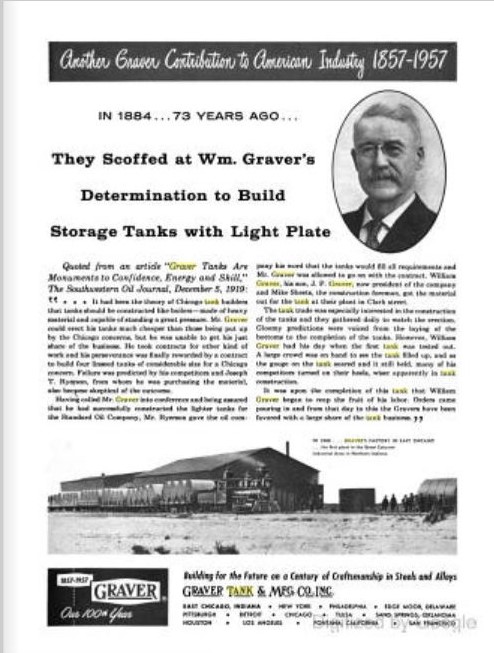
The History of the Graver-Driscoll House – Part 5: The Graver Family and the Graver Tank Company
By Carol Flynn
Following the U.S. Civil War, the United States experienced the American Industrial Revolution, a period distinguished by vast technological innovations that moved the production of goods from handcrafting in homes to machine production in factories.
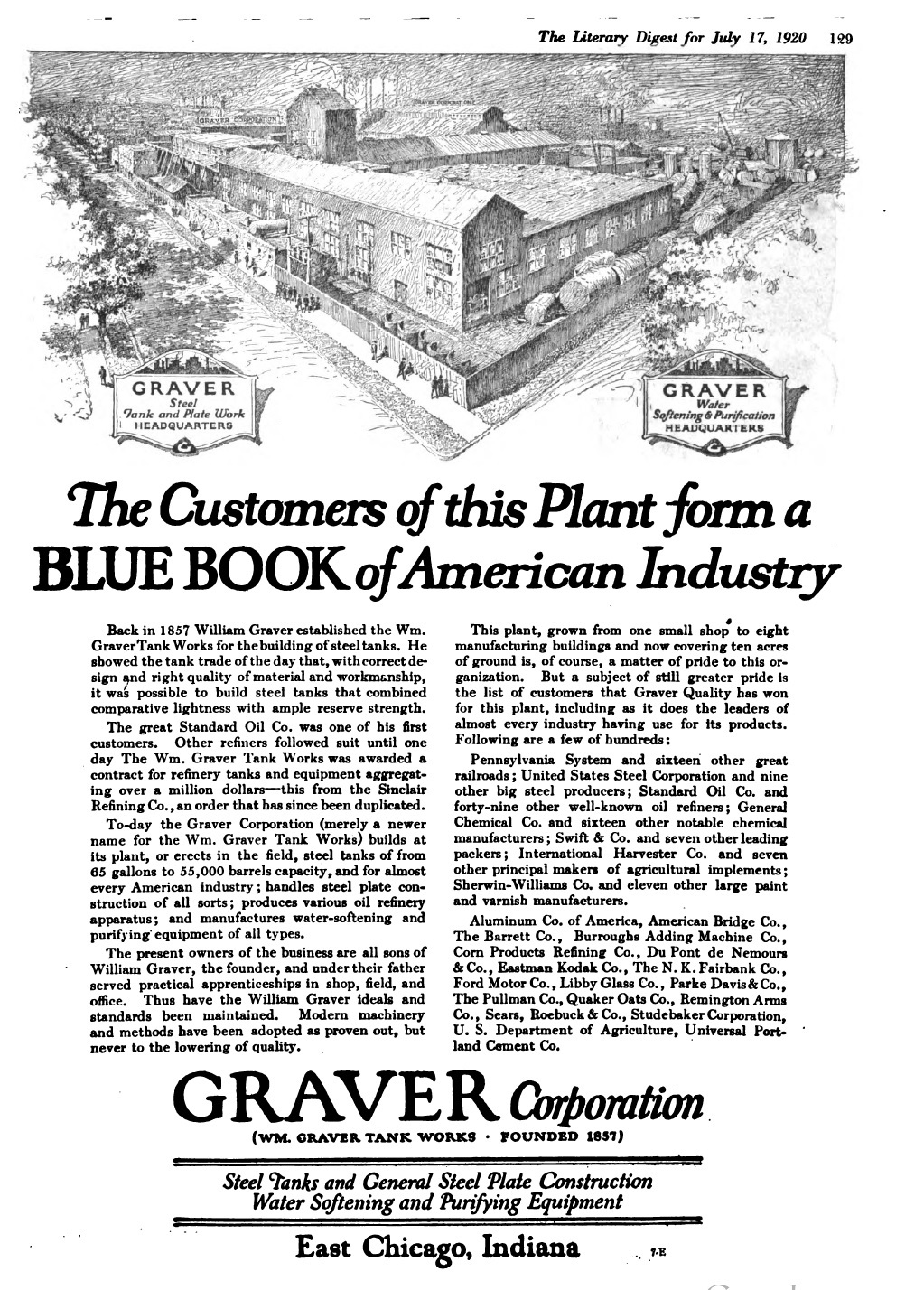
The Graver family and their business, the Graver Tank Works, are a prime example of this revolution. The company’s operations lasted for 125 years.
William Graver was born in 1842 in Pennsylvania, the son of parents who immigrated from Germany. He apprenticed under his older brother Michael in a machine shop near Allegheny. The brothers started the Graver Tank works in 1857. Using hand tools, they specialized in making metal storage tanks for grain and oil, and hot water boilers. 1872, Michael sold his interest to William, who became sole proprietor of the business. Around 1880, William began to use steam-powered machinery to manufacture tanks.
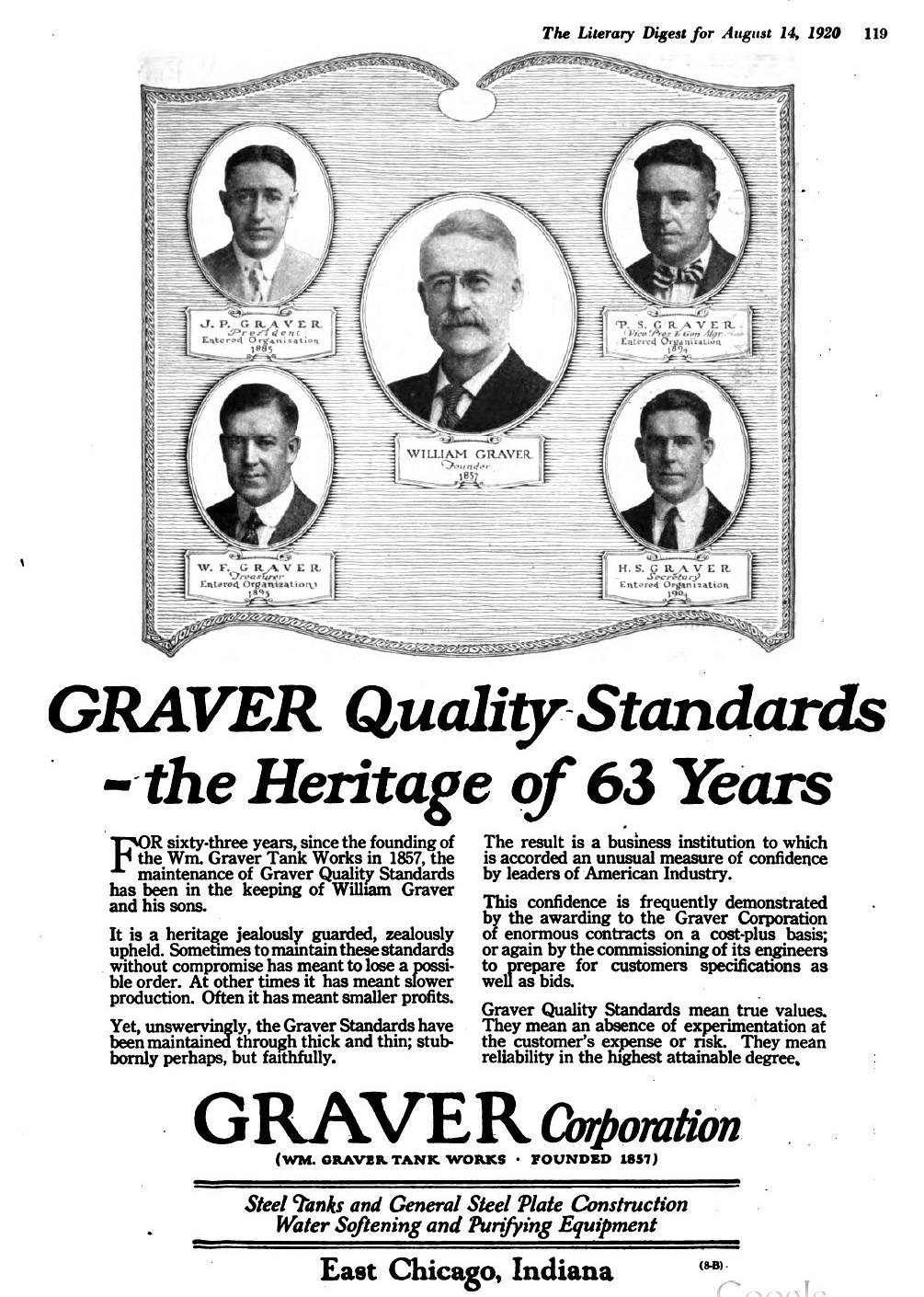
William married Christina Penman in 1866. Christina was born in Glasgow, Scotland in 1848. The Gravers had nine children, seven who lived to adulthood, all born in Pennsylvania: Alice, James, Elizabeth, William, Philip, Herbert, and Alexander.
William worked for a few years for the Standard Oil Company as an appraiser of oil storage tanks. The tank business grew due to the boom in oil wells and refineries. The Gravers decided to relocate the tank-making business to the growing Midwest, arriving in Chicago in 1884. There William proved his lighter weight tanks were reliable and cost-efficient, and his reputation and business grew.
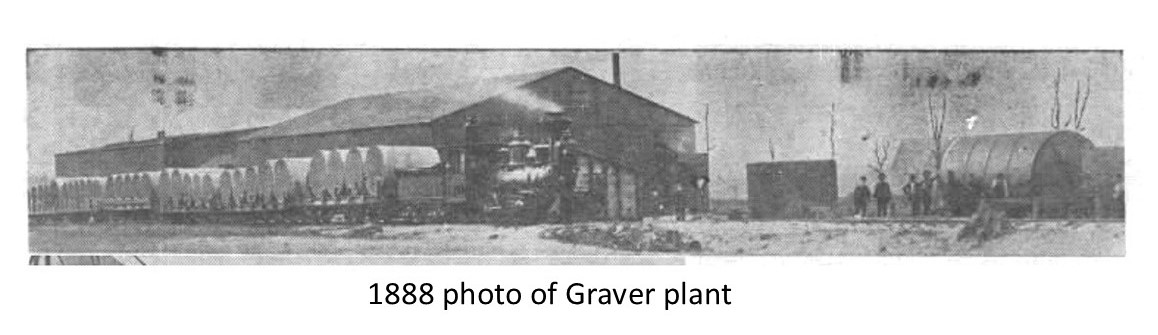
Graver moved to Ohio in 1886 to accommodate a large order from the Standard Oil Company. The business then moved to East Chicago, Indiana, in 1888, and the name was changed to the William Graver Tank Works. The business was the first important industrial concern in that city. Graver maintained a Chicago office in the famous Rookery Building.
In 1895, William began taking his sons into the business. All five brothers made their careers in the tank works. They took over running the business when William retired in 1909. William died in 1915, and Christina in 1936.
Oldest son James became president of the corporation. Sons William, Philip, and Herbert were vice-presidents. Youngest son Alexander was also with the company until his death from influenza in 1920. The daughters and their spouses did not work for the company.
By 1915, the plant occupied ten acres of ground and employed 225 workers. The Graver company continued steel plate work of every kind, concentrating on tanks, smokestacks, and refining equipment. They added a line of water treatment systems and services which benefitted businesses from laundries to steam-engine railroads.
The company grew rapidly during the World War I years, making its facilities available to the U.S. government, and greatly increasing its manufacturing facilities to handle large war orders for ship plating for the new American Merchant Marine and for tanks, many shipped overseas. A major fire, some considered arson due to anti-German sentiment against the family’s roots, destroyed an important part of the manufacturing facility, but the employees rallied without additional pay to finish the government orders.
The Graver brothers were known for their employee benefits, including insurance for every employee. Recreation was encouraged, and there was a ball field on the grounds for summer-time teams, and in winter, there were bowling teams.
The name was changed to the Graver Corporation in 1919, and an advertising department was added to the business. At the end of 1920, according to Moody’s Analysis of Investments, the business had assets close to $3 million, and the stock of the company was all held by the Graver brothers.
In 1930, the company was acquired by the Phoenix Manufacturing Company and reorganized as the Graver Tank & Manufacturing Company. Oldest son James left the company at that time. Sons William, Philip, and Herbert stayed with the company.
Both firms were acquired by the Union Tank Car Company in 1957. The company was purchased by the Aerojet-General Corporation in 1971 and operated under its Envirogenics Company division. The plant shut down in late 1982.
Next post: Herbert Spencer Graver
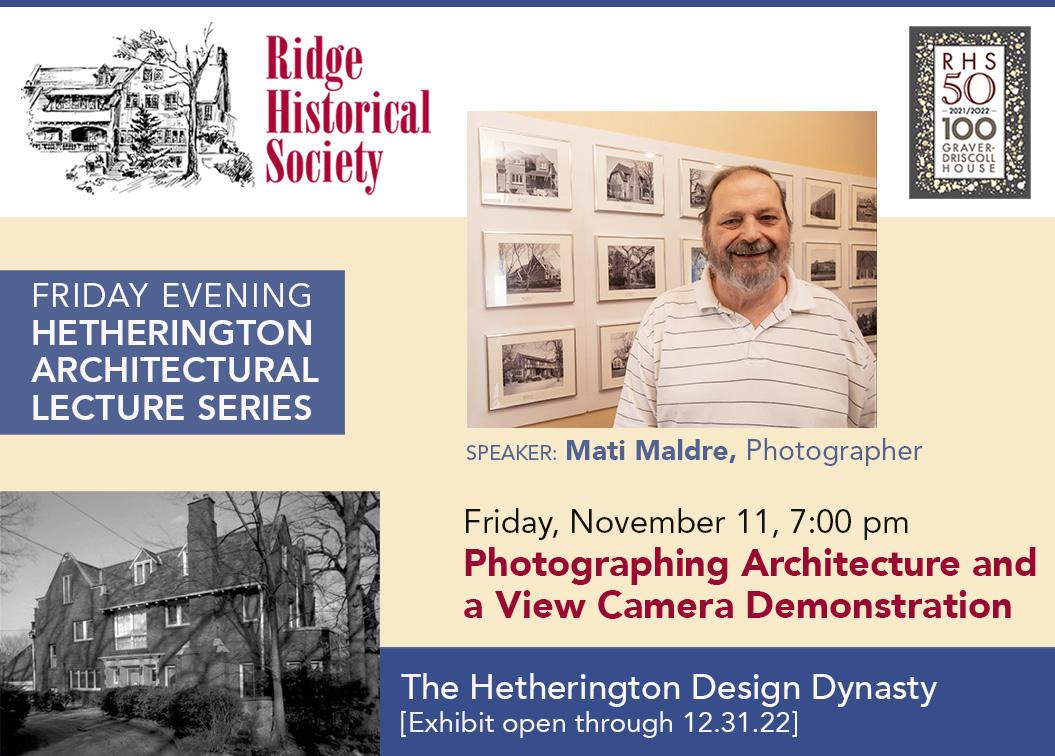
There are still seats open for this Friday evening's program at the Ridge Historical Society on photographing architecture. The event starts at 7 p.m., at RHS, 10621 S. Seeley Avenue. The cost is $10 for RHS members and $15 for non-members.
The program presenter is Mati Maldre. Mati, an Emeritus Professor of Art/Photography at Chicago State University, taught photography there and at the Beverly
Art Center for 35 years. His photographs have been widely published, placed in collections, and exhibited in the United States and abroad in/with significant organizations such as The Art Institute of Chicago, The International Venice Architecture Biennial and The
Chicago Architecture Biennial. Mati has photographed for The Encyclopedia Britannica, the U.S. Dept. of the Interior’s Historic
American Building Survey and Chicago’s Landmarks Commission. Maldre is the co-author with Paul Kruty and photographer for
Walter Burley Griffin in America and The Chicago Bungalow. He also provided 100 photographs for The Griffins in Australia and India,
and the Beverly chapter for The AIA Guide to Chicago Architecture. Mati has received numerous commissions, awards and honors including two Individual Graham Foundation Grants and a Graham Foundation Grant for his book, Walter Burley Griffin in America.
He has also earned a National Endowment for the Arts Grant, a Chicago Architecture Foundation Grant, an Illinois Humanities Council Grant and an Illinois Arts Council Artist Fellowship. Currently Mati is the Chair of the RHS Historic Buildings Committee.
Reservations may be made through Eventbrite at https://bit.ly/RHSlectureshttps://l.facebook.com/l.php?u=https%3A%2F%2Fwww.eventbrite.com%2F…%2Fhetherington-architectural%3Ffbclid%3DIwAR1sDKyO-emN20Sqhxl4lsbvzCA9tSDLeFmnzq7aV6BOqlljcT8j0msaAb2A5LjbJyWRM5EtSmkn15HuVF0zBYynOjt9ruxufwdCPtvNgFI9Qw6eNicDfOr1oErpLuxCFvcCWa3kpSRW4MGnVBv3mlypThGYPhaKZ2-MdPYS0Kizx&__tn__=-UK-R&c[0]=AT0efWfxIG8avS9F_q8WDUQLsNJcm-uPRKyPjbp8OM6hwE_ufRdAviDygHio9Vmrg69RmJwtjVMrMJPXOn9lpHGxEtDV4LhVzEUatx5BWyGwiBKNgndUV0MPuXA83btDceDjb6u1cC_kKHgZOjFkRH7dCH9SRfzT9kXBedmJWhrkRlIULGbZk1PK8XULkjHfpDVge0TEM8bo
The Ridge Historical Society
The History of the Graver-Driscoll House – Part 4: Design of the Graver-Driscoll House
By Carol Flynn, research contributors Linda Lamberty, RHS Historian, and Tim Blackburn
Herbert and Anna Spencer bought the property at 10616 S. Longwood Drive on the Blue Island Ridge on February 14, 1921. They engaged architect John Todd Hetherington to design a house for their growing family. Their only child, Herbert Spencer Graver, Jr., was born on April 26, 1921.
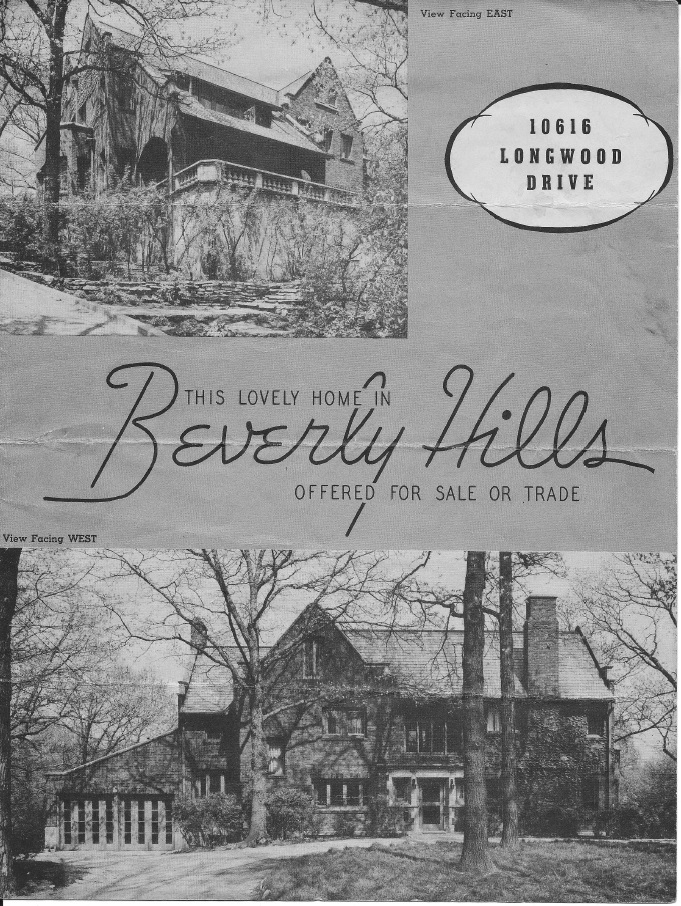
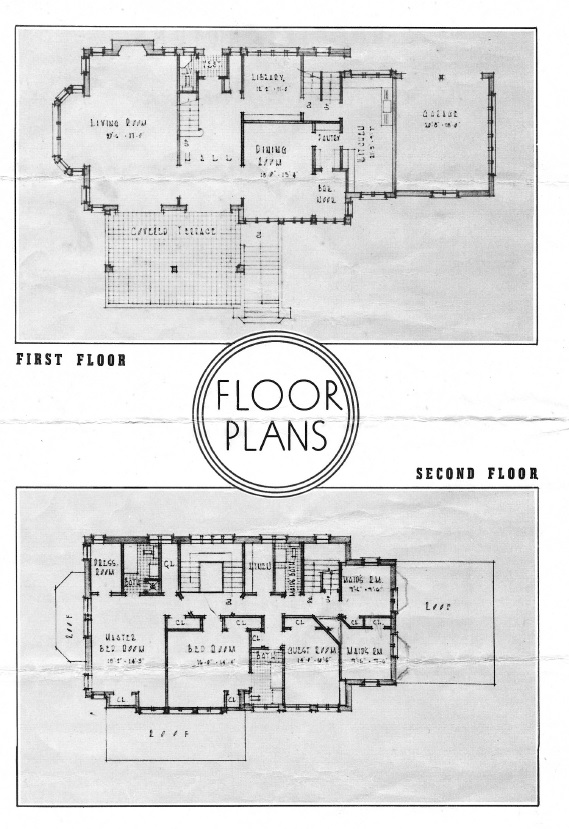
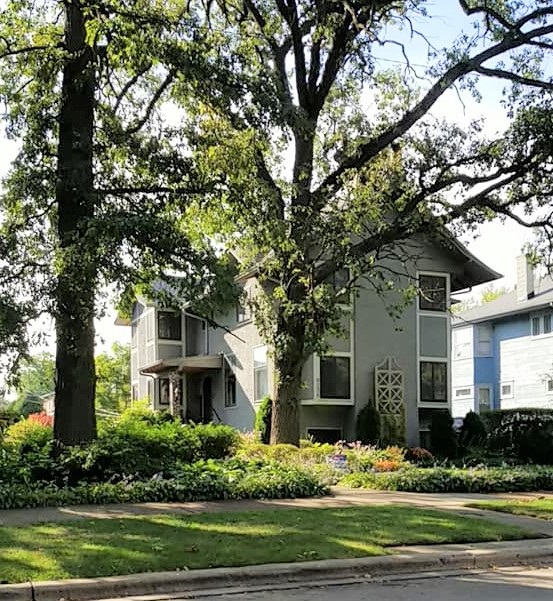
Hetherington designed the Graver-Driscoll House as a Tudor Revival-style manor house. Built of brick and stone with a slate roof, the house has four levels including a full basement and attic, and an attached two-car garage. The walk-out terraces on the Longwood Drive side, nestled into the Ridge, blend the house into the natural terrain.
The building permit for the house was dated October 6, 1921, so actual construction began around then. The contractor was D. A. Van Etten. The final inspection report was dated June 7, 1922, where the final cost of the house was given as $30,000.
Originally, the only entrance to the property was up the steep driveway from Longwood Drive, around the south side of the house, to the entrance door and garage on the west side of the house. The driveway on the Seeley Avenue, or west, side of the house, with the address 10621 S. Seeley Avenue, was added in the 1940s by the second owner of the house, the Fenn Family.
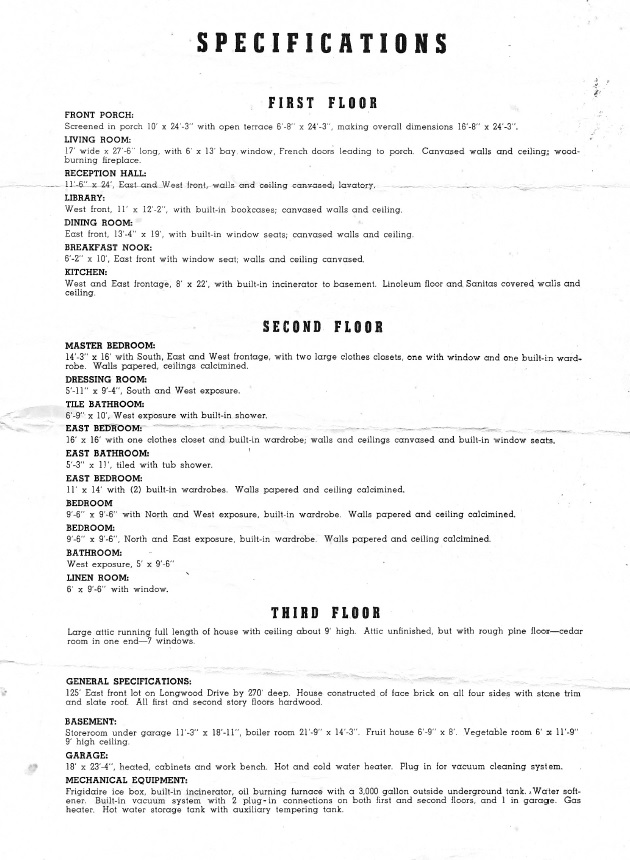
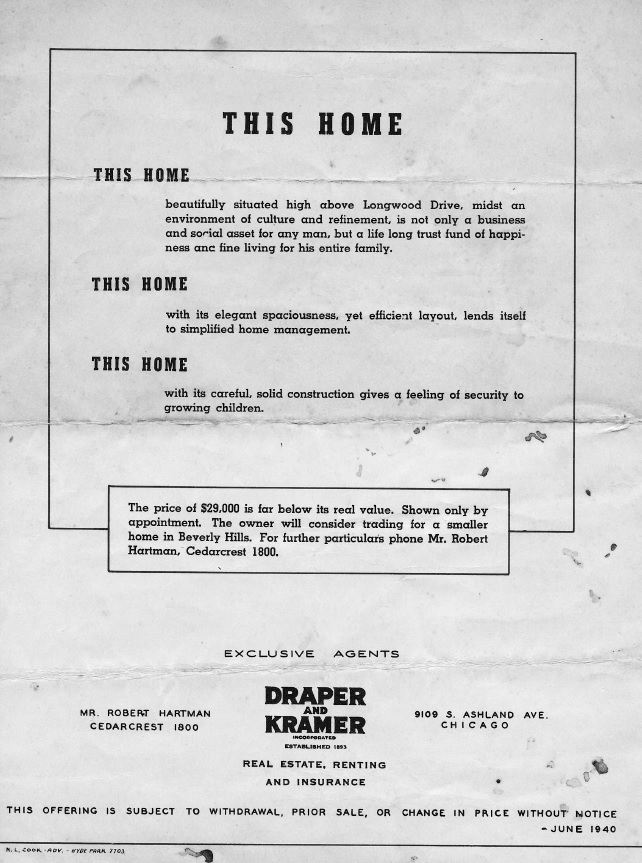
The Fenn family shared with RHS the brochure on the house that was produced when the Graver family put the house on the market in 1940. It is not known if the Gravers altered the house from the original design during their years living there.
The contents of the 1940 brochure are shared here.
Next post: The Graver Family and Graver Tank Works
The Ridge Historical Society
The History of the Graver-Driscoll House – Part 3: Architect John Todd Hetherington
By Carol Flynn, research contributors Linda Lamberty, RHS Historian, and Tim Blackburn
Herbert and Anna Graver purchased the land at 10616 Longwood on February 14, 1921, and chose architect John Todd Hetherington, a Beverly resident, to design their home. Hetherington had designed many fine homes in the Beverly/Morgan Park community by this time, as well as Ridge Park at 96th Street and Longwood.
Hetherington was born in Ontario, Canada, in 1858 where his parents, Henry Duncan Hetherington and Jessie Todd Hetherington, both from Scotland, owned a drug store. When his father died in 1862, his mother returned to Scotland with John and his three brothers.
Hetherington received his architectural training in Scotland and worked for a short time in Edinburgh. He came to the U.S. in 1881 and began his career in Chicago as a draftsman with Treat and Foltz architectural firm.
He became a naturalized U.S. citizen in 1886. In 1888, he and Jane C. Welsh, from the same village in Scotland where Hetherington spent his youth, were married in Chicago. Their children were Grace, who died in infancy, Alec, Murray, and Jean.
After eight years with Treat and Foltz, Hetherington started practice as an architect. He partnered with other architects for several years and eventually started an independent practice around 1910. He was involved in projects for hotels, apartment buildings, churches, and banks in addition to many fine residences in many locales.
Hetherington moved to Beverly around 1901. The family lived in an existing house at 9616 S. Prospect Avenue. In 1906, he designed and built a home for the family at 9236 S. Winchester Avenue. Around 1920, he bought an existing house at 9122 S. Longwood and converted it into a three-flat apartment building and the family lived in one of the apartments.
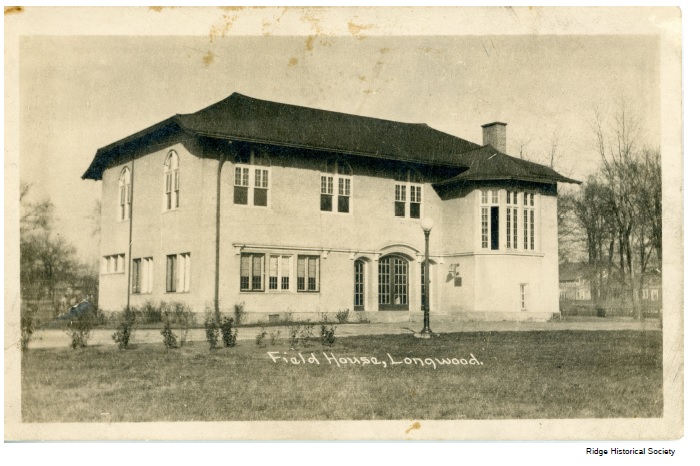
Hetherington served as a member of the Ridge Park Board of Commissioners from 1911 to 1913. Although he recommended another local architect for the project, in 1912 the other board members asked Hetherington to design Ridge Park. Hetherington created an original plan including a small field house, outdoor swimming pool, wading pool, and a running track, which was implemented in 1913.
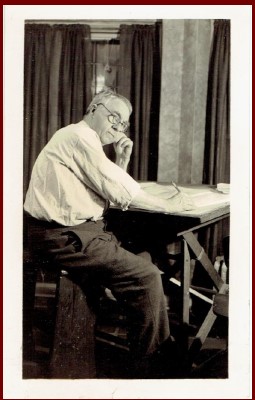
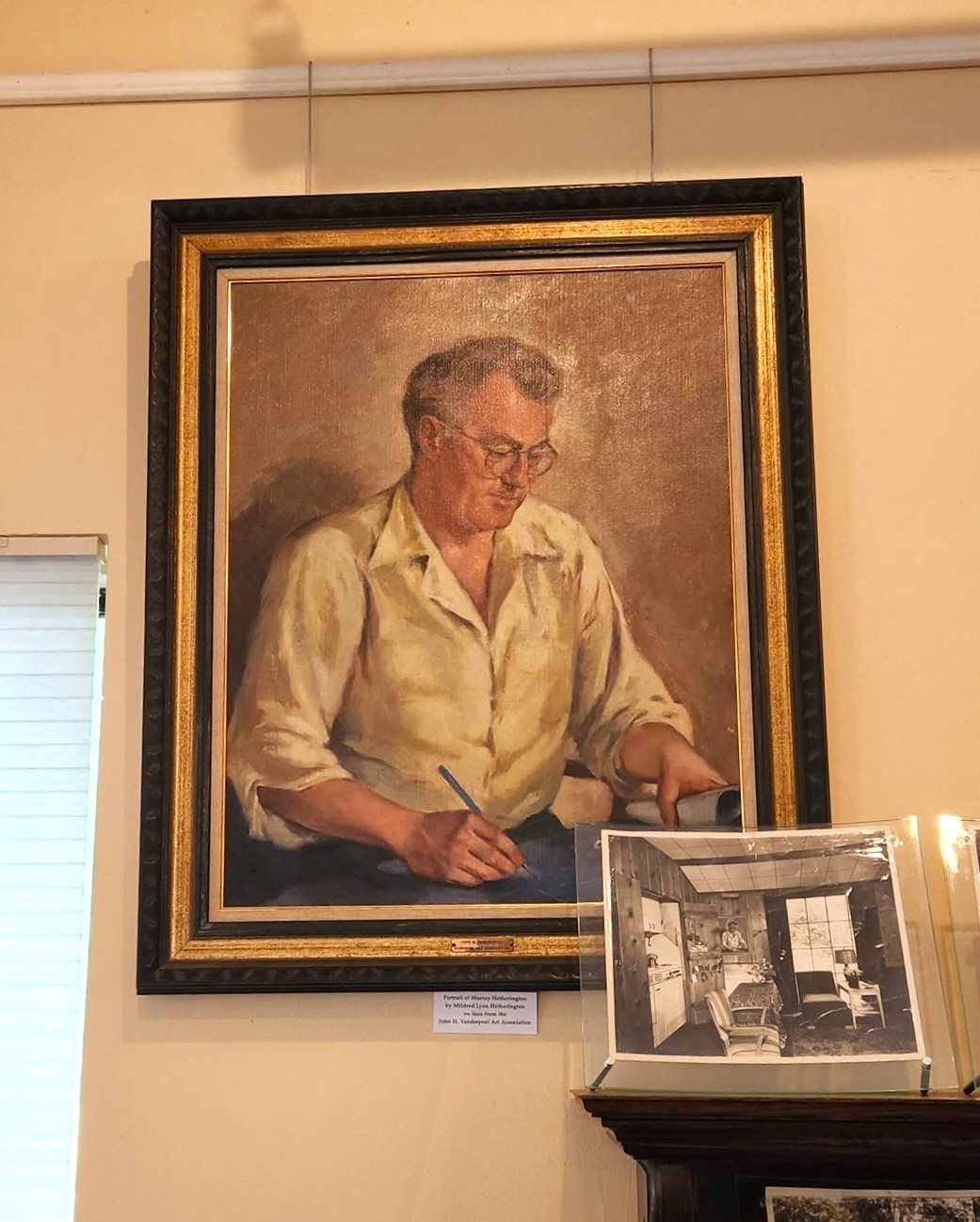
In 1919, his son Murray Douglas joined him as Hetherington and Son. Murray was a 1914 graduate of the Chicago School of Architecture, a joint program of the Art Institute and the Armour Institute of Technology.
Daughter Jean graduated from the Art Institute Normal Program in 1917 and began a career as a “draftswoman.” Considered a “man’s field,” there were only two women architects in the city at the time. Jean created actual miniature models of buildings, which were likely valuable marketing tools for her father's business.
Son Alec started as an electrician, then served in the U.S. Army during World War I. After the war, he went into farming, then eventually into airplane mechanics.
John Todd and Murray Hetherington are credited with designing over sixty buildings in the Ridge communities. They were known for the quality of their designs and solidly constructed buildings. Neither of them developed a totally unique or distinctive style of his own. They showed versatility by designing in several different architecture styles.
By 1929, the community had outgrown the Ridge Park field house. John Todd and Murray Hetherington were commissioned to design a larger one. Part of the old fieldhouse became the auditorium, and an addition was built around the outdoor swimming pool. A gymnasium and club rooms were added, as well as a wing to house the John H. Vanderpoel Art Gallery.
John Todd Hetherington died in 1936, attributed to injuries from an auto accident the year before. He was buried in Oakwood Cemetery.
Murray Hetherington continued the family dynasty of architects. He and Mildred Lyon, a local artist, married in 1924. Their daughter Mary died young, and their son John “Jack” Murray also became an architect. Murray designed the house at 8918 S. Hamilton Avenue for his family, but they lost that house during the Great Depression, and moved into Mildred’s family’s house at 10153 S. Prospect Avenue. Today, fourth generation John Lawrence Hetherington practices as an architect.
Next: The design of the Graver-Driscoll House
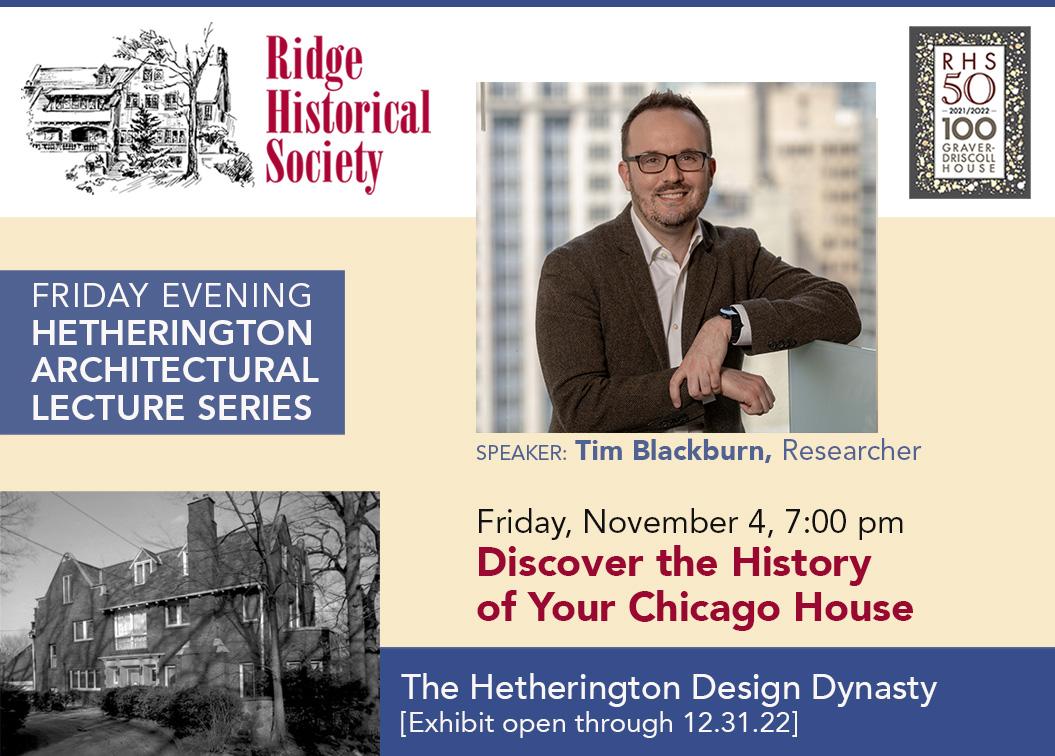
There's still time to sign up for Friday evening's program on researching the history of your home. There are a few seats left.
The program will be held at RHS, 10621 South Seeley Avenue. The cost for each program is $10 for RHS members and $15 for non-members. A reception will follow each program. Parking is on Seeley Avenue. Entrance to the house is wheel-chair accessible but the restroom facilities are not.
Register through Eventbrite at: https://www.eventbrite.com/…/hetherington-architectural…
For questions, contact RHS at 773-881-1675 or ridgehistory@hotmail.com.
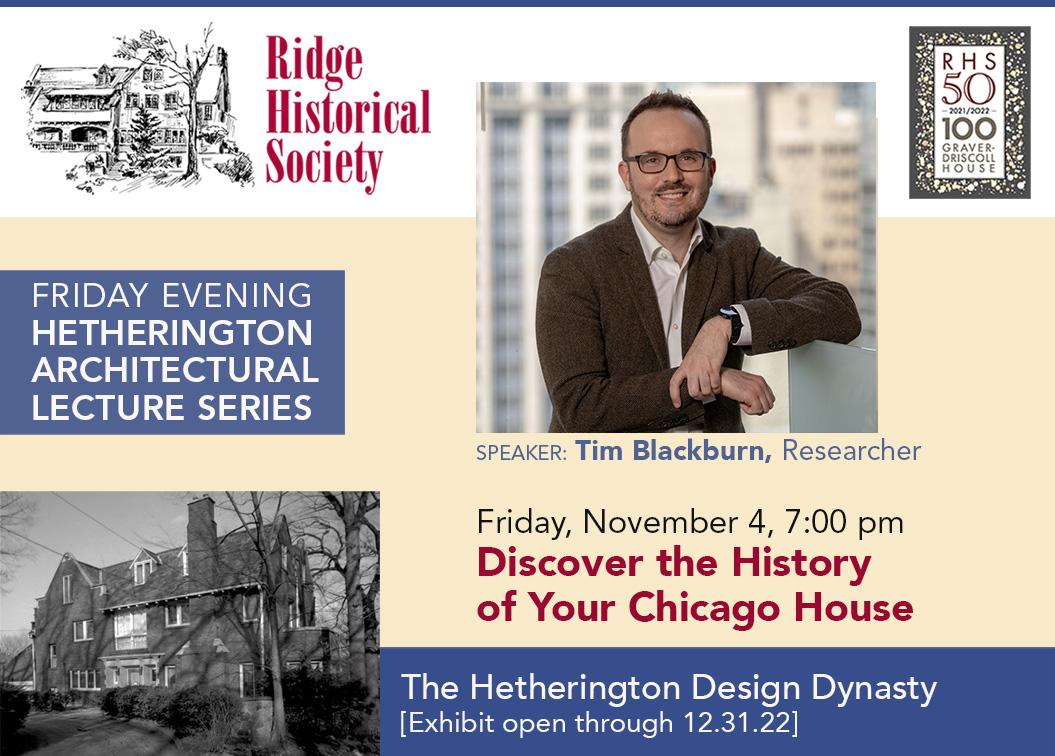
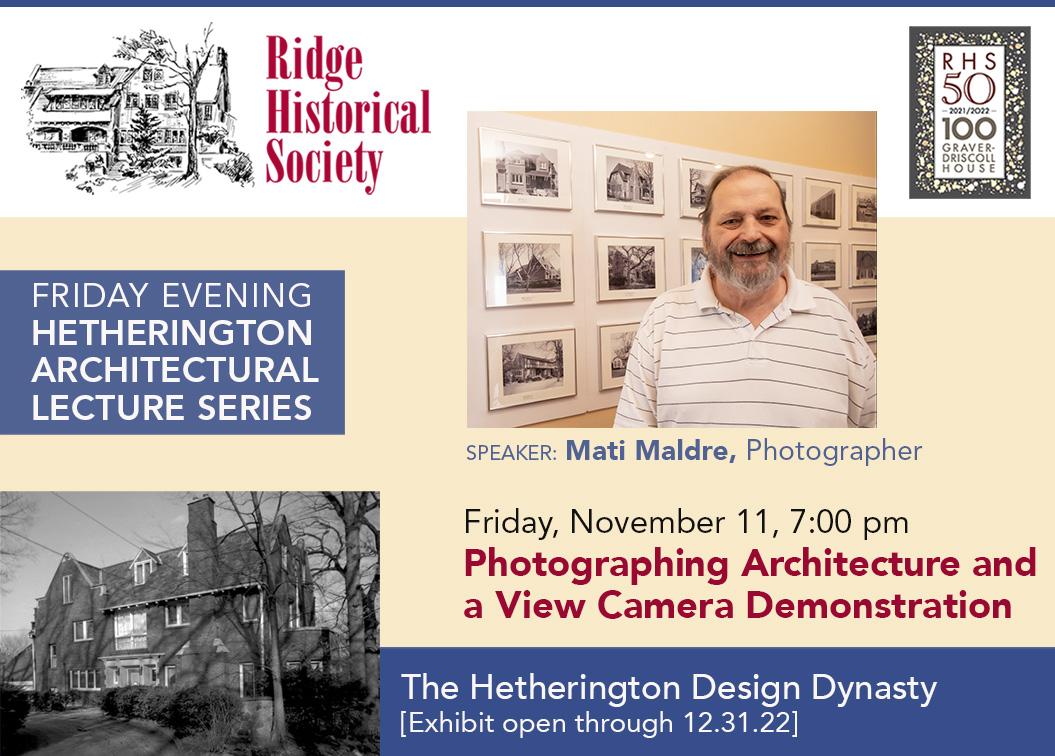
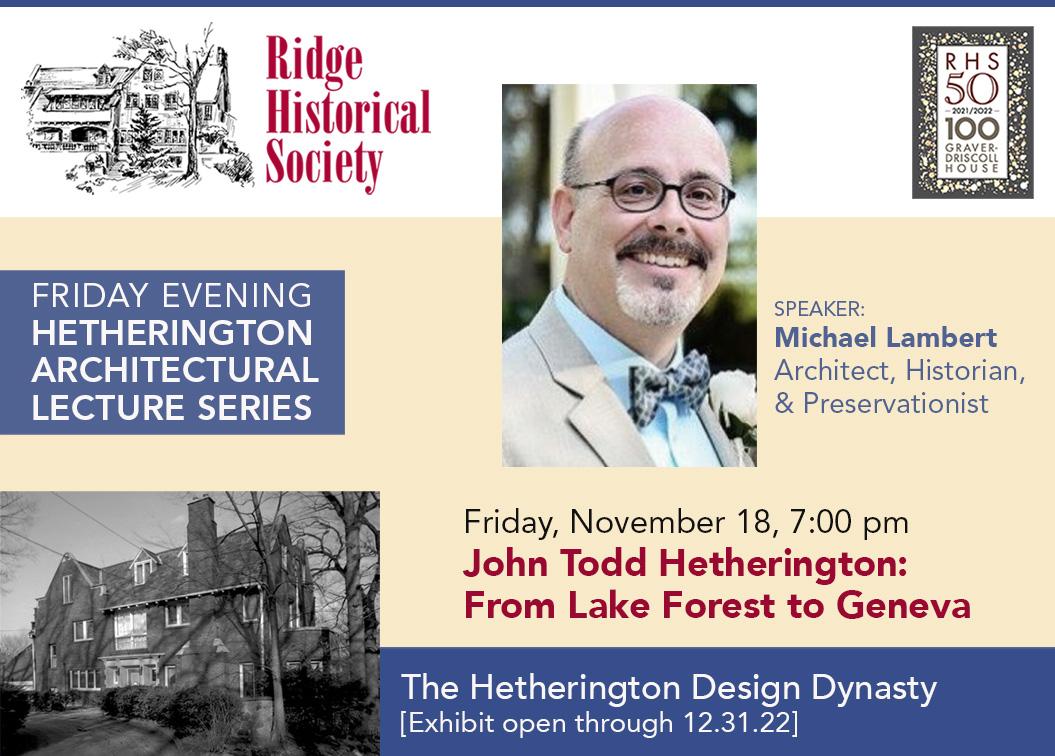
The Friday Evening Hetherington Architectural Lecture Series begins this week. Here are the three upcoming programs.
The programs will be held at RHS, 10621 South Seeley Avenue. The cost for each program is $10 for RHS members and $15 for non-members. A reception will follow each program. Parking is on Seeley Avenue. Entrance to the house is wheel-chair accessible but the restroom facilities are not.
Register through Eventbrite at: https://www.eventbrite.com/e/hetherington-architectural-lecture-series-tickets-443264575277
For questions, contact RHS at 773-881-1675 or ridgehistory@hotmail.com.
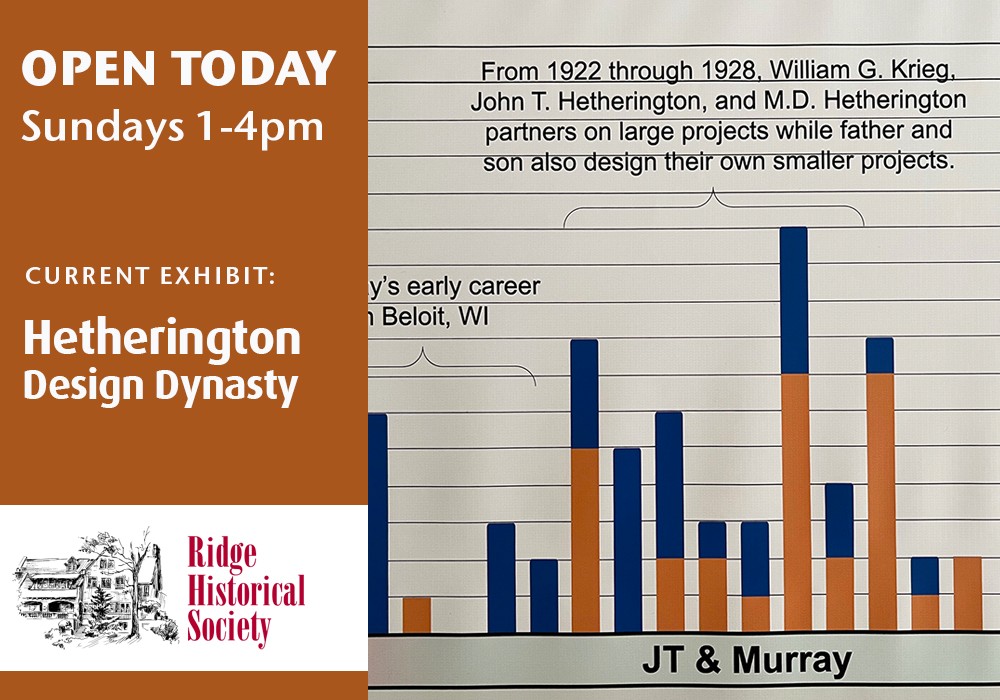
The Ridge Historical Society at 10621 S. Seeley Avenue is open today from 1 to 4 p.m., free of charge.
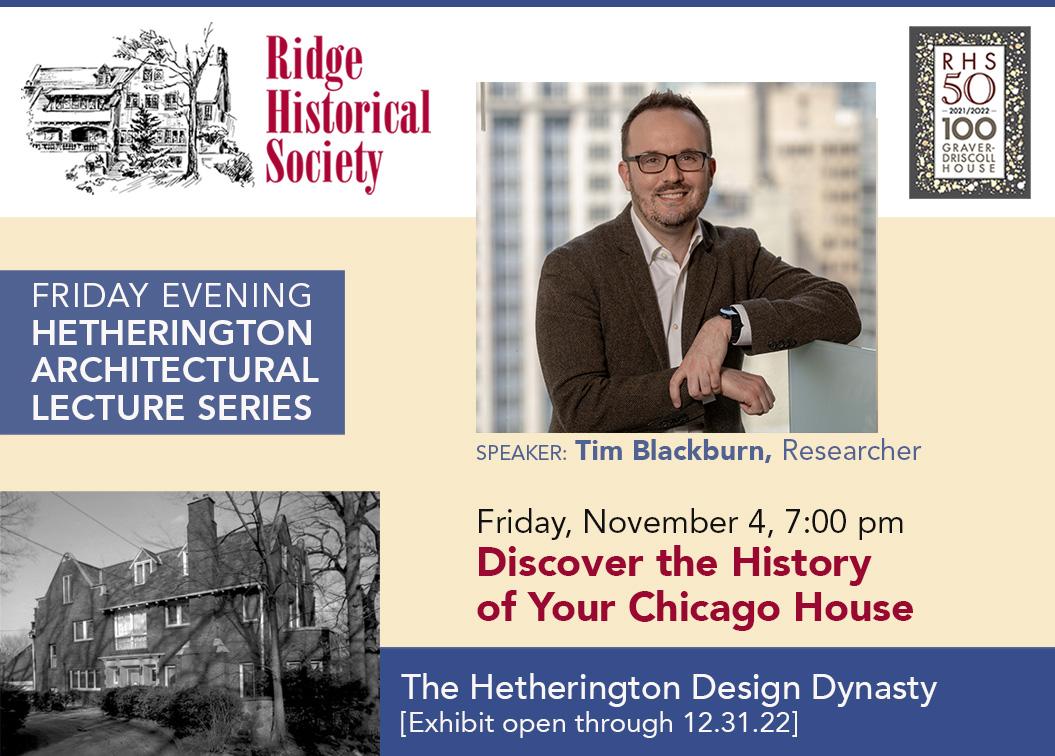
Reminder! For those of you who are interested in researching your house's history, sign up NOW for the November 4 program at the Ridge Historical Society (RHS). This is a popular topic and is filling up quickly.
The Friday Evening Hetherington Architectural Lecture Series will lead off on November 4th at 7:00 p.m. with “Discover the History of Your Chicago House,” presented by RHS researcher Tim Blackburn. Attendees will learn how to research their pre-1955 homes located within the city limits to learn about the architecture, construction, owners, and inhabitants through the years. Public records such as building permits and Sanborn maps will be discussed, as well as research methods to learn about local history.
Blackburn is a member of the RHS Historic Buildings Committee and assists members of the community with research on their homes and local history questions. He has completed extensive research on his own Hetherington-designed home and many other homes in the area, and was a major contributor to the current exhibit, including designing, photographing, and installing the Google Earth Tour of the “Hetheringtons on the Ridge.” He works in technology as a Vice President for a global marketing and data company.
The programs will be held at RHS, 10621 South Seeley Avenue. The cost for each program is $10 for RHS members and $15 for non-members. A reception will follow each program. Parking is on Seeley Avenue. Entrance to the house is wheel-chair accessible but the restroom facilities are not.
Register through Eventbrite at: https://www.eventbrite.com/e/hetherington-architectural-lecture-series-tickets-443264575277https://www.eventbrite.com/e/hetherington-architectural-lecture-series-tickets-443264575277
For questions, contact RHS at 773-881-1675 or ridgehistory@hotmail.com.
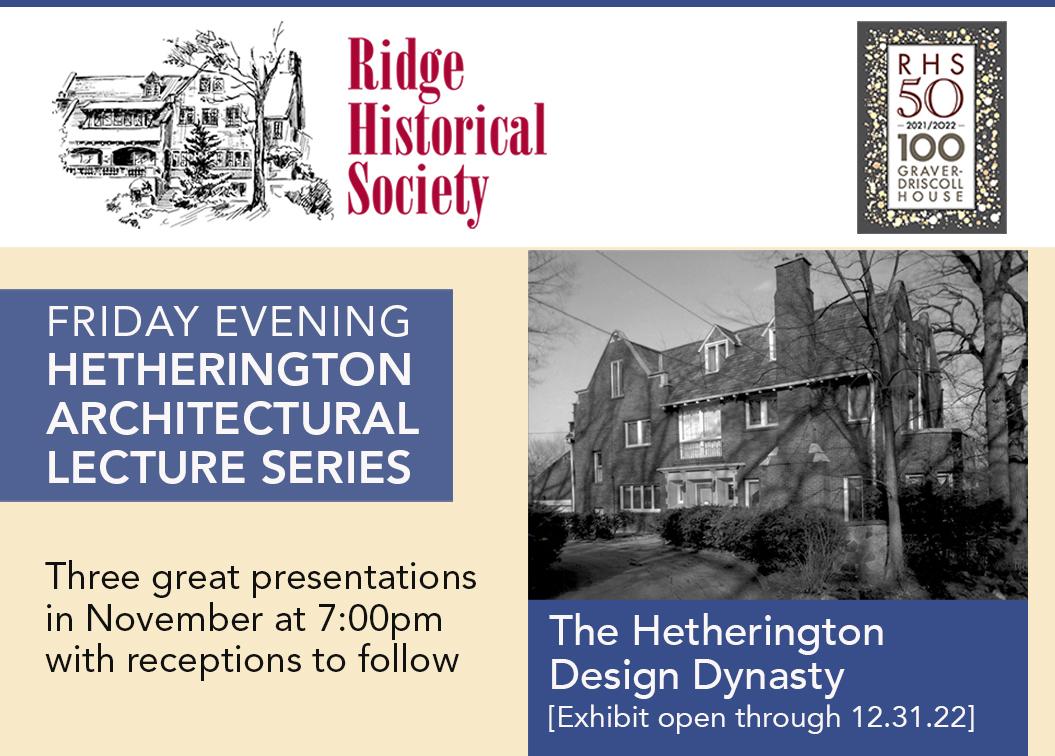
The Ridge Historical Society will offer a series of educational programs on Friday evenings in November as part of the current exhibit on architect John Todd Hetherington and his descendants.
The Friday Evening Hetherington Architectural Lecture Series will lead off on November 4th at 7:00 p.m. with “Discover the History of Your Chicago House,” presented by RHS researcher Tim Blackburn. Attendees will learn how to research their pre-1955 homes located within the city limits to learn about the architecture, construction, owners, and inhabitants through the years. Public records such as building permits and Sanborn maps will be discussed, as well as research methods to learn about local history.
Tim Blackburn is a member of the RHS Historic Buildings Committee and assists members of the community with research on their homes and local history questions. He has completed extensive research on his own Hetherington-designed home and many other homes in the area, and was a major contributor to the current exhibit, including designing, photographing, and installing the Google Earth Tour of the “Hetheringtons on the Ridge.” He works in technology as a Vice President for a global marketing and data company.
This first event is sure to fill up because many people in this community are interested in the history of their houses. Those who wish to secure a spot are advised to make a reservation – see the information below.
The second program, on November 11th at 7:00 p.m., will feature photographer Mati Maldre presenting “Photographing Architecture and a View Camera Demonstration.” Using his Deardorff 4×5/5×7 view camera, Maldre blends architectural photographic documentation with interpretive expression to create appreciation and understanding of our man-made environment. His work is both science and art.
On November 18th at 7:00 pm, the final program, “John Todd Hetherington: From Lake Forest to Geneva,” will be presented by Michael Lambert, architect, historian, and preservationist. Hetherington’s career has been long overlooked. He was architect to some of Chicago’s most prominent residents, and designed some of the first estate homes in Lake Forest, Illinois. He was commissioned to design three homes that initiated the transformation of Geneva’s Batavia Road neighborhood.
The programs will be held at RHS, 10621 South Seeley Avenue. The cost for each program is $10 for RHS members and $15 for non-members. A reception will follow each program. Parking is on Seeley Avenue. Entrance to the house is wheel-chair accessible but the restroom facilities are not.
Reservations are advised, and can be made through Eventbrite at https://www.eventbrite.com/e/hetherington-architectural-lecture-series-tickets-443264575277.
For questions, contact RHS at 773-881-1675 or ridgehistory@hotmail.com.
The Ridge Historical Society
Halloween on the Ridge – Part 2: Halloween Customs One Hundred Years Ago
By Carol Flynn
The first post covered the origin of Halloween as a Celtic custom brought over to the U.S. by the Irish immigrants in the 1800s.
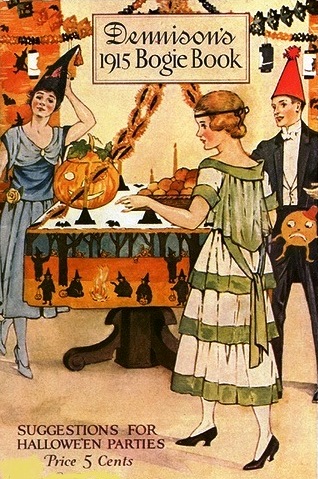
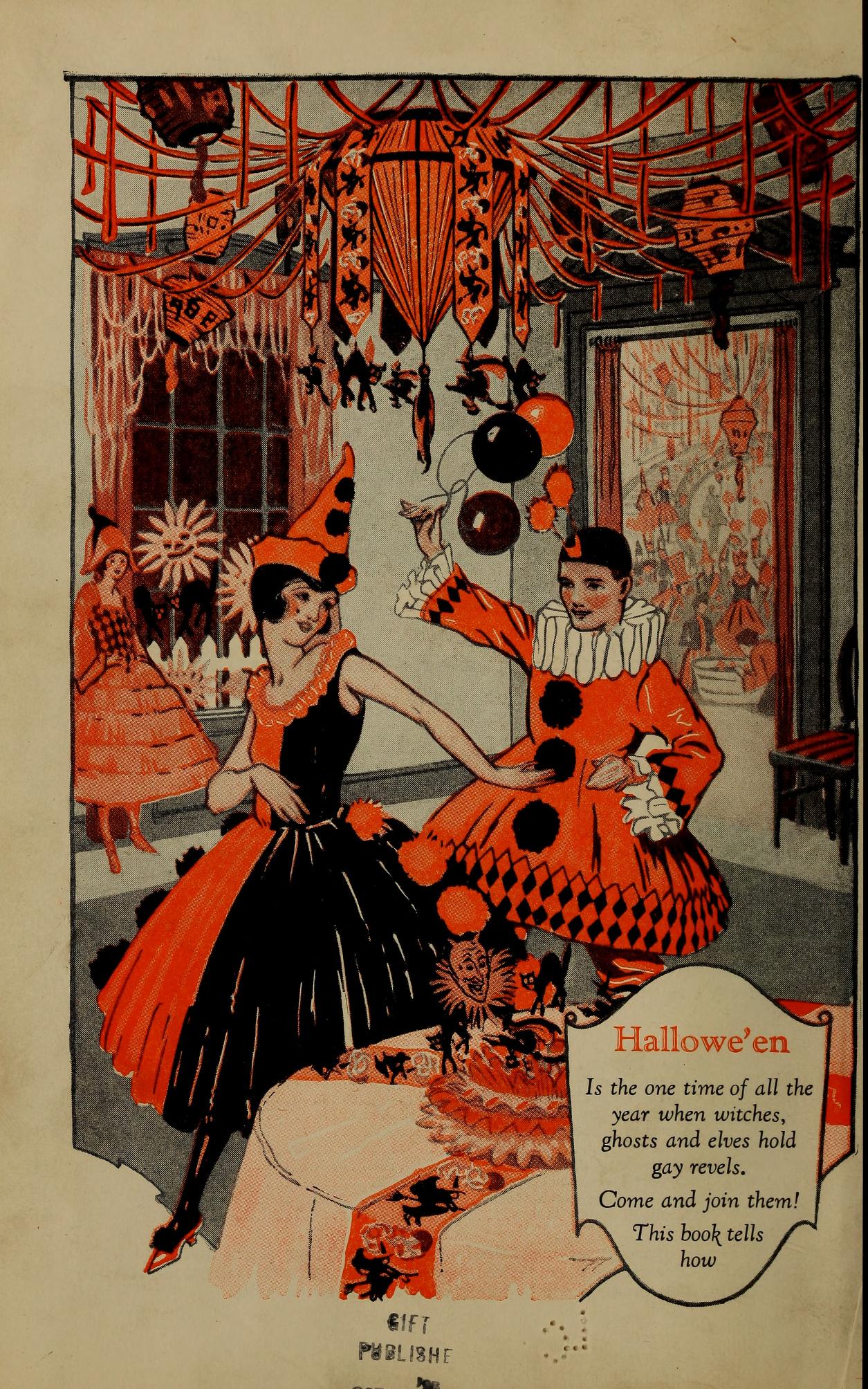
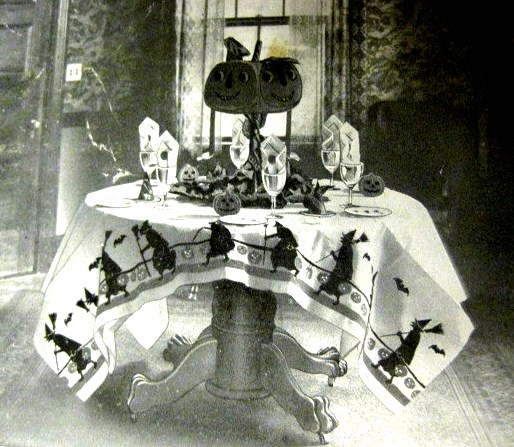
By 1900, Halloween had lost most of its superstitious and religious overtones, and parties were the most common way to celebrate the day. My great-grandparents hosted a Halloween party at their house on 110th and Homewood Avenue in 1915. This is what a party might have looked like back then.
Prior to 1900, decorations relied on natural items. The Irish Americans adapted their customs to use the native plants they found in the U.S., like corn stalks, to symbolize the harvest. Jack-o-lanterns were still customary, but now they were made from native pumpkins. One Irishman who moved to the States about twenty years ago commented that it was much easier to carve pumpkins than to carve turnips.
In the early 1900s, several companies, notably Dennison Manufacturing Company, began making paper products such as heavy cardboard die cuts; paper plates, cups, and napkins; crepe paper streamers, and the like.
Decorations became much more sophisticated and commercial. Dennison published “Halloween Bogie” books from 1909 through 1934 that were catalogs that also included ideas, illustrations and instructions for decorations and parties.
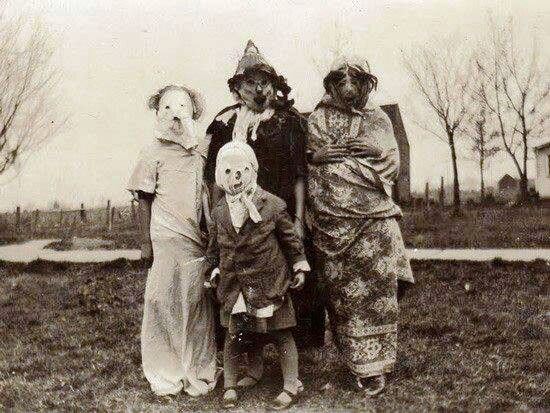
Costumes were mostly still homemade affairs, although there were some costume companies, but their goods were expensive. The costumes presented in the Bogie books were sophisticated but many photos from the early 1900s show homemade costumes that were, quite frankly, creepy, by today’s standards.
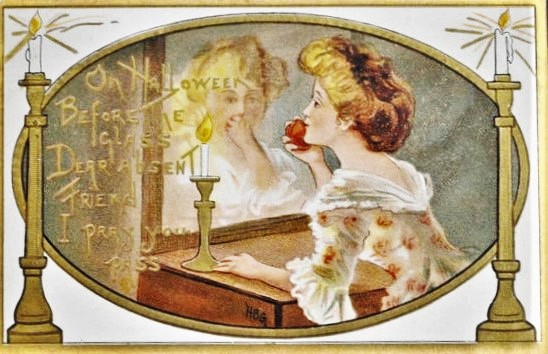
In addition to some of the traditional games like bobbing for apples, fortune telling and other divination games were popular. Variations of a “mirror test” were mentioned often in articles of the day. One version called for a girl to sit before a mirror at midnight on Halloween, combing her hair and eating an apple, in order to see the face of her true love reflected in the glass.
Food suggestions included a sit-down supper with items like cream of celery soup, brown bread sandwiches and Waldorf salad, to a buffet including a variety of finger sandwiches (cucumber, salmon, jelly), stuffed celery, and orange sherbet. Gingerbread was popular in any form – cookies, cake with marshmallow frosting.