
Explore the RHS Facebook Archives, a rich repository of local history written by Carol Flynn. For two decades, Carol brought a deeply dedicated voice to public education at RHS. Her role as Facebook administrator through mid-2025 naturally extended her prolific research into meticulously detailed articles, most notably her multi-part historical series posts. Today, Carol continues her local history writing for The Beverly Review and other outlets.
2022
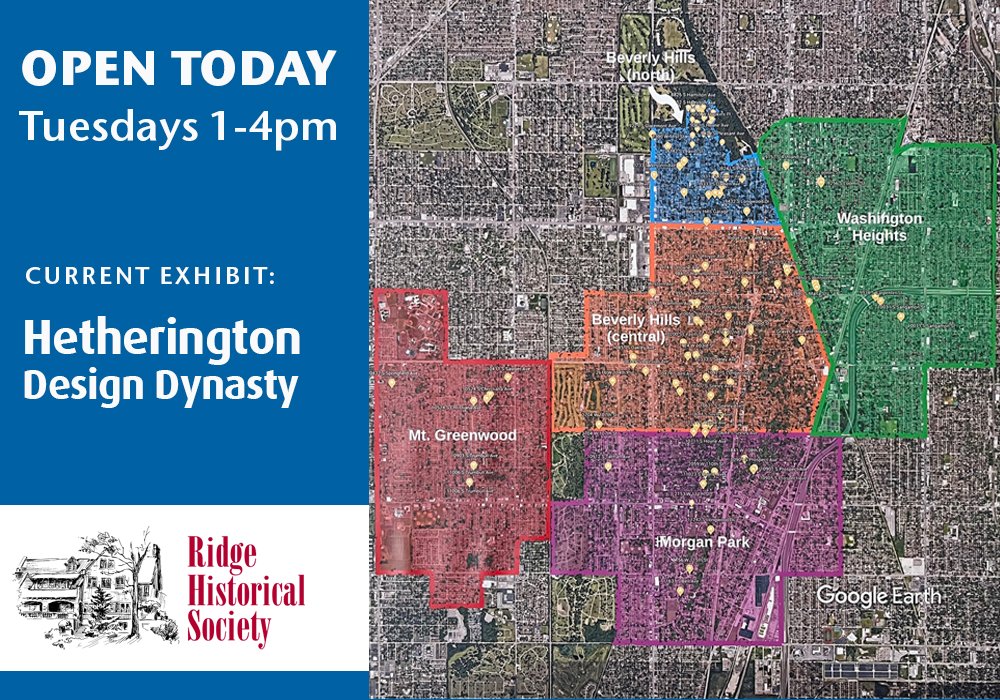
The Ridge Historical Society is located at 10621 S. Seeley Avenue, Chicago. Admission is free.
The current exhibit is Hetherington Design Dynasty, profiling the Hetherington family of architects who designed many buildings in the Beverly/Morgan Park community.
The Ridge Historical Society
Hetherington Photographs
By Carol Flynn
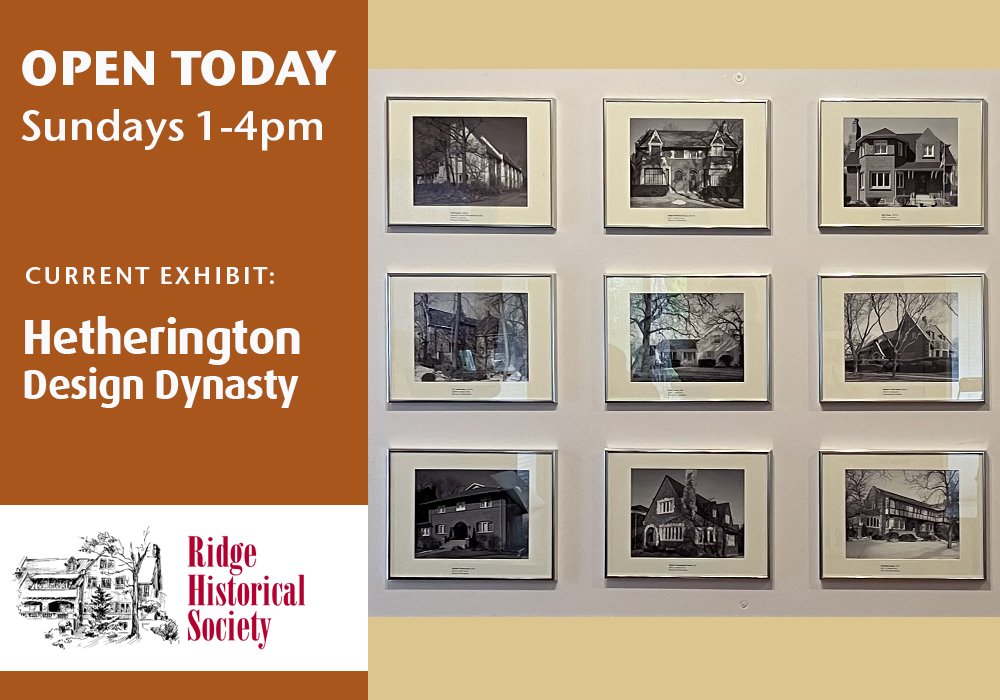
The Ridge Historical Society, 10621 S. Seeley Avenue, is open today, Sunday, August 7, 2022, from 1:00 p.m. to 4:00 p.m. Admission is free.
The current exhibit is Hetherington Design Dynasty, profiling the Hetherington family of architects who lived in Beverly and designed over 70 buildings in the Ridge communities.
The exhibit includes photographs of many of the Hetherington houses taken by Mati Maldre, Professor Emeritus of Art, Chicago State University.
The Ridge Historical Society
History of the Wards: Why Beverly and Morgan Park Are “Dry”
By Carol Flynn
This week’s Beverly Review includes the seventh installment of the series about the history of the Chicago wards in the Ridge communities. This installment looks at the 1930s and 1940s.
One of the issues that the U.S. dealt with in the 1930s was the end of Prohibition. The consumption of alcohol was never illegal. The Eighteenth Amendment to the U.S. Constitution, which went into effect in 1920, prohibited the manufacture, transportation, and sale of alcoholic beverages. This Amendment was repealed in December 1933 with the ratification of the Twenty-first Amendment.
While most of Chicago took the end of Prohibition in stride, it became a major issue on the Ridge. Decisions made by the community beginning in 1934 have kept Beverly and Morgan Park “dry” east of Western Avenue since that time.
Sections of the Ridge communities were dry before Prohibition began, of course. Morgan Park was intentionally founded in the 1870s as a religious, educational, and temperance community, and the Protestant ministers of the community led the way with the temperance movement even years before that.
When Prohibition began in 1920, every locale officially went dry. When Prohibition ended in 1933, every locale officially became “wet.” Saloons opened all over the country, including on the east side of Western Avenue and along 95th Street.
The new Illinois Liquor Control Act of 1934, however, provided that election precincts could vote by referendum to stay “dry.”
A campaign was undertaken in Beverly/Morgan Park to vote dry the precincts bounded by 89th Street, Western Avenue, 119th Street, and the Rock Island Railroad tracks. Members of a Ridge civic association went door-to-door, precinct-by-precinct, to collect petition signatures for a referendum and to obtain promises of votes when the referendum was held. The campaign was successful, and additional precincts in the ward also voted to stay dry.
The nineteenth ward became the driest ward in the city. The newspapers referred to it as “bone-dry Beverly.” The saloons that had opened on the east side of Western Avenue and on 95th Street all had to close.
In 1946, a referendum was held to make the precincts between Western Avenue, 99th Street, California Avenue, and 119th Street dry. This included the west side of Western Avenue. The proposal was defeated, paving the way for the bars, breweries, and restaurants that are found along that strip now.
Since that time, there have been campaigns to allow the sale of alcohol east of Western Avenue, but they have been voted down consistently by the community. The decision is made by the registered voters within the precinct, not by the alderman or the
city or any civic group.
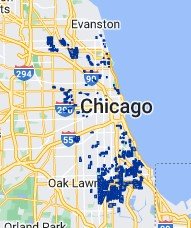
This map shows the dry precincts in the City of Chicago. Note the concentration in the far southwest area – a good-sized portion of the nineteenth ward.
https://www.beverlyreview.net/news/community_news/article_e56364d2-1283-11ed-b3b7-b38813422447.html
The Ridge Historical Society
August 1, 2022
By Carol Flynn
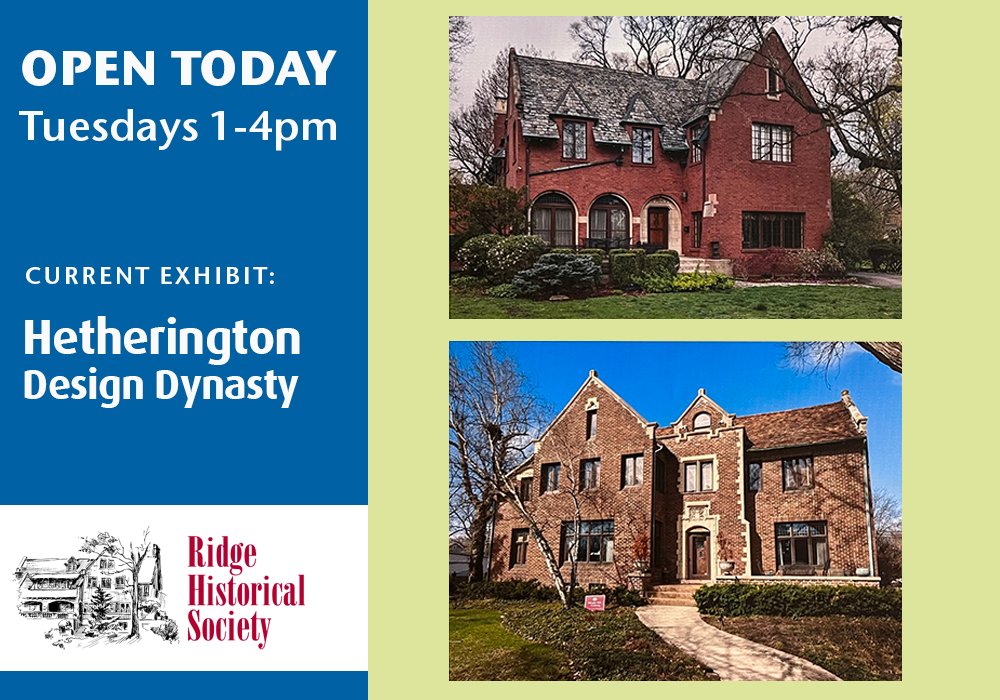
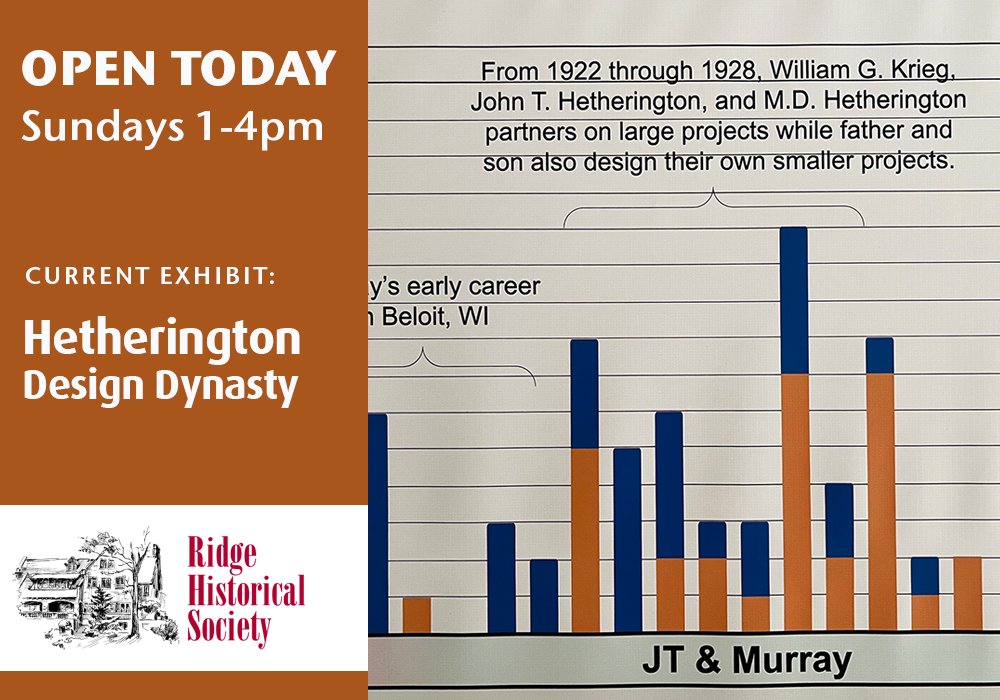
The Ridge Historical Society is now open to the public, for free, on Tuesday afternoons from 1:00 p.m. to 4:00 p.m. RHS volunteers will be there to answer questions about the current exhibit, Hetherington Design Dynasty, which celebrates the Hetherington family of architects.
Beverly/Morgan Park is renowned for its collection of architecturally significant buildings. Block after block of residences, churches, and business buildings, although varied in style, present a visual cohesiveness that has earned the area four official historic districts.
The most prolific architects in the community were the Hetherington family. John Todd Hetherington, his son Murray and daughter Jean, and Murray’s son John Murray created designs for at least seventy buildings on the Ridge that RHS researchers have documented so far.
John Todd and Murray Hetherington were known for the quality of their designs. They worked in a variety of styles – Tudor Revival, French Eclectic, even Prairie School.
To learn more about the Hetheringtons, their contributions to the community, and architecture styles, visit the current RHS exhibit.
RHS is located in the historic Graver – Driscoll House, a John Todd Hetherington creation, at 10621 S. Seeley Avenue. The grounds are entered through the driveway on Seeley, where there is some parking right at the house. Parking is also available on Seeley Avenue. The Graver-House is not wheelchair accessible and is not air conditioned.
The Ridge Historical Society
July 31, 2022
By Carol Flynn
The Ridge Historical Society is now open to the public, for free, on Sunday afternoons from 1:00 p.m. to 4:00 p.m. RHS volunteers will be there to answer questions about the current exhibit, Hetherington Design Dynasty, which celebrates the Hetherington family of architects.
It’s summertime and people are enjoying outdoor activities at Chicago’s vast system of city parks. The Chicago Park District has over 8,000 acres of land and more than 600 parks. Devoting space to parks has been a priority in Chicago since the beginning – in fact, the motto of Chicago is “Urbs in Horto,” Latin for “City in a Garden.”
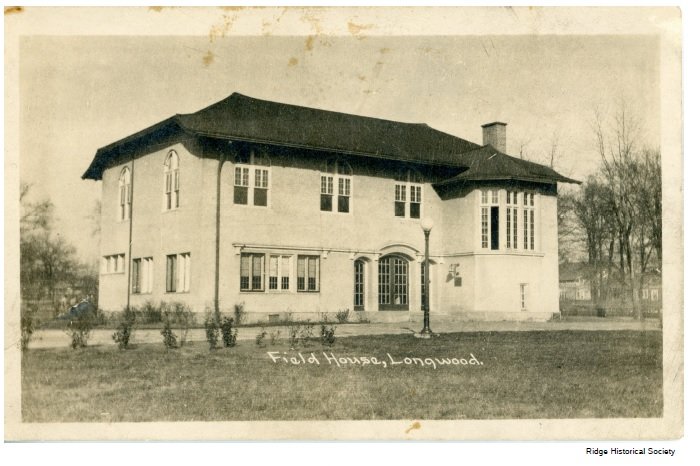
The Ridge community owes its wonderful Ridge Park at 96th Street and Longwood Drive to the Hetherington family.
The residents of Beverly wanted a park on Longwood Drive to go along with their fine homes. They asked John Todd Hetherington, an architect who lived in the community who was designing many of those fine homes, to design the park.
Hetherington designed the original park in 1913. In the late 1920s, Hetherington and his son Murray, now also an architect, designed the current field house.
Visit the RHS exhibit to learn all about the Hetherington family of architects and Ridge Park.
RHS is located in the historic Graver – Driscoll House, a Hetherington creation, at 10621 S. Seeley Avenue. The grounds are entered through the driveway on Seeley, where there is some parking right at the house. Parking is also available on Seeley Avenue. The Graver-House is not wheelchair accessible and is not air conditioned.
While you’re out and about for the BAPA Garden Walk this Sunday, July 10, please stop by the Ridge Historical Society, also.
RHS will now be open to the public on Sunday and Tuesday afternoons from 1:00 to 4:00 p.m. Everyone is welcome and admission is free. Visitors should enter at 10621 S. Seeley Avenue. There is limited parking right at RHS, and abundant street parking on Seeley.
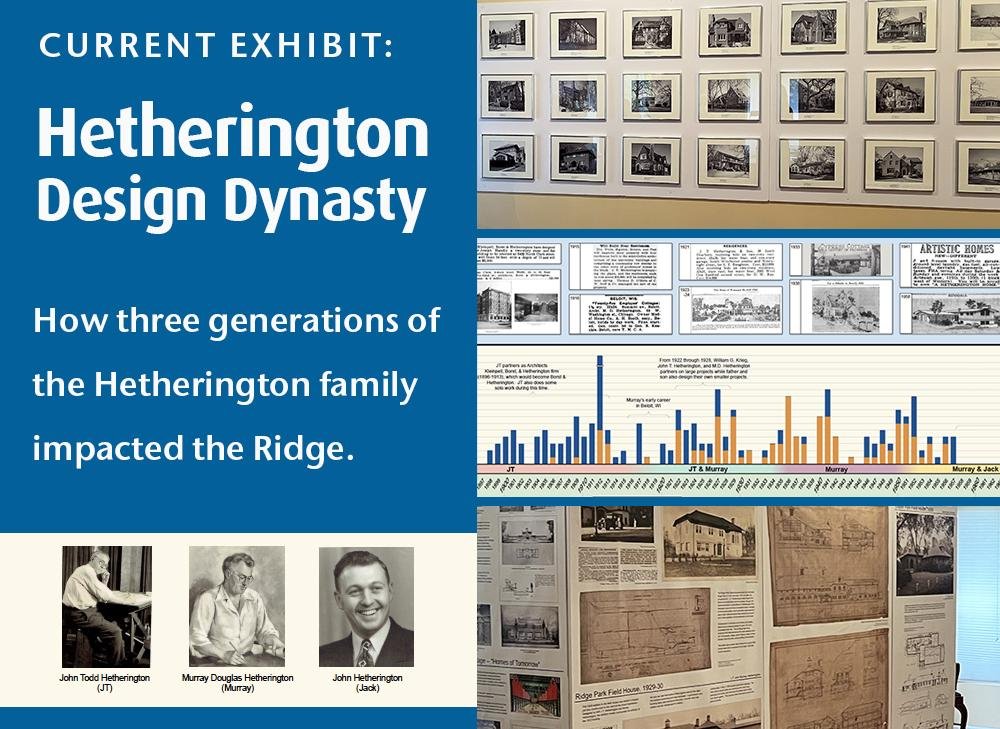
The current exhibit at RHS is “Hetherington Design Dynasty” which explores the architecture careers of three generations of the Hetherington family.
John Todd and Jane Hetherington, their sons and daughter, and their grandchildren, lived in Beverly. It’s safe to say this community would not have become the architecture showplace it has been known as for decades without the contributions of the Hetherington family. They designed close to one hundred buildings in a variety of styles. Just three examples of their work which are publicly accessible are the Graver-Driscoll House (RHS headquarters) which is celebrating its 100th anniversary this year, the Ridge Park field house at 96th and Longwood, and the Rainbow Cone building at 92nd and Western.
This Sunday, the three RHS representatives who developed the exhibit will be there in person to discuss their work. Meet Linda Lamberty, RHS Historian, the most knowledgeable person in the community about local history; Mati Maldre, the Chair of the RHS Historic Buildings Committee and the professional photographer whose images of Hetherington buildings grace an entire wall of the exhibit; and Tim Blackburn, owner of a local Hetherington-designed home, whose tireless research into all-things-Hetherington created the majority of this fascinating exhibit.
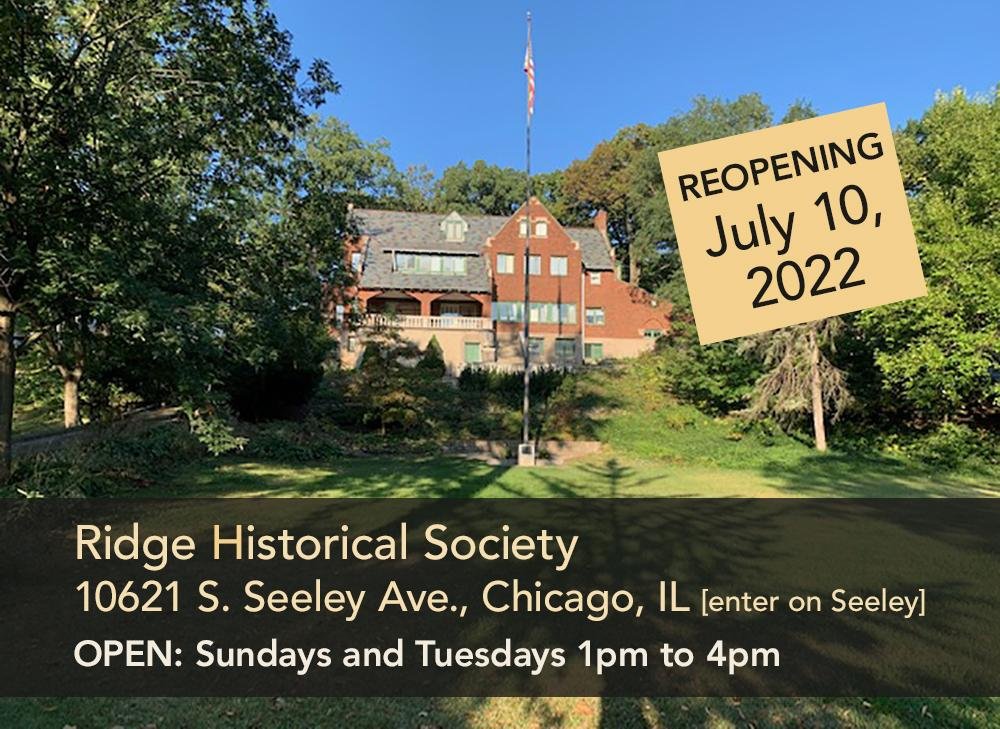
The Ridge Historical Society announces new OPEN HOURS for the public! Beginning this Sunday, July 10, 2022, RHS will be open on Sundays and Tuesdays from 1:00 p.m. to 4:00 p.m. All are welcome, no admission fee.
Enter the RHS grounds from the Seeley Avenue side – 10621 S. Seeley Avenue. There is limited parking by this entrance. Note that the Graver-Driscoll House is not air-conditioned or wheelchair accessible.
The current exhibit is on the Hetherington Family of Architects and their outstanding contributions to the community.
The Ridge Historical Society
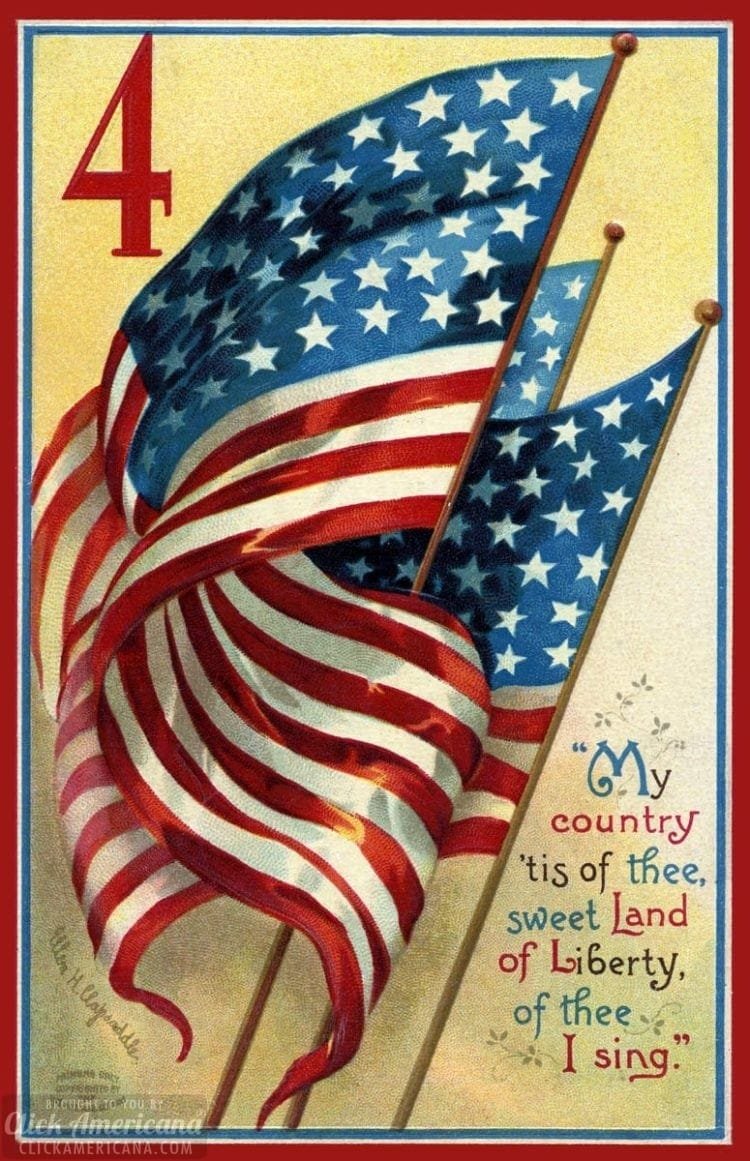
Fourth of July 1922
By Carol Flynn
The Ridge was busy with everyday life as the Fourth of July approached one hundred years ago.
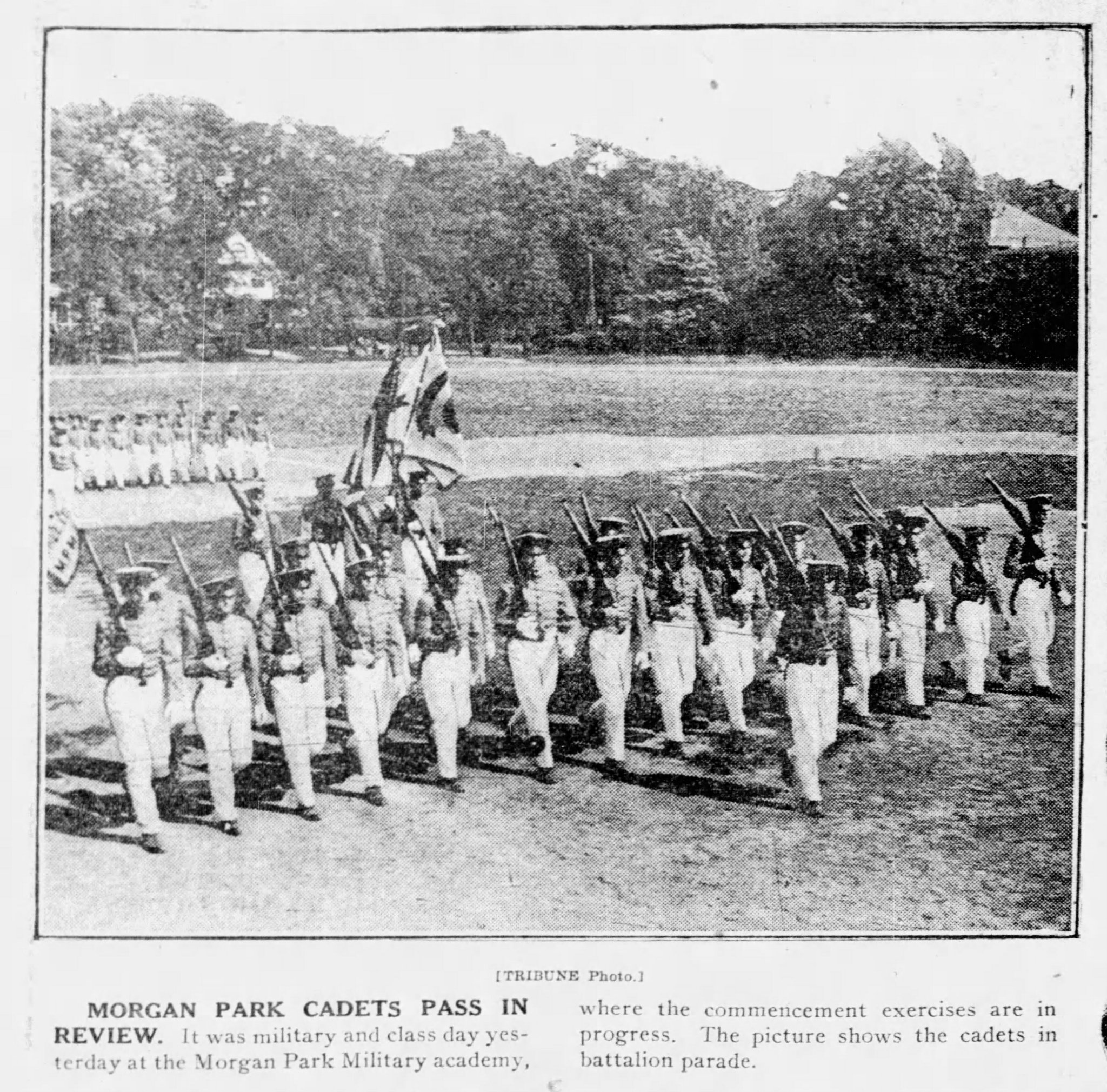
School had come to an end for the summer and graduation exercises had taken place. A picture of the cadets at the Morgan Park Military Academy parading in formation appeared in the Chicago Tribune.
Betty Frances and Irma Permelia Palmer of 96th Street gave a “good-bye before vacation” party for their schoolmates. Their mother was Pauline Palmer, the local correspondent for the Englewood Times newspaper for many years, and it was she who reported the neighborhood news in the 1920s.
Classes from the local schools enjoyed picnics in the Beverly Woods [which hadn’t been renamed the Dan Ryan Woods yet].
Tammie A. Wilcox, a teacher at the Vanderpoel School, received a Master’s degree from the American Conservatory of Music.
Newly ordained priest Father Lester Lyons of 98th and Winston celebrated his first solemn Mass at St. Margaret of Scotland Church. The “beautiful and uplifting service” was followed by “a sweet after-service” enjoyed by his relatives, friends, classmates and admirers.
Graduating college senior William G. “Bud” McCaw of 98th and Longwood was awarded the western conference medal by the Indiana University faculty for his scholarship and athletic record. He maintained a “B” average while earning his college letter “I” in football.
College students returned home for the summer. The Fitch family of 94th and Pleasant traveled to Ohio to collect sons Donald and James from Denison University. Katherine Hodges of 97th and Vanderpoel was home from Rockford College.
There were the usual illnesses and injuries. The little Kennicott son of 113th and Lothair was recovering from diphtheria. Miss Charlotte Slater had an operation for appendicitis at St. Luke’s Hospital. Mrs. Roy Baxter and her sister were badly cut and bruised when their automobile was smashed into at 103rd and Longwood. They were grateful to their neighbors Mr. Heffernon and Mr. Davis for coming to their assistance.
Folks made summer trips. Charles Lacklore of 111th and Longwood was in Seattle to visit his mother. Mr. and Mrs. Harry Mikesell were in Sturgeon Bay, Wisconsin. Dr. J. H. DeLoach went to Georgia on business. Mrs. Bulkley visited St. Louis and upon her return her daughter and son-in-law were planning to stay with her for the summer.
June weddings were popular. Gertrude Kilian and Charles Sikes had their wedding supper at the community center on 103rd Street, followed by a dance at Valentine’s hall at 103rd and Charles St. Marion Grozier married U. S. Navy Ensign Harry Keeler, Jr., of 96th and Longwood Drive, and prepared to move to San Diego, where the groom was assigned duty on a destroyer.
There were public safety concerns. The paper reported that it was “a favorite stunt for moonshine-filled autoists” here for funerals to drive through the local streets at “reckless speed from forty to sixty miles an hour,” and something had to be done to prevent this.
Neighbors were awakened by a “terrific” early morning explosion at the Beverly Hills News Agency at 98th and Wood Street, which resulted in a small fire and some damage. It was wondered if this was intentionally caused by someone with a grudge or if it was just an accident.
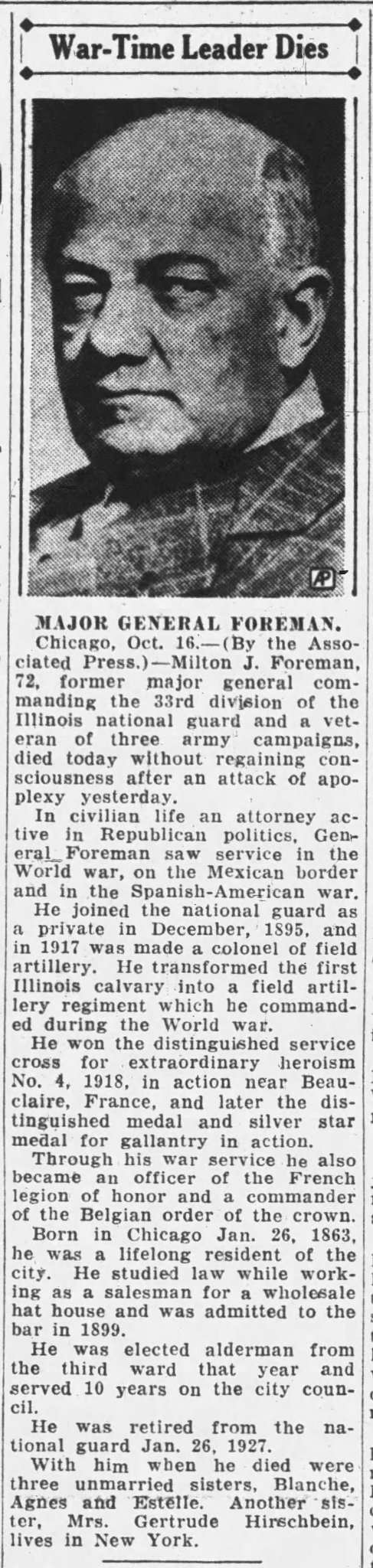
The Fourth of July program for the community was planned to start at 9 a.m. and end with a fireworks show at 9 p.m. – “if the weather man smiles.” Included in the day would be a band concert, community singing, athletic competitions and displays, and a baseball game between Morgan Park and Ridge Park teams. Major General Milton J. Foreman, a distinguished World War I veteran and leader in the Illinois National Guard, was invited to be the speaker.
The Ridge Park swimming pool would be open on the fourth, and “big and little, and grandparents, and all the rest, have their suits and caps and water wings ready for a plunge.”
Summer activities would go on after the holiday. The Vanderpoel School would be open on Sundays from 3:00 to 5:00 p.m. so people could visit the art collection. [The Vanderpoel Art Association would move to the Ridge Park field house when it was built in a few more years.]
St. Margaret’s Church was planning its annual carnival for the week of July 15. Mrs. John Finan of 100th and Prospect was the chair of the event.
Saturday afternoon at Ridge Park at 97th and Longwood was known for its “crackerjack ball games” and enthusiastic crowds.
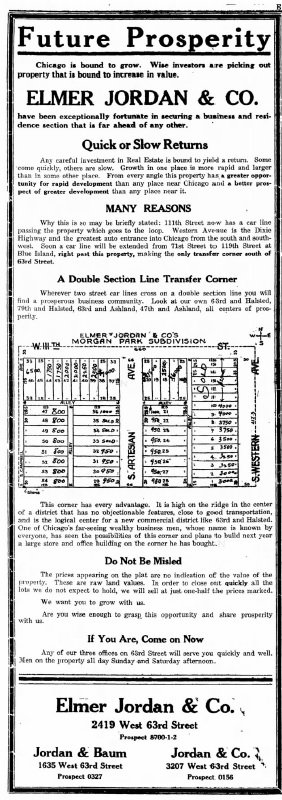
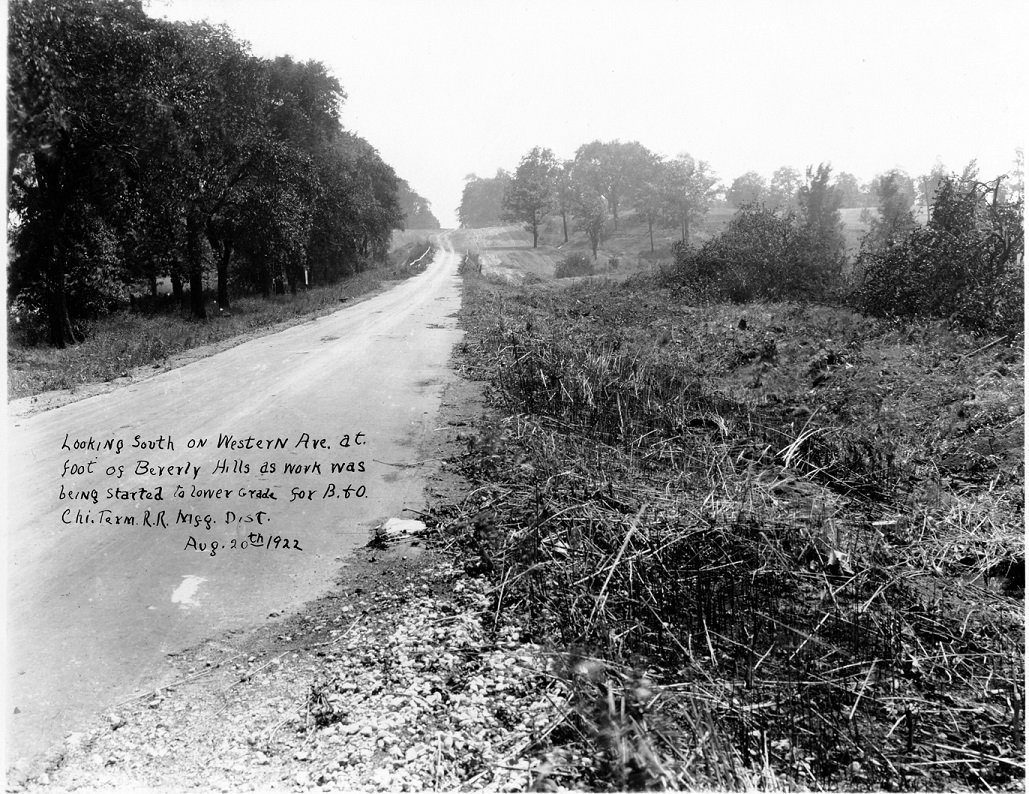
The community kept growing. The southwest corner of 111th Street and Western Ave. [where today the Beverly Arts Center is located] had just been sold to W.J. and Edward Birk for $22,500. There were ads in the local paper from Elmer Jordan and Co. offering real estate plots in this section for sale as the “Morgan Park Sub-Division.” The land was still very rural, and a project to widen, grade, and pave Western Avenue was in the works.
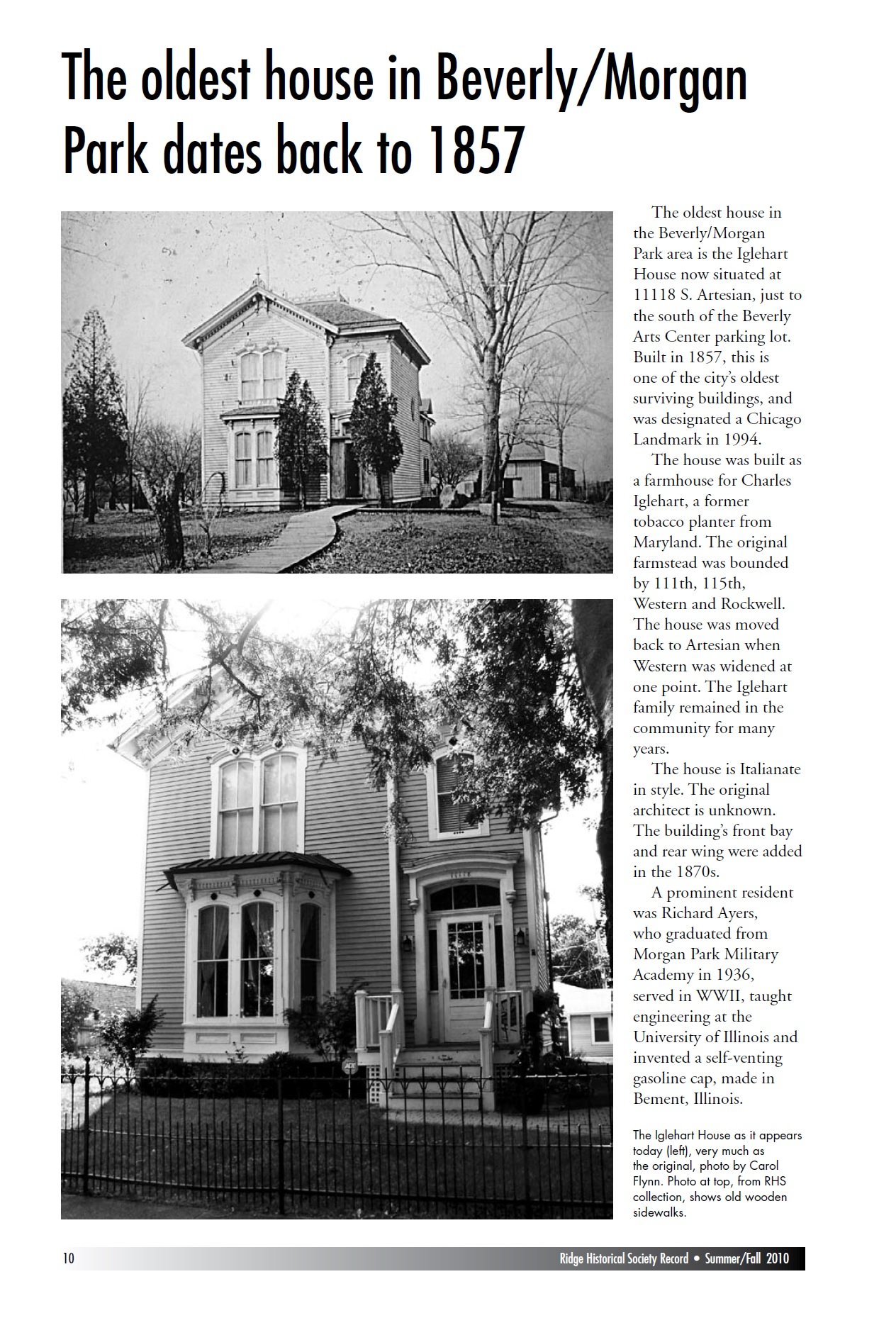
The oldest house in the community, and one of the oldest in the entire City of Chicago, the Iglehart House, is located in this neighborhood at 11118 S. Artesian Ave.
Life went on.
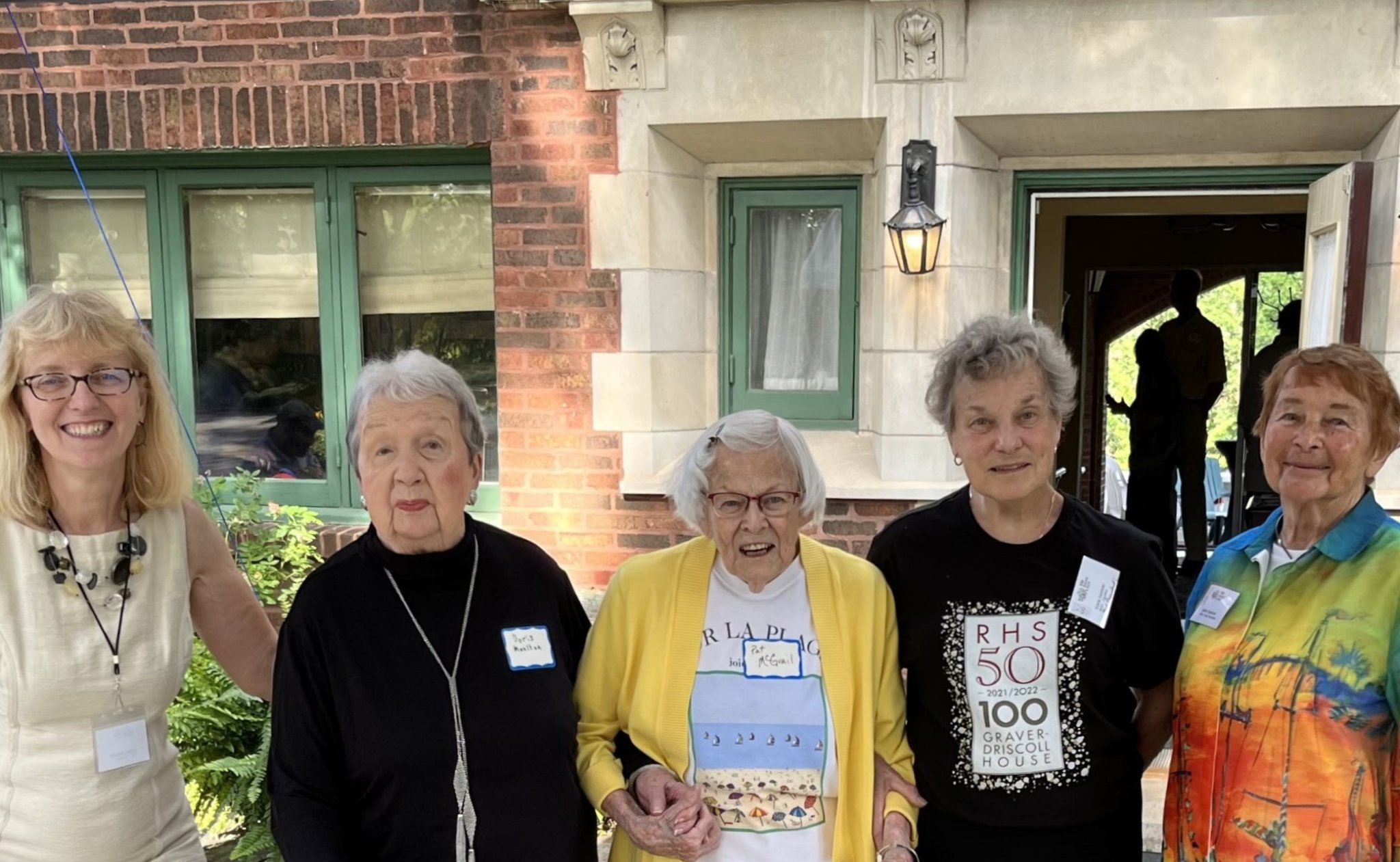
Current and past presidents of the Ridge Historical Society gathered for the 50th anniversary of the organization.
From left: Current President Debra Nemeth; past Presidents Doris Moulton, Patricia McGrail, Edris Hoover, and Elaine Spencer.
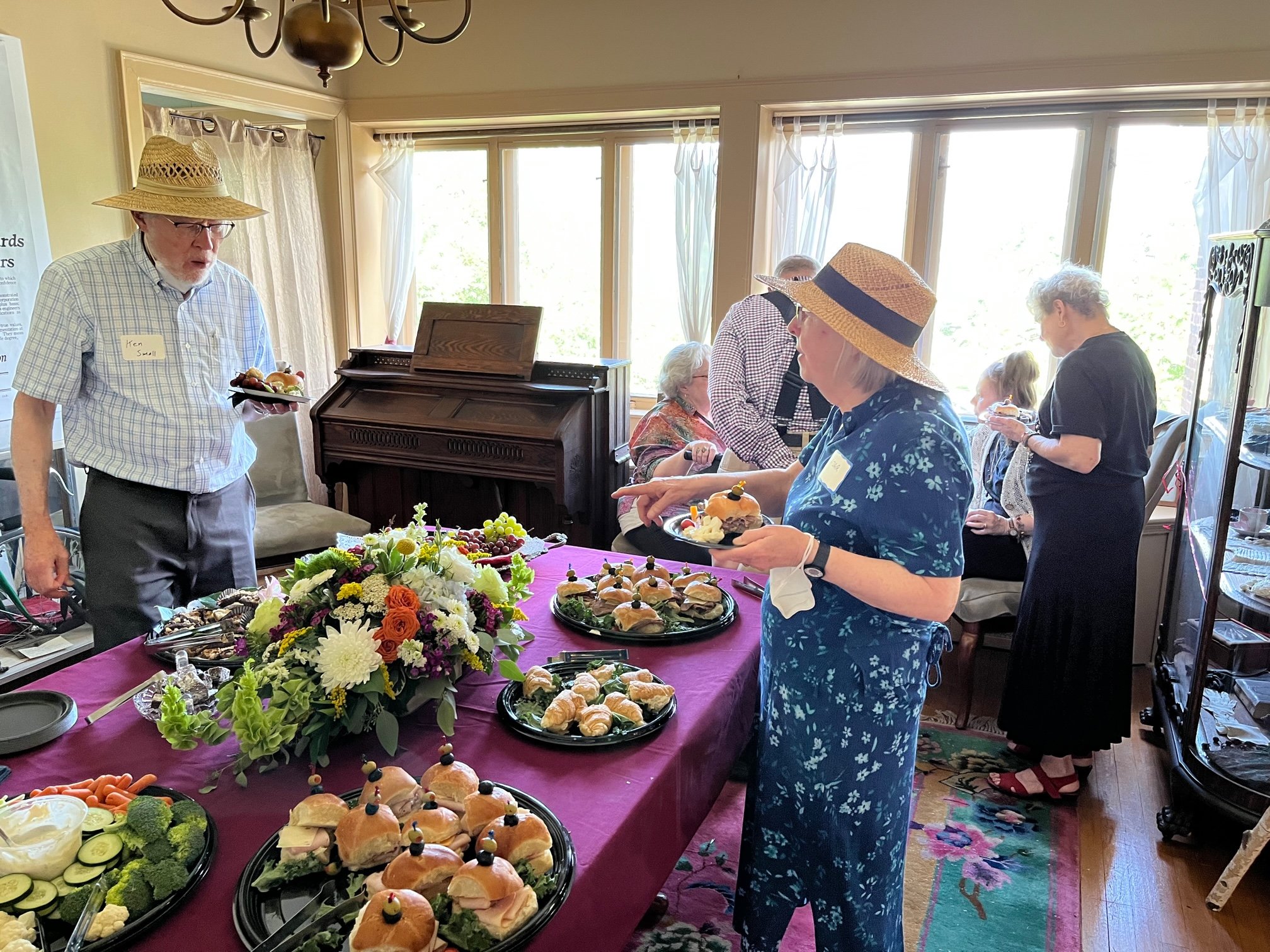
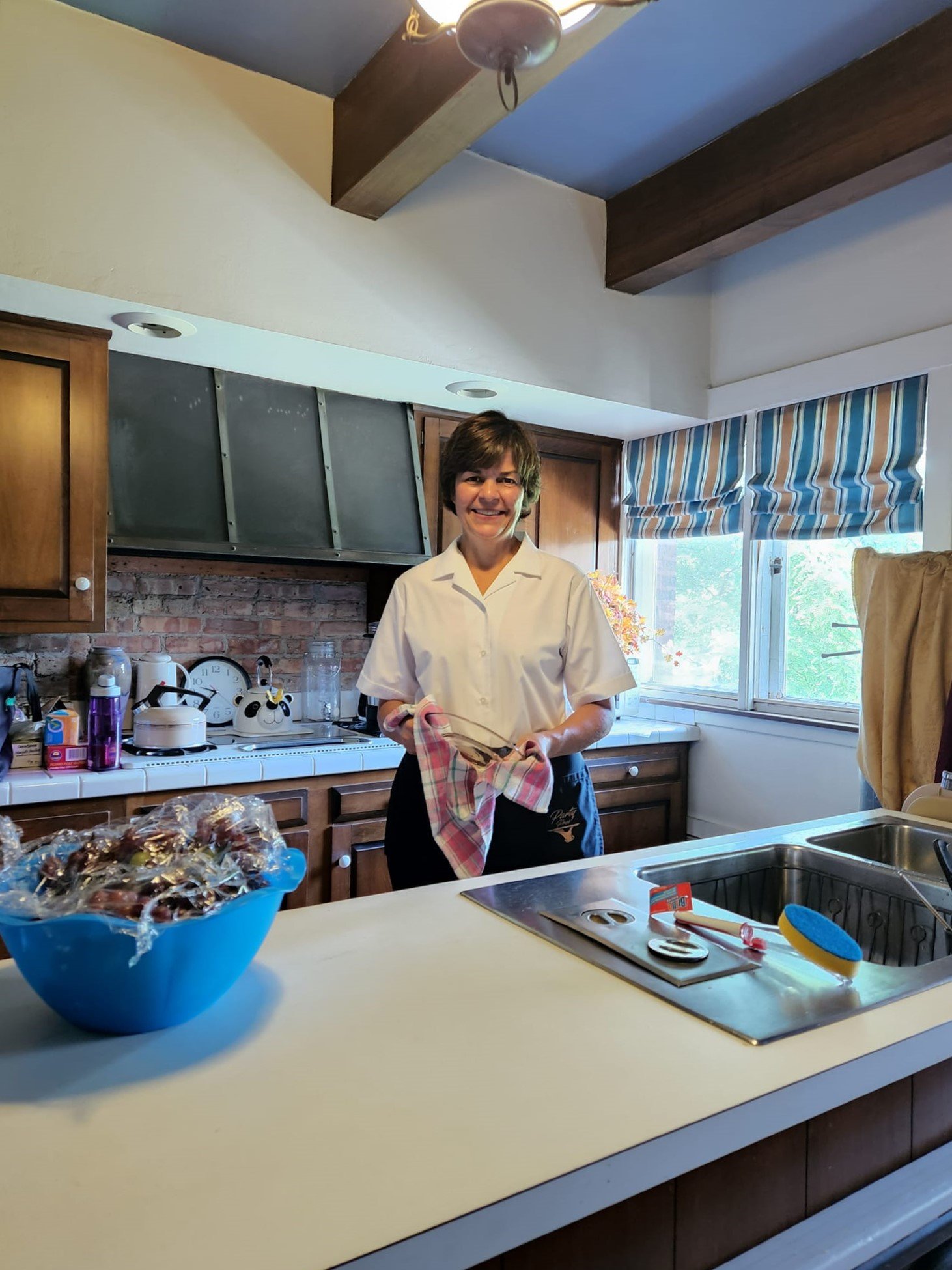
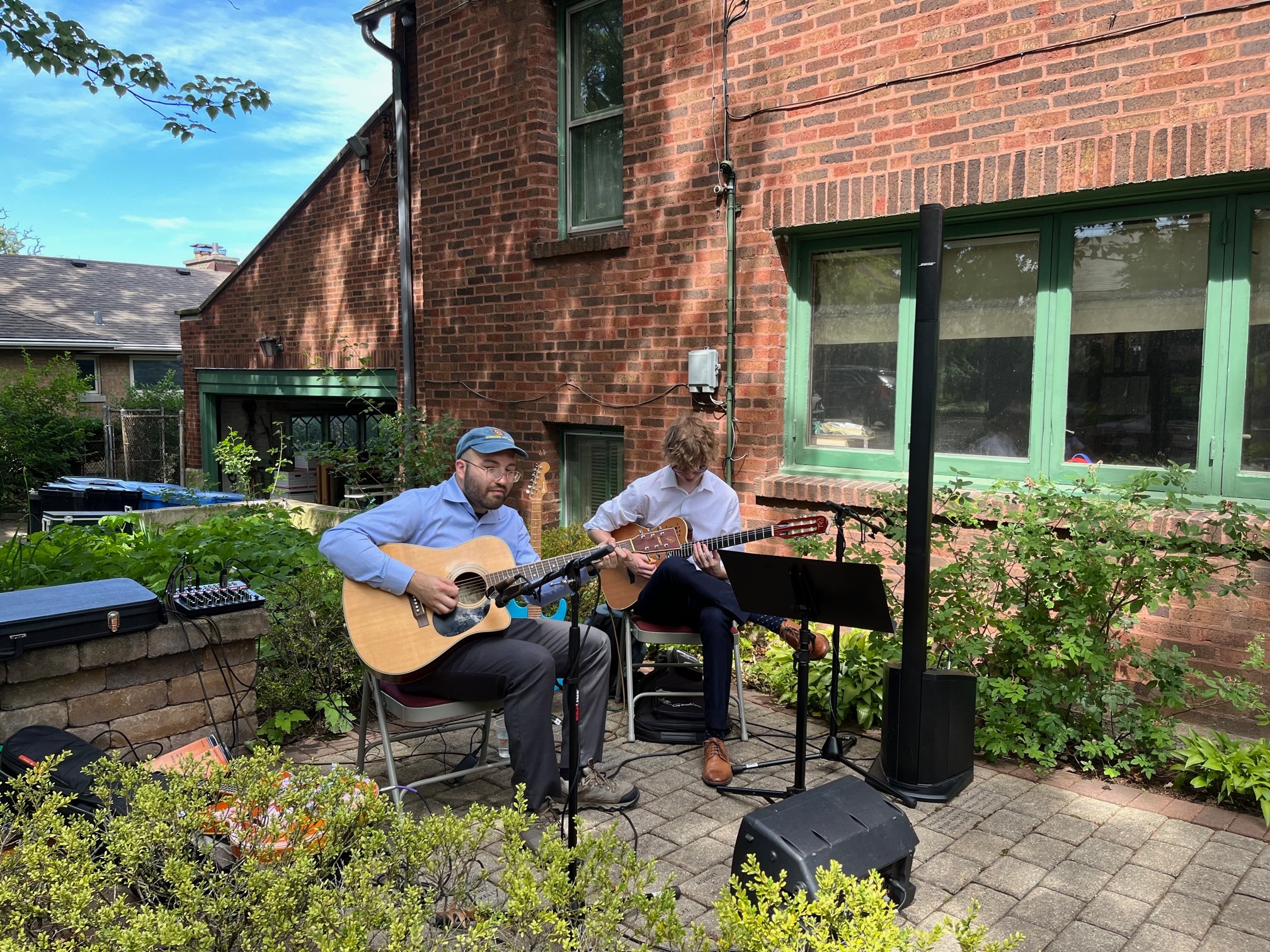
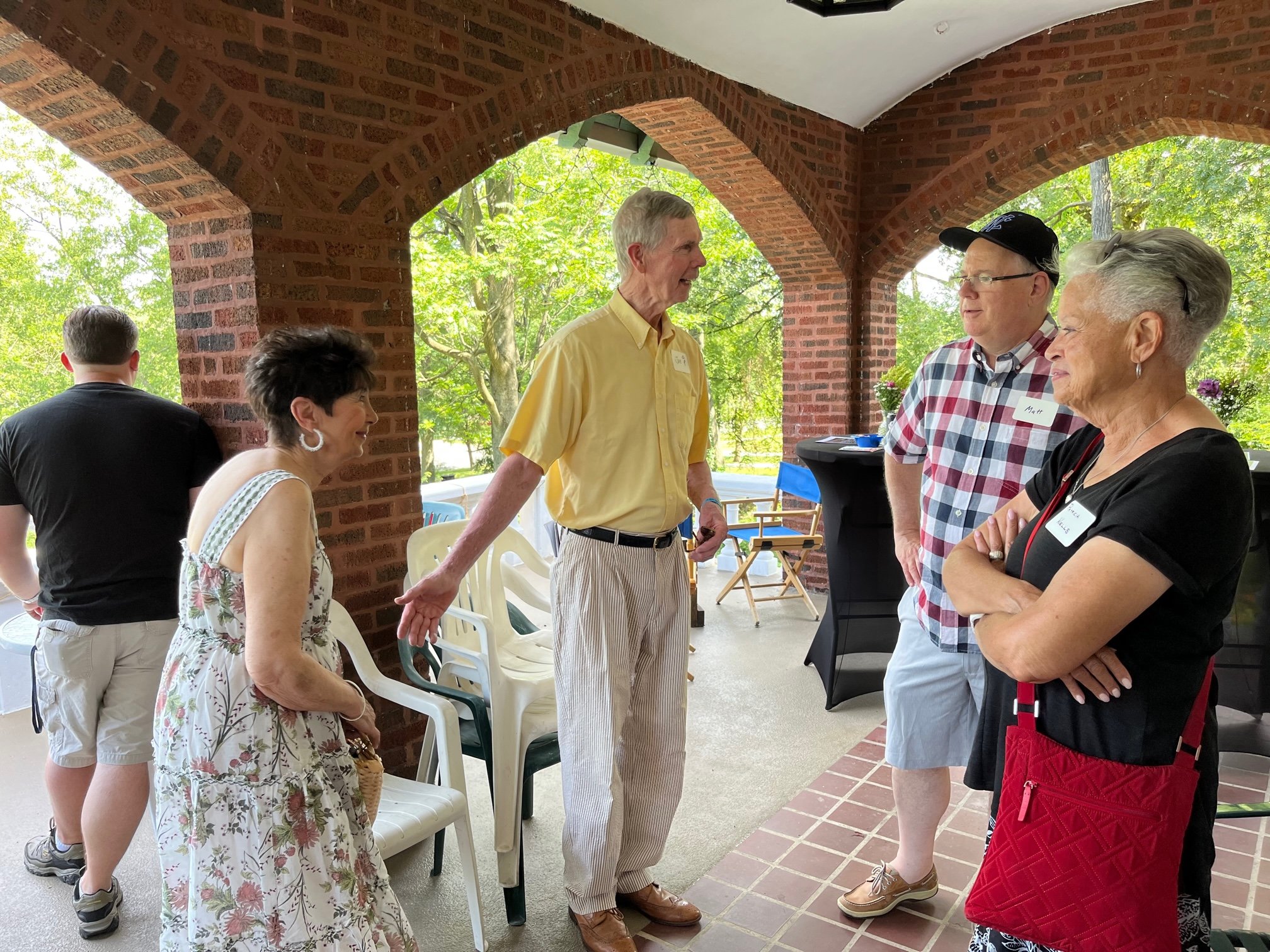
Treats, entertainment, and socializing were all part of the 50th anniversary celebration for the Ridge Historical Society.
Thanks to Janice Bruno Griffin of Party Pros, Inc., for her expert service. Food from D'Masti's.
Photos by D. Nemeth and C. Flynn.