Explore the RHS Facebook Archives, a rich repository of local history written by Carol Flynn. For two decades, Carol brought a deeply dedicated voice to public education at RHS. Her role as Facebook administrator through mid-2025 naturally extended her prolific research into meticulously detailed articles, most notably her multi-part historical series posts. Today, Carol continues her local history writing for The Beverly Review and other outlets.
2023
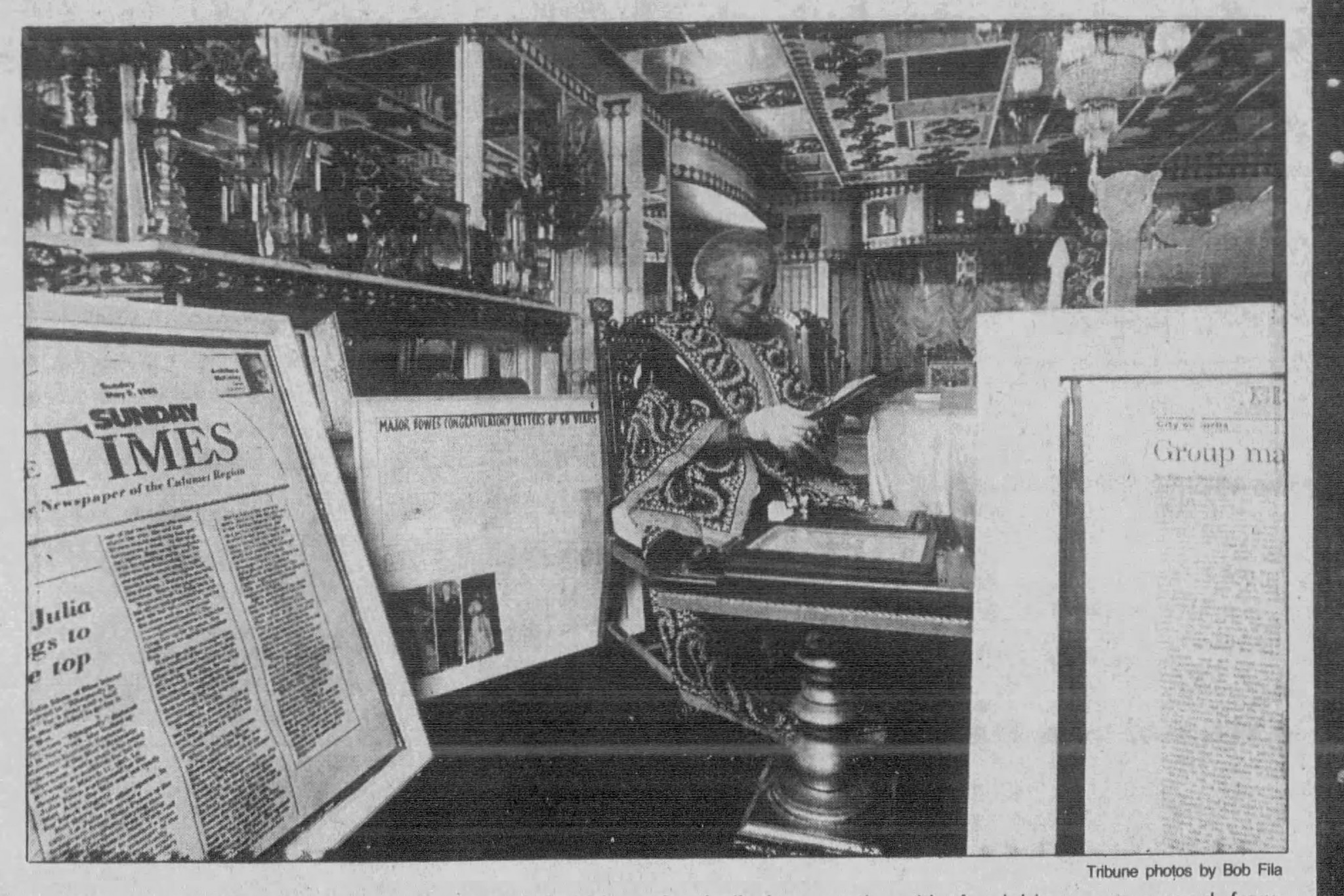
March continues as Women's History Month. This week's Beverly Review includes a feature on La Julia Rhea, a Black opera singer of exceptional talent who lived in Blue Island.
Her career spanned the 1930s and 1940s. Although her voice was acknowledged as amazing, she was denied opportunites due to her race; plus, no recordings of her voice have been found. Not many people are familiar with her.
The article can be found online today at: https://www.beverlyreview.net/eedition/page_73fee2c1-47ca-5765-a156-b4f6b99fe0da.html and is out in print tomorrow.
Rhea did break two race barriers that laid the groundwork to help other Black singers.
Rhea was the first Black woman allowed to audition for the Metropolitan Opera Capmpany in New York, and although the audition went very well, she was told “there is no chance for a colored singer to appear at the Metropolitan."
She also broke the race barrier at the Chicago Lyric Opera, where she sang the lead in "Aida," her signature role, for a special benefit performance. It was a one-time event and she was not invited back.
The family moved to Blue Island in the 1950s, restoring an old farmhouse into a "fairy tale creation." She died in Blue Island at the age of 94 in 1992.
This photo by Bob Fila of the Chicago Tribune shows La Julia Rhea in her home in Blue Island in 1986.

The Ridge Historical Society will be open today, Tuesday, March 14, from 1:00 to 4:00 p.m., free admission.
The Ridge Historical Society is restarting its "House Doctor" programs.
The first one will be on Sunday, March 19, on "Weatherization Before Electrification," presented by Al Mitchell. He will cover the most up-to-date understandings and methods for residential energy conservation.
Mitchell works for Phius, formerly known as the Passive House Institute US. His background is in engineering and architecture and he is currently pursuing a PhD in engineering at IIT with a focus on thermal resilience.
Tickets are $10 for RHS members and $15 for non-memnbers. Tickets may be purchased here: https://bit.ly/RHS-HouseDoctor
The Ridge Historical Society
March – Irish American Heritage Month and Women’s History Month – Post 2
By Carol Flynn
For March, we’ll be alternating stories between Irish American heritage and women’s history on the Ridge.
Beverly is known today as one of the most Irish Catholic neighborhoods in Chicago. According to the U.S. Census Bureau, in West Beverly (west of Western Avenue), almost 55% of residents report Irish ancestry, the highest concentration in the city. Mount Greenwood and West Morgan Park are each about 45% Irish, and Beverly about 25%. Chicago, as a whole, is about 7.5% Irish.
Many people, including new home buyers in Beverly, think this has always been the case. It’s not surprising they would think this, given the media’s penchant for using terms like “Beverly’s deep Irish roots” to describe the community, implying this goes way back in history.
In reality, the large Irish presence in Beverly is a much more recent phenomenon, not solidifying until about 1980, well more than a century after the area was first settled.
Beverly was originally settled mainly by English and other European Protestants as a “bedroom community” for wealthy businessmen attracted to the Ridge by its scenic beauty. They built country estates here and invested in property for development, while most of their business and social lives were centered in downtown Chicago.
Morgan Park was planned as an education, temperance, and religious community, with the Baptist Theological Seminary founded here. Mount Greenwood was primarily farmland, with ministers who preached hard work and temperance.
There was always an Irish presence on the Blue Island Ridge, however small, even in the earliest days, although it would be impossible to say who was the first person of Irish descent to ever step foot here.
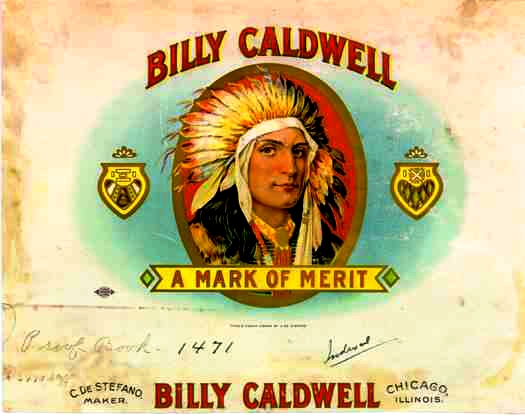
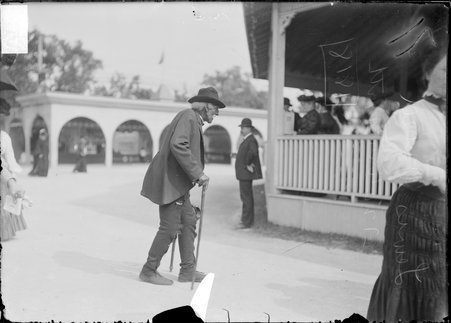
One early person was Billy Caldwell, also known as Chief Sauganash and the “Irish Indian.” Caldwell (1782-1841), the son of a Scots Irish officer in the British Army and a Mohawk mother, was raised Catholic from the age of seven on by his white stepmother. He came to Chicago in 1820 from Canada as a fur trader.
Billy Caldwell became an important figure in Chicago history, and there are historical references to his visits to the Blue Island area.
Fluent in French, English, and Native American languages like the Algonquin language used by the Potawatomi people most prevalent in the Chicago area, Caldwell became a leader among both the Potawatomi people and the white settlers.
Caldwell was known to guide survey and expedition teams through the area. During one visit, he was part of a team that lost everything when their wagon capsized in Stony Creek at the southern edge of the Ridge, so they stopped at a dwelling along the Vincennes Road where they were given food and spent a cold night outside by a fire.
Caldwell was credited with the idea of building the Cal-Sag Channel to be a feeder into the Illinois and Michigan Canal.
Before he led the Potawatomi out of Chicago in 1836, after the Treaty of Chicago, it was reported the “old Irish Chief” rode his pony through the prairies near the Ridge.
The Sauganash area on Chicago’s north side, the Billy Caldwell golf course, and Caldwell Woods in the Cook County Forest Preserves all get their names from this man.
More on Beverly becoming “Irish” will be in upcoming posts.
This idealized image of Billy Caldwell was used for a cigar brand many decades after his death.

The Ridge Historical Society is restarting its "House Doctor" programs.
The first one will be on Sunday, March 19, on "Weatherization Before Electrification," presented by Al Mitchell. He will cover the most up-to-date understandings and methods for residential energy conservation.
Mitchell works for Phius, formerly known as the Passive House Institute US. His background is in engineering and architecture and he is currently pursuing a PhD in engineering at IIT with a focus on thermal resilience.
Tickets are $10 for RHS members and $15 for non-memnbers. Tickets may be purchased here: https://bit.ly/RHS-HouseDoctor
The Ridge Historical Society will be open today, Sunday, March 5, from 1 to 4 p.m. The address is 10621 S. Seeley Avenue. Admission is free.
The Ridge Historical Society
March: Women’s History Month and Irish American Heritage Month – Part 1
By Carol Flynn
March is both Women’s History Month and Irish American Heritage Month so for the next few weeks we’ll alternate in exploring these topics in relationship to the Ridge.
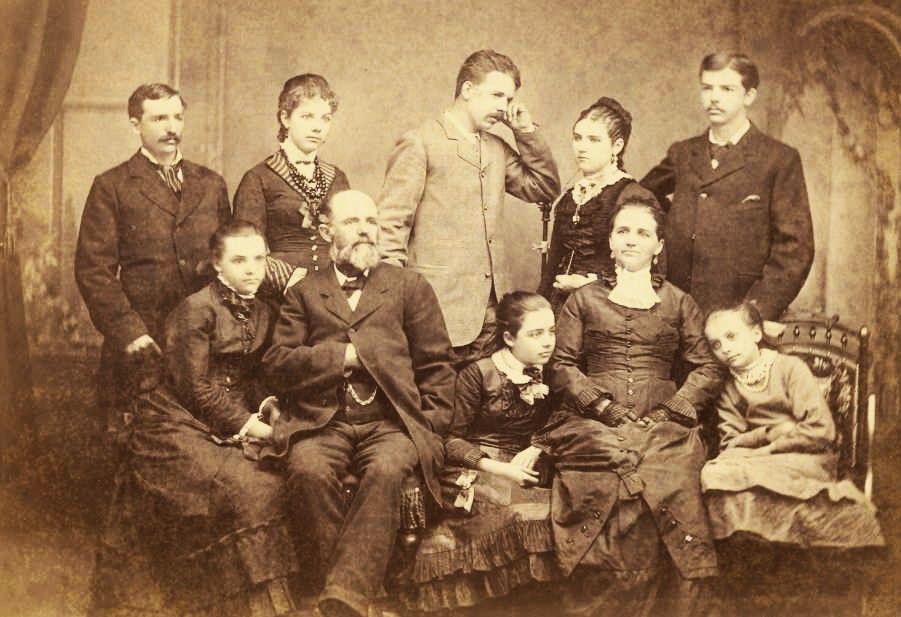
Many remarkable women have had connections to Beverly/Morgan Park. The Hofer family stands out because all five daughters – Mari, Bertha, Amalie, Andrea, and Elizabeth – were pioneers in the kindergarten movement and other social causes at the beginning of the 1900s.
The kindergarten movement helped to revolutionize the way children’s education was viewed. The work of the Hofer sisters helped establish kindergarten as the foundation of the American school system.
In the traditional model for educating young children, they were taught at home how to read and write and do simple arithmetic. They learned by lecture and memorization, and they were expected to be quiet and industrious to prepare themselves for the working world.
In the late 1700s, Johan Heinrich Pestalozzi, a Swiss educator and reformer, shared his observations that children learned best by investigation, imagination, and doing. He started experimental schools with activities like drawing, writing, singing, physical exercise, model making, collecting, and field trips. He allowed for individual differences and grouped students together by ability.
In 1837, Friedrich Froebel, a follower of Pestalozzi, opened a program in Prussia/Germany he called “kindergarten,” or child garden, to signify children should be nourished like flowers in a garden.
Froebel sought to teach children how to think, not what to think, and used the natural play of children to enhance learning. He developed learning experiences using educational toys, stories, songs, games, and crafts.
He trained women as teachers for his program, believing they had superior nurturing ability for working with young children.
Froebel’s work was banned in Prussia for being too radical, causing those trained in his methods to leave the country to establish programs elsewhere.
Famous "graduates" of early revolutionary kindergarten programs included Albert Einstein and Frank Lloyd Wright.
The first kindergarten in the U.S. was started in Wisconsin in 1855 by one of Froebel’s students, and was conducted in German. The first English-language kindergarten opened in Boston.
The kindergarten movement became closely tied to two other social reform movements of the Progressive Era of the late 1800s, settlements and playgrounds.
Settlement houses were organizations set up to provide services to help alleviate poverty. They were usually found in large buildings in urban areas heavily populated by recent immigrants. Social workers, teachers, ministers, and other service providers lived or “settled” in the facility to be closer to the people with whom they worked.
The most famous settlement house in this country was Hull House in Chicago started by Jane Addams. Other Chicago settlement houses included the Chicago Commons Social Settlement and the Fellowship House.
The first outreach at the settlement houses was to children and mothers, with daycares, kindergartens, and playgrounds; classes in English, crafts, and homemaking; and mothers’ clubs.
The playground movement was started in the 1890s by reformers who advocated that supervised play could improve the mental, moral, and physical well-being of children. Private athletic clubs had always been around for the wealthy, but now city parks and playgrounds, swimming pools and fieldhouses were built, and trained play leaders were hired to plan and conduct activities. This soon expanded to include adult activities as well.
The Chicago park system developed as one of the largest and best in the country.
The Hofers were leaders in all of these movements.
The five Hofer sisters and their three brothers were the children of Mari Ruef and Franz Xaver Hofer.
Born in 1821 in Baden, a state in Germany bordering France and Switzerland, Hofer fled to the U.S. in 1849 after participating in a failed revolution. He and Mari Ruef, born in Baden in 1836, married in 1853 in New York. They moved to Iowa where they farmed. He served as a lieutenant in the Union Army during the U.S. Civil War.
The Hofers had a passion for social justice and reform that they passed down to their children. They bought a newspaper in Iowa through which they shared their “progressive” views, and all the children were trained in the newspaper and printing fields.
The sons left to seek their fortunes on the west coast and started several newspapers. The daughters worked at the family newspaper and attended colleges to become teachers.
Two of the daughters moved to Chicago, and were soon followed by the parents and the other three sisters. They made their home at 1753 West 96th Street, where their house still stands on the edge of Ridge Park.
One of the sons wrote in his newspaper out west that his parents “are now comfortably settled in a cosy (sic) home in one of the most charming and healthful suburbs – Longwood.”
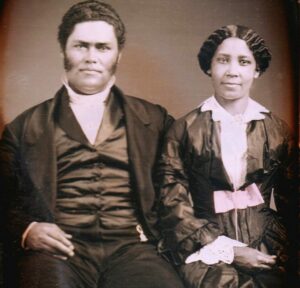
In the next posts we will look at the amazing work of the Hofer sisters. This picture of the Hofer family was user submitted on Ancestry.com.
The Ridge Historical Society
Black History Month: The Underground Railroad (UGRR) and the Ridge – Part 3
By Carol Flynn
In the decades leading up to the U.S. Civil War, abolitionists in the Chicago area helped thousands of escaped slaves, today referred to as “freedom seekers,” along their journey via the “Underground Railroad” to safety and freedom in Canada.
There were notable Black abolitionists in Chicago, including Lewis Isbell (1819-1905), who was born a slave but set free, and came to Chicago in 1838, where he worked as a barber. He knew Abraham Lincoln and Stephen Douglas. By his own account, Isbell helped over 1,000 freedom seekers at great danger to himself, sharing stories like the time in 1857 when he was shot at four times by a slave owner from Missouri. He is buried on the Ridge in Mount Olivet Cemetery on 111th Street.
Another abolitionist couple was John Jones (1816-1879) and Mary Jane Richardson Jones (1819-1909), who harbored and fed freedom seekers at their home at 9th Street and S. Plymouth Court. Jones was the first Black man to be elected to office in Cook County as a commissioner. Mary was a pioneer in the suffrage movement.
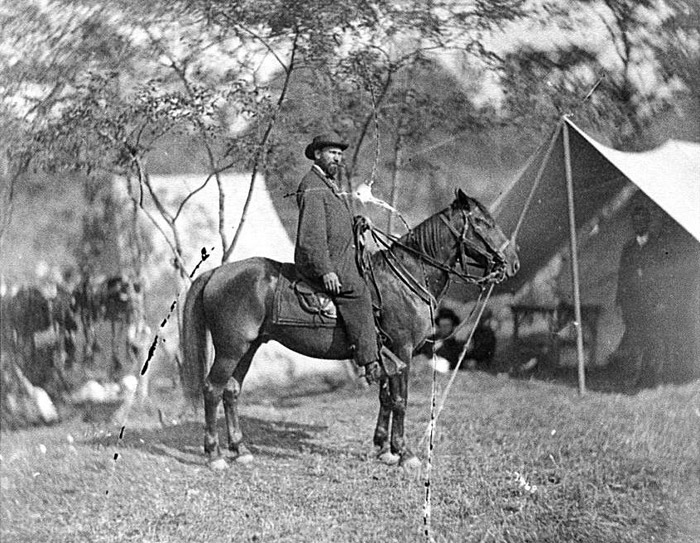
Other abolitionists included Allan Pinkerton (1819 – 1884), founder of the famous detective agency. He was born in Scotland and came to Chicago at the age of 23. He was a cooper, and had a barrel-making shop near Chicago, which was a safe house along the Underground Railroad.
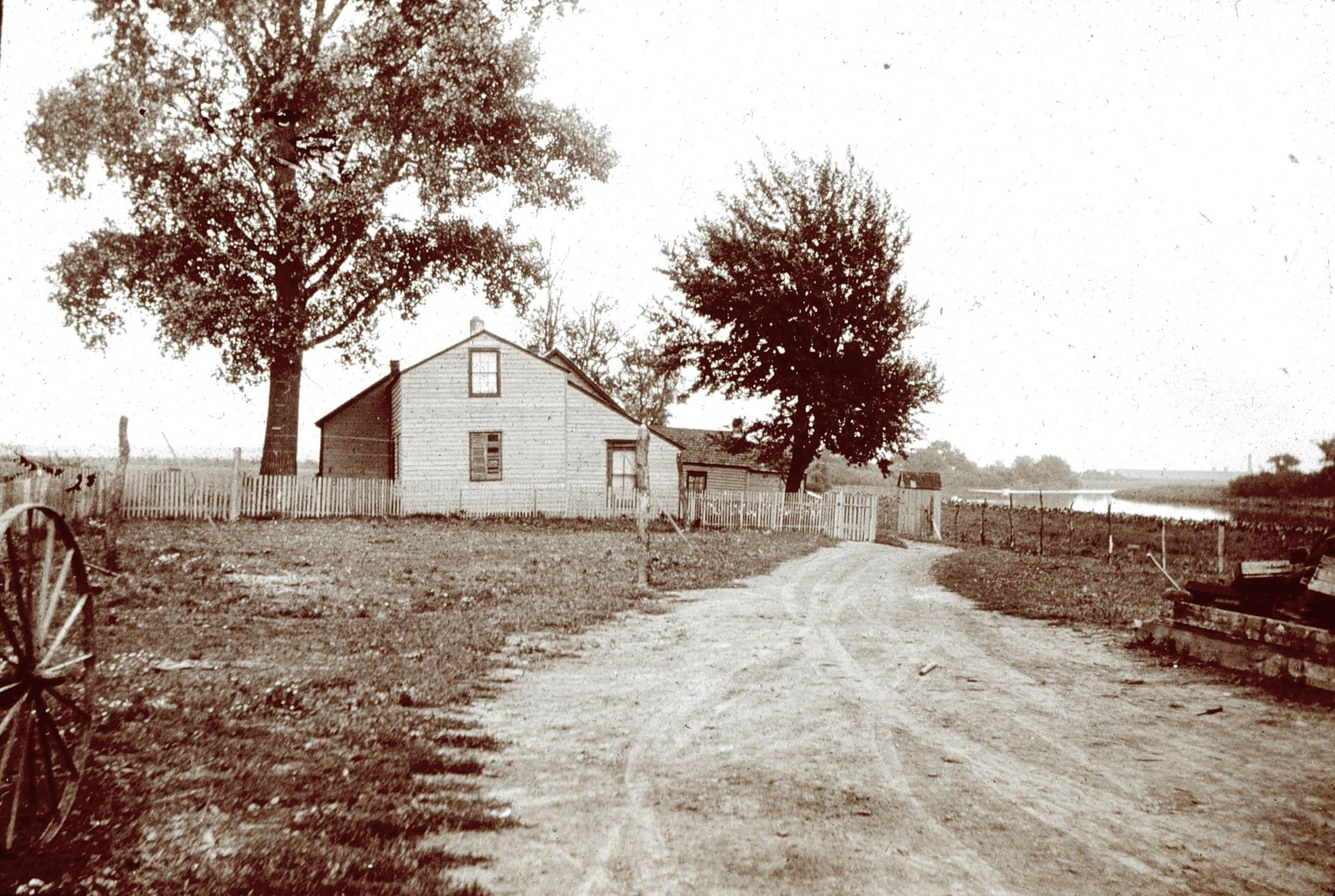
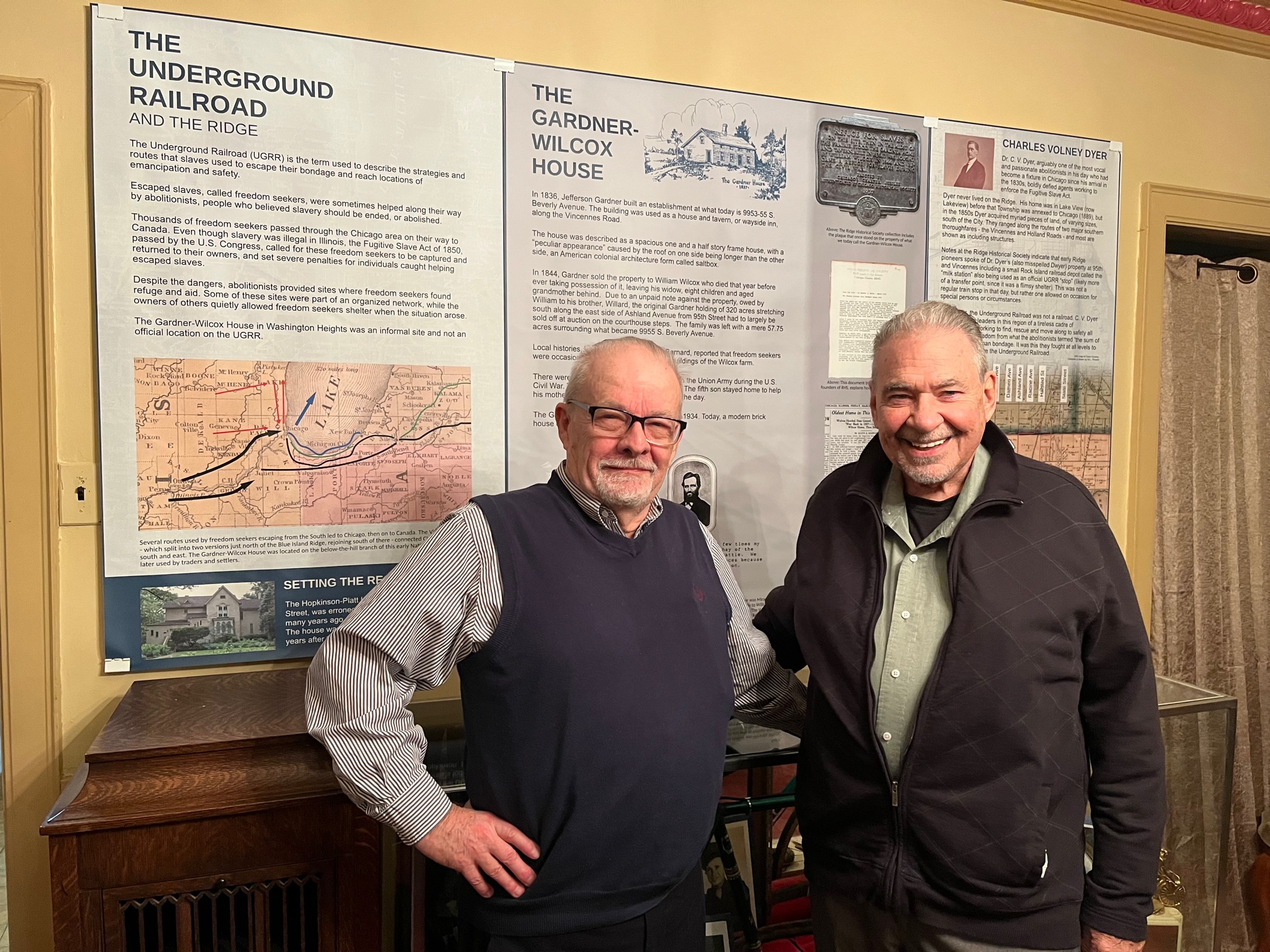
South of the city, the Wilcox farm, located at today’s 99th Street and Beverly Avenue, was located along the Vincennes Road, and although it was not an “official” stop on the UGRR, there are anecdotal stories of freedom seekers being allowed to sleep in the barn and being fed there as they made their way to Chicago and then to Canada. RHS has a new exhibit on the location.
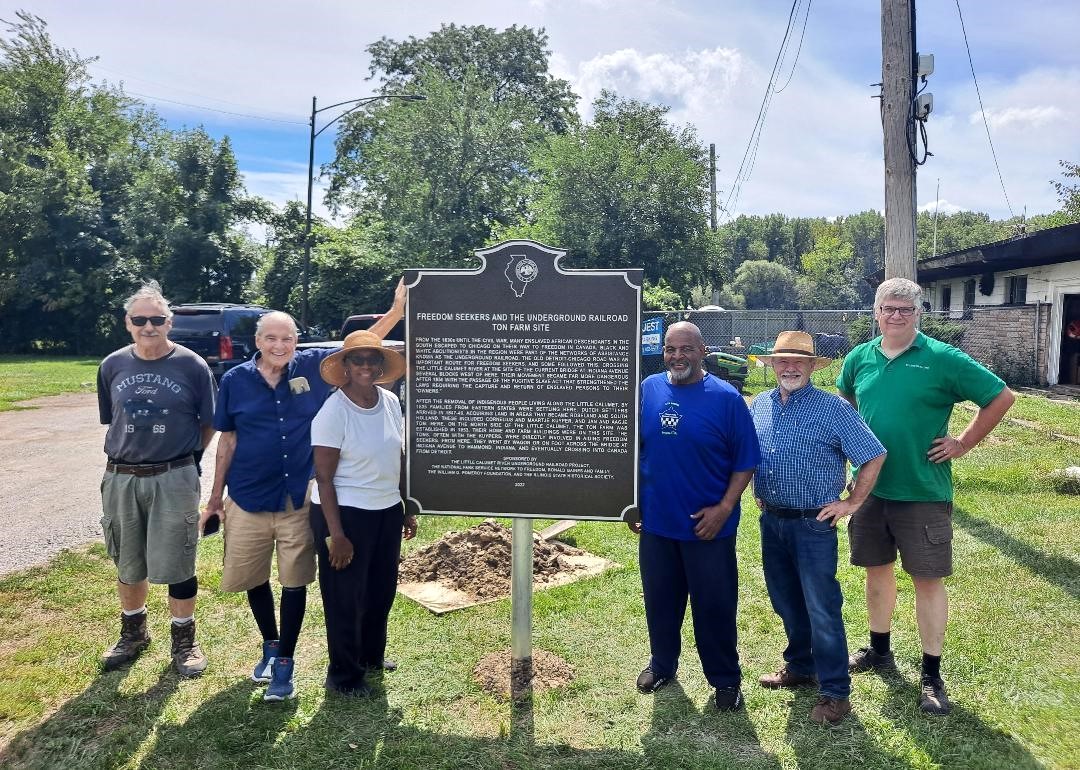
Farther to the southeast was the Jan and Aagie Ton Farm along the Little Calumet River, a known stop on the Underground Railroad and the focus of the Little Calumet River Underground Railroad Project.
A great post from neighbors who attended the February 17 presentation.
The Ridge Historical Society
Black History Month: The Underground Railroad (UGRR) and the Ridge – Part 2
By Carol Flynn
The Ridge Historical Society hosted Dr. Larry McClellan and Tom Shepherd from the Little Calumet River Underground Railroad Project for a presentation on Friday evening, February 17th.
McClellan is the leading expert on the Underground Railroad (UGRR) in northeastern Illinois and has written three books related to the topic: To the River, the Remarkable Journey of Caroline Quarlls (available now), The Underground Railroad South of Chicago (reprint will be available in a few weeks), and Barefoot to Chicago: Freedom Seekers and the Underground Railroad in Northeastern Illinois (coming this summer).
Shepherd is well-known preservation, environmental, and social activist in the south Chicagoland region, hailing from the Pullman community. He was with the Southeast Environmental Task Force for fifteen years, where he served as President.
The UGRR started in response to enslaved people escaping the inhumane and immoral system allowed to exist in the southern states. As these people made their way to places of freedom like Canada, they started to receive assistance along their ways from others sympathetic to their cause. The informal network of safe houses and other means of assistance became known as the Underground Railroad. Information was passed along by word of mouth.
The preferred terminology for escaped slaves is “freedom seekers.” This takes the emphasis off of their standing as fugitives, escapees, runaways, and breakers of the law. Instead, emphasis is placed on their humanity and their intrinsic right to live in freedom, and their bravery to risk everything, their very lives, to achieve that goal.
A major route for freedom seekers traveling to Canada was through the Chicago area. Usually traveling at night along ancient trails first carved by animals, then used by Native Americans and later traders, it is estimated that as many as 4,500 freedom seekers came through the area. Many made the journey on their own, but many were helped by white and Black abolitionists, people who believed slavery should be abolished.
Although Illinois was a free state, the Fugitive Slave Act of 1850, passed by the U.S. Congress, mandated the capture and return of runaway slaves who escaped from one state and fled into another. Individuals who helped slaves to escape were heavily penalized, with a fine of $1,000, about $35,000 in today’s value, and possible jail time. The actual number of abolitionists willing to break the law and help escaped slaves was small.
The next posts will cover the Chicago-area community of abolitionists who helped the freedom seekers and UGRR sites in the area, including those connected to the south side of Chicago and the Ridge.
Picture: Larry McClellan (left) and Tom Shepherd at RHS in front of an exhibit on the Ridge site known to have harbored freedom seekers. Photo by D. Nemeth.
The Ridge Historical Society
Get Behind the Vest
By Carol Flynn
The pancake breakfast in the 19th Ward to raise funds for the “Get Behind the Vest” initiative which provides protective clothing to Chicago police officers will be held on Saturday, February 18.
According to the Chicago Police Memorial Foundation (CPMF) website, 595 Chicago police officers have lost their lives in the line of duty.
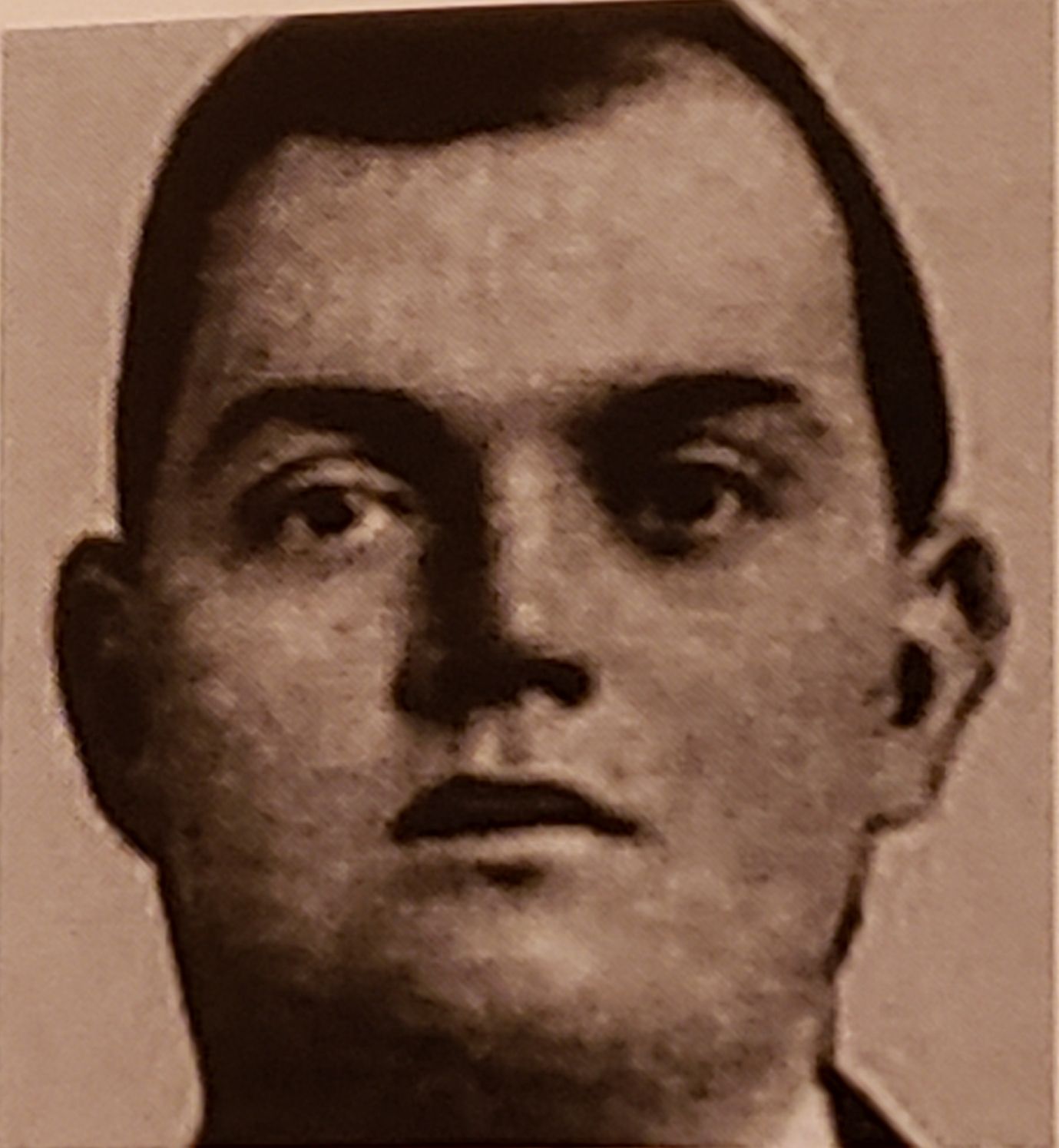
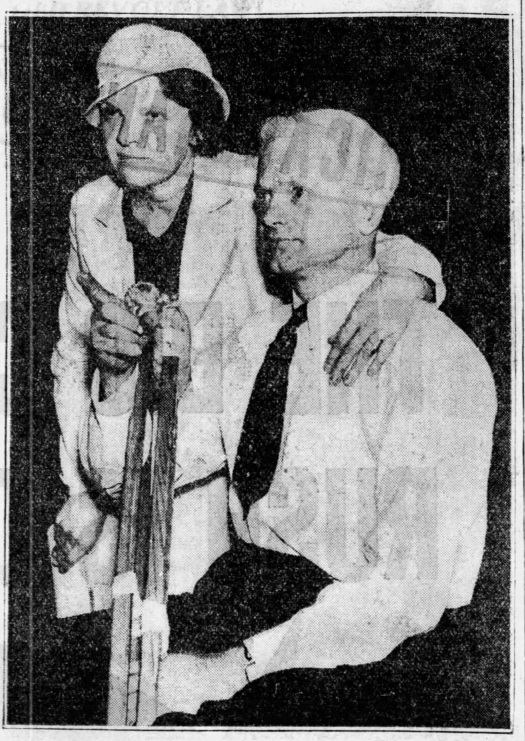
On July 18, 1930, the name of Morgan Park police officer John J. Guiltanane was added to that list.
He was killed by a bullet fired by an armed robber that went through his heart.
Fellow officer Antony P. Wistort was also critically injured. A bullet went through his upper abdomen, injuring his spine.
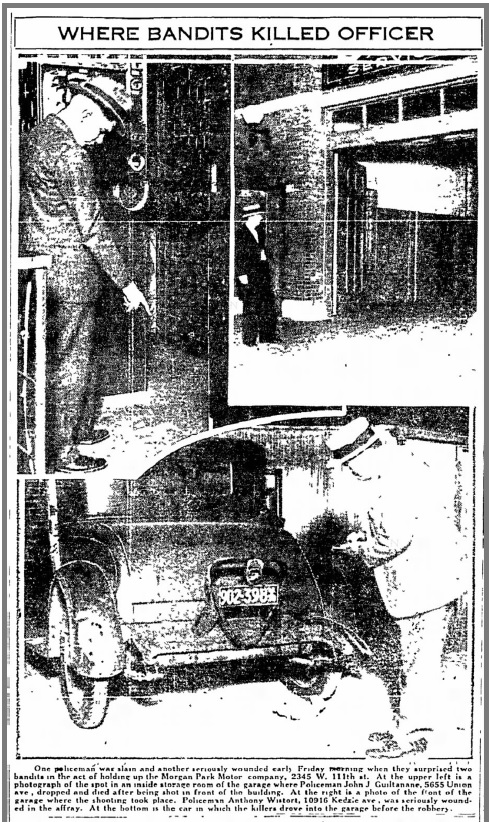
Guiltanane and Wistort had walked in on an armed robbery in progress at an auto sales shop on 111th Street just east of Western Avenue, where Fairplay food store now stands. The robbers tried to flee, but the police shot one of them, and the robbers surrendered. A gun was found on one of the robbers, and another in the car they were driving.
While a patrolman ran to a police box to call in for assistance, Guiltanane and Wistort guarded the robbers. One of the robbers pulled out a hidden gun and shot Guiltanane and Wistort, and then the robbers escaped on foot.
Guiltanane died on the spot, and Wistort was taken to Little Company of Mary Hospital, where he was not expected to survive.
The police arrested one of the robbers later that day. The second robber eluded the police for almost six years, finally being arrested for another robbery in Minnesota in 1936. Both robbers were found guilty of murder and sentenced to long prison terms. They were both paroled and died in the early 1970s.
John J. Guiltanane was 35 years old when he was shot through the heart and died on 111th Street almost one hundred years ago. He was born in Chicago of Irish descent, and he was a veteran of World War I, a resident of Englewood, and the main support of his widowed mother. His funeral services were held at Visitation Church, and he was buried in Mt. Olivet Cemetery.
Anthony P. Wistort was born in Illinois of Lithuanian descent, and he was a World War I veteran. At the time of the shooting, he, his wife Pauline, and their one-year-old son Robert lived on 109th and Kedzie Avenue. Wistort survived the shooting but was permanently disabled, using a wheelchair for his remaining life. He died in 1941 at the age of 42 and was buried in Mount Greenwood Cemetery.
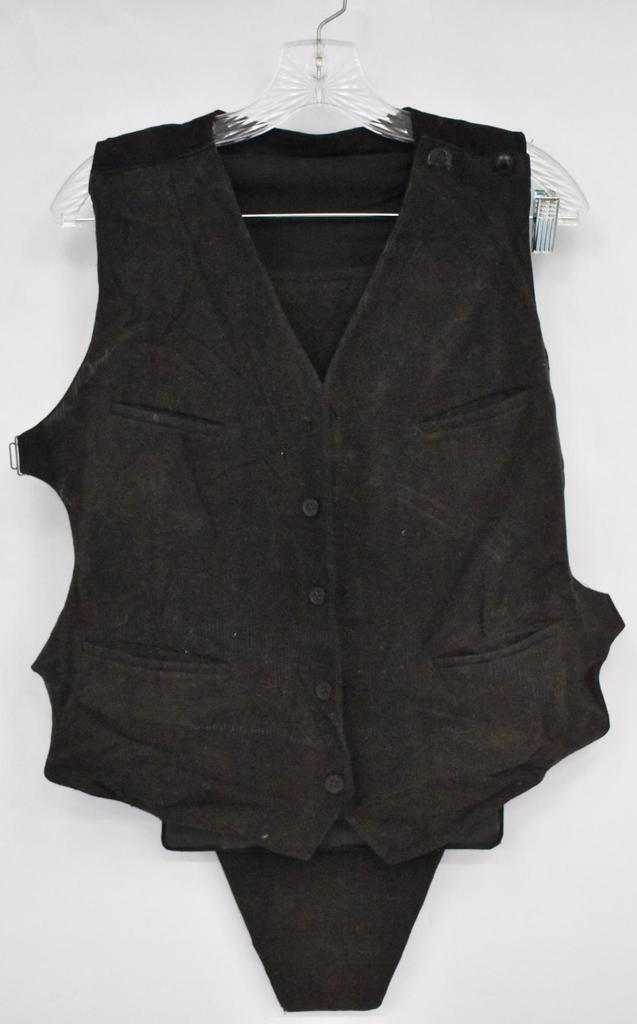
Both men might have had a better chance of survival if they had been wearing “bullet-proof” vests. However, only limited, expensive body armor was available to police forces in 1930.
The concept of protective clothing goes back to the beginning of mankind when humans donned animal skins, scales, shells, and quills, some of the toughest items in nature, when hunting and fighting. This was then replaced by wood and metal.
In medieval times, the Japanese discovered that tightly woven silk was largely impenetrable to projectiles, and made clothing of multiple layers of this fabric.
In the U.S, it wasn’t until the 1800s that metal body armor was first used, and the impenetrable nature of silk and other natural fibers like cotton and wool was re-discovered. It wasn’t until World War I, however, that bullet-proof vests were made, in Europe.
A company in Chicago, the Detective Publishing Co., sold inconspicuous wool vests lined with metal plates. These vests were too expensive for policemen to buy, but they became a favorite item for Prohibition-era gangsters.
As the gangsters started to wear better protective clothing, law enforcement started to use more powerful guns, which in turn led to enhancements in protective clothing and again to stronger guns – it became a cycle.
“Flak jackets” which combined fabric with metal plates were created during World War II. Surplus jackets became available to the police in the late 1940s and early 1950s. These vests were not intended to be bulletproof, but could stop some light caliber ammunition.
In the 1960s, DuPont introduced Kevlar, a lighter weight, plastic-based artificial fabric that has led to the modern vests of today.
The Ridge Historical Society
Happy Valentine’s Day!
By Carol Flynn
Parents, other family members, and friends are always delighted to receive handmade Valentines crafted by school children.
Handmade paper cards started in the Middle Ages and really took off during the Victorian era of the 1800s. The cards could get very elaborate, with bits of lace, bows and ribbons, seashells, gold and silver foil, and pressed and silk flowers.
Hallmark started mass producing cards in 1913, but even since then, it has remained the practice to spend a day crafting Valentines as a school project.
Louise Barwick (1871-1957) was an artist and educator who lived in Beverly. Her accomplishments included a huge relief map showing the geographical topology of the State of Illinois that was displayed at the 1893 World’s Fair in Chicago. The Ridge Historical Society also has a wonderful collection of watercolor paintings of local scenes that Louise completed.
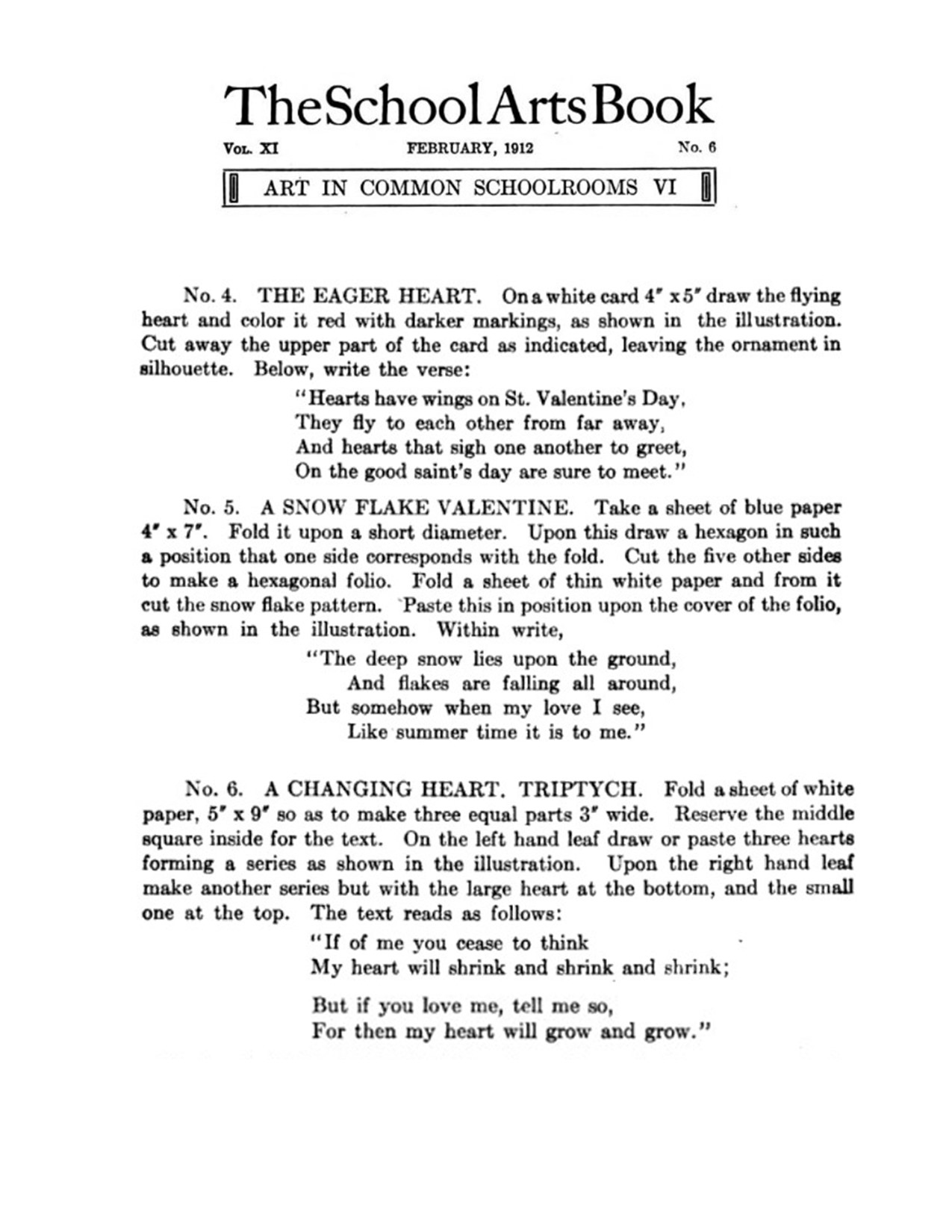
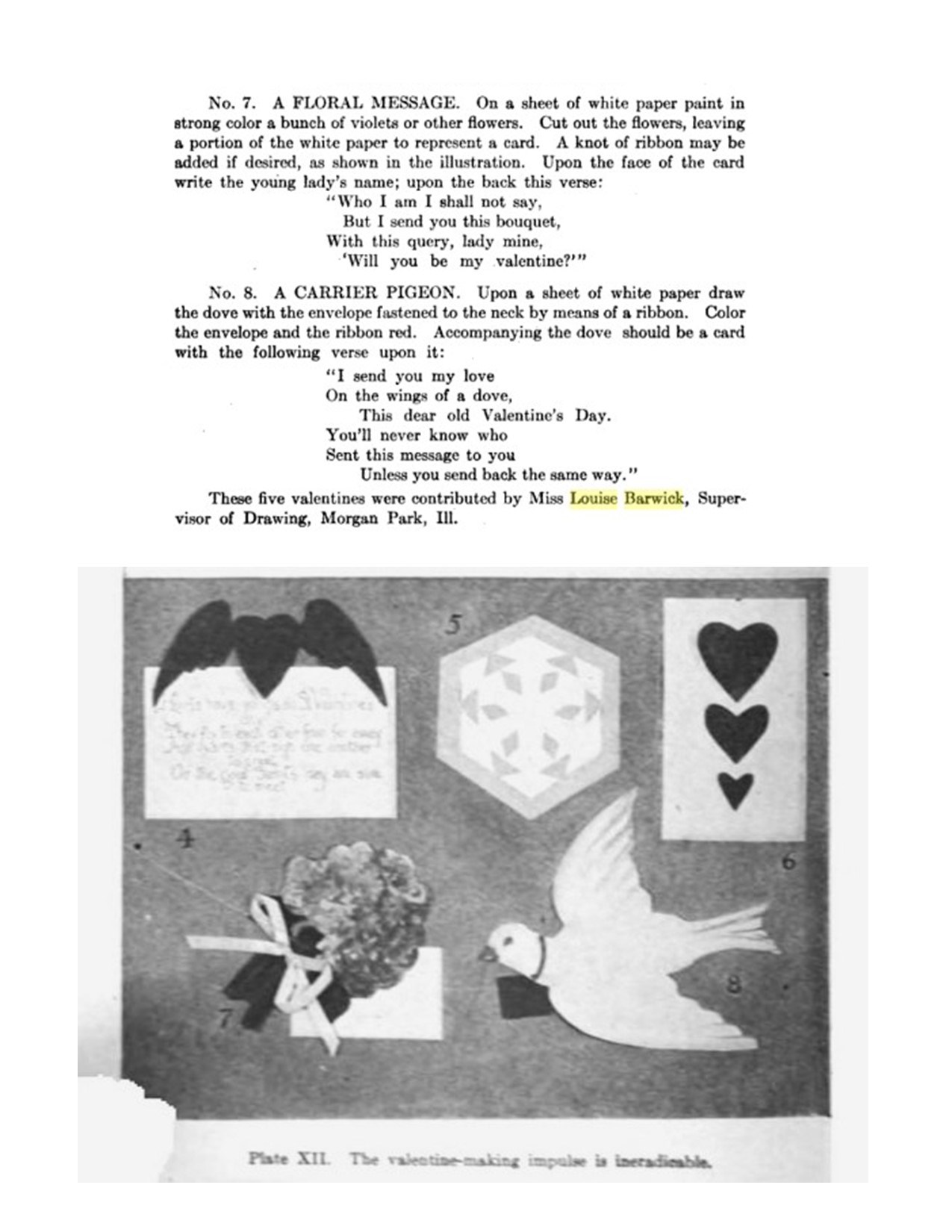
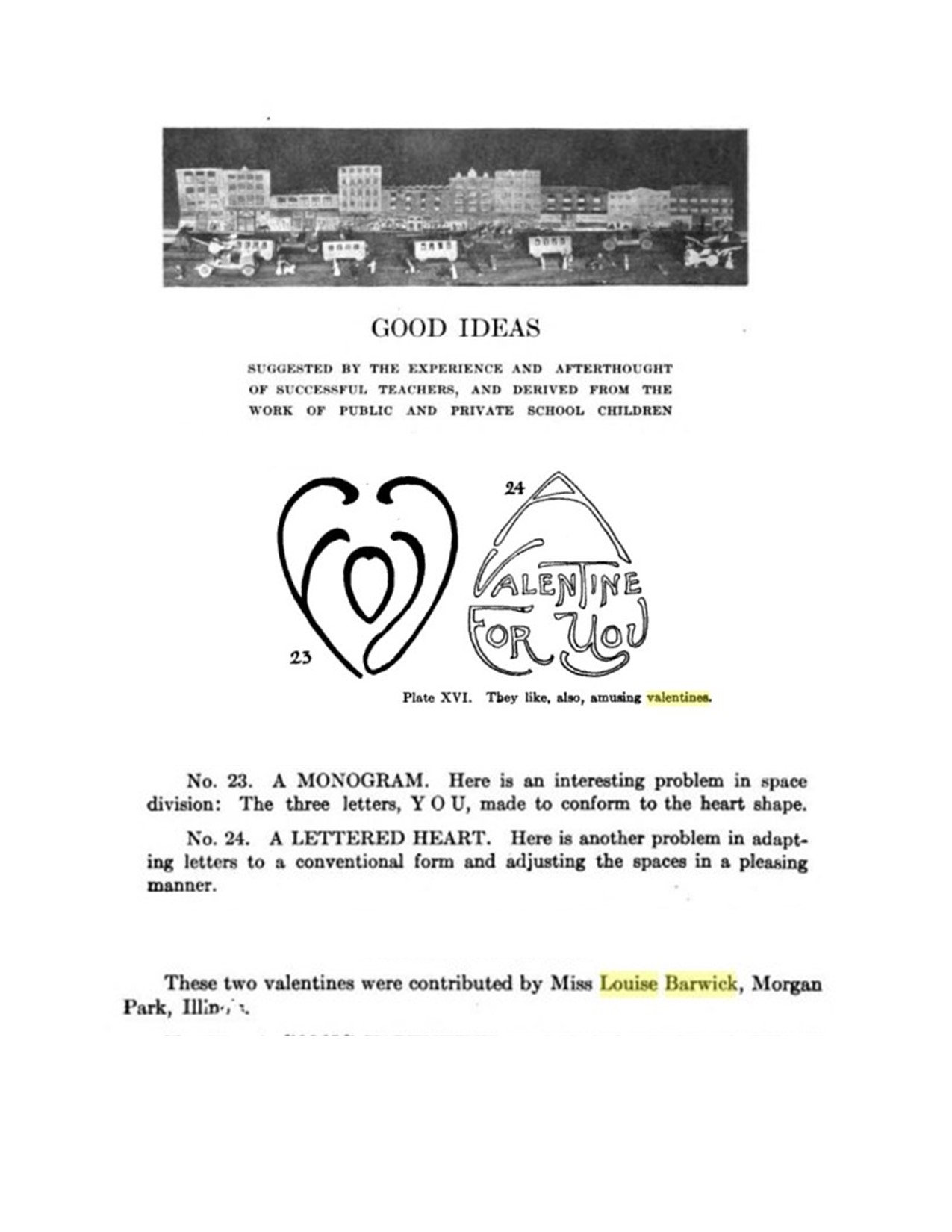
Louise Barwick was the art teacher for Morgan Park and other southside Chicago schools for several decades. In 1912, some of her ideas for handmade Valentines were published in The School Arts Book, a periodical for classroom arts.
Here are Louise Barwick’s Valentines. They could be recreated today.