
Explore the RHS Facebook Archives, a rich repository of local history written by Carol Flynn. For two decades, Carol brought a deeply dedicated voice to public education at RHS. Her role as Facebook administrator through mid-2025 naturally extended her prolific research into meticulously detailed articles, most notably her multi-part historical series posts. Today, Carol continues her local history writing for The Beverly Review and other outlets.
2023
The Ridge Historical Society
Black History Month: The Underground Railroad (UGRR) and the Ridge – Part 1
By Carol Flynn
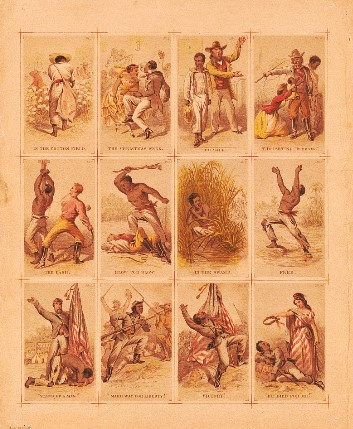
The “Underground Railroad” is the name given to the escape and flight strategies and systems that slaves used to resist bondage and gain freedom in the years leading up to the U.S. Civil War.
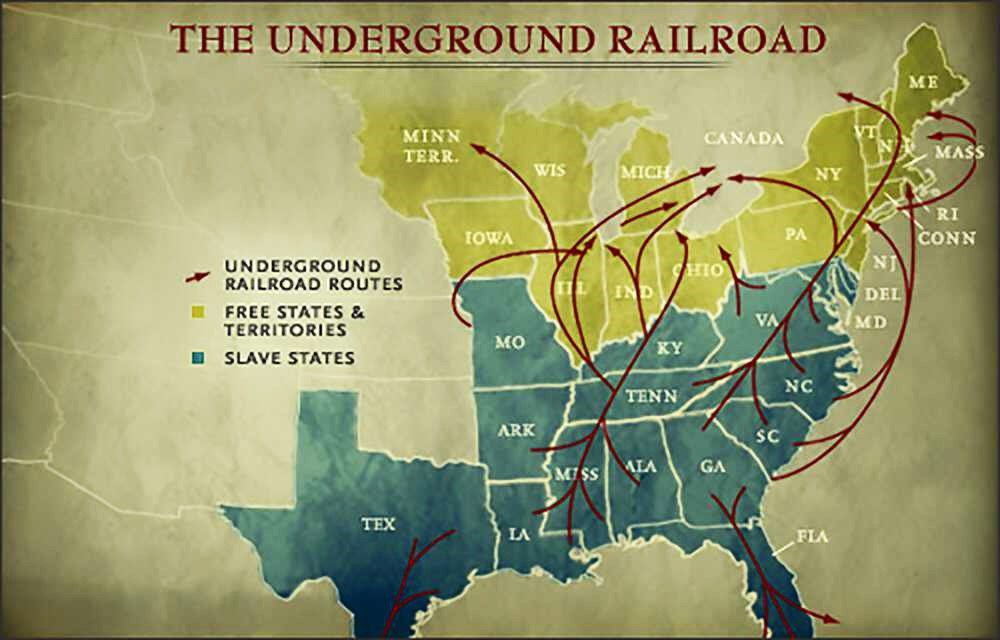
Although the name “Underground Railroad” sounds like a subway system, it was actually a complex network of routes, hiding places, safe houses, and warning techniques that slaves used in their escape to freedom to the northern states, Canada, the western territories, and south to Mexico and the Caribbean islands that were slavery-free.
There was no official leader or organization for the UGRR, and very rarely anything in writing that could be confiscated. Escape routes, places of refuge, and warnings were all passed along by word of mouth.
Most of the traveling was done at night over land and waterways. As more actual trains and tracks came into being, escaped slaves did occasionally travel secretly by train also. For example, out east, the Baltimore and Ohio Railroad, founded in 1827, was used by slaves escaping to freedom in Pennsylvania.
Terminology from the railroads was used in the UGRR, not only for the name of the movement itself, but the abolitionists (those who opposed slavery and wanted to see it abolished) who helped the escaped slaves were called “conductors,” the escaped slaves were called “passengers,” and the safe houses were called “stations” or “depots.” The owners of the safe houses were “station masters” and other people who gave money and supplies were “stockholders.”
The escaped slaves were labeled as fugitives and runaways, but today, the preferred term is “freedom seekers,” considered in retrospect as a more accurate description.
Many freedom seekers made their own way to safety, but many were aided along their way by both white and Black abolitionists. It is estimated that tens of thousands of freedom seekers used the UGRR.
The abolitionists who helped freedom seekers did so at great peril to themselves. The Fugitive Slave Act of 1850, passed by the U.S. Congress, permitted for the seizure and return of runaway slaves who escaped from one state and fled into another. Federal marshals who refused to enforce the law and individuals who helped slaves to escape were heavily penalized, with a fine of $1,000, about $40,000 in today’s value. This could cause property owners to lose their land.
UGRR stations were located in basements, barns, churches, and caves. Groups of freedom seekers established independent locations called “maroon communities” in wetlands and marshes that aided freedom seekers. “Free people of color” would disguise themselves as slaves to access plantations and guide the slaves in seeking freedom. There are documented case studies of Native Americans helping freedom seekers.
In 1998, the U.S. Congress passed the National Underground Railroad Network to Freedom Act, which President Bill Clinton signed into law. This authorizes the U. S. National Park Service to identify, preserve, and educate about UGRR sites as part of a National Underground Railroad Network to Freedom program.
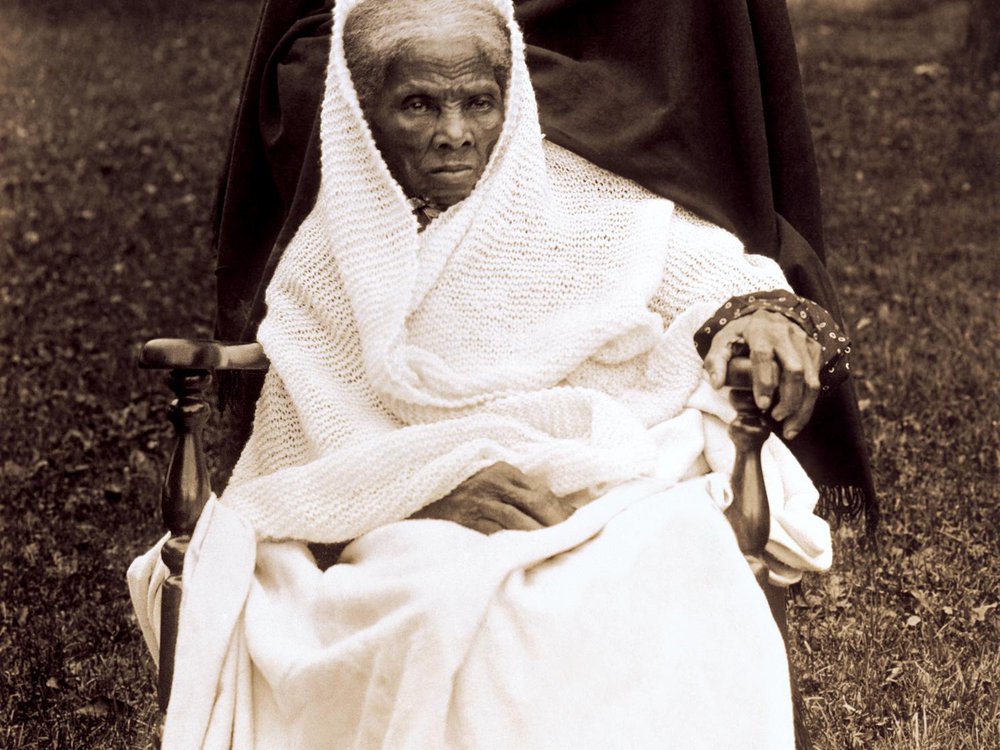
Among many historic names associated with the UGRR is Harriet Tubman (1822-1913). A freedom seeker herself, she made numerous trips back to the south through the UGRR network to rescue enslaved family members and friends. During the U.S. Civil War, she was an armed scout and spy for the Union Army. After the war, she became an ardent women’s suffragist.
Northern Illinois, the Chicago and Calumet areas, and the Blue Island Ridge all saw UGRR action in the decades leading up to the U.S. Civil War.
Professor Larry McClellan, a leading expert and author on the UGRR in Northern Illinois, and Tom Shepherd, a preservation and environmental activist, will present “Freedom Seekers and the Underground Railroad in Chicago and Northeastern Illinois” at RHS this Friday. McClellan and Shepherd are, respectively, the President and the Secretary/Project Director for the Little Calumet River Underground Railroad Project. The program is sold out.
In the next few posts, RHS will present information on UGRR sites in the south Chicago area, including informal sites connected to the Blue Island Ridge.
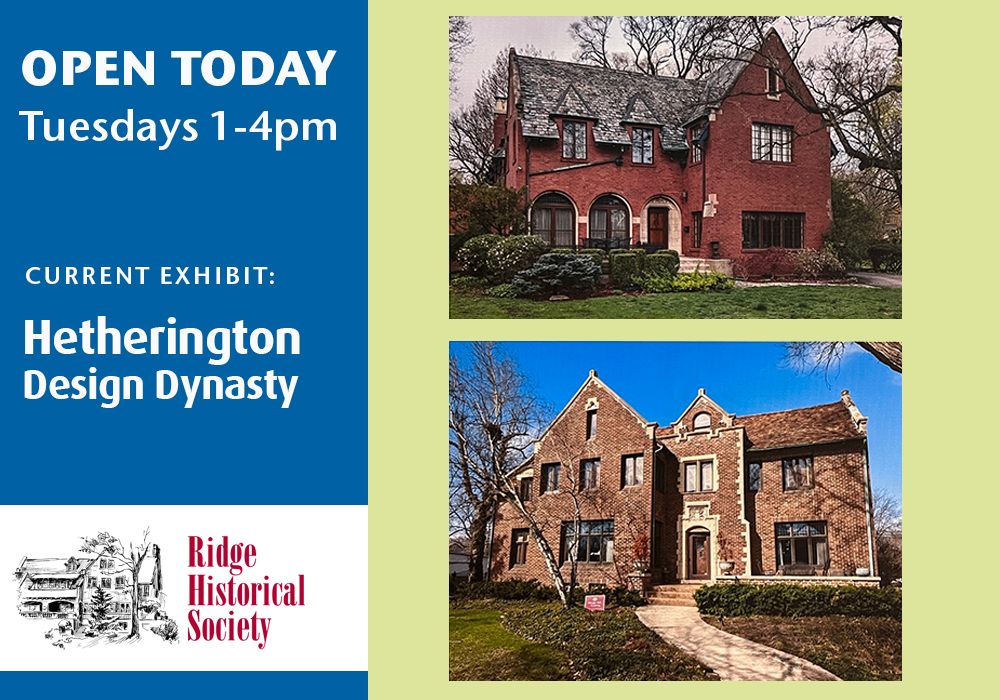
The Ridge Historical Society is open today, Tuesday, February 7, from 1 to 4 pm, free admission. Address: 10621 S. Seeley Avenue.
The Hetherington Design Dynasty exhibit will be up for a few more weeks.
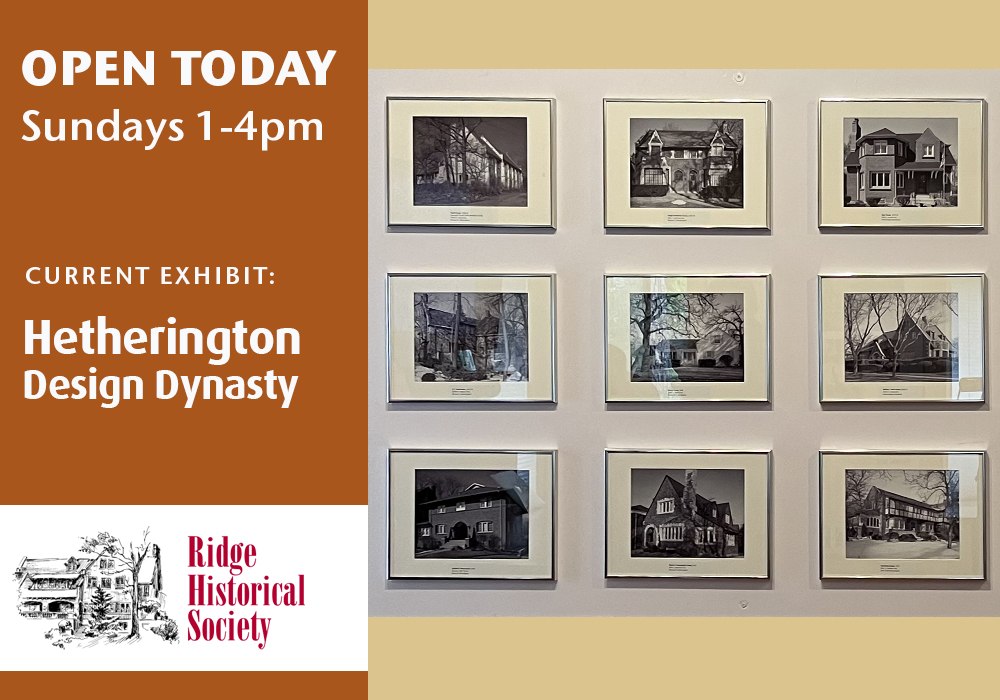
The Ridge Historical Society is open today, Sunday, February 5, from 1:00 to 4:00 p.m., free of charge. All are welcome! The address is 10621 S. Seeley Avenue, Chicago.
The Hetherington Design Dynasty exhibit has been extended for a little while longer so there is still an opportunity to view it. This exhibit features John Todd Hetherington, his son Murray, grandson Jack, and daughter Jean, all with careers in architecture that led to scores of wonderful homes in Beverly/Morgan Park.
Also included in the exhibit is Mildred Lyon Hetherington, Murray's wife and Jack's mother, a well-regarded local artist famous for her portraits and illustrations in children's books.
Join us this afternoon – it's bright and sunny and a balmy 40 degrees!
The Ridge Historical Society
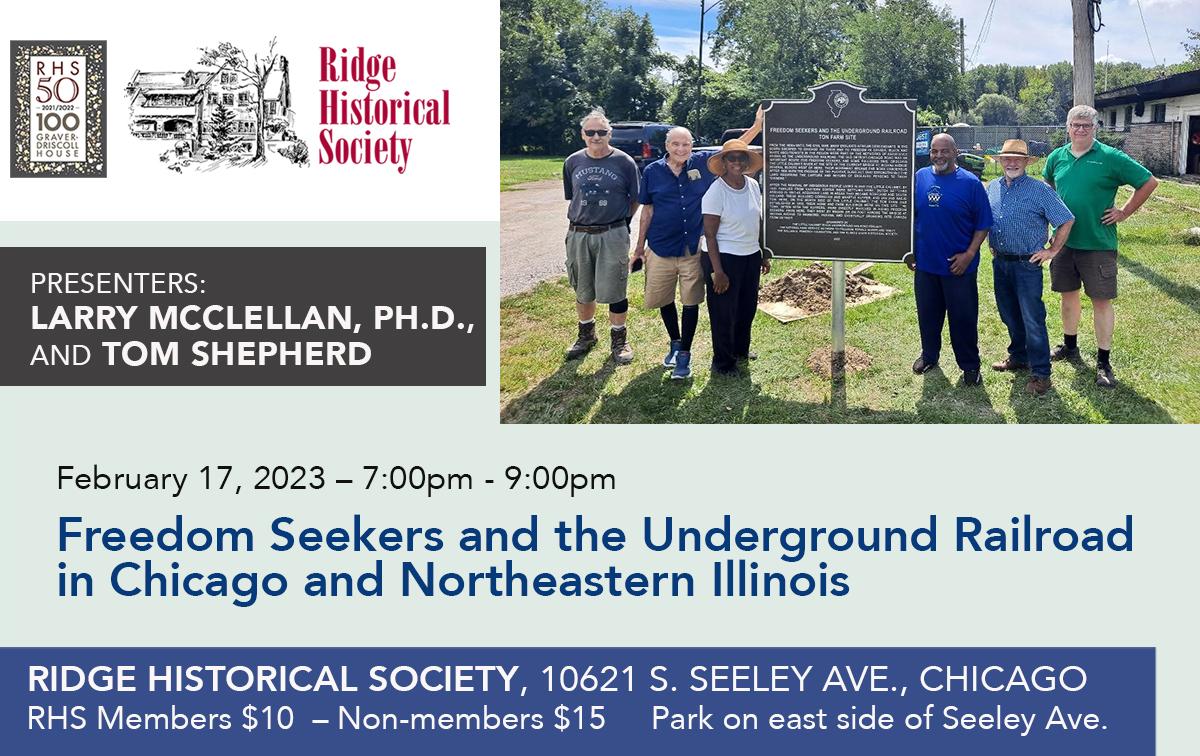
Black History Month Program: “Freedom Seekers and the Underground Railroad in Chicago and Northeastern Illinois”
Presenters: Larry McClellan, PH.D., and Tom Shepherd
Details: Friday, February 17, 2023, 7:00 to 9:00 p.m., at RHS, 10621 S. Seeley Avenue, Chicago. Program followed by refreshments. Cost: $10 for RHS members and $15 for non-members.
This program will explore the movement of fugitive slaves known as “freedom seekers” and the network of support that developed as the Underground Railroad. In the decades before the the Civil War, several thousand freedom seekers travelled through northeastern Illinois. Their stories, and the range of encounters with white and Black abolitionists who provided them with assistance, will be shared in this program.
Professor Larry McClellan has written extensively on the Underground Railroad in Illinois and northwest Indiana. He was the principal author of applications that added sites in Crete, Lockport and on the Little Calumet River to the National Park Service registry of significant Underground Railroad sites in America. He is the President of the Little Calumet River Underground Railroad Project.
He is the author of three books: Onward to Chicago: Freedom Seekers and the Underground Railroad in Northeastern Illinois, which will be released this summer; The Underground Railroad South of Chicago; and To the River: The Remarkable Journey of Caroline Quarlls, a Freedom Seeker on the Underground Railroad.
Tom Shepherd is the Secretary and Project Director for the Little Calumet River Underground Railroad Project. He is a well-known and respected preservation, environmental, and social activist in the south Chicagoland region, hailing from the Pullman community. He was President of the Southeast Environmental Task Force for fifteen years and currently works for the Hegewisch Business Association as special assistant to the Executive Director.
RHS will also premier its new permanent exhibit on the Underground Railroad on the Ridge at this event. There were several locations in Beverly associated with UGRR activity in the days leading up to the U.S. Civil War.
This will be a sold-out event, as the occupancy at RHS is very limited. Reservations will be honored for this event as first come, first served. Please purchase a ticket (guaranteed) or RSVP (no “maybes”) as soon as possible. Ticket sales and RSVPs will end on Feb. 14 at 6 p.m. or as soon as the event is sold out. Walk-ins will likely not be accommodated for this event.
For tickets: https://bit.ly/rhs-UGRR
The Ridge Historical Society
The History of the Graver-Driscoll House – Part 9: The Fenn Family continued
By Carol Flynn
Every house has a history.
To celebrate the 100th anniversary of the Graver – Driscoll House, owned by the Ridge Historical Society (RHS) at 10621 S. Seeley Avenue, a series on its owners through the years has been on-going.
The house, designed by architect John Todd Hetherington, was built in 1922-23 for Herbert and Anna Graver. Graver was an executive with his family’s business, the Graver Tank Works, and a sports star, having participated in the first Rose Bowl in 1902.
In 1940, the Gravers sold the house to John Grant and Grace Harrison Fenn. The Fenns were discussed in the last two posts. The Fenns owned the house until 1946.
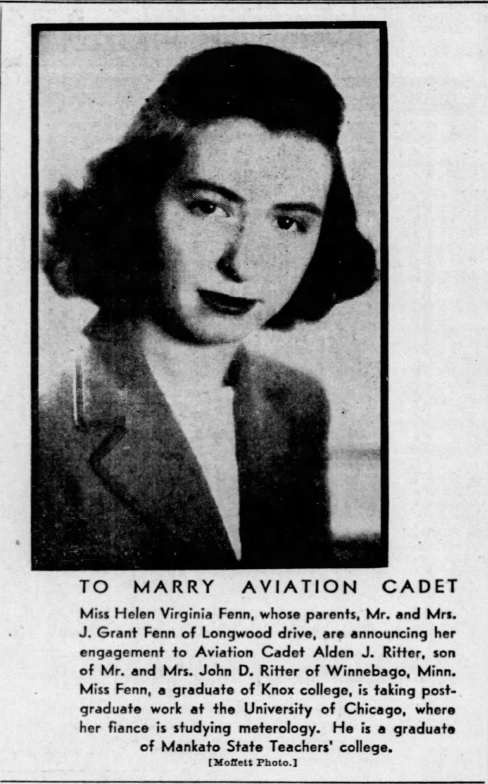
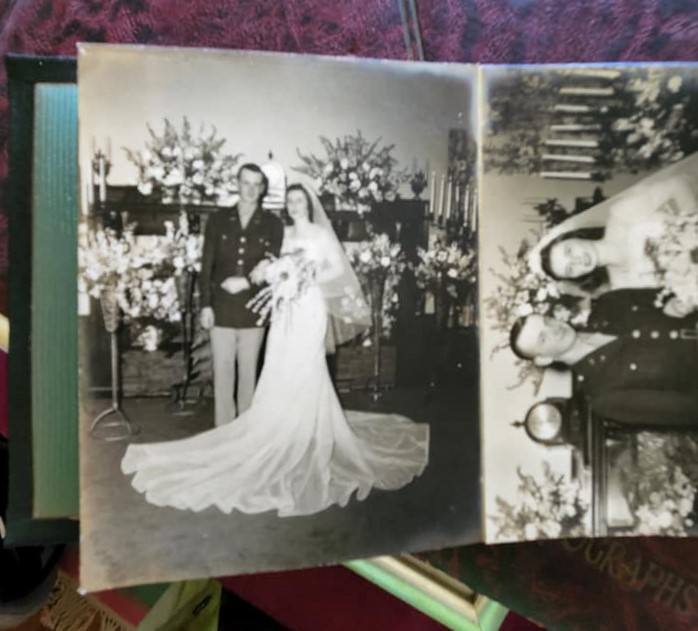
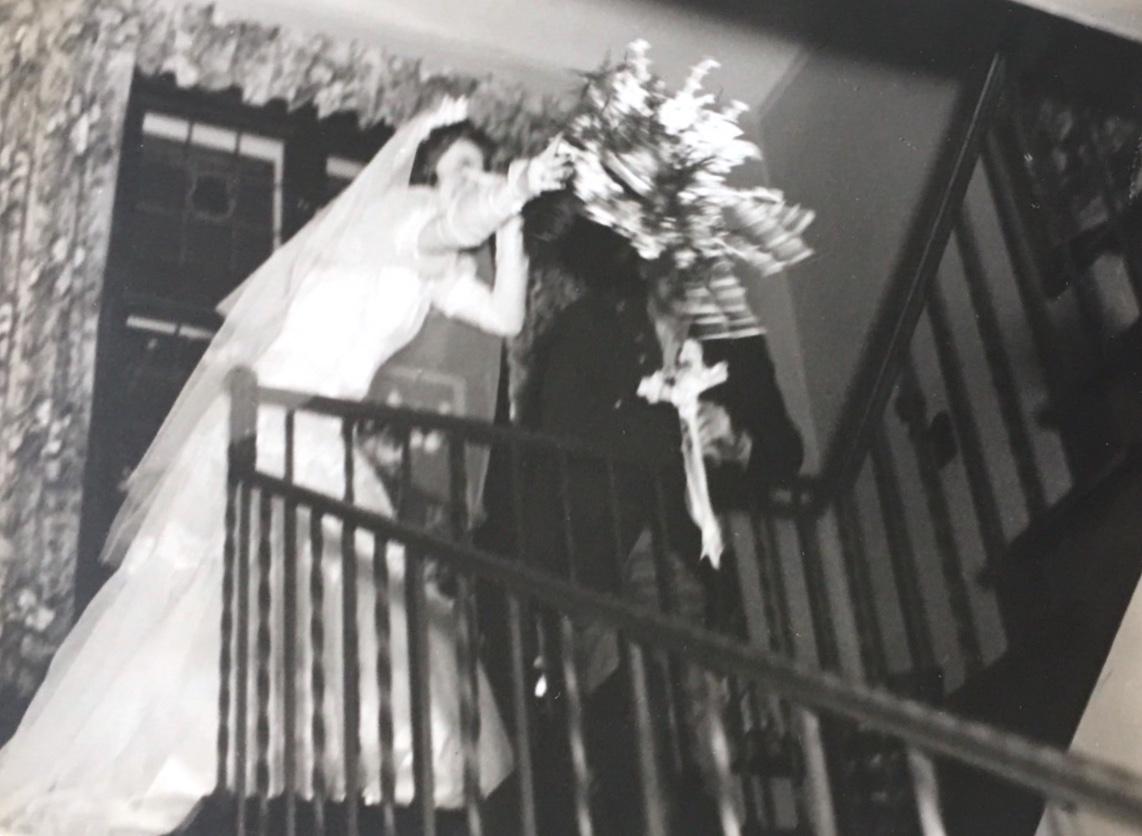
The Fenn daughter, Helen Virginia Fenn Ritter (1918 – 2022), was married in the Graver-Driscoll House on June 12, 1943. The groom was Lt. Alden J. “Buzz” Ritter (1919 – 2014), an Army Air Corps meteorologist.
Although the Fenns only lived in the house for six years, and relocated to Ohio and Florida, Helen formed a lifelong attachment to the house. The Fenn-Ritter family visited the house several times, and donated family heirlooms to the RHS collection, including photos of the house from the 1940s.
In 1988, RHS was honored by a visit from Helen and Buzz Ritter and some of their family. Helen's mother, Grace Fenn, maintained an interest in the house and kept clippings of its acquisition by RHS (1972) and activities through the years. Grace had recently died, and the family returned to Chicago for Grace to be buried in the family plot at Mount Greenwood Cemetery with her husband, who died in 1945, and son Grant, who died in 1951.
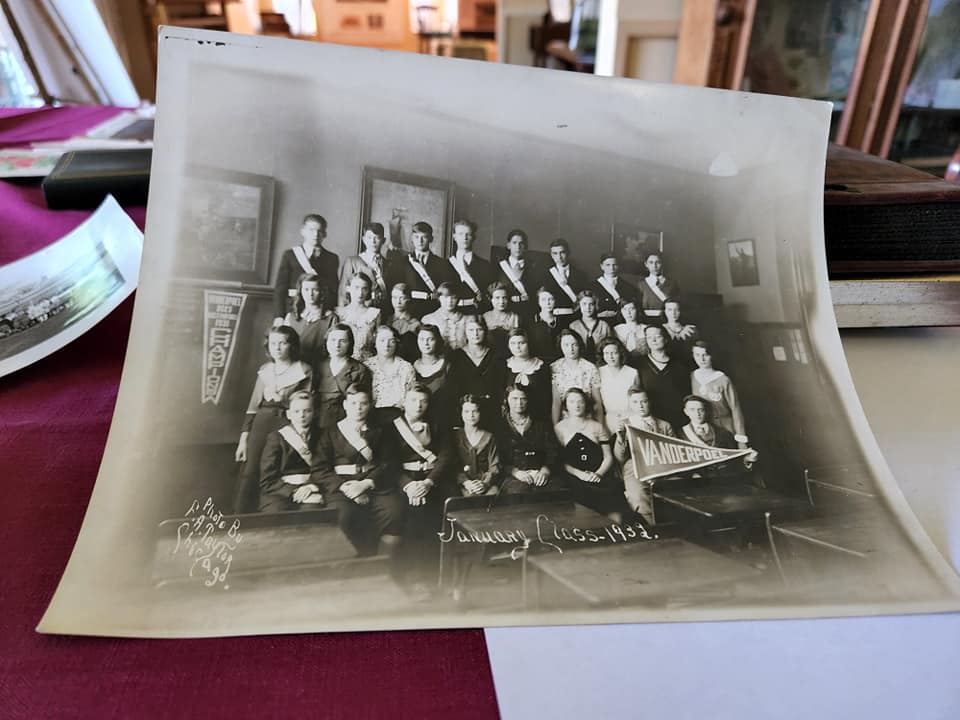
Then a few years ago, the family contacted RHS to donate photographic negatives they had saved all these years. The family had a darkroom in the basement of the house during their ownership. The pictures of the house from the time of the Fenn family have helped RHS to envision the original appearance before a fire destroyed some of the interior when the next owners lived there.
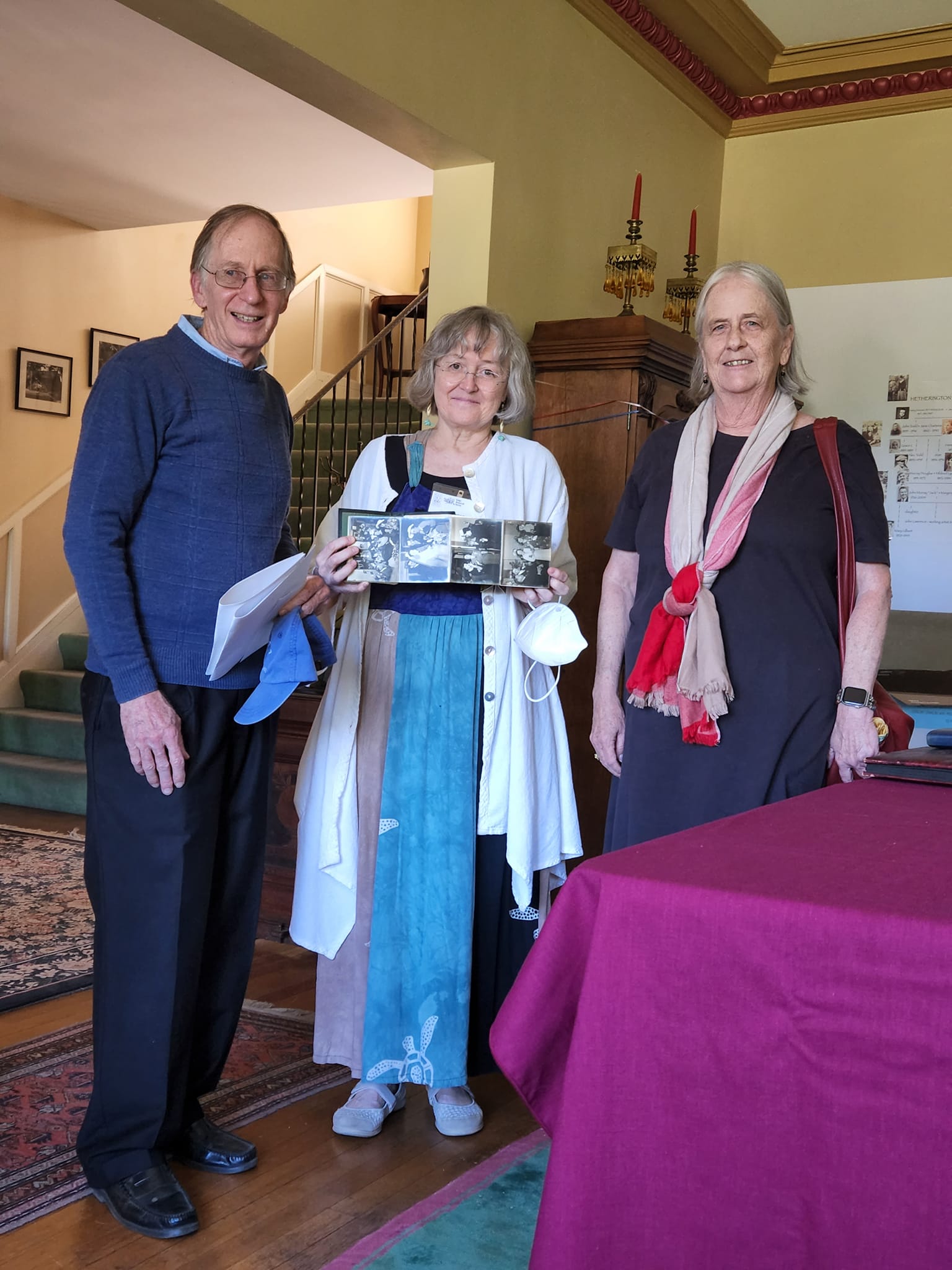
Helen Fenn Ritter died at the age of 103 in February, and this past summer, the current generations of the family returned from all over the country to their Chicago roots for a burial service for Helen and Buzz at Mount Greenwood Cemetery. They then made a visit to the Graver-Driscoll House.
The family donated a treasure trove of historical material to RHS, including Helen’s wedding dress and numerous pictures and mementos. RHS is grateful for the support and interest of the Fenn Ritter family.
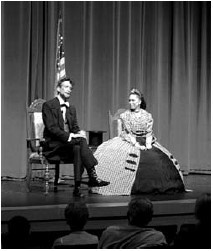
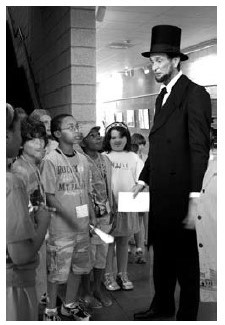
The Ridge Historical Society (RHS) joins in mourning the death of Michael Krebs, the Chicago actor who personified Abraham Lincoln.
Michael and actress Debra Ann Miller portrayed President and Mary Todd Lincoln in dramatic works based on true life stories.
In 2010, RHS brought Michael and Debra Ann to the Beverly Art Center (BAC) for their "Meeting the Lincolns" production. Local school children attended the event. Afterwards, the children were enthralled to meet "Mr. Lincoln" up close and personal.
The two pictures shown here are from that day at the BAC.
They also made several appearances at the Blue Island Historical Society. Michael was always welcomed on the Ridge.
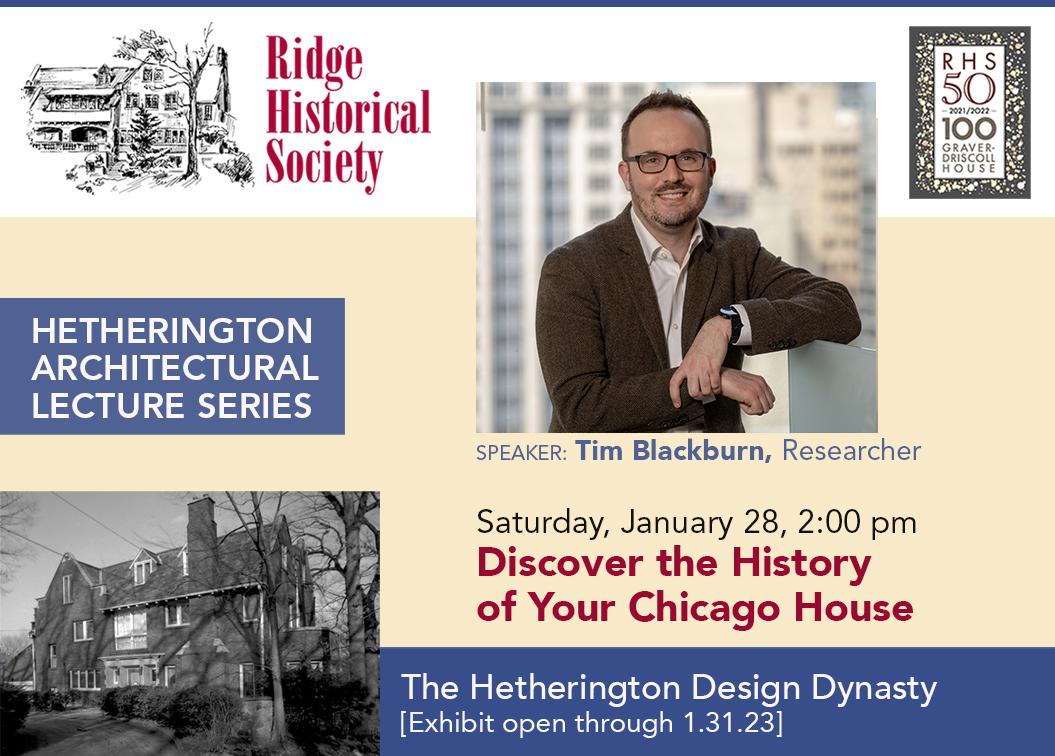
Every house has a history! If you've always wanted to investigate the history of your house, here is the opportunity to learn how to do that.
Ridge Historical Society researcher Tim Blackburn, owner of a historic home in Morgan Park, will present "Discover the History of Your Chicago Home" on Saturday, January 28, at 2:00 p.m. at the Ridge Historical Society, 10621 S. Seeley Avenue, Chicago.
Tim will guide you through the process of locating building permits and other records about the property itself, as well as share research tools to learn about past owners.
Attendees of Tim's programs can then join a private RHS Facebook page for continued discussion and advice on research projects.
The cost of the program is $10 for RHS members and $15 for non-members.
Reservations may be made at: https://bit.ly/house_research.
If you have any questions, please contact RHS at 773/881-1675 or ridgehistory@hotmail.com.
The Ridge Historical Society
The History of the Graver-Driscoll House – Part 8: The Fenn Family continued
By Carol Flynn
Every house has a history. The story of the Graver-Driscoll House, headquarters for the Ridge Historical Society at 10621 S. Seeley Avenue, is being shared in honor of its centennial. This also serves as a case study for the wealth of information available through research just waiting to be discovered for many old houses.
RHS is repeating the program, “Discover the History of Your Chicago House,” presented by RHS researcher Tim Blackburn, on Saturday, January 28, at 2:00 p.m., at RHS at 10621 S. Seeley Avenue, Chicago. The cost is $10 for RHS members and $15 for non-members. Registration for the program is through the link
https://bit.ly/house_research.
The Graver-Driscoll House, designed by architect John Todd Hetherington, was built in 1921-22 for Herbert Spencer Graver, an executive with his family’s business, the Graver Tank Works.
In 1940, Graver sold the house to John Grant and Grace Harrison Fenn, who were discussed in the last post. J. Grant Fenn, as he was called, was a mechanical engineer involved in the emerging air conditioning industry. Grace was active with hospitality events for soldiers during World War II.
The Fenns had two children, Helen Virginia, born on September 22, 1918, and Grant Harrison, born on May 27, 1924.
Helen graduated from Morgan Park High School in 1936. She attended Knox College, and went on to post-graduate studies at the University of Chicago, where she met Lt. Alden J. “Buzz” Ritter of Minnesota, an Army Air Corps meteorologist. Both were studying meteorology, and both were pilots.
On June 12, 1943, Helen’s and Alden’s wedding was held at the Graver-Driscoll House. Memorabilia and pictures from the wedding and Helen's wedding dress have been donated to RHS by the Ritter family.
Helen and Alden moved to Ohio, where they raised their four children. Alden advanced to the position of Vice President of Engineering with Luxaire, the maker of heating and air conditioning equipment. The Ritters were active socially and enjoyed traveling, and divided their time between Ohio and Florida.
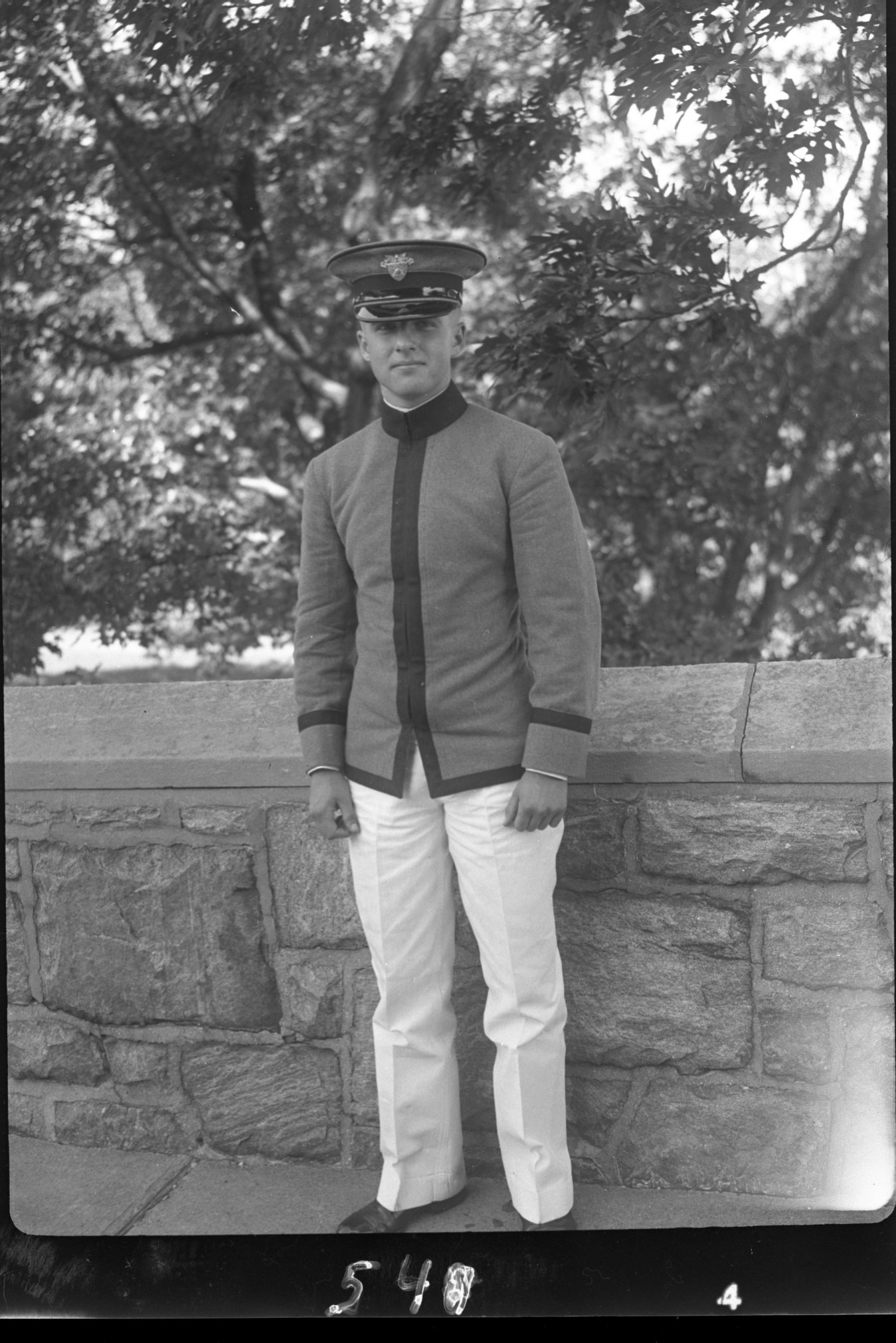
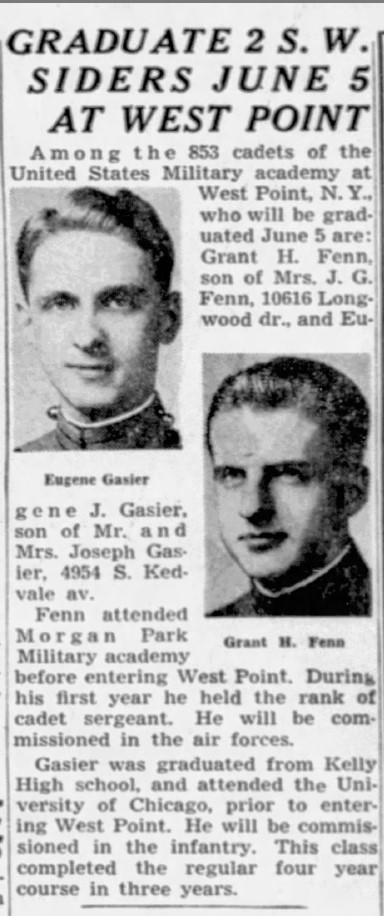
Grant, the Fenn son, graduated from the Morgan Park Military Academy in June of 1942. The day after he received his diploma, he was appointed second lieutenant, infantry, U.S. Army, and started active duty. He went on to graduate from the United States Military Academy, West Point, New York, in 1945 and was commissioned in the U.S. Air Force.
In February of 1945, patriarch J. Grant Fenn died, and was buried in the family plot in Mt. Greenwood Cemetery. Grace Fenn sold the Graver House in 1946 to the Nicholas Cummings family, and moved to an apartment with her sister on 102nd Street and Hale Avenue.
Son Grant embarked on a military career, serving in Italy, and for two years as an assistant attaché in Athens, Greece. He was tragically killed in 1951 when the B-36 bomber he and twenty-two others were flying in crashed in New Mexico. He was 26 years old and left a widow, Raymonde Andrea, whom he had met in France. He was buried in Mount Greenwood Cemetery.
Grace Fenn died in 1988 at the age of 96. Alden died in 2014, aged 94, and Helen died in 2022 at the age of 103. All died in Florida and were returned to Mount Greenwood Cemetery for burial.
Although the Fenn family’s formal connection to the Graver-Driscoll House ended in 1946, Helen Fenn Ritter and her descendants kept a fondness for and interest in the house which continues to today.
In the next post, the Ritter family’s visits to the Graver-Driscoll House and donations of family heirlooms to the Ridge Historical Society will be covered.
Ridge Historical Society
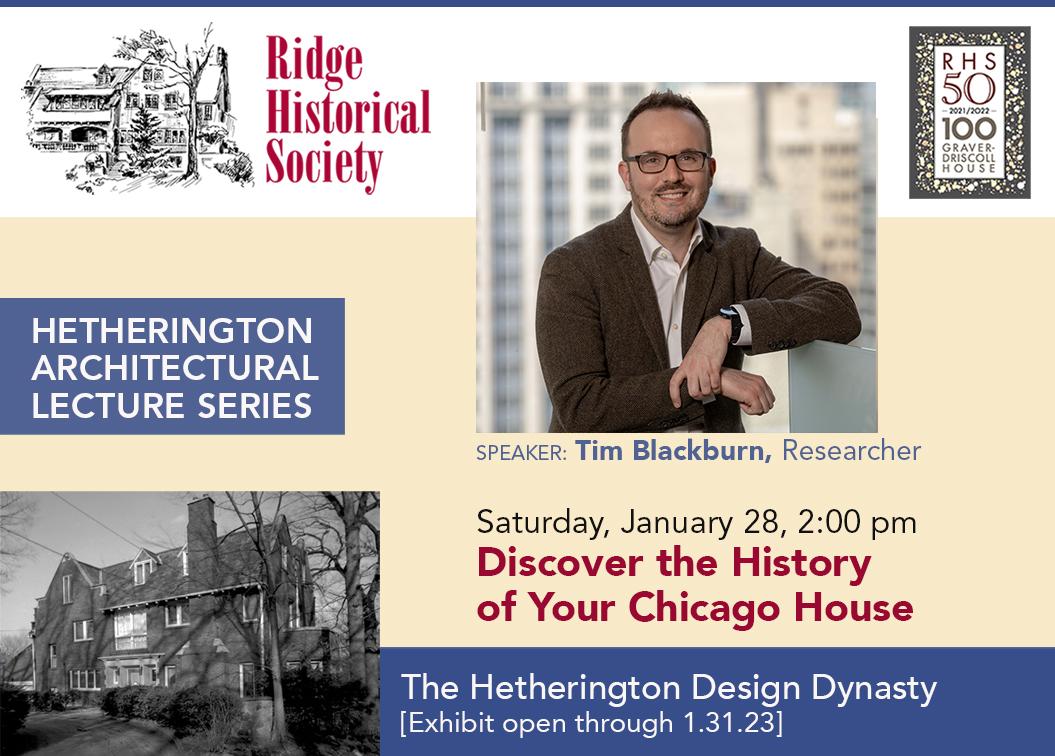
Upcoming Program: “Discover the History of Your Chicago House”
Every house has a history.
Now, back by demand, we are happy to announce a repeat program on researching house histories.
“Discover the History of Your Chicago House” presented by RHS researcher Tim Blackburn will be offered on Saturday, January 28, at 2:00 p.m. The location is the Graver-Driscoll House (RHS headquarters) at 10621 S. Seeley Avenue, Chicago. The cost is $10 for RHS members and $15 for non-members.
The program covers the basics of researching the history of construction and ownership of a house built pre-1955 within the limits of the City of Chicago. Public records such as building permits and Sanborn maps will be discussed, as well as research methods.
Following the program, through the RHS Facebook page, attendees may also join the private research group for house history research administered by Tim. This is just getting off the ground, and will allow people to share their progress, ask questions, and get expert advice in research.
We had to turn people away from the first program due to limited seating capacity, so we urge those interested to register right away to be sure of a seat.
Tickets for the program may be secured through Eventbrite at: https://bit.ly/house_research
The “Hetherington Design Dynasty” exhibit, showcasing the work of three generations of architects and artists in the Hetherington family, has been extended until January 31, 2023, so attendees at this program will also have the opportunity to view this exhibit.
Questions? Contact RHS at ridgehistory@hotmail.com or 773-881-1675.
Native Americans invented the game of lacrosse, and it is the oldest organized sport in North America.
The next installment of the series on Native Americans on the Ridge is in this week's Beverly Review.
https://www.beverlyreview.net/news/community_news/article_a9bdc7ce-9109-11ed-9aed-13563de3a087.html