
Explore the RHS Facebook Archives, a rich repository of local history written by Carol Flynn. For two decades, Carol brought a deeply dedicated voice to public education at RHS. Her role as Facebook administrator through mid-2025 naturally extended her prolific research into meticulously detailed articles, most notably her multi-part historical series posts. Today, Carol continues her local history writing for The Beverly Review and other outlets.
2024
In addition to answering many questions about local history and helping people research their families and their homes, the Ridge Historical Society (RHS) helps students, journalists, writers, historians, artists, and many other people with in-depth research for projects they are working on.
Some recent projects included an eighth grader’s history fair presentation on Prohibition (which won awards), a church’s Land Acknowledgment Statement, two artist projects on historical land usage, several media projects on local unincorporated land, and the histories of a local church and a famous south side sign company. We even found the owner of a wedding ring that was discovered buried in a local garden.
So when we were approached by Michael Angland, a student working on his Ph.D. in cultural anthropology at Northwestern University, seeking information on the history of the area, we of course did what we could to assist him.
Cultural anthropology studies humans through the societies they establish by looking at the society’s culture – what the members believe and value, how they behave, the social structures and organizations they form. Researchers in the current world involve themselves right in the society they are studying – they interact and talk with the people, they attend events, they participate in local activities.
Michael is studying the culture of the 19th Ward, which he identified as unique in the city.
He identified such traits as political involvement, multi-generational families, the approach to integration in the 1970s resulting in today’s diverse population, the mix of white-collar and blue-collar workers and city employees, the unique geography, the beautiful historic homes and the importance of home ownership, even the wet-dry issue, all as factors that make the community unique.
This recent article in the Beverly Review introduces Michael Angland.
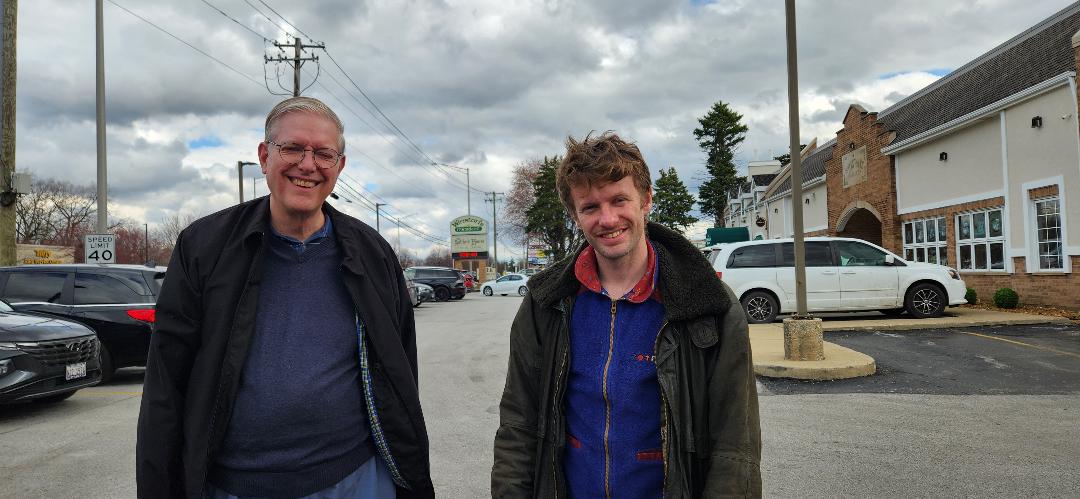
Michael is interviewing people throughout the ward. Here he is with Fr. Michael Flynn (left), a past associate pastor at St. Christina's Church in Mount Greenwood. People who want to share their perspectives on life in the 19th ward can contact him at michaelangland2026@u.northwestern.edu.
https://www.beverlyreview.net/news/community_news/article_e4dfd340-f109-11ee-9e57-1f78bb2a6c6e.html
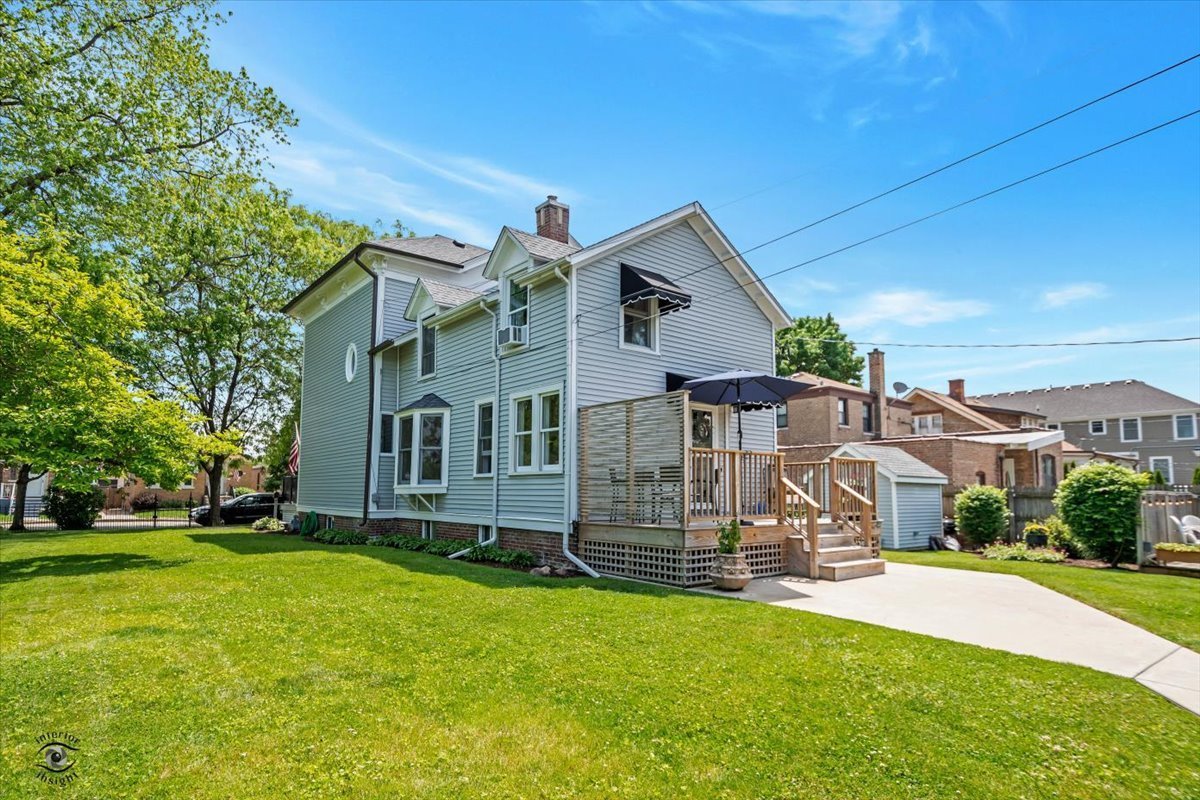
Since the Eugene S. Pike House was built as a "gardener's cottage" in 1894, it has served as a residence for many people.
Eugene Pike's first business, before he ever moved to Chicago, was as a distributor of nursery plants. He imported fruit trees, rose bushes, and other plants from France. His business, largely with the southern states, was booming, until the start of the U.S. Civil War caused an end to that.
He then turned his attention to banking. He and his family moved to Chicago, where he also got into the real estate business. He was very successful with both. When he died his estate was worth over $3 million, about equal to $85 million today.
He bought land on the top of the Ridge, some of which he developed into homeowner sites for sale. He kept a piece of the land for himself, and eventually this became part of the Forest Preserves of Cook County (FPCC), now known as Dan Ryan Woods.
His gardener's cottage, designed by architect H.H. Waterman, was built to be both ornamental and to serve a useful purpose. It housed several landscapers and gardeners while it was owned by the Pike family, and one of Pike's sons lived there for a while.
After the land and house were bought by the FPCC, it was used as a headquarters for FPCC area supervisors, then as a "watchman's residence." At least eight families lived there, and the research has just begun.
Here is an introductory article on the residents of the Pike House. Watch for more on this topic.
Those Who Have Called the Pike House “Home” – Part 1


Beverly Bike and Ski Inc. at 9121 S. Western Avenue is a historic business in the community, with roots going back to the 1920s – actually, longer than the 100 years mentioned in this headline.
By 1920, James and Bessie Kosar and their family were already living at 9121 S. Western Ave. From directories and other sources from the time, it appears they ran a grocery there and started the bike shop, also, which was called the Beverly Bicycle Shop, but provided many services, as the attached ad shows.
At the time, Western Avenue was very rural, but it was a thoroughfare connecting the north side to the south side for many miles. There had been stopping places along the route for many years, as it was one of the routes used to reach the cemeteries (Mt. Greenwood, Mt. Hope, Mt. Olivet).
In 1922, Western Avenue through this area was graded, widened, and repaved, leading to the Western Avenue we know today.
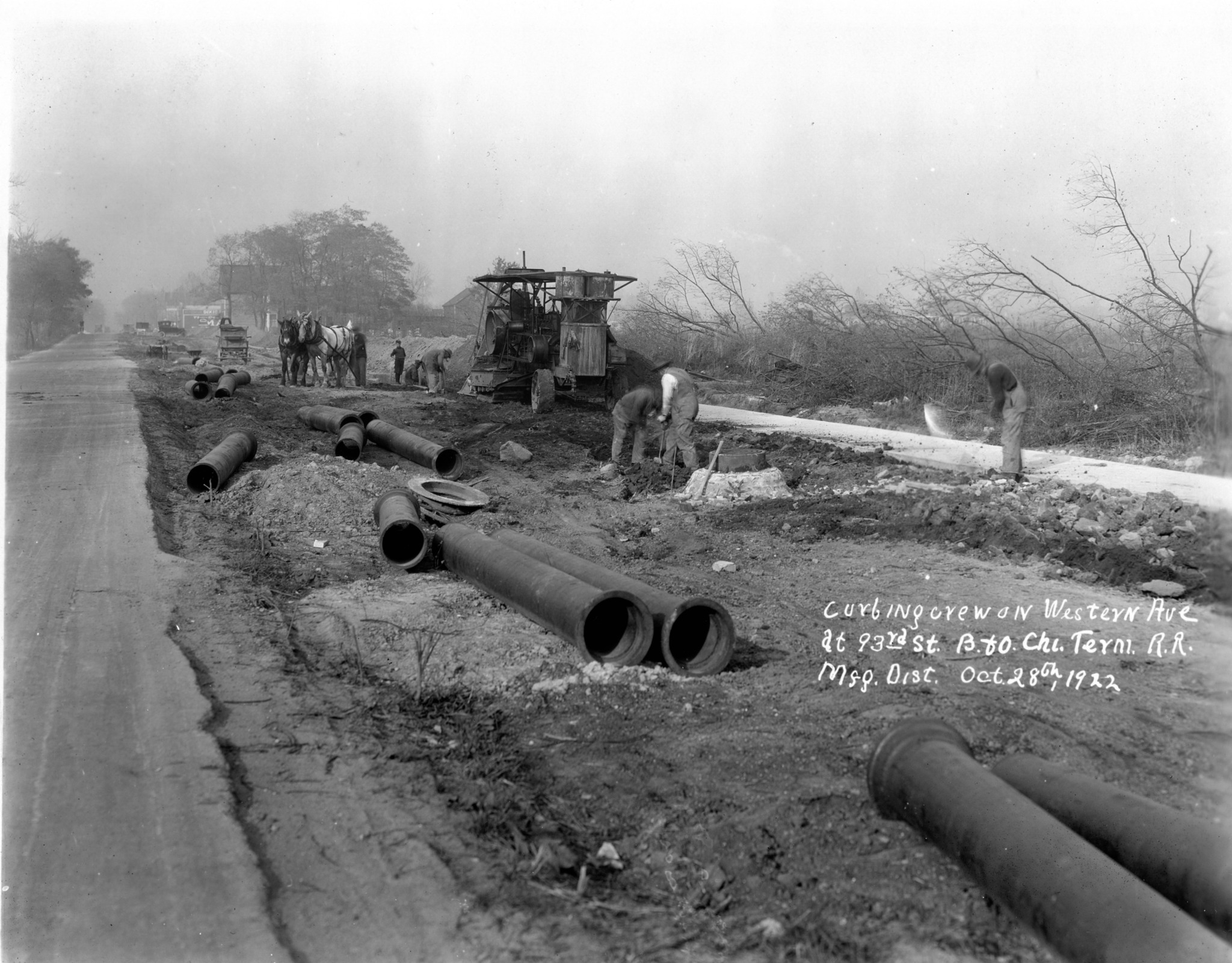
The Ridge Historical Society has a photo of the paving work at 93rd Street and Western Avenue in 1922, showing the building that housed the Kosar family and their businesses in the background.
Eventually, the son James, born in 1914, ran the shop, likely starting in his teen-age years, around 1930. He was awarded a bronze star for his service in World War II. He ran the business for many years, and even stayed on for a while as a mechanic after he sold the shop to Bob Green in the 1970s.
The current owners, Paul and Kathleen Weise, bought the shop in 1996, and modernized it. They also involved the shop in community activities, from starting their own racing group to sponsoring the Beverly Cycling Classic.
Recently, the shop has been receiving a lot of media attention because Paul Weise has announced his retirement and has put the shop up for sale. Hopefully, he will find a buyer that will carry on the tradition of the store.
Read more about Beverly Bike and Ski in this month's BAPA Villager. https://bapa.org/beverly-bike-ski-nears-100-years-at-91st-and-western/
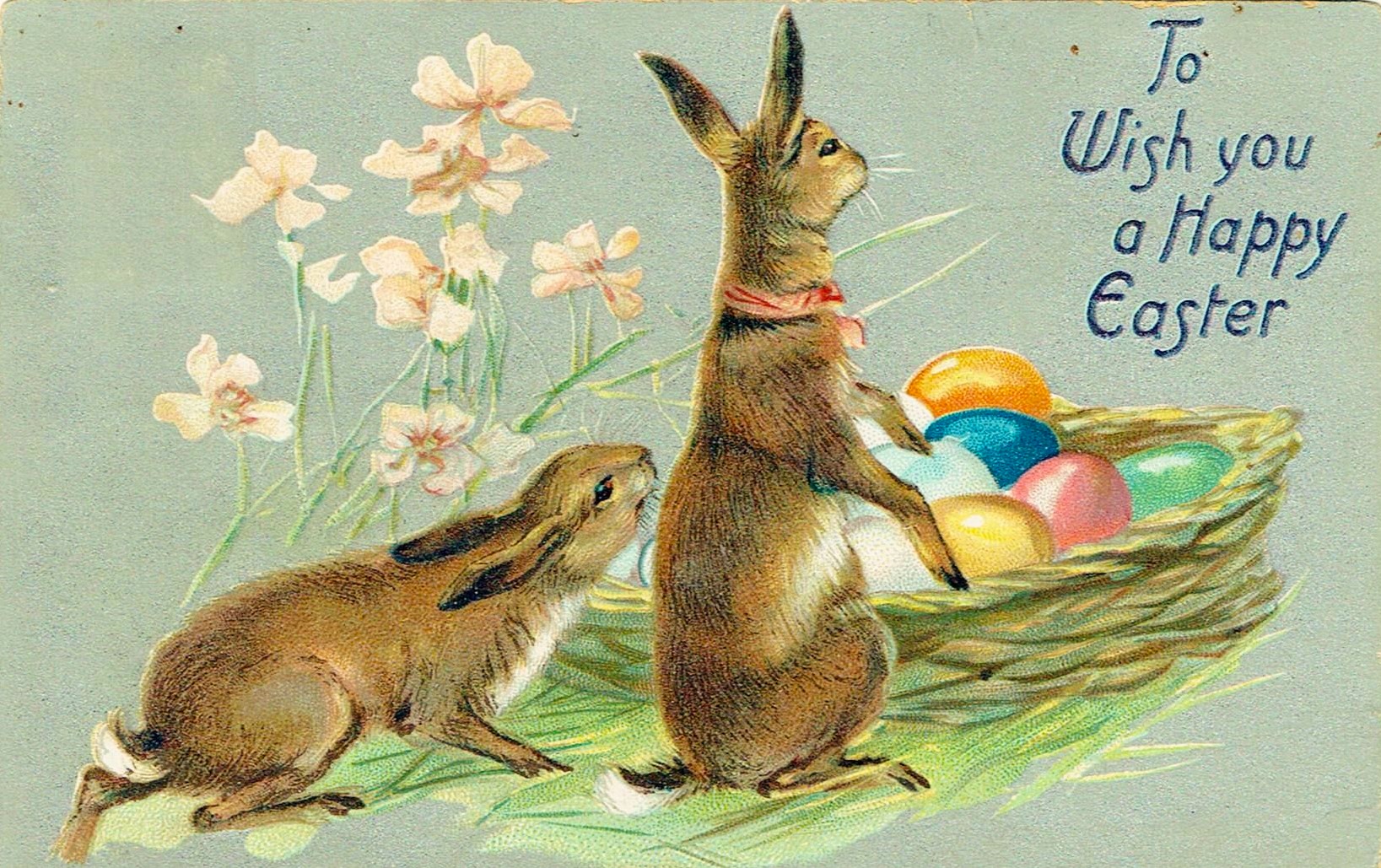
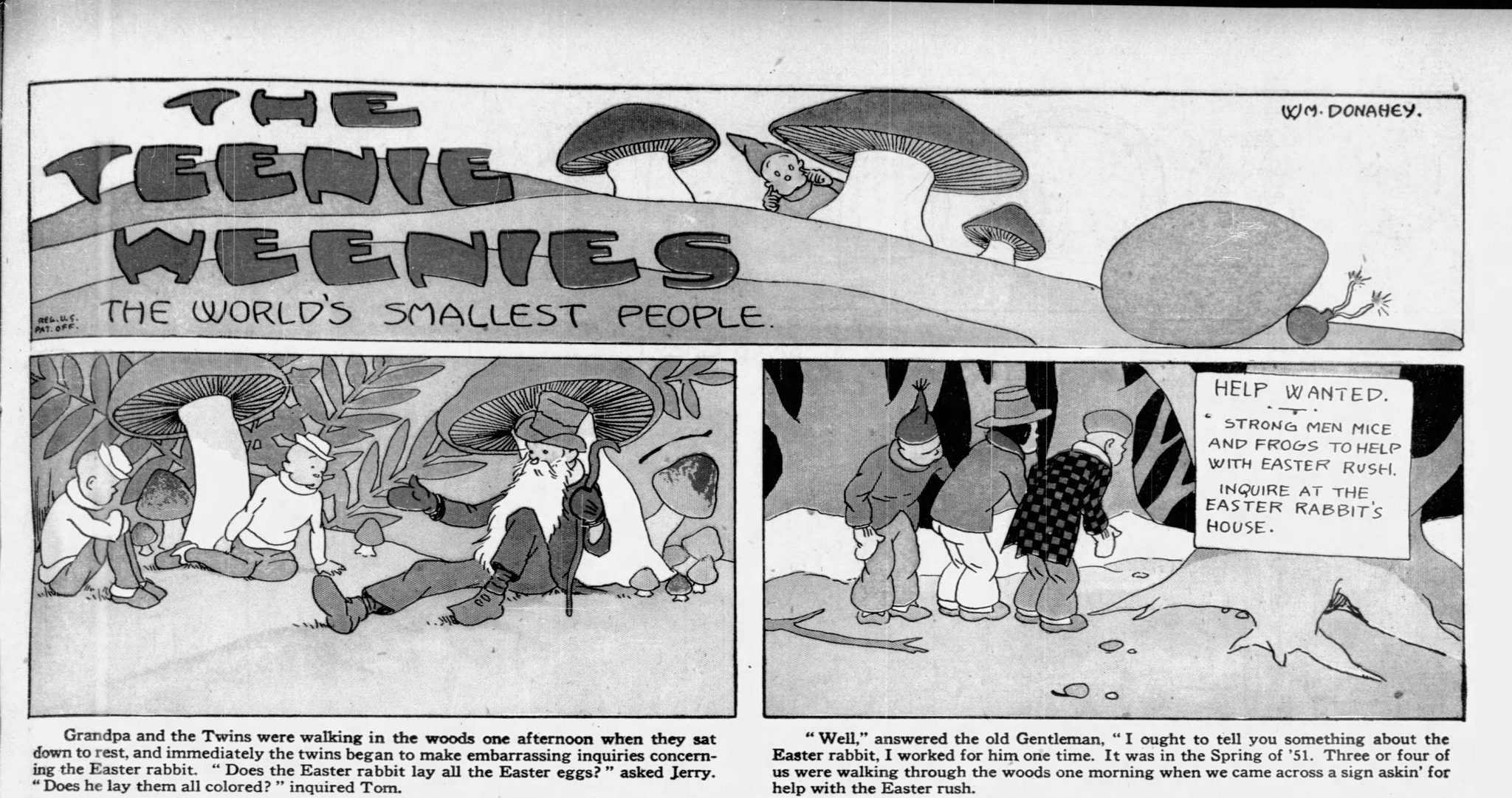
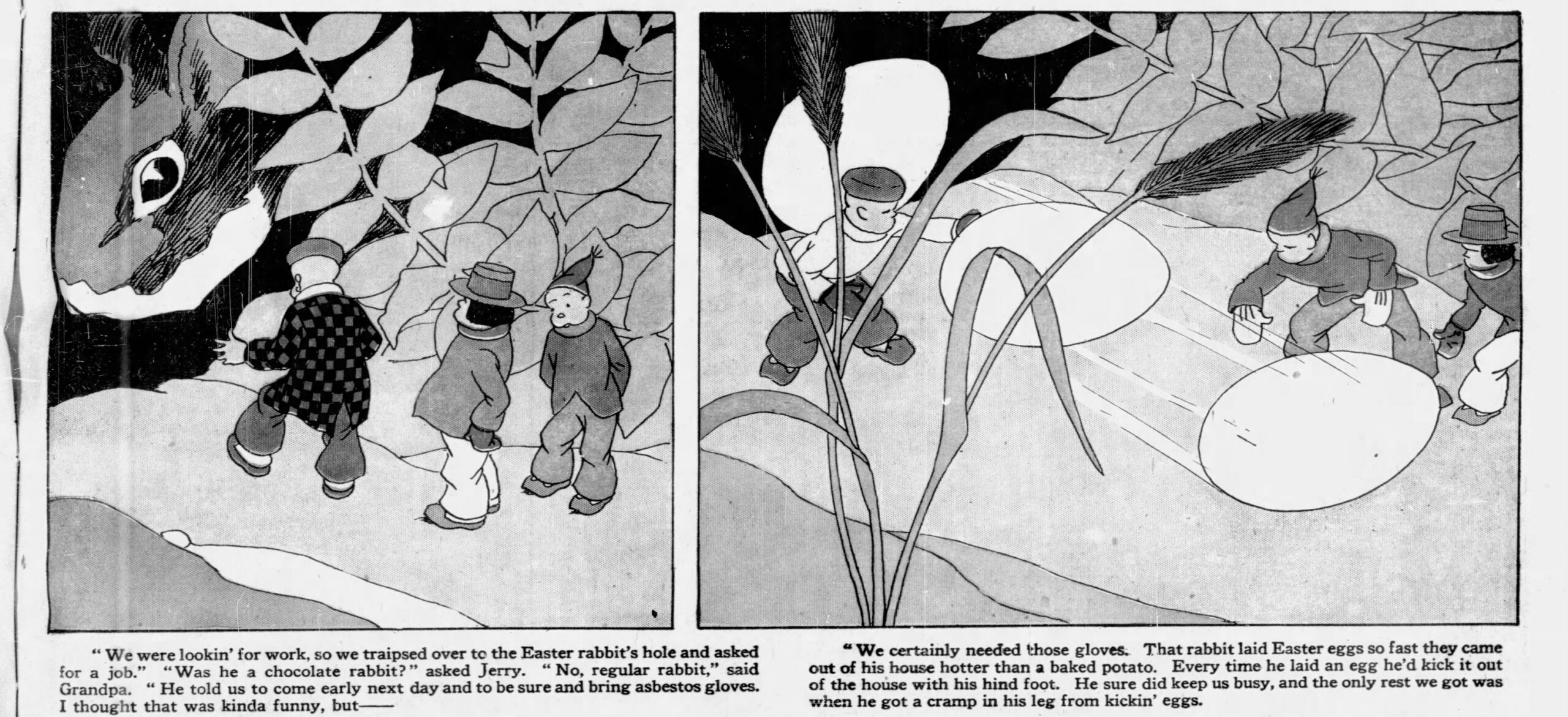
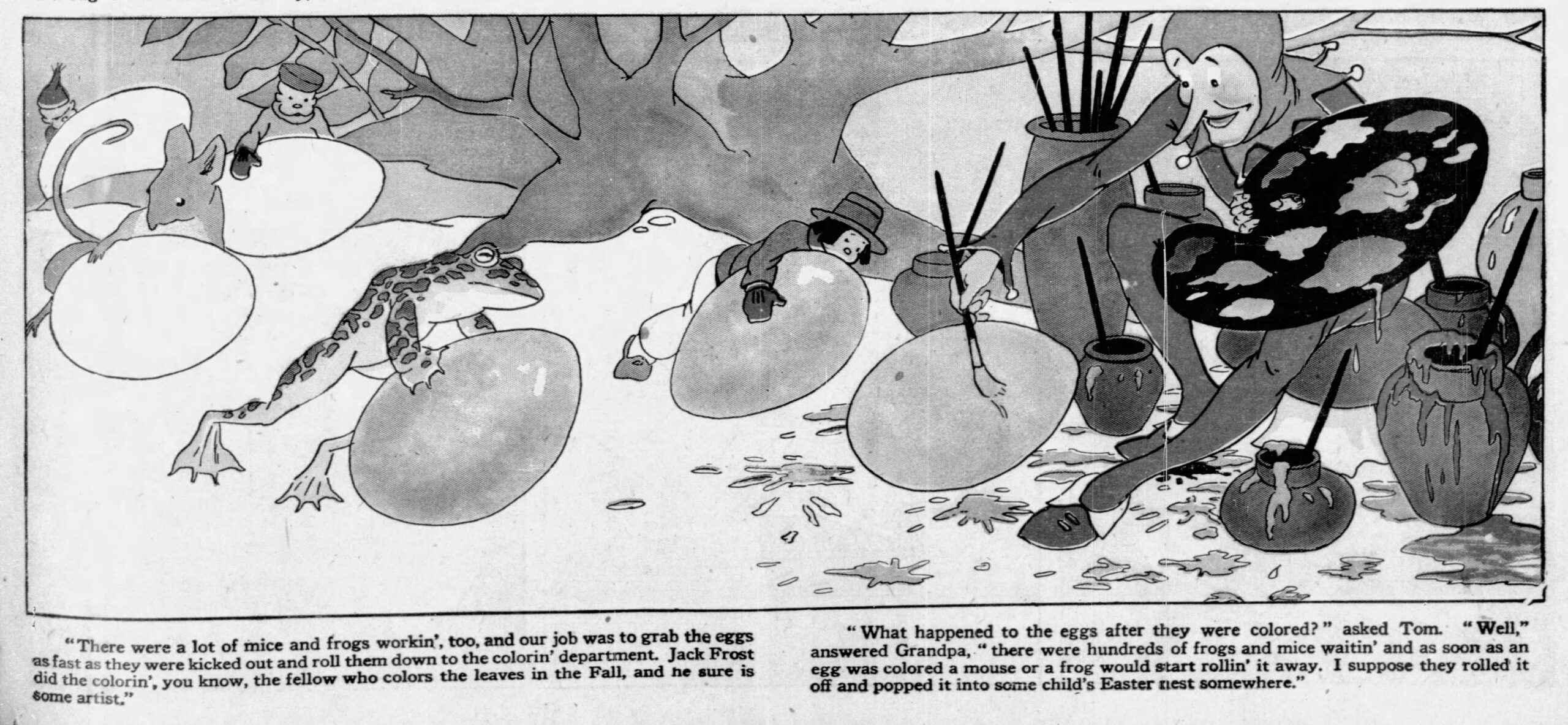
Happy Easter from the Ridge Historical Society!
Here's something a little different – a cartoon from Easter 1924 that appeared in the Chicago Tribune. This is how Easter eggs get painted.
And a vintage postcard greeting.

The Ridge Historical Society
National Women’s History Month: Dorothea Rudnick
By Carol Flynn
March would not be complete without acknowledging National Women’s History Month.
There is no shortage of accomplished women in the Ridge’s past, and most of those we have profiled have filled the traditional women’s roles of educators, artists, and “club women” social activists.
This year’s subject, Dorothea Rudnick (1907-1990), takes us in another direction, the sciences. Her “historical” and analytical brain, as she described it herself in 1964, led her to become a noted embryologist.
Dorothea grew up in Beverly. Her family lived at 10640 S. Seeley Avenue, then later moved to 10407 S. Leavitt Street. Her father Paul was head chemist for Armour & Co. and both of her brothers became physicists.
Dorothea, however, did not start out interested in the sciences – her interests were in history, journalism, and languages.
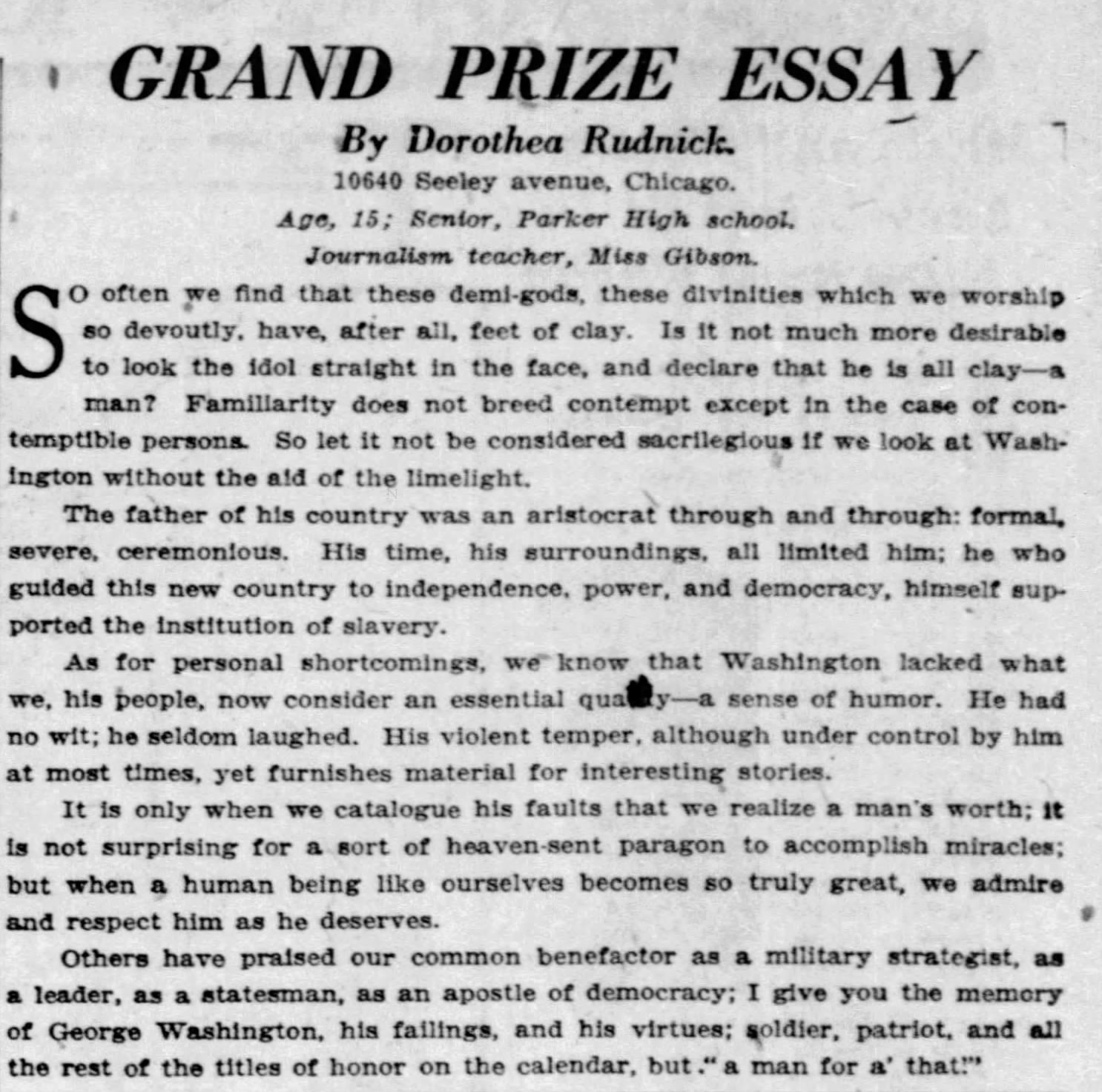
As a high school student at the age of 15, she won a Chicago Tribune essay contest on George Washington. Her essay is attached. It was a different take on George Washington: he was a flawed man, like all of us, making it that more notable that he rose to greatness.
Dorothea enrolled at the University of Chicago to study languages, but she really wanted to take some time to travel in Europe. She quit school and took a job downtown as a bookkeeper to earn money for a trip.
At the age of 18, she took off on her own with her own money to travel abroad. She enjoyed experiences like climbing mountains and living in Paris.
When she returned home, she realized she had to consider her future, and decided her best course of action was to go into the sciences.
Re-enrolling in the U. of Chicago, a course in zoology fascinated her, and she became interested in embryology, studying differentiation – why did certain cells develop into certain body parts – a lung, an ear, a feather.
With a Ph.D., completed in 1931, advanced scholarships and fellowships took her to Yale University, the University of Rochester, the University of Connecticut, and Wellesley College.
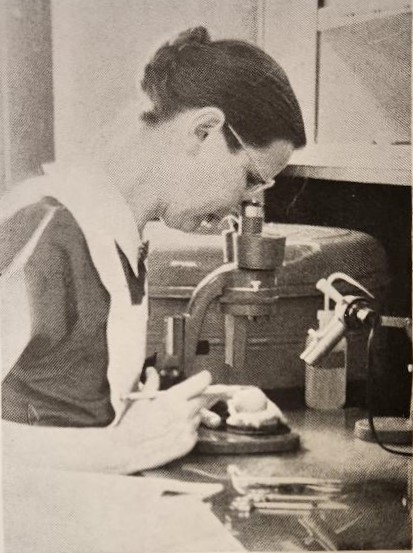
During these years, Dorothea perfected the delicate techniques for transplanting parts of one embryo into another that brought her distinction in the field. This was in the 1930s, and experiments were done by hand. She used tiny saws and forceps, glass needles, and binocular dissecting microscopes.
In 1940, Dorothea joined the teaching faculty at Albertus Magnus College, a Catholic women’s college in New Haven, Connecticut, near Yale, and spent the rest of her career there. She continued to have laboratory privileges at Yale, where she spent evenings, weekends, school breaks, and summers.
Dorothea enjoyed teaching and mentoring students as much as she did research.
She also made time to continue her love for writing and languages. She published her own studies, of course, and translated research articles from other languages into English. For many years she served as editor of the proceedings of symposia conducted by the Society for the Study of Development and Growth.
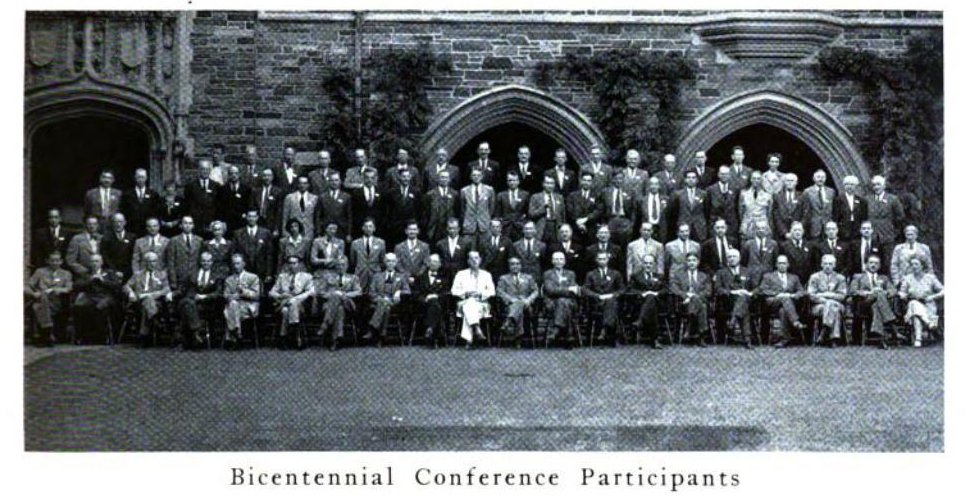
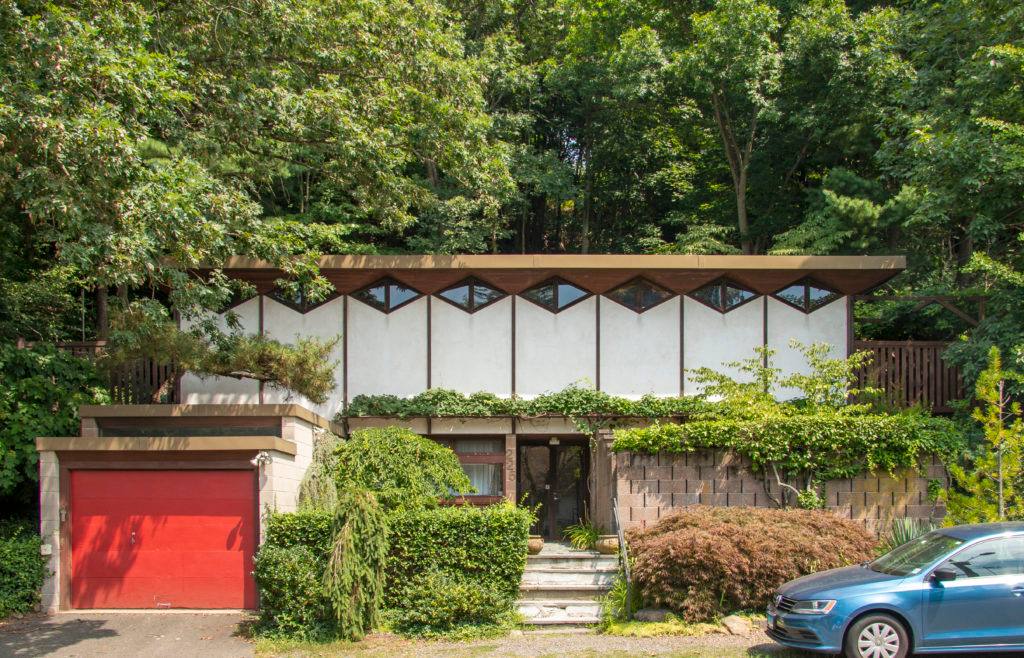
Not much is known about Dorothea's private life, which was described as “reclusive.” One fact, though, is that in 1956 – 58, she had King-lui Wu, an architect from China who was on the faculty at Yale, build a house for her. The modern-style "Dorothea Rudnick House," described by one architecture historian as “an open-plan house tucked into the side of a hill in Hamden” is considered architecturally significant of Wu’s work.
Dorothea retired in 1978, after many years of teaching, conducting experiments on chicken and rat embryos, and publishing. She joined her brother in Los Alamos, New Mexico, where she died at the age of 83.
Great strides have been made in sciences like embryology in the last thirty years, and some opportunities have become available for women. However, the Society of Women Engineers reports that in 2023, only 16.7% of the science and engineering work force was made up of women.
This year the theme of Women’s History Month is recognizing women who advocate for equity, diversity, and inclusion.
Some women become advocates through example because their accomplishments show the contributions women can make if given opportunities to let their knowledge and skills develop and thrive.
Dorothea Rudnick, a Beverly native who became a noted
embryologist, is an example of a woman whose career “speaks” for inclusion of women as equals in the sciences.
A more thorough article on her can be found at: https://www.beverlyreview.net/news/community_news/article_11eec2de-eb8c-11ee-8773-fbfc415430c4.html
The Ridge Historical Society
Lost or Found? – Building #1: FOUND – Part 1 on the Iglehart House
By Carol Flynn
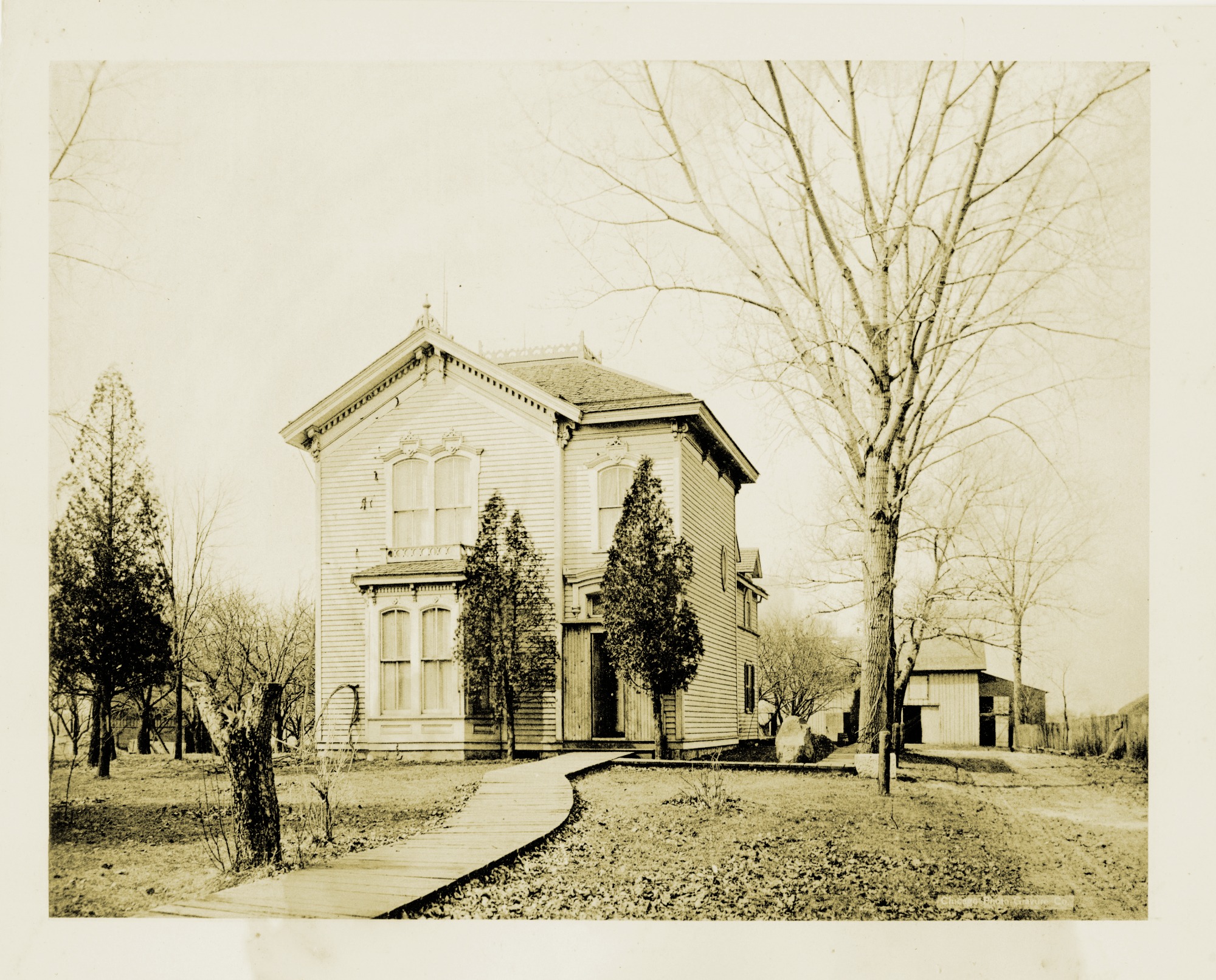
This new Facebook series from the Ridge Historical Society, “Lost or Found?”, presents photos of buildings in Morgan Park from an 1889 publication, and invites the reader to comment if the building is still standing, and if so, where it is located.
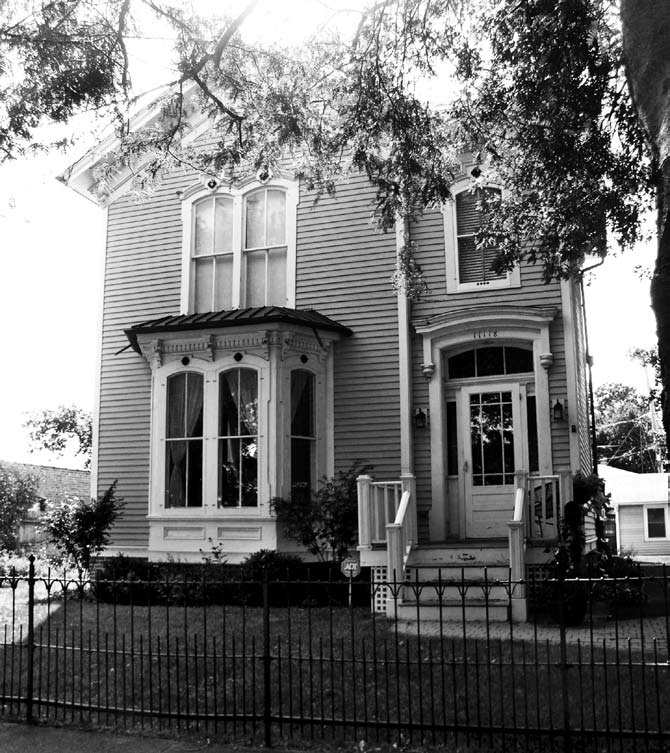
The first building was correctly “found” and identified by several people as the Charles D. Iglehart House at 11118 S. Artesian Avenue. Several people guessed it was a house on Prospect Avenue, and that was a reasonable guess that will be addressed a little later in this post.
The Iglehart House is the oldest identified house in the community, and one of the oldest houses in Chicago. It was designated a Chicago Landmark by the Commission on Chicago Landmarks in 1994. The house has two parts, a farmhouse/cottage in the rear that was built in 1857, and an addition with an Italianate façade in the front that dates to the 1870s.
It is that old farmhouse in the back that gives the house enough historical significance to be worthy of landmark status. The Preliminary Staff Summary of information on this house submitted to the Commission stated that: “While its Italianate style is not uncommon for the mid-nineteenth century, it is certainly unusual to find an authentic farm house still extant within the city limits. Few Chicago buildings can claim the age and degree of preservation of this venerable residence.”
The original farmhouse was built by Charles D. Iglehart, a farmer who moved to Cook County from Maryland with his wife Elizabeth and young children in 1856. More information on the Iglehart family will be covered in the next post.
They took up residence and farming on the Ridge, at the corner of what is now 111th Street and Western Avenue. The land then was known as North Blue Island, or Worth township in Cook County. Popularly, the area was also known as “Horse Thief Hollow” from the horse thieves who hid out in the ravines in the 1830s – 40s but were gone by the 1850s (except for folklore). The section that would become known as “Morgan Park” wouldn’t be founded until 1874.
The Iglehart House was built when just a few houses were scattered around a very rural farming community. However, Western Avenue was already a “thoroughfare,” that is, a public road connecting places along its route. From 1851 to 1869, the road marked the western border of the city of Chicago. Western Avenue was also known as the “Blue Island Plank Road” for many years, because in 1854, it had been lined with wooden planks and connected to a system of roads which took people all the way to “downtown” Chicago.
The original Iglehart farmstead extended from 111th Street to 115th Street, and Western Avenue to Rockwell.
There was nothing around the house but prairie. Eye-witness accounts of the time describe the land as a natural paradise. The Barnards, another early family, related stories of abundant prairie flowers in the spring and summer – ladies’ slippers, violets, phlox – and in autumn, wild sunflowers that grew taller than the tallest men. Wild fruits were also abundant – huckleberries, strawberries, blackberries, plums – as was wild game like turkeys and rabbits, and seasonal waterfowl.
The early settlers could hear wolves howling at night. The wolves killed livestock, and there was one story of a Mrs. Smith dying while trying to walk home in winter from Chicago to her house on the Ridge with provisions for her children. Her remains were found partially eaten by wolves.
Eventually, wolves and humans could not share the habitat of the Ridge, resulting in the decimation of the wolves. Hunting down the wolves became a local pastime, engaged in by people like Thomas Morgan, with the hunting dogs he brought with him from England.
One story that was passed down was of Thomas Iglehart, one of the sons born on the Ridge, riding on horseback, chasing down and killing a wolf. It was claimed that the wolf was displayed for many years in the Iglehart home.
The Iglehart House started with the cottage-style farmhouse. Kerosene lamps provided light, cooking was done on a wood-burning iron range, a pot-bellied stove provided heat for the living spaces, and water came from a well in the back yard. Supplies were brought in by horse or oxen-drawn wagons.
The Iglehart family added the Italianate front part in the 1870s, but the architect, if there was one, is unknown. It was not unusual for homeowners to design and build their own houses, with help from the neighbors. The Italianate style was very popular in the 1870s, as evidenced by the number of houses built in that style during that time, including some very nice examples on Prospect Avenue. Hence, it was a good guess that this house could be found on that street.
Few internal features of the house remain today, but two impressive pieces are reported. One is a marble fireplace, and the story is that the marble was imported from Italy and then brought to the Ridge by ox cart. The other is a hand-tooled walnut banister and newel post on the interior staircase.
The Iglehart family was gone from the house by 1930, moving to other locations on the Ridge. During the 1920s, the land the Iglehart family owned was subdivided and sold.
Also, sometime in the 1920s, likely when Western Avenue was graded, widened, and repaved beginning in 1922, the house was moved about 40 feet to the west, allowing for a street to be added in front of the house, and today that is Artesian Avenue.
After the Iglehart family, the house was owned by members of the Arthur R. Ayers family, and then by the Paul A. Parenti family. These owners are truly commended for preserving the house so well for 100 years.
“Lost or Found?” is based on the current exhibit at the Ridge Historical Society (RHS), “Louise Barwick’s Lost Ridge,” which explores the Beverly/Morgan Park neighborhood as it existed in times past. Barwick was an artist and teacher who lived at 10330 S. Seeley Avenue in another notable Italianate-style house. Her watercolors of the Ridge depict scenes from around 1900.
The exhibit is open to the public for free on Tuesday and Sunday afternoons from 1:00 to 4:00 p.m. or by appointment. RHS is located at 10621 S. Seeley Avenue in Chicago. The email is ridgehistory@hotmail.com and the phone number is 773/881-1675.
The next post in this series will share more information on the Iglehart family, and then we will move on to building #2 in the “Lost or Found?” series.
The Ridge Historical Society
Irish American Heritage Month: James H. Gately, Sr.
By Carol Flynn
St. Patrick’s Day has come and gone for another year, but it’s still March, Irish American Heritage Month. This year’s theme was to celebrate our Irish ancestors, their legacies, and their values.
This year’s “Irishman on the Ridge” feature article in the Beverly Review is on James H. Gately, Sr., who lived in Beverly for more than 40 years.
Gately earned acclaim and prosperity as the proprietor of Gatelys Peoples Store, located on Michigan Avenue in the Roseland neighborhood. Gatelys was THE place to shop for South Siders for over sixty years.
Gately was one of the early Irish Catholic businessmen who achieved success in realizing the “American Dream” who put down roots in Beverly. Five generations of the family have called Beverly “home.”
This begins a series on James H. Gately, Sr.
https://www.beverlyreview.net/news/community_news/article_7ba8584c-e610-11ee-bd66-47c716be9f6c.html
The Ridge Historical Society
The Parade and the Weather
By Carol Flynn
“Don't bring around a cloud to rain on my parade” is a memorable line from a song in the musical “Funny Girl.”
While in the song the line is a metaphor about not interfering in another person’s life, it is a reminder that the weather always plays a part in any outdoor event like a parade.
Springtime weather in Chicago is especially unpredictable and changeable, and St. Patrick’s Day parade plans always factor in the weather. Uncooperative weather doesn’t mean the parade will be canceled; in fact, that would be a very unlikely occurrence. It just means some adjustments may have to be made.
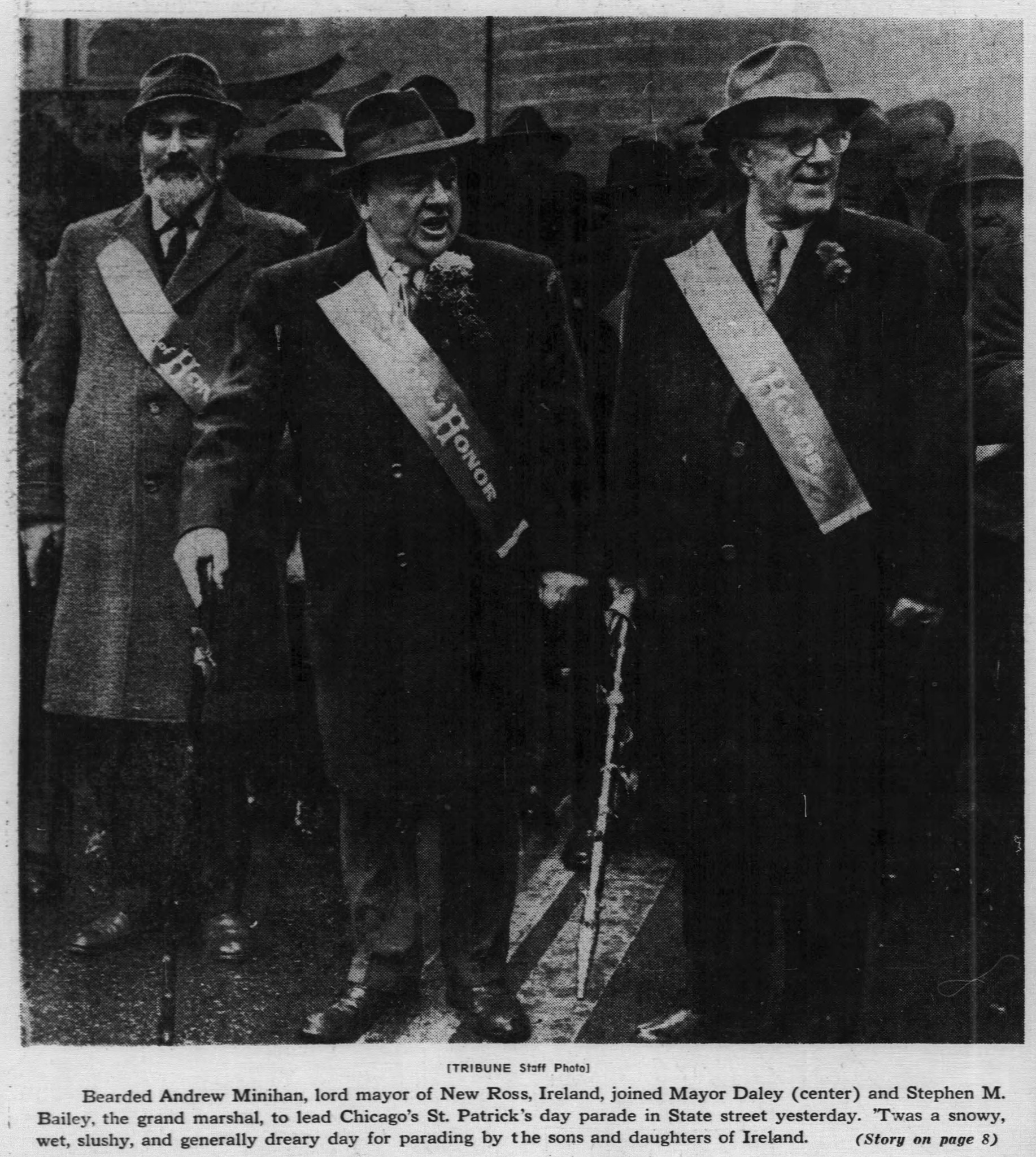
The most rain that ever fell on St. Patrick’s Day when a parade was held downtown was recorded as 1.42 inches in 1965. The Chicago Tribune described the precipitation that Wednesday as a mixture of snow, sleet, and freezing rain.
City crews worked from the early morning on to clear the parade route, and despite gusts of wind up to 52 miles per hour, the parade went on as scheduled.
Thousands of people lined State Street to watch. Entries in the parade included 60 floats and 41 marching bands.
The mayor of New Ross, Wexford, Ireland, a guest of Chicago’s Mayor Richard J. Daley, recorded the entire parade with his “motion picture camera.”
Other extreme weather days for parades when they were held right on March 17th include coldest and hottest.
The coldest St. Patrick’s Day on record in Chicago occurred on a Saturday in 1900, when the overnight temperature was one degree below zero. The newspapers reported the parade took place with a daytime temperature of sixteen degrees in blinding whirlwinds of snow and biting wind blasts. The streets were slippery frozen mud.
Despite the weather, or maybe partly due to it, enthusiasm was high on parade day. More than 3,000 people marched or rode in the parade, and many more lined the streets and cheered them on.
Irish and American flags and organization banners whipped wildly in the wind and musicians played with numb fingers. An Irish jaunting car, a special feature of the parade, “bounced and pitched and rolled and slid” through the frozen mud but made it to the parade’s end.
The parade lasted for two hours in that freezing cold.
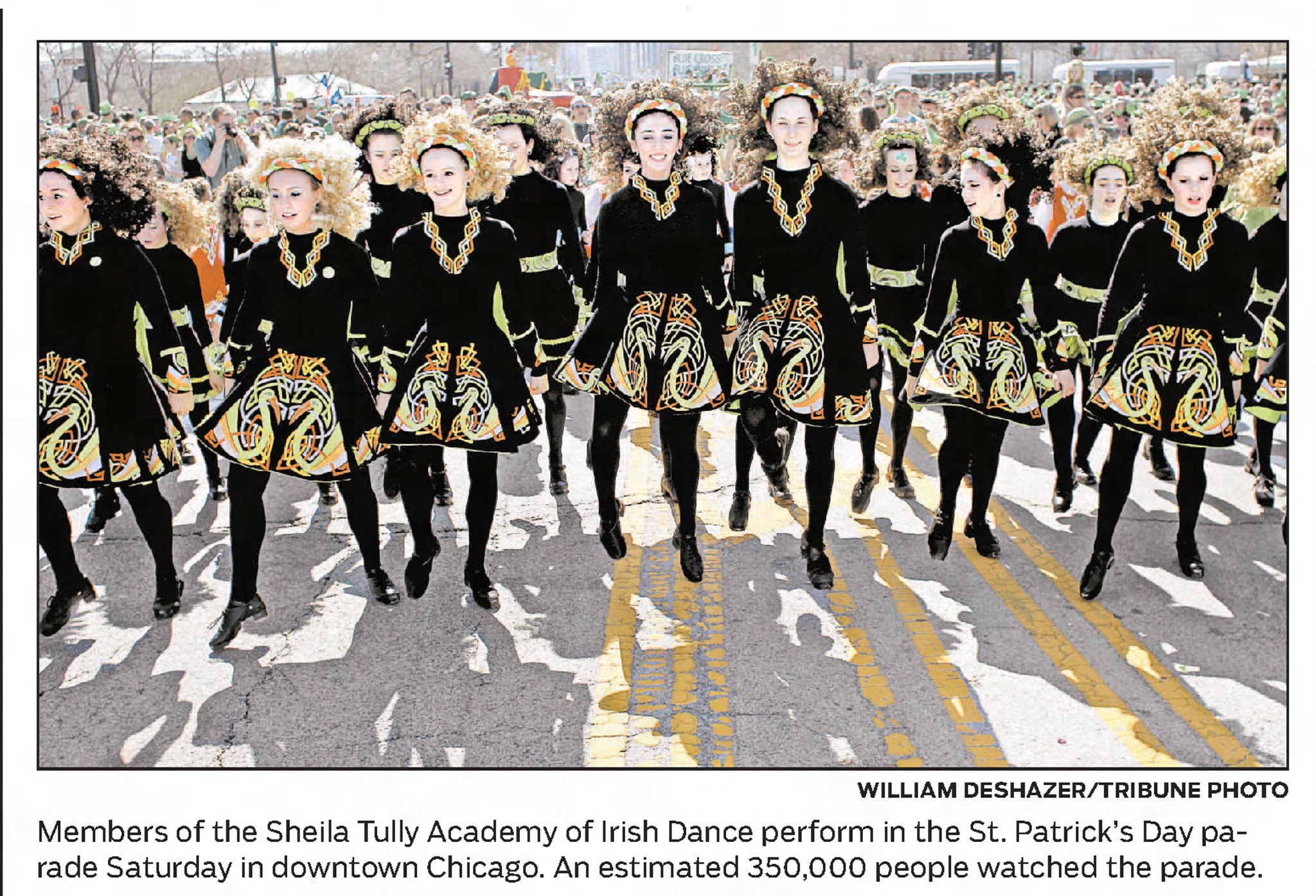
The record high temperature for St. Patrick’s Day was 82 degrees in 2012.
Over 350,000 parade goers that day enjoyed the warm weather so much, reported the Tribune, that two men jumped into the Chicago River, which was dyed green for the day per custom. After they were fished out, one ran away and the other was ticketed by the police.
A visitor from Georgia lamented there was no snow; she was hoping to experience some Chicago winter weather. Chicagoans were not sorry to disappoint her. If she had been here 112 years earlier, she could have experienced the worst there was to have.
This year, the weather for St. Patrick’s Day and the South Side Irish Parade is expected to be 40 degrees with no rain, which actually fits right into the norm for this time of year.
Happy St. Patrick's Day!
The Ridge Historical Society
The Natural Ridge – Springtime on the Ridge
By Carol Flynn
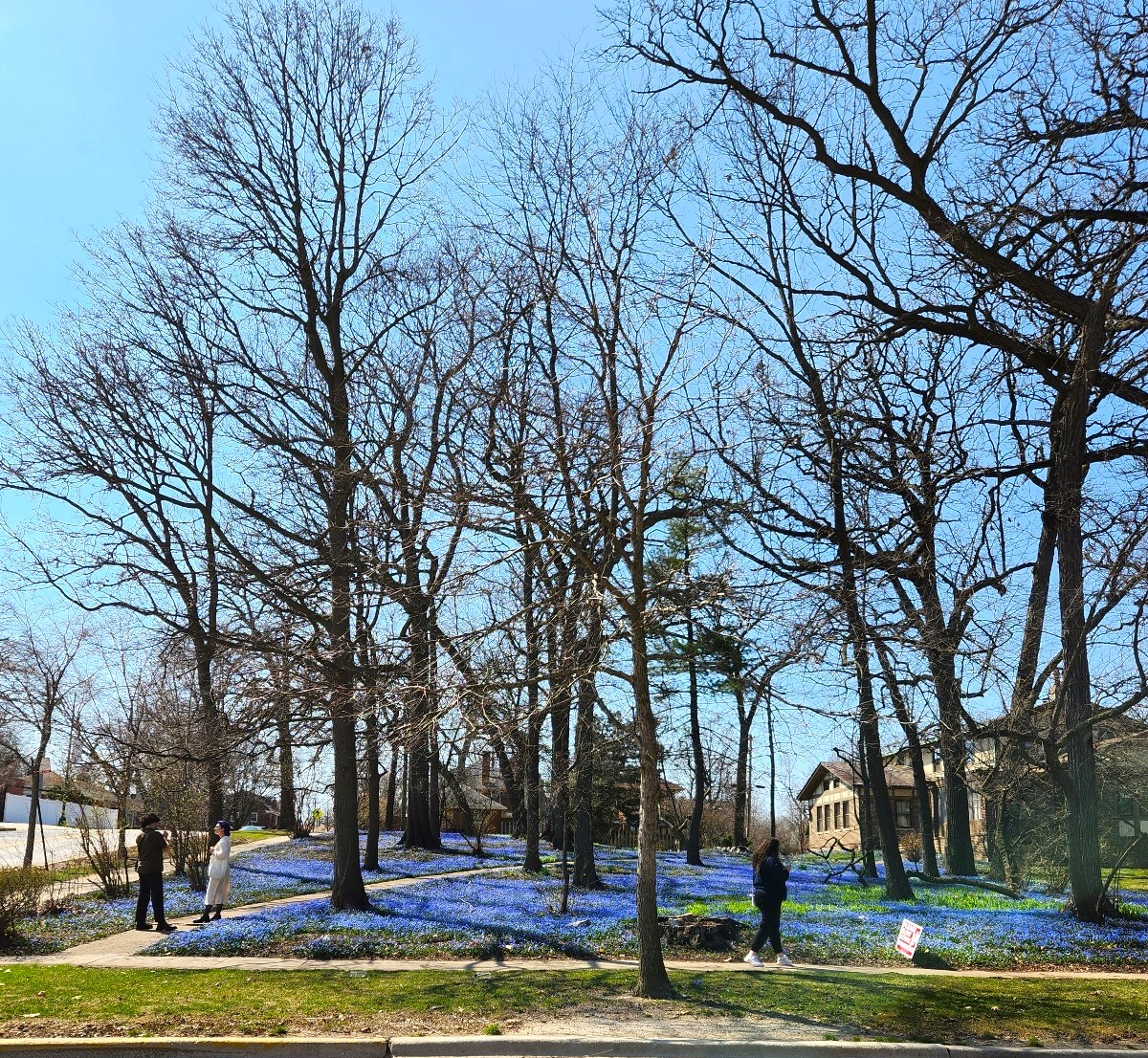
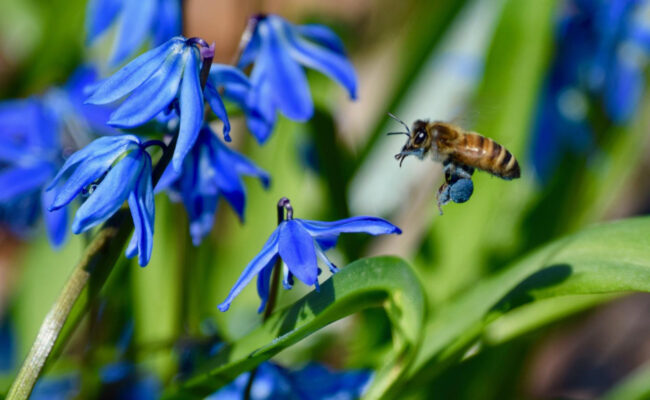
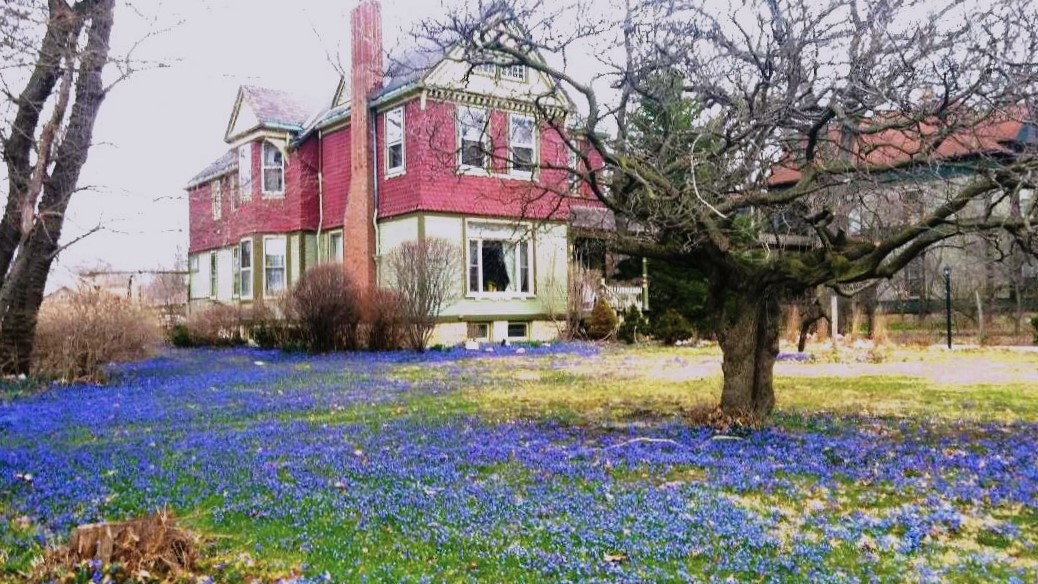
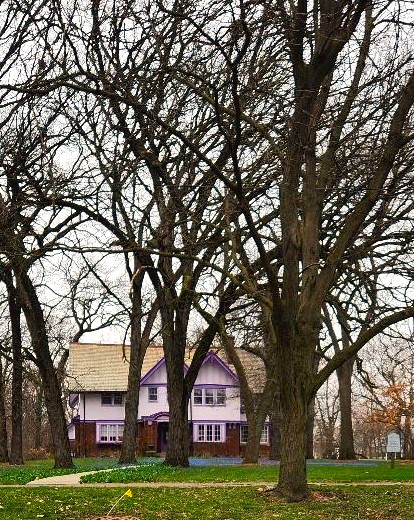
It’s springtime on the Blue Island Ridge, and the lawns are carpeted with small, intensely blue flowers.
This is Siberian squill (Scilla sibirica), a perennial in the asparagus family. The plant is sometimes called wood squill or scilla. The plant is not native to the U.S., nor did it originate in Siberia. It is native to southwestern Russia, the Caucasus, and Turkey.
Siberian squill spreads, or “naturalizes,” from bulbs underground and much more quickly from seeds above ground. It is extremely hardy and resistant to the freezing temperatures and ice and snow of winter, blooming in early spring.
Siberian squill was introduced into the U.S by European settlers, most likely around the end of Colonial times. An 1811 book about the plants at the Royal Botanic Garden at Kew near London lists Siberian squill in the collection there, from a source cultivated in 1796, showing it was available by that time to English emigrants.
It is not possible to say when the first Siberian squill bulb was planted on the Ridge. Early settlers were here in the 1830s, and the City of Blue Island saw an influx of settlers in the 1850s.
An 1856 publication, The Kitchen and Flower Garden, mentioned Siberian squill, stating that it “is one of the prettiest emblems of spring which we have, joined to which, its dwarf and graceful stature renders it worthy of all admiration.”
By the 1870s, when Washington Heights, Beverly, and Morgan Park started to be settled in earnest, the plant was regularly mentioned in publications like the Amateur Gardener’s Calendar, The Garden, and Familiar Garden Flowers.
That last publication reported that Siberian squill “makes a fringe of heavenly blue” that causes viewers to “experience a strange thrill of emotion, either because the color has some spiritual import that the soul understands, or because the assurance it gives of the constancy of the seasons re-establishes the confidence that late frosts and east winds had well-nigh shattered.”
In other words, the blooming of this plant is a sign that spring has arrived.
Siberian squill became popular for planting in gardens throughout the northern states. An article from a 1939 Camden, New Jersey, newspaper, in which early-blooming plants from bulbs were discussed, described the plant as “the sweet blueness of the Siberian squills which in long drifts look like fallen bits of spring sky.”
The article also stated that “Siberian squills will delight you and make you bless the day you discovered them.”
Regardless of its attractiveness, however, it is an invasive species that, quite simply, does not belong here. In some areas of the Midwest, it is considered a serious threat because it crowds out less hardy native wildflowers. Alternative native blue-flowering plants recommended for use in place of Siberian squill include Virginia bluebells and wild blue phlox.
Even if invasive, according to the University of Wisconsin Extension, Siberian squill is a good pollinator plant for bees and other pollinating insects. As bees emerge from their winter clusters, it is one of the first plants available to them for foraging. It’s not uncommon to spy bees in the spring that look blue from the pollen attached to their bodies.
Siberian squill is readily available through catalogs and plant nurseries. Today, responsible gardeners who want to plant this in flowerbeds, knowing it is invasive, cultivate it so it doesn’t spread to affect native plants.
The blue lawns on the Ridge took decades to develop and would not be recommended today, but they are eye-catching in their historic splendor as the heralds of springtime.
The Ridge Historical Society
Lost or Found? – Identify Building #2
By Carol Flynn
Last week, the Ridge Historical Society (RHS) started a new series, “Lost or Found?,” based on the current exhibit at RHS, “Louise Barwick’s Lost Ridge,” which explores the Beverly/Morgan Park neighborhood as it existed in times past.
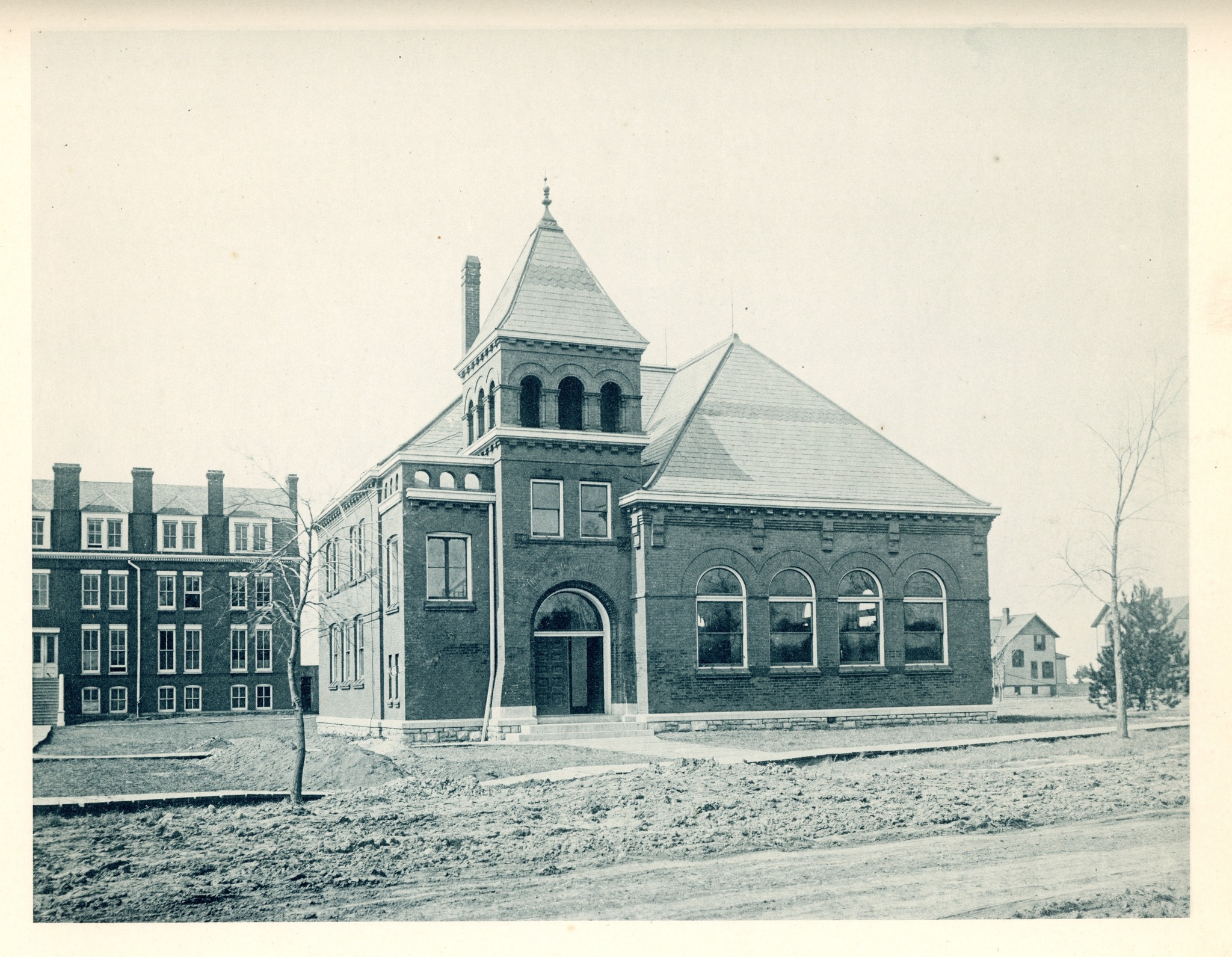
One section of the exhibit includes historical images of buildings in Morgan Park, some of which are gone and some of which still stand. This Facebook series will present the historic photos of some of the buildings, and ask readers to identify if the building is still standing, and if so, where it is.
It can be trickier than it sounds because many of the buildings have been altered, and some have been moved.
The first picture was presented last week, and several viewers identified it correctly on the RHS Facebook page. It is a house still standing, and the story of the house will be posted in the next few days. New research on the house and family has been located so that is being incorporated into the post.
While that post is being compiled, let’s get a head start on the second building.
Here is Building #2, from an 1889 photo. Is it still standing? If so, where is it?
The RHS exhibit is free and open for viewing on Tuesdays and Sundays from 1:00 to 4:00 p.m., or by appointment. RHS is located at 10621 S. Seeley Avenue in Chicago, and may be contacted at 773-881-1675 or ridgehistory@hotmail.com.