Explore the RHS Facebook Archives, a rich repository of local history written by Carol Flynn. For two decades, Carol brought a deeply dedicated voice to public education at RHS. Her role as Facebook administrator through mid-2025 naturally extended her prolific research into meticulously detailed articles, most notably her multi-part historical series posts. Today, Carol continues her local history writing for The Beverly Review and other outlets.
2024
The Ridge Historical Society
Lost or Found?
By Carol Flynn
Today starts a new series, “Lost or Found?,” based on the current exhibit at the Ridge Historical Society (RHS), “Louise Barwick’s Lost Ridge,” which explores the Beverly/Morgan Park neighborhood as it existed in times past.
One section of the exhibit, “Lost or Found,” curated by Tim Blackburn, RHS Board member and researcher, includes historical images of buildings in Morgan Park, some of which are gone and some of which still stand. While the pervading theme of the entire exhibit is what has been lost, Linda Lamberty, RHS Historian and overall exhibit curator, notes that this section is “infused with hope by including sites that have survived.”
The exhibit and this Facebook series use images from an 1889 book of photographs printed using photogravure, a process using a grained copper plate which is coated with a light-sensitive gelatin tissue which has been exposed to a film positive, and then etched. This results in high-quality, rich prints and reproductions. The process was popular in the 1800s and is still used today by some fine-art photographers.
Twenty-three photographs were available for the exhibit, and thirteen of the buildings in those photos are still standing. Readers are invited to view a photo and identify the building, and comment whether the building is still standing, and if so, its present location. The challenge is tougher than it seems because some of the buildings have been substantially altered or moved.
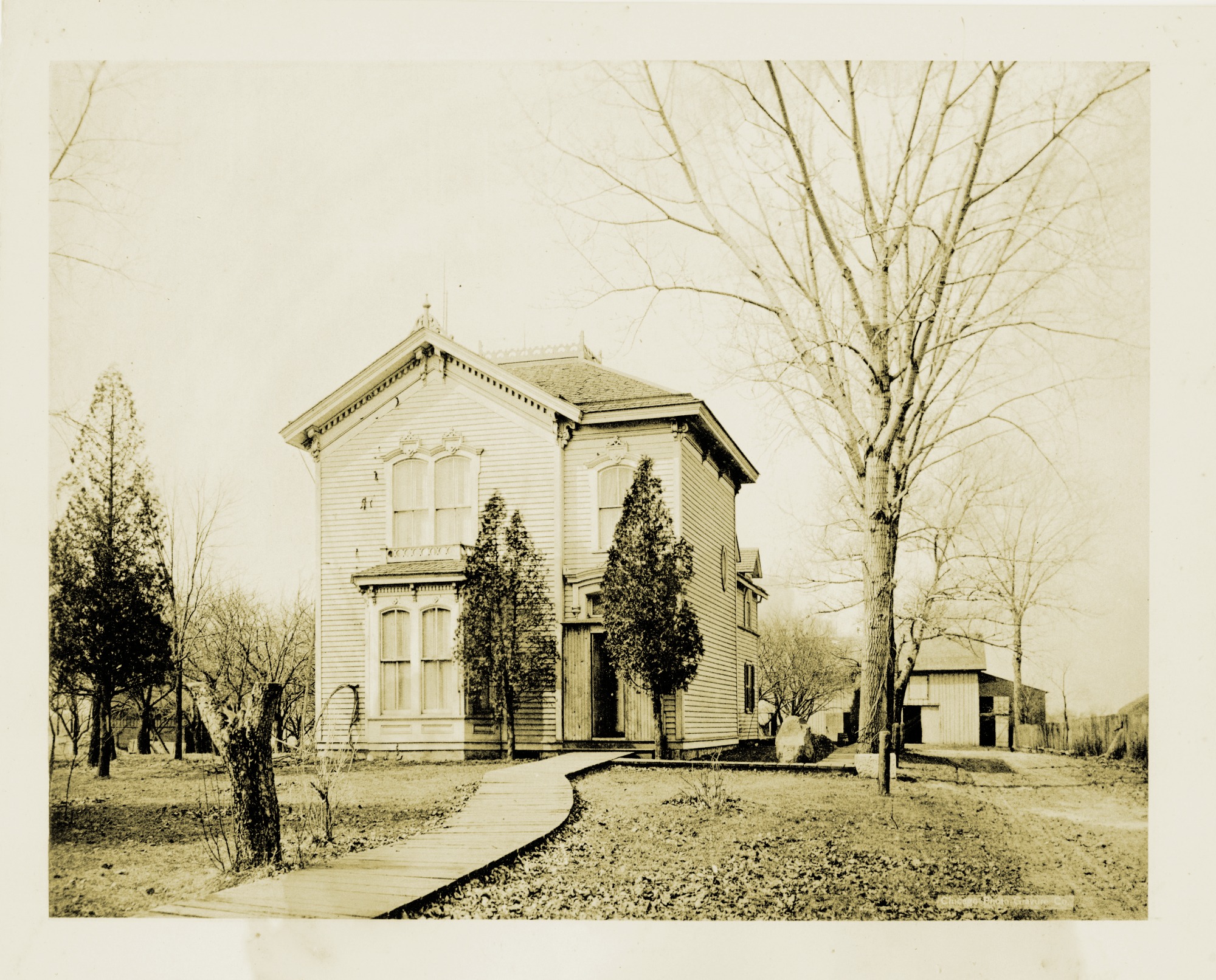
Here is our first photo. Is this house still standing? If yes, where? The answer, and the history of the house, will be posted in a few days, so keep watching this page.
All of the images, plus much more, can be viewed in the exhibit at RHS.
“The RHS exhibit encourages visitors to think about the importance of preservation to our history and the many ways we can preserve the memory of buildings that are no longer standing,” said Tim.
The RHS exhibit is free and open for viewing on Tuesdays and Sundays from 1:00 to 4:00 p.m., or by appointment. RHS is located at 10621 S. Seeley Avenue in Chicago, and may be contacted at 773-881-1675 or ridgehistory@hotmail.com.
The Ridge Historical Society
Please Join Us –
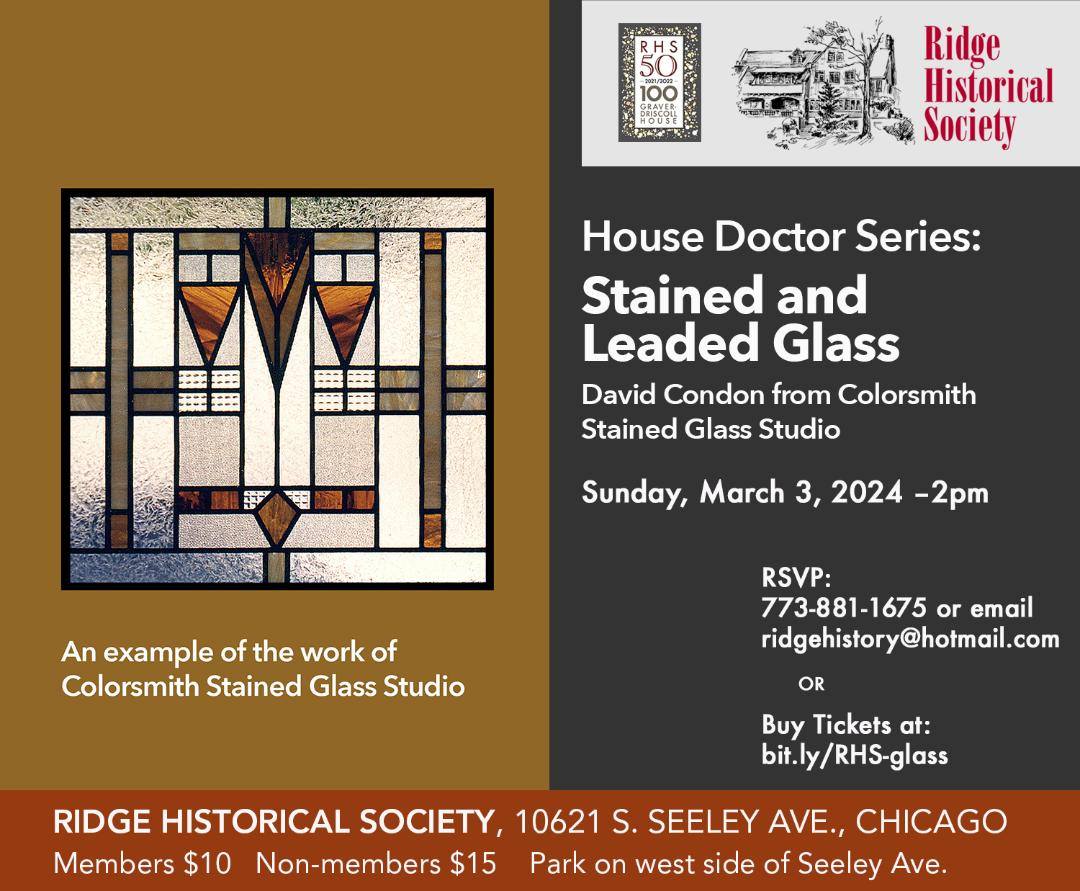
House Doctor Series:
Stained and Leaded Glass
Sunday, March 3, 2:00 p.m.
Stained glass windows are a design element in many historic (and contemporary!) homes and buildings. They add an eye-catching, colorful feature to a room by “harnessing the power of the sun” (quoted from HGTV).
Join RHS on Sunday, March 3, at 2:00 p.m., for a program with David Condon from Colorsmith Stained Glass Studio, as part of the ongoing House Doctor Series.
David will share information on the design, creation, care, and restoration of leaded glass and stained glass windows, and will answer your questions. He will also talk about the new windows he created for RHS – a leaded, stained glass window for the front door, and a small leaded side window.
RHS is located at 10621 S. Seeley Avenue, Chicago.
Cost: Members $10 | Non-members $15
RSVP at 773-881-1675 or email ridgehistory@hotmail.com
Or buy tickets here: https://bit.ly/RHS-glass
The Ridge Historical Society
Happy Valentine’s Day!
Valentines from Louise Barwick
By Carol Flynn
The Ridge Historical Society’s (RHS) current exhibit, “Louise Barwick’s Lost Ridge,” may be viewed on Sundays and Tuesdays from 1:00 p.m. to 4:00 p.m. or by appointment. RHS is located at 10621 S. Seeley Avenue in Chicago. The exhibit is free. RHS may be contacted at 773/881-1675 or ridgehistory@hotmail.com.
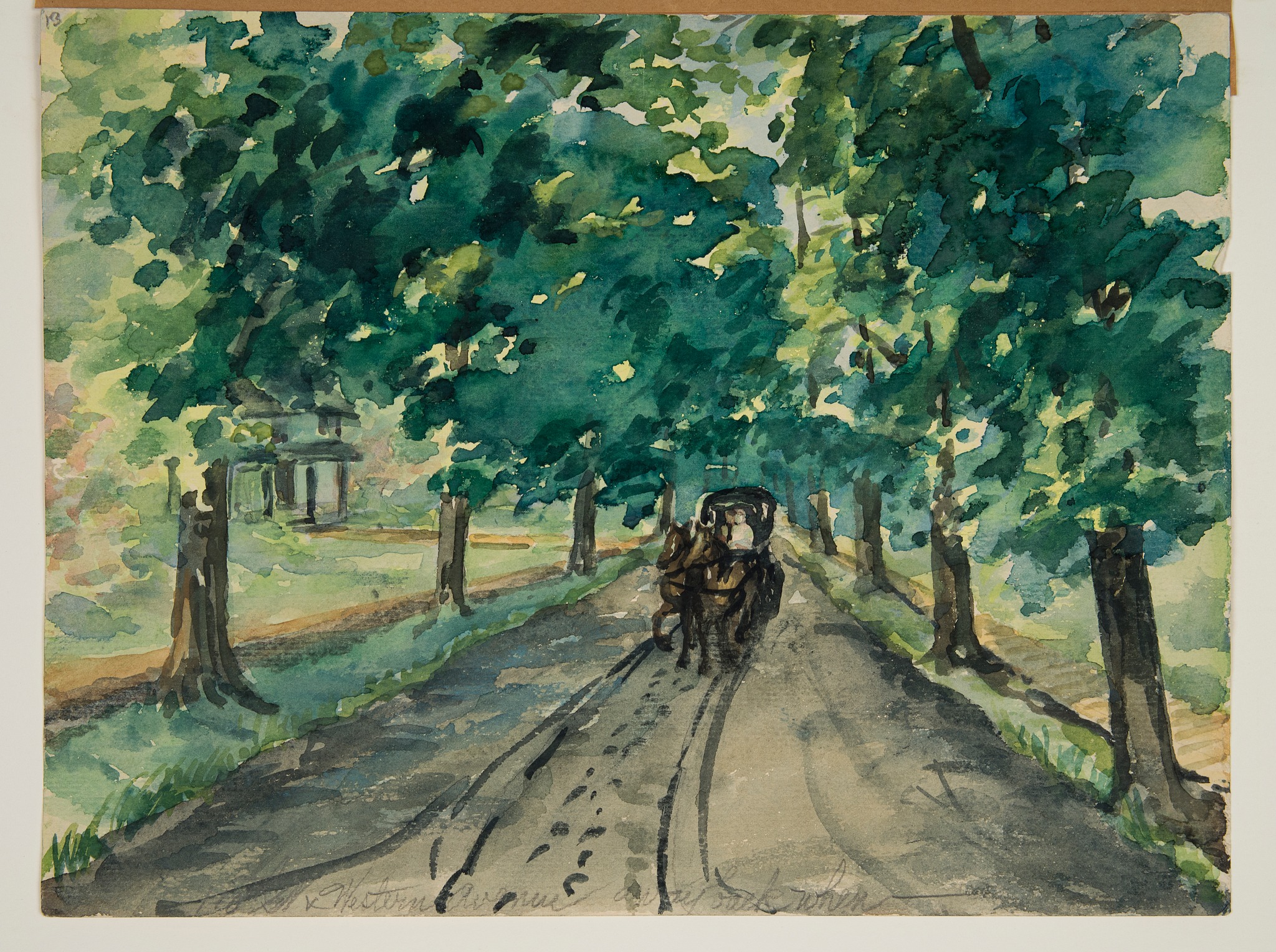
Louise Barwick (1871 – 1957) was a long-time resident and art teacher in the Ridge community. Her watercolor paintings of local scenes from around 1900, which form the basis of the current exhibit, offer a visual history of the environment of that time.
For about forty years, Miss Barwick was an art teacher in schools on the south side of Chicago, including West Pullman School and the Morgan Park schools. Morgan Park was listed as one of the few school districts that had both drawing and music specialty programs.
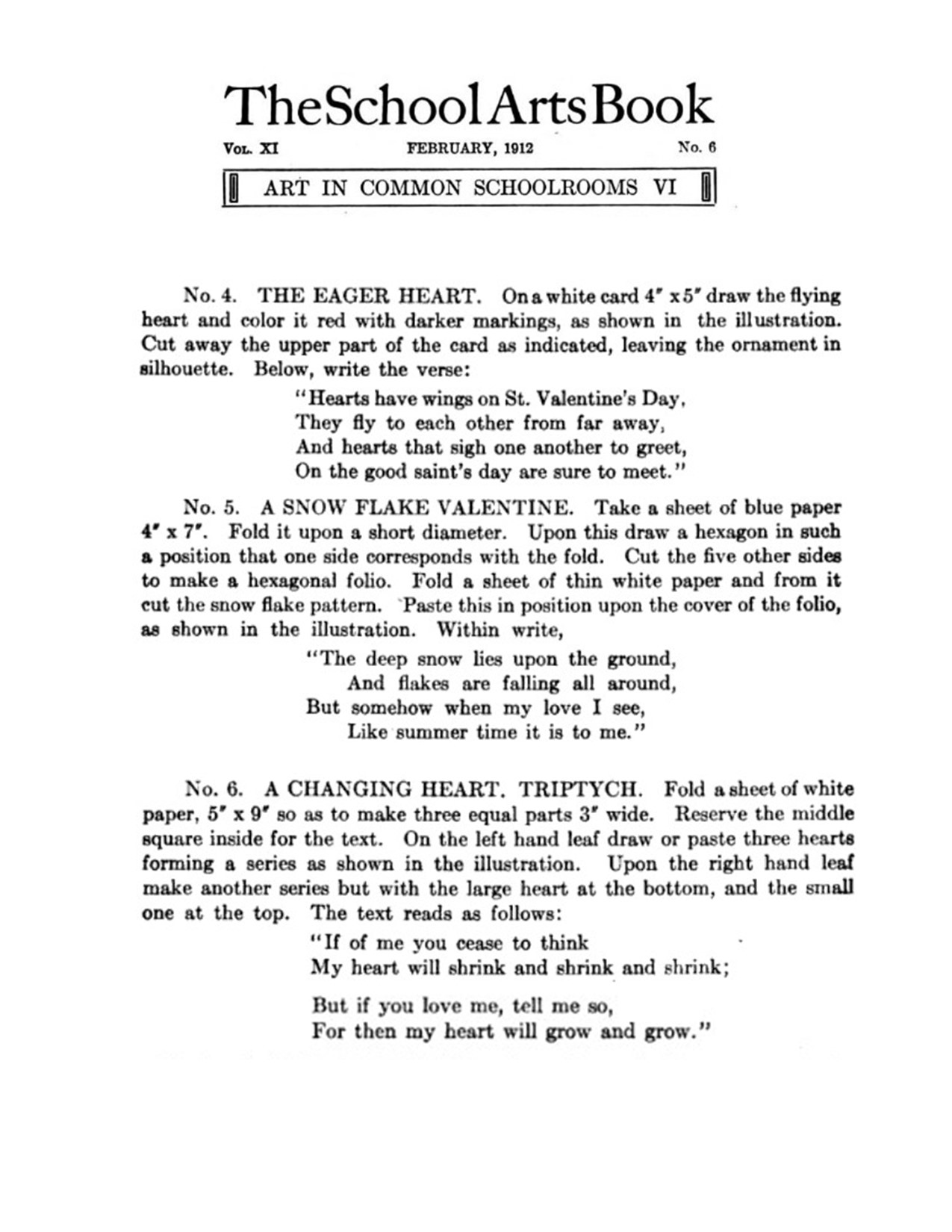
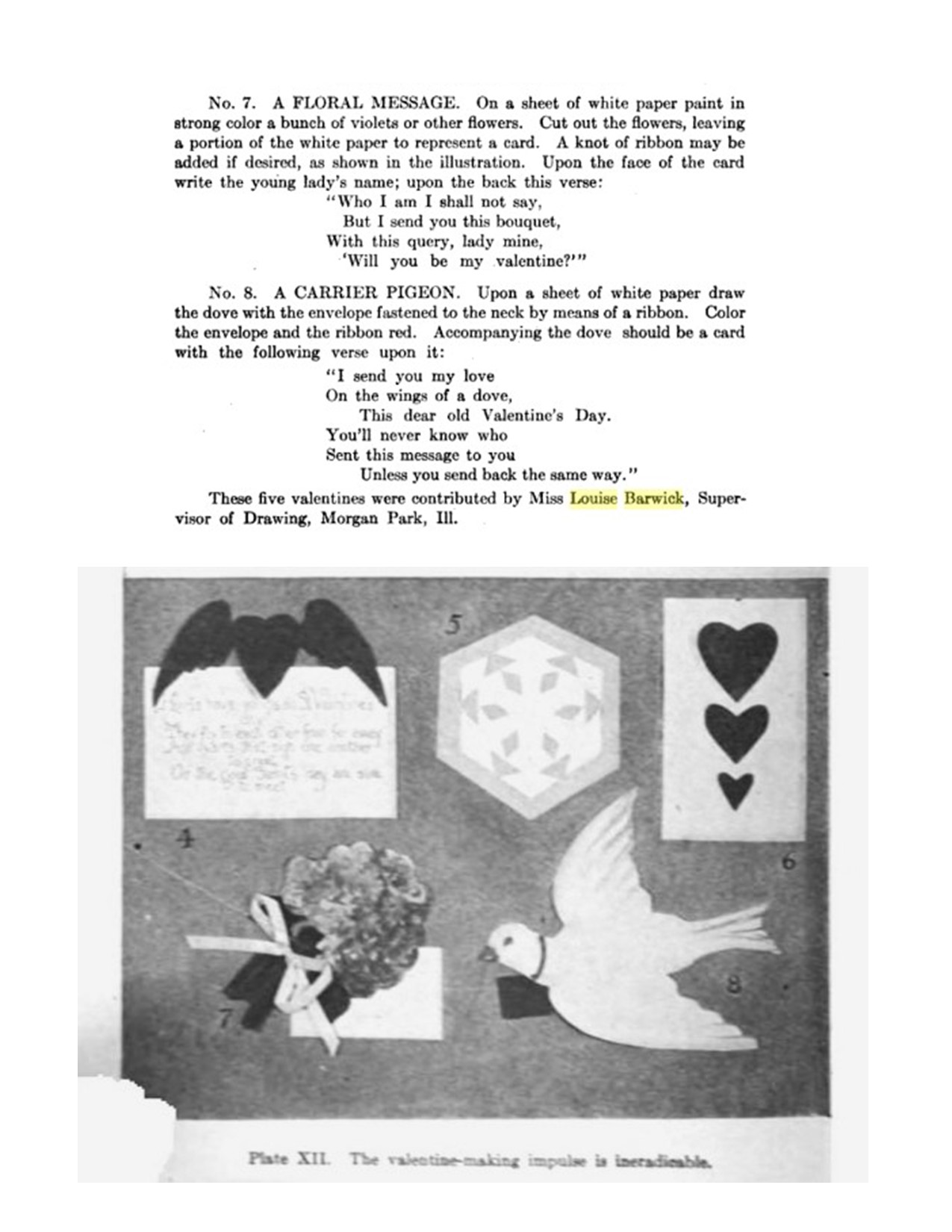
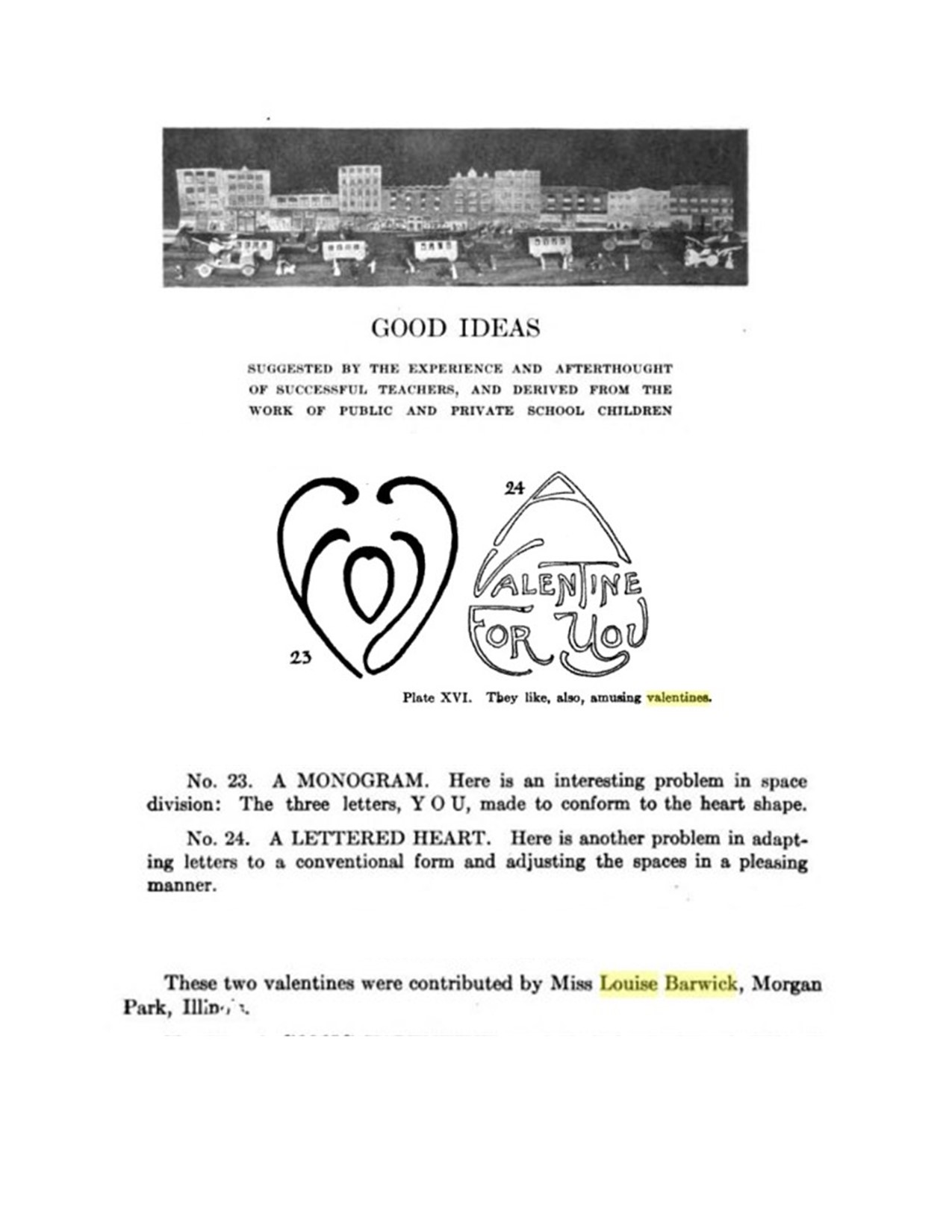
In 1912, some of Miss Barwick’s ideas for handmade valentines were published in The School Arts Book, a periodical for classroom arts.
Back then, valentines were all hand made. Handmade paper cards started in the Middle Ages and really took off during the Victorian era of the 1800s. The cards could get very elaborate, with bits of lace, bows and ribbons, seashells, gold and silver foil, and pressed and silk flowers.
Hallmark started mass producing cards in 1913. However, it has remained the practice to spend a day crafting valentines as a school project. Parents, other family members, and friends are always delighted to receive handmade valentines.
Here are Louise Barwick’s valentines. They could be recreated today.
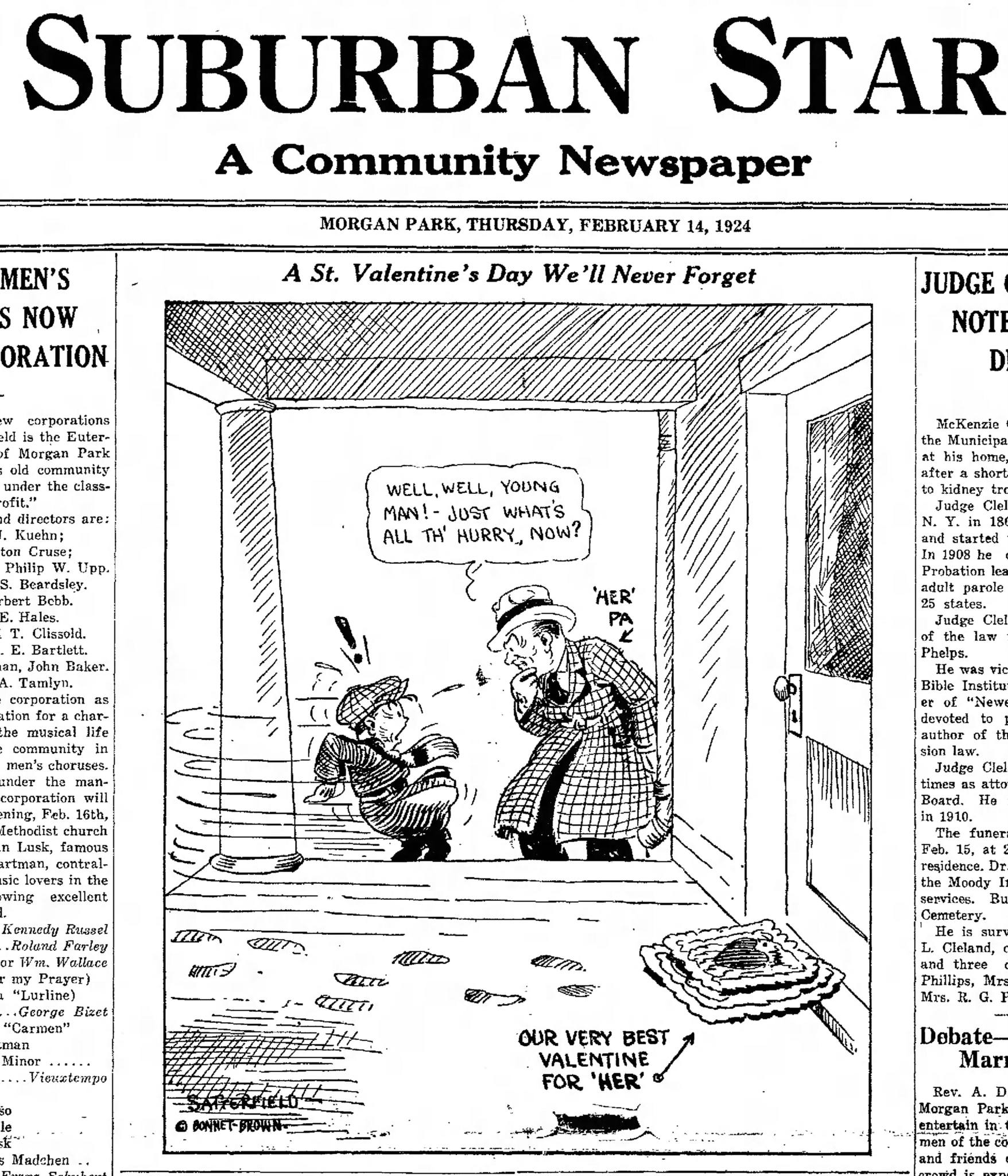
Also attached is a Valentine's Day cartoon from 100 years ago from a local paper. A young man leaving a "from a secret admirer" valentine got caught by the girl's father! Oh, the embarrassment for the lad!
The Ridge Historical Society
Louise Barwick – Part 8
By Carol Flynn
The Ridge Historical Society (RHS) realizes it’s Super Bowl Sunday, but not everyone watches football! If you’re looking for an alternative, a visit to RHS to see the current exhibit – completely free to the public – is an enjoyable way to spend an afternoon.
The current exhibit, “Louise Barwick’s Lost Ridge,” may be viewed on Sundays and Tuesdays from 1:00 p.m. to 4:00 p.m. or by appointment. RHS is located at 10621 S. Seeley Avenue in Chicago. RHS may be contacted at 773/881-1675 or ridgehistory@hotmail.com. Parking is available at the building or on Seeley Avenue.
Louise Barwick (1871 – 1957) was a long-time resident and art teacher in the Ridge community. Her watercolor paintings of local scenes from around 1900, which form the basis of the current exhibit, offer a visual history of the environment of that time.
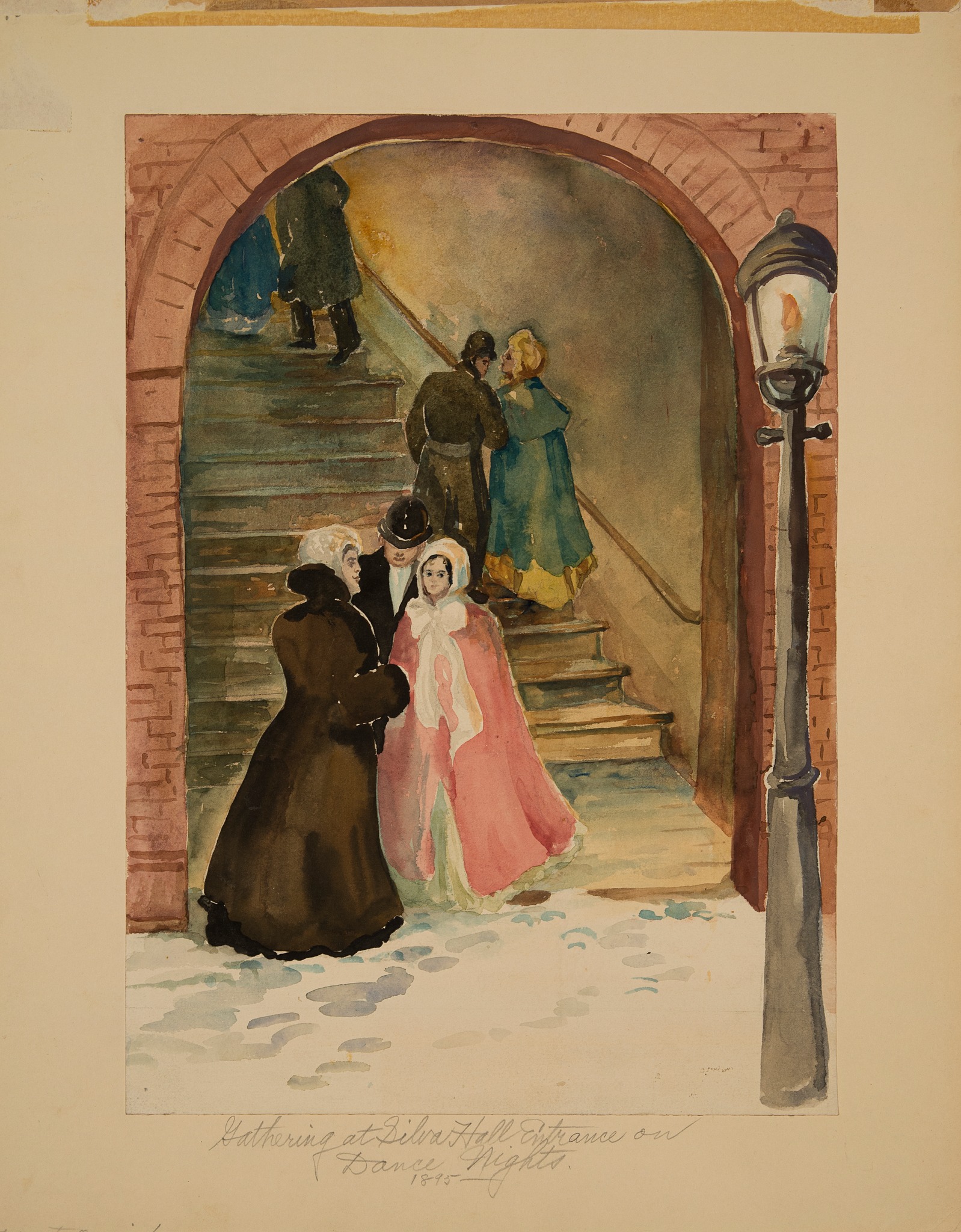
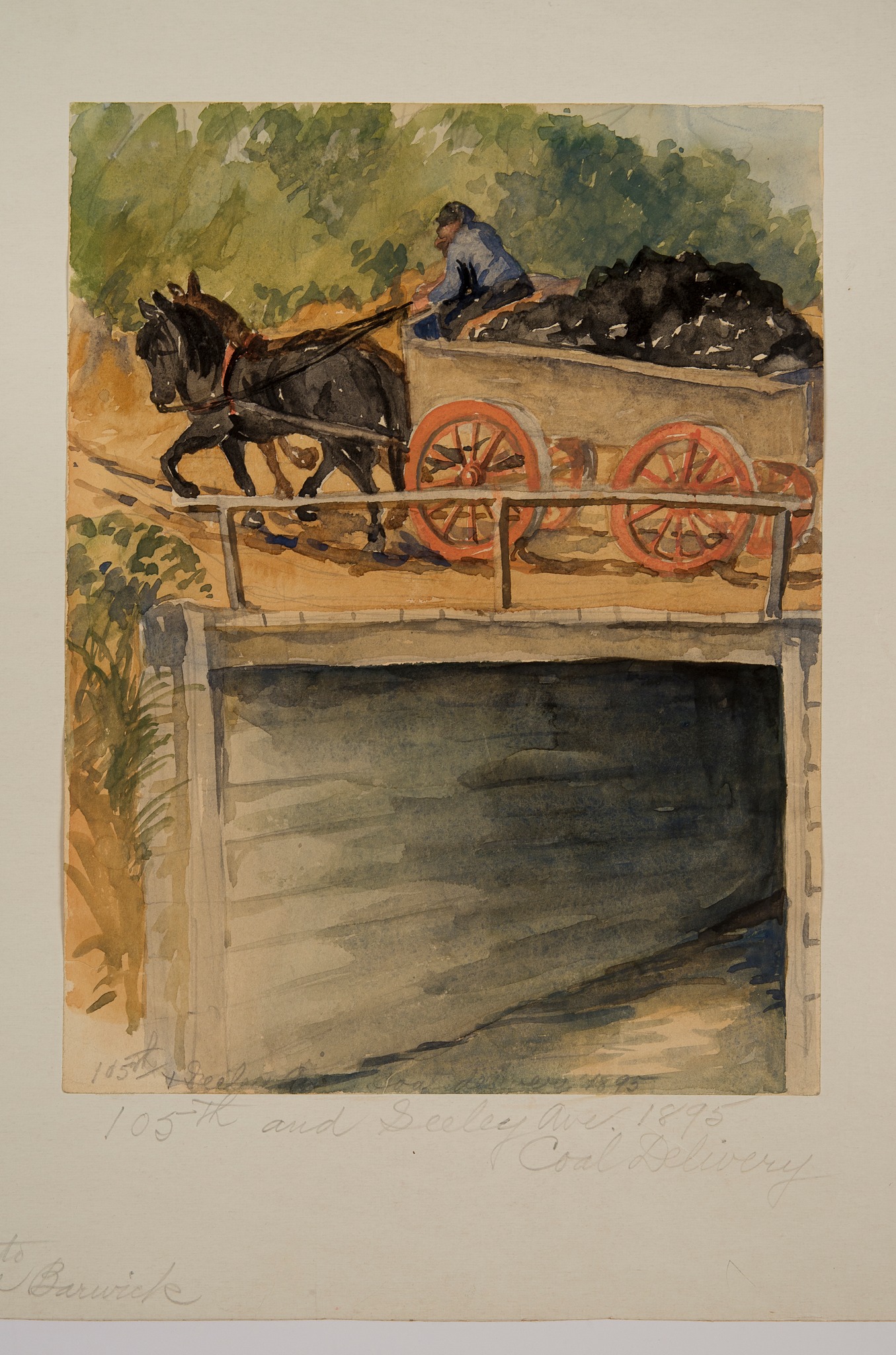
Miss Barwick painted these works throughout her lifetime. Some were painted at the time (1890s) and others were painted from memory later in her life. It appears that sometime around the 1940s, the paintings were given to the Walker Library at 110th and Hoyne Avenue, and later they were given to RHS, where they are a valued part of the collection.
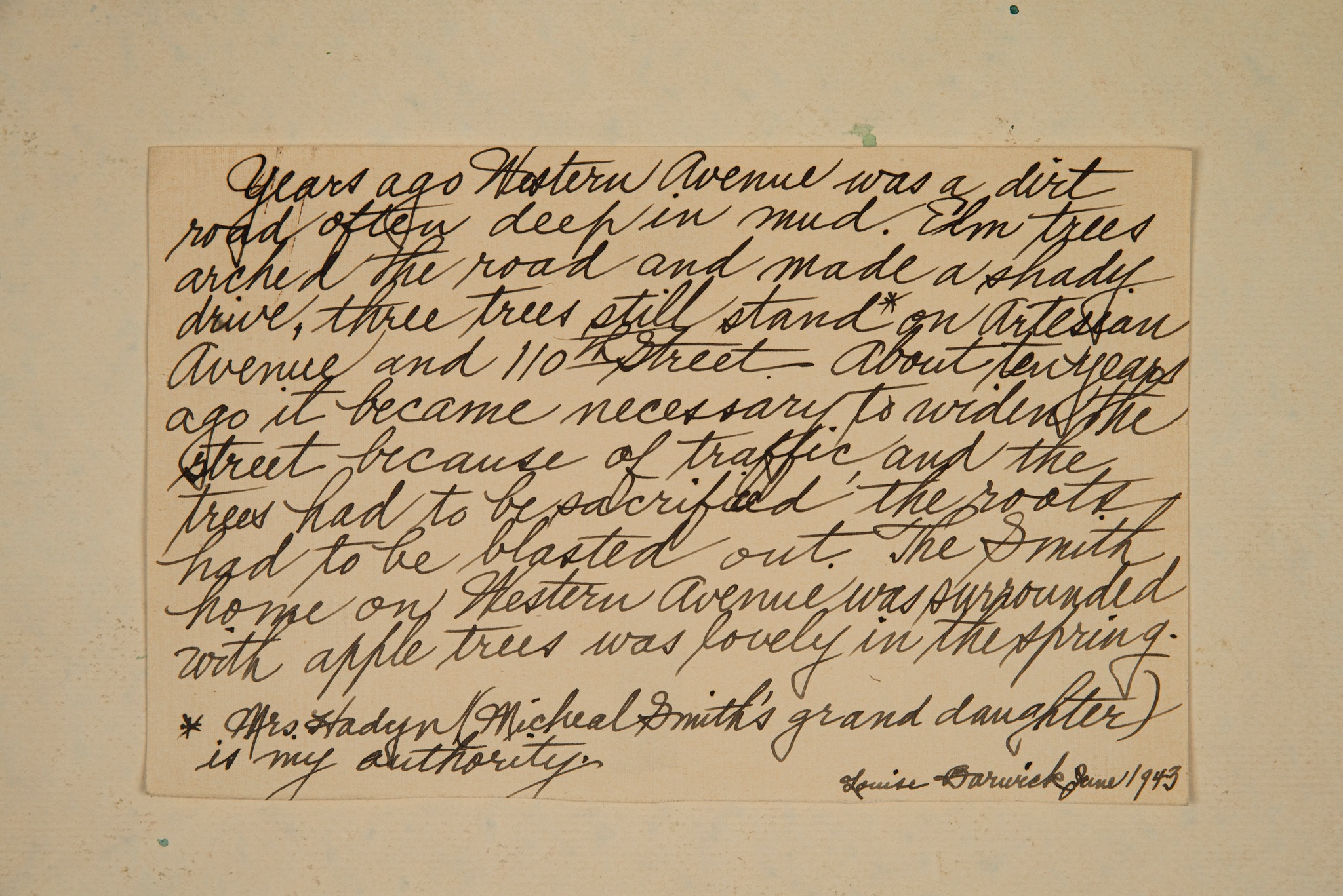
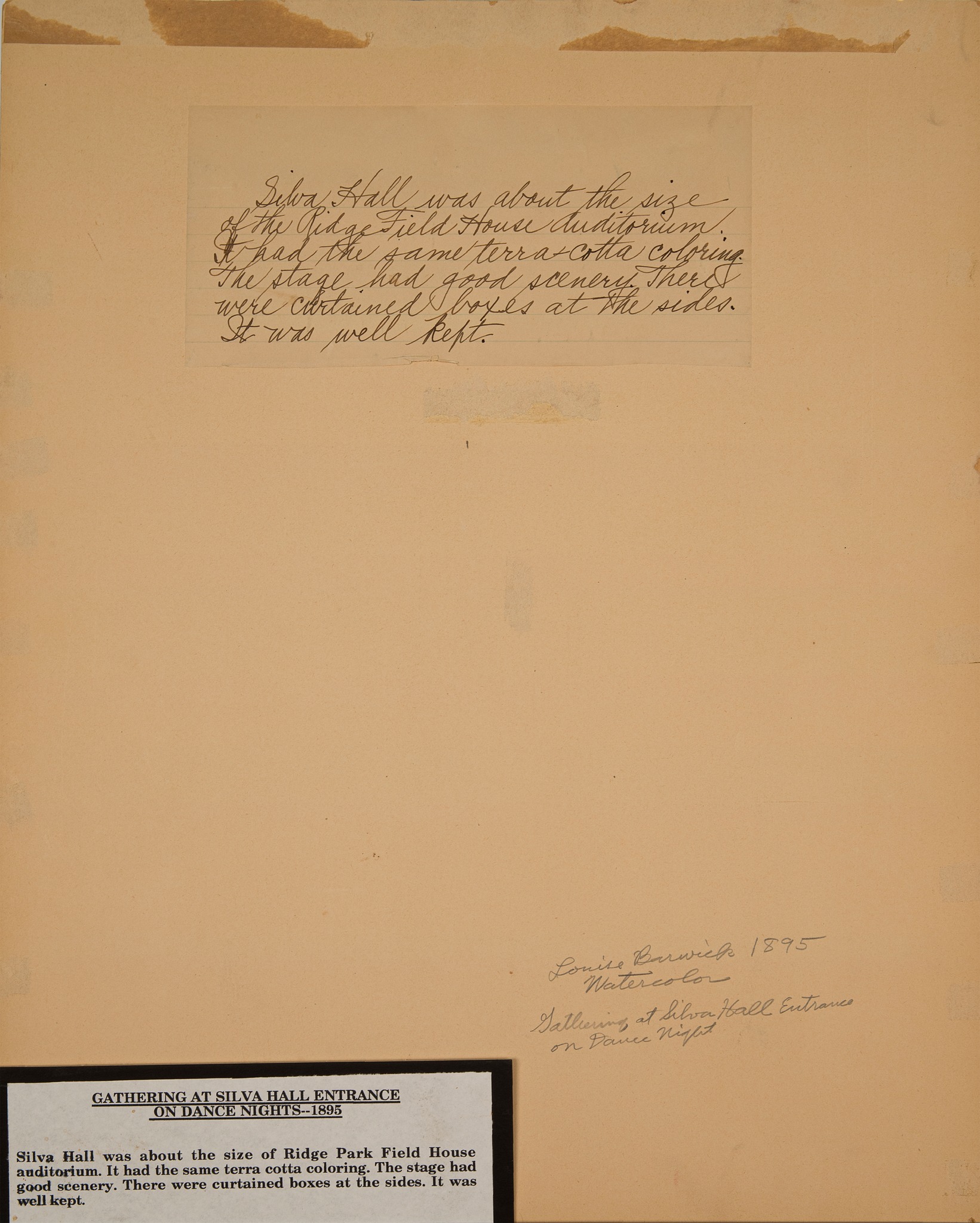
Many of the paintings are accompanied by written narratives from Miss Barwick herself, describing and explaining the scene and its significance, from the perspective of a young woman at the time.
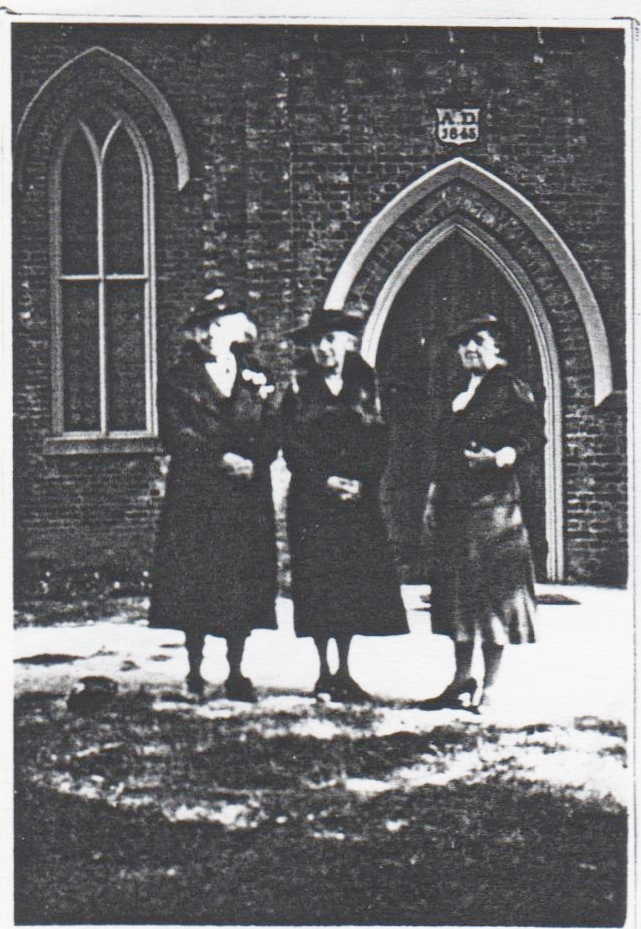
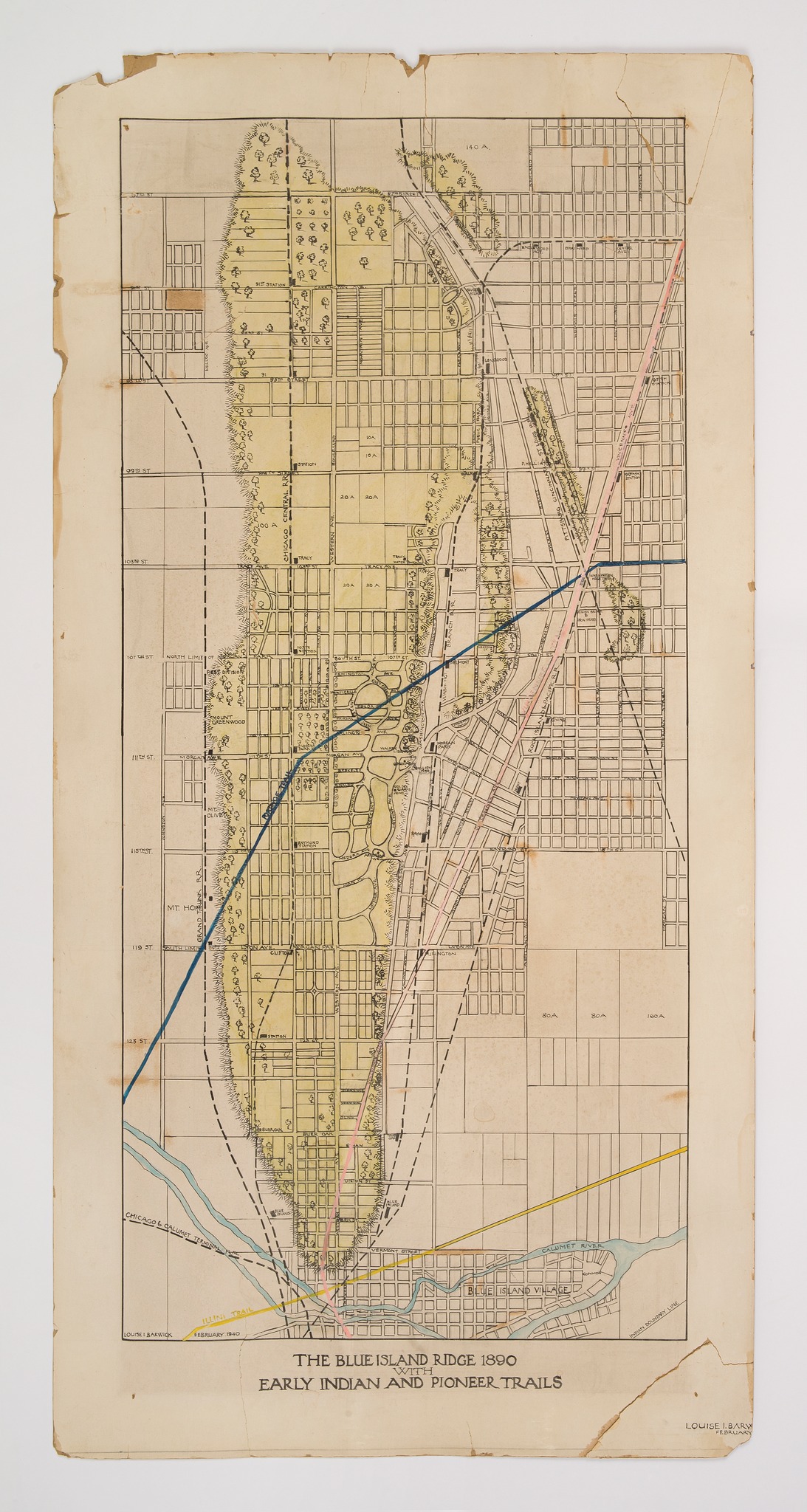
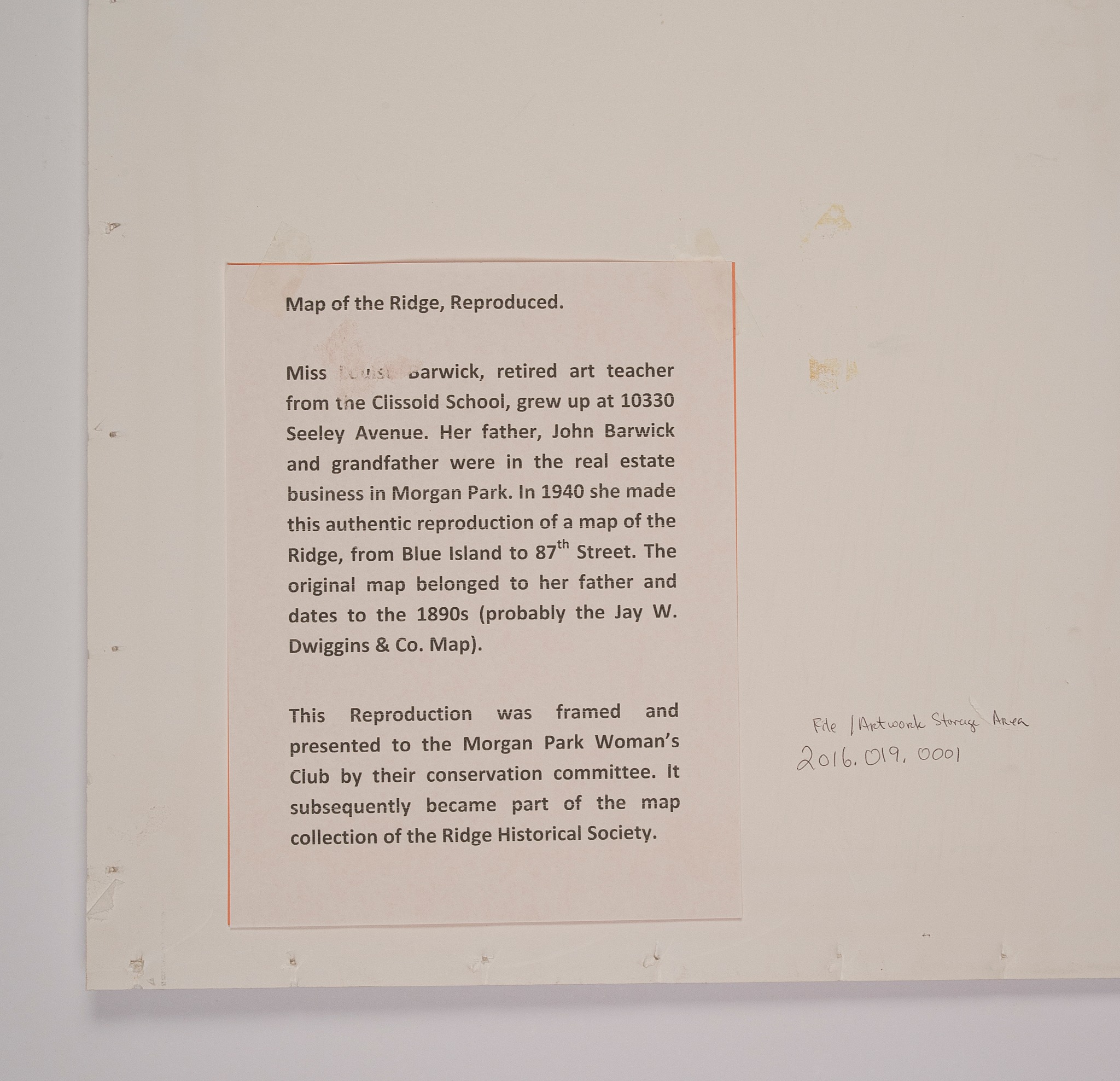
Here are a few of her paintings and their narratives. Visit the RHS exhibit to learn more about this remarkable woman and life on the Ridge 125 years ago.
The Ridge Historical Society
Louise Barwick – Part 7
By Carol Flynn
The Ridge Historical Society (RHS) is open again, following weather-related closures.
The current exhibit, “Louise Barwick’s Lost Ridge,” may be viewed on Sundays and Tuesdays from 1:00 p.m. to 4:00 p.m. or by appointment. RHS is located at 10621 S. Seeley Avenue in Chicago. The exhibit is free. RHS may be contacted at 773/881-1675 or ridgehistory@hotmail.com.
Louise Barwick (1871 – 1957) was a long-time resident and art teacher in the Ridge community. Her watercolor paintings of local scenes from around 1900, which form the basis of the current exhibit, offer a visual history of the environment of that time.
By 1904, Louise was employed as a teacher in the Calumet district of the Cook County school system, which included Morgan Park. Morgan Park was listed as one of the few school districts that had both drawing and music specialty programs.
For the next several decades, Louise was a drawing teacher at various schools on the south side of Chicago, including the West Pullman School as well as the Morgan Park schools. She lived with her mother at several addresses, and in 1920, Mrs. Barwick, Louise, and younger sister Edith Beardsley and niece Louise Beardsley were all living at 2236 W. 113th St., in Morgan Park. Louise was listed as a grammar school teacher, and her sister as a music teacher.
In 1940, Louise, now a retired art teacher from Clissold School, made an authentic reproduction of a map of the Ridge from Blue Island to 87th Street that belonged to her father and dated back to 1880. The reproduction was framed and presented to the Morgan Park Woman’s Club and is now in the RHS collection. At the time she and her sister lived at 11252 S. Bell Ave.
Louise Barwick died in 1957 and was laid to rest in Mt. Hope Cemetery. Unfortunately, RHS does not have a good photo of Louise Barwick.
The next post will share some of Louise’s water color paintings of local scenes.
The Ridge Historical Society
Louise Barwick – Part 6
By Carol Flynn
The Ridge Historical Society’s (RHS) current exhibit, “Louise Barwick’s Lost Ridge,” may be viewed on Sundays and Tuesdays from 1:00 p.m. to 4:00 p.m. or by appointment. RHS is located at 10621 S. Seeley Avenue in Chicago. The exhibit is free. RHS may be contacted at 773/881-1675 or ridgehistory@hotmail.com.
Louise Barwick (1871 – 1957) was a long-time resident and art teacher in the Ridge community. Her watercolor paintings of local scenes from around 1900, which form the basis of the current exhibit, offer a visual history of the environment of that time.
As was reported in the last post, however, it was actually Louise’s map-making skills that brought her recognition in her own time, and set her above the many genteel young women who engaged in painting as an “appropriate” pastime for a woman in those days.
A giant relief map of Illinois that was created by Louise was a main feature of the Illinois building at the 1893 World’s Fair in Chicago, also known as the Columbian Exposition.
Louise was also known for her illustrations of maps in several publications.
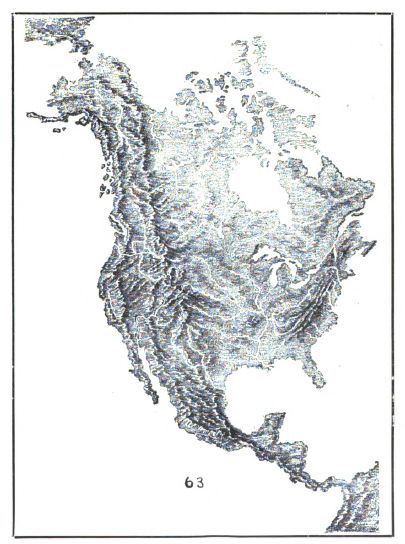
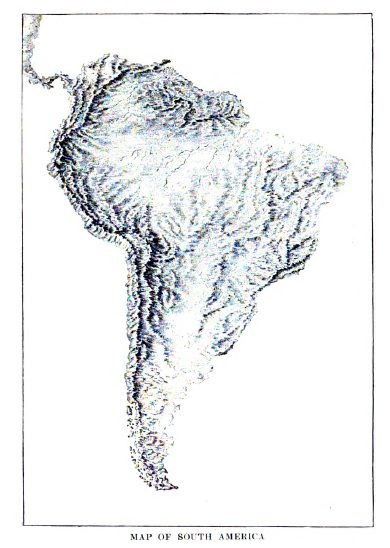
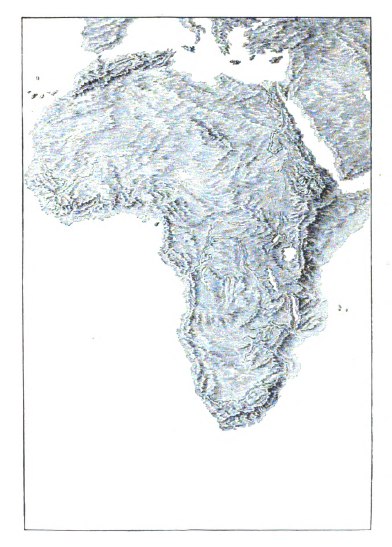
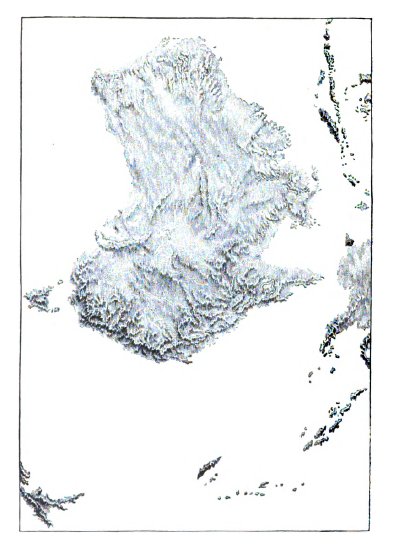
She illustrated the relief maps for The Werner Introductory Geography, a textbook written by Horace S. Tarbell, the Superintendent of Schools of Providence, Rhode Island, published in 1896.
A review of this book in August 1896 in The Inland Educator, a publication labeled as “a journal for the progressive teacher,” stated that “the Werner geographies are a very substantial advance beyond the ordinary text-book along the line of ‘the new geography.’ Most of the stock fallacies which have been perpetuated by a long line of unscientific book makers are avoided.”
The review also states that the “illustrations and maps are well selected and executed” but notes that the elevations showed in the relief models were “exaggerated,” an “extreme now practiced by many model makers.”
In 1903, Ida Cassa Heffron, who was mentioned in the last post, published a book, Chalk Modeling – The New Method of Map Drawing.
Heffron, a Beverly resident whose father Rev. Daniel Salisbury Heffron helped found Bethany Union Church, was a lecturer and instructor in art at the Cook County Normal School and the University of Chicago, under Col. Francis Parker, the renowned education reformer.
Louise taught under Heffron at the Normal School. Louise created the maps of the continents in Heffron’s book on Chalk Modeling.
Heffron wrote in her introduction: “Acknowledgments are also due Miss Louise Barwick, for the zeal displayed in forwarding the development and delineation of the Maps of the Continents, and for valuable assistance rendered in the drawing of the same, as illustrations for this work.”
Next post: Louise Barwick’s teaching career on the Ridge.
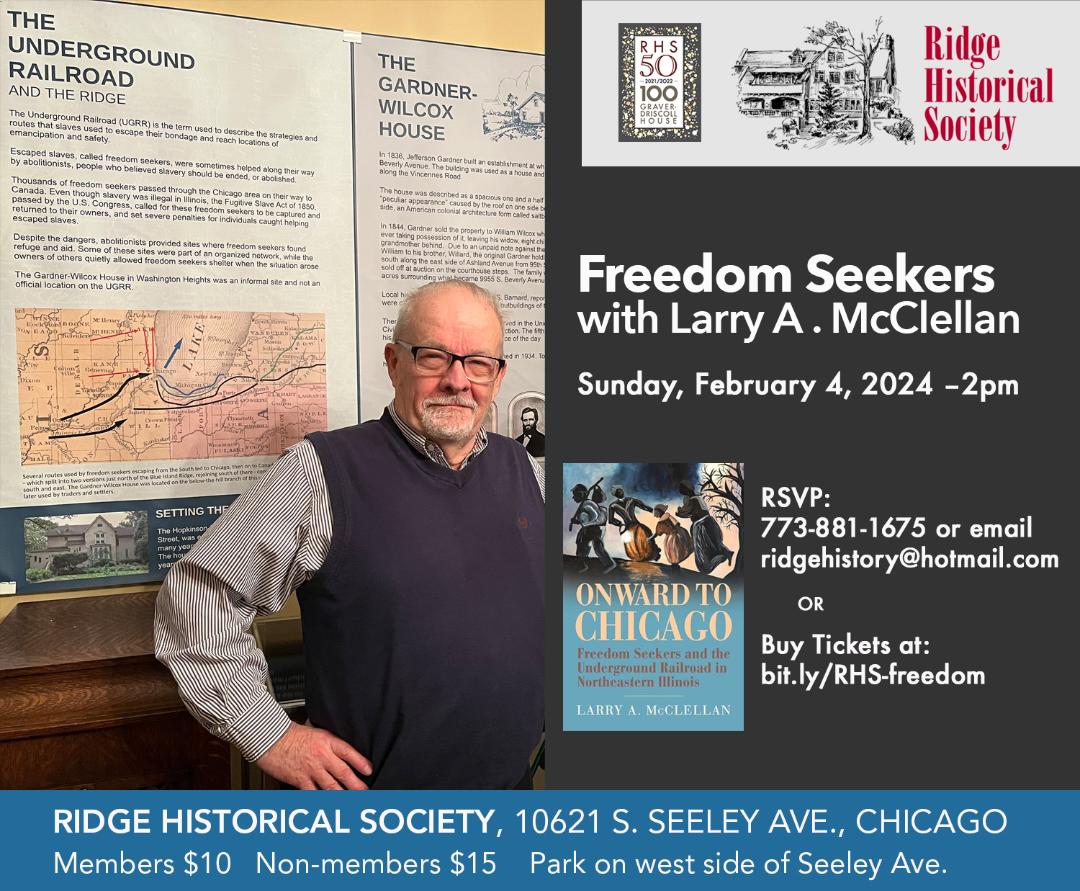
Freedom Seekers with Larry A. McClellan
Black History Month Program Focus is the Underground Railroad in Northeastern Illinois
Larry A. McClellan, emeritus professor of sociology and community studies at Governors State University, will present a program on his book, “Onward to Chicago,” which uncovers stories of the Underground Railroad freedom network in northeastern Illinois, Sun., Feb. 4, 2 p.m., Ridge Historical Society, 10621 S. Seeley Ave.
McClellan will share his work and personal experiences in developing a deeper, broader insight into the freedom seekers and their impact on local history.
“Onward to Chicago” was published by Southern Illinois University Press and released last summer. According to the press website, Illinois’s status as a free state beckoned enslaved people decades before the Civil War, and traditional histories of the Underground Railroad in Illinois start in 1839.
Larry A. McClellan reframes the story, not only introducing readers to earlier freedom seekers, but also illustrating that those who bravely aided them were Black and white, men and women. McClellan features dozens of individuals who made dangerous journeys to reach freedom as well as residents in Chicago and across northeastern Illinois who made a deliberate choice to break the law to help.
“Onward to Chicago” shows how Chicago emerged as a point of refuge for freedom seekers, and how the I & M Canal created opportunities for Black men, women, and children to escape slavery. “From eluding authorities to confronting kidnapping bands working out of St. Louis and southern Illinois, these stories of valor are inherently personal. Through deep research into local sources, McClellan presents the engrossing, entwined journeys of freedom seekers and the activists in Chicagoland who supported them,” the website says.
McClellan’s book won the 2023 Underground Railroad Free Press Hortense Simmons Memorial Prize for Advancement of Knowledge.
McClellan has been instrumental in adding listings to the National Park Service Network to Freedom register of the Underground Railroad, and is President of the Little Calumet Underground Railroad Project. He is the author of “The Underground Railroad South of Chicago” and “To the River: The Remarkable Journey of Caroline Quarlls, a Freedom Seeker on the Underground Railroad.”
McClellan will have his book, “Onward to Chicago” available for purchase at the event.
Admission to the presentation is $10 for members and $15 for non-members. Space is limited and tickets or reservations are required. Info and RSVP at: 773-881-1675 or ridgehistory@hotmail.com. Get tickets at bit.ly/RHS-freedom.
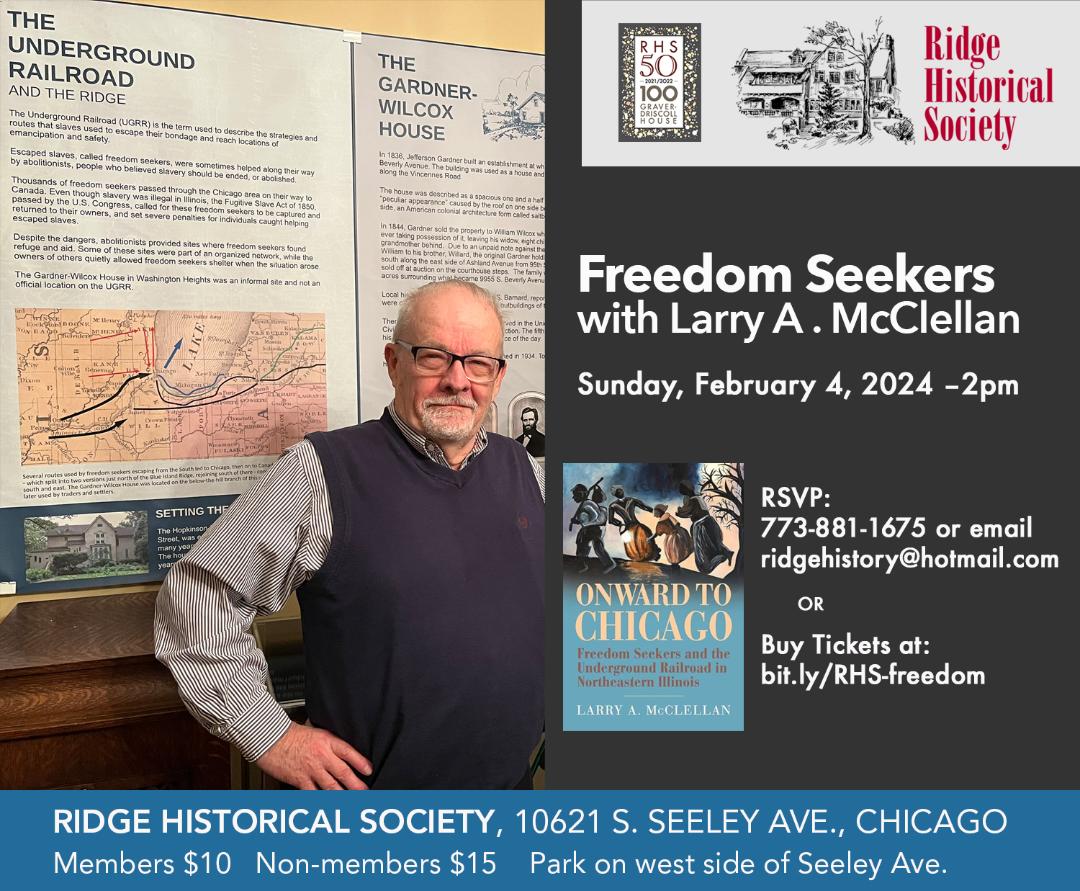
Freedom Seekers with Larry A. McClellan
Black History Month Program Focus is the Underground Railroad in Northeastern Illinois
Larry A. McClellan, emeritus professor of sociology and community studies at Governors State University, will present a program on his book, “Onward to Chicago,” which uncovers stories of the Underground Railroad freedom network in northeastern Illinois, Sun., Feb. 4, 2 p.m., Ridge Historical Society, 10621 S. Seeley Ave.
McClellan will share his work and personal experiences in developing a deeper, broader insight into the freedom seekers and their impact on local history.
“Onward to Chicago” was published by Southern Illinois University Press and released last summer. According to the press website, Illinois’s status as a free state beckoned enslaved people decades before the Civil War, and traditional histories of the Underground Railroad in Illinois start in 1839.
Larry A. McClellan reframes the story, not only introducing readers to earlier freedom seekers, but also illustrating that those who bravely aided them were Black and white, men and women. McClellan features dozens of individuals who made dangerous journeys to reach freedom as well as residents in Chicago and across northeastern Illinois who made a deliberate choice to break the law to help.
“Onward to Chicago” shows how Chicago emerged as a point of refuge for freedom seekers, and how the I & M Canal created opportunities for Black men, women, and children to escape slavery. “From eluding authorities to confronting kidnapping bands working out of St. Louis and southern Illinois, these stories of valor are inherently personal. Through deep research into local sources, McClellan presents the engrossing, entwined journeys of freedom seekers and the activists in Chicagoland who supported them,” the website says.
McClellan’s book won the 2023 Underground Railroad Free Press Hortense Simmons Memorial Prize for Advancement of Knowledge.
McClellan has been instrumental in adding listings to the National Park Service Network to Freedom register of the Underground Railroad, and is President of the Little Calumet Underground Railroad Project. He is the author of “The Underground Railroad South of Chicago” and “To the River: The Remarkable Journey of Caroline Quarlls, a Freedom Seeker on the Underground Railroad.”
McClellan will have his book, “Onward to Chicago” available for purchase at the event.
Admission to the presentation is $10 for members and $15 for non-members. Space is limited and tickets or reservations are required. Info and RSVP at: 773-881-1675 or ridgehistory@hotmail.com. Get tickets at bit.ly/RHS-freedom.
The Ridge Historical Society will be closed through February 4, 2024, due to a weather-related roof leak. Some damage occurred to the collection on the third floor. RHS is carefully examining the collection and drying, cleaning, and storing items properly.
The Ridge Historical Society
Louise Barwick – Part 5
By Carol Flynn
The Ridge Historical Society’s (RHS) current exhibit, “Louise Barwick’s Lost Ridge,” may be viewed on Sundays and Tuesdays from 1:00 p.m. to 4:00 p.m. or by appointment. RHS is located at 10621 S. Seeley Avenue in Chicago. The exhibit is free. RHS may be contacted at 773/881-1675 or ridgehistory@hotmail.com.
Louise Barwick (1871 – 1957) was a long-time resident and art teacher in the Ridge community. Her watercolor paintings of local scenes from around 1900, which form the basis of the current exhibit, offer a visual history of the environment of that time.
However, it was actually Louise’s map-making skills that brought her recognition in her own time, and set her above the many genteel young women who engaged in painting as an “appropriate” pastime for a woman in those days.
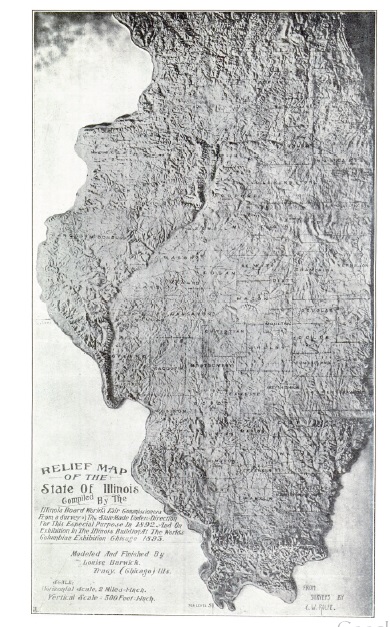
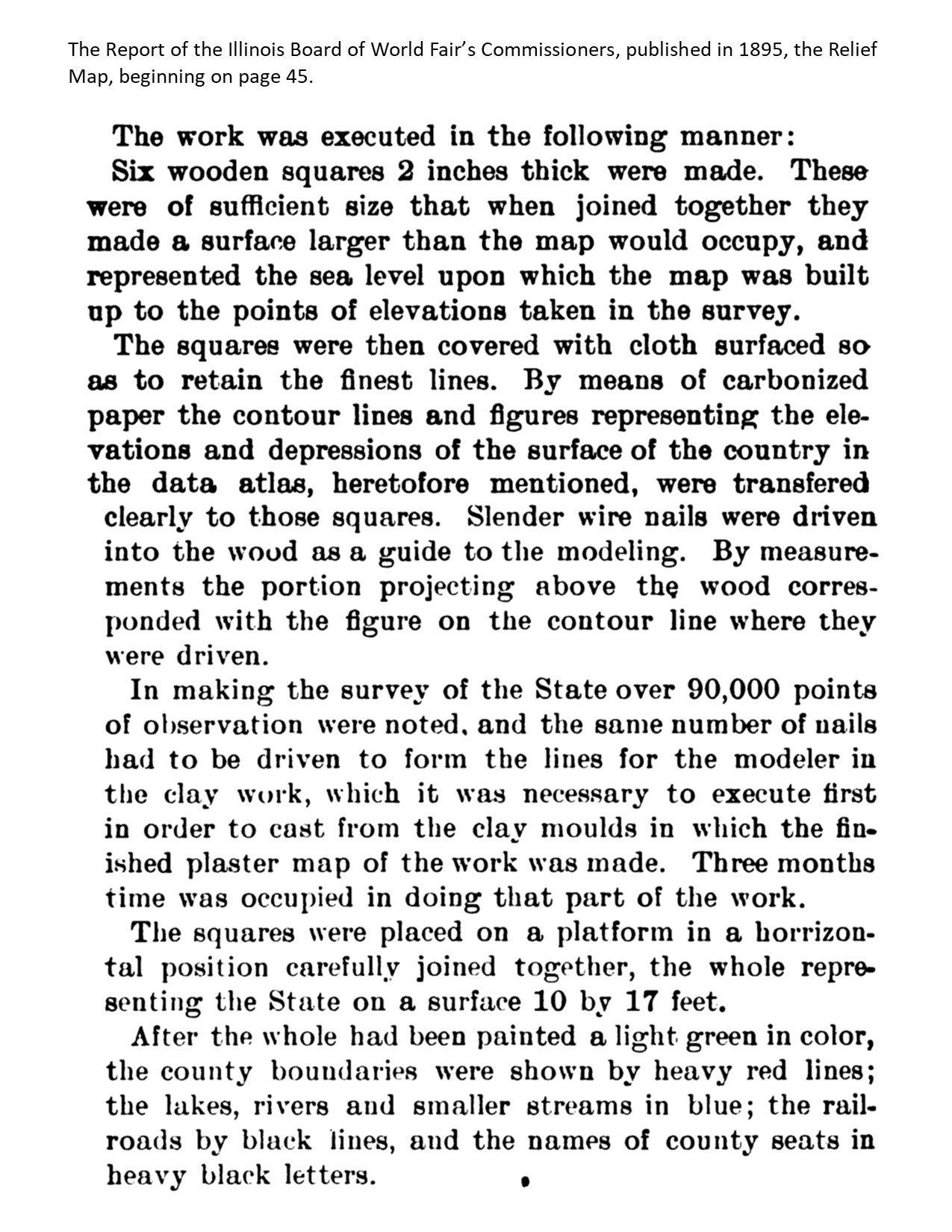
Louise Barwick’s work was one of the prize features of the Illinois building at the 1893 World’s Fair in Chicago, also known as the Columbian Exposition. She created and displayed a relief map of the State of Illinois, showing the topographical features of the state, such as the rivers, valleys, and geographic formations, as well as the counties, major cities, and railroads. The map was a huge 10 feet by 17 feet and made of plaster.
The Report of the Illinois Board of World Fair’s Commissioners, published in 1895, who proposed the map, covered the project in great detail. It was based on surveys overseen by C. W. Rolfe, professor of geology at the U. of Illinois – Urbana.
Then “Miss Louise Barwick of Tracy, Cook County, Illinois, a skilled artist in modeling work, was engaged to model the work in clay preparatory to making the plaster cast.”
Ten more pages of the report, which can be found through this link, explain the content of the map, based on the academic knowledge of the day. https://www.google.com/books/edition/Report_of_the_Illinois_Board_of_World_s/1IYPAAAAYAAJ?hl=en&gbpv=1&dq=The+Report+of+the+Illinois+Board+of+World+Fair%E2%80%99s+Commissioners&printsec=frontcover
Louise and her father received payment of $850 for this work, according to the financial records of the Board. There was no break-down for this amount so whether it was for supplies or as revenue was not clear.
The Board made many positive comments about the map. No topographical survey of Illinois had ever been made before, and no other state had made a relief map in the form of this one from actual survey of its surface.
The Board report stated: “The whole, when completed, making a graphic birdseye view of the State, the like of which no human eye had ever seen before. As an exhibit it was one of the most interesting in the building. It was daily surrounded by the aged and the youthful visitor, who seemed greatly impressed as they gazed on the face of our great State. Teachers, students and children engaged in the primary grades of education, seemed alike deeply interested in studying it…. The map teaches many more object lessons to the student of geography of our State, and if one could be placed in every school of the State the value to the cause of education in that one study cannot be estimated.”
The map wound up in the Illinois State Museum, but unfortunately, has been lost to time. RHS contacted the Museum to learn if the map still existed, but was informed that it was no longer in the collection. Museum staff assumed that the map likely disintegrated over time or was lost in a fire.
Louise Barwick became known as a skilled artist in modeling work. More of her maps will be discussed in the next post.