Explore the RHS Facebook Archives, a rich repository of local history written by Carol Flynn. For two decades, Carol brought a deeply dedicated voice to public education at RHS. Her role as Facebook administrator through mid-2025 naturally extended her prolific research into meticulously detailed articles, most notably her multi-part historical series posts. Today, Carol continues her local history writing for The Beverly Review and other outlets.
All Posts
The Ridge Historical Society
Louise Barwick – Part 5
By Carol Flynn
The Ridge Historical Society’s (RHS) current exhibit, “Louise Barwick’s Lost Ridge,” may be viewed on Sundays and Tuesdays from 1:00 p.m. to 4:00 p.m. or by appointment. RHS is located at 10621 S. Seeley Avenue in Chicago. The exhibit is free. RHS may be contacted at 773/881-1675 or ridgehistory@hotmail.com.
Louise Barwick (1871 – 1957) was a long-time resident and art teacher in the Ridge community. Her watercolor paintings of local scenes from around 1900, which form the basis of the current exhibit, offer a visual history of the environment of that time.
However, it was actually Louise’s map-making skills that brought her recognition in her own time, and set her above the many genteel young women who engaged in painting as an “appropriate” pastime for a woman in those days.
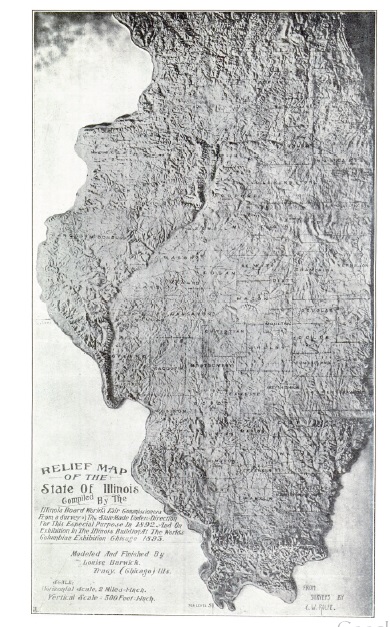
Louise Barwick’s work was one of the prize features of the Illinois building at the 1893 World’s Fair in Chicago, also known as the Columbian Exposition. She created and displayed a relief map of the State of Illinois, showing the topographical features of the state, such as the rivers, valleys, and geographic formations, as well as the counties, major cities, and railroads. The map was a huge 10 feet by 17 feet and made of plaster.
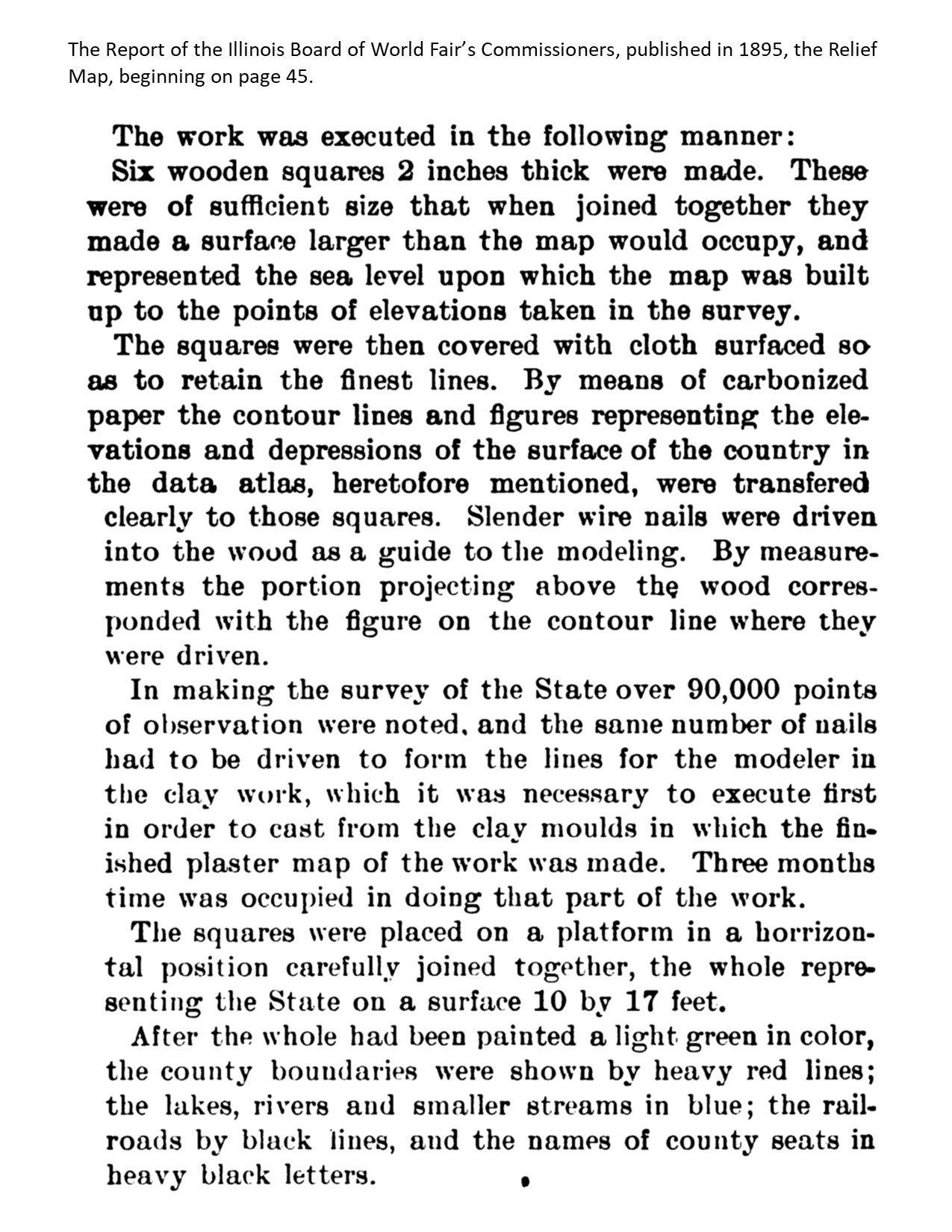
The Report of the Illinois Board of World Fair’s Commissioners, published in 1895, who proposed the map, covered the project in great detail. It was based on surveys overseen by C. W. Rolfe, professor of geology at the U. of Illinois – Urbana.
Then “Miss Louise Barwick of Tracy, Cook County, Illinois, a skilled artist in modeling work, was engaged to model the work in clay preparatory to making the plaster cast.”
Ten more pages of the report, which can be found through this link, explain the content of the map, based on the academic knowledge of the day. https://www.google.com/books/edition/Report_of_the_Illinois_Board_of_World_s/1IYPAAAAYAAJ?hl=en&gbpv=1&dq=The+Report+of+the+Illinois+Board+of+World+Fair%E2%80%99s+Commissioners&printsec=frontcover
Louise and her father received payment of $850 for this work, according to the financial records of the Board. There was no break-down for this amount so whether it was for supplies or as revenue was not clear.
The Board made many positive comments about the map. No topographical survey of Illinois had ever been made before, and no other state had made a relief map in the form of this one from actual survey of its surface.
The Board report stated: “The whole, when completed, making a graphic birdseye view of the State, the like of which no human eye had ever seen before. As an exhibit it was one of the most interesting in the building. It was daily surrounded by the aged and the youthful visitor, who seemed greatly impressed as they gazed on the face of our great State. Teachers, students and children engaged in the primary grades of education, seemed alike deeply interested in studying it…. The map teaches many more object lessons to the student of geography of our State, and if one could be placed in every school of the State the value to the cause of education in that one study cannot be estimated.”
The map wound up in the Illinois State Museum, but unfortunately, has been lost to time. RHS contacted the Museum to learn if the map still existed, but was informed that it was no longer in the collection. Museum staff assumed that the map likely disintegrated over time or was lost in a fire.
Louise Barwick became known as a skilled artist in modeling work. More of her maps will be discussed in the next post.
The Ridge Historical Society does not routinely get involved in real estate transactions or even listings, except to help with house history requests.
However, this unique listing is worth mentioning from a historical and aesthetic viewpoint.
One of the Homes of Tomorrow from the 1933 Chicago's World Fair Exhibition is now available.
The Florida Tropical House was moved to Beverly Shores, Indiana, by barge in 1935 with five other houses from the exhibit. Today, four of the houses, including this one, comprise the Century of Progress Historic Architectural District.
You don't actually get to own the house. For a very substantial sum, you get a long-term lease from the National Park Service, as well as the obligation to preserve and maintain the house, and make it open one day per year for public viewing. That event usually happens one day each Fall, and a chance to tour these houses is a must-see attraction.
The green art deco bathroom is the selling point for me!
https://gniarmls.rapmls.com/scripts/mgrqispi.dll?APPNAME=Gniarmls&PRGNAME=MLSLogin&ARGUMENT=t1IGbEhXaHixVQunrUGbAhAHafN3xUD9rfeK4xajgxw%3D&KeyRid=1&SID=d4552747-9d1a-4179-a4f0-ed9251e1fc50&fbclid=IwAR1htPfcd9ErD2fNgHd7EPfCDQrUpJvwEYjICVJlf-ZZWHIk3HuBMs4i6cw
The Ridge Historical Society
Louise Barwick – Part 4
By Carol Flynn
The Ridge Historical Society’s (RHS) current exhibit, “Louise Barwick’s Lost Ridge,” may be viewed on Sundays and Tuesdays from 1:00 p.m. to 4:00 p.m. or by appointment. RHS is located at 10621 S. Seeley Avenue in Chicago. The exhibit is free. RHS may be contacted at 773/881-1675 or ridgehistory@hotmail.com.
Louise Barwick (1871 – 1957) was a long-time resident and art teacher in the Ridge community. Her watercolor paintings of local scenes from around 1900, which form the basis of the current exhibit, offer a visual history of the environment of that time.
Louise Barwick’s ancestors were among the very earliest settlers in Chicago. The first few posts of this series looked at the Barwick, Cleaver, and Brookes families. Louise’s mother was Louisa (Lou) Cleaver (1842-1925), the third child of Charles and Mary Brookes Cleaver. Lou graduated from the Dearborn Academy, one of the first schools for girls established in Chicago. In 1868, Lou married John Barwick (1838-1902), who had come to Chicago around 1865.
Louise Isabel Barwick was born on May 1, 1871, the second of seven children, to John and Louisa Barwick.
On the 1880 census, the Barwick family was listed as living at 920 Bowen Ave., in Cleaverville, the “company town” built by Charles Cleaver, Louise’s maternal grandfather, for the employees of his meat packing facility and soap making and rendering works at 35th Street and Cottage Grove. The Barwick family lived next door to the family of a Cleaver brother-in-law. Barwick’s occupation was given as bookkeeper.
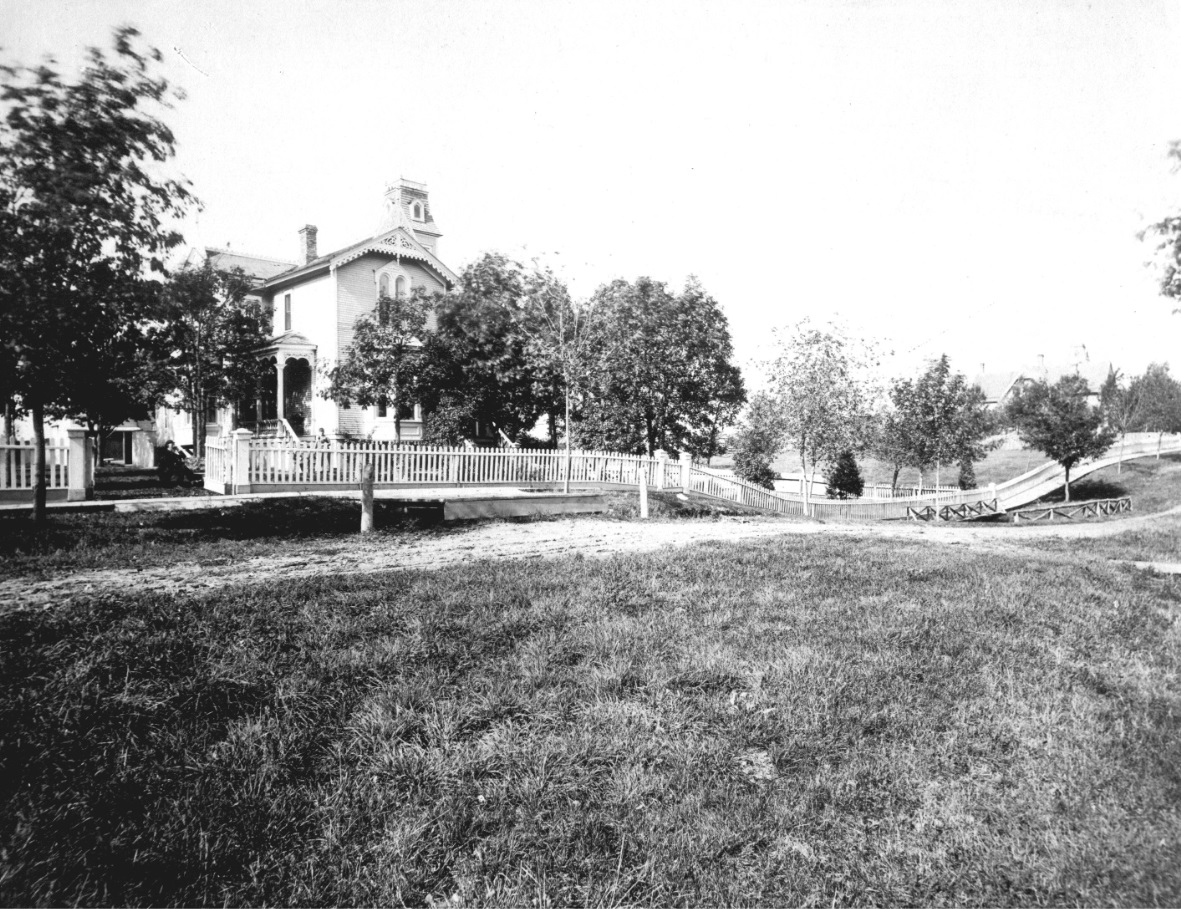
The Barwick family moved around a bit. The 1892 voters’ list recorded them at Belmont Ave. near Tracy, which would be around 103rd Street and Seeley. By 1900, Barwick had joined his father-in-law in real estate, and the Barwick family resided in the house at 10330 S. Seeley Ave. That house was built for George Chambers in 1874, and is still standing today, one of the most historic in Beverly.
Louise graduated in 1891 from the Cook County Normal School, a training institution for teachers. This was significant as the school was run by Col. Francis Wayland Parker, one of the giants in the history of American education.
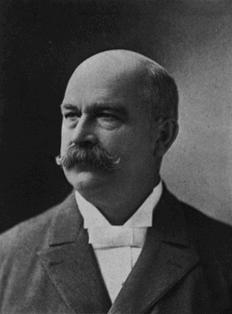
Parker (1837 – 1902) was from New Hampshire, worked as a teacher, and rose to Colonel in the Union Army during the U.S. Civil War.
After the war, in Germany, Parker studied progressive education theories and techniques of people like Rousseau, Frobel, Pestalozzi, and Herbart, educators we have written about before for their profound influence on the educators who called the Ridge home, such as the Hofer sisters.
Parker came to embody the Progressive Era’s initiatives and reforms to change the focus of education for children to be based on learning by doing as opposed to lectures and rote memorization.
After returning to the U.S., after serving as the superintendent of the Boston Public Schools, Parker came to Chicago in 1883 to become the principal of the Cook County Normal School, where he constantly experimented with developing and expanding curriculum. Reading, spelling, and writing became “communications.” Art, music, and physical education were added to the curriculum. The study of nature was added to the science curriculum.
Parker started a private experimental school, the Chicago Institute, that merged with the U. of Chicago Laboratory Schools in 1901.
Louise Barwick was educated as a teacher under Col. Parker’s guidance, and she became a teacher at the Normal School herself. Although she was a talented painter, her real excellence showed in her geographic map-making skills, both drawn and modelled in clay and other materials.
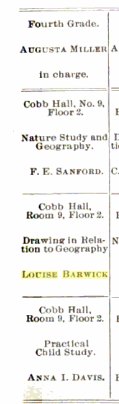
During the 1890s, Louise taught classes at the Normal School as part of the Geography program. Some of the topics were “Drawing Geographical Types,” and “Relief Maps in Chalk.”
For a time, the geography art classes were under the direction of Ida Cassa Heffron, who lived in Beverly at 10638 S. Prospect Ave. Heffron’s father was Rev. Daniel Salisbury Heffron, who helped found Bethany Union Church and was pastor there for 11 years.
In the next post, we will look at the phenomenal work Louise completed for display at the 1893 World’s Fair in Chicago, the Columbian Exposition. This was a huge relief map of Illinois that illustrated the topographical features of the land.
Jim McGreal is a talented and innovative animator, cartoonist, artist, writer, web designer, and all-around really nice guy.
He and his family lived in Beverly for many years and he did a lot of pro bono work for not-for-profit organizations, including patiently trying to help the Ridge Historical Society sustain a viable website, something almost impossible at a totally volunteer-driven association. Jim has "retired" now to Michigan. Thanks, Jim, for your many years of service to RHS.
Jim and his team premiered a new comic strip in December called "Rock." It's about a rock that moves through time and space with the help of a young girl named Alice. Their adventures are proving to be imaginative, as is the artwork.
Readers can subscribe to the series through this link, and receive the daily comic strip through email.
So far the strip has been fun to follow and offers a bright break on a gloomy day. Today was #18 but you can go back to the beginning of the series and pick up all the strips – it only takes a few minutes to do this, and a few minutes each day to view today's story.
Let's show support for a Beverly-area artist and all follow "Rock!" Sign up through this link.
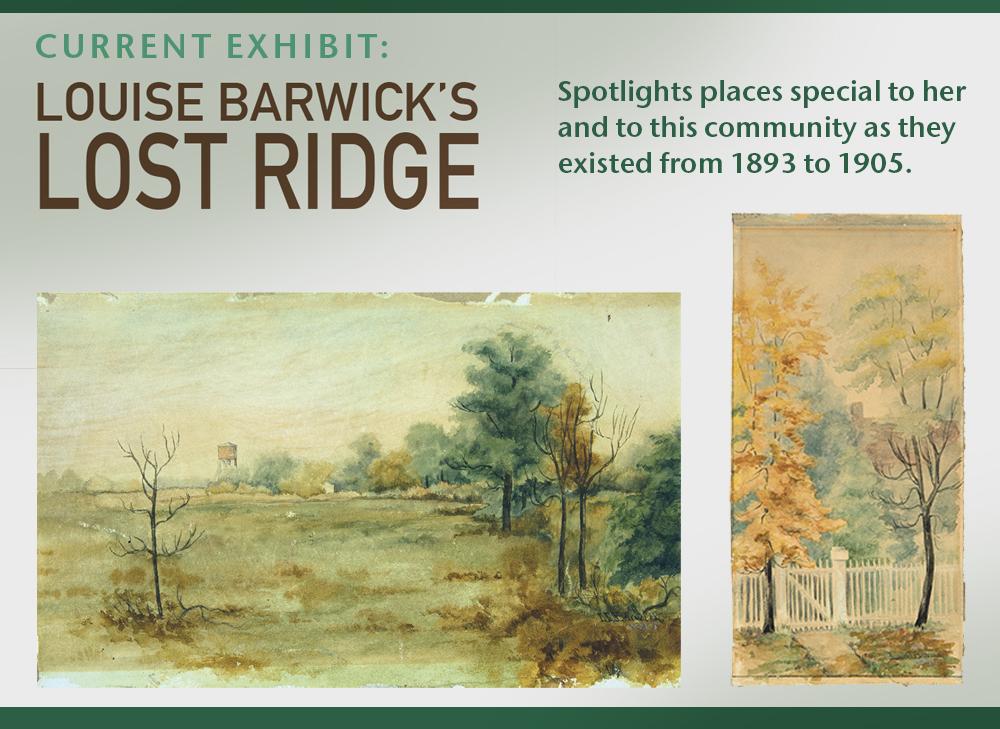
The Ridge Historical Society will be open today, Tuesday, January 2, 2024, for visitors to view the current exhibit, "Louise Barwick's Lost Ridge."
This exhibit emphasizes the visual and needs to be seen in person to be appreciated. Images of the Ridge from the late 1800s – early 1900s are captured through various media of the time, including watercolor paintings and aerial photography, creating a unique historical record of the actual appearance of the area around 103rd Street and Longwood Drive in days gone by.
RHS is located at 10621 S. Seeley Avenue, the hours are 1:00 p.m. to 4:00 p.m., and admission is free. There is some limited parking at the building, or on Seeley Avenue. The building is not handicapped accessible.
Please join us with your friends and neighbors for a popular fundraiser at the Graver-Driscoll House for champagne, sweet and savory treats as we celebrate the new year.
Saturday, January 6, 2024 – 7PM to 11PM
Enjoy our Louise Barwick’s Lost Ridge and Lost & Found local architecture exhibits while you sip, savor and socialize. Come for a fun evening with door prizes and surprises.
Get tickets by January 5, 2024.
Buy tickets online: https://bit.ly/RHSchampagne
One Ticket $40.00
Two Ticket Bundle $70.00
Three Ticket Bundle $100.00
Four Ticket Bundle $130.00
Five Ticket Bundle $160.00
The Ridge Historical Society
The New Year Approaches One Hundred Years Ago
By Carol Flynn
Prohibition was in full swing in 1923, having begun with the Eighteenth Amendment to the U.S. Constitution in 1920, as New Year’s Eve approached one hundred years ago.
Federal law prohibited the production, importation, transportation, and sale of alcoholic beverages, but private ownership and consumption of alcohol were not illegal under federal law, and some uses, for example, religious use of wine, were permitted.
Within a week after Prohibition began, illegal production and bootlegging, the smuggling of alcoholic beverages, also began. In the larger cities, such as Chicago, rival crime syndicates fought for control of the illegal alcohol markets.
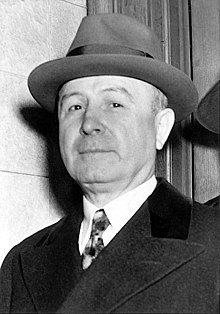
John Torrio rose to the top in Chicago organized crime. Historically, he is considered “unsurpassed in the annals of American crime; he was probably the nearest thing to a real mastermind that this country produced,” according to author and historian Hal Asbury.
In 1909, Torrio was invited to Chicago from New York by “Big Jim” Colosimo to help eliminate extortionists, which Torrio quite ably accomplished. He stayed in Chicago to help manage Colosimo’s 100+ brothels. In 1919, Torrio brought a young man named Al Capone from New York to Chicago to join their operation.
When Prohibition started, Torrio encouraged Colosimo to go into the bootlegging business, but Colosimo refused. Colosimo was gunned down at his restaurant in 1920 and Torrio, with Capone’s assistance, took over as Chicago’s organized crime boss. They soon became the leaders of the illegal alcohol operations in the city and suburbs.
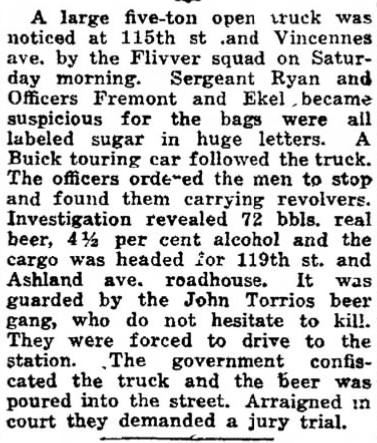
This story appeared in the Englewood Times on December 28, 1923.
A truck carrying a substantial amount of illegal beer was stopped at 115th Street and Vincennes Ave. It was reported to be under the protection of John Torrio’s “beer gang.” The members of the beer gang were not identified, but there was always the possibility that a young Al Capone was there that day.
The truck was on its’ way to a roadhouse at 119th Street and Ashland Ave., no doubt delivering supplies for New Year’s Eve celebrations.
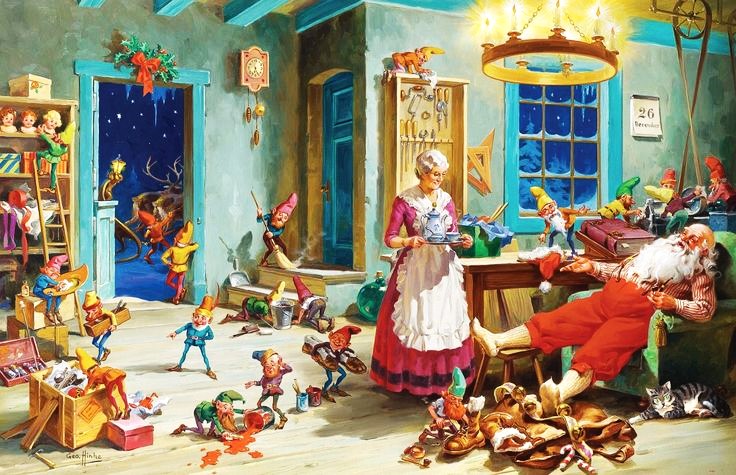
The day after Christmas by George Hinke.
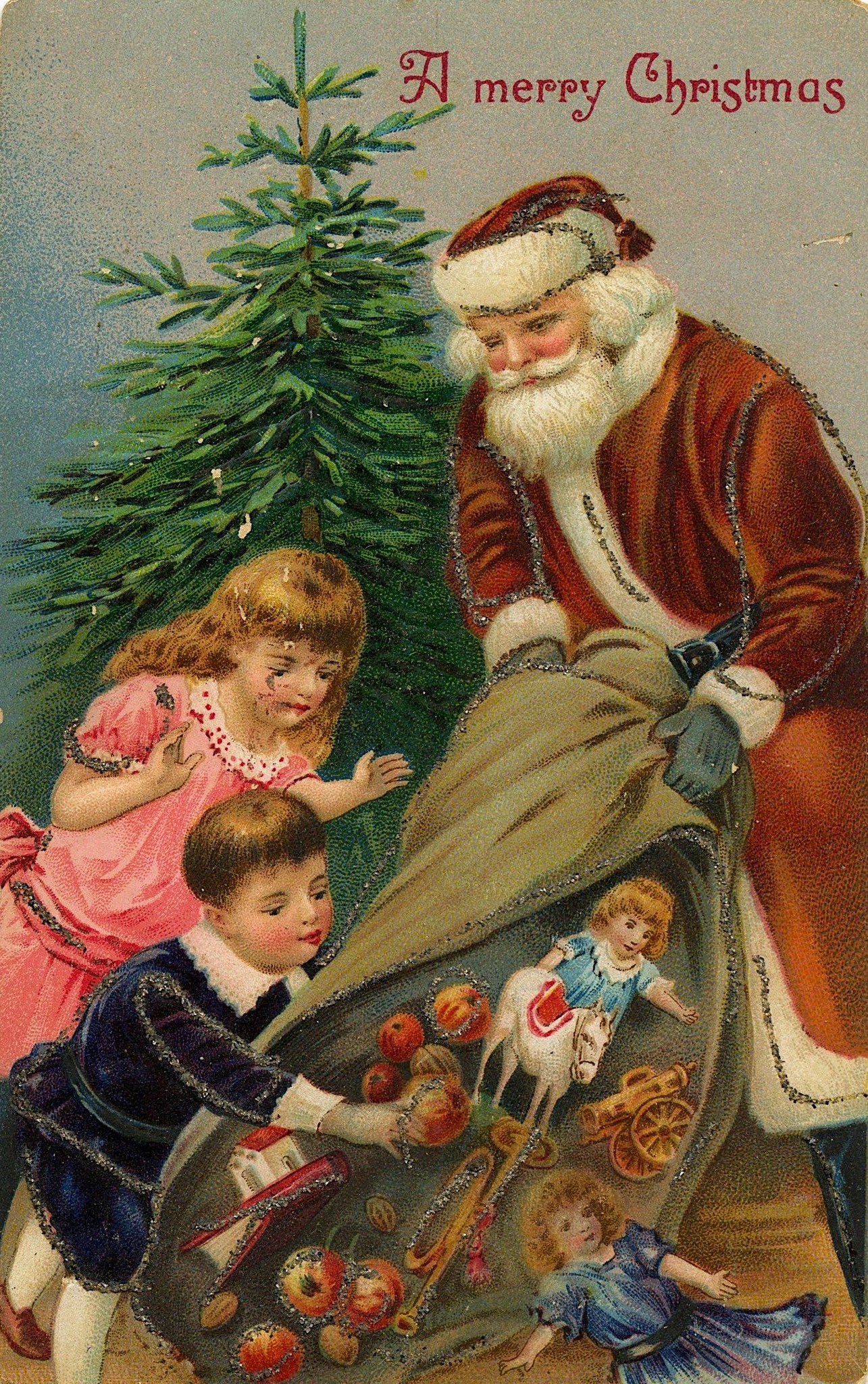
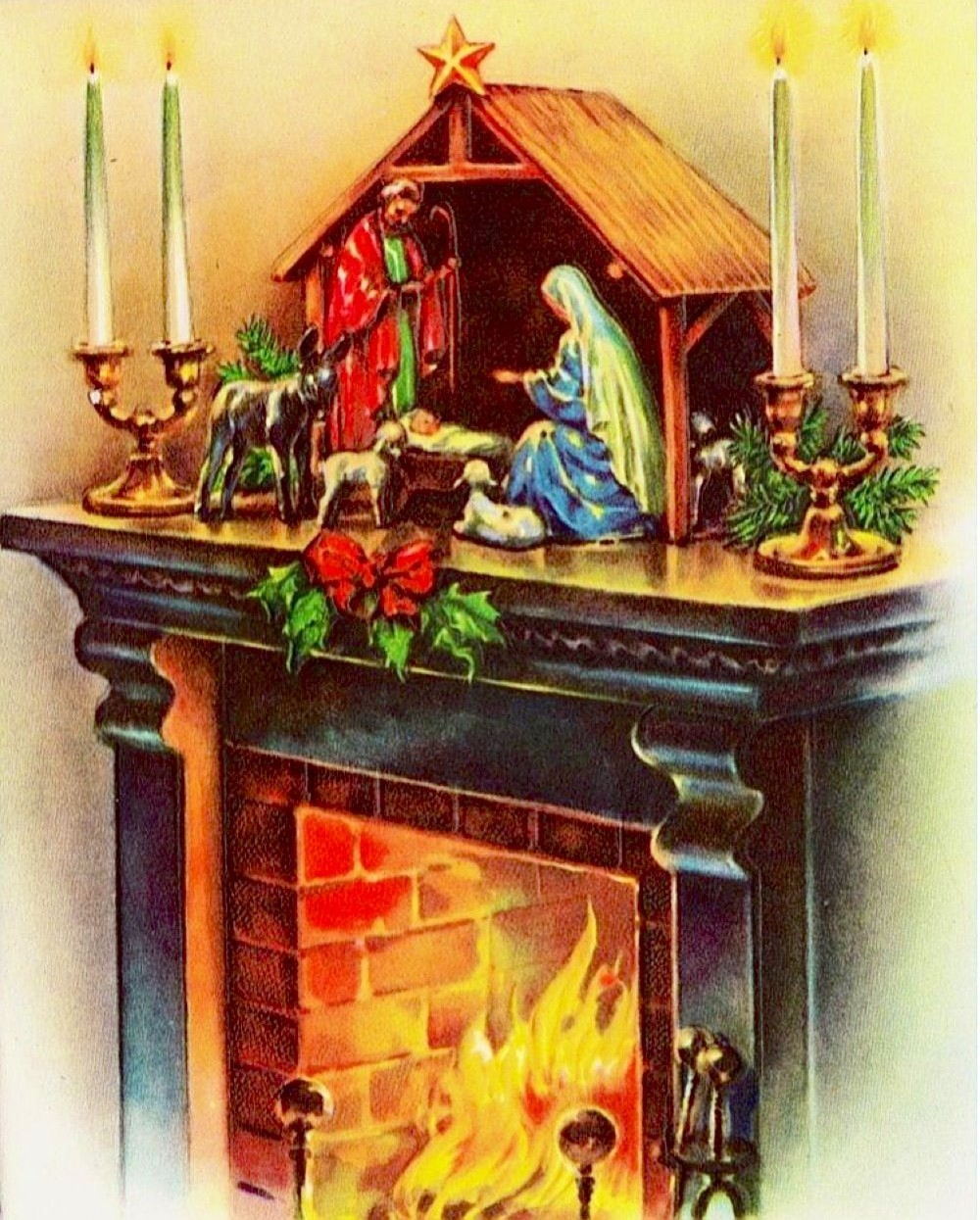
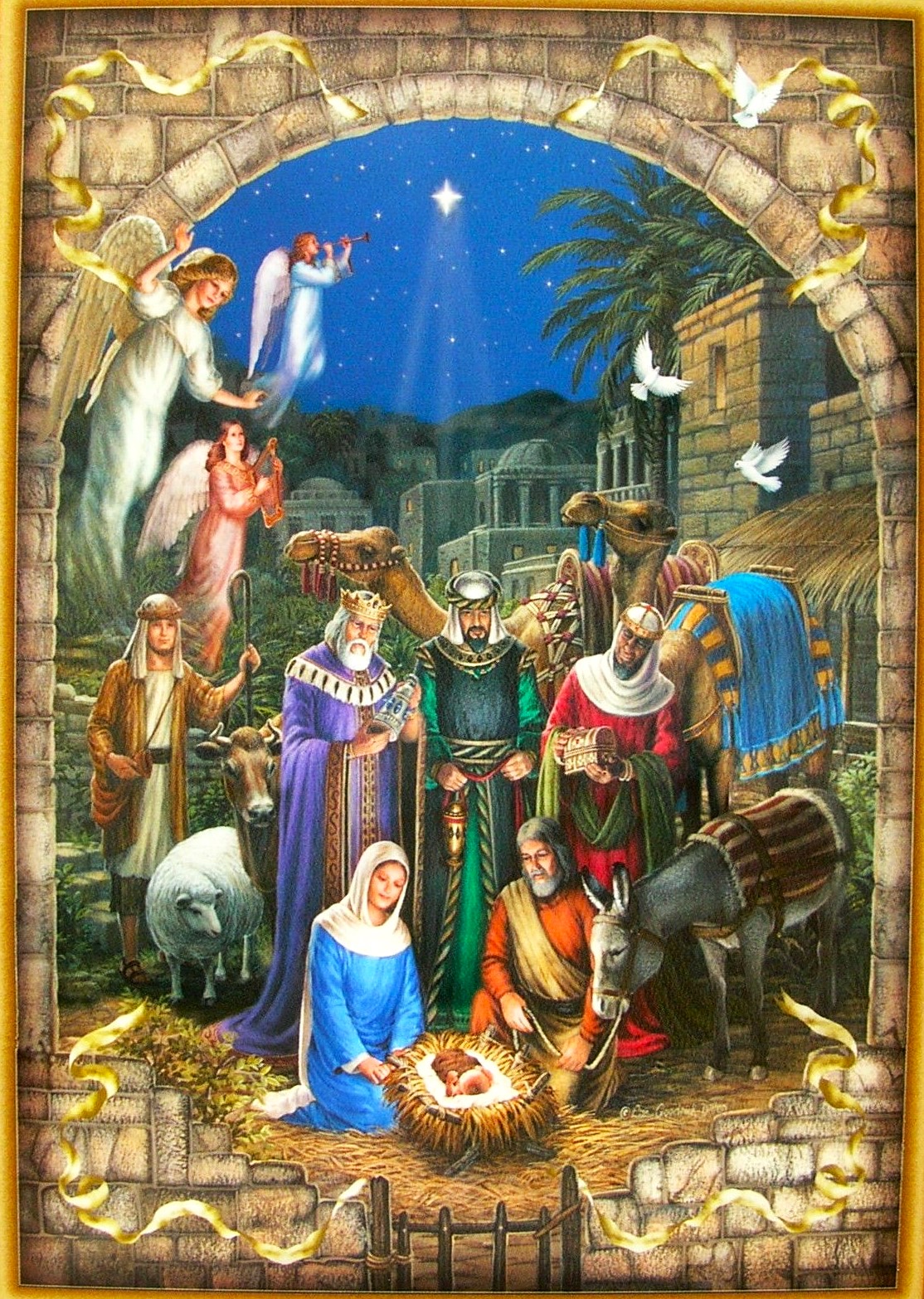
Taking us back to the reason Christmas exists through vintage postcards.

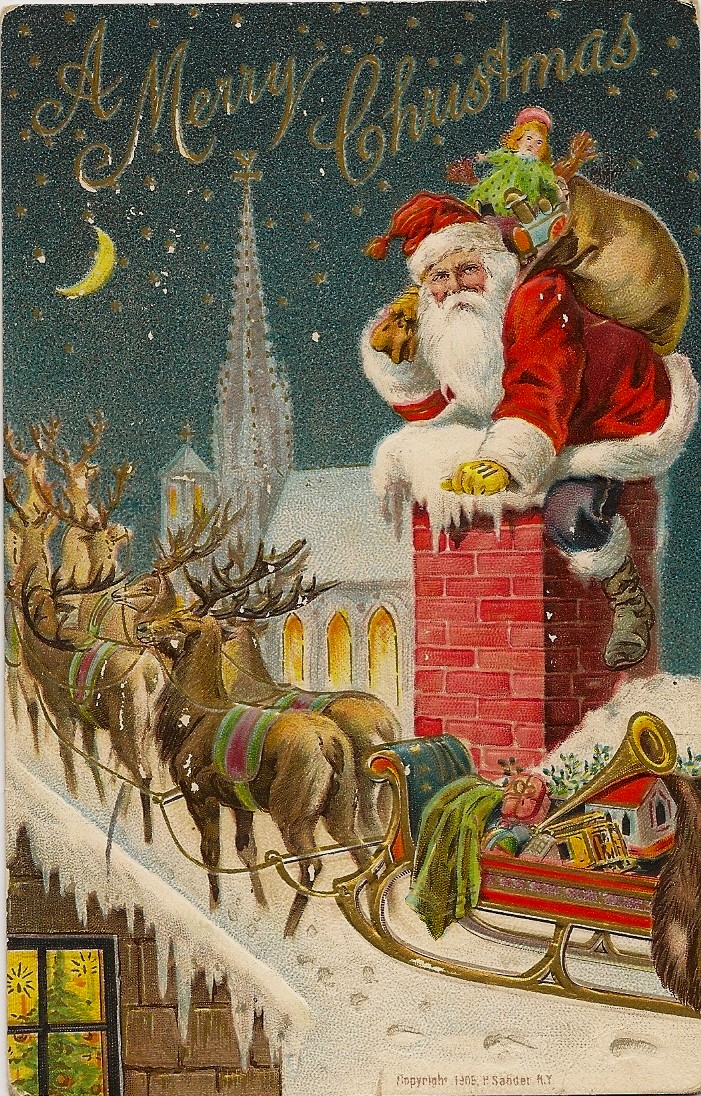
Tonight's the night! How does Santa fit down all those chimneys? It's magical!