
Explore the RHS Facebook Archives, a rich repository of local history written by Carol Flynn. For two decades, Carol brought a deeply dedicated voice to public education at RHS. Her role as Facebook administrator through mid-2025 naturally extended her prolific research into meticulously detailed articles, most notably her multi-part historical series posts. Today, Carol continues her local history writing for The Beverly Review and other outlets.
2020
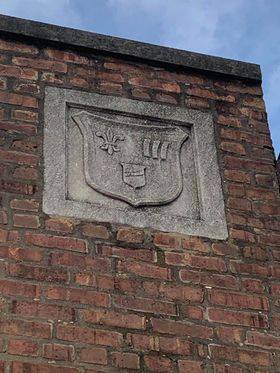
Do we have anyone out there who is into coats of arms and other heraldic crests? Homeowners on the Ridge have asked for some help in identifying this crest which is on their newly-purchased home. From the little bit of research RHS has done on the house, it appears to have been built in 1939 and the first owner was named Underhill, of Canadian-English Protestant descent, and he was a foreman at the steel mills. Any ideas? Family crest? Related to the steel industry? Some other organization? Later owners included King, McCarthy and McElroy, all Catholic.
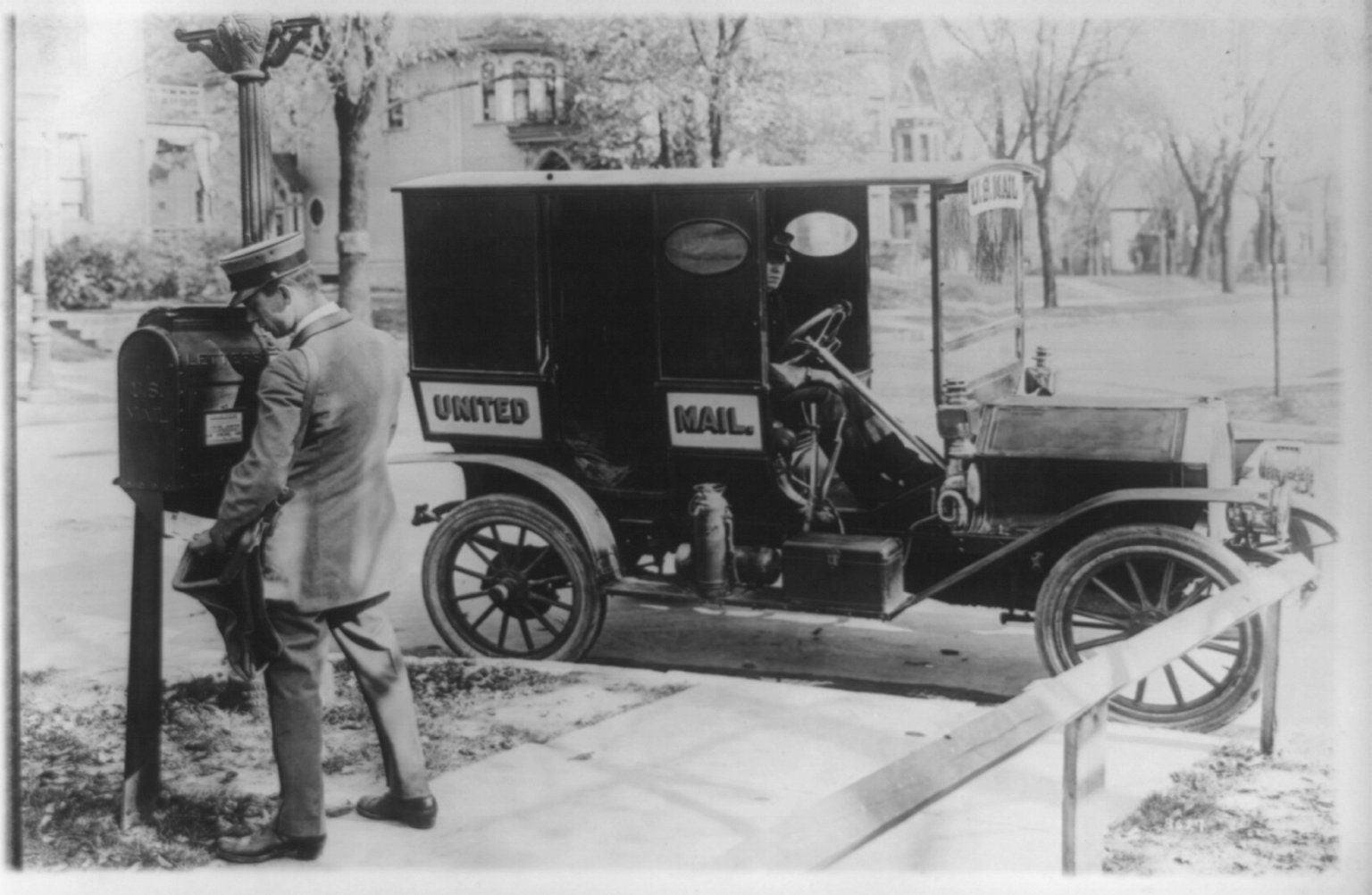
There has been a lot of discussion recently about the local post office. People have mentioned that they have been told there is a backlog of mail and packages to be delivered, and that the postal employees have been asked to work on Christmas Eve and Christmas Day to try to catch up.
Here is a story about the Morgan Park post office and Christmastime from more than one hundred years ago.
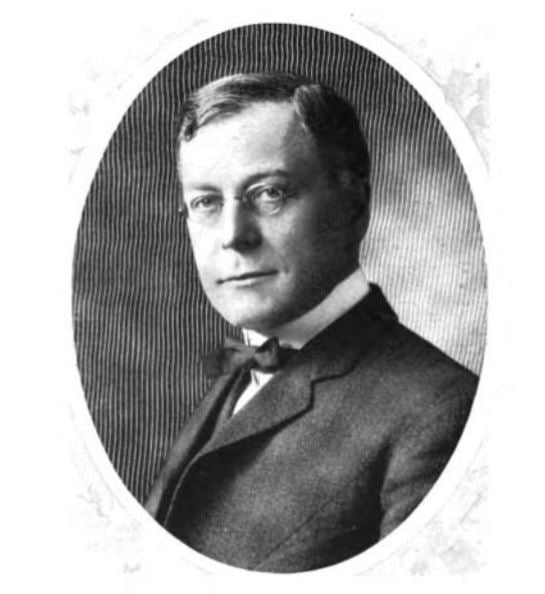
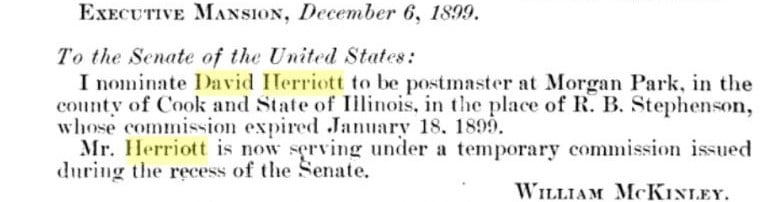
David Herriott is usually mentioned on this page in reference to his role as the publisher/editor of the Morgan Park Post newspaper. But his “real” job was as Postmaster.
Herriott beat out twenty-two other candidates to be named Postmaster of the Village of Morgan Park in 1899 by President William McKinley. He held that position until 1914, when Morgan Park was annexed to Chicago. He was then appointed as Superintendent of the Auburn Park station near 79th Street and Halsted Street. In 1929, he was named Superintendent of the South Chicago station at 92nd Street and Exchange Avenue on the southeast side of the city, from where he retired in 1933.
Herriott was well-liked and respected in his Postmaster role. When appointed to Auburn, the local paper wrote that he was “one of the best informed men in the service as well as the most amiable and genial.” The paper considered it “a distinct advantage” to have Herriott as the new superintendent.
At another time, a columnist mentioned Herriott’s “good character” and that he was “a rattling good fellow.”
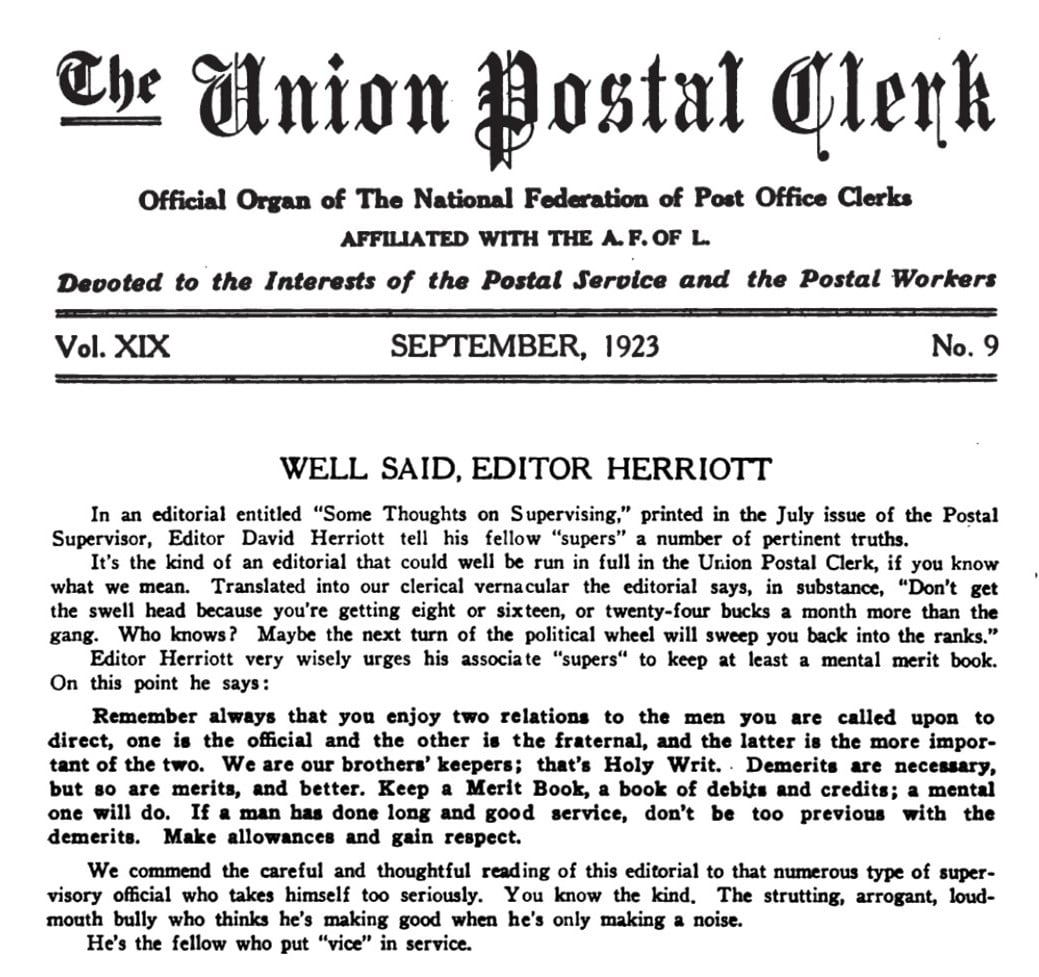
An editorial in a 1923 “The Union Postal Clerk” magazine of the union representing postal clerks referred to Herriott as “very wise” for his advice to fellow supervisors.
Herriott was a Progressive and supported fair labor practices. At the time he was working for the U.S. postal service, the stations were open on Christmas Day. Herriott wanted to give the employees that day off. So while at Morgan Park, he came up with the idea to have the postal station open but just not staffed on Christmas Day.
He had all the mail and packages sorted by address and laid out on tables by street name. He invited the residents of Morgan Park to come into the station and pick up their own mail if they did not want to wait until December 26 to have it delivered. The residents cooperated with the plan and it worked very well.
In the 1920s, Herriott was the editor of “The Postal Supervisor” magazine for several years. This monthly magazine was the official publication of the National Association of Postal Supervisors, out of Washington, D.C.
Herriott advocated for two changes for the employees: half-days on Saturdays and Christmas as a holiday. The Postmaster General was hesitant, but the eloquent and persuasive Herriott convinced him to give it a try for one year. It has continued ever since.
A newspaper editorial noted that when Herriott addressed an issue, “what he has to say will be important and to the point…. And his words will be phrased with a charm and quaintness that never fail to get attention.”
He certainly used that charm to help postal workers.
David Herriott died in 1960 at the age of 97.
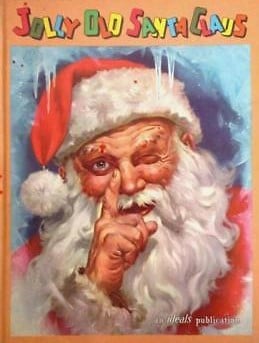
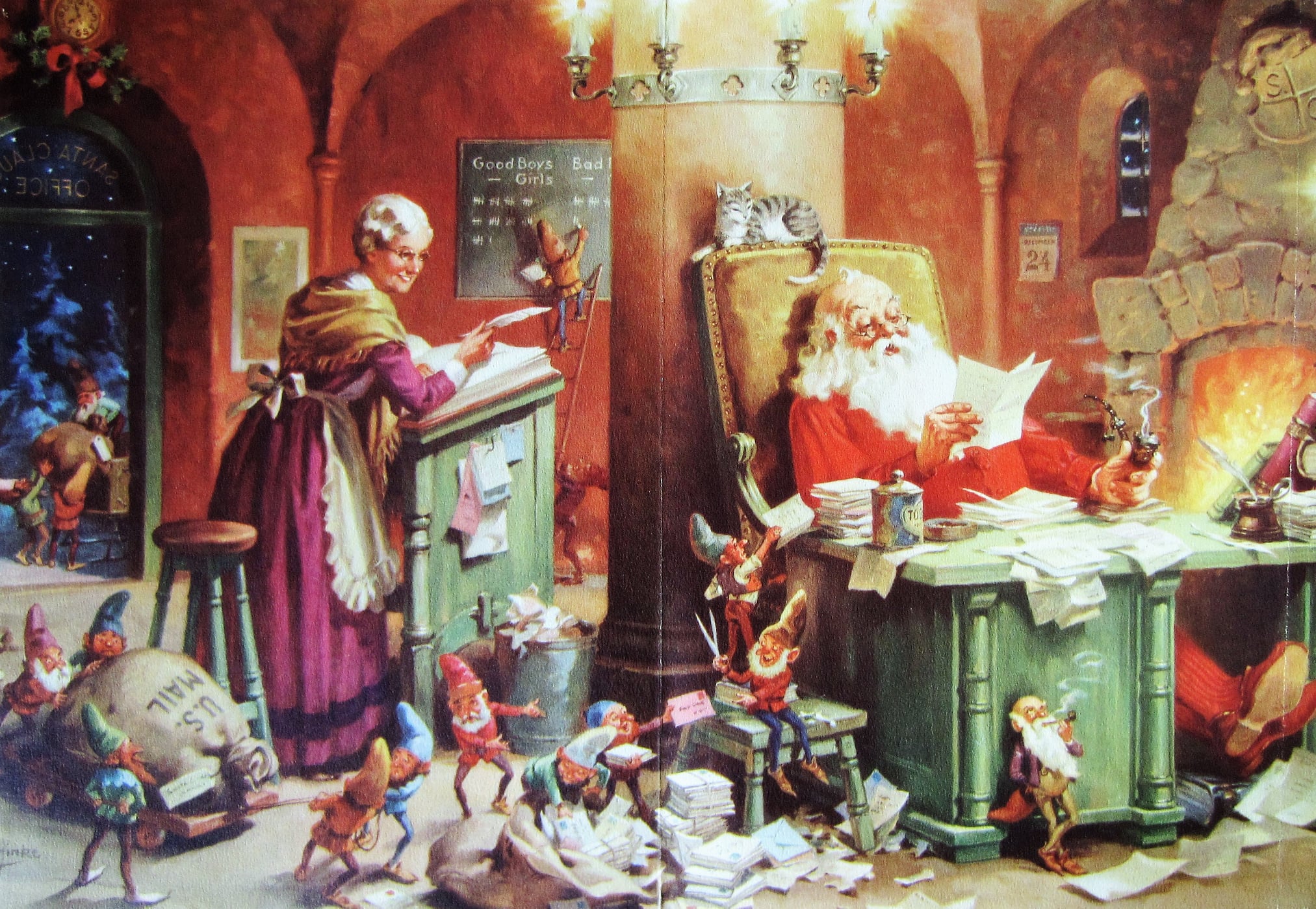
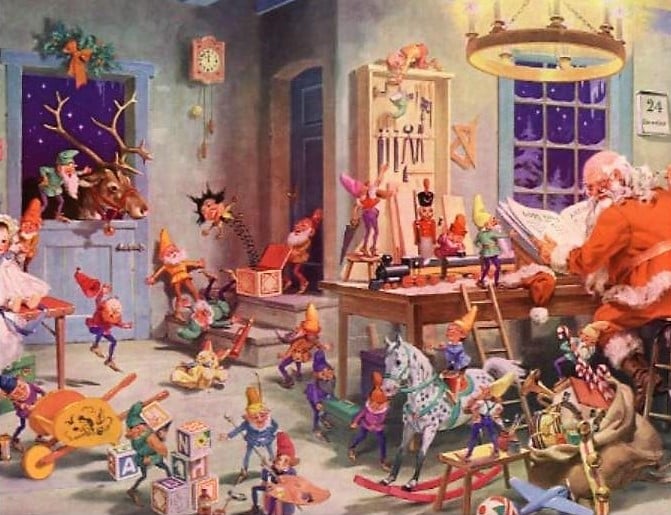
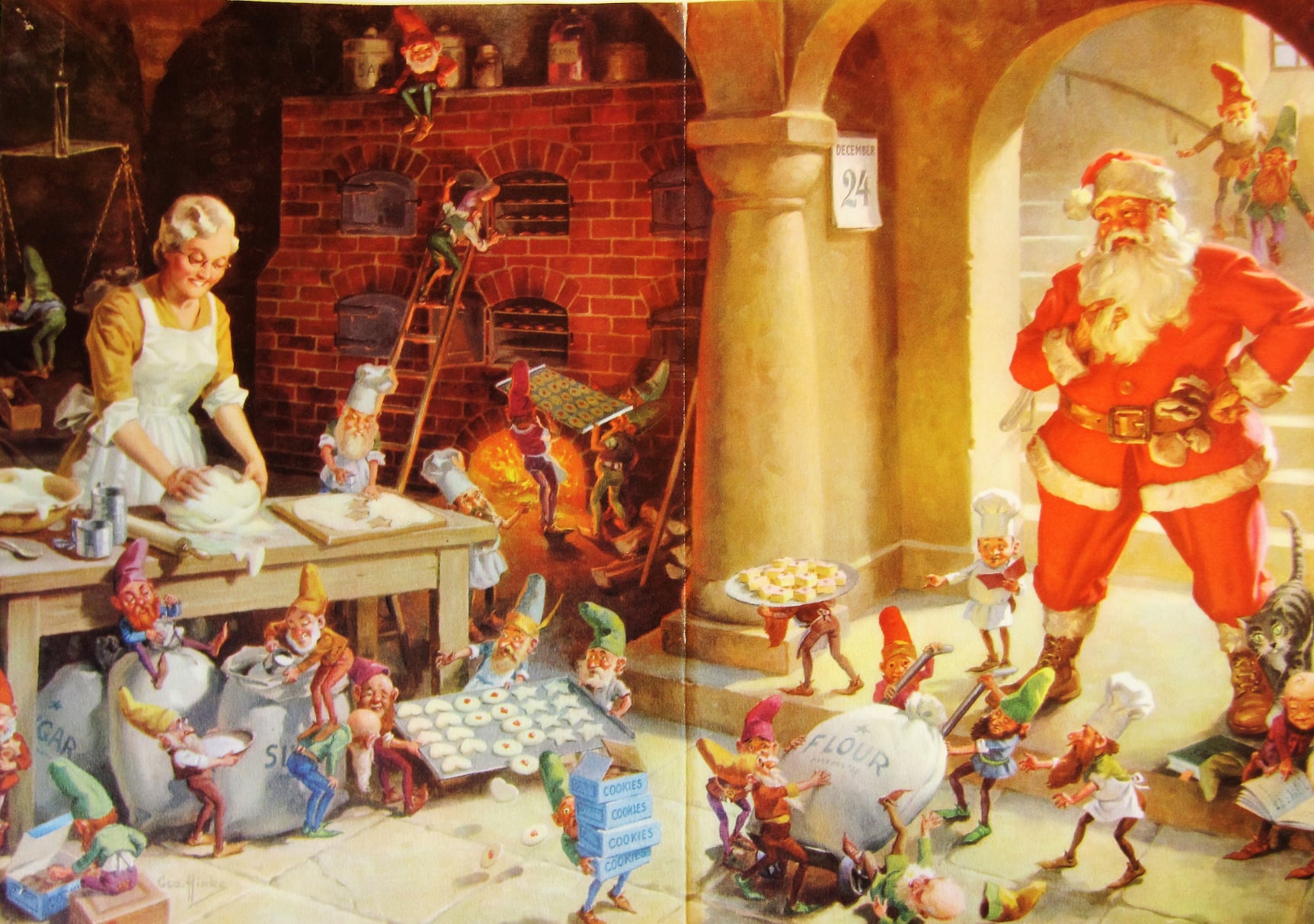
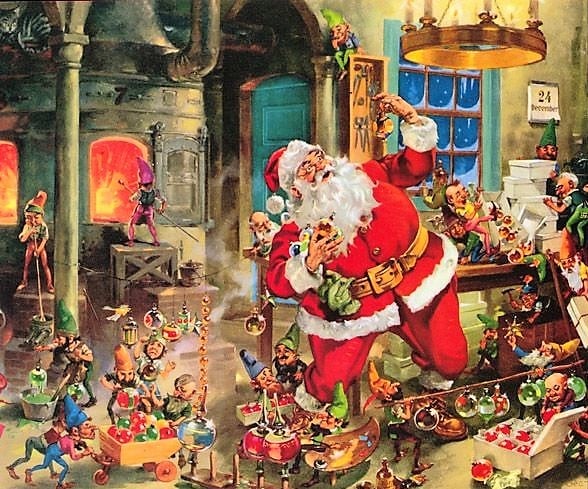
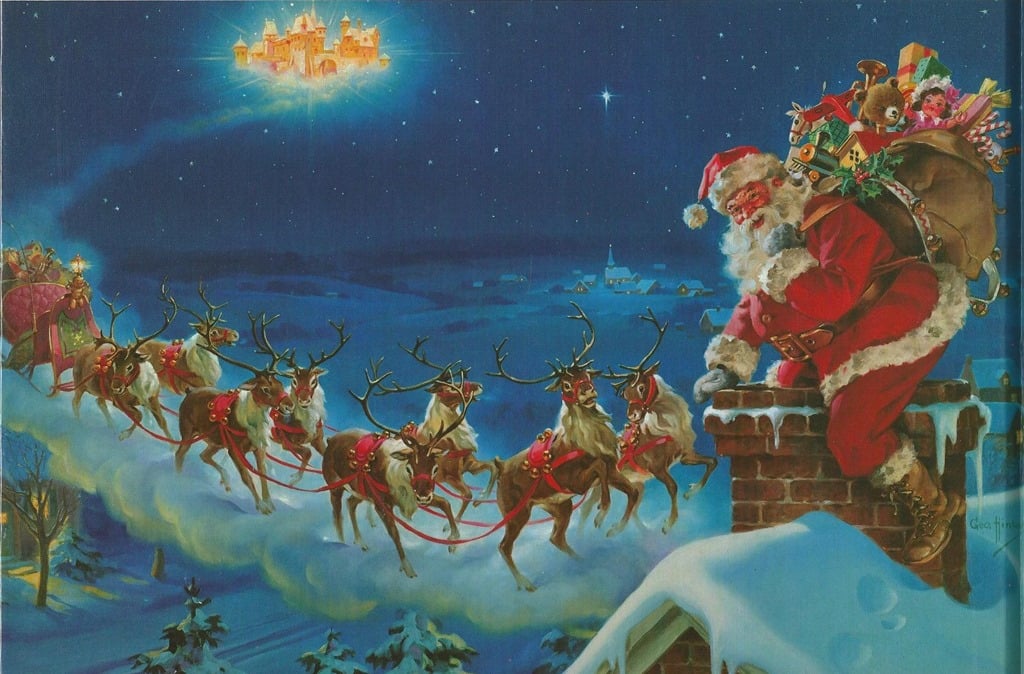
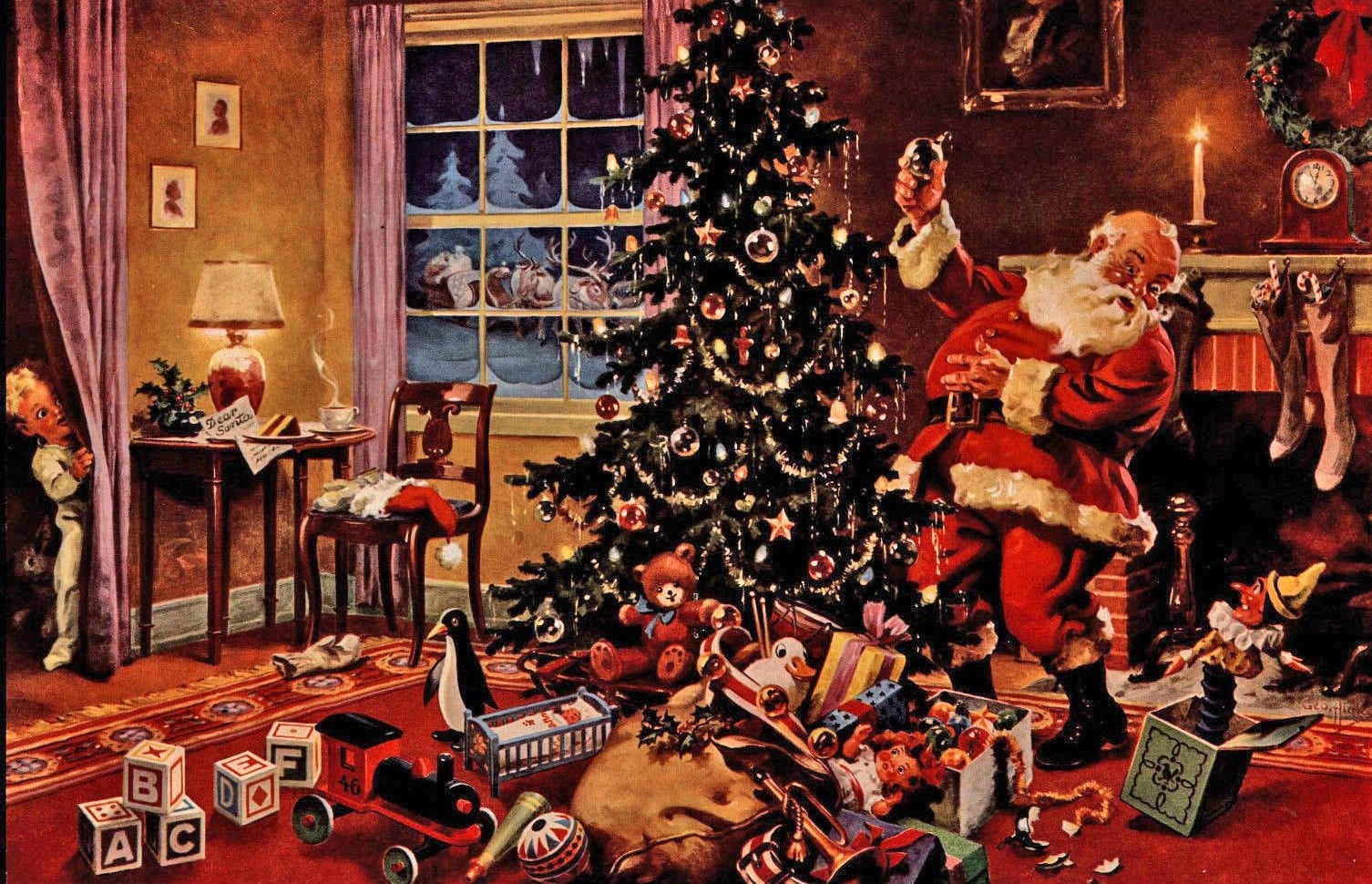
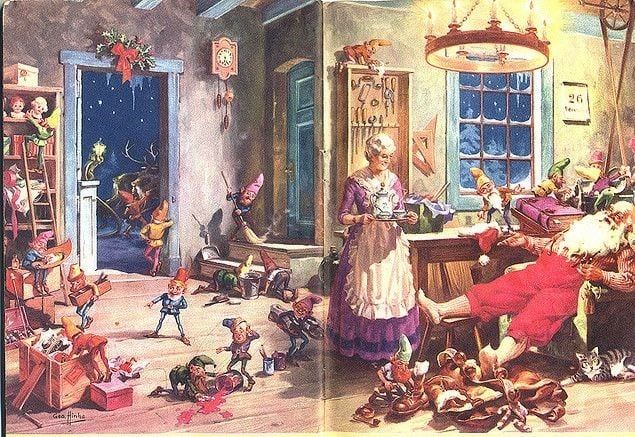
George Hinke was born in Germany in 1883 and came to Milwaukee, WI, in 1923. From 1941 until his death in 1953, he created commissioned paintings for Ideals Magazine. In 1961, Ideals Magazine Collector’s Edition of Jolly Old Santa Claus was published with Hinke’s paintings, creating a truly magical version of Santa on Christmas Eve. The elves come to life in a most delightful way.
Merry Christmas from the Ridge Historical Society.
The Major Issue in Chicago One Hundred Years Ago
By Carol Flynn
One might assume that during the middle of the week between Christmas and the New Year in 1920, people had their thoughts on holiday and winter activities. Out-of-town guests had to be entertained. People tended to stay for longer visits back then because travel was less convenient; people traveled by train and horse and buggy, as autos were just becoming mainstream, and of course, there were no airplanes yet. Children were home on school vacation, and there were no video games and smartphones to keep them occupied.
There were frozen ponds for ice skating; there were plays and holiday musicals at the theaters downtown; there were tea parties and card parties with friends. For most men, work outside the home needed attention; for most women, work inside the home needed attention.
But this was Chicago, and politics were also always in play. The major issue in Chicago one hundred years ago was the restructure of the ward system of city government. And Washington Heights, Beverly Hills, and Morgan Park had a great stake in the issue. Mount Greenwood was not yet part of the City of Chicago; that would not happen for another seven years.
The ward system went back to the very beginning of Chicago as a city. The division of Chicago into legislative units called wards was established with the very first city charter in 1837. The city has never known any other form of government.
There were originally six wards, with two aldermen from each ward. The mayor and aldermen made up the “common council.” The council was empowered to handle all aspects of city management, ranging from the lofty control of city finances and property on down to “preventing the rolling of hoops … or any other amusement having a tendency to annoy persons … or to frighten horses.”
As the city’s population grew and more areas were annexed, the number of wards increased. When Washington Heights, which included Beverly Hills, was annexed in 1890, it became part of the 31st Ward. When Morgan Park was annexed in 1914, it became part of the 32nd Ward. Most of Washington Heights then also became part of the 32nd Ward.
In 1920, there were a total of 35 wards, each with two aldermen. The population distribution among the wards was way off-kilter. The largest ward, based on the 1910 U.S. Census, had 150,244 people, and the smallest ward had 35,294.
It was proposed that the city be remapped into fifty wards of about equal population size, and there be
one alderman per ward.
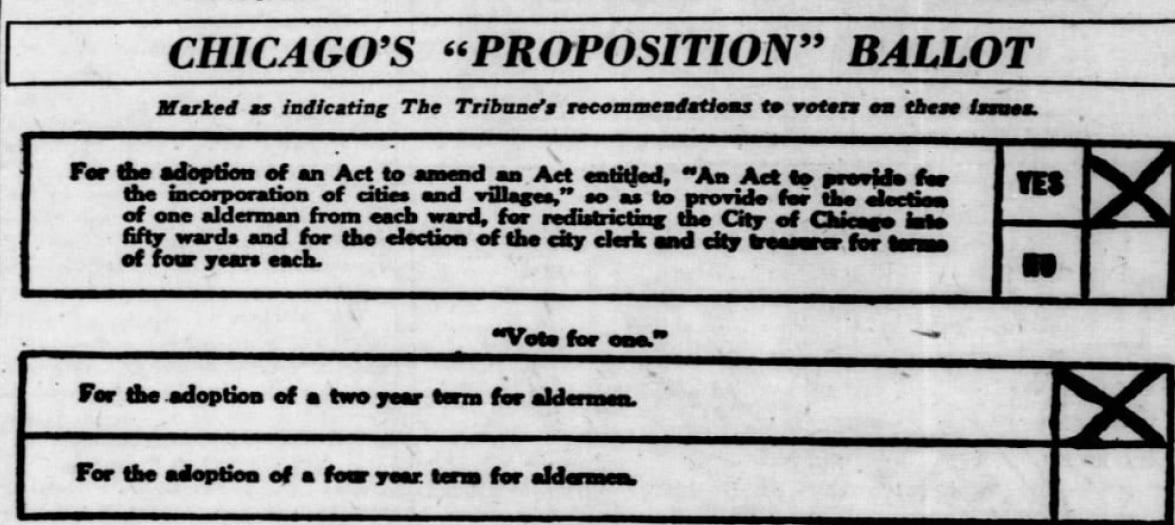
In November of 1920, the voters of Chicago endorsed the plan to create 50 wards with one alderman each, who would serve two-year terms. It then went to the city council to have the new map drawn.
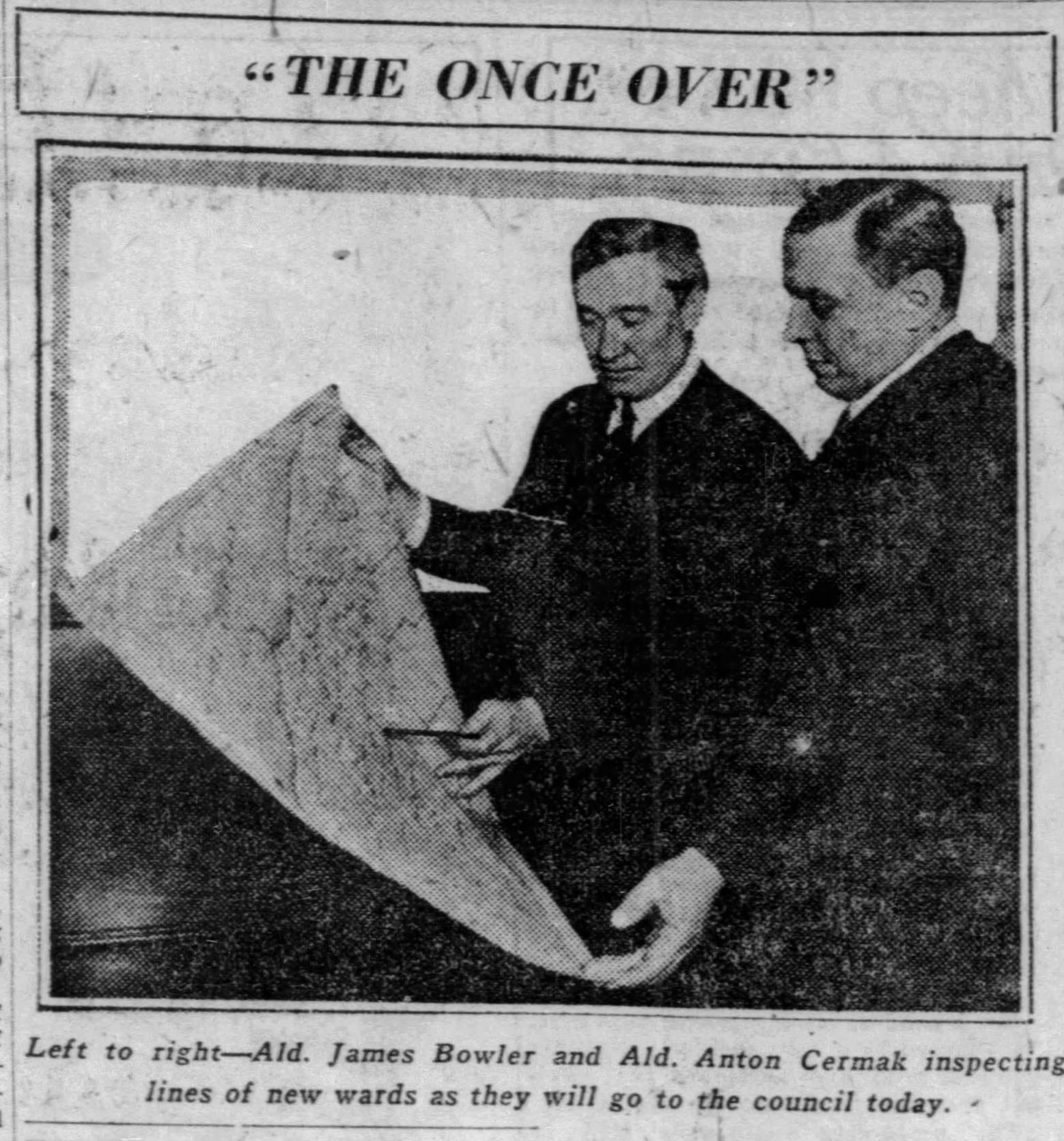
The aldermen had been working on a new map for years. It can just be imagined what went on behind the scenes as the council decided on the new ward boundaries. Finally, they announced a new map was ready to be voted on by the city council on December 29. It was expected to be approved.
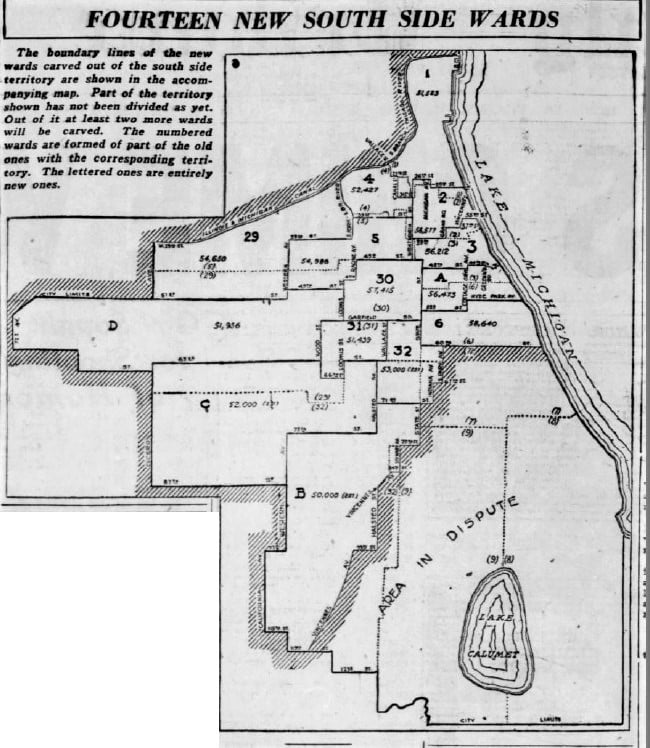
The restructuring of the city wards was going to cause a numbering change – intentionally. Most of Beverly and Morgan Park would become part of a newly designated 19th Ward. There was already an existing 19th Ward, centered around Halsted Street and Polk Street, today’s Little Italy and U of IL-Chicago campus. The “old” 19th Ward was notorious for fatal political feuds and bootleg activity. The people of Beverly were none too happy to have that number assigned to them. It was rumored that some aldermen did this on purpose to thumb their noses at the elite homeowners of Beverly. The old 19th ward would be broken up, with sections going to four different wards.
Next post: The December 29, 2020 Vote on Ward Remapping
What Didn’t Happen Today 100 Years Ago
By Carol Flynn
In November of 1920, the voters of Chicago approved a proposition to divide the city into 50 wards, each with about the same population based on the 1910 U.S. Census. Each ward would have one alderman, elected every two years. This replaced the old system of 35 wards of widely varying populations, each with two aldermen serving staggered two-year terms. There was an annual election in which half the aldermen were elected.
The proposition was to become effective with the February 1921 election. It was envisioned there would be 50 wards by then and 50 aldermen would be elected. Those in the middle of a term, if not elected as one of the new 50, would be phased out the next year – there would be no election in 1922. Henceforth, all 50 aldermen would be elected every two years on the odd-numbered years.
The map redistributing the population into 50 wards still needed to be finalized and approved. The proposition gave the city council, made up of the current 70 aldermen, authority for 90 days to do this.
A subcommittee on redistricting under the elections committee of the city council, chaired by James B. Bowler, alderman from the “old” 19th ward, was charged with developing the new map. The committee worked as long as 18 hours per day to get a map finalized for vote by the city council, dealing with numerous “minor disputes,” including a fistfight, between aldermen.
They came up with the plan to renumber the wards. It was decided the wards would be divided into north, south, and west geographical territories, then numbered in order. They started with the loop and south wards. The 1st ward that included the loop retained its old number, then working down the map they ended with the 19th ward for Beverly and Morgan Park on the far southwest border of the city.
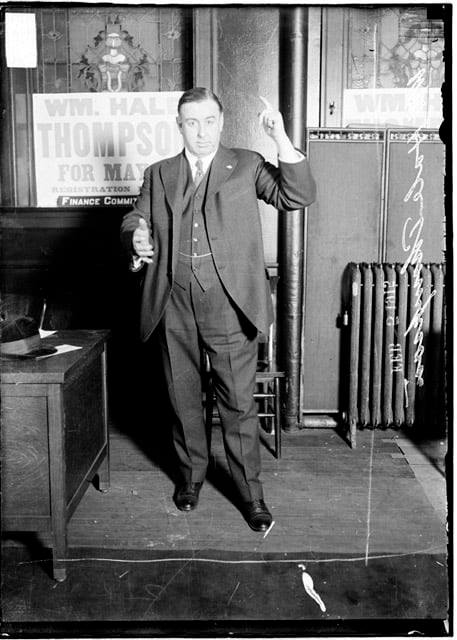
The committee was finally ready to submit its plan to the city council, and had secured 50 votes for approval (36 out of 70 were needed), when it was blindsided by Mayor William Hale “Big Bill” Thompson. Thompson announced he was forming his own committee, not headed by an alderman, to develop a redistricting plan which he approved. Some of his “friends” lost out in north side wards with the city council remapping.
This would likely result in two plans, one approved by the mayor, and one approved by the city council, that would go to the public in February to be voted upon.
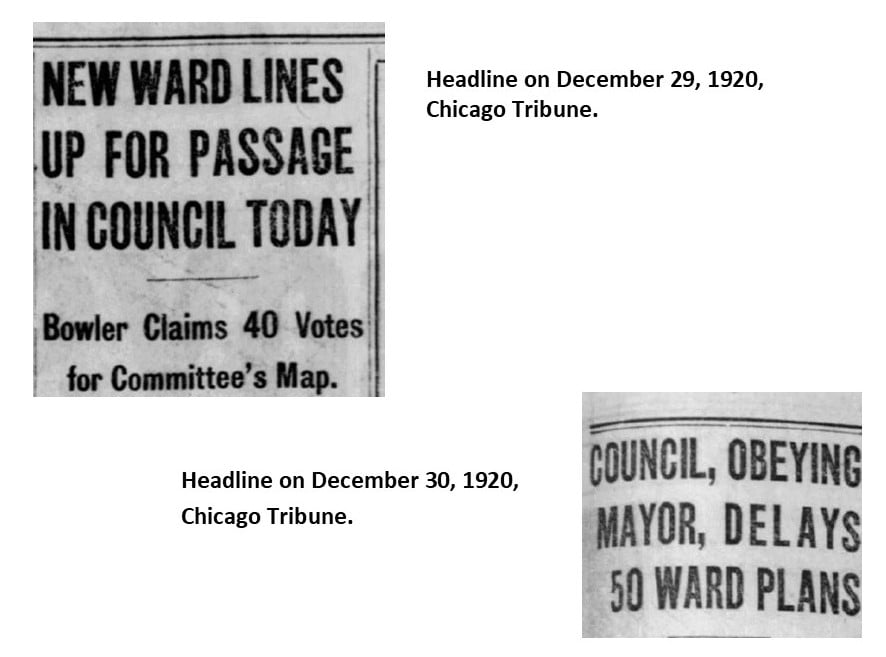
The city council committee delayed its vote on a plan for weeks, trying to reach a compromise with the mayor’s committee. Many aldermen withdrew their support of the city council plan so as not to antagonize the mayor. Both sides accused the other of gerrymandering and favoritism.
Then the mayor’s office announced it was delaying the election of aldermen under the 50-ward plan until the 1923 election. This meant that 35 aldermen would be elected in 1921, and the other 35 would be phased out in 1922, so the city council would be reduced to 35 members – until the 50-ward plan was implemented or overturned. This would be a preferable model for the mayor – less aldermen to share decision-making authority. But many of the aldermen objected to this.
The city council committee announced it was going ahead with a plan, and that they had the necessary votes to pass it. The mayor’s supporters said that they were not interested in defeating the plan; if the plan passed, it simply meant that voters might have to choose between two plans in February 1921. It wouldn’t affect the election.
The vote was held in the city council on December 29, 1920. The support for the plan totally evaporated, and it was sent back to the elections committee. The power of the mayor was too strong to overcome.
Only 18 aldermen approved the city council plan, and two of these were Lyle and Fisher from the 32nd ward, representing Beverly.
At one point during debates, the cry of “Fire!” went up – it was Alderman Bowler burning the pledges of those who promised support for his plan.
The mayor announced his intention to have the state legislature repeal the 50-ward bill. The city entered the New Year, 1921, with no plan to implement the will of the people.
Of course, Chicago did eventually implement the 50-ward plan. Next year, 2021, is an aldermanic election year, and RHS will continue the story of the 19th ward.