
Explore the RHS Facebook Archives, a rich repository of local history written by Carol Flynn. For two decades, Carol brought a deeply dedicated voice to public education at RHS. Her role as Facebook administrator through mid-2025 naturally extended her prolific research into meticulously detailed articles, most notably her multi-part historical series posts. Today, Carol continues her local history writing for The Beverly Review and other outlets.
2022

RHS Offers Membership Gift Certificates
A perfect gift for a local history buff or new neighbors, or someone who has moved away but remembers the community fondly, is a membership gift certificate from the Ridge Historical Society. Individual memberships are $25 and Family memberships are $50.
It’s not too late to pick one up this week. RHS, at 10621 S. Seeley Avenue, Chicago, is open on Tuesday afternoon from 1:00 to 4:00 p.m. Other arrangements may be made by contacting RHS at 773/881-1675 or ridgehistory@hotmail.com.
RHS could also send electronic verification of a gift with the print copy to follow.
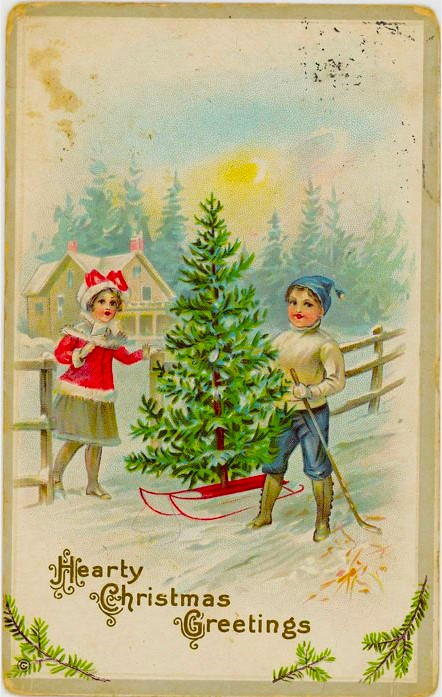
Season's Greetings from the Ridge Historical Society
This vintage card from the early 1920s – one hundred years ago – shares a sentiment appropriate to today, one of the coldest Christmas Eves on record in Chicago! Hearty Christmas Greetings!
And now, back to work! The Ridge Historical Society will be open today, Tuesday, December 27, from 1:00 to 4:00 p.m., free admission. The address is 10621 S. Seeley Avenue.
The Hetherington Design Dynasty exhibit has been extended until late January. We'll be announcing upcoming programs soon, including another program on how to research your Chicago home, since the one held recently sold out. Stay tuned.
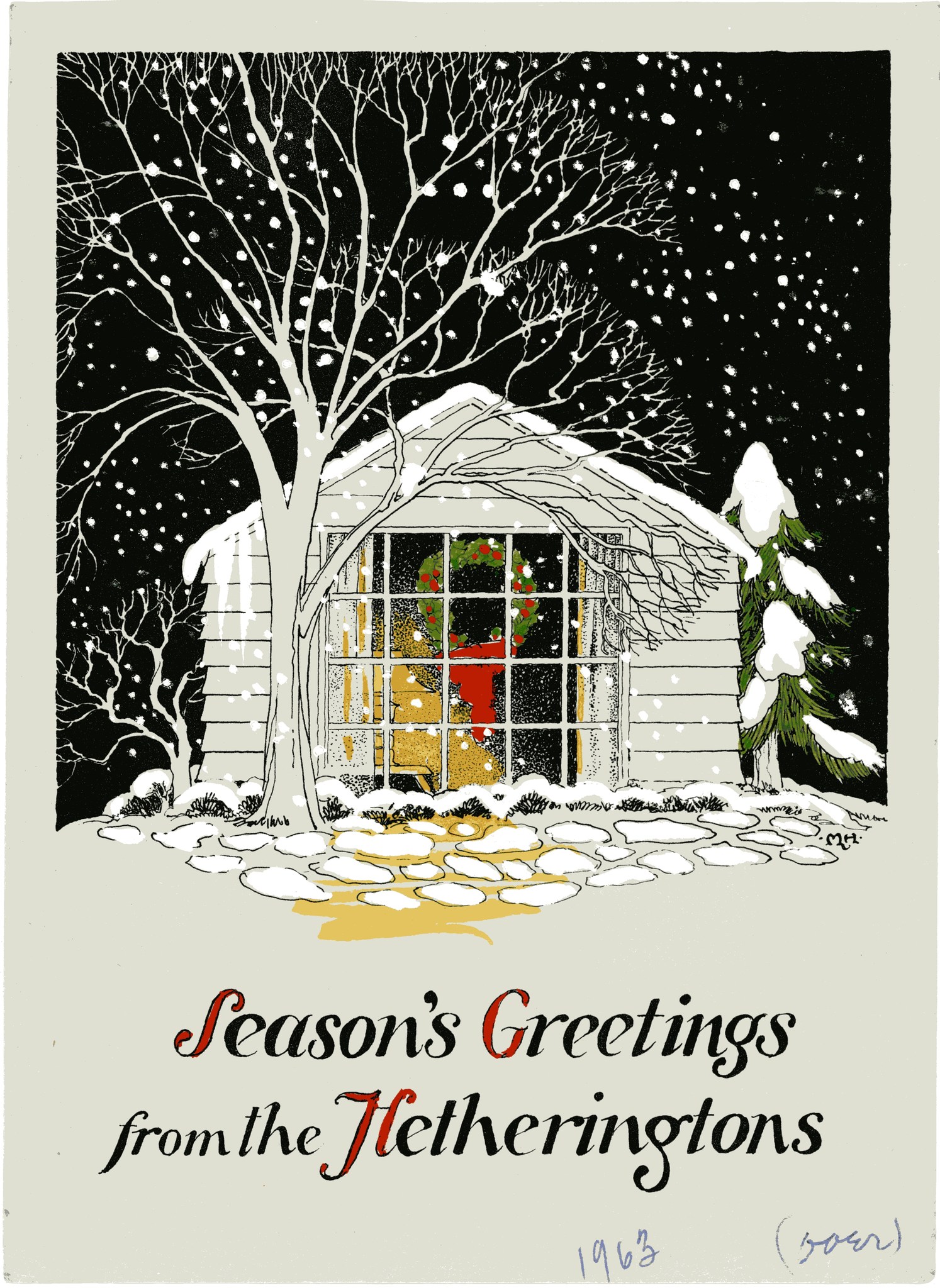
This is a Christmas card sent out in the past by Mildred Lyon Hetherington, local artist.
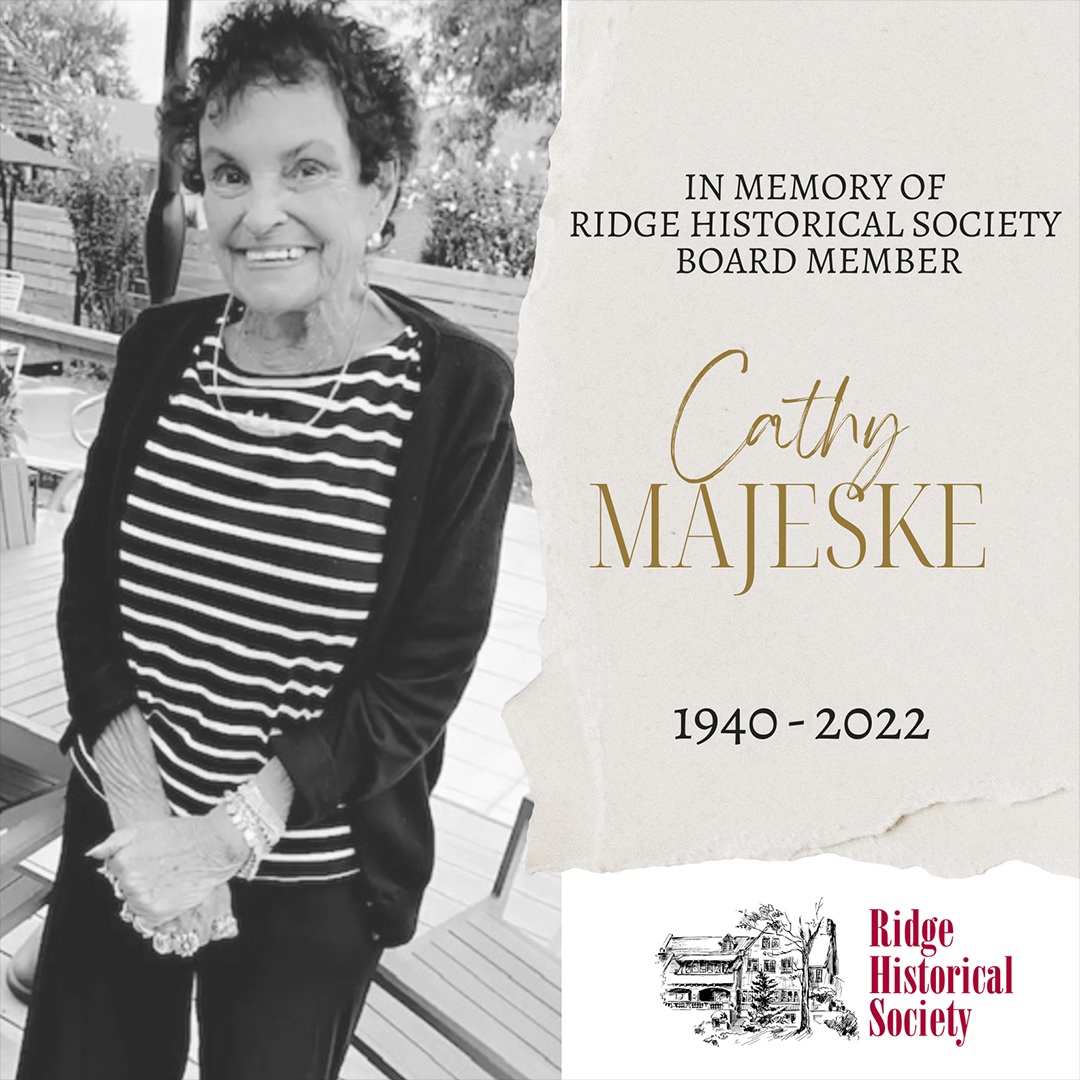
The Ridge Historical Society is saddened to announce that one of our Board Members, Cathy Majeske, passed away on December 28, 2022.
Cathy was a long-time member of the RHS Board and Chair of the Program Committee for many years, leading so many social and educational programs, garage sales, helping with holiday decorations and more. Her enthusiasm will be missed.
You can find details of the visitation and service at Colonial Chapel in Orland Park to be held on Sunday, Jan. 1, 2023 here:
https://www.colonialchapel.com/memorials/catherine-majeske/5103231/index.php#details
The Ridge Historical Society
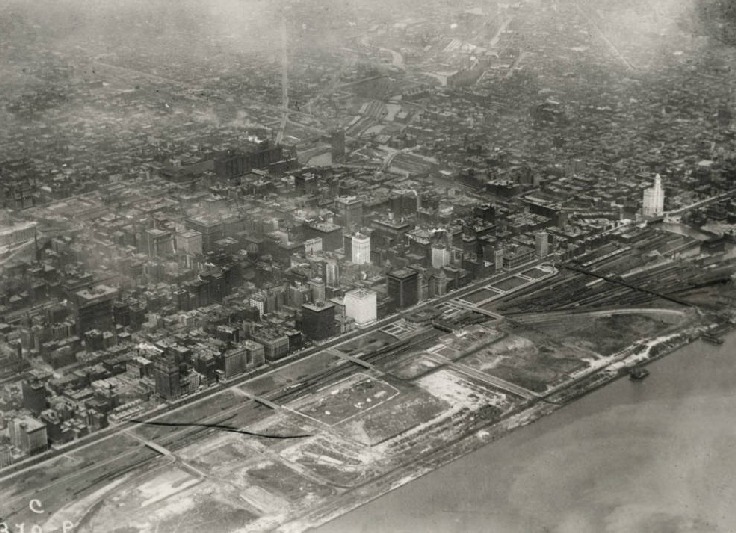
The New Year in Chicago and on the Ridge 100 Years Ago – Part 1
By Carol Flynn
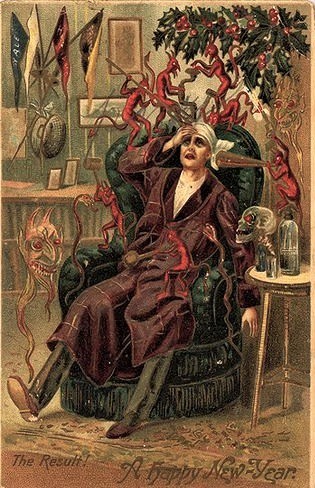
One hundred years ago, the annual welcoming in of the New Year promised to be one of the tamest ever. The United States was under the mandate of Prohibition. No alcohol could be produced, imported, transported, or sold.
In early December of 1922, Colonel Levi G. Nutt of the Federal Internal Revenue Department, charged with enforcing Prohibition in northern Illinois, was reported by the Chicago Daily Tribune to be organizing an undercover force of agents who would dress in evening clothes and “bear a general resemblance to ordinary human beings” to infiltrate New Year’s events to “harass, mangle, and destroy the merry making.”
The Tribune reported that “Col Nutt, who may be a nice man in a family circle, is a terror in the performance of duty, and he seems to enjoy saying that he expects to fill the jails and the hoosegows, the coolers and the police stations.”
However, the Chicago police didn’t intend to cooperate. According to the Tribune, Chief of Police Charles C. Fitzmorris said, “Let ‘em celebrate. The police will not interfere in any lawful celebrations. I expect to celebrate myself….[H]alf the men are to be off duty on Christmas and the other half on New Year’s.”
The Illinois Anti-Saloon League reportedly decided to ignore the New Year celebrations as a “temporary matter” that would not “take precedence over the fight” against illegal saloons.
The Tribune then reported that the raids were off, that Roscoe C. Andrews, Federal Prohibition Director for the State of Illinois, said that as long as people didn’t publicly flourish their hip flasks they would not be subject to search and seizure. This meant, wrote the Tribune, that “persons capable of pouring discreetly from under a tablecloth or a napkin, or from a flask in the pocket, will be immune from arrest.”
“Chicago’s holiday lid … [is] blasted clear off,” wrote the Tribune, leading Chicagoans to rush to make reservations for events.
Andrews, however, reacted to this Tribune article with an angry rebuttal, declaring, “Any statement that the lid is off in Chicago and that violations of the national prohibition act will be countenanced in any way, is absolutely without foundation….The mere fact that flasks are concealed under tablecloths or napkins is no defense.”
The battlelines were drawn.
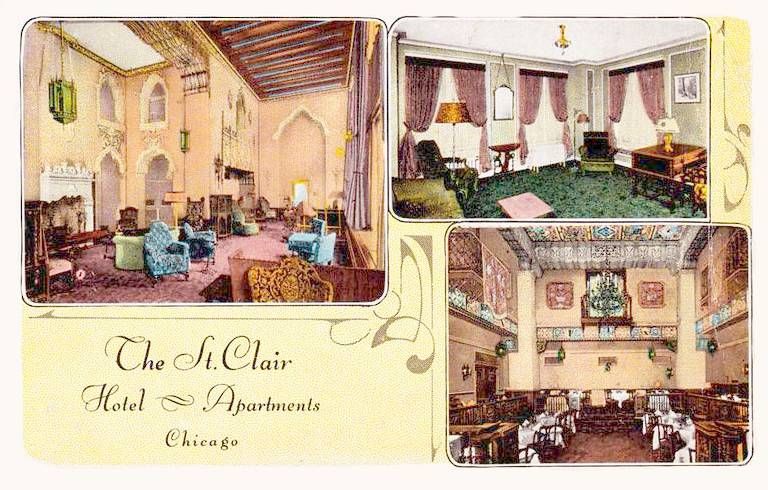
Numerous parties took place that holiday week-end, in hotels, cabarets, and private clubs and residences. The demand for space in the hotels was so great that some events had to take place on January 1 instead of December 31.
Many of the events were dinner dances, starting in the early evening. A formal dinner was followed by music and dancing. As many as three orchestras performed at some events. Additional entertainments, like vaudeville acts, were on some of the agendas. Events at country clubs included outside sports like ice skating and hockey. At midnight, noisemakers, horns, and pistol caps created a din that could go on for half an hour. Then a less formal supper was served at midnight, followed by dancing until the wee hours of the morning.
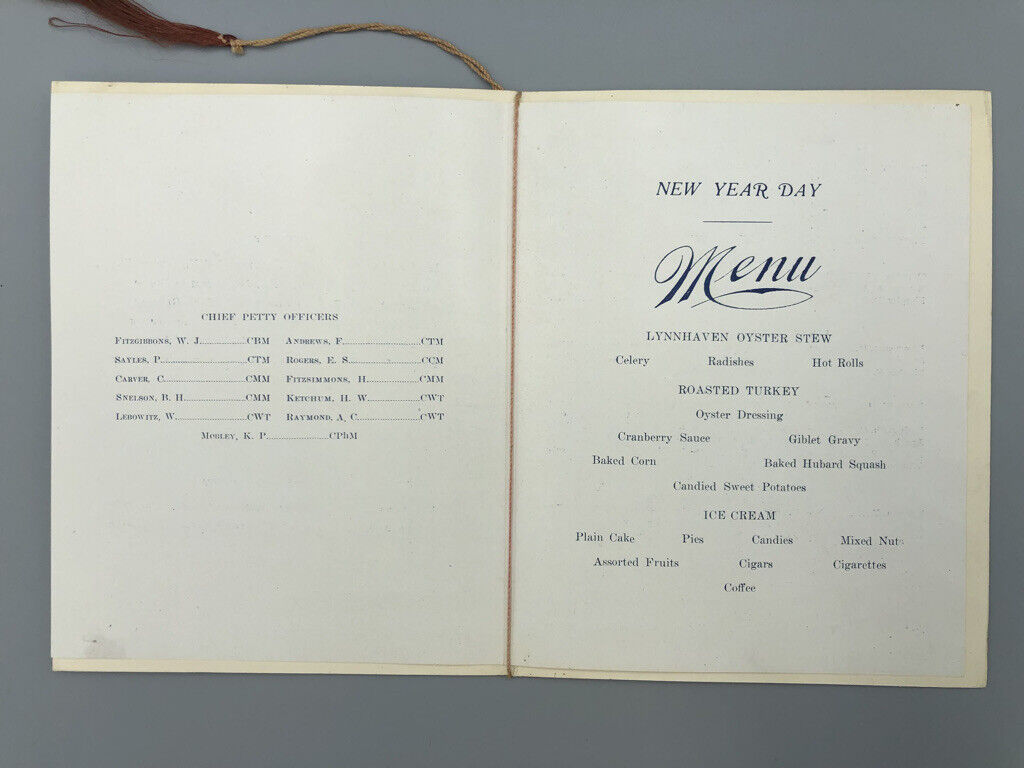
The menus for the formal dinners were always interesting and opulent. A typical New Year’s menu at a hotel included beginning courses of fruit cocktail, consommé, cream of tomato soup, and celery and almonds, followed by chicken and oysters dishes. The meat entrées included broiled pork tenderloin with pineapple fritters and fruit sauce, roasted turkey with cranberry jelly, and braised filet of beef with Bordelaise sauce. The side dishes were mashed potatoes, fried sweet potatoes, fresh spinach, and corn with green peppers. The entrees were followed by a lettuce and tomato salad. Desserts included pumpkin pie, peach pie, maplenut ice cream, steamed fruit pudding, assorted cakes, cheese, apples and raisins. Coffee, tea, and milk were availalble, and of course, people brought along their own flasks.
The cost for this meal was around $2.00 per person. A fifth of bootlegged Scotch was going for around $12.
The next day, St. Louis and San Francisco reported that riots ensued when federal agents raided events at hotels and resorts. The party-goers threw water glasses, flower vases, chairs, and even their plates bearing their entrees at the agents. People were injured – one agent was knocked unconscious by a flying bottle – and arrests were made.
Not so in Chicago. The promised raids of the “famous full dress army” never materialized, except for a few “minor cafes and saloons.”
The Tribune reported that Chicago “danced, sang, ate, went to theaters, churches and receptions.” Events at three to four hundred cafes, hotels, cabarets, and gardens, and too many private parties in residences and clubs to count, were celebrated with “little disorder” – for the most part, people were “good-natured and jolly.”
The weather was mild that year, very similar to what is forecasted for Chicago this year – the temperatures were in the mid-forties and cloudy, with a little light rain. Some 75,000 people descended upon the loop and the lakefront.
1922 turned out to be one of the biggest New Year’s Eve celebrations in Chicago’s history. Even Colosimo’s Café at 21st Street and Wabash Avenue, run by the “Chicago Outfit,” had to close its doors and cut off admittance, so great were the crowds trying to gain entry.
Many people held “watch parties” at home. Tomorrow, we’ll explore what was going on in Beverly and Morgan Park as 1922 became 1923.