Explore the RHS Facebook Archives, a rich repository of local history written by Carol Flynn. For two decades, Carol brought a deeply dedicated voice to public education at RHS. Her role as Facebook administrator through mid-2025 naturally extended her prolific research into meticulously detailed articles, most notably her multi-part historical series posts. Today, Carol continues her local history writing for The Beverly Review and other outlets.
All Posts
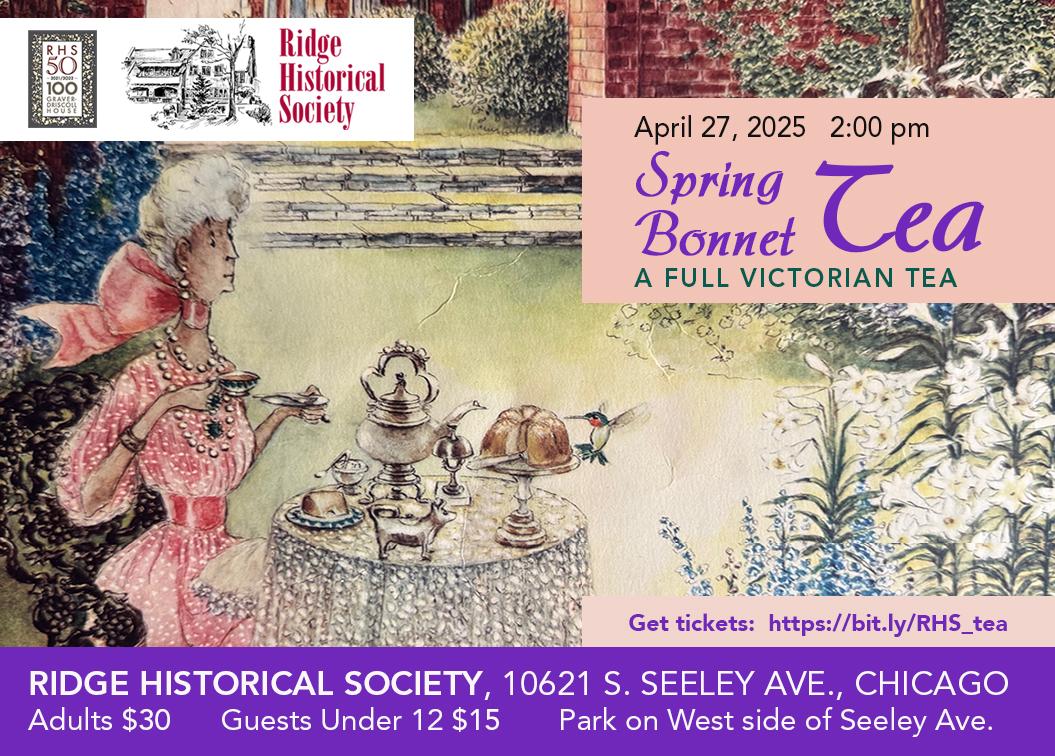
Spring Bonnet Tea 2025
Sunday, April 27, 2025 at 2pm
RHS is happy to continue to hold this popular spring annual fundraiser event. Join us for a Full Victorian Tea featuring a fine selection of savories, scones and pastries. Ladies, please wear a spring hat or bonnet!
A wonderful multi-generational event — come with friends, bring your daughters or granddaughters for a lovely afternoon! A fun addition is a drawing for door prizes.
This Full Victorian Tea is set in the Historic Graver-Driscoll House, on the Ridge in the Beverly Hills neighborhood of Chicago.
Space is limited, advance ticket purchase or RSVP required.
Adult Guests $30 Guests Under 12 $15
Ridge Historical Society
10621 S. Seeley Ave., Chicago, IL 60643
Limited Capacity. Get tickets here: https://bit.ly/RHS_tea
RSVP: ridgehistory@hotmail.com 773.881.1675
Happy Easter from the Ridge Historical Society.
RHS will be closed tomorrow, Easter Sunday, April 20, 2025.
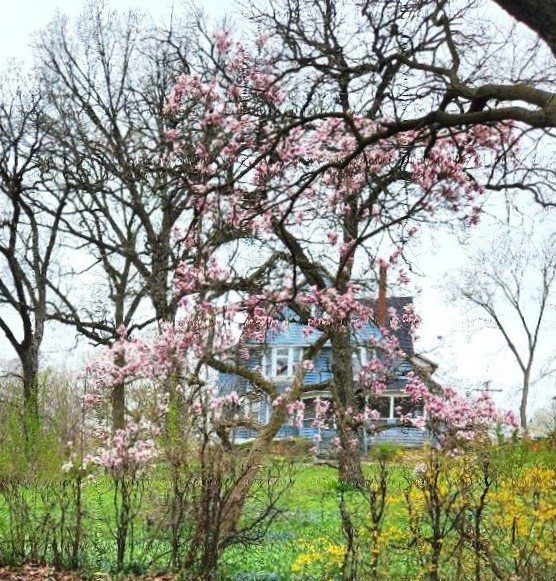
Some lovely springtime views can be found around Beverly and Morgan Park. This is the Reuben P. Layton House at 10324 Longwood Drive, glimpsed through magnolia, forsythia, and Siberian squill.
Siberian squill and forsythia were introduced into the U.S. by English settlers, and both became popular for gardens in the late 1800s.
Magnolias traveled in the opposite direction – the magnolias native to the southern U.S. were introduced into England and Europe by returning explorers and traders.
Edited: There are daffodils here, too – also introduced into the U.S. In fact, most of the gardens we build are full of plants not native to the U.S. They come from tropical areas so they only last through the summer, or they have been hybridized to withstand our northern climate. Too many people still think of our native prairie plants as "weeds."
Ridge Historical Society
The First Country Club on the Ridge: The Ellerslie Cross Country Club – Part 4 – Hare Coursing with Greyhounds
By Carol Flynn
The first country club to open on the Blue Island Ridge was the Ellerslie Cross Country Club at 91st Street and Western Avenue, founded by a group of Irish American businessmen in 1899. Although it was technically located in Evergreen Park, the address was often given as Beverly.
The Ellerslie Club introduced golf to the Ridge, covered in Part 3 of this series. Two other sports were also of great interest to the founders of the club – hare coursing and equestrian events.
This post and the next will discuss coursing, then a look at equestrian events will show why “cross country” was part of the name of the club.
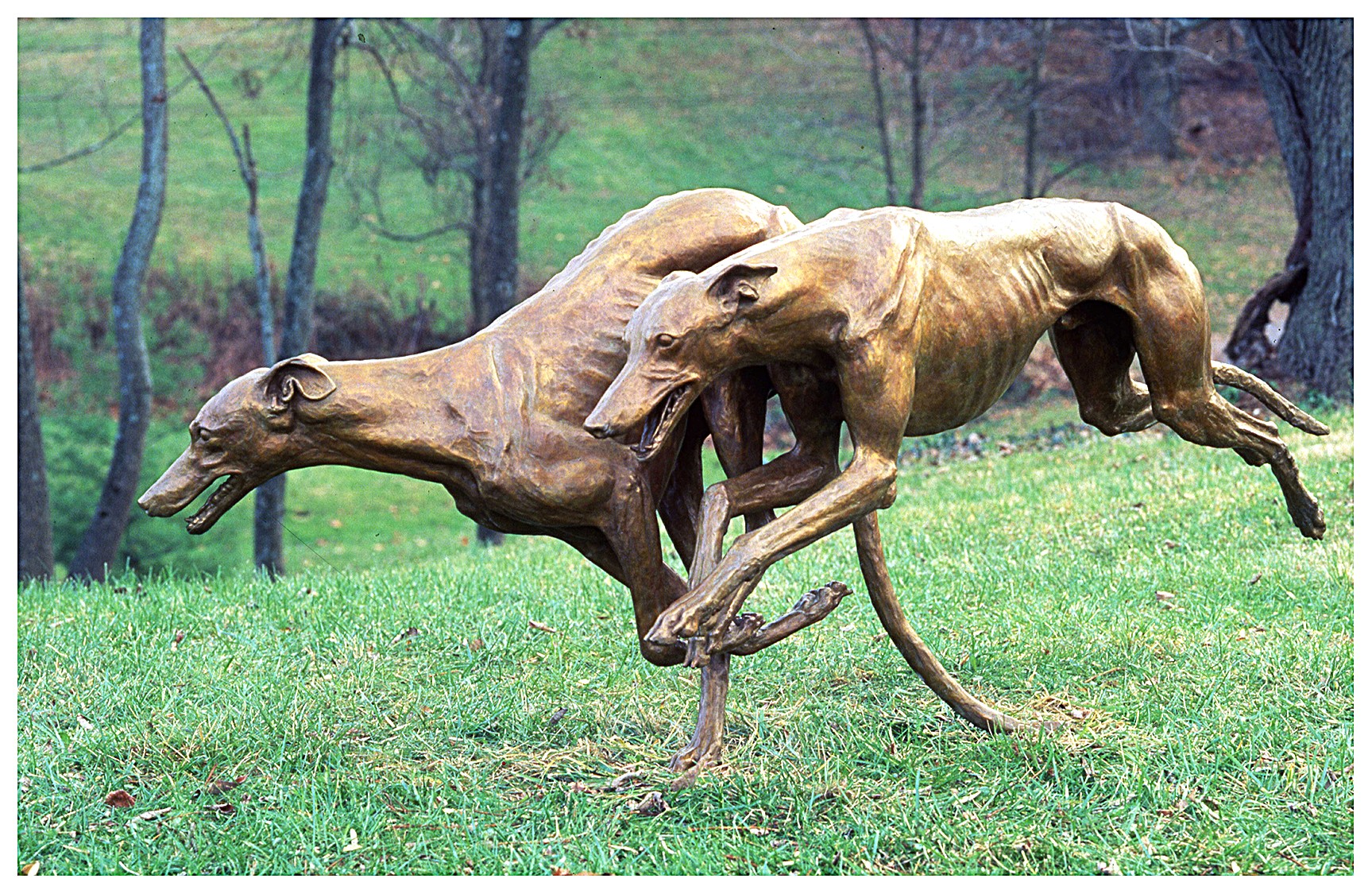
Hare coursing is an ancient practice that uses dogs known as “sighthounds,” that hunt by sight, speed, and agility, instead of scent and endurance, to pursue hares for hunting, sport, and pest control. The best-known sighthounds are greyhounds.
The practice was first written about in Greece more that 2,000 years ago, but it was the English nobility under Queen Elizabeth I in the 1500s who turned coursing into a competitive sport.
For centuries in Great Britain, “commoners” were not allowed to own sighthounds and engage in coursing, but by the 1800s, that social order had broken down, and the sport had become more a favorite of the working classes in England and Ireland and less of one for the aristocracy. It really came down to being able to acquire and breed greyhounds.
Greyhounds came to America with the European settlers. Thomas Morgan brought greyhounds with him from England that he used for hunting deer and wolves on the Ridge. The dogs were also used by farmers to control jack rabbit populations.
By the late 1800s, hare coursing was a popular sport in the U.S., with governing organizations, clubs, and numerous competitions, formal and informal.
When the Ellerslie Club started holding events, the formal competitions in Chicago were usually “closed coursing,” that is, held in confined spaces with escape routes built into the “walls” for the hares. There was also “open coursing” where there was sufficient outdoor space, with the rabbits released with the chance to outdistance and outmaneuver the dogs.
Two dogs at a time competed against each other, chasing a released hare, and judges awarded the dogs points for speed and skill in manipulating the hare’s movements (“turning”) and for catching the hare. The dog with the most points advanced to the next round, until there were only two undefeated dogs left for the final round and the grand prize. In large competitions, as many as 400 dogs might be entered and the competition took days to complete.
The hare was given a head start and was more agile than the dogs, but the hounds were larger and could cover the ground faster. Each competition lasted only seconds, and it did not matter if the hare managed to escape because the point of the competition was not killing the hare, it was judging the dog’s performance in trying to catch the hare. A true “sportsman,” in theory, celebrated the hare’s escape, but the hare rarely won.
Coursing was a brutal “bloodsport” for the hares, raising obvious objections from humane groups. Other bloodsports were also tolerated back then, including dog fighting and rat baiting. In fact, John B. Sherman, who started the Union Stockyards, had an experimental stock farm on the land that is now Dan Ryan Woods, and held parties there that featured dog fights for entertainment.
Hare coursing was eventually mostly replaced by greyhound racing, where the dogs chase mechanical rabbits, but some countries still allow live hare coursing. It is banned in England, but in Ireland, it is still allowed, and even though the dogs wear muzzles it still results in severe injuries and fatalities for the hares. In some western states in the U.S. where there are large populations of jack rabbits, it is legal – and highly controversial. Even where banned, hare coursing, like dog fighting and other bloodsports, goes on illegally.
Back in 1899, the sport using live rabbits was legal, and people with prized dogs traveled around the country to compete in events.
Some of the founders of the Ellerslie Club owned greyhounds and actively participated in competitions. Fred Higbie was one of those men, and he was introduced in Post 2.
The first coursing event at Ellerslie was held in October of 1899 and described in the Inter Ocean newspaper as “the first genuine exhibition of the well-known old country sport on a large scale ever seen around Chicago, and the details were carried out to perfection.”
Jackrabbits were brought in from Wichita, Kansas to be used as the lures, and competitors came from as far away as Pittsburg, Pennsylvania.
The final round came down to a competition between Higbee’s prize dog named “Bright Eyes” and a dog named “St. Clair” bred from a champion in England, owned by a man named Michael Allen. St. Clair was the winner.
Michael Allen, born in Ireland, was a famous and successful hare coursing sportsman who lived in Chicago.
He had a kennel of greyhounds that the newspapers called the best in the city and one of the best in the country. He competed all over the country and his dogs won many prizes.
The next post will cover how the success of Ellerslie’s coursing events led the Ellerslie founders to also form the Chicago Coursing Club and build a coursing park in Mount Greenwood on land west of Mount Greenwood Cemetery. Not only were Michael Allen and his dogs major players in this story, so was the famous gambler Big Jim O’Leary, son of Catherine O’Leary, famous for her now known to be innocent role in the Great Chicago Fire.
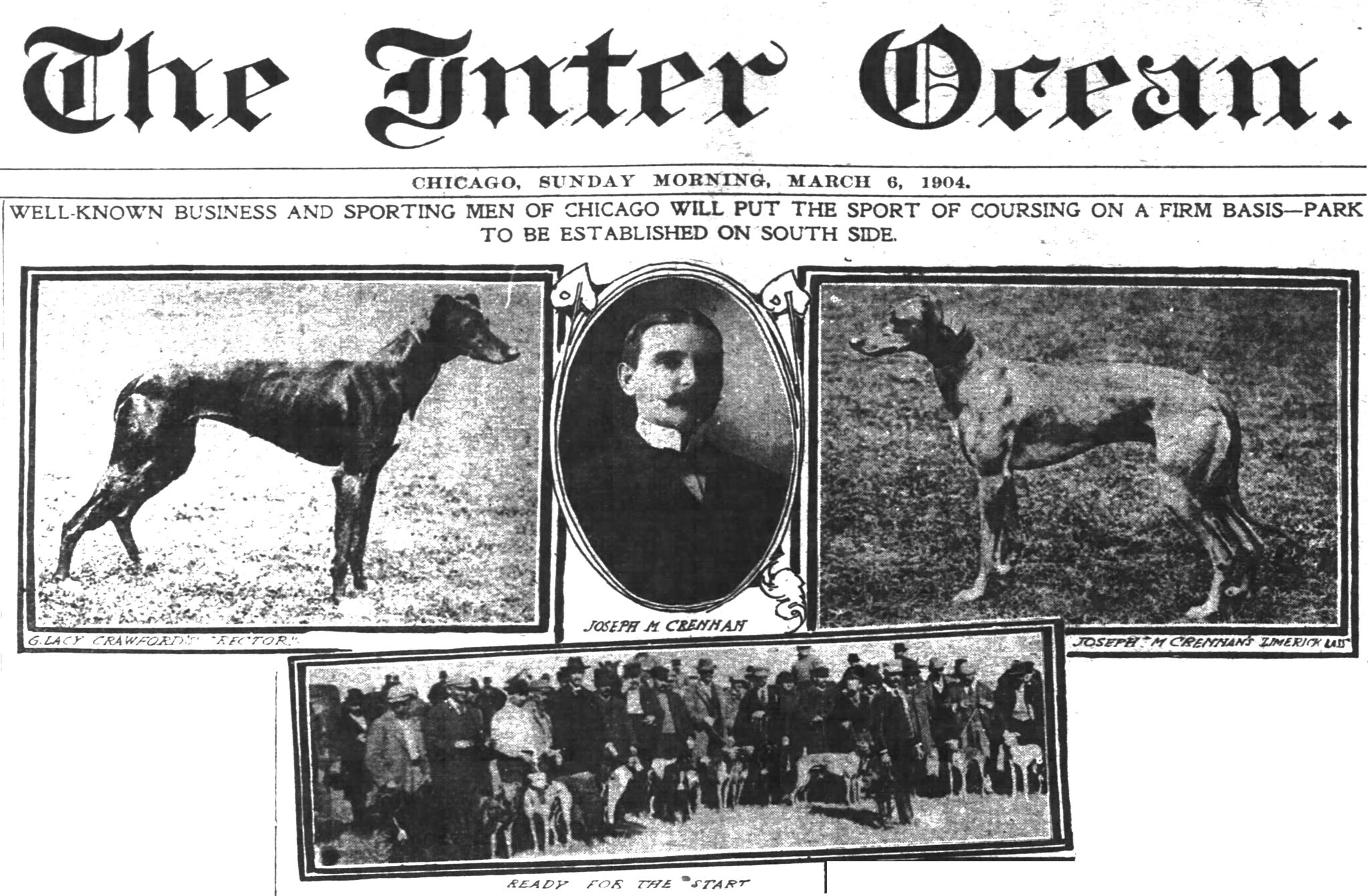
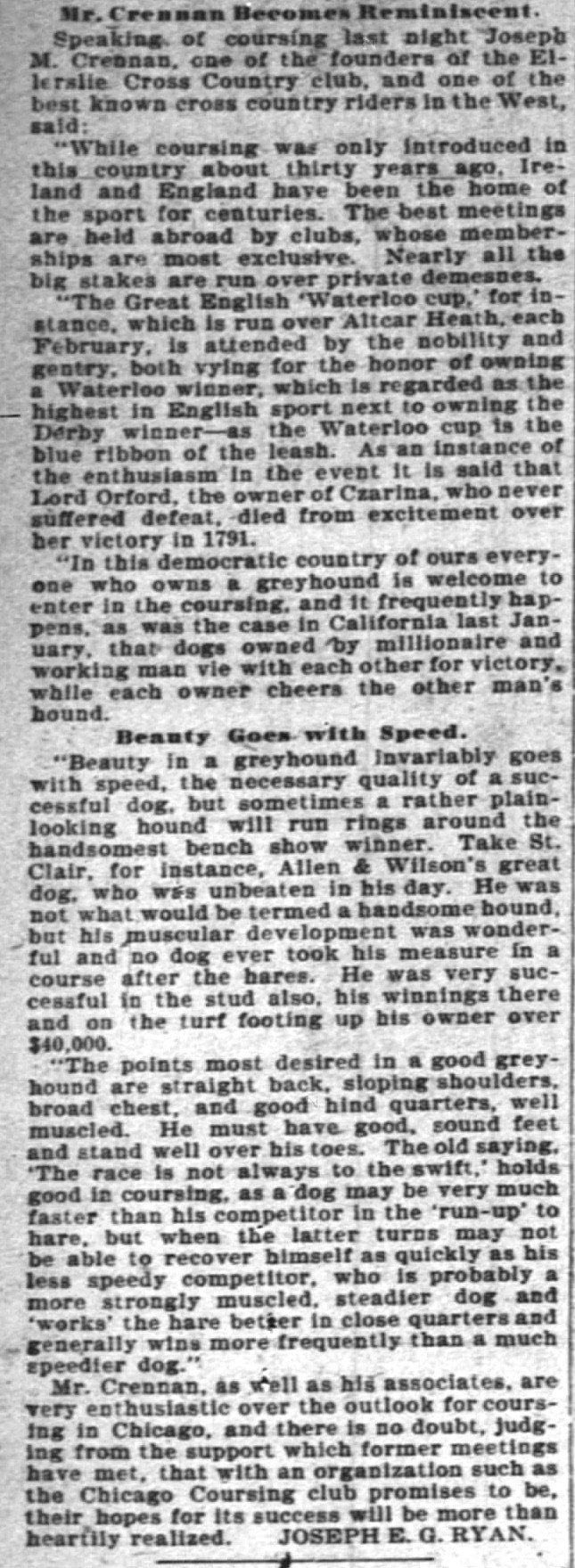
Image from Inter Ocean newspaper, March 6, 1904. Joseph Crennan, from Ireland, was the first president of the Ellerslie Cross Country Club, and he was a founder of the Chicago Coursing Club that built a park in Mount Greenwood.
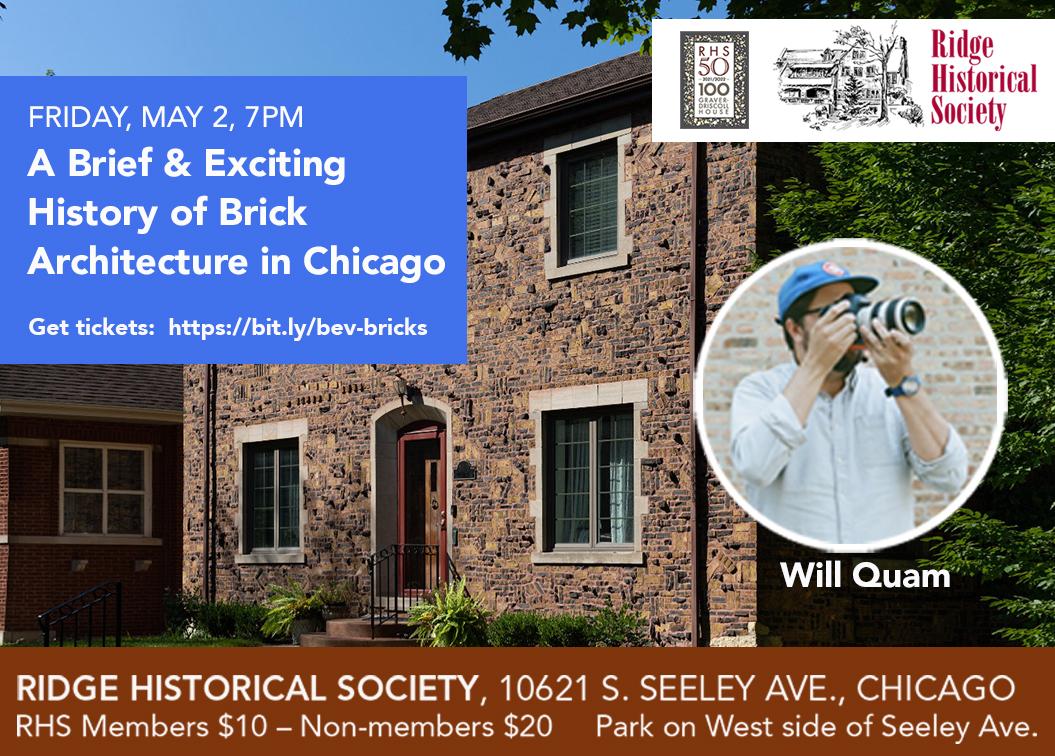
Friday, May 2, at 7:00p.m.
A Brief & Exciting History of Brick Architecture in Chicago
Brick is an ever-changing material that has defined Chicago and its architecture. Learn the trends and fashions through Chicago's brick history: Homegrown common bricks, imported red bricks, wild colors, textures, and terra cottas of the 1910s-30s, Miesian modern bricks and more. You'll discover the technology and architectural innovations that can be found across Beverly, Morgan Park, and Chicago, written into its brick. This presentation will be accompanied by dozens of Will Quam's photos of buildings and their details.
About the presenter: Will Quam is an architecture historian and photographer. He has been called "Chicago's premiere brick expert" by Geoffrey Baer, and his photography and passion for Chicago's brick history have been featured on Block Club Chicago, WTTW, The Chicago Tribune, WGN and more. His architecture tours were named some of Chicago's best by Curbed and the Chicago Reader. His book on this history of brick architecture in Chicago, Fire and Clay, will be published by the University of Chicago Press in 2026. Learn more at www.brickofchicago.com
Members: $10 | Non-members: $20 | Students under 18: $5
Ridge Historical Society
10621 S. Seeley Ave., Chicago, IL 60643
Get tickets online: https://bit.ly/bev-bricks
RSVP: ridgehistory@hotmail.com 773.881.1675
Ridge Historical Society
The First Country Club on the Ridge: The Ellerslie Cross Country Club – Part 5 – Hare Coursing with Greyhounds – Continued
By Carol Flynn
The Ellerslie Cross Country Club, the first country club to open on the Blue Island Ridge at the southwest corner of 91st Street and Western Avenue, held hare coursing events on the golf course during the non-golf months.
Hare coursing was a sport especially popular in England and Ireland in which greyhounds competed to chase and attempt to capture a hare, which was usually a jackrabbit in the U.S.
The dogs were judged on speed and agility, and the winner was not necessarily the dog that caught the hare. While a point was awarded for catching the hare, if the hare escaped, that was fine, too, although that rarely happened.
Note that humane groups were against this and other “bloodsports” like dog fighting, but they were legal in the late 1800s. Hare coursing eventually turned into greyhound racing, but hare coursing is still legal – and controversial – in some western states where jackrabbits are plentiful.
The Ellerslie Club introduced the sport, the forerunner of greyhound racing, in a big way to Chicago. Past Mayor John Hopkins, the uncle of one of the Ellerslie Club’s founders, was a fan of the events at the Ellerslie Club.
Some of the coursing events were written up in great detail in the newspapers. The first coursing event held at the Ellerslie Club, in October of 1899, was discussed in the preceding post.
In a memorable match in April of 1900, the hare escaped the golf course, crossed the railroad tracks to the west, and disappeared into the woods of Evergreen Park.
The two competing dogs followed it and disappeared from the spectators’ sight. After a three-mile run, a dog by the name of Password emerged victorious.
Password was owned by Michael Allen, whose champion dog St. Clair won the first coursing event at Ellerslie. Password was the daughter of St. Clair.
Michael Allen, who was introduced in the previous post, was born in Ireland in 1855 and came to the U.S. in 1874, and by 1899 he was a naturalized citizen. He and his wife Catherine “Kate” (Walsh) Allen, and their three children lived at 4459 Halsted Street and owned a store and saloon.
Although storekeeper and “liquor dealer” were listed as his official employment, Allen had an obvious passion for hare coursing with his greyhounds. He won thousands of dollars from coursing.
Greyhounds usually competed for just a few years and were retired well before the age of five years old, so there were always new, young, fresh dogs coming into competition.
In addition to the champions already mentioned, some of Allen’s other famous dogs were named Pathfinder, Cork Screw, and Apple Blossom. He was considered to have one of the finest kennels (referred to as stables back then) in the country, and participated in matches all over the U.S.
But the sport was becoming increasingly controversial. In 1899, Allen was charged with cruelty to animals by the Humane Society for conducting an informal hare coursing event in an open field in Chicago. In court, he showed that he followed the “sporting principles” for the sport so he was acquitted.
The success of the coursing events at the Ellerslie Club led the founders of the club, including Joseph M. Crennan and Thomas J. Keeley, profiled in Post 2 of this series, to join with Allen and other backers to open a new coursing club in Chicago, and this led to the Chicago Coursing Club in 1904.
There had been an informal “Chicago coursing club” that held events in a field at 47th Street and Western Avenue that was often in trouble with the law and the Humane Society, but this new club was founded outside of city limits where there were no local laws governing this type of operation.
Forty acres of land were leased in Mount Greenwood, running from 105th to 111th Street, Sacramento west to Kedzie Avenue. The course was just to the west of the railroad tracks next to Mount Greenwood Cemetery, so there was already well-established public transportation to the area.
The founders enlisted James “Big Jim” O’Leary to join their efforts, which, according to the Chicago Tribune, was an “indication that the backers of the enterprise mean to give it a thorough trial” “to establish coursing as a regular sport” in Chicago.
Big Jim was the son of Catherine and Patrick O’Leary, whose barn was the site for the start of the Great Chicago Fire of 1871. Big Jim was a famous gambler, the scourge of fellow Irishman Police Chief Francis O’Neill for the illegal operations Big Jim ran.
At the same time, Big Jim was a folk hero to the public because he ran an honest operation and was known to never default on a bet. Betting on the greyhound coursing events was an important part of the enterprise and Big Jim’s involvement meant the betting would be honest and fair.
The first officers of the Chicago Coursing Club included Michael Allen as President, O’Leary as Treasurer, and Crennan and Keeley as Directors.
The Chicago Coursing Club opened with its first event in May of 1904, attended by over “1,000 spectators crowded into the grandstand.” The newspapers described the park as “one of the best in the country.” To comply with the laws of the Humane Society, escapes for the jackrabbits were built into the burlap fences and most of the rabbits managed to elude the dogs.
Twenty-four dogs were entered. Big Jim O’Leary’s dogs were named Troublesome and Yankee Dime. Crennan also had dogs entered, including Colonial Girl, Modern Girl, and Judge Brown.
Allen and his partner Wilson entered Rosie Macree, Bill Dugan, Advertiser, Barefoot Boy, Our Minnie, and Kitty of the Hill.
The second day of the inaugural event, when the finals were held, attracted twice as many people, with over 2,000 in attendance. As no surprise, there was no final round because by then the top three dogs were all owned by Allen – Bill Dugan, Barefoot Boy, and Our Minnie – and the purse of $540, worth about $18,000 today, was his.
The Humane Society was against the new operation from the beginning. In 1905, someone, never identified, managed to steal the fifty rabbits that the Club was going to use for an event, so the event had to be canceled.
After a few years, differences in the philosophy of running the Club caused Big Jim O’Leary to leave the operation. He believed it should be run strictly as a sporting and betting operation, but others felt it should be run as a commercial revenue maker.
And then Mount Greenwood finally incorporated as a village in 1907, and with that came rules and laws and licenses.
The Chicago Coursing Club finally ended operations around 1908.
The next post will look at the other sporting events that went on at the Ellerslie Cross Country Club, the equestrian events that gave the club its name.
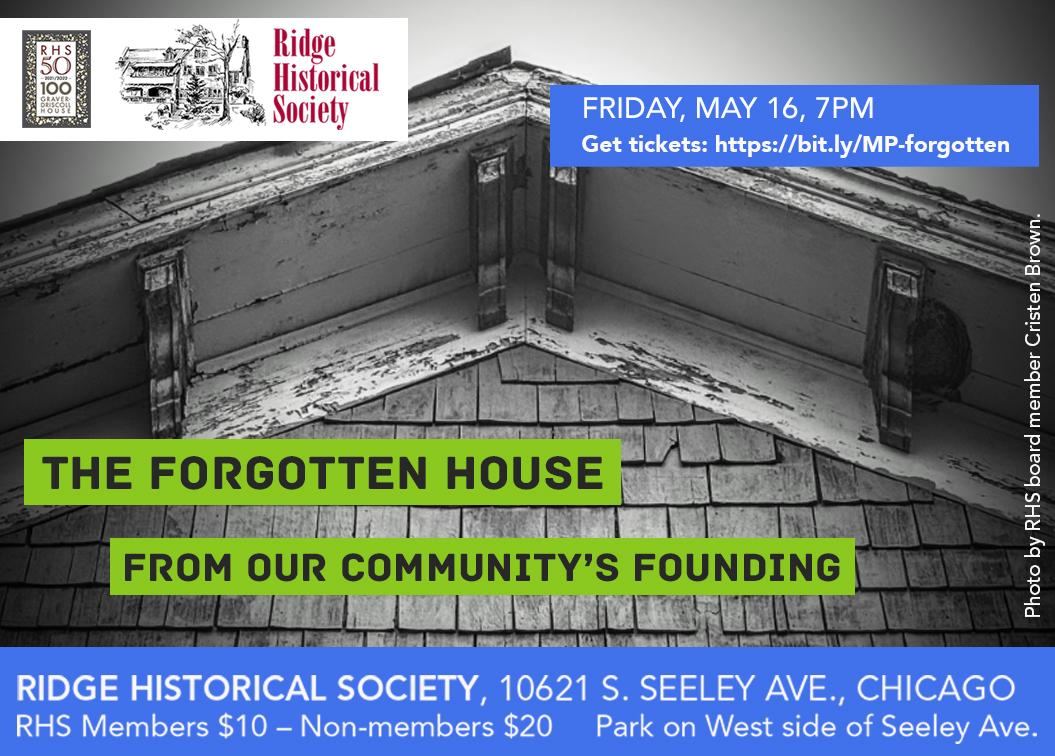
The Forgotten House
from Our Community’s Founding
Friday, May 16, at 7:00p.m.
The Forgotten House
from Our Community’s Founding
While on a run in August 2024, RHS board member Tim Blackburn jogged past a house in Morgan Park that he instantly knew was one of the earliest remaining homes in the Beverly Hills and Morgan Park area. His initial research determined the house had been moved to its current location, but discovering where it was moved from and its history turned out to be a 'needle in a haystack' investigation.
In this program, Tim will guide you through his journey to uncover the important origins of the house, built by one of the community’s earliest settler families just a few years after they aided Black freedom seekers nearby. Given the current condition of the house, this is a history you'll want to learn before it is possibly lost to time. Ridge Historical Society hopes that by educating about the history of this house, its legacy may be preserved.
Ridge Historical Society
10621 S. Seeley Ave., Chicago, IL 60643
Members: $10 | Non-members: $20 | Students under 18: $5
Get tickets online: https://bit.ly/MP-forgotten
RSVP: ridgehistory@hotmail.com 773.881.1675
Ridge Historical Society
Historically Important People Connected to the Ridge
By Carol Flynn
The Blue Island Ridge communities have been home to some historically important people, as well as some "famous" people who might not exactly make it into the history books.
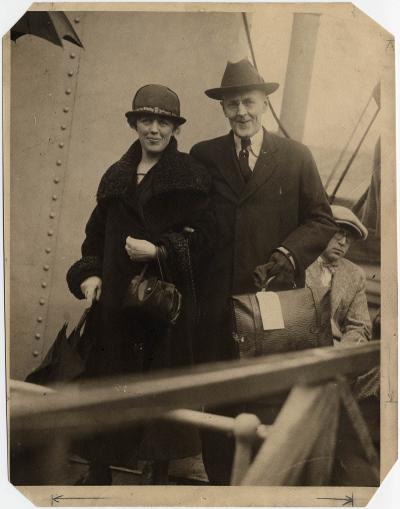
Top of the list is Paul Harris, the founder of the Rotary/Rotary International global service organization. He lived at 10856 S. Longwood Drive, and a new book about the history of the house has just come out, being sold as a fund-raiser for the restoration of the house. There will be more on that house and the book in a separate post. RHS researcher/writer Carol Flynn was a contributor to that book.
The publication of that book prompted starting a list of some of the historically important/famous people who have lived in the Ridge communities.
Here's a start on that list and more entries are welcomed. The criteria for inclusion on the list is very broad: they have to have lived here and have significant recognition outside of our own community for the impact they have had on society, good or bad or perhaps just "sensational."
Here is a beginning list:
– Paul Harris, founder of Rotary/Rotary International
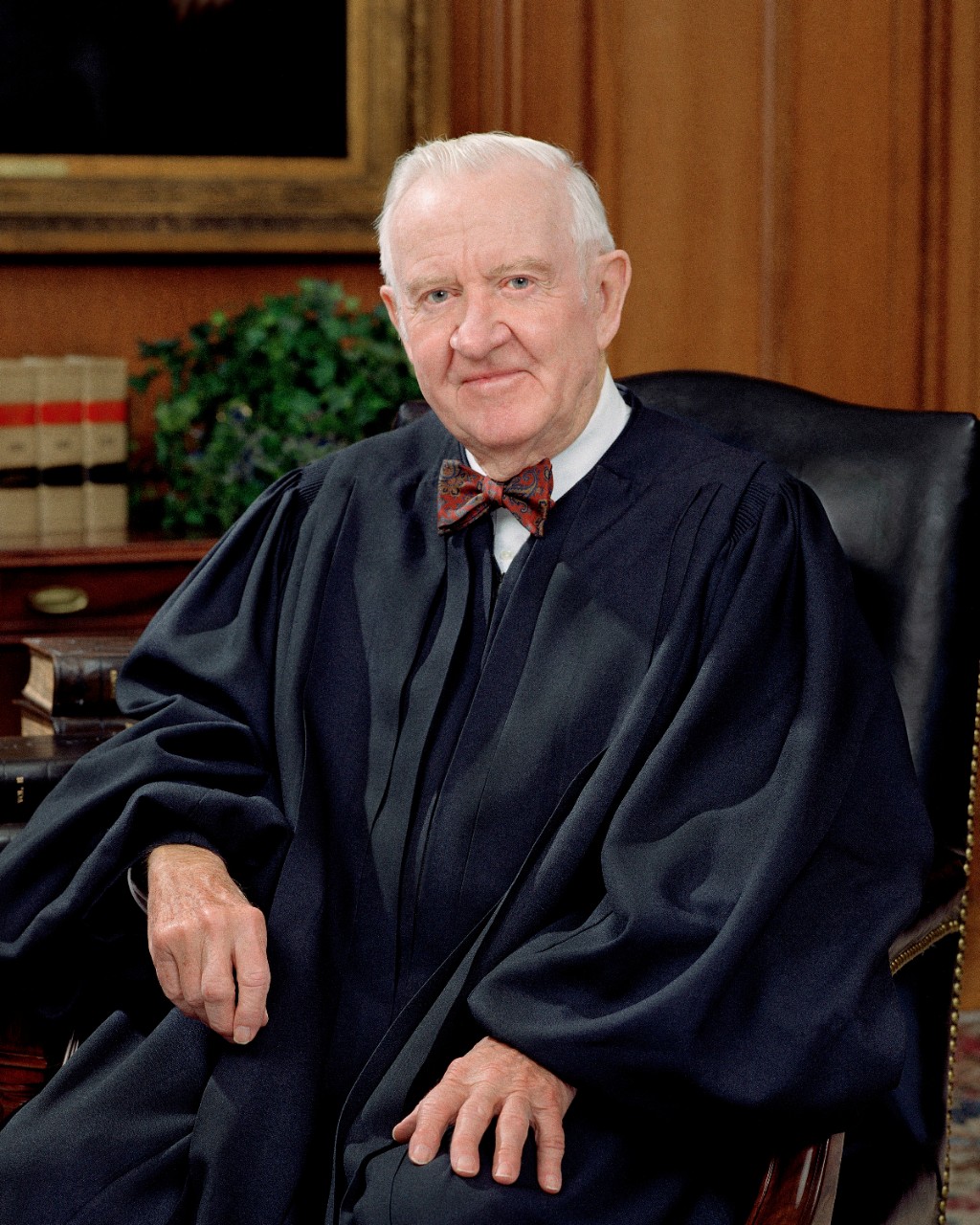
– John Paul Stevens, Justice, U.S. Supreme Court
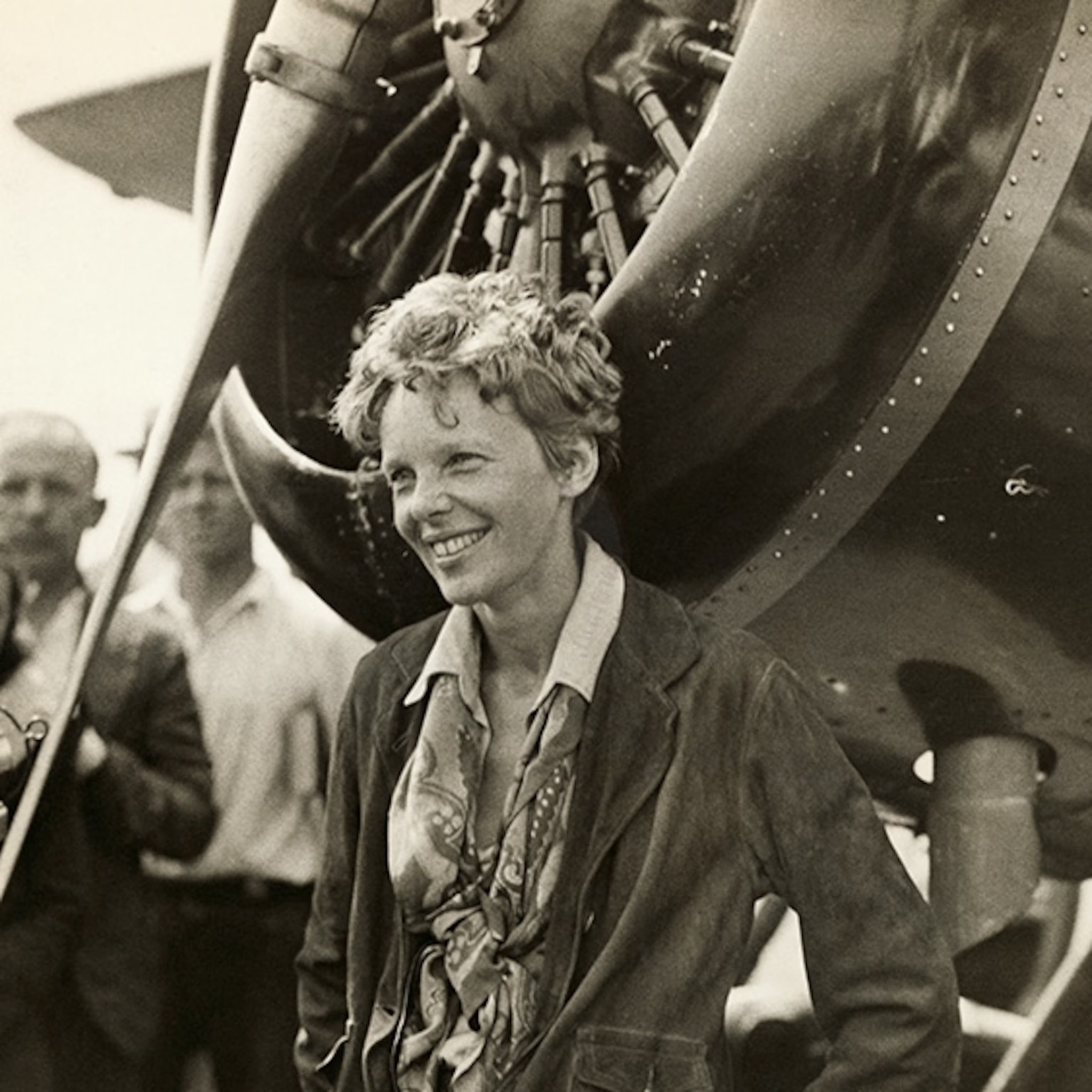
– Amelia Earhart, aviatrix
– William Merchant Richardson French, first executive director of the Art Institute of Chicago
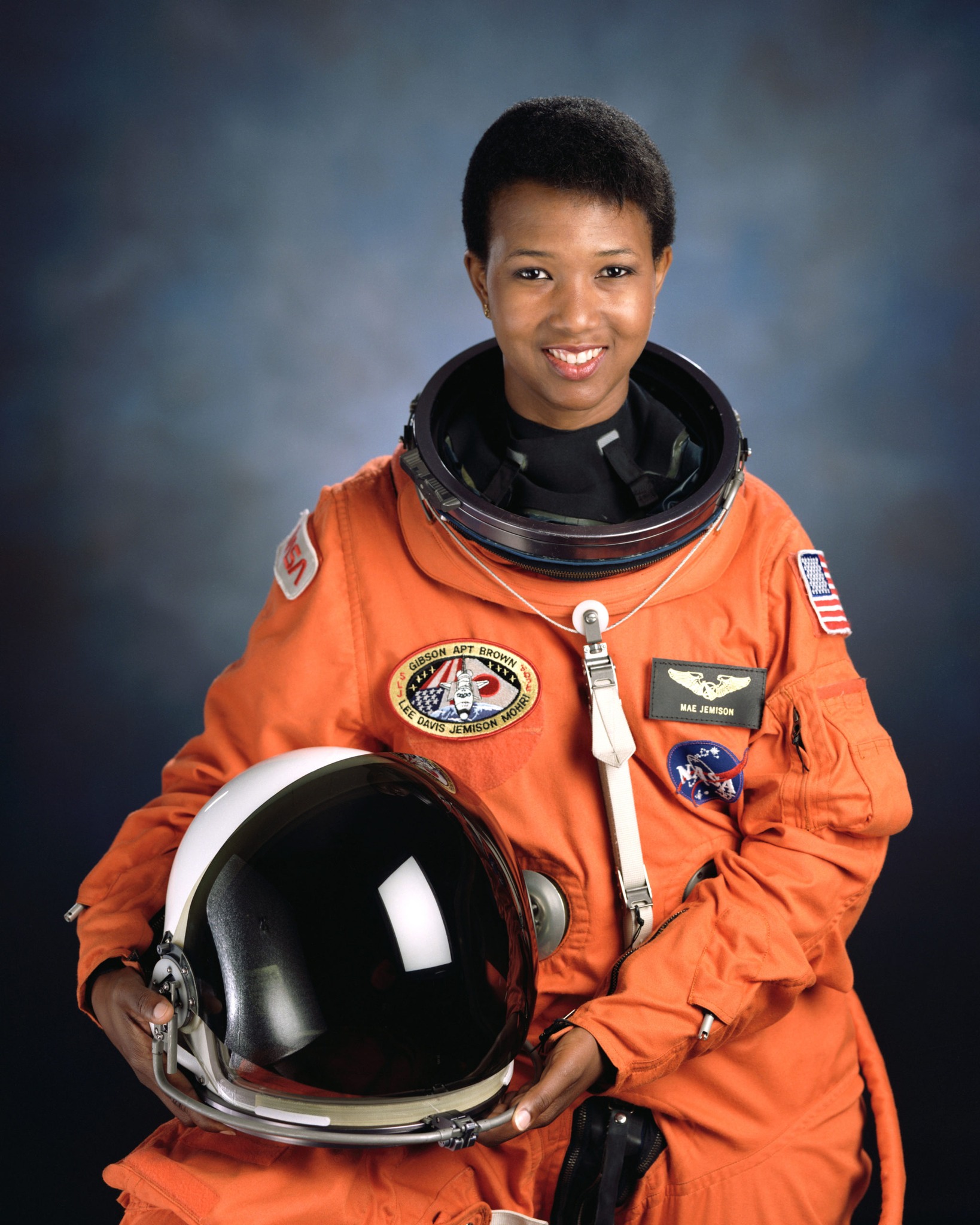
– Mae Jemison, U.S. Astronaut
– Pleasant Rowland, creator of American Girl Dolls
– Kathy Reichs, crime author and forensic anthropologist
– Thomas Seay, Imperial Potentate of the Ancient Arabic Order, Nobles of the Mystic Shrine (highest position in the Shriners)
– Dallin H. Oaks, First Counselor of the First Presidency of the Church of Jesus Christ of Latter-Day Saints (Mormon Church)
– John Vanderpoel, first head of the School of the Art Institute of Chicago, artist and author of "The Human Figure"
– William Rainey Harper, first president of today's University of Chicago
– Ruth Ellen Church, Chicago Tribune food columnist, first wine columns in the U.S.
– Actor George Wendt
– Actor Gary Sinise
– Ebenezer Peck, mentor to Abraham Lincoln, judge
– Kanye West gets honorable mention because he went to school here but did not live here; same thing with Jenny McCarthy
There are a lot of people who can be added to a "second tier" list – their fame is more localized but does reach past this community to an extent. Some examples:
– Robert Platt, University of Chicago Geography Department
– Jack Simmerling, artist and preservationist
We can start a "Who's Who" for the Ridge communities, including current people.
Other names to include?
Ridge Historical Society
Cinco de Mayo
By Carol Flynn
Today the Ridge Historical Society looks at the history of the Mexican community on the Ridge – and those train whistles that can be heard day and night from trains going into and out of our neighbor to the south, the City of Blue Island, with whom we share the Blue Island Ridge.
Cinco de Mayo, or May 5th, is an annual celebration of Mexican American culture. The origin of the day commemorates the Mexican army’s victory over the French at a battle in 1862. The success of the smaller Mexican army was a morale booster for the Mexicans, even though eventually Mexico City fell to the invaders.
With time, the day took on more significance in the U.S. than in Mexico to showcase the traditions and pride of Mexican immigrants. Cinco de Mayo should not be confused with Mexico’s Independence Day, September 16, which is more important in Mexico.
Historically, the Mexican community was not that prevalent in the early days of Beverly/Morgan Park, although it is well represented now. However, Mexicans played a vital role in the development of the City of Blue Island. Today, Blue Island’s population is about 50% Hispanic.
Blue Island first developed as a “river city” located on the Calumet River and Stony Creek, and of course the building of the Cal-Sag Channel was very important for commerce. With the coming of the railroads in the mid-1800s, Blue Island became a “railroad hub.”
Many ethnic groups worked on the U. S. railroads – the Chinese, European immigrants, African Americans. But it has long gone unrecognized that over 50% of the tracks in many areas of the country were laid by Mexican workers.
In the early 1900s, the railroad companies sent recruiters into Mexico to entice the people to come to the States to work for the railroads. The recruiters promised nice housing and a high standard of living. The reality for the families that came, however, was very different. They lived in boxcars on the railroad yards, with wooden bunks and no windows, in dangerous conditions, with no running water and no fuel for heat.
The first “railroad camp” in the Chicago area was established in Blue Island in 1917 to house the “traqueros,” or track and maintenance workers, who came here, often with their young families. This was set up around 123rd Street and Winchester Ave. The camp developed the reputation as one of the worst in the country.
With time, as with most immigrant groups, the Mexican workers moved into other jobs and established their own businesses and communities. It is a tribute to this hard-working group of people that they overcame not only the destitute conditions forced upon them but also extreme prejudice to flourish in the country that invited them to move here and became dependent upon them for both the railroad and agriculture industries.
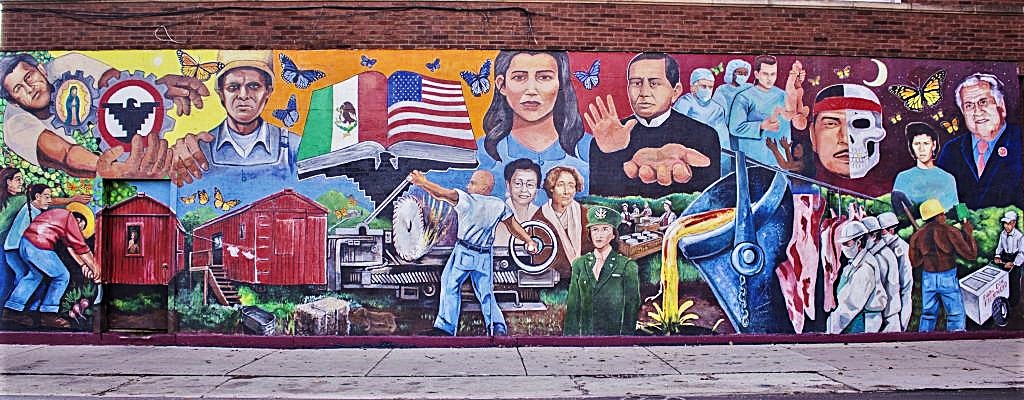
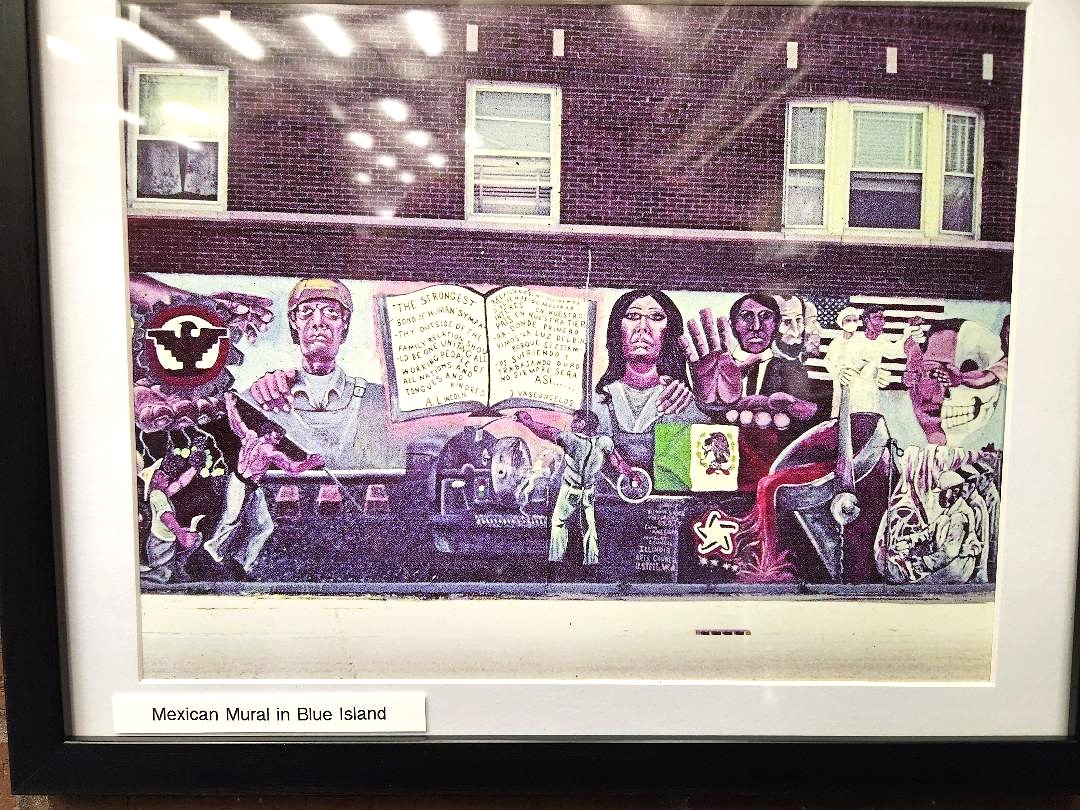
In 1974, the Blue Island city council banned the painting of a mural at 13337 Old Western Ave. that depicted the history of Mexican laborers. The city claimed it was against zoning laws for advertising signs. The U.S. District Court found in favor of the mural painters, stating it portrayed “an idea,” not an advertisement. The mural was completed.
With time, the mural faded, but it was repainted in 2016 as a community project, a vibrant reminder of the history of the Mexican community on the Ridge.
Originally posted May 5, 2023
Update: The mural reconstructed in 2016 honors the original mural but does not duplicate it. Pictures of the original mural became available to the Blue Island Public Library last year from Agnes Brown, who found her photos taken in 1975 at a dedication of the original mural.
The Ridge Historical Society
Pope Leo XIV, Robert Francis Prevost
By Carol Flynn
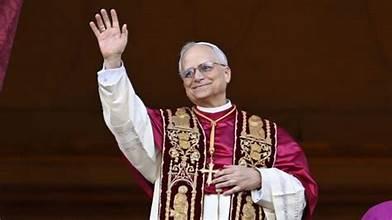
As for all of south Chicagoland, it came as a great surprise and delight to have the newly elected Pope Leo XIV come from this extended community.
Congratulations and best wishes to Robert Francis Prevost, Pope Leo XIV.
There will be considerable information about his childhood and past coming forward, and RHS will share relevant information that relates to the communities of Beverly, Morgan Park, and Mt. Greenwood, although there is no reason to compete with the many other sources out there, including people who know him personally.
One myth that can be dispelled immediately, however, is that he lived in Beverly. There is no evidence of that.
Fr. Prevost’s life from high school on has been tied to the Order of St. Augustine, known as OSA. This is a “mendicant” religious order, which means the members lead a life of poverty and live in urban areas to preach and be ministers. They do not use the traditional monastic model of living in one community where the members own and work the property. Fr. Prevost spent much of his time in Peru.
In 1999, he was named the Provincial, or head, of the Midwest Province of the Augustinians. At the time, their headquarters were at the St. Nicholas of Tolentine Monastery in Olympia Fields at 20300 S. Governors Highway. They were located there for many years.
He returned to the south suburbs and lived here for a while. In 2001, he was called back to Rome, and after that, he returned to Peru.
The Augustinians owned considerable land in Olympia Fields that they sold off in 2004.
It was some time after that land sale that the headquarters for the Midwest Augustinians moved to 10161 S. Longwood Drive, the Province of Our Mother of Good Counsel of the Augustinian Order, where it is located today. The building was once the convent for St. Barnabas Parish.
The Midwest Augustinians website reports that Fr. Provost returned here in 2013 for a while but his addresses were always Augustinian facilities in the south suburbs.
While he did not live in Beverly, Pope Leo XIV still has a strong connection to the community through the “new” Augustinian headquarters on Longwood Drive.
He now tops the list of "historically important people affiliated with the Ridge communities."
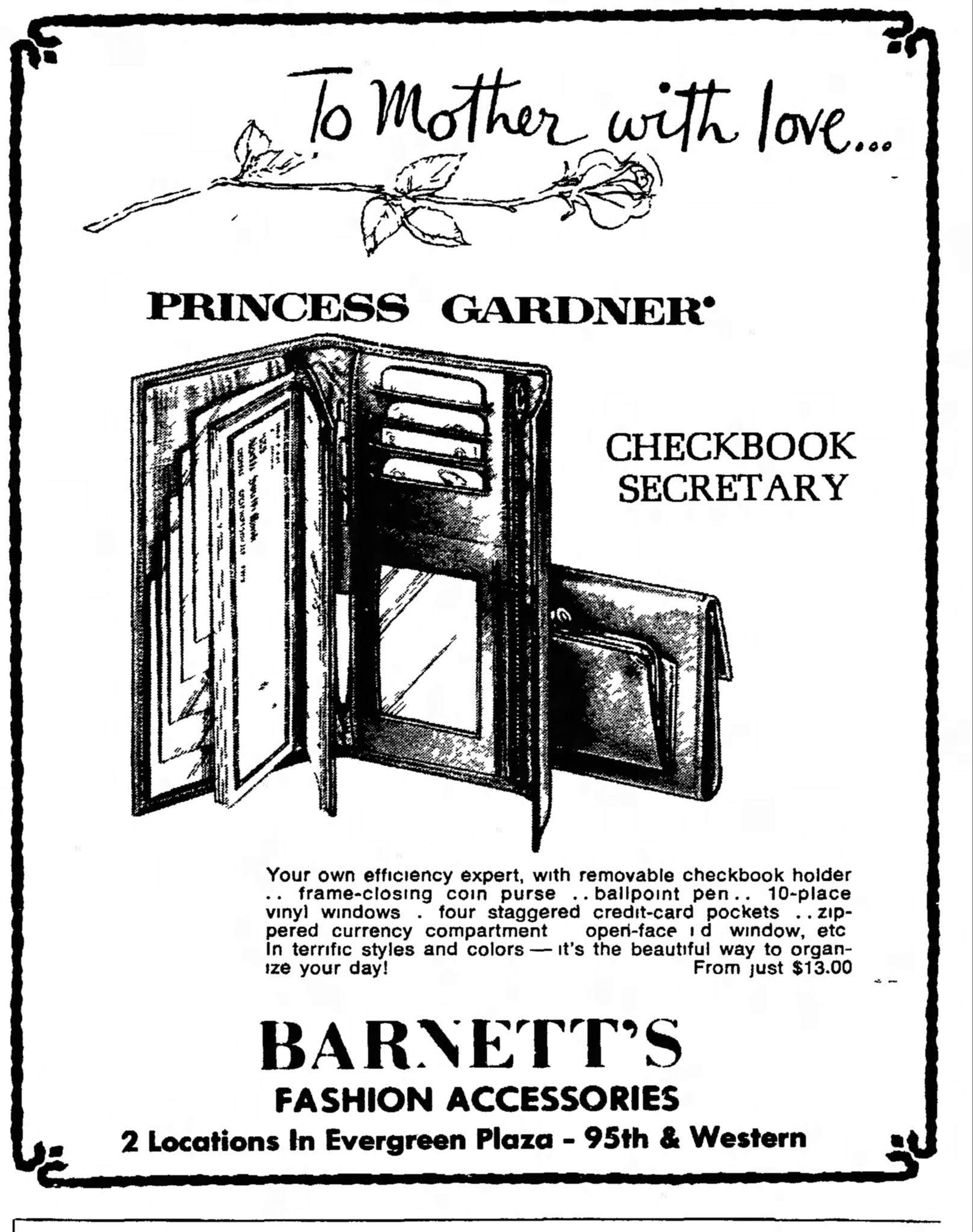
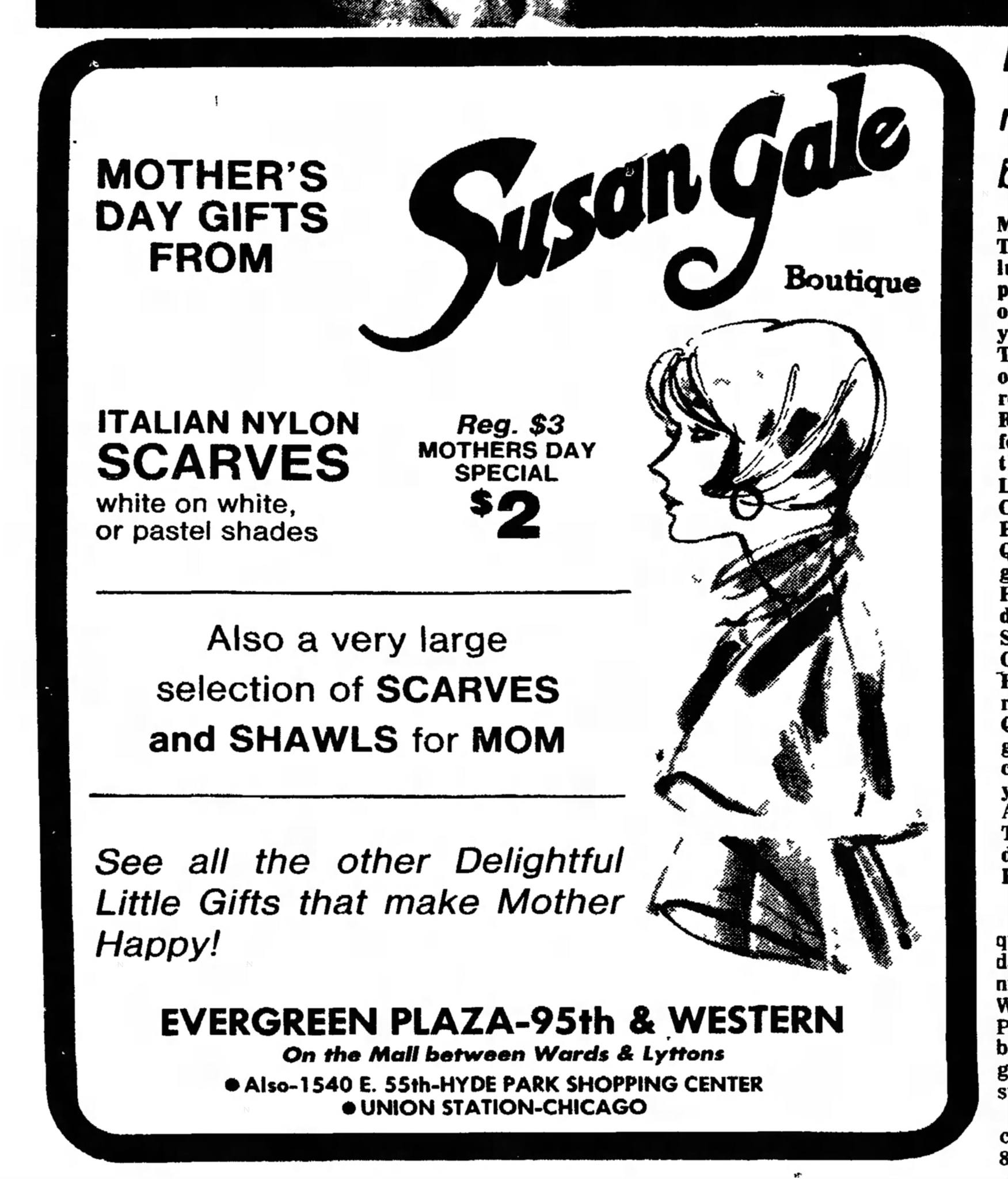
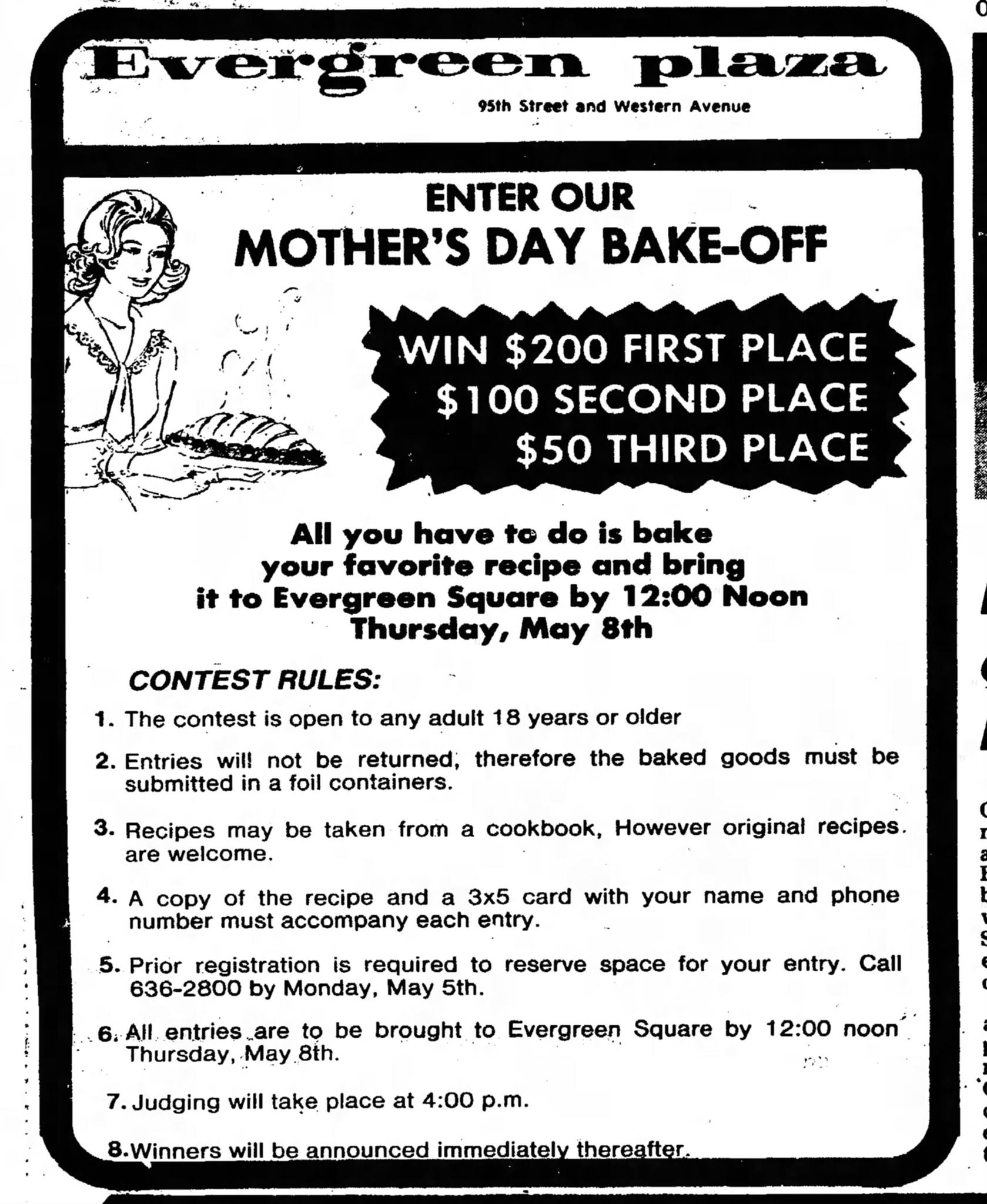
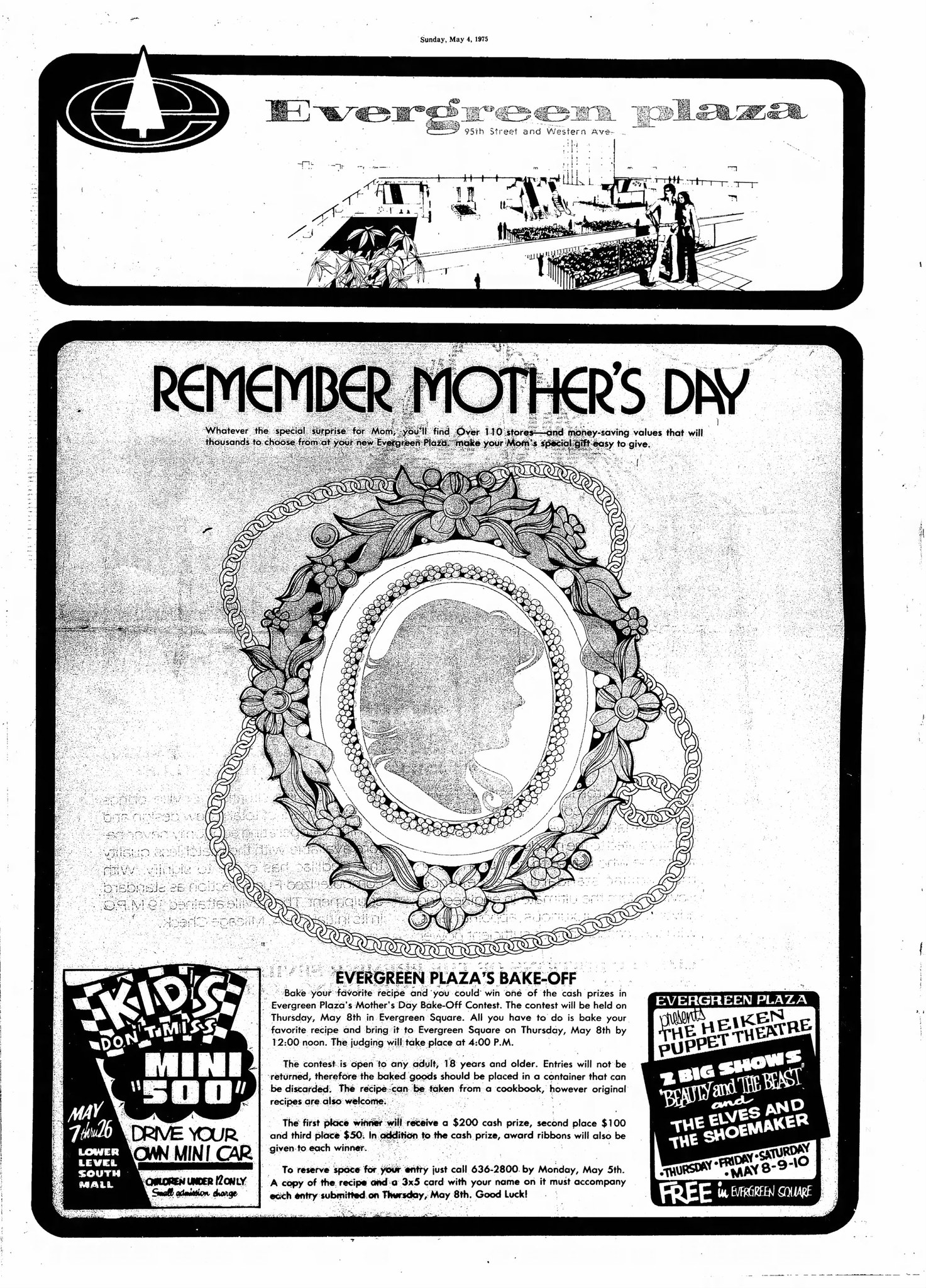
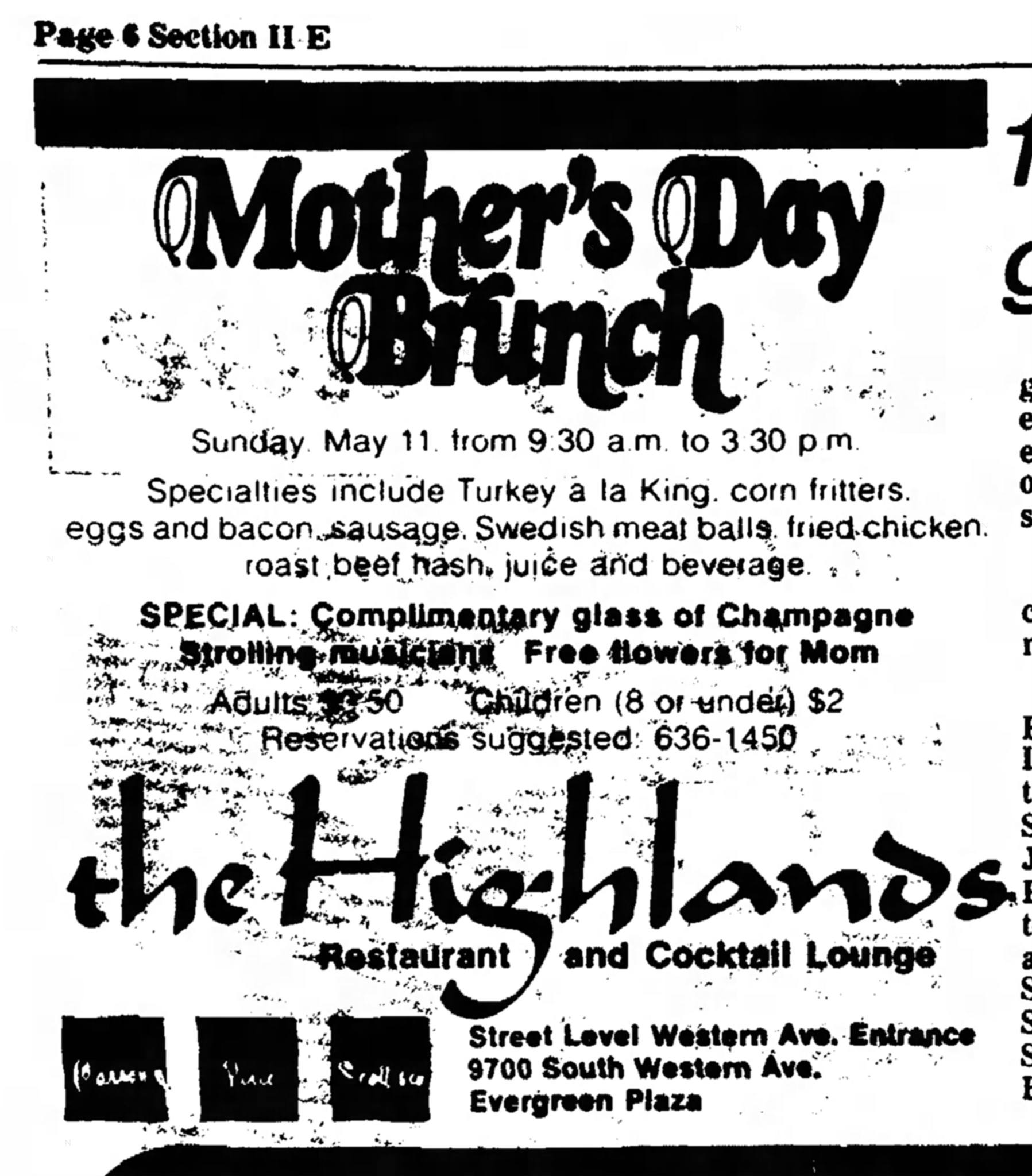
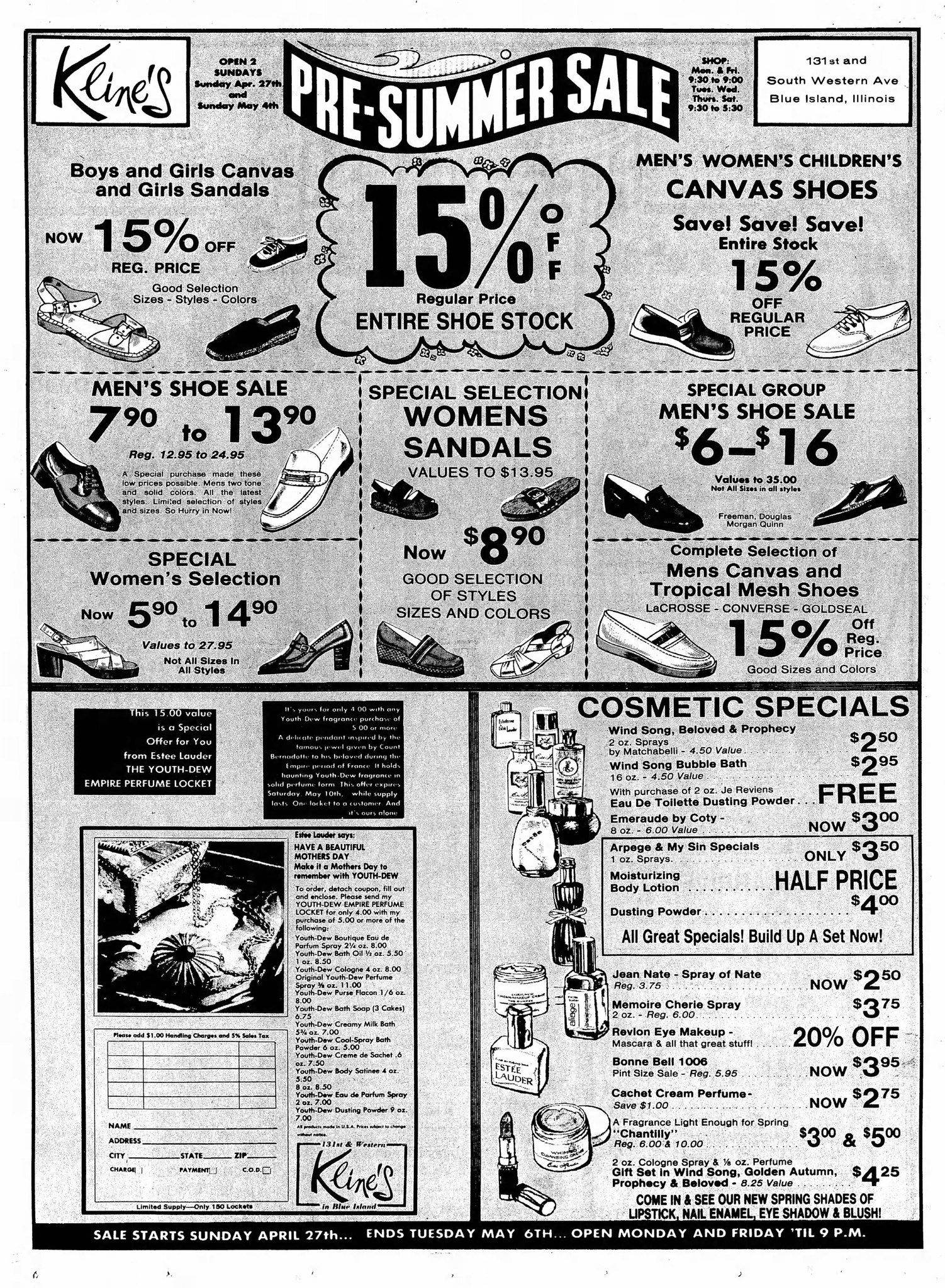

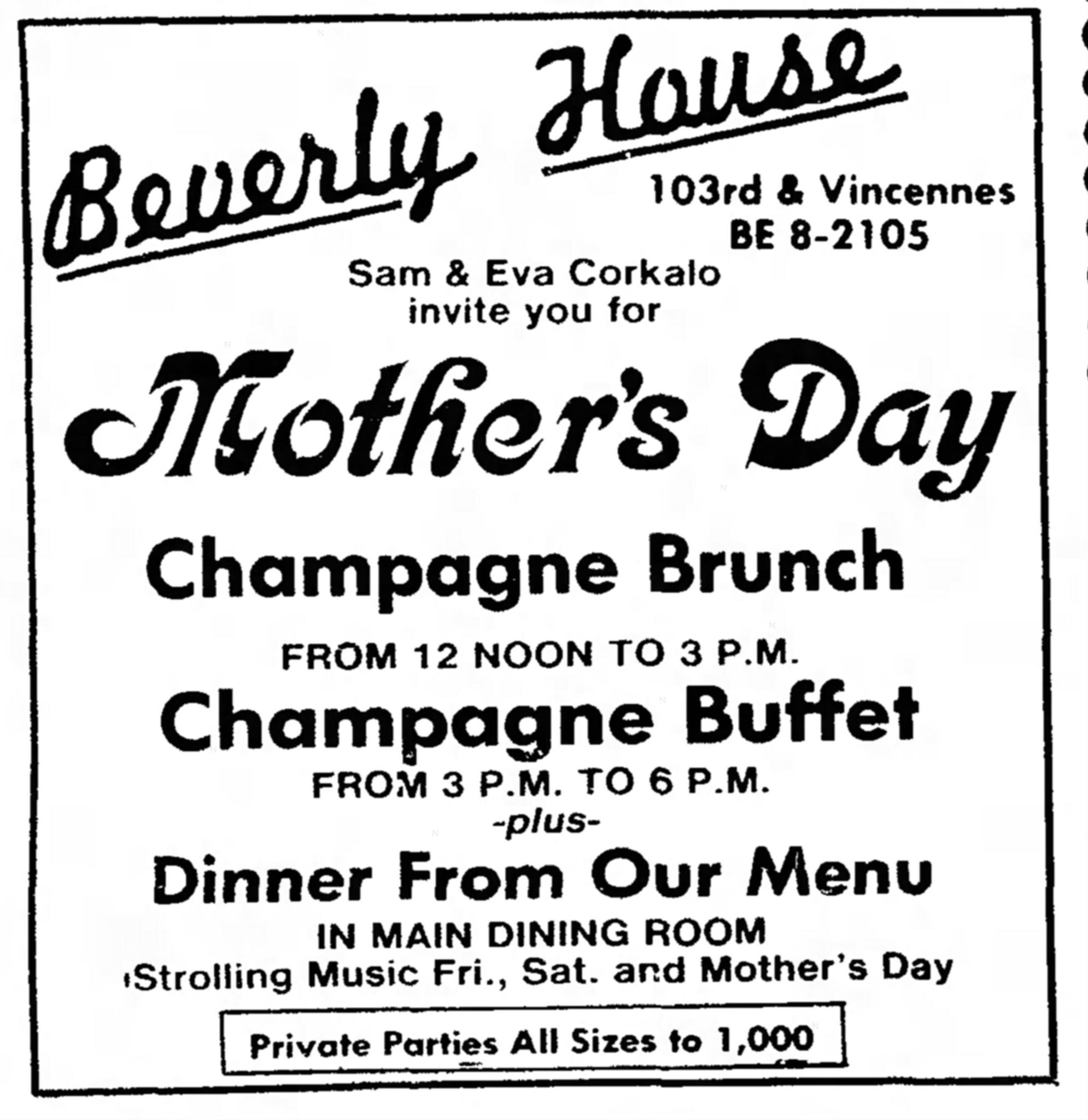
Happy Mother's Day from the Ridge Historical Society!
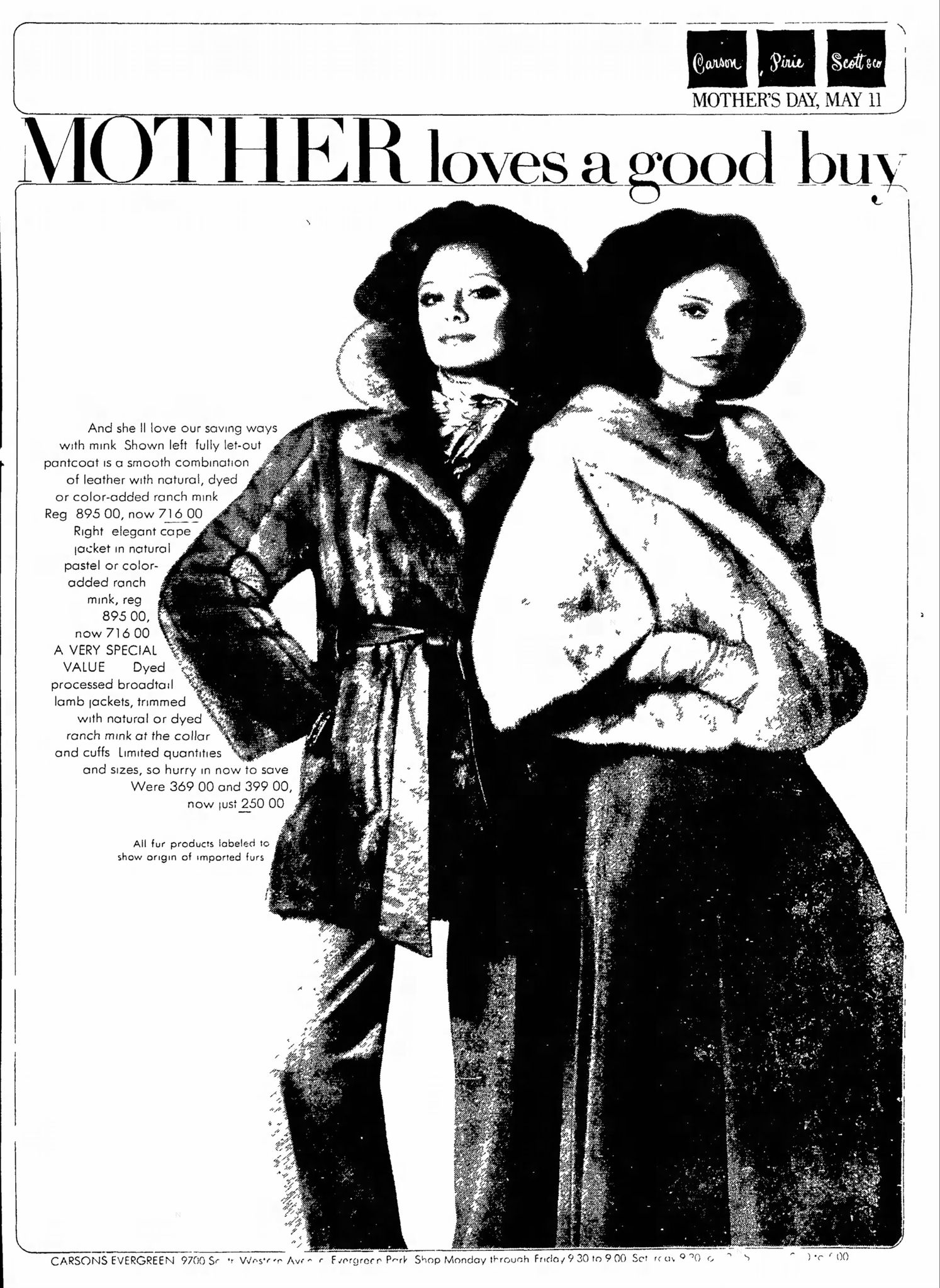
Here is some history nostalgia from the Ridge from fifty years ago.
1975 newspaper ads are like a walk down Memory Lane:
Shopping for Mother's Day gifts at Evergreen Plaza or Klein's Department Store in Blue Island. Evergreen Plaza even had a baking contest that year. And of course, you could also eat at the restaurants in the Plaza.
Making your own hand-crafted gift for Mom.
Perhaps dinner at the Beverly House, a popular place on Vincennes for many years. .