
Explore the RHS Facebook Archives, a rich repository of local history written by Carol Flynn. For two decades, Carol brought a deeply dedicated voice to public education at RHS. Her role as Facebook administrator through mid-2025 naturally extended her prolific research into meticulously detailed articles, most notably her multi-part historical series posts. Today, Carol continues her local history writing for The Beverly Review and other outlets.
2022
The Ridge Historical Society
The History of the Graver-Driscoll House – Part 6: Herbert Spencer Graver, Jr.
By Carol Flynn
This post returns to the series on the history of the owners of the Graver-Driscoll House, the house the Ridge Historical Society owns and uses as its headquarters and to store the community’s historic resources at 10616 S. Longwood Drive/10621 S. Seeley Avenue in the Beverly area of Chicago.
One theme of RHS is that “every house has a history” and this series illustrates the interesting stories that can be found when researching a house.
The Graver House was designed by architect John Todd Hetherington and built in 1921-22 for Herbert Spencer Graver and his family.
Herbert was born on August 29, 1880, in Pennsylvania to William and Christina Graver. He was the sixth of seven children. His father owned and operated the Graver Tank Company, which hand produced metal tanks for grain and oil storage and for hot water boilers. Around the year Herbert was born, the company started using steam-powered machinery to produce the tanks.
When Herbert was four years old, the family and business relocated to Chicago. The family lived in Englewood.
According to the Chicago Tribune in 1900, Herbert was one of the five athletes at Englewood High School who could be depended on to sustain the school’s reputation as a championship track and field team. Herbert’s sports were the hammer throw (112 feet) and the high jump (5.33 feet). The Olympic high scores for these sports in 1900 were 167.35 feet and 6.23 feet, respectively.
Herbert attended the University of Michigan in Ann Arbor, where he graduated with a degree in engineering in 1904. His younger brother, Alexander Mc Donald Graver, graduated with a degree in engineering in 1905. The brothers appeared to be close, and shared lodgings while in college.
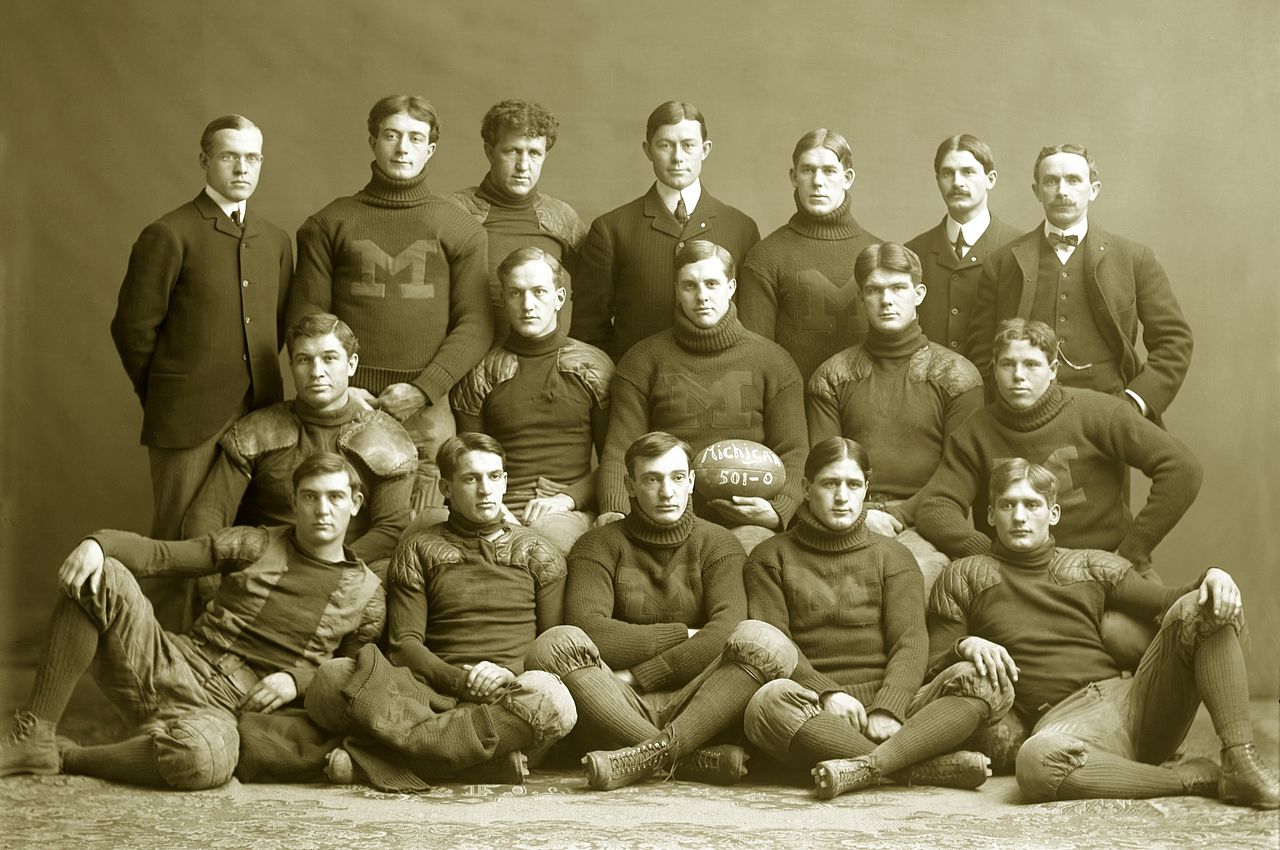
Herbert earned fame as a football star in college, which stayed with him the rest of his life. His team played in the first football game in what would become the Rose Bowl in Pasadena, California. This was an exhibition game played on January 1, 1902, arranged to offset the costs of the lavish parade and sporting event known as the Tournament of Roses put on as a promotional event for Pasadena.
The undefeated University of Michigan team was invited for an all-expenses-paid trip to Pasadena to play against Stanford University of Stanford, California. Michigan won by a score of 49 to 0. Stanford asked to end the game early. About 8,000 people attended the game, purchasing tickets for $.50 to $1.00.
Herbert was a substitute player, and he didn’t actually take to the field during the Pasadena game, but he had already earned the reputation as a stellar player. One newspaper article called him “the best utility man in the west,” and considered him superior in some skills to the men he replaced. The paper reported he was “a tower of strength behind the line.”
Herbert was voted All American. As a college senior, he was chosen for the Board of Control which oversaw athletic sports at the university.
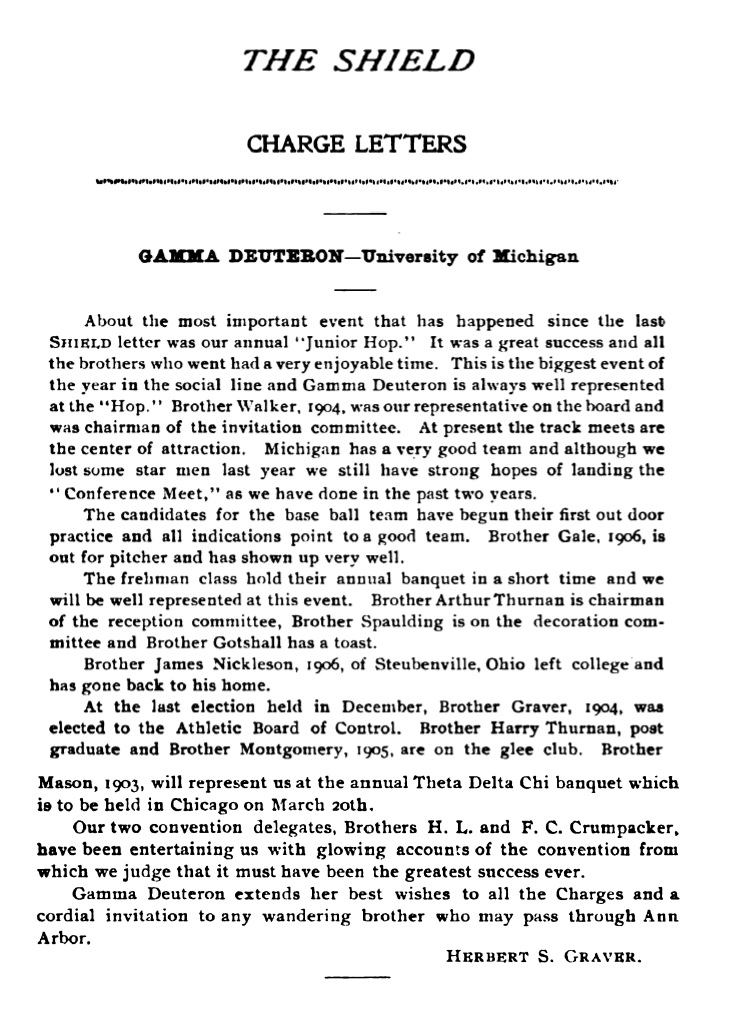
In 1903-04, Herbert was the correspondent from his campus fraternity for reporting to the national organization of Theta Delta Chi. One of his reports is an attachment to this post.
He became a member of the “Tribe of Michigamua,” the University of Michigan senior honor society, and attended events of the Chicago chapter. He also made appearances as a “football legend” at exhibition games and sporting events for the rest of his life.
After graduation, Herbert worked for a year as a college coach in Ohio. He then joined his father and brothers at the Graver tank business. Herbert held the office of corporate secretary and later he was vice president.
Herbert married Anna T. Thorne in 1910 and they had one son, Herbert S., Jr., in April of 1921.
All five of the Graver brothers worked for the family company and built homes in Beverly. The two Graver sisters and their husbands were not involved in the business and did not live on the Ridge.
The youngest brother Alexander was living on 99th and Longwood when he died of influenza in 1920. Herbert wrote his brother’s obituary for the trade publications.
Graver Park on 102nd Place off of Prospect Avenue in Beverly was named for Herbert’s brother Philip Sheridan Graver (1878-1945) in the 1950s. Philip was a commissioner and then vice-president of the Chicago Park District. Hetherington and Sons designed the field house and landscape layout of that park in 1929-30.
Herbert stayed with the Graver company after the family sold it in 1930. He was still working as a sales manager at age 74 when he suffered a fatal heart attack while watching wrestling matches at the International Amphitheater, the indoor arena located at 42nd Street and Halsted Avenue that was demolished in 1999.
Herbert was buried in Mount Hope Cemetery on the Ridge. He was the last of the Graver brothers.
In 1940, Herbert and Anna Graver sold the house to the Fenn Family. Their story will be in the next post.
The Ridge Historical Society is the only organization in the Beverly/Morgan Park community dedicated to preserving the community's history.
As a 501(c)3 not-for-profit corporation, our mission is to EDUCATE the community on history. We do this by extensive, thorough, and accurate research; offering quality exhibits, education programs, and articles (the Facebook page, local newspapers, history papers);
and assisting others with research, such as house histories.
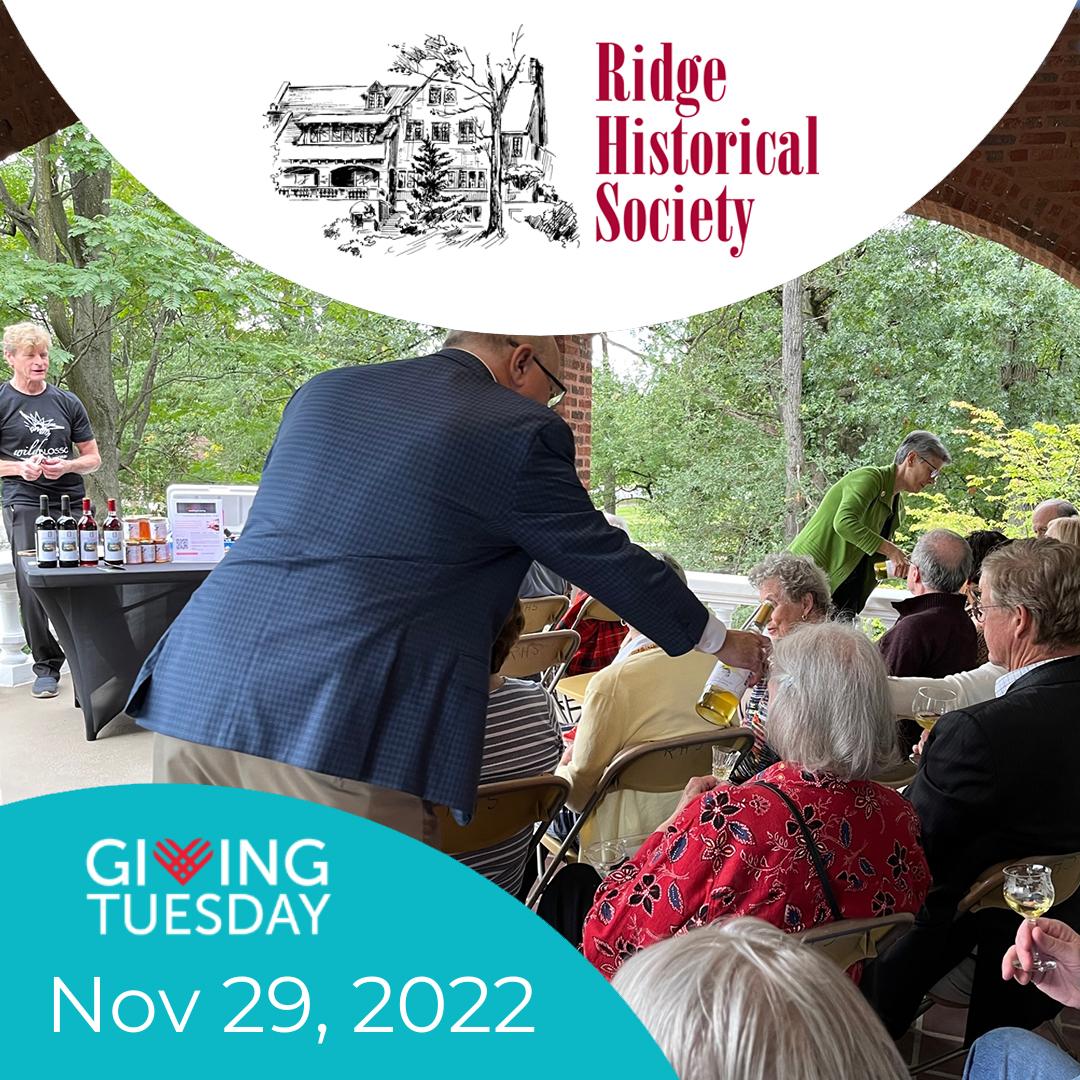
We also offer social activities that support the community. For example, we hosted the first BAPA Porch Concert this year. We also held a fund raiser with Wild Blossom Meadery and Winery, pictured here, which is producing a specialty alcoholic beverage in RHS's name.
We are still recovering from eighteen months of closure due to the pandemic, and we are in the midst of strategic planning for 2023.
Giving Tuesday is tomorrow, November 29th.
If you enjoy the Facebook posts, if you support continued work in the community's history, please consider a gift to the Ridge Historical Society.
Donate here:
https://bit.ly/RHS-donation
Thank you.
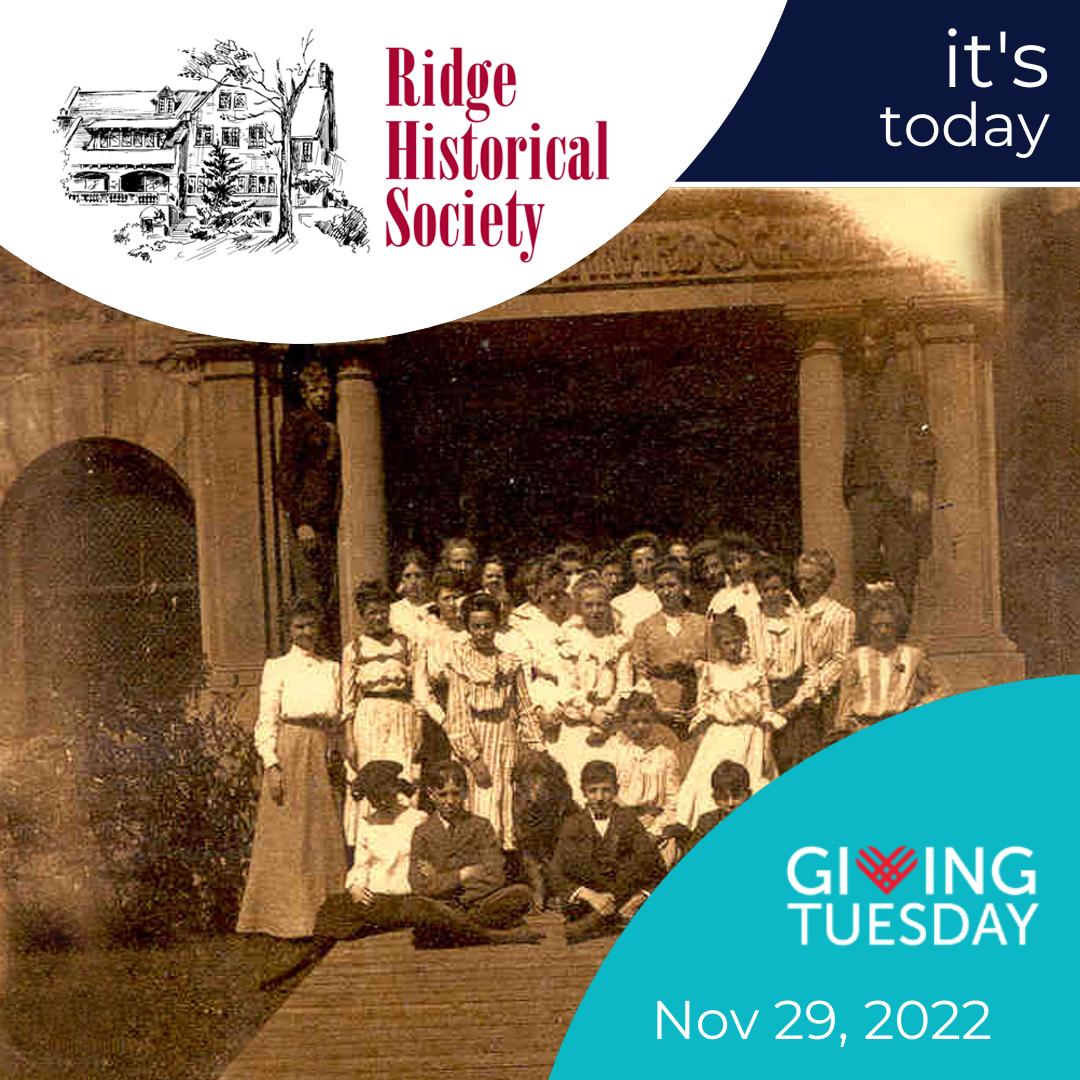
Today is Giving Tuesday – please consider a gift to the Ridge Historical Society in support of our efforts for preservation and education about the history of our local communities.
The current exhibit "Hetherington Design Dynasty" will run through early January. Your gift will help RHS continue to provide research, exhibits, programs, and publications. Admission is free on Tuesday and Sunday afternoons from 1 to 4 p.m.
To donate securely through Paypal: https://bit.ly/RHS-donation
Thank you!
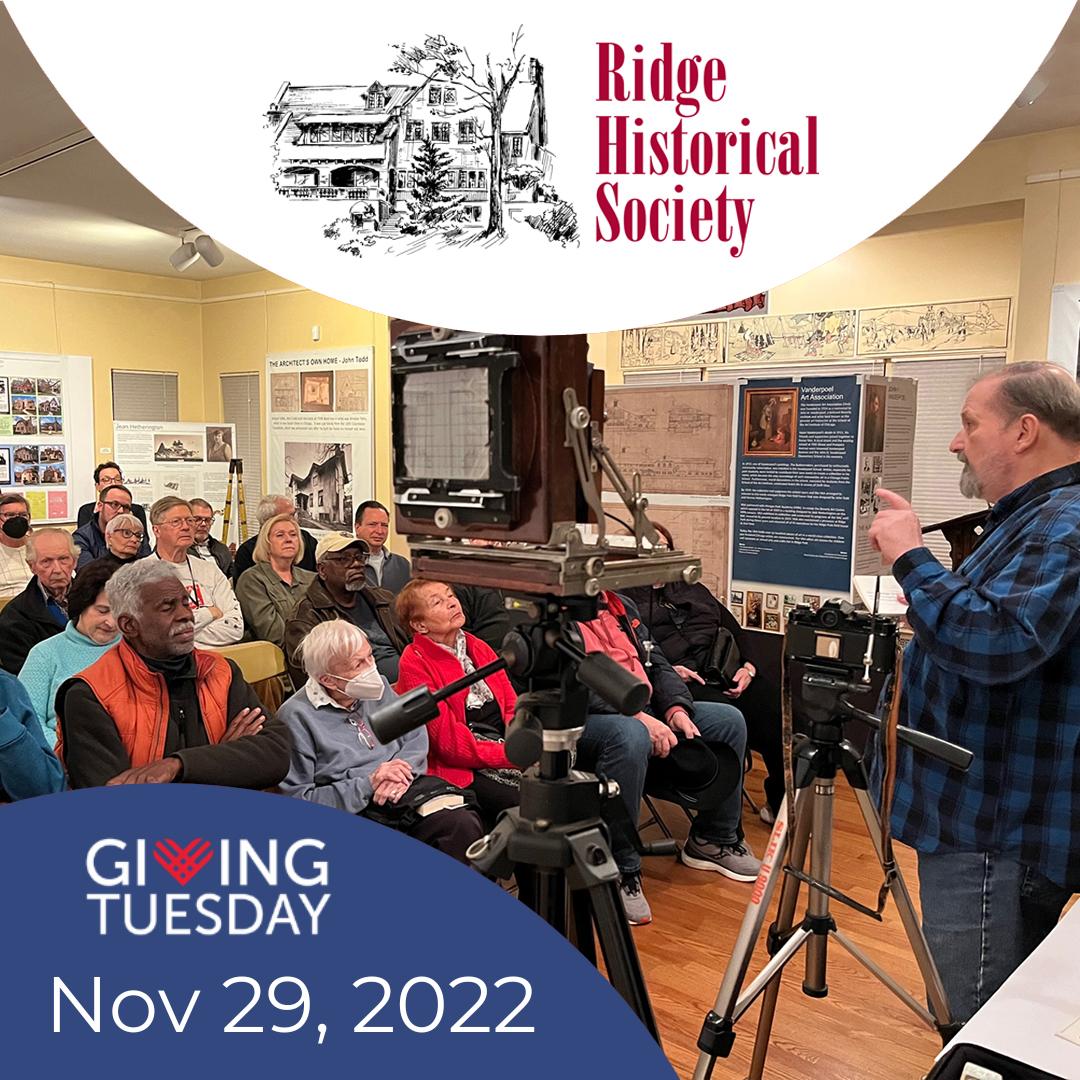
This year the Ridge Historical Society made substantial contributions to the community.
At our suggestion, the BAPA house tour featured homes and buildings designed by the Hetherington family of architects. Our own Hetherington-designed house, the Graver-Driscoll House, served as the starting location for the house tour.
We mounted an exhibit on the Hetherington Design Dynasty that showcases the scores of homes and buildings designed by John Todd Hetherington, his son and his grandson. This exhibit will run through early January and may be viewed free of charge. We offered three education programs as part of the Hetherington project.
We assisted scores of people in house history and other research projects, again, free of charge.
We published numerous Facebook posts and local newspaper stories on local history.
We initiated the campaign to save the historic Eugene S. Pike House and submitted the application to Landmarks Illinois to have the house declared "endangered."
We were a featured partner for the Beverly Art Walk and we represented the community for Open House Chicago.
We restarted open hours on Tuesday and Sunday afternoons with free admission for the public.
We hosted the first BAPA porch concert for the year for free to the public.
We are a not-for-profit organization that relies on private fund-raising, memberships, and occasional small fees for programs. We do not receive government funding.
This year we celebrated RHS's fiftieth anniversary as the Beverly/Morgan Park organization dedicated to researching, preserving, and educating on the community's rich history, including the noteworthy architecture of the area.
Help us continue to serve the community. Please consider a donation today, Giving Tuesday.
You may donate through this secure link:
https://bit.ly/RHS-donation
Every penny helps. Thank you – and feel free to contact us with any of your history questions. We love hearing from you!
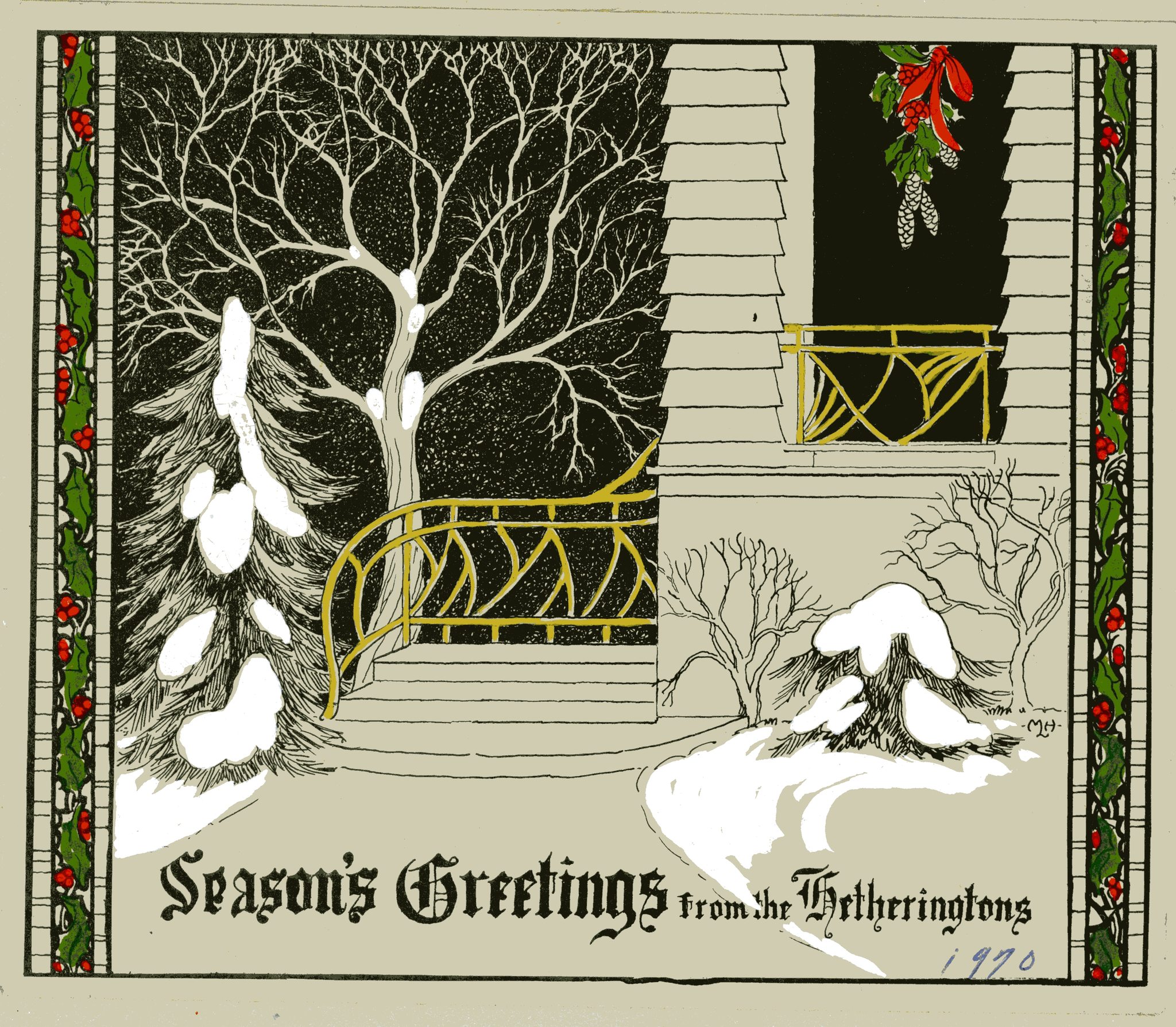
The Ridge Historical Society – Christmas Comes to RHS
A special Christmas feature is being added to the current exhibit on the Hetherington Design Dynasty at RHS.
Images of a variety of Christmas cards designed by artist Mildred Lyon Hetherington will join the display for the holidays.
The Hetheringtons – John Todd, his son Murray, and his grandson Jack – were the family of architects who designed scores of houses and other buildings in the Ridge communities, including the Graver-Driscoll House, which is RHS Headquarters.
Mildred Lyon Hetherington, Murray's wife and Jack's mother, was a well-known local artist famous for her portraits and illustrations in children’s publications.
For the next few weeks, we will share some of the Christmas cards Mildred designed and sent to family and friends. This first one, from 1970, is of the front porch of their house on Prospect Avenue.
The Ridge Historical Society is located at 10621 S. Seeley Avenue and is open free of charge on Tuesday and Sunday afternoons from 1:00 to 4:00 p.m.
The Hetherington Design Dynasty exhibit will run until early January. If you have been putting off a visit, now is the time to stop by!
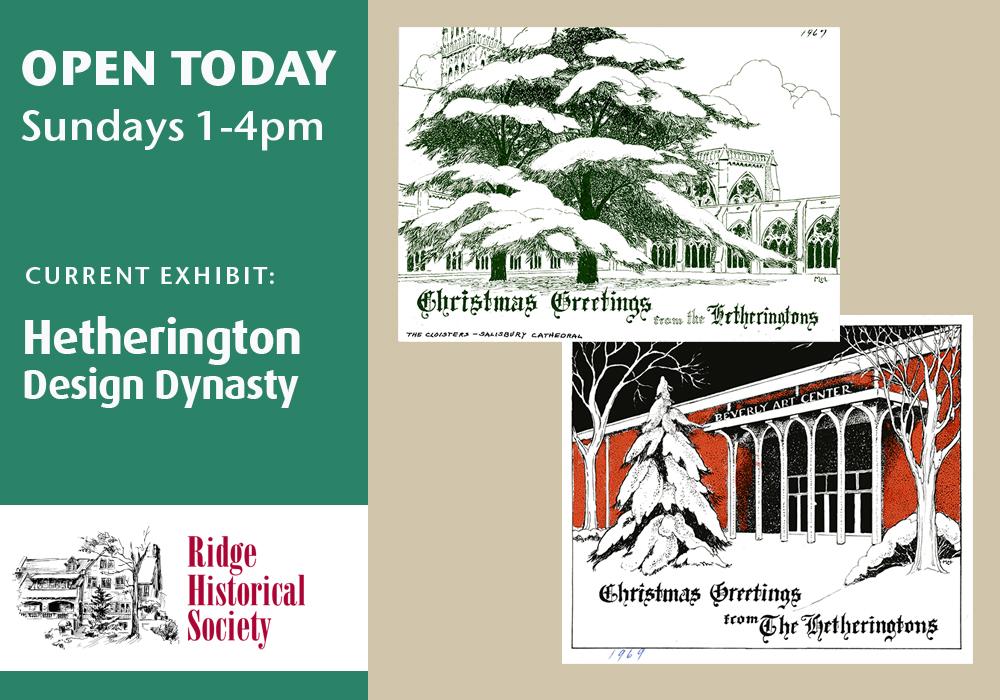
The Ridge Historical Society will be open tomorrow, Sunday, December 4, 2022, from 1:00 p.m. to 4:00 p.m. Admission is free. The address is 10621 S Seeley Avenue, Chicago.
The current exhibit is "Hetherington Design Dynasty" featuring the work of three generations of architects in the Hetherington family, John Todd, Murray, and Jack. They designed scores of houses and other buildings in the Blue Island Ridge communities.
The artwork of Mildred Lyon Hetherington is also part of the exhibit. Mildred was a local artist who married Murray, a fellow student she met at the Art Institute of Chicago. They were Jack's parents. Mildred was known for her portraits and illustrations of children's publications.
Added to the exhibit for the holiday season are the Christmas cards that Mildred designed and sent to family members and friends.
A closing date has been set for the Hetherington exhibit: January 7, 2023. If you have been planning to visit, now is the time to do so!
The Ridge Historical Society will be open tomorrow, Tuesday, December 6, from 1:00 to 4:00 p.m. The address is 10621 S. Seeley Avenue in Chicago. Admission is free.
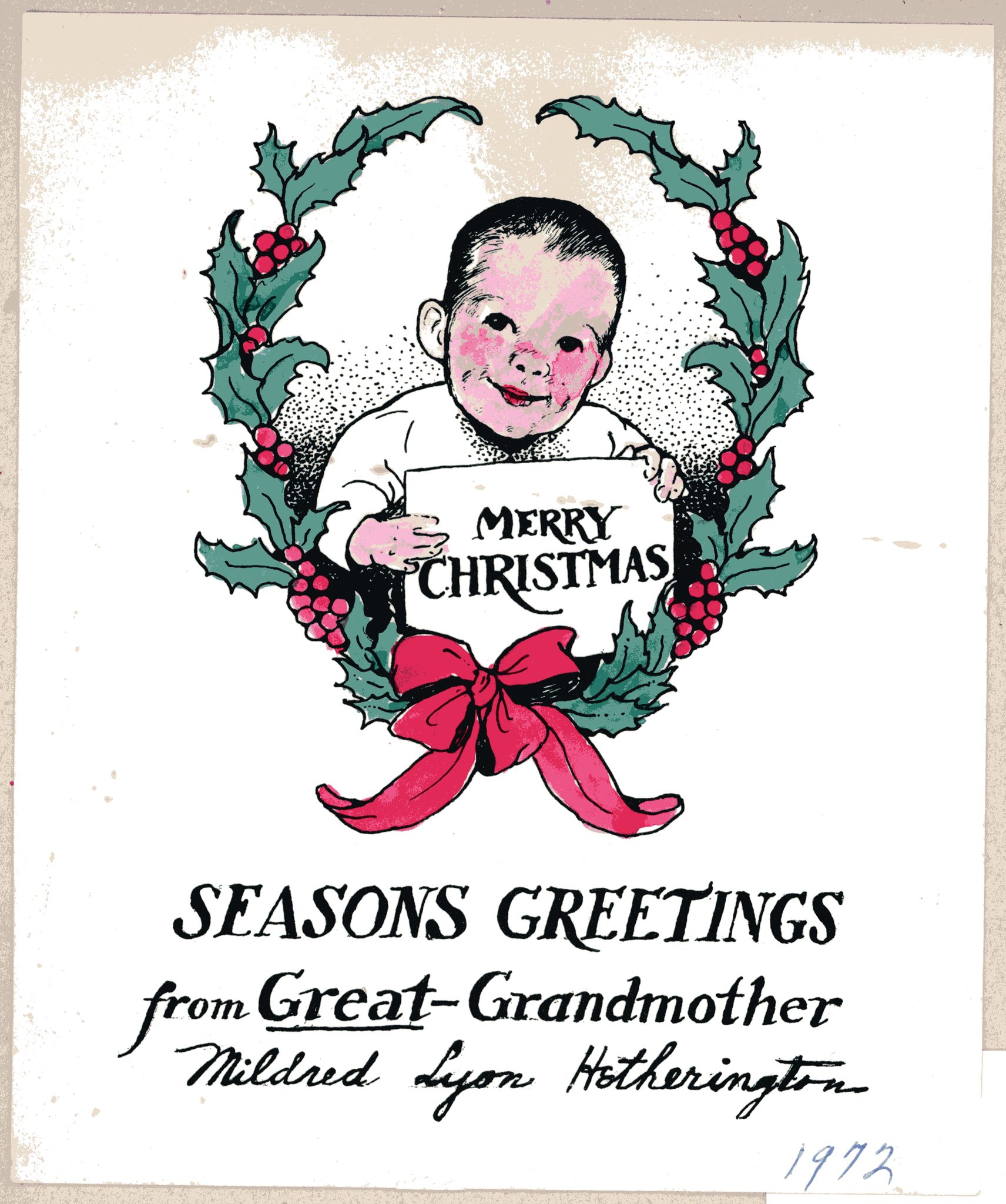
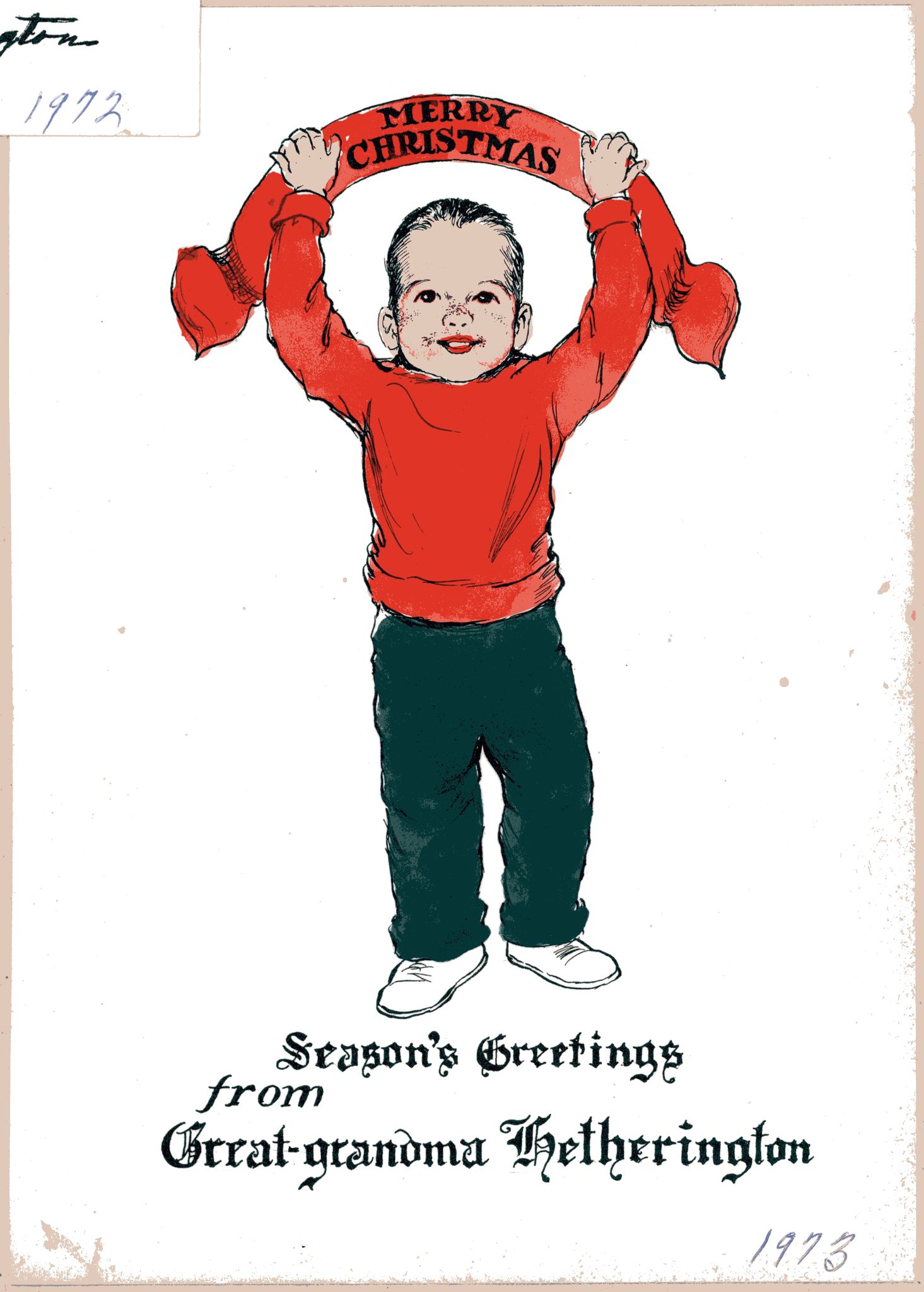
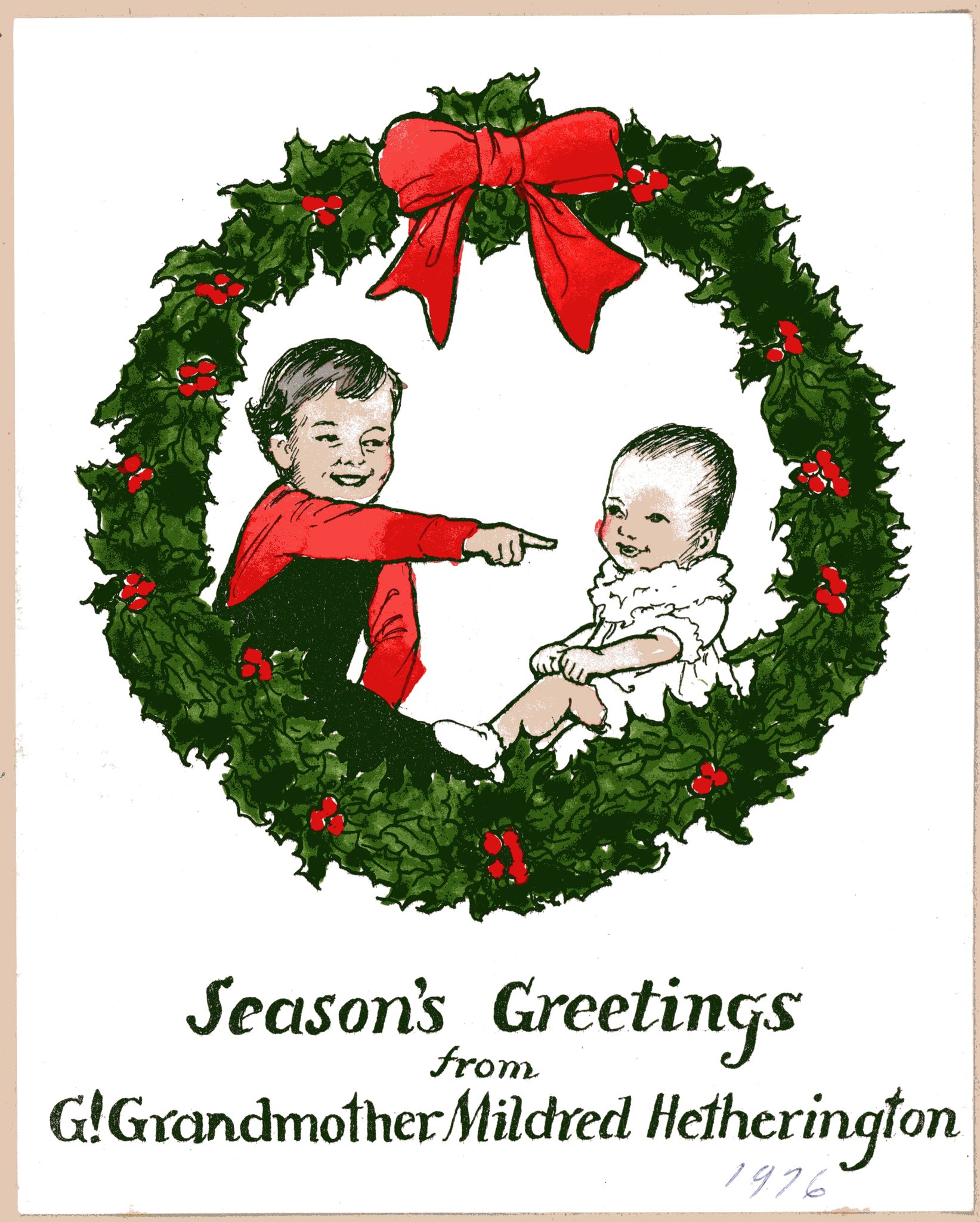
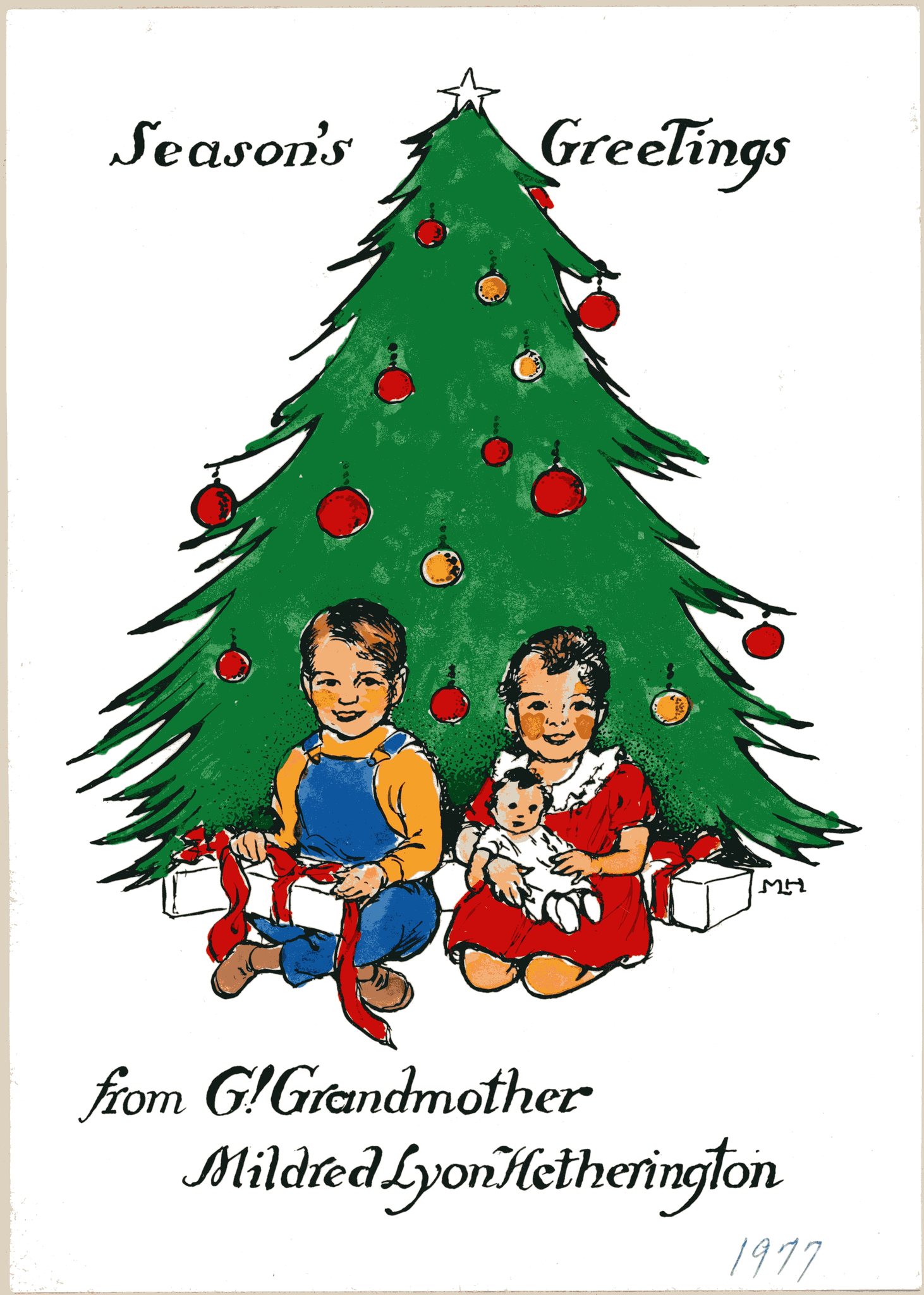
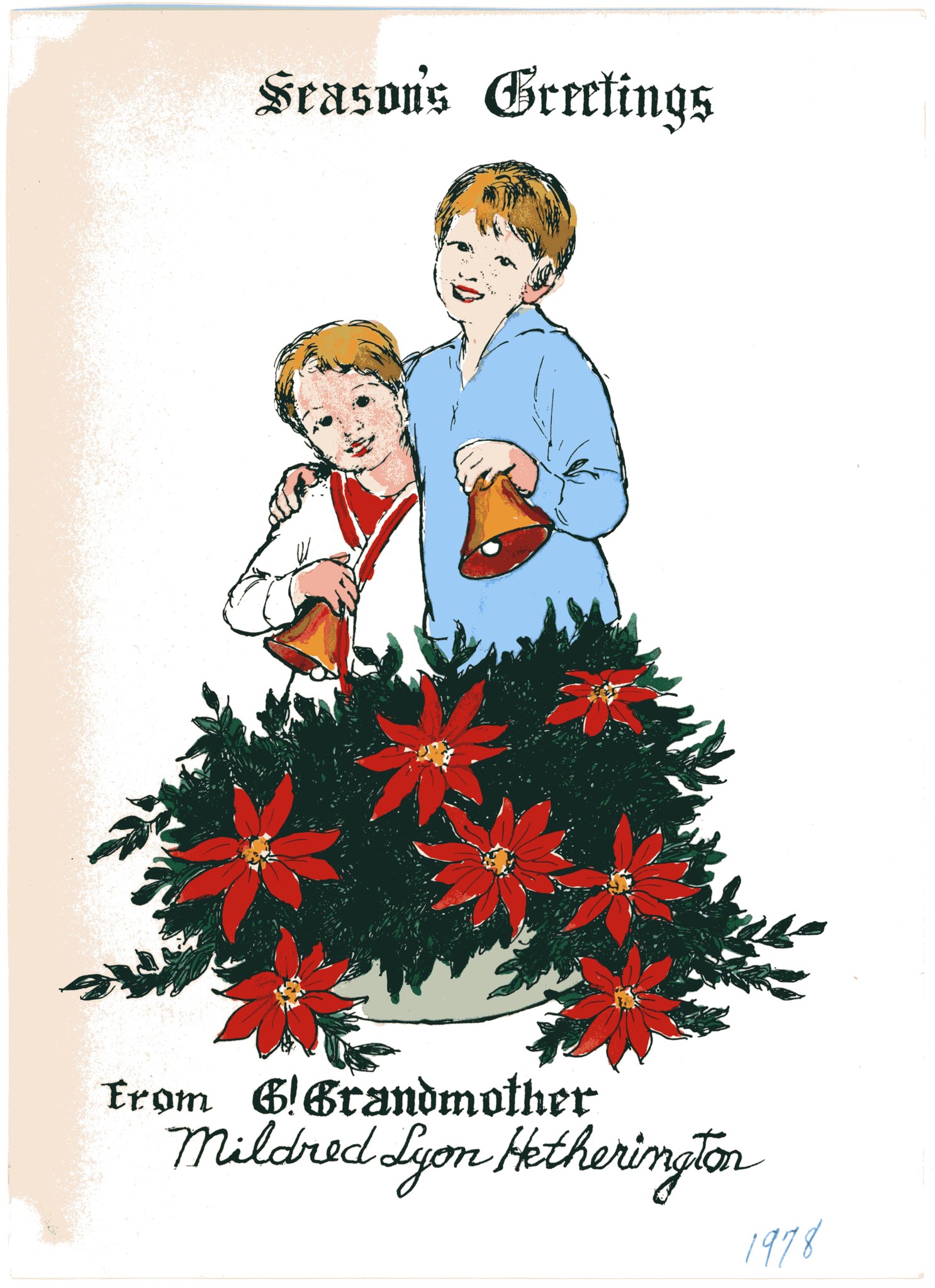
A new feature has been added to the current exhibit, Hetherington Design Dynasty. Christmas cards designed by local artist Mildred Lyon Hetherington are now on display. Mildred sent these cards to family members and friends.
The Smithsonian Institute began adding personal Christmas cards designed by famous artists to its Archives of American Art in 2015.
Christmas card art that artists design for their personal use is a unique art form. The holidays are a time for reflection and sharing, and this art often offers a glimpse of the artist's personal point of view of what is important in her life.
Mildred became a great-grandmother in 1972, and from that point on her cards chronicled the growth and development of her great-grandchildren.
Her skills as a portraitist and illustrator of children's publications are apparent in these cards, but more importantly from a personal perspective, her love for and devotion to these children couldn't be more evident.
The Hetherington Design Dynasty exhibit is entering its final month of display. The last day will be January 7, 2023. Visit now on Tuesday and Sunday afternoons from 1 to 4 p.m., or by special appointment. Contact RHS at 773/881-1675 or ridgehistory@hotmail.com.
The Ridge Historical Society
The History of the Graver-Driscoll House – Part 7: The Fenn Family
By Carol Flynn
Every house has a history.
Today we return to the history of the Graver-Driscoll House, the headquarters for the Ridge Historical Society, which celebrates its centennial this year.
Designed by architect John Todd Hetherington, the house was built in 1921-2 for Herbert. S. Graver, Sr., his wife Anna, and their infant son Herbert, Jr. Graver was an executive with the family’s business, the Graver Tank Works, and a college football star whose University of Michigan team played in, and won, the first game in Pasadena in 1902 that became the Rose Bowl.
In 1940, the Gravers sold the house to John Grant and Grace Fenn. The Fenns had two children, Helen and Grant. The address used for the house at the time was 10616 South Longwood Drive, and the only entrance to the property on the top of the Ridge was via the steep driveway on Longwood Drive.
The Fenn family only owned the house from 1940 to 1946, yet it became a legendary location in their family history due to a special event that occurred there, the wedding of Helen to Lt. Alden J. “Buzz” Ritter in August of 1943.
The Fenn – Ritter family and RHS formed a bond over the years, and the family has shared numerous pictures and family stories with RHS. This past summer, the family donated Helen’s wedding dress to RHS.
John Grant Fenn was born in Chicago in December of 1890. His father was a traveling salesman at the time, then later worked at the steel mills in accounting.
Grace Harrison was born in September of 1891. Her father was the superintendent of schools in Union, Indiana.
John Grant and Grace married in 1916 in Cook County. Daughter Helen was born in 1918 and son Grant in 1924.
John Grant, usually referred to as J. Grant, earned a B.S. in mechanical engineering from the Armour Institute of Technology, which merged into the Illinois Institute of Technology. At the time he married, he was employed by the London Guarantee and Accident Co. as a factory inspector.
By 1920, the Fenns were living on 100th Place in Beverly. They were active in the local social scene; for example, one newspaper article reported that in December, 1929, they were part of the Entre Nous Dancing Club that held a dance the Ridge Park field house. J. Grant was on the committee for the dance.
In 1934, J. Grant Fenn and W. Proctor Roberts formed a corporation, Air Tempering Systems, Inc., to manufacture heating, refrigeration, and air-conditioning equipment and parts.
Air conditioning was an emerging industry. The concept of cooling went back to ancient times, using ice and snow. By 1900, ammonia–cycle artificial refrigeration systems were being used in the food industry, especially the Chicago meat packing houses. Air conditioning premiered at the 1904 World’s Fair in St. Louis. At the time, the machinery was too large, cumbersome, and expensive to be considered for home use.
Engineers, however, kept working on improvements, and in 1927, General Electric released the Monitor Top, the first refrigerator to run on electricity. By 1930, with the synthesis of artificial refrigerants like chlorofluorocarbons (which were eventually banned), the practicality of cooling systems for home use finally became realistic. The 1930s and 1940s saw the innovations that led to window air conditioners and by the 1960s, central air conditioning.
J. Grant apparently did well with the business through the years of the Great Depression. In 1934, the Fenns began purchasing property in Clearwater, Florida, and to divide their time between there and Chicago. The Florida newspapers reported they entertained aboard their cruiser, Goldreme.
In 1940, they purchased the Graver House. According to the family, sometime during the 1940s, they also purchased the strip of land between the house and Seeley Avenue to the west to build a second driveway entrance, at 10621 South Seeley Avenue, the address RHS uses today. The drive up the steep hill on Longwood Drive in the winter ice and snow was no longer a necessity.
On his World War II draft registration, J. Grant listed his occupation as a self-employed mechanical engineer.
The Fenns lived in the Graver House during the years of World War II. Grace was mentioned in the newspapers for helping to entertain servicemen. Son Grant attended Morgan Park Military Academy, and Grace was active with the Alumni Mothers group.
John Grant Fenn died in 1945 and was buried in Mount Greenwood Cemetery, where his parents had been buried many years before.
Grace sold the Graver House in 1946. She eventually moved to Clearwater, Florida, where she died in 1988 at the age of 96. Her remains were returned to Chicago for burial in Mount Greenwood Cemetery.
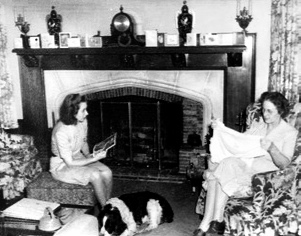
In this photo, Helen and Grace Fenn relax in their family home from 1940-1946, the Graver House.
Next installment: The Fenn children, Helen and Grant.
The First Beverly Art Center
By Carol Flynn
The Ridge Historical Society (RHS) will be open tomorrow, Sunday, December 11, from 1 p.m. to 4:00 p.m. The address is 10621 S. Seeley Avenue, and admission is free.
The current exhibit, Hetherington Design Dynasty, will only be on display for a few more weeks, through January 7. RHS is open on Sundays and Tuesdays from 1:00 to 4:00 p.m., or by appointment. Note, however, that Christmas and New Year’s Day fall on Sundays this year and RHS will be closed both days. This means there are only two Sundays left to view the exhibit – tomorrow and December 18.
The exhibit has a new feature added for the holidays – the Christmas cards that Mildred Lyon Hetherington designed and sent to family and friends.
The Hetheringtons were a three-generation family of architects – John Todd, his son Murray, and Murray’s son Jack – who lived in Beverly and designed close to one hundred homes and buildings in the area, including the Graver-Driscoll House, RHS Headquarters.
Mildred Lyon was a local artist who met Murray Hetherington when they were both students at the Art Institute of Chicago. They married and had two children, son Jack the architect, and a daughter Mary who died young.
Mildred was known for her portraits and her illustrations of children’s publications. As many artists do, she created her own Christmas cards.
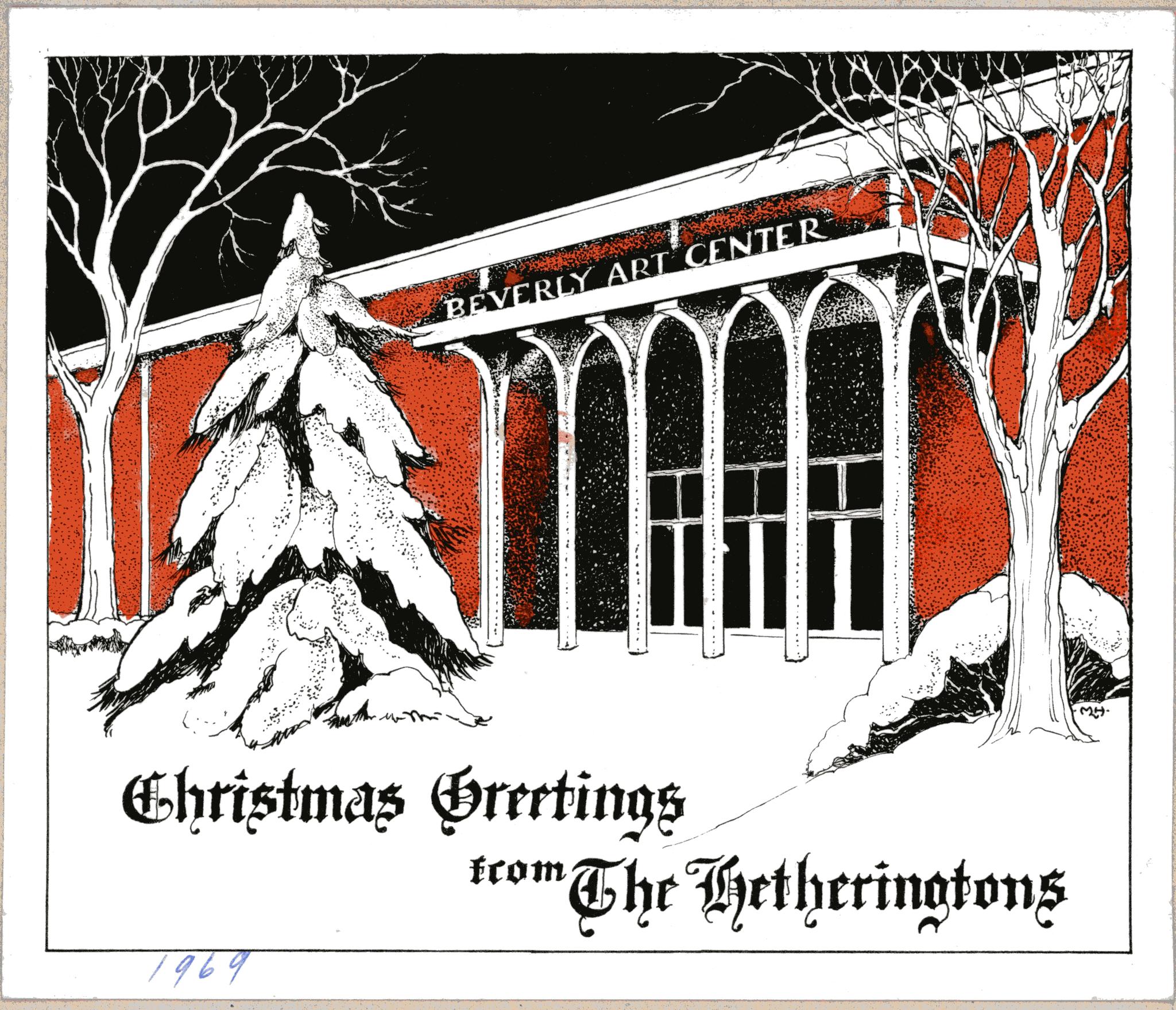
In 1969, Mildred’s card featured the new Beverly Art Center (BAC), which had just opened that September on the 2100 block of West 111th Street, on the campus of the Morgan Park Academy (MPA).
This was a significant event for the Hetherington family because the building was designed by Jack Hetherington, who had attended MPA. Although BAC moved from that building when the new BAC at 111th Street and Western Avenue was built, MPA continues to use the building
The original BAC building features a modern design with a portico that floats atop slender concrete columns, nicely depicted by Mildred in her Christmas card.
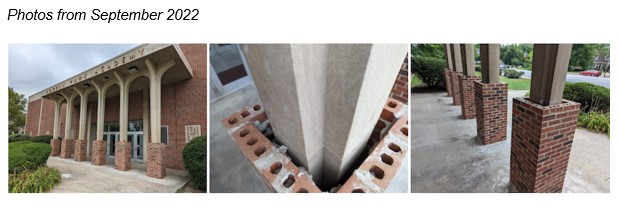
However, this past summer, architects and historians, as well as Hetherington family members, were dismayed to observe that MPA was encasing the lower sections of the concrete columns in brick, destroying the original façade.
While it is understood that this was done to preserve the columns from further deterioration, the alterations are incompatible with the original design. Not only is the building affected, but the visual cohesiveness of the Ridge Historic District is impacted by this type of alteration to a historic building. The Ridge Historic District is part of the National Register for Historic Places. The RHS Historic Buildings Committee has been in contact with MPA.
RHS can help owners of local historic buildings in need of preservation “facelifts” to understand landmark considerations, and to research the building’s history and design to assist with restoration efforts.
The Ridge Historical Society will be open on Sunday, December 18, from 1 to 4 p.m. The address is 10621 S. Seeley Ave., Chicago. Admission is free.
There are just a few weeks left to view the current exhibit, the Hetherington Design Dynasty. Three generations of the Hetherington family lived in Beverly, became architects, and designed close to 100 buildings in the area.
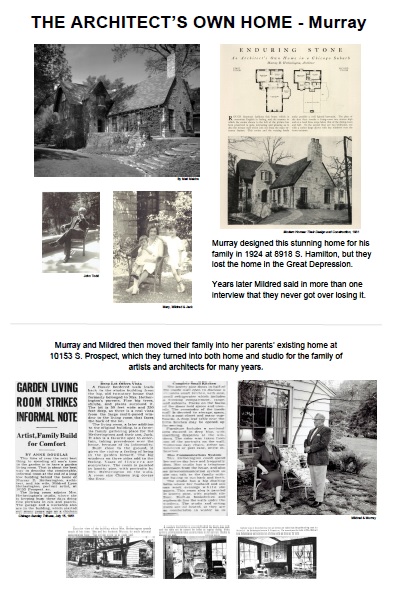
Murray D. Hetherington was the second generation. An example of his work is the house he designed for himself; his wife, the artist Mildred Lyon Hetherington; and thier son Jack, who became the third generation architect.