Explore the RHS Facebook Archives, a rich repository of local history written by Carol Flynn. For two decades, Carol brought a deeply dedicated voice to public education at RHS. Her role as Facebook administrator through mid-2025 naturally extended her prolific research into meticulously detailed articles, most notably her multi-part historical series posts. Today, Carol continues her local history writing for The Beverly Review and other outlets.
2020
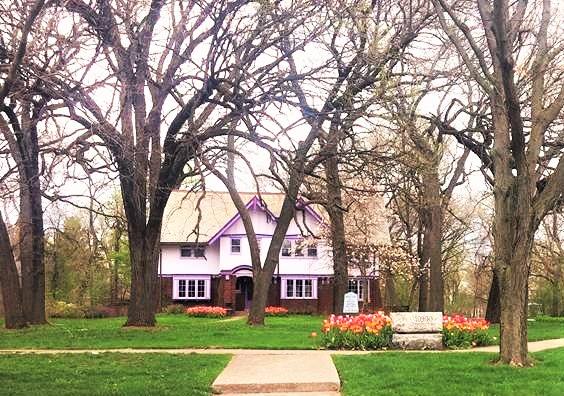

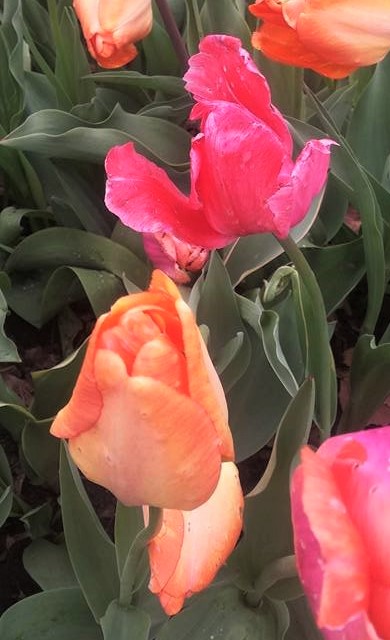
Pretty spring tulips are on view at one of Morgan Park’s historic homes, the Luther S. Dickey, Jr. House, at 10900 S. Prospect Ave.
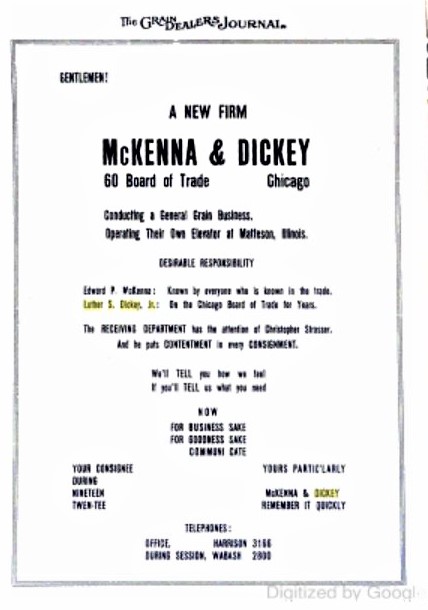
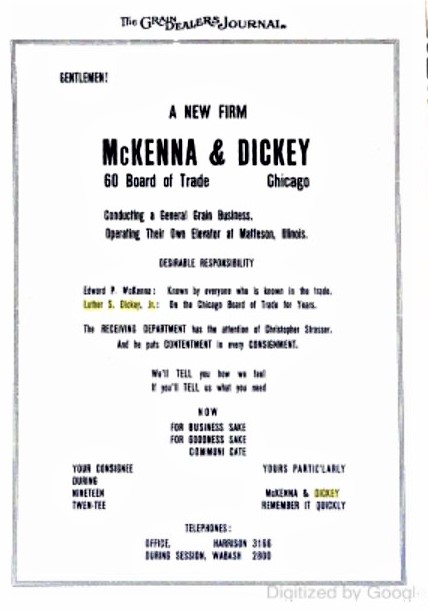
Luther Samuel Dickey, Jr., was a well-known stock broker and grain trader. He was a member of the Chicago Board of Trade and the New York Stock Exchange. He had his own company for years, McKenna and Dickey.
Dickey’s parents were Luther S. and Charlotte Dickey. Dickey, Sr., came to Chicago from Pennsylvania and was a veteran of the U.S. Civil War. He was involved with the Chicago Inter-Ocean newspaper, and upon retirement, authored publications on the history of Pennsylvania regiments in the war. He was also an elected officer with the Calumet-Morgan Park park district. He was active with social and political causes such as labor issues and the rights of the working class.
In 1889, the family made news when Charlotte and the children became “poisoned from eating fermented raspberries.” One daughter, Alice, 9, died. The rest survived.
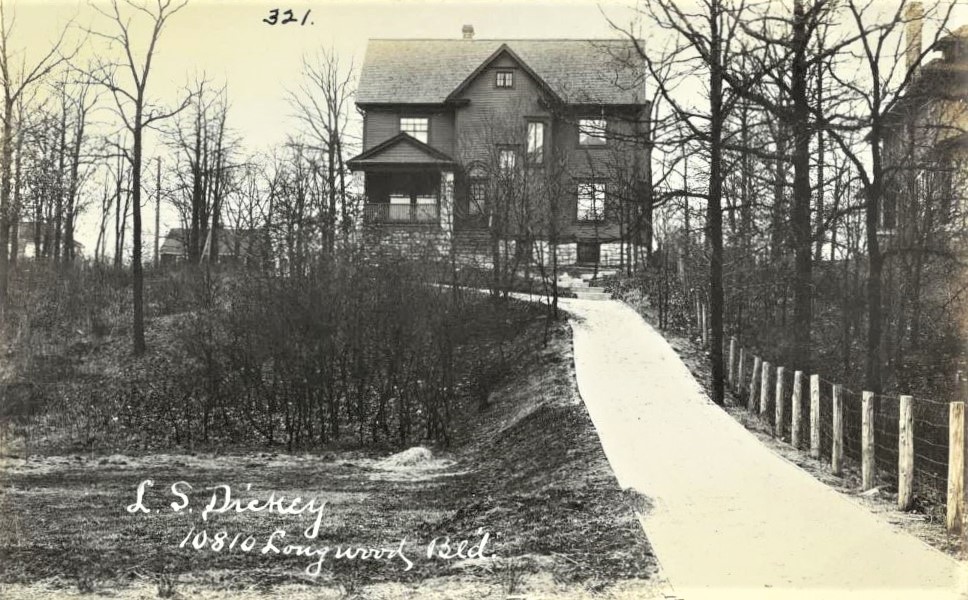
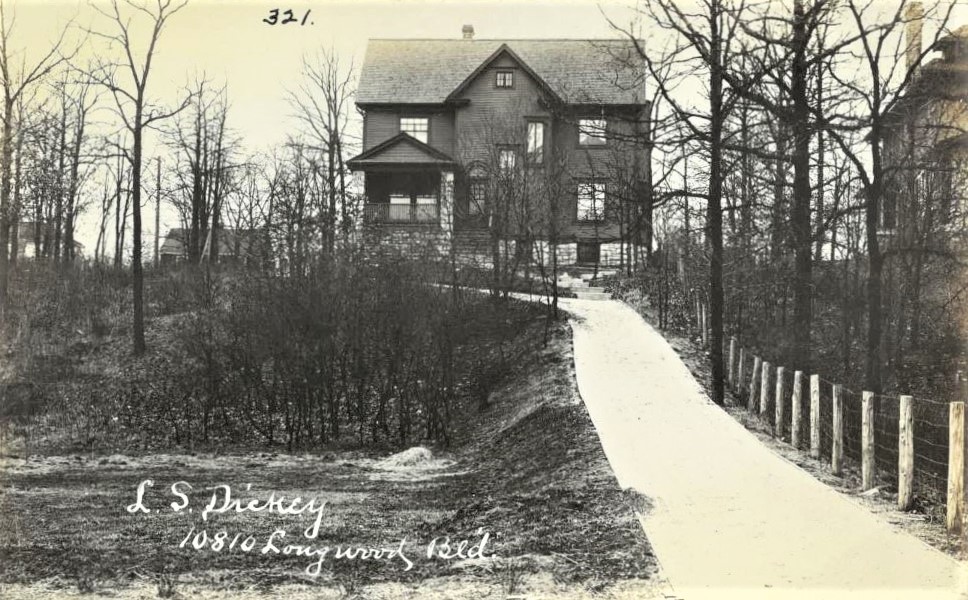
Dickey, Jr., had a first home built by architect George Bannister in 1905 at what is now 10856 S. Longwood Drive. Bannister was the husband of Madame Alla Ripley, the fashion designer and business woman featured in RHS’s exhibit last year, Threads of Imagination. In 1912, that home was sold to Paul Harris, the founder of Rotary International. The house is being restored as a Rotary museum and meeting place.
Dickey, Jr., had the house at 10900 S. Prospect designed by Chatten and Hammond in 1912. The picturesque Arts and Crafts-styled house is set on a lot of several acres of beautiful old oak trees. Design elements include a half-timbered double gable, sloping brick buttresses, and a flanged segmental entry arch. Dickey, his wife Bessie Adele (Robinson) Dickey, and their daughter and two sons made their home there.
Their neighbors were socially and politically prominent Isaac and Gertrude Blackwelder. On July 26, 1913, Bessie Dickey joined Gertrude as one of the first women to vote in Cook County. Her husband, Luther, was president of the annexation association. Annexation of Morgan Park to Chicago was finally approved in 1914. The major issue in the 1913 election was funding for a new high school. The funding was approved, leading to the establishment of Morgan Park High School.
Dickey, Jr., was on the board of the South Shore Country Club and involved in putting on the annual horse show. He was an avid horseman and his steeds won many prizes in competitions.
The Dickeys were members of the Morgan Park Congregational Church. He was also a member of the Union League Club, and active in the Boy Scouts with his sons.
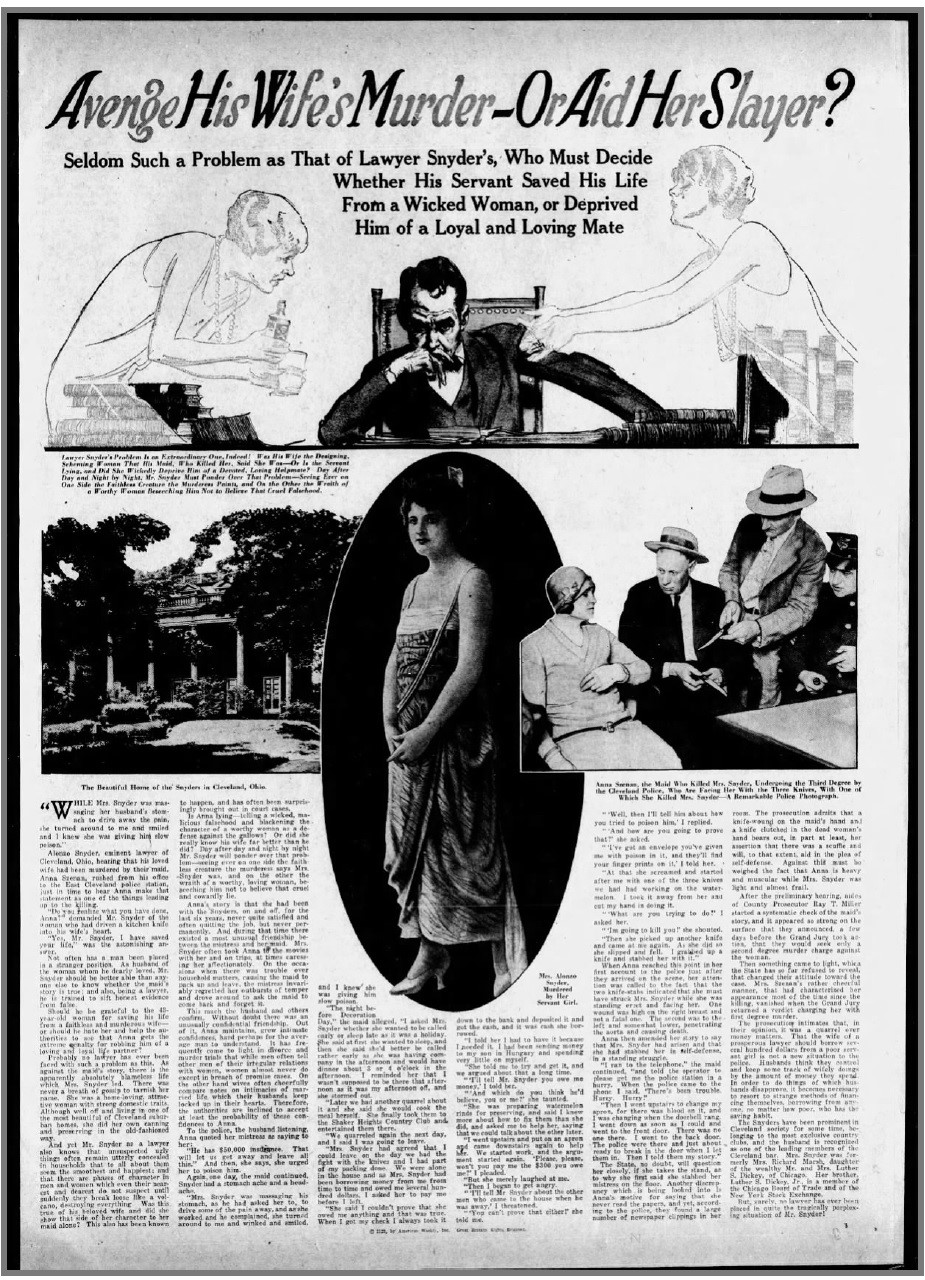
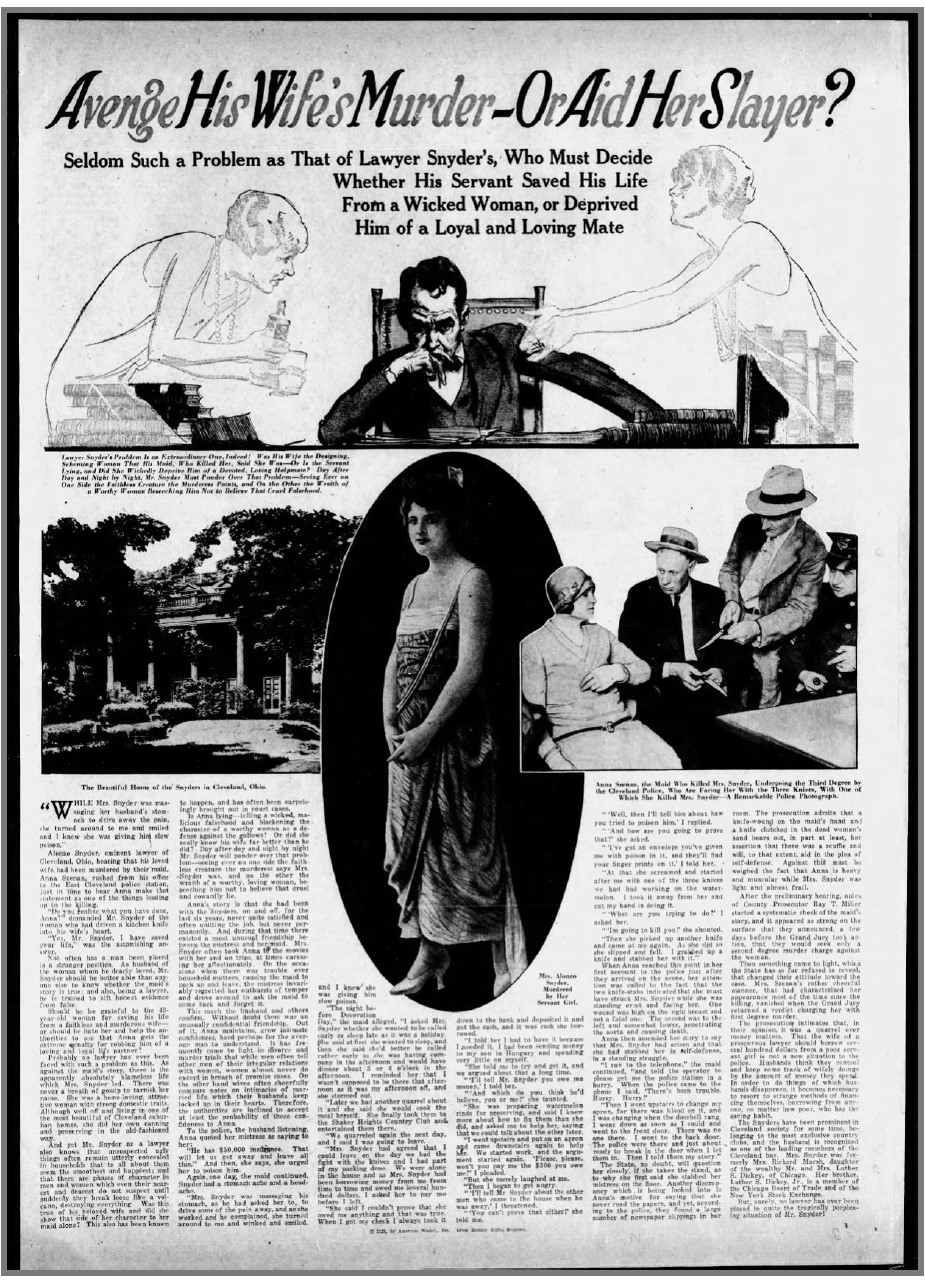
In May of 1929, the Dickey family fell victim to tragedy and scandal when Luther, Jr.’s sister, Maude Dora (Dorothy) Snyder, was killed by her maid, Anna Szenan, at the Snyder home in Cleveland. Dorothy, the wife of prominent attorney Alonzo Snyder, was stabbed to death in an altercation over unpaid wages. Dickey, Jr., rushed to Cleveland as soon as he received the news.
Anna Szenan claimed self-defense. The crime and trial received sensational news coverage. Szenan was found guilty of second-degree murder and received a life sentence. She died at the age of 100 still in jail, refusing parole for years because she had nowhere else to go. She had made the prison her home, cleaning the matrons’ quarters, cultivating a petunia garden and keeping a cat.
Tragedy struck again just a few months later. Luther S. Dickey, Jr., contracted diphtheria, an infectious and contagious bacterial disease spread by coughing and sneezing. He died at his home at 10900 S. Prospect on September 15, 1929, at the age of 48. He was buried in Mount Hope Cemetery.
Diphtheria was a major public health issue and homes with diphtheria patients were quarantined. A safe vaccine was developed in 1926 but was not widely used until after 1930.
Bessie remarried to Walter H. Jacobs, a lawyer, in 1935. He died in 1945. Bessie continued living at the Prospect Ave. house until her death at the age of 94 in 1974. She was also buried in Mount Hope Cemetery.
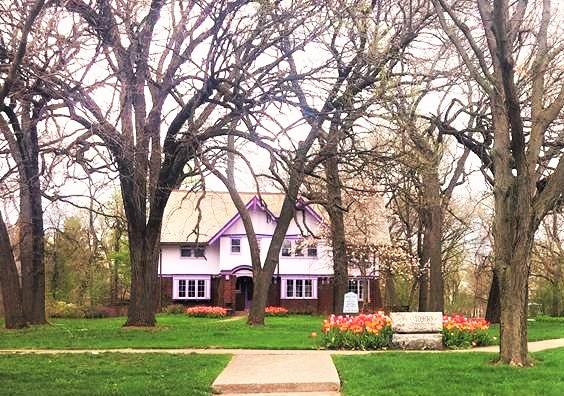

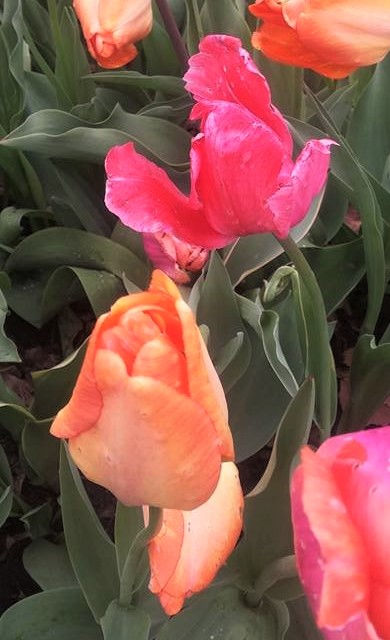
Pretty spring tulips are on view at one of Morgan Park’s historic homes, the Luther S. Dickey, Jr. House, at 10900 S. Prospect Ave.
Luther Samuel Dickey, Jr., was a well-known stock broker and grain trader. He was a member of the Chicago Board of Trade and the New York Stock Exchange. He had his own company for years, McKenna and Dickey.
Dickey’s parents were Luther S. and Charlotte Dickey. Dickey, Sr., came to Chicago from Pennsylvania and was a veteran of the U.S. Civil War. He was involved with the Chicago Inter-Ocean newspaper, and upon retirement, authored publications on the history of Pennsylvania regiments in the war. He was also an elected officer with the Calumet-Morgan Park park district. He was active with social and political causes such as labor issues and the rights of the working class.
In 1889, the family made news when Charlotte and the children became “poisoned from eating fermented raspberries.” One daughter, Alice, 9, died. The rest survived.
Dickey, Jr., had a first home built by architect George Bannister in 1905 at what is now 10856 S. Longwood Drive. Bannister was the husband of Madame Alla Ripley, the fashion designer and business woman featured in RHS’s exhibit last year, Threads of Imagination. In 1912, that home was sold to Paul Harris, the founder of Rotary International. The house is being restored as a Rotary museum and meeting place.
Dickey, Jr., had the house at 10900 S. Prospect designed by Chatten and Hammond in 1912. The picturesque Arts and Crafts-styled house is set on a lot of several acres of beautiful old oak trees. Design elements include a half-timbered double gable, sloping brick buttresses, and a flanged segmental entry arch. Dickey, his wife Bessie Adele (Robinson) Dickey, and their daughter and two sons made their home there.
Their neighbors were socially and politically prominent Isaac and Gertrude Blackwelder. On July 26, 1913, Bessie Dickey joined Gertrude as one of the first women to vote in Cook County. Her husband, Luther, was president of the annexation association. Annexation of Morgan Park to Chicago was finally approved in 1914. The major issue in the 1913 election was funding for a new high school. The funding was approved, leading to the establishment of Morgan Park High School.
Dickey, Jr., was on the board of the South Shore Country Club and involved in putting on the annual horse show. He was an avid horseman and his steeds won many prizes in competitions.
The Dickeys were members of the Morgan Park Congregational Church. He was also a member of the Union League Club, and active in the Boy Scouts with his sons.
In May of 1929, the Dickey family became victims of tragedy and scandal when Luther, Jr.’s sister, Maude Dora (Dorothy) Snyder, was killed by her maid, Anna Szenan, at the Snyder home in Cleveland. Dorothy, the wife of prominent attorney Alonzo Snyder, was stabbed to death in an altercation over unpaid wages. Dickey, Jr., rushed to Cleveland as soon as he received the news.
Anna Szenan claimed self-defense. The crime and trial received sensational news coverage. Szenan was found guilty of second-degree murder and received a life sentence. She died at the age of 100 still in jail, refusing parole for years because she had nowhere else to go. She had made the prison her home, cleaning the matrons’ quarters, cultivating a petunia garden and keeping a cat.
Tragedy struck again just a few months later. Luther S. Dickey, Jr., contracted diphtheria, an infectious and contagious bacterial disease spread by coughing and sneezing. He died at his home at 10900 S. Prospect on September 15, 1929, at the age of 48. He was buried in Mount Hope Cemetery.
Diphtheria was a major public health issue and homes with diphtheria patients were quarantined. A safe vaccine was developed in 1926 but was not widely used until after 1930.
Bessie remarried to Walter H. Jacobs, a lawyer, in 1935. He died in 1945. Bessie continued living at the Prospect Ave. house until her death at the age of 94 in 1974. She was also buried in Mount Hope Cemetery.
Old street names in Beverly/Morgan Park: A question came into the Ridge Historical Society. In a photo from the 1920s, an Irving Street was mentioned. Where was this?
Answer: Irving was the original name of Bell Avenue in Beverly. Many of the streets in Beverly and Morgan Park had different names before the communities annexed to the City of Chicago. Bell is a good example. In Beverly it was known as Irving and in Morgan Park it was known as Crescent.
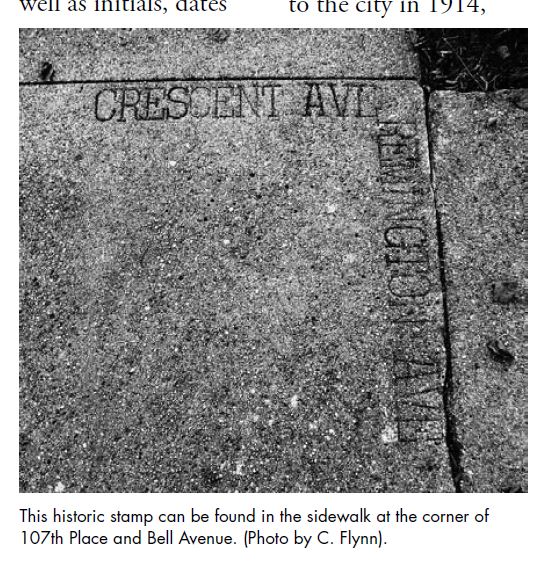
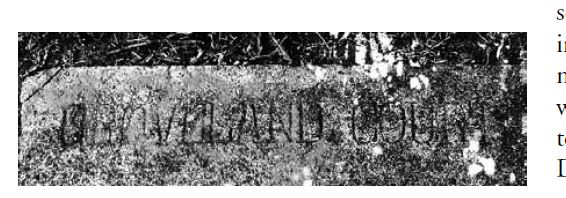
If you look closely, you can still find the old street names stamped into some of the sidewalks. These pictures from past RHS newsletters show two examples. The corner of 107th Place and Bell Avenue has a stamp for Crescent Ave. (Bell) and Remington Ave. (the previous name for 107th Place).
Another stamp is at 108th and Drew Street, for Groveland Court, the pre-annexation name for Drew.
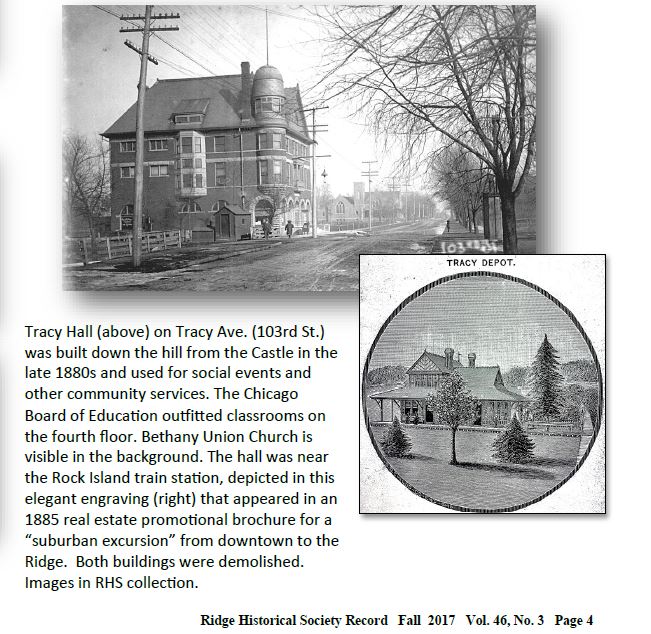
103rd Street was previously known as Tracy Ave., and indeed, the entire area around 103rd and Longwood was known as Tracy before the name Beverly caught on. The train station at 103rd Street was the Tracy stop and there was a famous Tracy Hall right by the tracks, but alas, that is gone now.
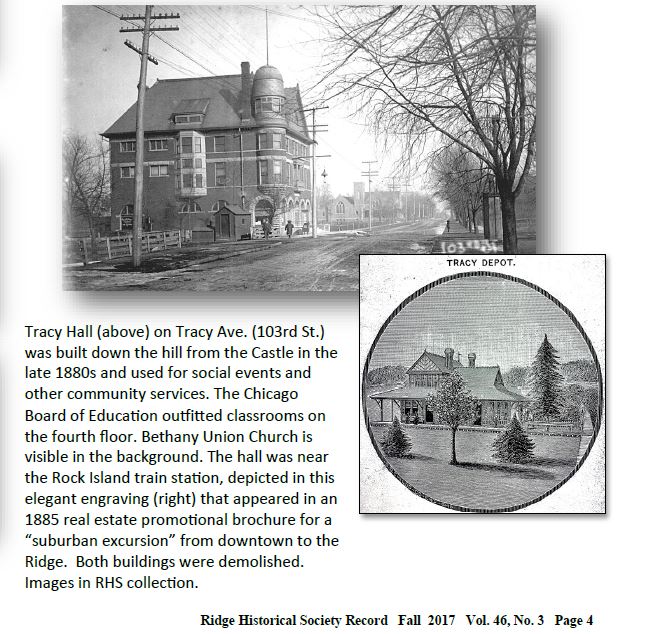
Old street names in Beverly/Morgan Park: A question came into the Ridge Historical Society. In a photo from the 1920s, an Irving Street was mentioned. Where was this?
Answer: Irving was the original name of Bell Avenue in Beverly. Many of the streets in Beverly and Morgan Park had different names before the communities annexed to the City of Chicago. Bell is a good example. In Beverly it was known as Irving and in Morgan Park it was known as Crescent.
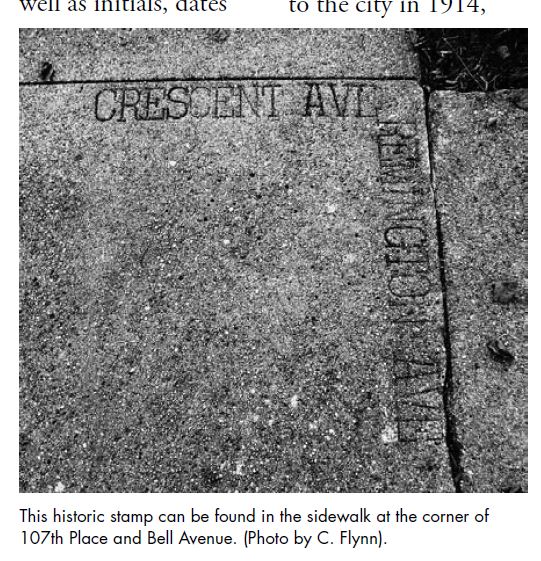
If you look closely, you can still find the old street names stamped into some of the sidewalks. These pictures from past RHS newsletters show two examples. The corner of 107th Place and Bell Avenue has a stamp for Crescent Ave. (Bell) and Remington Ave. (the previous name for 107th Place).
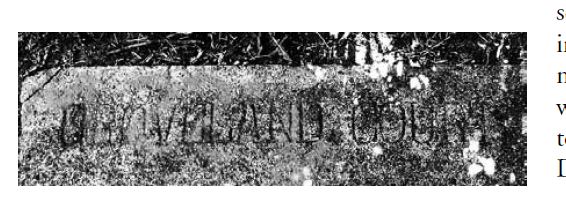
Another stamp is at 108th and Drew Street, for Groveland Court, the pre-annexation name for Drew.
103rd Street was previously known as Tracy Ave., and indeed, the entire area around 103rd and Longwood was known as Tracy before the name Beverly caught on. The train station at 103rd Street was the Tracy stop and there was a famous Tracy Hall right by the tracks, but alas, that is gone now.
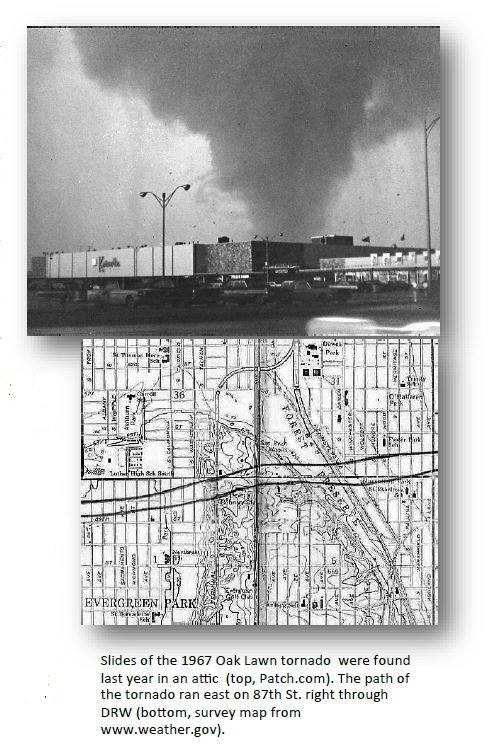
On April 21, 1967, the deadliest tornado in the history of Northern Illinois ripped through the area, killing 33 people in Oak Lawn and Evergreen Park. The tornado passed through North Beverly and Dan Ryan Woods, uprooting hundreds of trees and damaging roofs.
This picture and map appeared in the RHS newsletter in 2017.
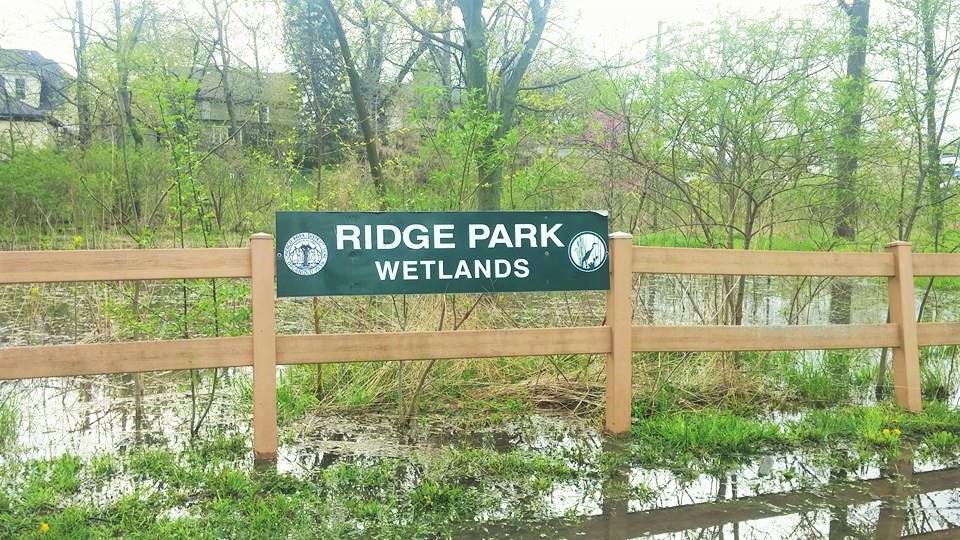
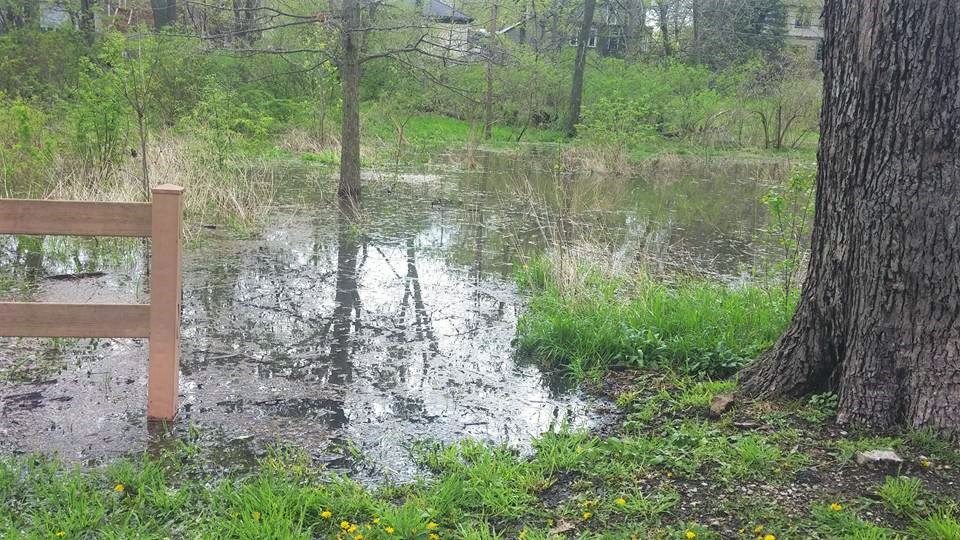
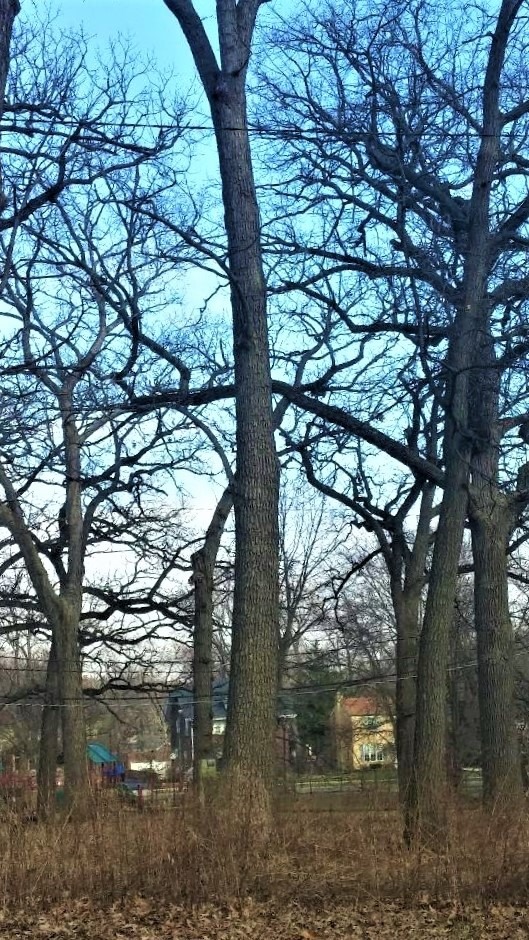
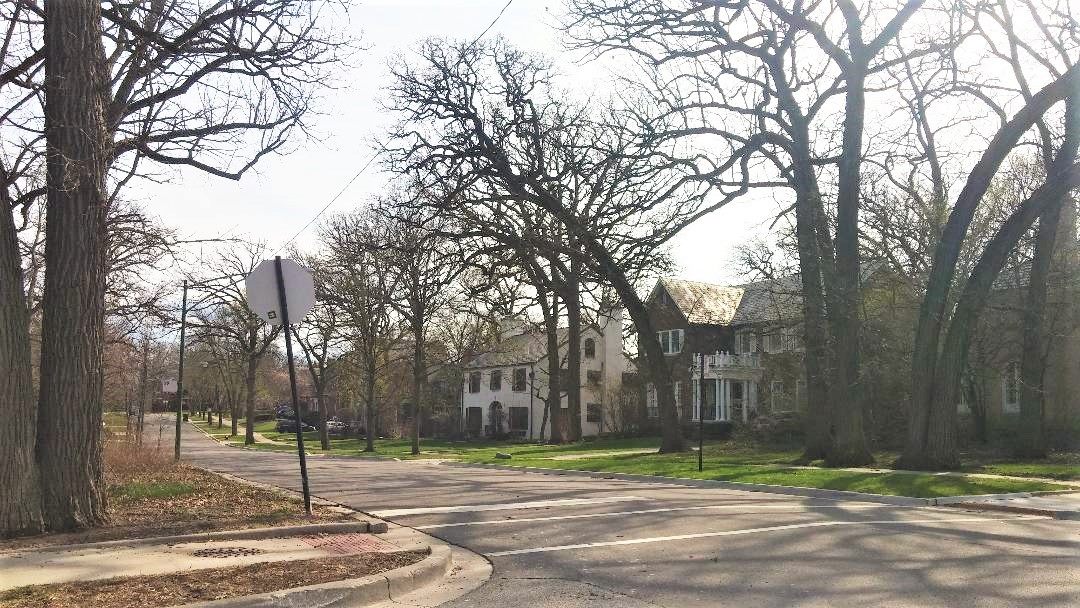
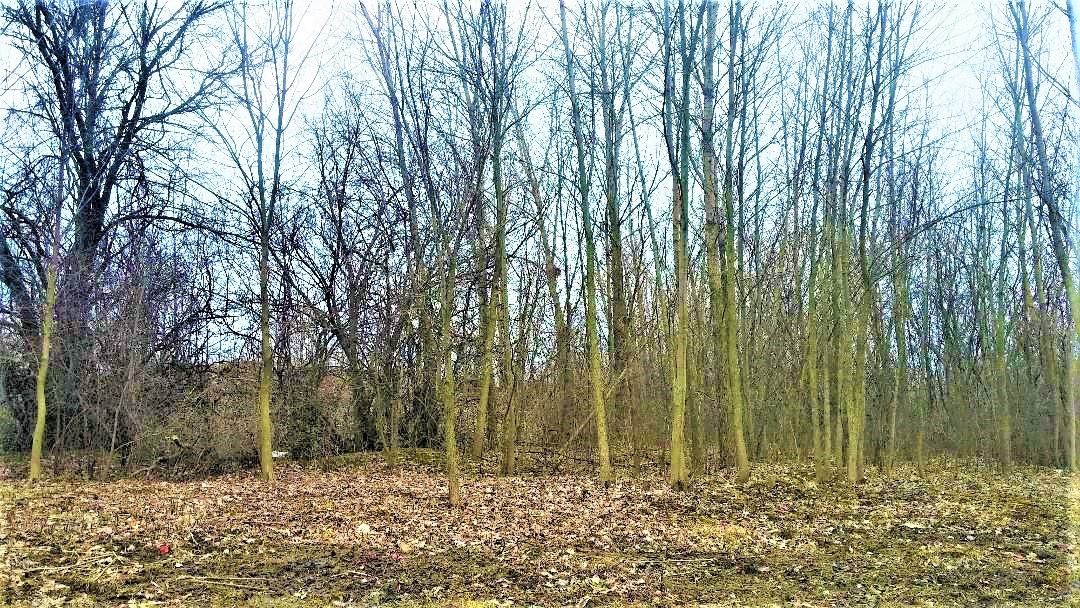
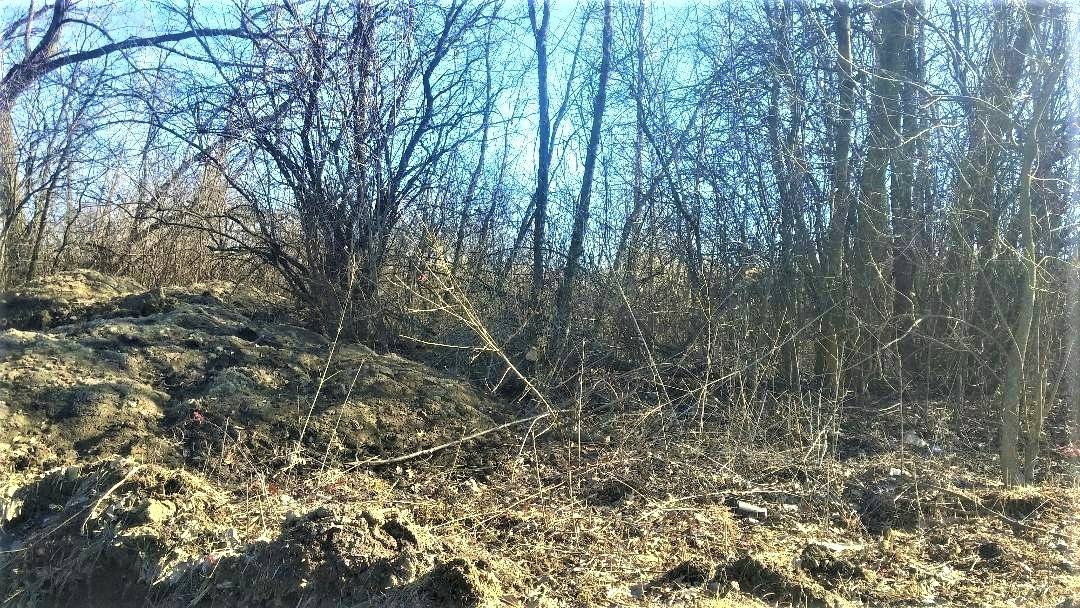
Today, Wednesday, April 22, is Earth Day. Its purpose is to support environmental protection world-wide. It was first celebrated in 1970.
The Blue Island Ridge was once a pristine wilderness. It was described as "a vast vegetable solitude" more than 150 years ago.
Today you can still see glimpses of the "wild Ridge" here and there.
Notable features are:
– Dan Ryan Woods
– Ridge Park Wetlands
– Hurley Park oak savanna
– Ancient sand dunes in Mt. Hope Cemetery
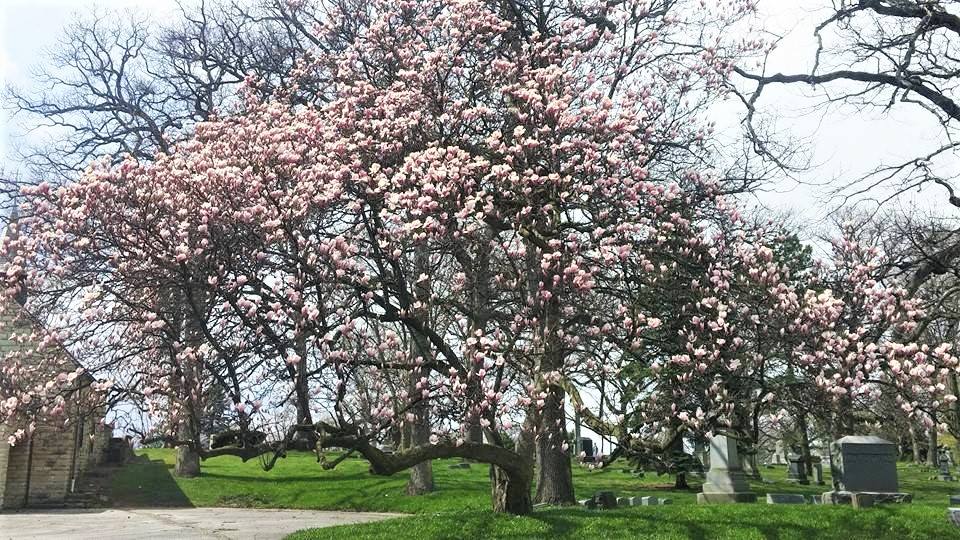
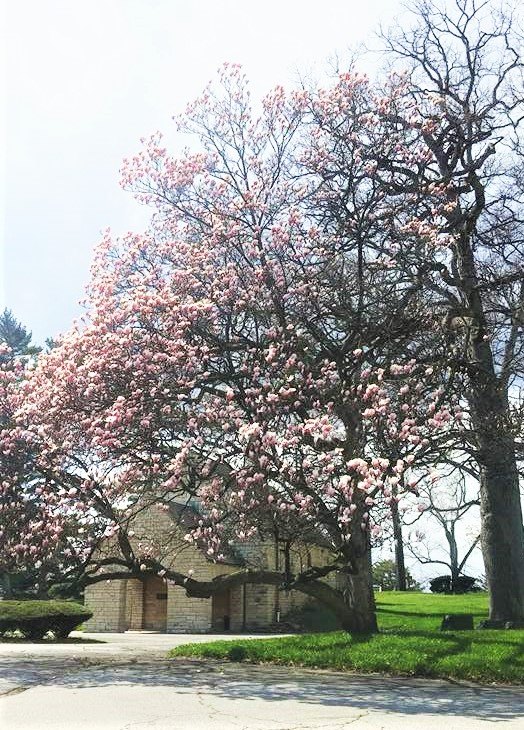
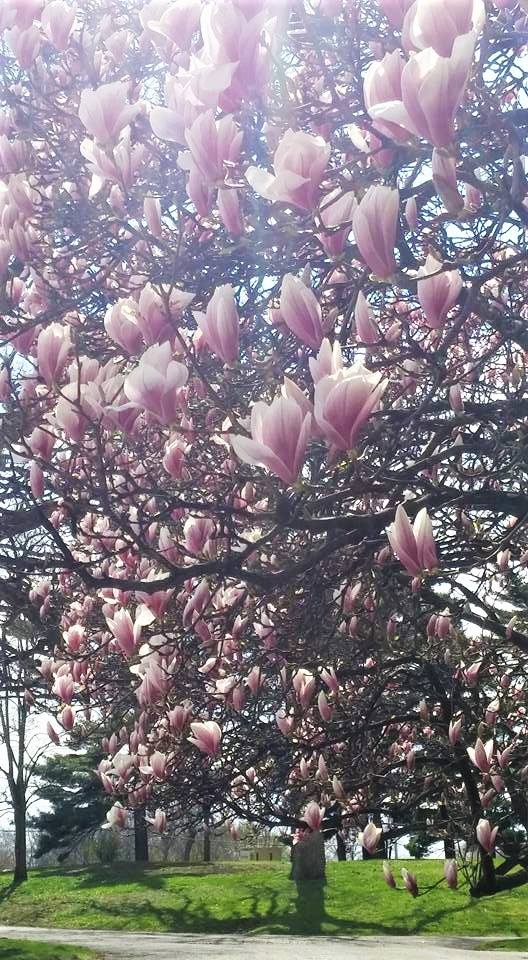
One of the most beautiful magnolia trees on the Ridge is the one in Mount Greenwood Cemetery. It is right inside the gate by the historic chapel. The tree must be a good age to be this big. It's blooming now, even today with snow flurries!
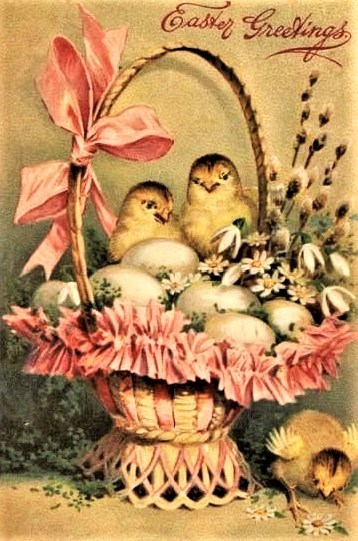
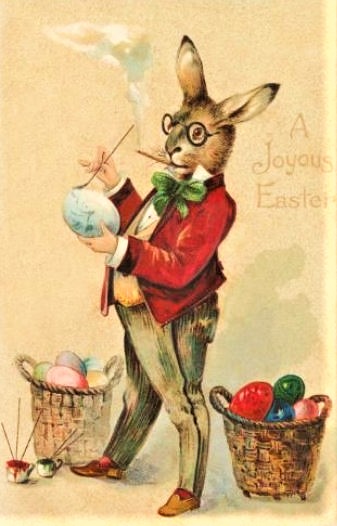
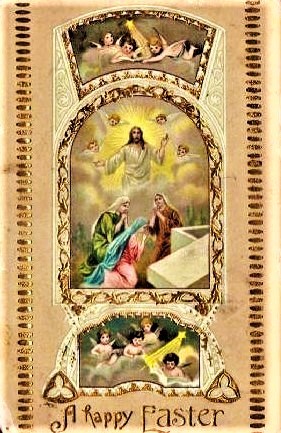
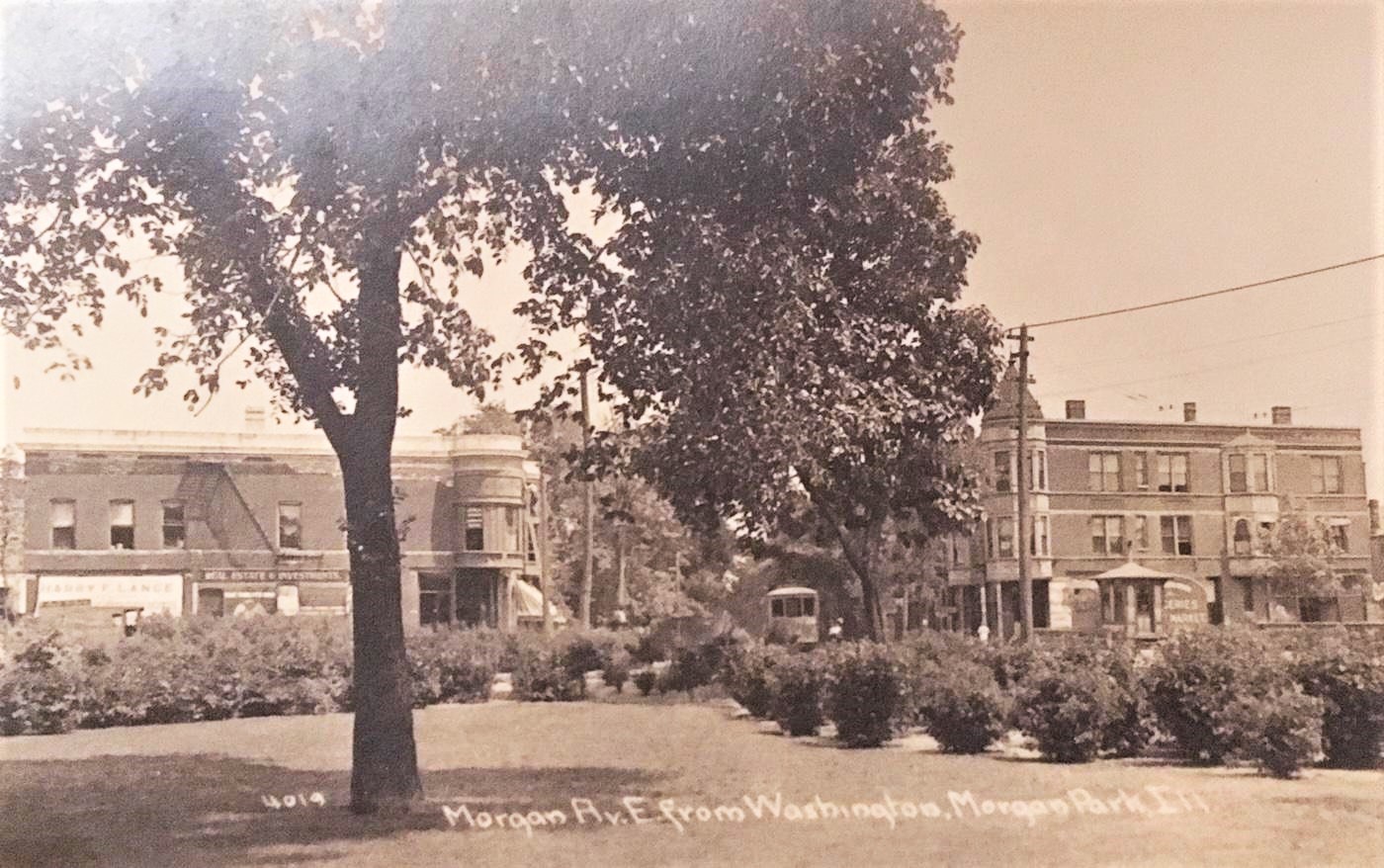
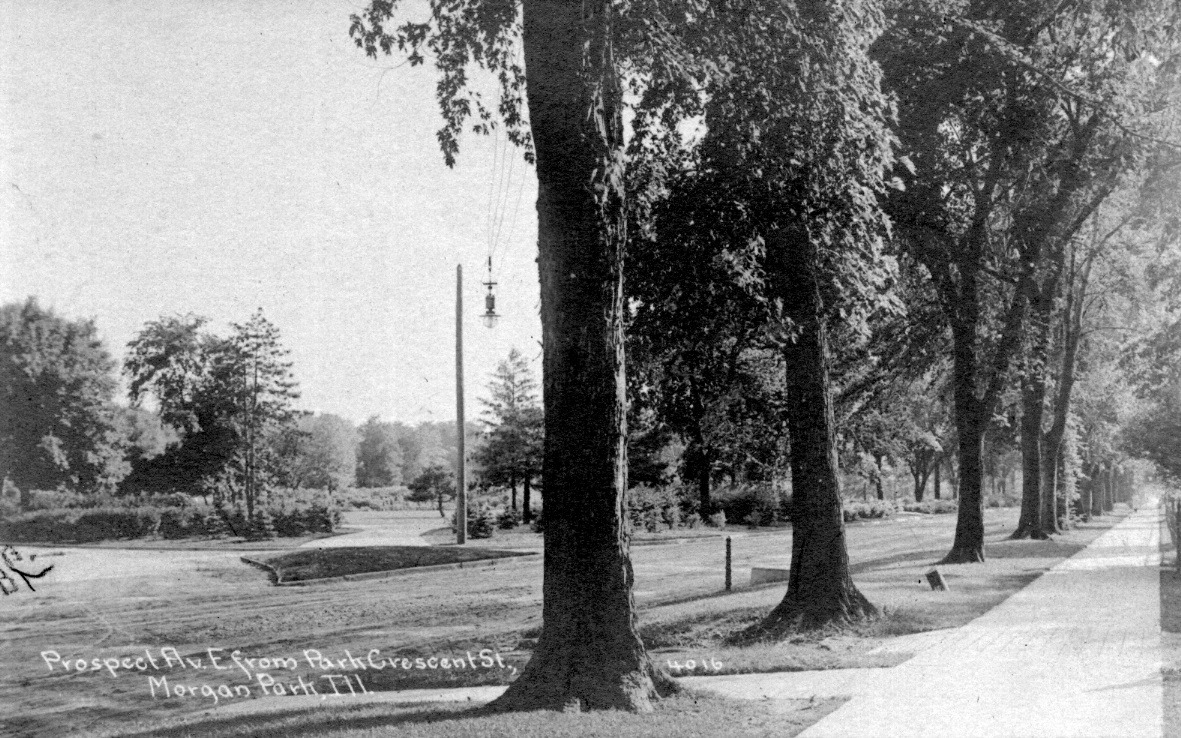
Happy Easter from the Ridge Historical Society with some charming vintage postcards.
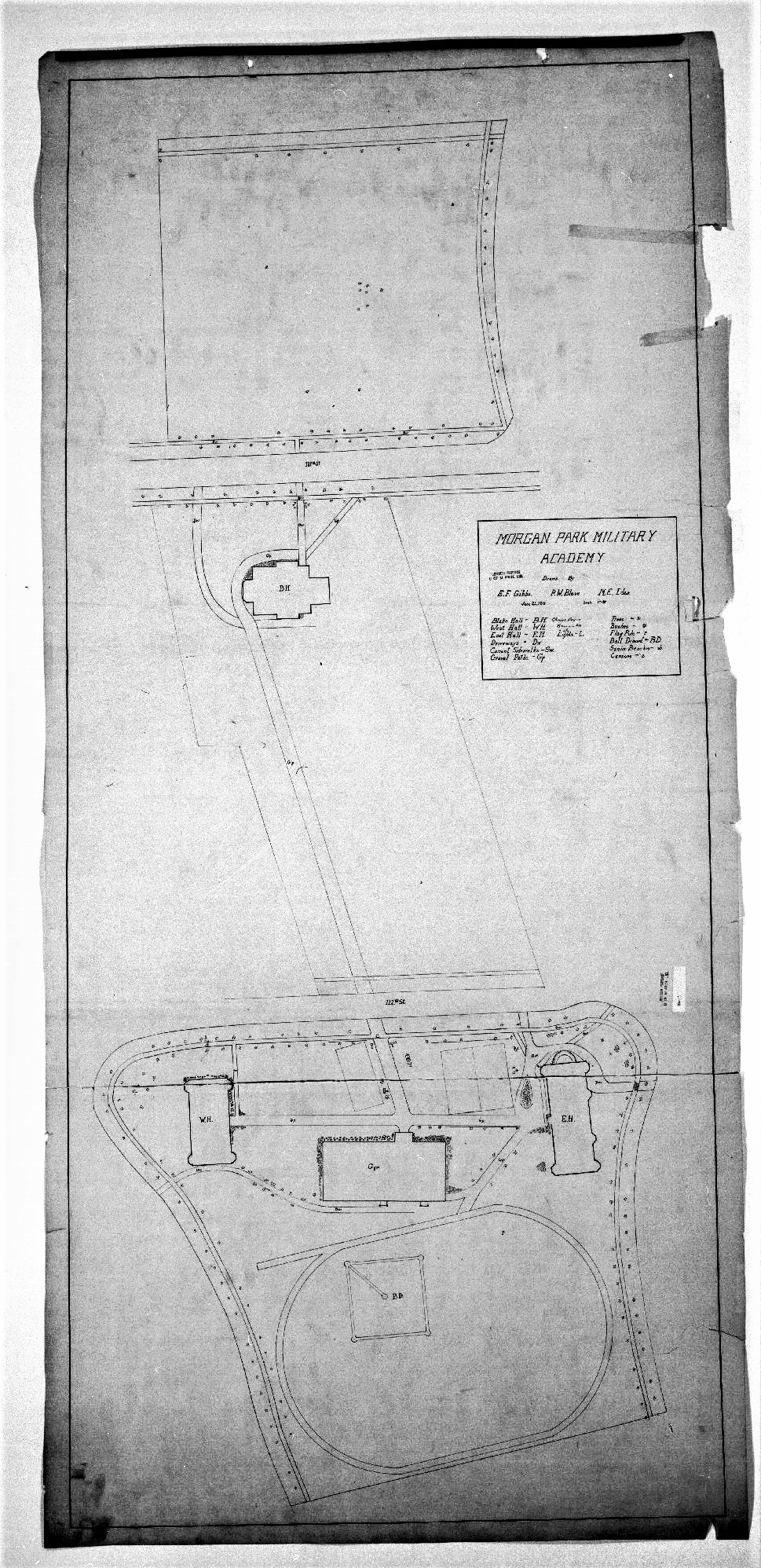
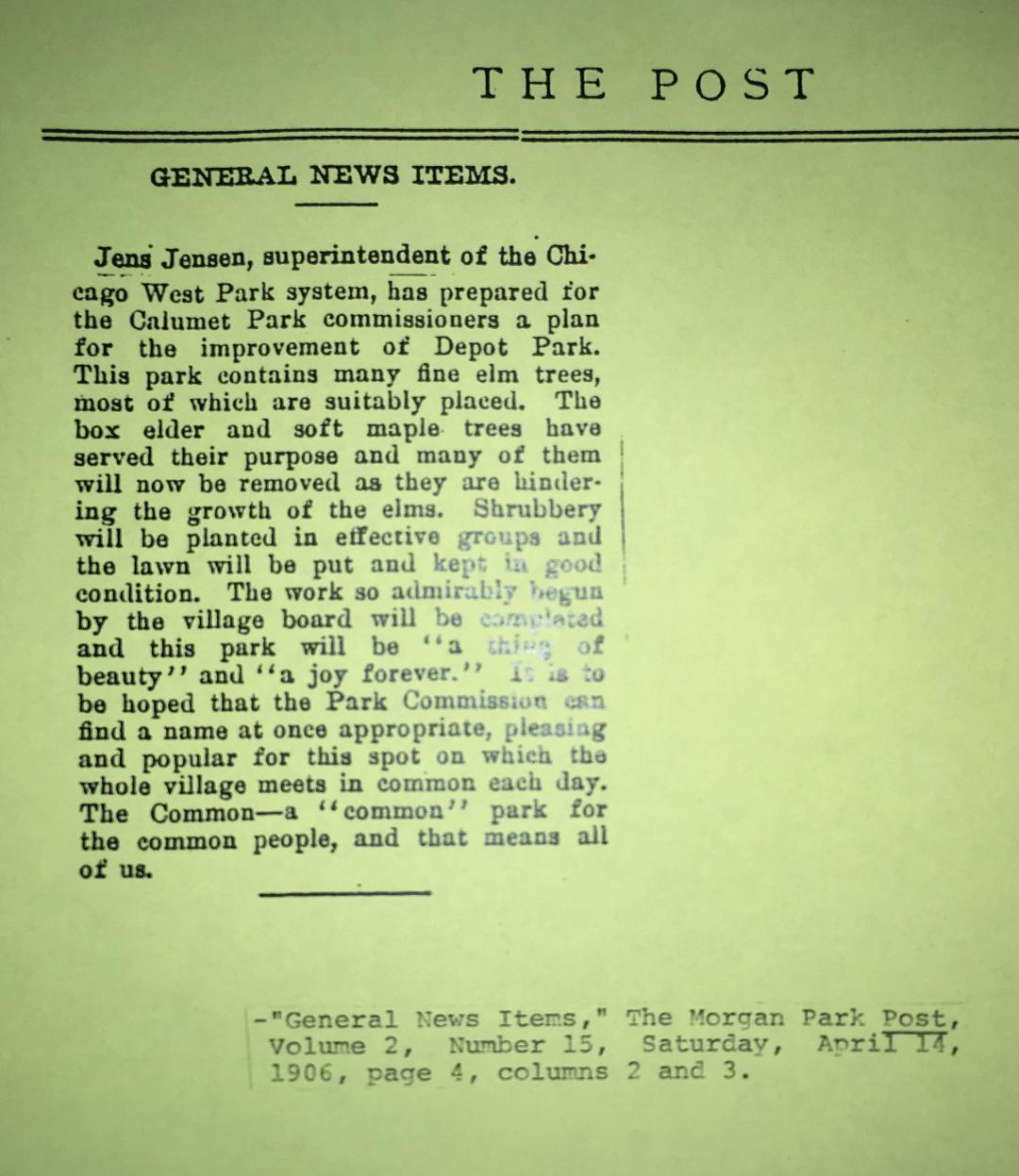
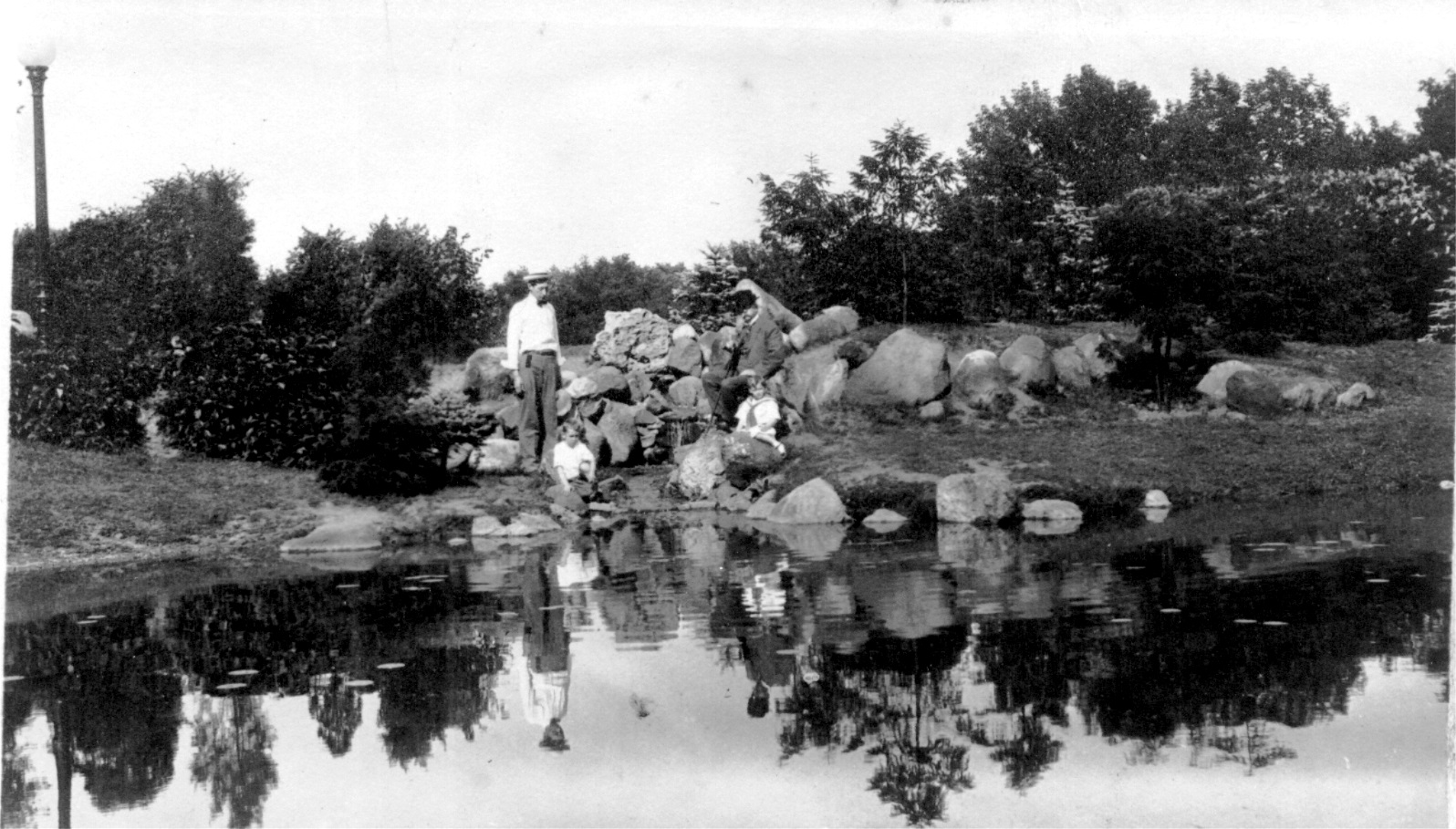
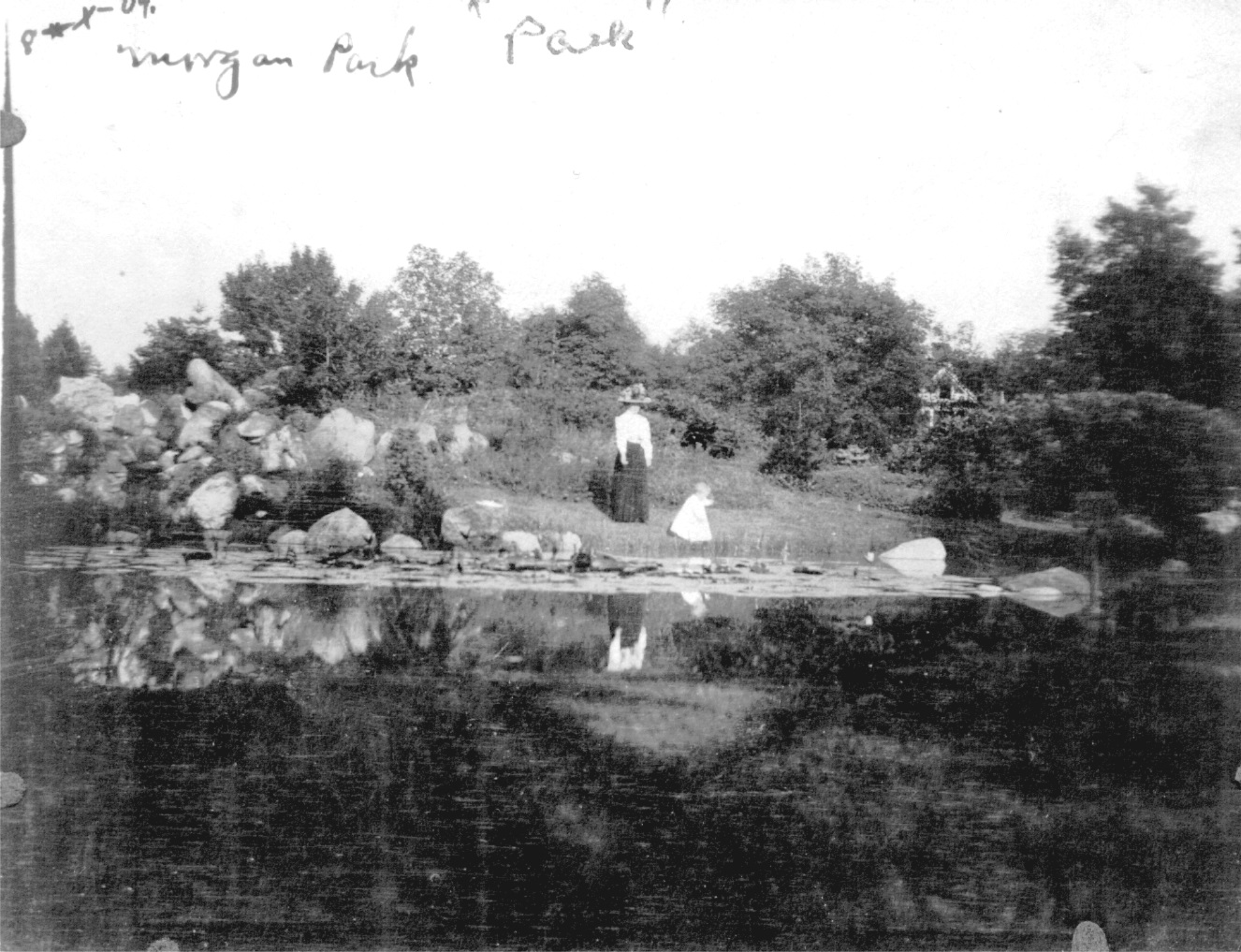
Responses to the post on Jens Jensen and his 1913 landscape plan for the house at 10520 Longwood Drive raised interest in other projects Jensen did on the Ridge.
Documentation shows Jensen did work for three private estates: 10520 (then 10560) Longwood Drive; the Hopkinson-Platt House at 10820 S. Drew St.; and 9900 S. Longwood Drive, the home of Orlando J. Buck.
Jensen and/or associates in his company did plans for two local institutions. In 1918, his company designed plans for the sports grounds around the gym south of 122nd Street for the Morgan Park Academy (attached). In 1924, his associates developed a planting plan for Oakhaven Old People’s Home, which is today’s Smith Village.
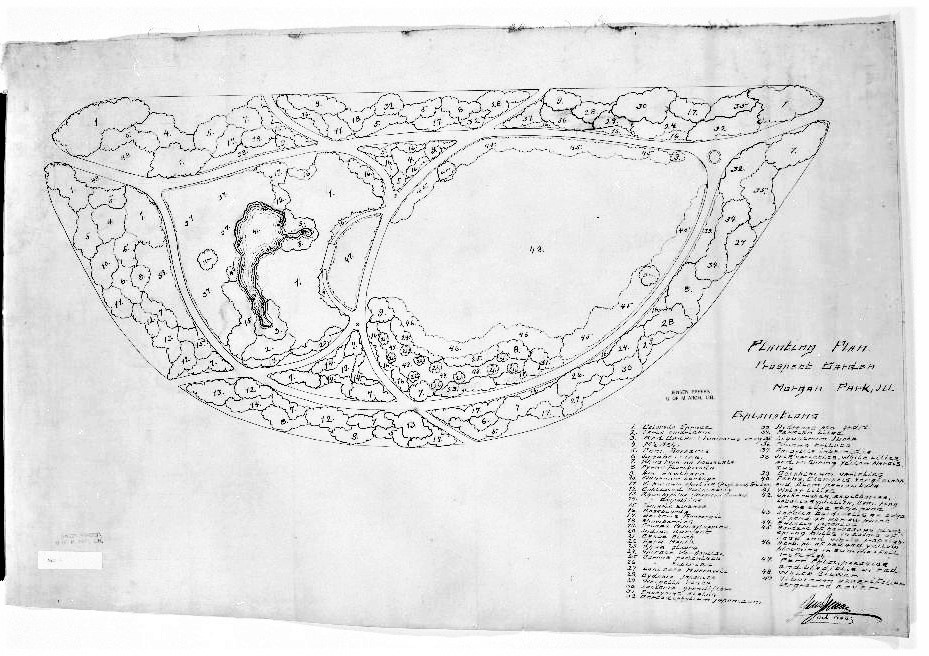
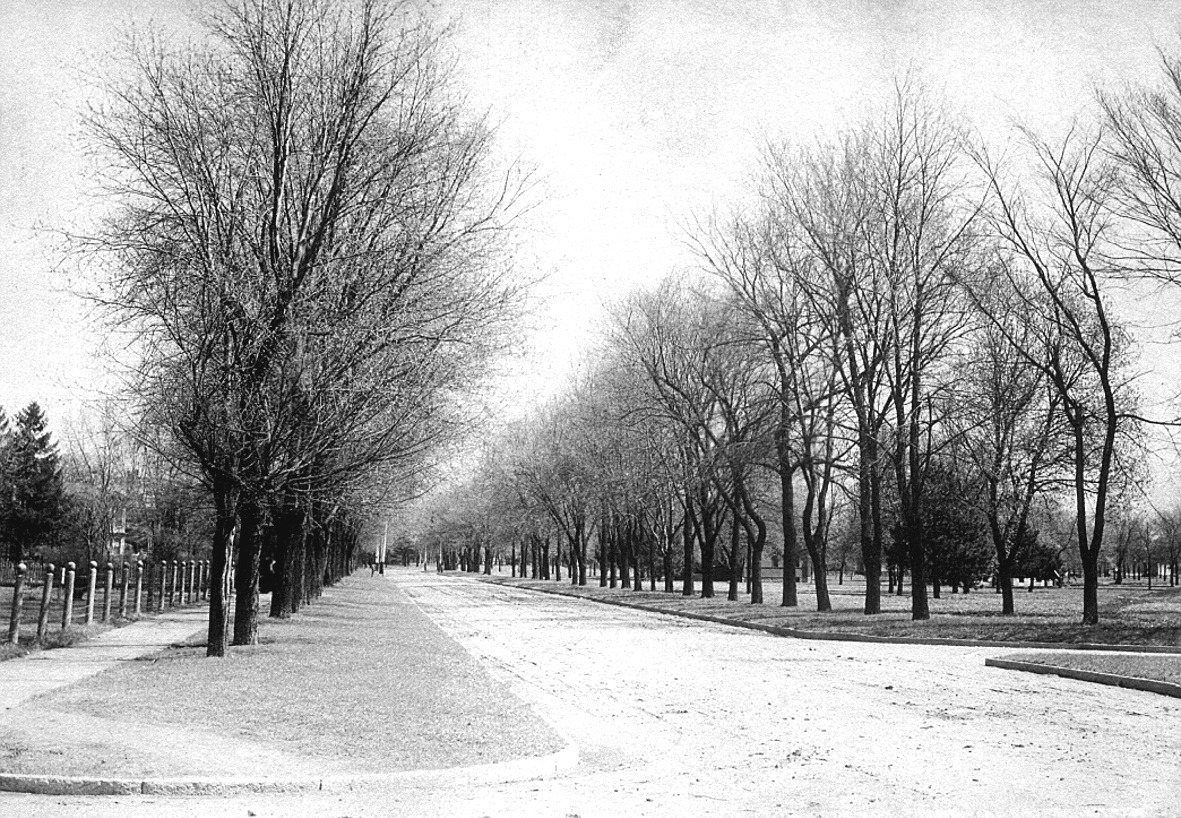
It was his work for Morgan Park’s public parks that benefited “the people.” He planned Crescent Park in 1915. Prior to that, he designed Prospect Gardens Park and Bohn (Depot) Park in 1906.
Jens Jensen immigrated to the United States from Denmark in 1884, after attending agricultural school and serving a mandatory time in the Prussian army. In Chicago, he started as a laborer with Chicago’s West Park Commission and was soon promoted to foreman.
In a famous story, Jensen designed and planted a garden of exotic flowers. When the flowers all died, he went out into the surrounding prairie and gathered native wildflowers, which he transplanted into a corner of Union Park, creating his first “American garden” in 1888.
This became his signature, a natural style with open meadows and horizontal lines bringing the Midwestern prairie into the city. He became the Prairie School landscape architect equivalent of Frank Lloyd Wright, with whom he collaborated.
By 1905 Jensen was the general superintendent of the entire West Park District. His expertise was sought by other communities, and Morgan Park, part of the Calumet Park District, asked for his help in 1906. [All of the parks were consolidated as the Chicago Park District in 1934.]
Jensen designed a plan for Depot Park, which is to the immediate west of the 111th Street Metra train station. An article in the Morgan Park Post (attached) described the project. The park was renamed as Bohn Park in 1933, for Henry J. Bohn, a publisher and first president of the Calumet Park District. Bohn was president when Jensen did his work. A real picture postcard ca. 1910 (attached) gives an idea of the park from that time.
Prospect Gardens Park was a real jewel in its time but Jensen’s plans, and pictures of the features he designed, are all we have left now. The planting plan lists the type of plans and locations. He also designed tennis courts, footpaths and a rock pool.
Part 6: What happened to the Spanish flu, and some things never change
The “Spanish Flu” infected the world’s population from 1917-1920. Then it pretty much just disappeared.
At the time, no one really knew what viruses were. They knew there was something smaller than bacteria that could not be seen even with microscopes. They knew these pathogens could infect, be transmitted between, and cause grave illnesses in humans. They knew viruses needed living cells as hosts unlike bacteria that could be cultured in a nutrient medium. Some illnesses they knew resulted from viruses included rabies, polio and influenza.
1931 saw big breakthroughs. The electron microscope was invented allowing ever smaller sub-microscopic matter to be viewed. Influenza and other viruses were grown in fertilized chicken eggs. This led to the “golden age of virus discovery” which has resulted in where we are now in identifying viruses and treating the illnesses they cause.
In the 1990s, the strain of influenza that caused the 1918 pandemic was extracted from old tissue samples. The virus, kept in secure laboratories with top level clearance for admittance, is used for research. One conjecture as to why the virus “disappeared” from humans is that the structure of the virus mutated, or changed, into a less lethal form.
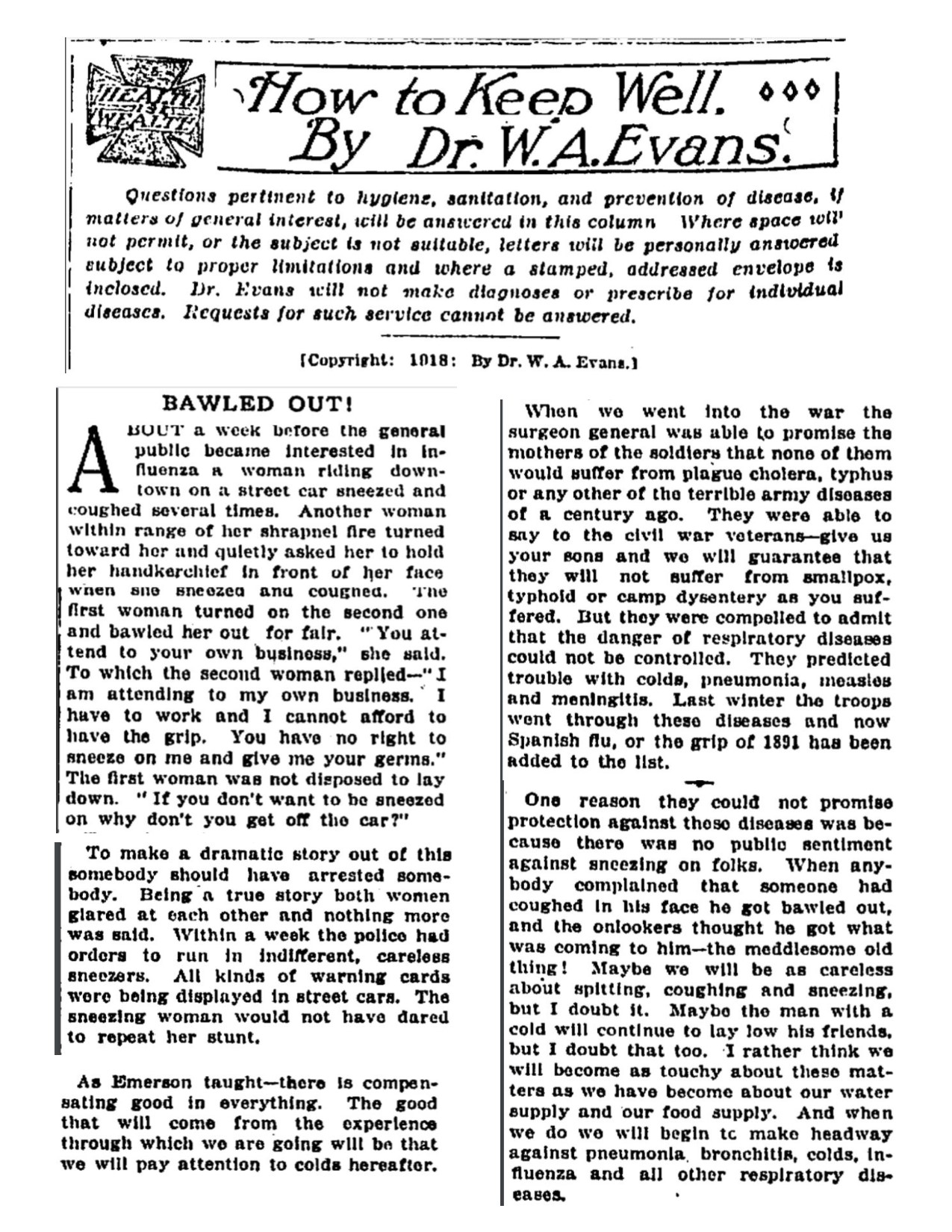
There are many similarities between the 1918 influenza pandemic and the 2020 coronavirus pandemic. Certainly one example is the reaction of some people to taking precautions not to spread the contagion.
This Chicago Daily Tribune article from Dr. Evans is a timely reminder that some attitudes from then are still around today. Some things have not changed – but maybe they will this time.
Chicago Daily Tribune, October 22, 1918