
Explore the RHS Facebook Archives, a rich repository of local history written by Carol Flynn. For two decades, Carol brought a deeply dedicated voice to public education at RHS. Her role as Facebook administrator through mid-2025 naturally extended her prolific research into meticulously detailed articles, most notably her multi-part historical series posts. Today, Carol continues her local history writing for The Beverly Review and other outlets.
Past Events: 2024
Ridge Historical Society
The Connection Between the Ridge and Ukraine
By Carol Flynn
This Saturday, August 24th, is Ukrainian Independence Day.
Ukraine remains in the headlines as that independence continues to be threatened by Russia.
This post is a reminder that the Ridge has a historical connection to Ukraine, as well as a current one.
The historical connection comes through a prominent Ukrainian American family that lived on the Ridge.
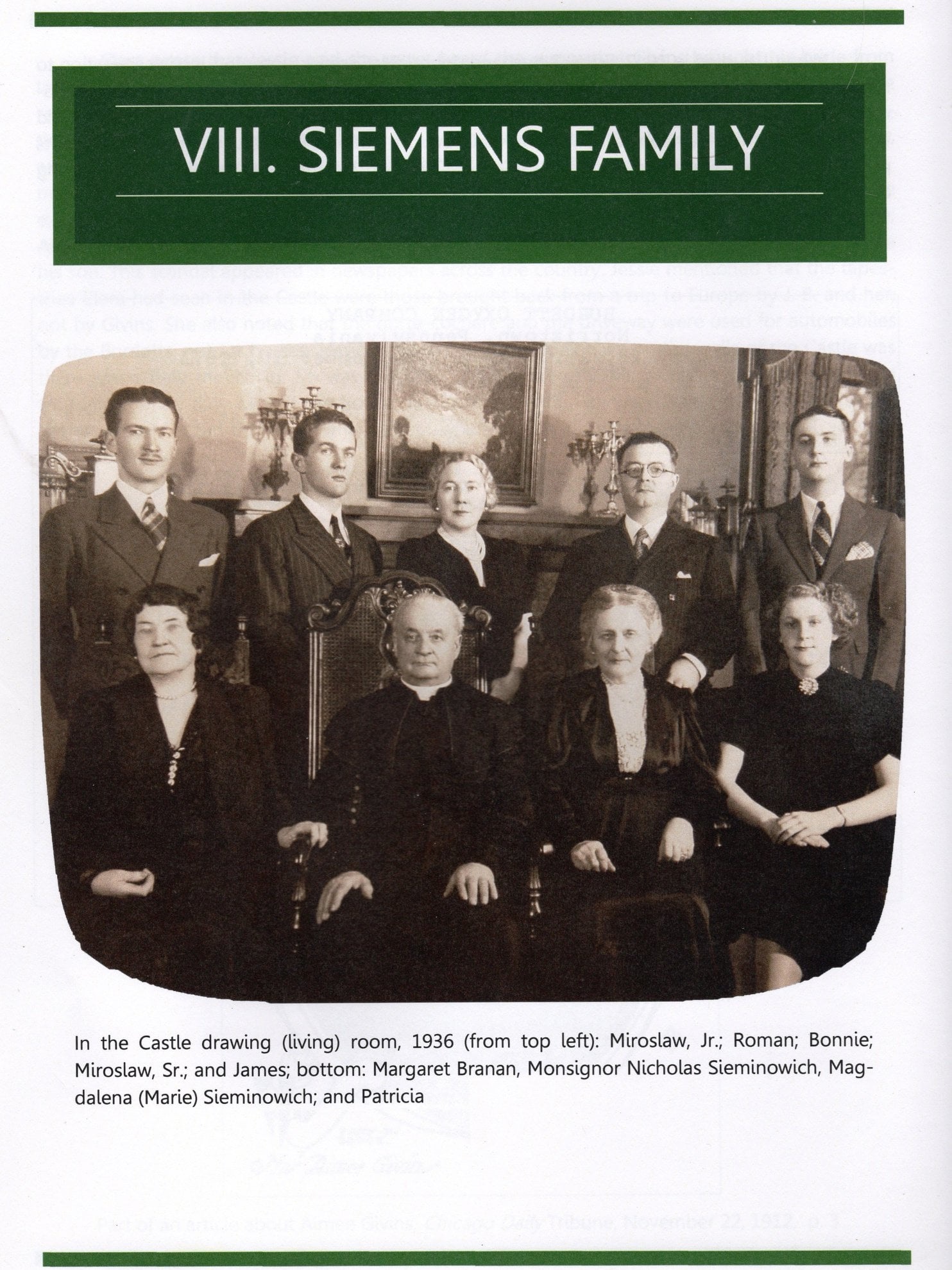
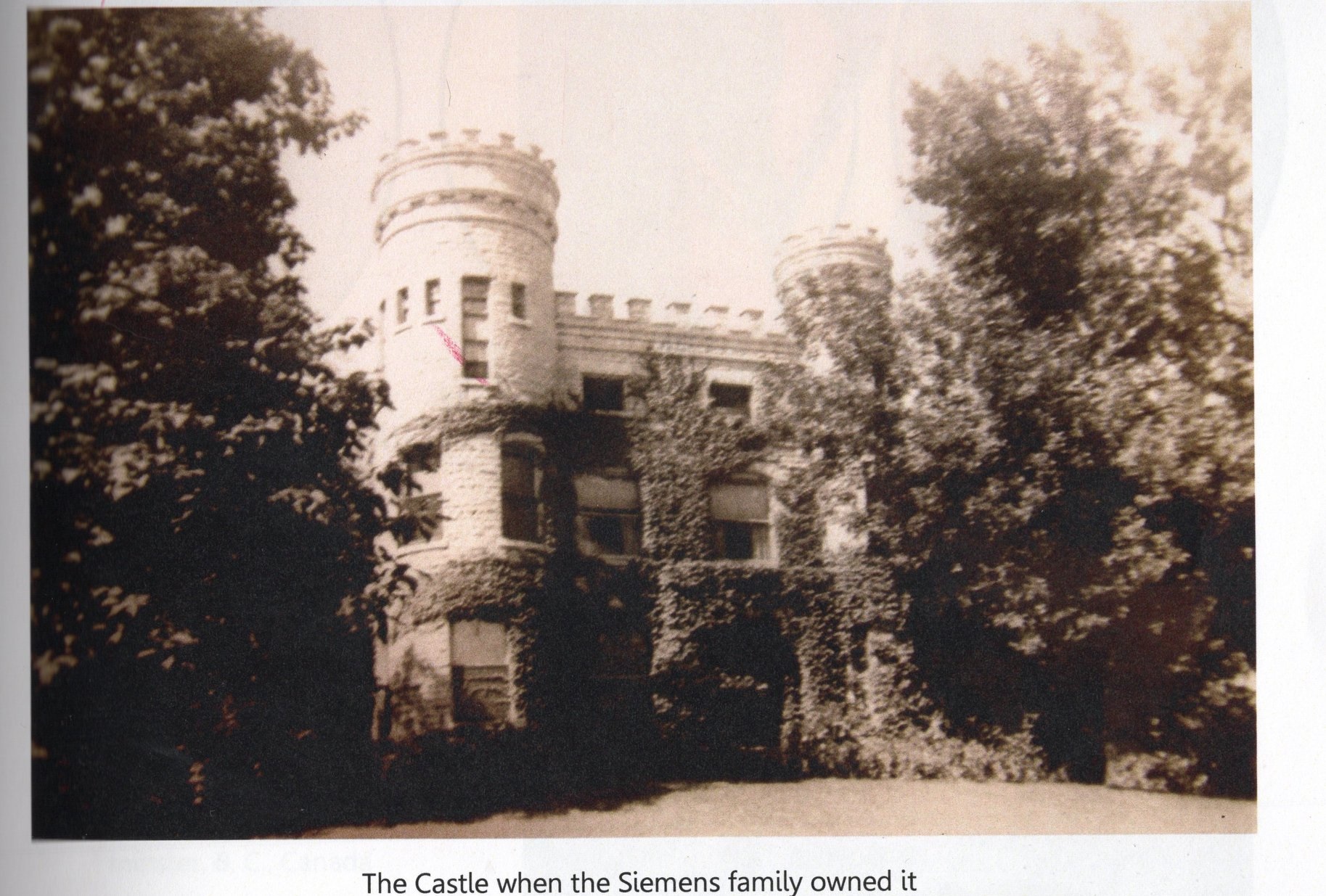
Dr. Miroslaw and Bonnie Siemens (Sieminowycz, Sieminowich) owned and lived in the Givins Beverly Castle at 103rd St. and Longwood Drive from 1921 until the Beverly Unitarian Church bought the building in 1942.
At the time of Dr. Siemens’ death in 1967, at the age of 82, the family was living at 9559 S. Longwood Drive.
Dr. Siemens was born in 1885 in Ukraine and came to the USA in 1907. He graduated in 1913 from Bennett Medical College, affiliated with Loyola University.
He was naturalized as a U.S. citizen in 1914, and served in the U.S. military during World War I. He was a major, a regimental surgeon, with the 497th Field Artillery.
He then practiced at Roseland Community Hospital and kept an office in the Castle. He was also the physician for the Nickel Plate Railroad.
Dr. Siemens’ parents, Nicholas and Maria Magdalena Seiminowich, also lived in the Castle. Nicholas was a Ukrainian Catholic priest who rose to monsignor. In this rite, married men can be ordained priests.
Bonnie Veronica Barry Siemens, born in 1890, was Irish Catholic. They married in 1915 and had four children, Miroslaw, Jr., Roman, James, and Patricia.
Bonnie's mother Margaret Branan also lived with the family. Bonnie had tuberculosis and the grandparents did much of the childcare.
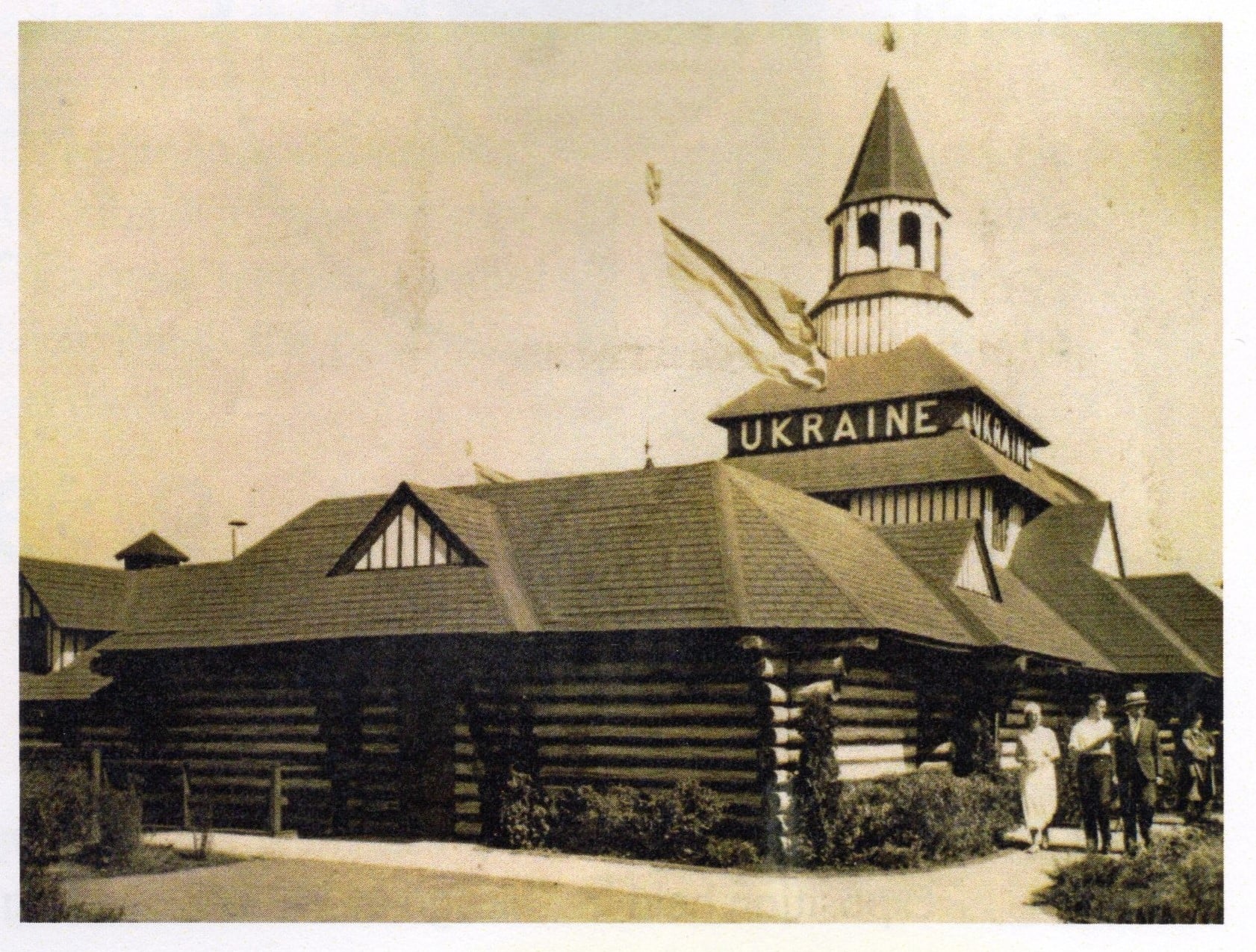
Dr. Siemens was very active and important in the Ukrainian American community. One notable achievement was to serve as the planner, fundraiser, and chair of the Ukrainian exhibit at the Century of Progress World’s Fair in Chicago in 1933-34. The exhibit showcased the country’s traditional arts and culture, including pysanky, the famous Ukrainian Easter eggs decorated using a wax-resist method. The tradition of decorating eggs, now associated with Easter, originated in Ukraine and the practice goes back thousands of years, predating the arrival of Christianity.
In 1939, Siemens was called to testify before the Special Committee on Un-American Activities of the U.S. House of Representatives because of a Ukrainian organization of which he was president. This was a precursor of “McCarthyism” when private citizens as well as public employees were investigated for “subversive activities” because of suspected communist ties. No charges were ever laid against Siemens’ group. The group dissolved in 1942.
Siemens was a benefactor of St. Nicholas Ukrainian Catholic Cathedral in Ukrainian Village on Chicago’s north side.
In the early 1950s he was instrumental in establishing the Ukrainian National Museum and served as honorary president.
Dr. Siemens has been called the “first ambassador for Ukraine in the U.S.” because of his efforts to preserve Ukrainian history and to help refugees from the country. Many dignitaries including the Crown Prince of Ukraine visited the family in the Castle.
The Siemens family is covered in "Chicago’s Only Castle – The History of Givins’ Irish Castle and Its Keepers" by Errol Magidson.
The Ridge community currently has two events going on that relate to Ukraine.
First, the book-signing for a new children’s picture story book, the “Plucky Ukrainian Sunflower,” created by local artist Judie Anderson and her daughter Karen Doornebos, will be on Ukrainian Independence Day, Saturday, August 24, from 2 to 4 p.m. at Bookie’s New and Used Books, 10324 S. Western Ave. Here is a link to an article on that event: https://www.beverlyreview.net/news/community_news/article_ce43cdba-598e-11ef-9490-3f76ccffd4b3.html
Second, the exhibit by Ukrainian artist Valeriia Tarasenko at the Beverly Arts Center, 2407 West 111th St., will continue through September 15th. Here is a link to an article on that event: https://www.beverlyreview.net/news/community_news/article_252dd3e2-4e94-11ef-9901-33b32ad93eb6.html
The Ridge Historical Society
Labor Day on the Ridge 100 Years Ago
By Carol Flynn
One hundred years ago, Labor Day occurred on Monday, September 1st.
It was a lovely day – in the mid-70s, partly cloudy, gentle shifting winds: a perfect day to wrap up the summer.
Throughout the Chicagoland area, the holiday was celebrated with activities. The mosquitos were particularly bad that year, especially in the forest preserves, but that did not stop thousands of people from going to the preserves for picnics and sporting events.
The Beverly Preserve at 87th Street and Western Avenue was one of the most popular of the forest preserves because it was the only one accessible by public transportation. Streetcars brought people as far as 87th Street and Ashland Ave., and they walked the rest of the way; or the Rock Island Railroad dropped them off at the 91st Street station, right outside of the forest preserve.
Around 1900, for about a decade, Morgan Park held large “Morgan Park Day” festivals on Labor Day.
In 1923 and 1924, a different kind of program went on, a “chautauqua.”
“Chautauqua” was an adult education and social movement of the late 1800s to the mid-1920s. The movement started in 1874 with an adult summer school for Sunday School teachers at an outside campsite on Chautauqua Lake in New York. That program started with Bible studies, but the idea spread to other schools and sites that started offering programs in many different topics.
Schools, and then communities and private organizers started offering chautauquas, as the programs became known, to the general public. The programs were usually a multi-day event, and featured a variety of speeches and educational talks, along with musical acts, dancers, art events, and other entertainment.
In Beverly/Morgan Park, the chautauqua that was offered from August 23 to September 3, 1924, was produced by the concert management firm of Stroup and Phillips, and was held on Hoyne Avenue from 110th to 111th Streets.
Roy Phillips, who lived in Morgan Park and had been the editor of the Weekly Review and Blue Island Sun Standard newspapers, had gone into the business with Harry Stroup in March of 1923. They represented a wide range of musical artists.
We don’t know the programs, speakers, or performers that Phillips presented that year, but one strong possibility was a performer introduced as the Indian princess “Watahwaso, a daughter of the Penobscot tribe of Indians,” that he featured at other programs.
Watahwaso appeared in costume and related “interesting Indian legends and sang beautiful songs of her own and other tribes.”
Another performer that Phillips promoted that year who likely performed in Morgan Park was James Goddard, a bass baritone of the Chicago Opera Company. He was described as “a great big he-man, strong as Hercules and handsome as Adonis,” with “a wonderful voice of great purity and strength.”
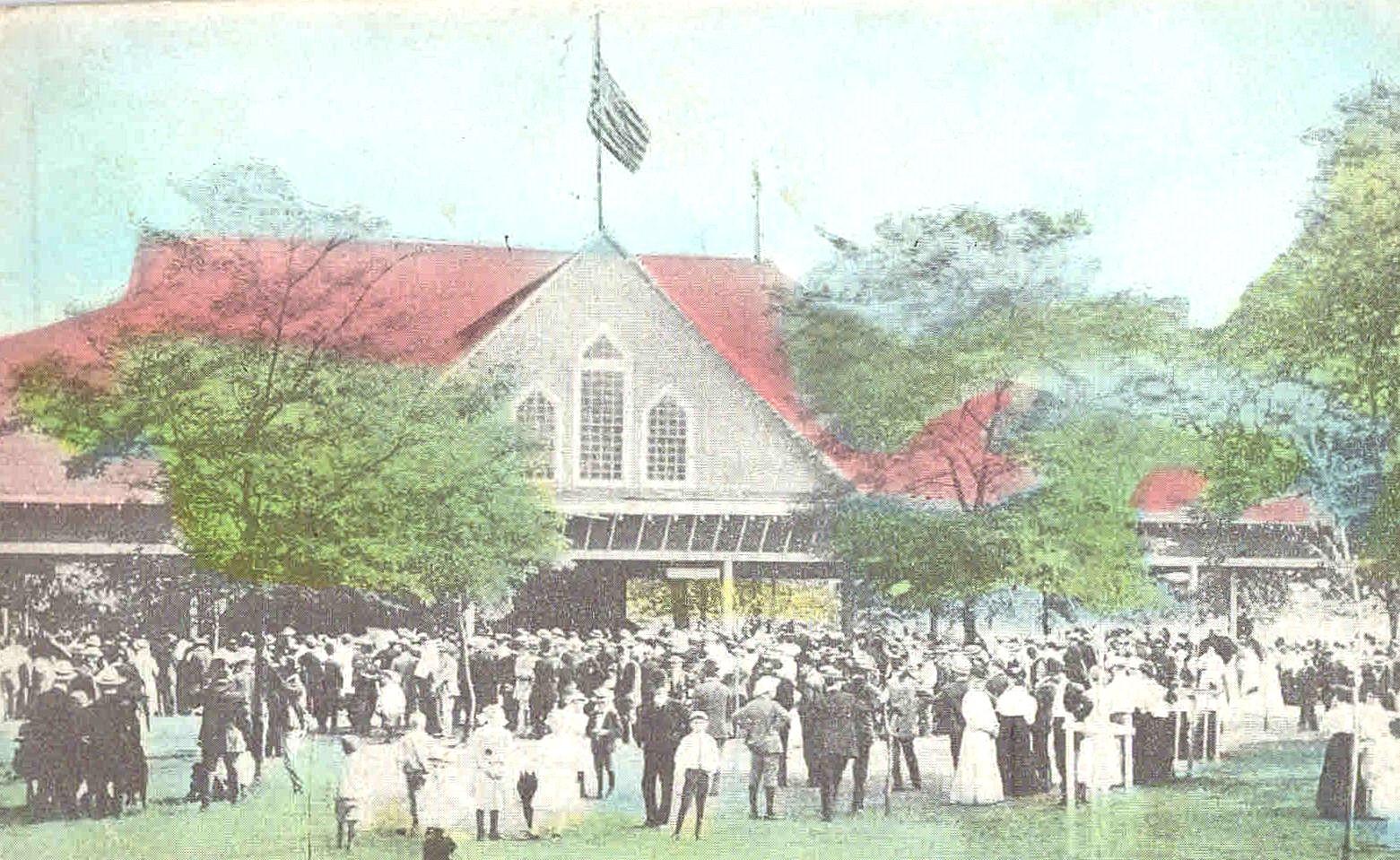
Chautauquas were very popular throughout the U.S. This image is from one held in Ohio.
The Ridge Historical Society
More on the Beverly Art Walk – Irish Dancers
By Carol Flynn
Tomorrow, Saturday, September 28th, will be the Beverly Art Walk. The Ridge Historical Society (RHS) has a spectacular day planned for the public – it will be entertaining and informative, with a true "historical" flavor that will not be captured anywhere else!
In the previous post, the artists who will be at RHS from 12 p.m. to 5 p.m. were introduced – Photographer Mati Maldre, and glass artist Sean Michael Felix.
Dancing and musical acts will also go on all around the neighborhood, but the only place visitors will be able to experience traditional Irish dancing will be at RHS.
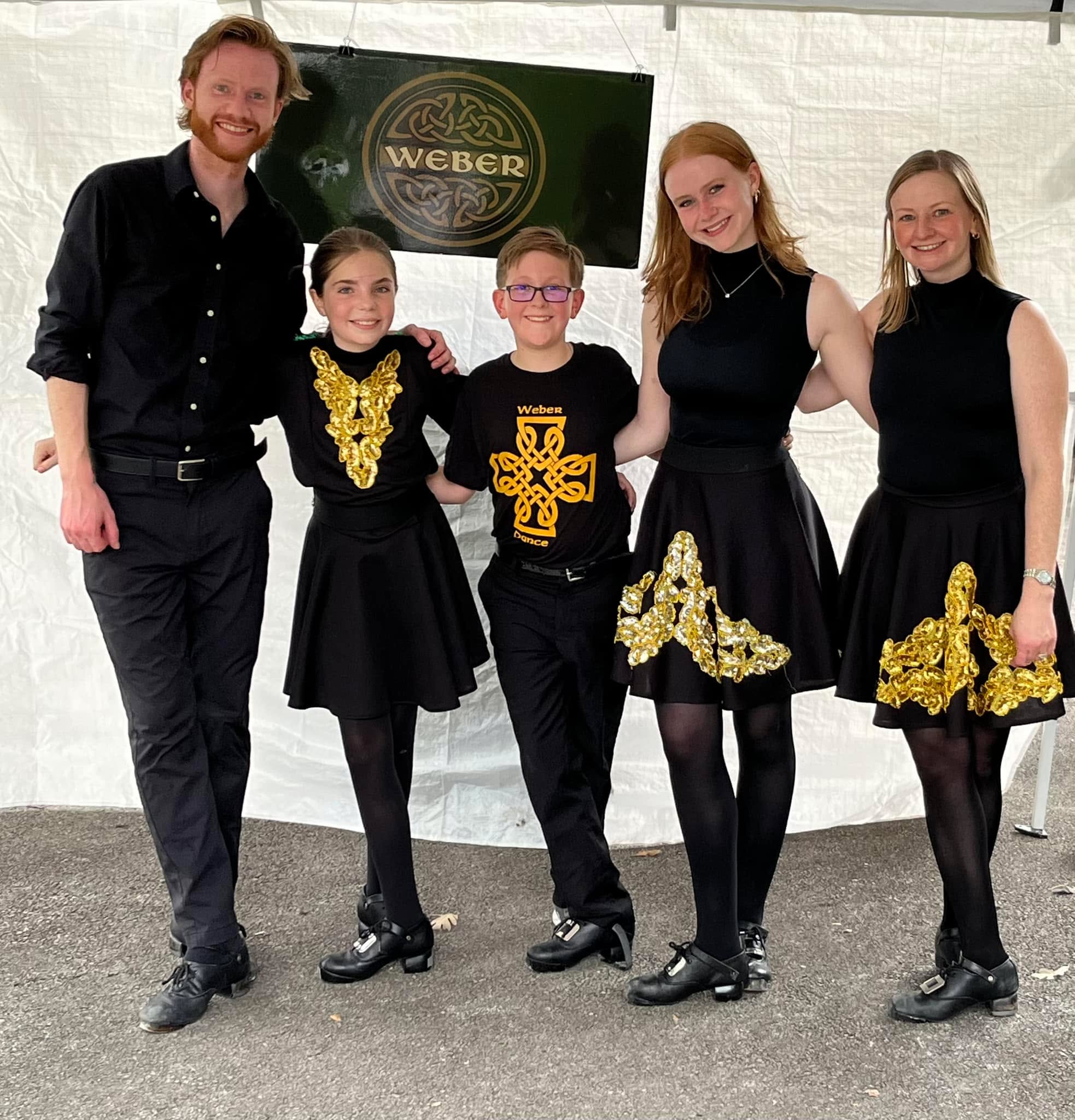
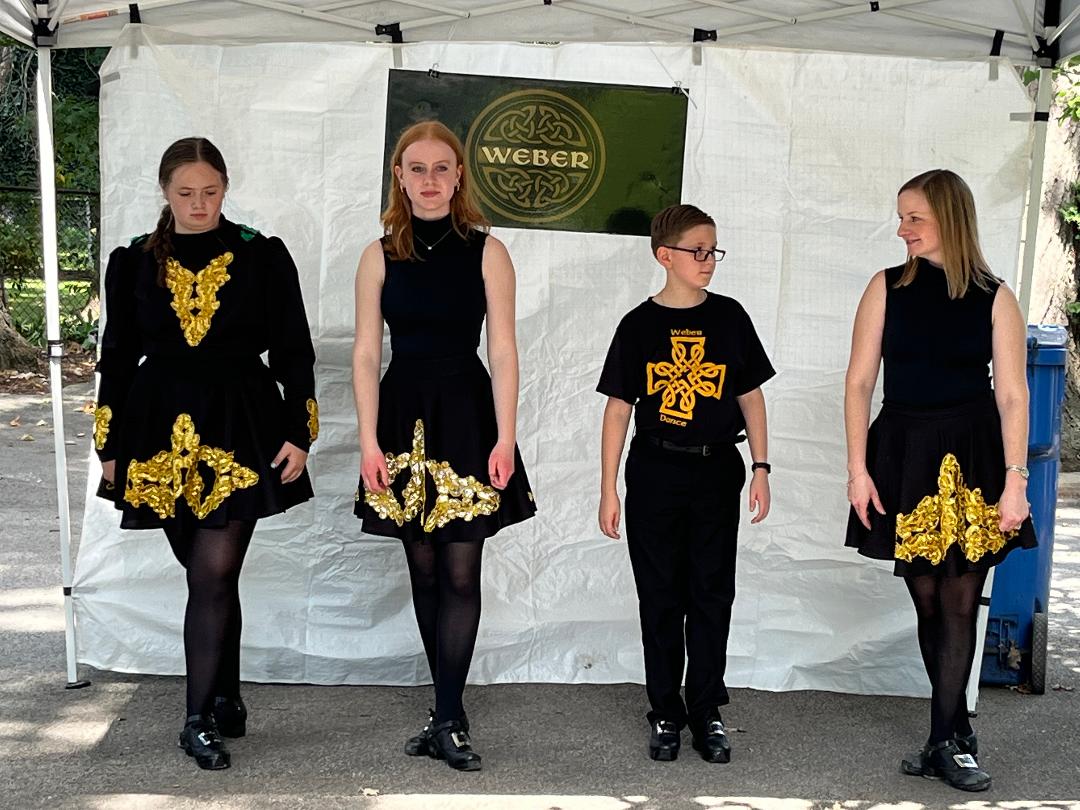
The Weber Irish Dance company will appear at RHS from 1:30 p.m. to 3:30 p.m., with regular, short performances every 10 minutes.
Weber Irish Dance has been a South Side Chicago presence for 60 years. Many people associate Irish dancing with St. Patrick's Day, but folk customs from all cultures should be shared and celebrated throughout the year.
RHS thanks Weber Irish Dance for participating in our event!
RHS is located at 10621 S. Seeley Avenue. Park on Seeley and walk up the driveway to the house.
The Beverly Area Arts Alliance's annual Beverly Art Walk is about community, and yesterday's 11th Art Walk proved once again that the Alliance has done so much to revitalize the "modern" Beverly/Morgan Park.
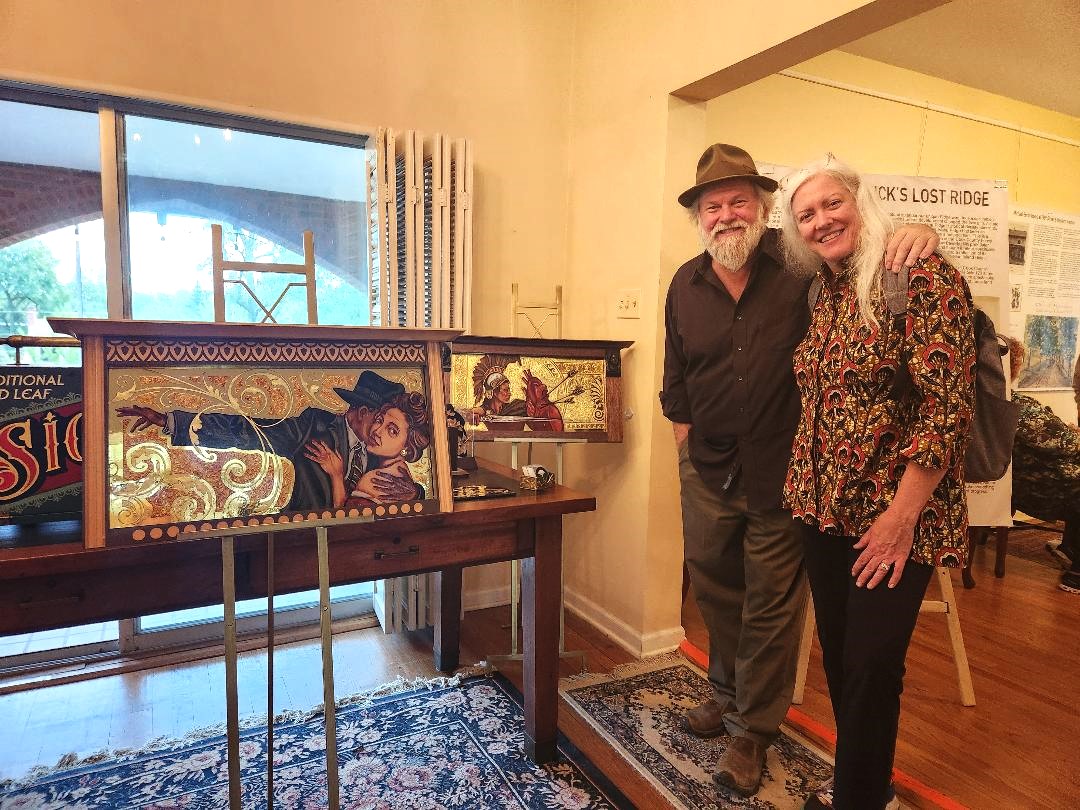
Events went on all over the neighborhood, and the Ridge Historical Society (RHS) was fortunate to have glass artist Sean Michael Felix "assigned" to us by Alliance leader Sal Campbell.
Sal always does a great job of matching artists with venues, and this is a perfect example – an artist who uses old-world processes to create beautiful images on glass, using etching, paints, gold leaf and other techniques, matched up with the one place in the community you are able, even encouraged, to be "old school" and think about the past!
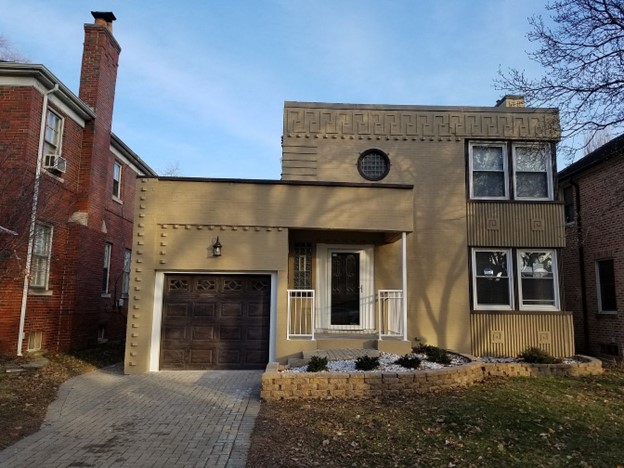
RHS also had its own Mati Maldre, photographer and RHS Board member, with a display of his award-winning architectural photos of buildings in the community designed by architect H. H. Waterman. The day was rounded out with entertainment by Weber Irish Dance company, a South Side Irish institution for 60 years!
Plus, a new term has entered the community's lexicon – several people said yesterday they were out and about "art walking." That's how language evolves.
Here is a picture of Sean and Sal together yesterday at RHS, with just some of Sean's wonderful work.
Now RHS is on to preparation of the new exhibit, "Harry Hale Waterman, Architect: Unique in Any Style," which will premiere for Open House Chicago on October 19 – 20.
Friday, Oct. 11, 7:00 pm
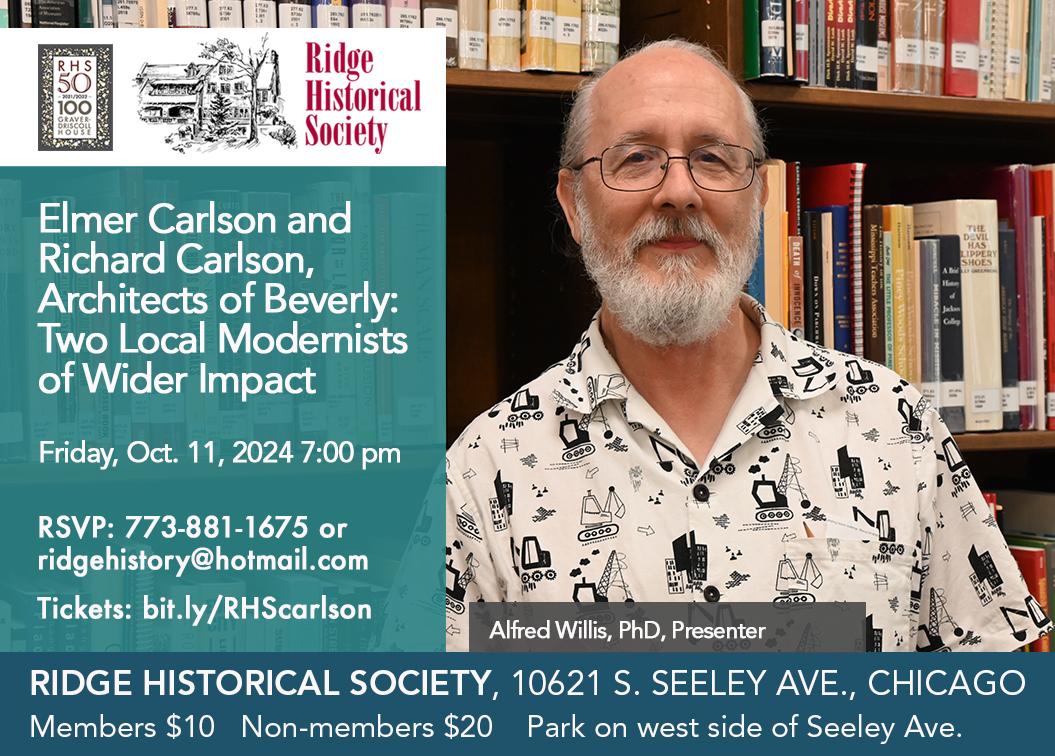
Elmer Carlson and Richard Carlson, Architects, of Beverly: Two Local Modernists of Wider Impact
– Alfred Willis, PhD, Presenter
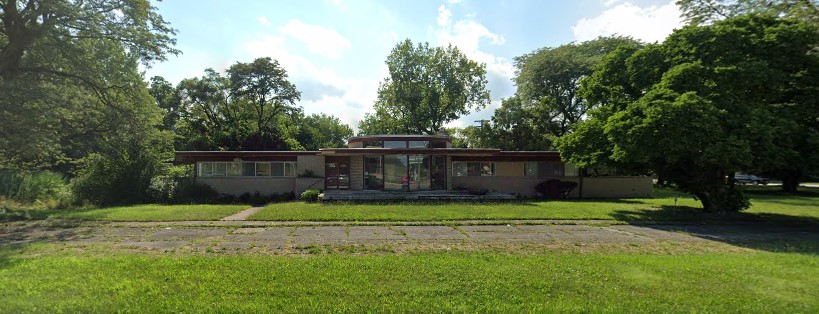
Elmer C. Carlson (1897-1956) was a Chicago architect of Swedish descent who settled in Beverly in the 1920s. Despite the depressed economic circumstances of the 1930s, he managed to prosper in that decade as a designer of residential, commercial, and institutional buildings in southern Chicago and several of its suburbs. While an accomplished creator of 'period' designs of striking charm, he simultaneously evinced a fine flair for Modernism.
Working out of an ultramodern building on 95th Street, completed to his own design in 1946-47, he went on to even greater success after World War II as a prolific local architect of major projects sited both close to home and further afield. Elmer Carlson died in 1956 while developing a proposal for what should have been his greatest achievement in the residential sector, a villa in Robbins for the wealthy African-American entrepreneur S. B. Fuller.
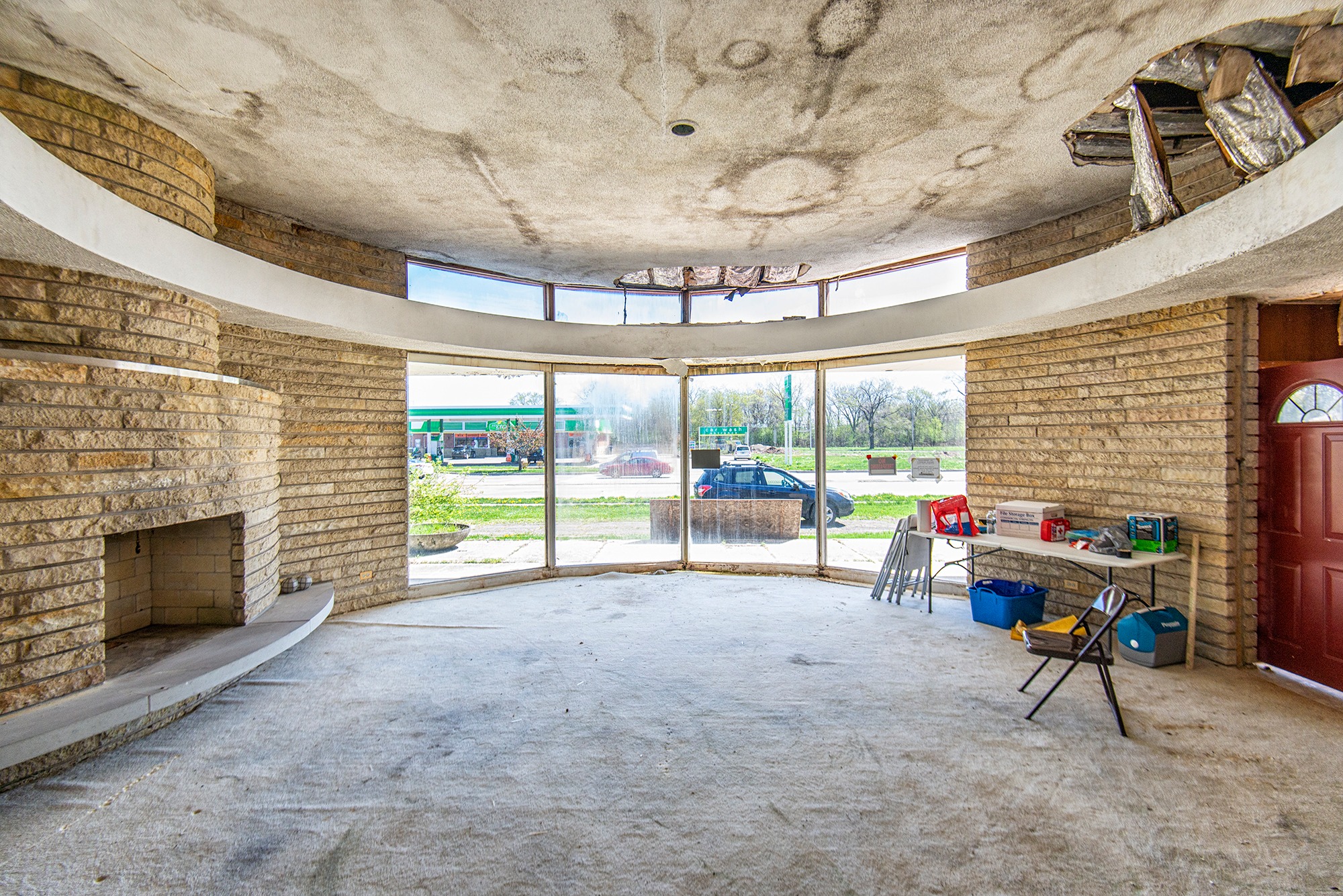
Responsibility for refining the preliminary form of that interrupted project passed to his son, Richard E. Carlson (1930-2017) who had recently graduated in architecture form the University of Illinois and joined his father's Beverly practice. Thus making the most of a rare opportunity to begin his own career with what for his father (and mentor) had been the blank-check chance of a lifetime, Richard Carlson soon landed a wealthy clientele of his own that permitted a full display of his own unique taste and talent. His subsequent professional success unfolded first in Beverly but later in Colorado Springs.
About the Presenter: Alfred Willis, PhD is an architectural historian who grew up in Georgia. He was educated at Clemson University, Columbia University, and the University of Chicago. After retiring from a career in academic librarianship, he is now working as a consultant specializing in Modernism on nominations to the National Register. He is currently working as a contract librarian with the Historic Preservation Division of the Mississippi Department of Archives and History.
Ridge Historical Society
10621 S. Seeley Ave., Chicago, IL 60643
Limited Capacity. Get tickets here: https://bit.ly/RHScarlson
Open House Chicago takes place this coming week-end, October 19 and 20.
As one of the featured locations, the Ridge Historical Society (RHS) will be open both days from 10:00 a.m. to 5:00 p.m.
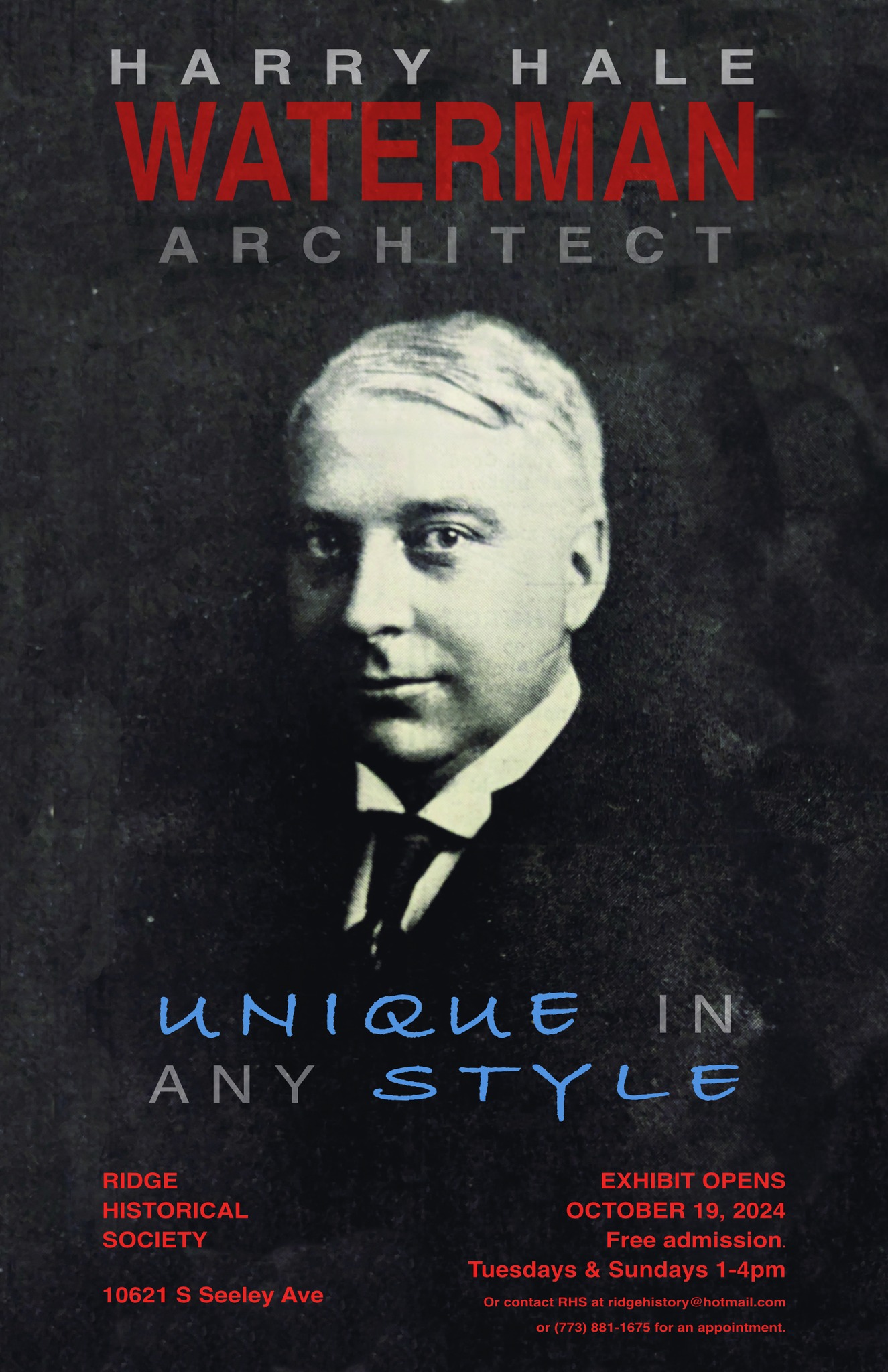
We are very excited about opening our new exhibit for this event: “Harry H. Waterman, Architect: Unique in Any Style.”
Waterman designed at least 40 buildings on the Ridge, including some well-known ones that go by popular names – the beloved “honeymoon cottage;” the “watchman’s residence” in Dan Ryan Woods; the “Walgreens’s mansion,” part of the Mercy Home for Girls; the “Beacon School;” and the “tombstone house.” All of these are covered in the exhibit.
This exhibit will focus on the contributions made by “the village architect,” as he was fondly known, as well as his personal life, and preservation of his work in the future. The exhibit will also look at some of his clients, like the Barker/Gregson and Pike families.
“Harry H. Waterman, Architect: Unique in Any Style” is curated by RHS Board member Tim Blackburn; with research and writing by Carol Flynn; architectural photography by Mati Maldre; research support by Linda Lamberty; and promotion by Grace Kuikman.
The exhibit will be up at least through the New Year. Admission is free.
RHS is located at 10621 S. Seeley Avenue. Regular open hours are Tuesday and Sunday from 1:00 p.m. to 4:00 p.m. or by appointment.
Look for the upcoming series about Waterman on the RHS Facebook page, written by Carol Flynn.
“Morgan Park Woman’s Club: 135 Years of Community Service.”
Women’s history is the community’s history. They are involved in every aspect of life where they live, often working behind the scenes.
It’s time their story was told.
This year marks the 135th anniversary of the Morgan Park Woman’s Club (MPWC).
A special event is planned for this weekend: “Morgan Park Woman’s Club: 135 Years of Community Service.” A reception and program will be held on Sunday, November 17, 2024, in the Smith Village community hall, 2320 W. 113th Place, from 2 to 4 p.m. Admission is free, there is parking, and the place is accessible.
MPWC has had a very important role in the community, impacting everything from the village’s annexation to the city of Chicago to its architecture to its schools to its parks.
A slide presentation connecting the Club’s history to that of the community will be shown by Carol Flynn, researcher/writer for the Ridge Historical Society.
There will be a display of items from the Club’s artifacts. Refreshments will be served.
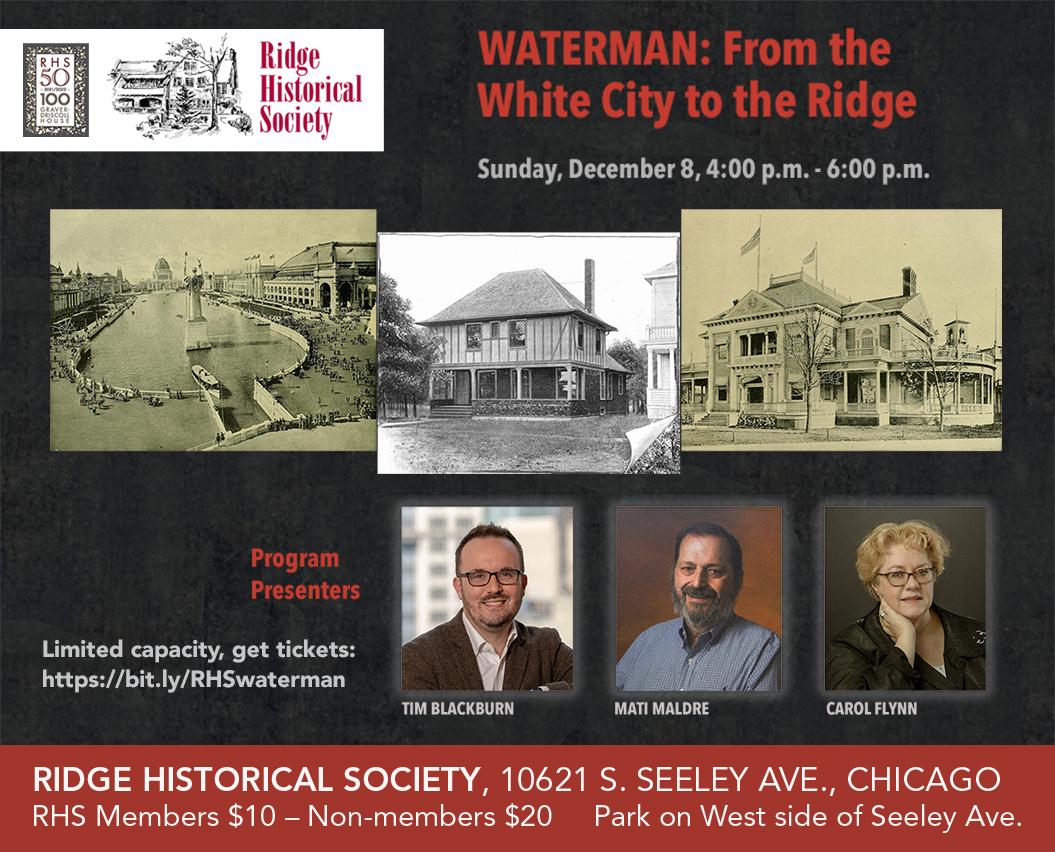
Waterman: From the White City to the Ridge
Sunday, December 8th at 4:00 p.m.
Architect Harry Hale Waterman, who is the subject of our latest exhibit, was just 23 years old when he started to build some of his most memorable buildings on the Ridge. In the first part of this program, Exhibit Curator Tim Blackburn will focus on Waterman's influences of the Columbian Exposition and his first employer, Joseph Lyman Silsbee.
Mati Maldre will discuss his architectural photos of thirty Waterman buildings, which were mostly taken in the mid-1980s with a Deardorff 4×5/5×7 view camera.
RHS Facebook Page Author Carol Flynn will then share stories from the lives of Waterman's early clients on the Ridge who made interesting impressions on the community in their day. This will be continued as a series on Facebook to complement the RHS exhibit.
Attendees are encouraged to view the exhibit "Harry Hale Waterman: Unique in any Style", which will be open from 1:00 – 4:00 p.m. before the program. The exhibit is also open Tuesdays and Sundays from 1:00 – 4:00 p.m., or by appointment, through at least spring 2024.
Ridge Historical Society
10621 S. Seeley Ave., Chicago, IL 60643
Limited Capacity. Get tickets here: https://bit.ly/RHSwaterman
Or RSVP by phone 773.881.1675
SOLD OUT!!
We are completely booked for tomorrow's presentation – Sunday, December 8. We have so much great new info to share with everyone on Waterman's buildings and the people who called them home on the Ridge.
We'll likely do a second event in January – February. Plus I'll be doing a new series on Facebook built around the Waterman houses so watch this page. (I've been quiet lately while I prepared for this presentation but I'll be back this week.)
– Carol Flynn, RHS FB Administrator