Explore the RHS Facebook Archives, a rich repository of local history written by Carol Flynn. For two decades, Carol brought a deeply dedicated voice to public education at RHS. Her role as Facebook administrator through mid-2025 naturally extended her prolific research into meticulously detailed articles, most notably her multi-part historical series posts. Today, Carol continues her local history writing for The Beverly Review and other outlets.
Christmas / Holiday
The First Beverly Art Center
By Carol Flynn
The Ridge Historical Society (RHS) will be open tomorrow, Sunday, December 11, from 1 p.m. to 4:00 p.m. The address is 10621 S. Seeley Avenue, and admission is free.
The current exhibit, Hetherington Design Dynasty, will only be on display for a few more weeks, through January 7. RHS is open on Sundays and Tuesdays from 1:00 to 4:00 p.m., or by appointment. Note, however, that Christmas and New Year’s Day fall on Sundays this year and RHS will be closed both days. This means there are only two Sundays left to view the exhibit – tomorrow and December 18.
The exhibit has a new feature added for the holidays – the Christmas cards that Mildred Lyon Hetherington designed and sent to family and friends.
The Hetheringtons were a three-generation family of architects – John Todd, his son Murray, and Murray’s son Jack – who lived in Beverly and designed close to one hundred homes and buildings in the area, including the Graver-Driscoll House, RHS Headquarters.
Mildred Lyon was a local artist who met Murray Hetherington when they were both students at the Art Institute of Chicago. They married and had two children, son Jack the architect, and a daughter Mary who died young.
Mildred was known for her portraits and her illustrations of children’s publications. As many artists do, she created her own Christmas cards.
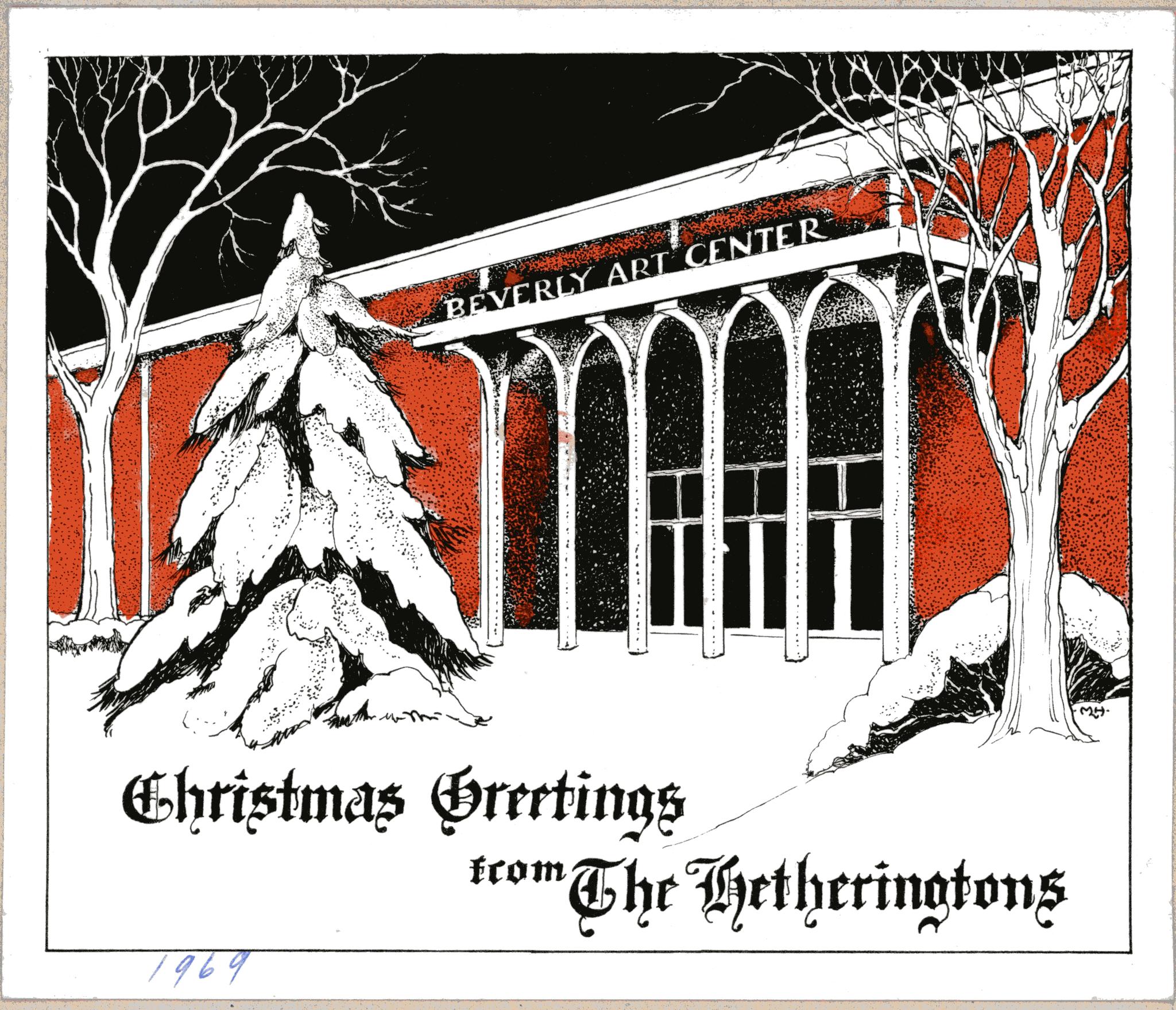
In 1969, Mildred’s card featured the new Beverly Art Center (BAC), which had just opened that September on the 2100 block of West 111th Street, on the campus of the Morgan Park Academy (MPA).
This was a significant event for the Hetherington family because the building was designed by Jack Hetherington, who had attended MPA. Although BAC moved from that building when the new BAC at 111th Street and Western Avenue was built, MPA continues to use the building
The original BAC building features a modern design with a portico that floats atop slender concrete columns, nicely depicted by Mildred in her Christmas card.
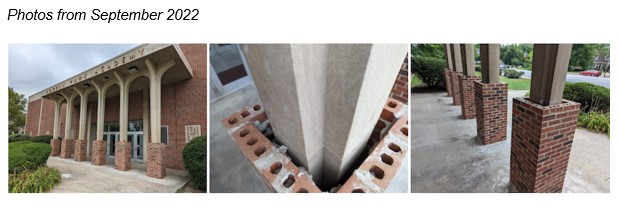
However, this past summer, architects and historians, as well as Hetherington family members, were dismayed to observe that MPA was encasing the lower sections of the concrete columns in brick, destroying the original façade.
While it is understood that this was done to preserve the columns from further deterioration, the alterations are incompatible with the original design. Not only is the building affected, but the visual cohesiveness of the Ridge Historic District is impacted by this type of alteration to a historic building. The Ridge Historic District is part of the National Register for Historic Places. The RHS Historic Buildings Committee has been in contact with MPA.
RHS can help owners of local historic buildings in need of preservation “facelifts” to understand landmark considerations, and to research the building’s history and design to assist with restoration efforts.
Season's Greetings from the Ridge Historical Society
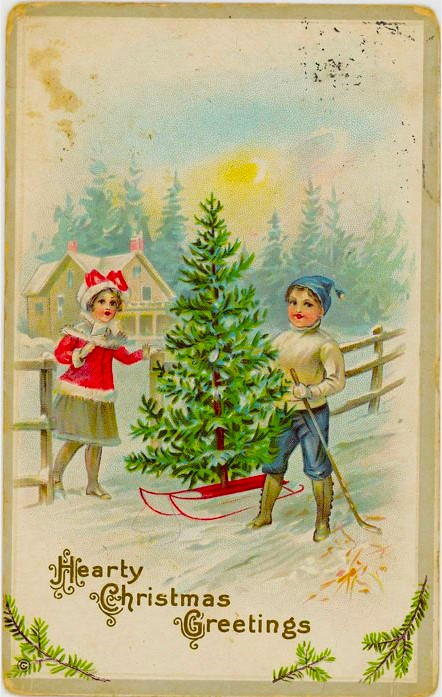
This vintage card from the early 1920s – one hundred years ago – shares a sentiment appropriate to today, one of the coldest Christmas Eves on record in Chicago! Hearty Christmas Greetings!

The Ridge Historical Society
Christmas Cookies
By Carol Flynn
Homemade cookies at Christmastime are a time-honored tradition.
People spend the month of December planning and shopping, and then days in the kitchen baking family favorites and traditional ethnic delights, and perhaps trying a new recipe or two.
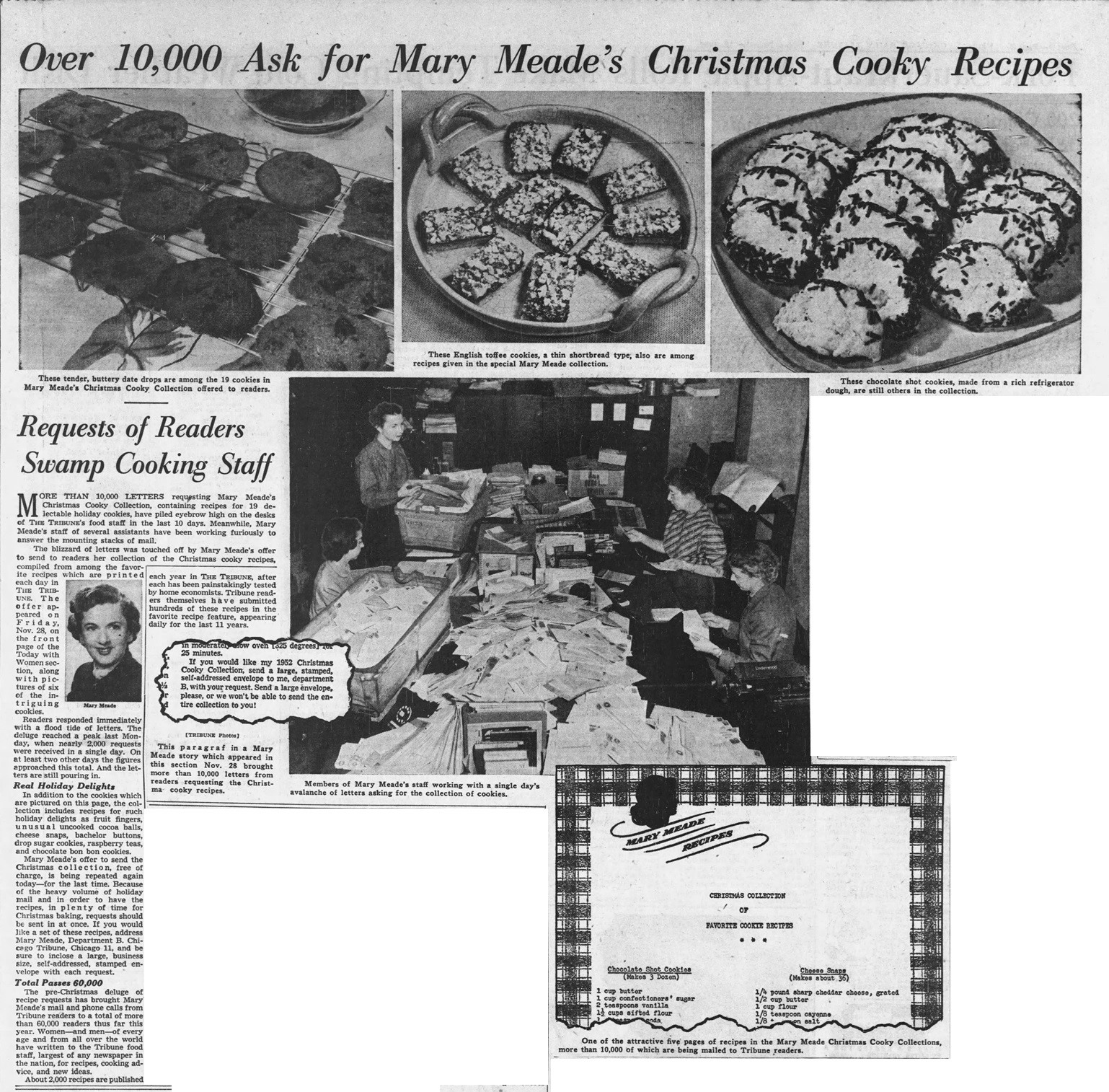
For decades, Chicagoans looked to the Chicago Tribune and food editor Mary Meade for Christmas cookie recipes and ideas, and Mary never disappointed.
Take the year 1952, for example. As the attached article reports, on Friday, November 28, Mary offered her readers a free copy of her Christmas Cooky Collection, a selection of recipes that had appeared in articles, if they sent in a large, stamped, self-addressed envelope. Within 10 days, she had 10,000 requests.
Mary Meade, of course, was none other than Beverly’s own Ruth Ellen Church.
“Mary Meade” was the name the Tribune used for its women food writers for years, and Church was the fourth Mary Meade. A generic name was used because it was common practice that women did not stay long in professional jobs but left to marry and become full-time homemakers and mothers.
Ruth Ellen Church broke that mold. She served as food editor from 1936 to 1974, while marrying and raising two sons. She started the first wine column in a U.S. newspaper and published over a dozen cookbooks and also served as a Boy Scout den mother and a trustee for the Morgan Park Academy.
At the Chicago Tribune, Church oversaw the largest food staff of any paper in the country, which included five home economists. She established a kitchen in the Tribune Tower for recipe testing and food photography. Every recipe the Tribune published, about 2000 per year, was tested first in the kitchen.
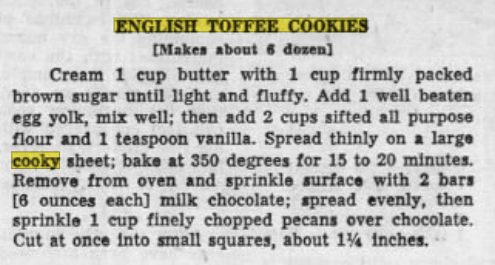
One of the recipes featured in the 1952 cooky collection was English toffee cookies. This recipe was published in the Chicago Tribune during Church’s time and is shared here.
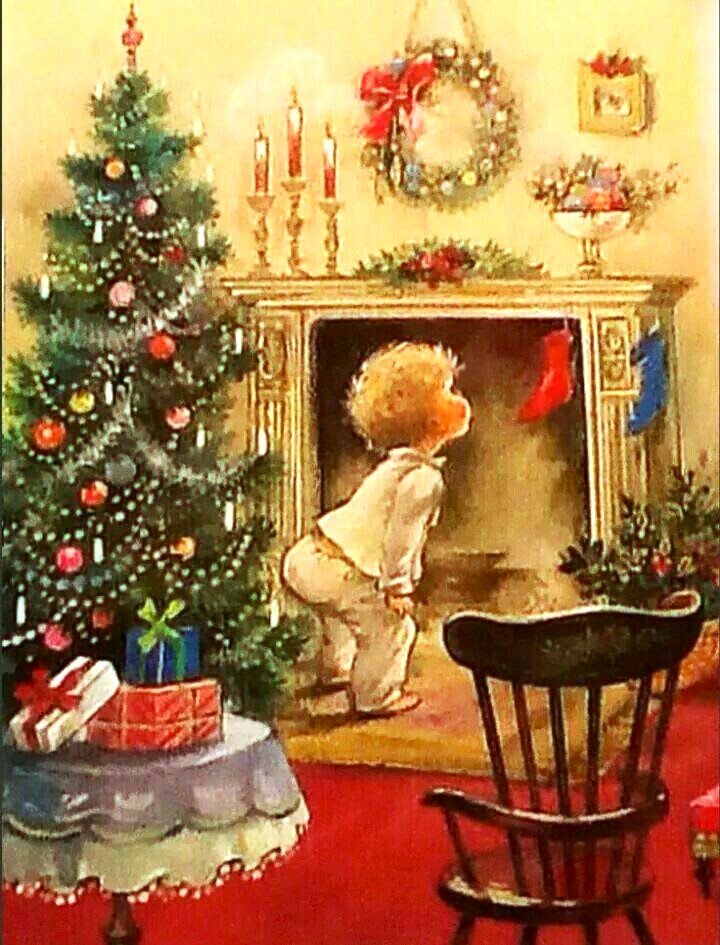
And while they are delicious any time of the year, rumor has it that they are among Santa's favorites, so make a few extra to leave out on Christmas Eve for the big guy in red.
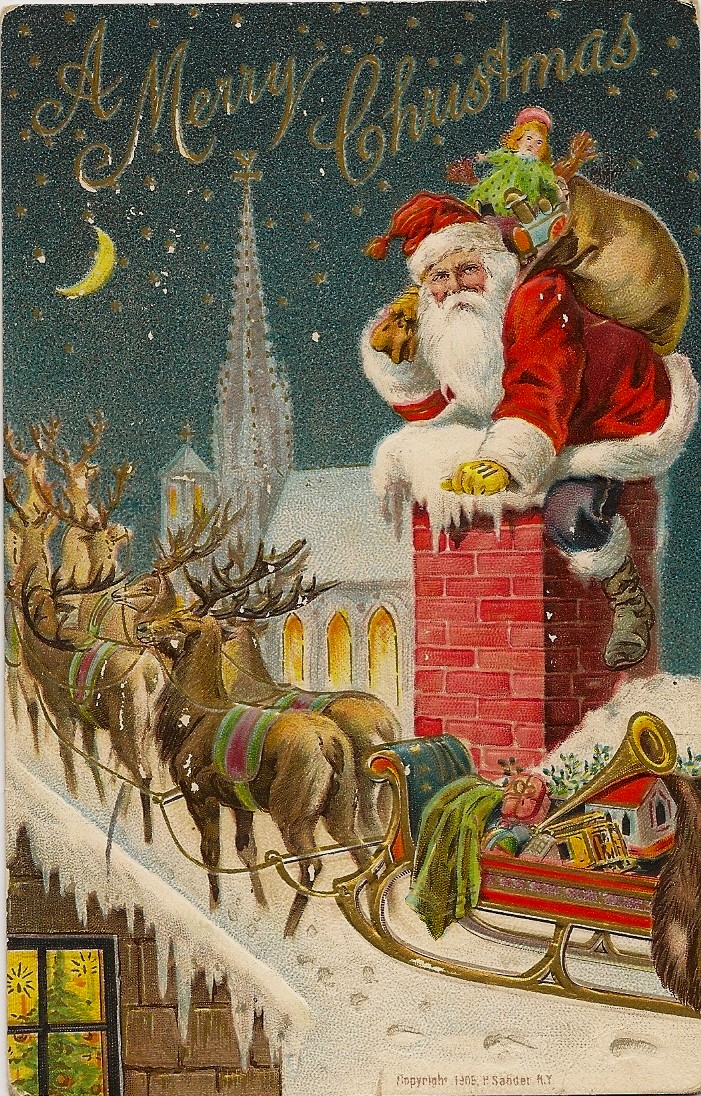
Tonight's the night! How does Santa fit down all those chimneys? It's magical!
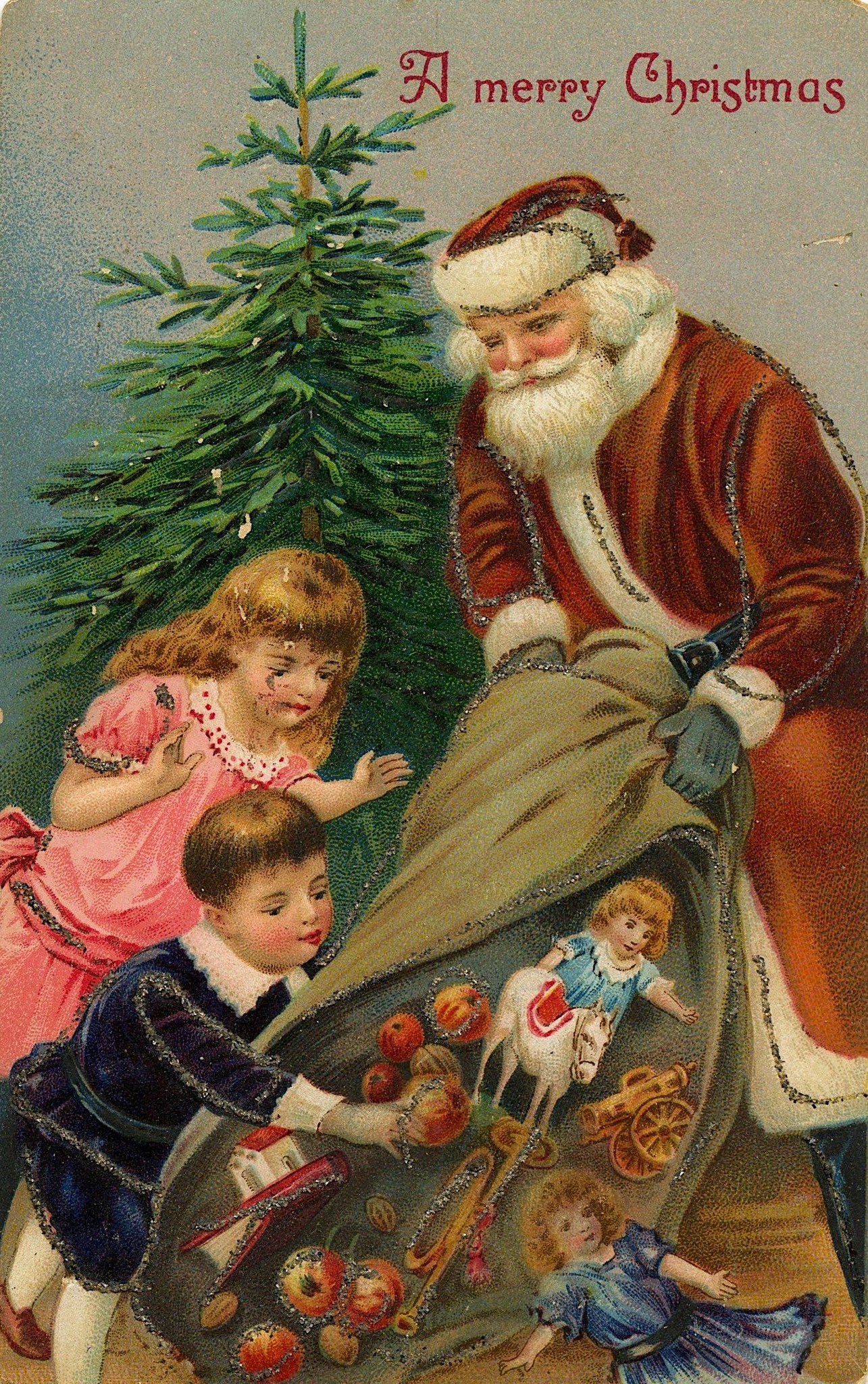
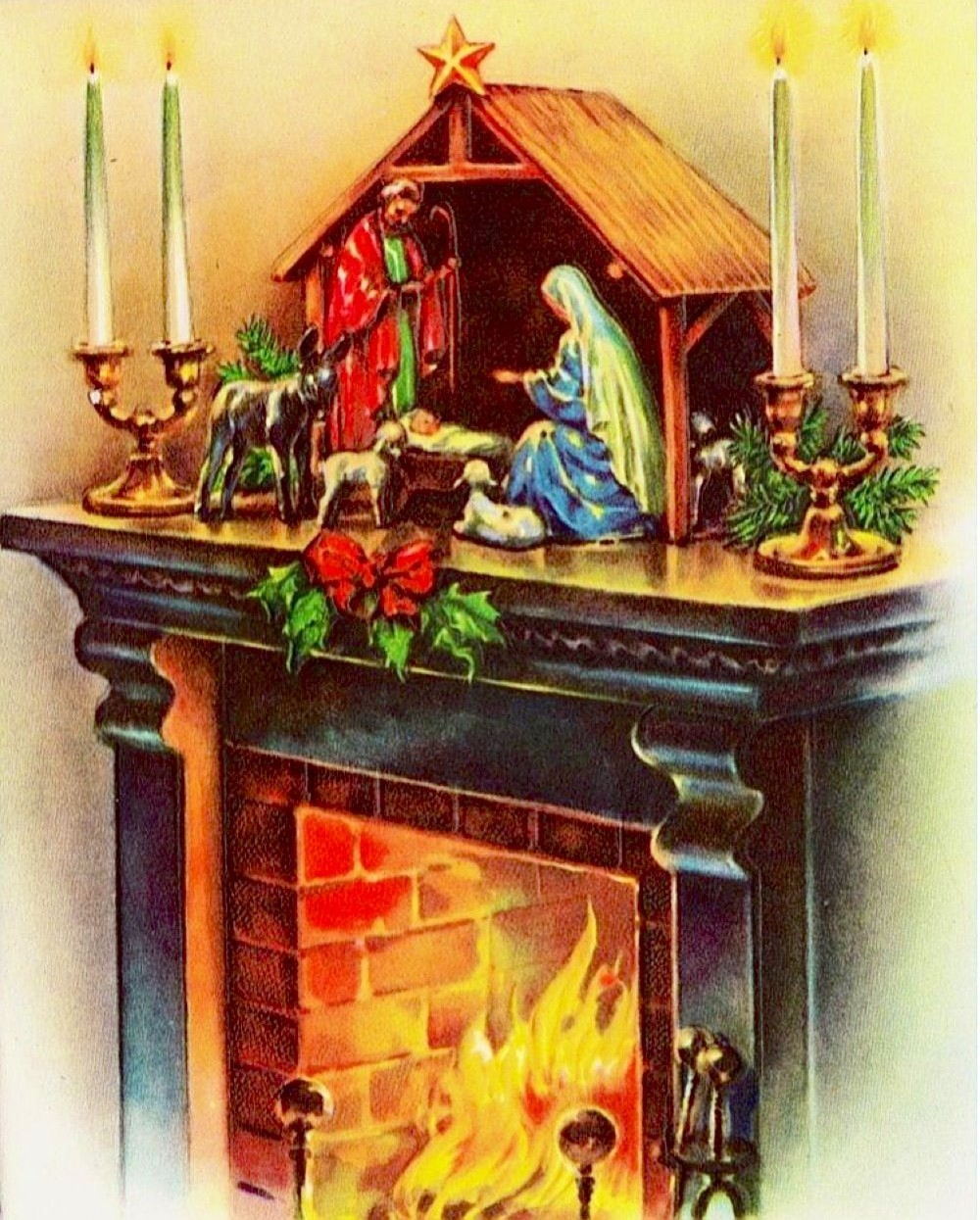
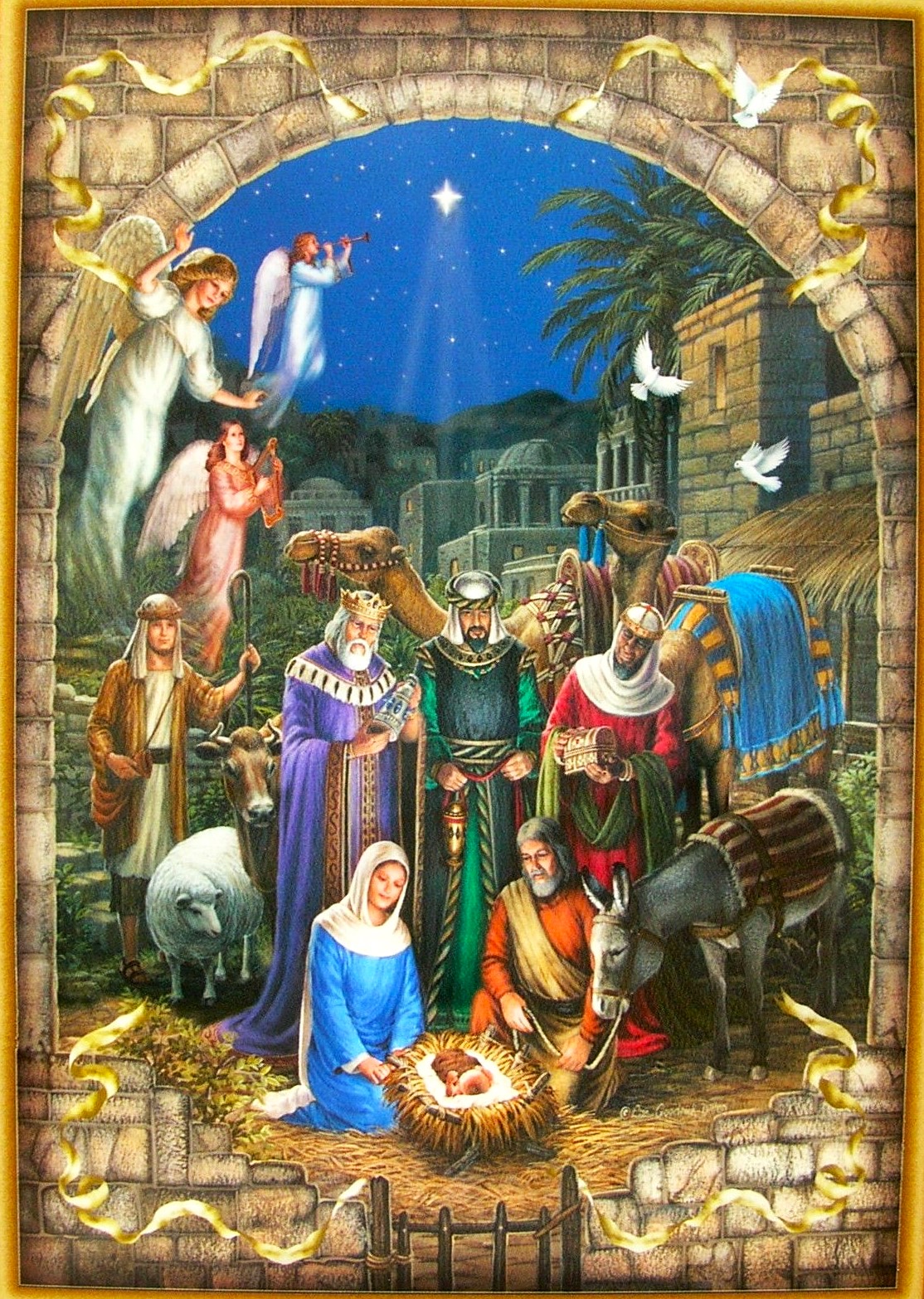
Taking us back to the reason Christmas exists through vintage postcards.
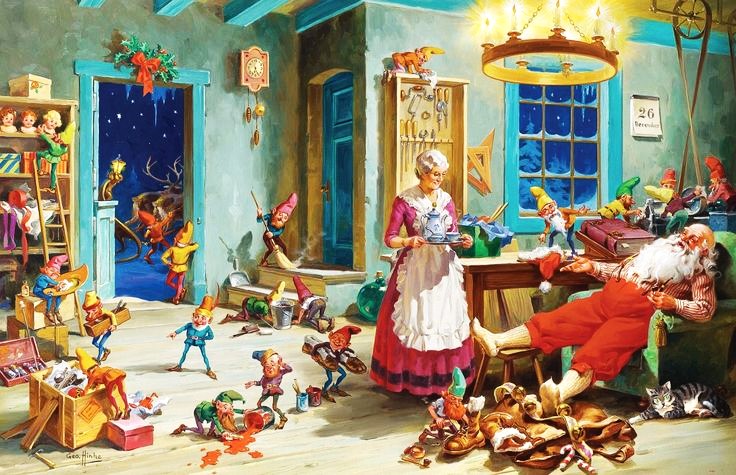
The day after Christmas by George Hinke.
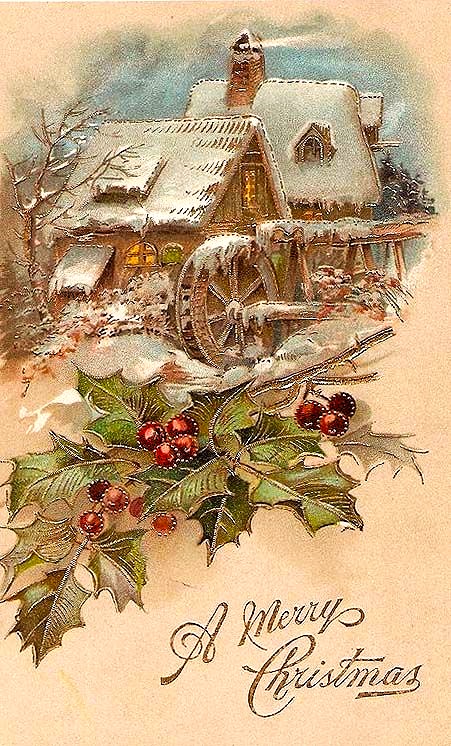
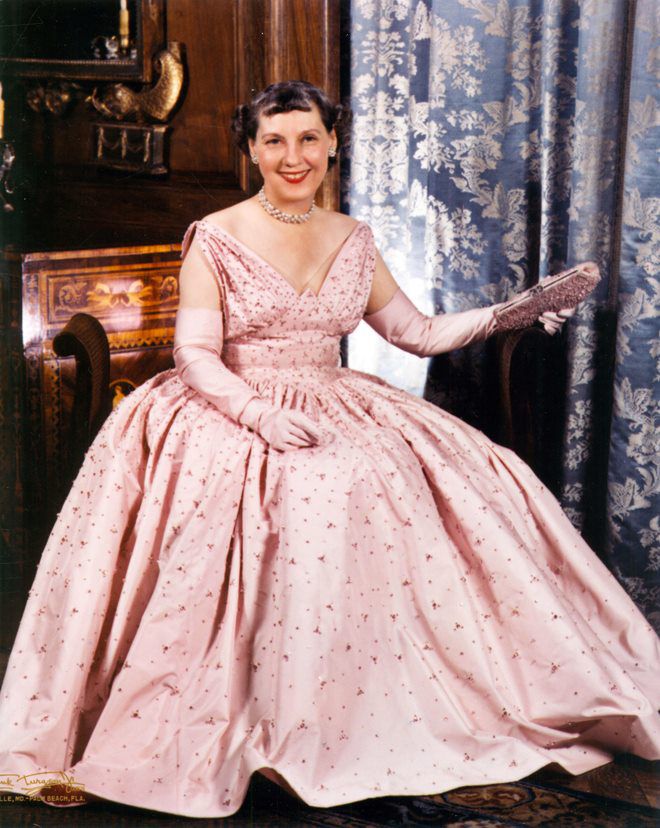
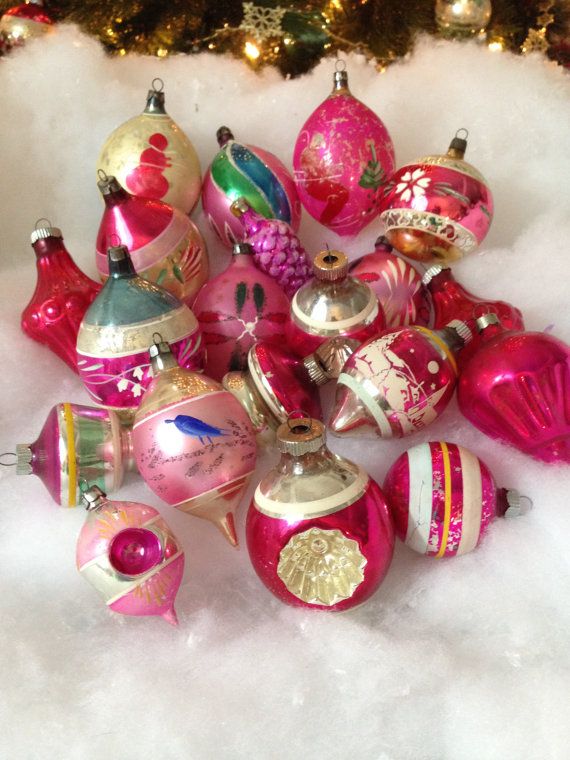
Merry (Pink) Christmas!
The color pink is “in” right now for Christmas decorating, thanks in large part to the Barbie movie a few years ago.
One recent article described pink as "a very modern Christmas color that adds chicness, glamour, and even whimsy to the holiday décor."
However, as this vintage postcard that dates back to the early 1900s shows, pink has been a “Christmas color” for well over 100 years. Pink glass ornaments were popular back then.
Pink was quite the rage for Christmas in the 1950s. First Lady Mamie Eisenhower loved pink and wore it frequently. She used the color for decorating the White House to the extent the presidential residence was referred to as the “pink palace.”
In the 1700s, as a variant of red, the color pink was considered an aggressive military color. But over time, pink came to be considered more a feminine color. Some people avoid the color for that reason, but others embrace it as a symbol of empowerment – for example, pink ribbons are the symbol for fighting breast cancer.
Although pink may not stay trendy forever as the primary color for the holidays, it will always be part of the Christmas color palette.