
Explore the RHS Facebook Archives, a rich repository of local history written by Carol Flynn. For two decades, Carol brought a deeply dedicated voice to public education at RHS. Her role as Facebook administrator through mid-2025 naturally extended her prolific research into meticulously detailed articles, most notably her multi-part historical series posts. Today, Carol continues her local history writing for The Beverly Review and other outlets.
St. Patrick's
The Ridge Historical Society
The Parade and the Weather
By Carol Flynn
“Don't bring around a cloud to rain on my parade” is a memorable line from a song in the musical “Funny Girl.”
While in the song the line is a metaphor about not interfering in another person’s life, it is a reminder that the weather always plays a part in any outdoor event like a parade.
Springtime weather in Chicago is especially unpredictable and changeable, and St. Patrick’s Day parade plans always factor in the weather. Uncooperative weather doesn’t mean the parade will be canceled; in fact, that would be a very unlikely occurrence. It just means some adjustments may have to be made.
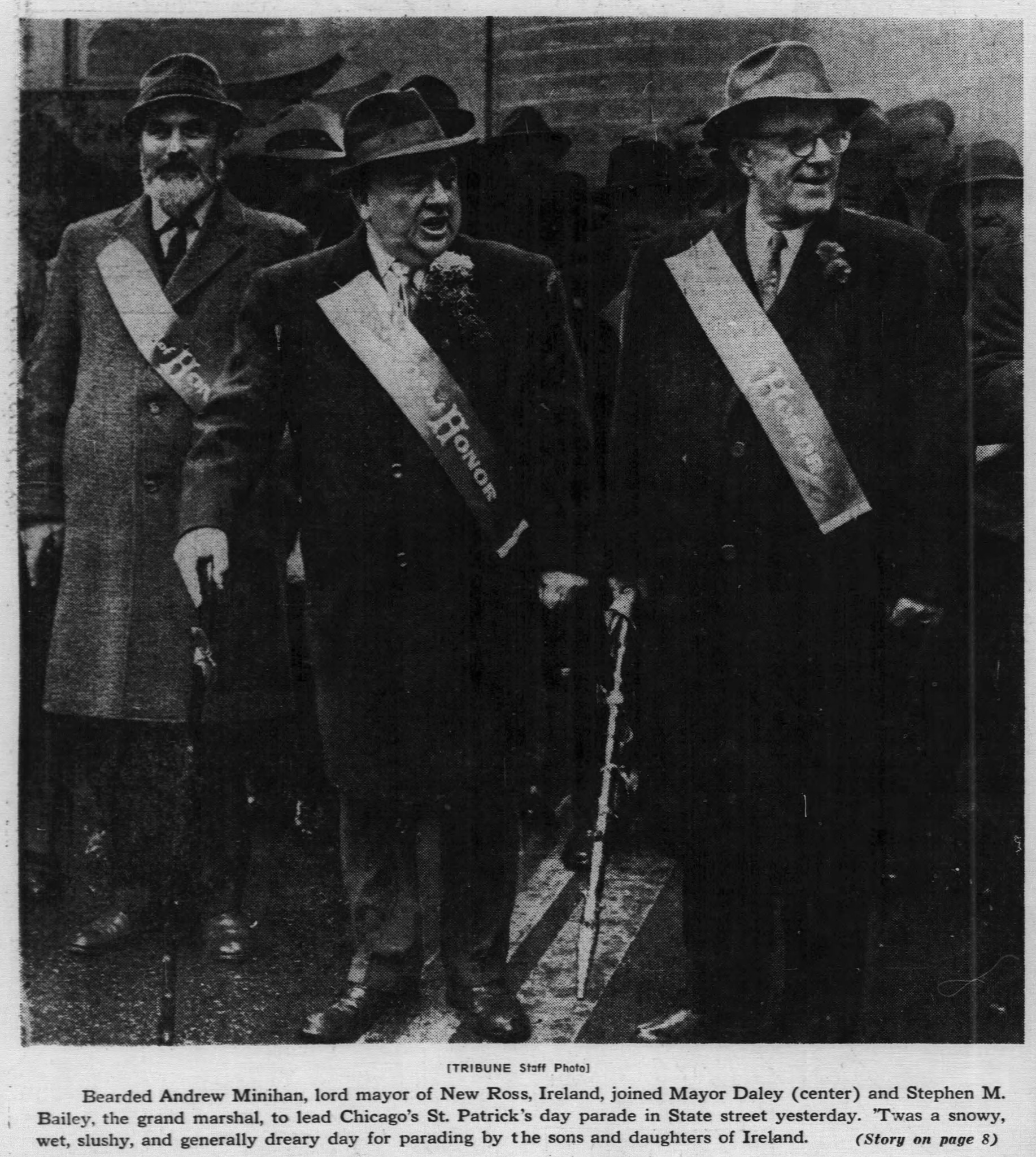
The most rain that ever fell on St. Patrick’s Day when a parade was held downtown was recorded as 1.42 inches in 1965. The Chicago Tribune described the precipitation that Wednesday as a mixture of snow, sleet, and freezing rain.
City crews worked from the early morning on to clear the parade route, and despite gusts of wind up to 52 miles per hour, the parade went on as scheduled.
Thousands of people lined State Street to watch. Entries in the parade included 60 floats and 41 marching bands.
The mayor of New Ross, Wexford, Ireland, a guest of Chicago’s Mayor Richard J. Daley, recorded the entire parade with his “motion picture camera.”
Other extreme weather days for parades when they were held right on March 17th include coldest and hottest.
The coldest St. Patrick’s Day on record in Chicago occurred on a Saturday in 1900, when the overnight temperature was one degree below zero. The newspapers reported the parade took place with a daytime temperature of sixteen degrees in blinding whirlwinds of snow and biting wind blasts. The streets were slippery frozen mud.
Despite the weather, or maybe partly due to it, enthusiasm was high on parade day. More than 3,000 people marched or rode in the parade, and many more lined the streets and cheered them on.
Irish and American flags and organization banners whipped wildly in the wind and musicians played with numb fingers. An Irish jaunting car, a special feature of the parade, “bounced and pitched and rolled and slid” through the frozen mud but made it to the parade’s end.
The parade lasted for two hours in that freezing cold.
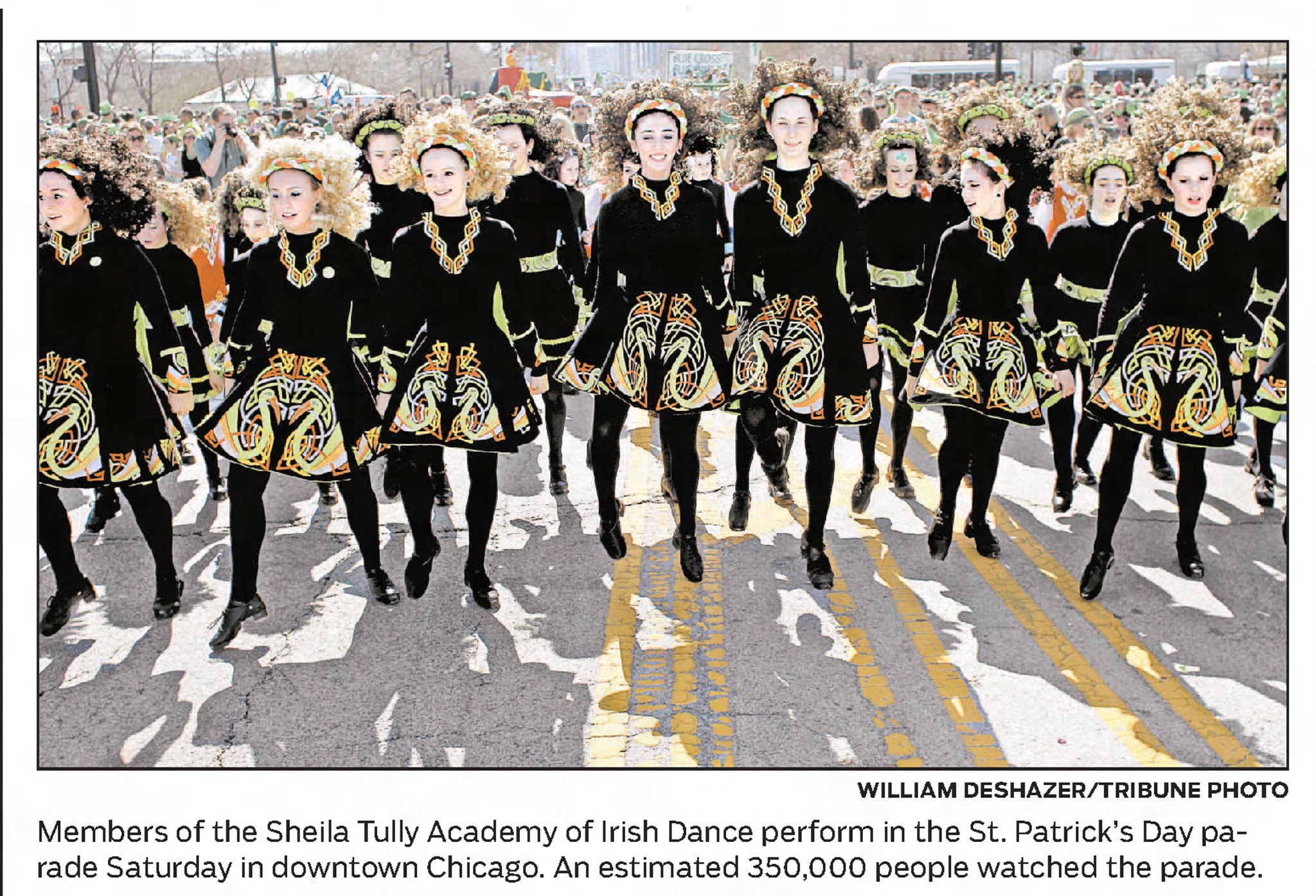
The record high temperature for St. Patrick’s Day was 82 degrees in 2012.
Over 350,000 parade goers that day enjoyed the warm weather so much, reported the Tribune, that two men jumped into the Chicago River, which was dyed green for the day per custom. After they were fished out, one ran away and the other was ticketed by the police.
A visitor from Georgia lamented there was no snow; she was hoping to experience some Chicago winter weather. Chicagoans were not sorry to disappoint her. If she had been here 112 years earlier, she could have experienced the worst there was to have.
This year, the weather for St. Patrick’s Day and the South Side Irish Parade is expected to be 40 degrees with no rain, which actually fits right into the norm for this time of year.
Happy St. Patrick's Day!
The Ridge Historical Society
Irish American Heritage Month: James H. Gately, Sr.
By Carol Flynn
St. Patrick’s Day has come and gone for another year, but it’s still March, Irish American Heritage Month. This year’s theme was to celebrate our Irish ancestors, their legacies, and their values.
This year’s “Irishman on the Ridge” feature article in the Beverly Review is on James H. Gately, Sr., who lived in Beverly for more than 40 years.
Gately earned acclaim and prosperity as the proprietor of Gatelys Peoples Store, located on Michigan Avenue in the Roseland neighborhood. Gatelys was THE place to shop for South Siders for over sixty years.
Gately was one of the early Irish Catholic businessmen who achieved success in realizing the “American Dream” who put down roots in Beverly. Five generations of the family have called Beverly “home.”
This begins a series on James H. Gately, Sr.
https://www.beverlyreview.net/news/community_news/article_7ba8584c-e610-11ee-bd66-47c716be9f6c.html
Ridge Historical Society
Irish-American Heritage Month: The Ellerslie Cross Country Club
By Carol Flynn
March is Irish-American Heritage Month, and a new research project has revealed another connection that the Irish had to the Blue Island Ridge in the early days.
The Irish were an important presence in Beverly decades before they started building their homes and churches here in appreciable numbers in the 1920s. They first came here for sports and socializing.
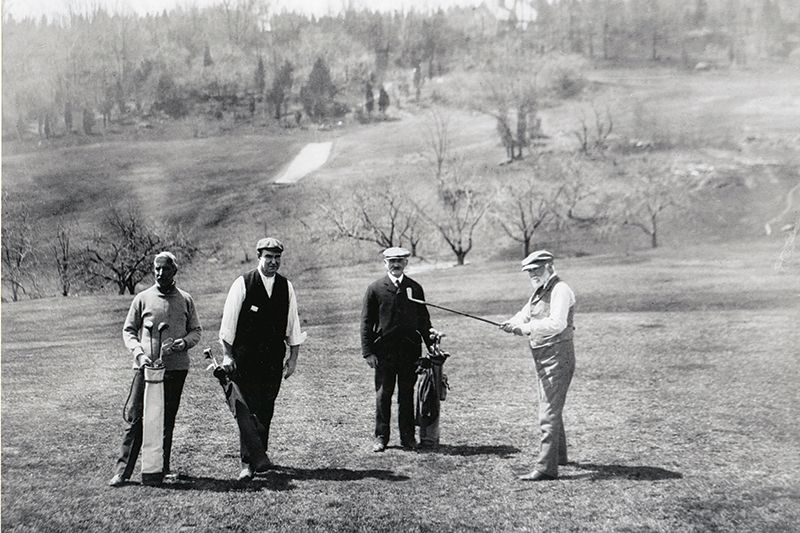
It was a group of wealthy Irish American Catholic businessmen who introduced golf to the Blue Island Ridge by starting the first “country club” here, the Ellerslie Cross Country Club, in 1899.
The club was located at the southwest corner of 91st Street and Western Avenue, where today a strip mall stands. The land is part of Evergreen Park, but back then, it was often referred to as Beverly. The club itself identified its location as “between Beverly Hills and Evergreen Park, Chicago.”
Country clubs started being established in the U.S. in the 1880s due to the newfound interest in the sport of golf. Clubs in the U.S. followed golf clubs started in Great Britain.
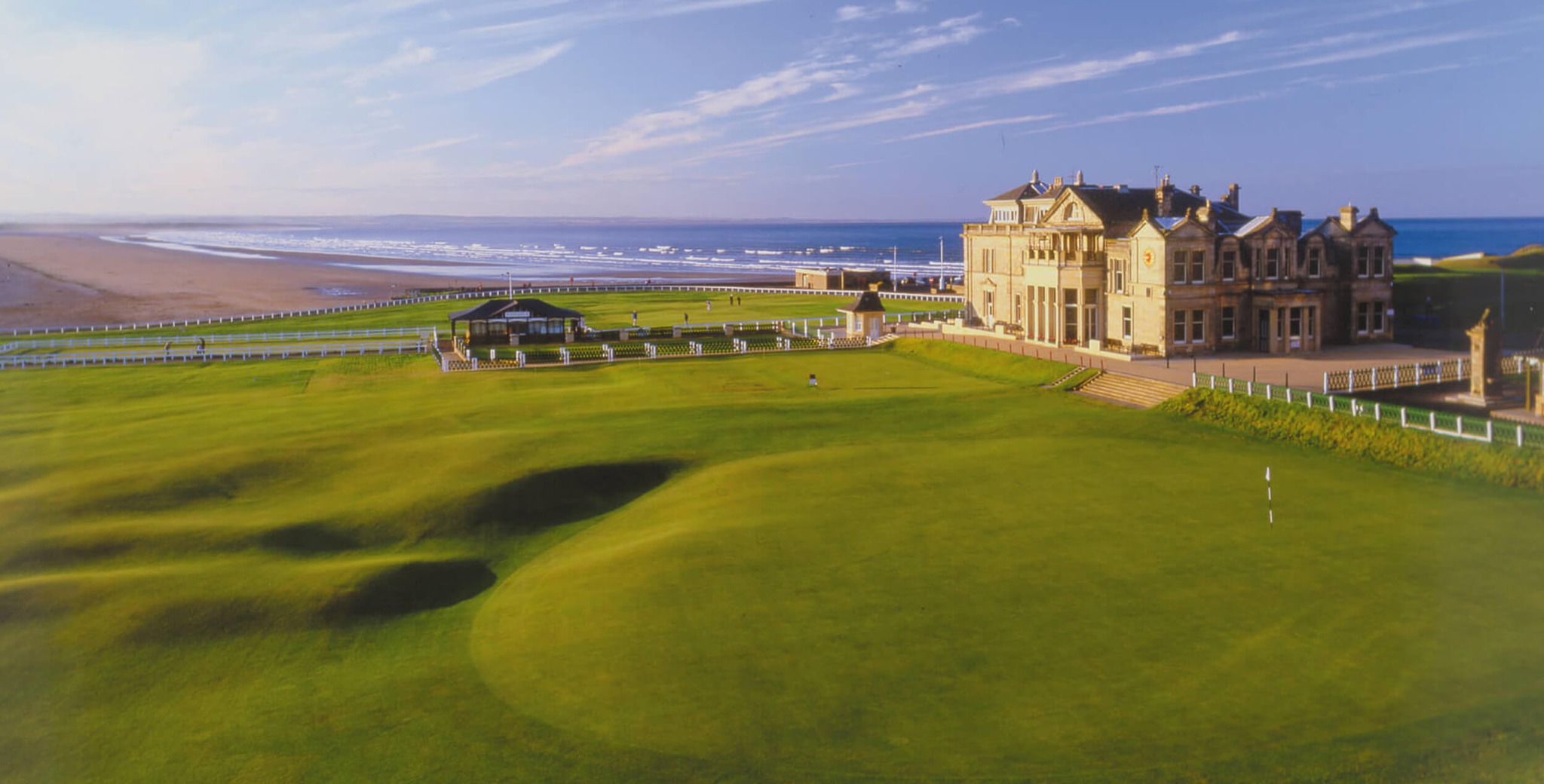
Stick and ball games had been around for centuries when “modern” 18-hole golf evolved in Scotland in the mid-1400s. The word “golf” is a Scottish derivation of the Dutch word “colf” meaning stick, bat, or club.
Scottish royalty, including Mary Queen of Scots, enjoyed the game, and brought it to London, but it didn’t become popular there until the late 1800s. By 1887, England had 50 golf courses and in 1890 held the first Open Championship.
Golf came to America with the English colonists, but again, did not become really popular until the 1880s.
By this time, the basic philosophy concerning exercise was changing. Sports were considered a distraction from more important activities, but as lifestyles switched from rural to city, that is from farming to industrial, the need for exercise started to become apparent. Not only was this for physical health, but it was believed that regular exercise would improve people’s “civic morality” and make them better “American citizens.”
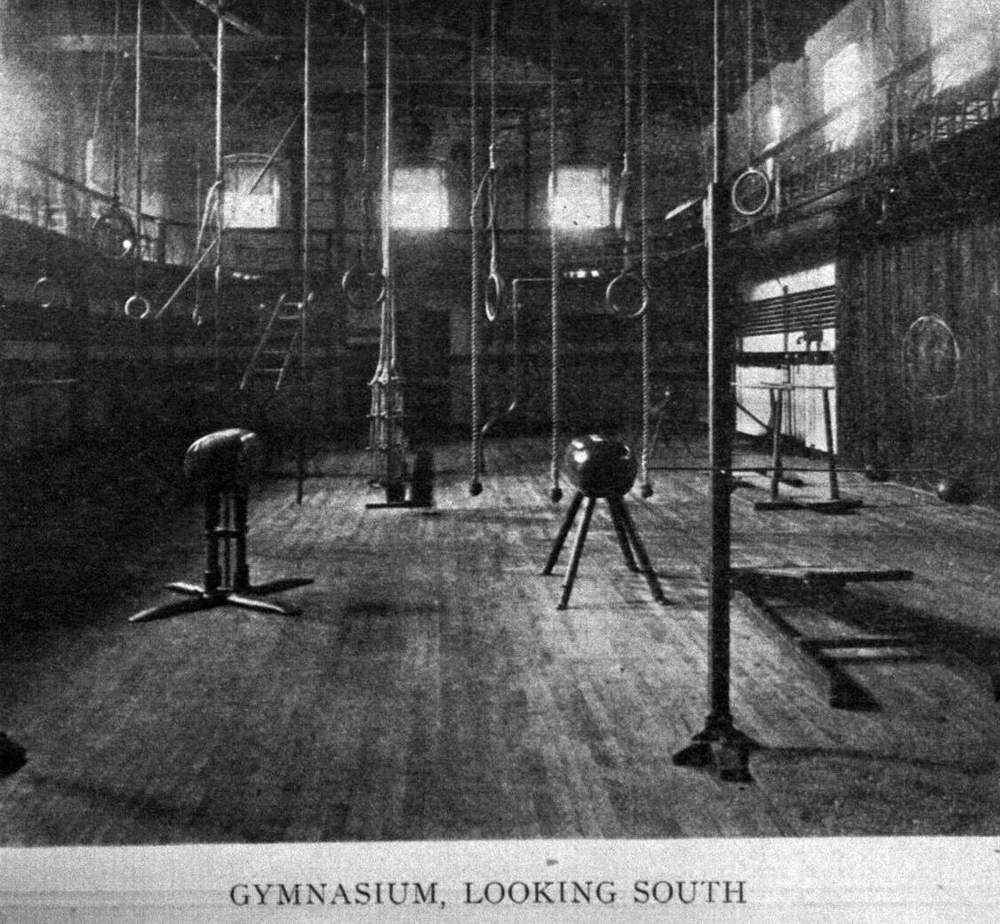
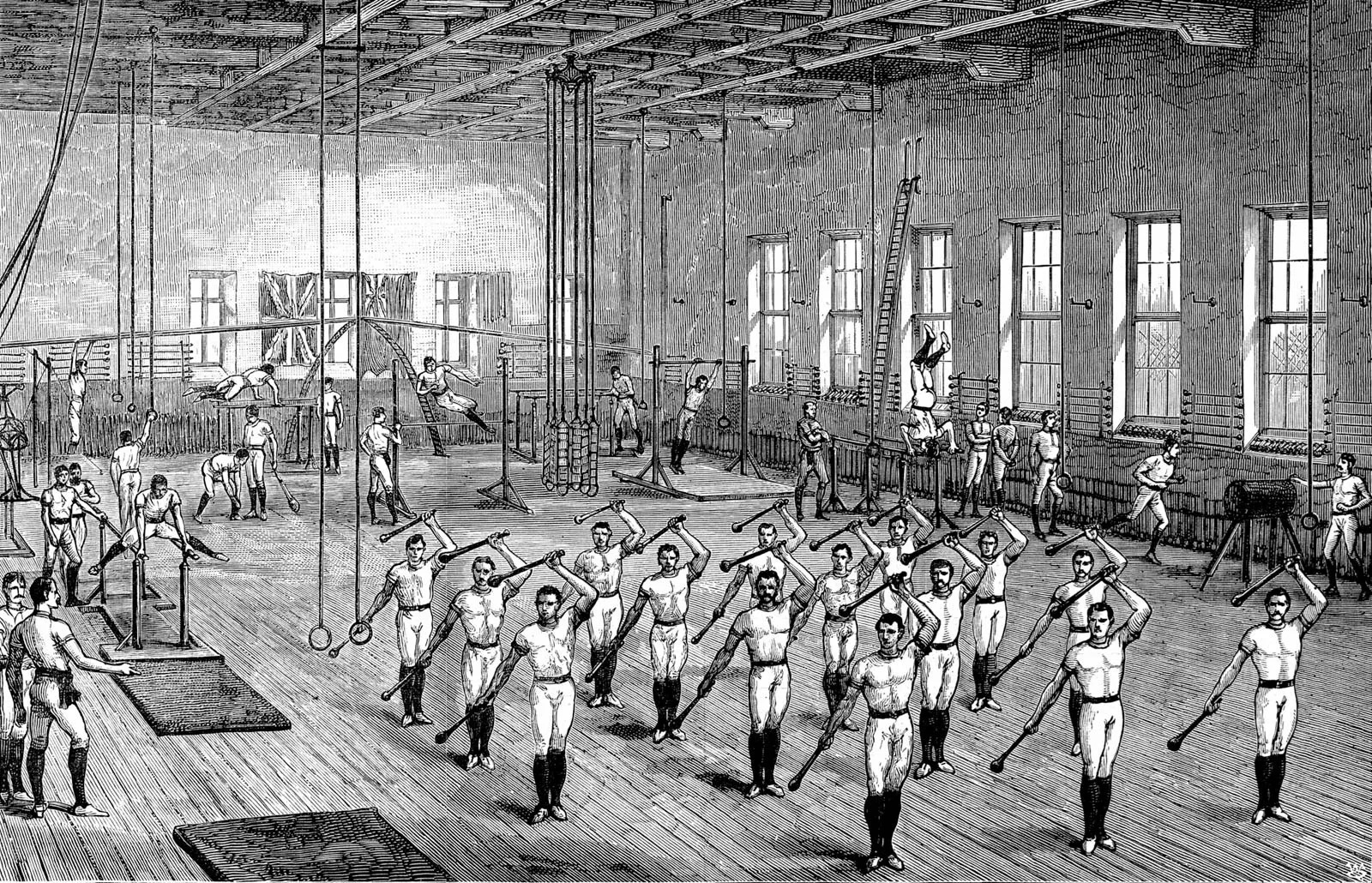
Athletic clubs existed in the cities as men-only indoor gymnasiums that offered gymnastic exercises and weightlifting equipment, and some had boxing rings. At this same time, rowing, swimming, track and field, football, and baseball were becoming college sports.
Tennis, also imported from Great Britain [note: Mary Queen of Scots enjoyed tennis as well as golf], was catching on in the U.S. at the same time as golf, and tennis courts were popping up on estates and other locations.
However, golf necessitated large outdoor spaces, leading to private golf clubs established on the outskirts of cities, in the “country,” giving rise to "country clubs."
The term “country clubs” had been used informally to refer to rural baseball teams, and a group of writers had started an organization they called "The Country Club,” but the term primarily became associated with “golf clubs.”
The first such club established in Chicago was the Chicago Golf Club founded in 1893 in Belmont (Downers Grove) and later relocated to Wheaton.
Country clubs established elite subcommunities and are considered the forerunners of gated communities. They almost always had a limited, exclusive membership, and high membership fees.
Membership in the majority of clubs formed by those of the Anglo Protestant establishment was open only to fellow Anglo Protestants and excluded Catholics, Jews, African-Americans, Native Americans, and other groups.
The names associated with the Chicago Golf Club were from Chicago’s highest social echelons, including Marshall Field, Potter Palmer, and Eugene S. Pike.
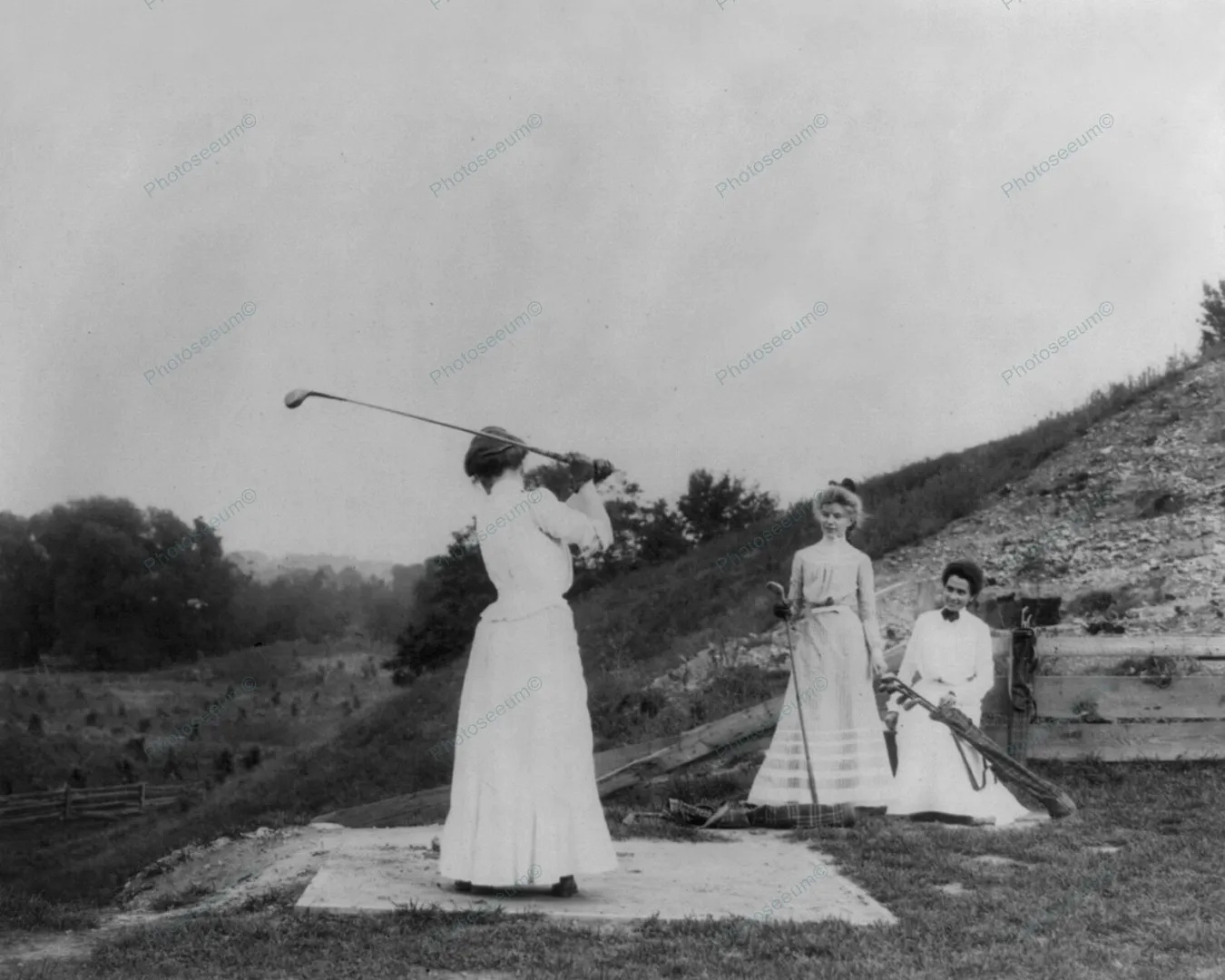
Country clubs looked and worked differently than traditional clubs. They were more family oriented. Women were allowed to participate in golf and some clubs even allowed women to subscribe on their own without going through a male family member.
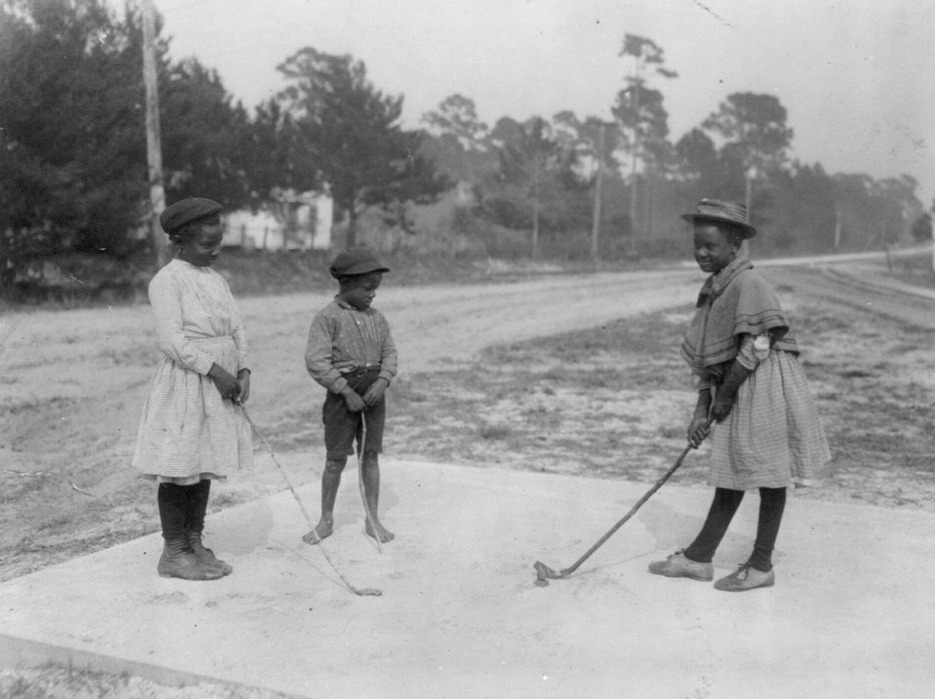
There were also activities for children, including play areas. Family picnics were typical social events at country clubs.
By this time in Chicago, the Irish had advanced in education, business, and politics, creating a growing subcommunity of wealthy Irish Catholics. They formed their own clubs, such as the Sheridan Club in 1888.
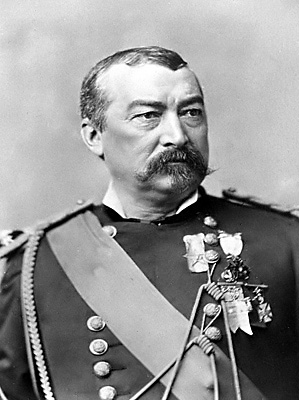
The Sheridan Club was founded in honor of General Phillip Henry Sheridan, the son of Irish Catholic immigrants, who had an outstanding career as a U.S. Army officer. He was a Union Army general during the Civil War; commanded the Illinois troops when martial law was declared in Chicago following the Great Chicago Fire in 1871; was named Commanding General of the U.S. Army in 1883; and was promoted to the equivalent of today’s five-star general in 1888, the year he died.
The “leading spirit” of the Sheridan Club, as he was referred to in the Chicago papers, was Michael Cudahy who had emigrated from County Kilkenny, Ireland, as a child.
Starting employment at the age of 14, Cudahy worked his way up to meat inspector, then into a partnership in the Armour and Co. meat-packing business, before starting his own meat-packing house. He developed oil fields in Oklahoma, and real estate in Mackinac Island, Michigan, and Los Angeles, California.
Sheridan’s and Cudahy’s careers were examples of how the Irish were advancing in the U.S.
Other members of the Sheridan Club, friends and fans of Sheridan and Cudahy, all successful Irish Catholic businessmen, started the Ellerslie Cross Country Club. They did not live in Beverly, but they were making their homes on the south side of Chicago.
In the next post, we’ll look at some of the people involved in the Ellerslie Cross Country Club and the events held by the Club.

Ridge Historical Society
Irish-American Heritage Month: The Ellerslie Cross Country Club – Part 2
By Carol Flynn
Golf was introduced to the Blue Island Ridge when a group of Irish American businessmen founded the first country club in Beverly/Evergreen Park, the Ellerslie Cross Country Club, in 1899.
The Ellerslie Club grew out of another Irish club in Chicago, the Sheridan Club. As was discussed in Part 1, the Sheridan Club was founded to honor General Phillip Henry Sheridan, the son of Irish Catholic immigrants, who had an outstanding career as a U.S. Army officer.
In the late 1800s, clubs were very important for networking and socializing. They were formed for everything from professions to politics to poetry.
Since most clubs were men-only, and the ones formed by the white, Anglo-Saxon Protestant establishment excluded Jews and Blacks, and usually Catholics, women and these other groups formed their own clubs.
By 1900, there were hundreds of clubs in the Chicago area.
Irish Catholics formed clubs focused on political issues like Irish nationalism, working for Ireland’s independence from Great Britain. Like other ethnic and nationality groups, they formed clubs around culture and identity, such as the Irish Music Club, founded in 1902, and the Irish-American Athletic Club, founded in the late 1870s.
The Sheridan Club formed upon the death of General Sheridan in 1888. Although it was called a “social club,” with the Irish, it was not possible to separate out politics and religion. Sheridan was an avowed “Fenian,” an Irish American Catholic dedicated to the establishment of an independent Irish Republic.
The founders of the Ellerslie Club were active members of the Sheridan Club, and they illustrate the advances that the Irish were making in business, education, politics, and society by the late 1800s, in the big cities like New York, Boston, and Chicago.
Here are brief biological sketches of some of the men who founded the Ellerslie Cross Country Club.
Joseph Michael Crennan was the first president of the Ellerslie Club. He was born in 1865 in Ireland and came to the U.S. at the age of 21.
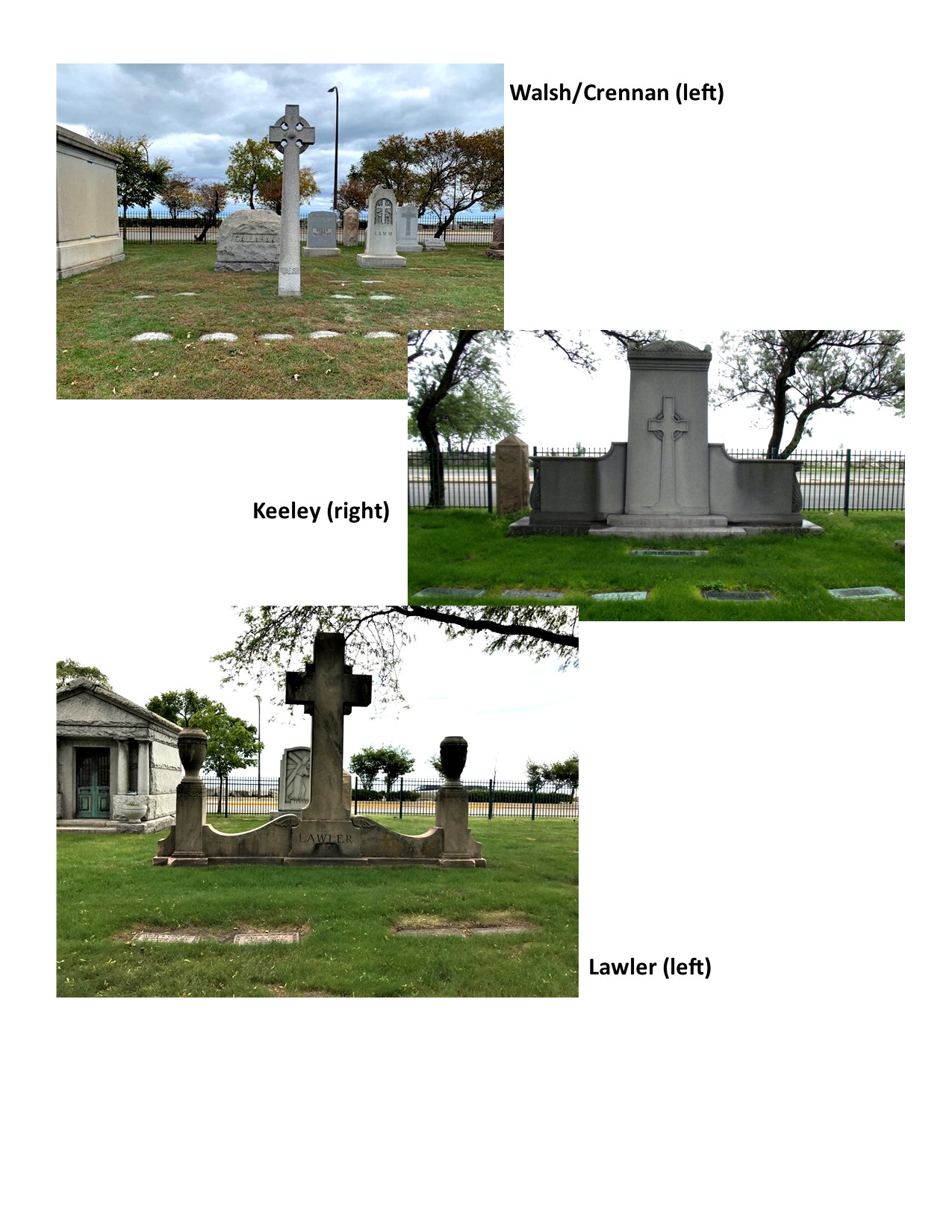
In 1891, Crennan married Jean (Jennie) Walsh, who was born in Chicago to parents from Ireland. Her father, William Walsh, one of Crennan’s fellow members at the Sheridan Club, was listed on the U.S. Census as “captain of a lake vessel.” The maritime professions, sailors and fishermen, were natural for many men from Ireland.
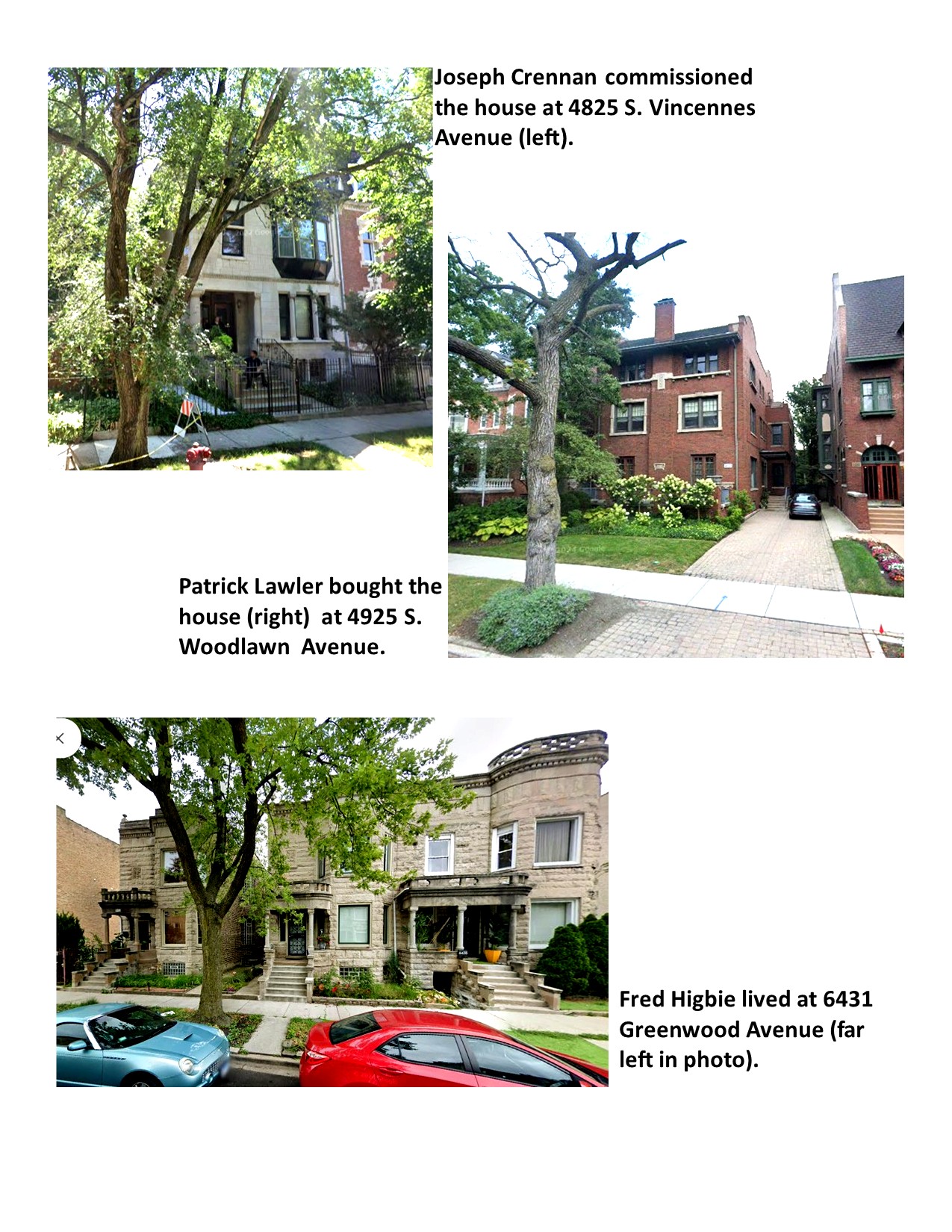
Crennan and Jennie lived at 4825 Vincennes Avenue. Their house is still standing, a stone and brick row house, fashionable for the day, that they hired architect Maurice G. O’Brien to design in 1894, and they moved into in 1895. They had three children, Ruth, William, and Elizabeth.
Crennan became a naturalized U. S. citizen on April 1, 1895.
He was the owner of a successful cigar manufacturing and import business, the exclusive U.S. representative for fine products from Cuba and Key West. His signature products were the “world-renowned” La Carina and Golf Club cigars. He sold wholesale to shops. His business spread; he advertised for salesmen for Iowa and Michigan.
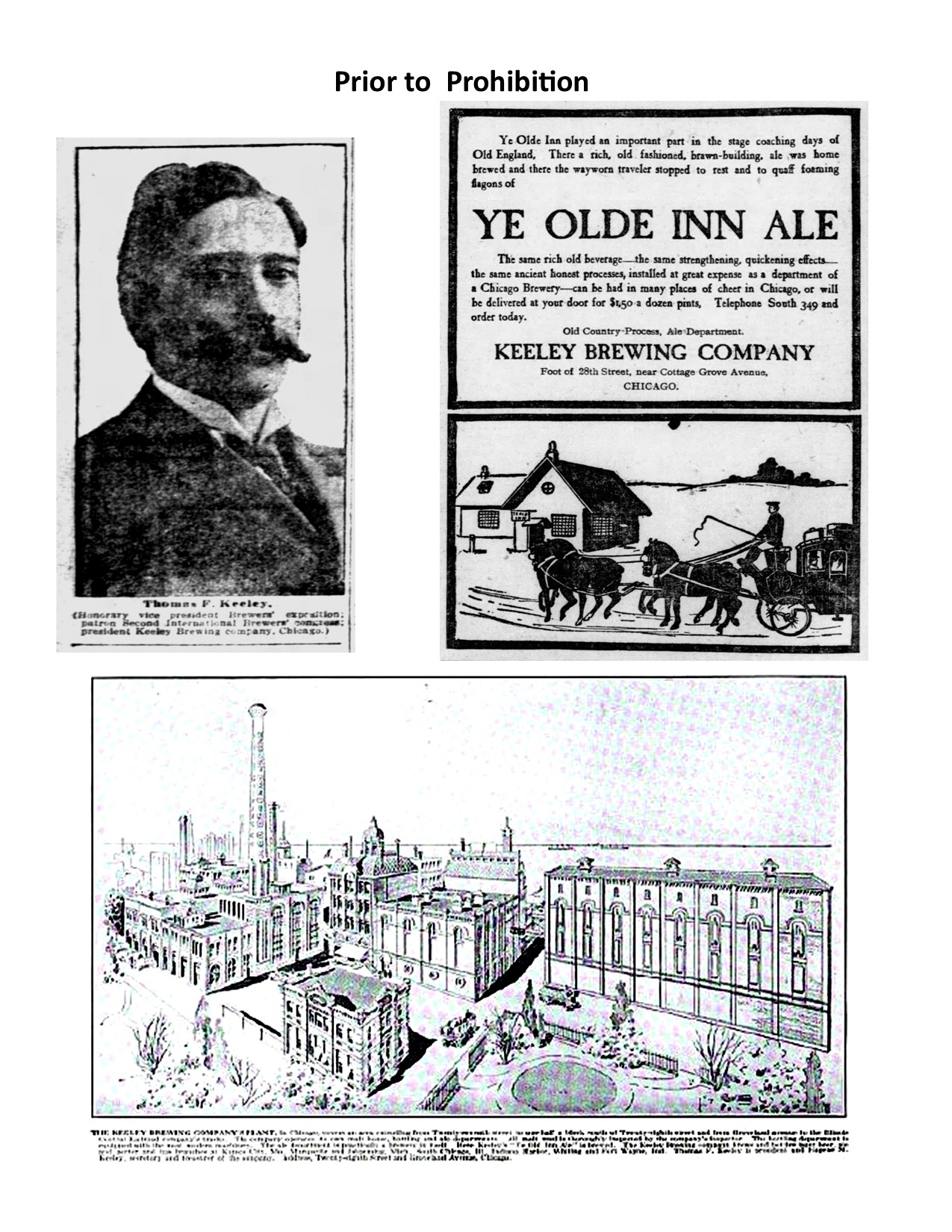
Thomas Francis Keeley was the first treasurer of the Ellerslie Club. He was born in Chicago in 1866. His father, Michael Keeley, was born in Ireland, and his mother, Catherine McCarthy, was born in Chicago in 1840 to parents from Ireland, making her a very early native of the city. He lived at his family’s home at 2829 Prairie Avenue.
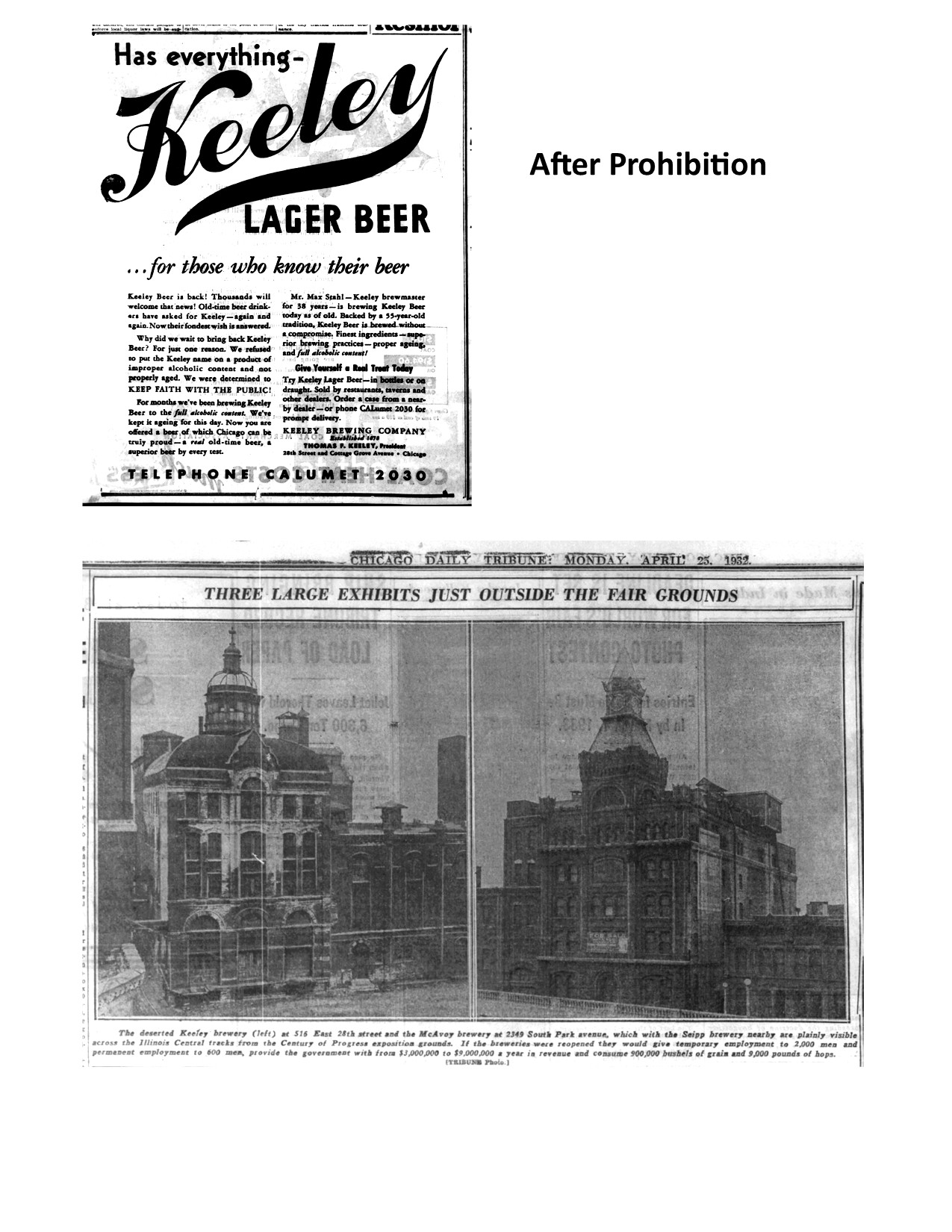
Keeley’s father Michael owned Keeley Brewing Company, and when Michael died in 1888, Keeley took over running the company as president and general manager. He also took over his father’s role as vice president in the Dallas (Texas) Brewery, Inc.
Keeley was also president of the Metropolitan-Hibernia Fire Insurance Company, which offered fire and tornado coverage in six states. The family also had large interests in a hotel, and in coal and iron mines in Utah.
In 1894, the first Irish Catholic Mayor of Chicago, John Patrick Hopkins, appointed him to the Board of the Chicago Public Library.
Keeley married Margaret Gahan in 1918 when he was 45 (she was 30) and they had one daughter. Gahan was the daughter of a prominent leader of the Democrat party.
Keeley’s younger brother Eugene also worked with the brewery as secretary and treasurer and was a member of the Ellerslie Club. Their sisters Clara Gertrude and Kate were directors with the company and were sportswomen at the club. Both married men from the Ellerslie Club.
As no surprise, Keeley was anti-Prohibition and worked against that movement. With Prohibition, the brewery closed and sat vacant and decaying for over a decade while Keeley advocated for ending Prohibition and creating legitimate jobs and taxes. He died shortly after Prohibition ended, while in the process of reopening the brewery.
Walter Thomas (W.T. or W. Thomas) Nash was the Ellerslie Club’s first secretary. He was born in 1859 in Chicago, and both of his parents came from England. His father was a meat packer. Nash attended the University of Chicago. It appears the family was not Catholic.
In 1885, he married Nellie C. Fuller, born in Chicago in 1865. They had one daughter.
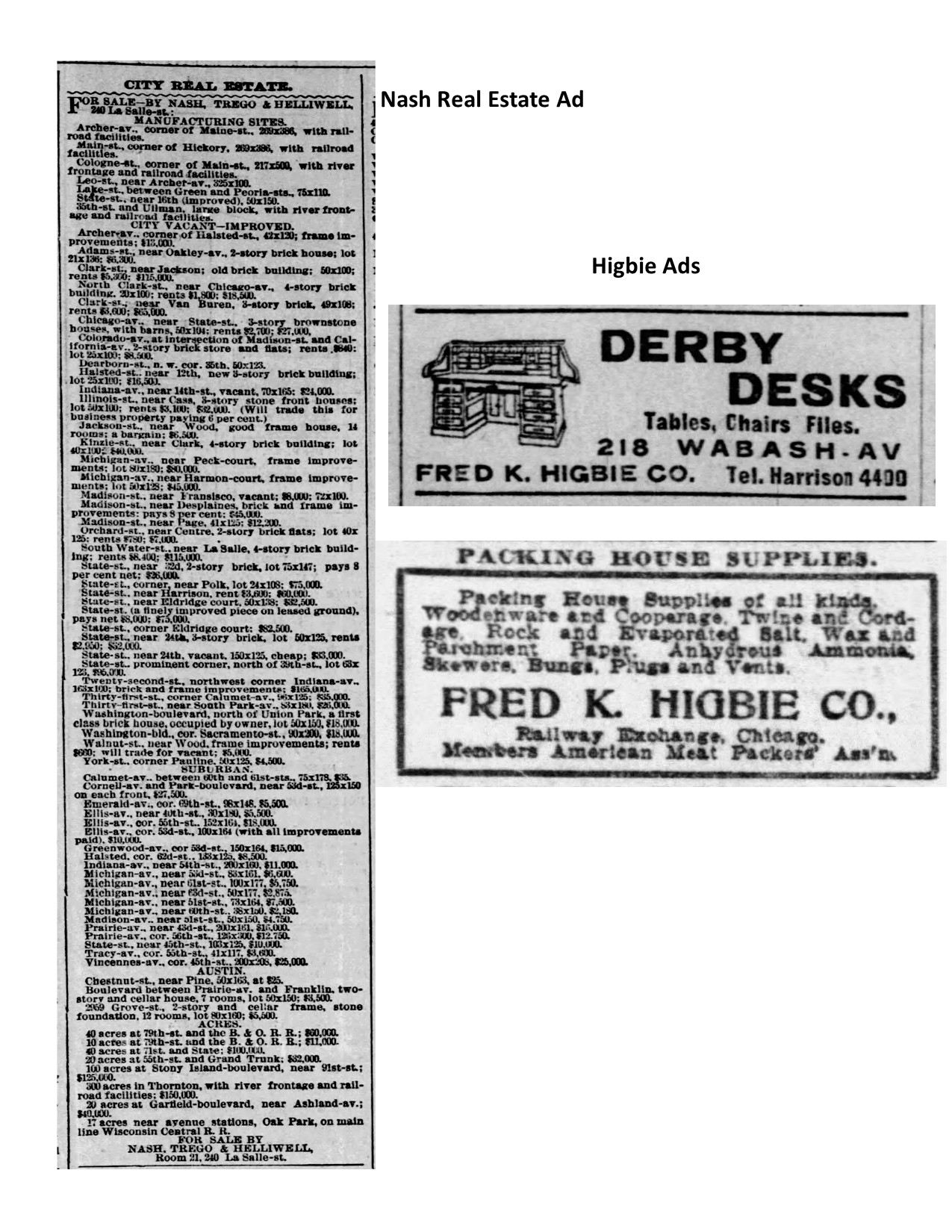
Although Nash owned a meat packing company, his primary interest was in real estate as part of the company Nash, Trego, and Helliwell, which started in 1888.
Frederick (Fred) Kellogg Higbie, a founder of Ellerslie and member of the first Grounds Committee, was born in New York in 1866.
Like Nash, Higbie doesn’t fit the mold of the others. His family had been in the U.S. for several generations already. He married Julia Pausinsky, whose parents came from Germany, in 1890, and they had two daughters. It appears Higbie was not Catholic, or at least not practicing as one, but he was a very active member of both the Sheridan and Ellerslie Clubs.
Higbie was a manufacturer and merchant dealing in woodenware and meat packing supplies with a regional presence. His company, named for him, earned over $1 million in 1903, and he incorporated a new company, the American Meat Packers’ Supply Company, in 1909. He was owner and officer of salt and coal mines in Kansas.
Higbie lived at 6431 Greenwood Avenue.
Patrick James Lawler, one of the first directors and a member of the first Sports and Pastimes Committee, was born in Chicago in 1873. His father Patrick was born in Ireland, his mother in Illinois. Patrick, the father, was a teamster with the stockyards.
Lawler became a livestock commissioner with his own company, part of the Union Stockyards of Chicago.
In 1903, he married Catherine (Kate) Keeley, the sister of Thomas Keeley. They had two daughters.
They lived at the Keeley family home on Prairie Avenue, then later had their own home at 4925 Woodlawn. The purchase of the Woodlawn House, “a high class Kenwood residence,” for $40,000 in 1919 earned a headline and article in the Chicago Tribune.
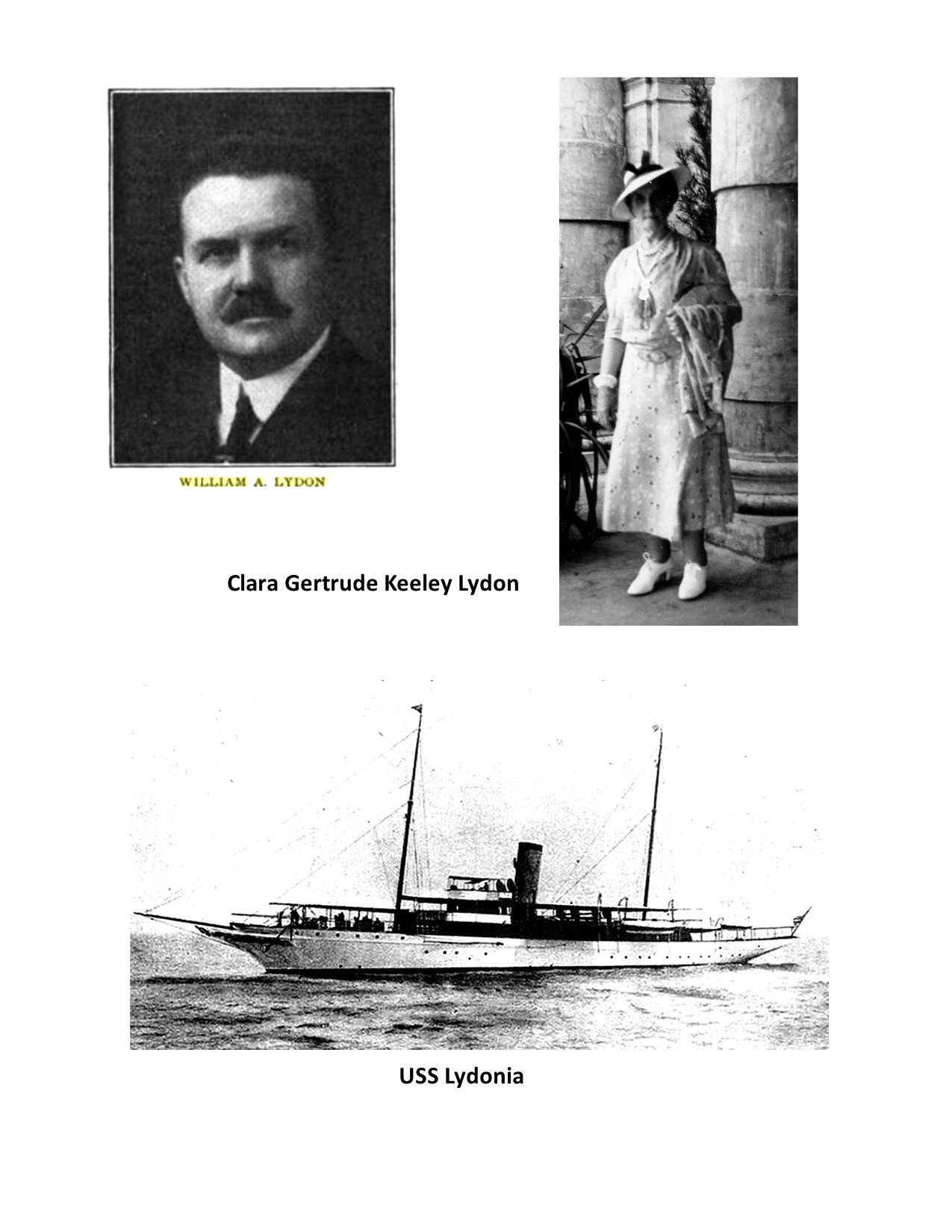
Another founding director was William A. Lydon, born in New York in 1863. Both parents, Michael Lydon and Anne Hopkins, were from Ireland. His uncle, his mother’s brother, John Patrick Hopkins, was the first Irish Catholic Mayor of Chicago.
In 1897, he married another Keeley sister, Clara Gertrude. They had three children. They lived at 4758 Prairie.
Lydon was a civil engineer and president of the Great Lakes Dredge and Docks Company. He was a major contributor to the development of Chicago’s vast waterworks systems, including the tunnels and pumping apparatus. He was involved in numerous high profile projects throughout the Great Lakes region.
He was “a widely known yachtsman” and built the Lydonia II, one of the largest yachts on the Great Lakes. During World War I, he turned the yacht over to the U.S. Navy for military use and it was commissioned as the USS Lydonia in 1917. It was used as an escort and later as a coastal survey ship and retired from service in 1947.
Other beginning directors and committee members included Henry J. Fitzgerald, owner of the Fitzgerald Trunk Co.; John Julius Kinsella, owner of the glass company famous for fine church stained glass windows; James Joseph Wade, plumbing contractor and sanitary engineer who worked with the city; John Francis Clare, lawyer who was the prosecuting attorney for the city of Chicago; Michael Joseph Nelson, owner of an interior decorating company that produced fine furniture, draperies, and wallpaper; and Alfred Daniel Plamondon, manufacturer of machinery.
All of these men were not only successful businessmen, they were accomplished sportsmen, which led to the founding of the Ellerslie Cross Country Club. The women mentioned – the Keeley sisters, the Walsh sisters, Nellie Fuller Nash – also excelled at sports.
The Ellerslie club was started as a golf club, but the major passions of these Irish sports folks were actually coursing, that is greyhound racing and hunting; and equestrian sports, “riding to the hounds.”
There will be three more posts in this series: Ellerslie as a golf club; greyhound coursing; and cross-country horseback riding through the southwest suburbs.