Explore the RHS Facebook Archives, a rich repository of local history written by Carol Flynn. For two decades, Carol brought a deeply dedicated voice to public education at RHS. Her role as Facebook administrator through mid-2025 naturally extended her prolific research into meticulously detailed articles, most notably her multi-part historical series posts. Today, Carol continues her local history writing for The Beverly Review and other outlets.
August 2020
The history of Dan Ryan Woods – Part 12: Depression-era activities at DRW
By Carol Flynn
The U.S. stock market crash on Tuesday, October 29, 1929, was considered the start of the Great Depression, a worldwide economic downturn that lasted for a decade. Unemployment reached 25% in the U.S. and over 5,000 banks failed.
Franklin Delano Roosevelt was elected President in 1932, and he instituted programs known as the “New Deal” to stimulate demand and provide work and relief through government spending and oversight. Some of the agencies he set up became permanent, including the Securities and Exchange Commission, the Social Security Administration, the Federal Aviation Administration, and the Federal Communications Commission.
Other New Deal programs that provided relief and employment opportunities were discontinued in the 1940s following World War II. In the 1930s, projects through these agencies were completed in the Forest Preserves of Cook County (FPCC), including Dan Ryan Woods (DRW).
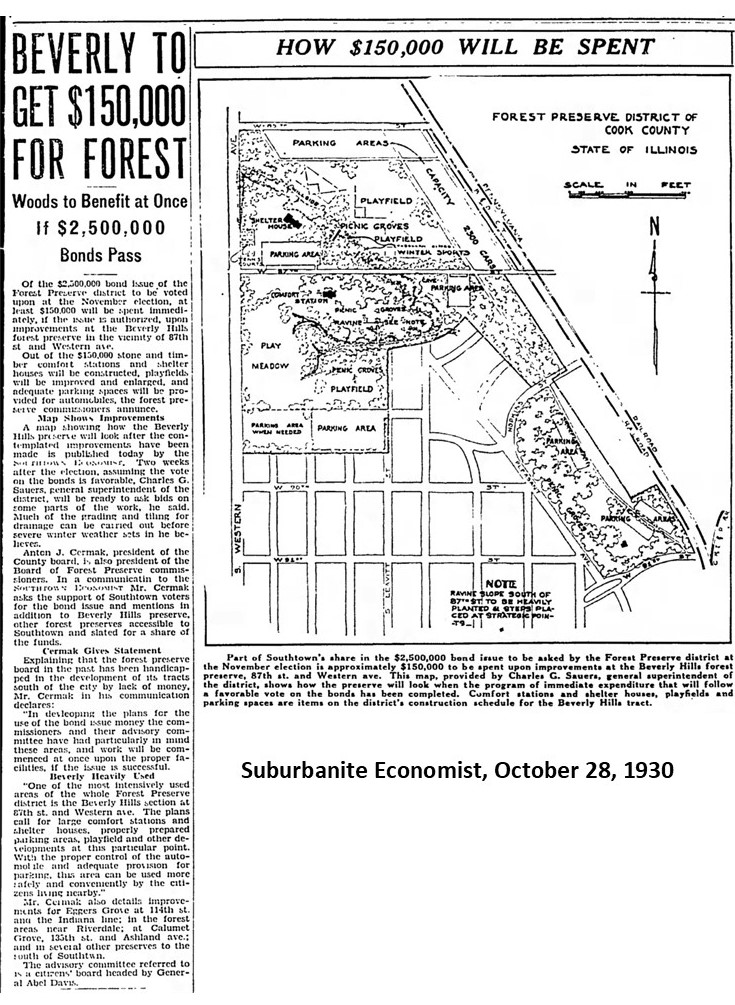
The 1929 Plans of the FPCC called for improvements in many of the preserves, with funding coming from a bond issue for $2.5 million. DRW, one of the most widely used areas in the entire preserve system, was to receive $150,000 in improvements, including new comfort stations, a shelter house, playing fields and parking areas. The DRW plan was presented in a newspaper article designed to solicit support for the bonds.
In 1933, it was announced that a new frame field headquarters was completed in DRW. It was built from materials left over from an old barn on the property, perhaps from the original Sherman Farm. But the Depression was seriously affecting finances, and since only $500,000 had been raised by the bond issue, work was discontinued on FPCC projects.
The situation didn’t last long, however. Because it was well represented politically, the FPCC received state and federal funds from the National Park Service, the Reconstruction Finance Corporation, and the Illinois Emergency Relief Commission. Above all, New Deal programs allowed the FPCC to embark on large projects to develop the preserves. The major “alphabet soup” federal agencies that provided services to the FPCC were the Civilian Conservation Corps (CCC), the Civil Works Administration (CWA), the Public Works Administration (PWA), and the Works Progress Administration (WPA).
These programs provided mostly manual labor jobs for unemployed men. The CCC concentrated on development of natural resources, the CWA provided construction jobs through the hard winter of 1933-34, and the PWA provided contracts to private construction firms for large-scale projects. The WPA was a larger and more far-reaching agency, providing millions of jobs for public works projects, ranging from road and building construction to the arts and history projects.
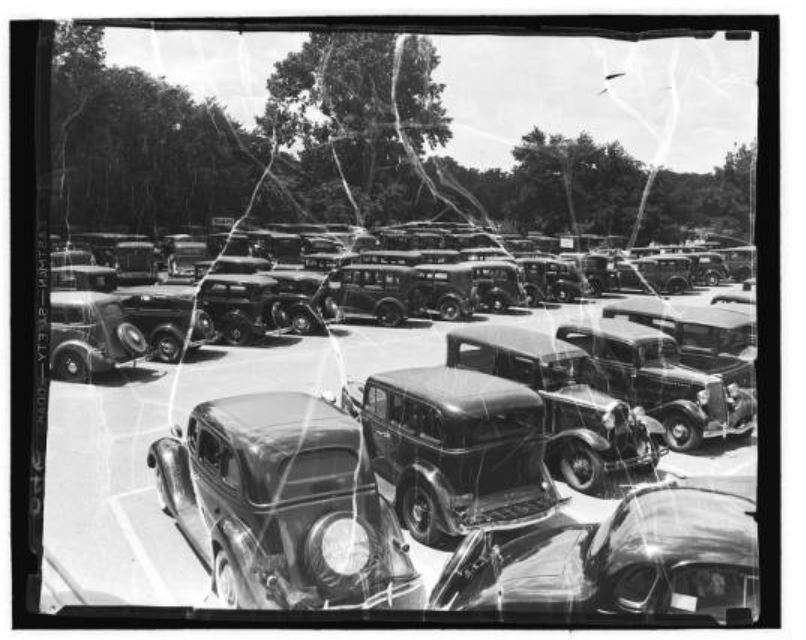
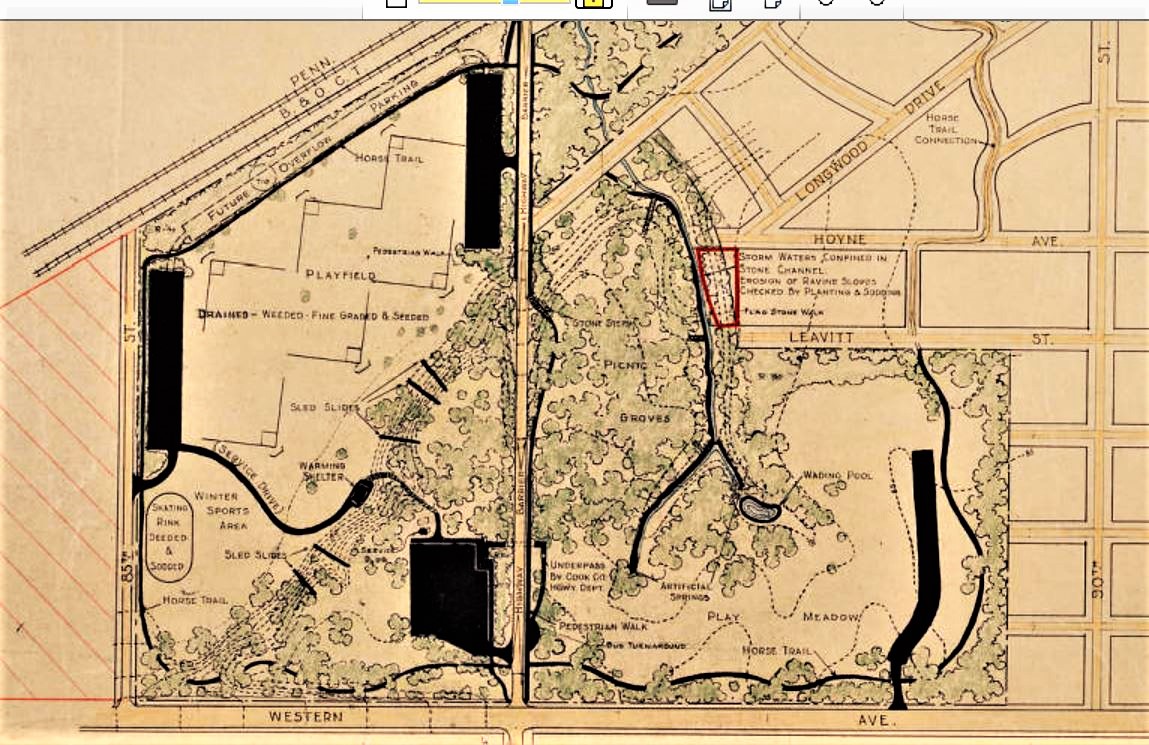
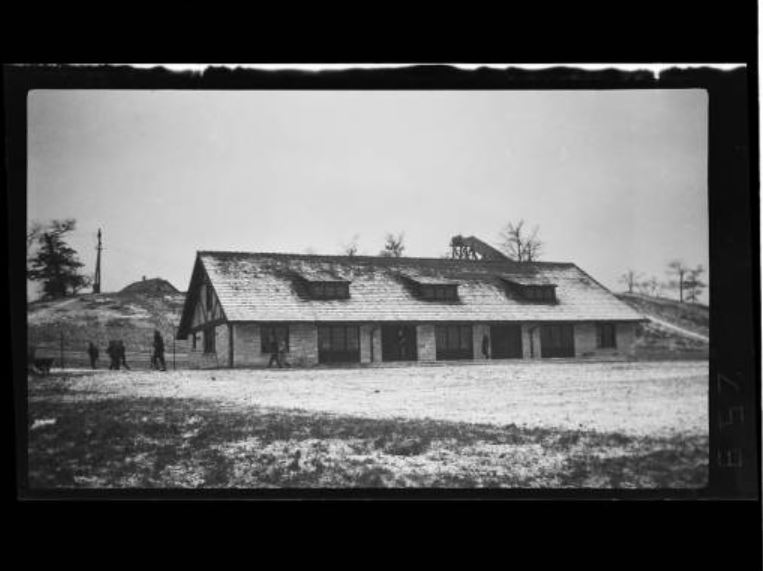
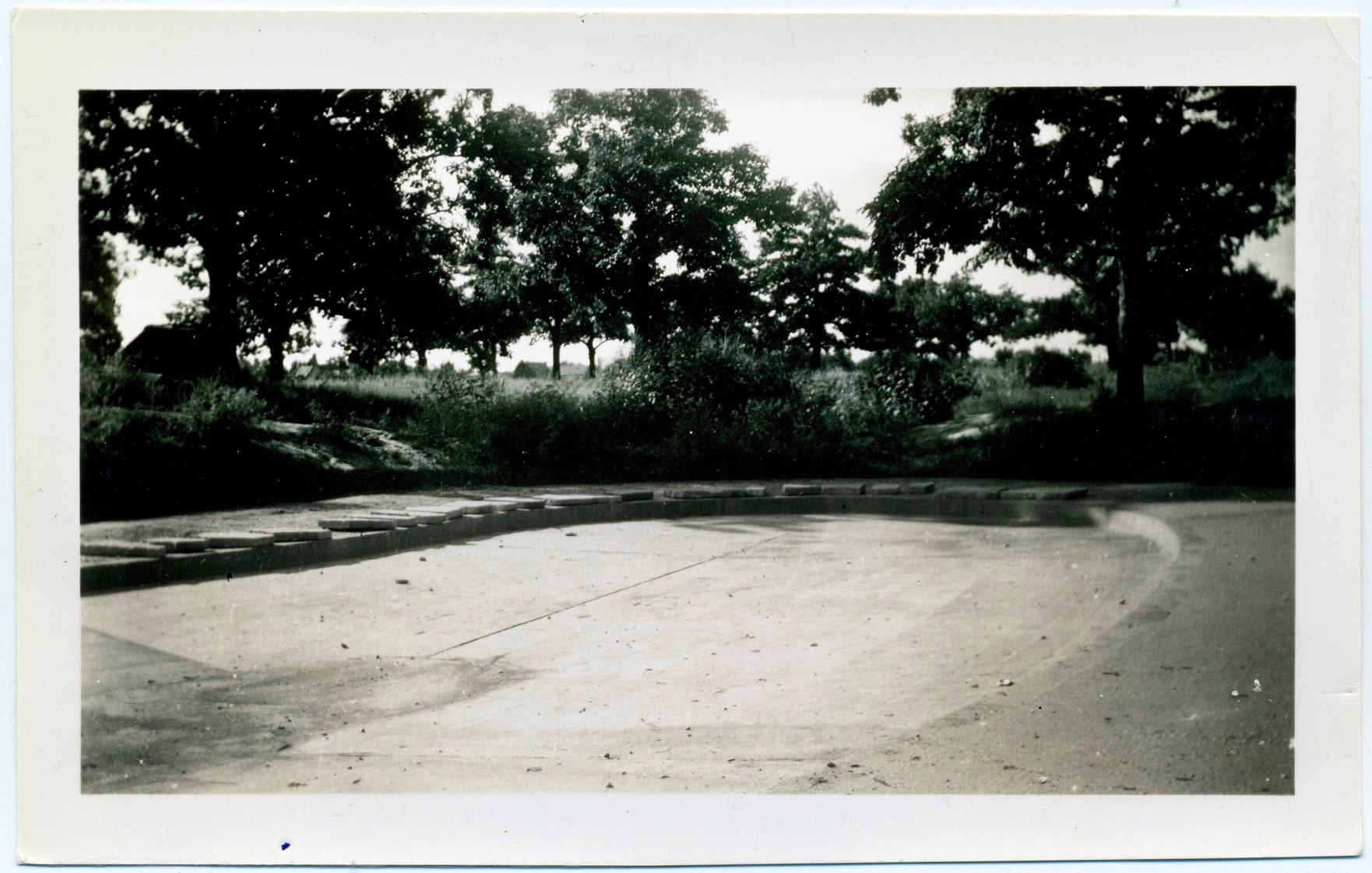
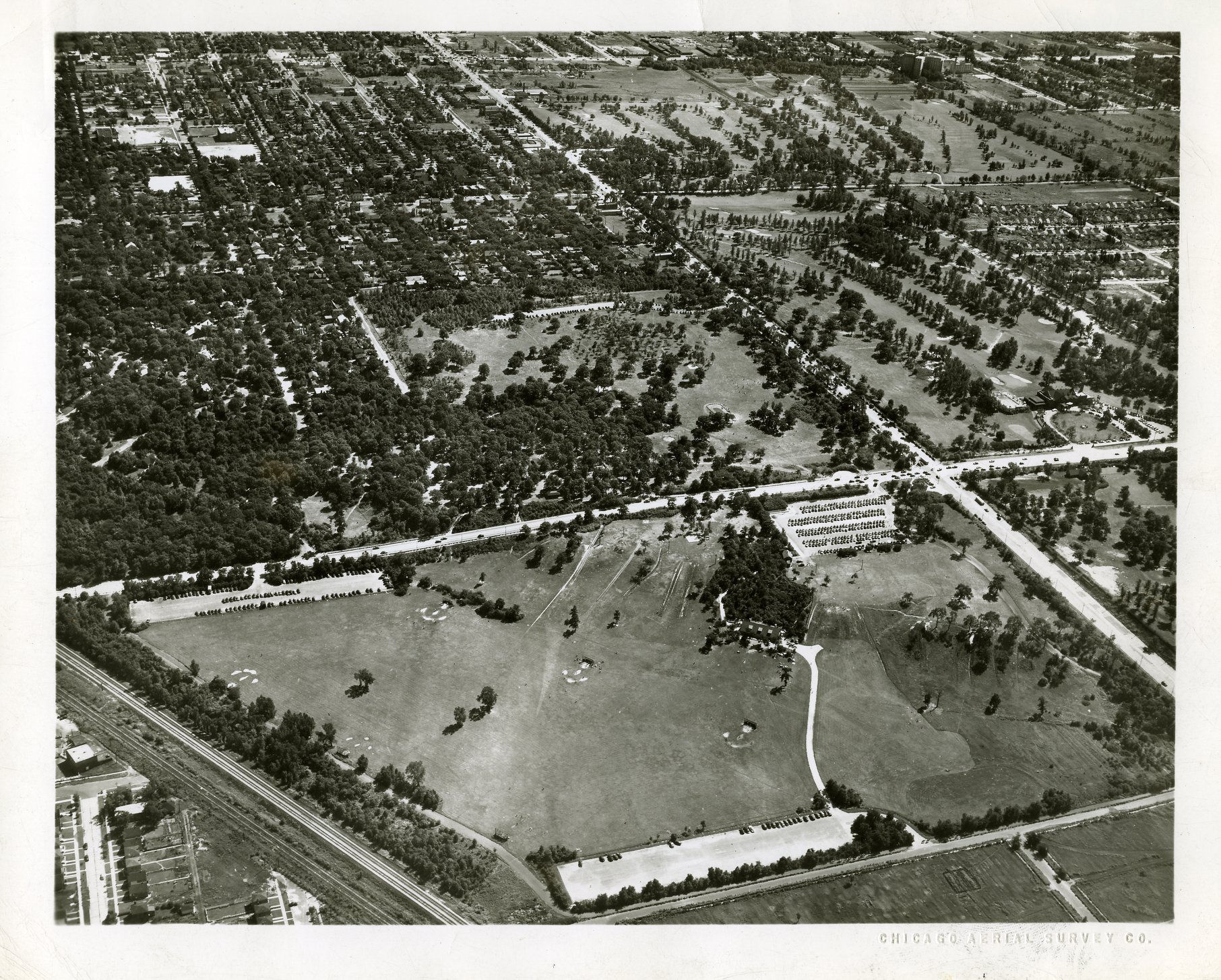
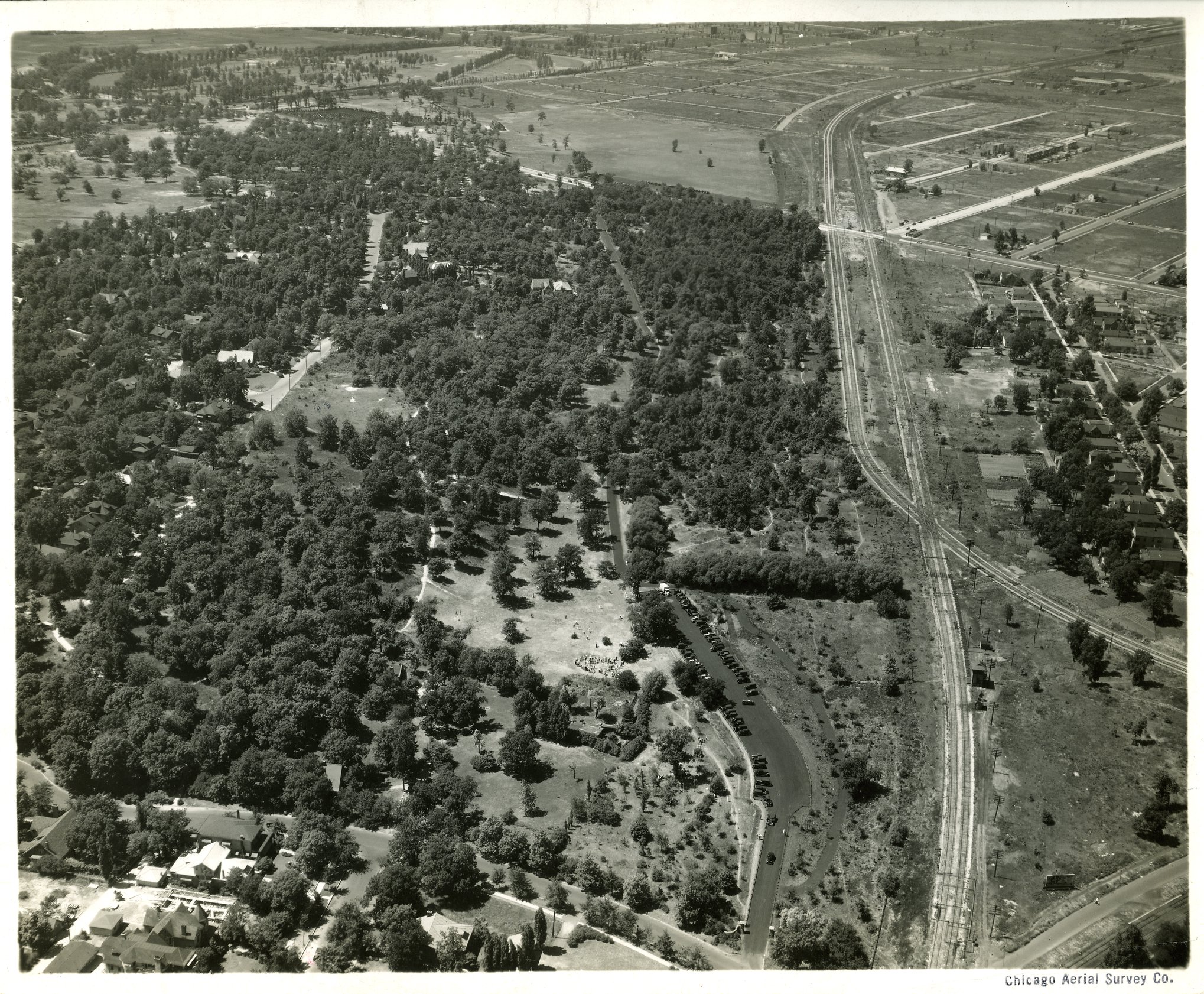
The improvements and additions made to DRW during the 1930s included parking lots, ball fields, dance floors and a wading pool. The stone shelter house nestled into the Ridge north of 87th Street between the sledding hill and the former skiing hill was built by the CCC in 1935.
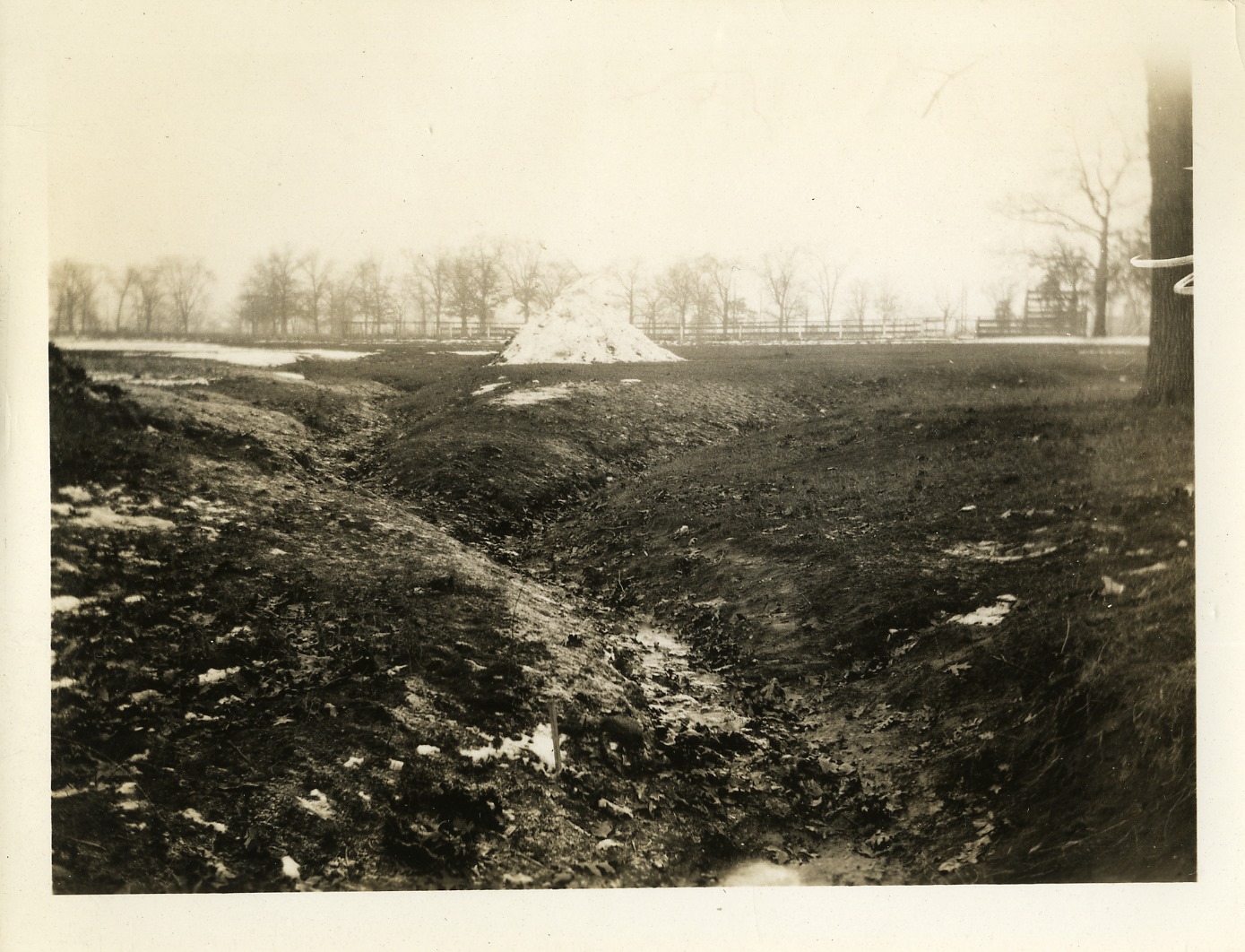
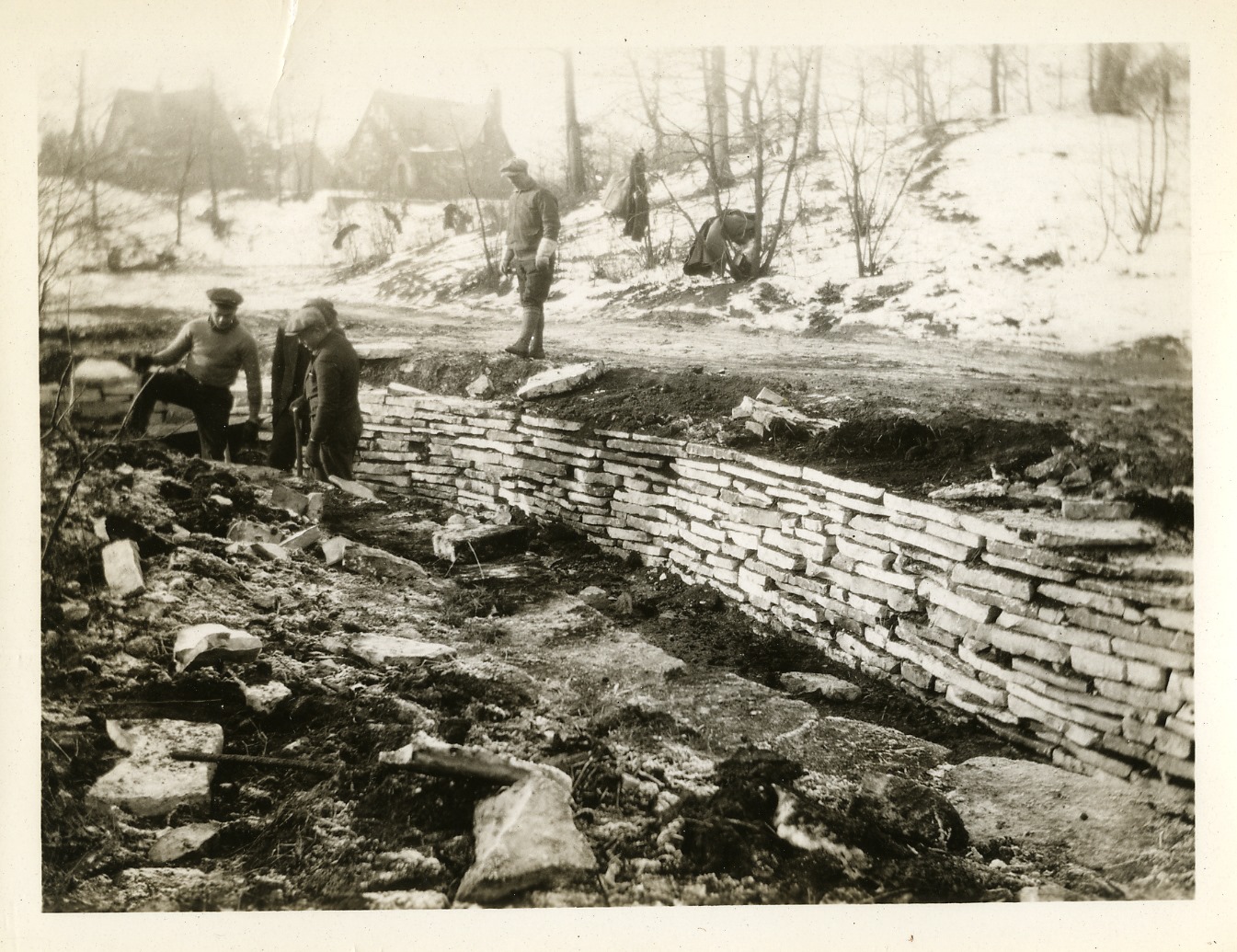
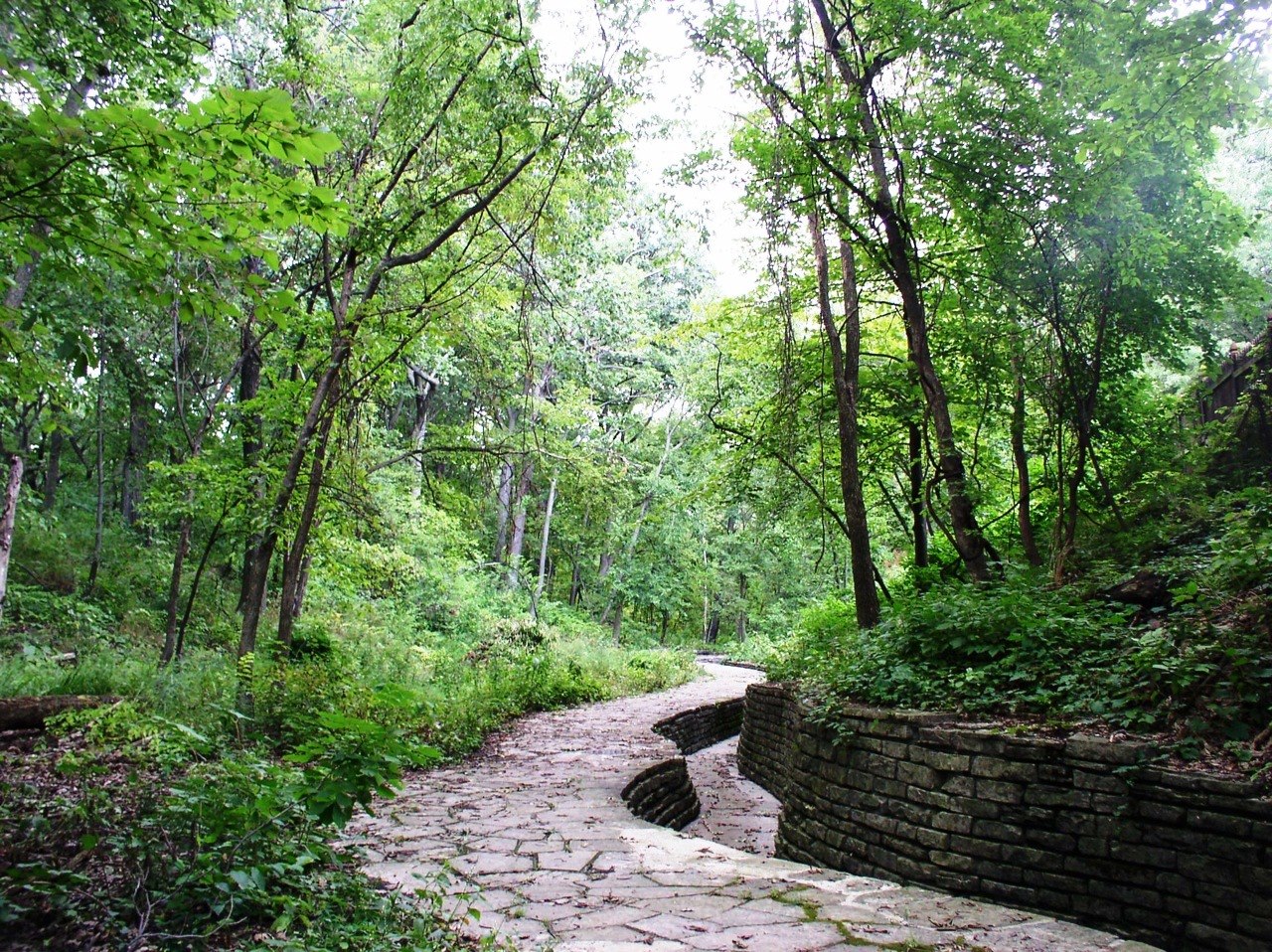
The most unique feature built during this time period was the ravine reinforcement and aqueduct system created in the woods south of 87th Street. This was the site of a natural drain, a geologic formation that allowed water from rain and melting snow to run off from higher to lower elevation. In this case, water from the top of the Ridge drained off to the east, where it formed marshes during the “wet seasons” and was eventually reabsorbed into the ground in the “dry seasons.”
The first ravine project in the early 1930s used relief labor and funding through the state to dig out a channel and line it with loose limestone flagstone. In Illinois, the workers were known as “Emmerson men,” after Governor Louis Lincoln Emmerson who served during the early Depression years (1928-32).
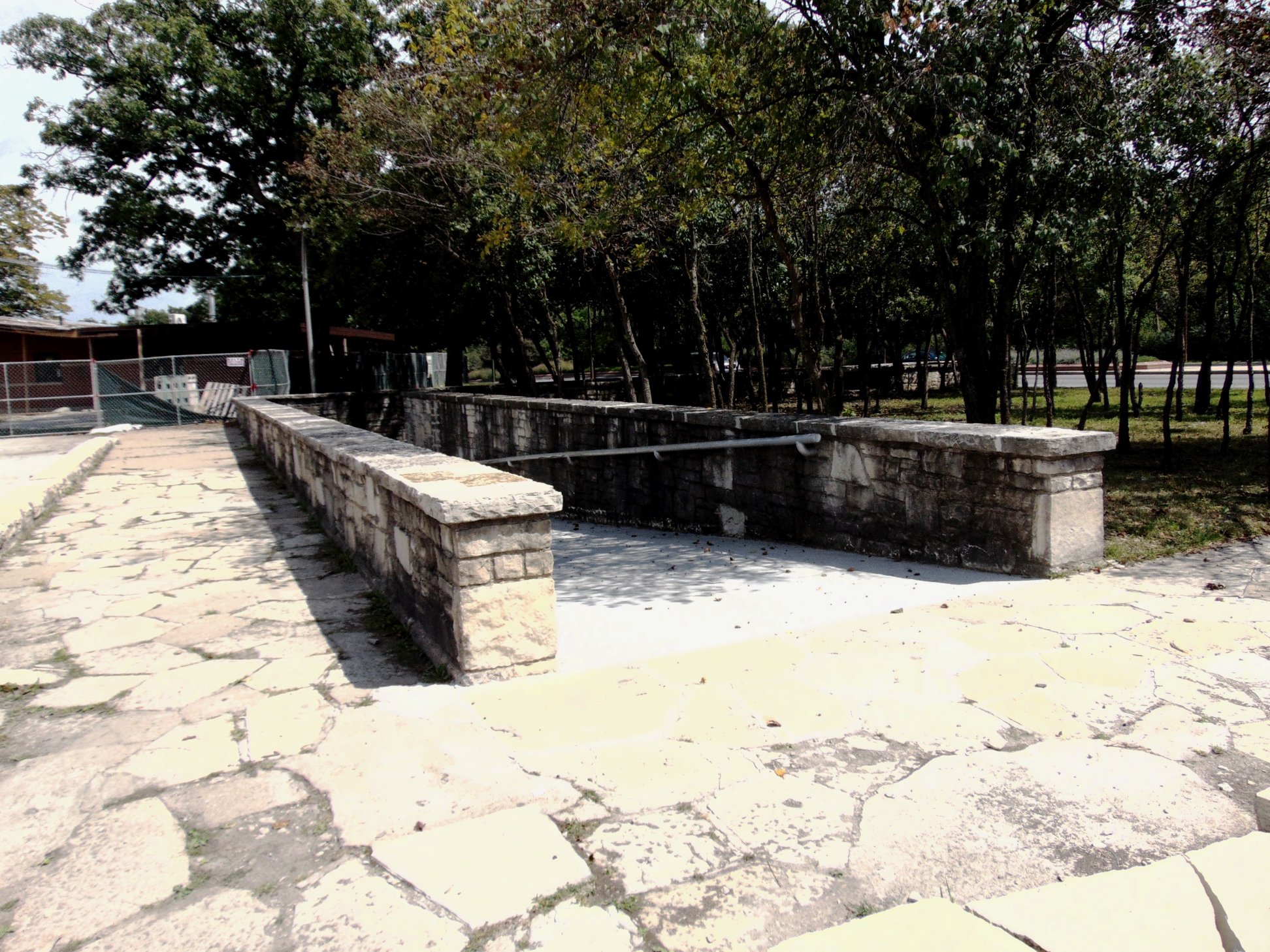
A few years later, the federal agencies got involved, and more formal plans were developed and projects completed. The detail of 1937 plans shows the features added in the 1930s, including the flagstone pedestrian underpass on 87th Street.
The projects provided much-needed jobs. Many of the men were in desperate situations, homeless, emaciated, and depressed. They lived in CCC camps set up in the forest preserves, where they were sheltered and fed, and paid $1 per day in wages.
Today’s FPCC materials describe the ravine project as follows: “In the south section of Dan Ryan, a series of stone aqueducts wind peacefully downhill through the site’s oak woodlands. Primarily built as drainage structures and erosion control features, they were constructed from limestone flagstone, adding a unique aesthetic feature to the site. Even today, when rain falls, the channels fill with water from the surrounding area. The water travels through the aqueducts to the lower eastern area of the preserve where it pools and percolates back into the ground.”
Some conservationists today say the aqueducts were not really a necessity, that nature was doing fine on her own, but the project did provide economic relief. Today the ravine makes for an interesting and pleasant hike in the south portion of DRW.
Next installment: “Necking” in the DRW

The history of Dan Ryan Woods – Part 11: Both a preserve and a park
By Carol Flynn
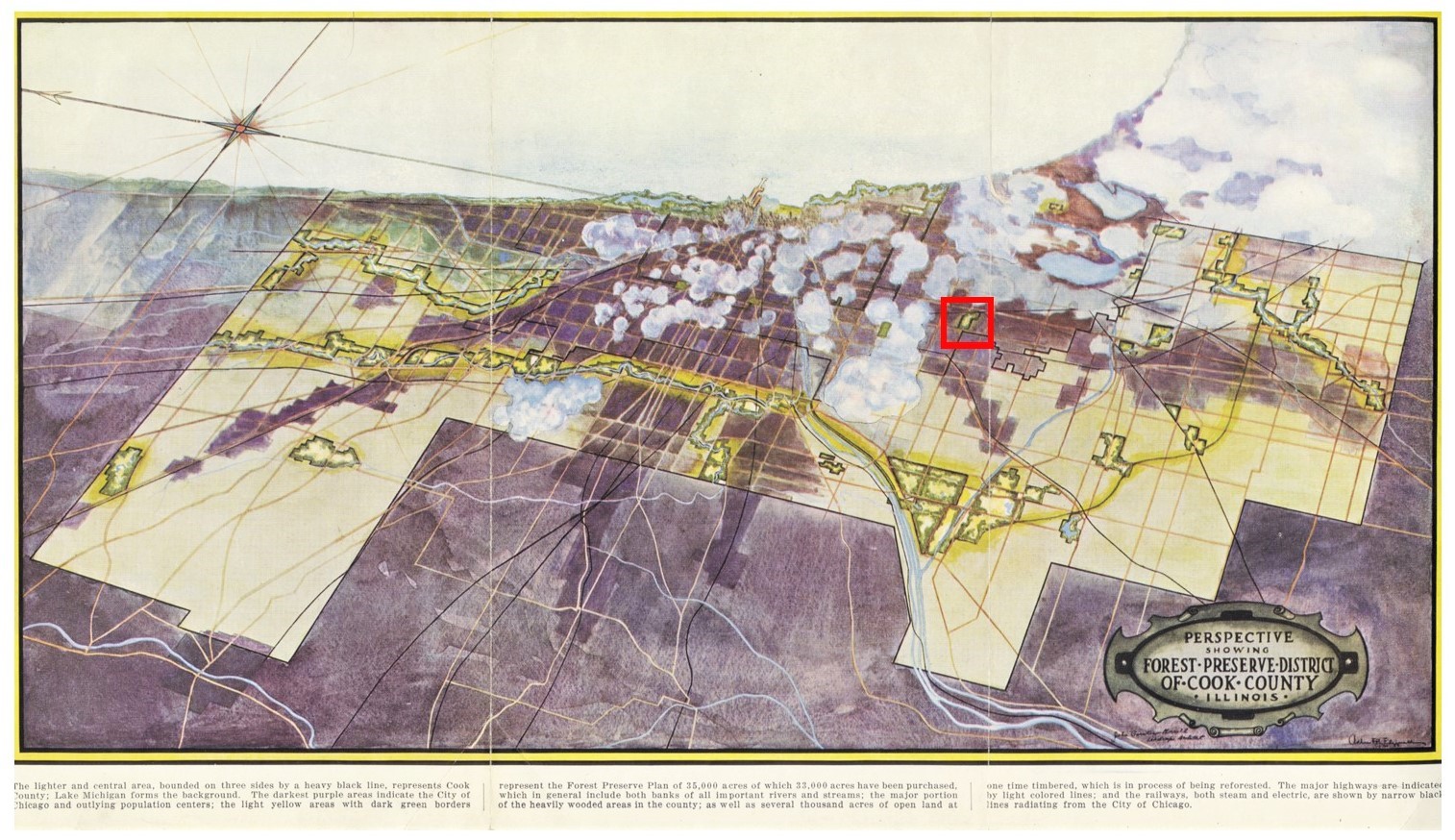
The Dan Ryan Woods (DRW) have always been a unique holding within the Forest Preserves of Cook County (FPCC). The land is a small, isolated tract within the city, far removed from the “outer belt” of the other preserves.
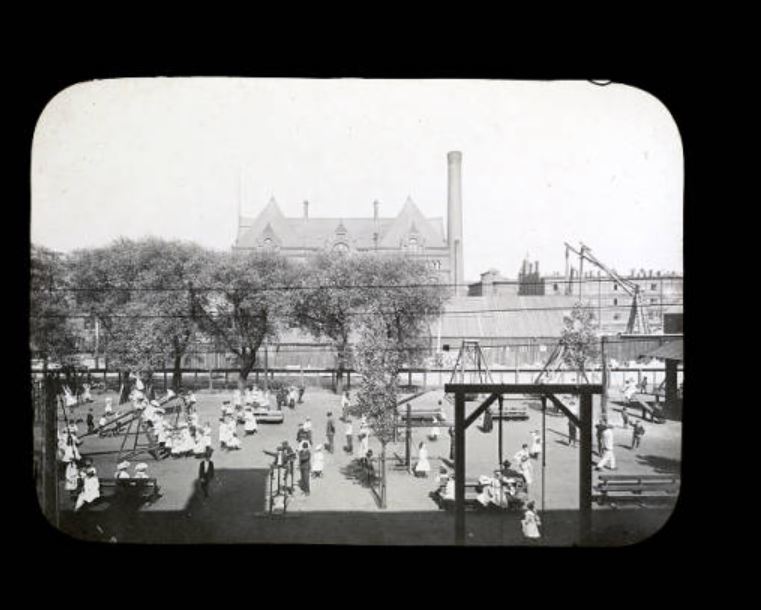
Chicagoans recognized the need for parks and recreation space from the city’s earliest days. Within two years of being incorporated as a city in 1837, the first park, Dearborn Park, was established where the Cultural Center is now, at Washington Street and Michigan Avenue, which was part of the site of the original Fort Dearborn. A few years later came Washington Square, the celebrated free-speech forum now on the National Register of Historic Places.
Chicago was an urban leader in establishing city parks in the mid to late 1800s. This was primarily a response to the rapid growth in population from the influx of European immigrants, which resulted in overcrowding. Public health and “social hygiene” theories of the time believed that disease epidemics as well as social strife and crime all resulted from crowded city neighborhoods and tenements, and could be cured by sunlight, fresh air, and time spent in moral reflection. City parks were designed to help alleviate the congestion, thereby improving physical and mental health, and encouraging city residents, especially the new immigrants, to become good civic-minded citizens.
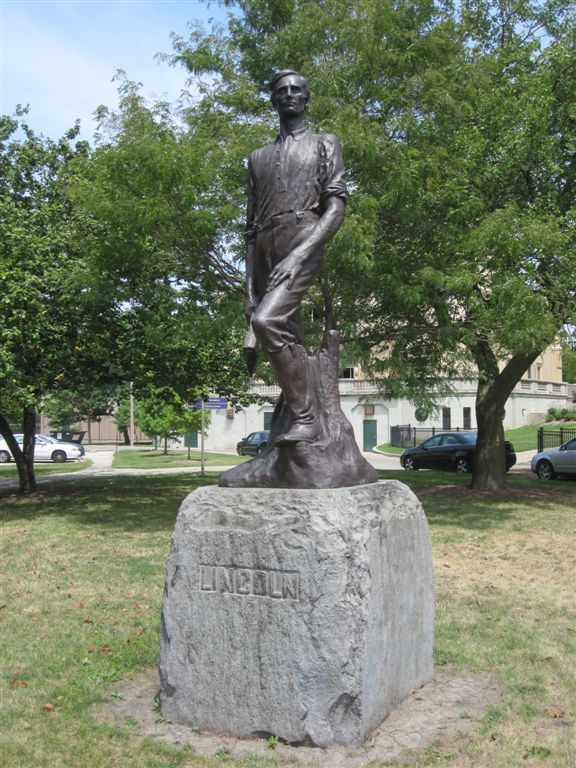
The forest preserves and the city parks were conceived with different but complementary purposes. The city parks were man-made and neighborhood based. Common features included playgrounds, manicured gardens, sports fields and courts, and field houses. Early playgrounds offered structured activities in rather barren settings. Later, the parks also became the settings for a world-class collection of fountains, monuments, and sculptures.
The forest preserves were envisioned as lands left in their natural state, a network of prairies, forests, wetlands, bluffs, streams, and lakes, encircling the city as sanctuaries for native plant and animal life. They were places where people could get away from the hustle and bustle of city life and enjoy fresh air and nature. They were often referred to as “the peoples’ country estate.”
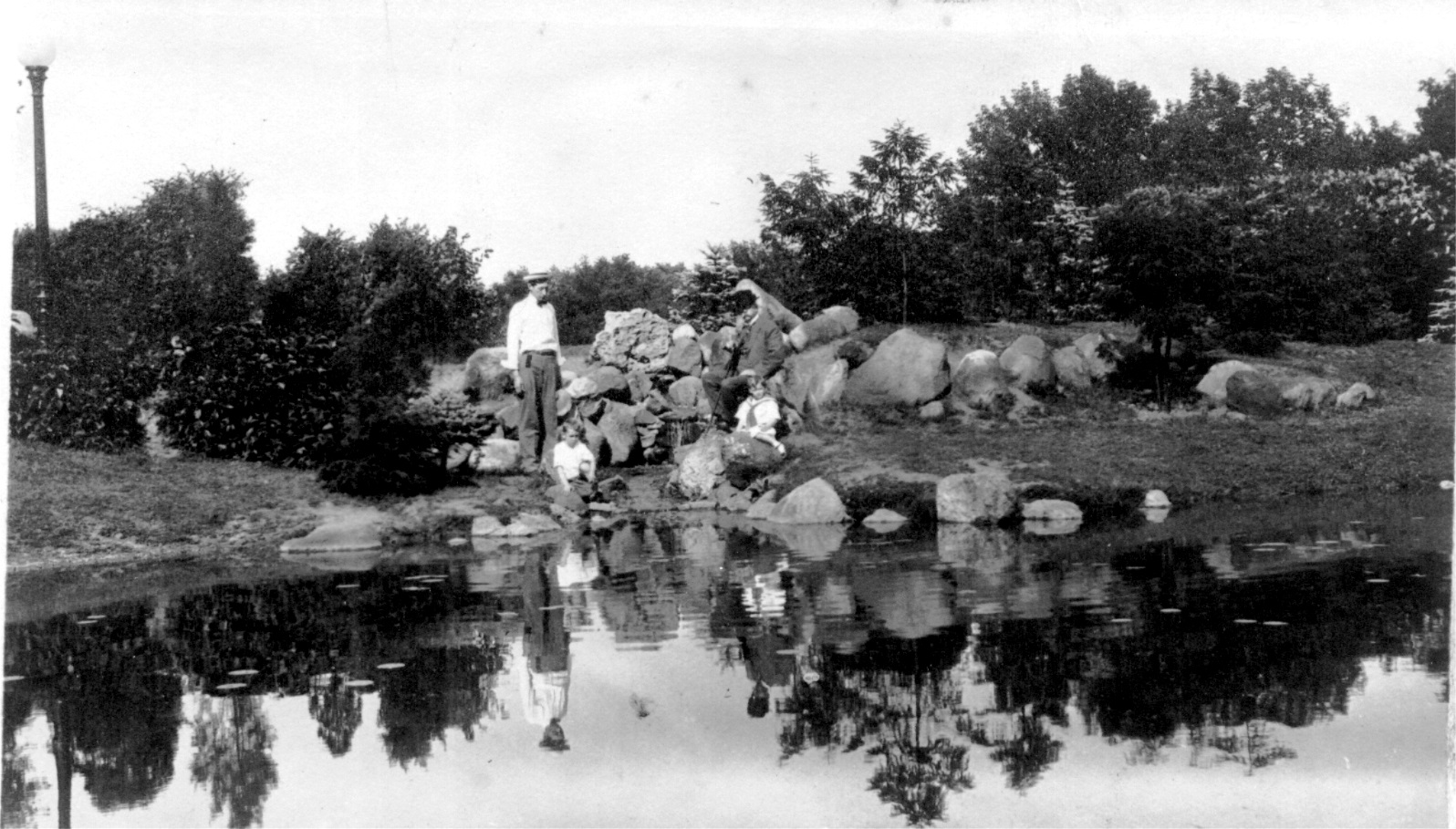
Of course, there was plenty of cross-over. The preserves wound up with sports fields and warming houses and other man-made features, while parks began to emphasize a natural look, thanks to planners like Prairie School landscape architect Jens Jensen, who became superintendent of the West Park System. Jensen designed Crescent, Prospect and Depot (now Bohn) Parks in Morgan Park as well as landscaping some private homes in the area.
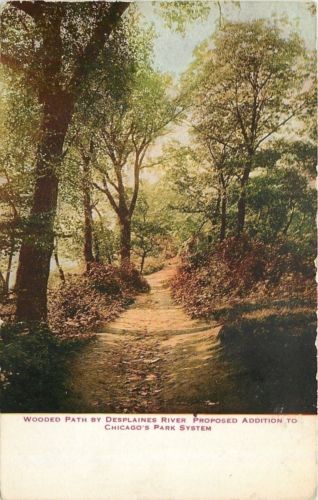
The land that Dan Ryan Woods is on almost became a city park instead of a preserve. The original owner, John B. Sherman, was the president of the South Park Commission. As was mentioned in a previous post, it was rumored he would leave this prime piece of land to the city to be turned into a park when he died in 1902. For whatever reason, that did not happen, and the land was purchased by Cook County in 1917 to become a preserve.
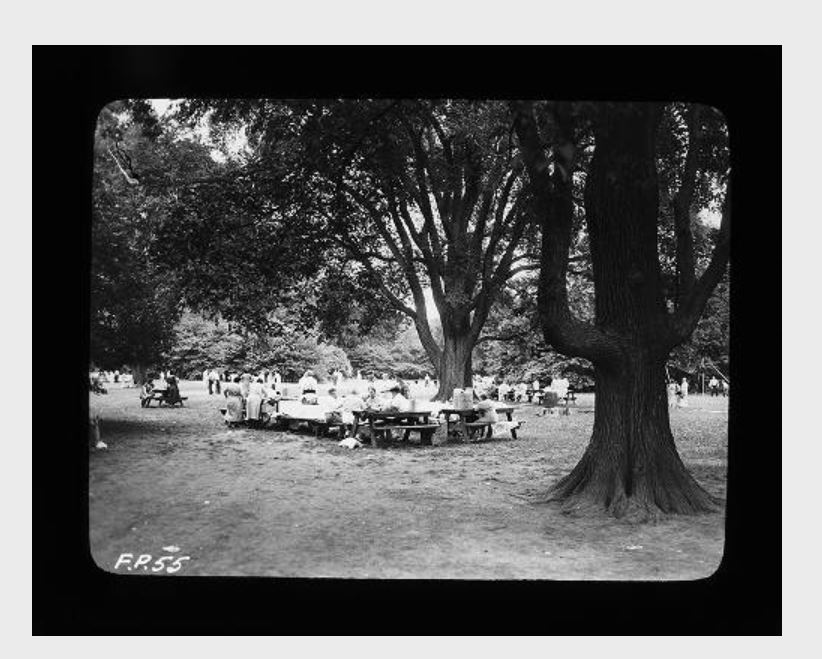
Because of its location, DRW combined the best of both worlds – a forest preserve with recreation activities, accessible by public transportation. Picnics were the most popular of FPCC events, and of all the preserves, DRW was ranked highest for usage for summer picnics.
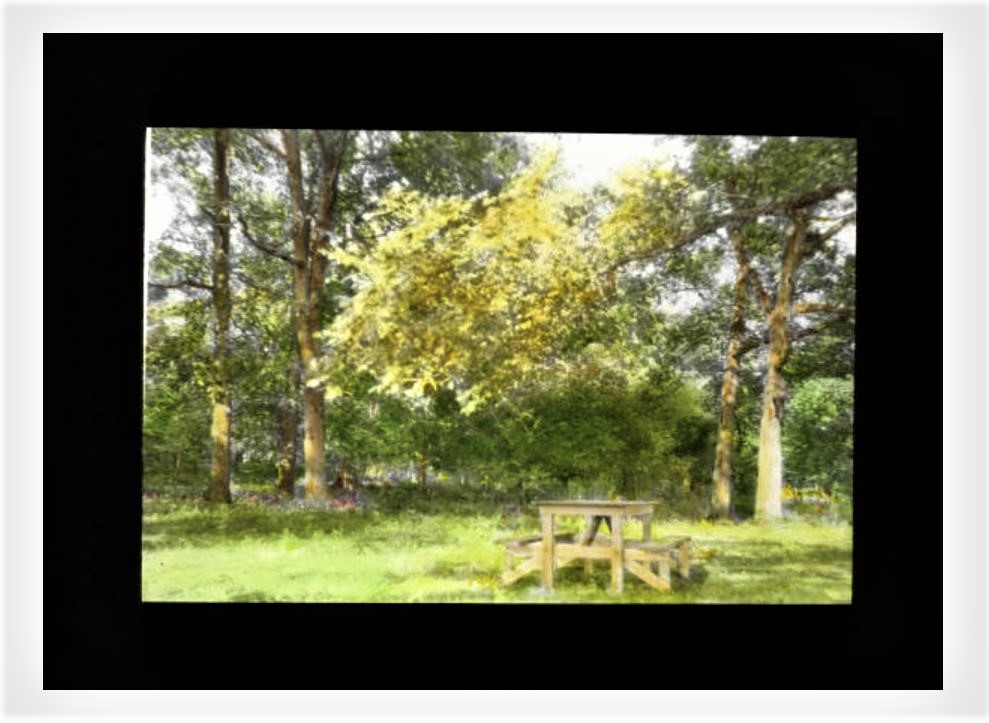
In 1929, a Forest Preserve Advisory Committee developed a document, “Recommended Plans for Forest Preserves of Cook County, Illinois.” The Plans recommended that the Beverly Hills Preserve [by then its proper name was the Dan Ryan Woods] and two other preserves within city limits “be planted with care with forest stock, and used for the present as picnic groves for small and large groups.” The report stated that much planting was needed on these tracts.
Some of the forest preserves land was reclaimed farmland, including portions of DRW. A major undertaking of the FPCC was to replant these sections with trees to reestablish forested areas.
The Plans went on to report: “It is recommended that these three tracts be acquired by the [Chicago park] districts, as soon as possible, by friendly condemnation suits. These tracts are better suited for city park use than for forest preserves, and the resulting acres to be gained for forested lands, may be used to acquire other forested areas which form connections with the present preserves.”
By law, “condemnation,” or “eminent domain,” is the power/process by which the government can take private property for public use, giving just compensation to the owner of the land. The Plans were recommending that the city buy DRW from the county to use as a city park, and the county use the proceeds to buy additional land connected to the outer belt of preserves.
The Plans were adopted, and while they gave strategic direction to the FPCC for many years, the recommendation to make DRW a city park was not acted upon. Although this idea of a city park popped up periodically, the land has stayed with the FPCC as a preserve for over 100 years now.
As these 1929 Plans were being written and implemented, the country, indeed the world, was entering the Great Depression. This led to developments that gave DRW distinctive features still on display today.
Next installment: The Depression and its impact on DRW