
Explore the RHS Facebook Archives, a rich repository of local history written by Carol Flynn. For two decades, Carol brought a deeply dedicated voice to public education at RHS. Her role as Facebook administrator through mid-2025 naturally extended her prolific research into meticulously detailed articles, most notably her multi-part historical series posts. Today, Carol continues her local history writing for The Beverly Review and other outlets.
August 2022
The Ridge Historical Society
Hetherington Photographs
By Carol Flynn
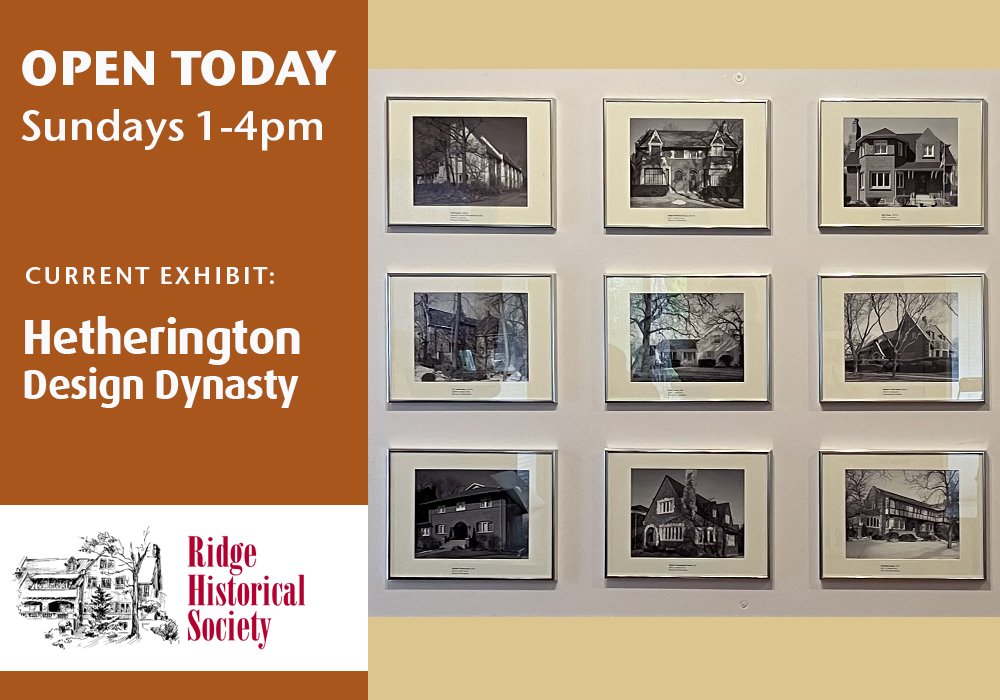
The Ridge Historical Society, 10621 S. Seeley Avenue, is open today, Sunday, August 7, 2022, from 1:00 p.m. to 4:00 p.m. Admission is free.
The current exhibit is Hetherington Design Dynasty, profiling the Hetherington family of architects who lived in Beverly and designed over 70 buildings in the Ridge communities.
The exhibit includes photographs of many of the Hetherington houses taken by Mati Maldre, Professor Emeritus of Art, Chicago State University.
The Ridge Historical Society
History of the Wards: Why Beverly and Morgan Park Are “Dry”
By Carol Flynn
This week’s Beverly Review includes the seventh installment of the series about the history of the Chicago wards in the Ridge communities. This installment looks at the 1930s and 1940s.
One of the issues that the U.S. dealt with in the 1930s was the end of Prohibition. The consumption of alcohol was never illegal. The Eighteenth Amendment to the U.S. Constitution, which went into effect in 1920, prohibited the manufacture, transportation, and sale of alcoholic beverages. This Amendment was repealed in December 1933 with the ratification of the Twenty-first Amendment.
While most of Chicago took the end of Prohibition in stride, it became a major issue on the Ridge. Decisions made by the community beginning in 1934 have kept Beverly and Morgan Park “dry” east of Western Avenue since that time.
Sections of the Ridge communities were dry before Prohibition began, of course. Morgan Park was intentionally founded in the 1870s as a religious, educational, and temperance community, and the Protestant ministers of the community led the way with the temperance movement even years before that.
When Prohibition began in 1920, every locale officially went dry. When Prohibition ended in 1933, every locale officially became “wet.” Saloons opened all over the country, including on the east side of Western Avenue and along 95th Street.
The new Illinois Liquor Control Act of 1934, however, provided that election precincts could vote by referendum to stay “dry.”
A campaign was undertaken in Beverly/Morgan Park to vote dry the precincts bounded by 89th Street, Western Avenue, 119th Street, and the Rock Island Railroad tracks. Members of a Ridge civic association went door-to-door, precinct-by-precinct, to collect petition signatures for a referendum and to obtain promises of votes when the referendum was held. The campaign was successful, and additional precincts in the ward also voted to stay dry.
The nineteenth ward became the driest ward in the city. The newspapers referred to it as “bone-dry Beverly.” The saloons that had opened on the east side of Western Avenue and on 95th Street all had to close.
In 1946, a referendum was held to make the precincts between Western Avenue, 99th Street, California Avenue, and 119th Street dry. This included the west side of Western Avenue. The proposal was defeated, paving the way for the bars, breweries, and restaurants that are found along that strip now.
Since that time, there have been campaigns to allow the sale of alcohol east of Western Avenue, but they have been voted down consistently by the community. The decision is made by the registered voters within the precinct, not by the alderman or the
city or any civic group.
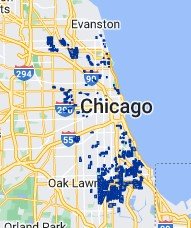
This map shows the dry precincts in the City of Chicago. Note the concentration in the far southwest area – a good-sized portion of the nineteenth ward.
https://www.beverlyreview.net/news/community_news/article_e56364d2-1283-11ed-b3b7-b38813422447.html
The Ridge Historical Society
August 1, 2022
By Carol Flynn
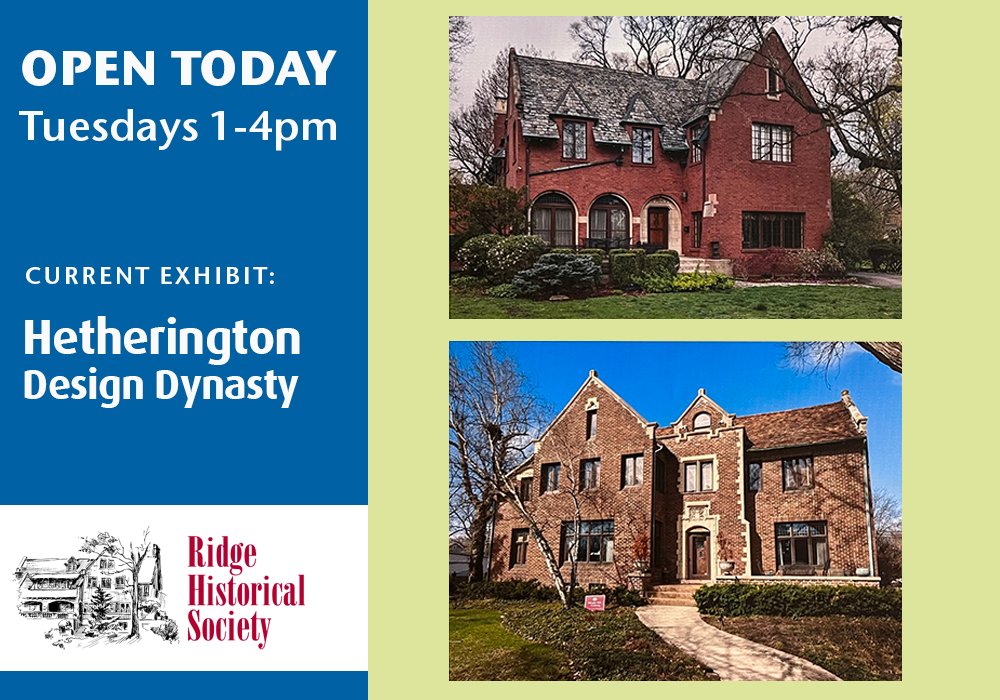
The Ridge Historical Society is now open to the public, for free, on Tuesday afternoons from 1:00 p.m. to 4:00 p.m. RHS volunteers will be there to answer questions about the current exhibit, Hetherington Design Dynasty, which celebrates the Hetherington family of architects.
Beverly/Morgan Park is renowned for its collection of architecturally significant buildings. Block after block of residences, churches, and business buildings, although varied in style, present a visual cohesiveness that has earned the area four official historic districts.
The most prolific architects in the community were the Hetherington family. John Todd Hetherington, his son Murray and daughter Jean, and Murray’s son John Murray created designs for at least seventy buildings on the Ridge that RHS researchers have documented so far.
John Todd and Murray Hetherington were known for the quality of their designs. They worked in a variety of styles – Tudor Revival, French Eclectic, even Prairie School.
To learn more about the Hetheringtons, their contributions to the community, and architecture styles, visit the current RHS exhibit.
RHS is located in the historic Graver – Driscoll House, a John Todd Hetherington creation, at 10621 S. Seeley Avenue. The grounds are entered through the driveway on Seeley, where there is some parking right at the house. Parking is also available on Seeley Avenue. The Graver-House is not wheelchair accessible and is not air conditioned.