Explore the RHS Facebook Archives, a rich repository of local history written by Carol Flynn. For two decades, Carol brought a deeply dedicated voice to public education at RHS. Her role as Facebook administrator through mid-2025 naturally extended her prolific research into meticulously detailed articles, most notably her multi-part historical series posts. Today, Carol continues her local history writing for The Beverly Review and other outlets.
June 2020
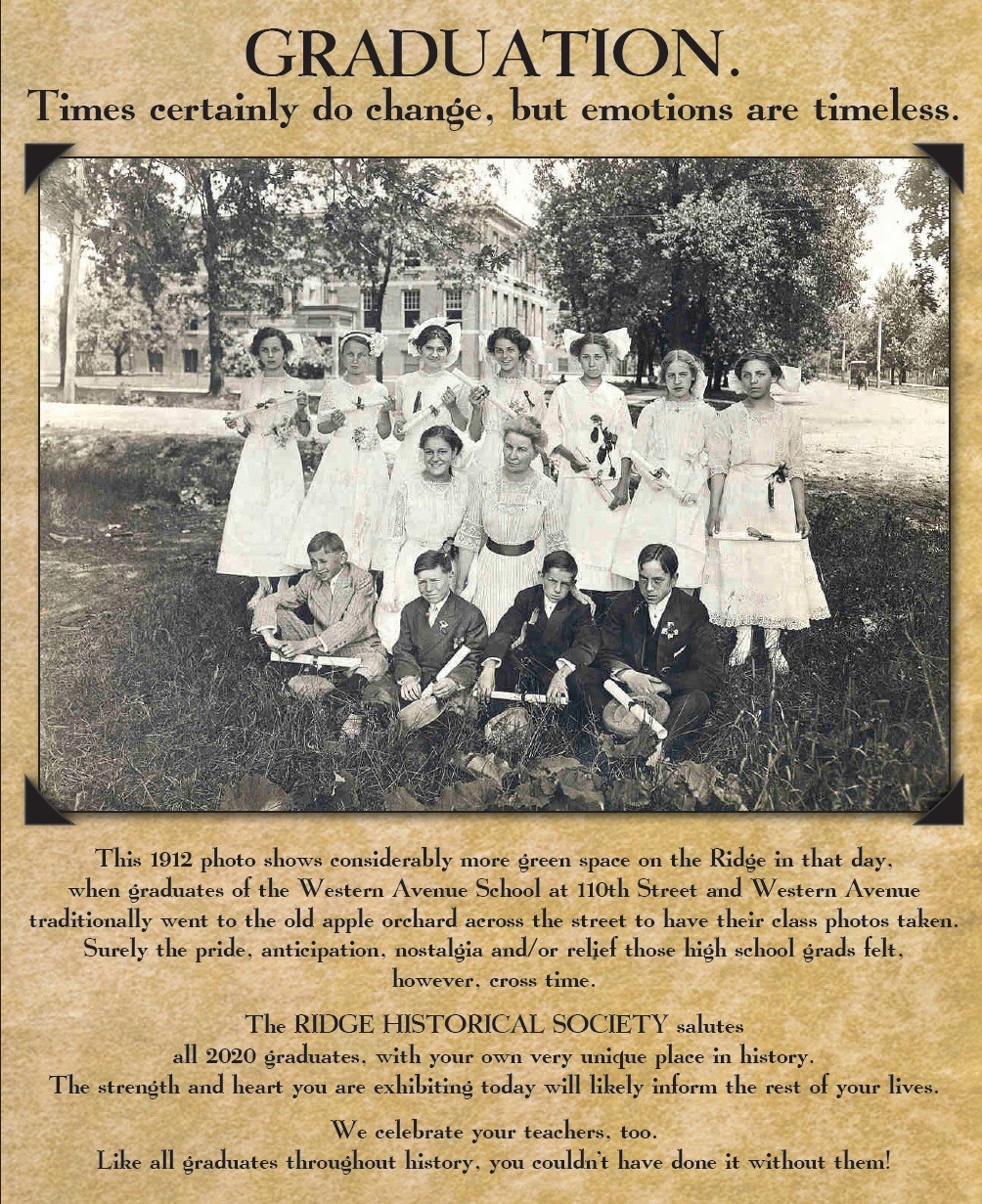
The Ridge Historical Society salutes all the 2020 graduates!
Ridge Historical Society
Carol Flynn
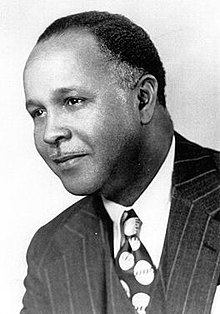
School Series – Profile 2: Percy Julian
This is the second in our series on people who have schools in a Ridge community named for them.
“In a nuclear world where time is of the essence in reaching a solution to the problems of conflicts between groups, peoples, and nations, we either rededicate ourselves to the principles that, though oft unheeded, have urged us on to the “everlasting right way,” or we shall hasten the destruction of civilization.” – Dr. Percy Julian, at a conference on human relations, Highland Park, IL
Percy Lavon Julian (1899-1975) made the above statement in 1962, over 50 years ago. He might have been speaking of today.
Percy Julian was a brilliant research scientist. During his lifetime, he received over 130 chemical patents. He was inducted into the National Academy of Sciences in 1973. This was a break-through – he was the first African American chemist to receive this honor.
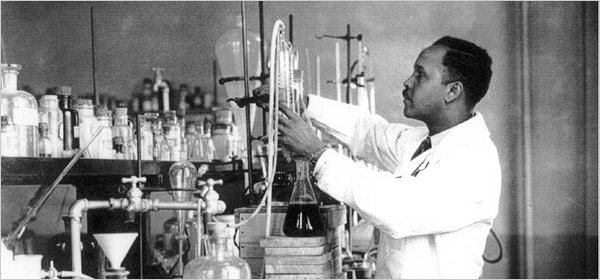
Dr. Julian was a pioneer in the chemical synthesis of medicinal drugs from plants. He worked with the Calabar bean, a poisonous legume from Africa, that offered up a treatment for glaucoma. He isolated soy protein which could be used to replace more expensive milk protein in many applications. He synthesized human hormones, progesterone, estrogen, and testosterone, from soy sterols, leading to fertility and other therapies. In 1949, researchers at Mayo Clinic showed the effectiveness of cortisone in treating rheumatoid arthritis. Julian improved the process for producing cortisone, greatly reducing costs.
Through all of this, he dealt with racism and discrimination because he was African American.
Julian was born in Montgomery, Alabama, at the turn of the last century. His grandparents were emancipated slaves; the Civil War had ended just 34 years before.
Obtaining an education was difficult. There were few opportunities for black students. He was accepted at DePauw University in Indiana, but he was not allowed to live in the dorm. The boarding house he found refused to feed him at the table with the other boarders. He went for days without food before he found a place that would serve him. He was years behind the white students academically and he took high school classes at night to catch up while attending college classes during the day. Despite all of this, he graduated first in his class and was valedictorian.
Julian yearned for a doctorate in chemistry. He received a scholarship that allowed him to earn his master’s degree at Harvard University. However, because white students objected to being taught by a black instructor, he was refused a teaching assistantship that would have allowed him to go on for a Ph.D.
He was later awarded a fellowship to the University of Vienna, Austria, and earned his Ph.D. in 1931. In Europe, he was welcomed into a social and intellectual life he was denied in the U.S. He studied classical music and poets. He attended the opera and drank wine at outdoor cafes. His status as a prized student allowed him to develop self-confidence. He made life-long friends in the European community. He helped Jewish friends escape the Holocaust and move to the U.S.
Back home in the States, employment proved difficult. He took a position teaching at Howard University, the historically black university in Washington, D.C. There he met his future wife, Anna Roselle Thompson. Anna was a scholar in her own right and would have many accomplishments in her life.
He accepted a research fellowship at DePauw, and his career as a research scientist began. However, he was denied a teaching professorship there and had to find new employment. The university told him "the time wasn't right" for a black professor. DuPont offered a job to his research partner at DePauw, who was white, but declined to hire Julian, apologizing that the company was “unaware he was a Negro.”
In 1936, he was offered a job at the Glidden Company as director of research of their soy products division in Chicago. He had contacted them previously to obtain soybean oil to use for experiments. An important factor in the job offer was that he could speak German fluently and the company had just purchased a soybean-processing plant in Germany.
Glidden was founded in 1875 as the maker of varnishes and expanded into other chemicals and pigments. The company was eventually taken over by conglomerate PPG Industries and Glidden is now the brand name of the paint division.
Julian took the job with Glidden and moved to Chicago. He stayed with Glidden until 1953. During this time, he did much of his remarkable research work.
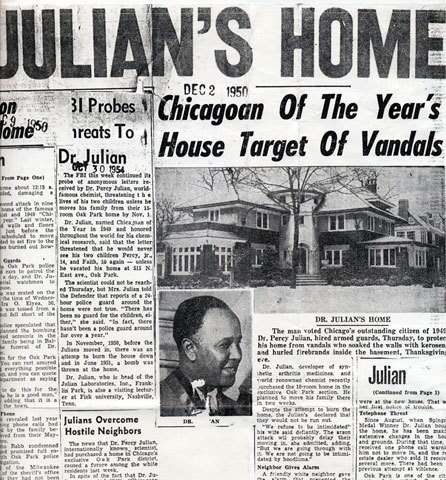
Percy Julian was named Chicagoan of the Year by the Chicago Sun-Times in 1950. That same year, Percy, Anna, and their two children were living in Maywood when they decided to move to Oak Park. There were no black residents in that suburb. They purchased a 15-room home that they were remodeling and landscaping when attempts were made to burn the house down. Someone broke in and poured gasoline all over, but the fuse did not light. The following summer, a dynamite bomb was thrown from a passing car, exploding in the flower beds in the front of the house. At the time, their children, ages 11 and 7, were at home with a caregiver and a security guard.
The police reported they could not identify any suspects for the crimes. Many white members of the community were appalled at the treatment the Julians were receiving and formed a group to support and help them. Even so, threats continued for many more years.
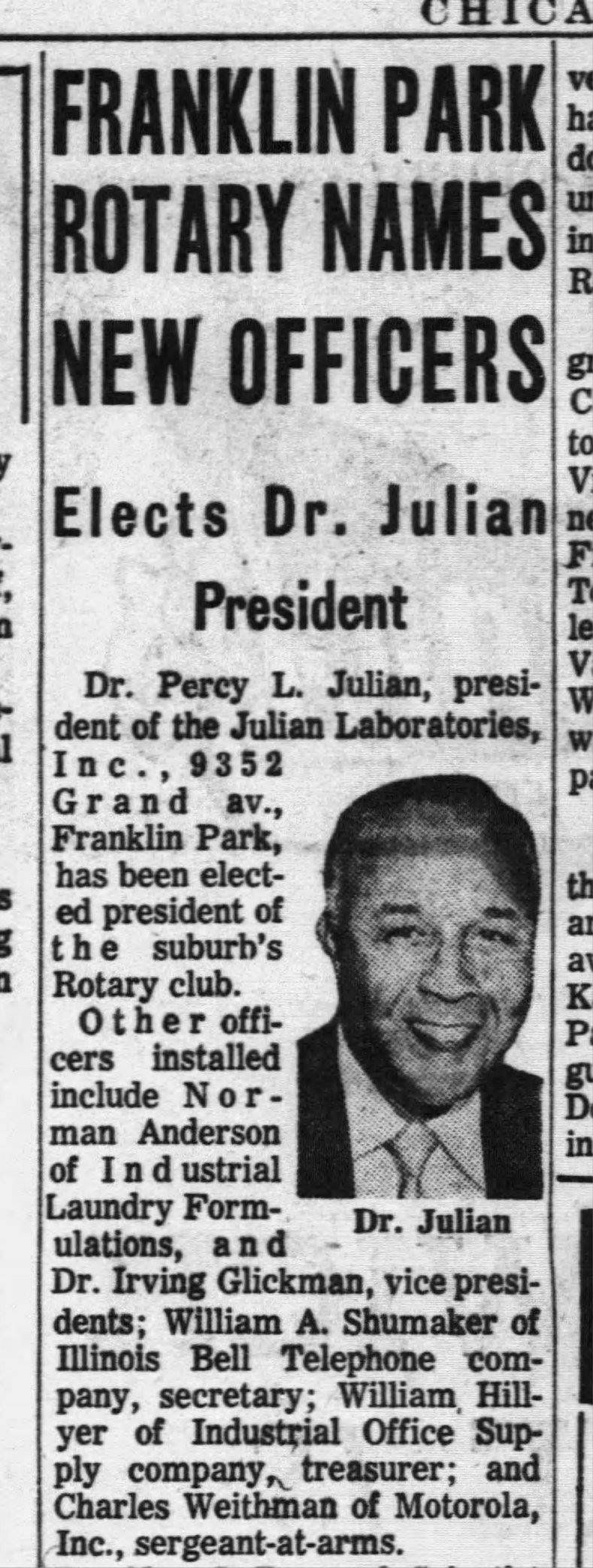
In 1953, Glidden got out of the steroid business, which, despite Julian’s innovations, was never profitable. Julian founded his own research firm, Julian Laboratories, Inc., in Franklin Park, Illinois. He continued to work on synthesizing hormones using Mexican and Guatemalan yams. Julian sold his company in 1961 to Smith Kline and Upjohn for $2.3 million.
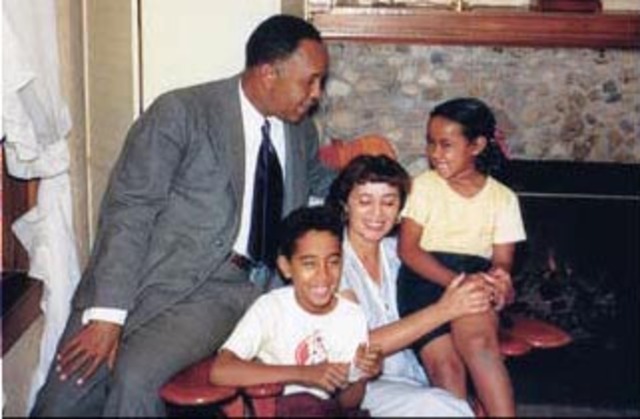
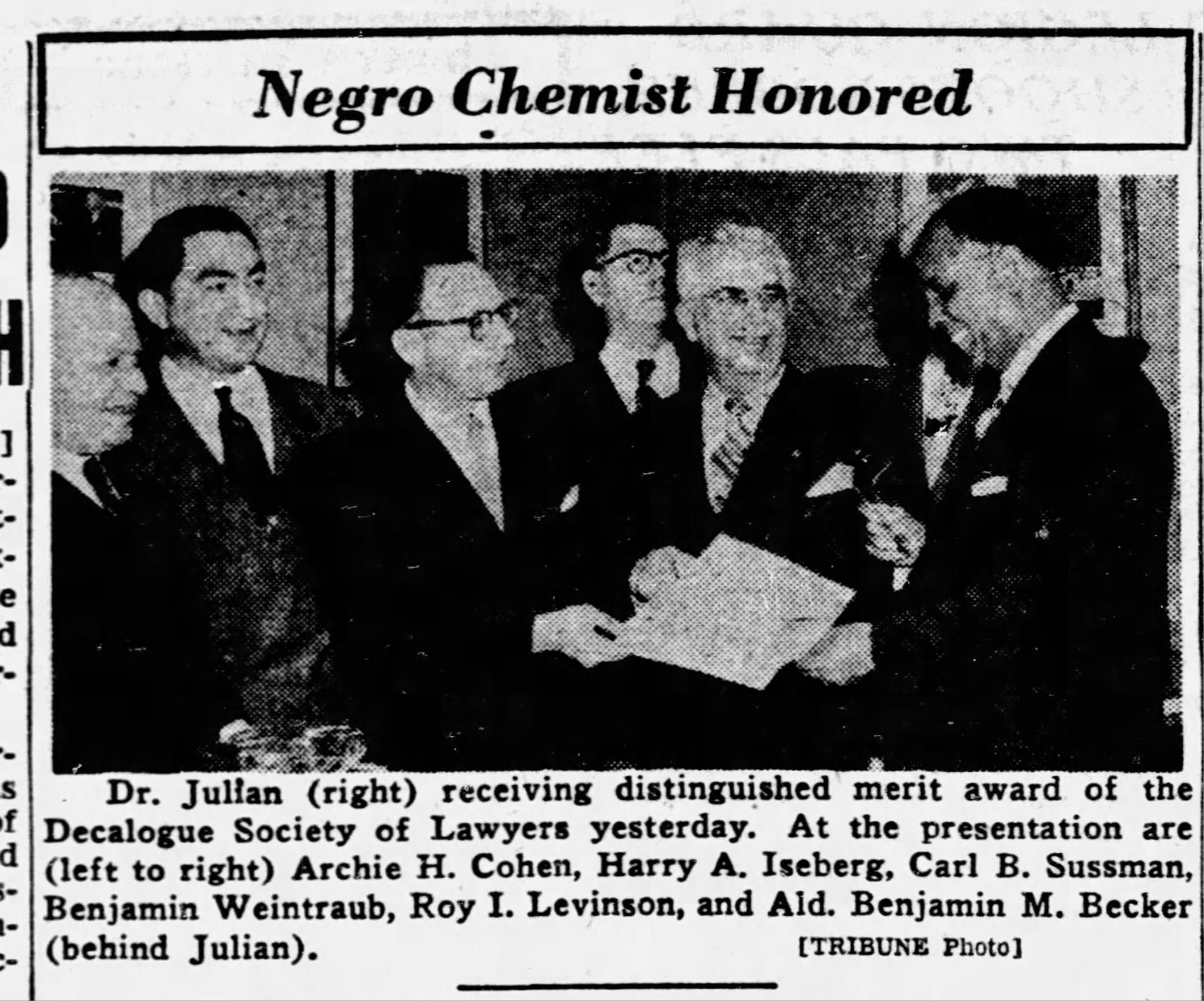
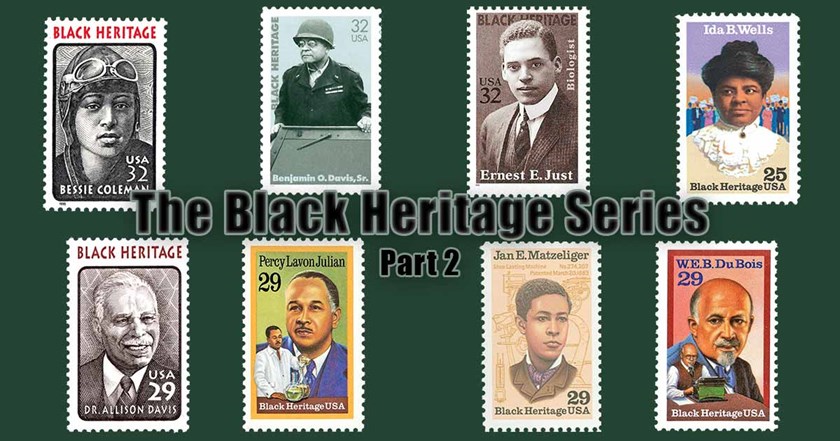
During his lifetime, Julian received awards and recognition. Some examples are included in the accompanying images. He died in April of 1975, and that fall, the Percy L. Julian High School opened at 10330 S. Elizabeth Street. Since his death, recognition has continued. In 1993, he was featured on the Black Heritage stamp, a series initiated by the U.S. Postal Service in 1978.
There is so much more information available on the life of Percy Julian. Readers are encouraged to Google his name to access the numerous websites that share his story.
After he retired, he said of his life and career, “I feel that my own good country robbed me of the chance for some of the great experiences that I would have liked to live through. Instead, I took a job where I could get one and tried to make the best of it. I have been, perhaps, a good chemist, but not the chemist that I dreamed of being.”
Despite the burden of racial discrimination, Percy Julian achieved great things – by any standards, he was much more than just a “good” chemist. Chemistry was the break-through “technology” of the early and mid-1900s. How much more might he have contributed if he had been given the chance?
Ridge Historical Society
Good-bye to “my” World War II veterans
By Carol Flynn
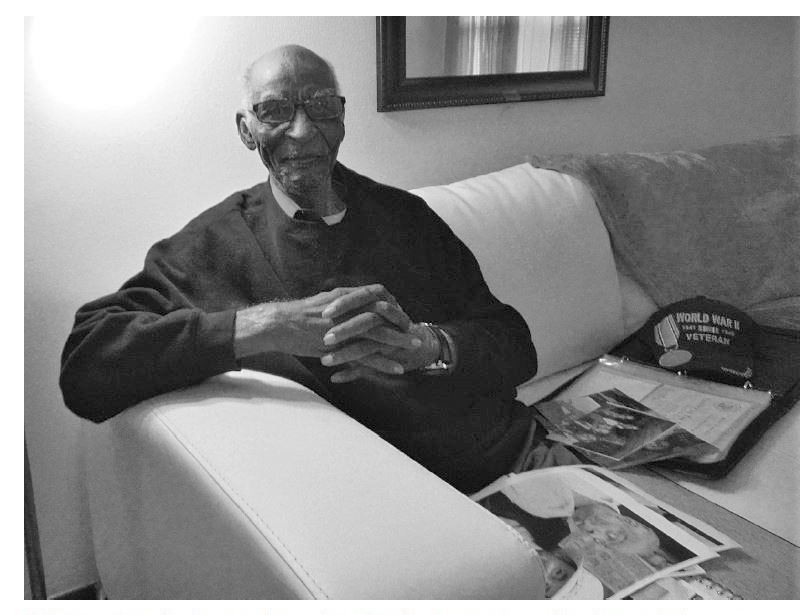
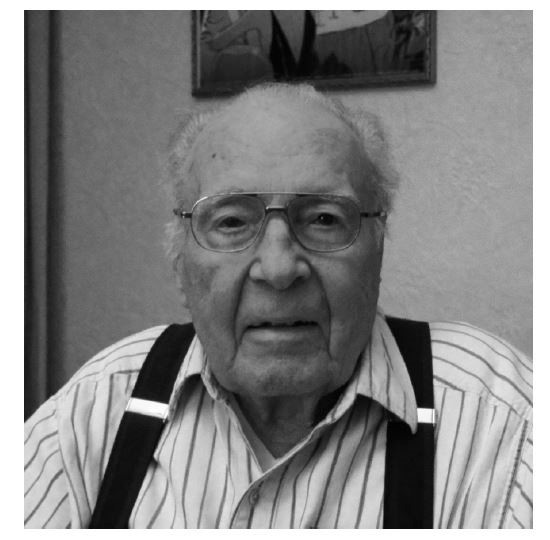
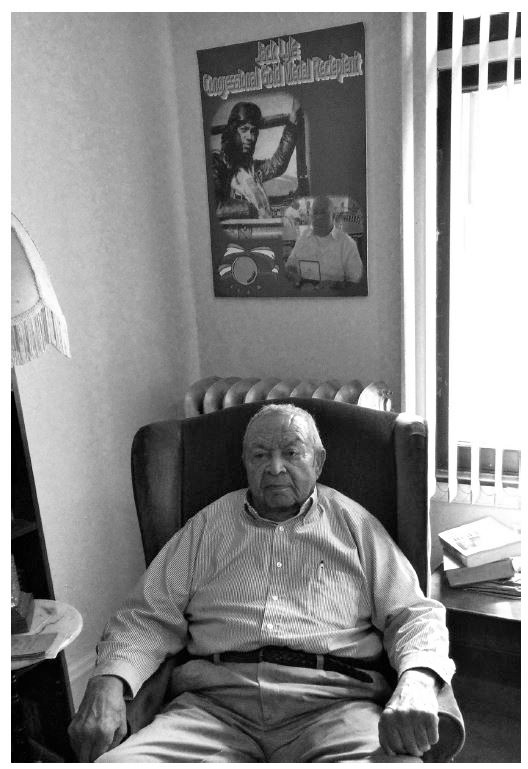
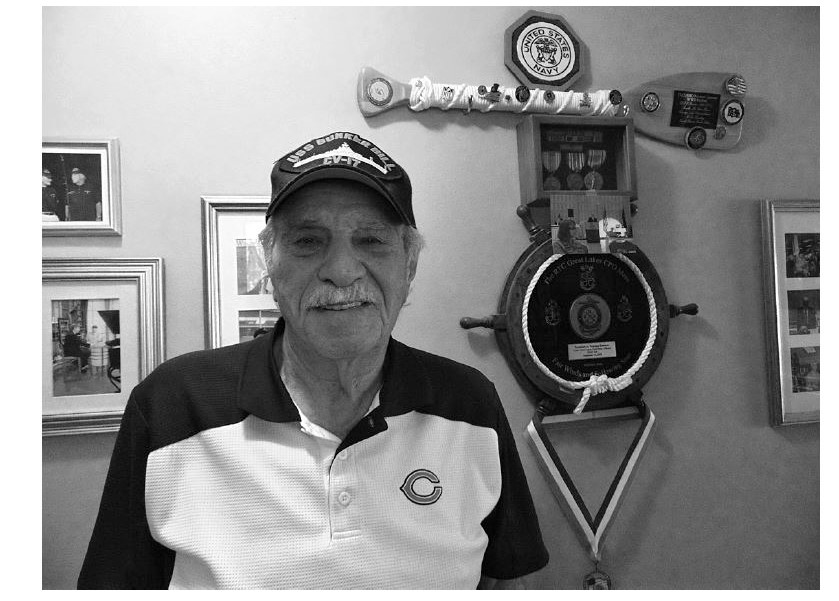
Five years ago, I had the honor and privilege of interviewing four World War II veterans for a Memorial Day feature for the Beverly Area Planning Association Villager and for the Ridge Historical Society newsletter. These men had been invited to be the Grand Marshals for the annual parade. Although they were in their late 80s and 90s, they welcomed me into their homes, and shared their stories and pictures with me. Each of the visits is a cherished memory.
Since that time, one by one they have passed away. The last of them, Norm Lasman, will be laid to rest this week. I would like to briefly recap their stories in tribute.
World War II lasted from 1939 to 1945, although the events leading to the conflict started well before that, and the aftermath lasted long after. Globally, this war was the most widespread and deadliest in history. Over thirty countries and at least 100 million people were involved, with an estimated 25 million deaths. Sixteen million Americans served, with over 400,000 fatalities.
Frederick Pennix was a young husband and father when we was drafted into the U. S. Army infantry. His units were segregated because of race. Pennix was with an anti-aircraft artillery quartermaster company that was shipped to Iwo Jima in March 1945. In the midst of some of the fiercest and bloodiest fighting in the Pacific, his company unloaded ships and delivered supplies, including ammunition, throughout the war zone. The war ended that Fall. Returning home, Pennix had a distinguished career in law enforcement that lasted 60 years.
Bill Sandstrom was accepted into the Great Lakes Naval radar training program in 1944. There, he encountered another kind of deadly enemy – scarlet fever. Infectious diseases have always been a major problem during war times, resulting in many deaths. Sandstrom’s life was saved by a new miracle drug – penicillin. By the time he was recovered and trained, the war was ending. He returned home and, making use of the new G.I. Bill, went to college to become a chemical engineer.
Jack Lyle became a Tuskegee Airman with the 332nd Fighter Group of the U. S. Army Air Forces in 1944. These were the first African American aviators in the U.S. armed forces. He flew twenty-six combat missions and shot down a German fighter plane in a dogfight. Returning to Chicago as a first lieutenant, he was refused further training at O’Hare Airport because “there wasn’t a program for colored pilots.” Lyle owned horse stables in Washington Park and was a police officer with the park district, and ran a tree business for 32 years.
Norm Lasman served in the U.S. Navy from 1942 to 1946. In 1945, his ship, the USS Bunker Hill, was struck by two Japanese kamikaze (suicide) planes, putting the ship out of commission and injuring and killing hundreds of the crew. Lasman, below deck, was overcome by carbon monoxide from the resulting fires. He came to on deck – he had been rescued, the only survivor from the engine room. He had no memory of the incident and did not speak of it for many years. The book Danger’s Hour, by Maxwell Taylor Kennedy, the son of Robert F. Kennedy, recounts the story of the attack. Lasman and Kennedy became friends. Lasman was part of the building of Evergreen Plaza, where he managed a Pador’s clothing store for many years.
Although these four men came from different backgrounds, and had different war time experiences, they had one thing in common – none of them considered himself any kind of a hero.
They were young men put in situations not under their control – they did what they had to do. None of them romanticized the war; there was nothing "glamorous" about it any way. They were in horrifying situations – a bombed ship, aerial combat, a deadly disease, a bloody battle. They all said the same thing – they got lucky, they survived.
Lasman shared a quote from another World War II veteran: “To be honored is one of the most humbling experiences I have ever had.”
Well, they deserve to be honored. Rest in peace, Norm Lasman. And to all four, thank you.
The Ridge Historical Society
Carol Flynn
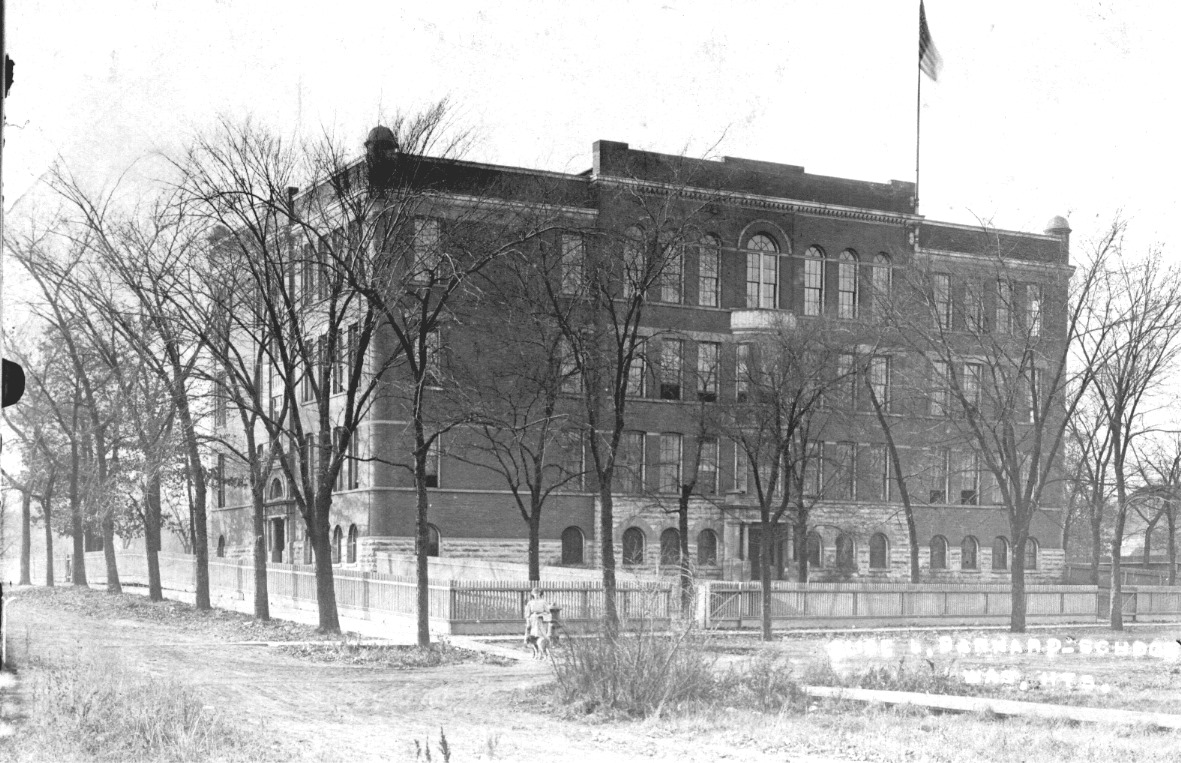
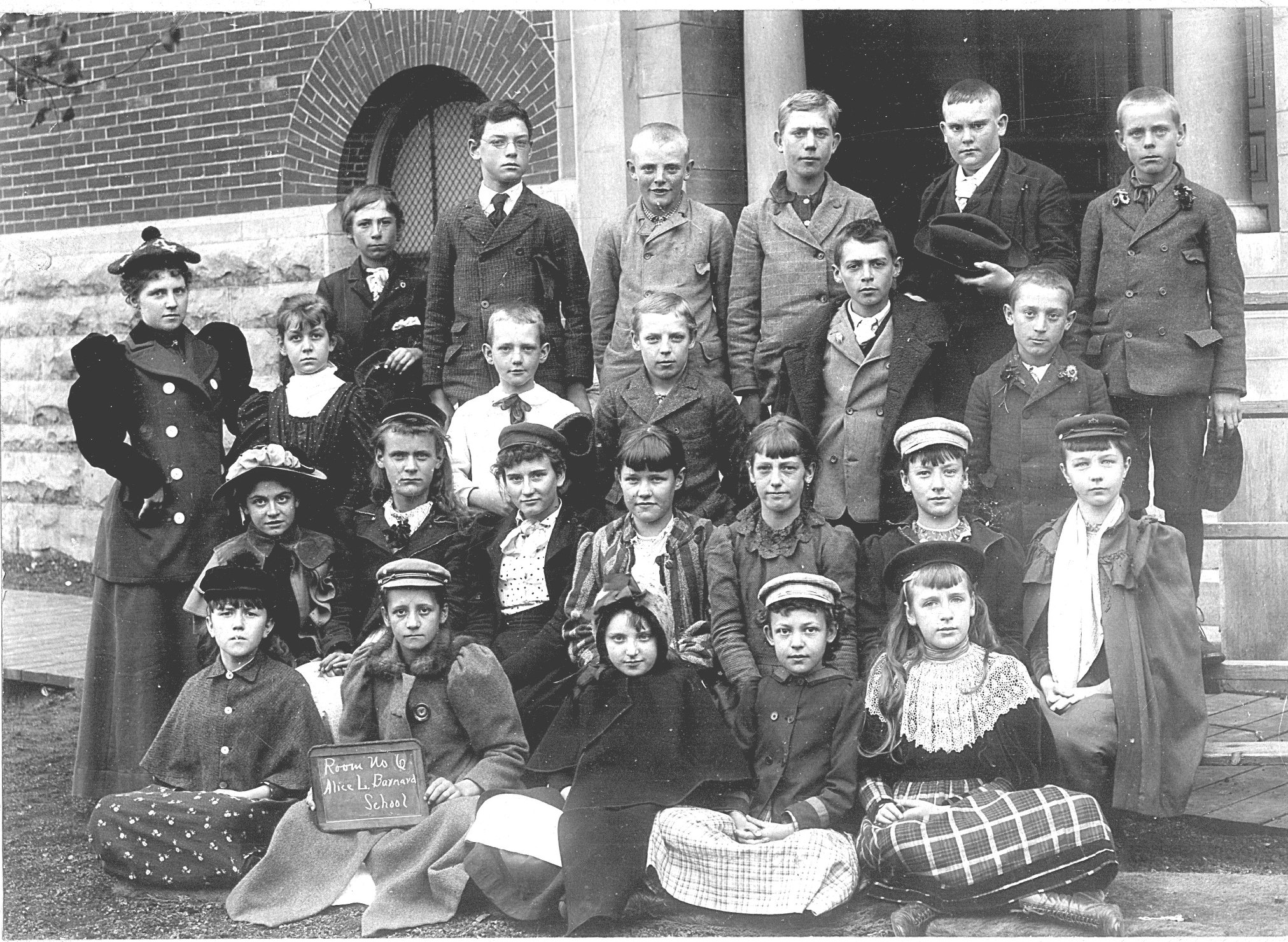
School Series – Profile 1: Alice L. Barnard
It is graduation time, and while the emphasis is on the graduates at this time, recognition is also due the teachers who encouraged the students along their paths of exploration and discovery. “Teachers” is used in a broad sense here to include professional educators as well as other role models and advisors who made lasting impressions.
There are dozens of Chicago public schools in Beverly, Morgan Park, Washington Heights and Mount Greenwood. Nineteen of them are named for individuals who made contributions to education and other important fields. This series will look at those people.
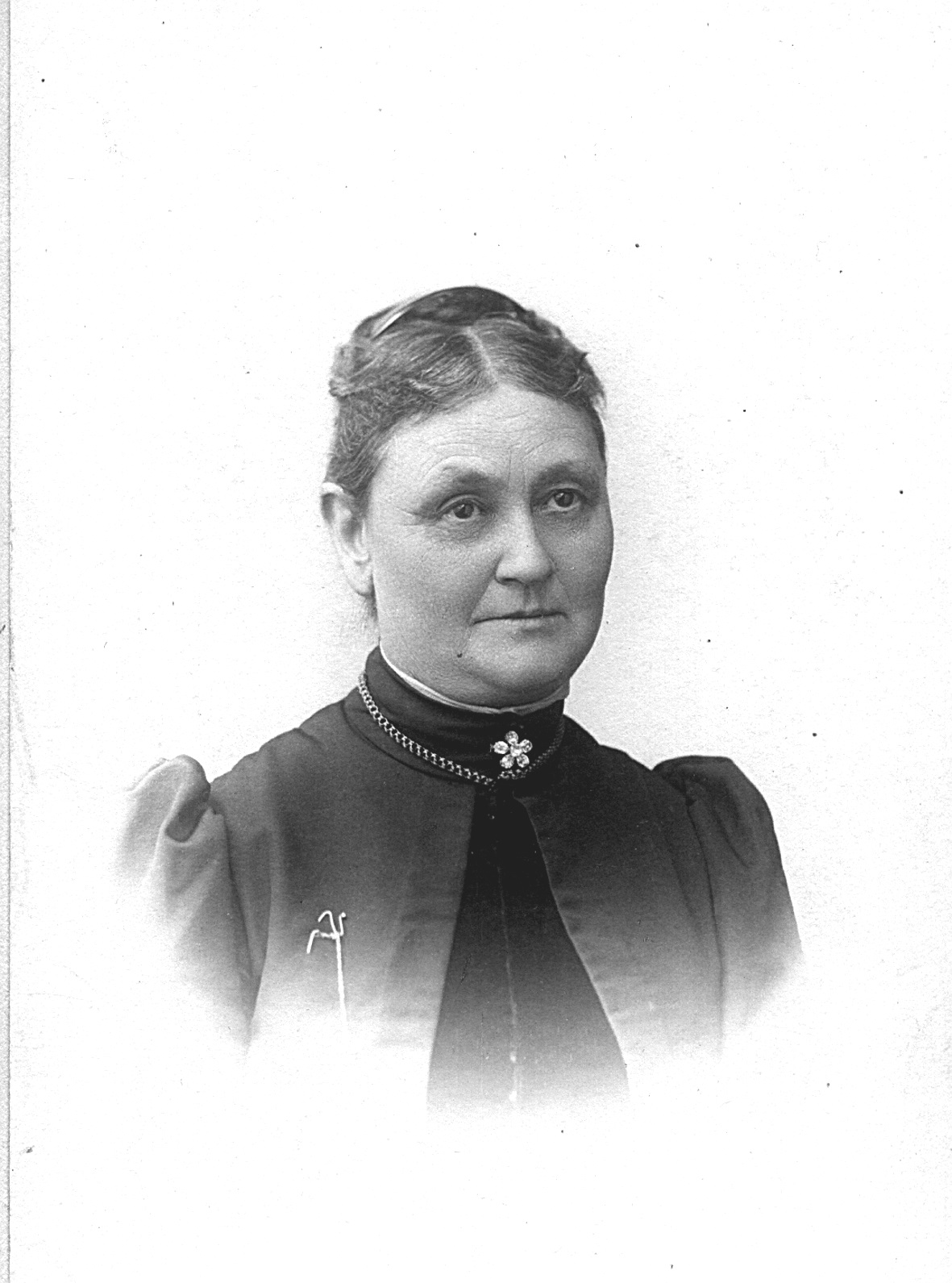
A good place to start is with Alice Lucretia Barnard (1829 – 1908) whose namesake school is at 10354 S. Charles St., because it was education that brought the Barnard family to the Blue Island Ridge in 1846 in the first place.
Alice’s brother was William Barnard, a graduate of Amherst University in Massachusetts. Deciding to seek new opportunities in the West, he made it as far as Chicago, where he had a chance encounter with Thomas Morgan, the wealthy Englishman who bought thousands of acres of land on top of and surrounding the Ridge and gave his family’s name to Morgan Park. Morgan talked William into taking a job as tutor for Morgan’s children. William moved to the Ridge, and other family members soon followed.
Alice was educated in Massachusetts and later she attended Mount Holyoke Seminary which she left after two years because there was “little independence in thought.” She was an early “progressive” teacher, believing in “the opportunity to study from life” and not just the memorization of facts. She advocated for better education opportunities for women and was disappointed she could not study chemistry and other sciences in a laboratory.
Alice began her teaching career at age 17 in Chicago in a one-room schoolhouse. After a few years, she found herself at the Dearborn School, at Madison and Dearborn. At the time of the U.S. Civil War, she angered some school officials by writing a paper favoring the rights of children of color in school. The teachers and children marched in a procession to the Court House to view President Lincoln’s body lying in state after his assassination in April 1865. She met past President Gen. Ulysses Grant when he visited Chicago in 1879.
When offered the position of principal at the school in 1867, she declined because she would have been paid a lower salary than men in the same position. This was considered rank insubordination and the head of the education board called for her to be fired, but wiser heads prevailed and she took the job of head assistant instead.
She had the support of “Long John” Wentworth, the very powerful past mayor of Chicago, U.S. Congressman, and newspaper editor. A few years later, in 1871, she was named principal, one of the first women in the city to receive an appointment, and she was paid the same rate as the men. But that position was short-lived. The Dearborn School site was destroyed in the Great Chicago Fire in October 1871.
She was principal of Harrison School for a year, then in 1873 moved to Jones School as Head Assistant, at 12th Street and Wabash where a new school building had just opened. That school was destroyed by fire the following year and rebuilt in 1875. In 1876, when the principal resigned, the teachers petitioned to have her appointed to the position. She became principal of the school, where she stayed until retirement. That school is now Jones College Prep.
Alice never married; back then women teachers were usually required to give up outside employment if they married. She invested her money independently in real estate.
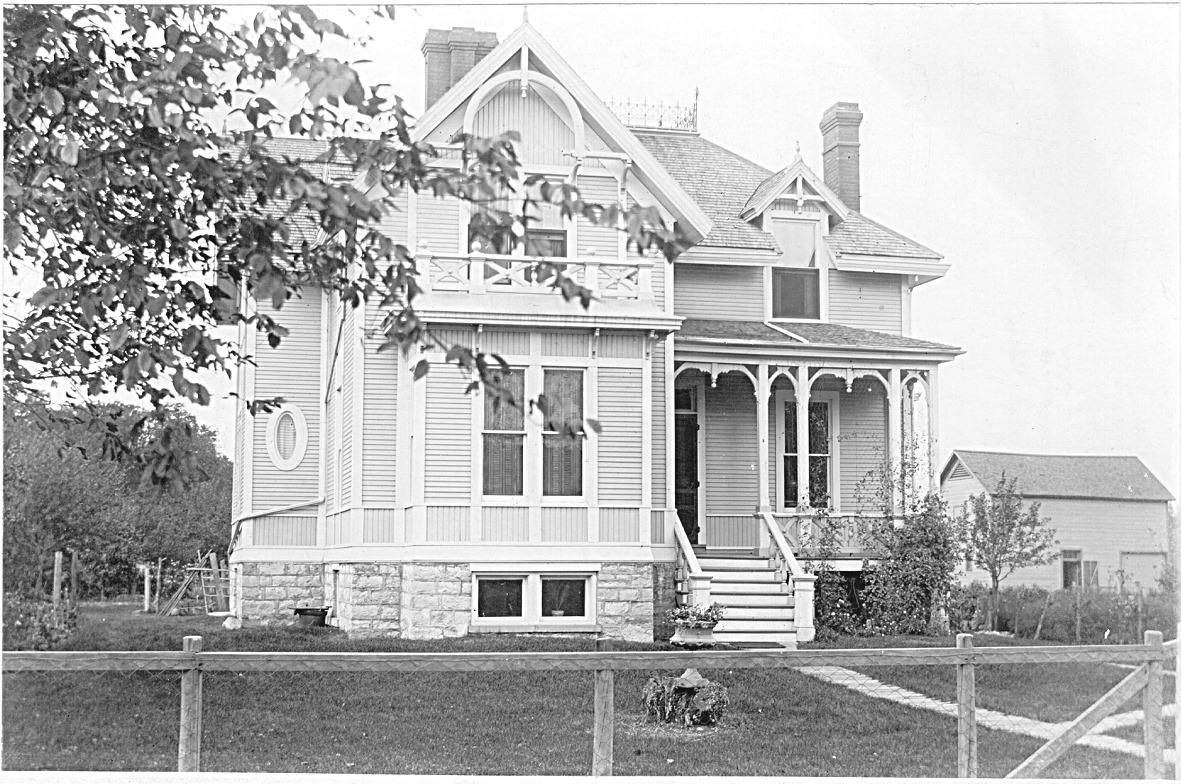
She was a member of Bethany Union Church, and also the First Presbyterian Church. She lived with her sisters and brothers in a charming house at 103rd St. and Longwood Drive, across from Givins’ Castle, and cultivated flowers. She entertained her students there, and she regularly decorated the classrooms at Jones with fresh bouquets. Her nephew later started a seed farm there. Today a CVS drug store is on that site.
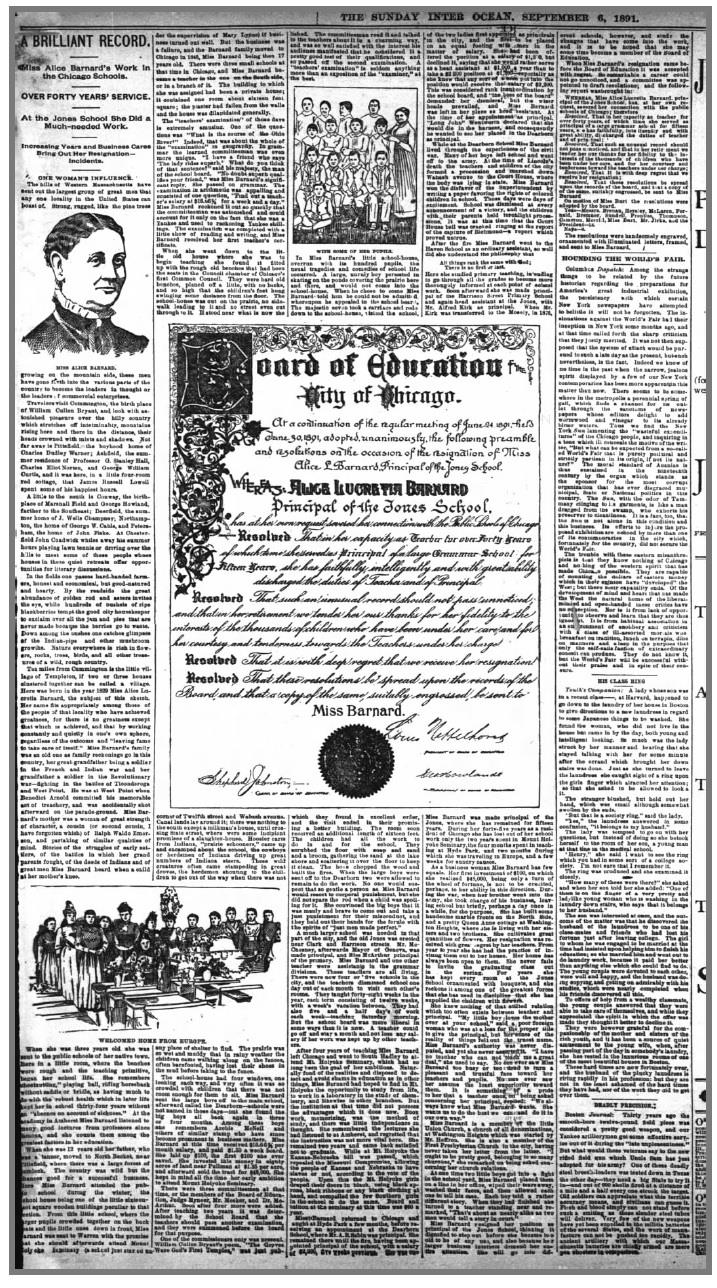
Alice received considerable newspaper coverage in her lifetime – she was a celebrity in Chicago. The Inter Ocean ran a full page story about her in 1891 when she retired. It was hoped she would become a member of the Board of Education but that did not happen. Perhaps she was content to live in Washington Heights, the name for the area before "Beverly Hills" became popular, and tend her peonies.
In 1890, the Washington Heights School was severely damaged by fire. It was closed for a few years while it was rebuilt, and in 1892 the school reopened, now named for Alice L. Barnard. Such an honor is usually awarded after a person’s death, but Alice was still very much alive.
When she fell ill in 1908, it was covered in the Chicago papers. Alice was described by the Chicago Tribune as “one of the best known teachers in Chicago.” Upon her death, many tributes were given to her. She was laid to rest in Mount Greenwood Cemetery.
Ridge Historical Society
Carol Flynn
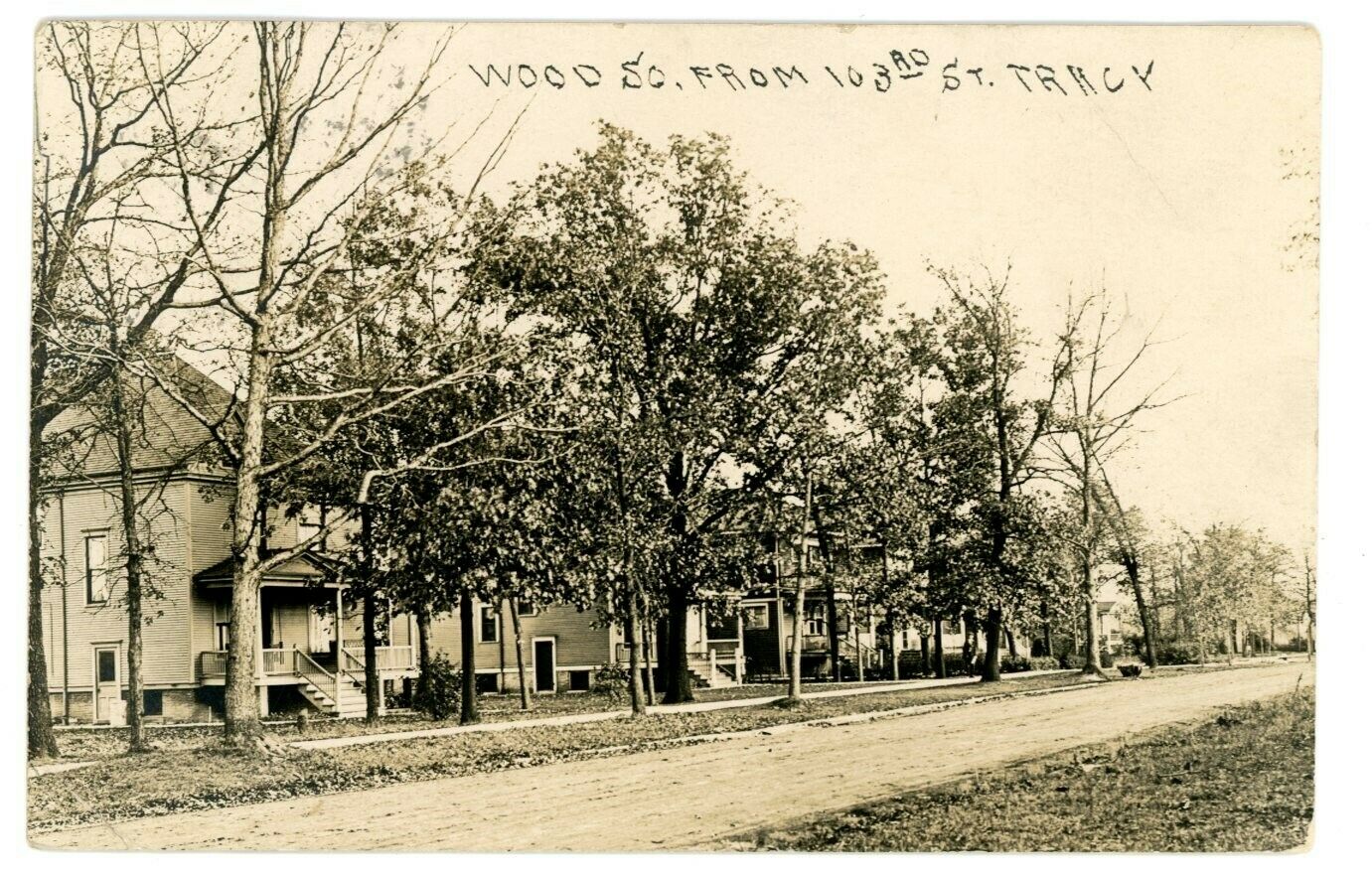
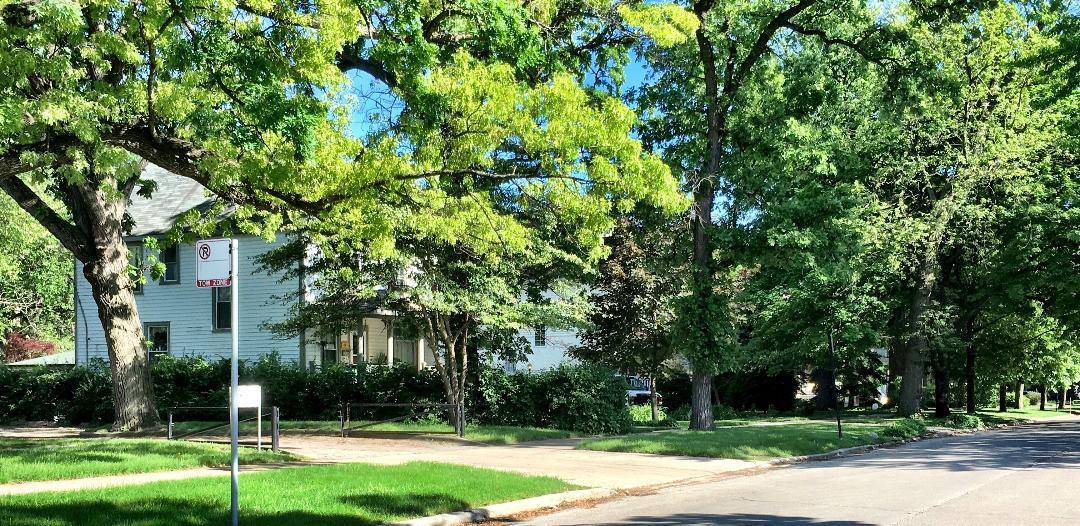
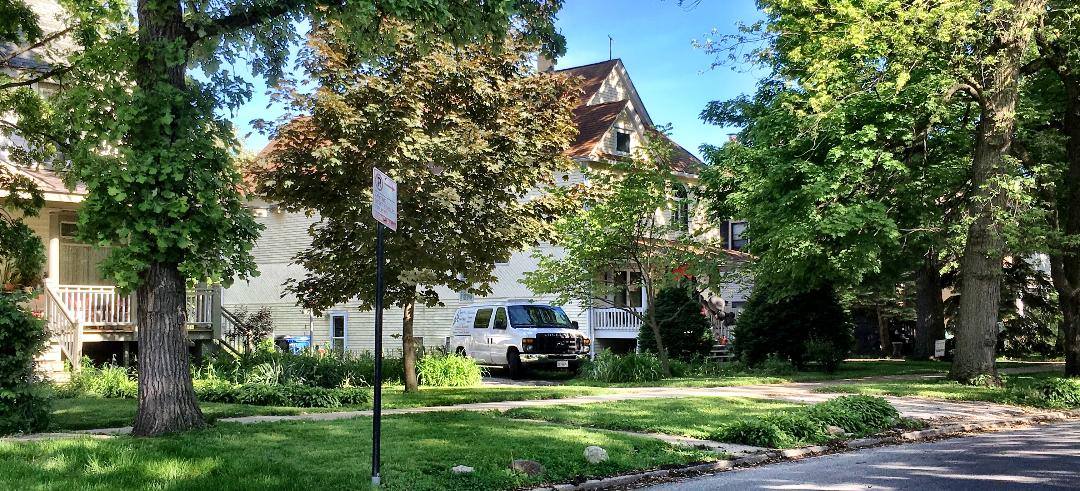
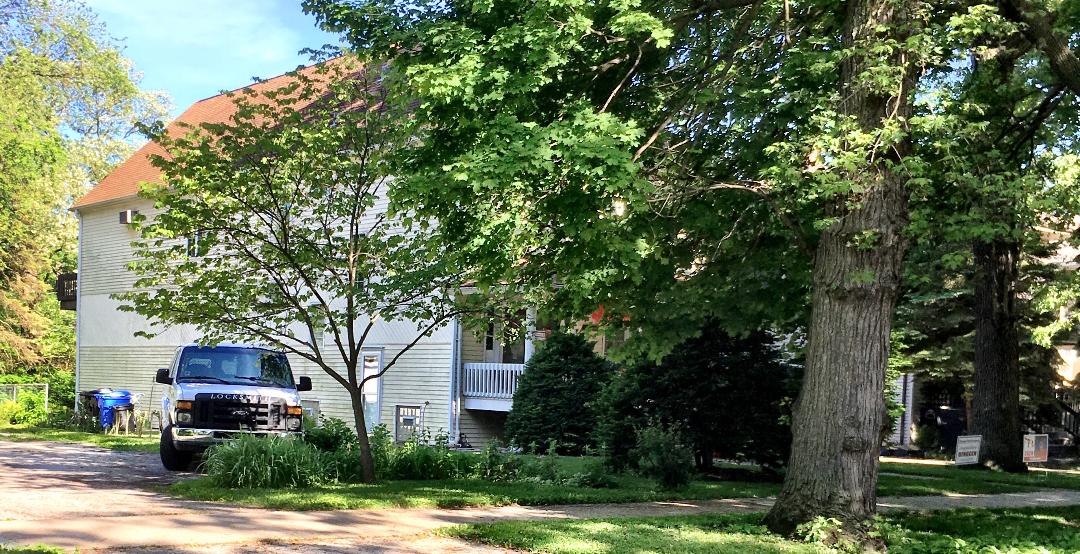
We took some pictures of "now" to go with "then" for the real picture postcard of Wood Street we posted the other day. The first two houses in the postcard are still standing, with some alterations.