
Explore the RHS Facebook Archives, a rich repository of local history written by Carol Flynn. For two decades, Carol brought a deeply dedicated voice to public education at RHS. Her role as Facebook administrator through mid-2025 naturally extended her prolific research into meticulously detailed articles, most notably her multi-part historical series posts. Today, Carol continues her local history writing for The Beverly Review and other outlets.
March 2020
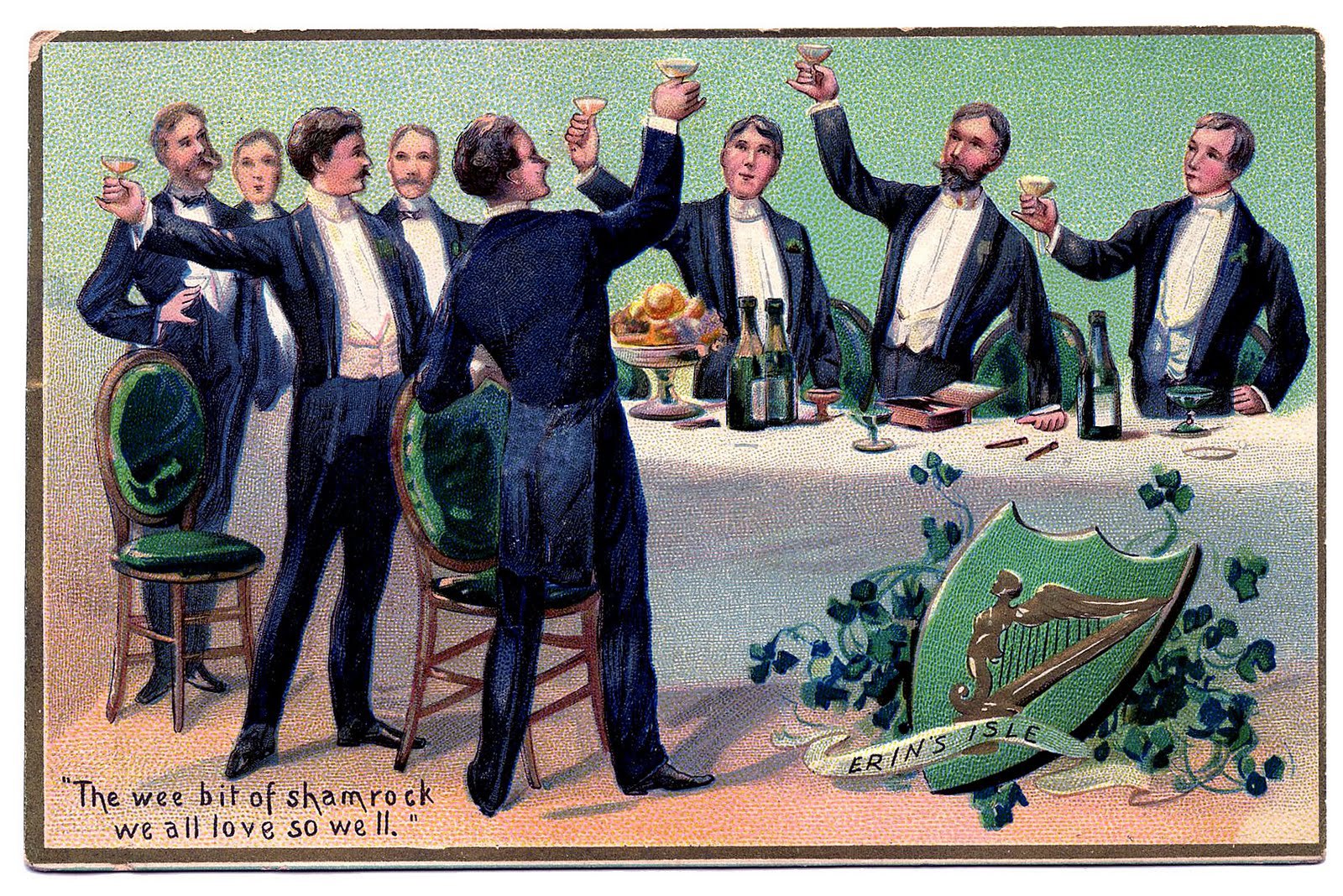
Right now the South Side Irish Parade would ordinarily be marching along Western Avenue, but this year it was cancelled as we all work together to contain the coronavirus. Just wait until next year.
One last article in the Beverly Review special section is on the early history of St. Patrick's Day celebrations in Chicago.
The first recorded St. Patrick’s Day parade in Chicago took place on Friday, March 17, 1843. The Chicago [Brass] Band and the Montgomery Guards turned out in full uniform for the procession and there was a Mass at the Catholic church [St. Mary’s].
The Montgomery Guards was a volunteer militia group named for Irish-born American Revolutionary War General Richard Montgomery. There were numerous voluntary militia groups in the country, formed by local citizens to fill the gap left by a small U. S. Army. These units were the forerunners of the United States National Guard.
By 1843, the population of Chicago had grown to 7,580 residents. Of these, almost 800 were Irish, mostly Catholics. Many of these were laborers who came to work on the Illinois-Michigan Canal. The mid to late 1840s saw hundreds of thousands of Irish Catholic immigrants come to the U.S., and thousands made their way to Chicago.
St. Patrick’s Day celebrations became a regular occurrence. The militia groups were joined by the charitable organizations that were founded to help the destitute Irish both in their native country and in their adopted United States.
In 1854, the Chicago Tribune reported on the “sumptuous dinner” at the Tremont House put on by the Chicago Hibernian Benevolent Emigrant Society to celebrate St. Patrick’s Day and raise money. After dinner, there were a series of toasts, or speeches, accompanied by musical airs performed by the Chicago Brass Band.
The toasts covered everything from St. Patrick to the U. S. President, and patriotic U.S. tunes like the “Star Spangled Banner” alternated with Irish ballads like “St. Patrick’s Day in the Morning.”
By the 1860s, the Chicago Irish were forming religious, fraternal and political organizations, and with the start of the U. S. Civil War, new volunteer militias were formed.
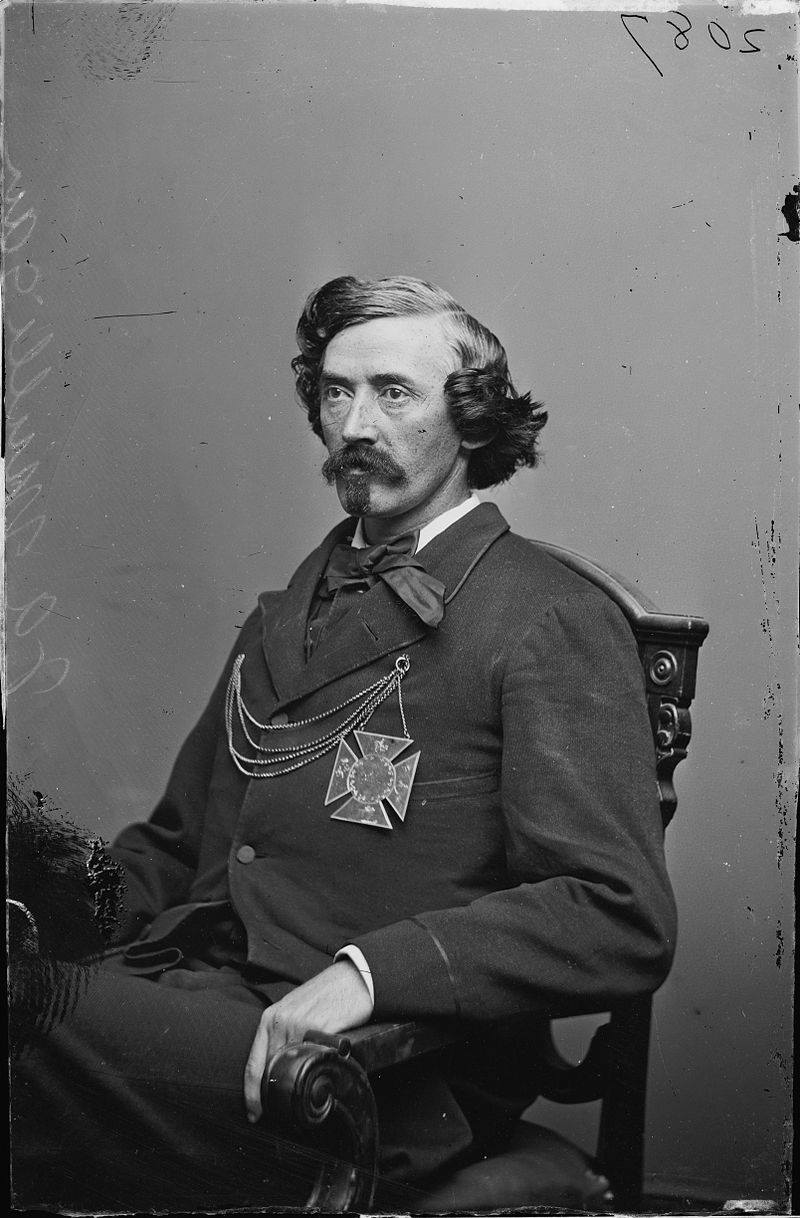
In Chicago, the 23rd Illinois Volunteer Infantry Regiment of the Union Army, referred to as the Irish Brigade, was mustered into federal service in June of 1861, commanded by Col. James A. Mulligan, a popular lawyer and politician known for his gallantry.
From February to June 1862, Col. Mulligan and the Irish Brigade staffed Camp Douglas in Chicago. The camp had started as a training camp for Union soldiers, but that month had been converted to a prisoner of war camp for captured Confederate soldiers.
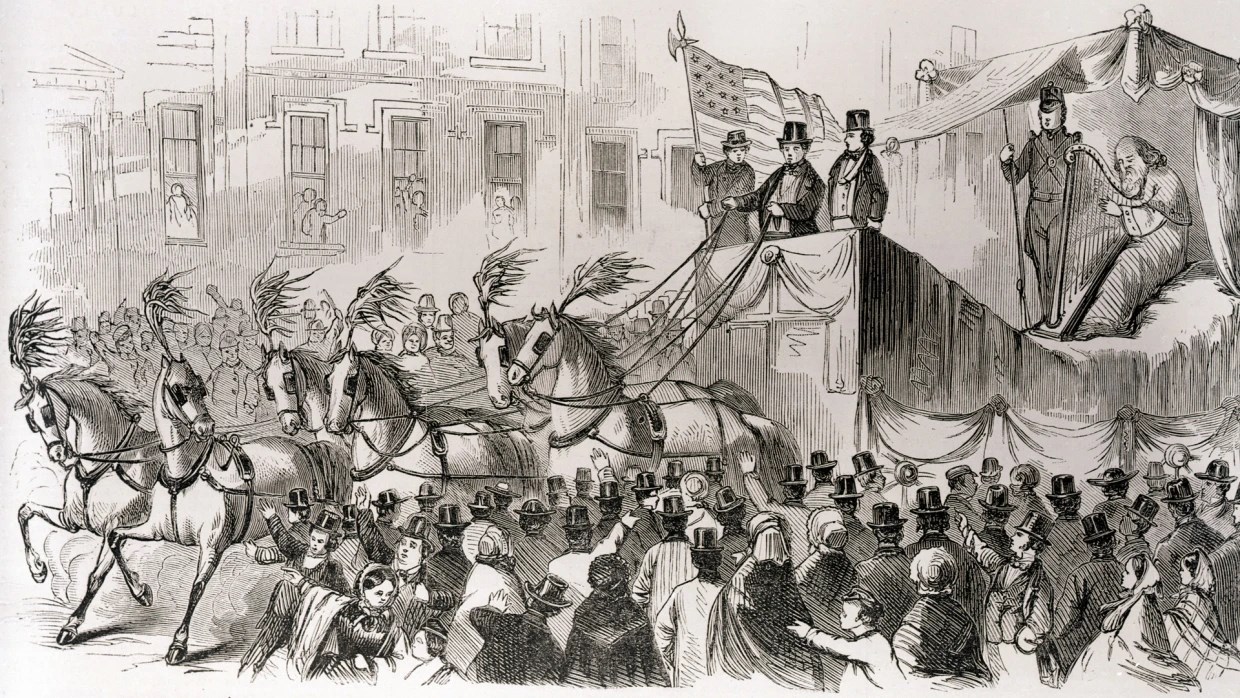
The Irish Brigade led the St. Patrick’s Day parade on March 17, 1862, and what a parade that was. There were aldermen, civic leaders and military officers; four brass bands; and at least ten organizations joining in. Thousands marched and many thousands more lined the streets to cheer.
That evening, the Benevolent Society held its now-annual banquet at the Tremont House, followed by toasts and dancing.
During the years, the parades have waxed and waned. The South Side Irish started a neighborhood parade along 79th Street that Mayor Richard J. Daley moved downtown in 1960. Residents of Morgan Park started what today is the very successful South Side Irish Parade in 1979.
These parades have kept alive the tradition that dates to Chicago’s earliest days.
See page 04B at:
http://www.beverlyreview.net/special/page_456a7e38-9cc6-5709-a99e-e915e18e71f9.html


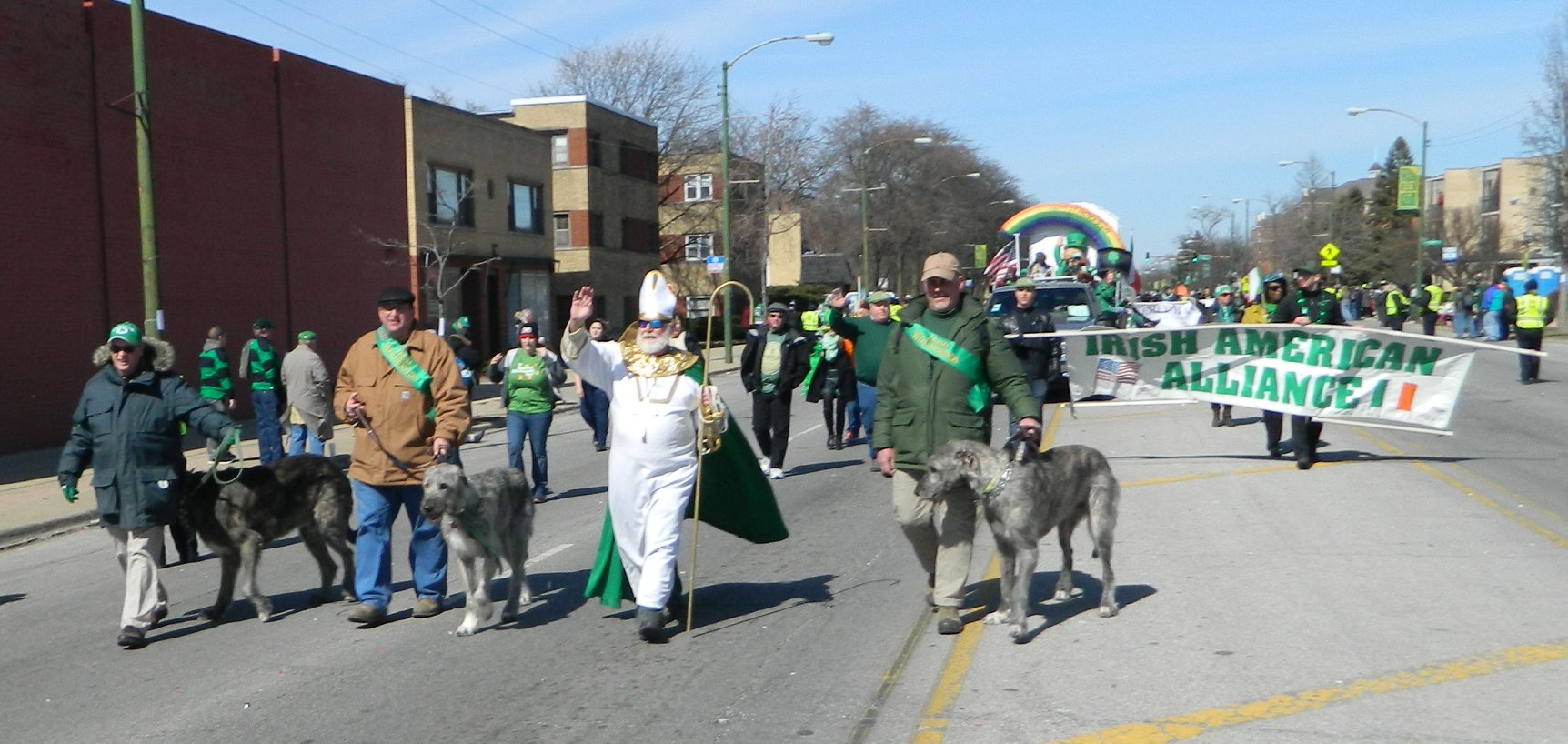
Another article in the Beverly Review special section for the now-canceled South Side Irish Parade is on Irish Wolfhounds. The link to the actual newspaper is at the bottom of the post.
Irish Wolfhounds often appear as symbols for Ireland. They represent loyalty, bravery and steadfastness.
Irish Wolfhounds go back 2000 years. These "Great Hounds of Ireland" were bred to take down large prey and mounted adversaries in war time. In the Middle Ages, wolves became such a problem for growing European settlements that the dogs were used to hunt down wolves. The dogs did such a good job at eradicating wolves that the breed almost went extinct itself, but was saved in the mid-1800s, leading to the dogs we have today.
The American Kennel Club (AKC) considers this the tallest breed of dog, with a minimum standard height of 32 inches at the shoulder for males. They hunt by sight, not smell, which necessitates great speed. Their size and strength is legendary.
The temperament of an Irish Wolfhound, though, is anything but fierce. The AKC describes these gentle giants as "kindly."
Joe and Madeleine Mahoney are from the South Side and have been keeping Irish Wolfhounds for forty years. Their current dogs are Casey, 5, and Nora, 3. These dogs are huge. And the most fun thing is that these dogs consider themselves lapdogs. Some of the best pictures are of them trying to fit on Madeleine's lap.
The Mahoneys are involved with the Great Lakes Irish Wolfhound Association. This group marches with the Irish American Alliance in the parade. Joe is on the far left with Casey (open the picture for the complete picture).
Please see the actual article for the complete story on all of this. Go to page 03B at:
http://www.beverlyreview.net/special/page_456a7e38-9cc6-5709-a99e-e915e18e71f9.html
Like most other non-critical institutions, the Ridge Historical Society will be closed until the end of March in an effort to help contain the coronavirus. We will determine next steps at that point. We will continue to communicate through Facebook. Thank you!
History is made every day. Minute by minute, second by second.
The coronavirus is now on the Ridge.
From the Chicago Tribune:
6:55 a.m. Friday: Catholic school on Far South Side closes after student tests positive for coronavirus
St. Margaret of Scotland School, 9833 S. Throop St., in the Longwood Manor neighborhood, was closed Friday until at least March 23 after a student who also attended school Mass on Thursday tested positive for COVID-19, according to a letter to parents on the school’s website.
The student appears to be the second child who has tested positive for coronavirus in Chicago and the state. Although state officials announced Friday that the first child in the state had tested positive for the virus, officials at Bernard Zell Anshe Emet Day School, which also is closed, had previously announced that the parents of a child at the school and the child had tested positive for COVID-19.
The school had been scheduled to start spring break after classes Friday, according to the letter.
St. Margaret of Scotland Catholic Church also was not holding its usual daily Mass as the church and school are cleaned and disinfected, according to the letter from parish Pastor the Rev. Donald O. Eruaga and Principal Shauntae Davis.
City health officials have said students, parishioners and parents do not need to be tested for coronavirus at this time or need to self-quarantine unless they begin showing symptoms of COVID-19, according to the letter. — Chicago Tribune staff
The new exhibit, “Real American Girls of the Ridge,” opened at the Ridge Historical Society on March 1. This exhibit pairs dolls from the historical collection of the American Girl Dolls with real women connected to the Ridge from the same time period. During March, Women’s History Month, we’ll begin to look at some of these women’s interesting stories.
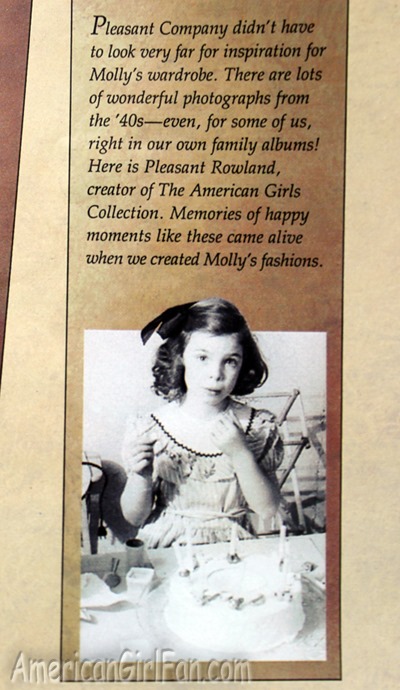
But first we need to finish the story of the connection between Pleasant Thiele Rowland, the founder of the American Girl Doll line, and the Ridge.
If you scroll through the posts on the RHS Facebook page, you will find the first post about Pleasant, made on February 13. We reported that Pleasant’s paternal grandparents, Edward A. and Maude Thiele, lived for decades at 9556 S. Winchester Ave., and her father, Edward M. Theile, lived there as a teen-ager and young man.
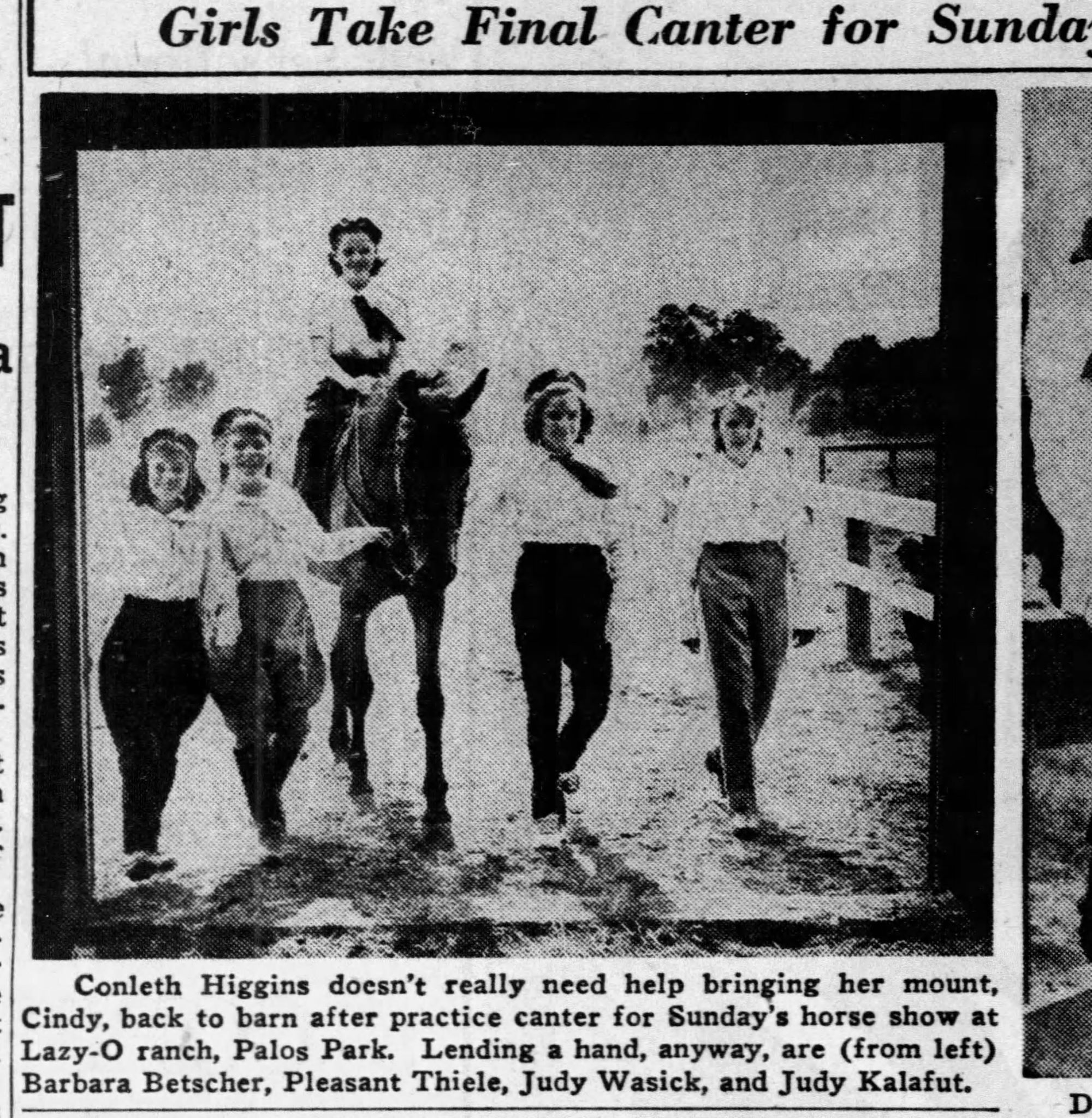
We also reported that Pleasant’s parents, Edward M. (E.M.) and Pleasant “Petty” Theile, moved their young family to the Ridge from 1947 to 1951, residing at 2754 West 108th Street. Pleasant was 10 years old when her father took a job with Leo Burnett Co., Inc., a well-known advertising agency, and the family moved to Bannockburn, Illinois.
There are “clues” as to what young Pleasant’s life was like on the Ridge.
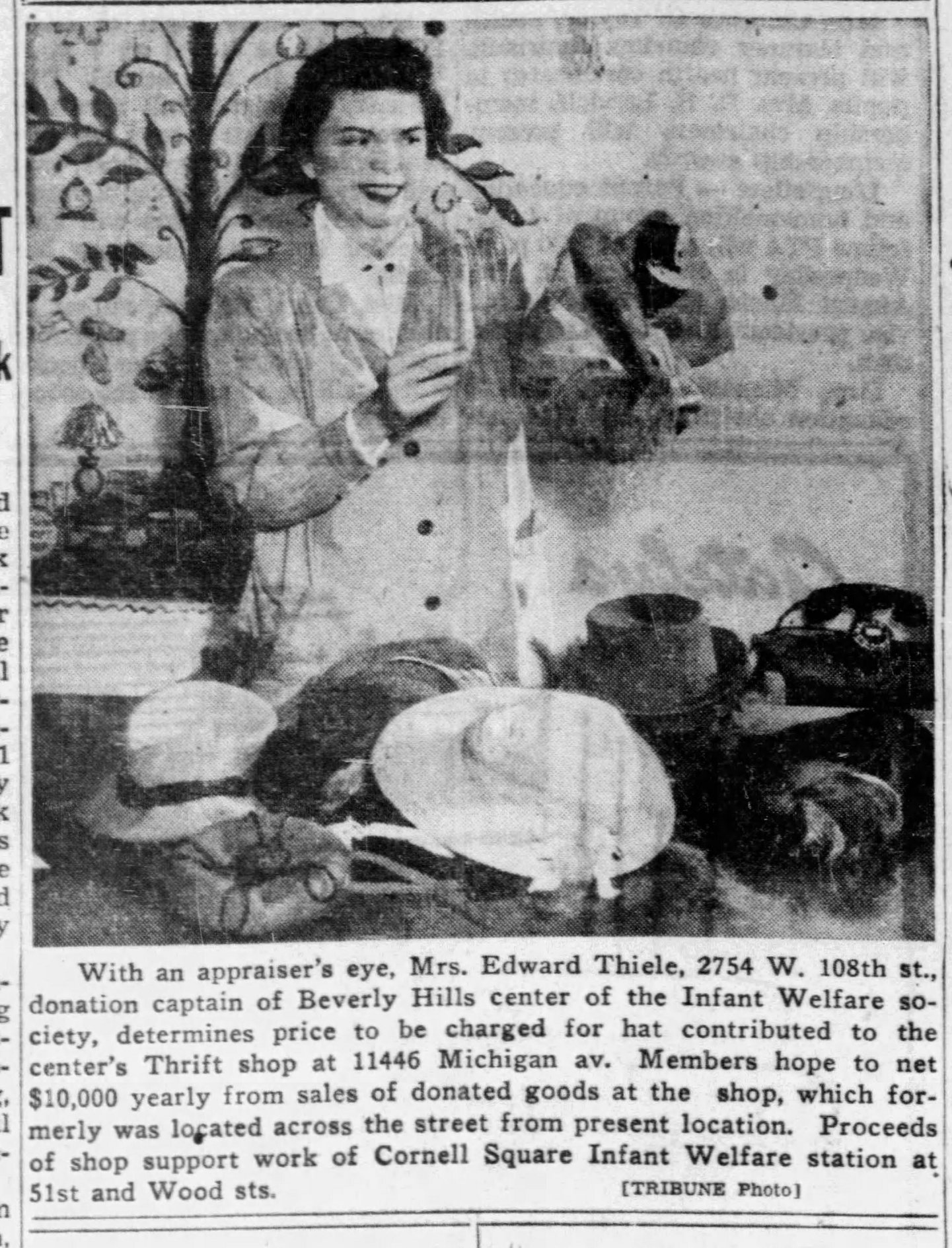
First, her mother appeared in the newspapers for society and charity events. Petty was active with the Infant Welfare Society, a non-governmental volunteer organization founded in 1911 to help low-income women and children. The organization still exists today. For many years, the organization ran thrift shops, including one in Beverly, to raise funds.
One 1948 Chicago Tribune article reports that the Beverly volunteers, including Petty, were restoring used dolls to sell in a thrift shop in Roseland. The group also held annual balls, and Petty was listed as an assistant. A 1951 Chicago Tribune article had Petty assisting with a tea at Mickelberry’s Log Cabin restaurant on 95th Street.
Second, a childhood acquaintance of Pleasant’s shared some remembrances. Her mother was friends with E.M.’s sister, Pleasant’s aunt, Barbara Thiele.
This acquaintance called Pleasant “precocious and fun” and shared with us stories about Pleasant’s birthday parties, at her grandparents’ house and up north. The girls dressed very nicely, embroidered organdy with ruffles in the summer and velvet in the winter. Many photos of children in Beverly were on the Chicago Tribune society page.
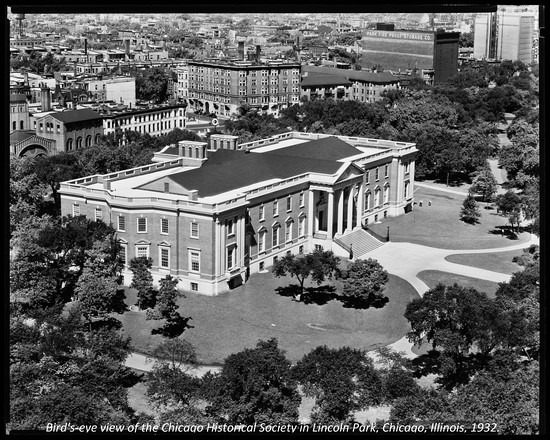
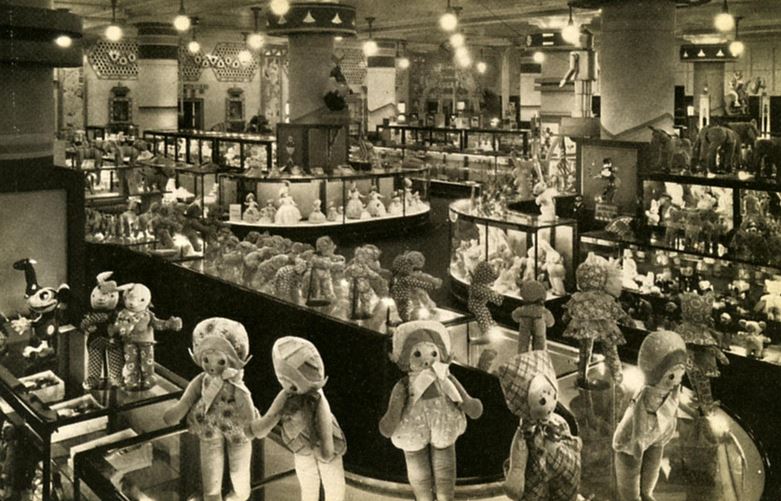
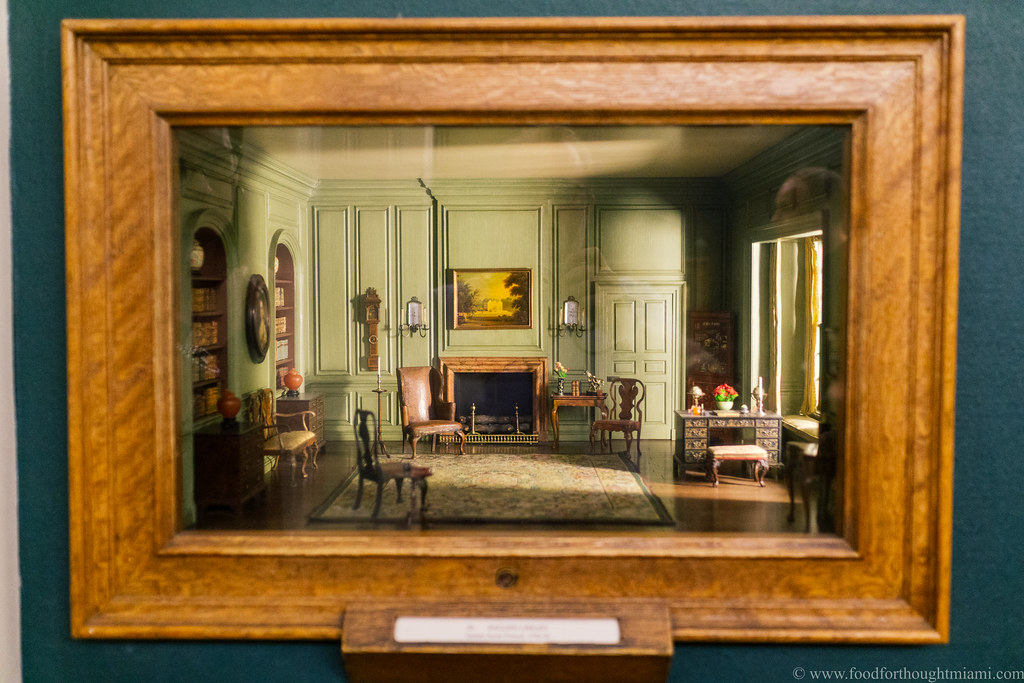
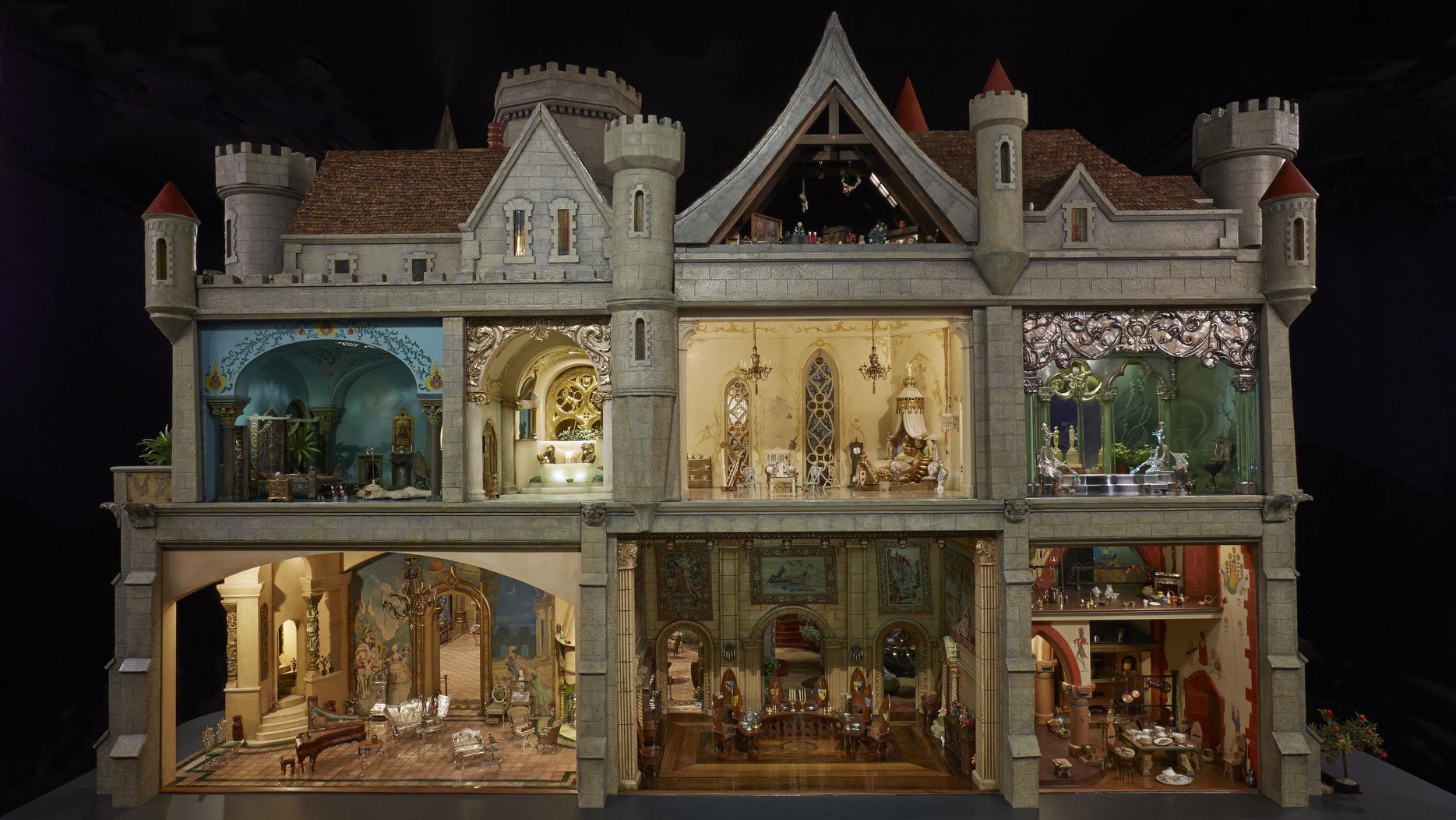
Keeping in mind that T.V.s were just becoming available then, and there were no home computers and smart phones, children relied on books and visits to museums for entertainment and information. This acquaintance remembers the dolls, doll clothes and doll furniture at the Chicago Historical Society, and the miniature Thorne rooms at the Art Institute. There was also the Marshall Field and Co. toy and doll department. Surely we can also add the Colleen Moore Fairy Castle at the Museum of Science and Industry to the list of exhibits that likely influenced Pleasant.
A third influence on Pleasant was her paternal grandmother, Maude Daugherty Thiele.
In 2003, the Wisconsin State Journal newspaper ran an article stating that:
“Pleasant Rowland grew up in Chicago’s Beverly area. At age 10 she moved to north suburban Bannockburn, Ill.
“’My childhood was one of loving to read and of loving to put on plays and act out stories and marshalling the neighborhood to put on the carnival or the Fourth of July parade,’ says Rowland in a rare interview. ‘It was a very active life of the mind.
“’My interest in things old was piqued by my paternal grandmother. She loved to go antiquing, and I would go with her. I began to see the value of old things and other times through her eyes.’”
In the early American Girl catalogs, Pleasant told stories from her youth – learning to crochet from her grandmother, etc. Some of these stories surely were from Beverly.
Pleasant also grew up listening to successful marketing and advertising people, as her father rose to become president of Leo Burnett.
Pleasant graduated from Wells College in 1962. She married Richard Henry Rowland, Jr., from South Carolina. Although the marriage did not last, she kept the Rowland name professionally. She had a career as a teacher, news reporter and anchor, and children’s textbook writer.
She developed two highly regarded reading programs. The first was a comprehensive language arts program. The second was the Superkids Reading Program that is used in thousands of U.S. classrooms.
She married businessman and philanthropist Jerome Frautschi from Madison, Wisconsin in 1977.
In 1986, she founded the Pleasant Company, which began manufacturing the line of 18-inch dolls from different historic eras, with authentic period clothing, furniture and accessories. Very important to the series were the books with stories told from the perspectives of girls eight to eleven-years old.
Pleasant said she was motivated by two things to start the line of dolls. First, a visit to Colonial Williamsburg got her thinking about girls’ stories from various periods in history.
Second, while trying to buy dolls for her nieces, she found the only real options to be Barbie or Cabbage Patch dolls. Both dolls forced girls to assume grown-up roles – fashion model or adoptive mother. She wanted dolls that let girls be girls to play at the appropriate age level.
In 1998, Pleasant Rowland sold the Pleasant Company, now called American Girl, to Mattel, the American multinational toy manufacturing and entertainment company, for $700 million. Today she and her husband continue other business and philanthropic activities.