Explore the RHS Facebook Archives, a rich repository of local history written by Carol Flynn. For two decades, Carol brought a deeply dedicated voice to public education at RHS. Her role as Facebook administrator through mid-2025 naturally extended her prolific research into meticulously detailed articles, most notably her multi-part historical series posts. Today, Carol continues her local history writing for The Beverly Review and other outlets.
May 2023
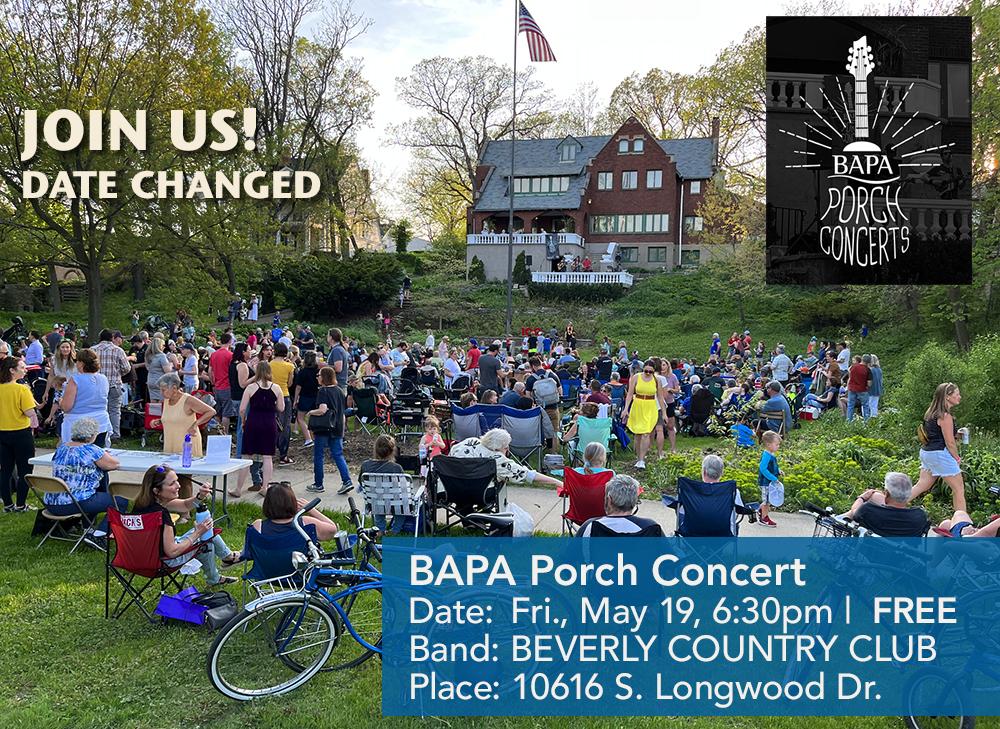
The rain's holding off, so the Porch Concert should go on tonight at the Ridge Historical Society! See you there!
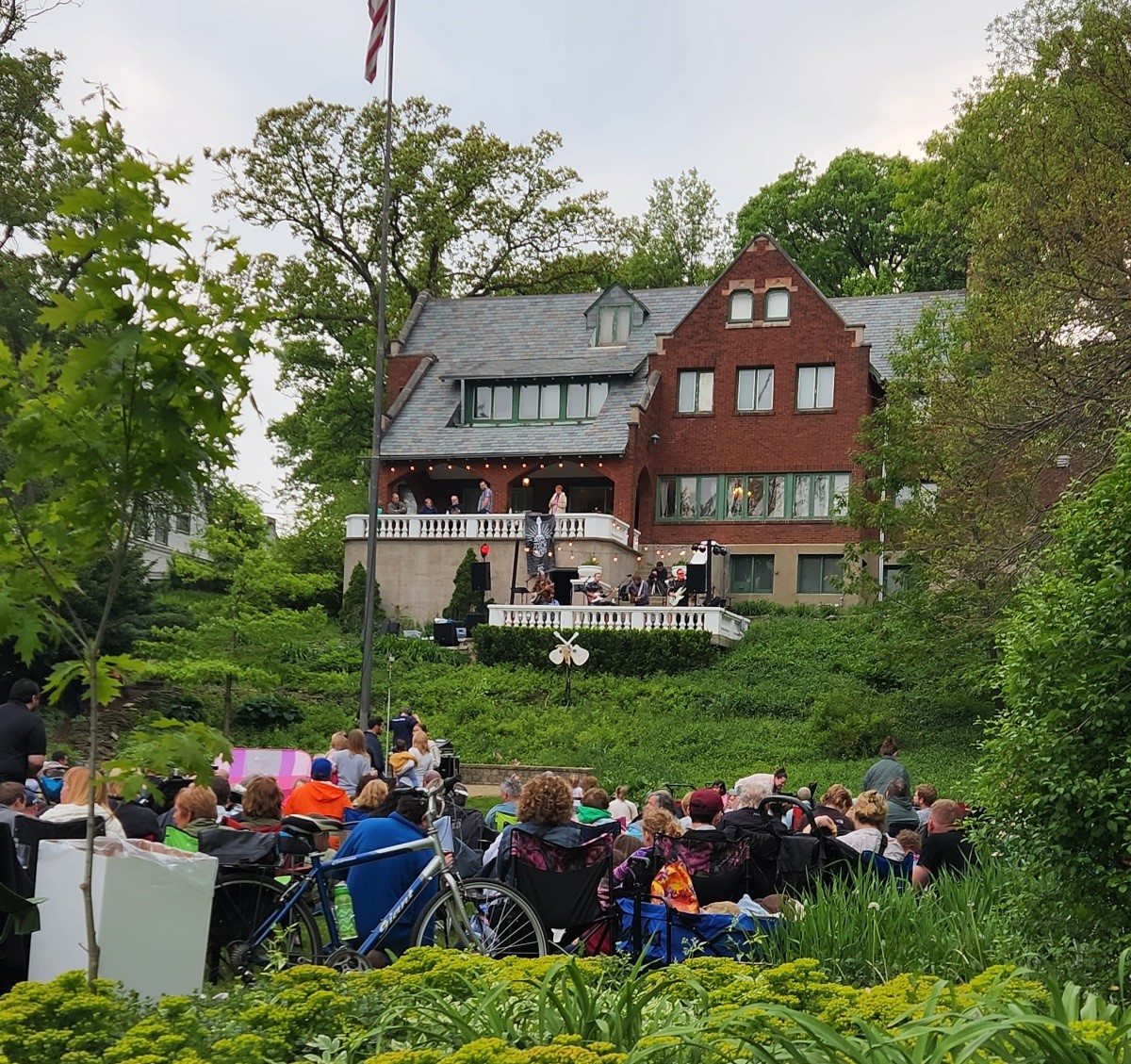
It was a great night.
The first Porch Concert of the year, put on by the Beverly Area Planning Association (BAPA), was held at the Ridge Historical Society, and featured the band Beverly Country Club.
The front lawn was packed with people just having a good time.
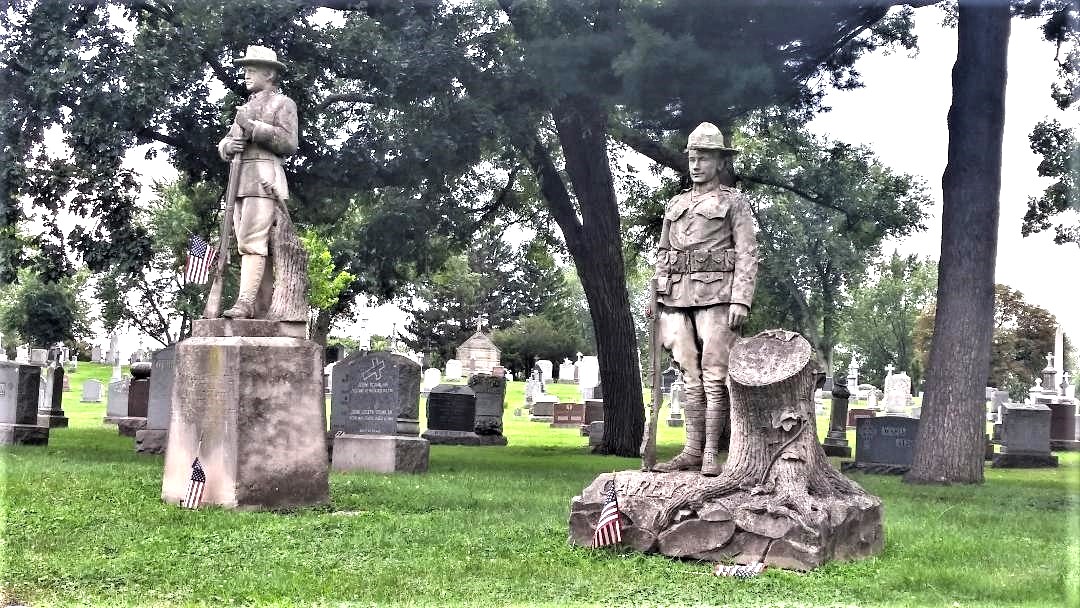
The Ridge Historical Society
Memorial Day 2023 – Part 1
By Carol Flynn
The purpose of Memorial Day is to remember the people who died while in military service to our country, the United States of America.
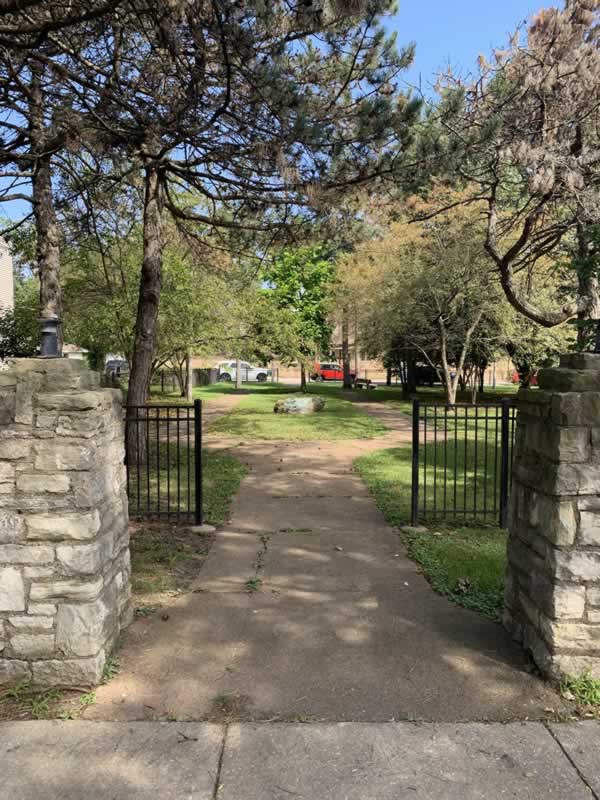
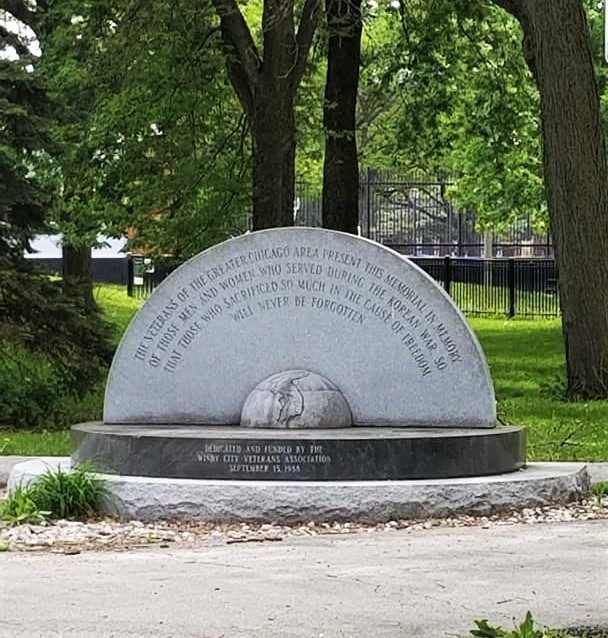
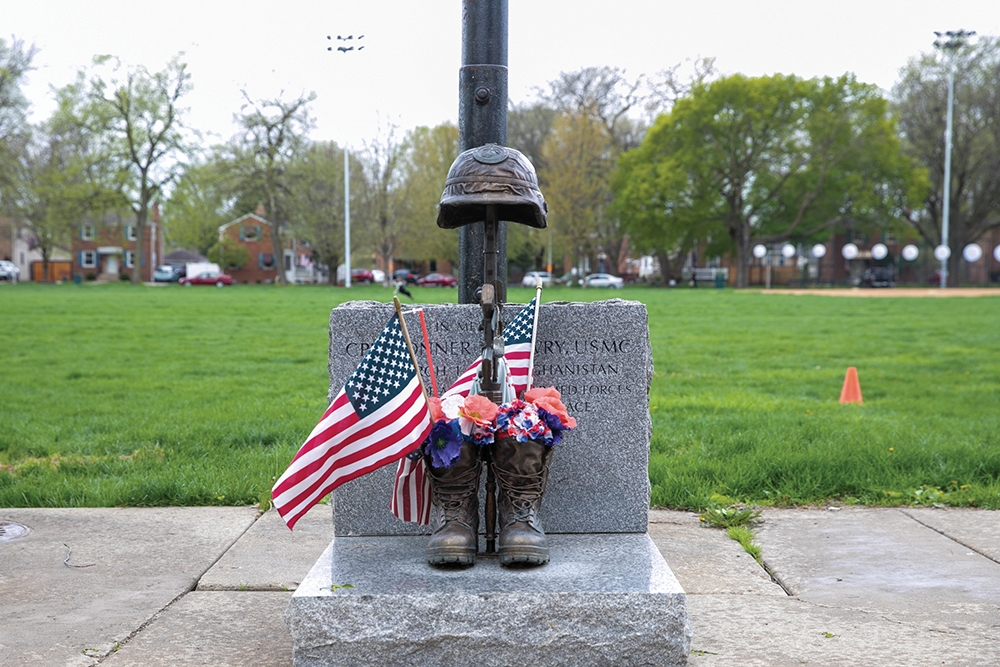
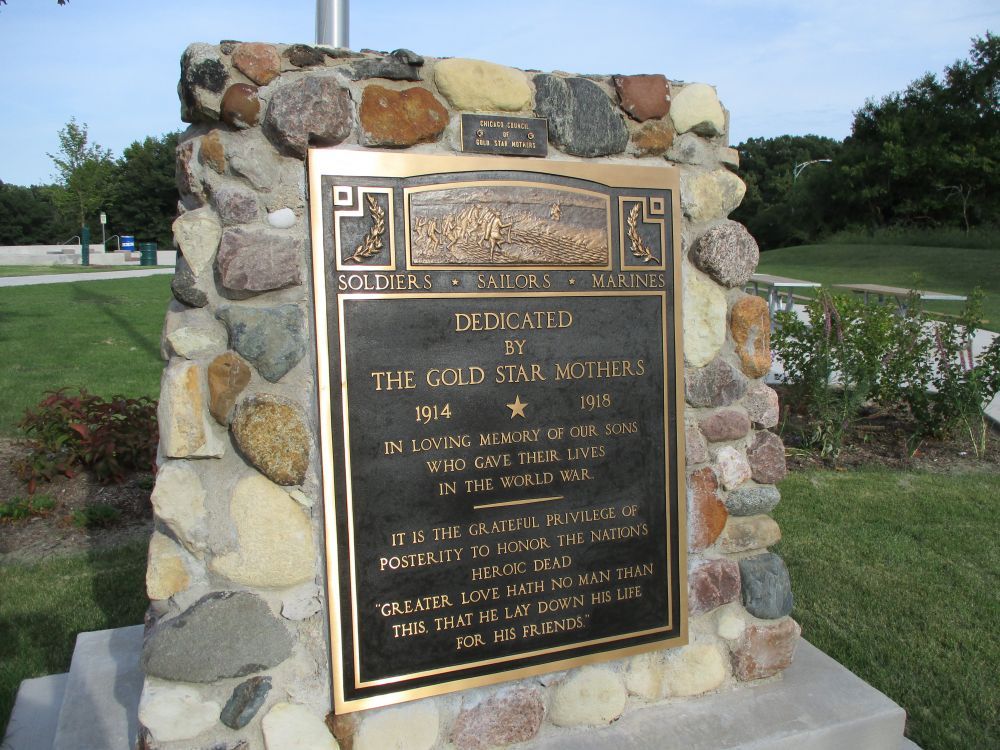
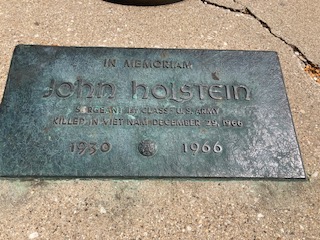
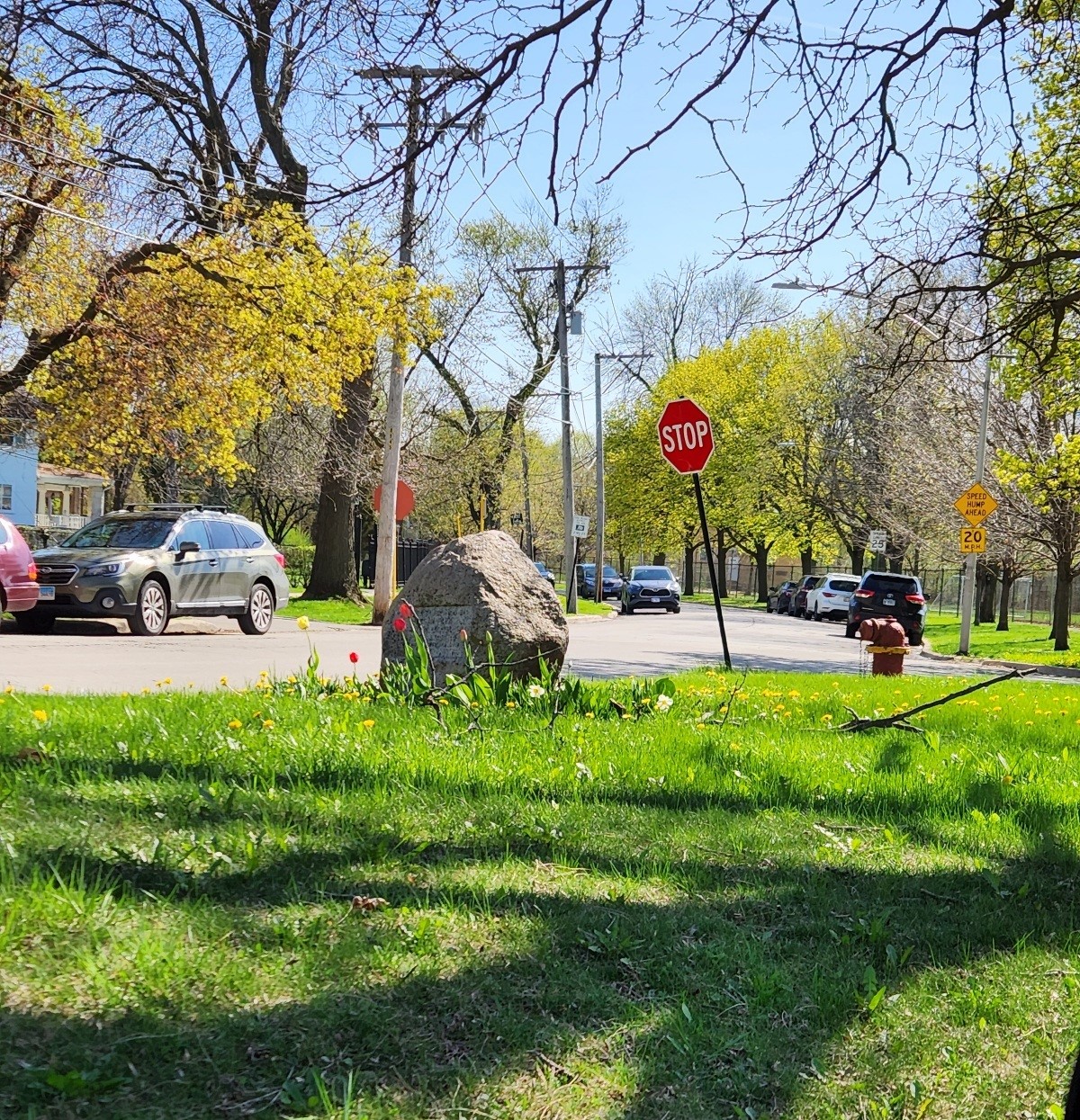
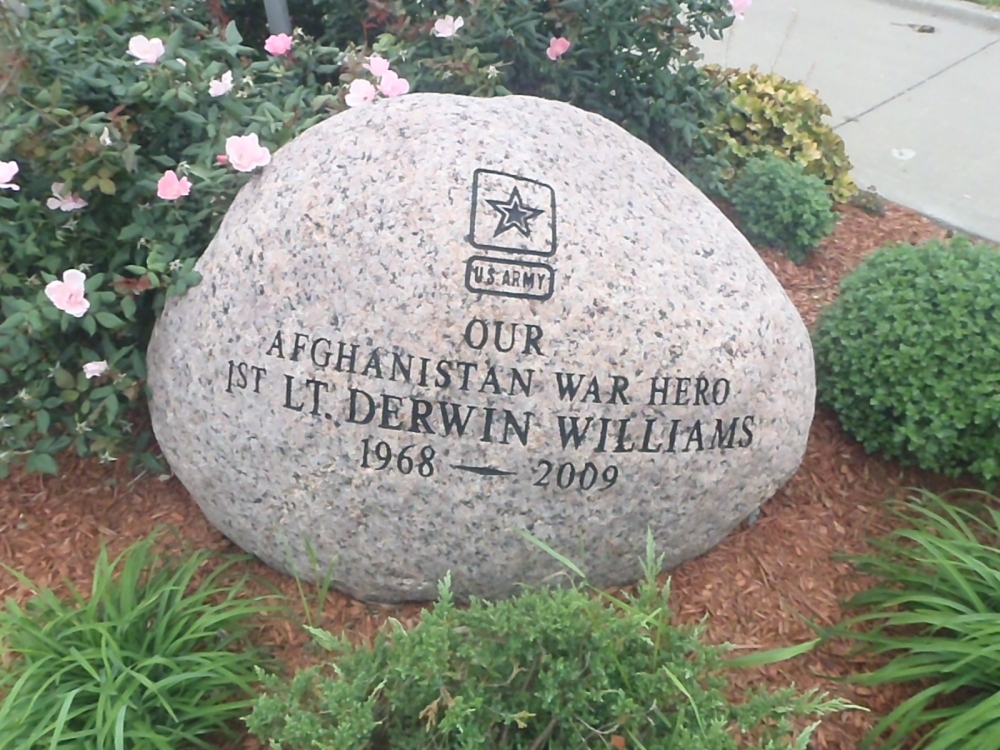
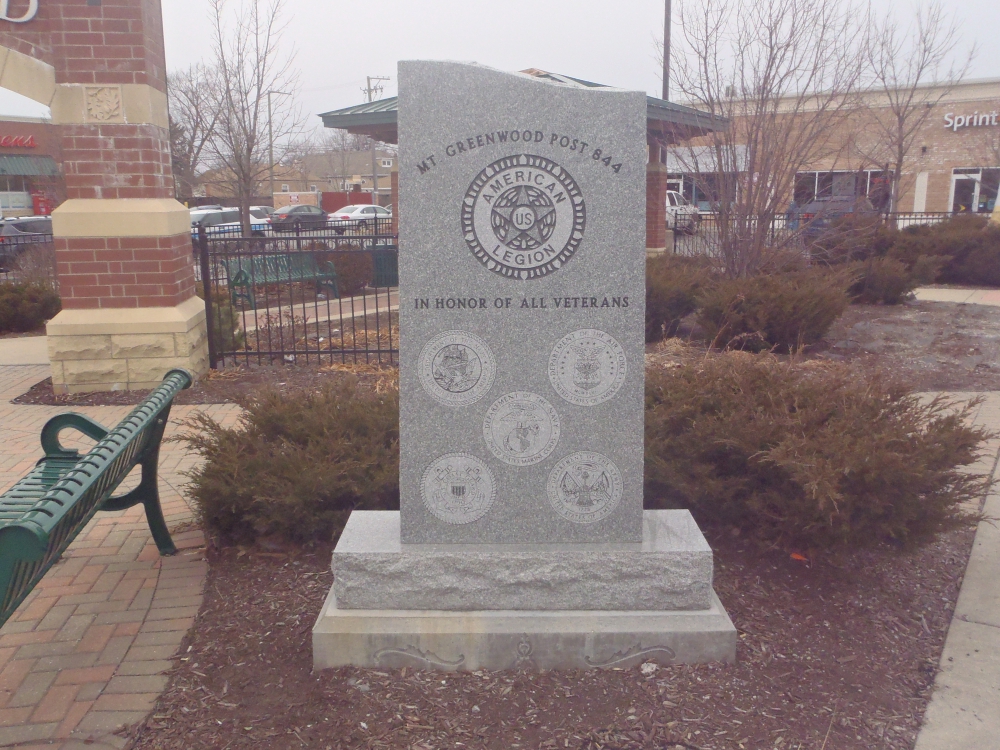
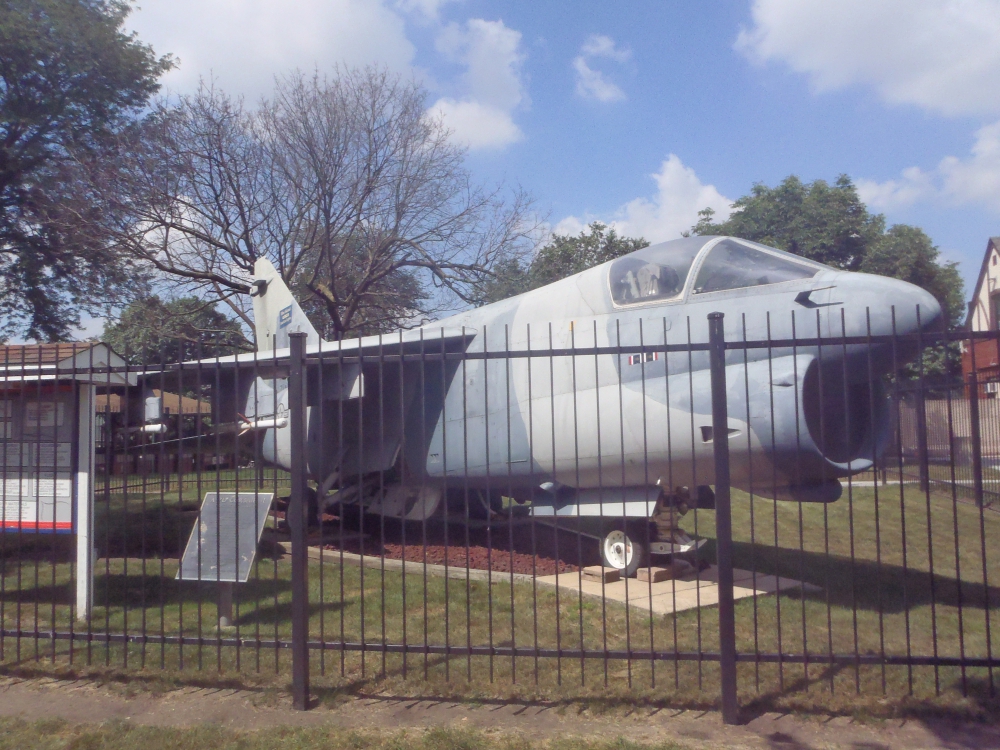
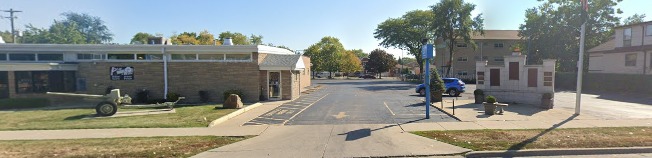
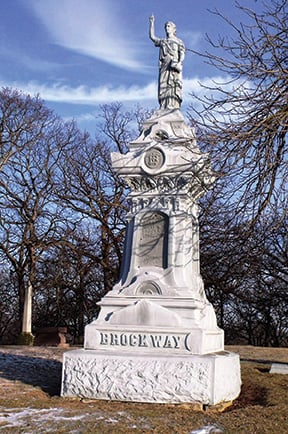
In the Ridge communities, there are many markers and memorials to U.S. service personnel. Here is a list and some pictures of these memorials.
If you know of others in the Ridge area to add to the list, please comment on this post with the locations.
In the next post, we’ll look at the history of military memorials connected to Morgan Park Academy, which started as the Mount Vernon Military Academy in the 1870s. The history was prepared by Barry Kritzberg.
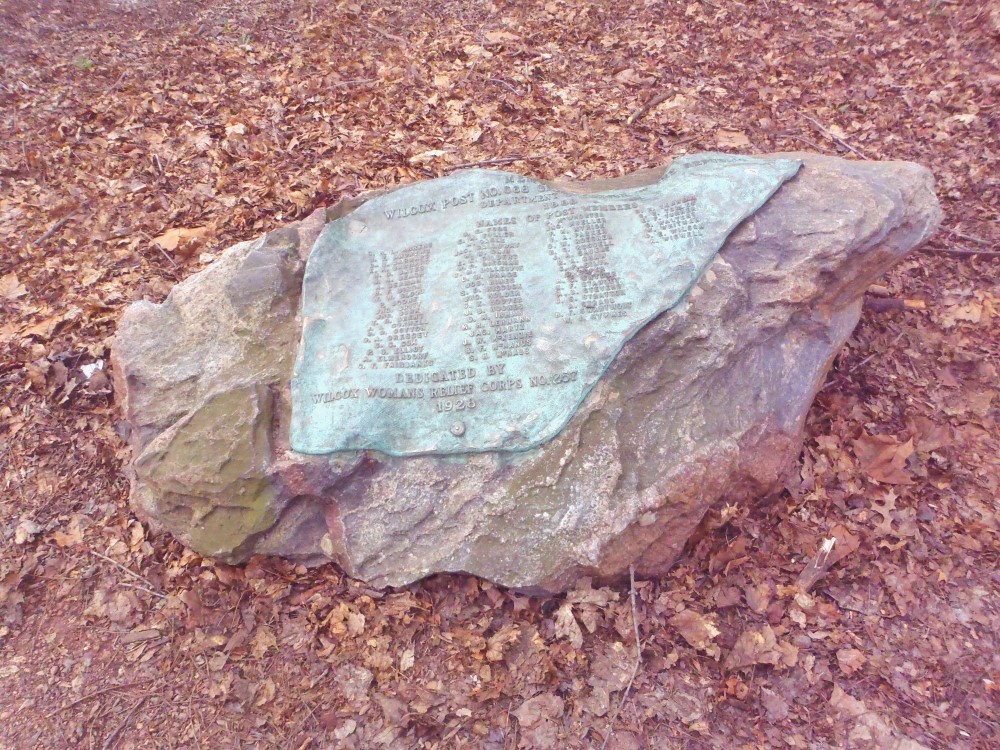
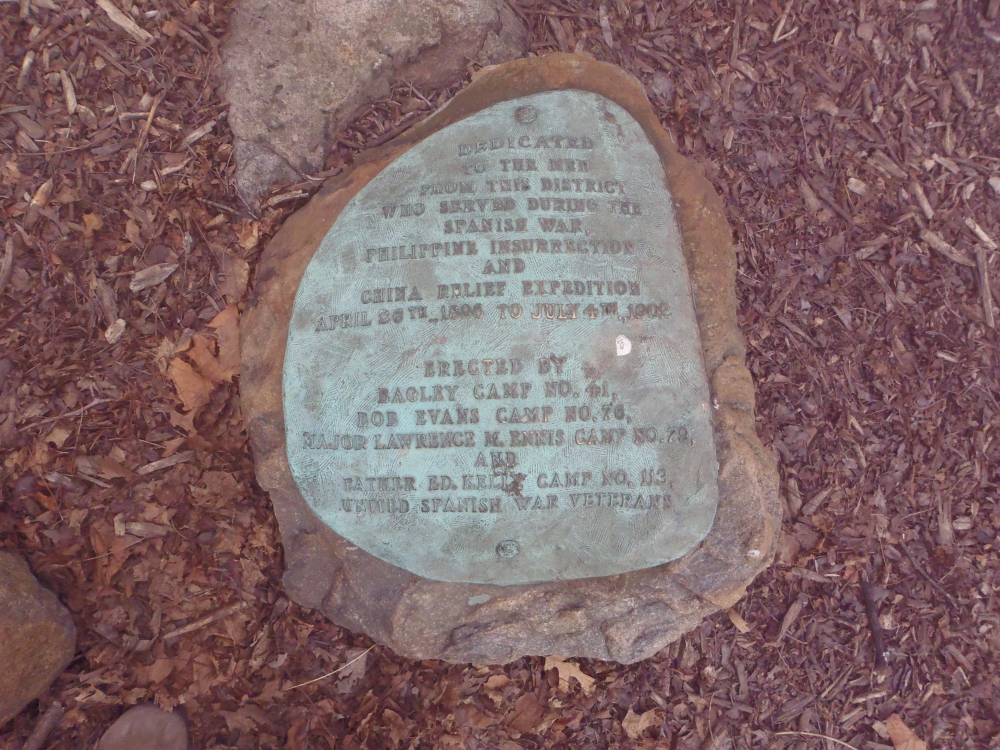
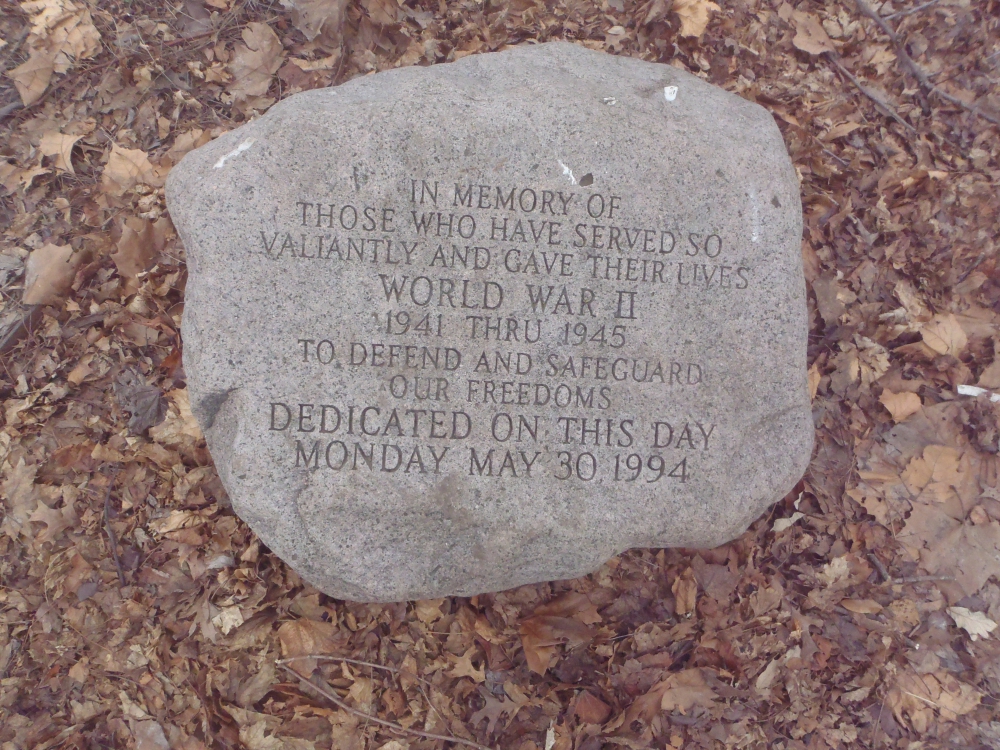
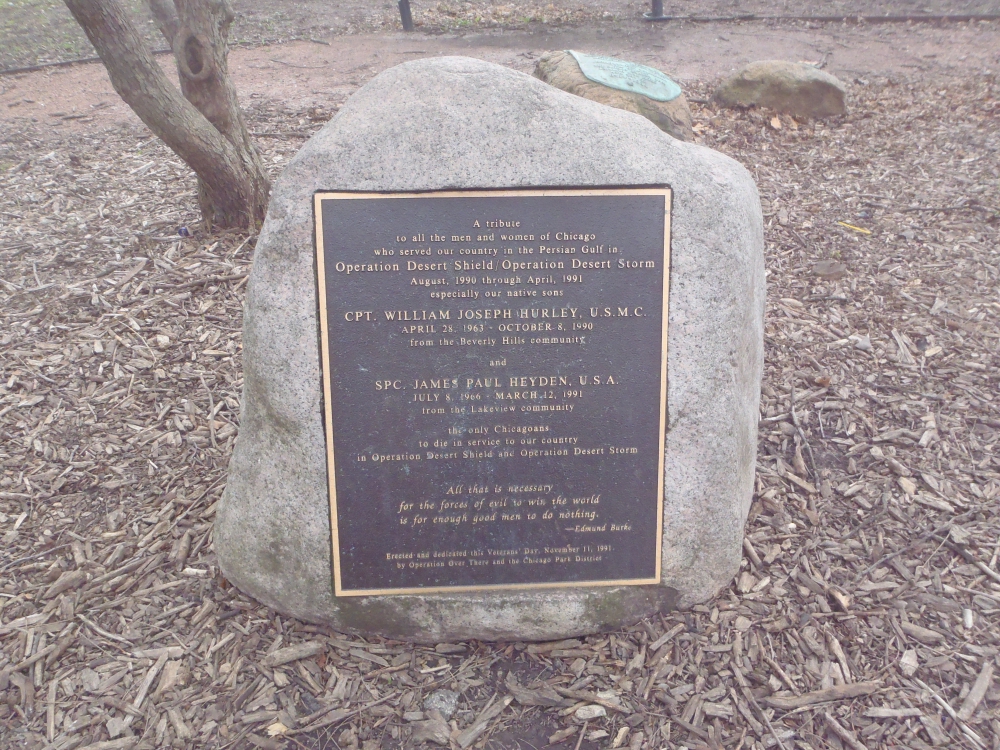
Ridge Park – Six memorial stones, including one of the oldest on the Ridge, installed in 1926.
Graver Park – World War I
Kennedy Park – Korean War
Beverly Park – Connor T. Lowry, Afghanistan
Dan Ryan Woods – Gold Star Mothers
Morgan Park High School flagpole
112th Street and Lothair Ave. – Memorial Triangle
98th Place and Throop Street – Derwin Williams, Afghanistan
111th Street and Kedzie Avenue – American Legion
Memorial Park in Blue Island – Gravestones, memorials, artillery
97th Street and Kedzie Avenue – American Legion Post artillery and eternal flame
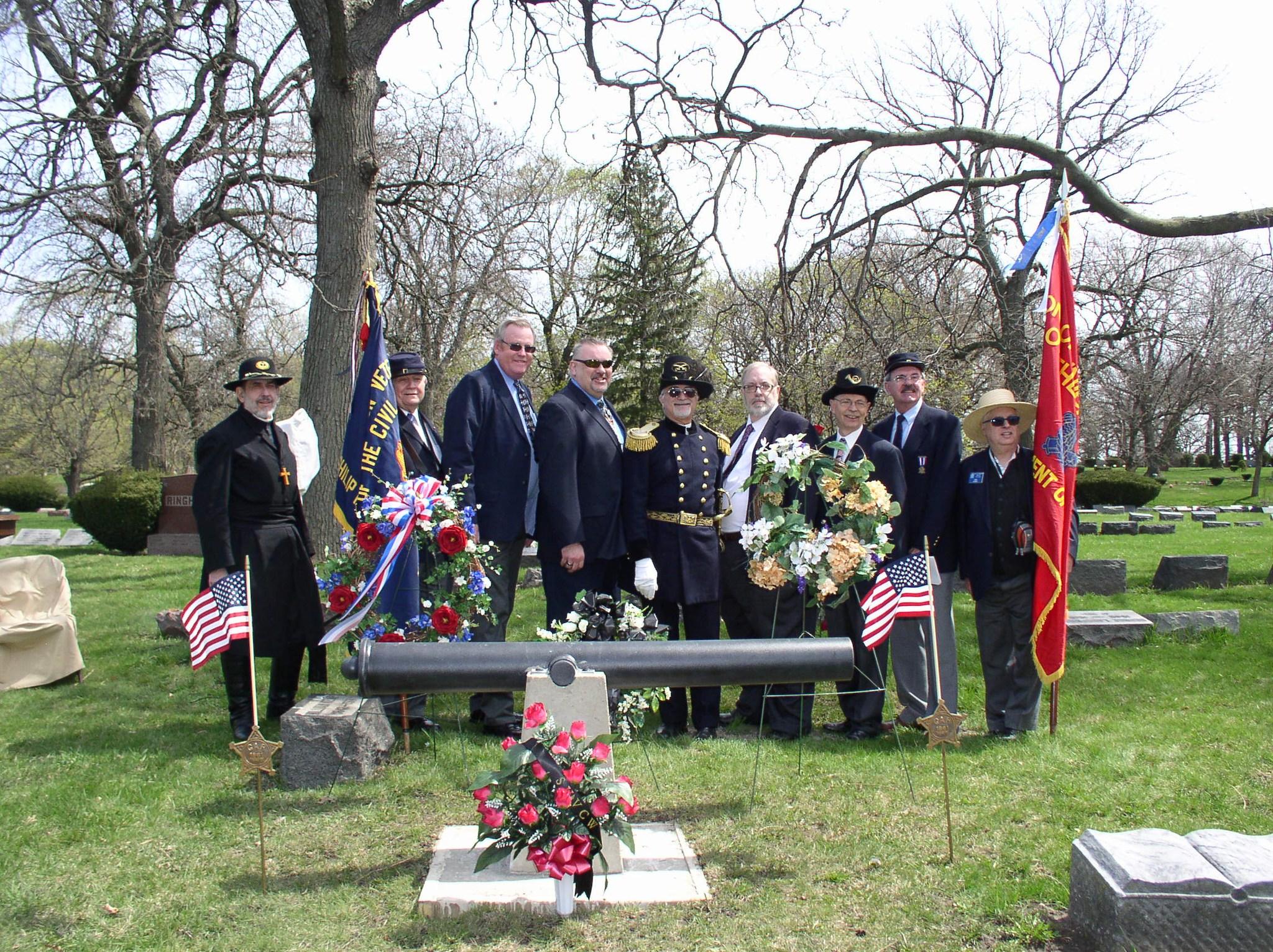
Mount Greenwood Cemetery – Civil War veterans’ graves and cannon replica
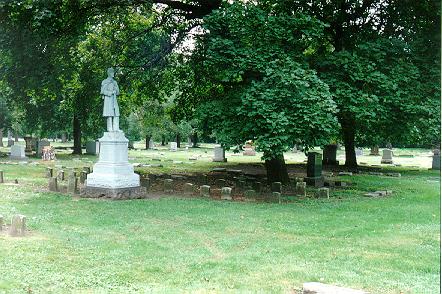
Mount Hope Cemetery – Civil War veterans section
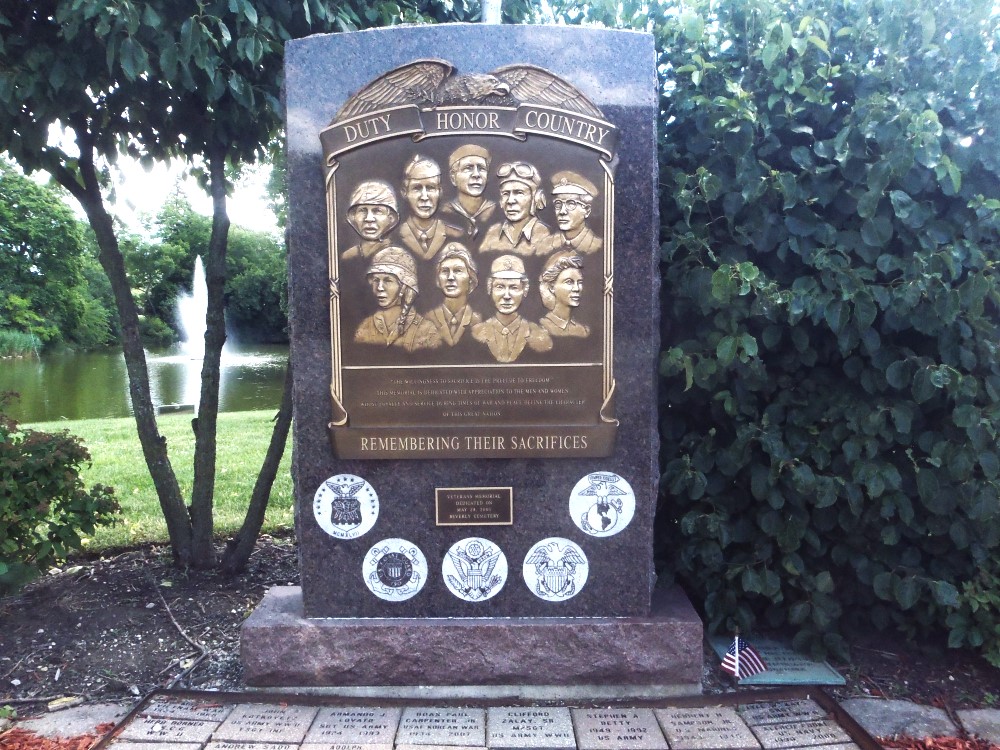
Beverly Cemetery – Veterans monument
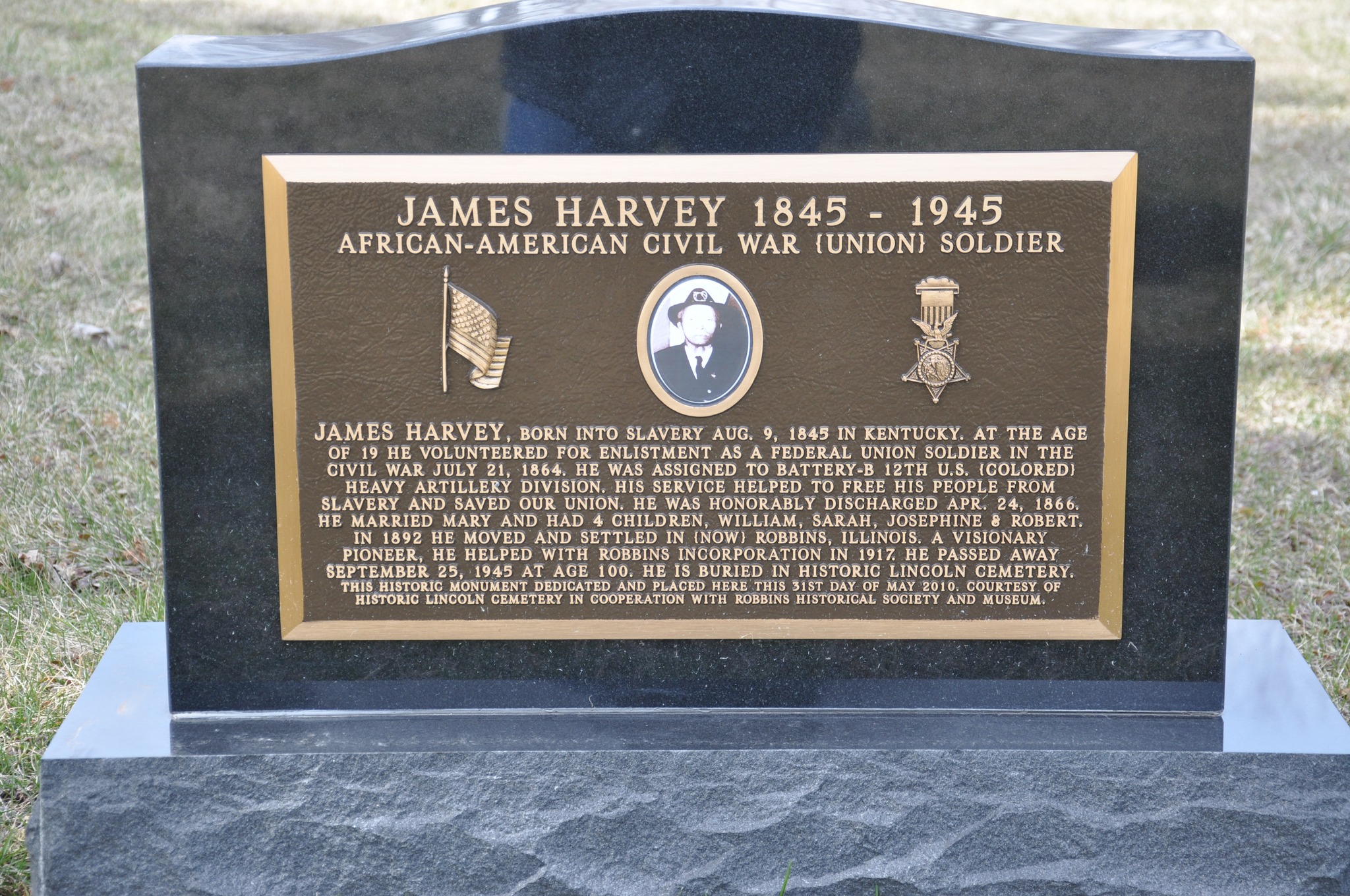
Lincoln Cemetery – James Harvey, U.S. Colored Troops
Mount Olivet Cemetery – “Doughboy” grave statues
Sharing this video from another post – Chicago, 1914, taken from a blimp.
The Ridge Historical Society
Memorial Day 2023 – Part 2
By Carol Flynn, with a thank you to Barry Kritzberg for sharing his historical research
Memorial Day – Part 1 listed many of the military-related markers and monuments in the community. While researching these, the only one that could be connected to the Morgan Park Academy (MPA) was the Memorial Triangle, a small piece of land at 112th Street and Lothair Avenue that contains a marker installed by the cadets of MPA in the 1920s in honor of those who fought in World War I.
MPA started as the Mount Vernon English, Classical, and Military Academy for boys in 1873, when the village of Morgan Park was planned and developed by the Blue Island Land and Building Company. In addition to training for military service, the school promised thorough preparation for business and college.
The name of the school was changed to the Morgan Park Military Academy (MPMA) in 1906. Changes beginning in the 1950s led to today’s school, the MPA that is no longer a military training school and is now a co-educational school from pre-kindergarten through 12th grade.
It stood to reason that a military academy would include memorials to alumni who served and died in armed conflicts that involved the United States, but none were in evidence now. RHS reached out to Barry Kritzberg, renowned educator and author who, among many accomplishments, taught at MPA for thirty-six years and authored “Morgan Park Academy: A History (Volume I),” published in 2007.
Kritzberg shared some of his history research and writing with RHS. As expected, there were memorials at MPA at one time.
Records show that 1,389 MPA students served in World War I, World War II, and Korea. There are no records for the numbers who served in the Spanish American War, the first conflict after MPA was founded, or the Viet Nam War, the last conflict before MPA discontinued military training.
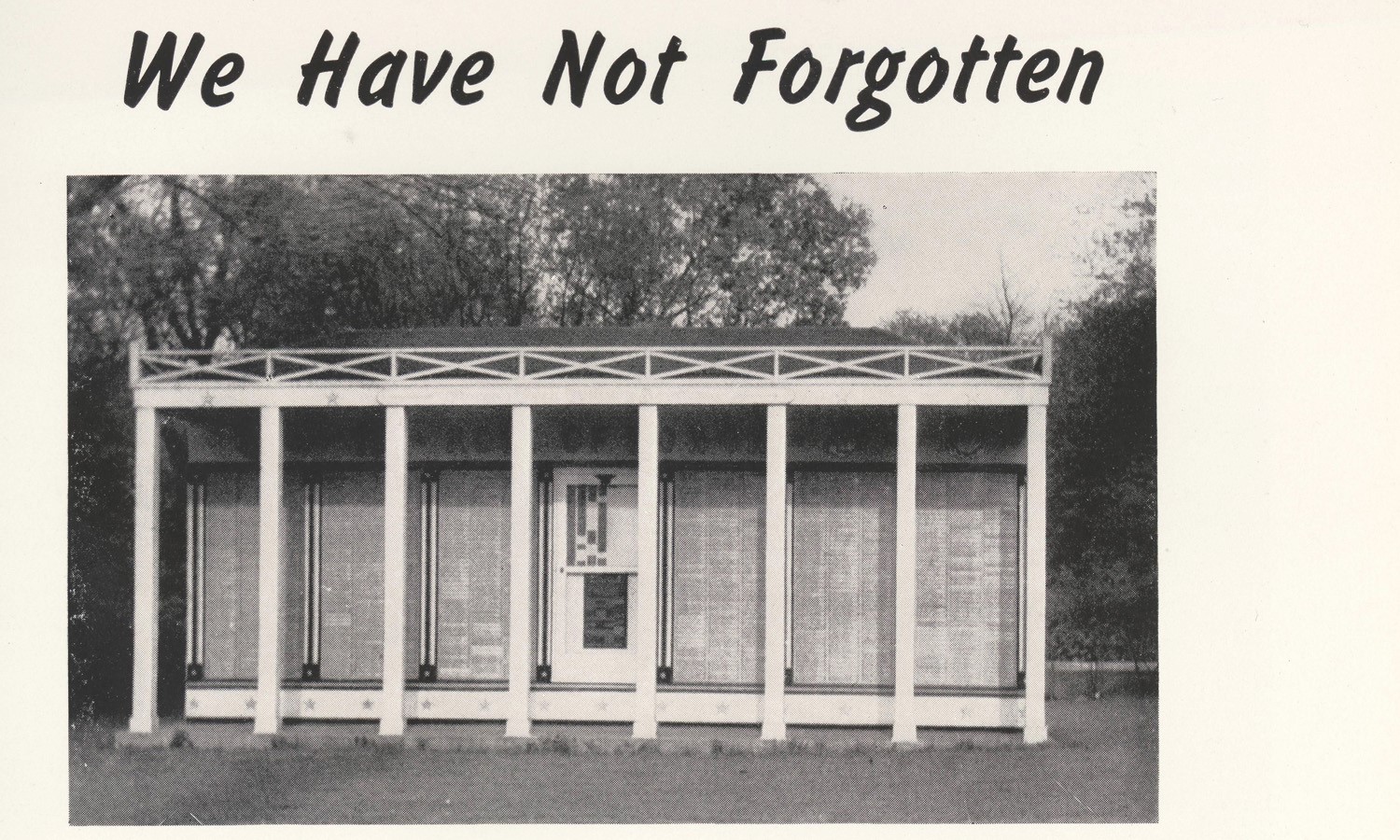
Seven MPMA graduates lost their lives during the WWI time period. In 1920, the pictures of these “gold star men” were framed and placed in the chapel of the school’s Blake Hall, a building demolished many years ago.
In 1921, trees were planted in their honor, and plaques were installed on the MPMA campus. This was considered a significant move by MPMA at the time, with the head of the school, Col. Harry D. Abells, stating that this established “new traditions for the guidance of our present and future cadets.”
The loss of MPMA men increased substantially with World War II. A total of forty-five cadets and two faculty members lost their lives in service at that time.
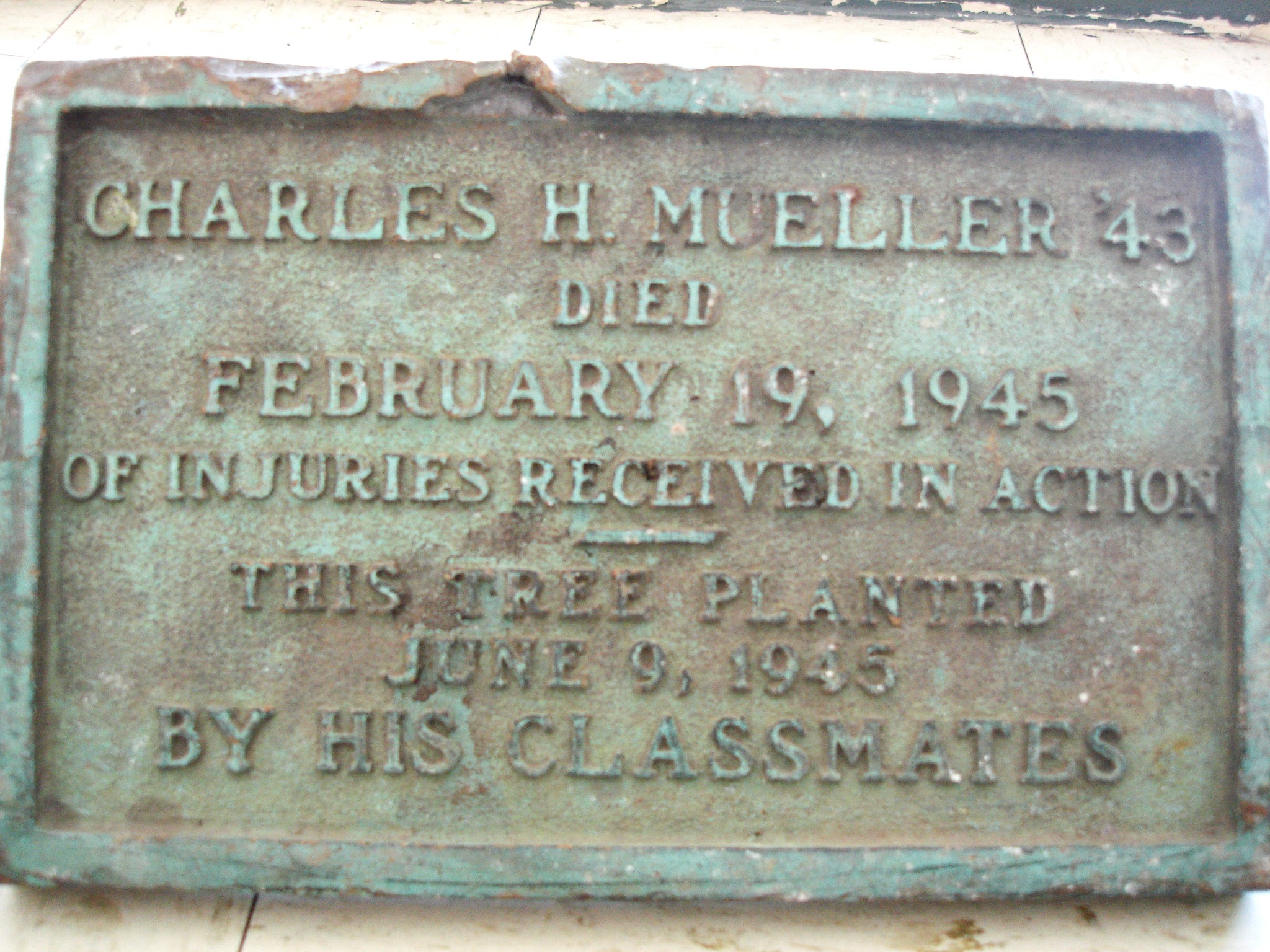
In 1943, the 70th year anniversary of MPMA, seven elm trees with plaques were planted on the campus in memorial to the seven cadets whose war-time deaths had occurred. The Tribune ran this poem at the time (June 17, 1943):
Seven honored decades,
Thru years of peace or dread,
Her sons have served our banner
With seven stripes of red.
Seven stars, new golden,
Shine on her roll today
For seven heroes fallen
In conflict far away.
Seven elms, new planted,
Pay tribute to each name,
And in our arch of triumph
Shall hold their endless fame.
Those first seven deaths were just the beginning. In the next few years, forty more U.S. servicemen connected to MPMA died.
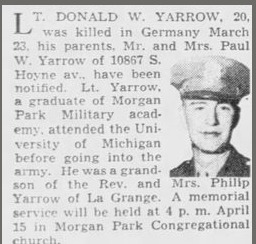
Many of them also had connections to the local community. One case study, that of Lt. Donald W. Yarrow, puts a real face on what would otherwise just be a statistic.
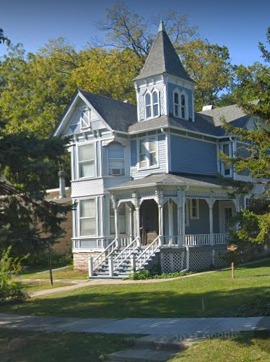
RHS research shows that Donald W. Yarrow was born on December 2, 1924, to Paul and Edna Brown Yarrow. He was the grandson of a well-known minister in the community, Rev. Dr. Phillip Walter Yarrow. The Rev. Yarrow family lived at 11156 S. Longwood Drive, in one of the most picturesque Queen Anne houses in Morgan Park.
Rev. Yarrow was from London, educated at Princeton and Harvard, and the pastor of the Morgan Park Congregational Church. He was described as a “militant anti-vice crusader” who ran the Illinois Vigilance Association for twenty years. He staged hundreds of raids on speakeasies and brothels. He was fearless against Al Capone as well as corrupt government officials. Rev. Yarrow was a trustee of MPMA.
Paul Yarrow was a stockbroker, and Edna Yarrow was an active clubwoman and volunteer. During WWII, she was chair of the Morgan Park Red Cross Unit. She served as chair of the Morgan Park Woman’s Club American Home Committee.
At the age of 18, Donald Yarrow was a lieutenant in the U.S. Army. He graduated from MPMA in 1942, where he had been on the honor roll and had received promotions. He attended the University of Michigan, but one month after his eighteenth birthday, he entered the U.S. Army, and became the second youngest officer to complete the officer program at Fort Benning, Georgia.
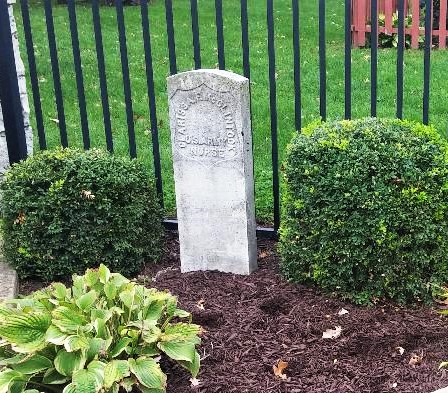
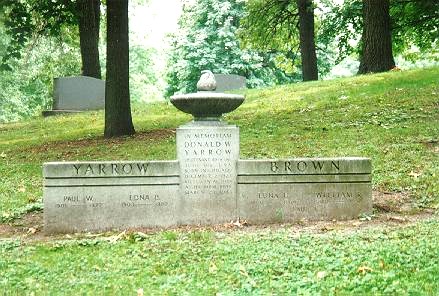
According to Kritzberg’s research, Donald was wounded in 1944, returned to combat, and then was killed on March 23, 1945, when crossing the Rhine for “the great drive deep into Germany.” He was twenty years old. His funeral service was held at his grandfather’s church at 112th and Hoyne Avenue and he was buried in Mount Hope Cemetery, where his grave is prominently marked (see images).
In October of 1945, Paul and Edna Yarrow received a bronze star medal awarded posthumously to Donald. The ceremony took place at MPMA. According to the Chicago Tribune, he won the medal for heroic action on February 23 of that year in Germany, a month before he was killed. In establishing an observation post, he and two comrades had to move through heavy enemy fire, and they captured sixteen German soldiers, four mortars, and ammunition.
Also according to Kritzberg, more information on that event had been included in his obituary in the Chicago American newspaper on March 31, 1945. They captured the German soldiers without firing a shot. Donald, however, could not have fired a shot anyway because he was out of ammunition. It was only after taking the prisoners to the stockade that he realized that he had no bullets in his carbine.
Forty-seven elm trees were planted on the MPMA campus during those years in the 1940s. Unfortunately, Dutch elm disease, which ravaged Chicago in the 1960s, destroyed these memorial trees.
MPA records, according to Kritzberg, also list twelve MPMA alumni who were killed in Korea and Viet Nam.
However, it seems that not all MPA graduates who were killed during active service are on the MPMA lists, only those killed during “war years.” One man who is missing from the list, for example, is Grant Fenn, whose family owned the Graver-Driscoll House that is RHS Headquarters, from 1940 to 1946.
Grant Fenn graduated from MPMA in June 1942. The day after he received his diploma, he was appointed second lieutenant, infantry, U.S. Army, and started active duty. He graduated from the United States Military Academy, West Point, New York, in 1945 and was commissioned in the U.S. Air Force.
Fenn served in Italy, and for two years as an assistant attaché in Athens, Greece. He was killed in 1951 when the B-36 bomber he and twenty-two others were flying in crashed in New Mexico. He was 26 years old. He was buried in Mount Greenwood Cemetery.
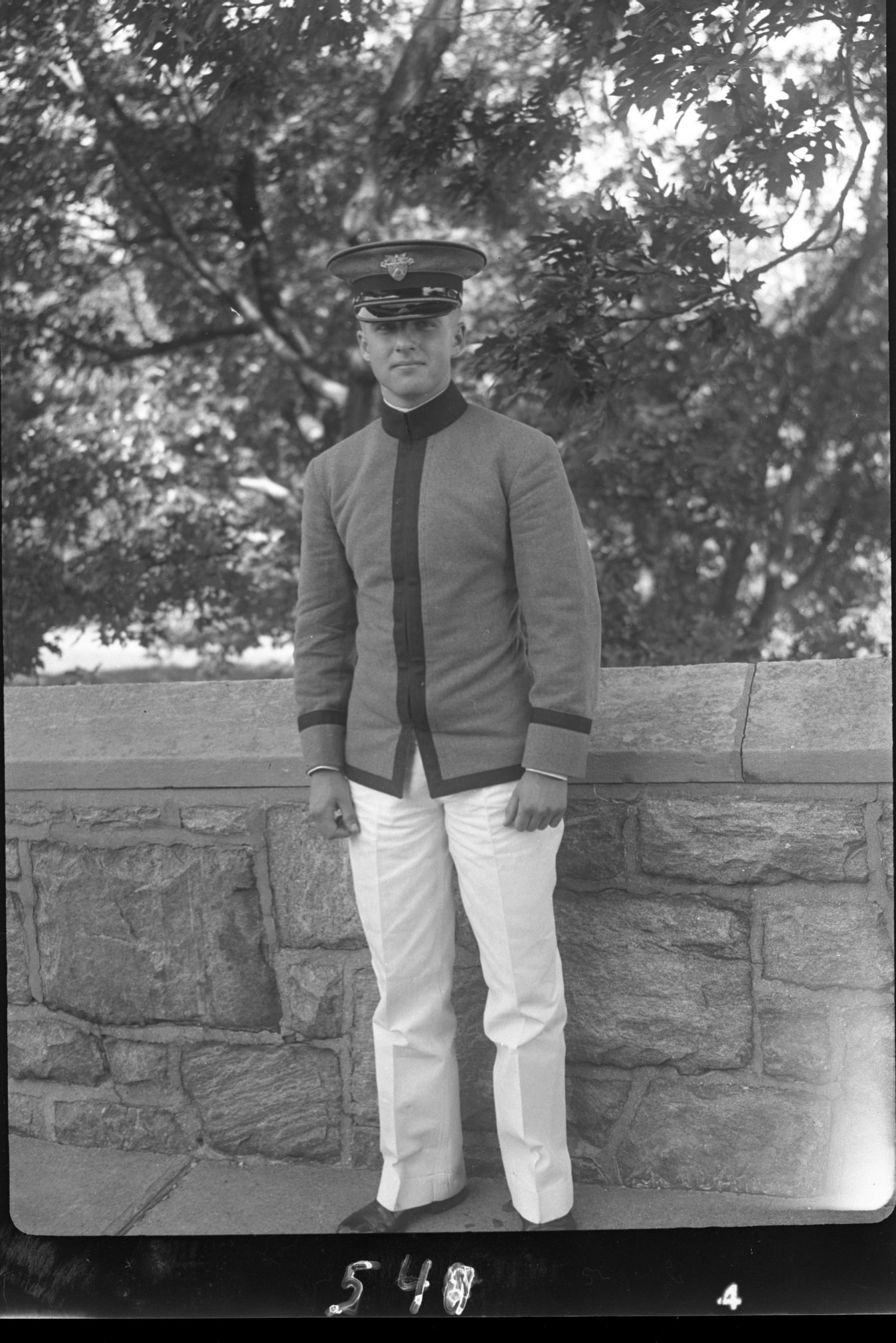
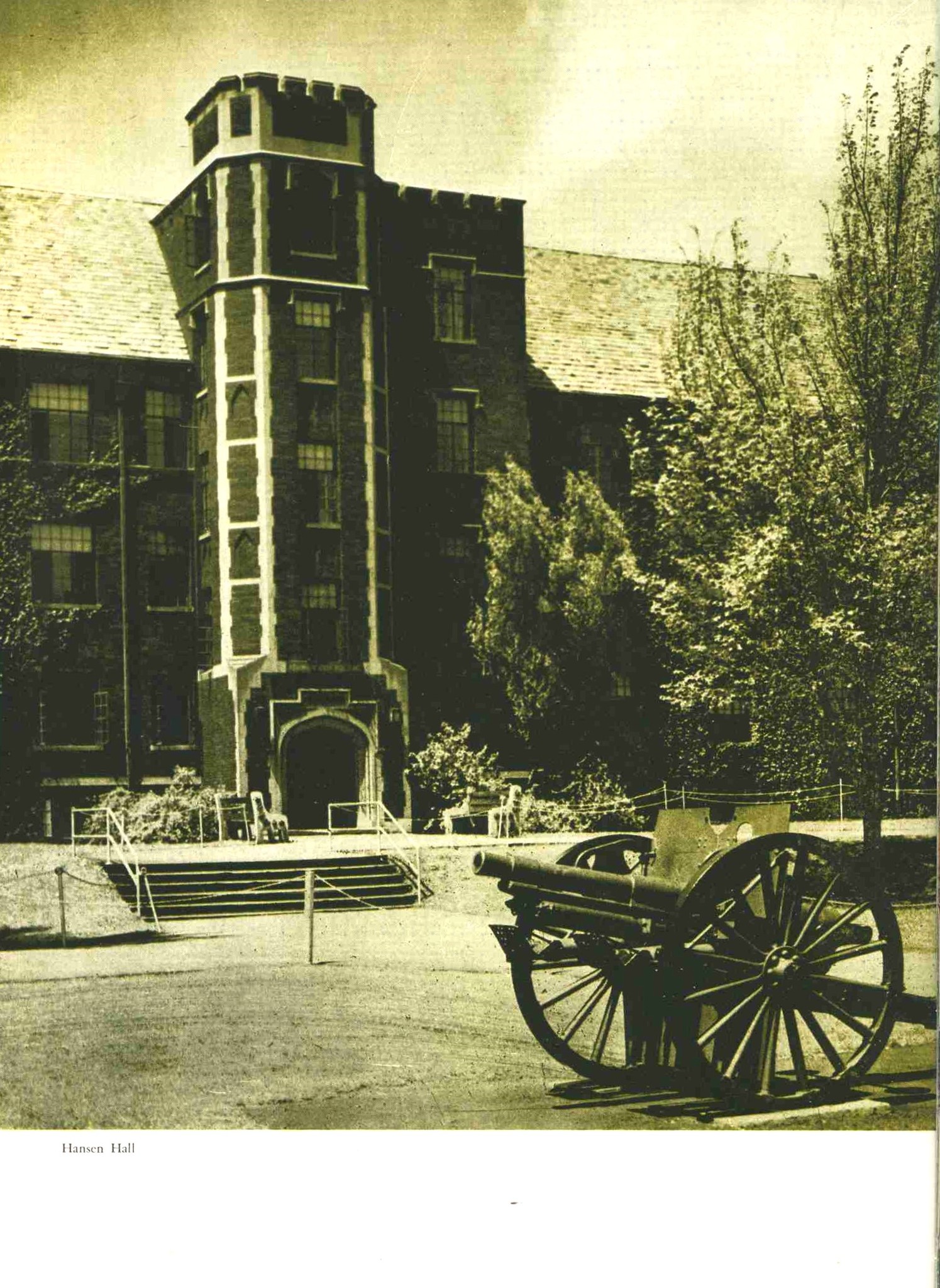
There were other memorials at MPMA that were identified by Kritzberg and several are shared in the attached images.