
Explore the RHS Facebook Archives, a rich repository of local history written by Carol Flynn. For two decades, Carol brought a deeply dedicated voice to public education at RHS. Her role as Facebook administrator through mid-2025 naturally extended her prolific research into meticulously detailed articles, most notably her multi-part historical series posts. Today, Carol continues her local history writing for The Beverly Review and other outlets.
October 2022
The Ridge Historical Society
Halloween on the Ridge – Part 2: Halloween Customs One Hundred Years Ago
By Carol Flynn
The first post covered the origin of Halloween as a Celtic custom brought over to the U.S. by the Irish immigrants in the 1800s.
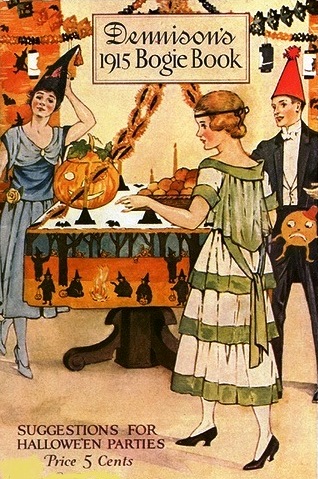
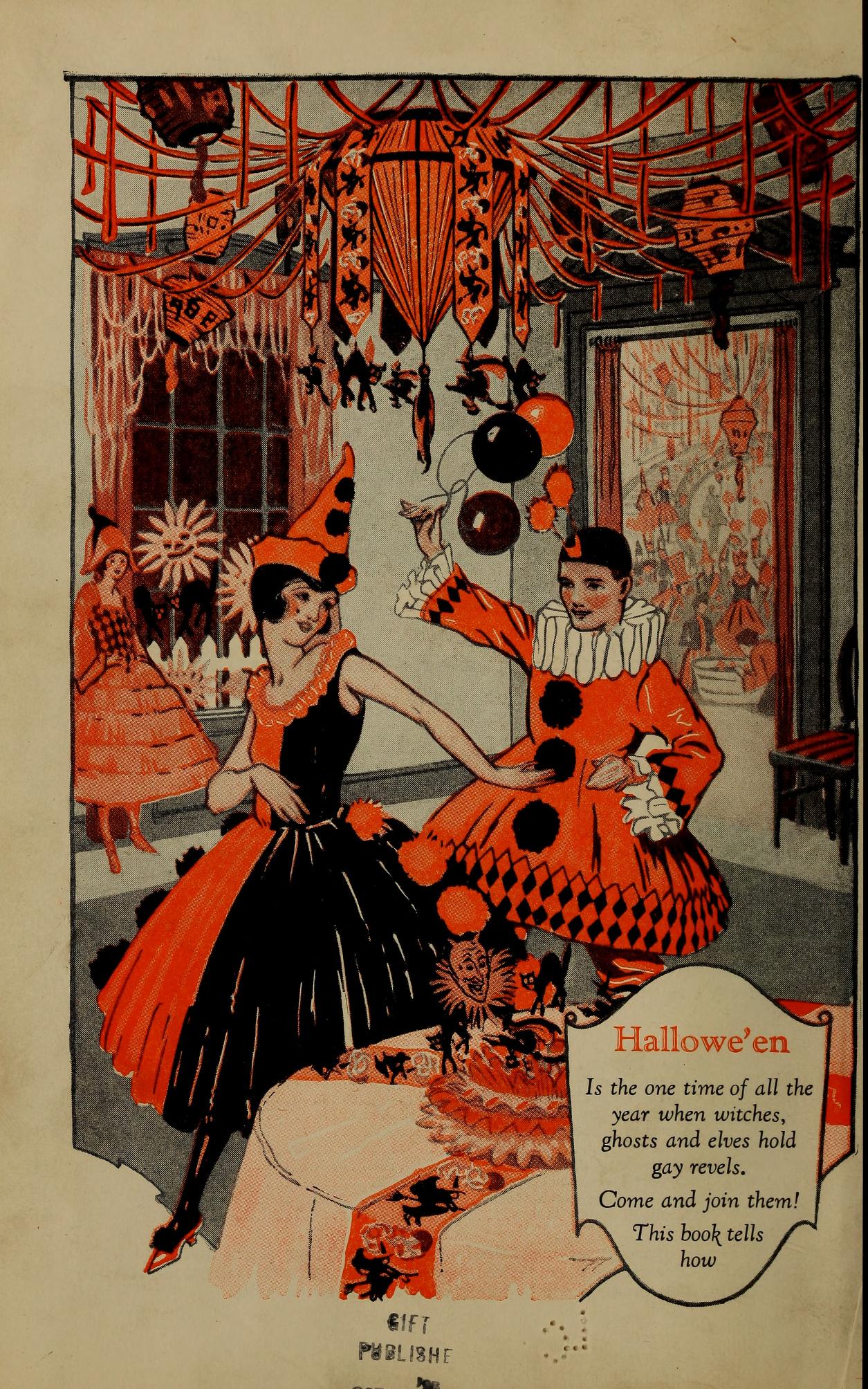
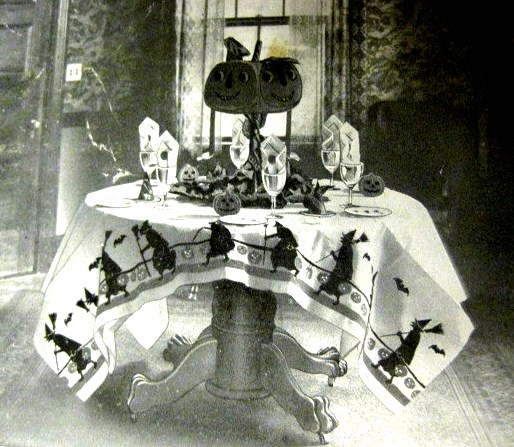
By 1900, Halloween had lost most of its superstitious and religious overtones, and parties were the most common way to celebrate the day. My great-grandparents hosted a Halloween party at their house on 110th and Homewood Avenue in 1915. This is what a party might have looked like back then.
Prior to 1900, decorations relied on natural items. The Irish Americans adapted their customs to use the native plants they found in the U.S., like corn stalks, to symbolize the harvest. Jack-o-lanterns were still customary, but now they were made from native pumpkins. One Irishman who moved to the States about twenty years ago commented that it was much easier to carve pumpkins than to carve turnips.
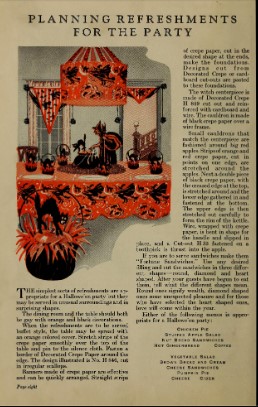
In the early 1900s, several companies, notably Dennison Manufacturing Company, began making paper products such as heavy cardboard die cuts; paper plates, cups, and napkins; crepe paper streamers, and the like.
Decorations became much more sophisticated and commercial. Dennison published “Halloween Bogie” books from 1909 through 1934 that were catalogs that also included ideas, illustrations and instructions for decorations and parties.
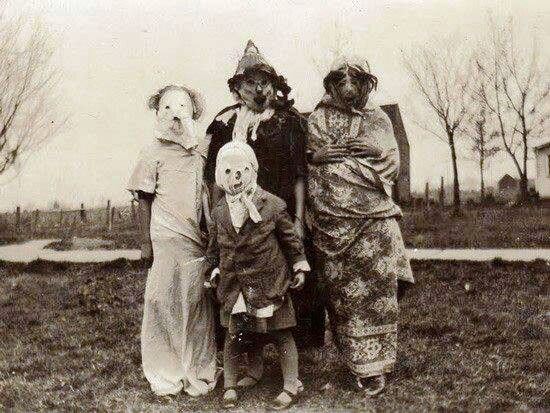
Costumes were mostly still homemade affairs, although there were some costume companies, but their goods were expensive. The costumes presented in the Bogie books were sophisticated but many photos from the early 1900s show homemade costumes that were, quite frankly, creepy, by today’s standards.
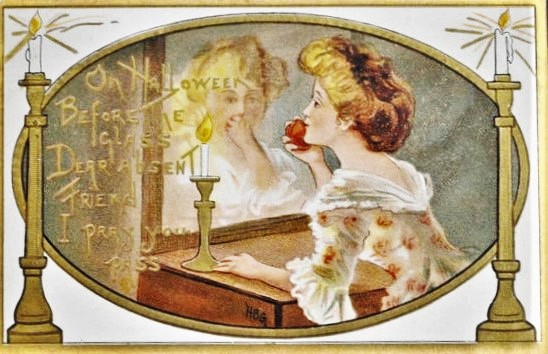
In addition to some of the traditional games like bobbing for apples, fortune telling and other divination games were popular. Variations of a “mirror test” were mentioned often in articles of the day. One version called for a girl to sit before a mirror at midnight on Halloween, combing her hair and eating an apple, in order to see the face of her true love reflected in the glass.
Food suggestions included a sit-down supper with items like cream of celery soup, brown bread sandwiches and Waldorf salad, to a buffet including a variety of finger sandwiches (cucumber, salmon, jelly), stuffed celery, and orange sherbet. Gingerbread was popular in any form – cookies, cake with marshmallow frosting.
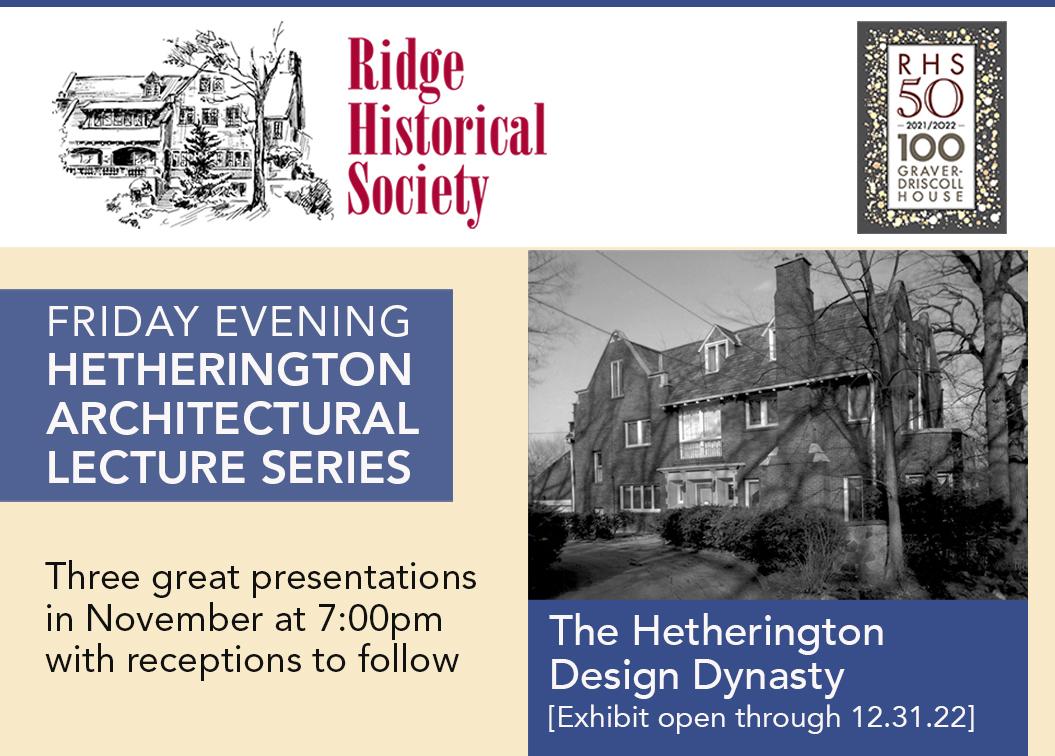
The Ridge Historical Society will offer a series of educational programs on Friday evenings in November as part of the current exhibit on architect John Todd Hetherington and his descendants.
The Friday Evening Hetherington Architectural Lecture Series will lead off on November 4th at 7:00 p.m. with “Discover the History of Your Chicago House,” presented by RHS researcher Tim Blackburn. Attendees will learn how to research their pre-1955 homes located within the city limits to learn about the architecture, construction, owners, and inhabitants through the years. Public records such as building permits and Sanborn maps will be discussed, as well as research methods to learn about local history.
Tim Blackburn is a member of the RHS Historic Buildings Committee and assists members of the community with research on their homes and local history questions. He has completed extensive research on his own Hetherington-designed home and many other homes in the area, and was a major contributor to the current exhibit, including designing, photographing, and installing the Google Earth Tour of the “Hetheringtons on the Ridge.” He works in technology as a Vice President for a global marketing and data company.
This first event is sure to fill up because many people in this community are interested in the history of their houses. Those who wish to secure a spot are advised to make a reservation – see the information below.
The second program, on November 11th at 7:00 p.m., will feature photographer Mati Maldre presenting “Photographing Architecture and a View Camera Demonstration.” Using his Deardorff 4×5/5×7 view camera, Maldre blends architectural photographic documentation with interpretive expression to create appreciation and understanding of our man-made environment. His work is both science and art.
On November 18th at 7:00 pm, the final program, “John Todd Hetherington: From Lake Forest to Geneva,” will be presented by Michael Lambert, architect, historian, and preservationist. Hetherington’s career has been long overlooked. He was architect to some of Chicago’s most prominent residents, and designed some of the first estate homes in Lake Forest, Illinois. He was commissioned to design three homes that initiated the transformation of Geneva’s Batavia Road neighborhood.
The programs will be held at RHS, 10621 South Seeley Avenue. The cost for each program is $10 for RHS members and $15 for non-members. A reception will follow each program. Parking is on Seeley Avenue. Entrance to the house is wheel-chair accessible but the restroom facilities are not.
Reservations are advised, and can be made through Eventbrite at https://www.eventbrite.com/e/hetherington-architectural-lecture-series-tickets-443264575277.
For questions, contact RHS at 773-881-1675 or ridgehistory@hotmail.com.
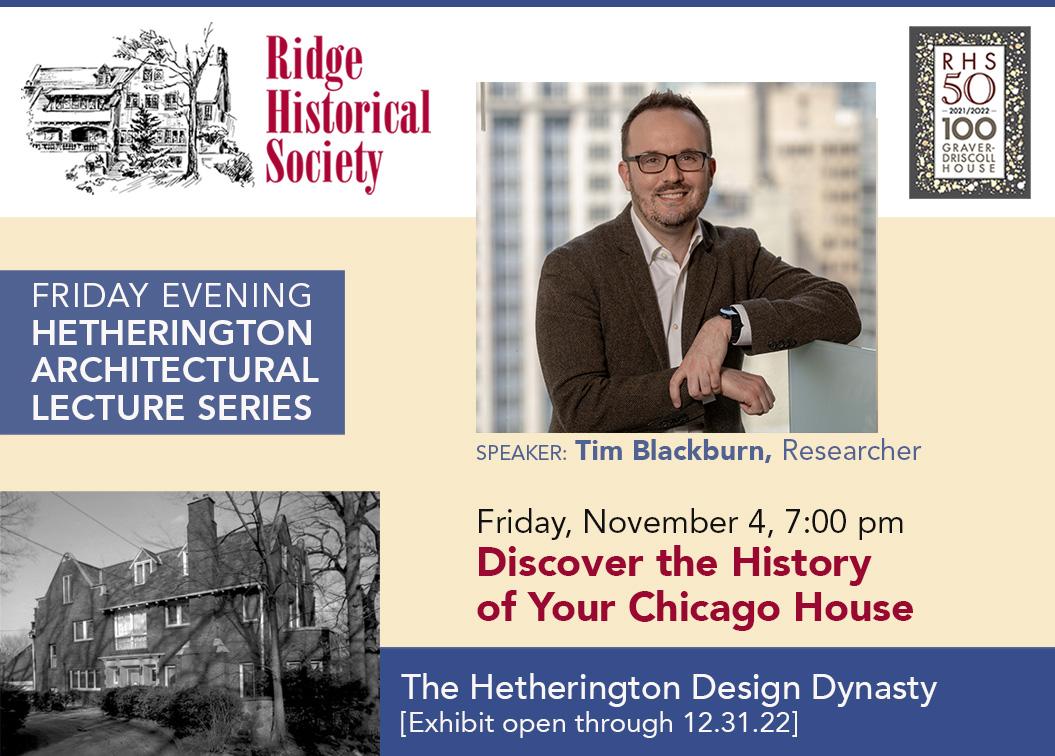
Reminder! For those of you who are interested in researching your house's history, sign up NOW for the November 4 program at the Ridge Historical Society (RHS). This is a popular topic and is filling up quickly.
The Friday Evening Hetherington Architectural Lecture Series will lead off on November 4th at 7:00 p.m. with “Discover the History of Your Chicago House,” presented by RHS researcher Tim Blackburn. Attendees will learn how to research their pre-1955 homes located within the city limits to learn about the architecture, construction, owners, and inhabitants through the years. Public records such as building permits and Sanborn maps will be discussed, as well as research methods to learn about local history.
Blackburn is a member of the RHS Historic Buildings Committee and assists members of the community with research on their homes and local history questions. He has completed extensive research on his own Hetherington-designed home and many other homes in the area, and was a major contributor to the current exhibit, including designing, photographing, and installing the Google Earth Tour of the “Hetheringtons on the Ridge.” He works in technology as a Vice President for a global marketing and data company.
The programs will be held at RHS, 10621 South Seeley Avenue. The cost for each program is $10 for RHS members and $15 for non-members. A reception will follow each program. Parking is on Seeley Avenue. Entrance to the house is wheel-chair accessible but the restroom facilities are not.
Register through Eventbrite at: https://www.eventbrite.com/e/hetherington-architectural-lecture-series-tickets-443264575277https://www.eventbrite.com/e/hetherington-architectural-lecture-series-tickets-443264575277
For questions, contact RHS at 773-881-1675 or ridgehistory@hotmail.com.
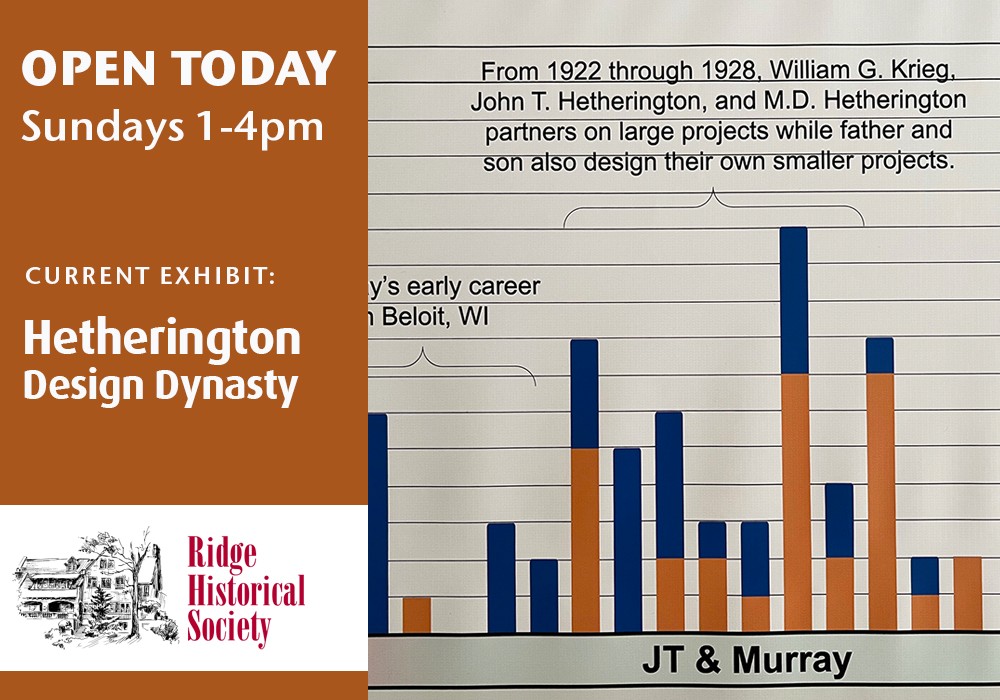
The Ridge Historical Society at 10621 S. Seeley Avenue is open today from 1 to 4 p.m., free of charge.