Explore the RHS Facebook Archives, a rich repository of local history written by Carol Flynn. For two decades, Carol brought a deeply dedicated voice to public education at RHS. Her role as Facebook administrator through mid-2025 naturally extended her prolific research into meticulously detailed articles, most notably her multi-part historical series posts. Today, Carol continues her local history writing for The Beverly Review and other outlets.
Native American Heritage
The Ridge Historical Society
Native Americans and the Blue Island Ridge – Part 12: Food and Other Resources
By Carol Flynn
About 60% of the food crops grown throughout the world originated with the Indigenous Peoples of the Americas. These include corn, beans, squash, pumpkins, sunflowers, wild rice, sweet potatoes, tomatoes, peppers, peanuts, avocados, papayas, potatoes, cacao, and many more foods.
The Calumet Region around the southern part of Lake Michigan, which extended west to include the Blue Island Ridge, and the land to the west and south of the Ridge, abounded with natural resources. Ecosystems in the area at the time included extensive marshes and wetlands, prairies, and forests of different types of oak, walnut, hickory, elm, maple, and some pine trees.
The Potawatomi engaged in all types of food and resource procurement. They hunted and fished; they gathered wild food plants and cultivated crops; and they used other plants and natural items for building and toolmaking.
The seasons set the activities. In spring, the Potawatomi tapped maple trees for sugar. In spring and summer, the communities came together to plant and grow crops, and to socialize. In the fall, harvesting crops and gathering wild plants took place. Fishing was a year-round activity. In winter, smaller groups went off on their own, and most of their time was spent in making and repairing belongings, and story telling and oral history sessions around the fire.
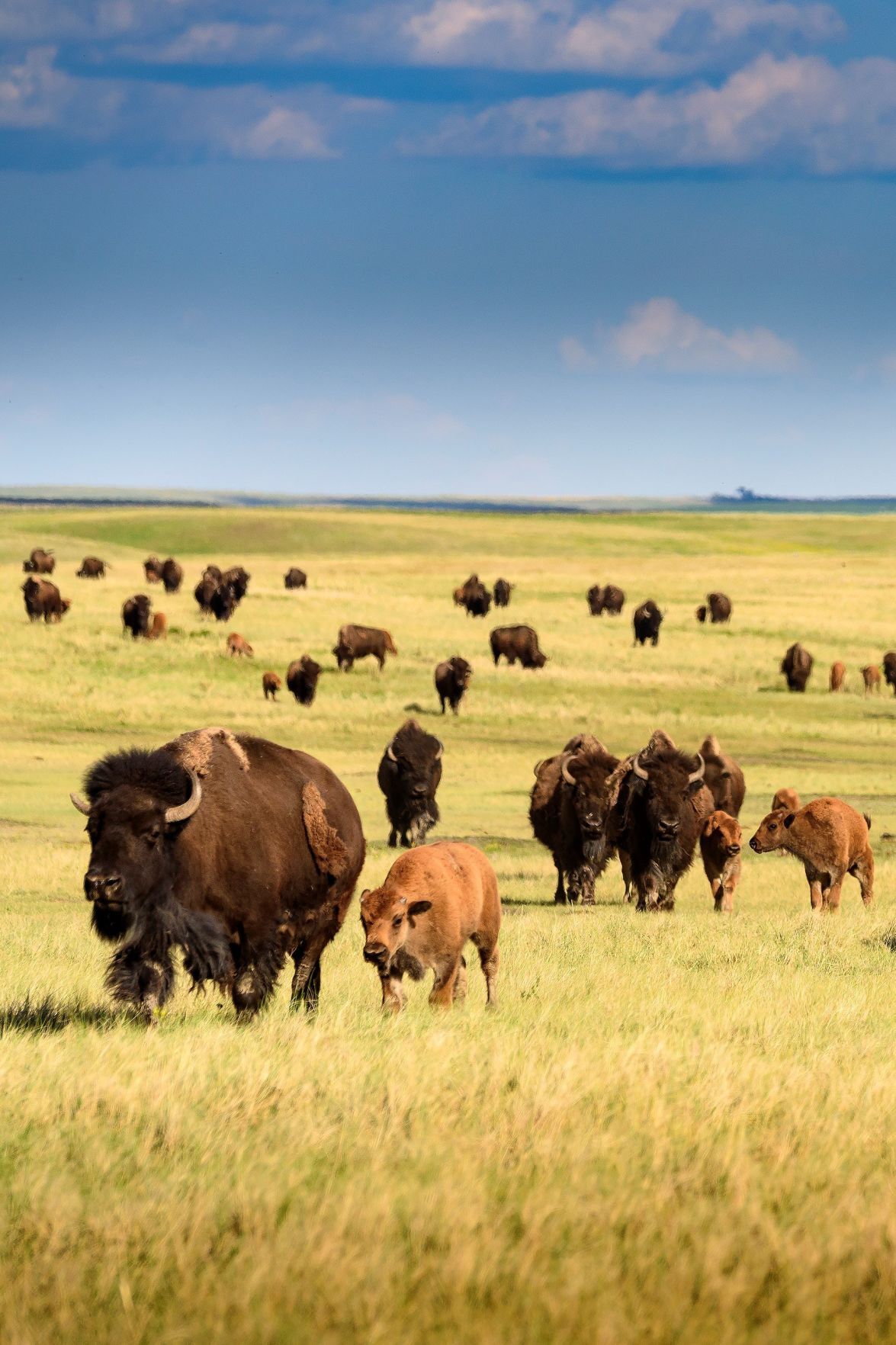
Using bow and arrow, the Potawatomi hunted deer, elk, beaver, and small game and fur-bearing animals such as rabbits, squirrels, muskrats, and mink. Prairie birds included wild turkeys, grouse, partridges, quail, pigeons, and prairie chickens. Waterfowl visited the marshes annually. In spring, larger hunting parties went after buffalo. Bears were in the area, and predators such as wolves, lynx, bobcats, and the occasional mountain lion were all hunted.
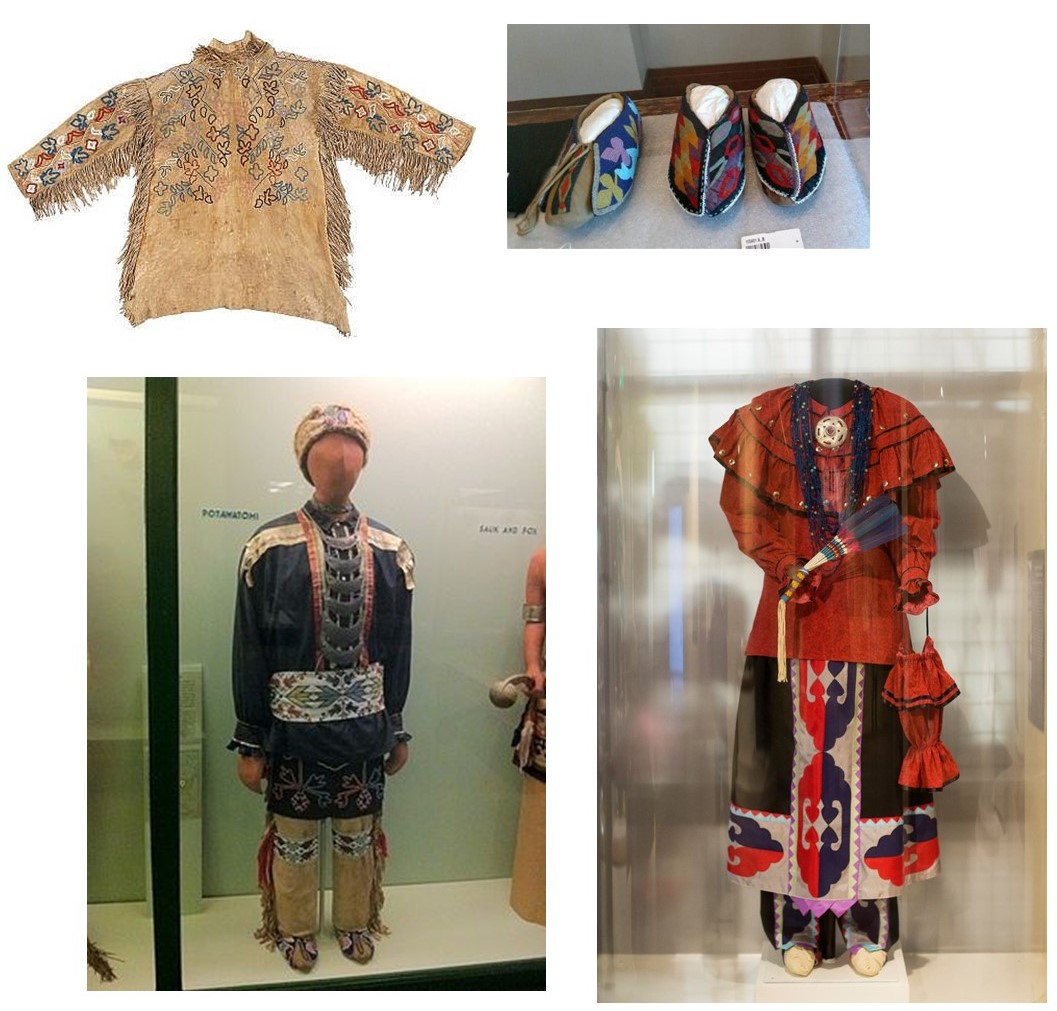
In addition to the meat from the animals, deer skins were used for pants, shirts, dresses, and moccasins. Winter clothing was made from buffalo hides and furs. Plants were used for dyes for clothing. Porcupine quills were used as embroidery needles. Bird feathers and shells decorated clothing, and after the 1600s, beads and silk ribbons from the European traders were used. Red and black paints made from plants were used for facial and body painting and tattoos.
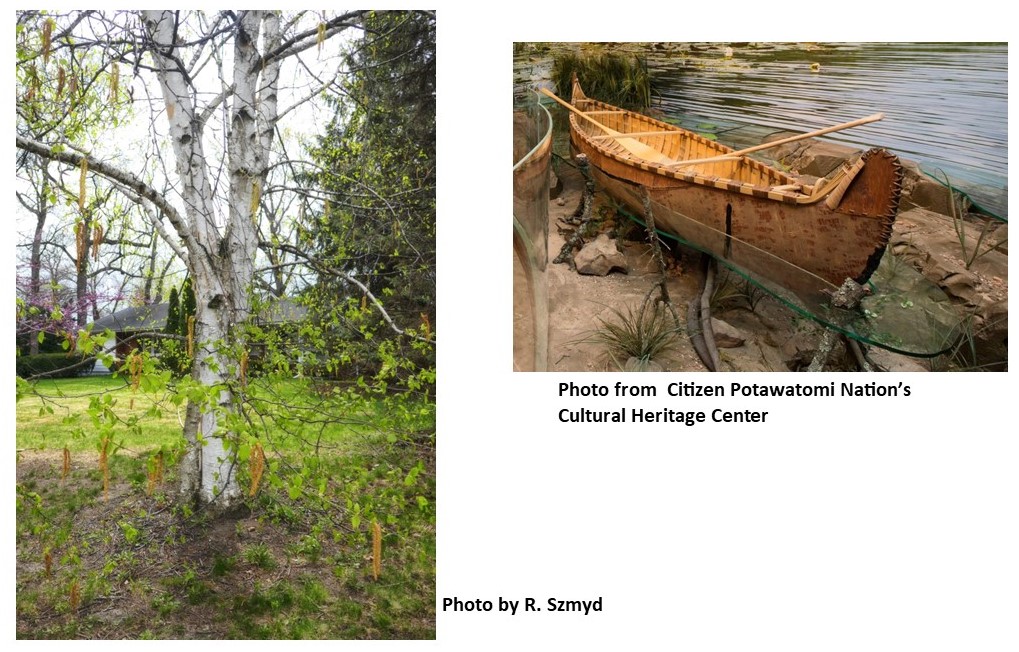
Many types of trees provided resources. The Potawatomi were renowned as canoe builders, using the bark of birch trees. Birch bark was also used to build homes. Floor mats were woven from reeds and cattails, and baskets and bags were made from hickory bark and animal skins. Mussel shells were used as utensils.
Musical instruments included drums made from hollow logs covered with animal skins, rattles made from deer hooves, and wooden or bone flutes.
In addition to Lake Michigan, the system of small lakes (Calumet, Wolf) and rivers and streams (the Calumet rivers, Stony Creek) teemed with fish – trout, white fish, pike. The Potawatomi used spears and nets for fishing.
Wild fruit and nut trees and bushes were plentiful in season. Red and yellow plums, crabapples, haws, grapes, sassafras, and pawpaws were all to be found. The marshes and sand hills provided cranberries, huckleberries, strawberries, blackberries, blueberries, whortleberries, raspberries, roseberries, gooseberries, currants, and winter berries. The sugar from the maple trees was used to sweeten the fruit. Native Americans used berries in tea, puddings, soups, cakes, muffins, and jam.
Nuts included hazelnuts, hickory nuts, white and black walnuts, and beech nuts. Nuts were pounded into flour for bread.
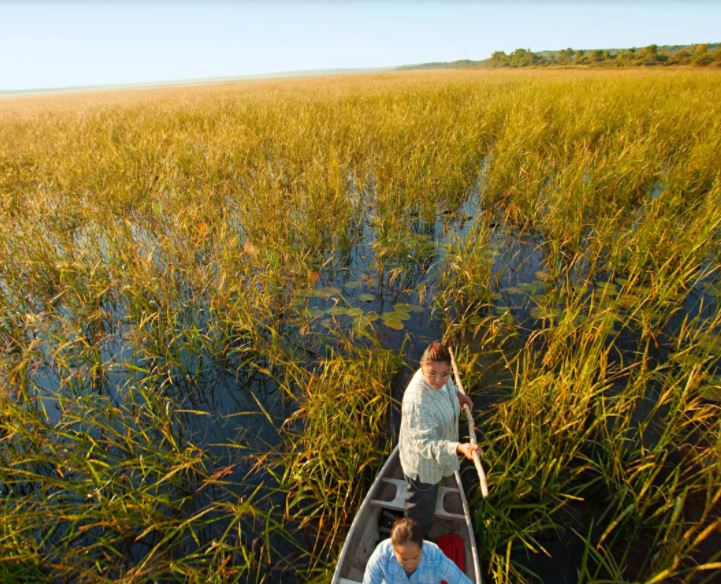
The wild rice that grew in the marshes all around the area not only was gathered as a food item by the Indians, but it also attracted the migrating waterfowl the Indians hunted – ducks including mallards, shovellers, blue-winged teals, and mergansers; coots; geese; and herons.
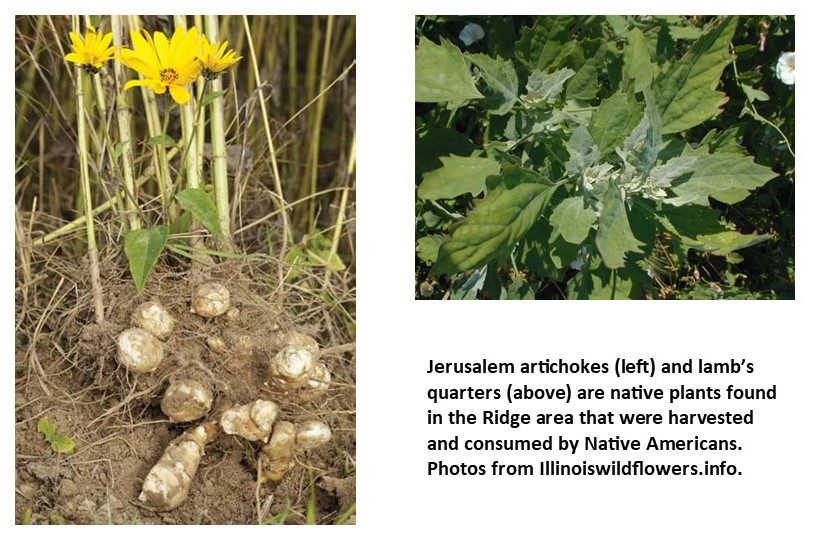
Greens that the Indians gathered included dandelions, lamb’s quarters, and stinging nettles. Roots included wild artichokes, milkweed, arrowhead, and wild dill. These items were not only very nutritious, many possessed medicinal qualities. Other medicinal plants that were gathered included ironweed, culver’s root, and prairie snakeroot.
The Potawatomi grew corn, beans, squash, peas, melons, pumpkins, onions, and tobacco.
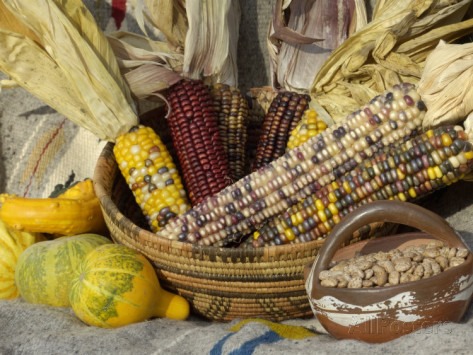
Corn was the most important crop the Potawatomi grew, both for eating and for trade. Corn, squash, and beans were called the “three sisters” and were staples of the diet. They were often grown together and combined together in dishes. Corn was a sacred food for Native Americans, and it went by different names that all meant “life.” It was served at almost every meal in one form or another.
One example of a corn dish from the Native Americans was rockahominie. This was corn pounded to remove the skins, boiled, and served with salt or maple sugar. Today this is a version of “hominy grits.” They also dried corn and ground it into meal to thicken the soups and stews they prepared.
The Potawatomi developed agricultural techniques including the controlled burning off of foliage, which aided hunting as well as killed pests and cleared land for farming; and ridged fields or garden beds that allowed for better drainage. Food, including meat, fish, and vegetables, was dried and stored over winter in birch bark containers.
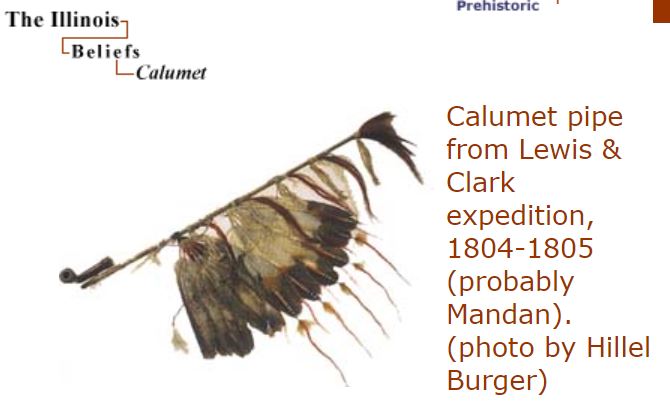
Native Americans used tobacco for ceremonial purposes. The manitou spirits were believed to be very fond of tobacco, so it was offered to them to ask for or give thanks for help, either as dried gifts or through smoke from pipes. It was also used to seal peace treaties and agreements between tribes and between individuals. Tobacco was smoked in ceremonial pipes, the stem of which was called the “calumet” by the French traders, and this is the origin of the name for this entire southside region.
Next: Trade, games, and other aspects of Potawatomi life on the Ridge
The Ridge Historical Society
Native Americans and the Blue Island Ridge – Part 13: Games and Trade
By Carol Flynn
The Potawatomi Indians, the major presence in the Chicago area by the 1830s when European settlers started moving to the Blue Island area, enjoyed games and sports. They were important pastime activities and formed connections within and between tribal communities.
Gambling games were popular and could go on for days. Men played a game known as straws in which the number of straws in bundles was guessed. Women played a game with plum stones marked on one side. The stones were tossed in a small bowl and points were assigned for the stones that landed with the markings face up.
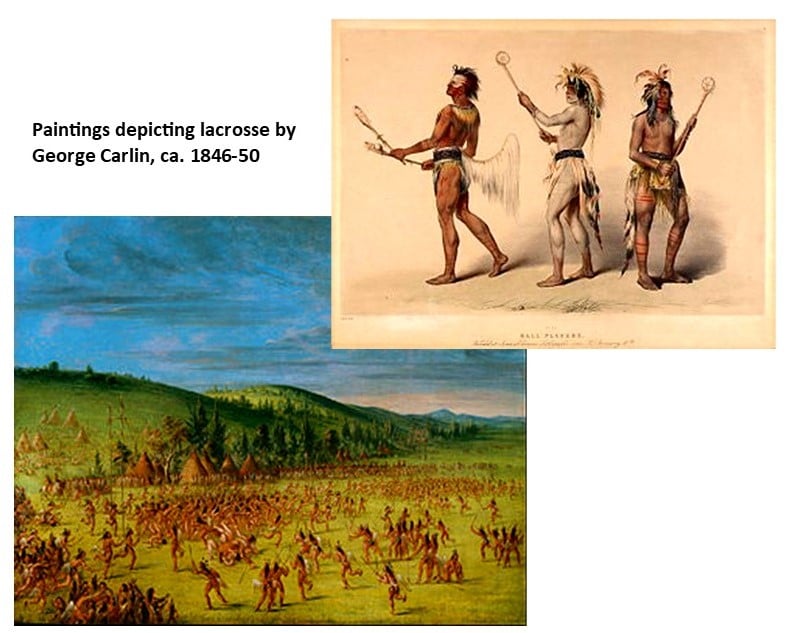
The sport of lacrosse was invented by Native Americans. A wooden tree knot was used as a ball and the object of the game was to score goals by throwing and catching this ball in a small basket made from buffalo sinew that was attached to the end of a three-foot-long wooden pole or racket.
Lacrosse was considered a symbolic warrior game, played for the honor of the tribe. Teams of hundreds of members played on large fields. It was a violent game and players could be severely injured and even killed. Men and women both played the sport.
The Potawatomi were avid traders. Information and technology were traded back then just as they are now.
The Potawatomi were expert canoe builders, making good use of the birch trees found locally. They traded this knowledge and technology with other tribes and European traders for goods, and for information and technology on growing crops.
The canoes also gave the Potawatomi considerable freedom of movement that other tribes did not have. They were able to travel long distances through Midwest waterways to reach trading sites. With the introduction of horses by the Europeans, the Potawatomi became less reliant on travel by water, and were able to expand their trading and hunting opportunities.
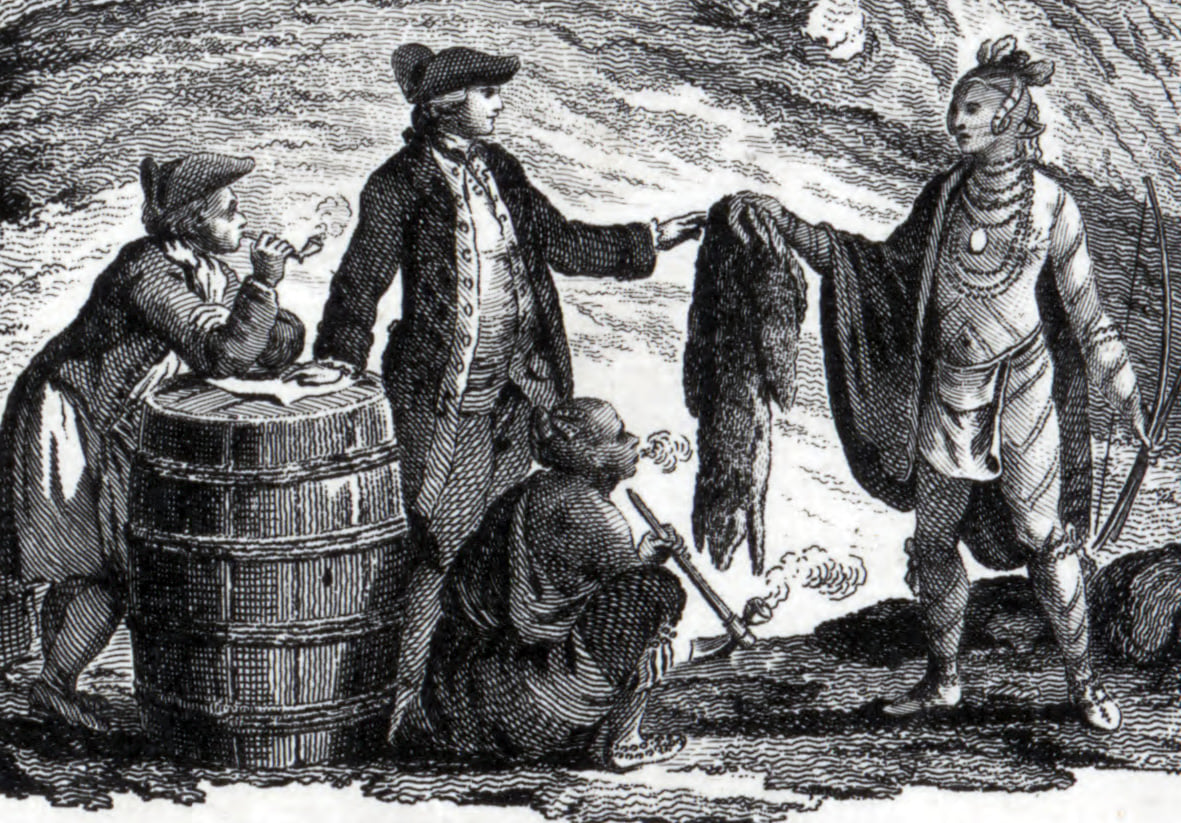
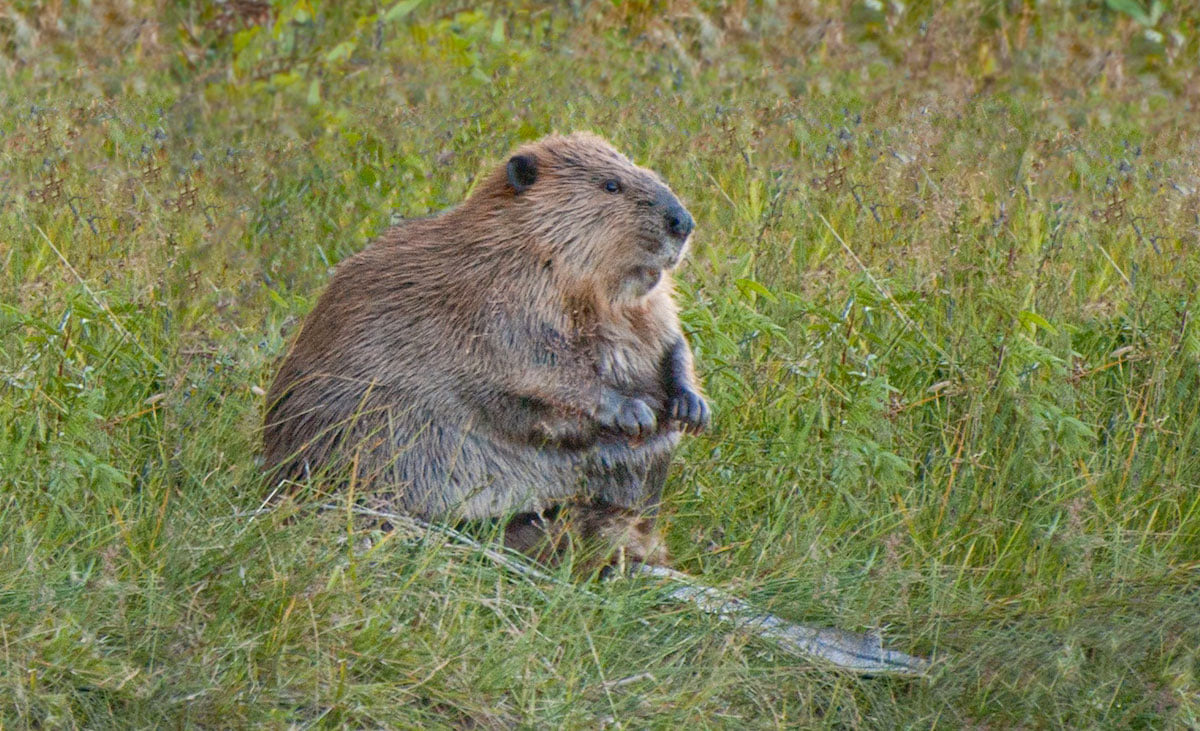
The most important harvested trade items were furs. For several hundred years, fur trading drove the economy in the land that would become the northern United States and Canada. Beaver, especially valued for making hats, were overhunted to the point they became locally extinct. Deer, bear, mink, and skunk were also valuable.
In addition to economic benefits, the fur trade became important for forging alliances between the Europeans and the Native Americans. However, the competition between Native American groups to meet the demand of the Europeans for furs led to considerable inter-tribal conflict.
The Indians traded furs for guns, alcohol, glass beads, silk ribbon, and cloth, items introduced by the Europeans that were novel to the Native Americans.
The interest in beads and ribbons is sometimes trivialized as valuing “trinkets” but in reality, the Indigenous Peoples already had what they needed for subsistence so there was little in that way to get from the Europeans.
Guns were new to the Native Americans and the advantage of this technology over bows and arrows for hunting and warfare quickly became apparent to them. The gun trade became highly competitive for the European colonists and the Indians. Many tribes amassed arsenals superior to those of the settlers.
Perhaps no product was more controversial than alcohol when it came to trade between the Europeans and the Native Americans. Alcohol was not unknown to Indians; various cultures had been making weak beers, wines, and other drinks from plants and grains for thousands of years, but these were generally used for spiritual, medicinal, and ceremonial purposes, not for personal entertainment and intoxication. The Native Americans were totally unprepared for the potent alcoholic beverages like rum, brandy, and whiskey introduced by the European settlers.
Many Native Americans responded with distaste and mistrust as unscrupulous white traders pushed alcohol on them, and many tribal leaders recognized the dangers and called for abstinence. Nonetheless, alcohol became a destabilizing force in Native American communities and created serious health issues both before and after forced relocation. Laws were passed banning the sale of alcohol to Indians, but these laws were ignored and circumvented.
Although much ado has been made historically about alcohol consumption within the Native American communities, in truth, alcohol consumption was extremely prevalent in the white communities also. By 1830, an average of 7.1 gallons of absolute alcohol was consumed annually per individual of drinking age in the white community. Today, that average is about 2.3 gallons per person per year.
It’s often reported that, going back to medieval times, alcoholic beverages were made and consumed because local water supplies were not clean for drinking, but this has been largely disputed and debunked. Even in medieval times, people knew that boiling water got rid of bad odors and tastes, even if they did not realize they were killing harmful organisms.
It’s also reported that alcohol was believed to have medicinal properties and drinking it was “healthy.” This was the case with smoking tobacco for many years, also. Of course, tobacco was first discovered and cultivated by Native Americans and then introduced to the Europeans. Tobacco, which was used by Native Americans in religious ceremonies and for sealing agreements with other tribes, was an early trading item between Native Americans and white settlers until settlers started growing their own tobacco crops.
Next: Documented Native American sites in the Blue Island Ridge area
The Ridge Historical Society
Native Americans and the Blue Island Ridge – Part 14: Native American Sites Around the Blue Island Ridge
By Carol Flynn
This is a continuation of the series on the historical presence of Native Americans on and around the Blue Island ridge. The purpose of the series is not only to educate the community but also to help those organizations developing Land Acknowledgement Statements.
At the time white settlers arrived on the Ridge, the land was primarily being used by the Potawatomi people. The land had been used before that by other tribes – the Miami, the Illinois Confederation, the Sauk, the Fox, and the Kickapoo.
There were documented Native American sites around the Blue Island Ridge. There were also stories about Native Americans in the area in oral and written histories.
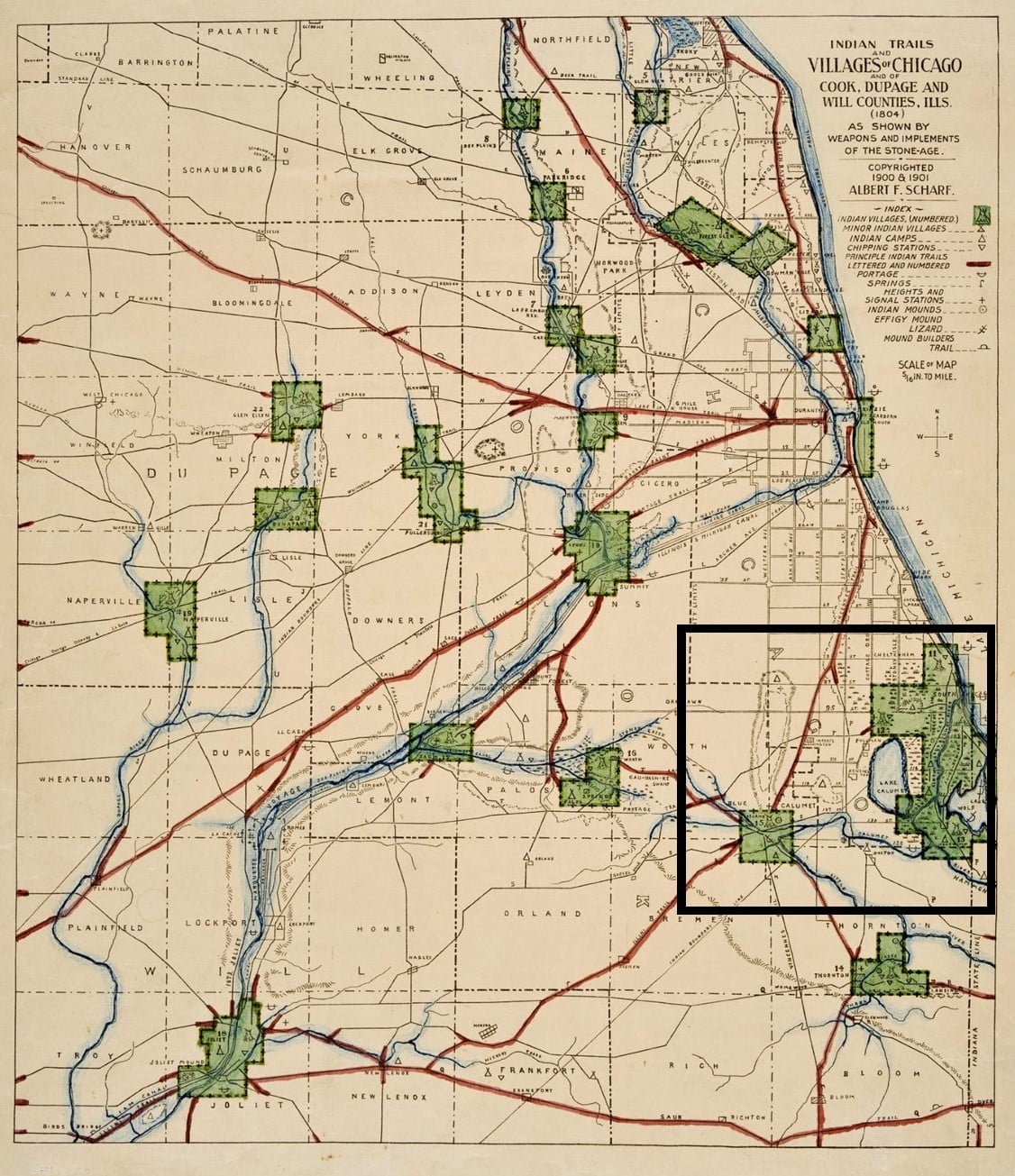
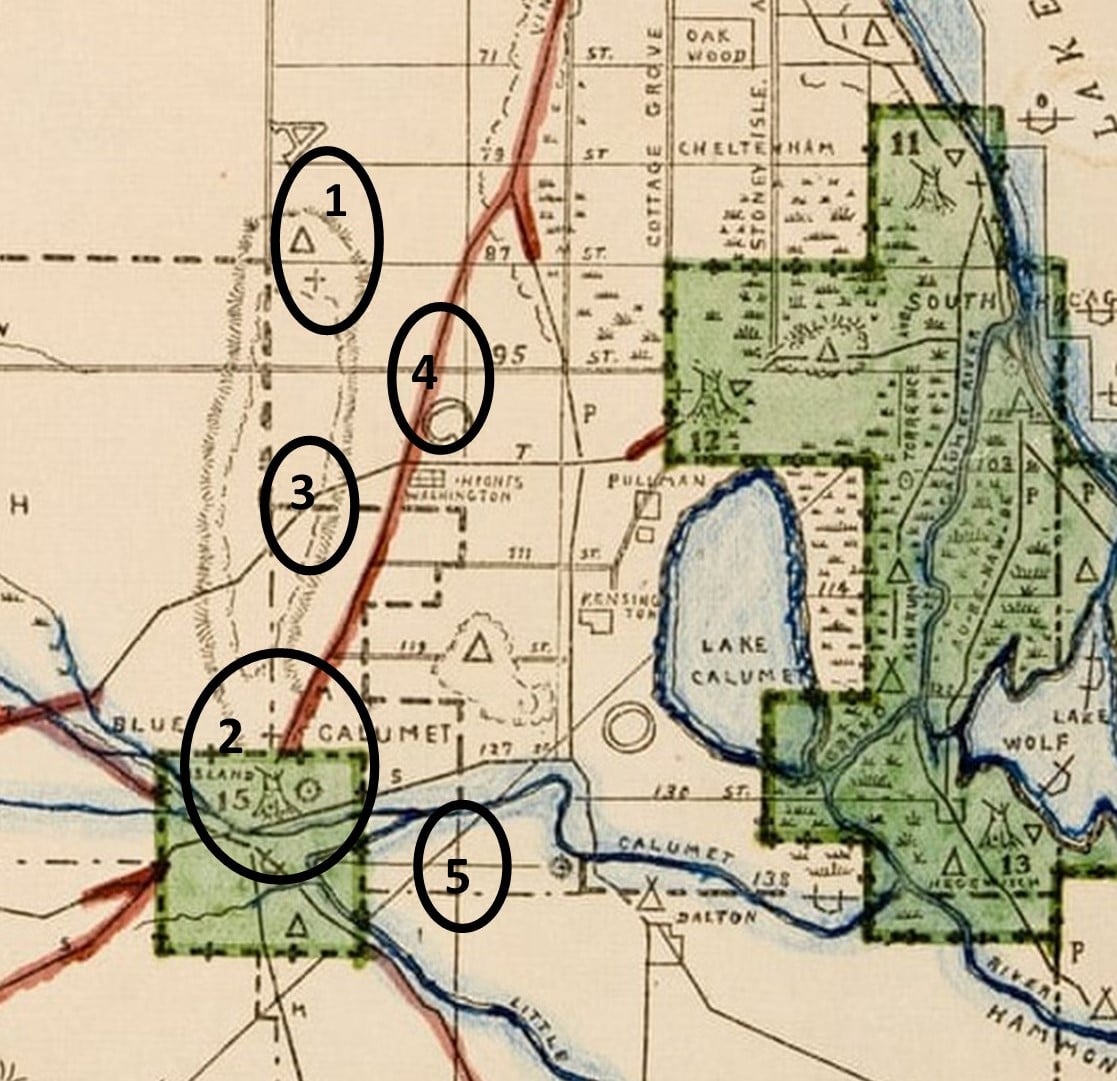
A map from 1804, reproduced and updated in 1900, shows the early Native American trails and villages of the Chicago area, and surrounding counties. Washington Heights and Blue Island are delineated, and the Blue Island is outlined.
On the full map, the Blue Island Ridge area is marked by the black square. The legend of the map shows the symbols. The vast wetlands between the Ridge area and Lake Michigan are evident on the map.
On the close-up of the map, the northern tip of the Ridge, roughly 87th Street and Western Avenue, is identified as number 1. This land is now included in the Dan Ryan Forest Preserve of the Forest Preserves District of Cook County (FPDCC). An Indian camp and signal station are shown there. The Ridge area is the highest elevation in Chicago, about 60 feet higher than downtown Chicago. From here, the surrounding territory could be observed for many miles around, all the way to “downtown” where Fort Dearborn stood, 12 miles to the northeast.
There are no other designations on this map for an Indian establishment on the top of the Ridge. There is some mention of an early map that includes the word “manitou” on the top of the Ridge. In general, because there are many Native American groups with varied beliefs, the Indigenous Peoples believed in a Great Creator, and they interacted with the Creator through spirits called manitous. Each individual had a personal manitou, and there were also manitous that resided in natural objects, such as the sun, trees, and rocks, that helped everyone. It would be consistent that a unique table of land like the Blue Island Ridge housed a manitou.
The southern end of the Blue Island is designated as number 2, where there was a major Indian village on the Stony Creek. The creek at that location is now part of the Cal-Sag Channel. There is also a circle that shows there was an Indian mound there, which likely was a burial site.
The mound builders were actually in the historic period before the Pottawatomi so this shows it was a Native American site for a long time. Another old document mentioned Native American “cemeteries” in Blue Island and to the east, but reported they “vanished” with time. Mounds in the Calumet region in Indiana were destroyed for farmland and this likely happened here also.
A portage trail is shown as number 3 on the map. This ran across the top of the Ridge, an overland route connecting the waterways to the east to the Stony Creek. It ran along what is now about 103rd Street. Portages were used to carry canoes overland where there were dry gaps between waterways.
The Vincennes Trail is marked by number 4. The Vincennes Trace or Trail, a major trail originally formed by migrating buffalo that was well known and used by Native Americans and later by European traders and settlers, ran through Kentucky and Indiana, and into Illinois. It was named the Vincennes Trail by white traders because a major location on the trail was Vincennes, Indiana, a city founded by French fur traders on land inhabited for thousands of years by Indigenous People.
In Illinois, the trail ran south of the Blue Island Ridge, and a branch split off, heading north/south to/from the area which became known as Chicago. Parts of the original trail became Chicago’s State Street and Vincennes Avenue.
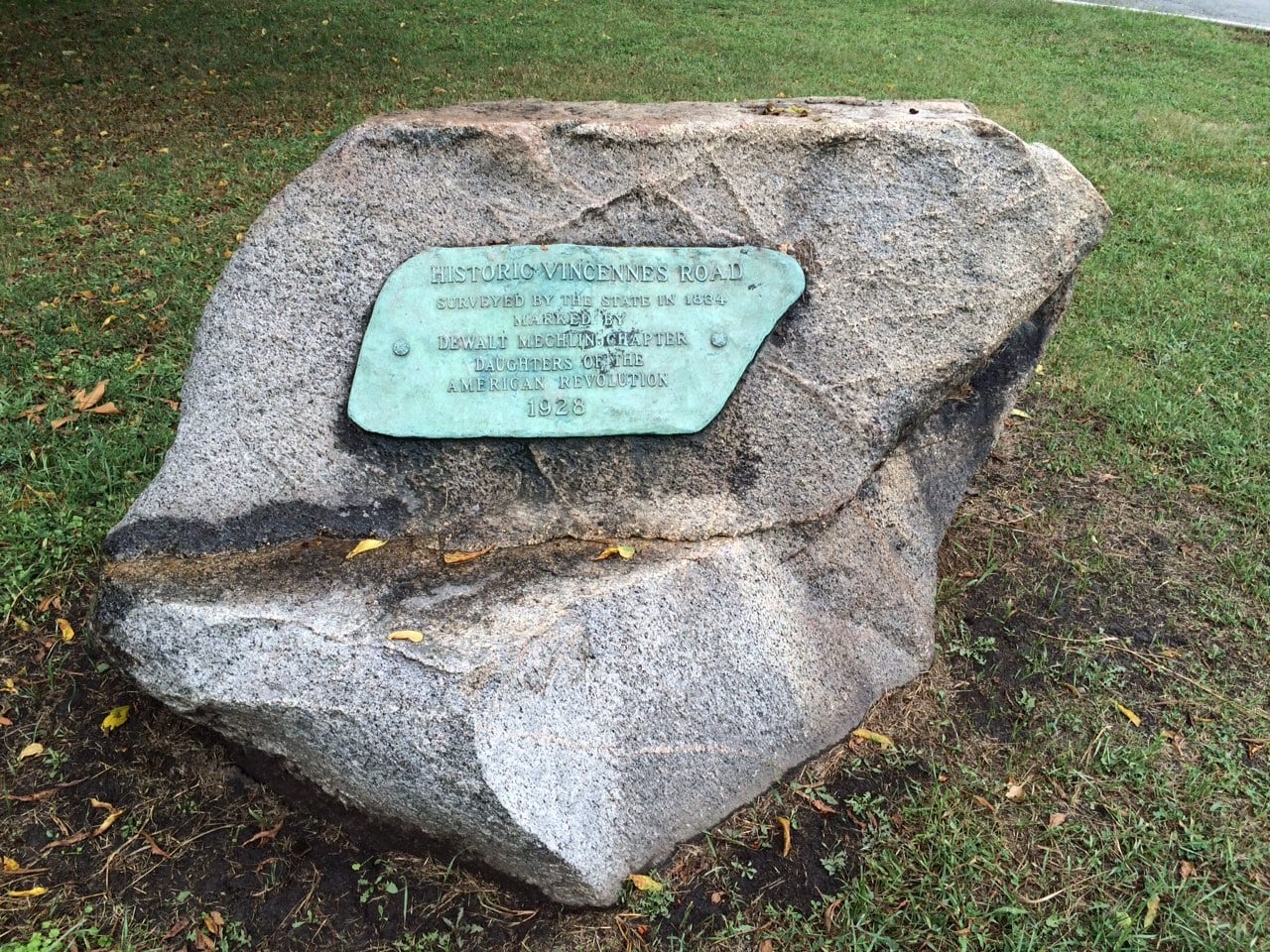
This branch that ran north/south to the Chicago area had two paths – one ran along the top of the Blue Island Ridge and a second path ran on the east side below the Ridge. A marker at 91st Street and South Pleasant Avenue indicates the original path, now lost, on top of the Ridge. The lower path eventually evolved into today’s Vincennes Avenue.
The southern Indian Boundary line mentioned previously, established in 1816, is number 5 on the map. There were two boundary lines – a north and a south one. The land in between the two lines defined the territory that could be used by settlers, and the land outside the boundary lines defined the territory that could be used by the Native Americans. The southern Indian Boundary Line was established running diagonally from the northeast to the southwest, passing just below the southern tip of the Ridge, thereby including the Ridge in the settlers’ territory. The land to the east and south of the line was for Native American use.
Next post: Other stories about the Native Americans on the Ridge.
The Ridge Historical Society
Native Americans and the Blue Island Ridge – Part 15: Native American Stories and Artifacts on the Ridge
By Carol Flynn
The known sites connected with Native Americans on and around the Blue Island Ridge as indicated on an 1804 map were covered in the last post.
Most of the Native Americans left the Chicago area in the 1830s. Some stayed, of course, and there were even exceptions to the treaties that allowed some chiefs and their groups to remain in certain locations. Some returned annually for a while to their summer home grounds. But they were no longer a dominant presence in the area.
The white settlers who followed the Native Americans recorded various versions of “history” and found artifacts. These are a few of the more interesting stories.
John H. Volp shared a number of stories about the Native Americans in the Ridge area in his book “The First Hundred Years – 1835 to 1935 – Historical Review of Blue Island – Illinois.”
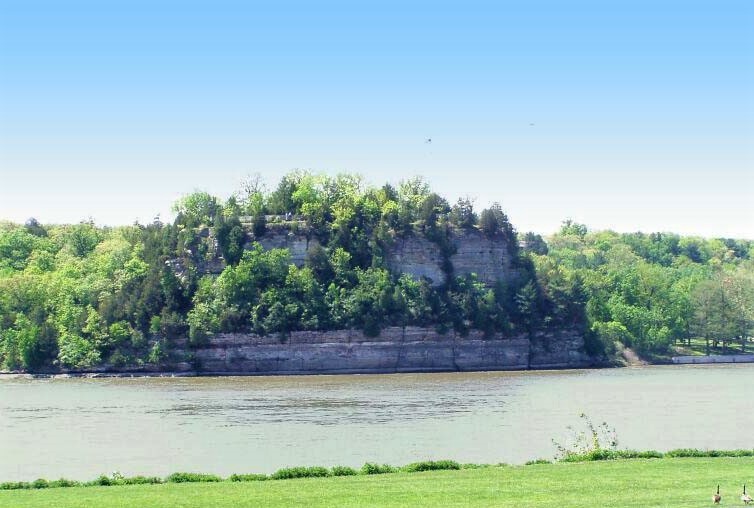
He reported that the Native American villages and sites at the southern tip of the Ridge (called Blue Island and Wildwood to the immediate east, now a part of the City of Blue Island) were the site of a battle in 1769 between the Ottawa and Potawatomi against the Illinois Confederation. The story goes that the Illinois people were ultimately driven to the landmass that became known as Starved Rock, where they were surrounded and isolated, and most of them perished from starvation. This removed the Illinois people from the Chicago area. However, as much as the story of Starved Rock has appeared in Illinois historical lore, researchers today doubt its accuracy. The story has passed down through oral means but there is no other documentation to support it.
Local histories in the Ridge Historical Society collection include reports that early settlers found many Native American artifacts in the area. Postholes were reported being found in the 1840s at what is now the east side of Hale Avenue, between 104th and 105th Streets, and stone tools were found in the area.
The History of Cook County published by A. T. Andreas in 1884 includes this entry: “The neighborhood of Washington Heights also claims some archaeological importance. Since 1859 the members of the Barnard family alone have collected 36 flint arrow-heads, two battle axes, a spearhead, several pieces of ancient pottery, and other evidences of the former savage residents. The remnants of pottery were found in a small mound surrounded by large cobble-stones, and embraced, as it were, within the roots of a small oak tree which sprang up from the mound.”
The location and significance of this mound are not known.
One clarification of local folklore needs to be addressed, concerning the Hopkinson-Platt House at 108th and Drew Streets. The house was built in the 1870s, and Dr. Robert and Mrs. Harriet Platt moved into the house in the 1920s. Dr. Platt (1891-1964) was a geography professor at the University of Chicago, and Mrs. Platt (1899-1979) traveled with him, and also tended to the many foreign students and refugees they invited to live with them.
Mrs. Platt claimed an oak tree in the yard of the house was 800 years old and was the site of Native American councils. She called it the “Council Oak” and there is a plaque installed in the yard. The tree blew down in a storm in 1988.
Whether or not the tree was a “council oak” cannot be verified. That species of oak tree has only about a 200-year lifespan, 300 years at best, not 800 years. That means it was old enough to be growing at that spot during the time of Native Americans prior to 1833, but it would have been a younger tree, and there would have been older and bigger trees for use for council meetings.
The land included with that property has never been developed and excavation would be very interesting.
Native American sites are being excavated in the forest preserves surrounding Chicago, the only land that has not been totally lost to development. In the area of the Ridge, excavation was reportedly going on at an undisclosed location in the Joe Louis Golf Course, which is located in the Whistler Woods Forest Preserve, along the Calumet River, just southeast of the Ridge.
Next post: Captain Billy Caldwell aka Chief Sauganash
The Ridge Historical Society
Native Americans and the Blue Island Ridge – Part 16: Captain Billy Caldwell aka Chief Sauganash
By Carol Flynn
While there is documentation of Native American sites all around the Blue Island Ridge, no historical records have been located that identify individual Indians who lived in the area. However, there are references that the area was frequented by Captain Billy Caldwell, also known as Chief Sauganash, a notable figure from Chicago’s earliest days.
Caldwell was born in the early 1780s near Fort Niagara in New York, from a marriage between a high-ranking Native American woman, variously identified as Potawatomi or Mohawk, and a Scots-Irish officer in the British Army during the Revolutionary War. This type of union was not uncommon, but such marriages were rarely recognized as “legitimate” in the white community. Caldwell’s father later settled in Canada, married a white woman from settler stock, and raised a white family. Billy was taken to live with the white family and received formal education. He forged his own life and left Canada after his father’s death.
Caldwell was commissioned as a captain in the Indian Department of Canada during the War of 1812. He made his way to Chicago where he was accepted by the local Potawatomis and he befriended the earliest white settlers. The name Sauganash was given to him by the Indians, loosely translated as “one who speaks English.” He was known to the European traders and settlers as the “Irish Indian.” He was well respected, referred to as Captain Caldwell. Being well-educated and speaking English, French, and several Native American dialects well, his services as a guide and translator were often sought out.
Although his life story is rich, we will only concentrate on Caldwell’s known involvement with the Blue Island Ridge.
According to James Bucklin, chief engineer of the I & M Canal project, Caldwell originated the idea of the Cal-Sag Channel. A passageway between the Great Lakes and the Mississippi River had long been sought. The I & M Canal was built to connect the Chicago River to the Illinois River as one leg of the journey. Feeder canals were built to keep water flowing into the canal, and one came from the Calumet River in Blue Island. Bucklin wrote in a report referring to the 1830s: “From Billy Caldwell, a half-breed with some education and great intelligence, who had explored the country in every direction, I often procured valuable information during my exploration. It was he who first suggested making a feeder of the Calumet River.”
Caldwell helped survey the Vincennes road in 1832-33. This was the earliest road that ran through the Blue Island area and connected Chicago with trading posts to the east.
A recounting of a survey party by J. P. Hathaway, Jr., dated July 23, 1833, documents just one visit to the Blue Island by Captain Caldwell others. They found a log house on the Ridge, and the owners not being home, milked the cows and made dinner with ham and bread. They continued south to Stony Creek, at the southern tip of the Blue Island, “a delightful place, commanding a view of thousands of acres of prairie and patches of timber. At this point, there were Indian graves.”
They forded the creek in the area around what is now Western Avenue. Later, returning north, they decided to recross opposite their first encampment. However, the horse got away and their wagon was swamped, and they lost most of their provisions. Continuing north, they found the folks of the log cabin at home, and purchased a pan of milk for supper. They spent a wet night on the ground, keeping the fire going all night. They were back in Chicago by eight o’clock the next night “with keen appetites for regular living again.”
In 1870, John D. Caton, a lawyer and judge on the Illinois Supreme Court, read a paper before the Chicago Historical Society on “The Last of the Illinois, and a Sketch of the Pottawatomies.” In this first-person account, he related, “…[W]hen riding over the prairie south of Blue Island, in 1833, with Billy Caldwell, … the old chief as usual was answering my questions about the past and what portion of the country he had visited. …[H]e commenced giving an account of an expedition of the British from Canada across to Ohio, of which he and a number of his warriors formed a part ….”
Caldwell was instrumental in negotiating the 1833 Treaty of Chicago that led the Potawatomi to peacefully leave the area. He moved with them to Council Bluffs, Iowa, where he reportedly died in the early 1840s, although his gravesite is not known.
Both his white and Indian names grace locations around the Chicago area, including Caldwell Woods, Billy Caldwell Golf Course, Caldwell Avenue, the Sauganash neighborhood on the North side, and Sauganash Park.
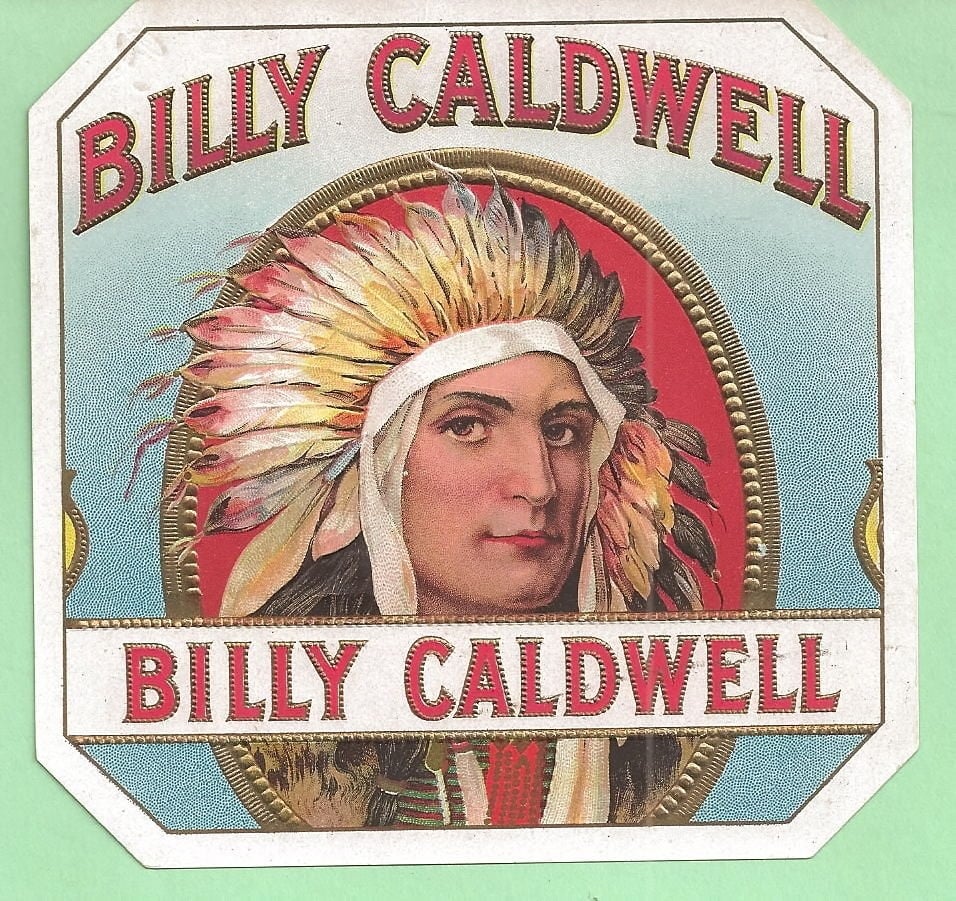
There are no photographs to be found of Billy Caldwell. There were some sketches and paintings done after his death. This likeness was invented for a cigar brand made by a Chicago company. From the collection of C. Flynn.
The tobacco and cigar industry was very important in the past. By the 1860s, there were more than 200 cigar makers in Chicago. By 1900, there were over 40,000 cigar makers in the country. Many of these were small operations out of homes. But the numbers started to decline in the 1930s for several reasons – the Great Depression, increased use of machinery replacing hand-rolling, rationing of tobacco during World War II, the release of cancer studies, and the embargo on doing business with Cuba which led many cigar makers to leave the country.
Next: Native Americans after the 1830s
The Ridge Historical Society
Native Americans and the Blue Island Ridge – Part 17: Native Americans after the 1830s
By Carol Flynn
According to John H. Volp in his book “The First Hundred Years – 1835 to 1935 – Historical Review of Blue Island, Illinois,” many young Native Americans started moving west before the 1830s, and most of the Native Americans left the Chicago area in 1835. However, some of those living around the Blue Island Ridge clung to their ancestral grounds until 1847, when a caravan of thirty-five to forty wagons departed the area.
Up until the 1860s, some returned to visit their seasonal homes. In 1835, the Potawatomi who left Chicago moved to Council Bluffs, Iowa. From there, some migrated to Wisconsin and Michigan.
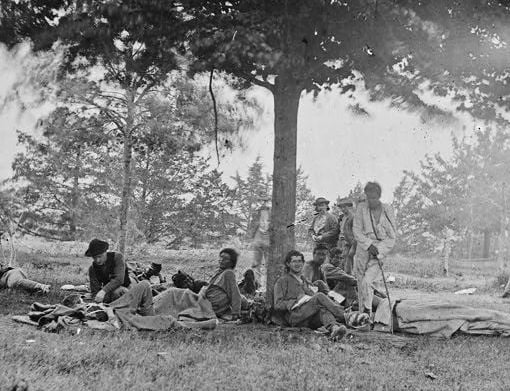
Native Americans fought on both sides of the U.S. Civil War. The most famous Native American unit in the Union army in the east was Company K of the 1st Michigan Sharpshooters. Most of this unit were Ojibwa, Ottawa, and Potawatomi – the Council of Three Fires. There is a likelihood they included Indians who had lived in or were descended from those who had lived in Chicago.
Company K was known for its marksmanship and strategic fighting capabilities. The Indians taught the white soldiers how to camouflage themselves and infiltrate the enemy. They were highly esteemed for their service.
Native Americans had a presence at the 1893 Chicago World’s Fair, also known as the Columbian Expedition. Many of the exhibits that involved Native Americans that were staged by whites, including the independent Buffalo Bill Cody’s Wild West Show, portrayed negative stereotypes of American Indians as primitive, savage aggressors.
However, several Native American groups used the Fair to represent themselves, their cultures, and their handiwork. The Inuit people set up their own village outside of the fairgrounds, and the Navajo weavers made decent money selling their rugs. Other tribes also sold work to collectors.
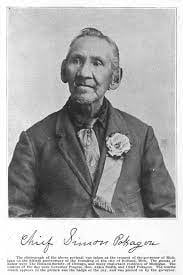
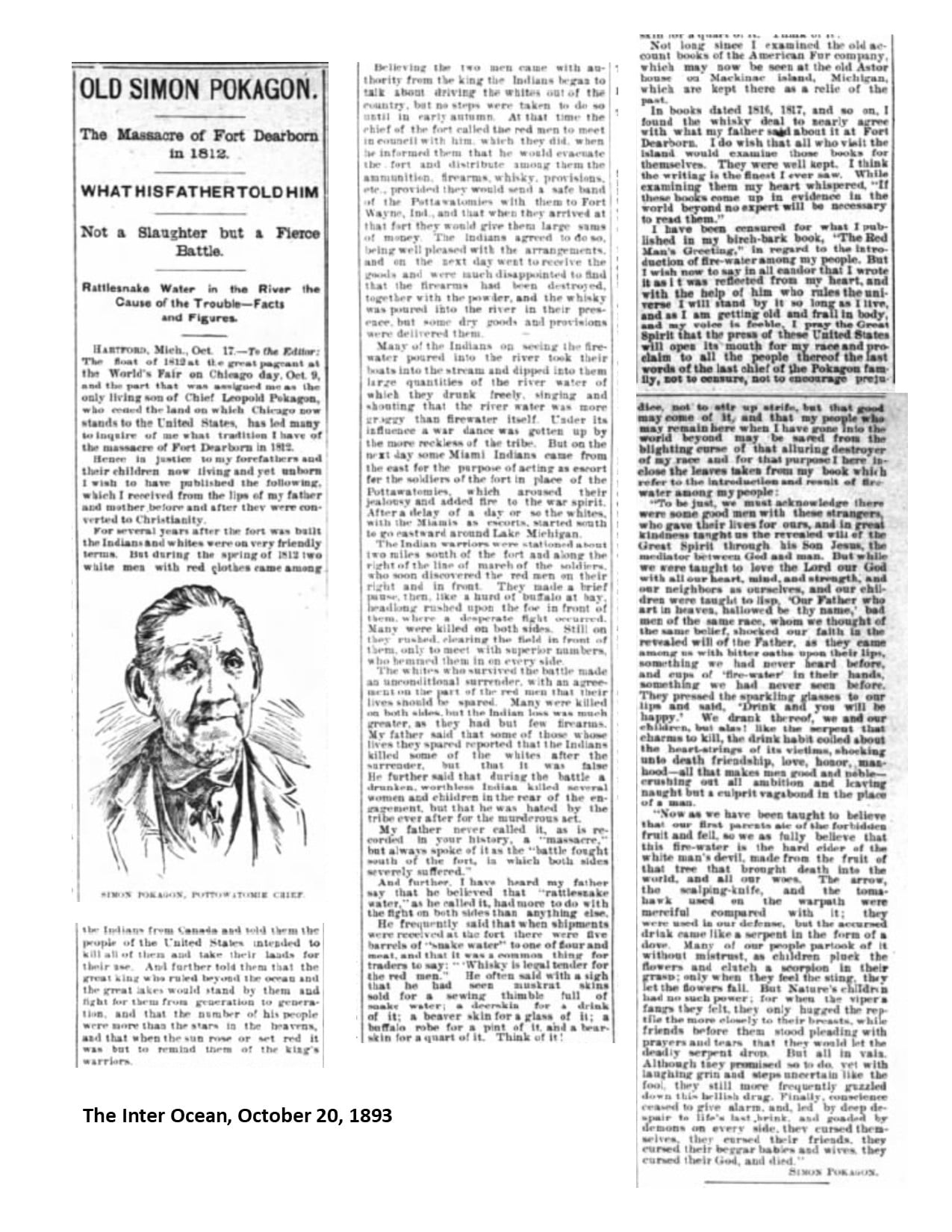
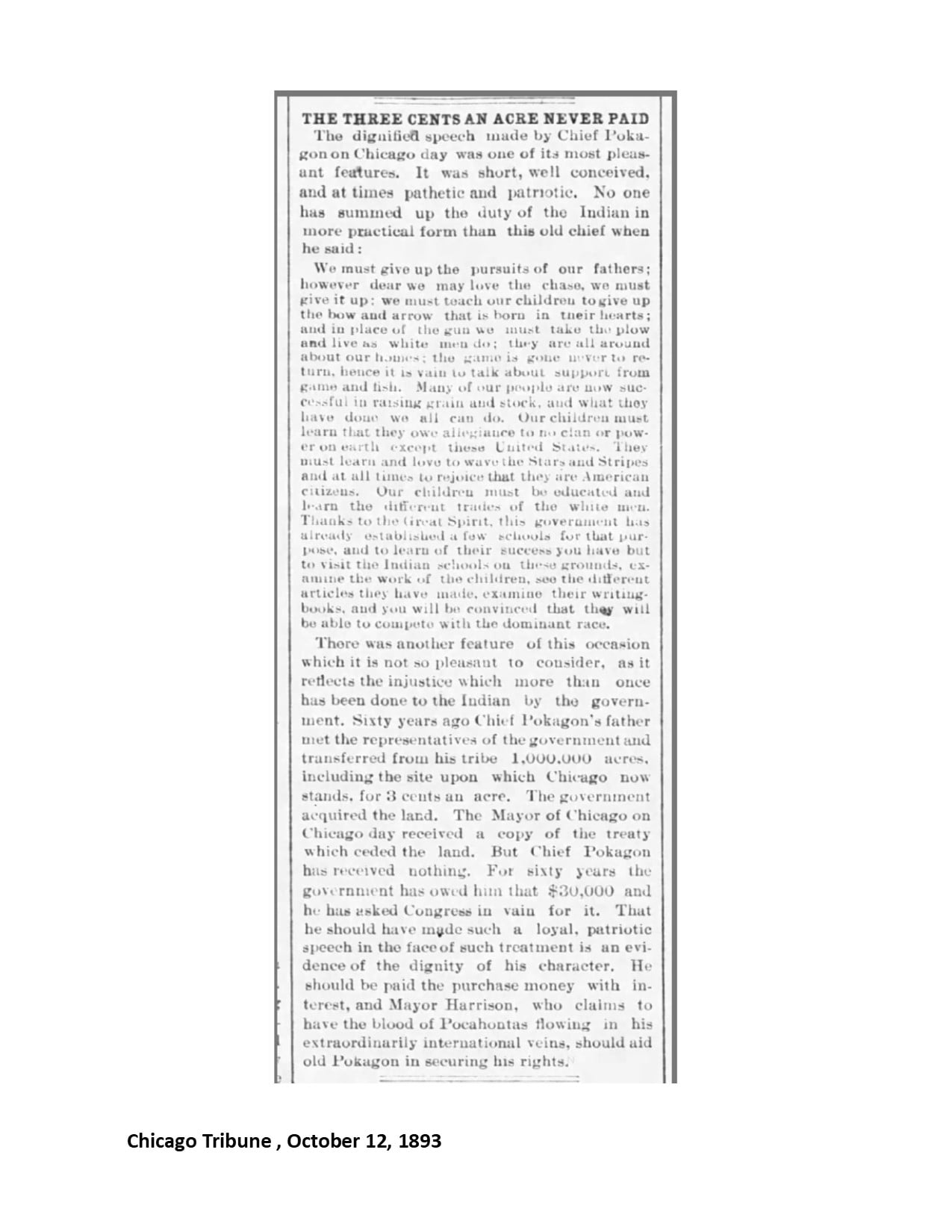
Simon Pokagon, the chief of the Pokagon Band of Potawatomi Indians in Michigan, was a celebrity at the Fair, popular with the high society of Chicago. He was an author and activist trying to get the U.S. government to honor the treaties that had been signed with Native Americans. He gave a speech to 75,000 people that was published in the Chicago Tribune.
Pokagon began pressing land claims to the lakefront on behalf of the Potawatomi people. The area in question was the section known as Streeterville, built on landfill. The land claims were carried on after Pokagon’s death in 1899, but the U.S. never recognized any ownership of that land by Native Americans.
While there were always Native Americans in Chicago, the Indian Relocation Act of 1956 brought Native Americans back to Chicago in significant numbers. The intent of this law was to encourage Native Americans to leave reservations and their traditional lands and assimilate into the general population in urban areas. The tribal status of numerous groups was terminated at this time.
Chicago was an obvious relocation city, supposedly offering employment, education, and housing opportunities. However, Native Americans across the country quickly learned that not only were the opportunities not there, they faced discrimination in employment and housing. The American Indian Center was founded in Chicago to provide both social services and a gathering place for people faced with drastic life changes.
Today, it is reported that 65,000 Native Americans representing 175 tribes live in the greater metropolitan area of Chicago. The majority lives on the North Side.
As for Native Americans in the Ridge communities, depending on the source, the population of Native Americans or “Other” which includes Native Americans is less than 1%. One source lists 0% for Mount Greenwood and Washington Heights, 0.4% for Beverly, 0.9% for Morgan Park, and 0.8% for Blue Island.
Many Native Americans intermarried with other nationalities and may identify with other groups on census forms. The people of Native American heritage in Ridge communities who have introduced themselves to the Ridge Historical Society are of mixed-race background and assimilated into mainstream business and society, and also celebrate their Native American roots.
Next post: Conclusion, Land Acknowledgement Statement for the Ridge
The Ridge Historical Society
Native Americans and the Blue Island Ridge – Part 18: Conclusion – Land Acknowledgement Statement
By Carol Flynn
A suggested Land Acknowledgement Statement for an organization, business, or individual on the Ridge (like the Ridge Historical Society) would be:
“We acknowledge that we are located on the ancestral homelands of the Potawatomi tribe, a member of the Council of Three Fires with the Ojibwe and Odawa Peoples. Other tribes that lived in the Blue Island area include the Miami and the Illinois Confederation. Many additional tribes including the Fox, Sauk, Winnebago, Menominee, Meskwaki, and Kickapoo lived nearby and accessed the area for trading and portage routes.”
The rationale for this statement is that the Potawatomi were the dominant Native Americans living around the Blue Island area in 1833 at the time of the signing of the Treaty of Chicago. The Council of Three Fires, a confederation of the Ojibwe, Odawa, and Potawatomi tribes, ceded the land to the U.S. Government at that time. The Miami tribe also had a presence here, concurrent with the Potawatomi, and before that, until the late 1700s, tribes from the Illinois Confederation lived in the area until driven out by the Miami and Potawatomi.
Many other tribes lived nearby. This land is located on the Vincennes Trace and Calumet waterways, and the land and water routes were used for trading and transportation/migration. These tribes included the Fox, Sauk, Winnebago, Menominee, Meskwaki, and Kickapoo.
Just this month, a research article in the journal Science reported that fossilized footprints found at White Sands National Park, New Mexico, date back 21,000 to 23,000 years. This puts humans in North America thousands of years earlier than thought.
However, Native Americans are not relics of the past. The 2020 U.S. Census reported 9.7 million American Indians and Alaska Natives in the U.S. population.
Understanding the history of Native Americans is critical, and sharing information like this series to educate the community is the role of an organization like RHS. Other organizations, businesses, schools, churches, and individuals share the responsibility to evaluate their commitment to the present and future issues of this group of American citizens.
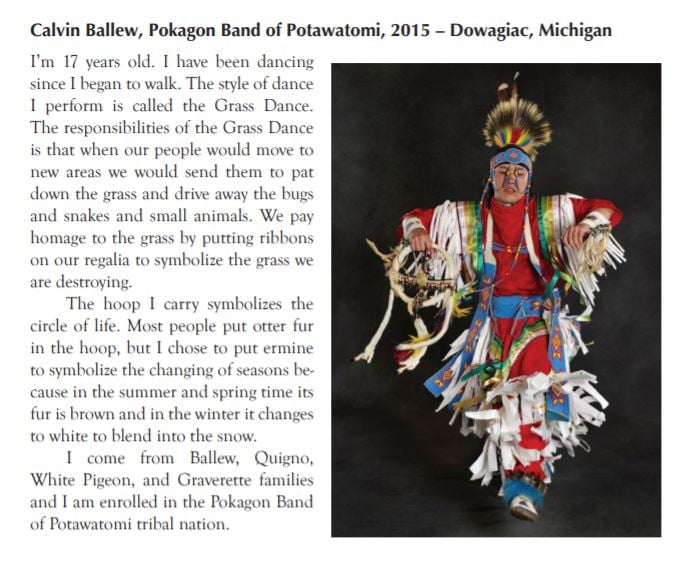
Image:
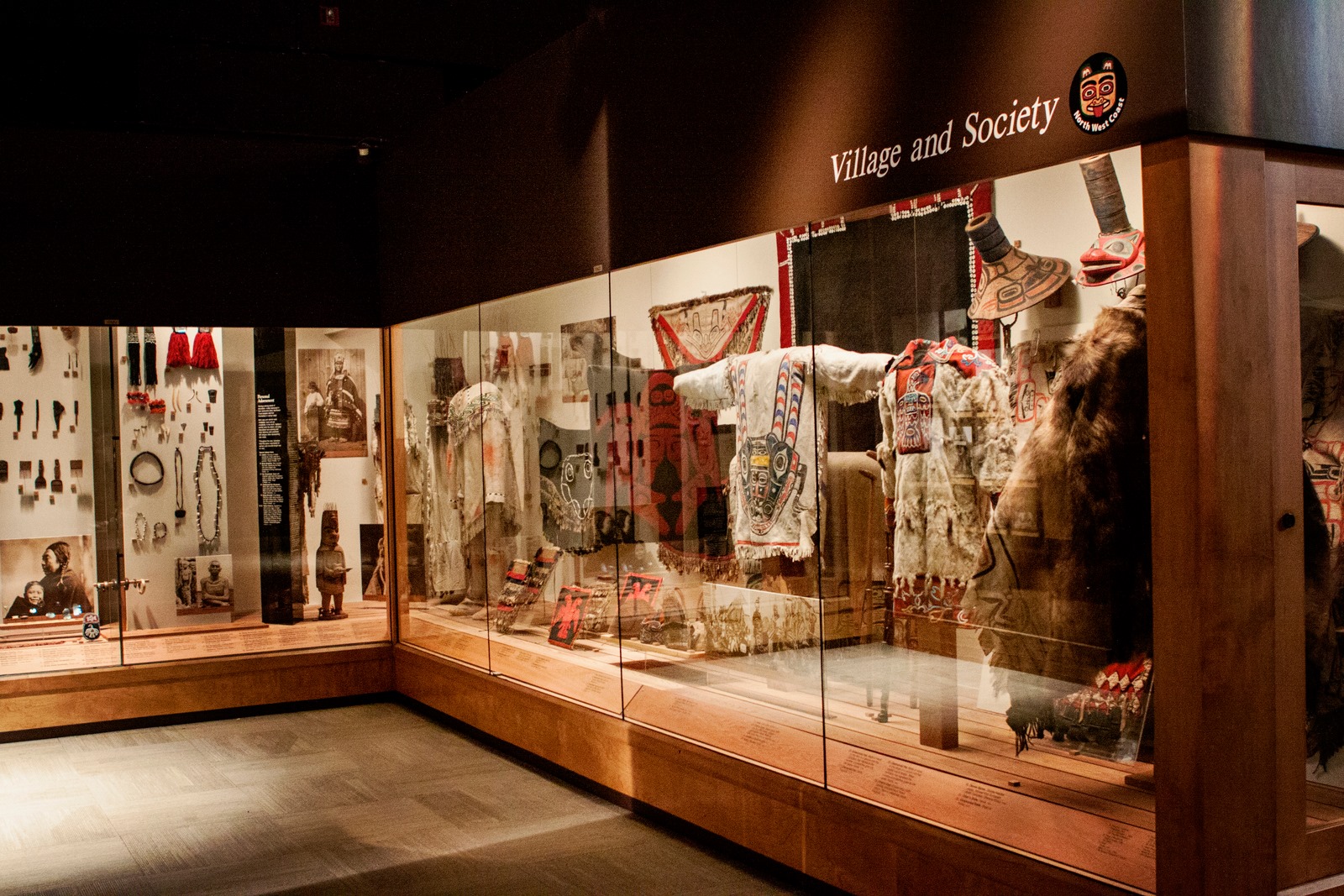
Sharon Hoogstraten, a professional photographer who now lives in Chicago, is a tribal member of the Citizen Potawatomi Nation. Through her exhibit “Dancing for My Tribe” she documented and preserved Potawatomi culture.
The exhibit, made up of individual portraits of contemporary Potawatomi in their regalia, conveys the story of a modern people preserving the traditional dress of their ancestors. Regalia is traditional tribal dress that identifies a person and tells his or her individual story, not a costume for pretense. No two examples of regalia are alike.
The exhibit premiered in 2014 at Rockefeller Memorial Chapel at the University of Chicago.
This is one entry from the exhibit, from the Artist’s Statement. The Pokagon Band of Potawatomi in Michigan is the group living closest to Chicago.
The Ridge Historical Society
Happy Thanksgiving
By Carol Flynn
Hoping to help reunite a country torn by war, Thanksgiving became a fixed holiday under President Abraham Lincoln in 1863.
There is a lot of information out there about early harvest and thanksgiving celebrations on American soil by the European colonists, but generally, when we think about the event that influenced today’s celebration, we’re looking at the celebration that occurred in 1621 in Plymouth, Massachusetts, as a harvest feast. The celebrants were the English Protestants called Puritans, known in American history as the “Pilgrims,” who had split from the Church of England and come to the New World on the ship called the Mayflower; other Englishmen such as the crew who also came on the ship; and the Wampanoag people, the Native American tribe that had lived in the area for over 12,000 years.
Note that there was already a colony of settlers in Jamestown, Virginia, dating to 1607. Most likely they also held harvest feasts, but the Plymouth celebration is the one for which detailed records exist.
The Pilgrims intended to go farther south than Massachusetts. Delays caused them to not leave England until September, and they arrived in America in November. Bad weather forced them to land where they did and remain there for the winter. They were not at all prepared for the freezing cold and snow they encountered in the New World, which had a much harsher climate than that of England. The one hundred settlers and fifty crew members stayed on the ship in Plymouth harbor that first winter. Many of them, weakened by the trip and suffering from scurvy from lack of Vitamin C, and some already suffering from tuberculosis, came down with pneumonia. About half of them died on the ship, most without ever setting foot in their new country.
They were finally able to come ashore and build huts in March 1621. They were greeted by the Wampanoag people. Early relations between the Native Americans and the European settlers were cordial. The Wampanoag showed the Pilgrims how to fish and hunt in the area, and how to cultivate the native food plants and gather fruit. Without the generosity and hospitality of the Native Americans, the settlers had a much poorer chance of surviving.
As far as what was available for a harvest feast that fall, many items we take for granted now were not available then. There were no sweet or white potatoes. It would be another hundred years before potatoes came up to North America from South America. The Pilgrims had not yet planted wheat fields so there were no pies and no bread. The sugar rations they brought with them had quickly been depleted on the journey over, so there were no jellies or sweet desserts. They brought no large livestock with them on the Mayflower, only chickens, and a few pigs and goats, so there were no dairy products except maybe goats’ milk. No ovens had been constructed yet for baking, so all cooking was done over open fires.
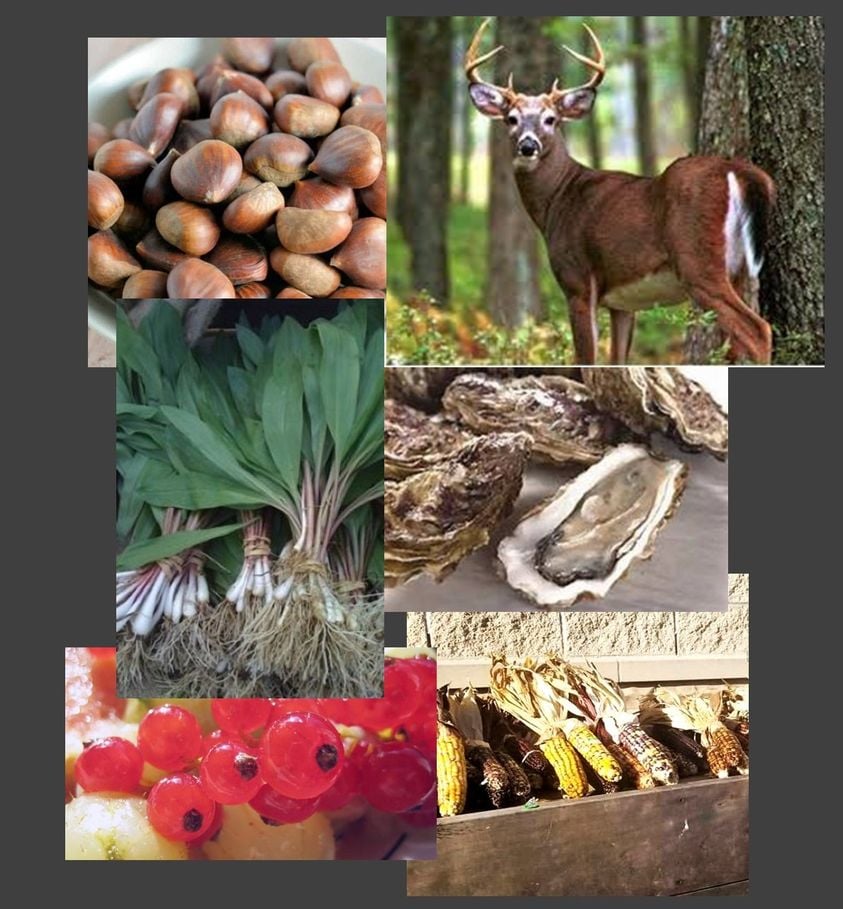
A journal kept by Puritan William Bradford reported the colonists went fowl hunting for this harvest feast. Duck, geese, swans, and turkeys were all plentiful. The Wampanoag guests brought a gift of five deer to the celebration, so venison, probably some roasted and some served in a hearty stew, was without doubt on the menu. Historians also believe that seafood was a major component of the feast, this being New England by the coast. Mussels, lobster, bass, clams, and oysters were readily available. The first Thanksgiving was very heavy on animal protein.
The vegetables the Wampanoag cultivated at the time included corn, pumpkins, squash, turnips, garlic, onions, beans, carrots, lettuce, spinach, and cabbage. The pumpkins were roasted. Fruits available for gathering included blueberries, plums, grapes, and gooseberries. Cranberries were there but it was another fifty years before there were reports of boiling them with sugar to make a jelly.
Flint corn, the multi-colored “Indian corn,” was plentiful at the first harvest. Most likely, the corn was ground into cornmeal, which was boiled and pounded into a thick corn mush or porridge. This was called Indian pudding, a take on the English fondness for “hasty pudding.” Later this dish was sweetened with molasses, made from sugar cane brought up from the Caribbean islands.
Herbs, and nuts like chestnuts, walnuts, and beechnuts, were plentiful from the forests. Along with onion, these would have been used for stuffing the fowl and flavoring dishes.
The celebration itself was a three-day event, with feasting, ball games, singing, and dancing. “Grace” was likely said before meals, but it was several years later that an official prayer service was added to the annual harvest celebration to give thanks for rain after a two-month drought.
Within a few years, the Pilgrims planted wheat and other crops. Other settlers came, bringing dairy cows and honeybees. But it is the native foods that make the day what it is – pumpkins, white and sweet potatoes, corn, cranberries. At least 60% of the food crops grown throughout the world today originated with the Indigenous People of the Americas. And of course, turkeys are native only to the Americas.
Happy Thanksgiving from the Ridge Historical Society
Part 3 of Thanksgiving week on the Ridge
November is also Native American Heritage Month.
Let’s take a moment to recognize and reflect on the Indigenous People who populated this land for 20,000 years before the European settlers came here.
The Land Acknowledgement Statement for the Blue Island Ridge is:
“We acknowledge that we are located on the ancestral homelands of the Potawatomi tribe, a member of the Council of Three Fires. Other tribes that lived in the Blue Island Ridge area in the 18th – 19th century include the Miami and the Illinois Confederation. Many additional tribes including the Fox, Sauk, Winnebago, Menominee, Meskwaki, and Kickapoo lived nearby and accessed the area for trading and portage routes.”
This week began a new series in the Beverly Review on the history of Native Americans on the Ridge. The first installment can be found at: https://www.beverlyreview.net/news/community_news/article_00f2f326-6a80-11ed-bda0-67d5ab1d8cc4.html
There would not have been a first Thanksgiving feast in 1621 for the Pilgrims from the Mayflower if the Wampanoag tribe hadn’t taught them how to secure food in their “New World.”
The Wampanoag showed the Pilgrims how to fish and hunt in the area, and how to cultivate the native food plants and gather fruit. Some items we take for granted now were not around 400 years ago. For starters, there were no sweet or white potatoes. Potatoes did not come up to North America from South America for another 100 years.
Also, the Pilgrims had not yet planted wheat fields so there were no pies and no bread. The sugar rations and almost all the food they brought with them had quickly been depleted on the journey over, so there were no jellies or sweet desserts to be made.
The Pilgrims had brought no large livestock with them on the Mayflower, only chickens, and a few pigs and goats, so there were no dairy products except maybe goats’ milk. Dairy cows would come later.
Plus, no ovens had been constructed yet for baking, so all cooking was done over open fires.
An early journal has the colonists going fowl hunting for this harvest feast. Duck, geese, swans, and turkeys were all plentiful. The Wampanoag guests brought an offering of five deer to the celebration, so venison, probably some roasted and some served in a hearty stew, was without doubt on the menu.
Historians also believe that seafood was a major component of the feast, this being New England by the coast. Mussels, lobster, bass, clams, and oysters were readily available. The first Thanksgiving was very heavy on animal protein.
The vegetables cultivated at the time included corn, pumpkins, squash, turnips, garlic, onions, beans, carrots, lettuce, spinach and cabbage. The pumpkins would have been roasted. Fruits available for gathering included blueberries, plums, grapes and gooseberries. Cranberries were there but it was another 50 years before there were reports of boiling them with sugar to make a jelly.
Flint corn, the multi-colored Indian corn, was plentiful at the first harvest. Most likely, the corn was turned into cornmeal, which was boiled and pounded into a thick corn mush or porridge that was occasionally sweetened with molasses, which was made from sugar cane, which came from the Caribbean. This was called Indian pudding, a take on the English fondness for “hasty pudding.”
Herbs, and nuts like chestnuts, walnuts and beechnuts, were plentiful from the forests. Along with onion, these would have been used for stuffing the fowl and flavoring dishes.
The celebration itself was a three-day event, with feasting, ball games, singing and dancing. Assumedly, grace was said before meals, but it was several years later that an official prayer service was added to the annual harvest celebration to give thanks for rain after a two-month drought.
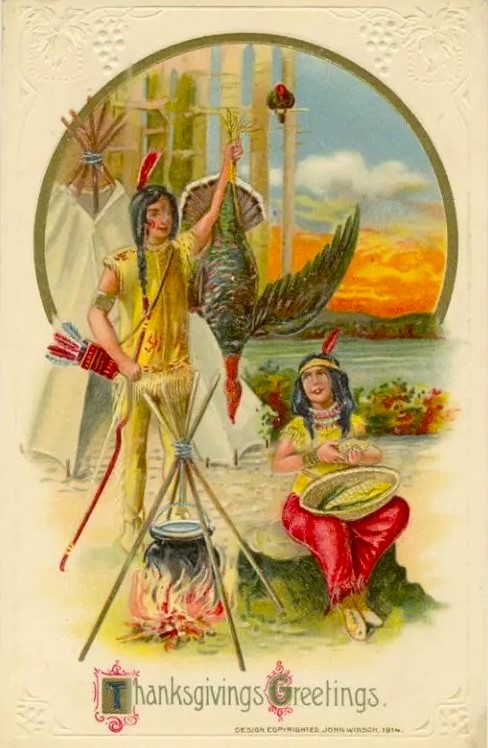
Here is a vintage postcard recognizing the role of Native Americans in the first Thanksgiving.
Next installment of the series on Native Americans on the Ridge in the Beverly Review newspaper.
https://www.beverlyreview.net/news/community_news/article_9e9f5c56-8b8f-11ed-a825-4b60496ff33d.html