
Explore the RHS Facebook Archives, a rich repository of local history written by Carol Flynn. For two decades, Carol brought a deeply dedicated voice to public education at RHS. Her role as Facebook administrator through mid-2025 naturally extended her prolific research into meticulously detailed articles, most notably her multi-part historical series posts. Today, Carol continues her local history writing for The Beverly Review and other outlets.
October 2019
History of Halloween customs, part 2. In part 1, we mentioned that Halloween is derived from old Celtic pagan customs and came to the U.S. with the Irish. We covered costumes.
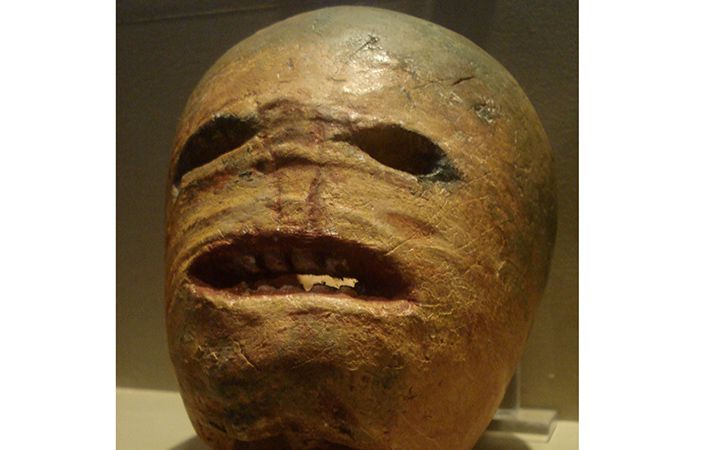
Another tradition is the Jack o' Lantern. According to Celtic folklore, Stingy Jack tried to cheat both the devil and God, and when he died, neither would take him. He was doomed to roam the earth forever at night, with a glowing coal in a carved out turnip to light his way. He became known as Jack of the Lantern.
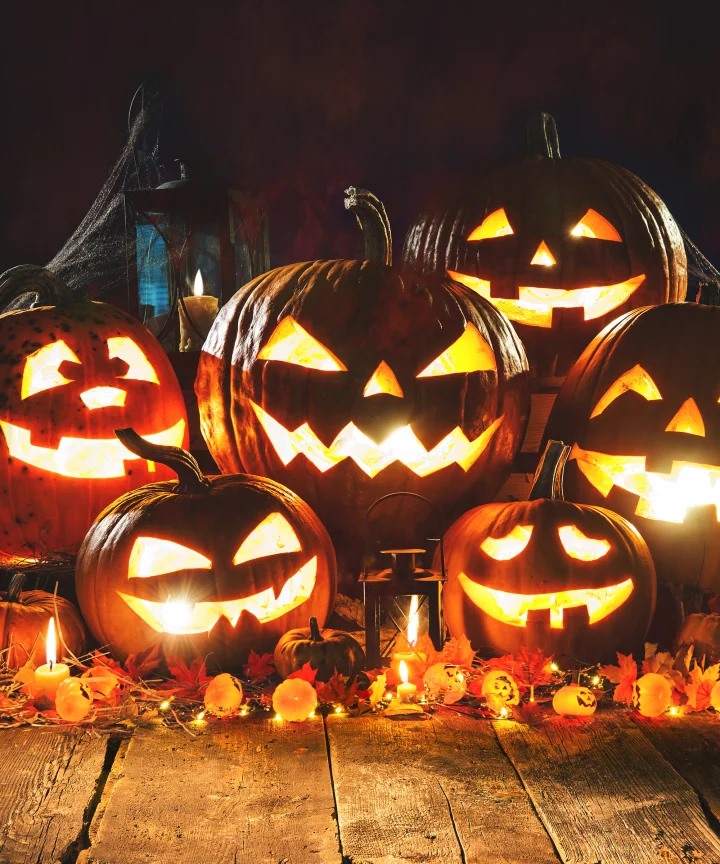
The Celts carved hideous faces into turnips, beets, potatoes and gourds to frighten away Jack and other evil spirits. An example of an original carved turnip from Ireland is attached.
When the Irish came to the States, they discovered that pumpkins were plentiful and much easier to carve. Hence, today's American tradition of jack o' lanterns.
Halloween history, part 3 – trick or treating.
Trick or treating also came to the U. S. with the Irish settlers. There are several old customs behind the practice. One is that people dressed up in costumes as deceased spirits (mumming or guising) around the time of the pagan harvest holiday Samhain, when the barrier between the spiritual and physical world was thinnest, and went door to door collecting gifts to appease and honor the dead.
Another old year-round custom is to leave out treats for the fairies so that this group of other worldly beings will not pull tricks on humans.
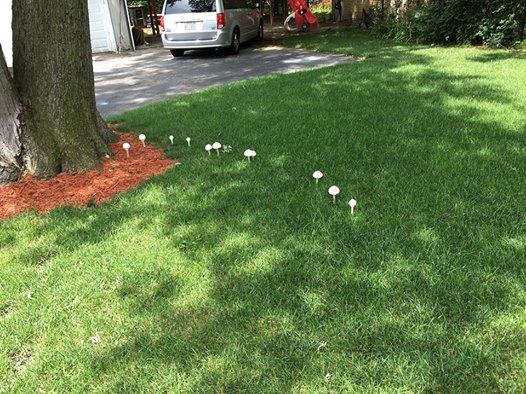
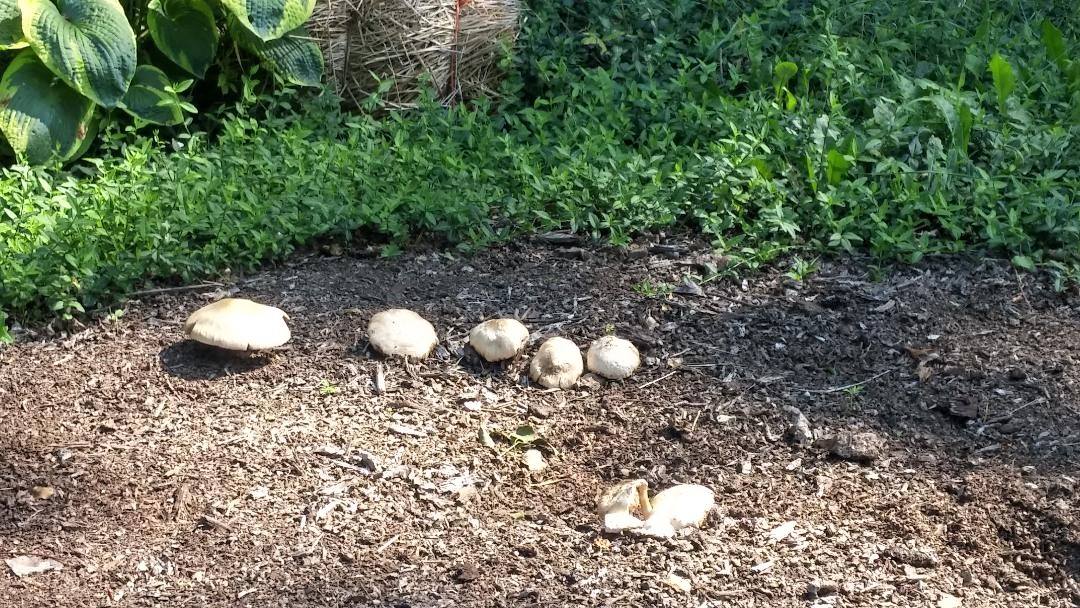
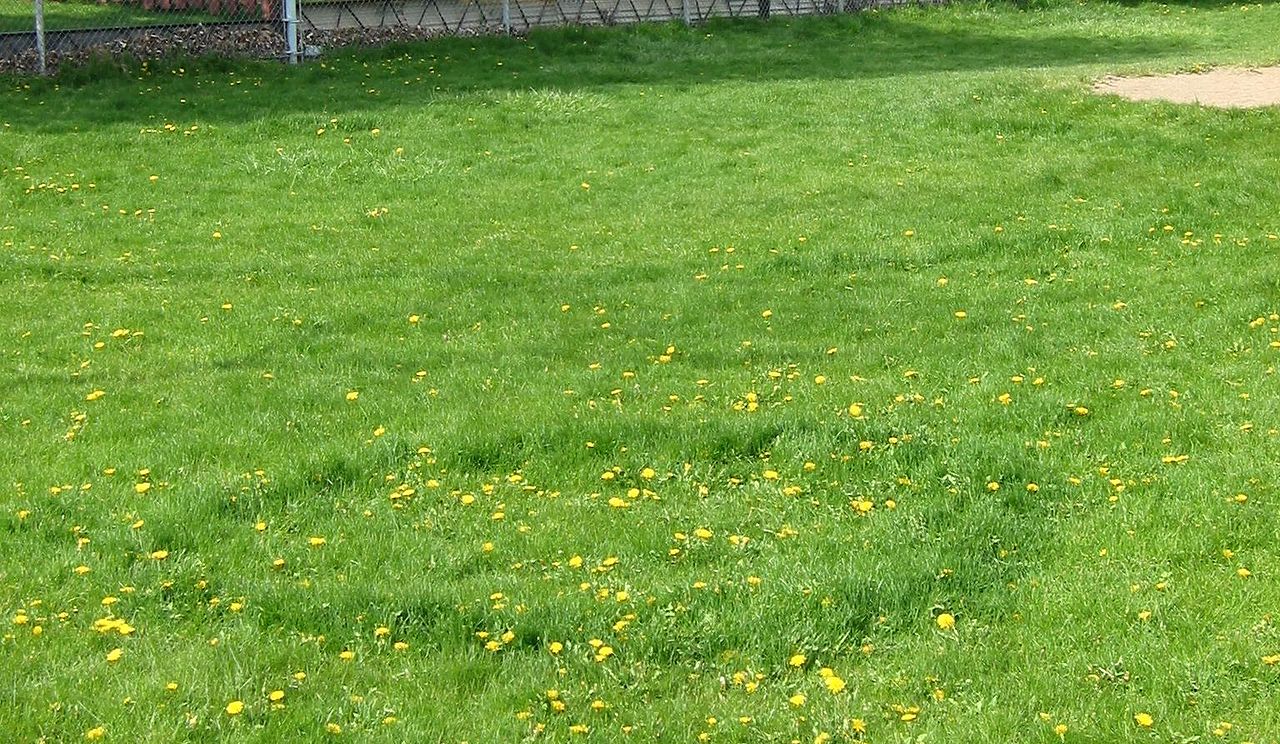
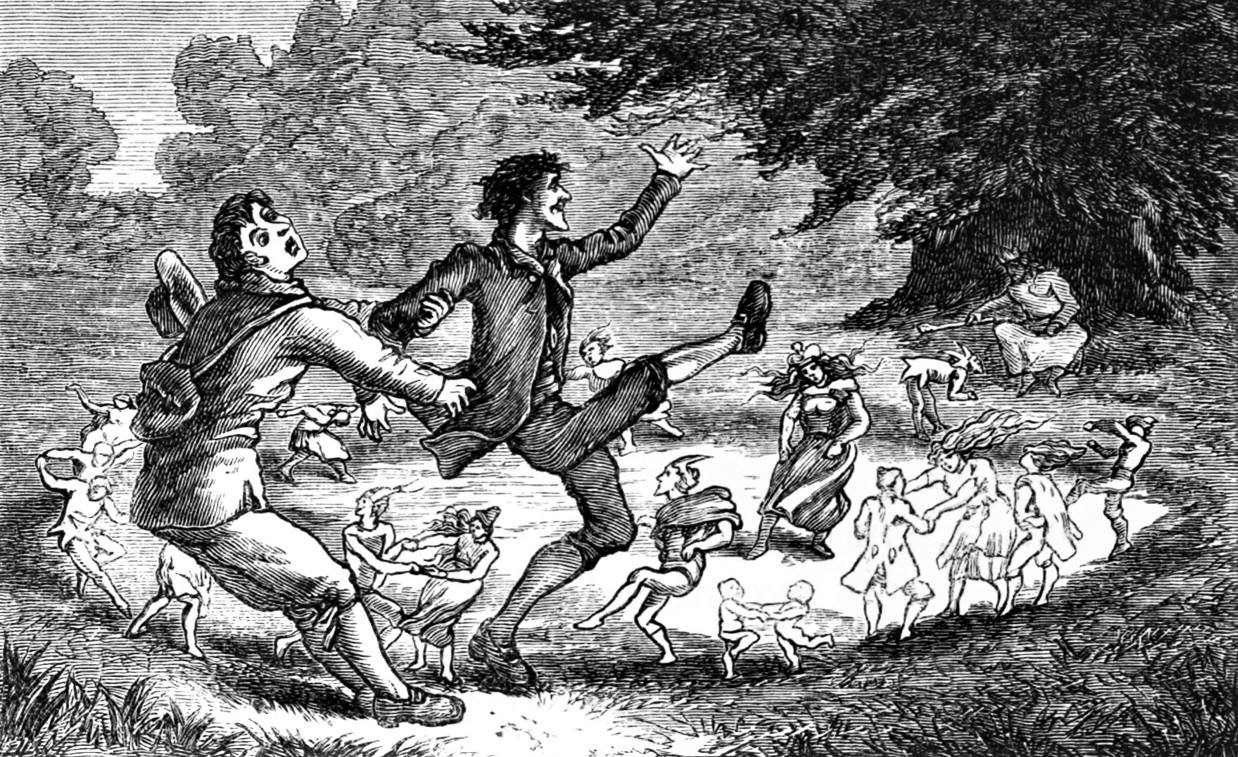
Fairy folklore is interesting. They are usually associated with England, Scotland and Ireland, but they occasionally make their way over to the U.S. One sign is fairy rings, mushrooms growing in an arc or circle. Sometimes they show up as a circle of unusually tall or thick grass, because the fungus is growing underground. Here are pictures of two fairy rings getting started in Beverly.
It is considered bad luck to destroy a fairy ring, believed to form by fairies dancing. Folklore says that if a human steps into a fairy ring, he/she could be caught forever, dancing.
Halloween – Part 4. Halloween on the Ridge 100 years ago. A few years ago, the RHS newsletter editor was looking through the old Morgan Park Post newspapers for something interesting to write about for Halloween for the Beverly Area Planning Association Villager, the free community newspaper.
Then she came across this little tidbit of information in the November 6, 1915 Post: “MR. and MRS. THOS. CUMMINGS entertained at a Hallowe’en party last Saturday evening at their home on Homewood Ave.“
These were her great-grandparents. Her great-grandparents had a Halloween party in Morgan Park 100 years ago. What might that have been like?
Halloween lost most of its superstitious and religious overtones in the U.S. by the beginning of the 20th century. By 1915, parties were the most common way to celebrate, and usually included decorations, costumes, games, and refreshments.
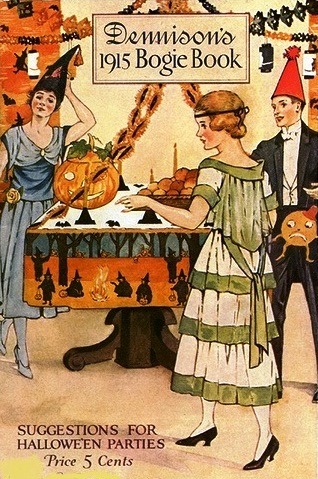
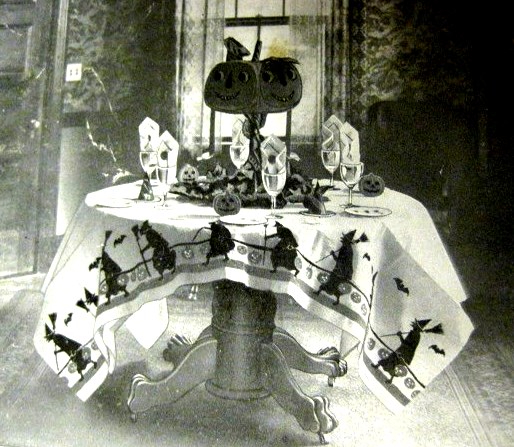
Prior to 1900, decorations had relied on natural items like corn stalks, symbolic of the harvest. Jack-o-lanterns, now made from native pumpkins, were customary. Then several companies, notably Dennison Manufacturing Company, began making paper products such as heavy cardboard die cuts; paper plates, cups, and napkins; crepe paper streamers, and the like. Decorations became much more sophisticated and commercial. Dennison published “Halloween Bogie” books from 1909 through 1934 that were basically catalogs but also included ideas, illustrations and instructions for decorations and parties.
Food suggestions included a sit-down supper with items like cream of celery soup, brown bread sandwiches and Waldorf salad, to a buffet including a variety of finger sandwiches (cucumber, salmon, jelly), stuffed celery, and orange sherbet. Gingerbread was popular in any form – cookies, cake with marshmallow frosting.
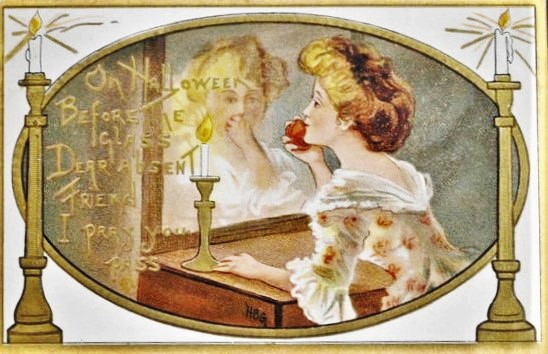
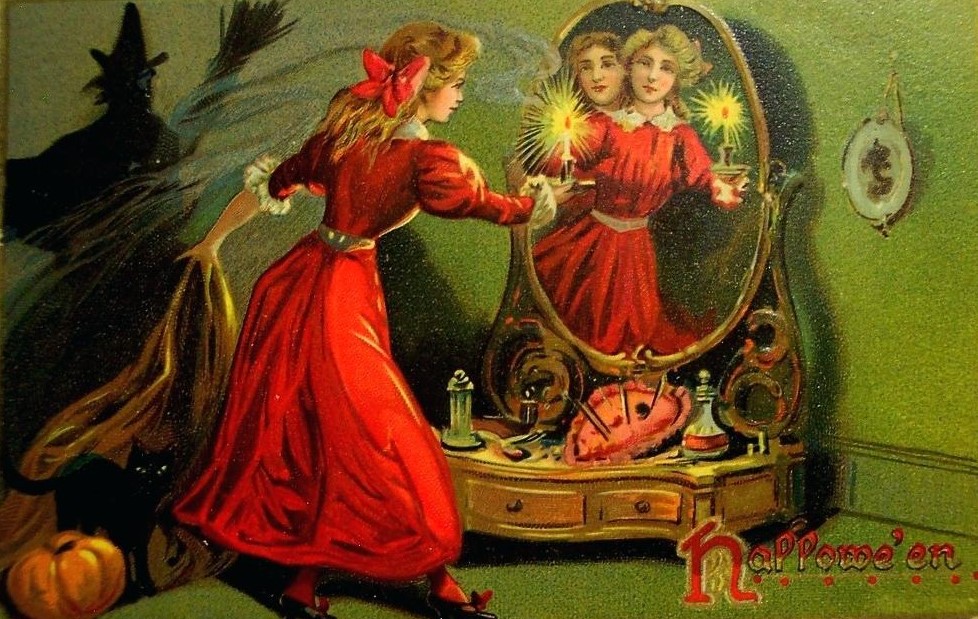
In addition to some of the old-fashioned games that were stand-bys, like bobbing for apples, fortune telling and other divination games were popular. Variations of a “mirror test” were mentioned often in articles of the day. One version called for a girl to sit before a mirror at midnight on Halloween, combing her hair and eating an apple, in order to see the face of her true love reflected in the glass.
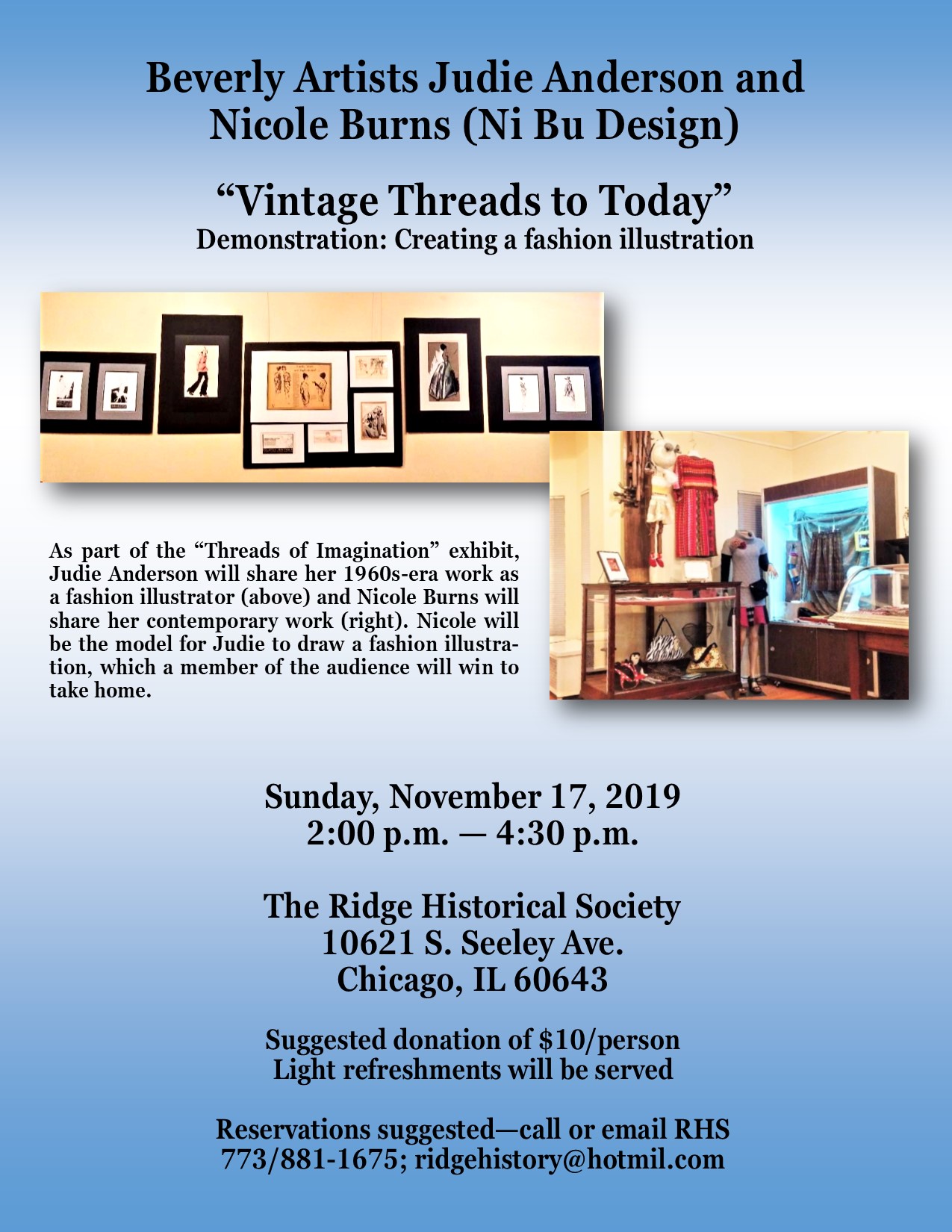
OK, the new program for Sunday, November 17 has been finalized. "Vintage Threads to Today" will feature two of the artists in the current "Threads of Imagination" exhibit.
Judie Anderson will share her 1960s-era work as a fashion illustrator and Nicole Burns (Ni Bu Design) will share her contemporary work. Nicole will be the model for Judie to draw a fashion illustration, which a member of the audience will win to take home (after it is scanned for the sake of history!). Both artists will have items for sale.
The program will be at RHS, 10621 S. Seeley Ave., from 2:00 to 4:30 p.m. Light refreshments will be served. The suggested donation for the program is $10 per person. Reservations are suggested – contact RHS at 773/881-1675 or ridgehistory@hotmail.com.
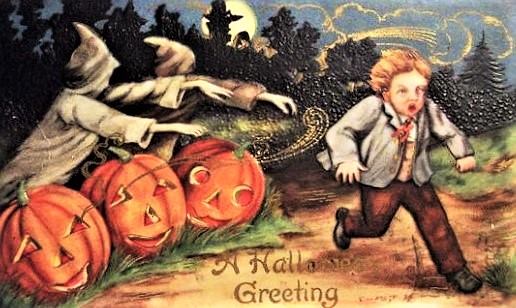
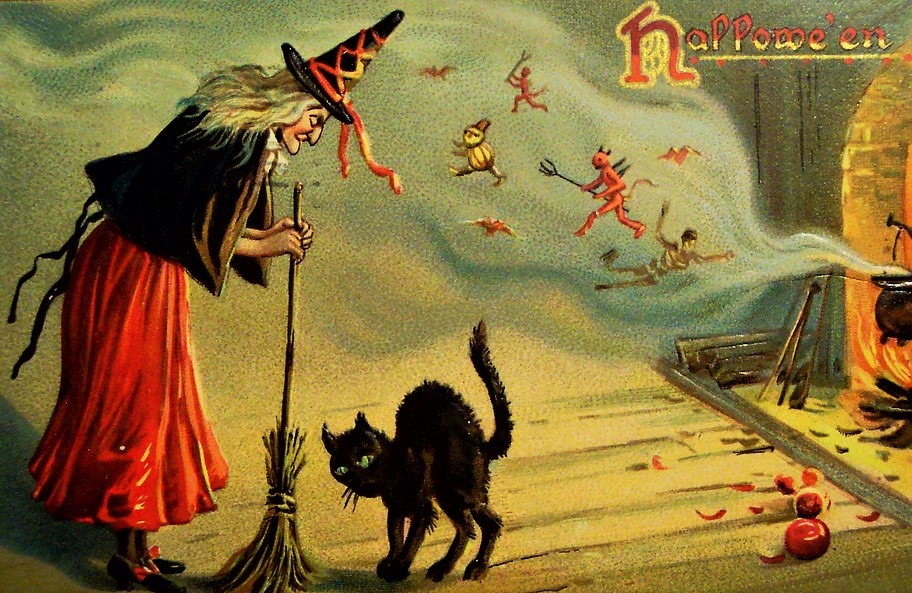
Happy Halloween! Some vintage postcards.
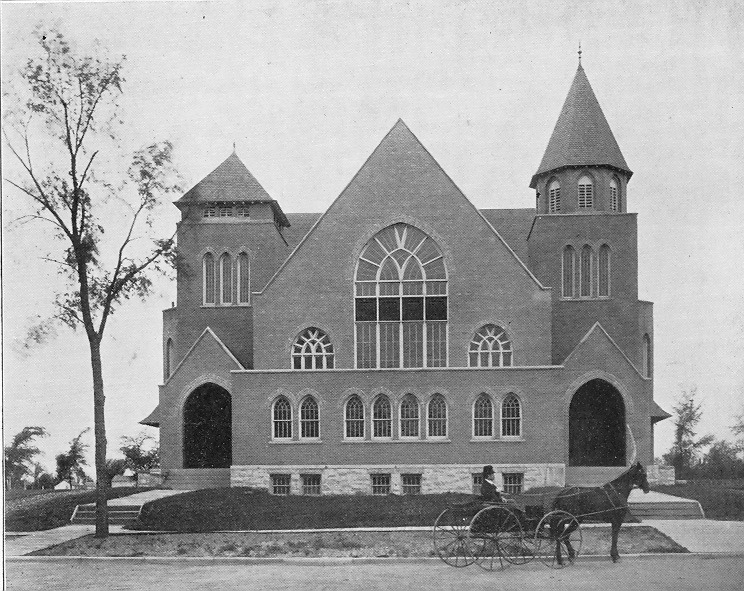
A follow-up comment to the post started on the Open Outcry page about the history of the Morgan Park Baptist Church at 110th and Bell. Here is a wonderful old picture of that church from when it was first built. Note the horse and buggy. From the Ridge Historical Society collection.
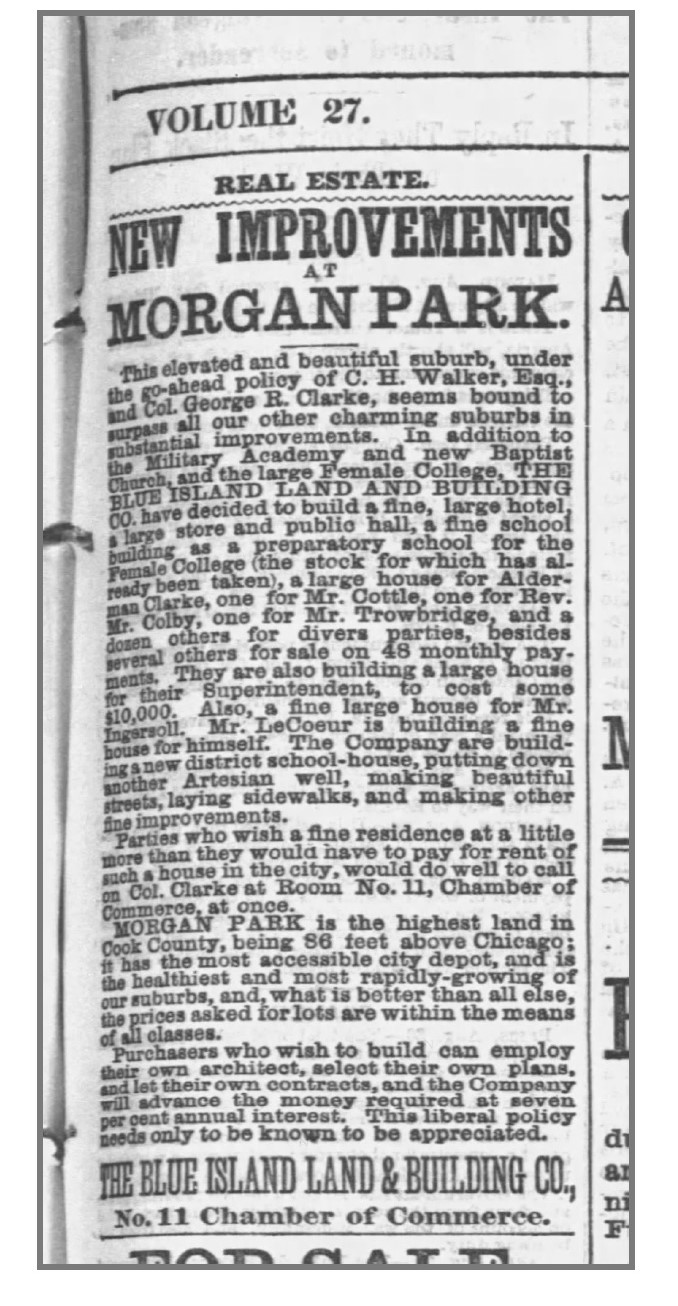
The picture of the Morgan Park Baptist Church triggered interest in the early days of Morgan Park. Morgan Park did not just evolve – it was a "planned" community. The Blue Island Land and Building Company (BILBC) bought much of the land left from the Thomas Morgan estate after the Civil War, after Mrs. Morgan died in 1868.
The BILBC was headed by Col. Clarke, who lived here, and by George Walker, who never lived here but was an investor, who gave MP its first library – the Walker Library on 111th and Hoyne.
The land was laid out to resemble an English village, with winding streets and parks. The Village was founded as an educational, religious and temperance enclave. It was marketed to the public beginning in 1873.
Attached is an ad from the Chicago Tribune from 1873. Note it mentions both Morgan Park Academy and the MP Baptist Church. These were selling points for attracting people here.