Explore the RHS Facebook Archives, a rich repository of local history written by Carol Flynn. For two decades, Carol brought a deeply dedicated voice to public education at RHS. Her role as Facebook administrator through mid-2025 naturally extended her prolific research into meticulously detailed articles, most notably her multi-part historical series posts. Today, Carol continues her local history writing for The Beverly Review and other outlets.
All Posts
Contributed to RHS.
Note to followers of the Ridge Historical Society Facebook posts: I pulled the series on the artist Henry Arthur Elkins. I have loads of information on him and I need to organize it better before I share it. I will get back to Mr. Elkins soon.
Next up: The real story of the pilgrims and the first Thanksgiving dinner.
– Carol Flynn
Ridge Historical Society
The First Thanksgiving Feast
By Carol Flynn
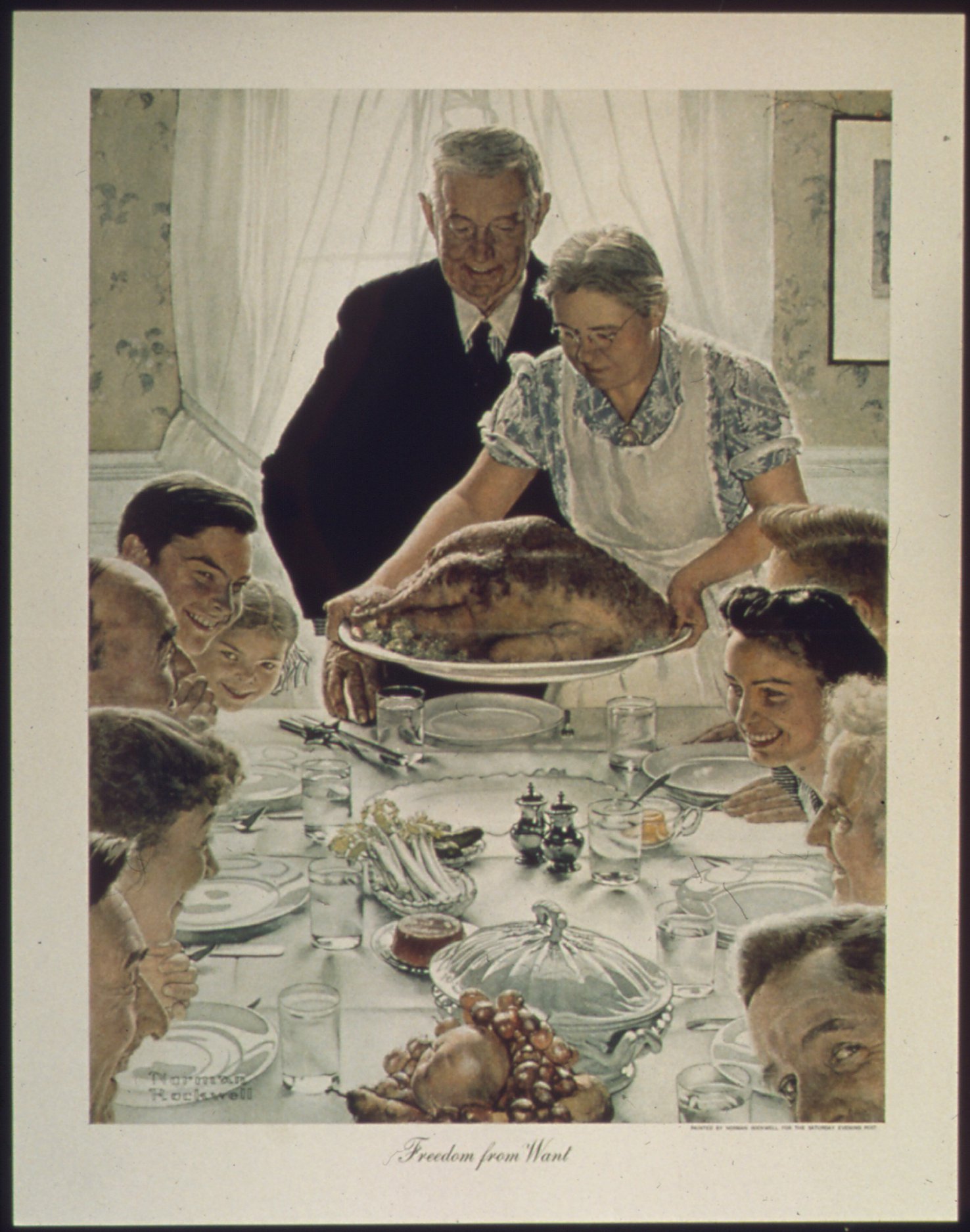
Thanksgiving Day is a uniquely American holiday. More so than any other holiday, it is associated with a certain traditional menu, including roast turkey, stuffing, mashed and sweet potatoes, cranberry sauce, and pumpkin pie. But the menu for the first celebration recorded four centuries ago was very different than the one we enjoy today.
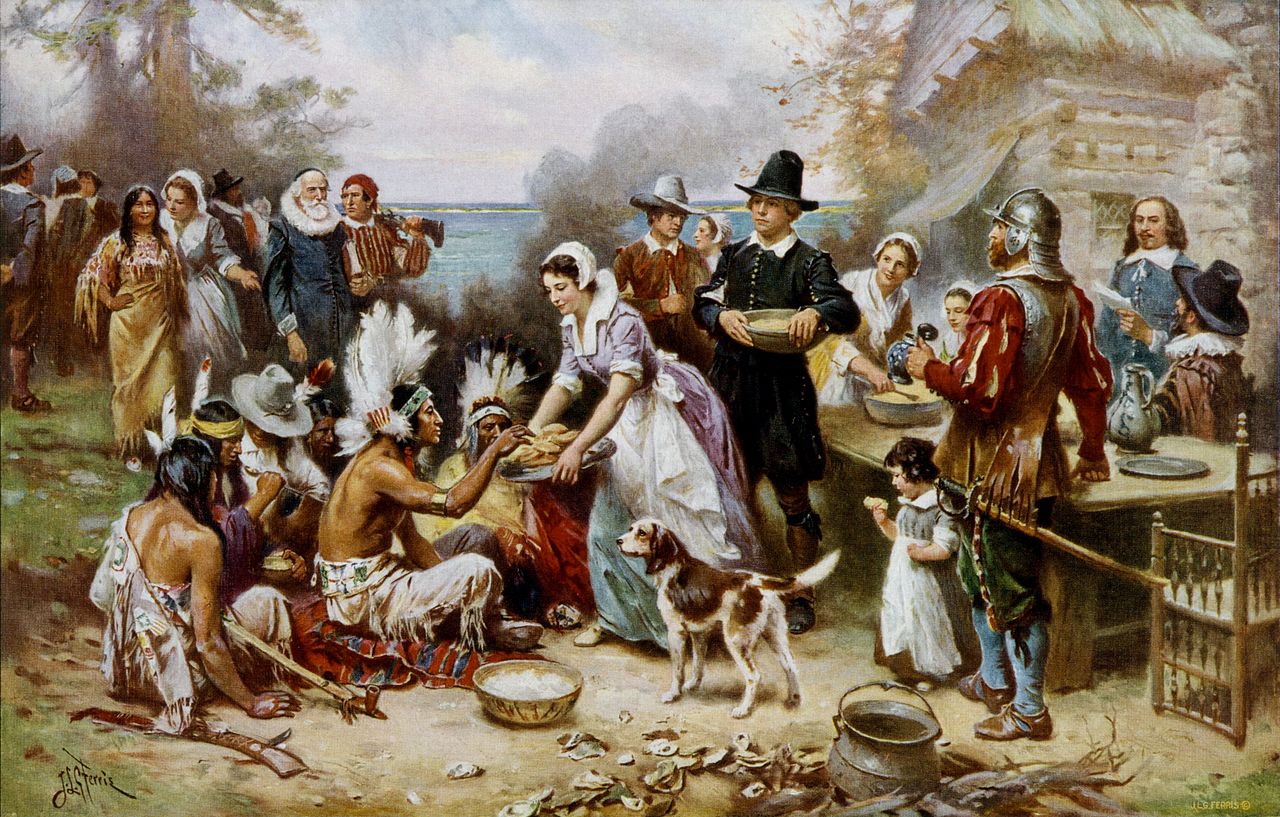
The first “Thanksgiving” celebration occurred in 1621 in Plymouth, Massachusetts, as a harvest feast. The celebrants were the English Protestants called Puritans, known affectionately in American history as the “Pilgrims,” who had split from the Church of England and come to the New World on the ship called the Mayflower; other Englishmen such as the crew who also came on the ship; and the Wampanoag people, the Native American tribe that had lived in the area for over 12,000 years.
Note that there was already a colony of settlers in Jamestown, Virginia, dating to 1607. Most likely they also held harvest feasts, but the Plymouth celebration is the one for which detailed records exist, hence it is considered the first Thanksgiving.
The Pilgrims intended to go farther south than Massachusetts. Delays caused them to not leave England until September, and they arrived in America in November. Bad weather forced them to land where they did and remain there for the winter. They were not at all prepared for the freezing cold and snow they encountered in the New World, which had a much harsher climate than that of England. The one hundred settlers and fifty crew members stayed on the ship in Plymouth harbor that first winter. Many of them, weakened by the trip and suffering from scurvy from lack of Vitamin C, and some already suffering from tuberculosis, came down with pneumonia. About half of them died on the ship, most without ever setting foot in their new country.
They were finally able to come ashore and build huts in March 1621. They were greeted by the Wampanoag people. The Wampanoag showed the Pilgrims how to fish and hunt in the area, and how to cultivate the native food plants and gather fruit.
As far as what was available for a harvest feast that fall, many items we take for granted now were not available then. There were no sweet or white potatoes. It would be another hundred years before potatoes came up to North America from South America. The Pilgrims had not yet planted wheat fields so there were no pies and no bread. The sugar rations they brought with them had quickly been depleted on the journey over, so there were no jellies or sweet desserts. They brought no large livestock with them on the Mayflower, only chickens, and a few pigs and goats, so there were no dairy products except maybe goats’ milk. No ovens had been constructed yet for baking, so all cooking was done over open fires.
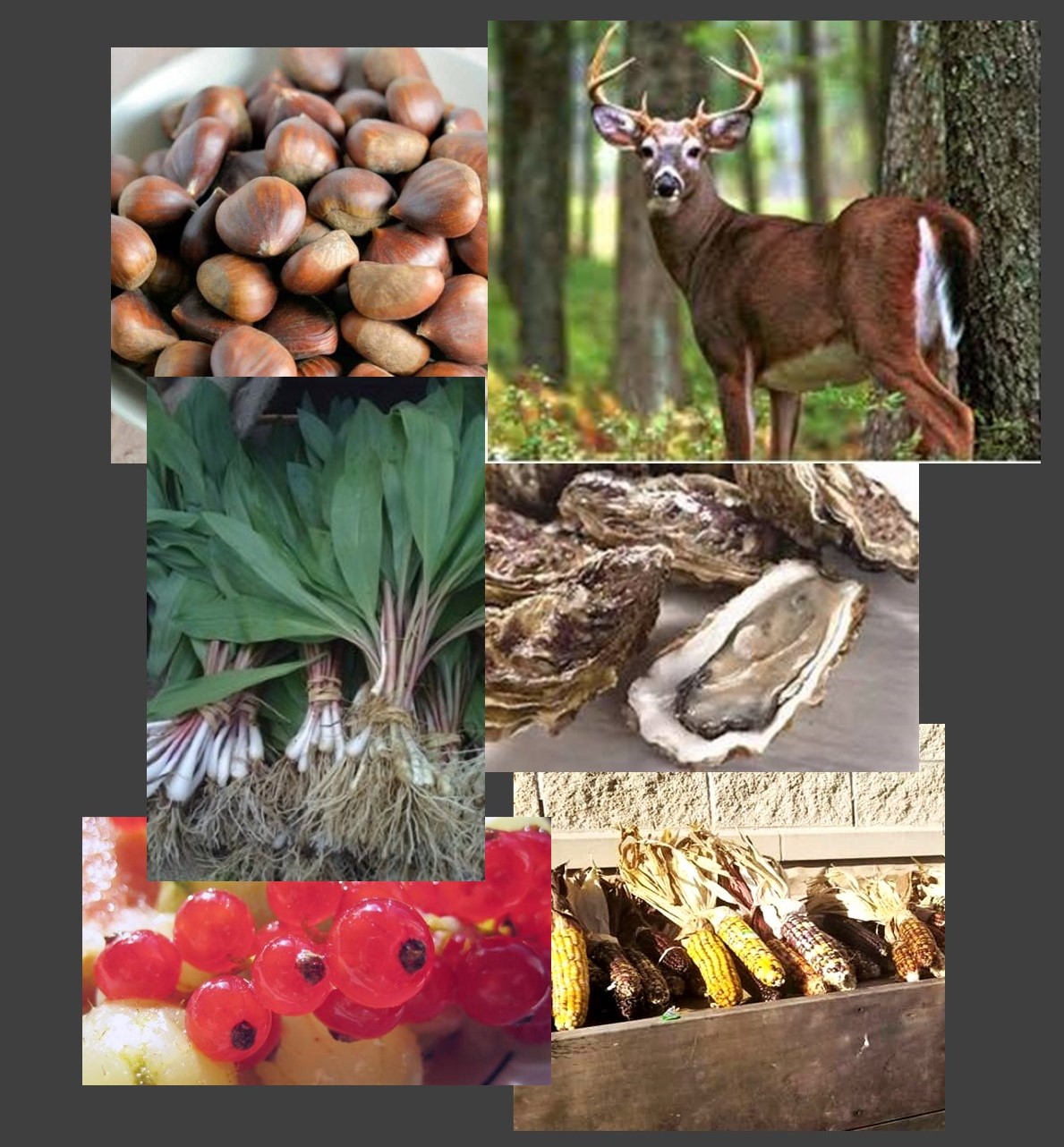
A journal kept by Puritan William Bradford reported the colonists went fowl hunting for this harvest feast. Duck, geese, swans, and turkeys were all plentiful. The Wampanoag guests brought a gift of five deer to the celebration, so venison, probably some roasted and some served in a hearty stew, was without a doubt on the menu. Historians also believe that seafood was a major component of the feast, this being New England by the coast. Mussels, lobster, bass, clams, and oysters were readily available. The first Thanksgiving was very heavy on animal protein.
The vegetables the Wampanoag cultivated at the time included corn, pumpkins, squash, turnips, garlic, onions, beans, carrots, lettuce, spinach, and cabbage. The pumpkins were roasted. Fruits available for gathering included blueberries, plums, grapes, and gooseberries. Cranberries were there but it was another fifty years before there were reports of boiling them with sugar to make a jelly.
Flint corn, the multi-colored “Indian corn,” was plentiful at the first harvest. Most likely, the corn was ground into cornmeal, which was boiled and pounded into a thick corn mush or porridge. This was called Indian pudding, a take on the English fondness for “hasty pudding.” Later this dish was sweetened with molasses, made from sugar cane brought up from the Caribbean islands.
Herbs, and nuts like chestnuts, walnuts, and beechnuts, were plentiful from the forests. Along with onion, these would have been used for stuffing the fowl and flavoring dishes.
The celebration itself was a three-day event, with feasting, ball games, singing, and dancing. “Grace” was likely said before meals, but it was several years later that an official prayer service was added to the annual harvest celebration to give thanks for rain after a two-month drought.
Within a few years, the Pilgrims planted wheat and other crops. Other settlers came, bringing dairy cows and honeybees. Eventually, the diet of the settlers expanded.
Fast forward to 1827, and Sarah Josepha Hale, the editor of the popular Godey’s Lady’s Book, began advocating for a national Thanksgiving Day. She petitioned thirteen presidents until finally, Abraham Lincoln made the declaration in 1863 as a way to help unite the country in the midst of the Civil War.
For decades, Hale published Thanksgiving recipes and menus in her magazine. She also published a number of cookbooks. She championed mashed potato dishes, which were considered exotic in the mid-1800s.
A typical cookbook of 1870 recommended the following menu for Thanksgiving dinner: Oyster soup, cod with egg sauce, lobster salad, roast turkey with cranberry sauce, mixed pickles, mangoes, pickled peaches, coleslaw and celery, boiled ham, chicken pie, jelly, browned mashed potatoes, tomatoes, boiled onions, canned corn, sweet potatoes, and roasted broccoli. Mince and pumpkin pies, apple tarts, and Indian pudding were the desserts. Apples, nuts, and raisins were for snacking.
By the early 1900s, the basic fare was set – turkey, stuffing, mashed and sweet potatoes, gravy, cranberry sauce, and pumpkin pie. Most families have favorite dishes they add to the table, and of course there are many regional, ethnic, and individual variations. The menu is forever evolving – green bean casserole was invented in 1955 by the Campbell Soup Company to promote the use of its cream of mushroom soup and has become a Thanksgiving standard.
Studies have shown that Thanksgiving dinner is the largest eating event in the U.S. People eat more on Thanksgiving than any other day of the year. And then there are always the leftovers … turkey sandwiches, turkey tetrazzini, turkey chili…. Happy Thanksgiving!
For more information on the history of Thanksgiving, visit smithsonian.com, nationalgeographic.com, history.com, and other history websites.
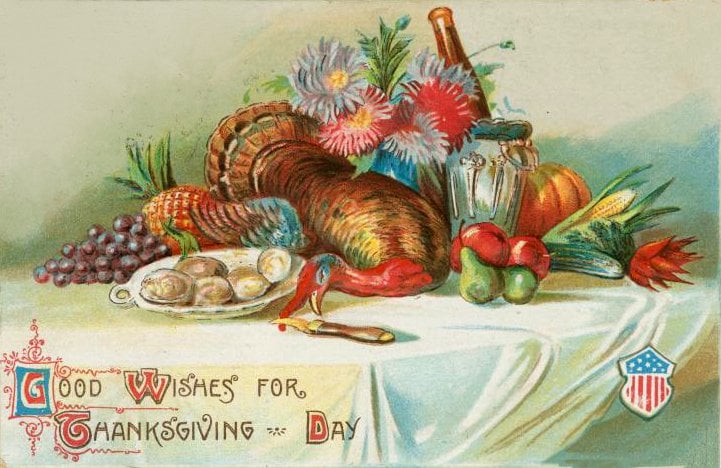
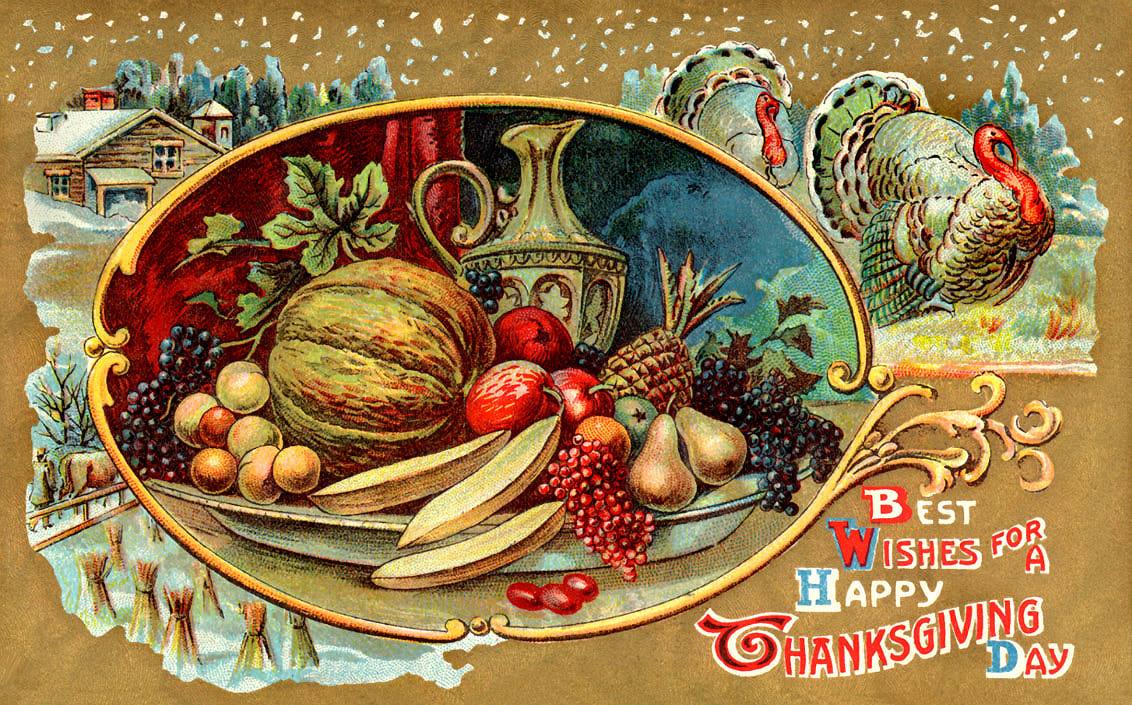
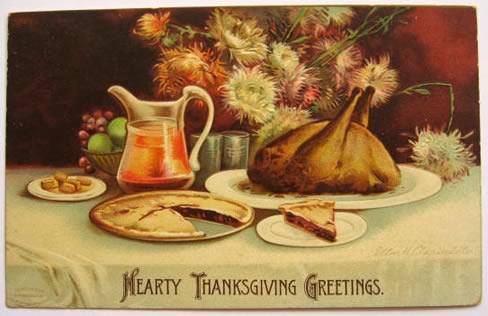
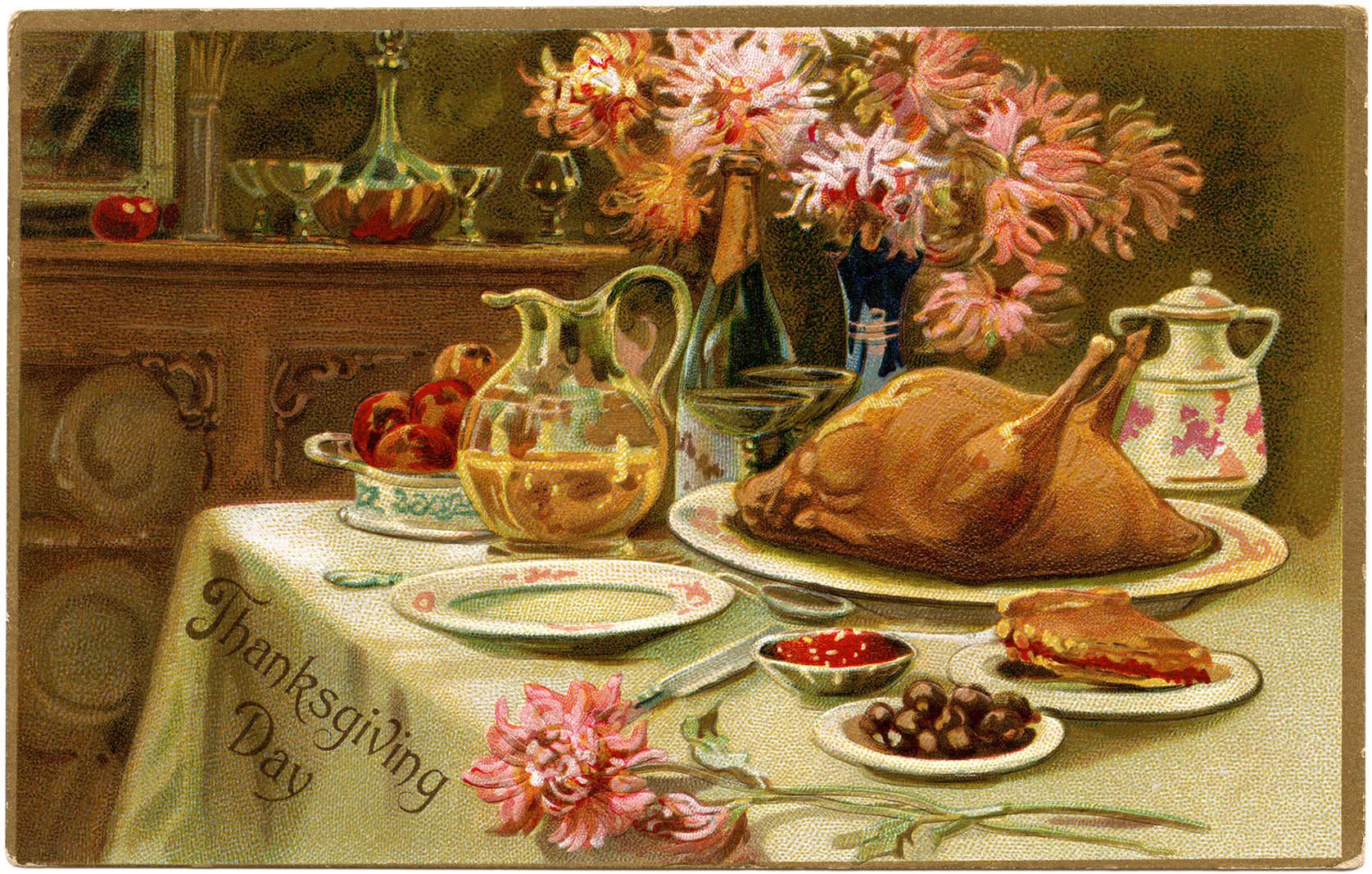
Happy Thanksgiving! Here are some vintage postcards. Since the day is mainly devoted to eating, they all feature feasts.
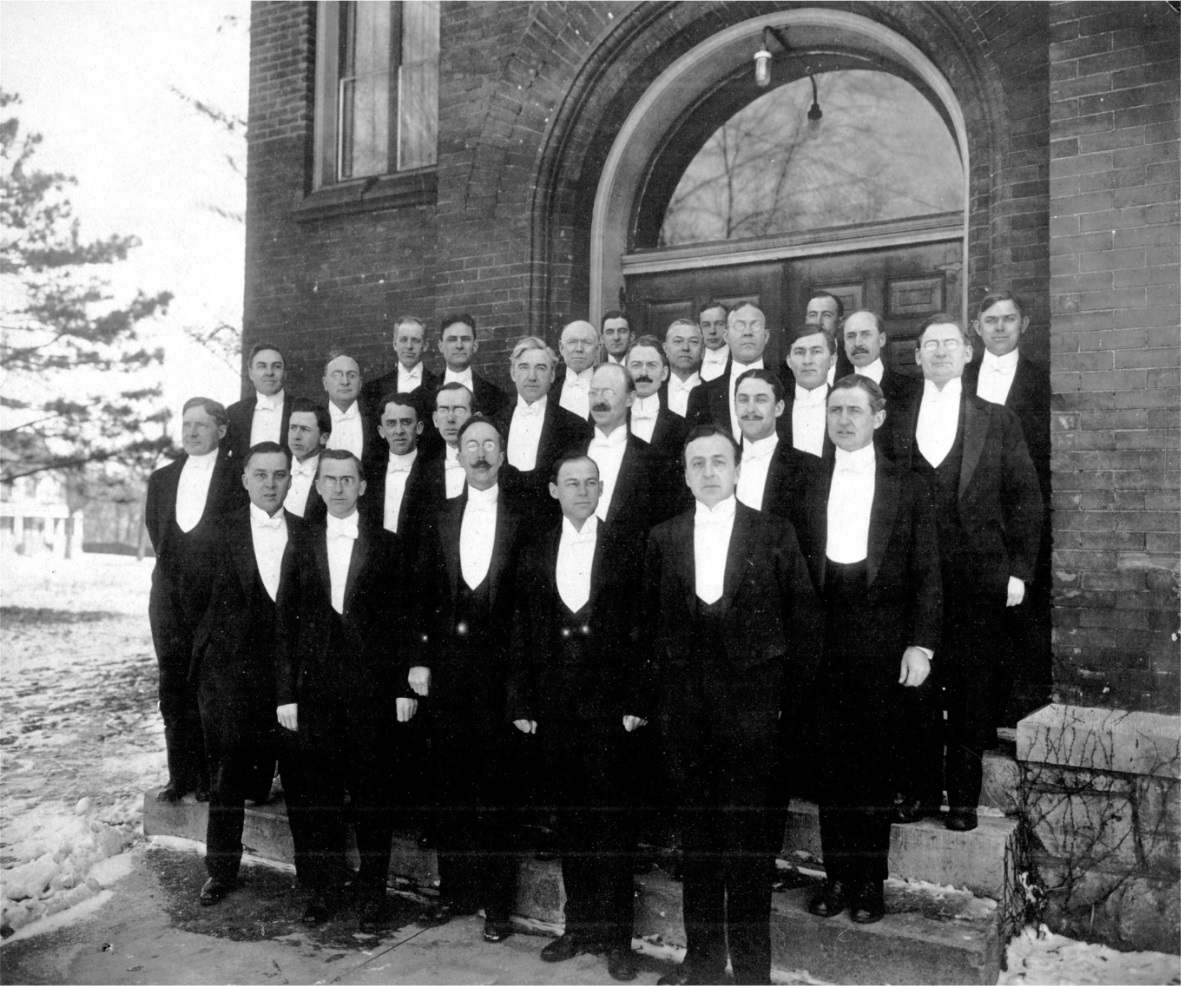
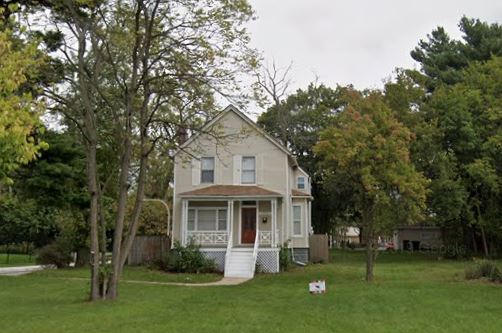
Let’s look at what was going on one hundred years ago.
Recovery from World War I and the influenza epidemic of 1918-1919 took center stage. Prohibition went into effect on January 17, 1920. Women’s right to vote became effective in August. Eight members of the Chicago White Sox were indicted in October for conspiracy to fix the 1919 World Series. In November, Republican Warren G. Harding was elected president to succeed Democrat Woodrow Wilson.
As Christmas approached, life went on as usual on the Ridge, as reported in the “Ridge and Morgan Park News” page in the Englewood Times.
The choir at St. Margaret of Scotland Church spent hours preparing for a “wonderful Christmas surprise program” for their fellow parishioners. Trinity Methodist Church planned a 6:00 a.m. “Nativity Service” prayer meeting for Christmas Day. St. Paul’s Union church put together a box of goodies for the old folks’ home in Oak Forest. The Morgan Park Congregational Church held a holiday bazaar. The Ridge Woman’s Club planned their annual Children’s Party to be held in the Ridge Park field house. The Morgan Park Woman’s Club also held an event for children.
“Grandfather” Egan of 1414 W. 95th Street played Santa Claus for the Catholic Order of Foresters on Christmas Eve. A little research revealed this to be George F. Egan, a superintendent in a clothing company. The Catholic Order of Foresters is a fraternal benefit society. It was formed to offer insurance to its members – death claims, and funeral and sick benefits.
For the week of Christmas, the Dewalt Mechlin Chapter of the Daughters of the American Revolution placed a brightly lit star in the top branches of a memorial tree they had planted in Ridge Park in memory of fallen U.S. troops.
The Euterpean Glee Club held their annual event, which was perhaps one of the most interesting holiday happenings on the Ridge. Euterpean clubs, formed for musical and literary interests, were very popular in the early 1900s and named for Euterpe, the muse of music. This all-male ensemble had been organized in 1900 by Edward Clissold, the son of Henry Clissold for whom Clissold School on 110th and Western is named. In the early hours of Christmas morning, they went around the streets by auto singing Christmas carols.
David Herriott, the publisher of the Morgan Park Post, described the event in 1915: “Sweetly reminding the listeners of that glorious song of old, when the parted heavens startled the drowsy shepherds, was the sudden advent Christmas Eve of our Euterpeans, when, after midnight, in autos, they went through the village singing the familiar songs of Christmastide. The conception was a beautiful one, and characteristic of this old Glee Club. The editor has been ‘to the opera’ but never was opera like this outdoor singing of ‘Joy to the World, the Lord has come! Let earth receive her king,’ which roused him from his bed at one in the morning, in wonder and deep reverence.”
The children were looking forward to school break for the holidays. They were planning a big skating pond, with the help of “Jack Frost and the fire laddies.”
The remains of two soldiers from the Ridge who died in service during the war were returned to their families for burial. Arnold S. Hunt died in Estaples, France, while in service with a hospital unit. A requiem Mass was sung for him at St. Margaret’s Church and he was buried in Mount Olivet Cemetery. Henry C. F. Beyer, Jr., was killed in action in France. He was honored with services conducted by the American Legion at the chapel at Mount Greenwood Cemetery.
As some families lost loved ones, others gained new arrivals. Four families announced the births of sons: Mr. and Mrs. John Lemmer of 10717 Prospect Avenue, Mr. and Mrs. W. J. Ruff of 9820 Winston Avenue, Mr. and Mrs. Tierney of the same block on Winston, and Mr. and Mrs. Christy of 9718 Charles Street. Mr. and Mrs. Grace of 9638 Winston had a new baby but the paper wasn’t sure “what the precious bundle contained, a miss or a master.”
Fire damaged the home of Mrs. Frank Sweger of 10001 Beverly Avenue as the result of her five-year old granddaughter Jane Dodge playing with matches. When the fire was discovered, Mrs. Sweger ran outside, thinking Jane was out there, but could not find her. Fireman A. Prunty searched the house and found the child hiding in her second-floor bedroom. He brought her to safety. She received first aid and was “doing nicely.” The Swegers and little Jane were staying with relatives in Blue Island while their house was repaired.
Local businesses contributed to the holiday spirit. The Barnes Drug Store at 1763 West 95th Street was “dressed up in a splendid holiday exhibit and all of its employees are taking a special interest to make the store an attractive place to shop in.”
Down the street, the Bottado Brothers at 1722 W. 95th Street were able to supply nice fresh fruits for use at holiday time. “Their fine courtesies have been noticed by many customers.”
Mrs. Pauline F. Palmer of 1753 West 96th Street was the newspaper’s correspondent for the Ridge and Gresham areas. She became ill and her son, Rudolph “Rudy” Palmer, 15 years old, assumed her entire responsibility. This might explain the following news bit – perhaps the “new” reporter submitted it: “Horrors! A moonshine still has been discovered on the Ridge.”
Next: More from Christmases past.
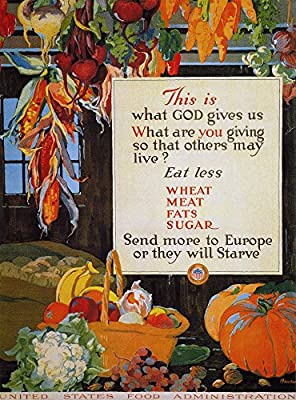
What else was going on in the Ridge communities during the 1920 Christmas season?
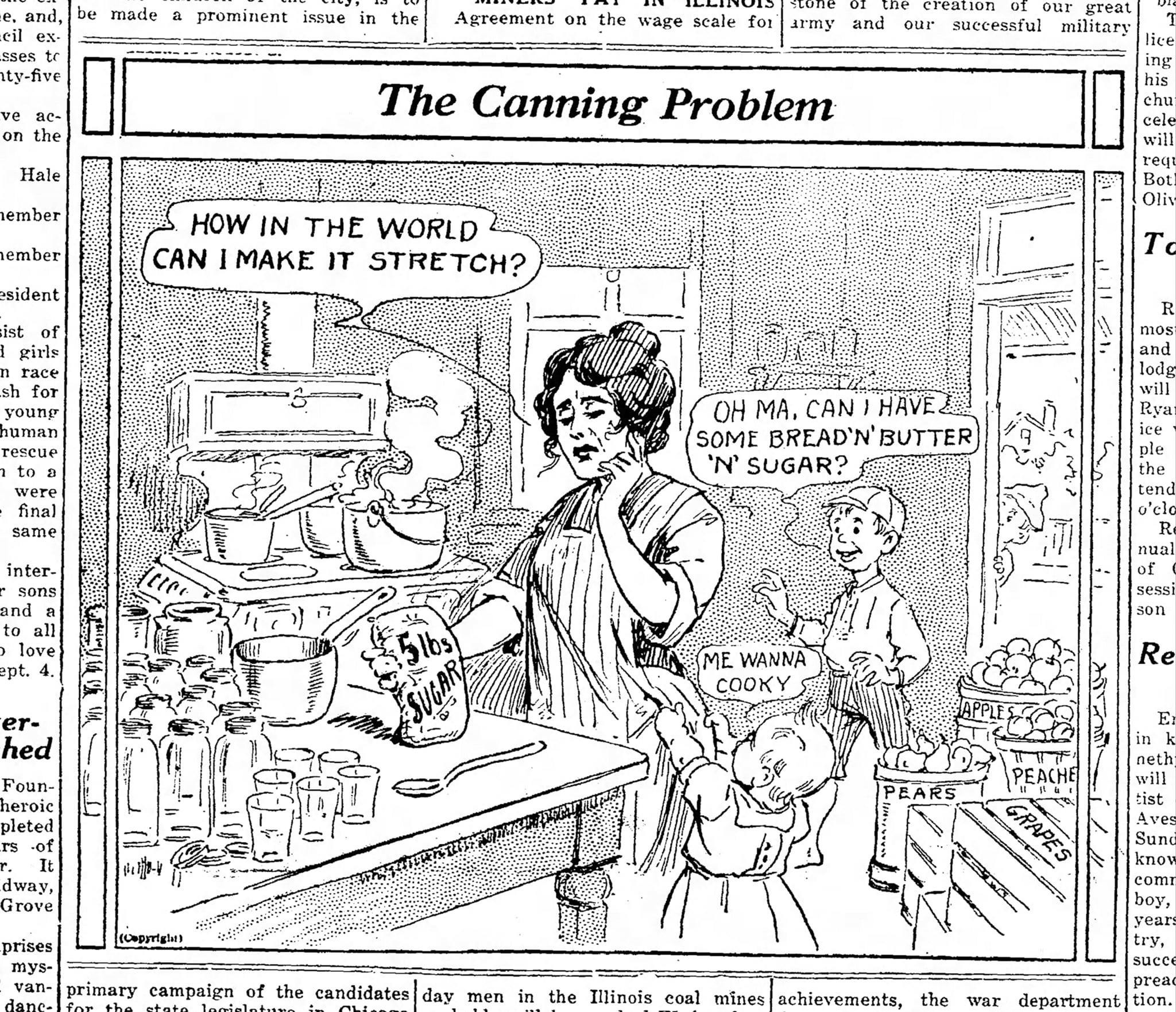
One hundred years ago, our reporter for the Englewood Times, Pauline F. Palmer, wrote: “Many of the mothers will not be obliged to stand hours waiting for that essential half pound of sugar. Remember last year? It looks as if the old time mince, pumpkin and apple pies and fruit puddings will all be enjoyed. Now all together, ‘Praise God from Whom all blessings flow.’”
Mrs. Palmer was referring to the shortages of certain food items, including sugar, during World War I.
The United States entered the war in Europe in 1917. By the end of the war, two million U.S. service people had been sent overseas.
The food situation in Europe developed into dire circumstances. The war had been raging for several years already, and food was becoming scarce. Farms had turned into battlefields, laborers were now in the armies, and transportation and delivery flow had been disrupted. Even before entering the war, the U.S. was sending food supplies to European countries, especially France and Belgium. Once American soldiers were sent to Europe, the problem was greatly compounded – now there were U.S. troops to feed.
In 1917, President Woodrow Wilson established the
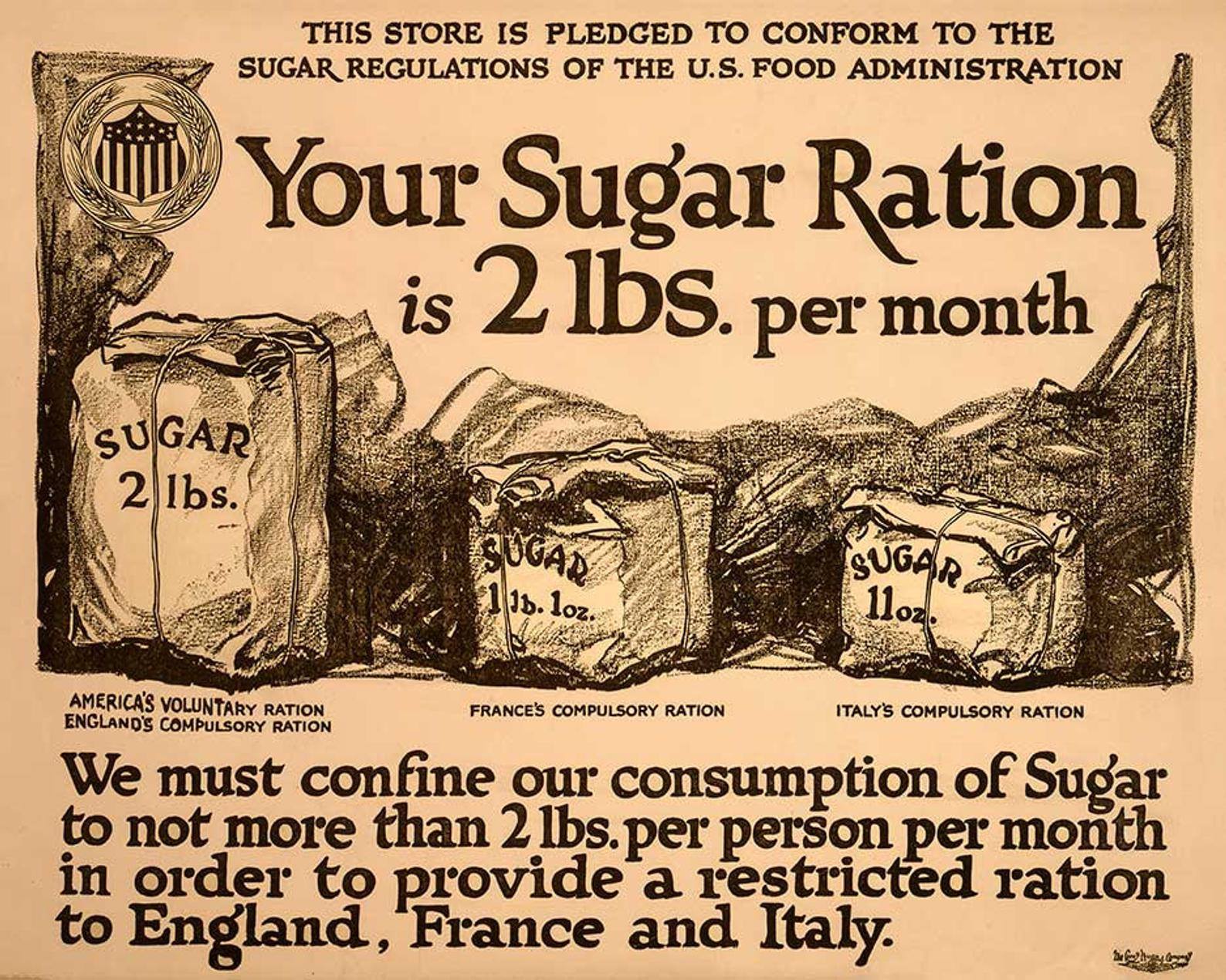
U. S. Food Administration to manage the production and distribution of food during the war. He appointed businessman Herbert Hoover to head the effort. Hoover’s goals were to provide supplies to Europe while preventing shortages and rationing in the U.S.
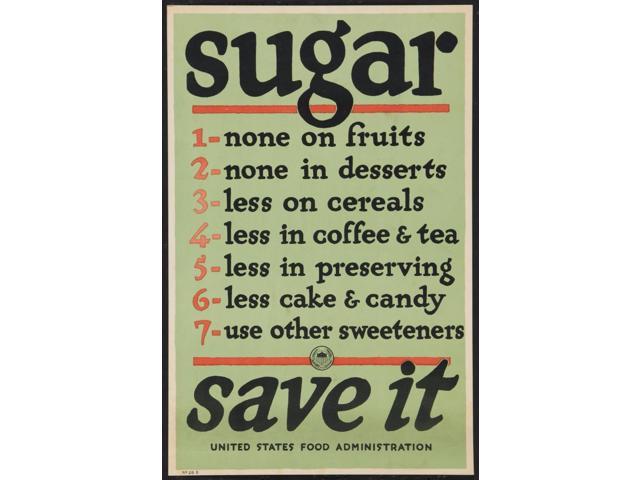
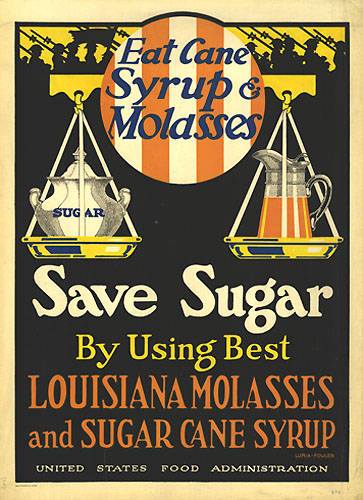
A campaign for voluntarily reducing the use of certain foods that could be transported to Europe was implemented. Sugar, wheat, meat, and fats were the main items. Americans were encouraged to use less of these items and eat more fresh fruits and vegetables, which were harder to transport overseas. These efforts led to “less days” as the people referred to them – Meatless Mondays, Wheatless Wednesdays. It became the patriotic duty of Americans to do with less. “Food will win the war” was a typical slogan.
The headquarters for the “meat division” of the federal food administration effort was located in Chicago. Harry A. Wheeler was appointed the “food administrator” of Illinois by President Wilson and he also oversaw the federal meat division. Wheeler lived on the South Side of Chicago, in Hyde Park. He was the vice president of the Union Trust Co. and former president of the U.S. Chamber of Commerce.
Wheeler spent his time between implementing the government’s programs and assuring the public everything would be fine.
Americans had a real sweet tooth. In 1916, the average American consumed 85 pounds of sugar per year. An average Englishman consumed 40 pounds, an average Frenchman, 37 pounds. Americans loved candy and soda pop. Now, Americans were limited to two pounds of sugar per person per month.
Giving up sugar was not easy, but people did it.
Children signed pledges to give up candy. Adults gave up sugar in their coffee. City housewives took up canning to preserve the fruits and vegetables grown in home gardens, using less sugar. Recipes were developed and distributed substituting brown sugar, honey, maple syrup, corn syrup, and molasses for white sugar.
There were cheaters, of course, those who engaged in price-gouging, hoarding, overuse, illegal sales, and other ways “to beat the system.” If caught, they were publicly admonished and received hefty fines that went to Red Cross relief efforts. Businesses could lose their licenses for ignoring the guidelines. In 1919, federal grand jury charges were brought against five Chicago dealers charged with profiteering in sugar.
When the war ended in 1918, the food issues did not end. Hoover started the American Relief Administration to continue to ship food supplies to the millions of people starving in Europe. It took years to return to normal food production.
And of course, there were also those who did not support helping others. One piece in the Englewood Economist in 1919 stated “if the people of Europe will go to work, they should be able to produce their own sugar, leaving the Cuban crop for the United States.”
When Prohibition started in early 1920 in the U.S., the demand for sugar increased as people substituted soft drinks for liquor, adding to the problem.
But by Christmastime, sugar was more plentiful and once again, people could look forward to their favorite Christmas desserts.
Next: 1920 Christmas on the Ridge – more stories.
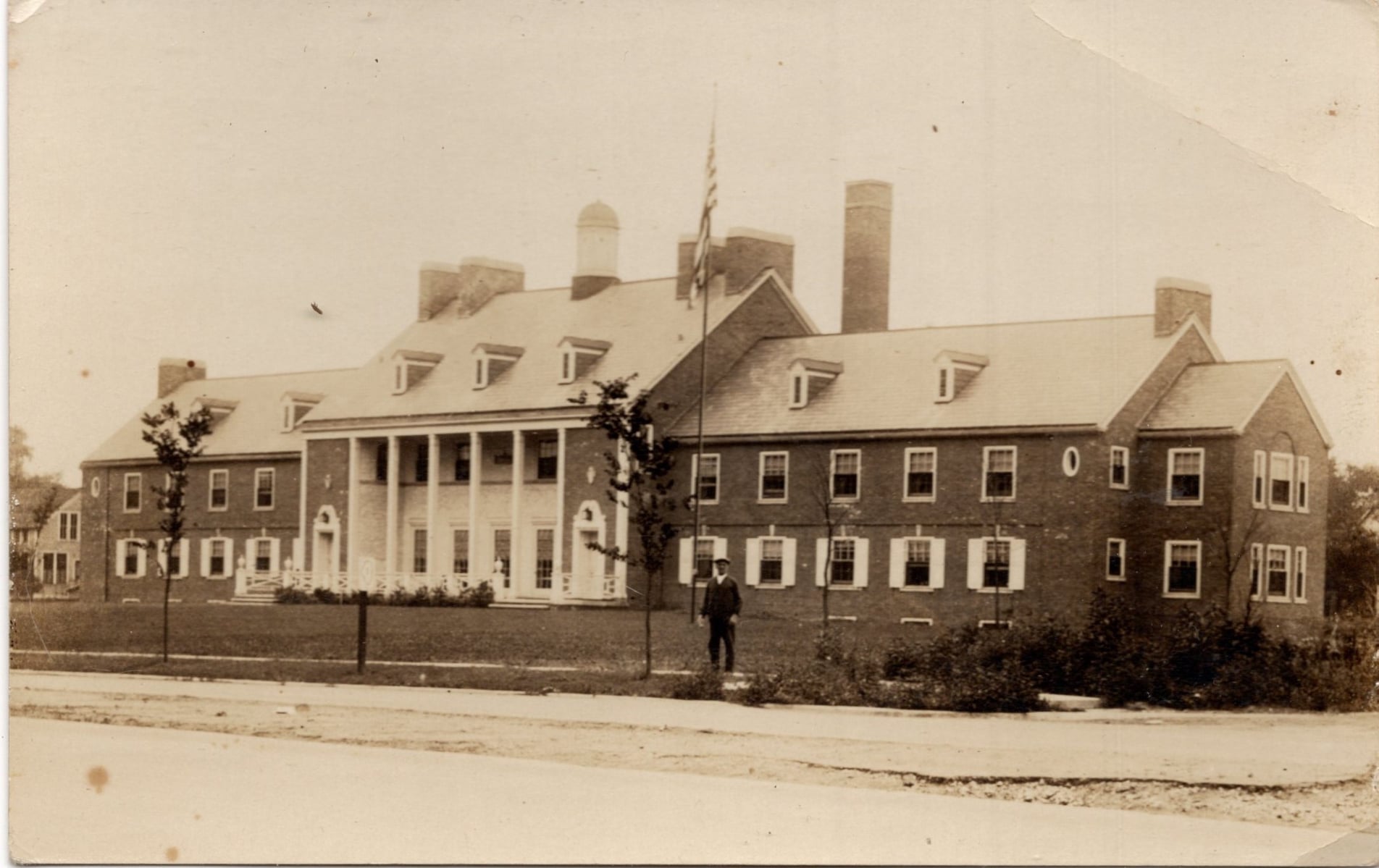
Here are a few more stories from the 1920 holiday season on the Ridge, stemming from Pauline Palmer’s “Ridge and Morgan Park News” columns in the Englewood Times.
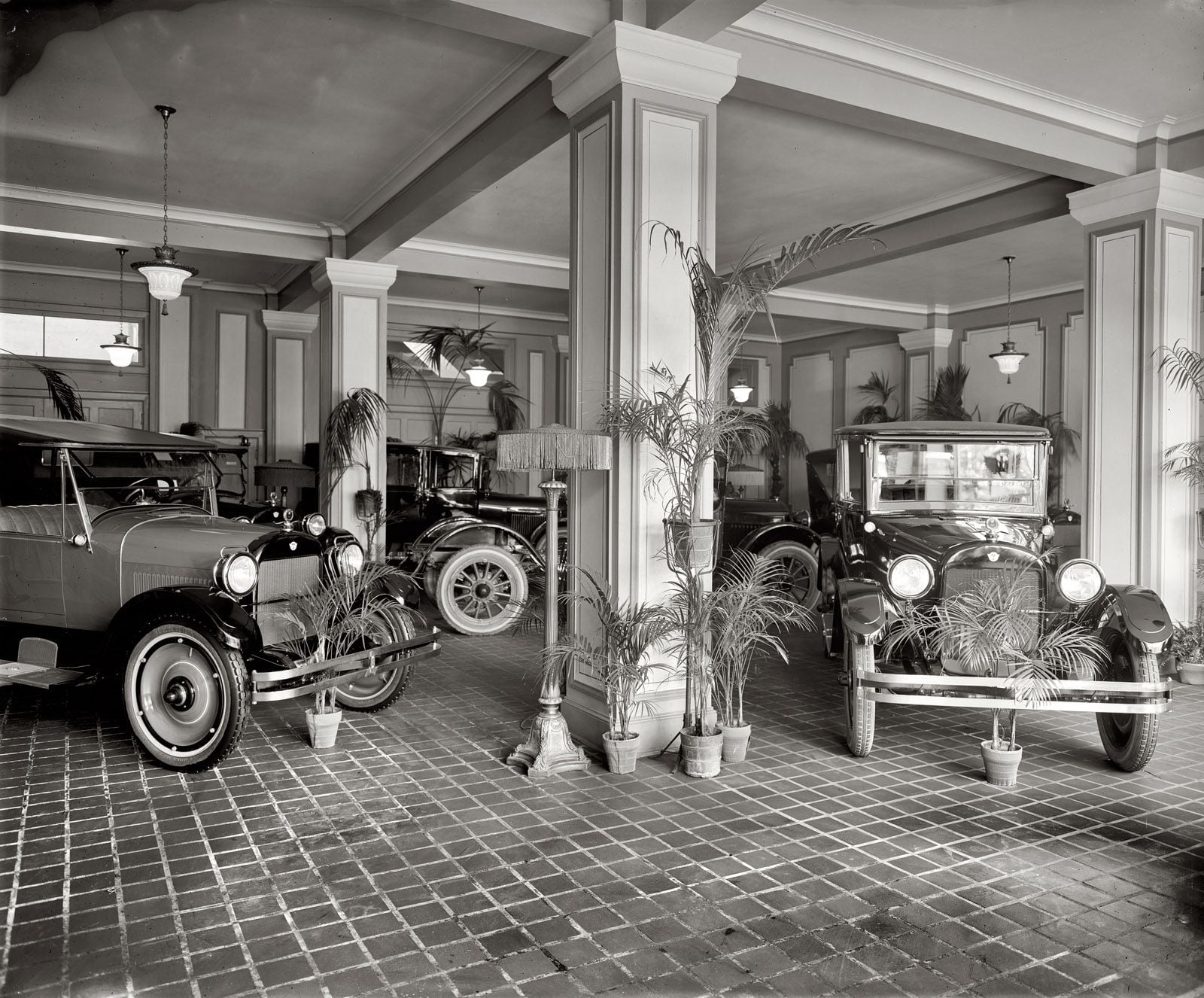
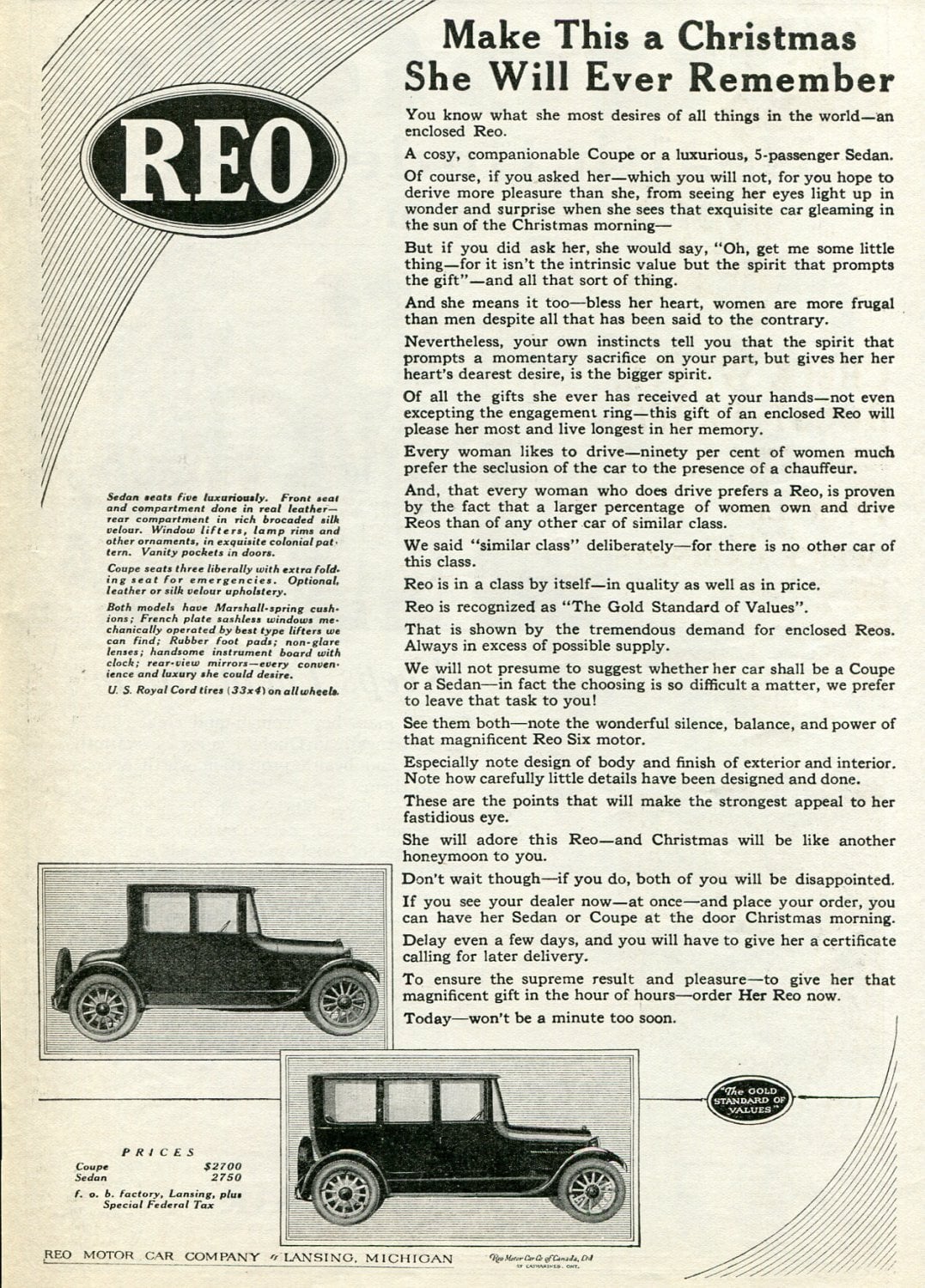
The W. Bacons of 1210 West 100th Street enjoyed a “pre-Christmas gift, a new REO car.” A little research revealed that Mr. Bacon was an employee of the Chicago Junction Railroad. An REO car was the product of the REO Motor Car Company founded in 1905 by Ransom E. Olds, who also founded and then left Oldsmobile. REO (the founder’s initials) was one of the top manufacturers of cars in 1920, and the cars, in the $2000 – 4000 range, were quite a bit more expensive than the Ford Model T, which went for $350.
The REO company started producing trucks in 1910. The REO Speed Wagon was a light motor truck made from 1915 until the 1950s. It was an ancestor of the pickup truck.
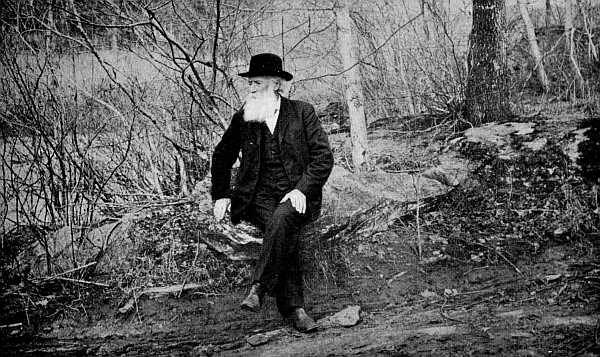
In another entry, John Burroughs, the “celebrated naturalist,” spent a few days with the DeLoach family at 10154 Longwood Drive. This wasn’t Burroughs’ first visit to the Ridge – an earlier Pauline Palmer column mentioned that Burroughs visited and spoke at a local school. Burroughs was well-known and popular at the time as an essayist on nature and the conservation movement. His work was more literary than scientific – he wrote about his own perceptions of the natural world. His health declined shortly after this visit to the Ridge, and he died in March 1921 right before his 84th birthday.
One quote from John Burroughs is: “I go to nature to be soothed and healed, and to have my senses put in order.”
Robert John Henderson DeLoach, an educator and naturalist, had a Ph.D. in Botany from the University of Georgia. He came to Chicago to be the horticulturist for Armour and Co., a position he held for 20 years. In 1911, DeLoach wrote a book, “Rambles with John Burroughs,” about his visits with Burroughs. The book included photographs of Burroughs taken by DeLoach. They first met in 1906 when DeLoach, then a professor at the University of Georgia, visited Burroughs at his cabin, Slabsides, in West Park, New York. This interesting story about the DeLoach family of Beverly calls for more research and elaboration.
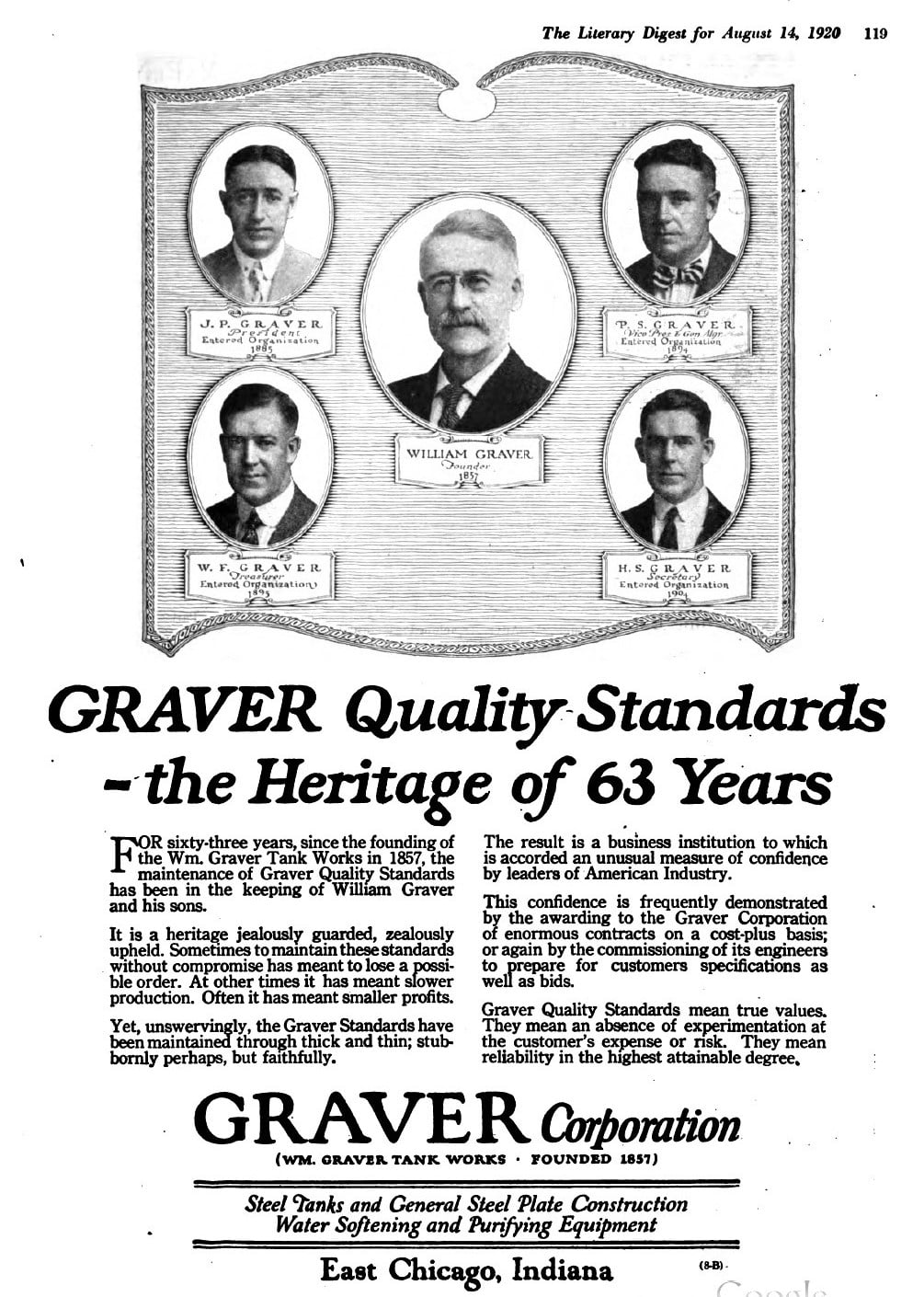
The Gravers were in the news. William Graver relocated his business, Graver Tank Works, to the Midwest in the 1880s. The company produced metal tanks mainly used to store oil.
William had five sons, all of whom went into the family business. All five bothers built houses in Beverly, including Herbert, the fourth brother. In 1921, he built the house that the Ridge Historical Society owns and operates as RHS headquarters.
During the holiday season of 1920, Cora Graver of Longwood Drive, the wife of the second brother, William, helped with a bazaar to raise money to furnish the Oak Haven Old People’s Home. Oak Haven was the forerunner of Smith Village at 113th and Western Avenue.
In 1917, it was reported that every home for the elderly in Cook County was filled to capacity, with waiting lists. A group of church leaders from Englewood came together to establish a new facility. Many leaders from the Ridge became involved in the effort.
The next three years were spent raising money to make the plan a reality. A women’s auxiliary was formed, and they did much of the fund-raising through activities like this bazaar, community dinners, card parties, etc.
The first building that was designed had to be abandoned because of the “fire laws.” Oak Haven eventually opened in 1924.
In another holiday news tidbit, Phyllis and Christine Graver entertained 125 children at a dancing party.
These girls were cousins, daughters of two more Graver men. Phyllis, 11, was the daughter of Phillip, the third brother, and Christine, 13, the daughter of James, the oldest.
The column does not say where the event was held, but it lists the address of the girls as a house on Longwood Drive, so perhaps the party was held there. The girls lived at two separate addresses on Seeley Avenue. The Longwood address given was built by the youngest Graver brother, Alexander. Unfortunately, he had died earlier that year, in January 1920, a victim of the influenza/pneumonia pandemic. He was 37, and he left his wife Grace and two young daughters.
This post – and the holiday stories of 1920 – will wrap up with the story of “little Miss Helen Carver” of 9557 Vanderpoel Ave.
Helen was turning seven years old, and her mother planned an event for two weeks after the actual day as a double party for Helen and an older brother. However, Helen felt a birthday should be celebrated on its rightful day. Without telling her mother, Helen invited a number of her school mates to her house for a party on her actual birthday. Mrs. Carver was quite surprised and perplexed when all these children showed up at the front door for a celebration. But like moms do everywhere, Mrs. Carver pulled it off, and “it ended fine and all had a good time.”
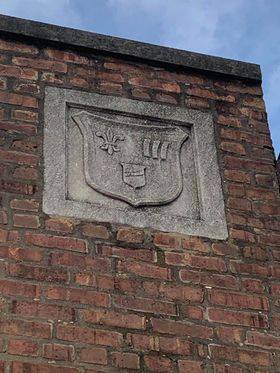
Do we have anyone out there who is into coats of arms and other heraldic crests? Homeowners on the Ridge have asked for some help in identifying this crest which is on their newly-purchased home. From the little bit of research RHS has done on the house, it appears to have been built in 1939 and the first owner was named Underhill, of Canadian-English Protestant descent, and he was a foreman at the steel mills. Any ideas? Family crest? Related to the steel industry? Some other organization? Later owners included King, McCarthy and McElroy, all Catholic.
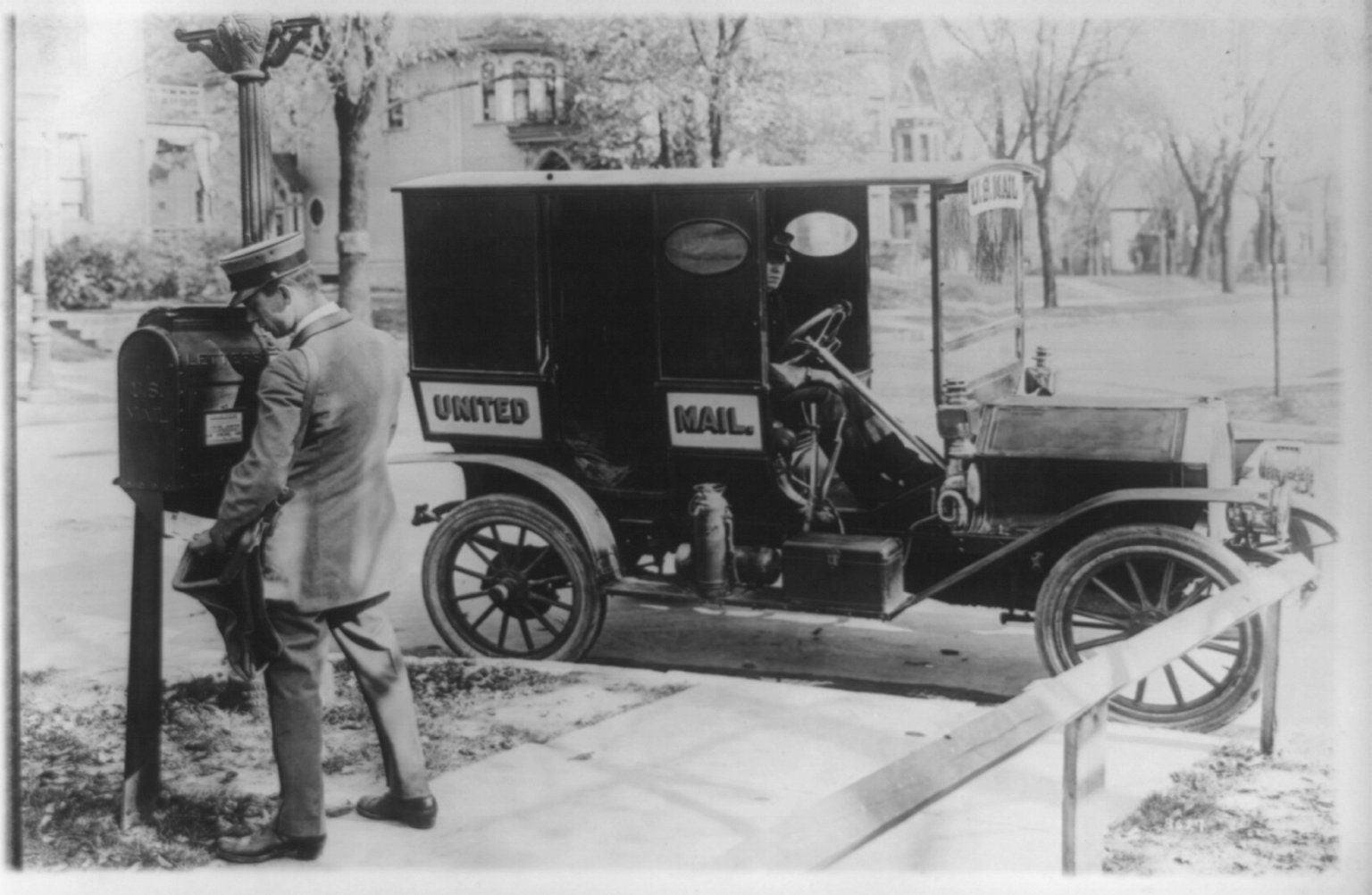
There has been a lot of discussion recently about the local post office. People have mentioned that they have been told there is a backlog of mail and packages to be delivered, and that the postal employees have been asked to work on Christmas Eve and Christmas Day to try to catch up.
Here is a story about the Morgan Park post office and Christmastime from more than one hundred years ago.
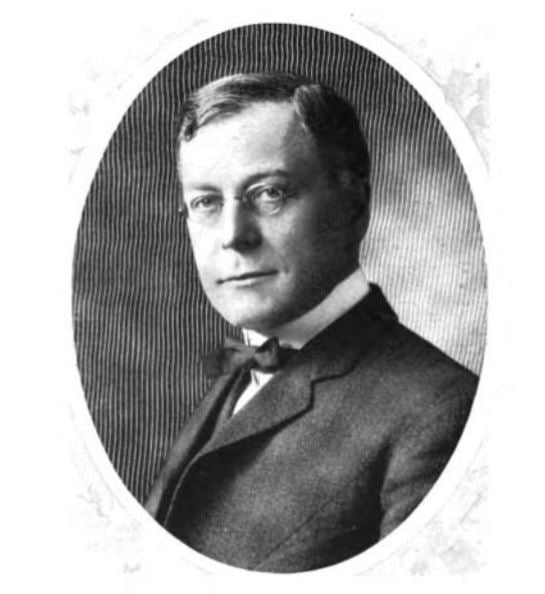
David Herriott is usually mentioned on this page in reference to his role as the publisher/editor of the Morgan Park Post newspaper. But his “real” job was as Postmaster.
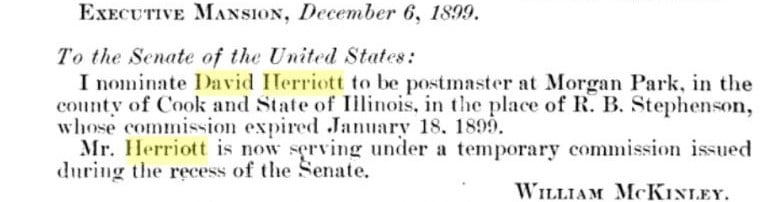
Herriott beat out twenty-two other candidates to be named Postmaster of the Village of Morgan Park in 1899 by President William McKinley. He held that position until 1914, when Morgan Park was annexed to Chicago. He was then appointed as Superintendent of the Auburn Park station near 79th Street and Halsted Street. In 1929, he was named Superintendent of the South Chicago station at 92nd Street and Exchange Avenue on the southeast side of the city, from where he retired in 1933.
Herriott was well-liked and respected in his Postmaster role. When appointed to Auburn, the local paper wrote that he was “one of the best informed men in the service as well as the most amiable and genial.” The paper considered it “a distinct advantage” to have Herriott as the new superintendent.
At another time, a columnist mentioned Herriott’s “good character” and that he was “a rattling good fellow.”
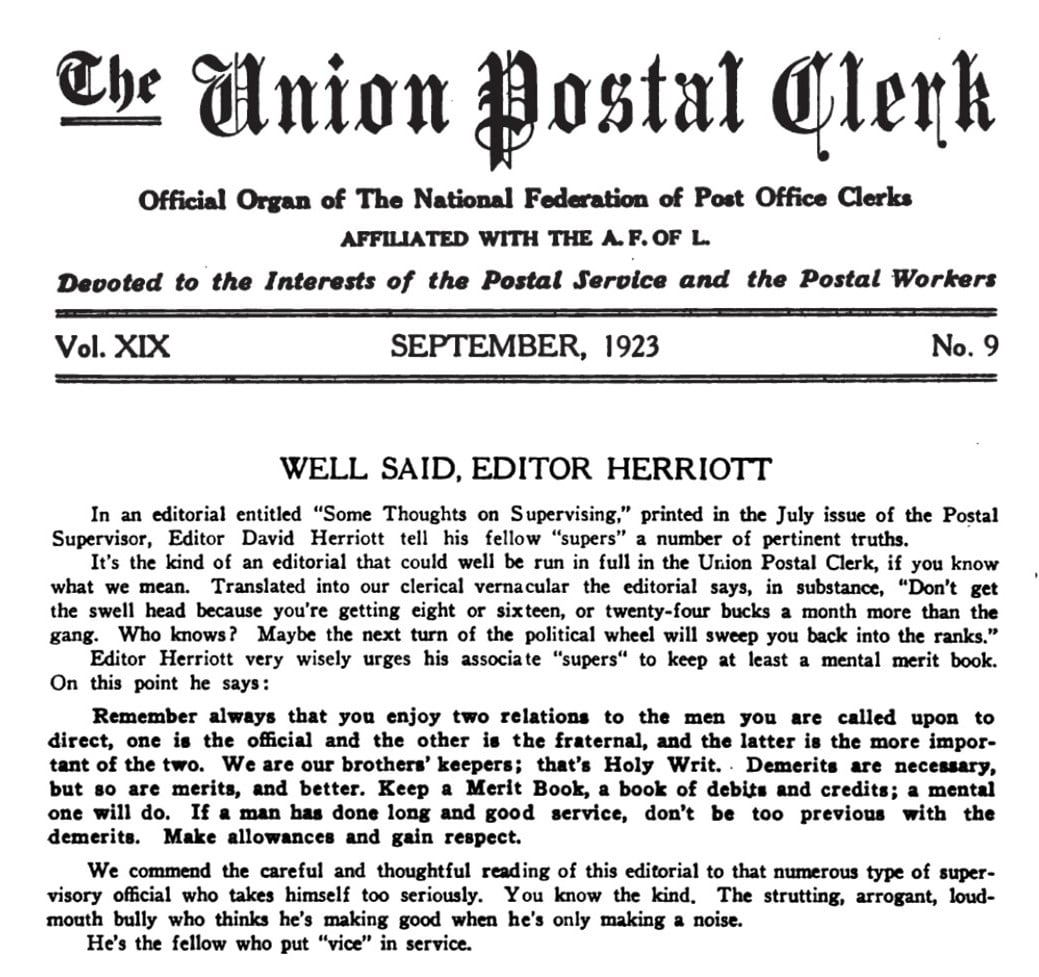
An editorial in a 1923 “The Union Postal Clerk” magazine of the union representing postal clerks referred to Herriott as “very wise” for his advice to fellow supervisors.
Herriott was a Progressive and supported fair labor practices. At the time he was working for the U.S. postal service, the stations were open on Christmas Day. Herriott wanted to give the employees that day off. So while at Morgan Park, he came up with the idea to have the postal station open but just not staffed on Christmas Day.
He had all the mail and packages sorted by address and laid out on tables by street name. He invited the residents of Morgan Park to come into the station and pick up their own mail if they did not want to wait until December 26 to have it delivered. The residents cooperated with the plan and it worked very well.
In the 1920s, Herriott was the editor of “The Postal Supervisor” magazine for several years. This monthly magazine was the official publication of the National Association of Postal Supervisors, out of Washington, D.C.
Herriott advocated for two changes for the employees: half-days on Saturdays and Christmas as a holiday. The Postmaster General was hesitant, but the eloquent and persuasive Herriott convinced him to give it a try for one year. It has continued ever since.
A newspaper editorial noted that when Herriott addressed an issue, “what he has to say will be important and to the point…. And his words will be phrased with a charm and quaintness that never fail to get attention.”
He certainly used that charm to help postal workers.
David Herriott died in 1960 at the age of 97.
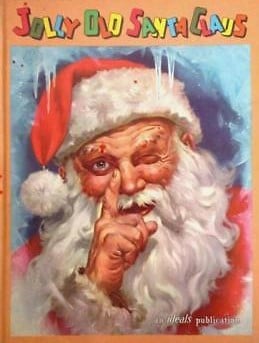
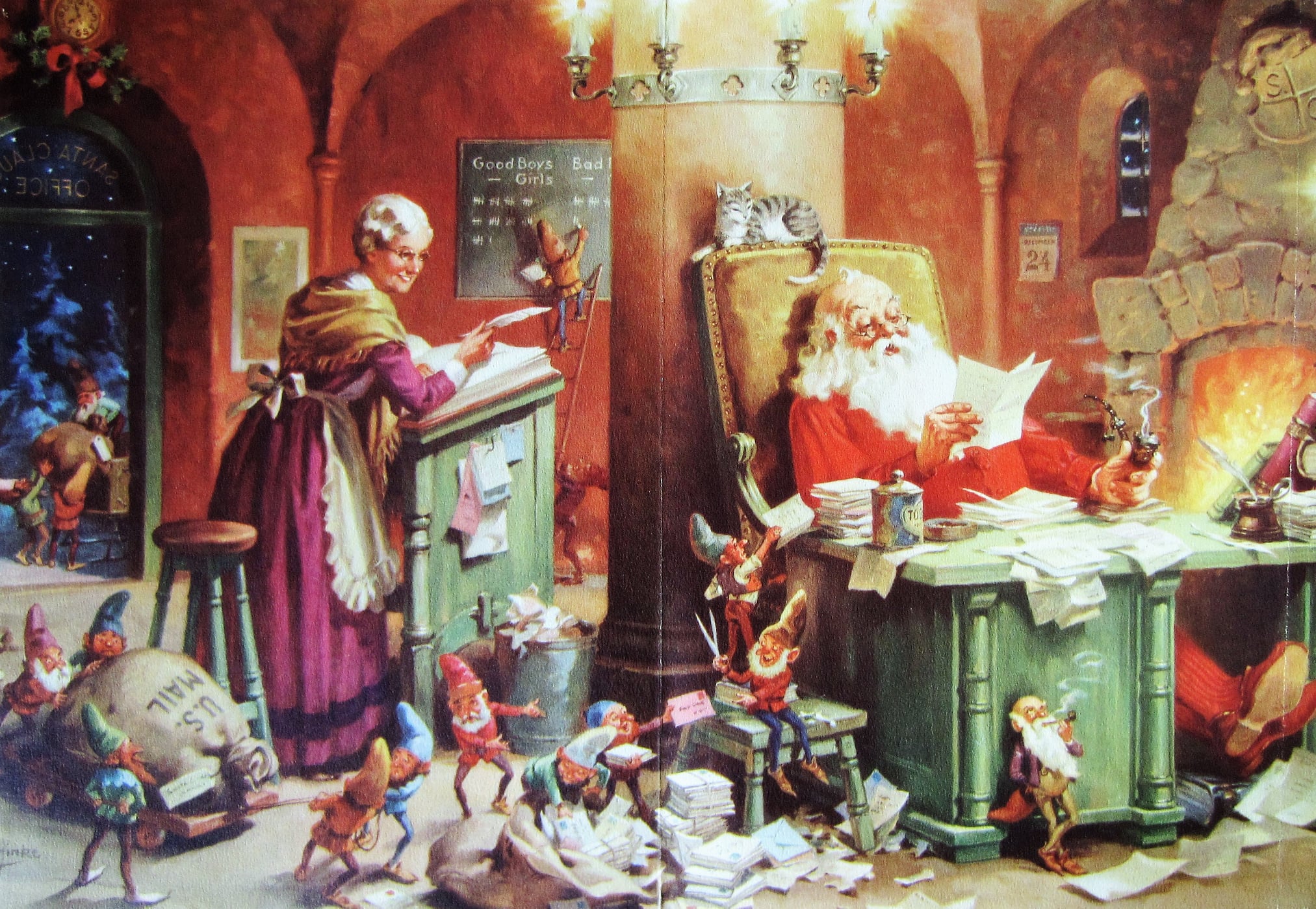
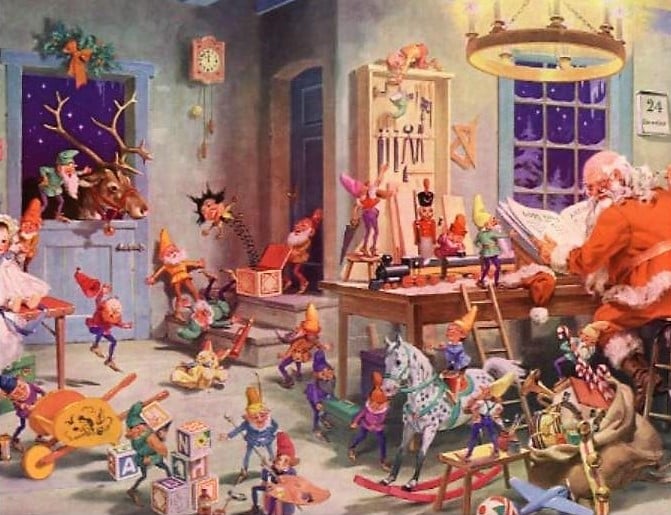
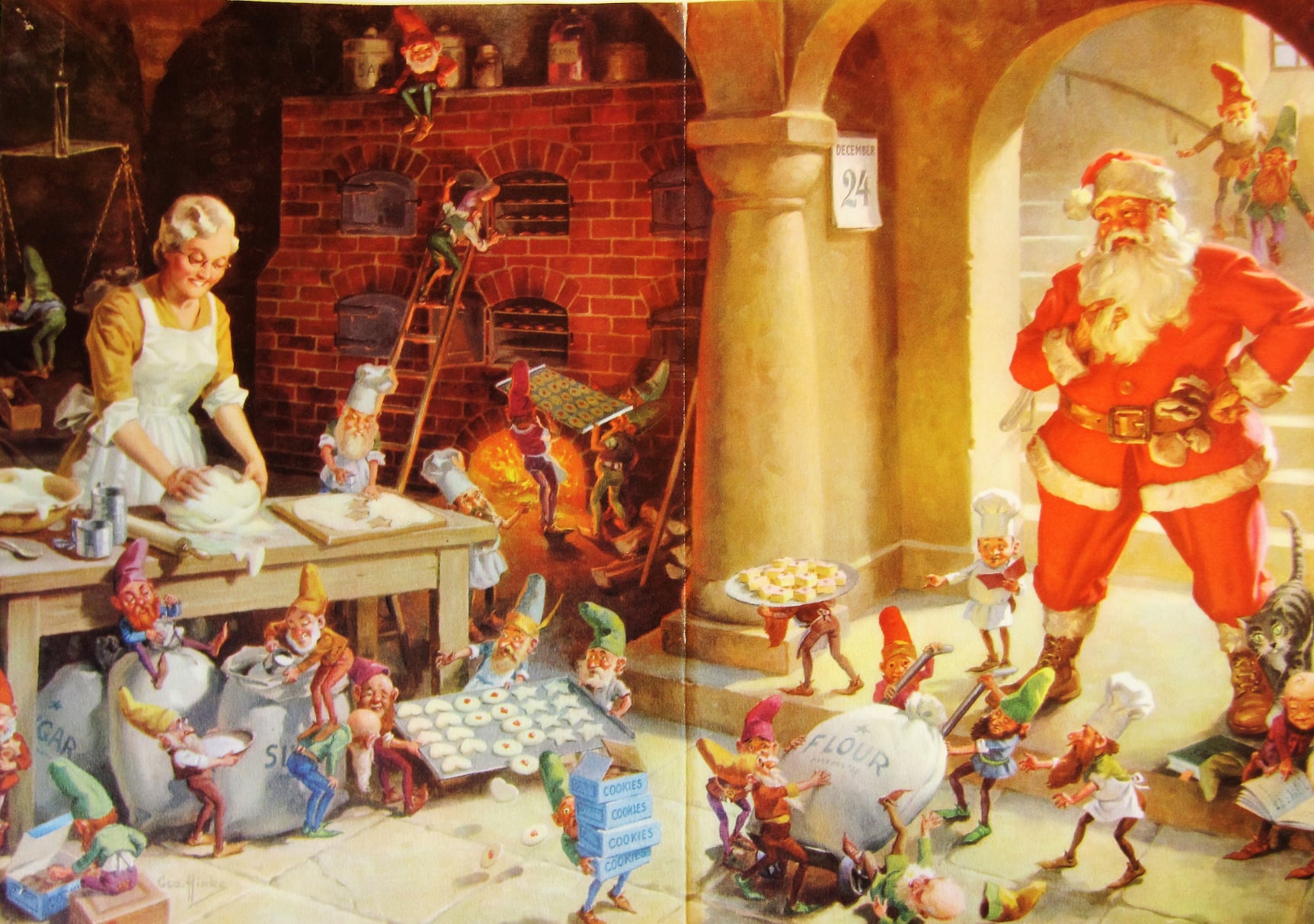
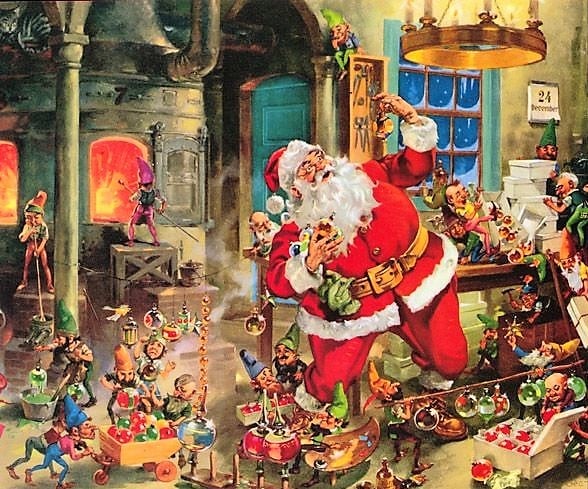
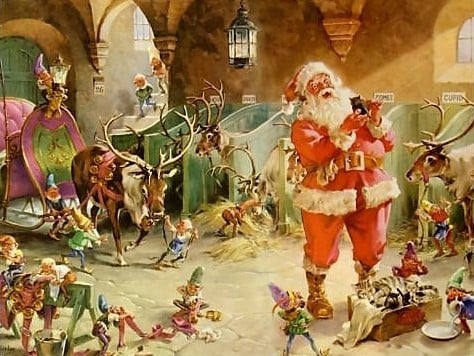
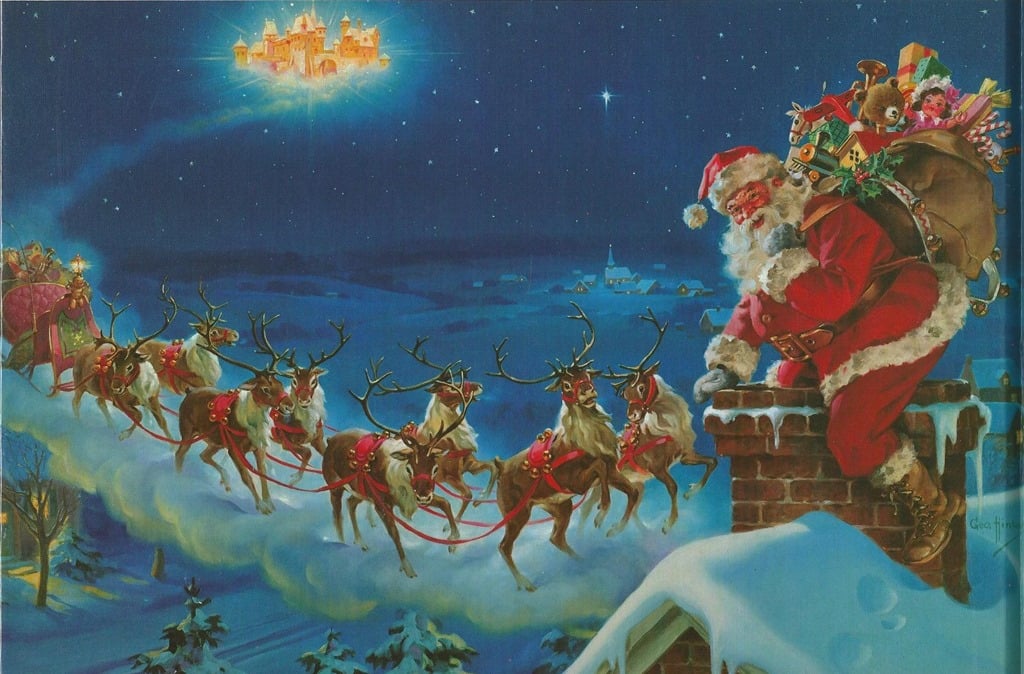
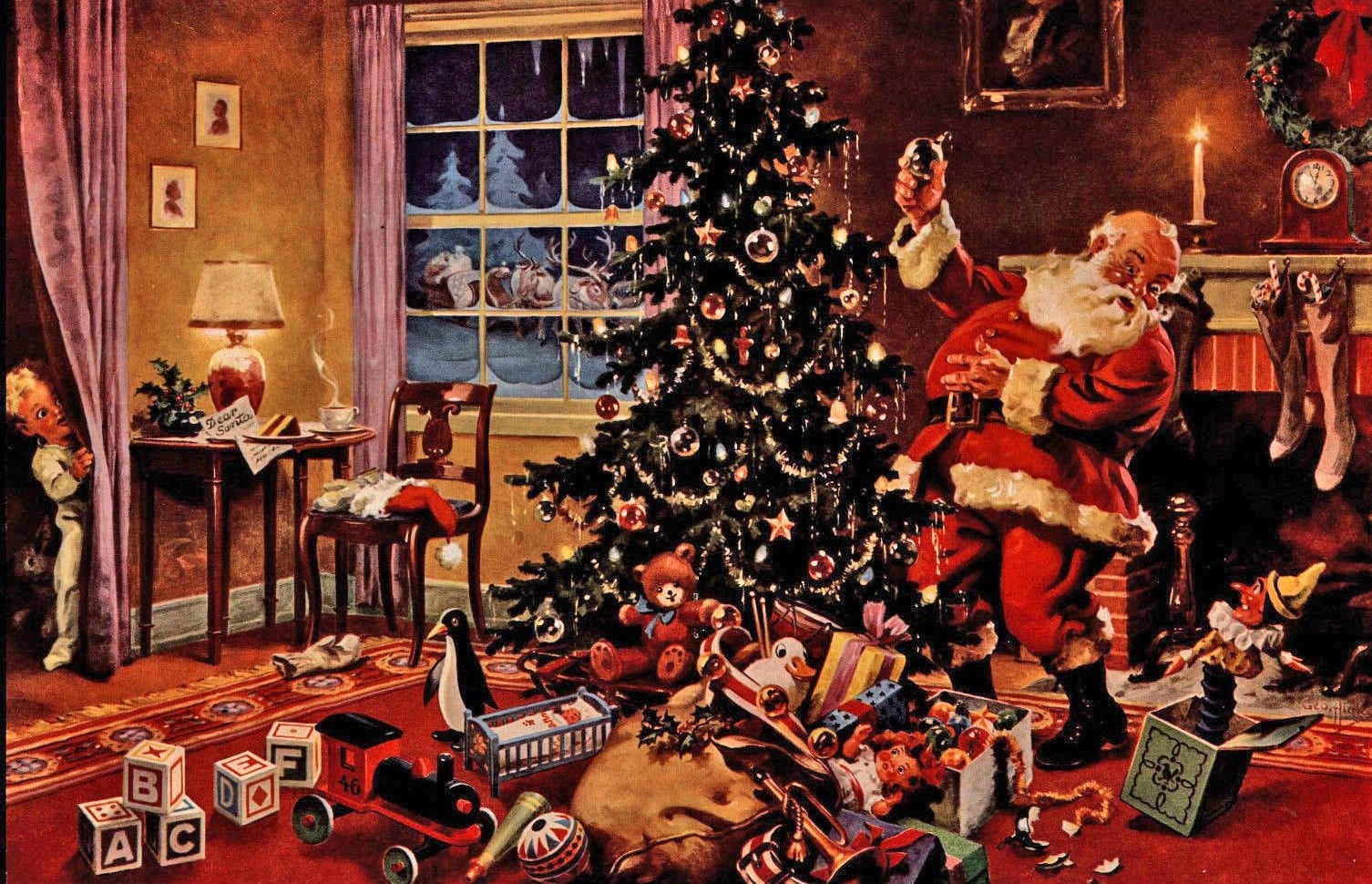
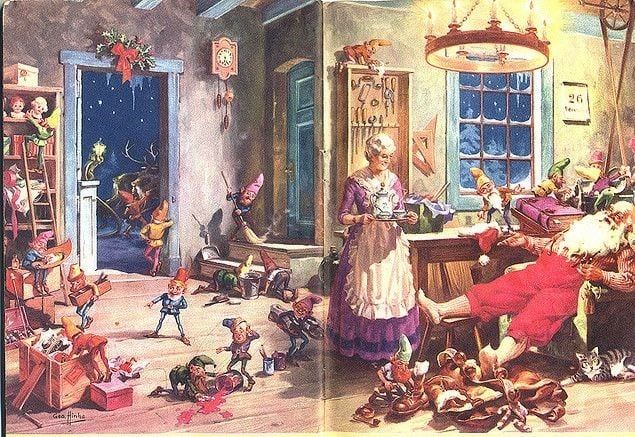
George Hinke was born in Germany in 1883 and came to Milwaukee, WI, in 1923. From 1941 until his death in 1953, he created commissioned paintings for Ideals Magazine. In 1961, Ideals Magazine Collector’s Edition of Jolly Old Santa Claus was published with Hinke’s paintings, creating a truly magical version of Santa on Christmas Eve. The elves come to life in a most delightful way.
Merry Christmas from the Ridge Historical Society.