
Explore the RHS Facebook Archives, a rich repository of local history written by Carol Flynn. For two decades, Carol brought a deeply dedicated voice to public education at RHS. Her role as Facebook administrator through mid-2025 naturally extended her prolific research into meticulously detailed articles, most notably her multi-part historical series posts. Today, Carol continues her local history writing for The Beverly Review and other outlets.
Native American Heritage
Native Americans invented the game of lacrosse, and it is the oldest organized sport in North America.
The next installment of the series on Native Americans on the Ridge is in this week's Beverly Review.
https://www.beverlyreview.net/news/community_news/article_a9bdc7ce-9109-11ed-9aed-13563de3a087.html
The Ridge Historical Society
March – Irish American Heritage Month and Women’s History Month – Post 2
By Carol Flynn
For March, we’ll be alternating stories between Irish American heritage and women’s history on the Ridge.
Beverly is known today as one of the most Irish Catholic neighborhoods in Chicago. According to the U.S. Census Bureau, in West Beverly (west of Western Avenue), almost 55% of residents report Irish ancestry, the highest concentration in the city. Mount Greenwood and West Morgan Park are each about 45% Irish, and Beverly about 25%. Chicago, as a whole, is about 7.5% Irish.
Many people, including new home buyers in Beverly, think this has always been the case. It’s not surprising they would think this, given the media’s penchant for using terms like “Beverly’s deep Irish roots” to describe the community, implying this goes way back in history.
In reality, the large Irish presence in Beverly is a much more recent phenomenon, not solidifying until about 1980, well more than a century after the area was first settled.
Beverly was originally settled mainly by English and other European Protestants as a “bedroom community” for wealthy businessmen attracted to the Ridge by its scenic beauty. They built country estates here and invested in property for development, while most of their business and social lives were centered in downtown Chicago.
Morgan Park was planned as an education, temperance, and religious community, with the Baptist Theological Seminary founded here. Mount Greenwood was primarily farmland, with ministers who preached hard work and temperance.
There was always an Irish presence on the Blue Island Ridge, however small, even in the earliest days, although it would be impossible to say who was the first person of Irish descent to ever step foot here.
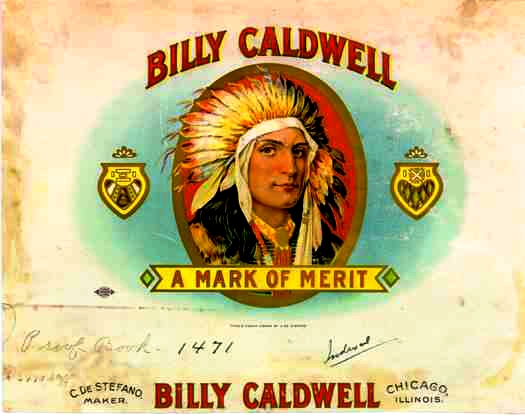
One early person was Billy Caldwell, also known as Chief Sauganash and the “Irish Indian.” Caldwell (1782-1841), the son of a Scots Irish officer in the British Army and a Mohawk mother, was raised Catholic from the age of seven on by his white stepmother. He came to Chicago in 1820 from Canada as a fur trader.
Billy Caldwell became an important figure in Chicago history, and there are historical references to his visits to the Blue Island area.
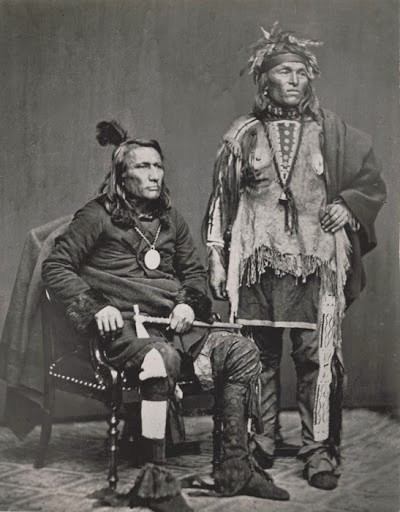
Fluent in French, English, and Native American languages like the Algonquin language used by the Potawatomi people most prevalent in the Chicago area, Caldwell became a leader among both the Potawatomi people and the white settlers.
Caldwell was known to guide survey and expedition teams through the area. During one visit, he was part of a team that lost everything when their wagon capsized in Stony Creek at the southern edge of the Ridge, so they stopped at a dwelling along the Vincennes Road where they were given food and spent a cold night outside by a fire.
Caldwell was credited with the idea of building the Cal-Sag Channel to be a feeder into the Illinois and Michigan Canal.
Before he led the Potawatomi out of Chicago in 1836, after the Treaty of Chicago, it was reported the “old Irish Chief” rode his pony through the prairies near the Ridge.
The Sauganash area on Chicago’s north side, the Billy Caldwell golf course, and Caldwell Woods in the Cook County Forest Preserves all get their names from this man.
More on Beverly becoming “Irish” will be in upcoming posts.
This idealized image of Billy Caldwell was used for a cigar brand many decades after his death.
The Ridge Historical Society
The Early Days of Morgan Park – Part 1
By Carol Flynn
Selecting a date to recognize the “beginning” of Morgan Park is arbitrary.
Indigenous people lived in the area for thousands of years before the European settlers came, so habitation is not really the measure.
What is really being decided is a date to mark the transition from Natives to non-natives as the predominant inhabitants of the Ridge.
The identity of the first non-native to step foot on the Ridge, and when that person came, will never be known with certainty. The first written records of explorers in the Chicago area date to the 1600s. Jean Baptiste Point du Sable of African descent is recognized as the first non-native to take up residence in the downtown area around 1790.
Fort Dearborn was established in 1804 and survey teams operated from there. They could see the Blue Island rising from the prairie twelve miles to the southwest.
In 1972, a group of Beverly/Morgan Park residents proposed that the community recognize the year as the sesquicentennial of the founding of Beverly/Morgan Park. This was based on the arrival of French-Canadian fur trader Joseph Bailly in 1822 at Porter, Indiana, on the Calumet River, where he established a homestead. Bailly was from a well-known family that ran trading posts from Michigan to Chicago. He interacted with the local Native Americans, predominantly the Potawatomi, and travelled their paths and waterways.
It was surmised that Bailly knew well the local Natives, and the Vincennes Trail that ran through the Ridge, and that he “opened up” the Blue Island Ridge to the fur trade. Therefore, they believed this was the start of current history, at the time 150 years in the past. There was a year’s worth of celebrations in 1972 to mark this anniversary.
A decade after Bailly, in 1832, DeWitt Lane built a cabin at what today is about 102nd Street and Seeley Avenue. He didn’t own the land; the U.S. government had not yet put it up for public sale.
The Native Americans gave up ownership of the land with the Treaty of Chicago in 1833, and began to leave the area.
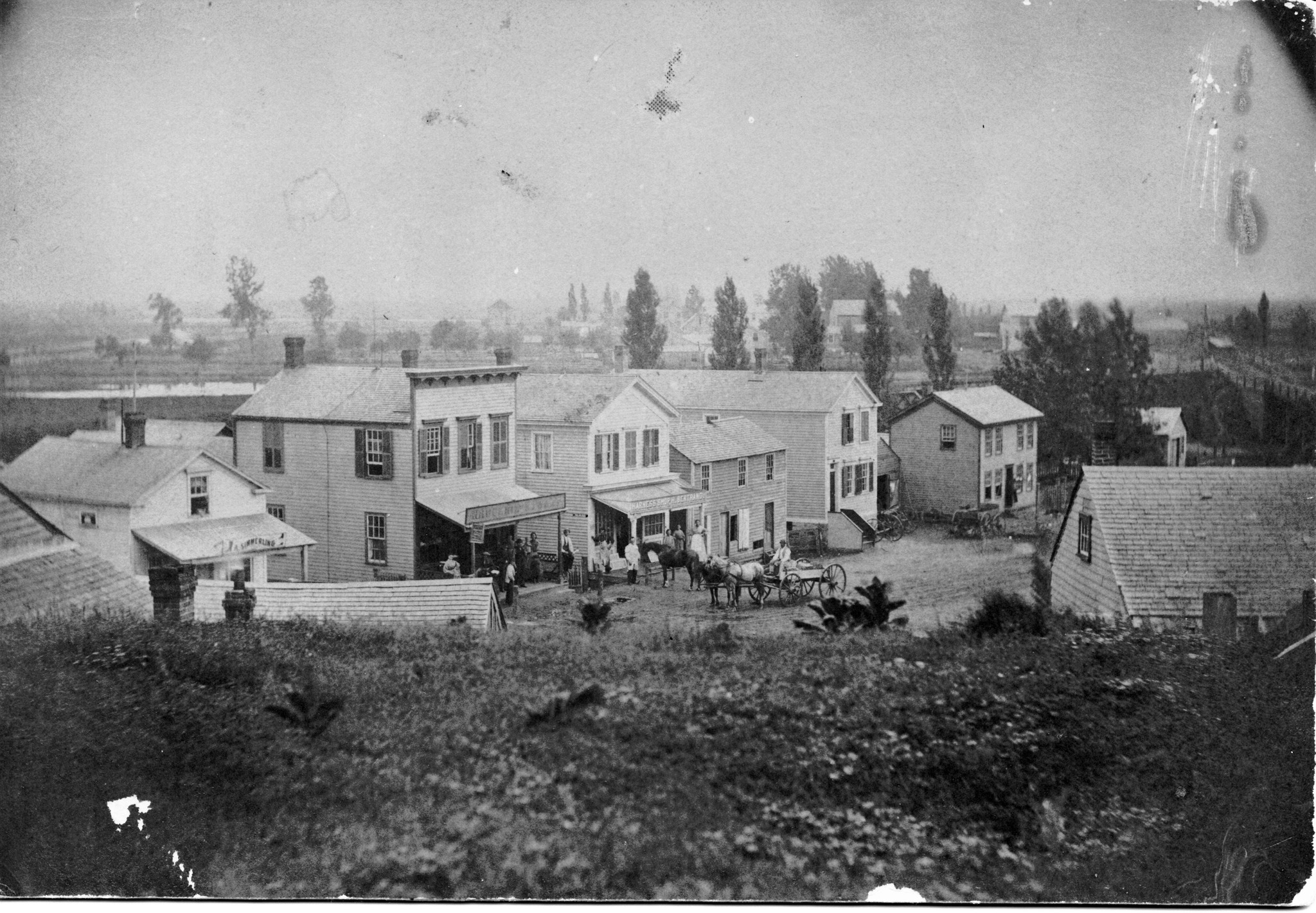
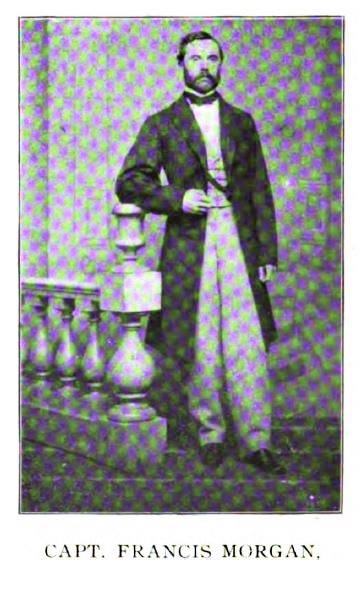
The government began public domain land sales in 1834. John Blackstone bought up substantial property on the Ridge in 1835 and 1839, and reportedly built a house in today’s North Beverly. In 1844, he sold the land to Thomas Morgan from England who moved here with his family, livestock, and hounds, and established an estate he called Upwood around 91st Street and Longwood Drive.
At the same time, settlement was going on at the southern tip of the Ridge, where the city of Blue Island was being established. Other homesteads were being established along the Vincennes Trail; Norman Rexford and Jefferson Gardner were there in 1834. Because Morgan did not like the Vincennes Trail running through his property, he rerouted it to the east below the Ridge.
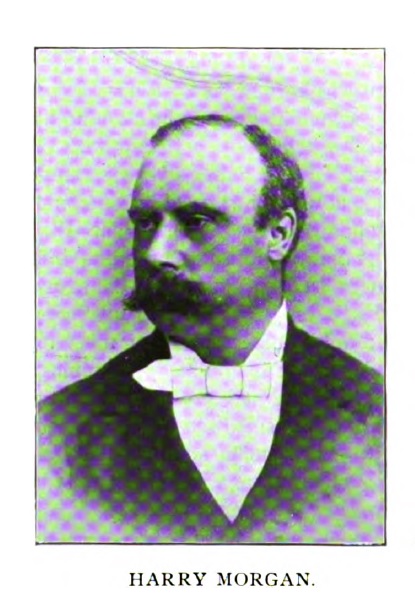
Thomas Morgan died in 1851 and the estate passed to his widow, Anna, and their nine children. In 1868, a substantial portion of the estate was sold to a group of investors headed by Frederick H. Winston, and Winston took legal title from the Morgan heirs. In 1869, the group of investors incorporated as the Blue Island Land and Building Company (BILBC), and Winston transferred the title to the company.
Some of this land they sold off immediately, and it became the Village of Washington Heights that included today’s Beverly. Washington Heights was incorporated as a village in 1874, and was annexed to the city of Chicago in 1890.
The BILBC developed some of the land into a section they called Morgan Park, which was incorporated as a village in 1882, and was annexed to Chicago in 1914.
The next post will look more at the BILBC and the establishment of the Village of Morgan Park.
The Ridge Historical Society
Native American Heritage Month: Land Acknowledgement Statement
By Carol Flynn
November is Native American Heritage Month. The theme for this year is “Celebrating Tribal Sovereignty and Identity.”
This continent was populated by Indigenous Peoples for 20,000 years before the European settlers came. There was, and still is, no single Native American culture, language, or lifestyle; there were many different groups here when the Europeans arrived. Ninety percent of those people died from diseases such as smallpox, measles, influenza, and cholera introduced by the Europeans, to which Native Americans had no natural immunities.
Native Americans should not just be considered as part of the past – they are very much part of the present and future of this country.
In recent years, governments, universities, cultural organizations, churches, and other institutions have begun recognizing the Native American heritage of the land through Land Acknowledgement Statements (LAS). These are formal declarations put out in writing that note the organization is located on land that was once the ancestral grounds of Native Americans.
These statements first started being used in Canada in 2015. They are often read aloud at the beginning of an event. In Canada, they are regularly included at events ranging from parliament sessions to ballet performances to National Hockey League games.
Chicago-area groups, including the Field Museum of Natural History and the Forest Preserves of Cook County, have issued Land Acknowledgement Statements.
In 2021, the RHS Facebook page ran a series on the history of Native Americans on the Ridge as support for a suggested LAS for groups on the Blue Island Ridge. That LAS has been adopted by several organizations in the community.
The suggested LAS is:
“We acknowledge that we are located on the ancestral homelands of the Potawatomi tribe, a member of the Council of Three Fires with the Ojibwe and Odawa Peoples.
“Other tribes that lived in the Blue Island area include the Miami and the Illinois Confederation. Many additional tribes including the Fox, Sauk, Winnebago, Menominee, Meskwaki, and Kickapoo lived nearby and accessed the area for trading and portage routes.”
The rationale for this statement is that the Potawatomi were the dominant Native Americans living around the Blue Island area in 1833 at the time of the signing of the Treaty of Chicago. The Council of Three Fires, a confederation of the Ojibwe, Odawa, and Potawatomi tribes, ceded the land to the U.S. Government at that time, and most of the Native Americans left the area.
The Miami tribe also had a presence here, concurrent with the Potawatomi, and before that, until the late 1700s, tribes from the Illinois Confederation lived in the area until driven out by the Miami and Potawatomi.
Many other tribes lived nearby. This land is located on the Vincennes Trace and Calumet and Stony Creek waterways, and the land and water routes were used for trading, transportation, and seasonal migration. These tribes included the Fox, Sauk, Winnebago, Menominee, Meskwaki, and Kickapoo.
The Native American presence in the area included a major village and burial mounds in Blue Island, a signal station at the northern tip of the Ridge in today's Dan Ryan Woods, and two trails that ran across the Ridge. These were the Vincennes Trail that originally ran through North Beverly around 92nd Street, and a trail that ran along today's 103rd Street.
All of this has been lost now, but can be remembered by acknowledging its historical presence.
The Ridge Historical Society
The History of Brood XIII Cicadas in the Chicago Area – Part 1
By Carol Flynn
The Blue Island Ridge is experiencing a spectacular display from Mother Nature that will go on for the next six weeks or so: the emergence of insects known as Brood XIII or the Northern Illinois Brood of periodic cicadas.
The natural world is an integral and important part of the community’s history and development, and this is an extraordinary natural history event that has occurred every 17 years for a very, very long time.
As promised to the entomophiles (insect lovers) in the community, or to those who at least have accepted Brood XIII even if with qualms, here is some research on the history of cicadas in the Chicago area, starting with some basic information on cicadas.
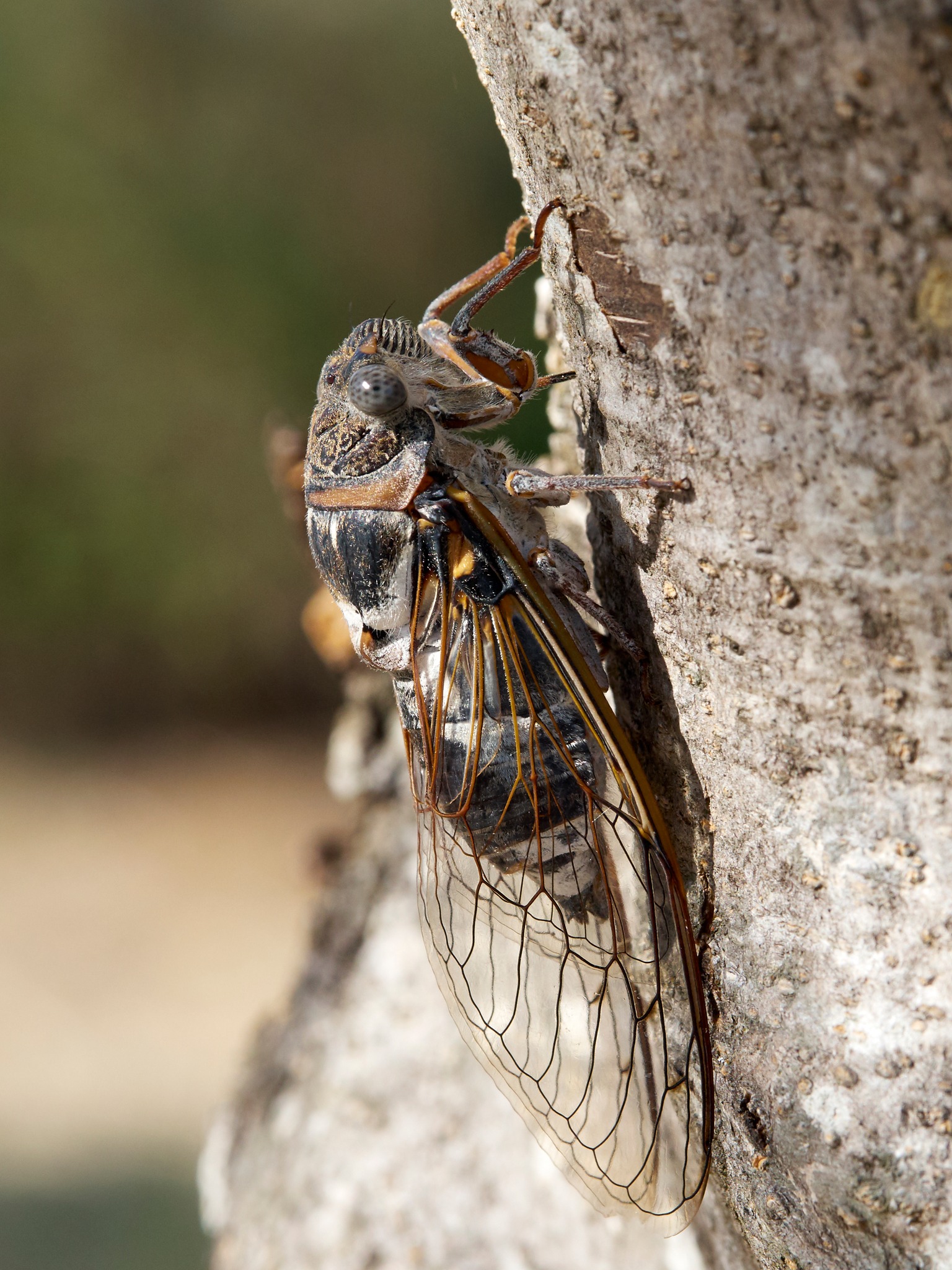
Today there are over 3,000 species of cicadas worldwide. They all live the major part of their lives underground as nymphs, or juveniles, feeding off the sap of the root systems of deciduous trees, those trees that shed their leaves annually. Cicadas are important parts of eco-systems, aerating and enriching the soil, allowing the trees to grow and flourish.
At the end of their life span, cicadas emerge from the soil, molt into an adult form, mate, and die. The eggs laid by the females hatch and the nymphs burrow into the soil and begin a new lifecycle. While breeding, the males are known for their very loud “song.”
The earliest cicada fossils that have been identified date to the last period of the Paleozoic Era, some 260 million years ago, predating the dinosaurs. Modern cicadas have been around for 40 million years.
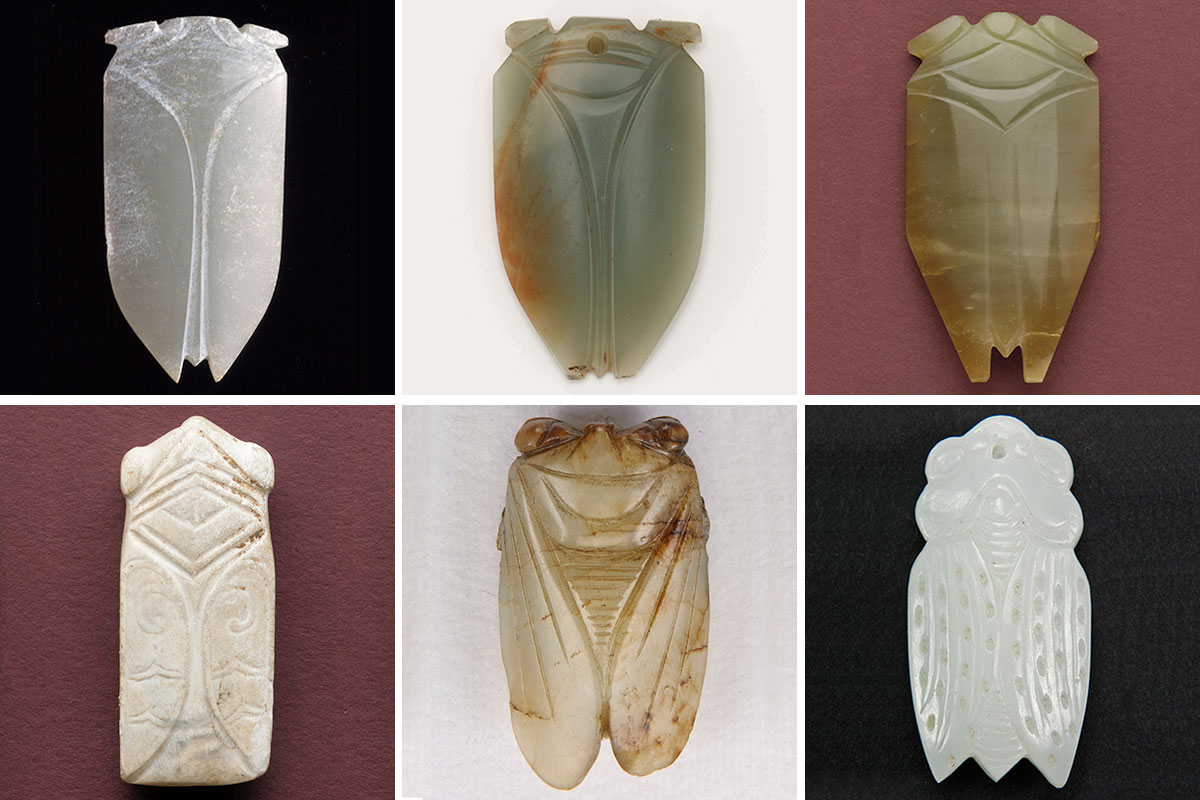
The earliest documentation of human use of cicadas dates to the Chinese about 3,500 years ago. Cicadas were considered a sign of rebirth and images of them were carved out of jade.
Cicadas were mentioned in Homer's “Iliad,” and were described by Aristotle in his “History of Animals.” They were eaten in Ancient Greece, and the shells were used in traditional Chinese medicines. They have been used for money and to forecast the weather.
In Ancient Greek mythology, the goddess of the dawn, Eos, asked Zeus to let her lover Tithonus live forever as an immortal, but she neglected to ask Zeus to make Tithonus ageless. As a result, her lover grew old but never died. He became so tiny and shriveled that he turned into the first cicada, and he became the emblem for music.
A genus of cicadas called the Magicicada exists only in North America. These are known as the “periodic cicadas,” and the species within this genus have some unique features that set them apart from other cicadas.
All species of cicadas live underground for the major part of their lives, with lifecycles from one to nine or more years. Nearly all of the species outside of the U.S. are “annual cicadas” with some members of each species reaching maturity every year and emerging from underground.
What makes the North American “magic cicadas,” a play on the genus name, unique is two things. First, some of the species have evolved 13- or 17-year lifecycles, making them the longest living insects on the planet. Second, these species have synchronized emergence – almost all of the members of the species emerge at the same time.
Insects are part of the diets of many countries and cultures. The role of insects in the diets of the Indigenous Peoples of North America, however, is for the most part poorly documented.
One paper published in 1910 in the Journal of the New York Entomological Society, “The Use of Insects and Other Invertebrates as Food by the North American Indians,” by Alanson Skinner, reported that insects did not form any substantial part of the diet of Native Americans east of the Mississippi River because other food sources, both plants and game, were so plentiful.
This would include the Blue Island Ridge, and surrounding territory, an area known for its natural bounty such as fruit and nut trees and shrubs and edible wild plants including rice in the wetlands; game including deer, many small mammals, prairie birds, and migratory waterfowl; and abundant fish from the Calumet River and Stony Creek.
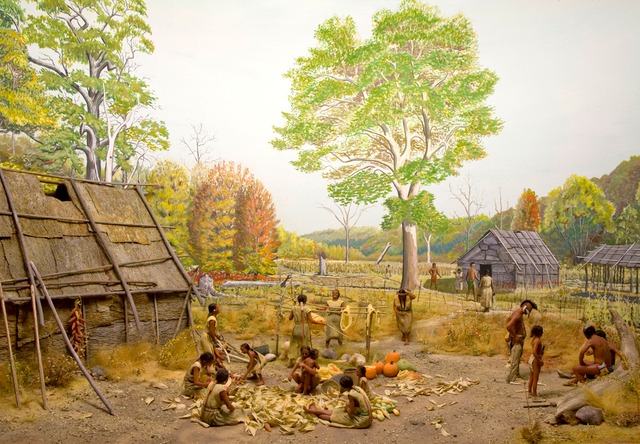
The Potawatomi, the Indigenous People who lived in the area when the European settlers came, were also cultivators of crops, growing the “three sisters,” corn, beans, and squash. Although they did not rely on insects for their main diet, what is not known is if any insect species were considered delicacies for them, as some insects are considered in other cultures. They certainly would have been familiar with the periodic cicadas, which are described as having a sweet, nut-like flavor.
It was documented that the Cherokee in North Carolina enjoyed cicadas as a treat. They dug up the nymphs and fried them in hog fat, baked them into pies, and salted and pickled them to save for later.
The Onondaga Nation of the Iroquois Confederacy in New York calls cicadas Ogweñ•yó’da’ and considers them a great snack. When their crops, orchards, food supplies, and homes were burned and many of their people killed by the Continental Army during the American Revolution in retaliation for some of the Native American tribes siding with the British, they were faced with starvation as they tried to rebuild. Then thousands of cicadas emerged from the ground, providing a much-needed food source. They consider cicadas a gift from the Creator.
American Indians in the western and southern sections of North America, with more sparse resources, did include many different insects in their diets.
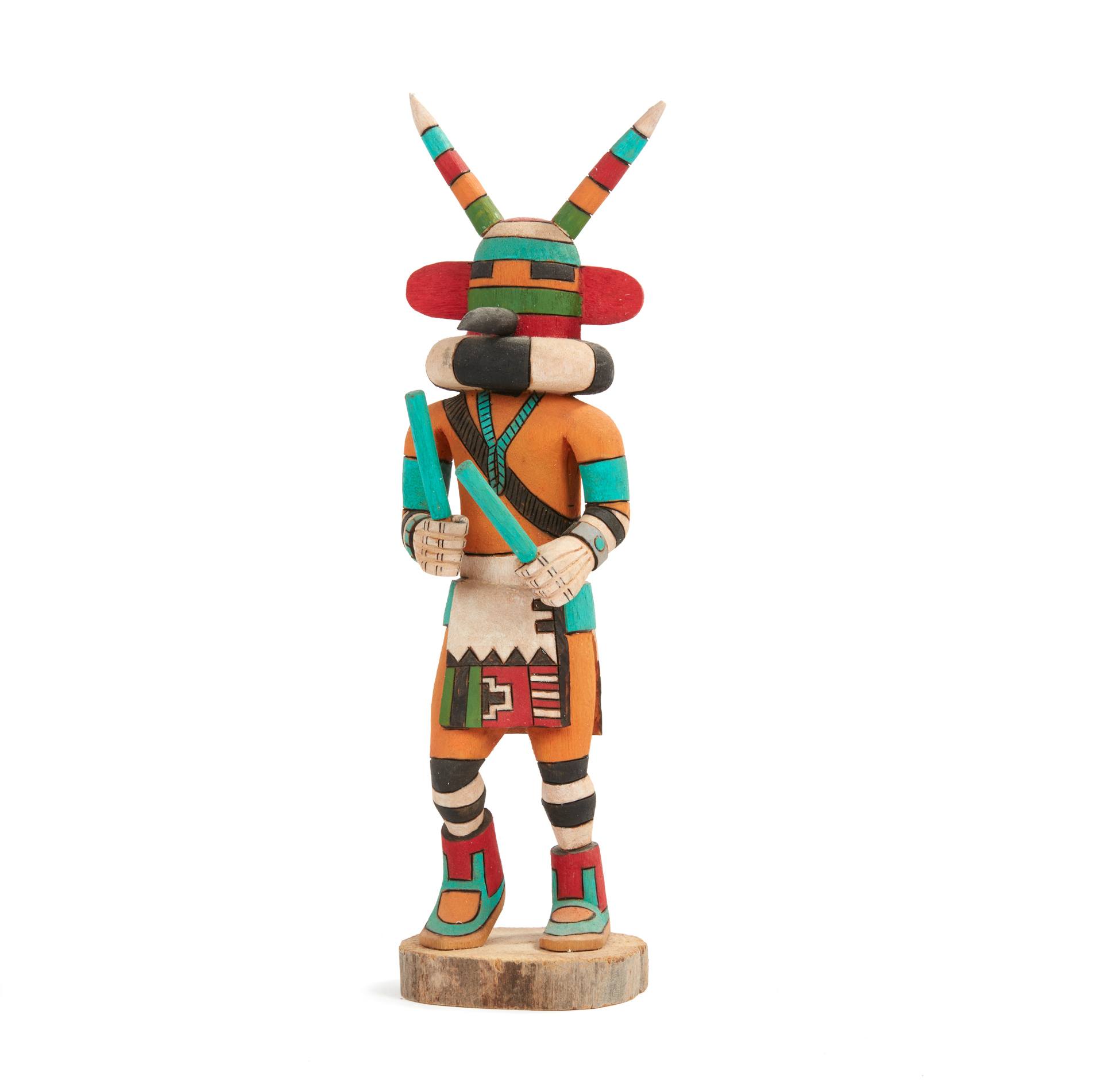
Cicadas do have a place in some Native American folklore. The mythology of the Hopi people of northern Arizona believes that two cicadas, known as maahu in the Hopi language, led the Hopi people into the fourth world. The fourth world is the world they live in now, believed to follow previous worlds that were underground. The maahu played flutes, creating the buzzing of the cicadas, which healed the humans when shot with arrows from the eagles that guarded the fourth world. Today Hopi artists create kachinas, or spirit figures, of the maahu.
The next post of this series will look at the reactions of the European colonists who encountered the periodic cicadas when they arrived in the “New World.”
The Ridge Historical Society
The History of Brood XIII Cicadas in the Chicago Area – Part 2
By Carol Flynn
The missionaries, explorers, traders, and settlers who came from Europe to the Americas had varying degrees of experience with cicadas in their home countries.
There are over 3,390 species of cicadas identified today, and they are found on every continent, except Antarctica, in habitats with deciduous trees. Cicadas prefer more tropical climates, and there are at least 800 species of cicadas in Latin America, but only sixty species are found in the Middle East, North Africa, and Europe.
The common, or ash, cicada, which often lays its eggs in ash trees, is one of the most familiar species in central and southern Europe. It was officially named in 1758. It is found in Italy, France, and Spain, countries of origin for early travelers to the Americas. The ash cicada has a three-year lifespan underground, with some specimens maturing and emerging every year.
Farther north in Europe, cicadas are scarcer.
In England, where many of the early colonists came from, only one species of cicada is found. This is a different species from the ash cicada, and like many other species of these insects around the world, this one has a very limited geographic range. It is confined to the New Forest in the southern part of the country, a 71,000-acre tract of forest, heathland, and pasture, declared a royal forest more than 1,000 years ago.
This same species was once found throughout Europe as part of a complex of species, each one distinguished by its “song.” Now it is considered endangered. The New Forest cicadas haven’t been seen or heard in England since 2000, a source of worry and study for the experts. The species does still exist in limited places in East Europe.
No species of cicadas appear to be listed as native to Ireland, which has a cooler climate than many insects and reptiles can tolerate.
Although some Europeans who came to the “New World” might have had some experience with cicadas in their countries of origin, many, including the English, likely did not. They had to learn about and adjust to the native flora and fauna in their new country.
The periodic cicadas found only in North America were new to them. The unique characteristics of the periodic cicadas is that distinct species and combinations of species, called broods, have evolved 13- or 17-year lifecycles, and they emerge almost all at once in synchronization.
Cicadas were commonly identified as “locusts” in the beginning. They were viewed as the biblical pests who appeared in large swarms, traveling across an area and devouring crops. Cicadas are not in the locust family, and do not behave like locusts. There are true locusts in the Americas, however, and the size of the periodic broods of cicadas and their clumsy flying resulted in their being considered together at first.
The first known account by an English settler that referred to cicadas was a 1633 report by William Bradford, the governor of the Plymouth Colony, in which he stated: “… there was a numerous company of Flies which were like for bigness unto wasps or Bumble-Bees; they came out of little holes in the ground, and did eat up the green things, and made such a constant yelling noise as made the woods ring of them, and ready to deafen the hearers; they were not any seen or heard by the English in this country before this time ….”
During the 1700s, the details of the lifecycles of the periodic cicadas, that is, the 13- and 17-year lifespans underground and the emergence en masse of large numbers from holes in the ground, started to be recognized and documented.
In 1775, Thomas Jefferson reported on one brood’s 17-year cycle, mentioning that an acquaintance remembered “great locust years” in 1724 and 1741, and Jefferson recalled one in 1758, and now they were emerging at his estate at Monticello in 1775. He noted the females laid their eggs in the small twigs of trees.
In 1800, a Black tobacco farmer in Maryland, Benjamin Banneker, who was a self-taught naturalist and mathematician, wrote in his journal about experiencing the emergence of cicadas in 1749, 1766, 1783, and 1800.
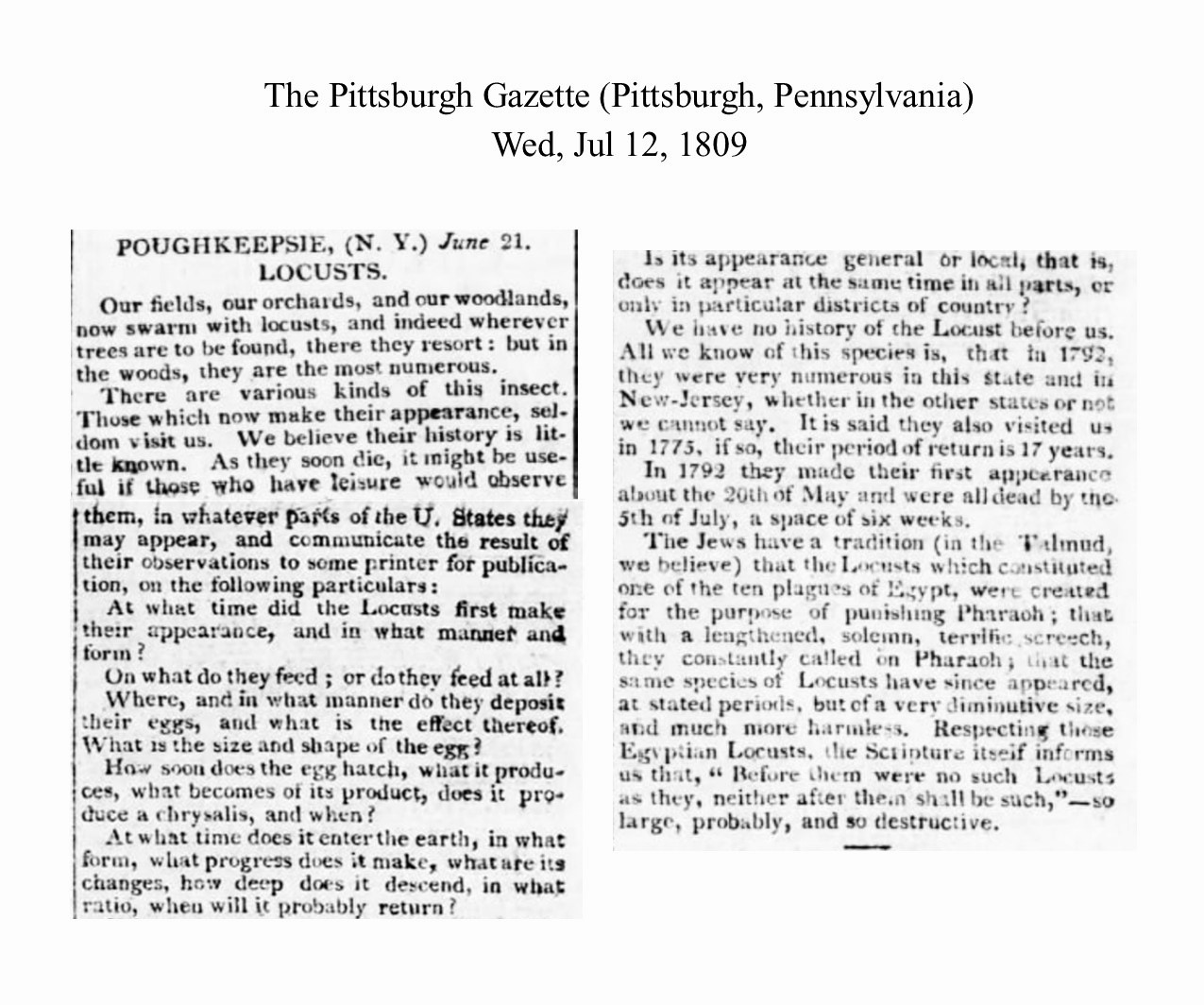
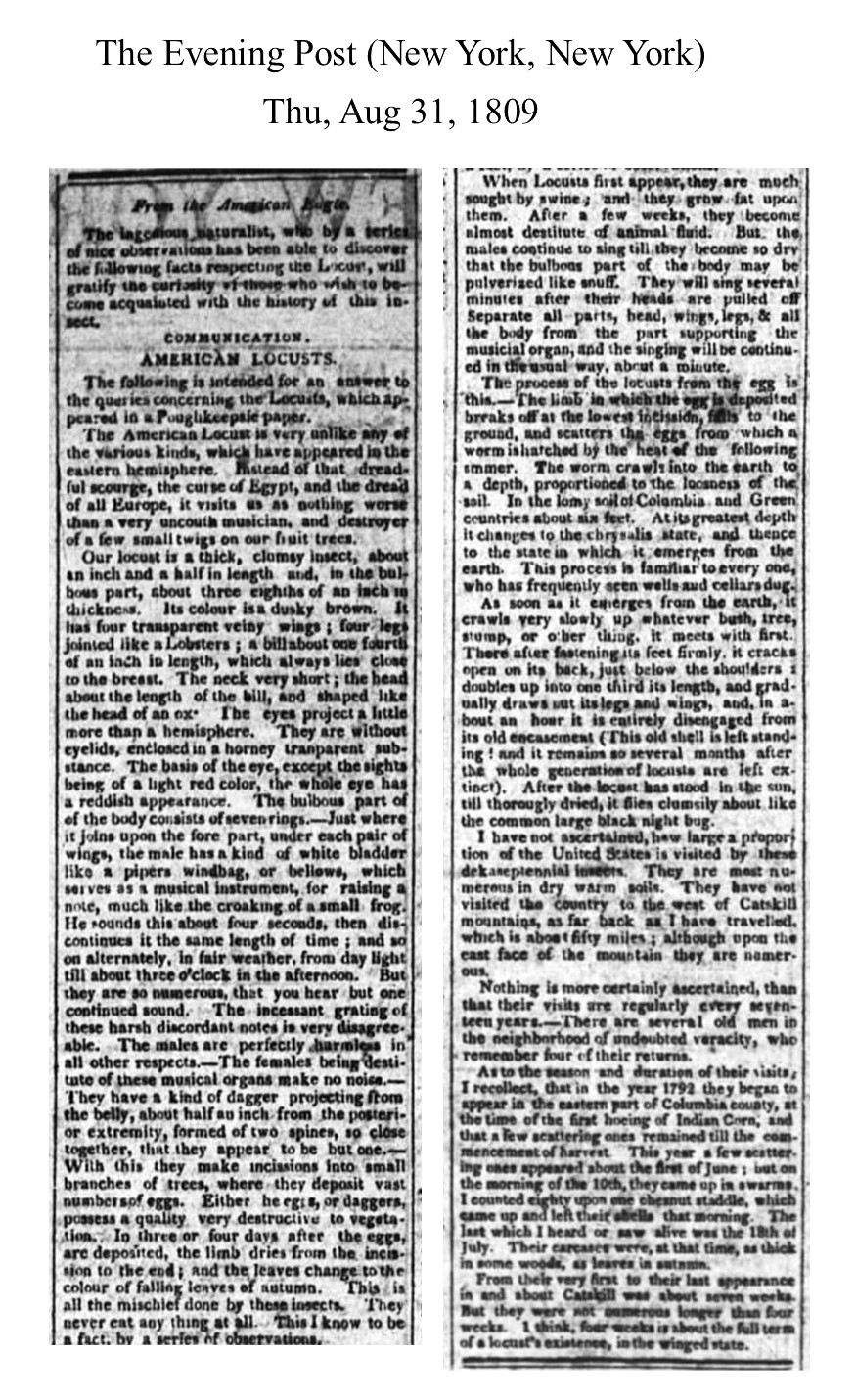
Articles that appeared in 1809, attached to this post, described the current knowledge about these “American locusts.”
As early as 1715, it was also observed that these insects were a favored dietary course for animals. One Philadelphia-based minister reported that “swine and poultry ate them, but what was more astonishing, when they first appeared some of the people split them open and ate them.”
Settlers started putting down roots in the Chicago area in the late 1700s, and on the Blue Island Ridge in the 1830s. They encountered what today is known as Brood XIII of the 17-year cicadas, also known as the Northern Illinois Brood, the largest group of cicadas in the world.
The next post in the series will look at how Chicago embraced this natural phenomenon through the years.
The Ridge Historical Society
Native American Heritage Month
By Carol Flynn
November is Native American Heritage Month, declared by President George H.W. Bush in 1990.
According to the government website for the day, the intent is “to provide a platform for Native people in the USA to share their culture, traditions, music, crafts, dance, and ways and concepts of life.”
Native Americans once thrived in the Blue Island area. Research by the Illinois State Archeological Survey team, which operates out of the University of Illinois – Champaign/Urbana campus, has identified over 600 Native American sites in the surrounding forest preserves, some dating back thousands of years.
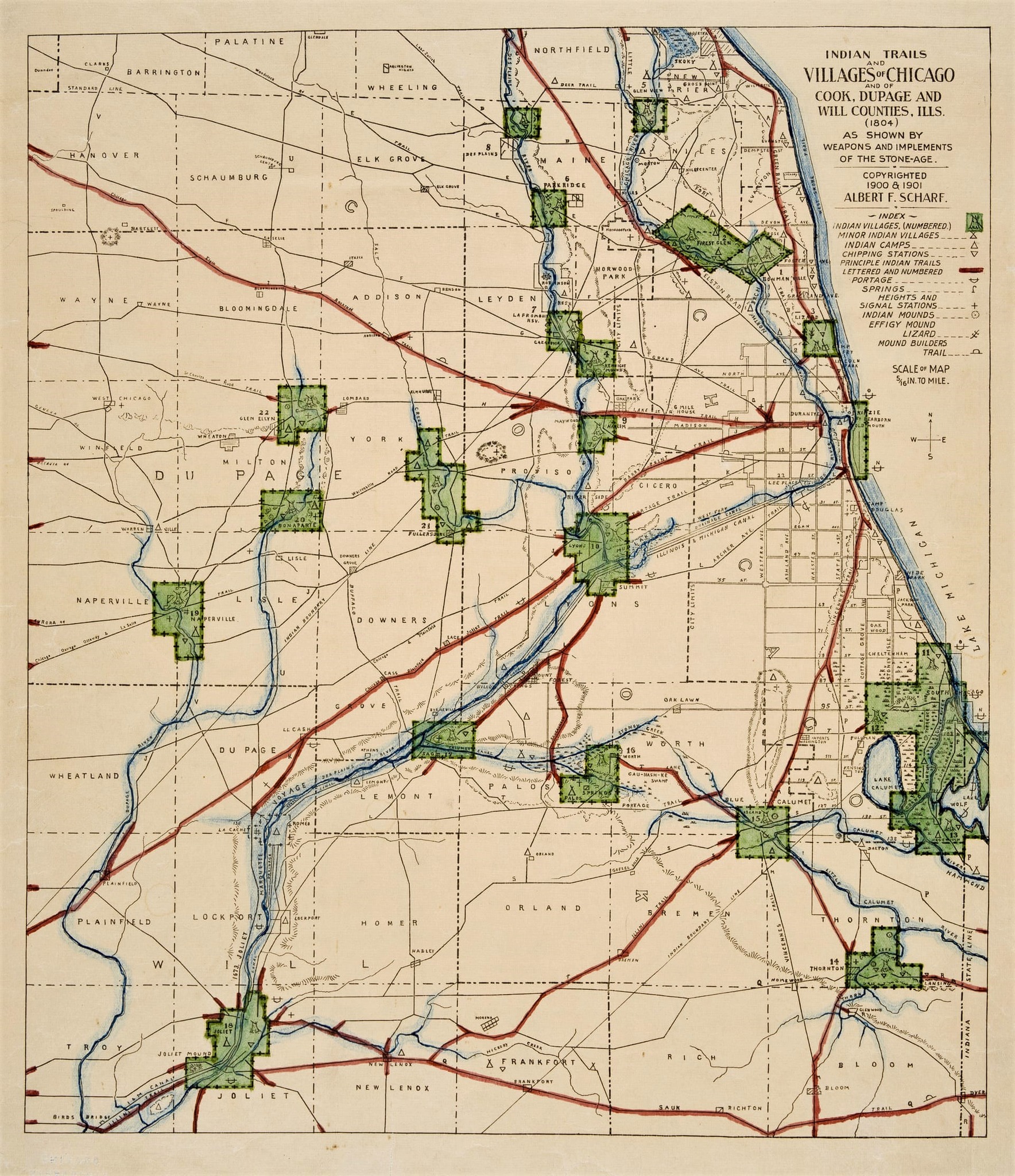
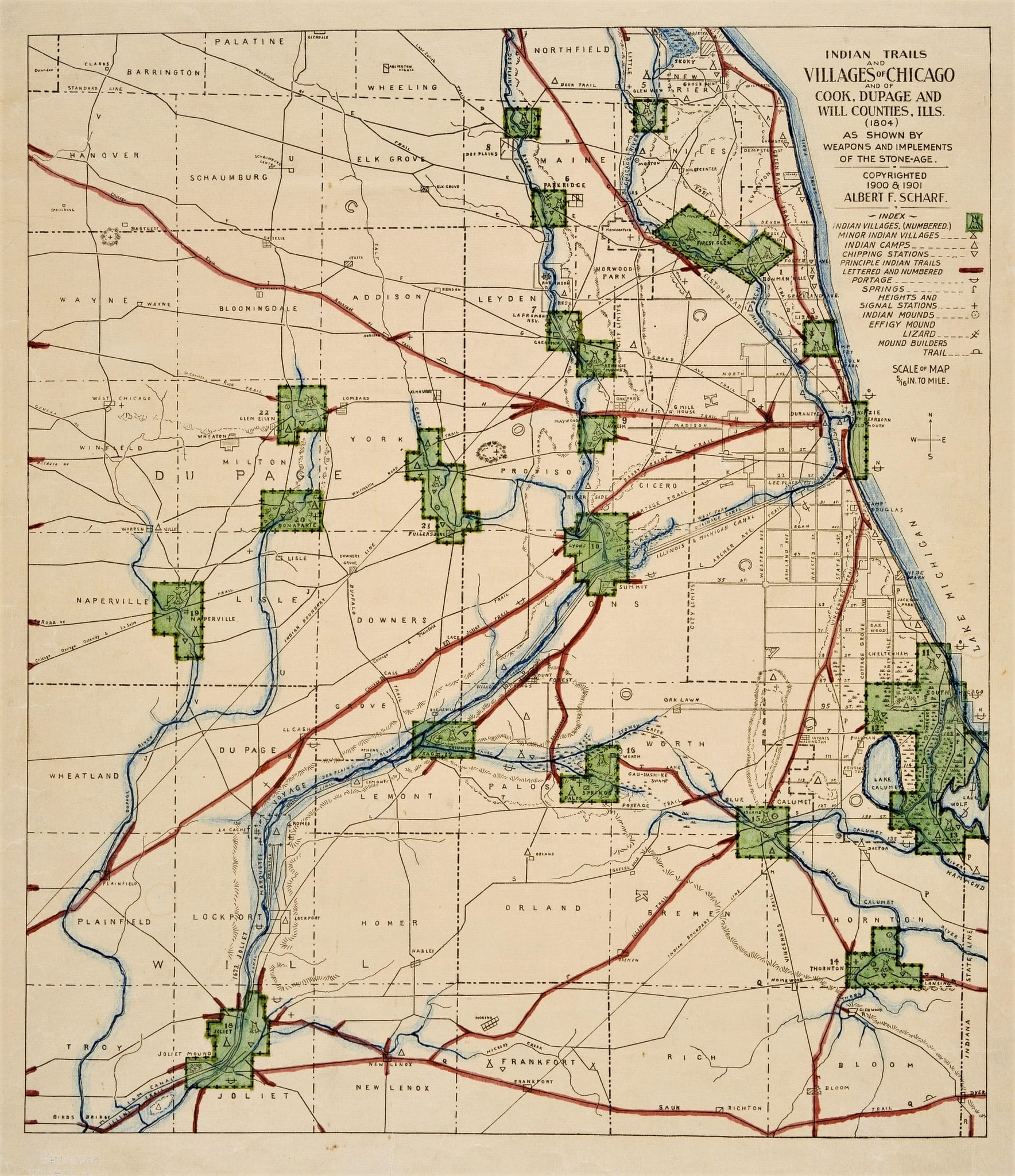
A map from the 1800s, referred to as the Scharf map, attached, shows villages, burial sites, signal stations, and other Native American locations from around 1804. There were locations along the Calumet River system, which connected to the Stony Creek, before the Cal-Sag Channel was built.
There was a village in the southern part of the city of Blue Island, around Vermont Street just east of Western Avenue, and burial grounds nearby. The northern tip of the Blue Island Ridge, located just north of 87th Street in Dan Ryan Woods, was the location of a “signal station,” which is not surprising, given its high elevation and clear view all the way to downtown Chicago.
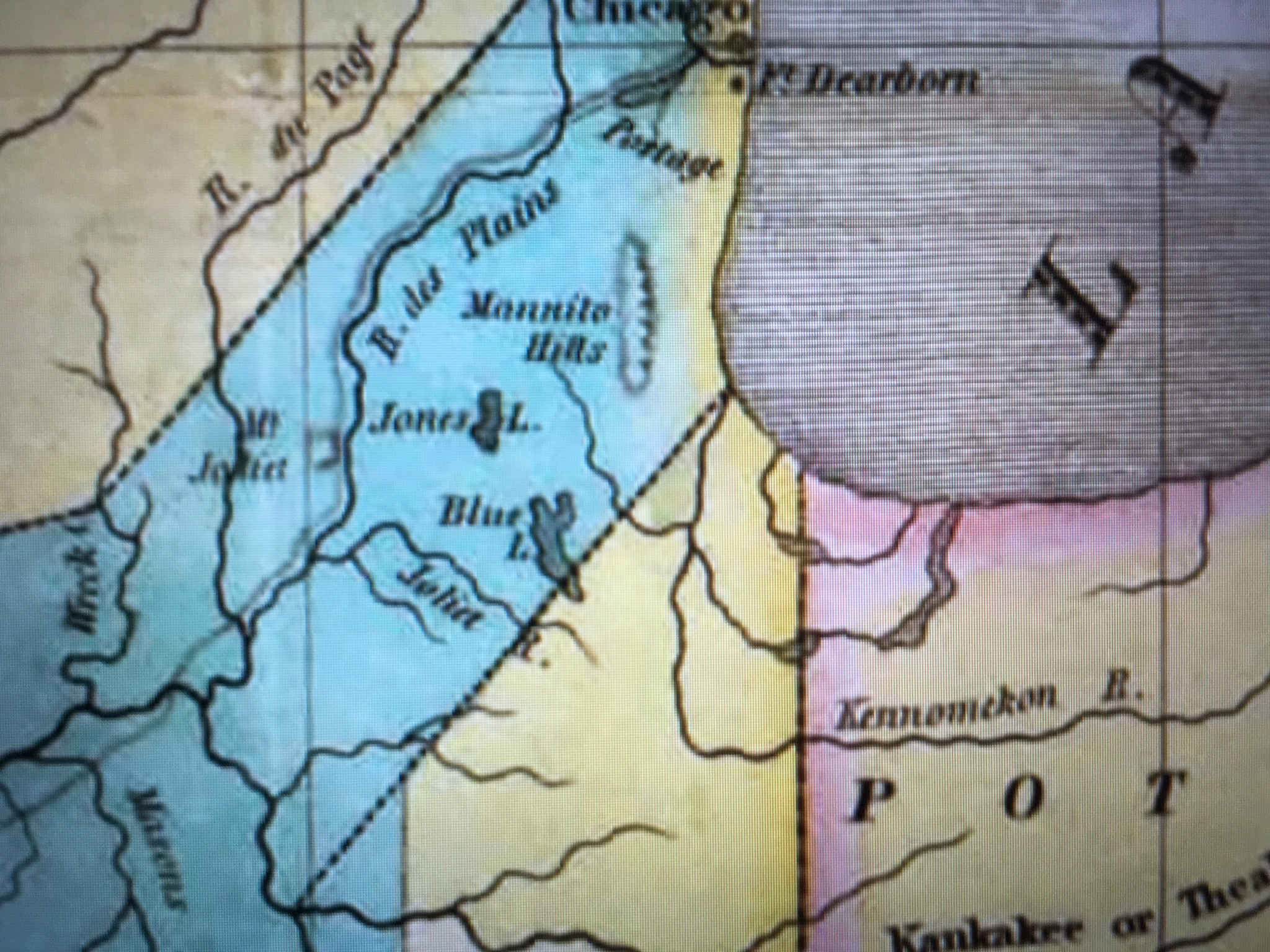
There were no villages on the Ridge, however, and this could be because the local Native Americans considered the location to have sacred significance. Another map identifies the Blue Island Ridge with the term “manitou” which indicated a spirit presence. Humans all have personal manitous, and they were also ascribed to significant natural places.
There was the Vincennes Trail, an early animal path that the Native Americans turned into a trail that was then used by fur traders and settlers. It originally cut across the top of the Ridge, but Thomas Morgan had it rerouted to below the Ridge on the east side so it would not cross his property, once the U.S. government sold off the land to settlers.
There was another Indian trail that ran along 103rd Street on an angle, from the southwest to the northeast.
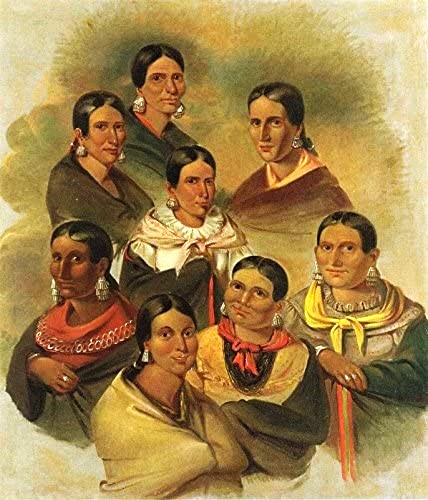
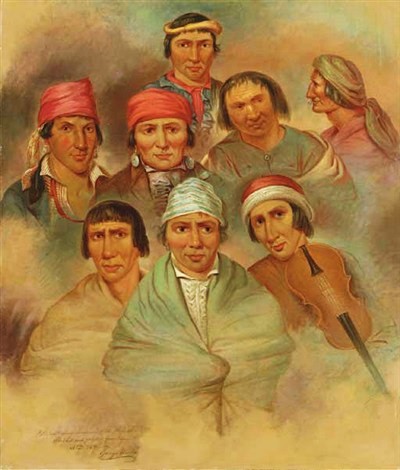
With the Treaty of Chicago in the 1830s, most of the Native Americans, by then primarily part of the Potawatomie nation, left Chicago.
However, they had left the Ridge area some years before that, after the War of 1812.
After U.S. military and settlers were killed, and Fort Dearborn was burned down, by Potawatomi warriors in the Battle of Fort Dearborn, the U.S. government became determined to remove Indians from the area to allow further settlement to go on unimpeded. “Chicago” was strategically located for transportation and trade, and the land surrounding it was rich for farmland.
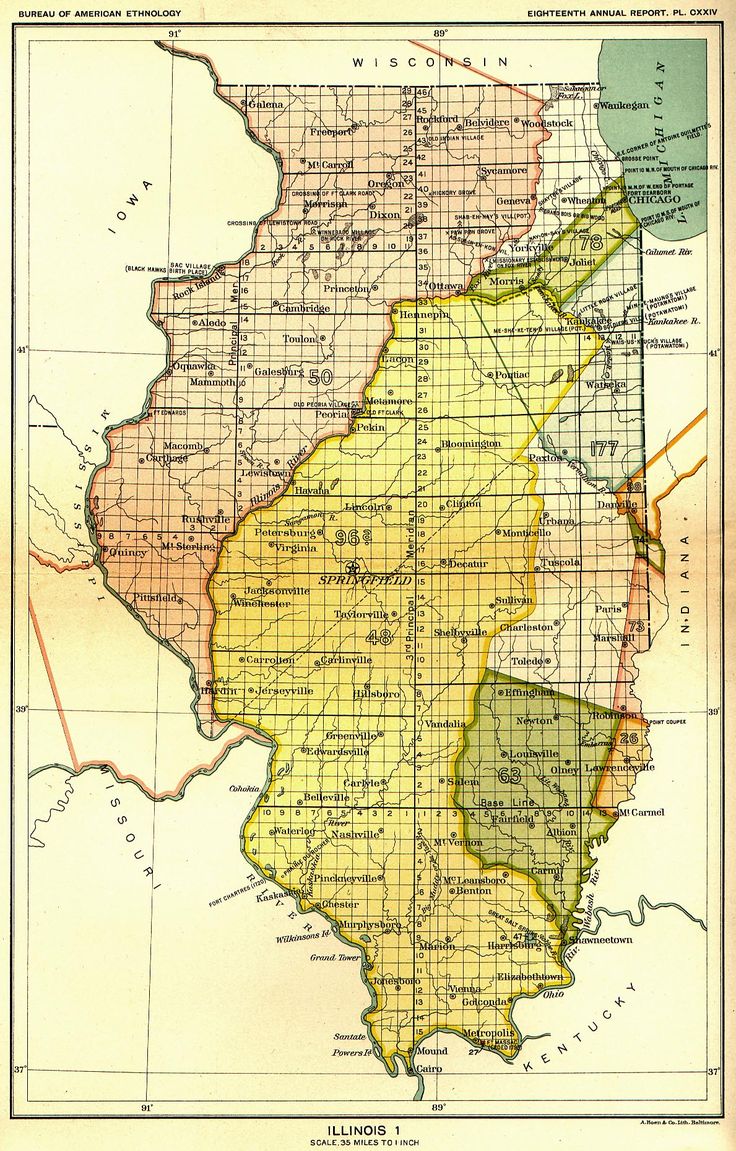
Fort Dearborn was rebuilt in 1816, and a treaty with the Council of Three Fires (the Ojibwa, Odawa, and Potawatomi, although only the Potawatomi were living in the Chicago area) was signed. In this treaty, called the Treaty of St. Louis, the Indians gave up all claims to a 20-mile strip of land that included the Chicago Portage connecting Lake Michigan to the Illinois River. The Chicago Sanitary and Ship Canal is on this land now.
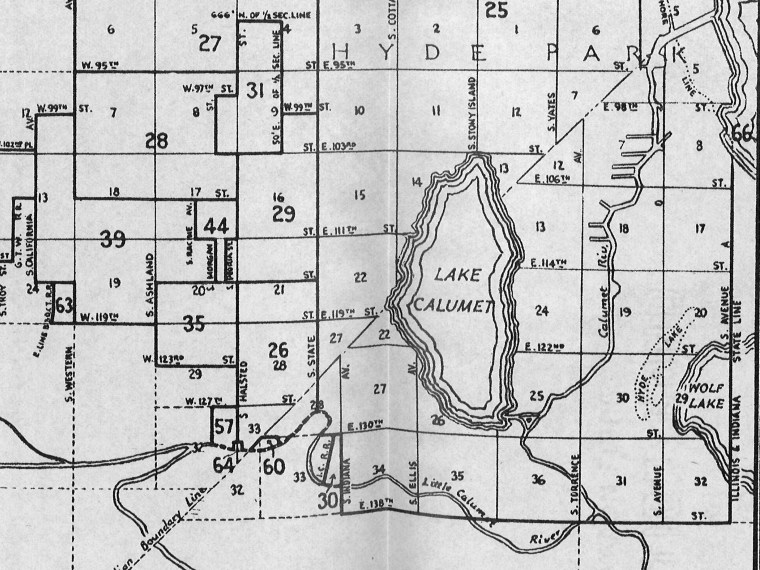
“Indian boundary lines” which started at the lake and ran southwest were established on either side of this strip of land (see attached map). The deal with the Indians was that white settlers were permitted to settle safely within the lines. The southern line ran just below the southern tip of the Blue Island Ridge, placing the lands of the Ridge communities, that is, today’s communities of Beverly Hills, Morgan Park, Washington Heights, and Mount Greenwood, and the City of Blue Island, within the settlers’ territory.
Although the “Illinois Territory” was first claimed for the developing U.S. during the Revolutionary War, this made it official that the Blue Island Ridge was under the control of the U.S. government, slated for settlement by U.S. citizens, and was no longer under the control of Native Americans.
Other treaties followed, in 1821, and following the Black Hawk War in 1832. With the 1833 Treaty of Chicago, the U.S. government took over total control of certain Native American lands west of Lake Michigan, including the Chicago area. The Potawatomi received promises of cash payments and tracts of land west of the Mississippi River.
In 1835, five hundred Potawatomi warriors gathered in full dress and danced the last recorded war dance in the Chicago area.
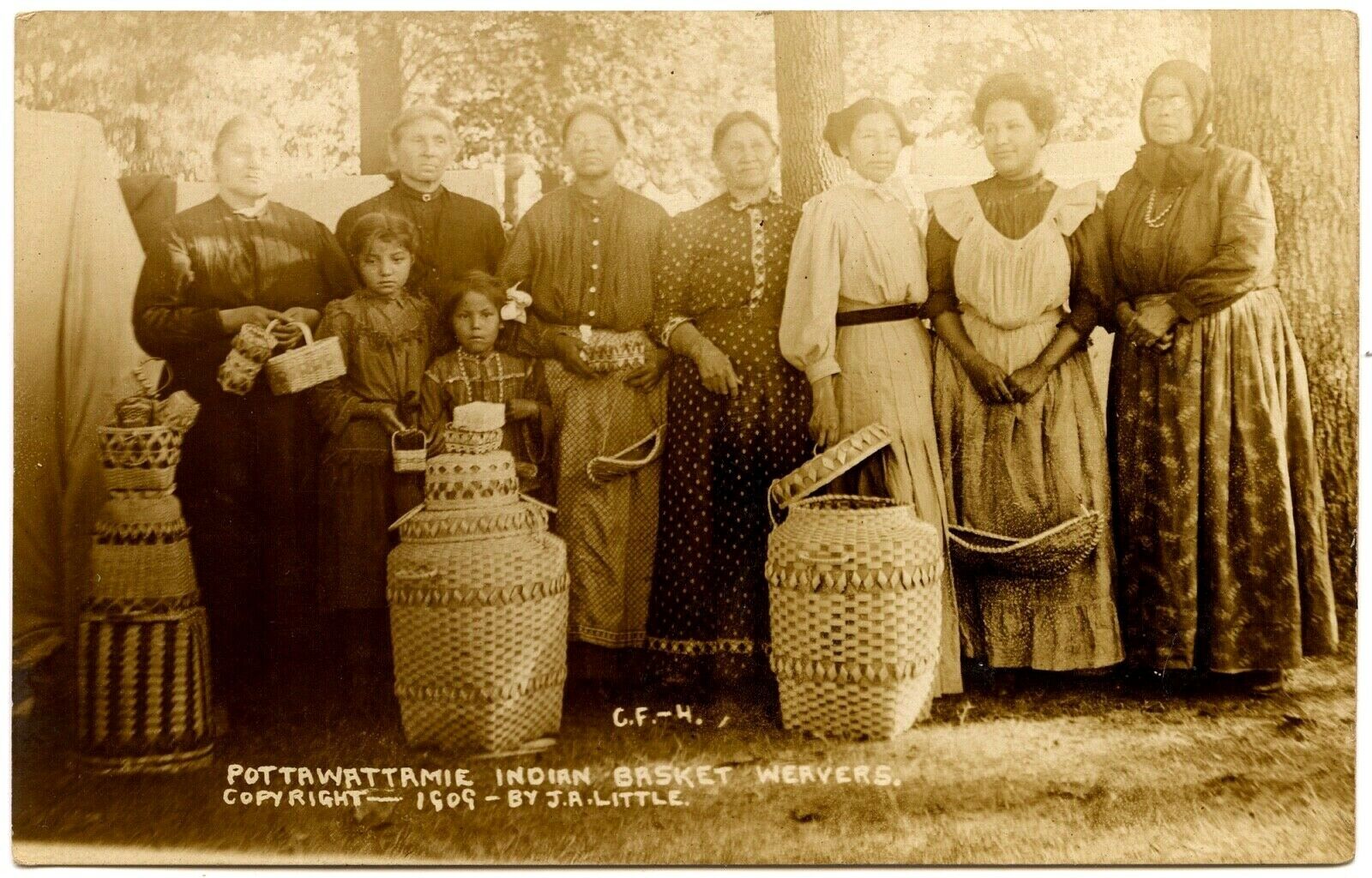
Most of the Indians left the area after that. Chicago was incorporated as a city in 1837. But for many decades, some Native Americans stayed in the area, and some continued to return to their summer ancestral grounds along the Calumet River.
Early white settlers found and recorded many Native American artifacts in the area. Postholes were reported to be found in the 1840s at what is now the east side of Hale Avenue, between 104th and 105th Streets, and stone tools were found in the area.
The Barnard family reportedly collected 36 flint arrowheads, two battle axes, a spearhead, and several pieces of ancient pottery. They reported finding “the remnants of pottery in a small mound surrounded by large cobble-stones and embraced within the roots of a small oak tree which sprang up from the mound.” The location or importance of this mound were not identified.
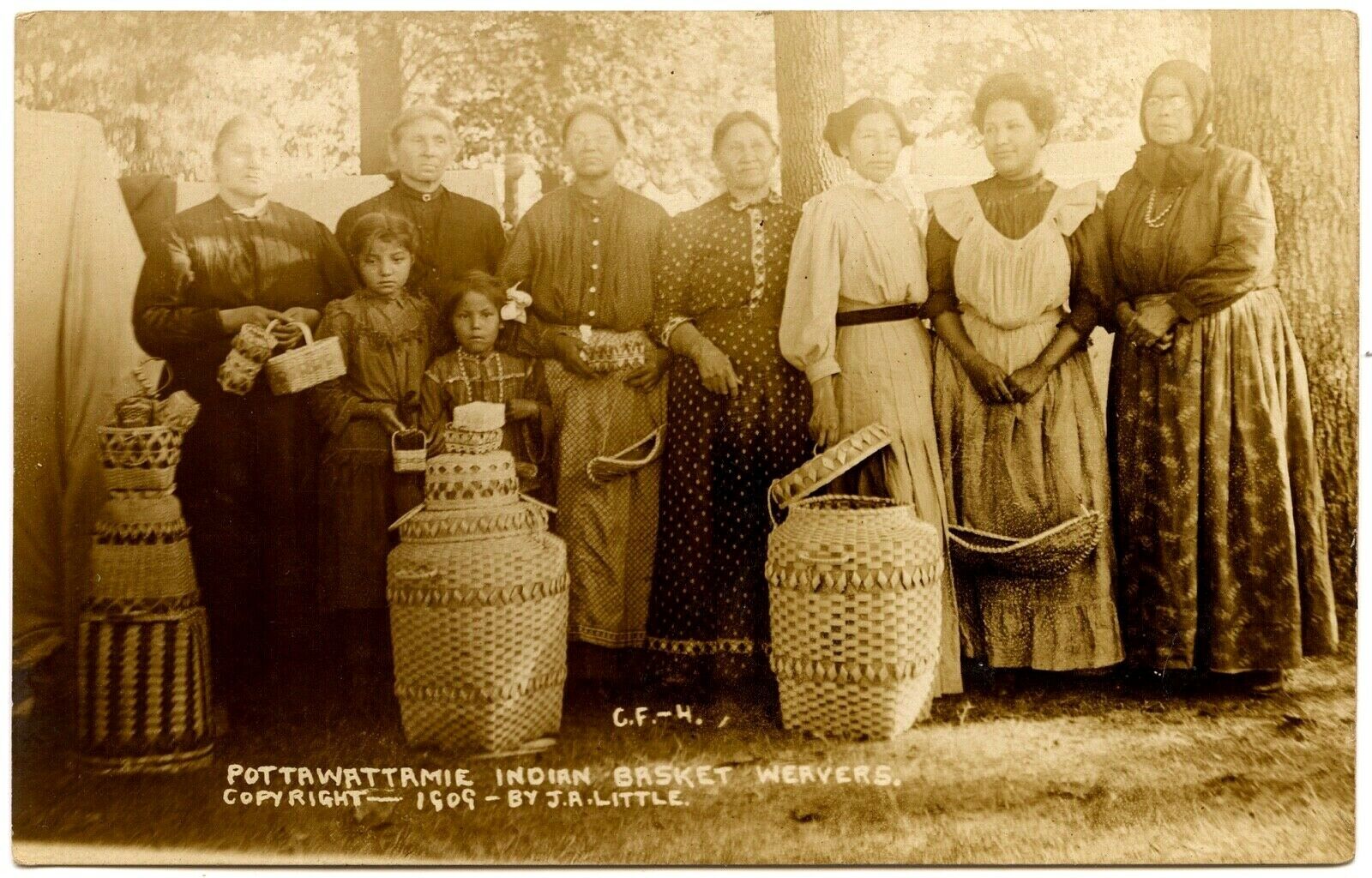
Today, there is almost no representation of Native Americans in the area. A reported 65,000 Native Americans representing 175 tribes live in the greater metropolitan area of Chicago. The majority lives on the North Side, and the U.S. Censuses report less than 1% of the population around the Ridge is Native American. Some people do come forward, though, and report mixed ancestry.
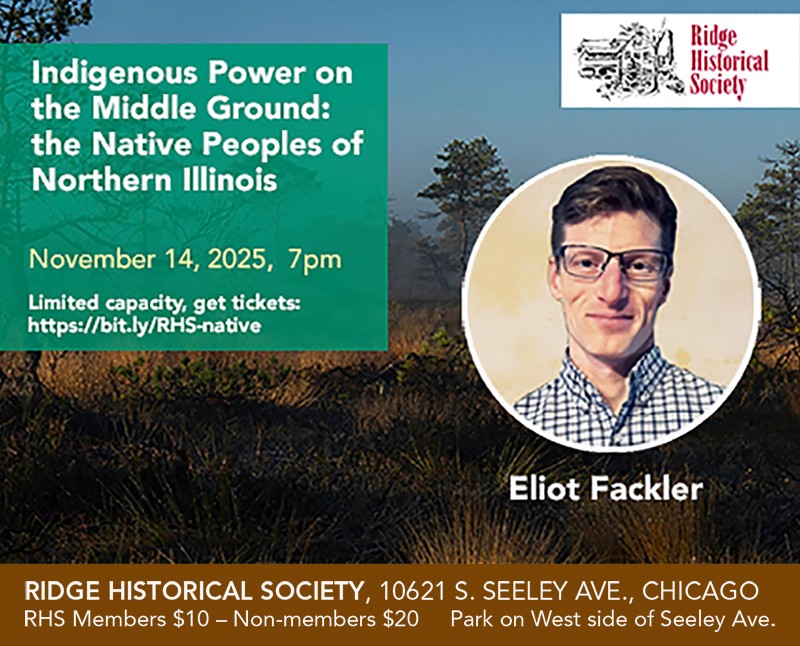
Indigenous Power on the Middle Ground: the Native Peoples of Northern Illinois
November 14, 2025, 7pm
Presenter: Eliot Fackler
Join us for a special presentation in National Native American Heritage Month.
Eliot’s talk will explore indigenous history in this region emphasizing the 18th & 19th centuries by looking at communities, controlled portages, networks of trade and diplomacy.
About the Presenter: Eliot Fackler, PhD is Assistant Professor of History, Governors State University. Eliot researches and writes about settler colonialism and environmental change in United States history. He is a Project Co-Director of the Southland History Collective.
The Southland History Collective was founded in 2022 with a small grant from Governors State University. They are committed to community-engaged work that helps to cultivate an inclusive Southland regional identity through historical and educational work.
Members: $10 | Non-members: $20 | Students under 18: $5
Ridge Historical Society
10621 S. Seeley Ave., Chicago, IL 60643
Limited Capacity. Get tickets here: https://bit.ly/RHS-native
RSVP: ridgehistory@hotmail.com 773.881.1675