
Explore the RHS Facebook Archives, a rich repository of local history written by Carol Flynn. For two decades, Carol brought a deeply dedicated voice to public education at RHS. Her role as Facebook administrator through mid-2025 naturally extended her prolific research into meticulously detailed articles, most notably her multi-part historical series posts. Today, Carol continues her local history writing for The Beverly Review and other outlets.
Local History
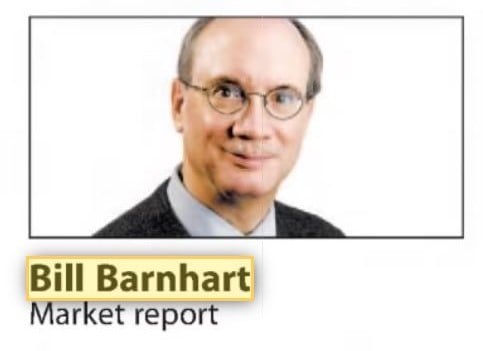
The Ridge Historical Society extends its sincerest condolences to the family and friends of long-time Morgan Park resident Bill Barnhart who passed away in Florida on July 3.
Bill Barnhart, 74, was known for his long career as an expert in financial markets with the Chicago Tribune, CLTV cable news, and other media outlets. In the Ridge communities, he was known as a friend and neighbor.
Bill loved history as much as finance – he and his wife Kate Eaton were supporters of RHS for many years. Bill not only made great use of the RHS collection for research and writing, he served as RHS President in the early 2000s.
In 2010, he published “John Paul Stevens – An Independent Life,” the biography of another famous Beverly resident, U.S. Supreme Court Justice John Paul Stevens. Bill gave a standing-room-only presentation and book signing at RHS.
Bill also published “Kerner: The Conflict of Intangible Rights,” in 1999, about the past Illinois governor whose notable achievements were eclipsed by his conviction and incarceration for tax evasion and other charges.
Bill Barnhart’s contributions were greatly appreciated and will be very much missed. May he rest in peace.
Hooray! The Ridge Historical Society passed a milestone today! We reached 2,000 Followers! Thank you so much for your support!! We absolutely LOVE bringing local history to the community!
Ridge Historical Society
Happy Bastille Day
July 14, 2021
By Carol Flynn
Today is Bastille Day, the National Day of France. It is the anniversary of the Storming of the Bastille in 1789, a major event of the French Revolution, as well as the Fête de la Fédération that celebrated the unity of the French people in 1790.
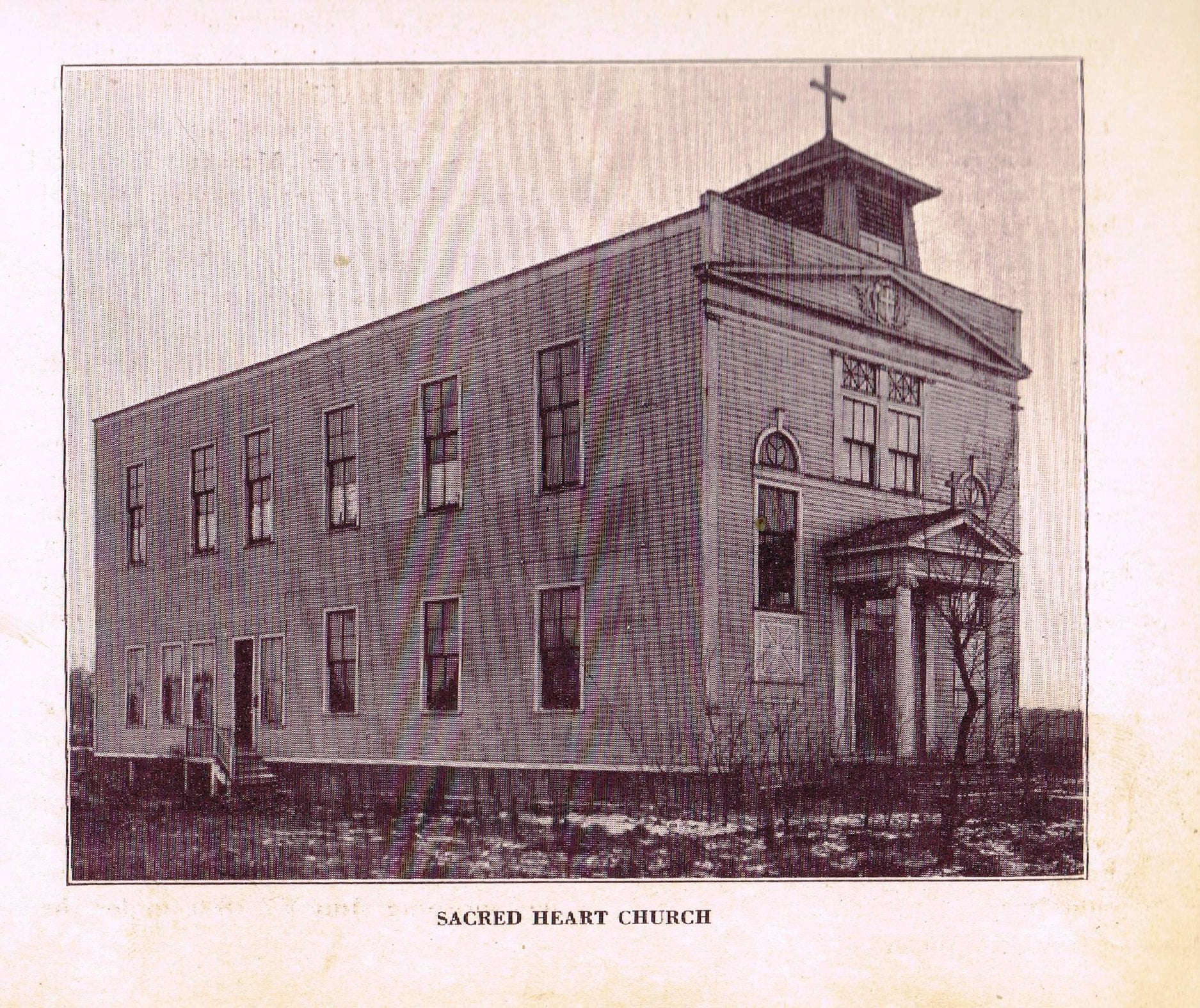
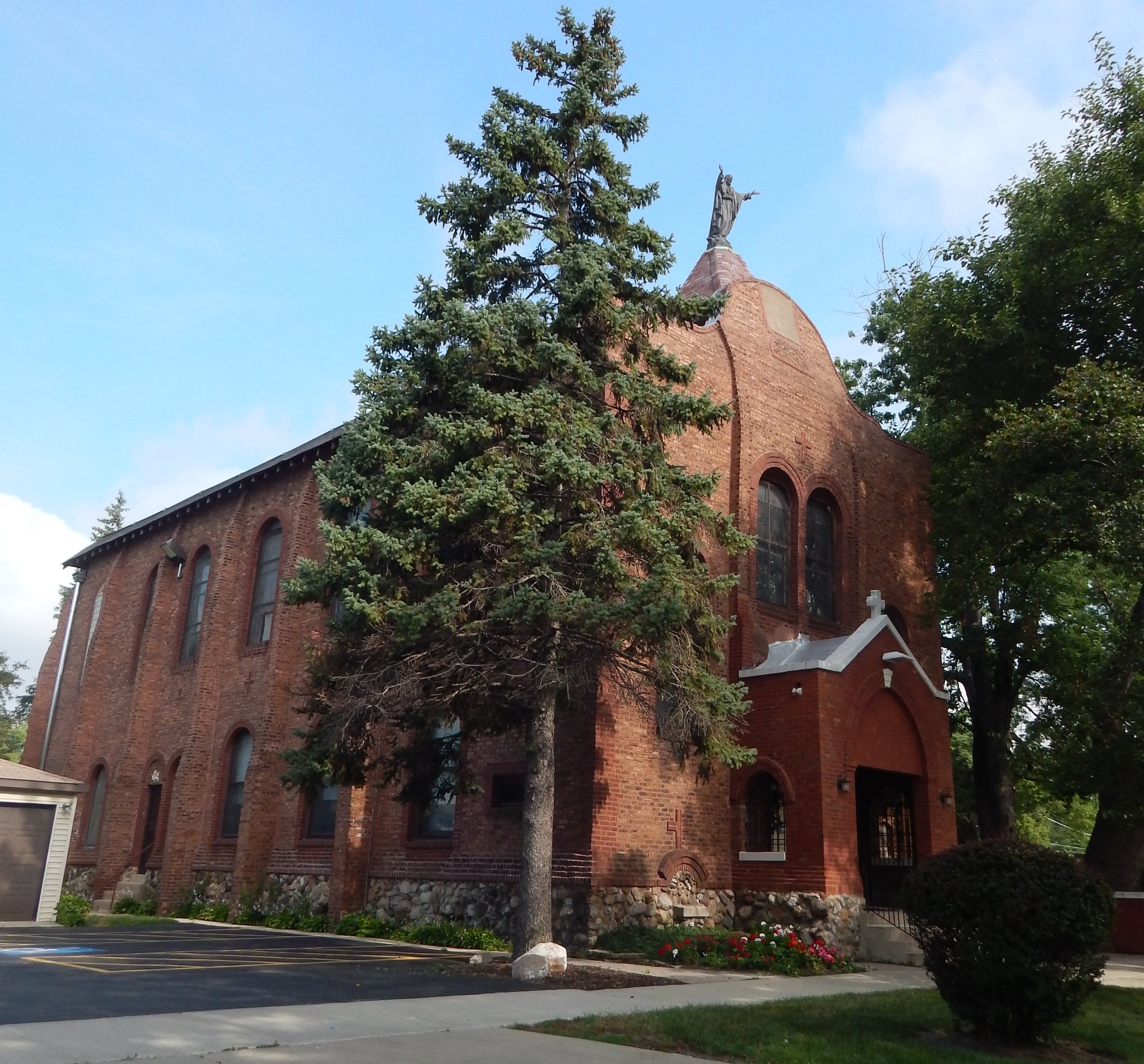
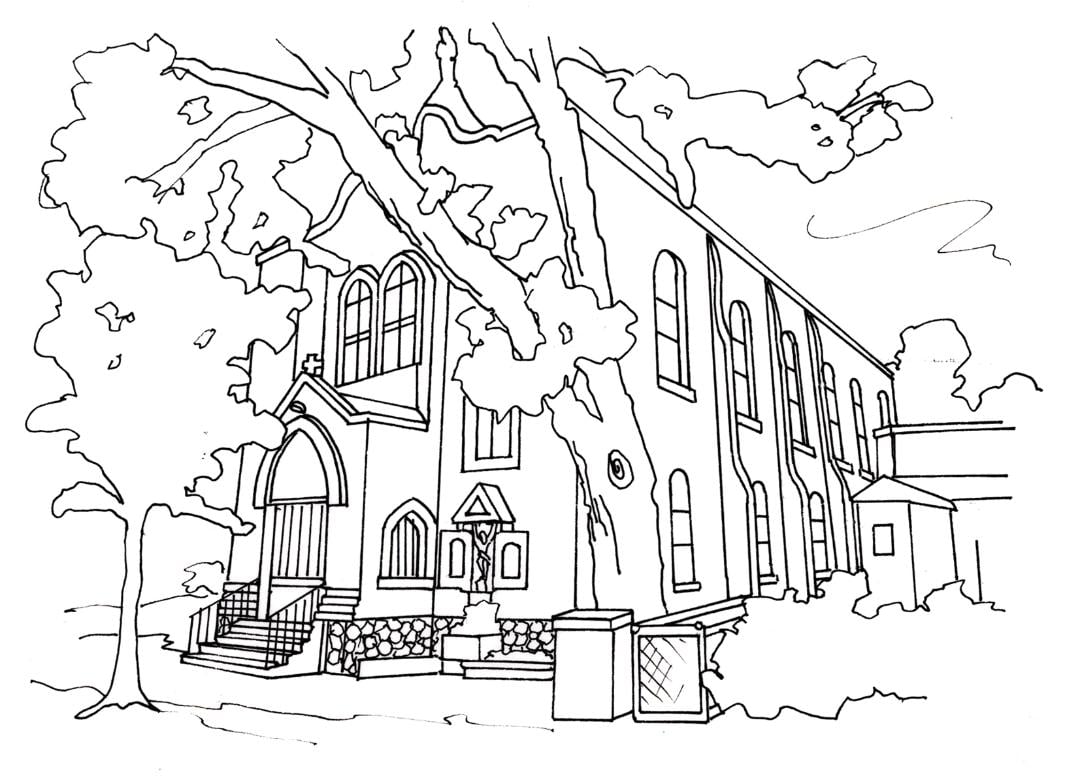
The Blue Island Ridge has its own “French connection.” We had an early group of settlers here, and their legacy to the community is the historic and charming Sacred Heart Church at 11652 S. Church St.
Sacred Heart was originally founded in Alsip in 1892. After an unfortunate fire, the church moved to its current location to be closer to the Purington Brick Yards at 119th and Vincennes, where many of the French people worked. The current church was built in 1904-5 and originally appeared as a wooden frame church, built on posts in a swamp. The church was established as a “national church” which meant it would serve a particular nationality, not a defined geographic area. The story goes that the workers were allowed to take “seconds” of bricks from the brickyard, those bricks that were burnt in the ovens and therefore couldn’t be sold, over to the frame church one or two at a time. By 1922, when enough bricks had been saved, the present brick facade was added. The church as it stands now is actually the old frame church clad with this donated brick.
Father Raymond DeNorus, a missionary priest born in France, became pastor in 1912. From all accounts, he was a very charismatic man. He loved a good time, yet he was a man deeply devoted to his faith. He dispensed medicine, holy water and blessings from his side door. Numerous miracle cures were reported to have taken place over the years. Crutches, canes and braces left abandoned at the church were hung on the side walls. Services at the church drew large crowds and it became a place for pilgrimages. During this time the church became known as the Shrine of the Sacred Heart, a shrine being a special place of devotion that attracts travelers from afar. Fr. DeNorus retired in 1935. With time, most of the French families moved on and were replaced by German and Irish workers.
In 1979, the Archdiocese of Chicago under John Cardinal Cody decided to close and demolish Sacred Heart, citing as its main reasons a shortage of priests and the expense of construction needed to correct building code violations. Members of the congregation rallied to restore and preserve the church. The church was closed from 1979-1982. But then Cardinal Cody died, and the new Archbishop, Joseph Bernardin, agreed to review the matter. He reopened the church and celebrated Mass there in 1983. The church was reestablished as a "mission church" operating as part of the Holy Name of Mary Parish in Morgan Park. Francis Cardinal George also visited Sacred Heart. He was so charmed by the church he even said he would like to live there when he retired.
The devotion to the Sacred Heart of Jesus originated in France in the late 1600s when a nun, Saint Margaret Mary Alacoque, claimed that during a series of apparitions, Jesus promised certain blessings to those who practiced devotion to his Sacred Heart. The Vatican’s position is that the manifestation and promises are true. So the name Sacred Heart was very fitting for a French mission church.
The Ridge Historical Society
New Year’s Eve, 1921
By Carol Flynn
What was happening on the Ridge one hundred years ago? To answer that question, RHS turned to its old friend, the news correspondent from the Ridge for the Englewood Times back then, Pauline Palmer.
And according to Mrs. Palmer, Mrs. George Gale of 2325 W. 108th Place held a “watch night party on New Year’s Eve.”
A little research revealed that Mrs. Gale was the former Alma Demers, born in Canada in 1878. George Gale was born in Illinois in 1872 and was an inspector at the stockyards.
A little more research revealed that “watching the old year out” was the general theme of New Year events back then, as opposed to welcoming in the New Year as is done today.
The custom was to open the front door at the stroke of midnight so the old year could exit and join all the years of the past, and the “baby new year” could enter and begin its life. The guests would form a circle and sing “Auld Lang Syne.”
Although we don’t know the exact details of the Gales’ New Year’s Eve party in 1921, some clues as to what they might have done can be found in “Novel Entertainment for Every Day in the Year” written by Ellye Howell Glover, published in 1921.
A suggested menu was a “Jack Frost” dinner, composed of raw oysters on ice, cream of corn soup with whipped cream on top, turkey cutlets, mashed potatoes, cauliflower in ramekins, fruit salad in white chrysanthemums, vanilla pudding and cakes rolled in coconut. Obviously, the theme was white food!
A recommended table decoration also included party favors. The top of an evergreen tree (suggested was the top of that year’s Christmas tree) could be turned into a “New Year’s wish tree.” For each guest, a tiny envelope attached to a gilded wishbone could contain a personal good wish from the hostess to the guest, or a suitable quotation. A variation could be little boxes filled with good luck talismans.
After supper, the evening was filled with games and dancing.
There was also “Dennison’s Christmas Book” of 1921 that included ideas for New Year celebrations.
Dennison books were a great source for party planning for several holidays – the company had “Bogie” books for Halloween, also. Every year, the books contained new ideas for party themes (such as “Sailing into the New Year”), decorations, games, and party favors. Of course, the books also served as catalogs for Dennison’s line of products, which included a variety of crepe paper decorations.
Prohibition had started the year before with the passage of the Eighteenth Amendment to the U. S. Constitution which banned the manufacture, transportation, and sale of alcoholic beverages. The consumption of alcohol was never illegal under federal law; the issue would have been procuring it legally.
Happy New Year from the Ridge Historical Society.
The Ridge Historical Society
The Ridge Connection to the Rose Bowl
By Carol Flynn
On January 1, 1890, the Valley Hunt Club, a private social club in Pasadena, California, held a parade. The purpose was to showcase the wonderful climate and living opportunities in Pasadena while cities in the north – like Chicago and New York – were buried in snow. Many of the residents of Pasadena had relocated from the Midwest and East coast.
The parade featured horse-drawn carriages covered in flowers, followed by foot races, polo matches, and a tug of war in the “town lot.” About 2000 people attended. Because of the abundance of flowers, it was decided to call the parade the “Tournament of Roses.”
The parade became an annual event and grew in size. Marching bands and ostrich races, automobile floats and bronco busting all became part of the festivities. The town lot was renamed “Tournament Park.”
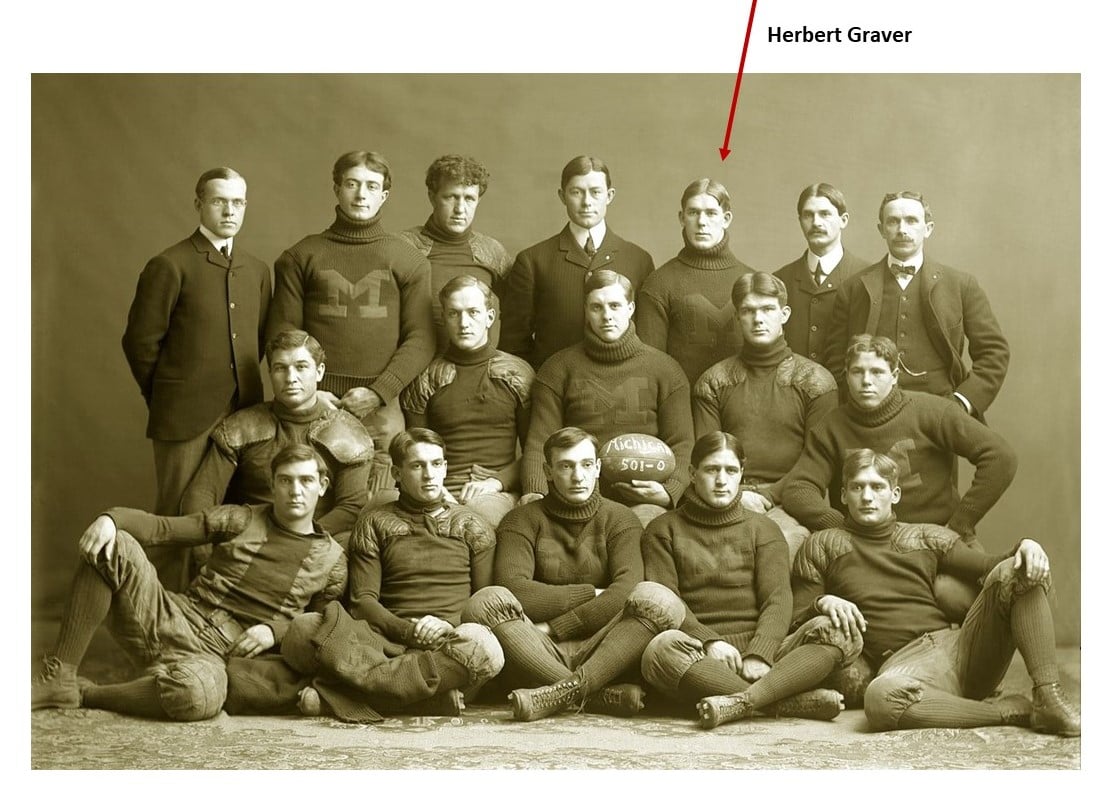
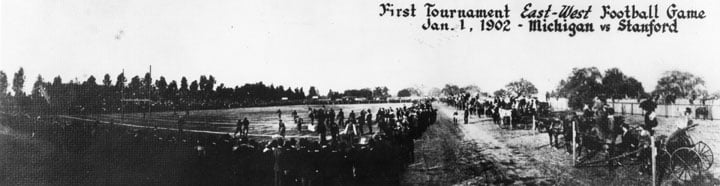
In 1902, to offset the costs of the parade, a special football game was held following the parade. By then, the parade was attracting national attention. The University of Michigan football team was having a stellar year with a record of 11 – 0, scoring a total of 501 – 0 points, and was invited for an all-expenses-paid trip to Pasadena to play against Stanford University of Stanford, California.
The game was billed as the Tournament East-West Football Game. Admission was $.50 to $1.00. About 8,500 people attended the game. Stanford was no match for Michigan and even asked to end the game early. Michigan won 49-0. This was the first Rose Bowl game, the first post-season “bowl” game ever.
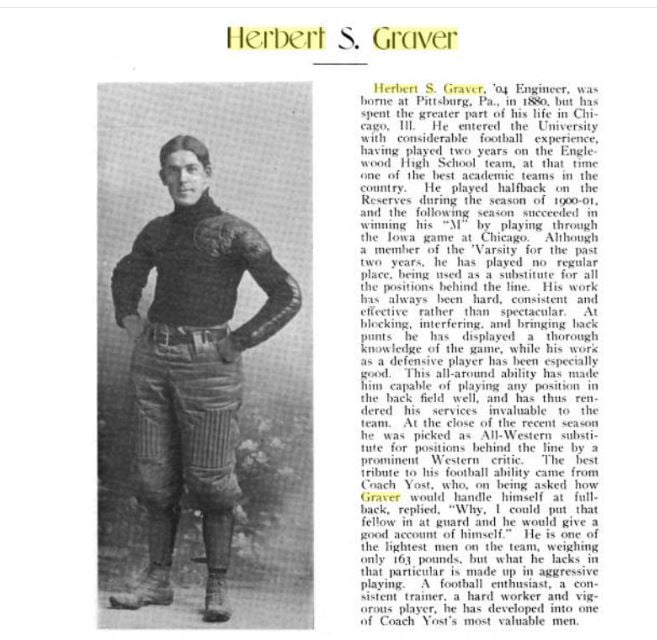
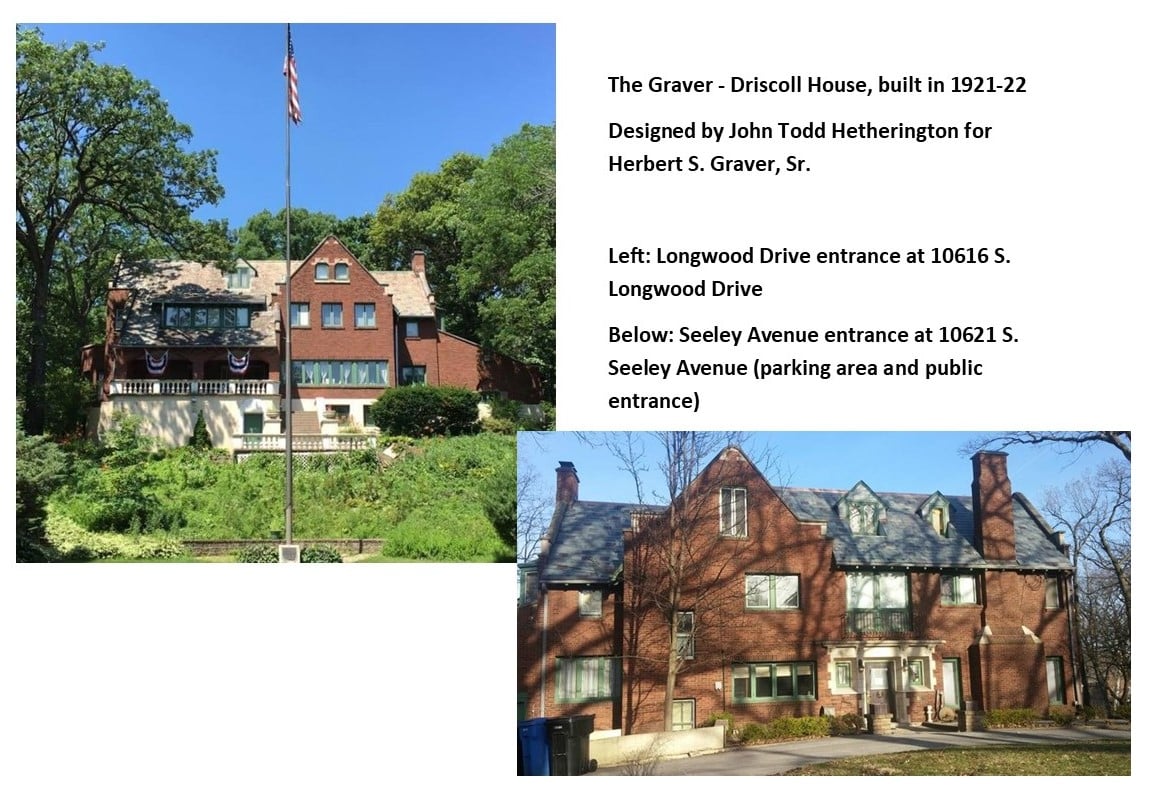
And the connection to the Ridge: On that Michigan team was Herbert Graver, the man who would build the Graver-Driscoll House at 10621 S. Seeley Avenue that is now owned by and serves as headquarters for the Ridge Historical Society.
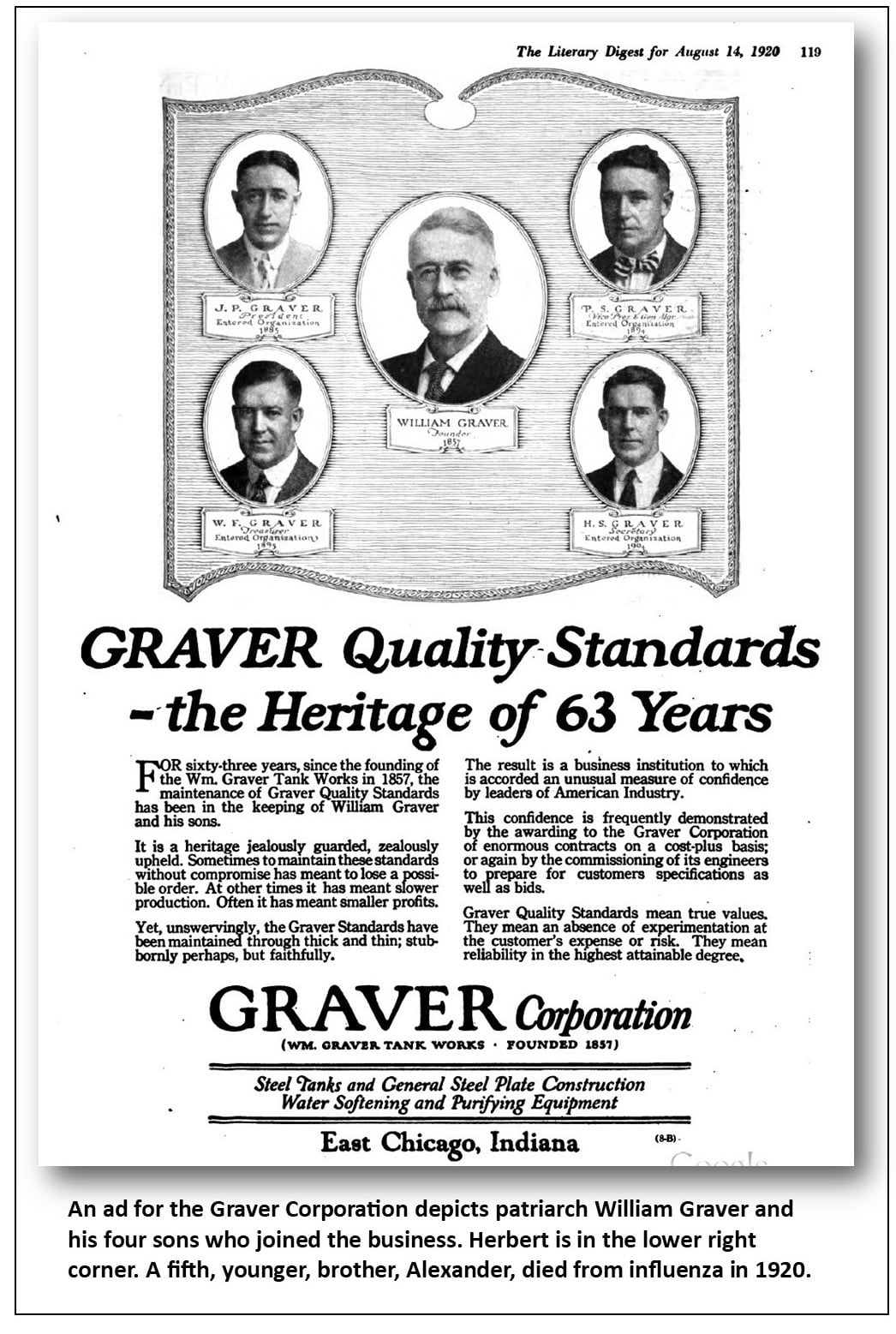
Herbert Spencer Graver, Sr., was born in 1880 in Pennsylvania, the sixth of seven children of William and Christina Penman Graver. William Graver started the Graver Tank Works in 1858 to craft metal tanks to store oil. The business relocated to East Chicago in the 1880s.
After graduation, Herbert worked for one year as a college coach but then joined the family business. All five Graver sons were employed with the Graver Tank and Manufacturing Company and held officer positions. Herbert served as corporate secretary.
Herbert married Anna T. Thorne in 1910 and they had one son, Herbert S., Jr.
In the early 1900s, the five Graver sons all moved to the Beverly/Morgan Park area. Herbert built his house on the Ridge with entrances on Longwood Drive and Seeley Avenue in 1921-22. The Tudor Revival-style manor house was designed by the noted architect, John Todd Hetherington.
Herbert was a sports celebrity and occasionally made public appearances as one of the original Rose Bowl players. He enjoyed sports his entire life, and in fact, in 1954, he suffered a fatal heart attack while watching wrestling matches at the International Amphitheater. At the time of his death, he was still the sales manager for the family company. He was buried in Mount Hope Cemetery.
The Ridge Historical Society was founded in 1971. The plans for the 100th anniversary of the Graver-Driscoll House and the 50th anniversary of RHS were put on hold last year because of the COVID pandemic. The plan is to celebrate this year so stay tuned for further announcements and more historical information on the Gravers, the house, Hetherington, and RHS.
The Ridge Historical Society
Nostalgia Print
By Carol Flynn
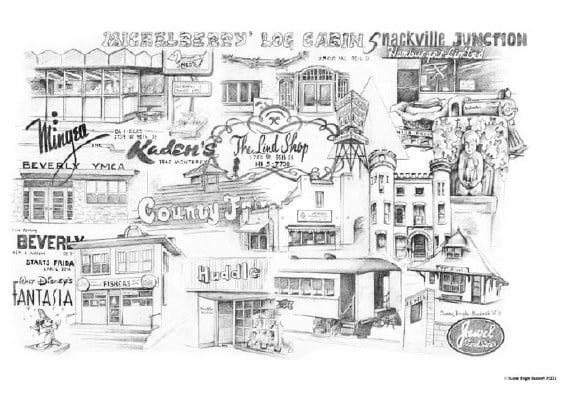
This print popped up on another Facebook page and I just want to let people know it is available through the Ridge Historical Society. Artist Sue Engle Budash of the Morgan Park High School class of 1967 created this nostalgia montage drawing, “Symbols of the Sixties,” for a reunion. It features a number of Beverly and Morgan Park businesses and/or their logos. I believe the prints are 11” by 14” and cost $25.00. You can contact the RHS office directly to buy these – ridgehistory@hotmail.com.
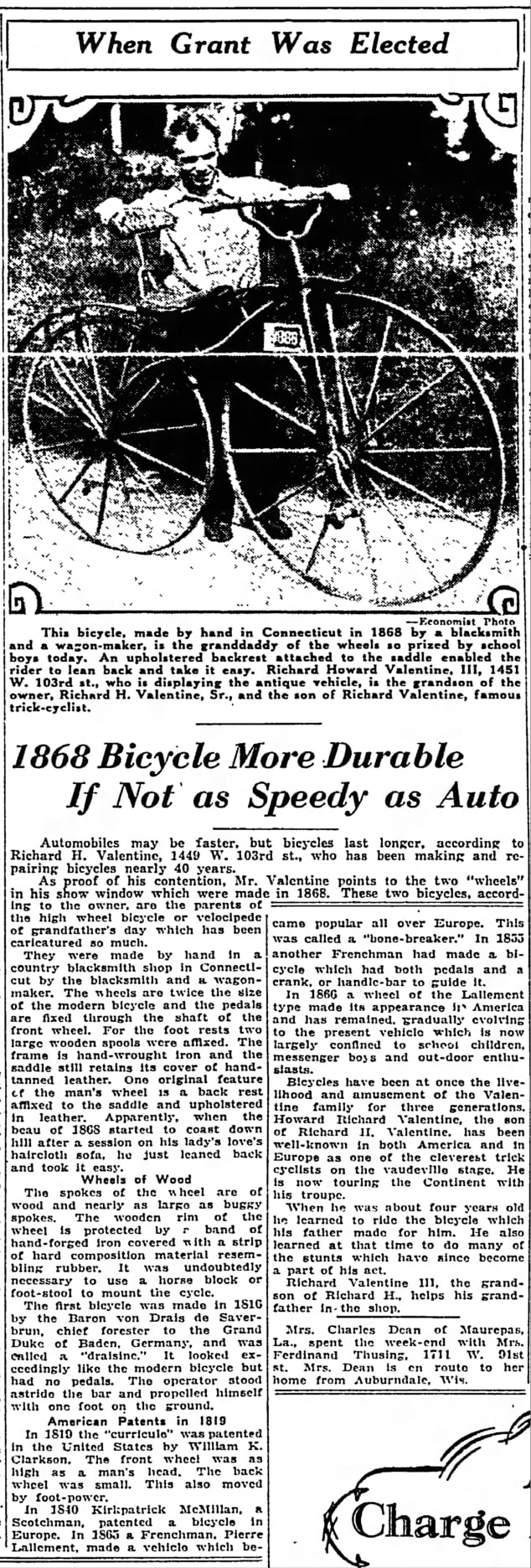
The Ridge had its own Valentine family in the community. Here is one interesting article about them. This is from the Southtown Economist, September 25, 1928.
The Ridge Historical Society
The Ridge’s Historical Connection to Ukraine
By Carol Flynn
The eyes of the world are on the country of Ukraine in Eastern Europe at the moment.
There are over one million Ukrainian Americans. The first Ukrainian immigrant on record came to Jamestown in 1607. Large-scale immigration to the U.S. began in the 1880s, and was very heavy in the early 1990s after the collapse of the Soviet Union.
The historical connection between one prominent Ukrainian family and the Ridge has been documented.
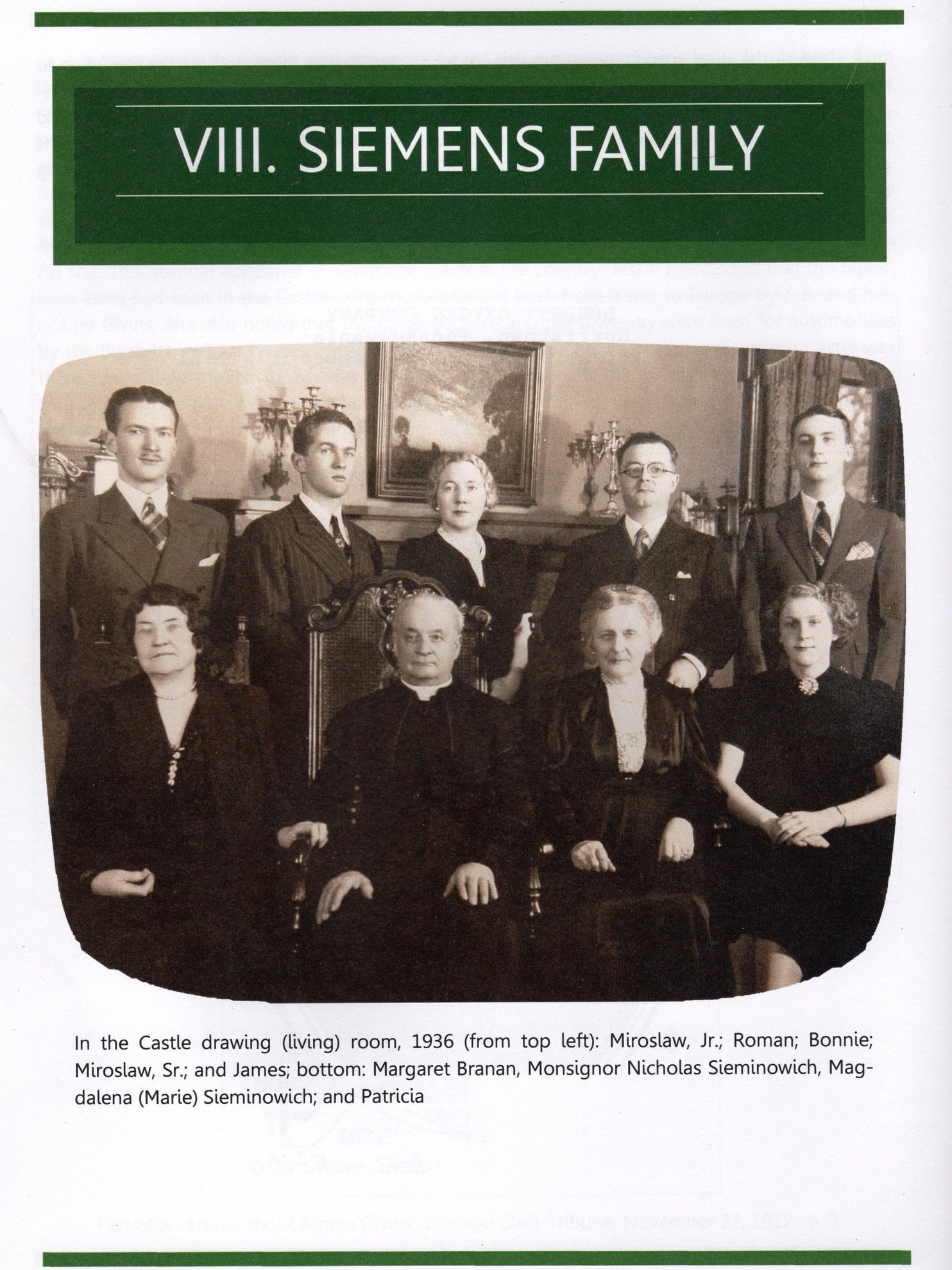
Dr. Miroslaw and Bonnie Siemens (Sieminowycz, Sieminowich) owned and lived in the Givins Beverly Castle at 103rd St. and Longwood Drive from 1921 until the Beverly Unitarian Church bought the building in 1942. At the time of Dr. Siemens’ death in 1967, at the age of 82, the family was living at 9559 S. Longwood Drive.
Dr. Siemens was born in 1885 in Ukraine and came to the USA in 1907. He graduated in 1913 from Bennett Medical College, affiliated with Loyola University. He was naturalized as a U.S. citizen in 1914, and served in the U.S. military during World War I. He was a major, a regimental surgeon, with the 497th Field Artillery. He then practiced at Roseland Community Hospital and kept an office in the Castle. He was also the physician for the Nickel Plate Railroad.
Dr. Siemens’ parents, Nicholas and Maria Magdalena Seiminowich, also lived in the Castle. Nicholas was a Ukrainian Catholic priest who rose to monsignor. In this rite, married men can be ordained priests.
Bonnie Veronica Barry Siemens, born in 1890, was Irish Catholic. They married in 1915 and had four children, Miroslaw, Jr., Roman, James, and Patricia. Bonnie's mother Margaret Branan also lived with the family. Bonnie had tuberculosis and the grandparents did much of the childcare.
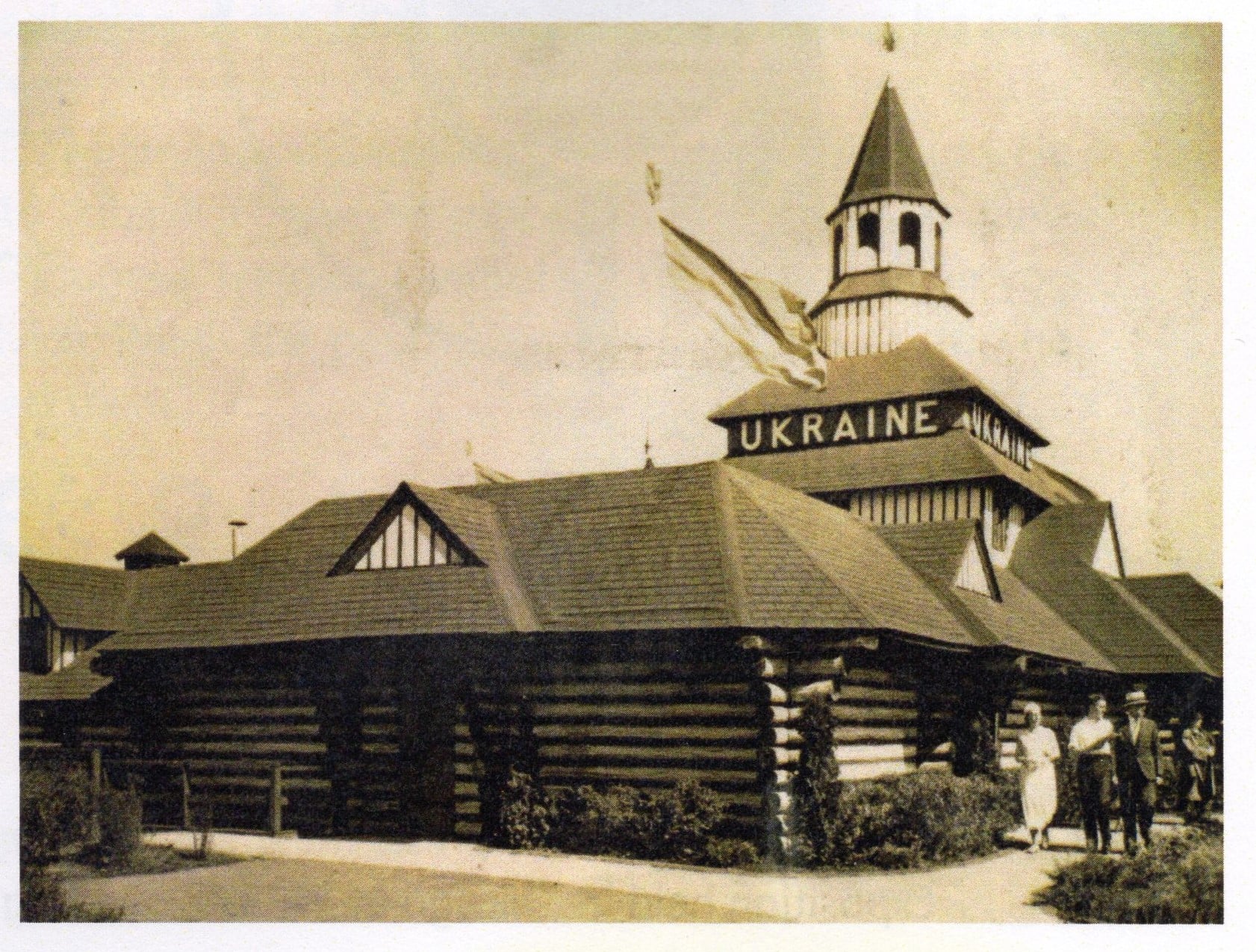
Dr. Siemens was very active and important in the Ukrainian American community. One notable achievement was to serve as the planner, fundraiser, and chair of the Ukrainian exhibit at the Century of Progress World’s Fair in Chicago in 1933-34. The exhibit showcased the country’s traditional arts and culture, including pysanky, the famous Ukrainian Easter eggs decorated using a wax-resist method.
In 1939, Siemens was called to testify before the Special Committee on Un-American Activities of the U.S. House of Representatives. He was president of the United Hetman Organization, proponents of a governance system in Ukraine run by a “hetman” or head of state that had been in operation up to the late 1700s. The organization was investigated for possible subversive activities, but no charges were ever laid against the group. Lacking widespread support, the group dissolved in 1942. Siemens was a leader of an effort to form a successor organization but there was insufficient support.
He was a benefactor of St. Nicholas Ukrainian Catholic Cathedral in Ukrainian Village on Chicago’s north side. In the early 1950s he was instrumental in establishing the Ukrainian National Museum, and served as honorary president.
Dr. Siemens has been called the “first ambassador for Ukraine in the U.S.” because of his efforts to preserve Ukrainian history and to help refugees from the country. Many dignitaries including the Crown Prince of Ukraine visited the family in the Castle.
Linda Lamberty, Ridge Historical Society Historian, and Carol Flynn, Ridge Historical Society researcher/writer, are honored to be part of “Invisible Labors,” a collaborative project with Susannah Papish, artist, educator and Director of boundary, the arts project space in Morgan Park; and Melissa Potter, feminist interdisciplinary artist and writer, and Professor at Columbia College Chicago.
“Invisible Labors” began as a project at boundary last year that included Melissa’s garden of native plants and an exhibition of papermaking, an artistic medium at which she excels. This led Susannah to start thinking about how the land was used in the Ridge area before it was just about all claimed by “development.”
Susannah reached out to Linda and Carol from RHS, with whom she worked previously on other projects, and rich discussions started about the history of the land from the time of the Native Americans to the arrival of the European settlers to the Great Migration of African Americans from the Southern United States.
This led to the idea for an artistic publication on the role that women played in the use of the land, as farmers and gardeners, and as artists. Carol will be a primary author with stories about the women of the Ridge and their connections to the land, based on research conducted with Linda. There will be additional writing from Melissa, as well as artwork related to the topic. We’re still thinking about formatting options for the publication.
March is Women’s History Month, so we are announcing this project at this time.
Susannah has put together a description of the project as well as a campaign to raise some funding to help with the cost of developing this project, which can be accessed at the website https://3arts.org/projects/invisible-labors/.
Thank you for your interest in the project. The publication will be out this summer. Please let us know if you have any questions or comments.
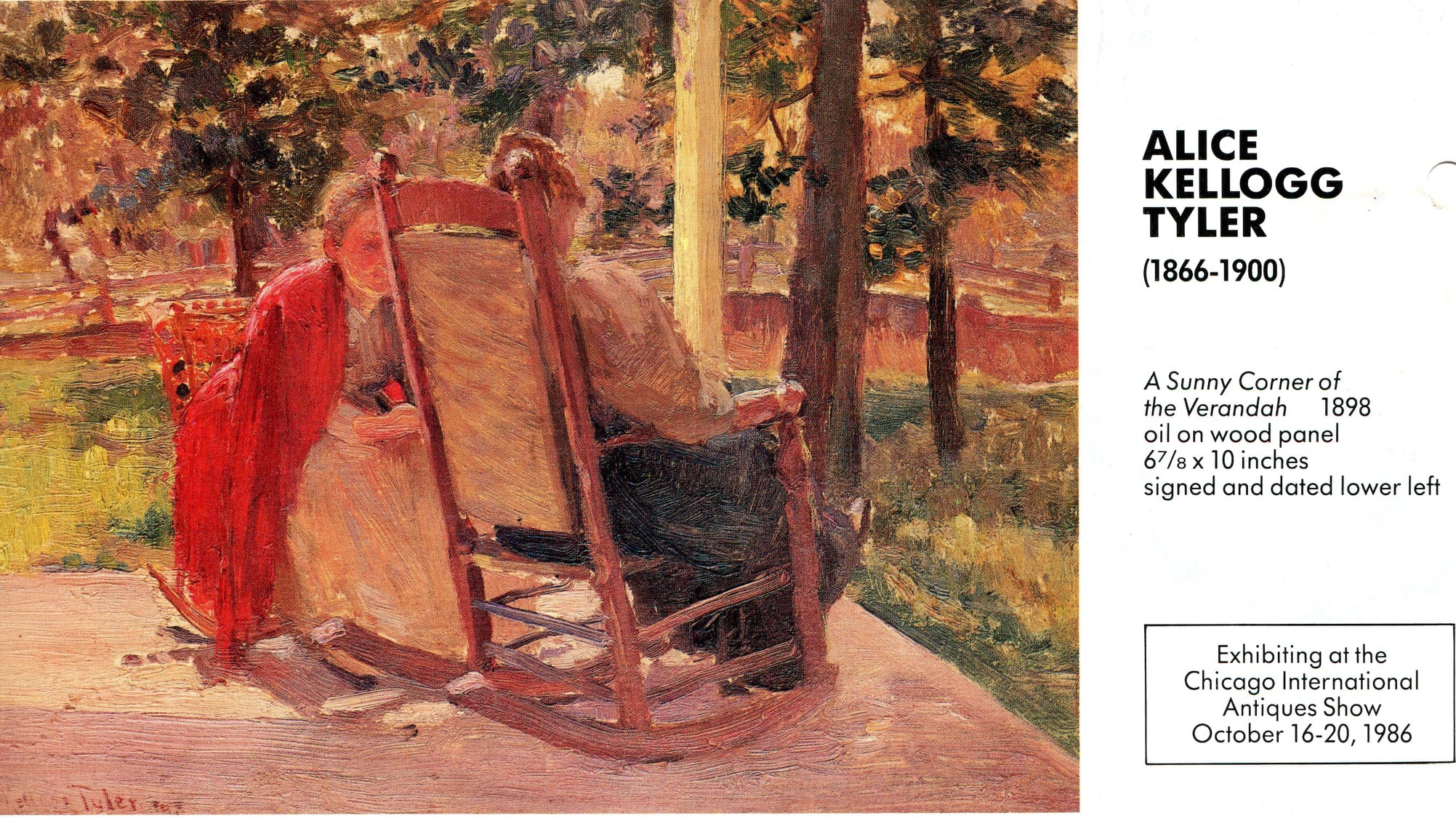
Image is of a painting by Alice Kellogg Tyler of the verandah of their farmhouse on the Ridge.
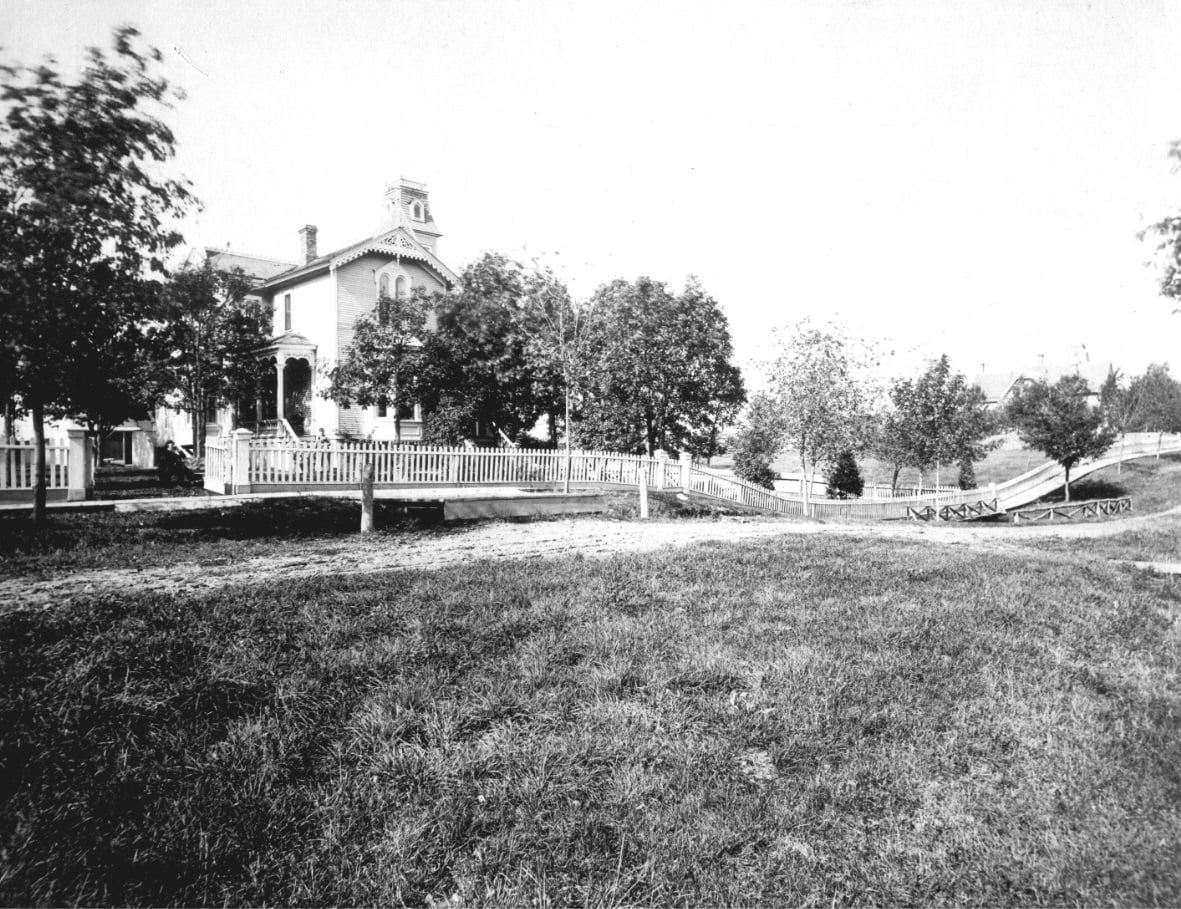
“Invisible Labors” is a collaborative project to explore the role that women played in the use of the land, as gatherers, farmers, gardeners, and artists, in the history of the Ridge communities of Beverly and Morgan Park. It is one of five projects currently supported by 3Arts, a nonprofit organization that supports Chicago’s women artists, artists of color, and Deaf and disabled artists who work in the performing, teaching, and visual arts. 3Arts includes a built-in match that helps Chicago artists finance new creative work.
“Invisible labors,” curated by Susannah Papish, the Director of boundary, the art project space in Morgan Park, has several components. It started last fall with a garden of native plants and a paper-making exhibition at boundary by artist and educator Melissa Potter, a professor at Columbia College Chicago.
The next component will be a publication featuring the research and writing of the Ridge Historical Society’s experts on local history. With research assistance form RHS Historian Linda Lamberty, RHS researcher/writer Carol Flynn, who develops all the stories that appear on the RHS Facebook page as well as stories for the local newspapers and other sources, will write about the pre-history days of Native Americans and their use of the land; the coming of the white European settlers and their development of the land; and the history of the early community of Black Americans who settled here after the U.S. Civil War. For the record, Carol Flynn is legally disabled.
The publication, which is still in the planning stages, will include artwork and other contributions from Susannah and Melissa, in addition to the written stories.
Susannah Papish has started a fund-raising campaign to offset some of the expenses of the project through this link: https://3arts.org/projects/invisible-labors/
We hope that if you truly support the arts in the Beverly/Morgan Park community, and/or appreciate the historical stories shared by the Ridge Historical Society, that you will consider putting a few dollars towards this project. We will be very grateful for the contributions.
The RHS page will share some of the highlights of the stories in the coming days.
Artist Louise Barwick lived in one of Beverly’s oldest and most charming houses on 103rd and Seeley. She painted beautiful local scenes in water color, as well as made a name for herself in the academic field with geographic modeling techniques. Her story is one that will be told in “Invisible Labors.”