
Explore the RHS Facebook Archives, a rich repository of local history written by Carol Flynn. For two decades, Carol brought a deeply dedicated voice to public education at RHS. Her role as Facebook administrator through mid-2025 naturally extended her prolific research into meticulously detailed articles, most notably her multi-part historical series posts. Today, Carol continues her local history writing for The Beverly Review and other outlets.
2024
The Ridge Historical Society
Lost or Found Series – More information on Hough, McMeen, and Northrup
By Carol Flynn
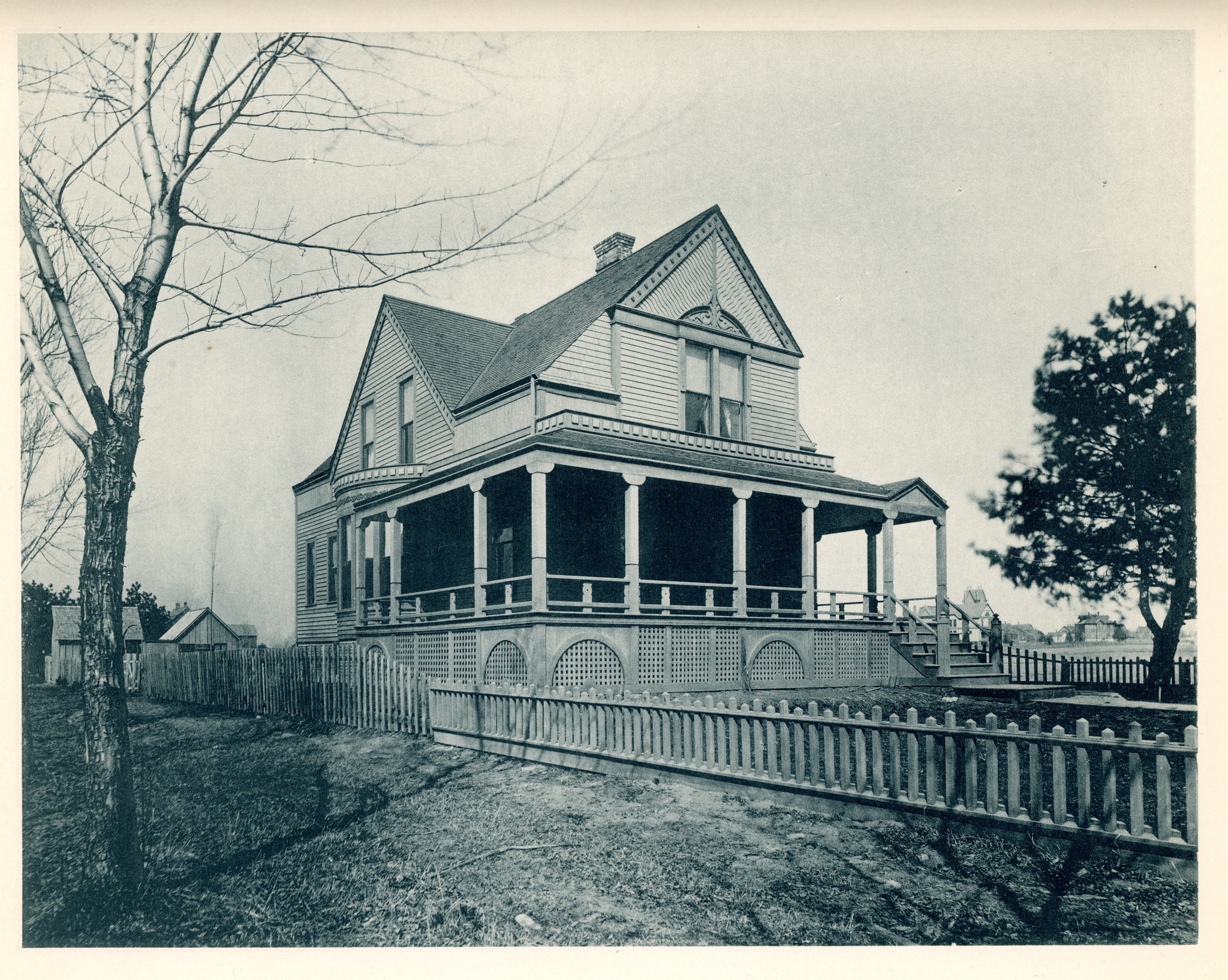
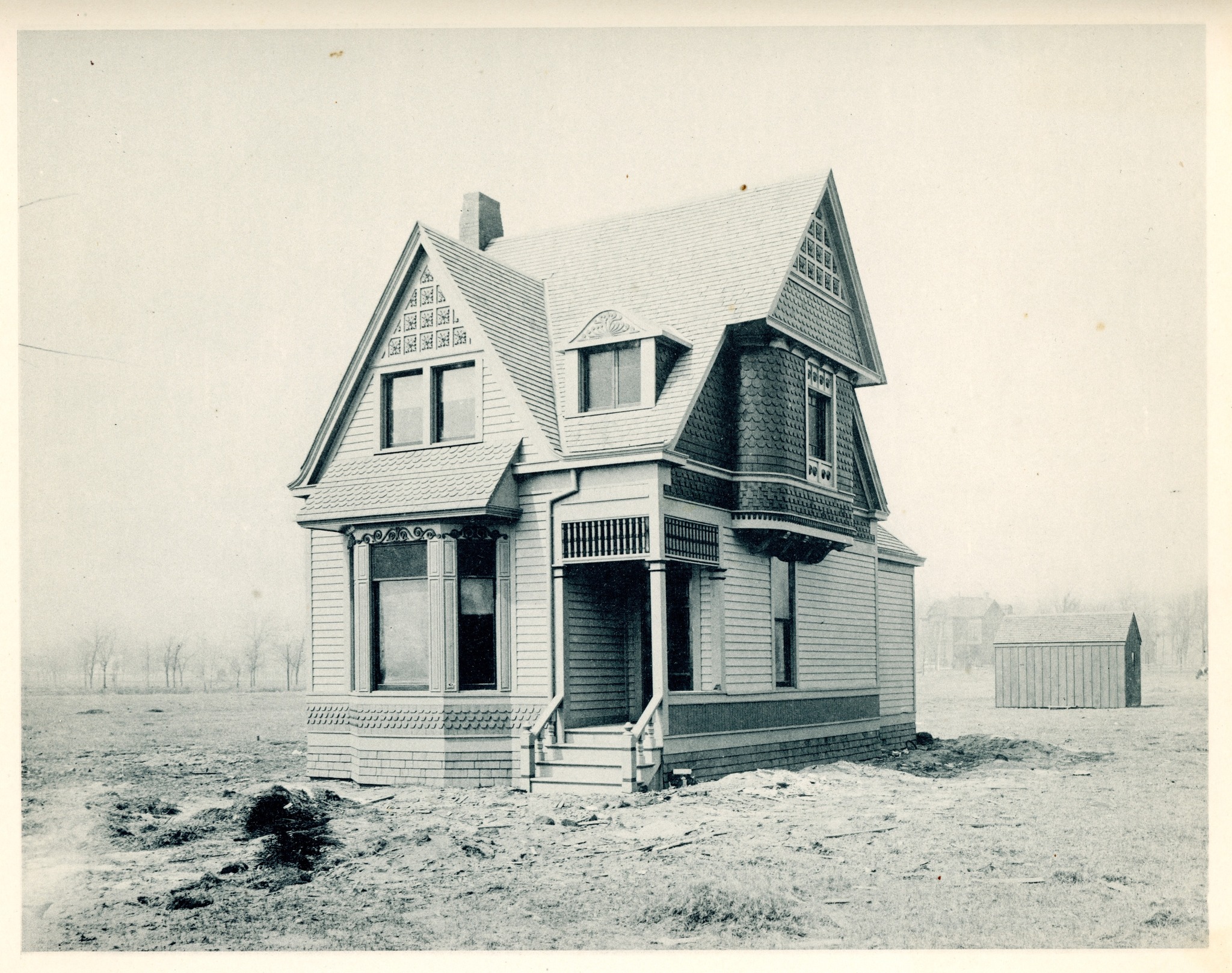
In the last post, three houses in Morgan Park that were photographed in 1889 were identified. Two were lost, that is, demolished, and the third was found, still standing but obscured from view by a modern commercial building constructed in front of it.
The three houses were all located on 111th Street, which was called Morgan Avenue back then.
Morgan Avenue, on top of the hill from Western Avenue to Longwood Drive, was primarily residential. Many nice houses were built along the street for the earliest residents of this suburban village, which had been founded in 1874 by the Blue Island Land and Building Company.
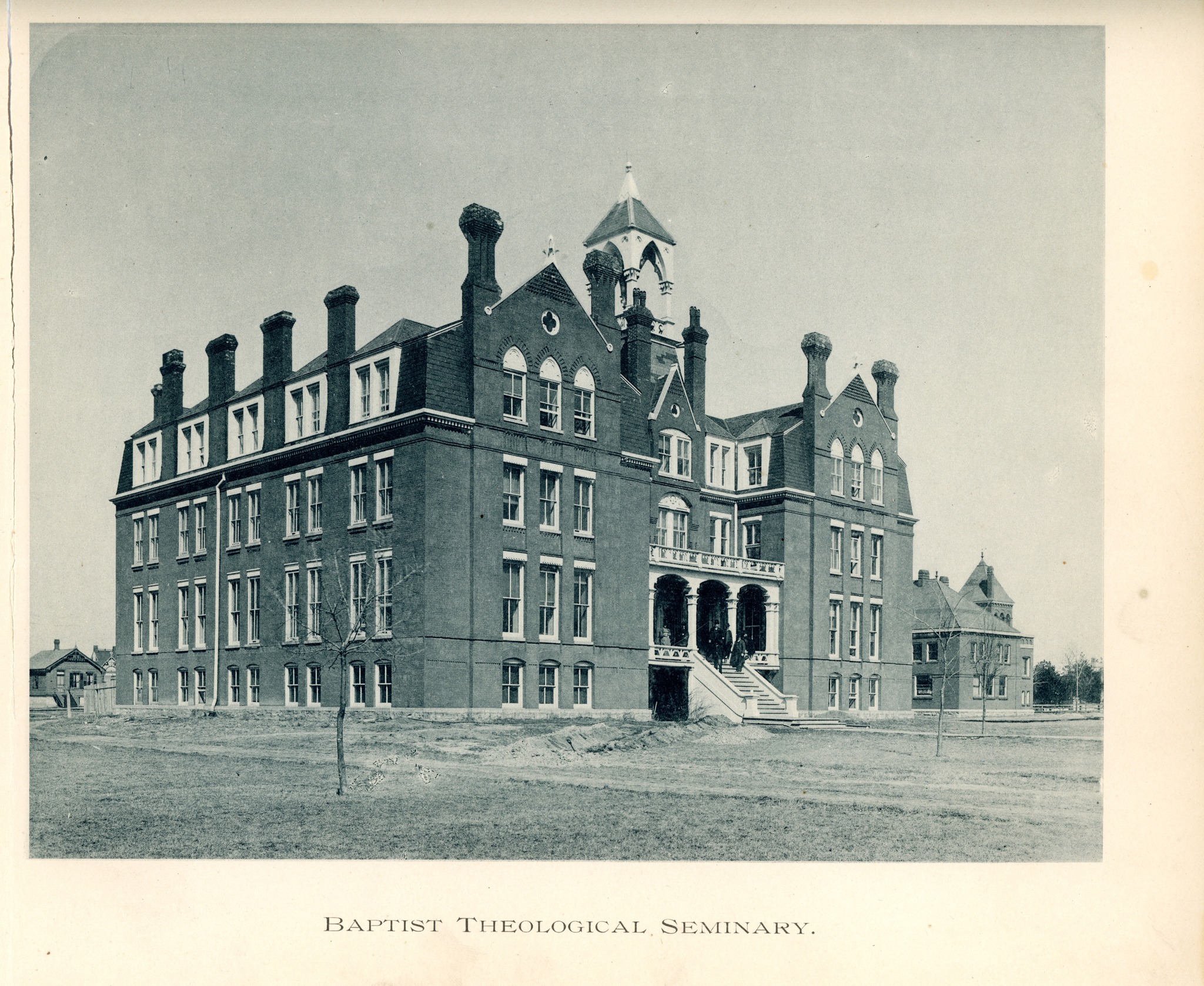
The top of the hill was also the location for prestigious education institutions. On the north side of the street was the Baptist Union Theological Seminary, which moved to Hyde Park as part of the University of Chicago. The Mount Vernon Military Academy, which evolved into today’s Morgan Park Academy, was, and still is, on the south side of 111th Street.
East of Longwood Drive, at 111th Street and Hale Avenue, was the Morgan Park stop on the Chicago, Rock Island, and Pacific Railroad commuter line. The men who started the Blue Island Land and Building Co. and Morgan Park were also the owners of the Rock Island Railroad (now part of Metra).
They were savvy businessmen. First, they bought land on the Ridge from the old Morgan estate. Then they built their railroad through the area, connecting the Ridge with downtown Chicago. Then they sold off the land north of 107th Street in plots for homes for a higher price and developed the land south of 107th Street into the village of Morgan Park.
They made substantial amounts of money doing this and became very wealthy men. This was a common practice throughout the expanding U.S. The railroad men were quite often also the major land developers.
Commercial development in Morgan Park first began around the train stops. A large park would be established in front of the train stop on 111th Street. This park would be called Depot Park but today is known as Bohn Park. Depot Park would became Morgan Park’s “village green” for festivals and the location of the village Christmas tree.
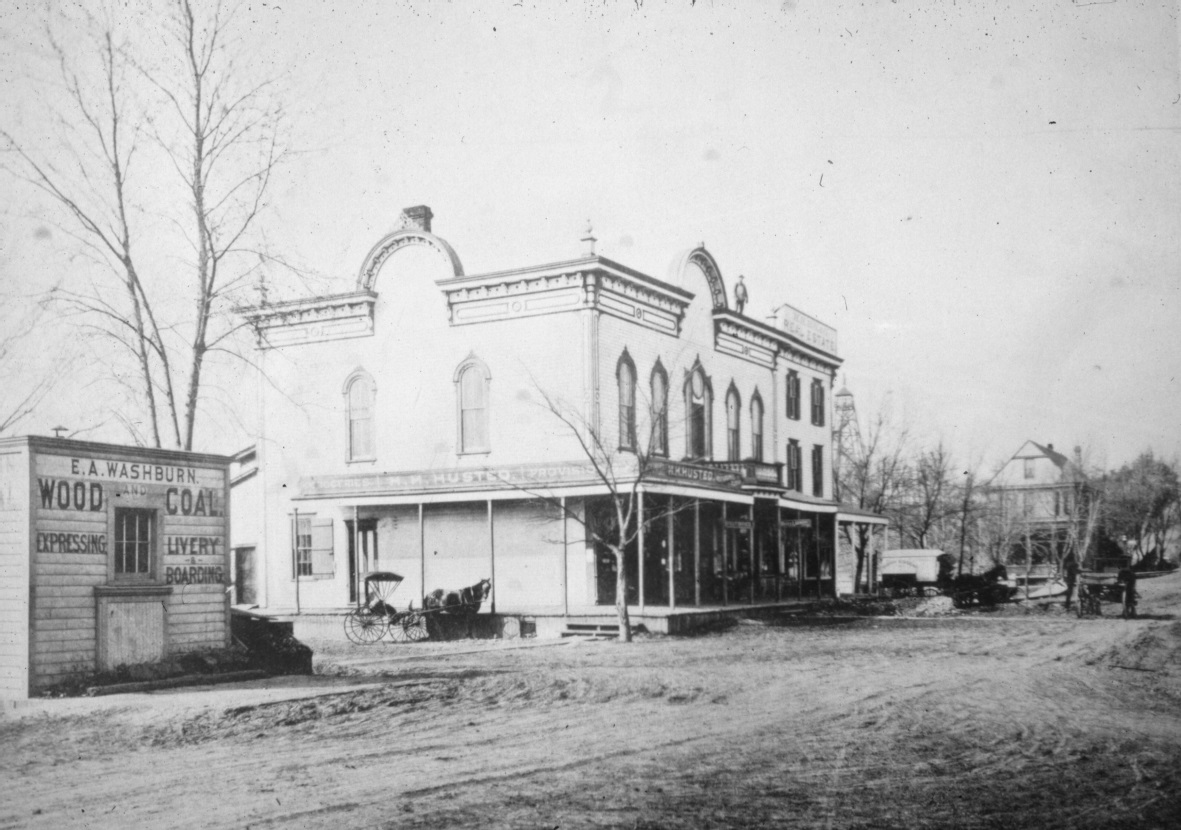
Washburn Hall, which included commercial space on the first floor and a large room on the second floor for meetings and special events, was also on this section of Morgan Avenue.
The first of the three houses in last week’s post, at the northeast corner of 111th Street and Western Avenue, was the residence of Henry (Harry) Oswald Hough and his wife, Claudia Hakes Hough.
Western Avenue then was still very rural even though it was a major north/south thoroughfare through the area.
H.O. Hough, as he was usually referred to in the newspapers, was a bookkeeper for a stockyards company. He was educated at the University of Chicago. There’s not that much information available about his job, but there is some information about his social life in Morgan Park.
Before he even got to Morgan Park, in the 1870s, Harry’s name popped up in the society pages as being one of the available single men at parties. One example was a party put on by the South Side Independent Club at a private residence in the Prairie Avenue district in 1875.
Claudia came from Connecticut and was 19 years old when she married Harry in 1884; he was 26.
Tragedy struck their young family when their two-year old son, Rupert, died in 1887. They had a second child, Waldern, who lived to adulthood but his mother, Claudia, outlived that son also.
Harry and Claudia lived in Morgan Park by 1888, and were part of the active social scene there. They “rubbed elbows” with some of the famous names from local history, including the Blackwelders, Silvas, Igleharts, Wiswells, Givins, Ayers, and Myricks.
They were early members of the Owl Club of Morgan Park, which, according to the Chicago Tribune, was “composed of the elite of the town, which is sufficient guarantee regarding the character of its recipients. It is a pleasure to belong to such an organization as the Owl Club.”
[The Owl Club of Chicago started as a press club, but expanded to include everyone from artists to businessmen. As more “men about town” became members, the press started to consider the club as less distinguished and the elitism as “pretentious.” The press members left the club and formed a new club, the Chicago Press Club. David Herriott, the editor and publisher of the Morgan Park Post, served as a president of the Chicago Press Club.]
Claudia was an accomplished musician, and Harry liked getting on the stage, also. The couple was involved in local performances, and they entertained at their house regularly.
A few examples include Harry leading the “german” at a reception of the Owl Club in 1888, and Claudia managing a performance of “Liebling’s amateurs” at the Hough home in 1889. The german was a very popular group dance that was more like a party game. The Liebling Amateurs were students and followers of Emil Liebling, a German pianist and composer who lived in Chicago.
Other performances that both Harry and Claudia appeared in with the Owl Club drama group included “Little Brown Jug” and “Among the Breakers,” both at Washburn Hall, sometimes referred to as the Morgan Park Hall.
They also participated in Owl Club costume parties at the Hall, popular events in the late Victorian era. These included a calico party, where the women all dressed in calico, and games were played, such as the men each receiving an envelope with a piece of calico in it, and having to find the women whose dress matched the piece of cloth.
Another costume party put on by the Owl Club was a “phantom” party, or a “sheet-and-pillow-case” party, where the attendees dressed as ghosts with costumes made from, yes, sheets and pillow cases.
It was also reported in the Tribune that the Hough House in Morgan Park was burglarized in July 1889, and “a spring overcoat and a lot of silverware” were stolen.
Alas, Henry’s and Claudia’s marriage did not last. They divorced, and she eventually moved to California, and he moved to Florida.
The Hough House was demolished some time ago, and recently a new dollar store opened on that corner, replacing the CVS pharmacy that had been there.
The second house in this post is identified as the Joseph E. McMeen House at 2330 W. 111th Street. The house still stands, but it is obscured by a modern commercial storefront built in front of it on 111th Street.
McMeen was an interior decorator and painter, and one source listed him in the furniture business. He had an office in the city.
It doesn’t appear that McMeen laid down long-lasting roots in Morgan Park. The newspapers reported that his house at 109th and Hermosa (then Fairfield), which had only been built six months before, was destroyed by a fire in 1889. The family was sleeping and had a narrow escape.
That is also the year he is listed as living in the house on 111th Street that still stands, so it seems likely he moved into that house after the other was destroyed. The picture of the house shows it was just completed; there wasn’t even a walkway to the front door yet.
McMeen was also in the newspaper when he was injured by a cable car. He was awarded $1,000 from the Chicago City Railway Company.
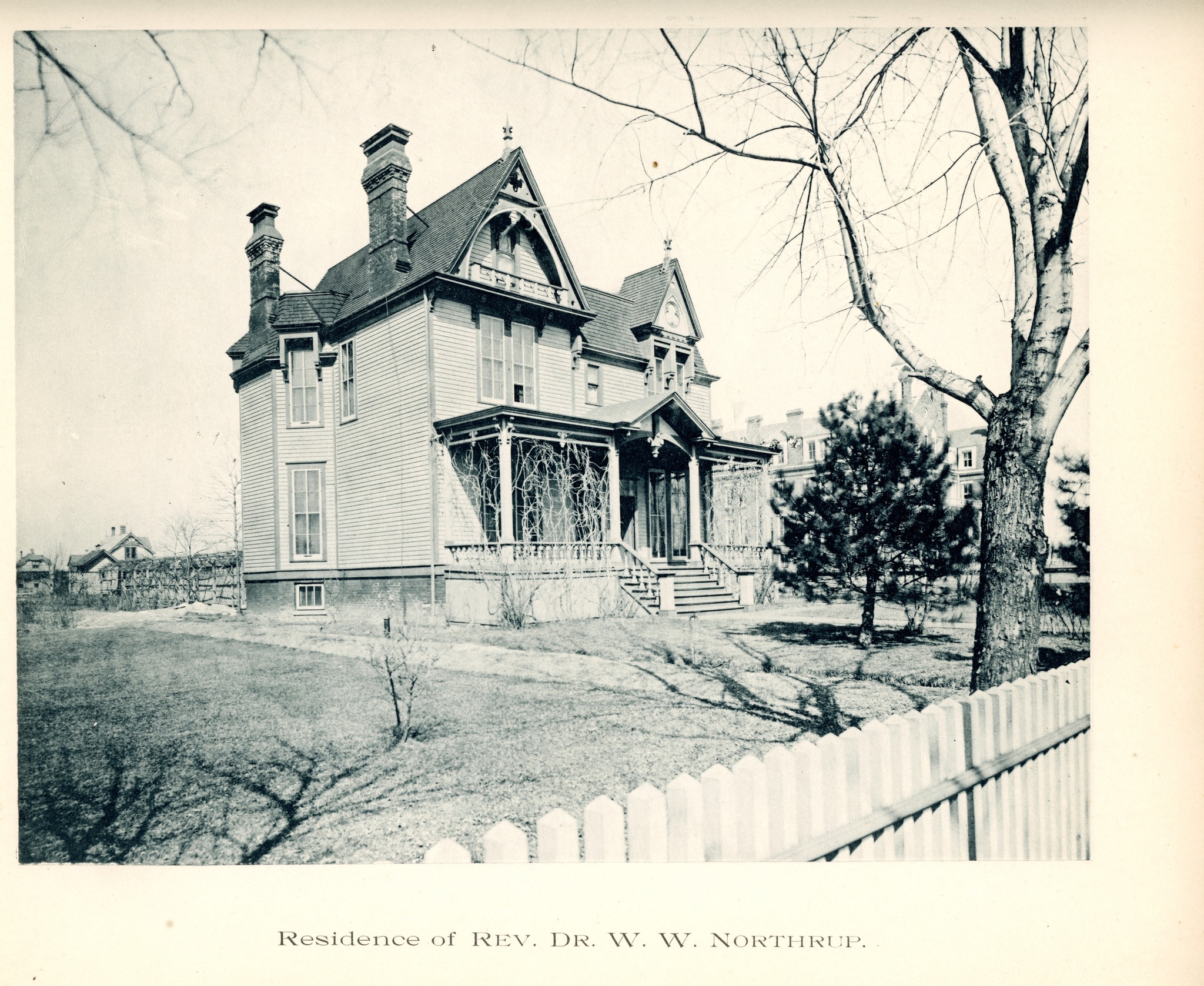
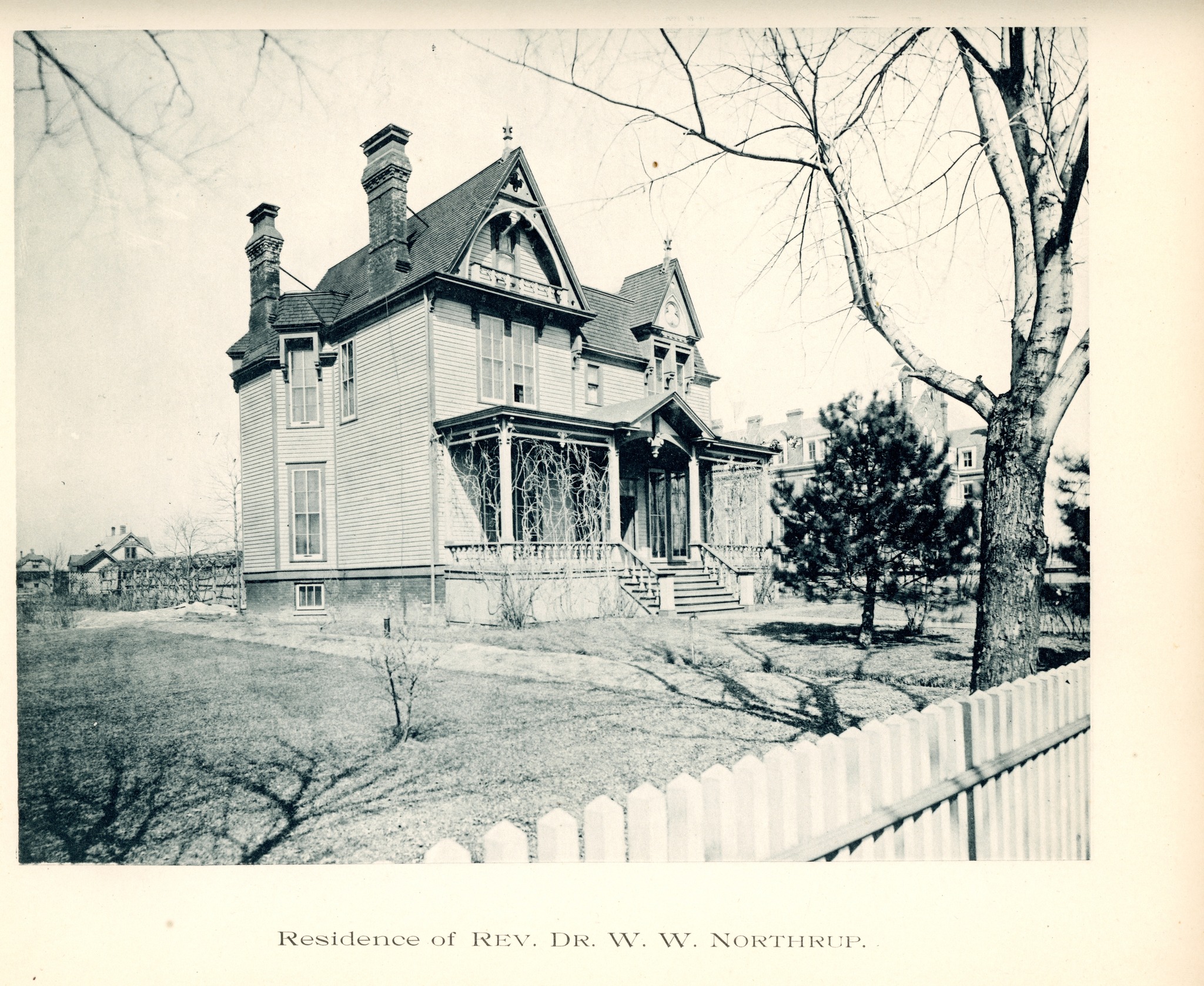
The third house was the residence of Rev. Dr. George William Northrup. The address was 2242 Morgan Avenue, but the house has been demolished and today the space is a vacant lot.
Northrup was the most prominent of the three residents. He was the President of the Baptist Union Theological Seminary, as well as a professor there.
Northrup is part of the story of how the University of Chicago was almost established in Morgan Park, and that will be covered in the next post
The Ridge Historical Society
True Grit and Cowboys on the Ridge – Part 1
By Carol Flynn
Tales of the Wild West, folklore truly unique to America, have captivated the world’s imagination for over 150 years.
“The Western” has become its own genre in literature and in film. The stories are usually morality parables – there is a good guy and a bad guy, clearly distinguished, and the good guy wins. If he dies in the process, he’s an even bigger hero.
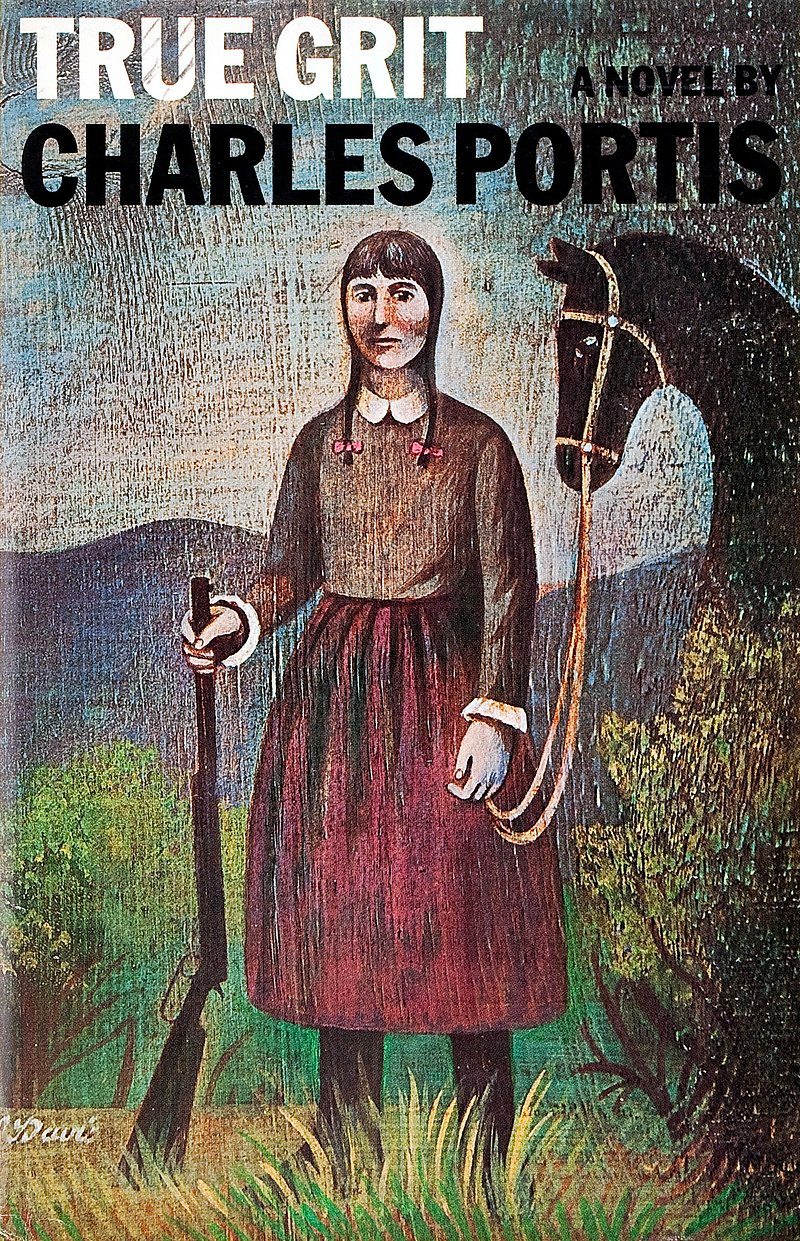
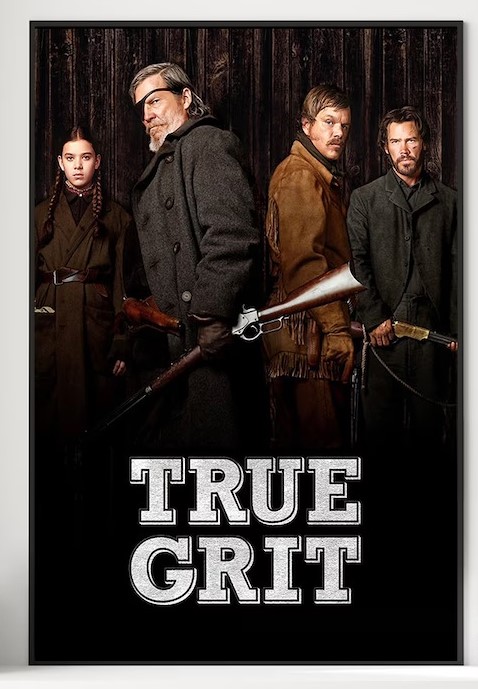
On Wednesday, August 7th, the Blue Island Ridge’s only bookstore, Bookie's Chicago, and only movie theater, the historic Lyric Theater in Blue Island, are partnering for a special showing of the 2010 film “True Grit,” an adaptation of the 1968 novel “True Grit” by Charles Portis.
This event is next in the series from Bookie’s Film Adaptation Book Club, which came back from its COVID-enforced hiatus in March with a very successful showing of “The Commitments” based on the novel of the same name by Roddy Doyle.
Critics have named “True Grit” one of the great American novels, and it has been adapted twice into award-winning movies.
The 1969 version starred John Wayne as the man with true grit, Rooster Cogburn.
The 2010 version, which will be shown at the Lyric, comes from the Coen Brothers who have given the public such great contemporary films as “Fargo” and “No Country for Old Men.” The star of the Coen Brothers’ production of “True Grit” is Jeff Bridges, who also starred in the Coen Brothers’ cult classic, “The Big Lebowski.”
RHS is mentioning this event for two reasons. First, it was the administrator of the RHS Facebook page who suggested “True Grit” as a possible novel/movie to Bookie’s owner, Keith Lewis.
The years of expansion into the western and southwestern portions of the United States, the “frontier,” are an incredibly interesting and picturesque period in U.S. history. At one time, Chicago WAS the western frontier.
That brings us to the second reason, local history’s connection to the Wild West.
Of course, Morgan Park was known as “Horse Thief Hollow” in the mid-1800s because of the horse thieves who hid out in the ravines, bringing stolen horses to the stockyards and railroads for sale. That is a big story for a series on Facebook or an in-person presentation one day.
Today let’s start with looking at the “Cowboys on the Ridge,” those true-life Western characters who had a connection to the Ridge.
Remember, we’re talking reality here, and when it comes to the Wild West, reality often was no less colorful and dramatic than the fictional stories.
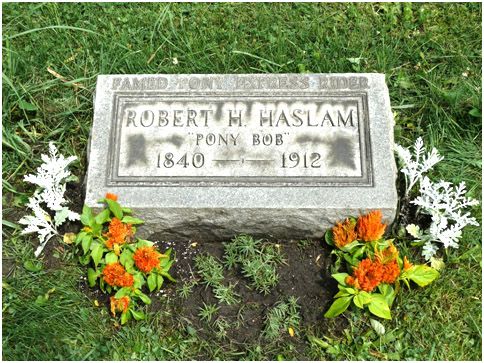
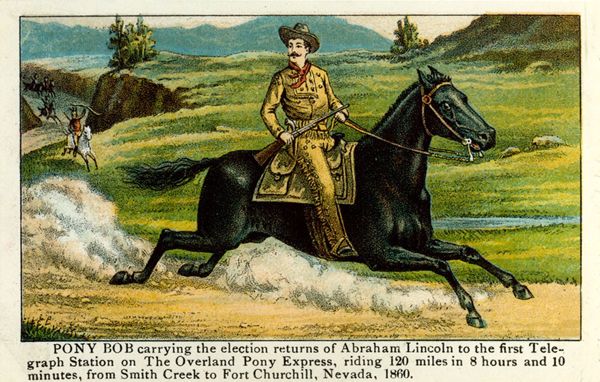
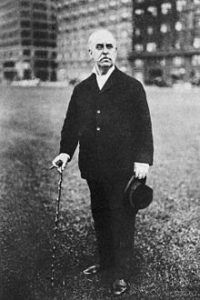
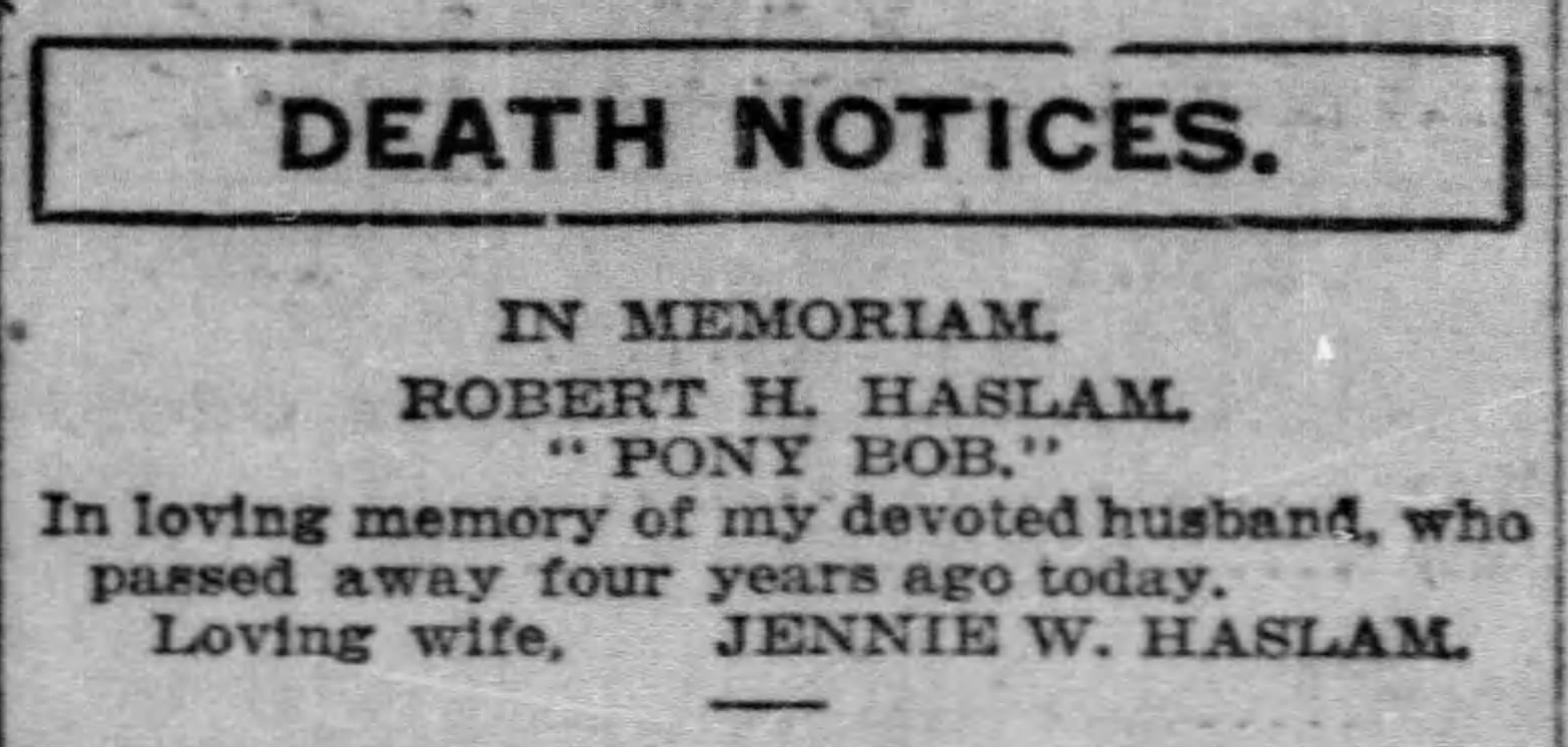
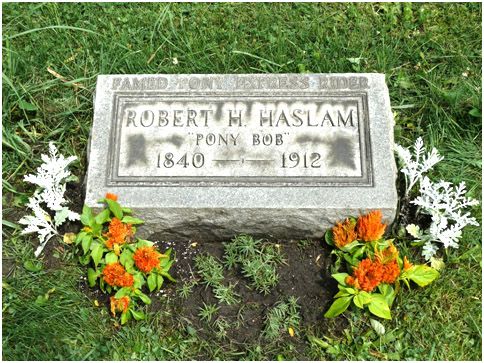
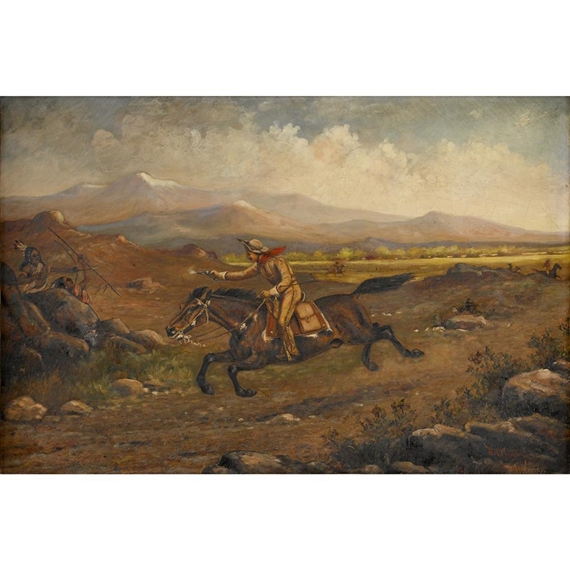
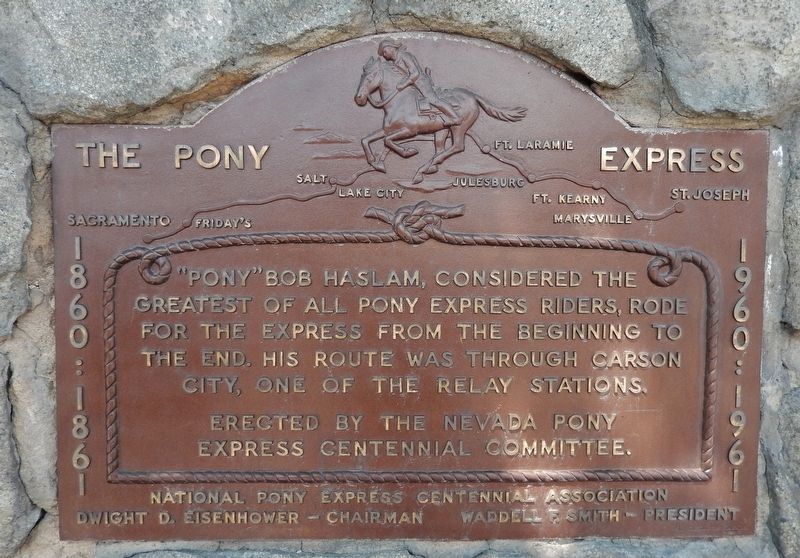
The Ridge’s biggest Western celebrity is Robert “Pony Bob” Haslam, the star of the Pony Express in the 1860s, who is buried in Mount Greenwood Cemetery. His grave is the most sought after to visit in the cemetery.
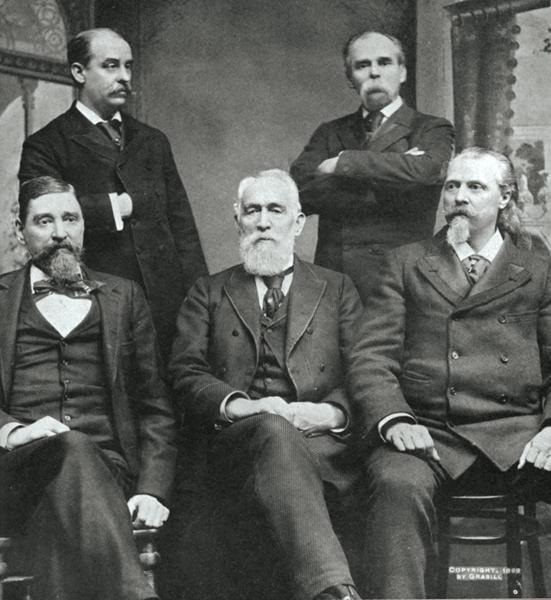
Pony Bob is considered by many to have been the bravest, most resourceful, and best rider of the Pony Express. He has quite a following among the aficionados of true Western stories, although his name never became quite as famous as some other people of the time, including Pony Bob’s very good friend, Buffalo Bill Cody.
To appreciate Pony Bob’s story, it must be considered in context of the times.
The Pony Express only lasted 18 months, and it is tied closely to Abraham Lincoln’s presidency.
By the 1850s, both U.S. coasts were settled, but the interior, from Chicago to San Francisco, was still “untamed.” A means of fast delivery of mail across the plains was needed. Telegraph lines were not existent yet and the railroads had not yet laid down tracks. Wagons could take weeks or even months to deliver a message.
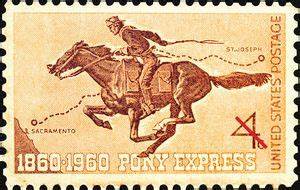
In 1858, the owners of a freighting business, in an effort to snare a government contract for delivering mail, proposed a fast mail service between St. Joseph, Missouri, and Sacramento, California.
The plan was to have mounted riders travel short routes, with switch-offs at stations along the way. In just two months’ time, a system comprised of 120 riders, 400 horses, 184 stations, and hundreds of additional personnel was put together.
The Pony Express was born.
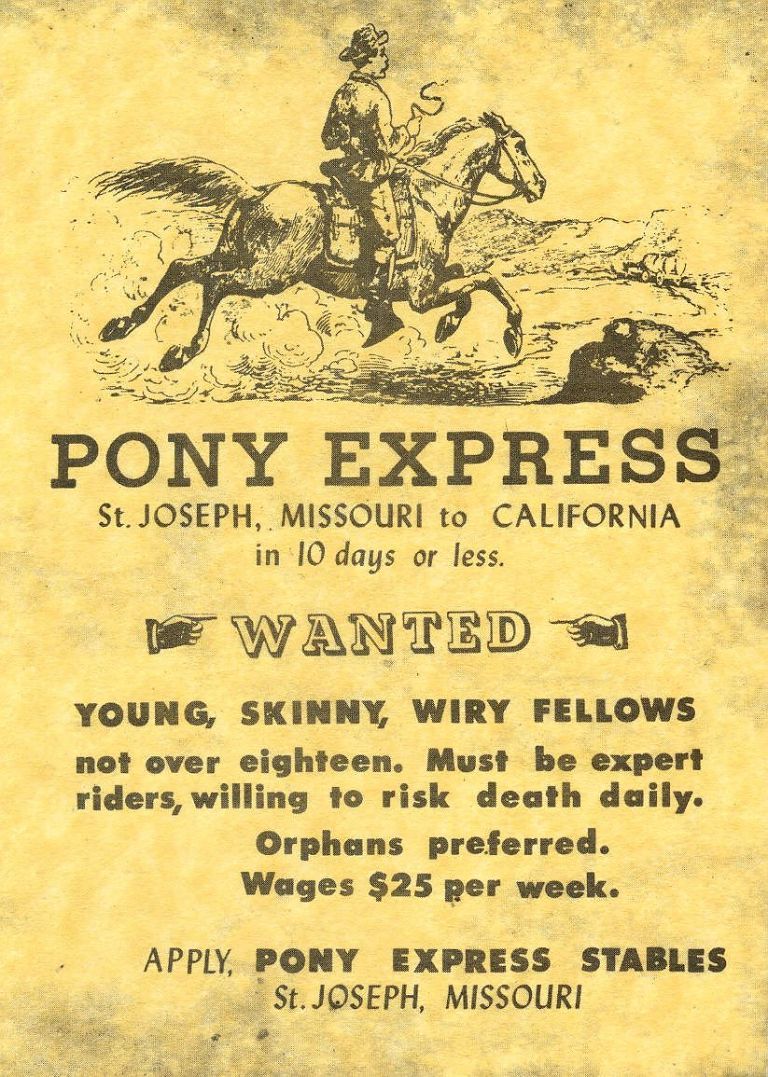
Riding for the Pony Express was difficult work — riders had to be tough and lightweight.
The advertisement for riders read, “Wanted: Young, skinny, wiry fellows not over eighteen. Must be expert riders, willing to risk death daily. Orphans preferred.”
Riders would travel at full gallop, changing horses every ten miles at the next station, traveling day and night for up to 100 miles before being replaced by a new rider.
The first trips east and west, which started on April 3, 1860, were each completed in ten days.
Robert Haslam was born in January, 1840, in London and he came to the US in 1856. He helped build the Pony Express stations, and was given the mail run from Friday’s Station at Lake Tahoe to Buckland’s Station near Fort Churchill, 75 miles to the east.
The next post will cover the events that made Robert Haslam a star, and earned him the nickname “Pony Bob,” which was an honor.
For information on the “True Grit” event, see the Lyric Theater website at https://www.lyrictheater.com/.
The Ridge Historical Society
Cowboys on the Ridge – Part 2
By Carol Flynn
The last post introduced Robert “Pony Bob” Haslam, a youth who came to the U.S. from London at the age of 16 and became a true-life Wild West hero. He’s buried in Mount Greenwood Cemetery.
Haslam earned his renown, and the title “Pony Bob,” considered an honor, for his feats as a Pony Express rider in 1860-61. He was known for having both the fastest and the longest rides recorded for the Pony Express riders.
In March 1861, he was part of the relay that carried Abraham Lincoln’s inauguration speech to California. He traveled 120 miles in 8 hours and 10 minutes, using nine horses, while wounded in an attack by Paiute Indians that fractured his jaw, knocked out five of his teeth, and injured his arm.
It took a total of seven days and 17 hours to carry the news to California that time. The average trip was usually around ten days.
The speech included the announcement that the Confederates had attacked Fort Sumter, starting the U.S. Civil War. This caused California to back the Union, sending gold and 17,000 troops east to help the cause. Some news sources credited Pony Bob as “the man who saved the Union.”
The longest ride occurred in May of that year, when Pony Bob completed a 380-mile round trip, covering not only his own route but that of another rider too frightened of the Indian attacks to make the run.
Pony Bob developed a strong friendship with Buffalo Bill Cody and joined his Wild West Show. Pony Bob decided to settle in Chicago and took a job with the Congress Hotel as a porter where he entertained guests with stories of his adventures. He was in Chicago with Buffalo Bill for the 1893 World’s Fair.
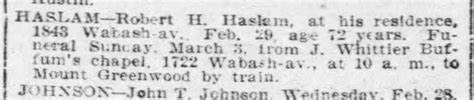
At the age of 47, he married Jenny Weiner, 19. Pony Bob died on Leap Year, February 29, 1912, at the age of 72. He was buried in Mt. Greenwood Cemetery, and it was rumored that Buffalo Bill paid for his grave, although cemetery records show it was purchased by his wife – but perhaps the money might have come from Buffalo Bill.
Jennie remarried, and they lived at 11825 S. Western Avenue in Morgan Park. That husband died in 1939. In 1940, Jennie had the marker there now in Mt. Greenwood Cemetery installed on the grave of her first husband, Robert “Pony Bob” Haslam.
The Ridge Historical Society
Lost or Found Series – The Northrup House
By Carol Flynn
The final post to wrap up the Lost or Found Series is on the Rev. Dr. George William Northrup House.
This house is “lost,” that is, it was demolished sometime in the past. It was located at 2242 Morgan Avenue, the name of 111th Street before Morgan Park was annexed to the City of Chicago in 1914. Today the location is a vacant lot between 2154 and 2204 West 111th Street.
Northrup is one of the most prominent people in Chicago history to have lived on the Ridge. He was the President of the Baptist Union Theological Seminary, as well as a professor there. He was part of the story of how the “new” University of Chicago was established with an original connection to Morgan Park.
The Baptist church came to Chicago with the earliest settlers. In 1863, a group of Baptist leaders created the Baptist Theological Union, and the Illinois legislature granted the Union a charter to found an institution for theological instruction.
The Baptist Union Theological Seminary was founded in 1865 along with the “Old” University of Chicago, that is, the first attempt to form an institution of higher learning in the city, started by Illinois Senator Stephen Douglas.
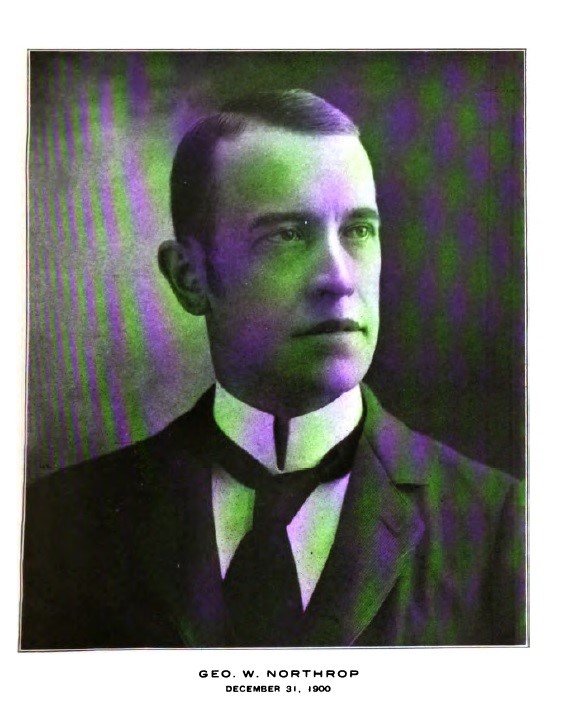
The formal work of the Seminary began with the appointment of George W. Northrup as President and Professor of Systematic Theology.
Northrup was born in New York in 1826. He was self-taught, and without formal education, he entered college as a sophomore, and graduated with top honors. He then received a degree from Rochester Theological Seminary and was hired there as a professor.
His reputation spread as an educator and orator, and he was invited to Chicago to take charge of the new Seminary.
Originally classes were taught in buildings near Douglas’ Oakenwald estate at 35th Street and Cottage Grove. The Seminary grew under his leadership and earned a reputation for excellence.
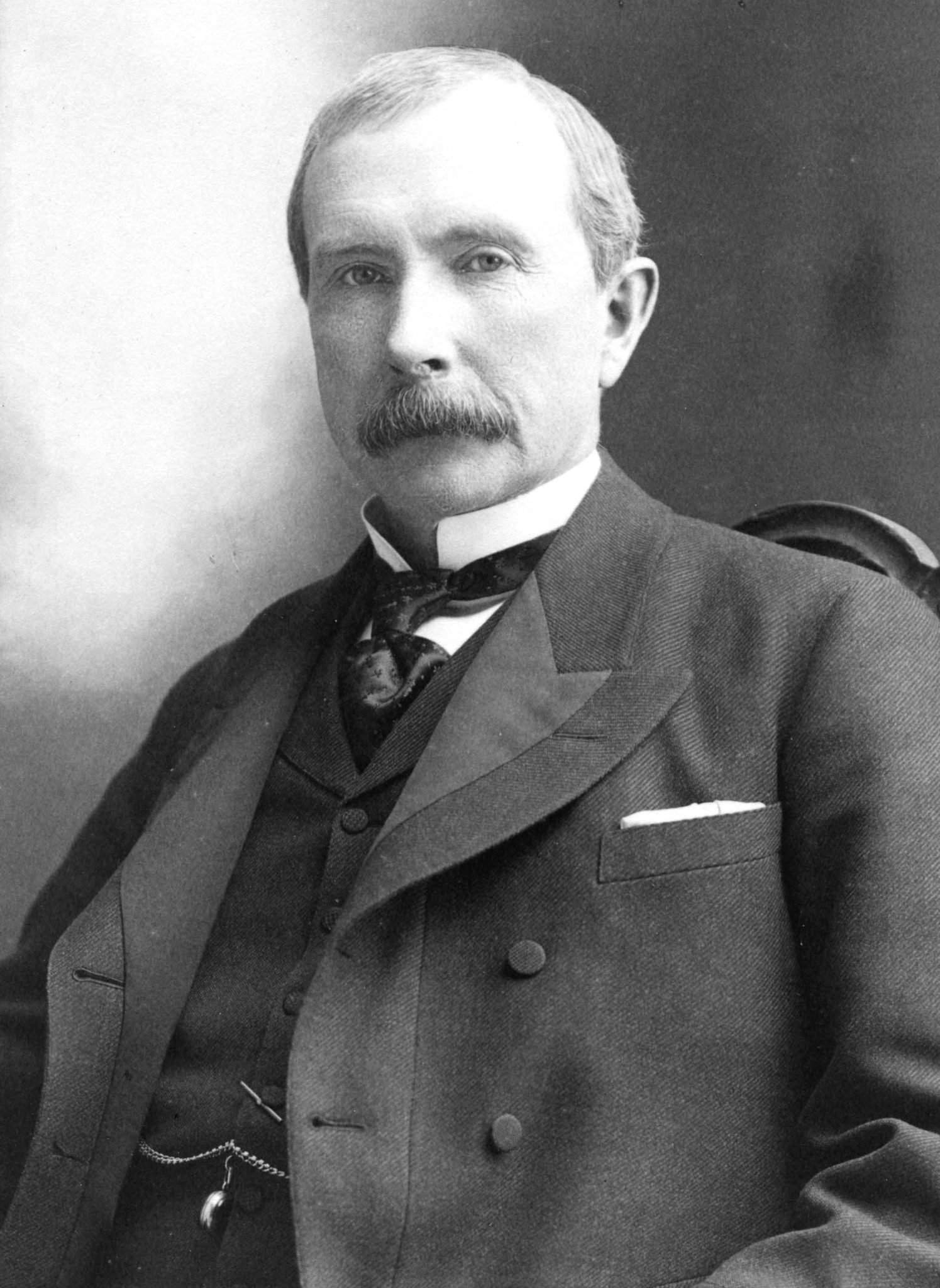
Northrup was personally involved in fund raising for the Seminary, and through this, he met and developed a relationship with John D. Rockefeller, business icon and philanthropist.
In the mid-1870s, the Seminary, and the Old University of Chicago, started having financial issues, and there was talk of having to close.
In 1877, a generous offer of free land (five acres) from the Blue Island Land & Building Co. (BILBCo.) led to the Seminary selling its buildings and land, relocating to Morgan Park, and building new facilities there.
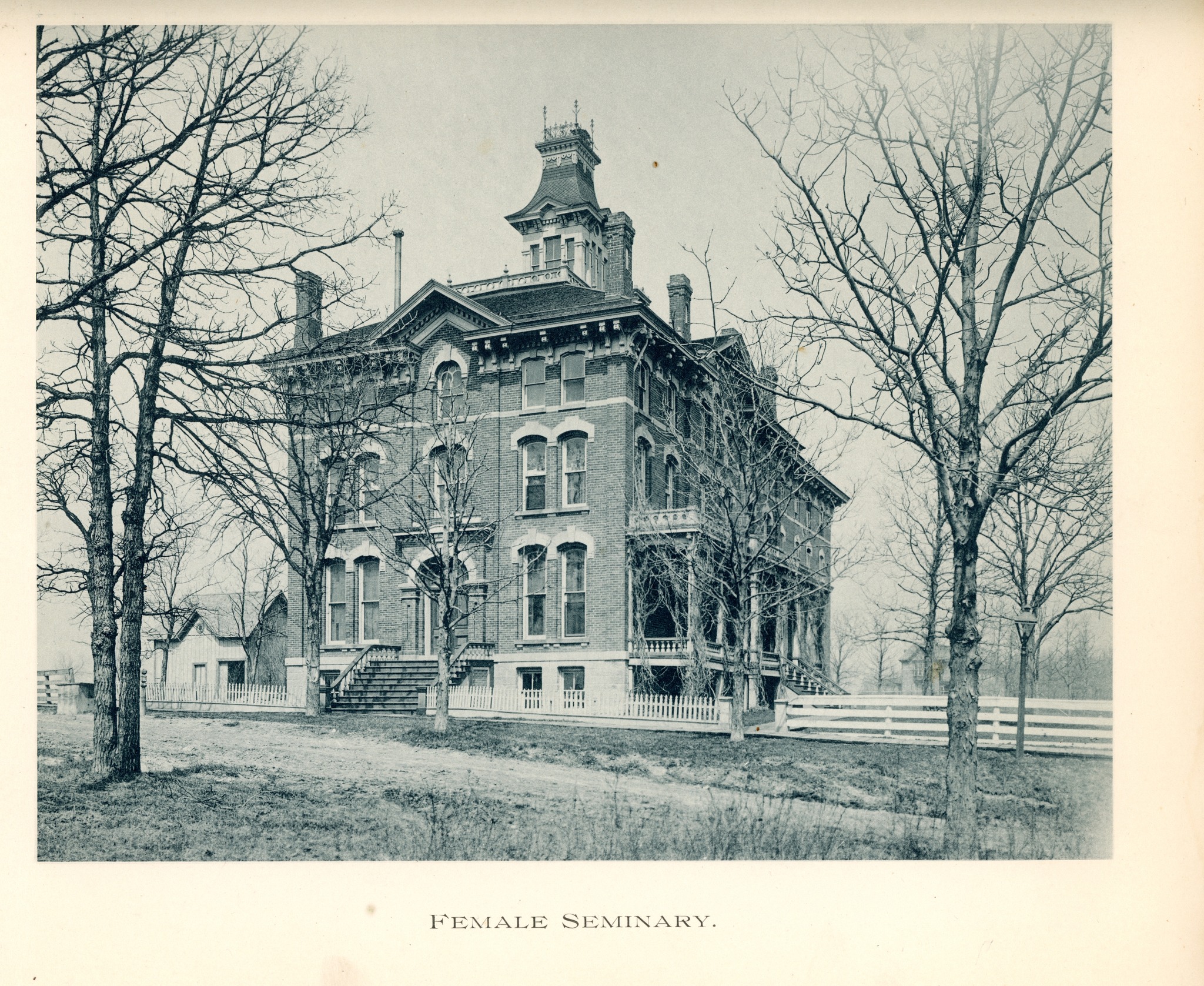
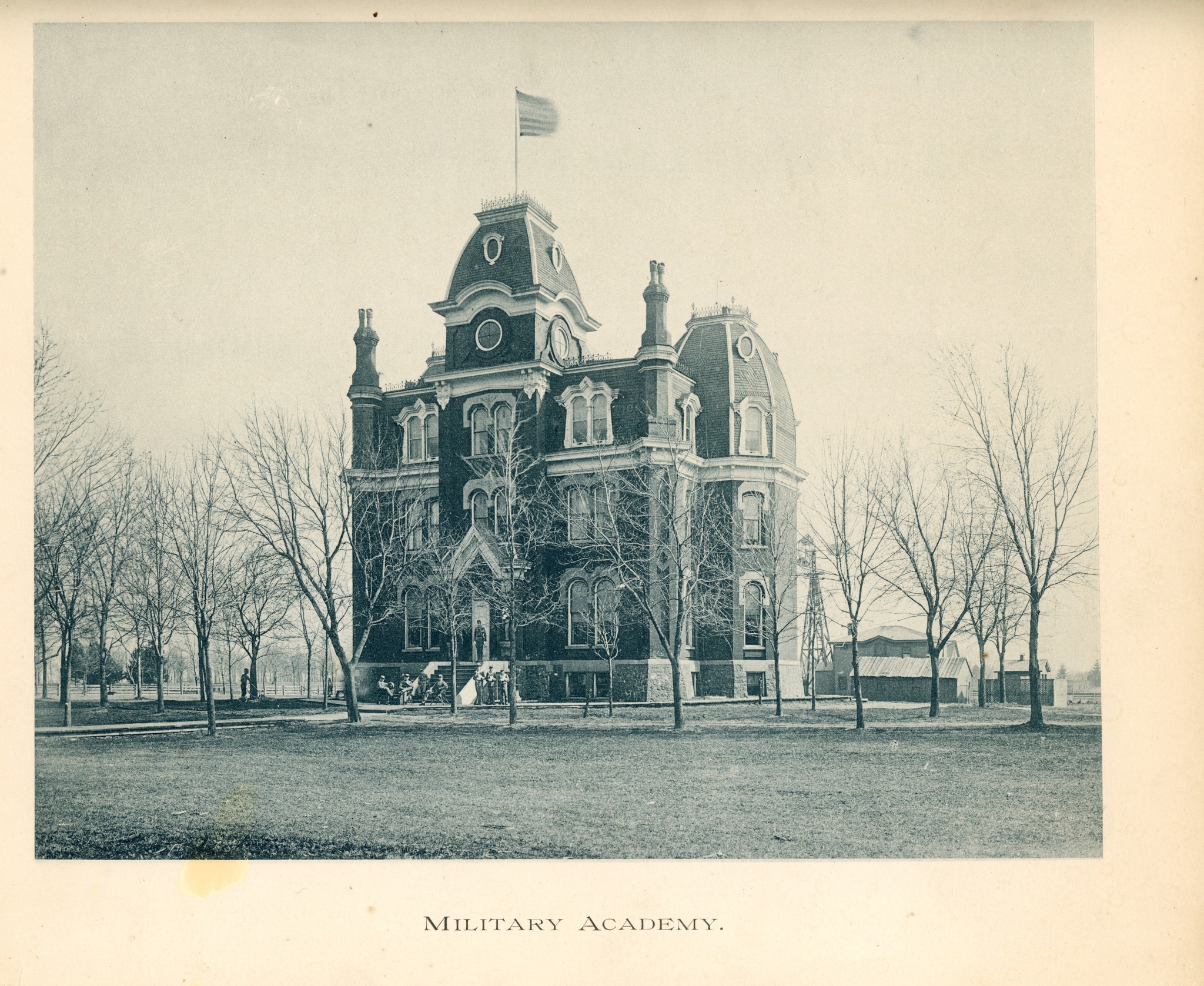
This was quite a coup for the BILBCo., and helped fulfill the plan to establish Morgan Park as a prestigious religious, education, and temperance community. It was anticipated that additional educational facilities would follow, creating a new University of Chicago. Morgan Park Academy, started as the Mount Vernon Military Academy, and the Chicago Female College, were already established in Morgan Park.
The Seminary built an imposing three-story office and classroom building, now long gone, on the north side of 111th Street, just east of Western Avenue. Funding partially came from Rockefeller to do this, as well as from the BILBCo.
The Seminary brought to Morgan Park a considerable number of administrators, professors, clergymen, students, and members of the Baptist church. This led to a building boom for new houses.
Northrup moved to Morgan Park to continue to head the Seminary. Other important names were William Rainey Harper, a Baptist clergyman of Irish and Scottish ancestry who was an expert in Semitic languages and a professor of Hebrew at the Seminary.
There was also Thomas Wakefield Goodspeed from New York, who studied at the Old University of Chicago, was a founder of the Morgan Park Baptist Church, and was the financial officer for the Seminary.
The Old University of Chicago closed in 1886. Immediately talk about founding a new university was started. Public sentiment was in favor of building the school near the location of the original one, partly to honor the legacy of Senator Douglas, but also because people did not want the school in a suburb away from city accessibility.
Northrup, Goodspeed, Harper, and other leaders of the Seminary approached Rockefeller about establishing a new University of Chicago. The proposal was that the main university would be in Hyde Park, with some auxiliary components in Morgan Park.
Rockefeller agreed to the funding, but he was not interested in the Morgan Park part of the plan. His donations, which totaled over $1.5 million, included the stipulation that the Baptist Seminary become the Divinity School of the new university, and move back to Hyde Park. The Board for the new university readily accepted this plan.
In 1892, the Baptist Theological Seminary became the Divinity School of the new University of Chicago, and relocated from Morgan Park. Harper was named the president of the new university, and Goodspeed was a member of the Board of Trustees serving as secretary, registrar, and historian
Northrup, now approaching his 70s and having health issues, declined a leadership role, preferring to devote his time to teaching.
Northrup died in 1900. His personal library, consisting of 1,500 valuable books, was gifted to the university. His body lay in state at the university, and the famous sculptor from the Art Institute of Chicago, Lorado Taft, produced a marble bust of Northrup. He was buried in Oak Woods Cemetery.
Northrup outlived his two wives, Mary and Naomi, and had four adult children, three sons and a daughter. The daughter, Alice Northrup Simpson, lived her life in Morgan Park. She was employed as a teacher before marrying the Rev. Benjamin J. Simpson, and becoming the mother of five children. Simpson died in 1894 at the age of 39, leaving Alice a widow with five children. Alice died in 1916.
Other institutions used the Morgan Park Seminary buildings for a while, but shortly after 1900, the main building was demolished.
The female college continued for a number of years, but eventually closed as more education opportunities became available for women. The original building, on the Ridge on Lothair Avenue, was demolished in 1911.
The military academy was a preparatory school for the university for a few years, but the university decided to close it, and the school became the independent Morgan Park Military Academy.
Ridge Historical Society
The Connection Between the Ridge and Ukraine
By Carol Flynn
This Saturday, August 24th, is Ukrainian Independence Day.
Ukraine remains in the headlines as that independence continues to be threatened by Russia.
This post is a reminder that the Ridge has a historical connection to Ukraine, as well as a current one.
The historical connection comes through a prominent Ukrainian American family that lived on the Ridge.
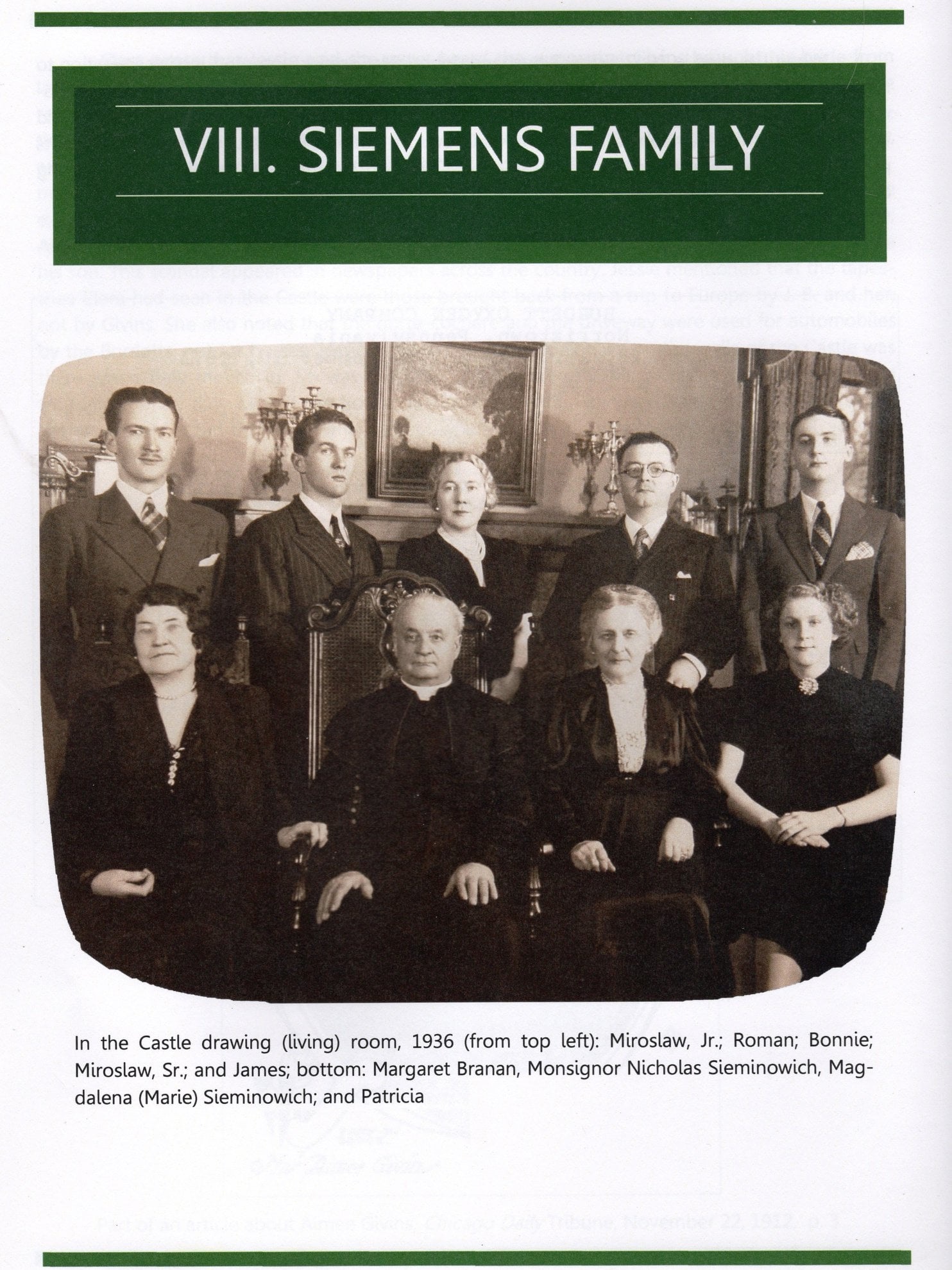
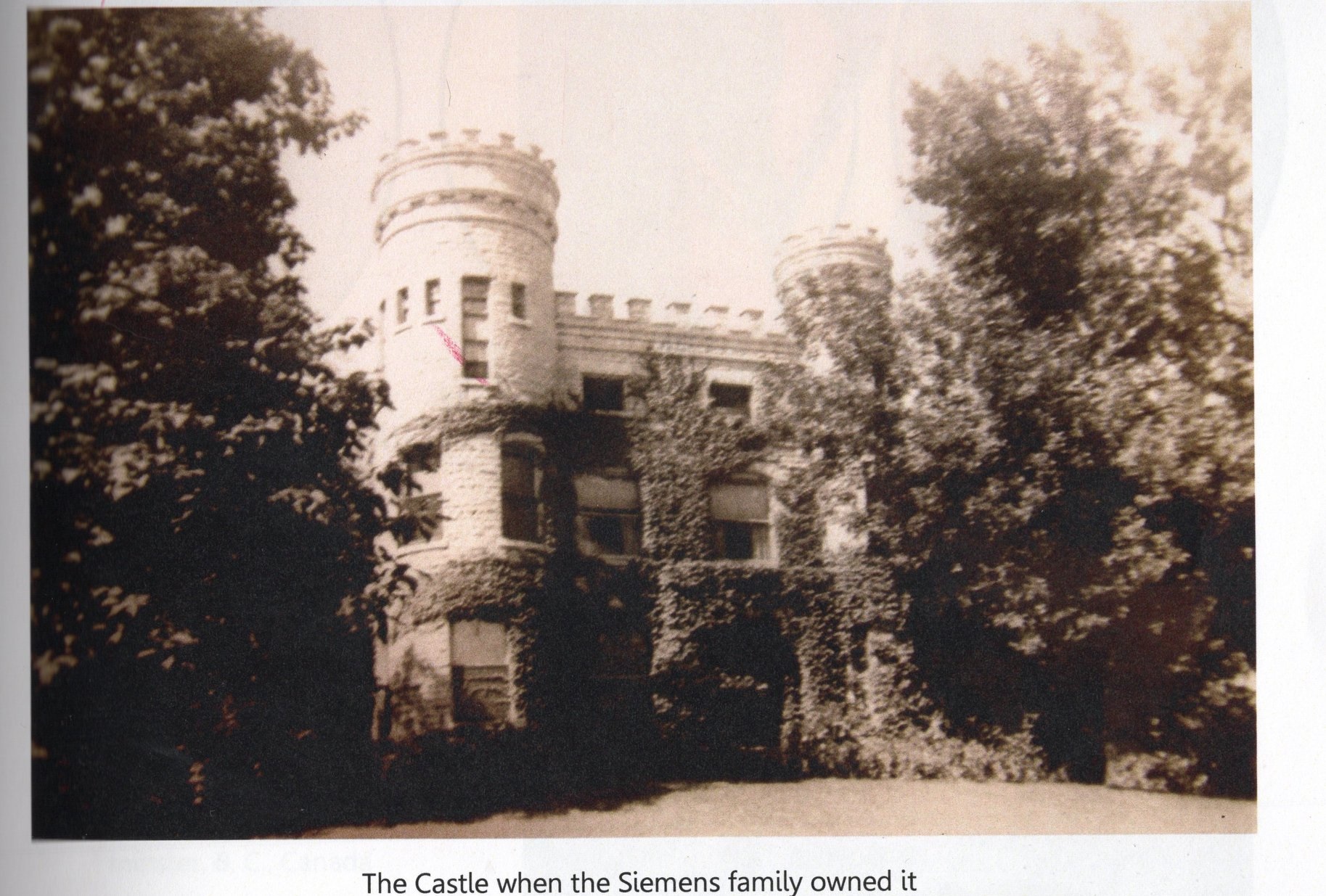
Dr. Miroslaw and Bonnie Siemens (Sieminowycz, Sieminowich) owned and lived in the Givins Beverly Castle at 103rd St. and Longwood Drive from 1921 until the Beverly Unitarian Church bought the building in 1942.
At the time of Dr. Siemens’ death in 1967, at the age of 82, the family was living at 9559 S. Longwood Drive.
Dr. Siemens was born in 1885 in Ukraine and came to the USA in 1907. He graduated in 1913 from Bennett Medical College, affiliated with Loyola University.
He was naturalized as a U.S. citizen in 1914, and served in the U.S. military during World War I. He was a major, a regimental surgeon, with the 497th Field Artillery.
He then practiced at Roseland Community Hospital and kept an office in the Castle. He was also the physician for the Nickel Plate Railroad.
Dr. Siemens’ parents, Nicholas and Maria Magdalena Seiminowich, also lived in the Castle. Nicholas was a Ukrainian Catholic priest who rose to monsignor. In this rite, married men can be ordained priests.
Bonnie Veronica Barry Siemens, born in 1890, was Irish Catholic. They married in 1915 and had four children, Miroslaw, Jr., Roman, James, and Patricia.
Bonnie's mother Margaret Branan also lived with the family. Bonnie had tuberculosis and the grandparents did much of the childcare.
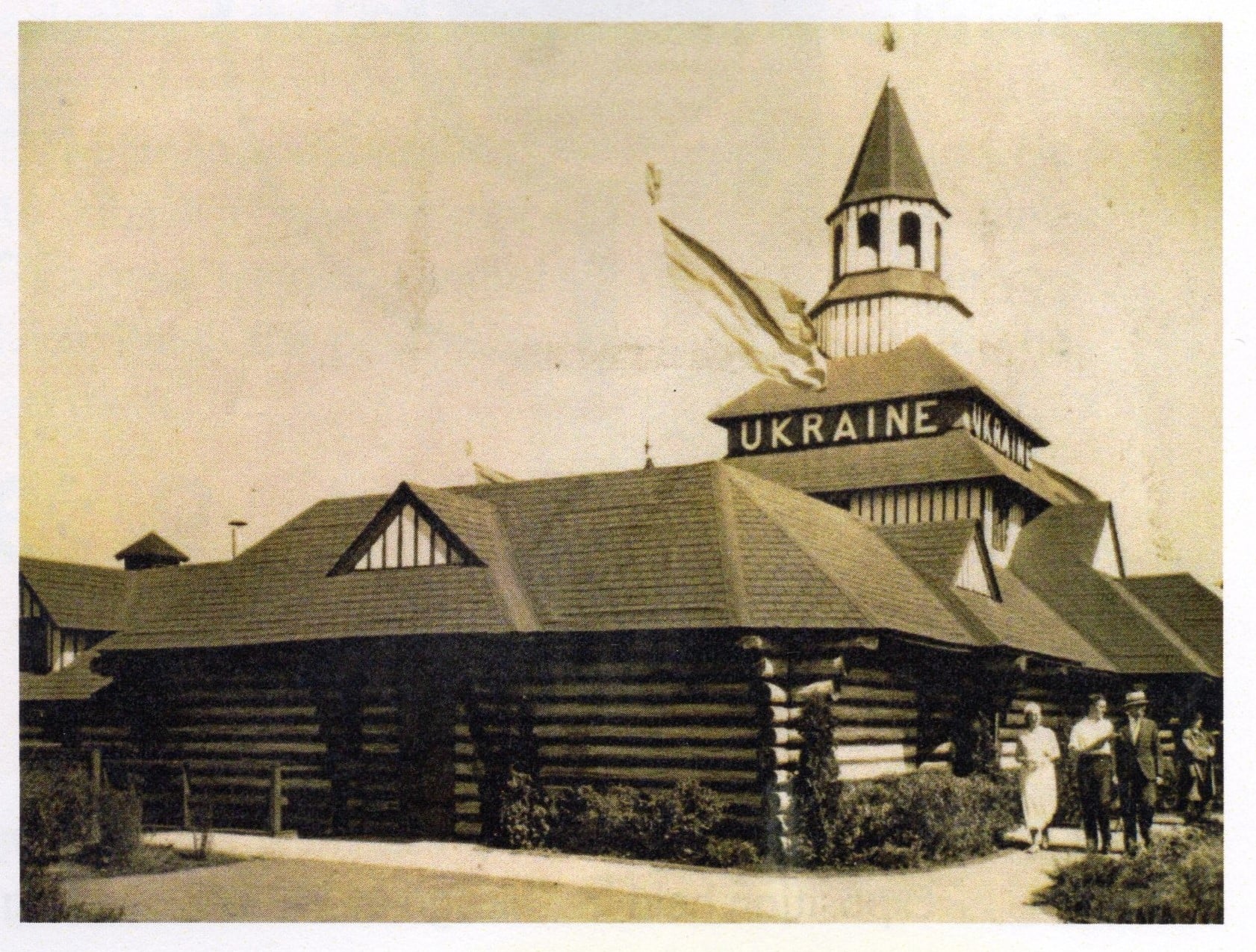
Dr. Siemens was very active and important in the Ukrainian American community. One notable achievement was to serve as the planner, fundraiser, and chair of the Ukrainian exhibit at the Century of Progress World’s Fair in Chicago in 1933-34. The exhibit showcased the country’s traditional arts and culture, including pysanky, the famous Ukrainian Easter eggs decorated using a wax-resist method. The tradition of decorating eggs, now associated with Easter, originated in Ukraine and the practice goes back thousands of years, predating the arrival of Christianity.
In 1939, Siemens was called to testify before the Special Committee on Un-American Activities of the U.S. House of Representatives because of a Ukrainian organization of which he was president. This was a precursor of “McCarthyism” when private citizens as well as public employees were investigated for “subversive activities” because of suspected communist ties. No charges were ever laid against Siemens’ group. The group dissolved in 1942.
Siemens was a benefactor of St. Nicholas Ukrainian Catholic Cathedral in Ukrainian Village on Chicago’s north side.
In the early 1950s he was instrumental in establishing the Ukrainian National Museum and served as honorary president.
Dr. Siemens has been called the “first ambassador for Ukraine in the U.S.” because of his efforts to preserve Ukrainian history and to help refugees from the country. Many dignitaries including the Crown Prince of Ukraine visited the family in the Castle.
The Siemens family is covered in "Chicago’s Only Castle – The History of Givins’ Irish Castle and Its Keepers" by Errol Magidson.
The Ridge community currently has two events going on that relate to Ukraine.
First, the book-signing for a new children’s picture story book, the “Plucky Ukrainian Sunflower,” created by local artist Judie Anderson and her daughter Karen Doornebos, will be on Ukrainian Independence Day, Saturday, August 24, from 2 to 4 p.m. at Bookie’s New and Used Books, 10324 S. Western Ave. Here is a link to an article on that event: https://www.beverlyreview.net/news/community_news/article_ce43cdba-598e-11ef-9490-3f76ccffd4b3.html
Second, the exhibit by Ukrainian artist Valeriia Tarasenko at the Beverly Arts Center, 2407 West 111th St., will continue through September 15th. Here is a link to an article on that event: https://www.beverlyreview.net/news/community_news/article_252dd3e2-4e94-11ef-9901-33b32ad93eb6.html
Ridge Historical Society
National Dog Day – August 26, 2024
By Carol Flynn
National Dog Day occurs annually on August 26 as a world-wide event to bring attention to all breeds of dogs and the importance of dogs in our lives.
Started 20 years ago by an animal welfare advocate, the day also calls attention to the many dogs that need to be rescued and adopted each year.
Of course, there are many stories related to dogs in the Ridge communities’ history. One favorite story, however, directly relates to rescue and adoption.
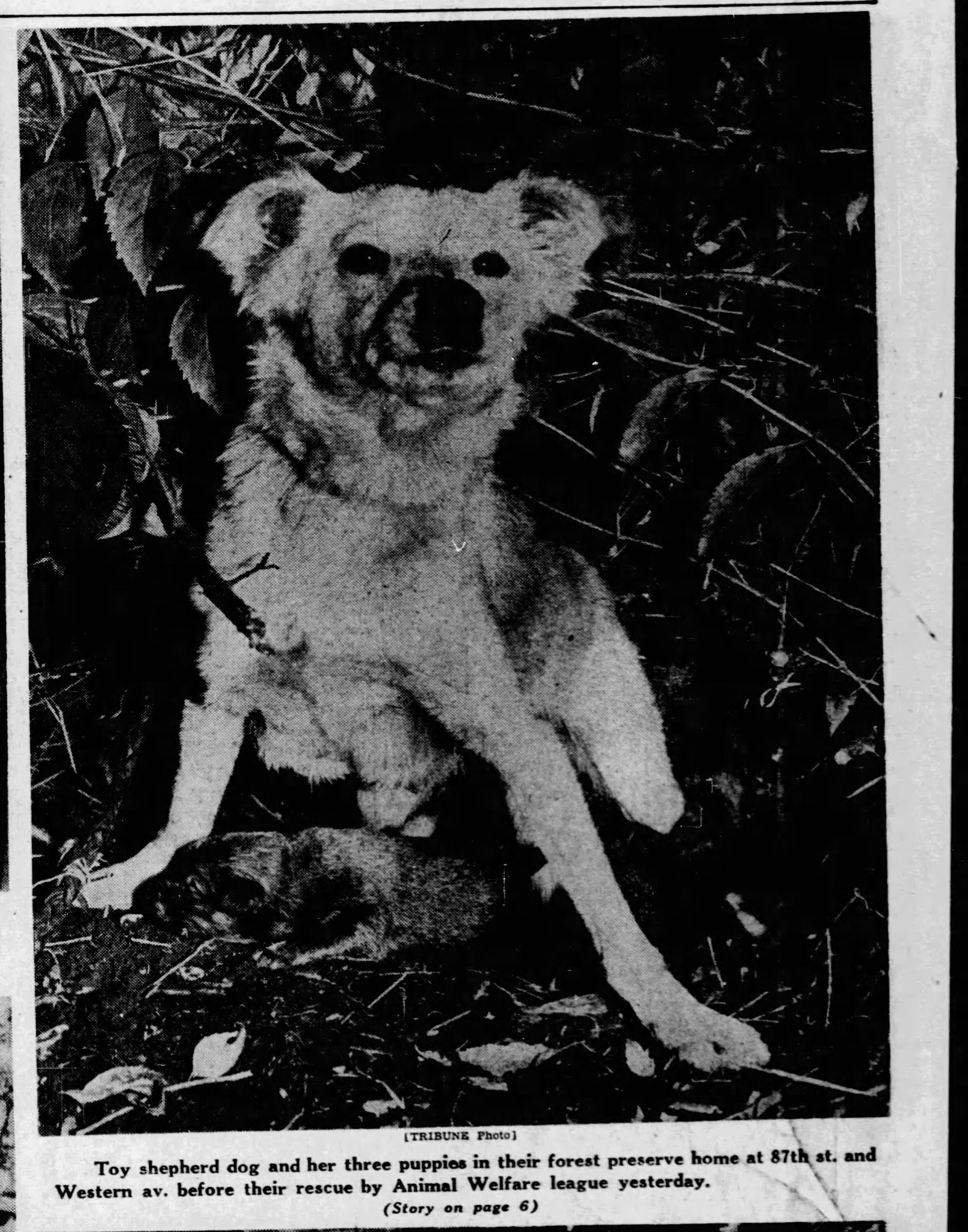
In the summer of 1945, a small dog described as a “brown toy shepherd” started to be noticed living in Dan Ryan Woods. It was assumed she had been dumped there because many people abandon animals of all kinds in the forest preserves. The animals rarely survive a Chicago winter.
The little dog was elusive with people. She would allow them to get just so close before she scampered away. She was often seen hunting for rabbits and warily searching picnic grounds for half-eaten sandwiches.
She began to be known as “the wild dog of Ryans Woods” but the children in the neighborhood called her Dollie, and eventually the adults started calling her that, also.
In October, as the weather cooled, the neighbors started leaving food out for Dollie at the edge of the woods. Mrs. Northrup, who lived at 8957 S. Oakley Ave., an active charity and “club” woman in the community, determined to capture Dollie and find her a good home.
That proved more difficult than expected. Talking softly to Dollie and offering tasty tidbits of food still brought Mrs. Northrup no closer than 10 to 15 feet from the dog.
Mrs. Northrup called in the Illinois Citizens’ Animal Welfare League, who sent experienced field agent Allen Glisch over to the woods.
While Mrs. Northrup distracted Dollie, Glisch managed to get a leash around the dog’s neck. Little Dollie, still shy, didn’t fight them; she wagged her tail when Mrs. Northrup and Glisch approached her and petted her.
When they started leading her out of the woods, however, Dollie hesitated to go. Instead, she led them to a nearby brush heap. There, in a leaf-lined den that she had dug, they found three puppies, about a week old whose eyes had not yet opened, fast asleep.
Dollie whined and danced around proudly as Glisch gathered the puppies in his arms, and she happily followed him as her puppies were carried over to Mrs. Northrup’s home.
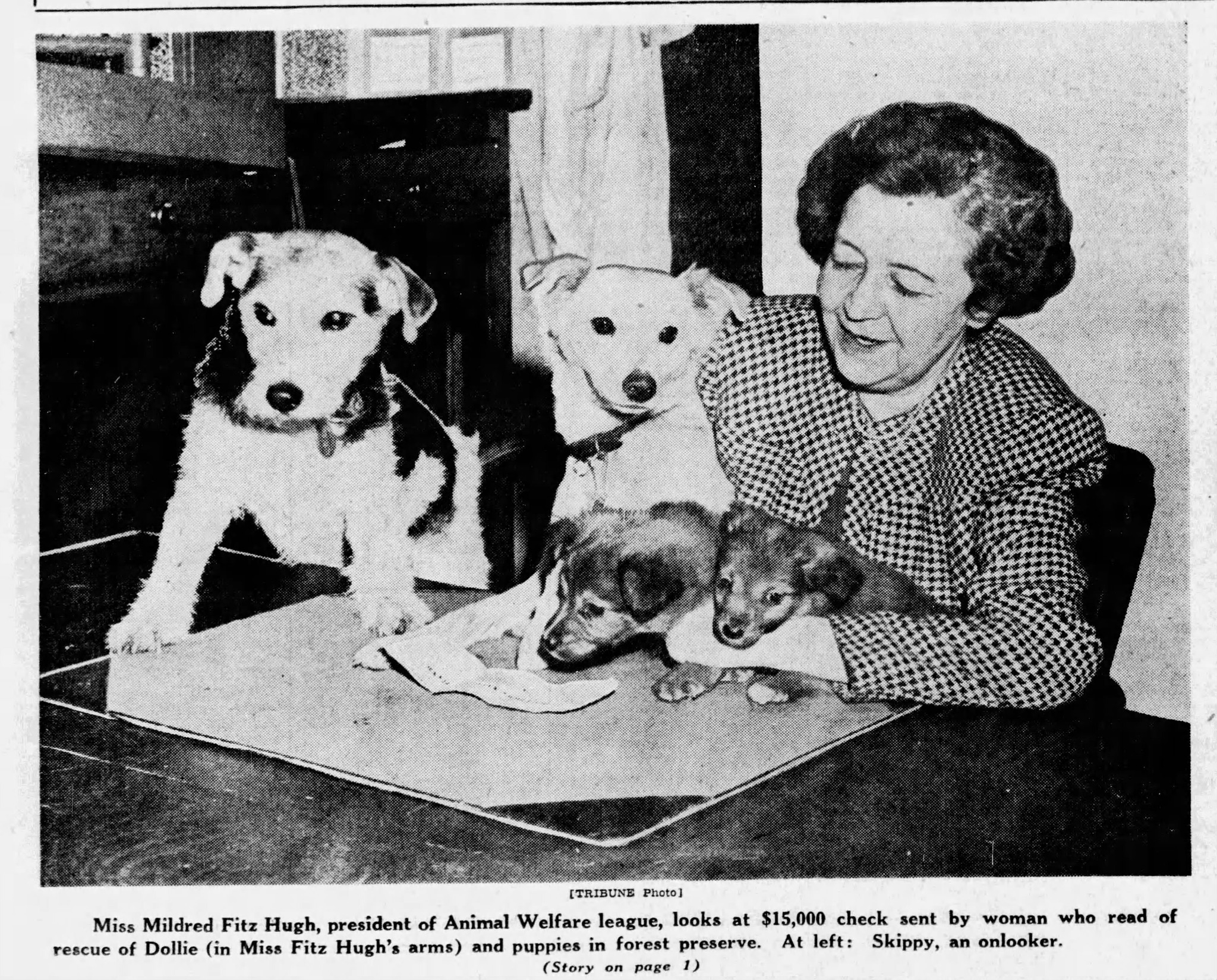
Dollie became a bit of a media sensation, attracting the attention of the Chicago Tribune. In California, Marguerite Doe Ravenscroft, a wealthy socialite and philanthropist who strongly supported humane efforts and was the honorary chairman of the local animal welfare league, saw the article, and in December, sent a check for $15,000 to the Illinois organization to help build a new shelter in Chicago.
Dollie, her puppies, Mildred Fitz Hugh, the founder and president of the Illinois chapter, and Skippy, a terrier mix who got in on the act, posed for a picture with the check that appeared in the Chicago Tribune.
Fitz Hugh, also a wealthy socialite and the grandniece of Mayor Carter Harrison, announced in February of 1946 that the money was used to purchase two buildings at 3138-3140 Walton Street, for a new shelter. There was already a shelter at 6224 S. Wabash Ave.
What became of Dollie and her puppies wasn’t reported in the newspaper, but given their star qualities, and their downright adorableness, it’s probably safe to assume that they found “forever” homes.
The Ridge Historical Society
Labor Day on the Ridge 100 Years Ago
By Carol Flynn
One hundred years ago, Labor Day occurred on Monday, September 1st.
It was a lovely day – in the mid-70s, partly cloudy, gentle shifting winds: a perfect day to wrap up the summer.
Throughout the Chicagoland area, the holiday was celebrated with activities. The mosquitos were particularly bad that year, especially in the forest preserves, but that did not stop thousands of people from going to the preserves for picnics and sporting events.
The Beverly Preserve at 87th Street and Western Avenue was one of the most popular of the forest preserves because it was the only one accessible by public transportation. Streetcars brought people as far as 87th Street and Ashland Ave., and they walked the rest of the way; or the Rock Island Railroad dropped them off at the 91st Street station, right outside of the forest preserve.
Around 1900, for about a decade, Morgan Park held large “Morgan Park Day” festivals on Labor Day.
In 1923 and 1924, a different kind of program went on, a “chautauqua.”
“Chautauqua” was an adult education and social movement of the late 1800s to the mid-1920s. The movement started in 1874 with an adult summer school for Sunday School teachers at an outside campsite on Chautauqua Lake in New York. That program started with Bible studies, but the idea spread to other schools and sites that started offering programs in many different topics.
Schools, and then communities and private organizers started offering chautauquas, as the programs became known, to the general public. The programs were usually a multi-day event, and featured a variety of speeches and educational talks, along with musical acts, dancers, art events, and other entertainment.
In Beverly/Morgan Park, the chautauqua that was offered from August 23 to September 3, 1924, was produced by the concert management firm of Stroup and Phillips, and was held on Hoyne Avenue from 110th to 111th Streets.
Roy Phillips, who lived in Morgan Park and had been the editor of the Weekly Review and Blue Island Sun Standard newspapers, had gone into the business with Harry Stroup in March of 1923. They represented a wide range of musical artists.
We don’t know the programs, speakers, or performers that Phillips presented that year, but one strong possibility was a performer introduced as the Indian princess “Watahwaso, a daughter of the Penobscot tribe of Indians,” that he featured at other programs.
Watahwaso appeared in costume and related “interesting Indian legends and sang beautiful songs of her own and other tribes.”
Another performer that Phillips promoted that year who likely performed in Morgan Park was James Goddard, a bass baritone of the Chicago Opera Company. He was described as “a great big he-man, strong as Hercules and handsome as Adonis,” with “a wonderful voice of great purity and strength.”
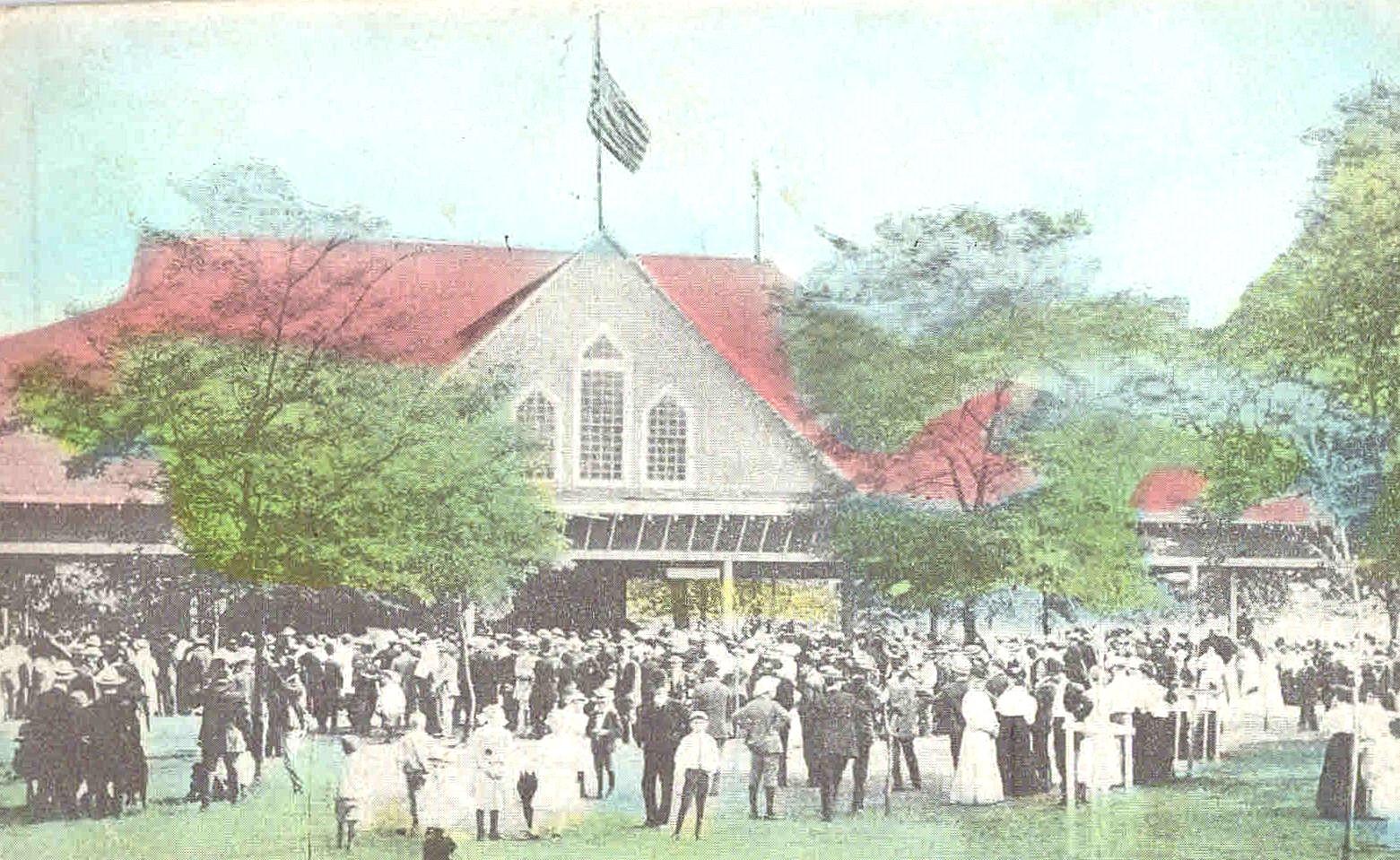
Chautauquas were very popular throughout the U.S. This image is from one held in Ohio.
The Ridge History Society
Moving on from Barwick to Waterman
By Carol Flynn
Every fall, the Ridge Historical Society (RHS) looks forward to participating in the Beverly Art Walk and Open House Chicago. These events offer wonderful opportunities to present new exhibits showcasing the fascinating history of Beverly and Morgan Park to much wider audiences.
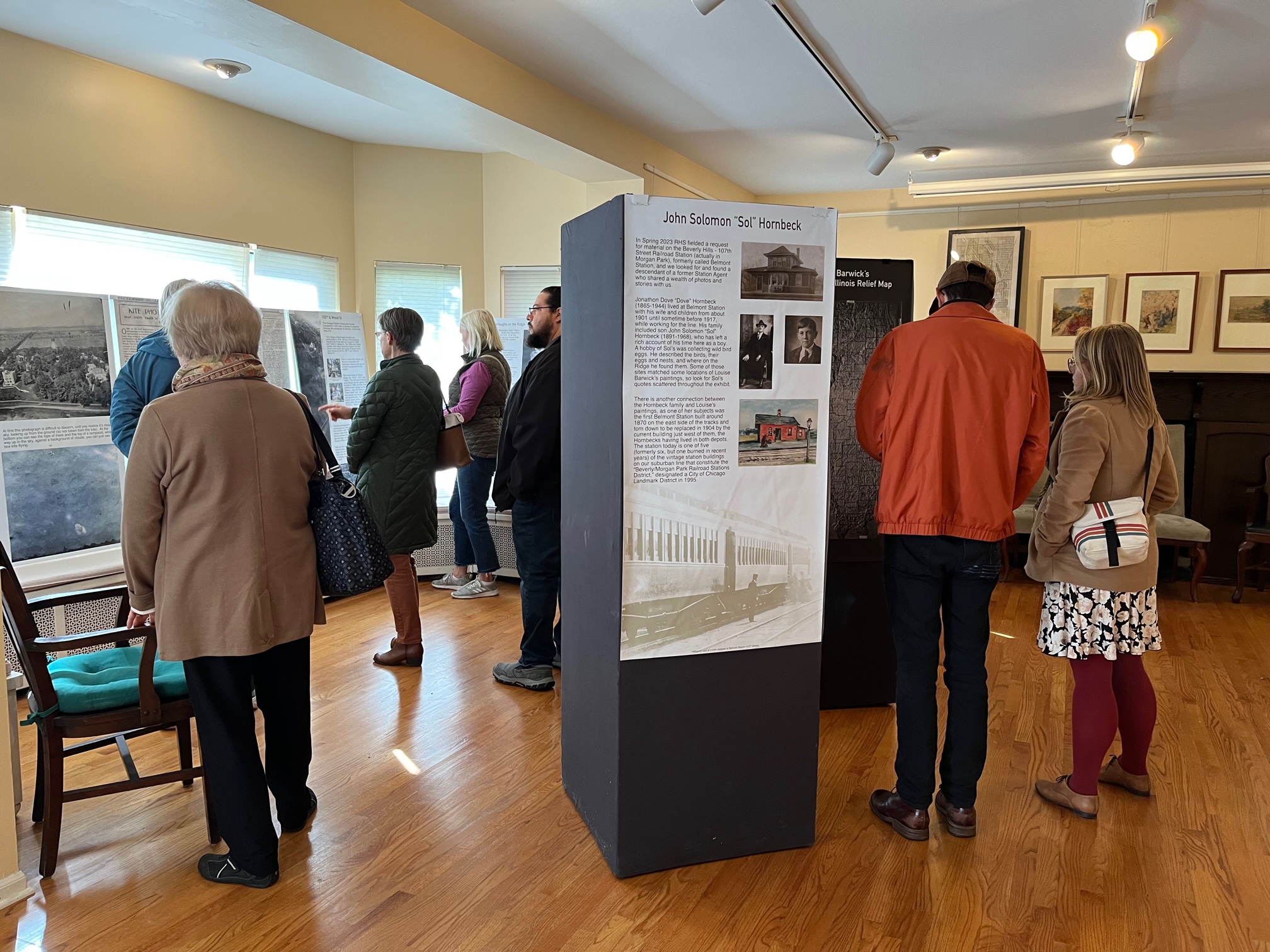
This post is a last call for viewing the current exhibit, “Louise Barwick’s Lost Ridge,” and the sub-exhibit, “Lost and Found.”
This current exhibit focuses on life on the Ridge from 1893 to 1905 as seen through the watercolor paintings of Louise Barwick, an artist and educator who lived on the Ridge. Another component of the exhibit includes aerial photography of Beverly taken by cameras attached to kites in 1899. A third component features historic images of buildings in Morgan Park taken in 1889, some of which remain and some of which are gone.
The exhibit may be viewed on Tuesdays and Sundays from 1:00 p.m. to 4:00 p.m. or by appointment. This exhibit will be phased out after Tuesday, September 24.
The first part of a new exhibit on architect Harry Hale Waterman, titled “Harry Hale Waterman, Architect: Unique in Any Style,” will then begin with the Beverly Area Art Walk on Saturday, September 28th, from 12 noon to 5:00 p.m.
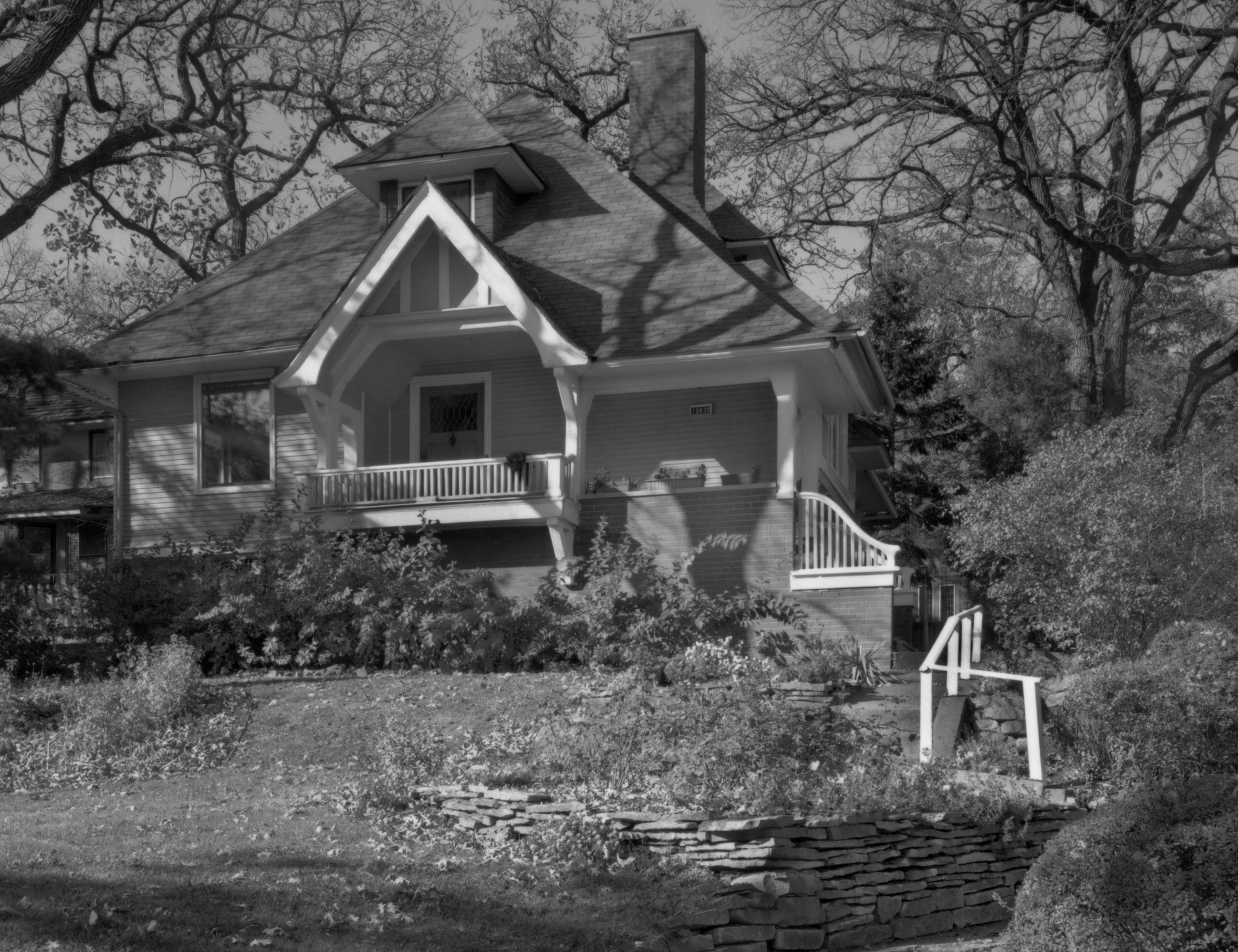
Photographer and RHS Board member Mati Maldre will exhibit more than 20 photos he has taken of Beverly/Morgan Park buildings designed by Waterman.
Waterman (1869-1948) was a contemporary, indeed a good acquaintance, of Frank Lloyd Wright. But while Wright concentrated his work on the one style he became so well known for, the Prairie Style, Waterman designed in many different styles, putting his unique “spin” or interpretation on each. He designed dozens of houses and other buildings in Beverly and Morgan Park around 1900.
Mati Maldre is a retired Professor of Art/Photography from Chicago State University (CSU). He initiated the photography program and taught at CSU, as well as the Beverly Art Center for 35 years.
During this year’s Beverly Art Walk, Maldre will discuss the process of taking professional architectural photographs using his wooden Deardorff camera and demonstrate how view cameras operate and why they create such detailed and sharp photographs.
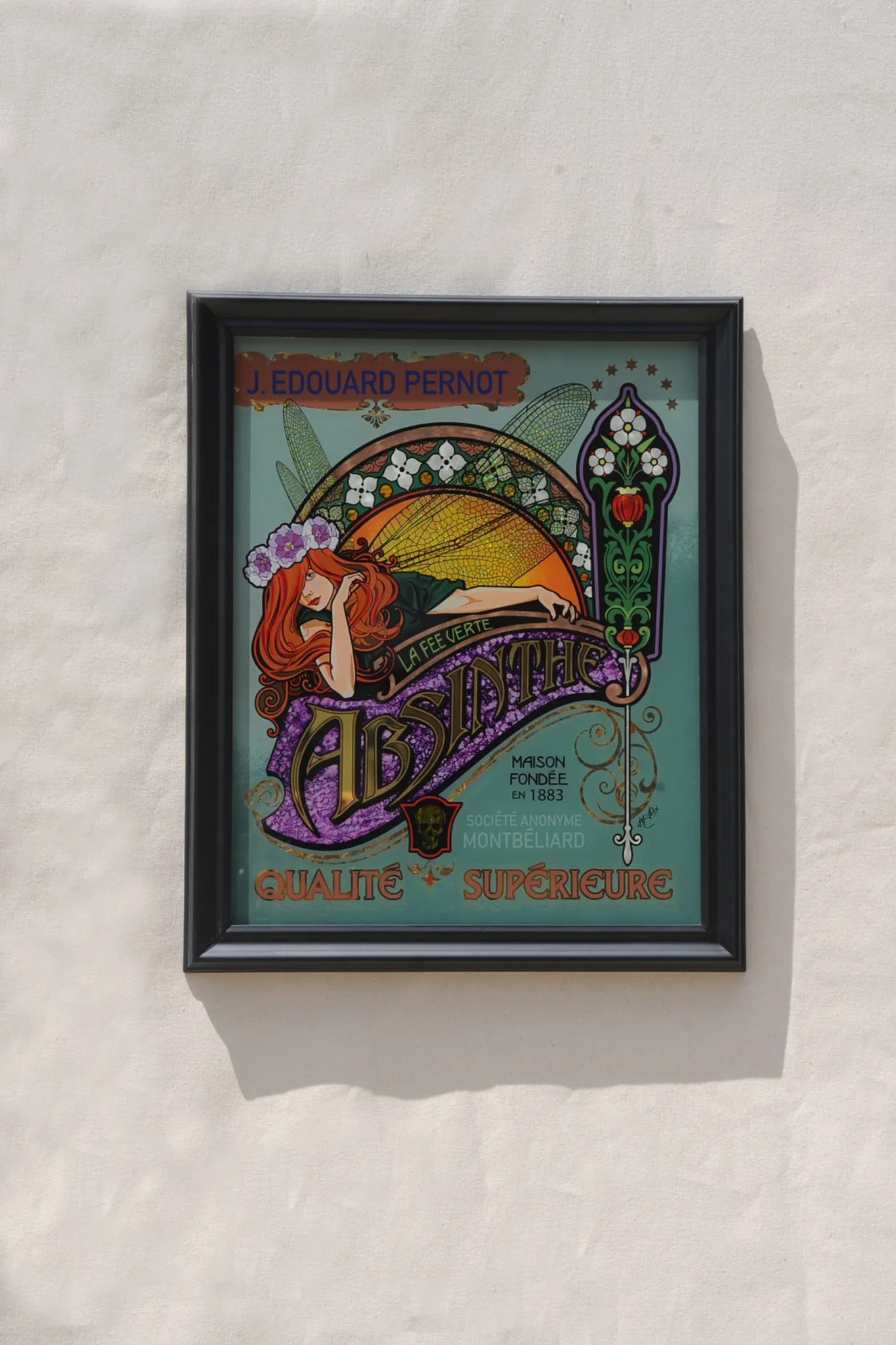
Also at RHS for the Beverly Art Walk on September 28 will be glass artist Sean Michael Felix, the owner of Illumination Art & Design in Humboldt Park.
Felix creates unique hand crafted architectural art glass, glass signs, and stained glass using 19th century techniques. For the Beverly Art Walk he will exhibit samples of his beautiful decorative work and demonstrate the nearly lost art of applying gold leaf to glass the way it was done by artisans in the Victorian Era.
RHS is located at 10621 S. Seeley Ave., in Chicago, and may be contacted at 773-881-1675 or ridgehistory@hotmail.com.
The complete Waterman exhibit will open in October in time for Open House Chicago on the weekend of October 19th and 20th.
Stay tuned to this page for an upcoming Facebook series on Waterman and his structures on the Ridge.
The Ridge Historical Society
Driscoll Family Visit
By Carol Flynn
The Ridge Historical Society (RHS) loves visits from the Ridge’s “historic families.”
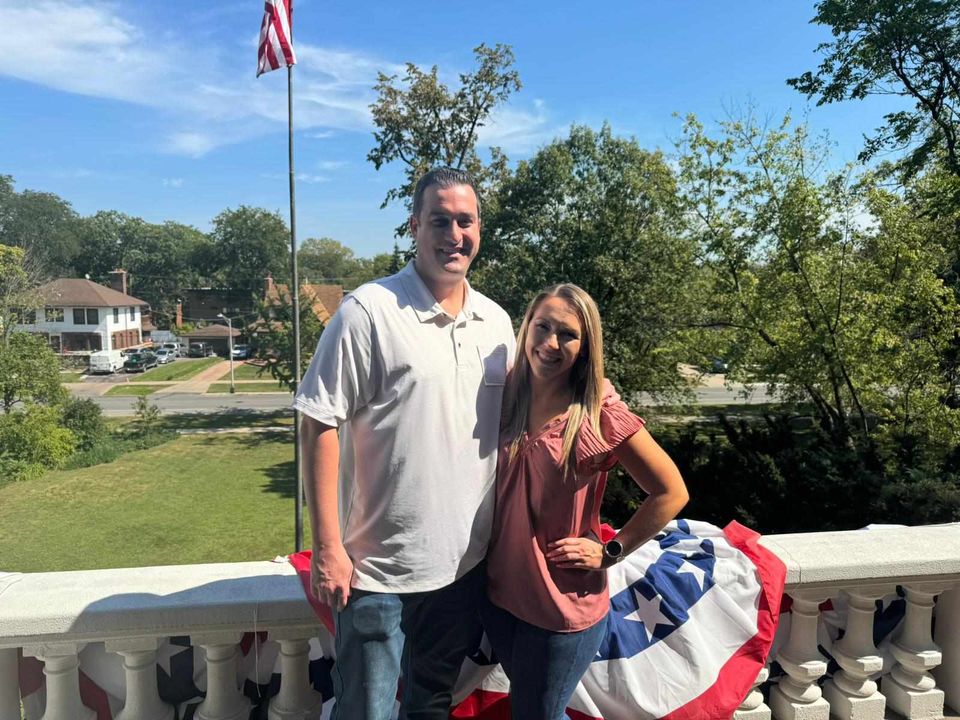
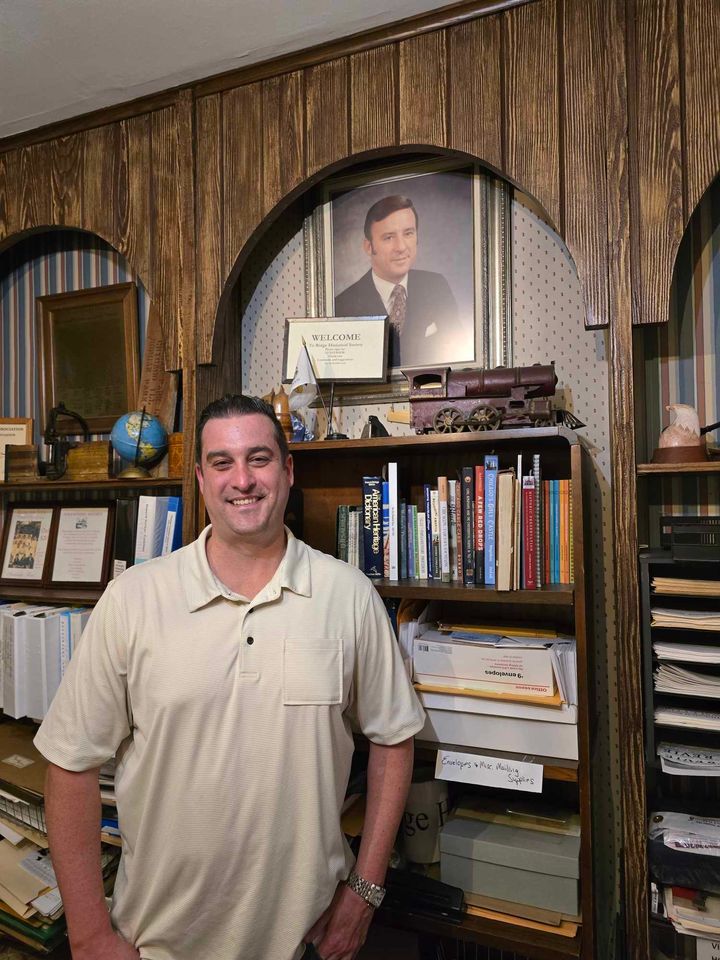
Last Friday, RHS welcomed Michael Driscoll and his girlfriend Tara Moran. RHS is located in the historic Graver-Driscoll House, and Michael is the grandson of James Driscoll, who donated the house to RHS in 1973.
Tara and Michael live in Orlando, Florida, and planned a visit to see her family in Chicago. Michael had told Tara that his grandfather was the Driscoll of the Graver-Driscoll House, and that he, Michael, had spent some time as a child in Chicago.
Tara asked RHS if she could arrange a visit to the house as a surprise for Michael. RHS was happy to oblige, and here are pictures of Michael and Tara at the house.
Perhaps the most important part of RHS’s history is acquiring the Graver House from James Driscoll.
In 1971, residents of Beverly and Morgan Park got together to discuss forming a historical society and museum, and the Ridge Historical Society, or RHS, was born.
Of course, a critical part of forming RHS was finding a place to house the museum and collection that was planned.
In 1972, Justin O’Toole was the President of the Standard Bank and the chairman of the RHS finance committee. Also on the board of the bank was James Driscoll, an electrical contractor, who announced he was selling his house at 10621 S. Seeley Avenue and moving his family to Florida.
O’Toole suggested to Driscoll that instead of selling the house, he donate it to RHS for the remaining mortgage, which was around $10,000. The house was valued at $150,000. Driscoll turned the Graver House over to RHS in January of 1973.
James Driscoll was born in 1930 in Chicago and served in the U.S. Marine Corps. He joined IBEW Local 134 in Chicago and established Driscoll Electric, which specialized in institutional and commercial projects, steel mills, and water treatment plants. Three generations of the family were part of the organization.
When James Driscoll died in Florida in 2008, it was noted that he shared “amusing perspectives on life with a wickedly Irish sense of humor.” He was described as a “visionary who lived life on his own terms and faced success and adversity with grace and dignity.” His remains were returned to Chicago and he is buried in St. Mary's Cemetery at 87th Street and Pulaski Road.
Michael’s and Tara’s visit reminds RHS and all of the Ridge of the very generous gift that James Driscoll gave to the community.
RHS is located at 10621 S. Seeley Ave., in Chicago. It is open to the public on Tuesdays and Sundays from 1 p.m. to 4 p.m. or by appointment. Contact at 773/881-1675 or ridgehistory@hotmail.com.
The Ridge Historical Society
St. Joseph Statues
By Carol Flynn
A homeowner in North Beverly recently told the story that when they first bought their home about 20 years ago, he was digging in the garden and came across what he first thought was a piece of bone but turned out to be a statue, buried upside down.
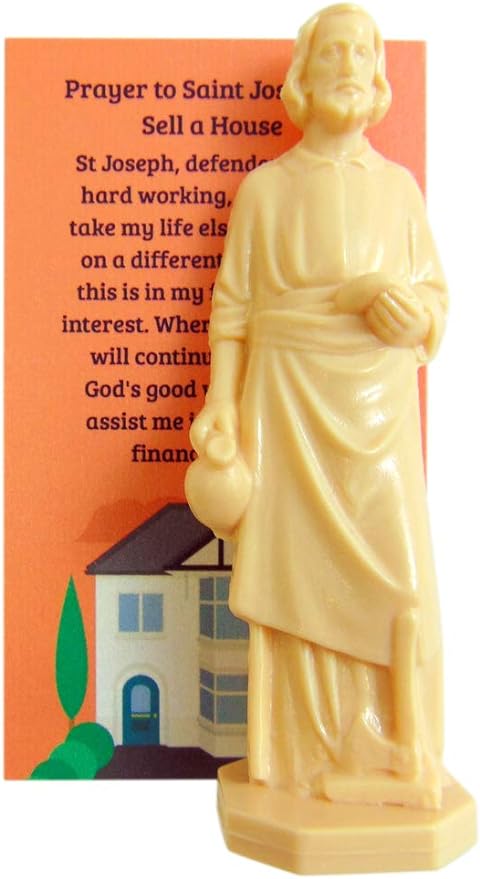
He was a little startled by the discovery, but many people reading this probably recognized at once that this was a statue of St. Joseph. It’s common practice for homeowners to bury a statue of St. Joseph to aid them in selling their houses.
Where this custom started is not known with any certainty, but sometimes it is attributed to St. Teresa of Avila, a nun who lived in the 1500s. St. Teresa has having difficulty finding land for a new convent, so she and the other nuns buried medals of St Joseph to ask for his help. Soon, the perfect spot became available to them.
St. Joseph, of course, was the humble carpenter who took on the role of marrying Mary, the mother of Jesus, and becoming stepfather to Jesus, creating the Holy Family. He protected and provided for them and found new homes for them when needed.
He is the patron saint of families, fathers, workers, carpenters, emigrants, travelers, and house hunters.
Starting in the 1990s, it became a trend to bury a St. Joseph statue when trying to sell a house. There are no set rules for where and how to bury the statue. Front yard, back yard. By the road, by the for-sale sign, near a flower bed, three feet from the back of the house. Facing outward in the direction you want to move, facing the house, upside down, lying down face up. Wrapped in cloth or plastic or not.
Shoppers used to be able to go into religious goods shops and find an entire section with St. Joseph statues for sale. Most of those shops are gone, but the statues are readily available on Amazon now and go for around $7 for a basic while plastic statue.
Real estate agents used to buy the statues in bulk and give them to their clients to bury.
There are many testimonials from people who claim they were having a difficult time selling their house, then they planted a St. Joseph statue, and the house sold immediately.
This practice started with Catholics and spread to everyone. For the record, though, the Catholic Church does not condone this “superstition.” It’s advised that people pray to St. Joseph to ask for his help, and if a statue is to be involved, it should be kept in a place of honor in the house as a reminder to do this.
If a homeowner decides to bury a statue of St Joseph as a house-selling strategy, it is advised the statue be removed once the house is sold. Otherwise, the house will be resold and resold….
The homeowners who found the statue in North Beverly tossed it away, and they have lived there now for about 20 years.
But this does make one wonder … how many statues of St. Joseph are buried on the Ridge?