Explore the RHS Facebook Archives, a rich repository of local history written by Carol Flynn. For two decades, Carol brought a deeply dedicated voice to public education at RHS. Her role as Facebook administrator through mid-2025 naturally extended her prolific research into meticulously detailed articles, most notably her multi-part historical series posts. Today, Carol continues her local history writing for The Beverly Review and other outlets.
Local History
The Ridge Historical Society
New Year’s Eve, 1921
By Carol Flynn
What was happening on the Ridge one hundred years ago? To answer that question, RHS turned to its old friend, the news correspondent from the Ridge for the Englewood Times back then, Pauline Palmer.
And according to Mrs. Palmer, Mrs. George Gale of 2325 W. 108th Place held a “watch night party on New Year’s Eve.”
A little research revealed that Mrs. Gale was the former Alma Demers, born in Canada in 1878. George Gale was born in Illinois in 1872 and was an inspector at the stockyards.
A little more research revealed that “watching the old year out” was the general theme of New Year events back then, as opposed to welcoming in the New Year as is done today.
The custom was to open the front door at the stroke of midnight so the old year could exit and join all the years of the past, and the “baby new year” could enter and begin its life. The guests would form a circle and sing “Auld Lang Syne.”
Although we don’t know the exact details of the Gales’ New Year’s Eve party in 1921, some clues as to what they might have done can be found in “Novel Entertainment for Every Day in the Year” written by Ellye Howell Glover, published in 1921.
A suggested menu was a “Jack Frost” dinner, composed of raw oysters on ice, cream of corn soup with whipped cream on top, turkey cutlets, mashed potatoes, cauliflower in ramekins, fruit salad in white chrysanthemums, vanilla pudding and cakes rolled in coconut. Obviously, the theme was white food!
A recommended table decoration also included party favors. The top of an evergreen tree (suggested was the top of that year’s Christmas tree) could be turned into a “New Year’s wish tree.” For each guest, a tiny envelope attached to a gilded wishbone could contain a personal good wish from the hostess to the guest, or a suitable quotation. A variation could be little boxes filled with good luck talismans.
After supper, the evening was filled with games and dancing.
There was also “Dennison’s Christmas Book” of 1921 that included ideas for New Year celebrations.
Dennison books were a great source for party planning for several holidays – the company had “Bogie” books for Halloween, also. Every year, the books contained new ideas for party themes (such as “Sailing into the New Year”), decorations, games, and party favors. Of course, the books also served as catalogs for Dennison’s line of products, which included a variety of crepe paper decorations.
Prohibition had started the year before with the passage of the Eighteenth Amendment to the U. S. Constitution which banned the manufacture, transportation, and sale of alcoholic beverages. The consumption of alcohol was never illegal under federal law; the issue would have been procuring it legally.
Happy New Year from the Ridge Historical Society.
Ridge Historical Society
Happy Bastille Day
July 14, 2021
By Carol Flynn
Today is Bastille Day, the National Day of France. It is the anniversary of the Storming of the Bastille in 1789, a major event of the French Revolution, as well as the Fête de la Fédération that celebrated the unity of the French people in 1790.
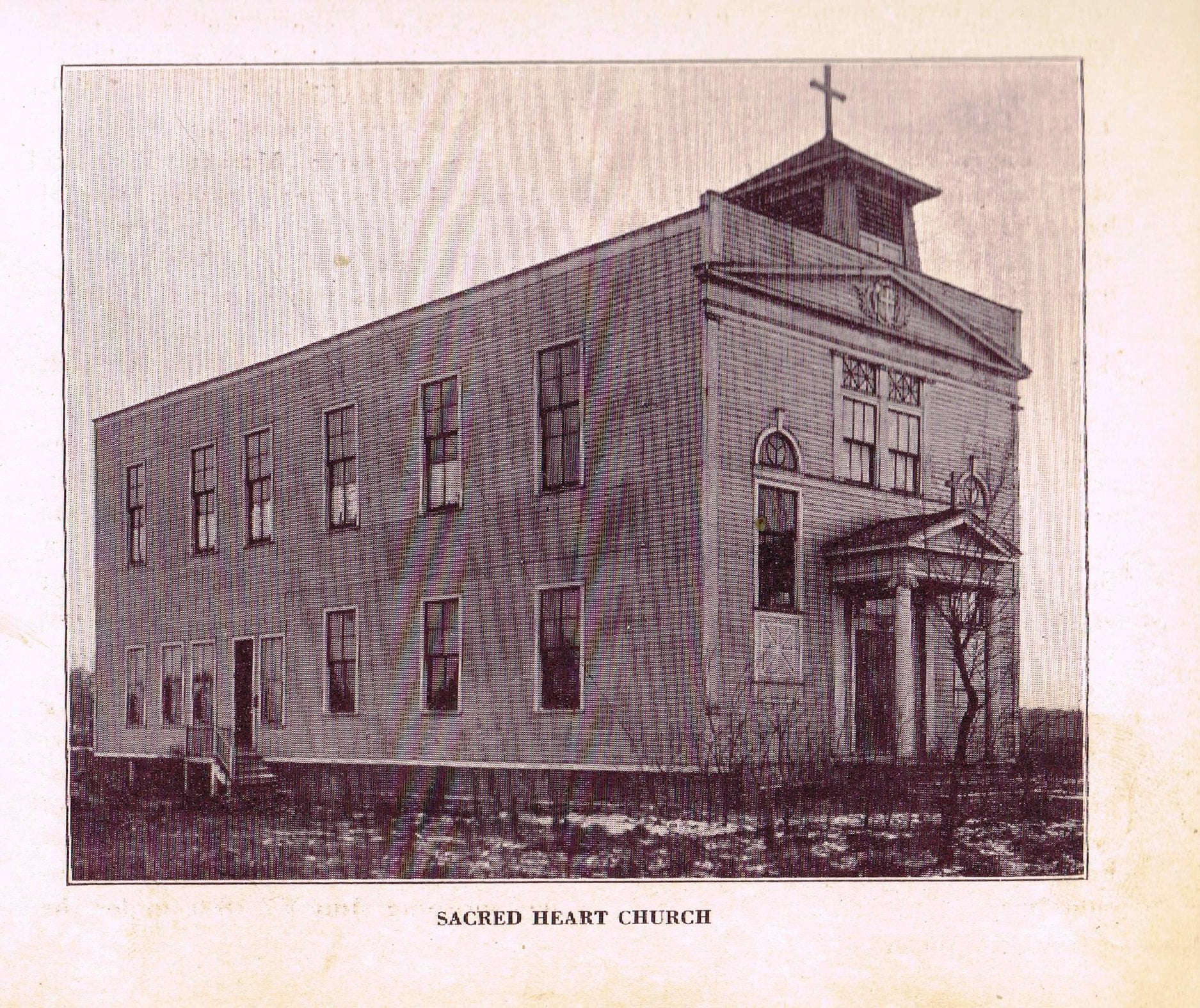
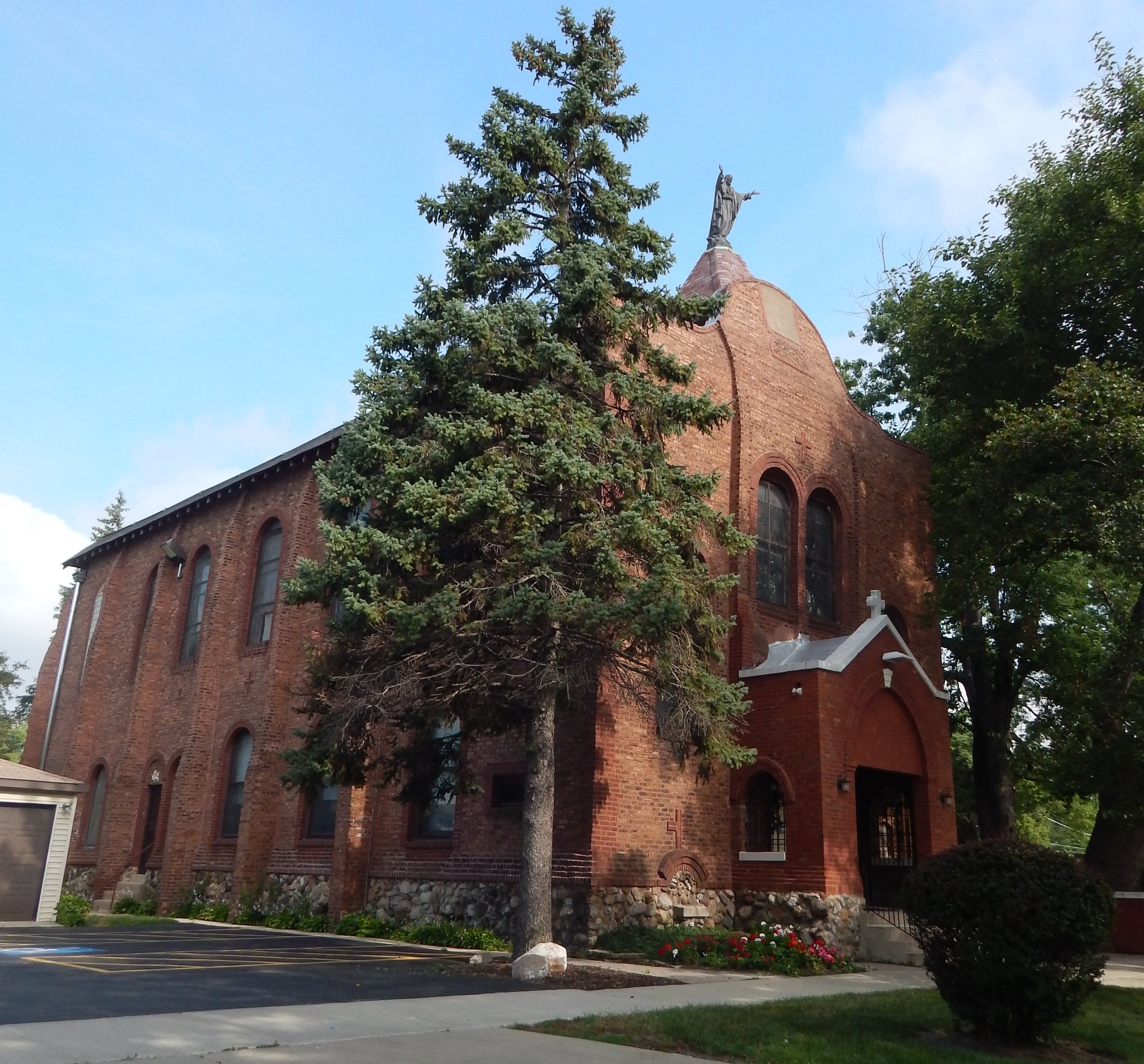
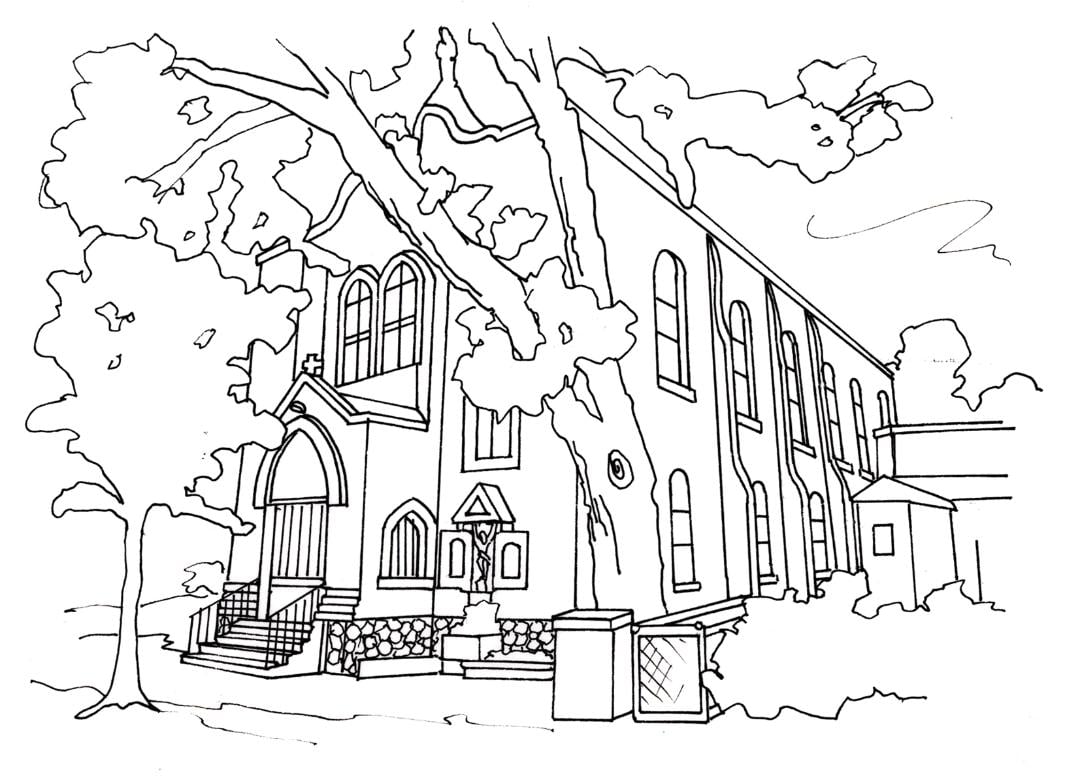
The Blue Island Ridge has its own “French connection.” We had an early group of settlers here, and their legacy to the community is the historic and charming Sacred Heart Church at 11652 S. Church St.
Sacred Heart was originally founded in Alsip in 1892. After an unfortunate fire, the church moved to its current location to be closer to the Purington Brick Yards at 119th and Vincennes, where many of the French people worked. The current church was built in 1904-5 and originally appeared as a wooden frame church, built on posts in a swamp. The church was established as a “national church” which meant it would serve a particular nationality, not a defined geographic area. The story goes that the workers were allowed to take “seconds” of bricks from the brickyard, those bricks that were burnt in the ovens and therefore couldn’t be sold, over to the frame church one or two at a time. By 1922, when enough bricks had been saved, the present brick facade was added. The church as it stands now is actually the old frame church clad with this donated brick.
Father Raymond DeNorus, a missionary priest born in France, became pastor in 1912. From all accounts, he was a very charismatic man. He loved a good time, yet he was a man deeply devoted to his faith. He dispensed medicine, holy water and blessings from his side door. Numerous miracle cures were reported to have taken place over the years. Crutches, canes and braces left abandoned at the church were hung on the side walls. Services at the church drew large crowds and it became a place for pilgrimages. During this time the church became known as the Shrine of the Sacred Heart, a shrine being a special place of devotion that attracts travelers from afar. Fr. DeNorus retired in 1935. With time, most of the French families moved on and were replaced by German and Irish workers.
In 1979, the Archdiocese of Chicago under John Cardinal Cody decided to close and demolish Sacred Heart, citing as its main reasons a shortage of priests and the expense of construction needed to correct building code violations. Members of the congregation rallied to restore and preserve the church. The church was closed from 1979-1982. But then Cardinal Cody died, and the new Archbishop, Joseph Bernardin, agreed to review the matter. He reopened the church and celebrated Mass there in 1983. The church was reestablished as a "mission church" operating as part of the Holy Name of Mary Parish in Morgan Park. Francis Cardinal George also visited Sacred Heart. He was so charmed by the church he even said he would like to live there when he retired.
The devotion to the Sacred Heart of Jesus originated in France in the late 1600s when a nun, Saint Margaret Mary Alacoque, claimed that during a series of apparitions, Jesus promised certain blessings to those who practiced devotion to his Sacred Heart. The Vatican’s position is that the manifestation and promises are true. So the name Sacred Heart was very fitting for a French mission church.
Hooray! The Ridge Historical Society passed a milestone today! We reached 2,000 Followers! Thank you so much for your support!! We absolutely LOVE bringing local history to the community!

The Ridge Historical Society extends its sincerest condolences to the family and friends of long-time Morgan Park resident Bill Barnhart who passed away in Florida on July 3.
Bill Barnhart, 74, was known for his long career as an expert in financial markets with the Chicago Tribune, CLTV cable news, and other media outlets. In the Ridge communities, he was known as a friend and neighbor.
Bill loved history as much as finance – he and his wife Kate Eaton were supporters of RHS for many years. Bill not only made great use of the RHS collection for research and writing, he served as RHS President in the early 2000s.
In 2010, he published “John Paul Stevens – An Independent Life,” the biography of another famous Beverly resident, U.S. Supreme Court Justice John Paul Stevens. Bill gave a standing-room-only presentation and book signing at RHS.
Bill also published “Kerner: The Conflict of Intangible Rights,” in 1999, about the past Illinois governor whose notable achievements were eclipsed by his conviction and incarceration for tax evasion and other charges.
Bill Barnhart’s contributions were greatly appreciated and will be very much missed. May he rest in peace.
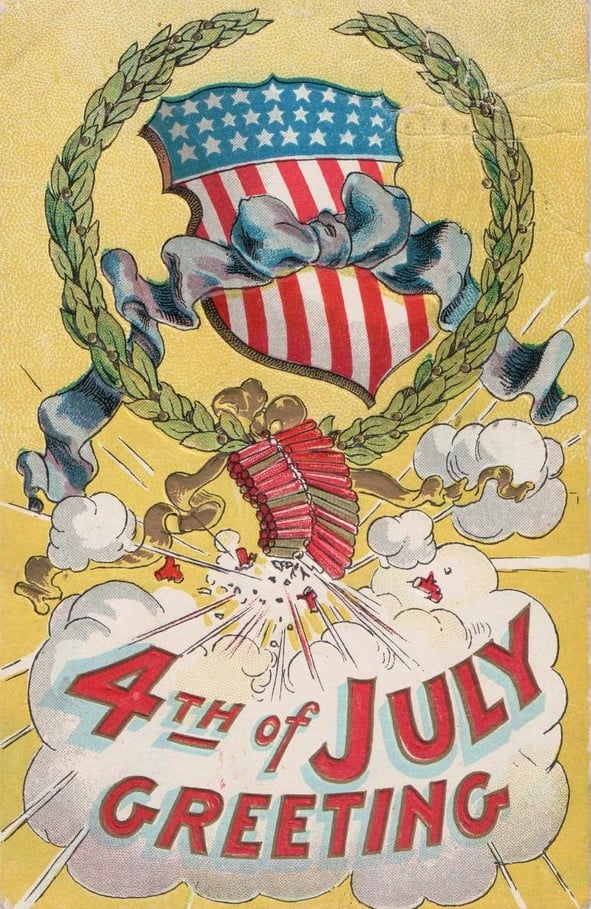
Happy Fourth of July from the Ridge Historical Society!
How did the residents of the Ridge celebrate one hundred years ago? According to the July 8, 1921 Englewood Times newspaper and our intrepid reporter Mrs. Pauline F. Palmer:
“The Ridge enjoyed a corking good Fourth and the field park and swimming pool at 97th Street and Longwood Drive was crowded all day. The baseball games and water sports attracted much attention. Many guests from adjoining suburbs were present and were pleased at the comfortable pleasures enjoyed by all.”
Mrs. Palmer is referring to the original Ridge Park, which was established in 1911 – 12. The architect John Todd Hetherington, who designed many fine homes in Beverly and Morgan Park, was a member of the Ridge Park commissioners. The board persuaded Hetherington to design the park. His creation included a small field house, outdoor swimming pool, running track and sports fields, surrounded by trees, shrubbery, flowers and walks.
In 1929, Hetherington, now in partnership with his son Murray D. Hetherington, designed the current field house, which enclosed the pool, and used the original fieldhouse as the auditorium.
And in case anyone thinks that porch and lawn concerts are anything new, because of the pandemic, that is not so.
Mrs. Palmer also reported that for the holiday one hundred years ago:
“About one hundred guests enjoyed the out-door street dance and sing at 94th Street and Pleasant Avenue, given by Miss Edna Wiggins of 9372 Longwood Drive on Tuesday evening. A four-piece orchestra furnished the music and the young people all enjoyed the novel way in which the party had been planned. Mr. and Mrs. A. B. Christian, 9300 Longwood Drive, and Mrs. Mitchell of Memphis, Tennessee, chaperoned the dance. Refreshments were served.”
Ridge Historical Society
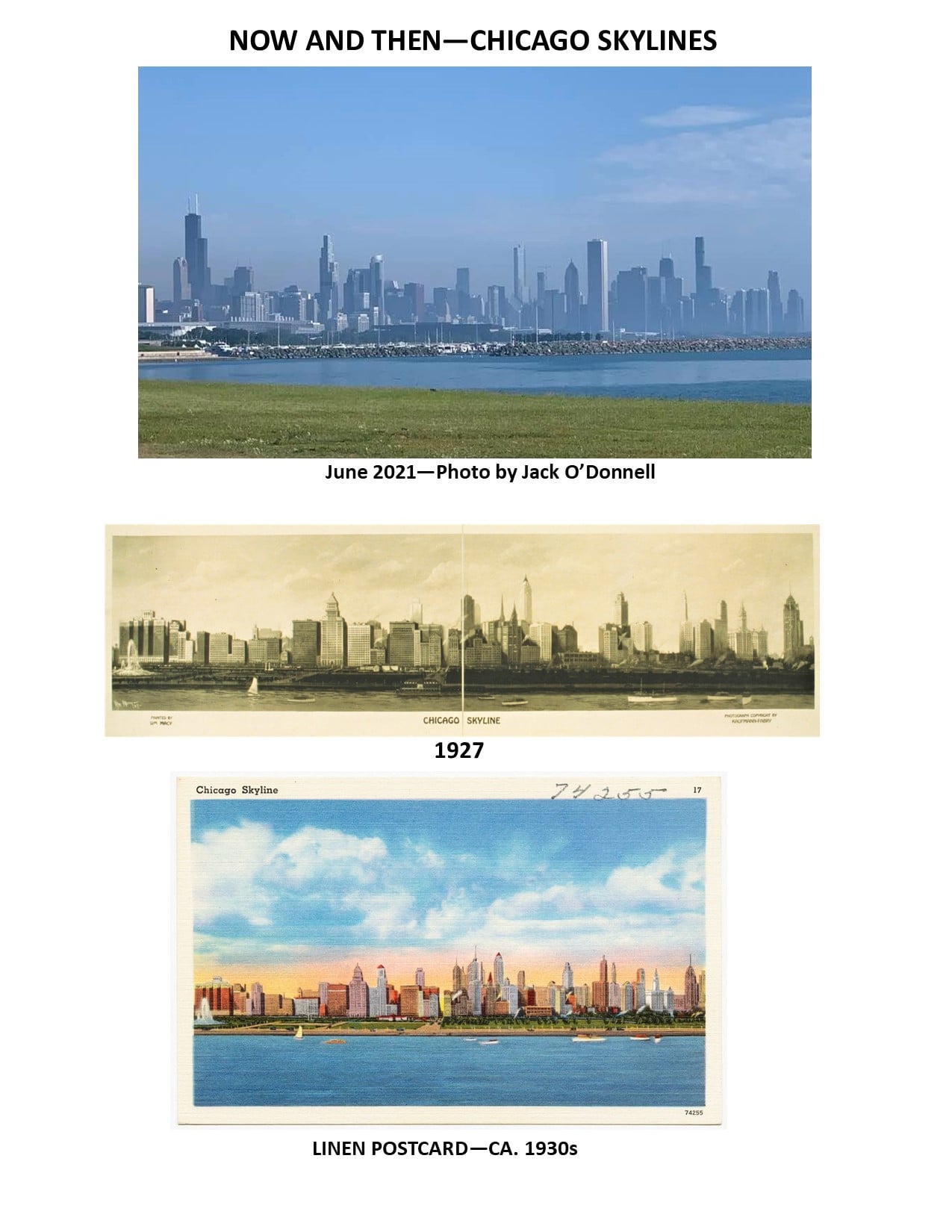
June 2021
Thank you to Jack ODonnell for the wonderful picture of today's Chicago timeline.
The Ridge Historical Society
National Jewish American Heritage Month
May 2021
By Carol Flynn
May is a busy month for recognitions – nurses, teachers, and police are all honored during this month.
May is also National Jewish American Heritage Month.
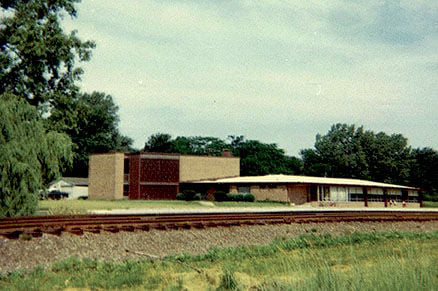
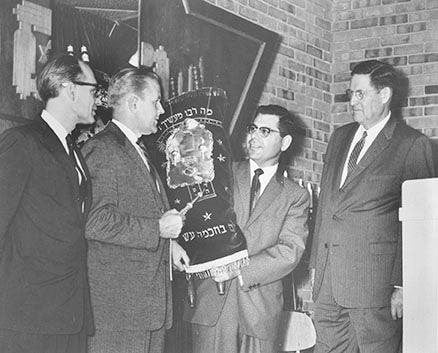
The Ridge was home to a thriving Jewish American community and there was once a Jewish synagogue in North Beverly.
The following is from the RHS newsletter, adapted from “Beth Torah: The Congregation That Held Services in a Castle,” by Errol Magidson, published in Chicago Jewish History, Vol. 38, No. 4, Fall 2014, a publication of the Chicago Jewish Historical Society.
“In 1953, Jews living on the far southwest side of Chicago and nearby suburbs established a Reform congregation which they named Beth Torah, or Temple of Instruction. All but one of the officers lived in the Beverly/Morgan Park community. In their early years, they held services at the [Beverly Unitarian Church in] Givins Beverly Castle, Trinity Methodist Church, and Bethany Union Church, and in members’ homes. Although small, the congregation was active with classes, a youth group, membership and fund drives, and social events like hay rides and fashion shows.
“A major goal of the congregation was to have its own synagogue. Funds were raised, land was purchased at 93rd Street and Vanderpoel Avenue, and a building was constructed.
"Beth Torah Synagogue opened in October 1961. But by 1974, due to an aging membership and a decline in the number of Jewish families in the Beverly area, a number of the Beth Torah congregants opted to affiliate with another congregation in Olympia Fields.
“The Beth Torah Synagogue was purchased by the Chicago Board of Education in 1974 and used for classrooms for a few years. Eventually, the building was torn down but the foundation still remains.”
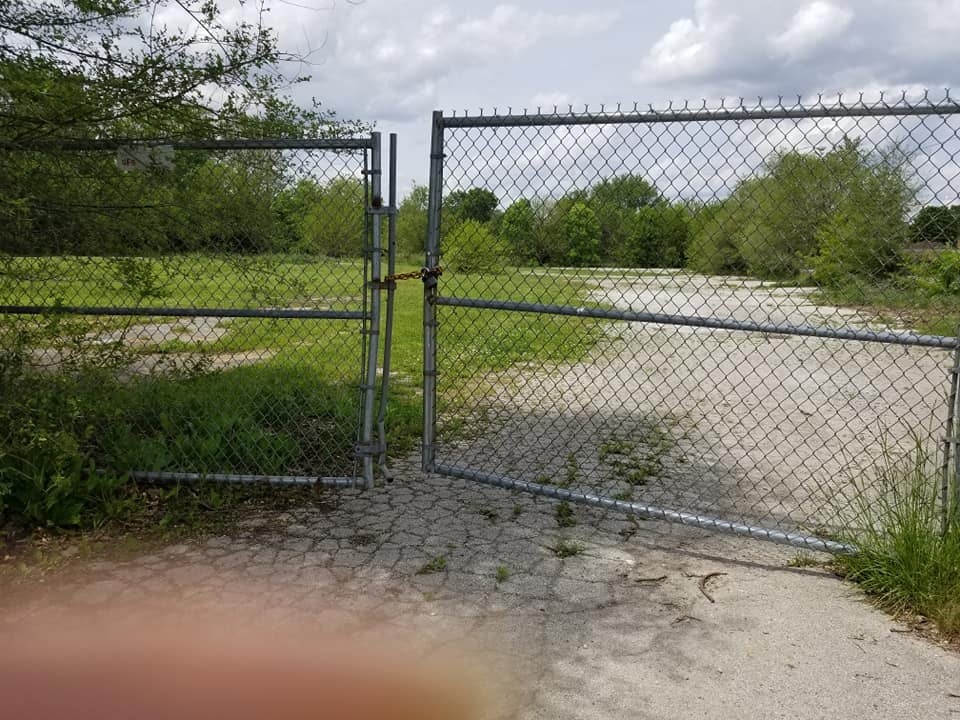
The weed-choked vacant lot at 93rd Street and Vanderpoel Avenue is all that is left of the synagogue – even vacant lots have interesting histories! There are, of course, Jewish residents on the Ridge, active participants in neighborhood affairs, members of the ever-diverse population that calls this community home.
With thanks to Errol Magidson.


The Ridge Historical Society
Anniversary of Tornado
By Carol Flynn
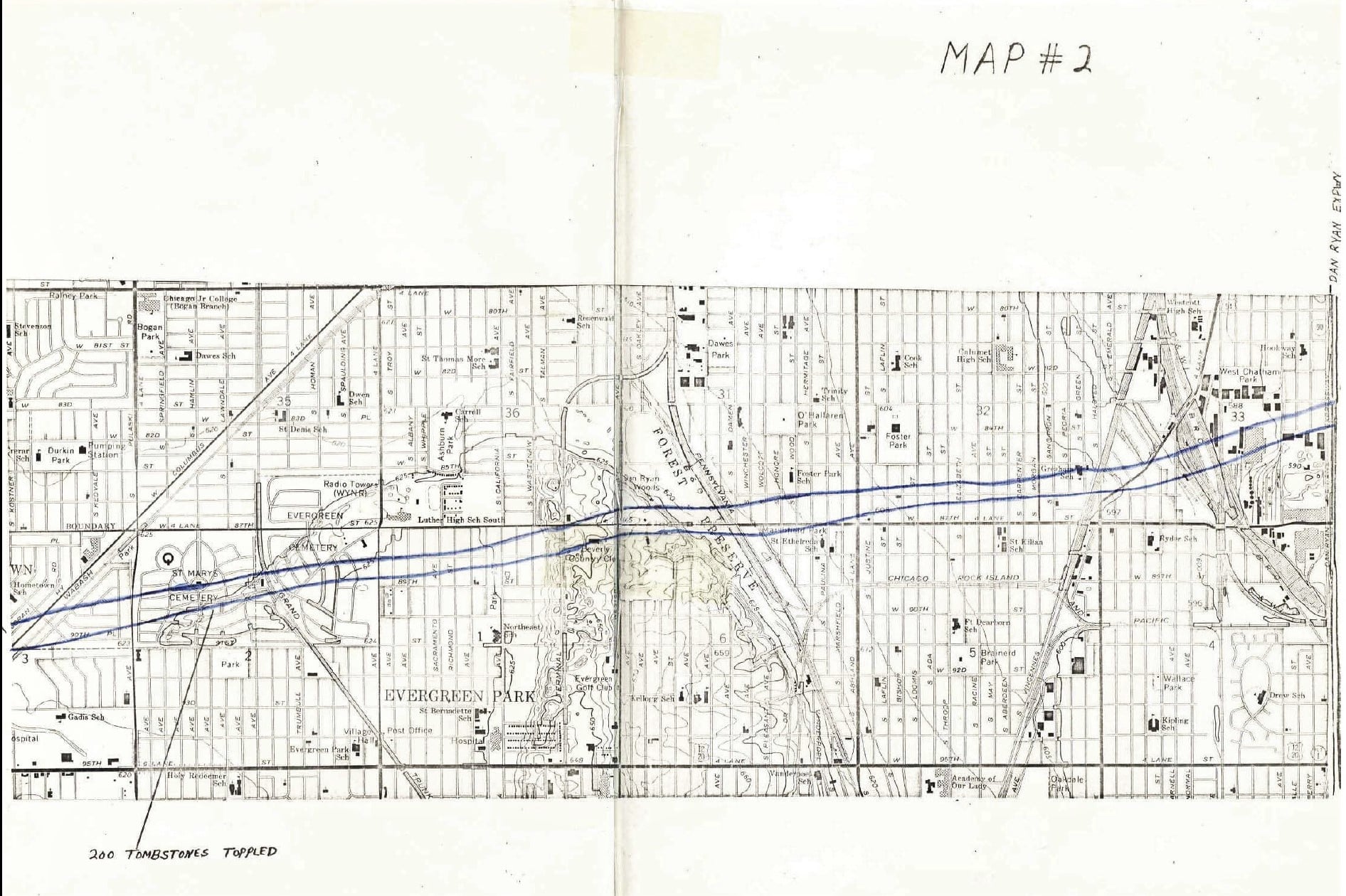
On April 21, 1967, the deadliest tornado in the history of northern Illinois came through the area right at evening rush hour.
At 5:24 p.m., the twister touched down in Palos Hills by 106th Street and 88th Avenue where Moraine Valley Community College is now, and started moving east-northeast. It reached its maximum size and intensity as it passed through Oak Lawn, Hometown and Evergreen Park.
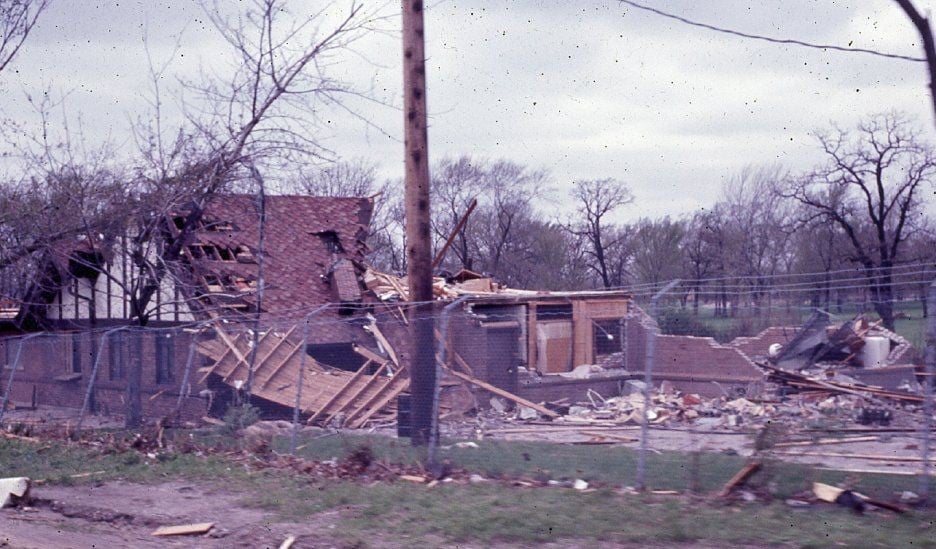
The funnel continued along 87th Street, destroying a building at the Beverly Country Club, and tore through Dan Ryan Woods, uprooting and damaging hundreds of trees.
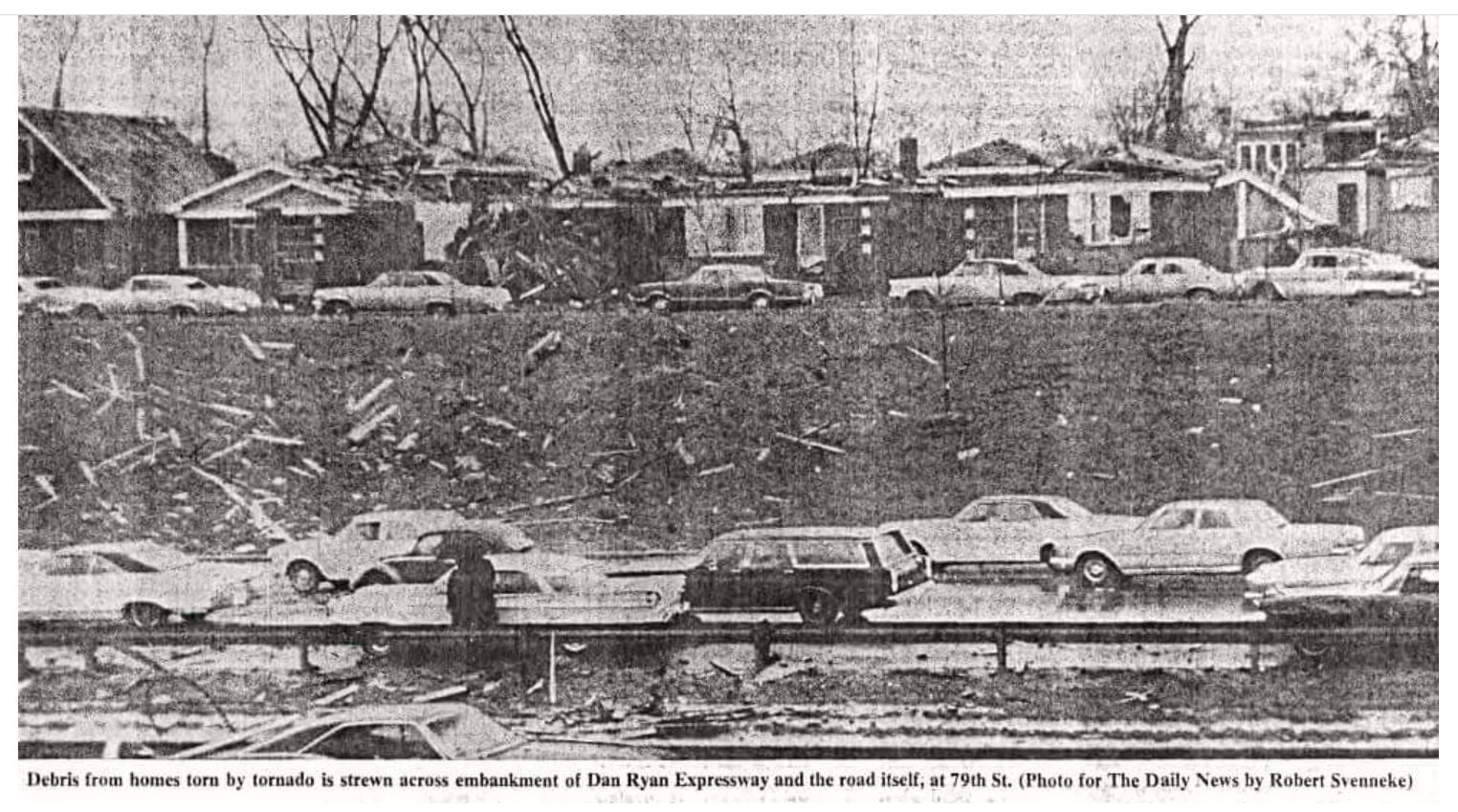
It continued northeast, weakening, until it moved into the lake as a waterspout at Rainbow Beach around 79th Street.
The tornado caused 33 fatalities and over 1,000 injuries, and more than $50 million in property damage. Beverly was largely spared because of the forest preserve’s location. Our sympathies continue to this day to be extended to the communities devasted by this natural disaster.
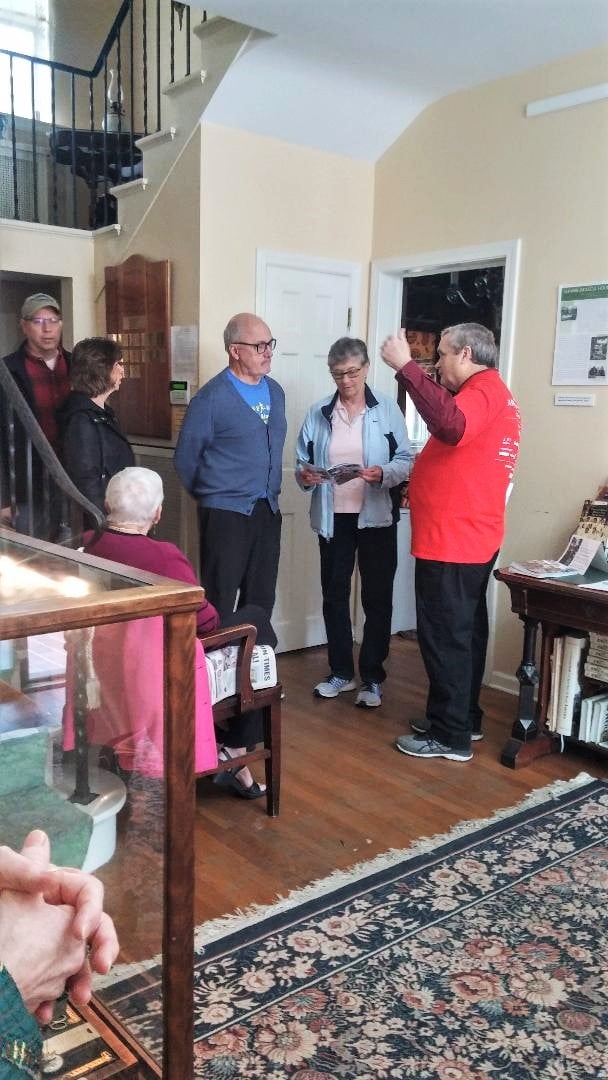
The Ridge Historical Society is saddened to learn of the death of Board member Kevin Bourke. Kevin was a very enthusiastic supporter of RHS and local history and always willing to step up and lend a hand. Here he is at RHS during Open House Chicago (OHC) in September of 2019, greeting guests and discussing RHS, the Graver-Driscoll House, and local history. Kevin is in the red OHC t-shirt.
Here is a link to his obituary. RIP and thank you, Kevin. Our sincerest condolences to his family.
https://www.legacy.com/obituaries/name/kevin-bourke-obituary?pid=197788738
Ridge Historical Society – For Valentines Day
A Sparrow: Love in a Cottage
By Carol Flynn
According to a Chicago Tribune column from one hundred years ago, here is an old English superstition.
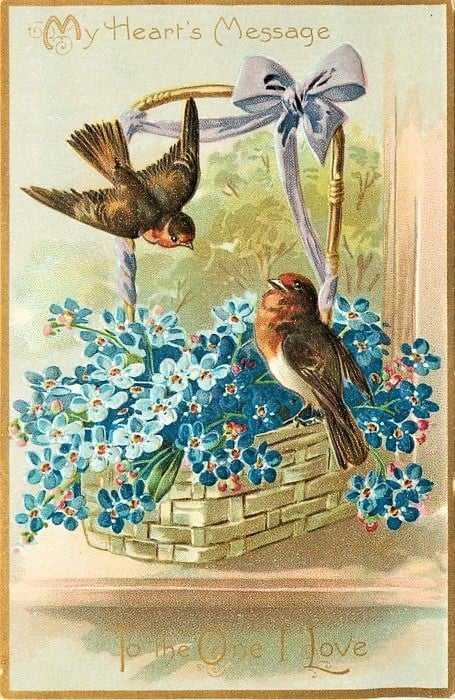
On Valentines Day, the first bird a maiden sees in the morning will determine her future marriage situation. If she sees a goldfinch, she will many a millionaire; if she sees a bluebird, she will live in poverty. If she sees a blackbird, she will marry a clergyman; if she sees a redbreast, she will marry a sailor.
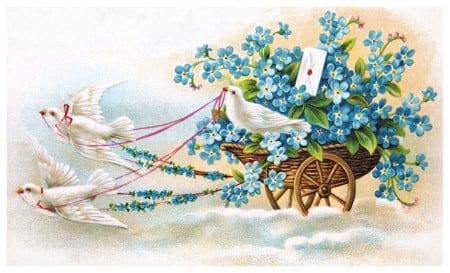
If she sees a flock of doves, she will have good luck.
If she sees a sparrow, she will find love in a cottage. Chances are, in Chicago, and on the Ridge, the first bird a maiden will see is an English sparrow, also called a house sparrow. These birds were brought into the United States by collectors in the mid-1800s and introduced throughout the country. Early city park planners in Chicago released them into Lincoln Park. They are now the most widely distributed birds in the wild.
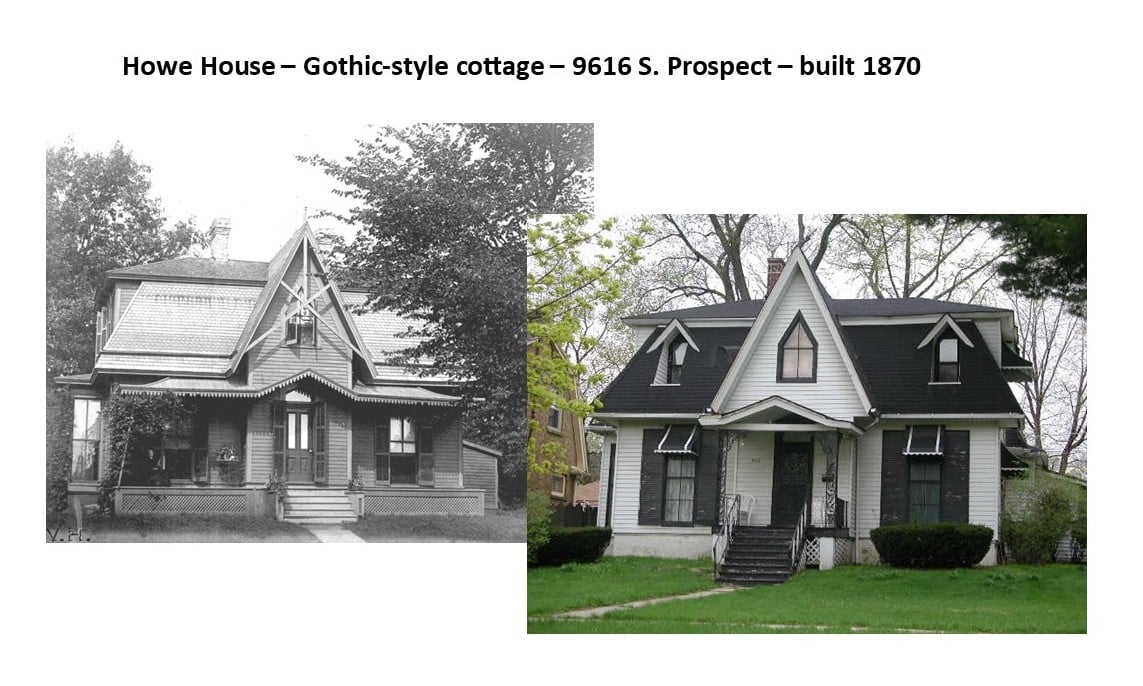
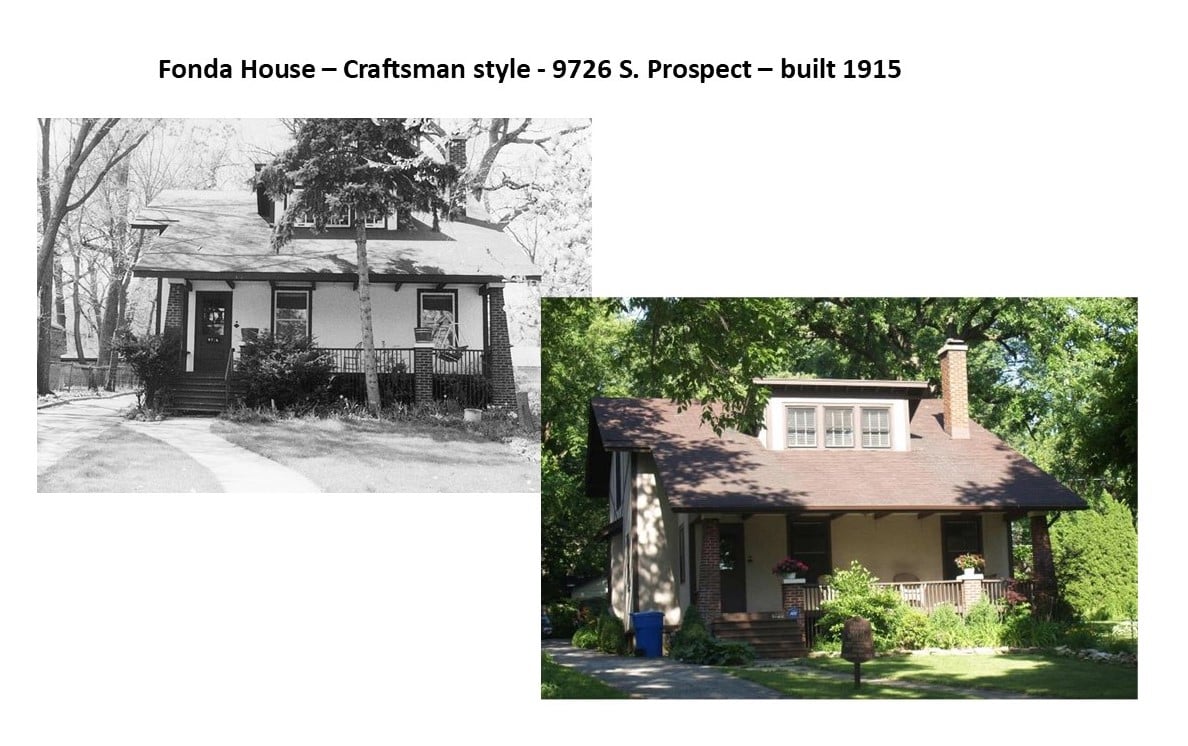
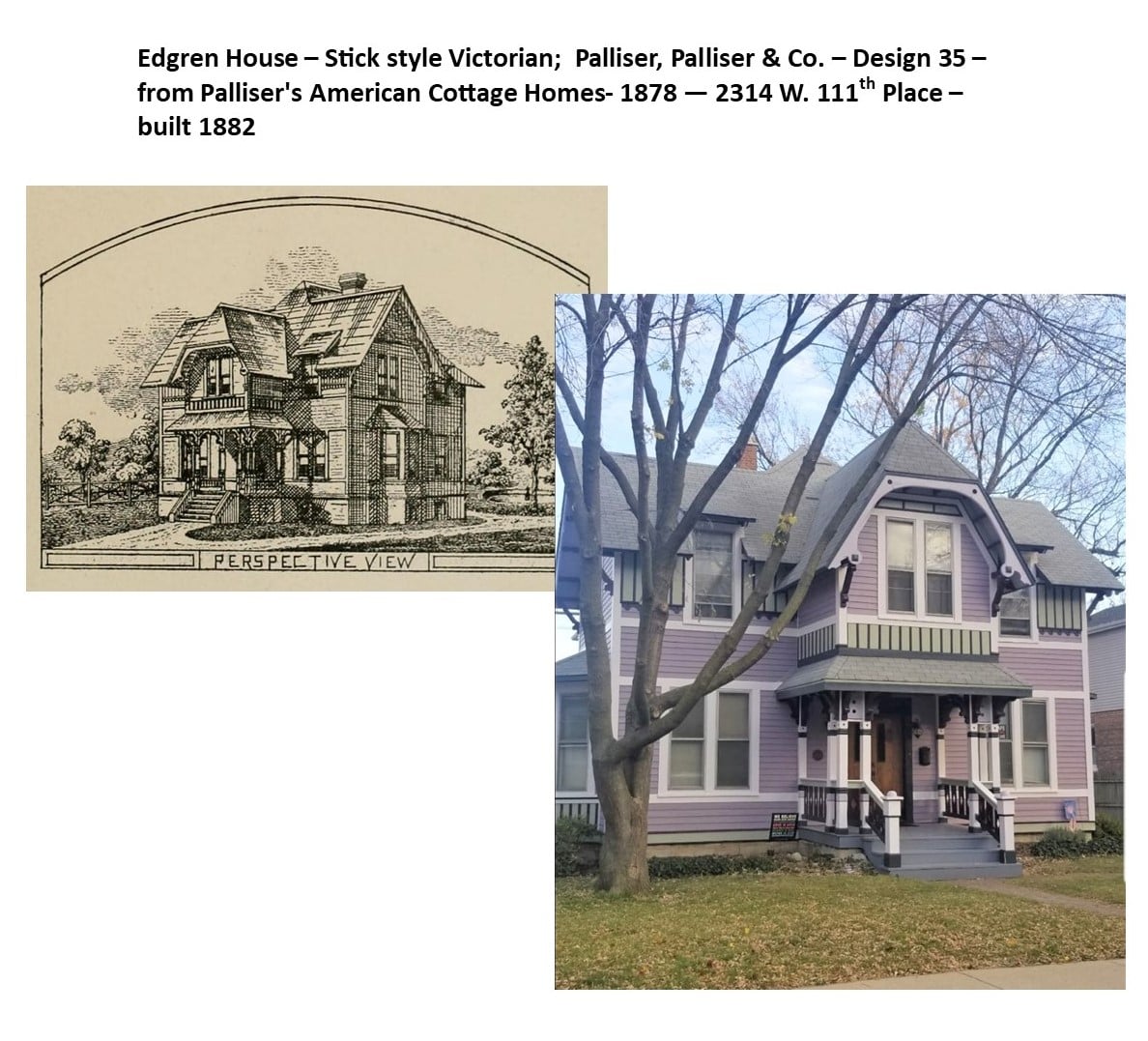
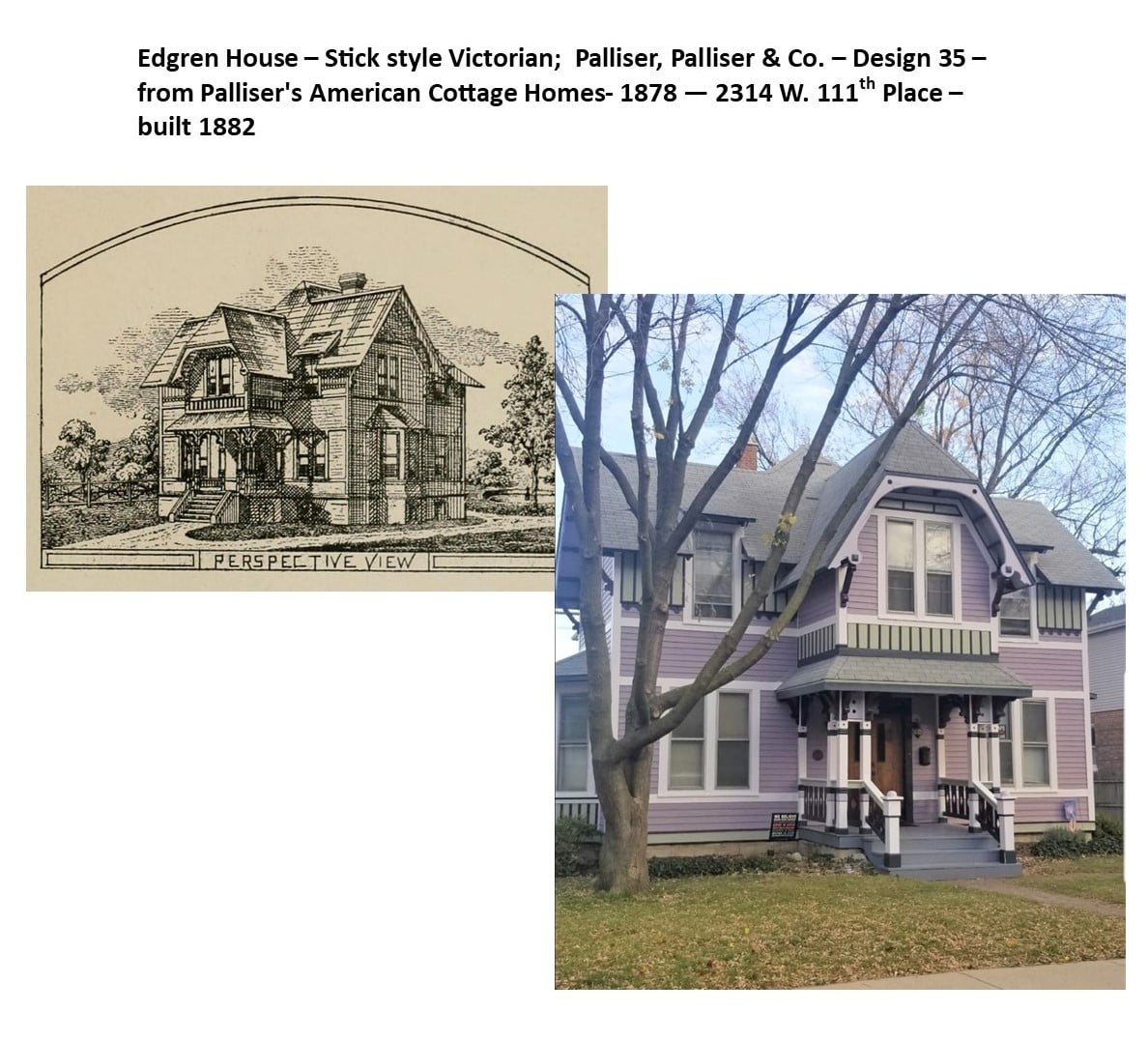
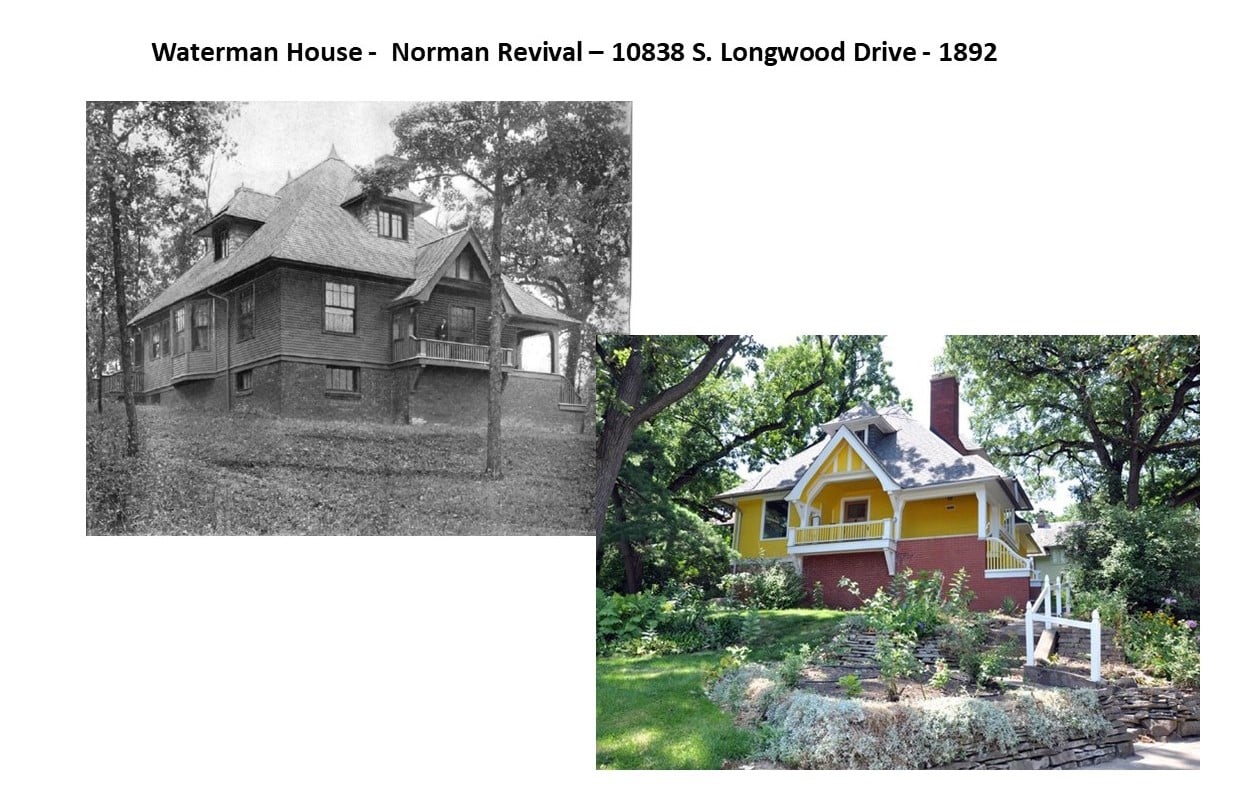
The Ridge has a vast collection of houses that can be considered “cottages.” There really is no specific definition of a cottage architecturally – in fact, there is a lot of similarity in the definitions for cottage, bungalow, cabin, and like structures.
Some general characteristics of cottages are that they are smaller frame houses, one or 1.5 floors, with dormers and small porches. They are usually thought of in terms of coziness and charm. In the United States, cottages are often associated with vacation properties.
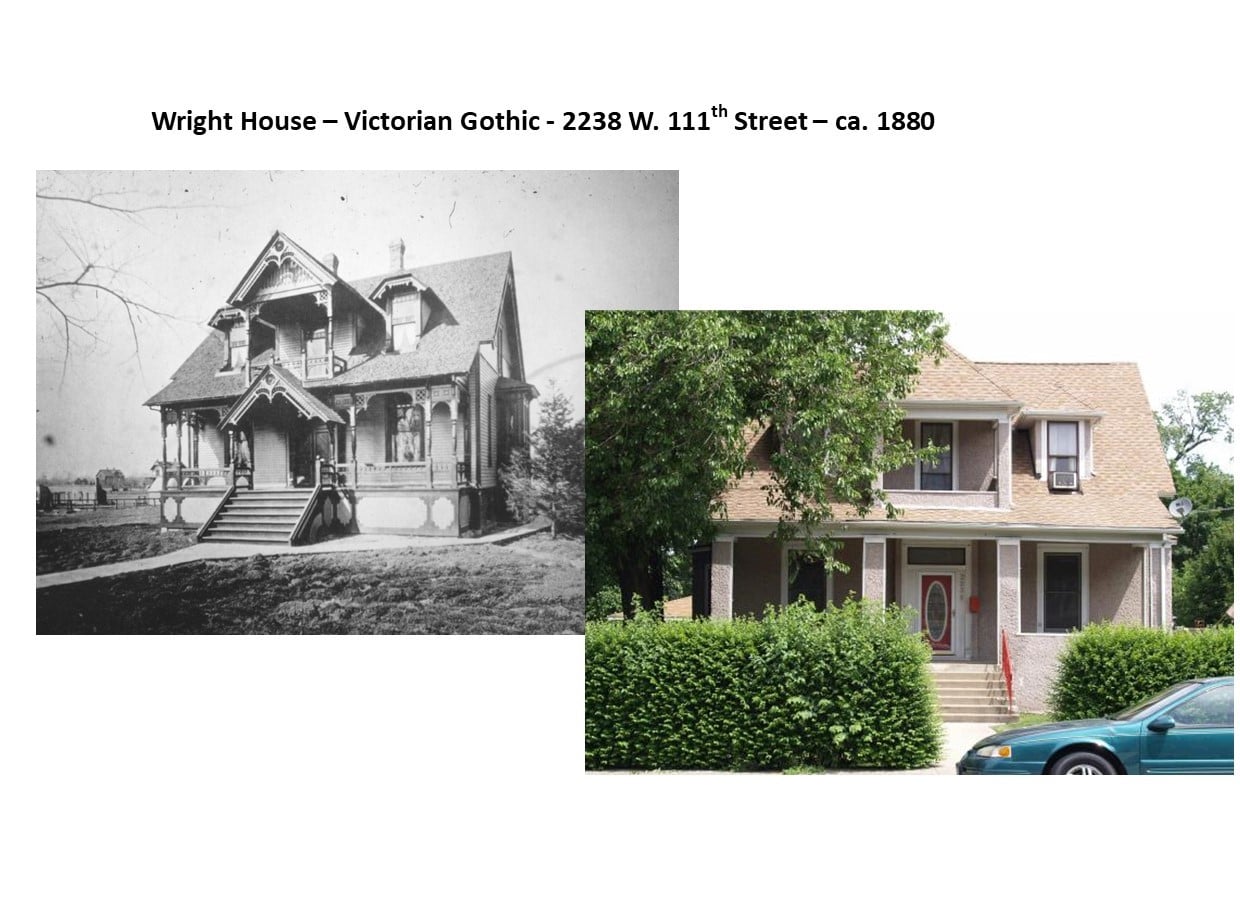
Here are some pictures of well-known cottages in Beverly and Morgan Park displaying a variety of architecture styles. Both the original as well as a more current view of each cottage is shown. Some have been substantially altered but the charm is still there.