Explore the RHS Facebook Archives, a rich repository of local history written by Carol Flynn. For two decades, Carol brought a deeply dedicated voice to public education at RHS. Her role as Facebook administrator through mid-2025 naturally extended her prolific research into meticulously detailed articles, most notably her multi-part historical series posts. Today, Carol continues her local history writing for The Beverly Review and other outlets.
2023
Here's a good primer on the topic of selling and serving alcohol on the east side of Western Avenue in the 19th Ward.
The Illinois Liquor Control Act of 1934, which followed the repeal of Prohibition, sets forth the law for establishing dry sections by election precinct, and the City of Chicago Board of Election Commissioners Guidelines for Local Option Referenda sets forth the process for establishing (and repealing) dry sections in the city.
This is done on a precinct-by-precinct basis, and only the people who live in the precinct that will be affected are allowed to vote on the issue.
Many people would like to see more restaurants serving alcohol located east of Western, however, the people living in that section have consistently voted "no" to alcohol for almost 90 years.
Frankly, a better way politically to deal with this issue would be, rather than trying to change the law in general in any given precinct, to find a party interested in developing a specific property into a restaurant and to work through a process to allow a liquor license for that venue, as was done with the Barraco's on 95th Street, which took over the building that was the former library, and before that, a funeral parlor. No other property was affected by that decision and the neighbors impacted by the decision approved the sale of alcohol at that location.
BAPA History: The “Wet/Dry” Issue
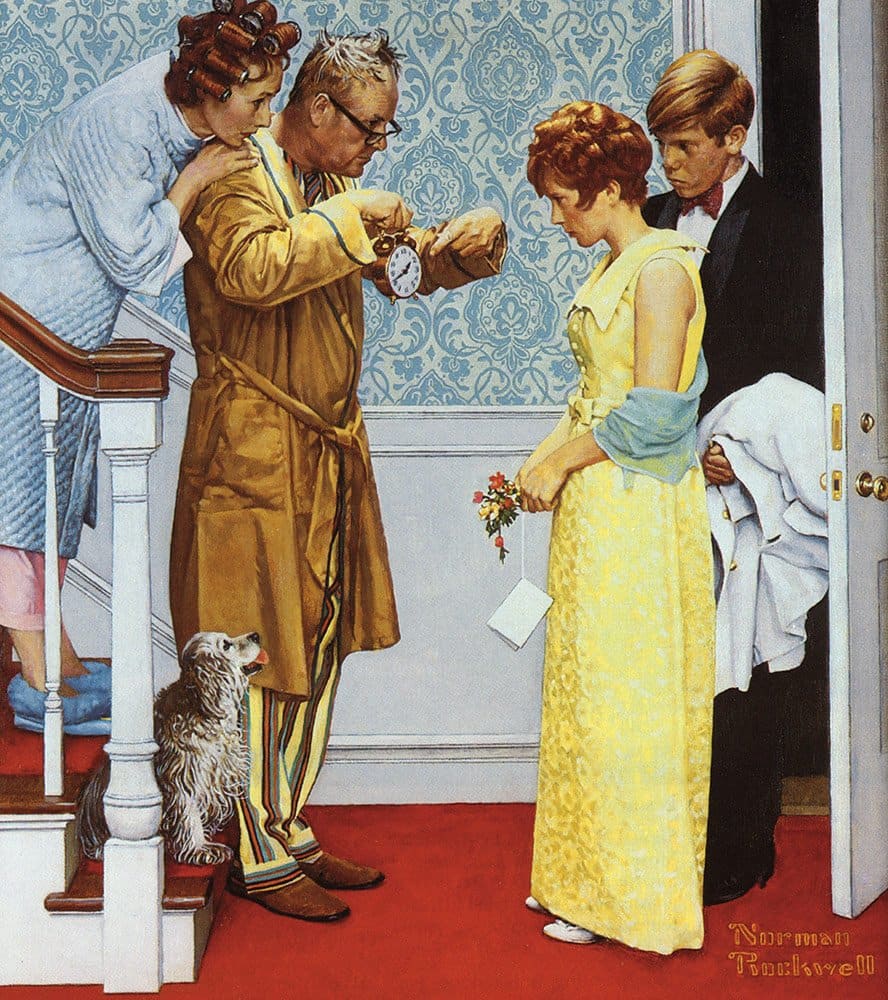
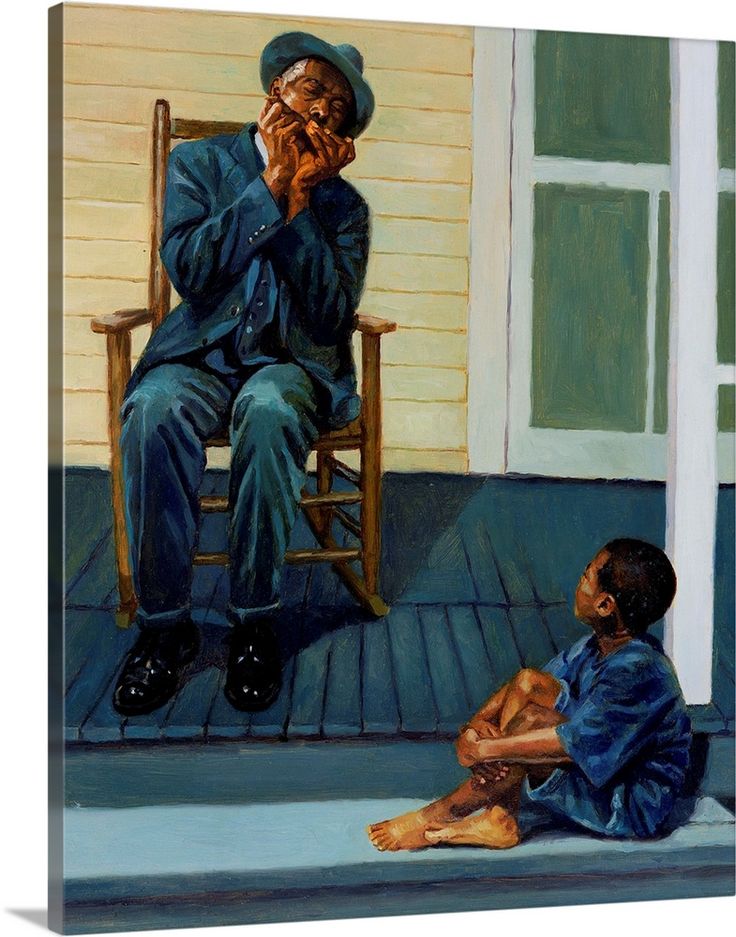
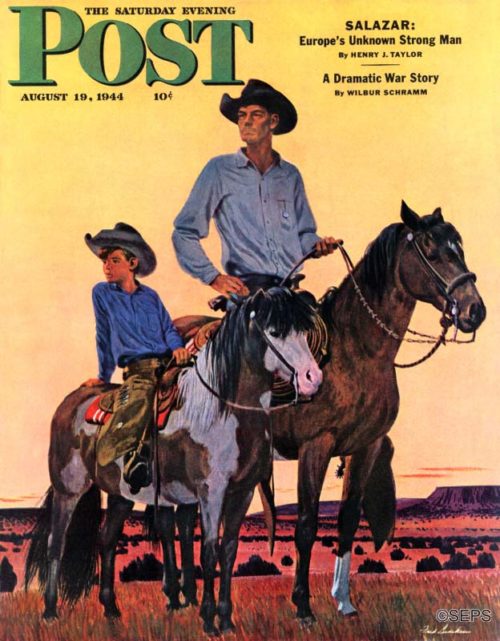
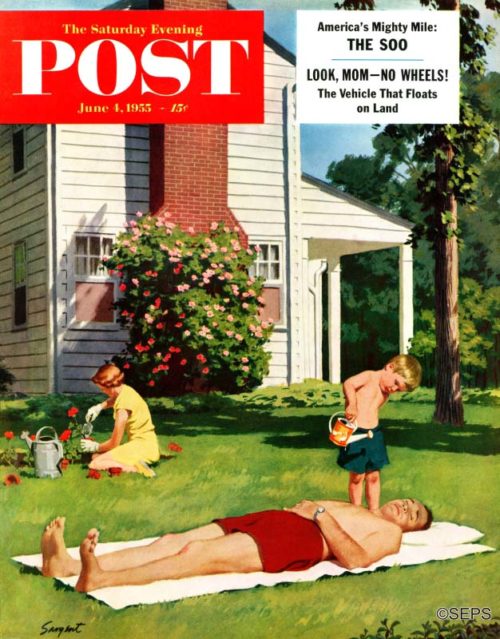
Happy Father's Day!
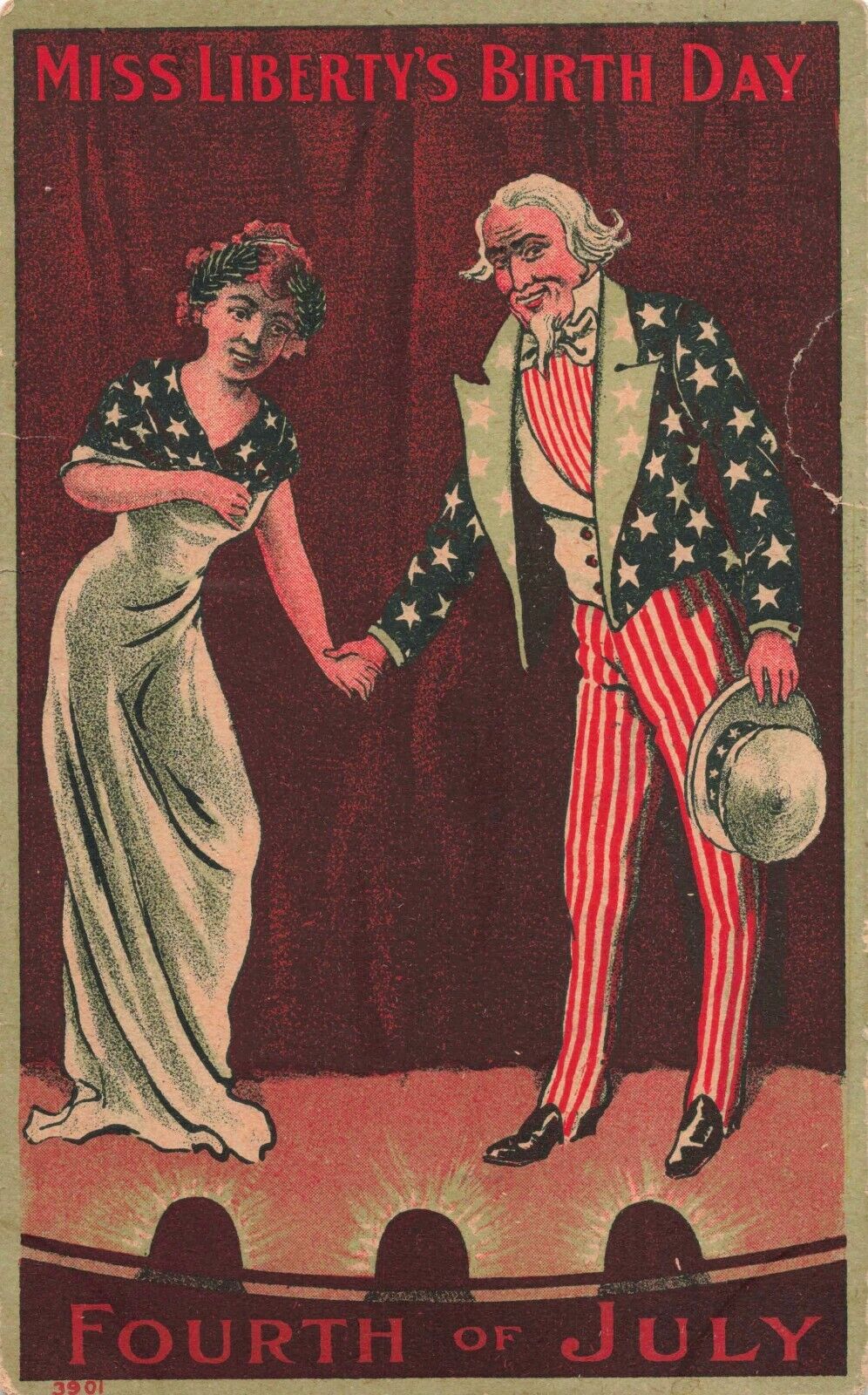
Here are some images that artists made over the years that depict moments in time for fatherhood.
The Ridge Historical Society
Part 10 – The Hofer Sisters and Politics
By Carol Flynn
The Hofer family lived in Beverly from the early 1890s to the mid-1910s, about 25 years, during the height of the Progressive Era.
That era was marked by widespread reform and change in just about every area of life, from education to business to human rights. Today, kindergartens and other early development programs for young children, playgrounds, parenting classes and resources, and related activities are taken for granted. However, 100 to 150 years ago, they were considered radical, “progressive” social movements that visionary people fought to establish.
They also fought to establish rights for children. Using children for hard labor, in sweat shops, and out on the streets, was condoned for centuries, like slavery had been. Slavery was abolished in the 1860s, and the Progressive Era saw the beginning of the end of that kind of abuse of children.
While the Hofer sisters were leaders in these movements, their political activities extended beyond these issues. The five Hofer sisters were all politically active, but especially so was Andrea Hofer Proudfoot, who rose to international fame for her contributions to the international peace and amnesty movement.
The progressive spirit came from the Hofer parents, Andreas and Mari, revolutionaries from the German-Swiss border area. In the U.S., they moved from the east coast to Iowa seeking new opportunities and to be closer to friends. There, a brief stint in the early 1850s in a socialist commune called Communia left them disillusioned with socialist and communist systems, but still believing in the need for social and political reforms.
The Hofer family ran a newspaper in Iowa for many years which gave them the opportunity to share their progressive beliefs. All of the children worked at the newspaper, and the three sons moved to the west coast to pursue careers in the newspaper publication business.
The Hofer parents and the five daughters moved to Chicago to allow the daughters education and employment opportunities, itself a progressive attitude toward women.
The Hofer sisters, as no surprise, were suffragists, believing that women should have the right to vote. In an article in 1912, Andrea was described as “outspoken and sweeping in her advocacy.” When another woman suggested “indirect influence” was preferable to voting, Andrea “scathingly denounced this as immoral and wrong.” She used parenting as an example to explain her view. A parent does not “influence” children; a parent would “inculcate right principles and teach children to stand firmly by these.”
Women received the right to vote in the U.S. in 1920 when the Nineteenth Amendment to the U.S. Constitution was ratified. Long before that, however, they were involved in politics at the local, national, and international level.
The kindergarten movement was an international movement that originated in the Switzerland/Germany/Prussia area and spread to the U.S., thanks to women like the Hofer sisters. The kindergarten movement started with Swiss educator Johan Pestalozzi in the late 1700s, and was furthered in the 1800s by Friedrich Froebel in Prussia/Germany. Several of the Hofer sisters did graduate work in Berlin, Germany, at the Pestalozzi-Fröbel-Haus. Froebel’s niece ran the program in Berlin.
Andrea spent time in Europe, not just for her own education, but with her children. For periods of time, she left her school in Beverly in the capable hands of her sisters Elsa and Mari and resided overseas.
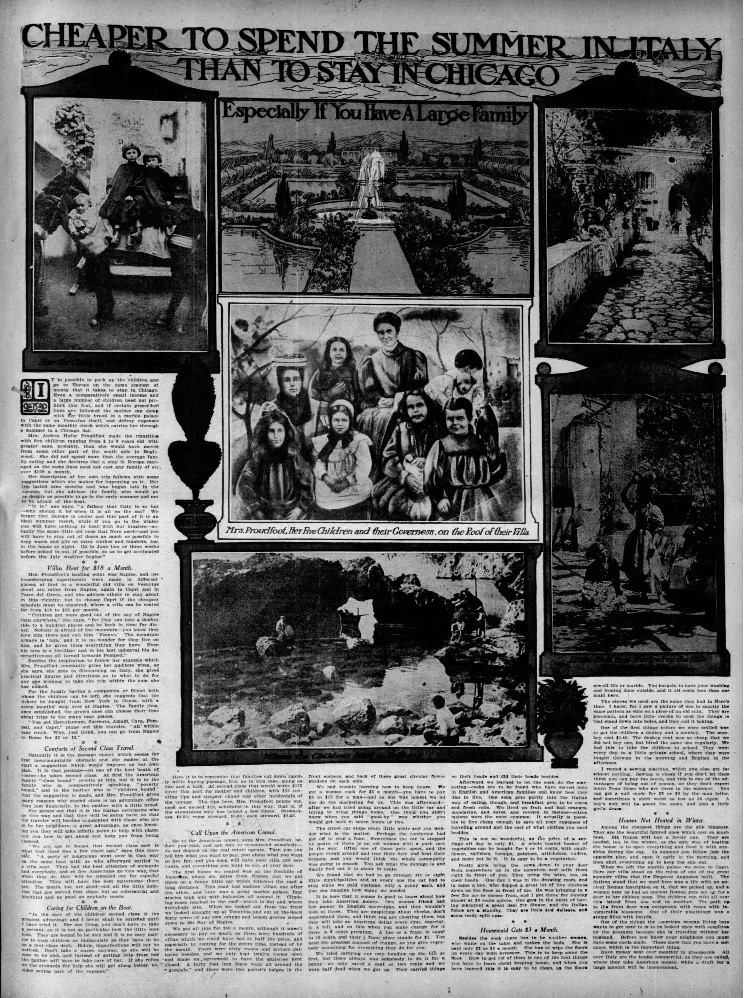
In May of 1907, the Chicago Tribune ran a full-page story about Andrea and her five children, ages 2 to 9, moving to Italy for nine months. The article focused on how economically she was doing this, spending no more than it would have cost to stay home in Chicago. The article was full of advice from Andrea, from booking second class steerage on a ship to renting a villa and hiring local help to keeping warm in winter. The children traveled by donkey cart to a private school that taught German. Andrea’s husband Frederick, a lawyer with the Chicago Board of Trade, stayed home in Chicago, and sent the adventurers money on a monthly basis.
Quite a few pacifist and women’s rights organizations were formed in the late 1800s, in the U.S. and in Europe. The pacifist and feminist causes became intertwined at an international level; in fact, historians have found that pacifism and this first-wave of feminism were equated in the minds of the general public at the time.
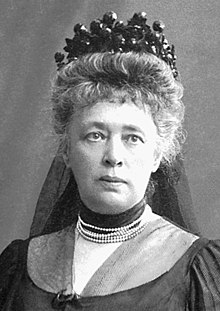
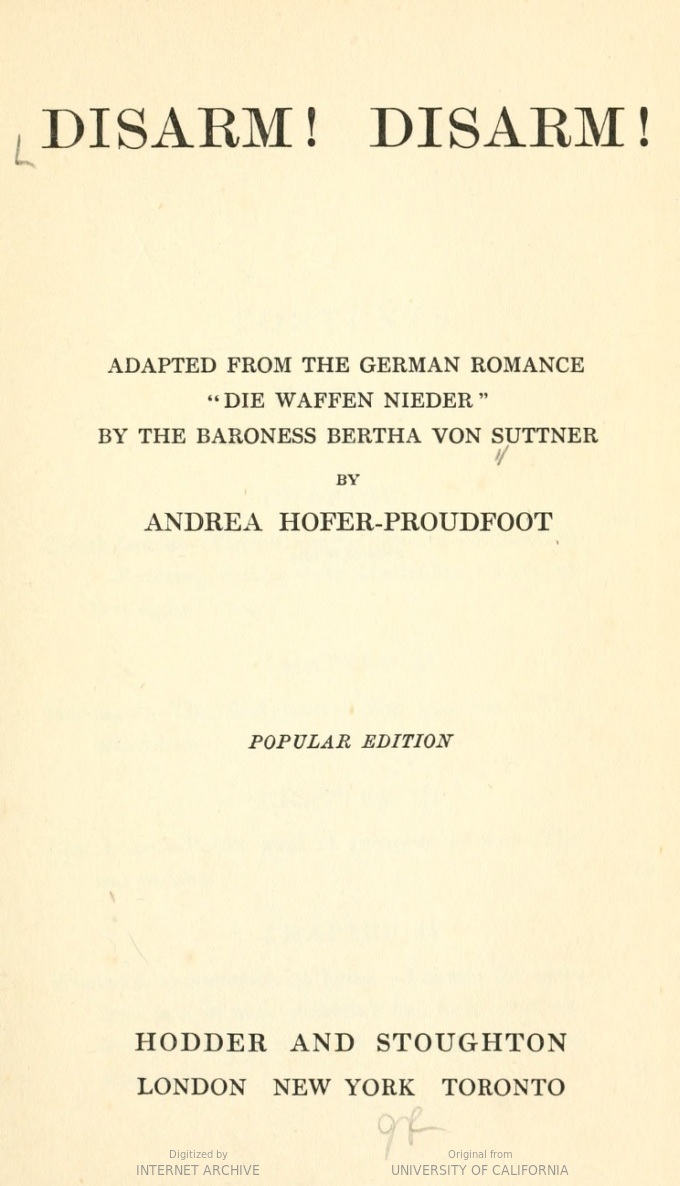
One very prominent international woman pacifist was Baroness Bertha Von Suttner (1843 – 1914) of Austria. The Baroness founded the Austrian Peace Society in 1892, and in 1905 she was named the Nobel Peace Prize laureate, in part due to her 1889 anti-war novel “Die Waffen nieder!” as well as numerous other political pacifist writings and lectures. [Andrea Hofer Proudfoot adapted the Baroness’s novel into English (Disarm! Disarm!) in 1913 and it is still available today.]
The Baroness addressed many of her communications directly to women and the women’s clubs of the U.S. became her followers. In 1912, thanks to the Hofer sisters, she made a coast-to-coast tour of the U.S., speaking to women’s groups and peace organizations. She advocated for universal peace and women’s suffrage, declaring them “the two great movements for the betterment of humanity.”
The next post will cover the Baroness’s visit to the U.S., and other political activities of Andrea and her sisters.
The Ridge Historical Society
Part 11 – The Hofer Sisters and Politics Continued
By Carol Flynn
During the Progressive Era of the late 1800s-early 1900s, women began to come into their own as political activists. Much of their work was done through women’s clubs. Long denied membership in traditional men’s clubs, women formed their own civic organizations which became powerful forces for reform and change.
The Chicago Woman’s Club (CWC) was one of the most influential of these organizations, with members including Jane Addams of Hull House and Bertha Palmer of Palmer House hotel money and fame, who chaired the women’s events for the 1893 World’s Fair in Chicago. Women from the Ridge actively participated in the CWC, and Gertrude Blackwelder from Morgan Park served as president from 1906 to 1908.
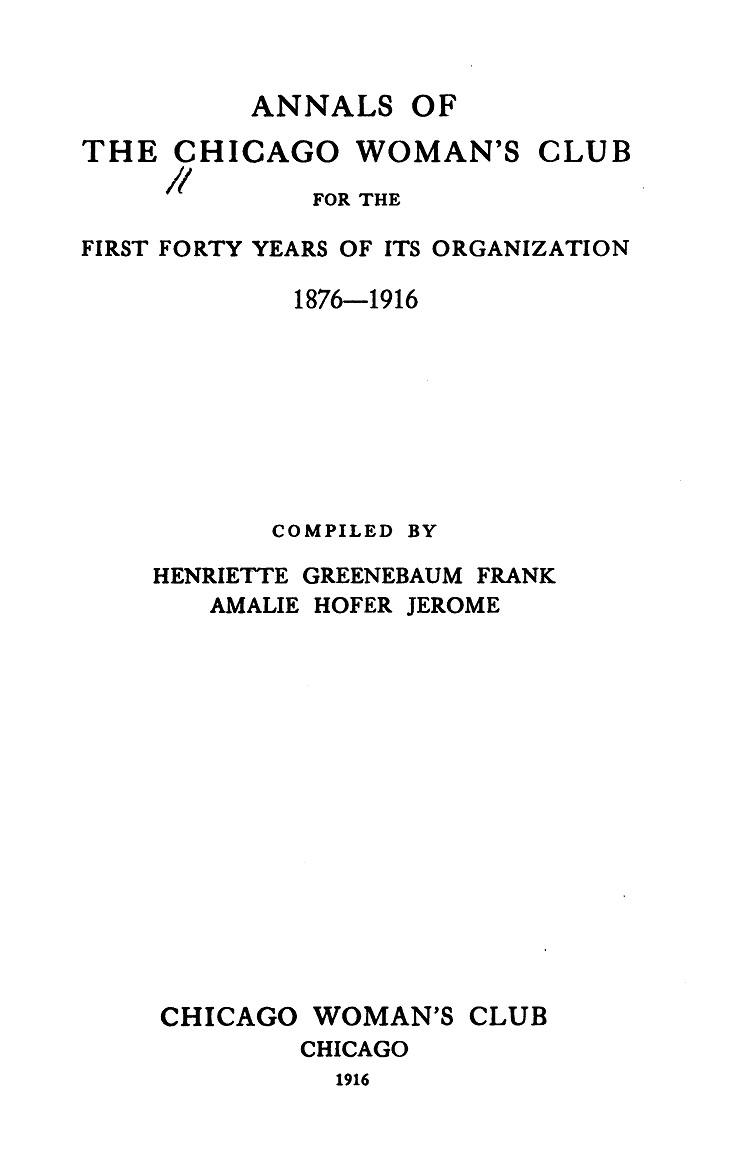
The Hofer sisters were members of the CWC. Bertha Hofer Hegner was prominent in the club’s education endeavors. In 1916, Amalie Hofer Jerome co-authored the Annals of the Chicago Woman’s Club for 1876 to 1916, a compilation of the Club’s first forty years of business.
In 1912, through their CWC involvement, the Hofer sisters brought about an internationally significant event, a country-wide tour by pacifist Baroness Bertha Von Suttner of Vienna, Austria.
Andrea Hofer Proudfoot spent increasing amounts of time living in Europe in the early 1900s with her children. She and her husband regularly traveled back and forth between Chicago and Vienna, where her daughter Helen attended the Leschetizky School.
The international kindergarten movement, in which the Hofer sisters were leaders, shared many ideals with the international peace movement, and Andrea became acquainted with Baroness Von Suttner, who won the Nobel Peace Prize in 1905.
Mounting social unrest leading to increased militarism had many fearing a European war was imminent, and indeed, World War I was just around the corner. Peace organizations were established in Europe and the U.S., and women like Jane Addams were active participants.
Suttner was a leader in the international pacifist movement of the time, and was emerging as a leader of the growing feminist movement. She was an influential pro-disarmament writer, believing that world peace was inevitable due to technological advancements, and that more powerful weapons would increasingly deter war.
In February 1912, Mari Hofer presented a motion to the Chicago Woman’s Club recommending that they arrange an address by the Baroness during the coming year. This was approved, and the Club reached out to the General Federation of Women’s Clubs (GFWC), the “mother” organization that all the local clubs belonged to, and other groups for involvement. A joint Peace Committee with the GFWC and groups like the Chicago Peace Society was formed, with Mari and Amalie doing the work.
While male international pacifists had been making speeches in the U.S. for years, this was the first initiative by women to include pacifism and international affairs as part of the women’s clubs’ agenda, and have a woman address the American people. Suttner was invited to address the GFWC national convention in San Francisco in late June of 1912. She accepted the offer.
The Hofer sisters procured funding from the World Peace Foundation, which supported peace education, to cover all the expenses for the Baroness to visit the U.S. Leaving for the U.S., Suttner stopped in Paris to address the Carnegie Peace Foundation. She stated, “I shall try to put in motion a new and great force in the uplifting to good all mankind, and that force is found in the federated American women.”
Standing next to her on the platform was the personification of those women, Andrea Hofer Proudfoot, from the Chicago Woman’s Club, who served as Suttner’s full-time manager, secretary, and companion for her trip to the U.S.
They travelled by ship to New York, then across country to San Francisco by train, picking up GFWC delegates along the way. The GFWC event, with 5,000 attendees, became the first of 1,220 engagements, with the Baroness speaking at universities, churches, and organizations including peace, labor, business, and suffrage groups. Major American newspapers and journals carried the Baroness’s speeches in full, allowing her a widespread reach to the public. Although this visit is rarely mentioned now, it was very big news at the time.
The Baroness’s primary goal was to advocate for universal peace, but she saw the connection to women’s rights for education and employment, and particularly to suffrage. She encouraged women to be active in the peace movement and she encouraged peace activists to support suffrage to increase their efforts in promoting peace.
The Baroness and Andrea came to Chicago in July, where the Baroness made presentations at the 50th annual convention of the National Education Association and other meetings, and visited Jane Addams and Hull House. From there, they went on to meet with President William Howard Taft.
They returned to Chicago in November, and Suttner addressed the Chicago Woman’s Club. Women like Mrs. George Pullman held receptions for them in their homes. Suttner also addressed other groups like the Chicago Federation of Labor.
The Inter Ocean newspaper quoted part of one of Suttner’s Chicago speeches: “We must come to realize that our present, modern times have outgrown the system of war, of violence. Now we all live under the law of violence. I hope that the tool of war will be laid down, and that the workers will lay down their tools against the preparation of the implements of war. Instead of the outstretched fist, we want the outstretched hand of friendship.”
Charles Beals, the Secretary of the Chicago Peace Society, noted although the U.S. visit was “a laborious task,” that “the peace workers of the United States have been greatly strengthened by the visit of the foremost woman pacifist of the world.” This group also had great praise for Mari Hofer’s role in the endeavor, stating that “Miss Hofer served entirely without pay, gave up her summer vacation in order to make the undertaking a success, and for months, in no small measure, bore the responsibilities and did the clerical work.”
As Suttner returned to Vienna in December, accompanied by Andrea, she declared that the U.S. was ahead of other countries in the suffrage movement, and she was sure American women would get the vote franchise. That took eight more years.
The Baroness was 69 years old when she made this trip. She died of cancer eighteen months later in 1914, right before the start of World War I.
Andrea went on to more prominence in the peace movement, which will be covered in the next post.
The Ridge Historical Society
July 4, 1923
By Carol Flynn
Happy Fourth of July!
Here’s what was going on in Beverly/Morgan Park one hundred years ago, according to the local newspapers of the day.
The Fourth of July fell on a Wednesday in 1923. The weather was perfect for a summer day – temperature in the low to mid-70s, and clear with a gentle breeze.
People had parties at their houses all day. They moseyed over to Ridge Park, where community events were held under the sponsorship of the Beverly Hills Post of the American Legion. The residents of the area contributed financially to the events, and did so willingly and generously. Several thousand people visited Ridge Park that day.
The usual events at Ridge Park for the Fourth of July included athletic competitions. For children, girls as well as boys, there were foot races and swimming and diving events. There were bike races for the boys.
For adult men, there were track events, including foot races, broad and high jumps, and team relay races, and swimming and diving competitions. The tennis courts at Ridge Park were very popular, and there was a tennis tournament, with singles and doubles for men. Baseball games between rival community and business-sponsored teams were very popular.
Adult women participated in mixed doubles in tennis. They probably could have scheduled more events for women, but likely the women were too busy in their hostess roles, and dressed in their fine cotton muslin summer frocks, to want to engage in unseemly physical activity.
A band performance and community sing-along, speeches, and fireworks at dusk generally rounded out the Fourth of July on the Ridge.
Other interesting things were going on in the community at the time.
The Ridge Park pool opened on July 2, just in time for the holiday. The lifeguard in charge was Ted Metcalf.
A new golf club was being built at 91st and Western Avenue, which would extend west to California Avenue. This, of course, became the Evergreen Country Club, run by the Ahern family, which lasted until 2010 when it was demolished to make way for the strip mall there now.
Work had just started on the new Catholic church that was being established in Beverly on Longwood Drive. This, of course, became Saint Barnabas Parish.
Mail carrier Elmer Morrison of the Washington Heights postal station was enjoying his annual vacation, and the carriers at other local stations were planning their vacations. The high school boys in the neighborhood were going to work the routes while the men were off. Patrons were asked to have patience if the mail was a “wee bit” late. They were asked to think of their hard-working postmen enjoying a rest, and of the “coming men earning their first big pay of sixty cents an hour.”
One of RHS’s favorite personalities from local history, David Herriott, the past editor of the Morgan Park Post newspaper and the past postmaster of the Morgan Park station, was in the news. He introduced to the Illinois legislature a bill that mandated every automobile in Illinois have a device installed that would limit its speed to twenty-five miles per hour. Herriott had long advocated for automobile safety regulations. The bill did not become law, obviously.
Comforts we take for granted today were new one hundred years ago. Gas mains were just being installed on 103rd Place. It was noted the residents would soon enjoy the “luxury” of cooking with gas.
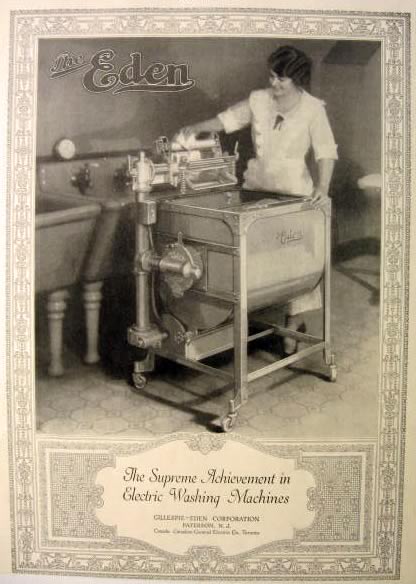
At the same time, a new “electric house” at 97th Street and Hamilton Avenue was being made ready for public viewing. The goal was to show that electricity was “the cheapest servant” and introduce the growing number of electric appliances to “be a wonderful inspiration to all mothers.” Other communities were also showcasing electric houses, where practically everything in the house was operated by electricity, except the heat, which was gas. In addition to lighting, electric appliances included refrigerators, stoves, vacuum cleaners, toasters, mixers, blenders, coffee percolators, waffle irons, dishwashers, washers, driers, clothes irons, shavers, and radios.
The electrical industry was really taking off in the 1920s, offering boys an “opportunity to learn a profitable and pleasing trade.”
Prohibition was in effect, but alcohol never played much of a role in Ridge affairs anyway. The City of Chicago did not hold any public events for the masses that year, but instead many events went on in local parks, like the ones in Ridge Park. The city fire department discouraged fireworks due to the number of injuries and fires that usually resulted. Fireworks were not allowed to be sold in the city but many of the towns outside the city allowed them to be sold. Sporting events were the most popular way to spend the day – the Hawthorne racetrack saw a “monstrous crowd” on July 4, 1923.
The Ridge Historical Society
Part 12 – The Hofer Sisters and Politics Continued
By Carol Flynn
The Hofer sisters became recognized as international peace workers with the successful visit of Baroness Bertha Von Suttner to the U.S. in 1912. Andrea Hofer Proudfoot stood by the Baroness’s side as her personal manager and secretary. Mari Hofer worked tirelessly behind the scenes, making the arrangements for over 1,200 presentations in sixteen states. Amalie Hofer Jerome also helped.
The Hofer sisters were known for their organizational skills. All were active in the Chicago Woman’s Club. In 1892, Mari, Bertha, Amalie, and Andrea were instrumental in starting the International Kindergarten Union, and all were charter members and served as officers or in other leadership roles.
Through her education programs at the settlement house, Bertha was involved in a number of groups. Amalie and Mari were founding members of the Playground Association of America, which included President Teddy Roosevelt. Amalie was a founder of the Civic Music Association of Chicago. Andrea and Elsa started the League of American Mothers. In 1913, Andrea founded the League for International Amity to continue the suffrage and disarmament education efforts started by the Baroness.
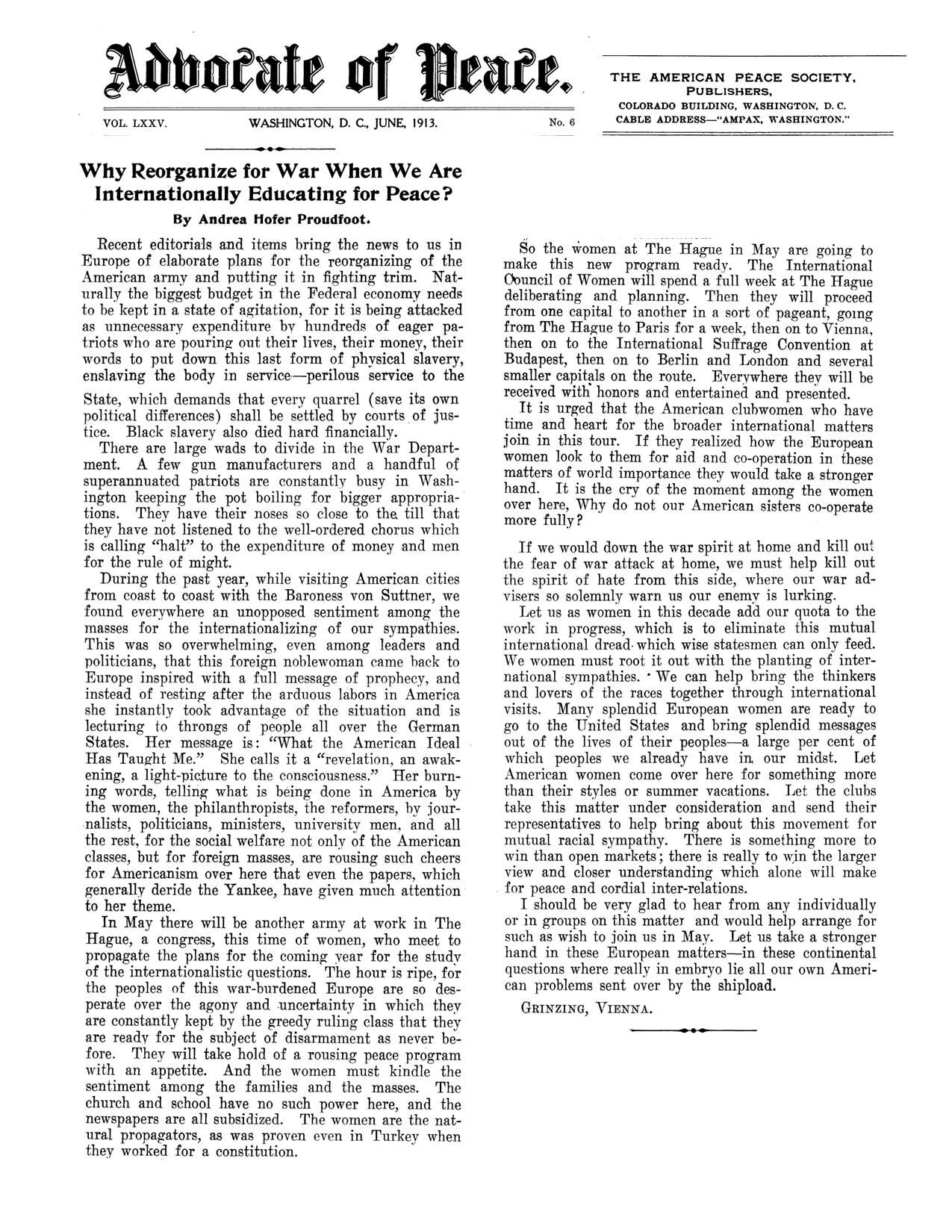
The Hofer sisters were also accomplished writers and speakers. Using Andrea as our continuing example, one of her calls for action in the peace movement is attached to this post. She became a sought-after speaker at international meetings of women. She was prominently featured at the International Council of Women meeting at the Hague in the Netherlands in 1913. The theme adopted by women’s groups throughout this time was: “In time of war prepare for peace; in time of peace prepare for its continuance.”
Andrea lived in Vienna for a few years, where her children went to school. They returned to Chicago when World War I started in 1914.
That year, Mari and Andrea were part of a national undertaking to raise funds for suffrage and peace causes in honor of Belva A. Lockwood. Working with Illinois women’s clubs, a pageant, totally under the direction of Mari, along with dancing and card games, was held at the Hotel LaSalle. The pageant included “dances of the nations,” that is, folk dances, one of Mari’s specialties, performed by young people of various organizations. Members of the Chicago Woman’s Club portrayed the queens of the world, including Queen Elizabeth and Marie Antoinette. They easily met their goal to raise $3,000 to contribute to the total goal of $20,000.
Mrs. Lockwood was the featured guest of the pageant, sitting in the center box. She was a very famous woman whose story has been mostly lost to history. She was active in women’s rights and women’s suffrage, and became one of the first women lawyers in the U.S. She was the first woman to practice before the U.S. Supreme Court. She ran for president in 1884 and 1888 and was the first woman to appear on official ballots. She supported the world peace movement and the temperance movement.
In 1915, Andrea was a leader of the International Conference of Women Workers to Promote Permanent Peace, known as the Women’s Peace Conference, held in San Francisco as part of the World’s Fair. She was joined on the planning committee by fellow Chicagoan Jane Addams. Miss Addams oversaw the programs on Social Service and War, and Andrea oversaw the section on International Amity and War.
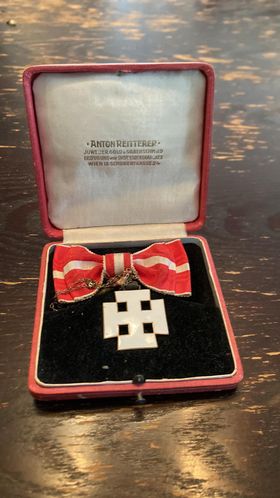
After World War I, Andrea served as Secretary of the American Committee for Vienna Relief in Chicago. She was awarded the “Eiserne Salvator-Medaille” (Iron Salvator Medal) from the City
of Vienna in 1921, and the “Silbernes Ehrenzeichen” (Silver Insignia of Honor) from the Republic of Austria. Andrea’s great-granddaughter shared a picture of one of the medals with RHS.
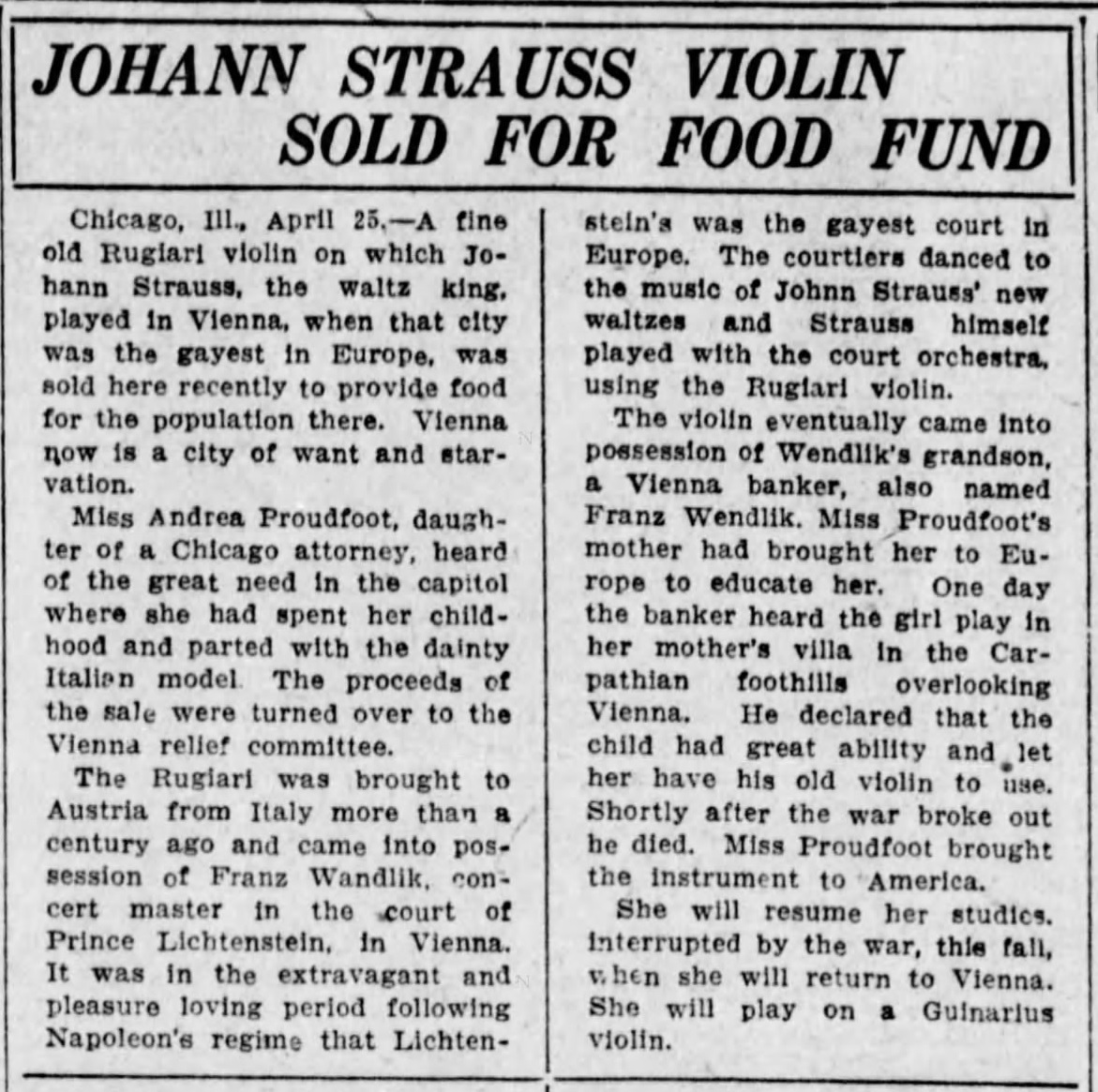
Altruism was passed down to the next generation of Hofer descendants, as evidenced by a 1920 newspaper article about one of Andrea’s daughters donating a valuable violin that she acquired in Vienna for the Vienna relief effort.
In the next post, the later years of the Hofer sisters will be explored.
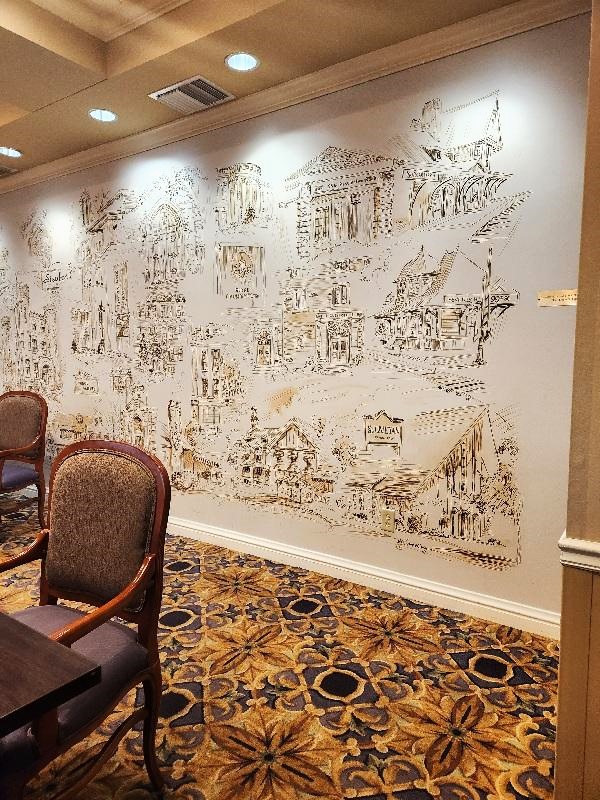
UPDATE: Wow, there has been a fast response to this post, but I knew people would like this. I talked to Elaine and when she returns from her upcoming vacation, we will plan an open house with Smith Village so people can come in to see this. It will likely be early August, so stay tuned. – Carol Flynn
PS – Elaine Spencer, by the way, lives in Smith Village and is on the Residents Council, if that is the proper name of the organization unit.
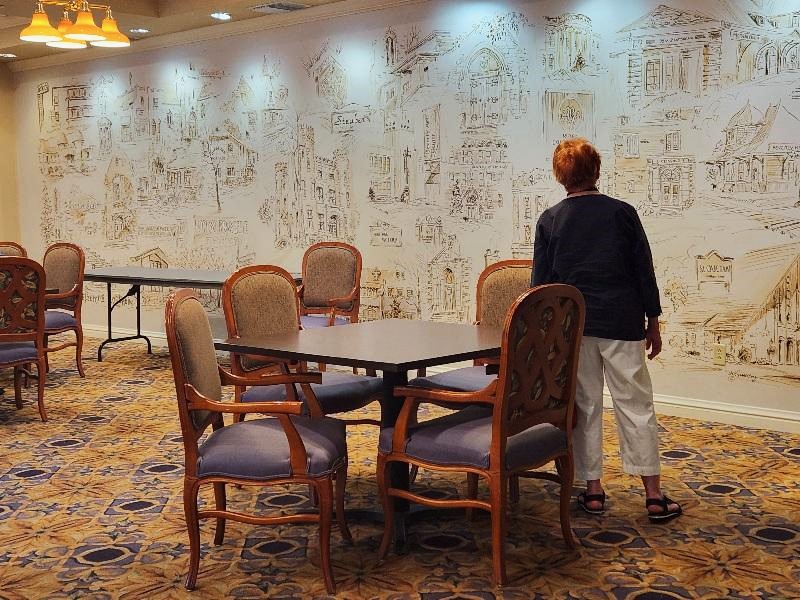
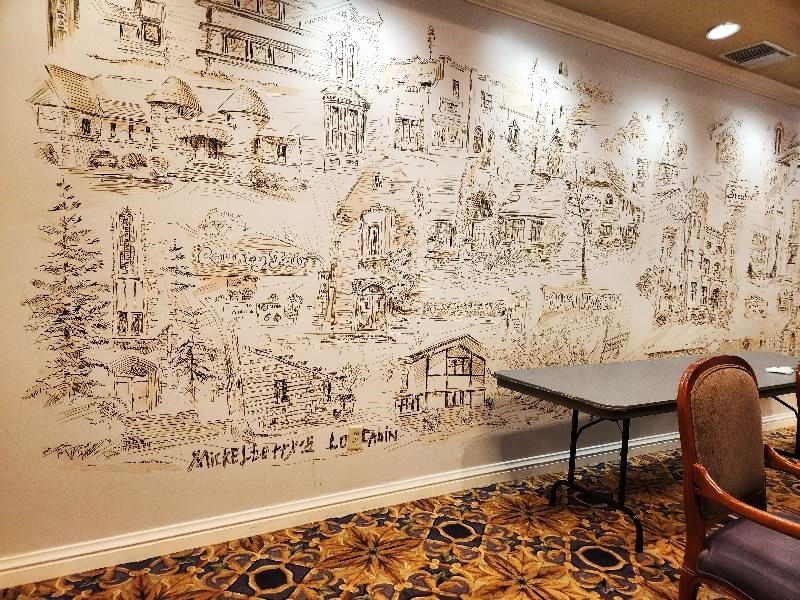
The late Jack Simmerling, artist and historian, and a founding member of the Ridge Historical Society, painted a mural on the wall of one of the dining areas at Smith Village that pretty much summarizes the history of the Beverly and Morgan Park communities.
Elaine Spencer, past President of RHS, and I recently viewed it for the umpteenth time and here are some pictures. (That's Elaine from the back.)
If you've never seen this in person, you should do so.
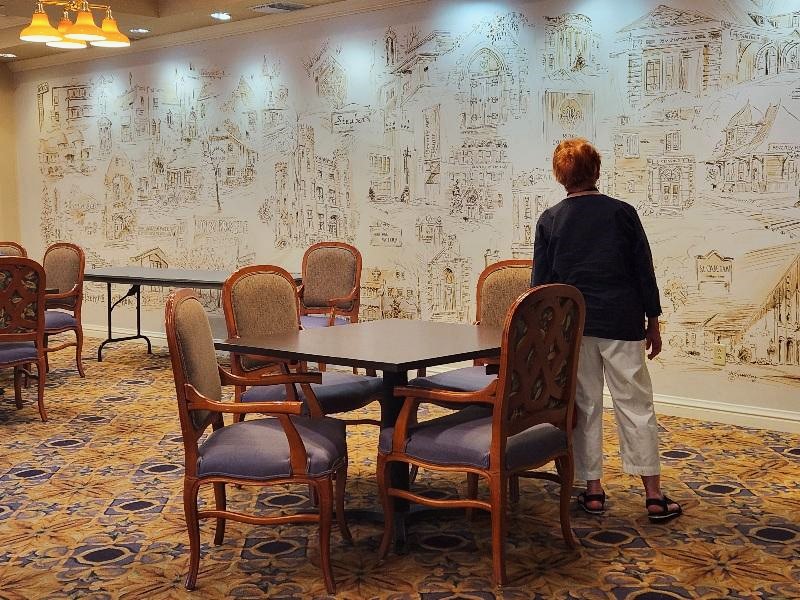
Pop-Up History on the Ridge – View the Jack Simmerling Mural "Life on the Ridge" at Smith Village
Mark your calendars!
The interest in the Jack Simmerling mural, "Life on the Ridge," at Smith Village is leading to the first ever (to my knowledge) Pop-Up History event in the Beverly/Morgan Park community. If this is successful, maybe we'll be able to do others at places not usually open to the public, like some of the churches with great stained-glass windows, etc.
I did not get any feedback that this event would be a scheduling conflict with other events in the neighborhood but if it is, please let me know.
Details:
What: View the Jack Simmerling Mural at Smith Village – "Life on the Ridge"
Date: Wednesday, July 26, 2023
Times: Two showings – 1:30 to 3:00 p.m., and 7:00 – 8:00 p.m.
Address: 2320 West 113th Place, Chicago – come into the main entrance and you will be directed from there.
Hosts for the day: Elaine Spencer, Past RHS President and Smith Village resident, and Carol Flynn, local historian/journalist
Cost: Free, parking on site or on the local side streets
Jack Simmerling’s daughter Meg Simmerling is expected to be our guest for the first session. We look forward to her insights on her father’s work.
Any questions? Message me through Facebook – Carol Flynn.
Note that this is not an official RHS program. Elaine and I are doing this as a pilot test to see if events like this go over with the public. Thank you for your support!
This image is of Elaine Spencer viewing the Jack Simmerling mural at Smith Village.
The "Pop-Up History" event is a go! Please join us – first showing.
Second showing!