
Explore the RHS Facebook Archives, a rich repository of local history written by Carol Flynn. For two decades, Carol brought a deeply dedicated voice to public education at RHS. Her role as Facebook administrator through mid-2025 naturally extended her prolific research into meticulously detailed articles, most notably her multi-part historical series posts. Today, Carol continues her local history writing for The Beverly Review and other outlets.
All Posts
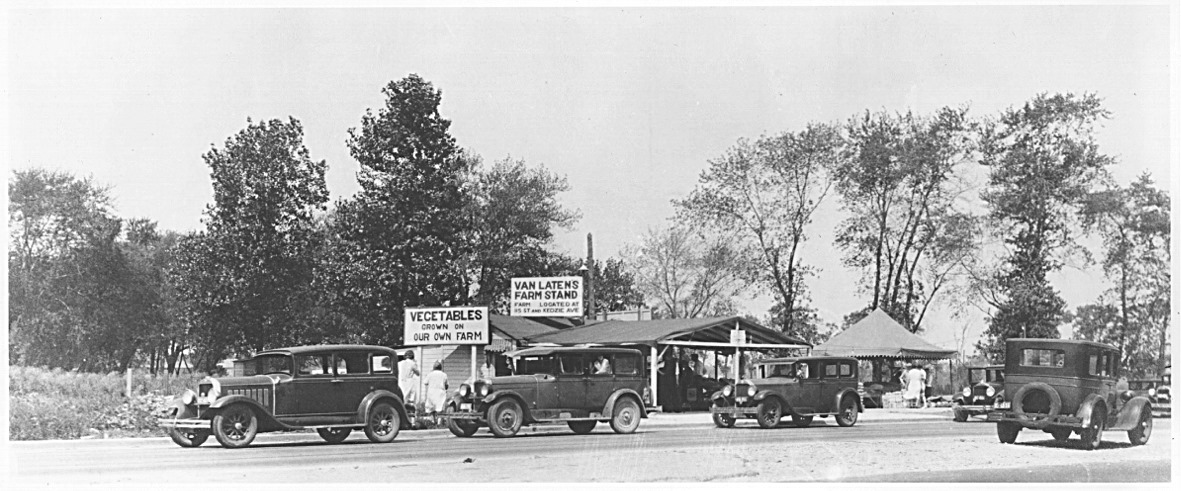
Post #3 on farming on the Ridge: Van Laten's started with a farm stand on Western Ave.
As a follow up to the post from earlier this evening on the Chicago High School for Agricultural Sciences, here is a picture of the Aggens working that land as a farm. They were one of the tenant farmers for decades. So were the Van Latens – all of Merrionette Park was known as the Van Laten Farm. The strip mall that includes Jewel and Bourbon Street was farmland for the Van Latens as late as the 1950s.



Post from Ridge Historical Society:
Not really all that long ago, this would have been a common sight on the Ridge – cattle grazing in a pasture. Now there is only one place left to see this – the Chicago High School for Agricultural Sciences (CHSAS), located on 111th Street just east of Pulaski. These guys are in the pasture by the bus-turn-around on 115th Street. They've been out there all summer.
That land has never been anything but farmland. It has been owned by the Chicago Board of Education (CBOE) since some time in the 1800s, although the answer to the question of how the CBOE came to own this land way back then continues to elude RHS research. It was said to have been purchased as an investment.
The CBOE rented out the land, about 72 acres, to farmers. Some of the last families to use the land were the Aggens, Langlands, Van Latens and Ouwengas. CBOE built the Annie Keller School for Gifted Children on land that Mrs. Aggen said was "five acres of our best asparagus patch."
In the early 1970s, the CBOE started thinking about other uses for the land. The land all around was developed with houses, streets, businesses, parking lots. Everyone assumed that would happen there also. Rumors flew around – the land would be used for public housing by the Chicago Housing Authority, etc., etc.
By 1980, the land was found to be the last registered farm in the City of Chicago. Some members of of the CBOE wanted to sell the land off to developers to raise money. The local community wanted to save the farmland as some kind of historic site.
In 1983, Chicago School Superintendent Ruth Love announced she was in favor of using the land for an agricultural high school and horticulture laboratory. The purpose was not to train farmers but to prepare students for careers in all areas of agribusiness.
CHSAS was created in 1984 and opened in 1985. As a magnet school, it was open to students from all over the city. The school had 150 openings the first year, and six months before the opening with almost no advertising, they already had over 500 applications from all over the city and were expecting many more.
CHSAS started as a branch of the Morgan Park High School, where the agriculture students went in the morning for the usual high school classes, and then in the afternoon they had their specialty classes at the farm in the old Keller School building. The Keller School gifted student program had moved to another school.
Today, CHSAS thrives, with over 600 students, offering everything from Agricultural Finance to Biotechnology. The school serves as a model for other schools across the country.
The Ridge Historical Society-sponsored "Friends of the Chicago Portage" Field Trip planned for tomorrow, Saturday, August 3rd at 1 p.m., has been cancelled.
The Ridge Connection to Chance the Snapper
Remember “six degrees of separation” – that idea that all people are six, or fewer, connections away from each other?
How does the Ridge connect to Chance the Snapper, that alligator that lived in the Humboldt Park lagoon for a while, until he was captured last week and sent to a reptile facility in Florida to live out his life in comfort and safety?
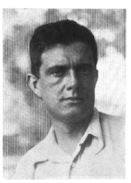
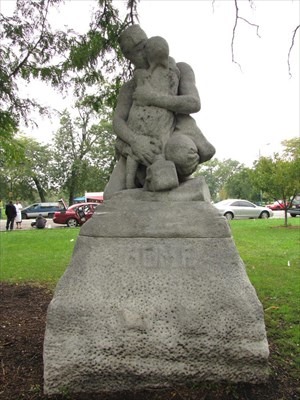
Our connection comes through public art. Humboldt Park is the site of a famous sculpture called “Home” by Charles Mulligan. The sculpture depicts a miner hugging his small daughter.
The Mulligan family lived in Fernwood, the community just east of Washington Heights. Later descendants of the family lived in Beverly and Morgan Park. And the final resting place for Charles Mulligan is Mt. Greenwood Cemetery, 2900 W. 111th Street.
Mulligan was born in 1866 in Riverdale, County Tyrone, Ireland. In 1881, he, his parents and his seven brothers and sisters immigrated to the United States in search of better opportunities. They settled in the South Side of Chicago where the father took a job building passenger railroad cars for Pullman.
Young Charles Mulligan also got a job at Pullman, carving marble into wash basins for the passenger cars. At night, he studied art. During breaks, he practiced modeling in clay and carving small objects from scrap pieces of marble. One day, the famous sculptor Lorado Taft was visiting the Pullman plant and noticed Mulligan and his work. He was impressed by the boy’s rough talent and invited Mulligan to study under his mentorship. (Talk about being in the right place at the right time!)
Mulligan became a student of Taft’s at the Art Institute of Chicago and also spent time in Paris at the L’Ecole des Beaux Arts. He became a naturalized citizen of the U.S. in 1888. He married Maggie Isabella Ely and they had six children; three died in infancy, and three sons survived to adulthood.
Mulligan had a distinguished career as an artist. In 1893, Taft made him foreman of his workshop for the Chicago World’s Fair. After Taft’s resignation, Mulligan became the head of the department of sculpture of the Art Institute. Mulligan was one of the founders of the Palette and Chisel Club, and he was a member of prominent organizations such as the Chicago Society of Artists (CSA), Cliff Dwellers, and the Irish Fellowship Club.
Regrettably, Mulligan’s life was cut short by pancreatic cancer. He died in March 1916 and was buried in Mt. Greenwood Cemetery, along with other family members.
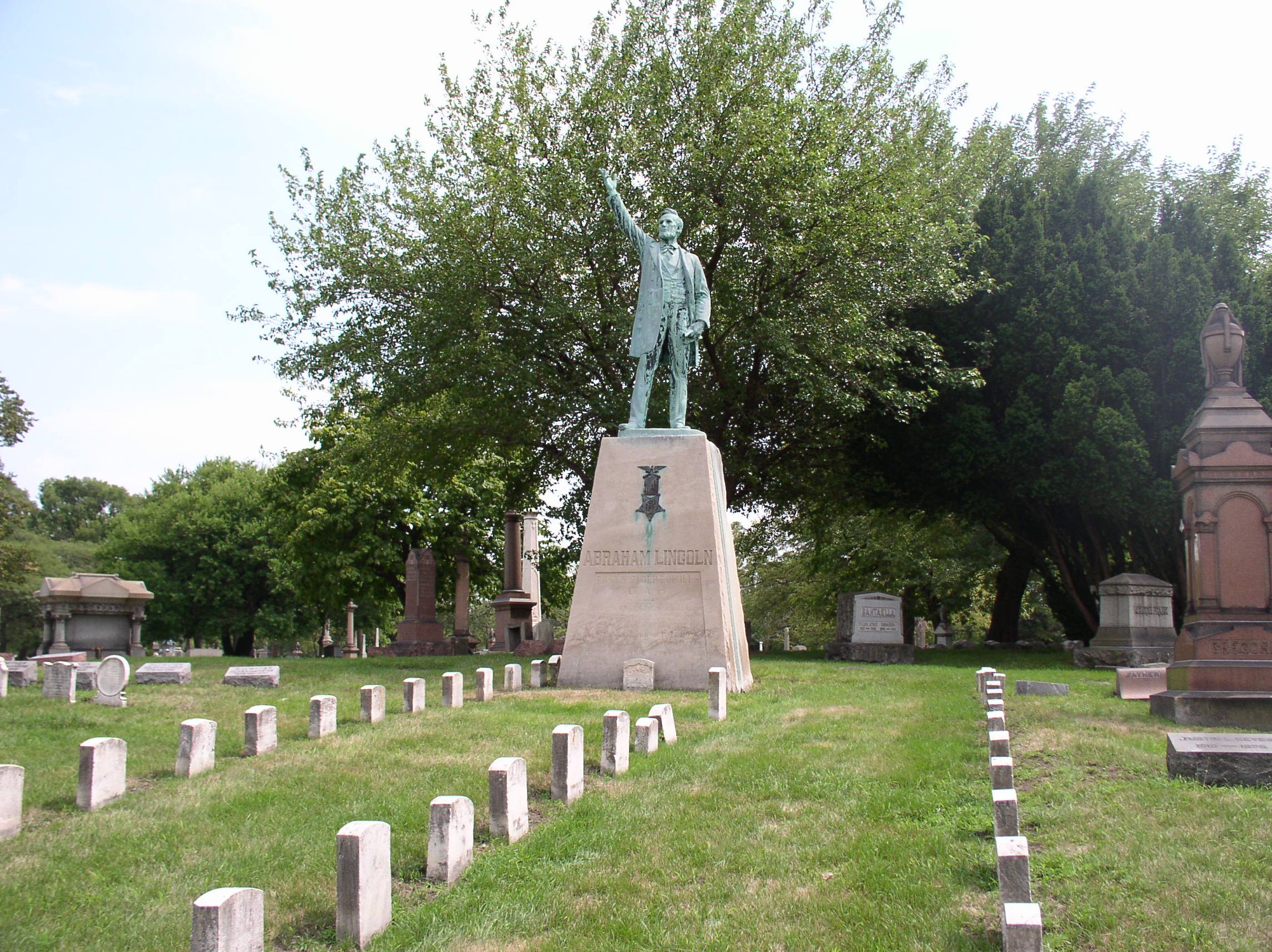
Mulligan left behind a rich legacy of existing sculptures throughout the country. Examples include his two architectural groupings that adorn the front entrance of the Illinois Supreme Court Building in Springfield. He also created three statues for the Illinois State Memorial in Vicksburg National Military Park in Mississippi, a U.S. Civil War site – President Lincoln, General Grant and Richard Yates, Illinois Governor during the Civil War. A third example is his statue of “Lincoln the Orator” at Oak Woods Cemetery at Cottage Grove Ave. and East 67th Street in Chicago.
Of particular interest to the history of Chicago are his sculptures in the Chicago Park Boulevard System Historic District. This system is about 26 miles in length and includes eight parks connected by 19 boulevards and six squares.
Chicago’s park and boulevard system began in 1869, but it was during landscape architect’s Jens Jensen’s tenure with the West Park Commission that Mulligan’s sculptures were added. Mulligan was one of Jensen’s favorite sculptors. Jenson and Mulligan are considered major contributors to the Progressive Era’s “Chicago beautiful” movement.
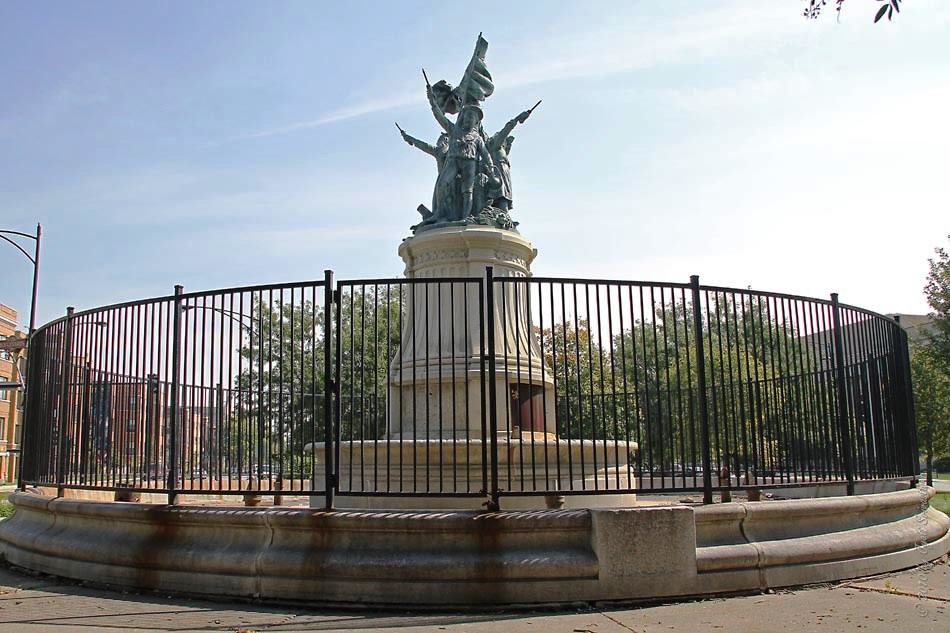
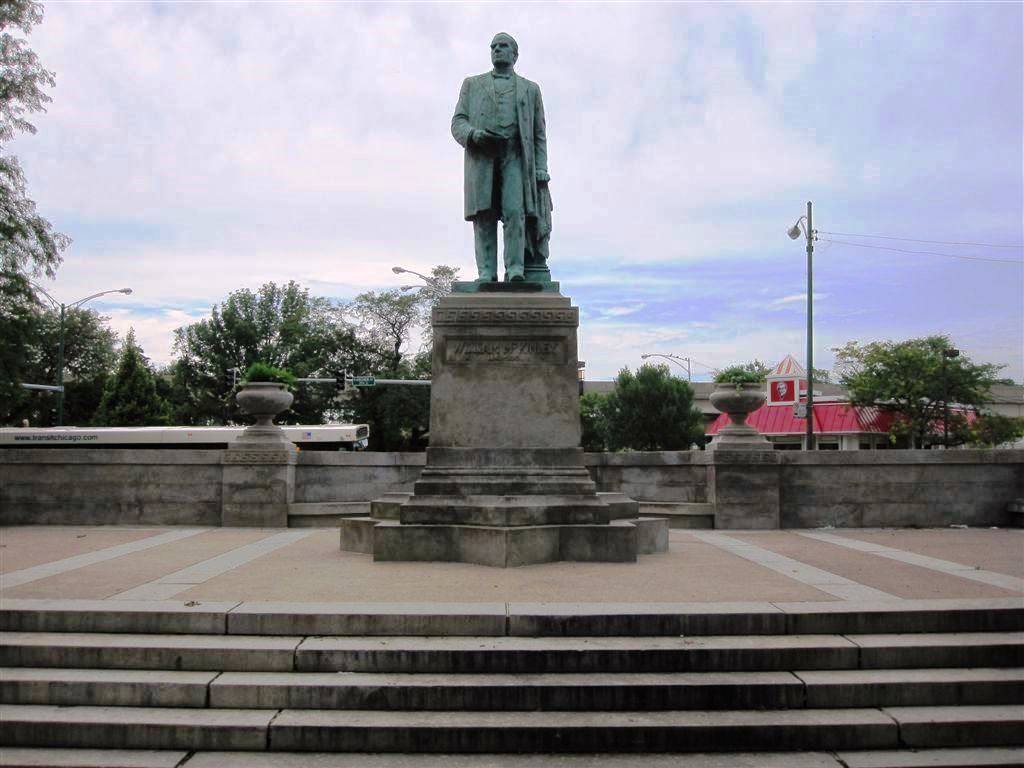
Mulligan installed artwork in four locations. First was Independence Square Fountain (dedicated in 1902), also known as Fourth of July Fountain, located at the intersection of West Douglas and South Independence boulevards. Next came the William McKinley monument installed in 1905 at the intersection of Western and Archer Avenues. This is the closest sculpture to the Ridge communities and memorializes the president assassinated in 1901.
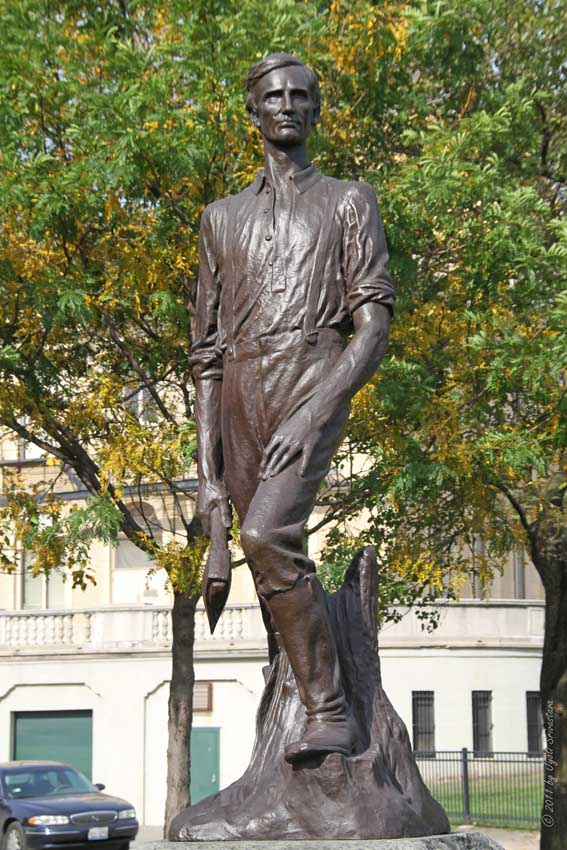
Then there was Home (installed 1911) in Humboldt Park, and Lincoln the Railsplitter (installed 1911) in Garfield Park. These statues particularly convey the sense of humanism that Mulligan is known for in his works.
Upon his death, Mulligan was eulogized by Taft and others at memorial services at the Art Institute, University of Chicago, and other places.
“I have a memory of a little vocational school [I] attempted in Pullman soon after I came to Chicago – evening classes in drawing and modeling. The response was slight, the experiment brief, but we found Charlie Mulligan,” said Taft. “Soon after, he came to my studio for work and study. The studio rang with his hearty laugh; his enthusiasm was contagious. A strange thing happened to me; he gave me a courage and a confidence that I had lacked before. From morning till night his hammer strokes ran clear and joyous.”
“He made me acquainted too with the lives and the thoughts of the working people as no one else has ever done. I heard of their long hours and their pitiful pay; of their amusements and their aspirations, and was taught a great sympathy which has tinged my life,” continued Taft.
Taft concluded: “Oh, the many good things that that ardent soul brought into our lives! And to think that we shall not hear that rich voice again, nor feel the hearty grip of those strong hands – the thought is incredible.”
There is no monument, no marker at all, on Charles Mulligan’s grave at Mt. Greenwood Cemetery. His public works are the testimony to his artistic accomplishments.
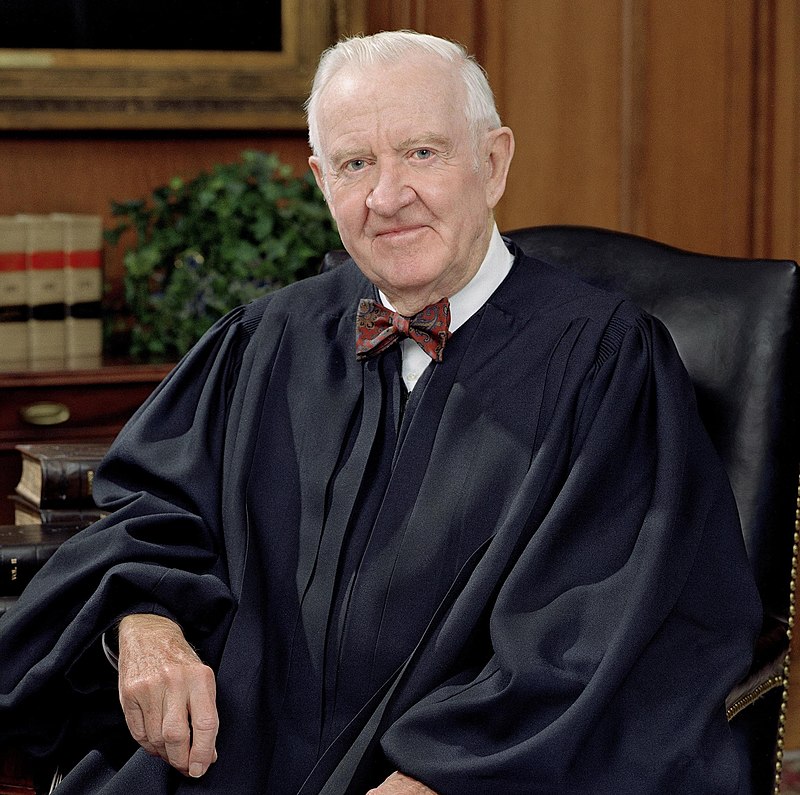
Justice John Paul Stevens (1920-2019) died this week in Florida, at the age of 99. He served on the U.S. Supreme Court from 1975 to 2010.
Justice Stevens was from Chicago. He was born in Hyde Park and educated in University of Chicago schools. After serving in the Navy during World War II, he earned his law degree from Northwestern University School of Law. He was one of the founders of the law firm Rothschild, Stevens and Barry. This firm still exists today as Rothschild, Barry and Myers.
In 1970, Stevens was appointed to the U.S. Court of Appeals for the Seventh Circuit by President Nixon. President Gerald Ford nominated him as an associate justice of the Supreme Court in 1975. He was confirmed 98-0 by the Senate.
Stevens is often presented as shifting from conservative to liberal views during his years on the U.S. Supreme Court. But those who knew him, and he himself, said political ideology was not the issue. He studied cases carefully so that he could apply the law the way it was intended. He was always considered an independent thinker.
Justice Stevens and his wife Elizabeth Jane (Shereen) lived in North Beverly for many years. They had three daughters and one son who attended Christ the King School. They were members of the Beverly Country Club. He and Elizabeth divorced and he married Maryan Mulholland Simon in 1979. His son, one daughter and both wives preceded him in death.
Justice Stevens is part of our local history. We are looking for people who remember Justice Stevens from his years in Beverly. If you can recommend anyone who would be willing to share with us, please send us a message.
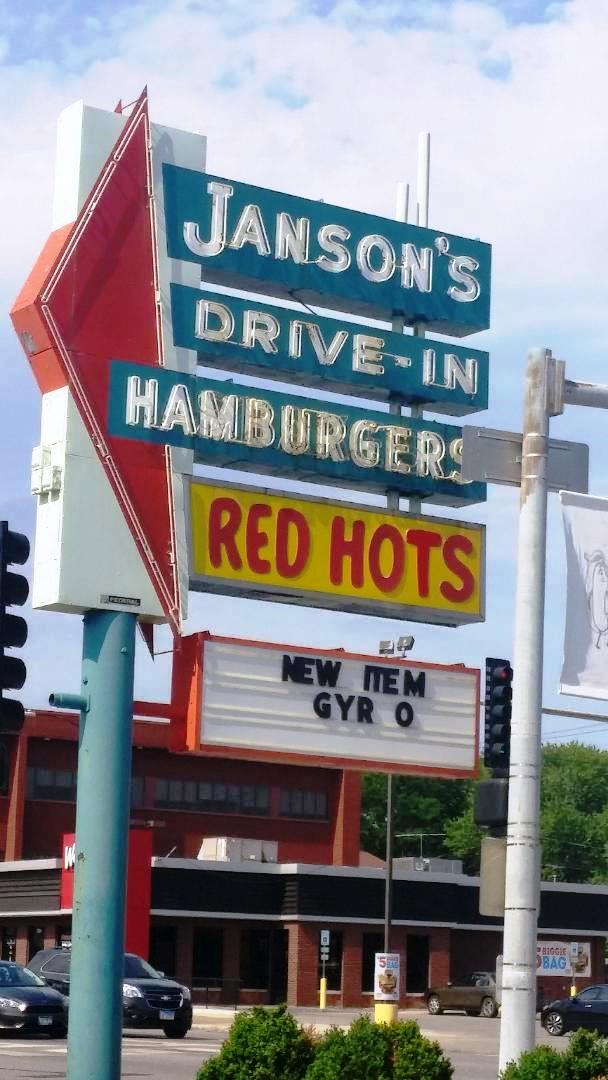
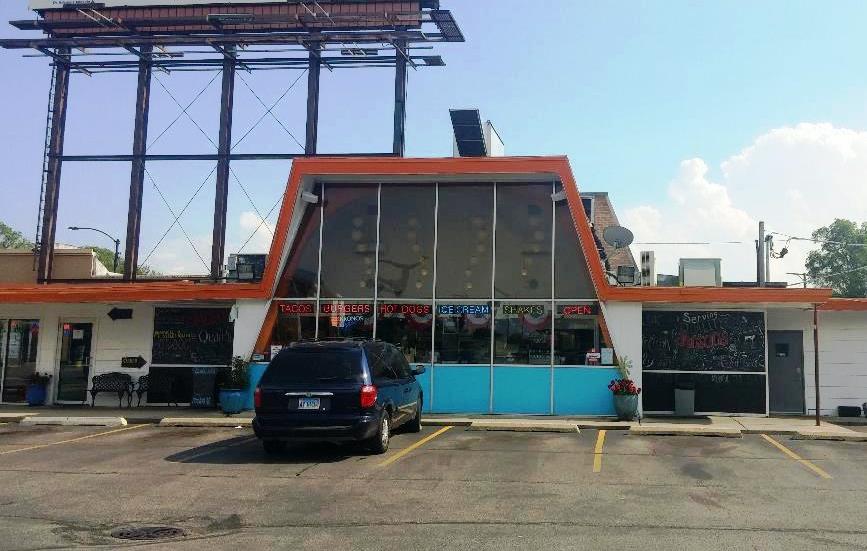
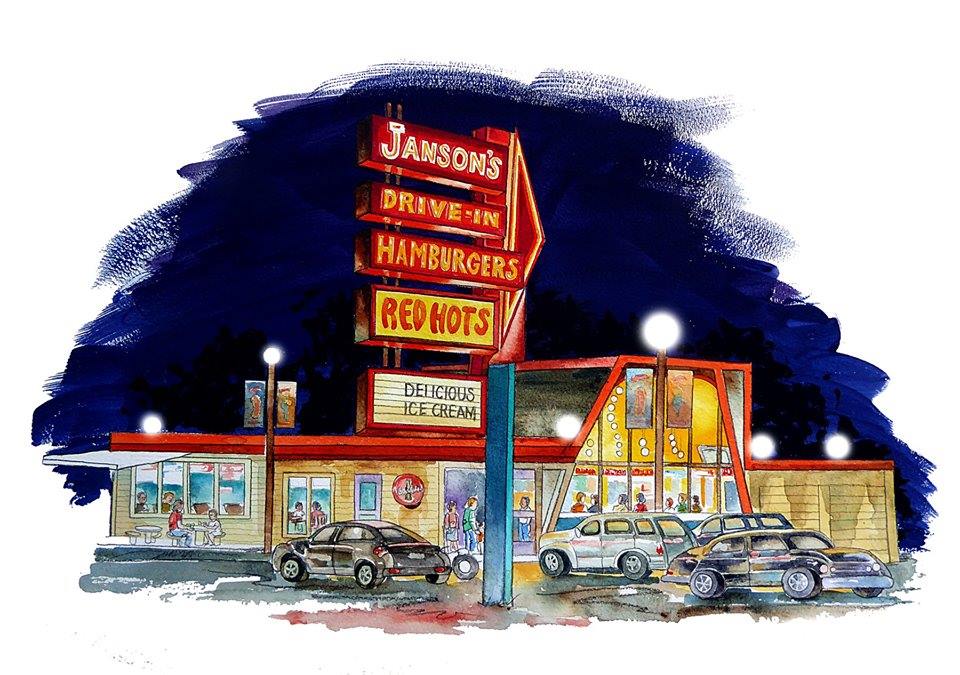
Today is National Hot Dog Day, established by the National Hot Dog and Sausage Council. It’s a marketing ploy, although it’s hard to believe that hot dogs need marketing. They are considered one of the “all-American” foods and, by one estimate; Americans eat 20 billion hot dogs each year.
The origin of hot dogs is obscure but most likely they grew out of the pork sausages developed in Frankfort, Germany, in the 1200s, which were commonly called “frankfurters.” Then they travelled to Vienna, Austria, in the 1600s, where beef was added to the mixture and these were known as “wieners.” They came to the USA with German immigrants in the 1800s.
Who first put them on a bun is disputed. One claim is that this happened at the 1893 World’s Fair in Chicago, and we’ll go with that for this post since we are in Chicago. (Other claims are Coney Island in New York as early as the 1860s; St. Louis, MO, street vendors in the 1880s; and the St. Louis World Fair in 1904.)
Also not known with certainty is how they got the name “hot dog.” The term “dog” was used for sausage going back to the 1800s because in Germany some sausage makers did use dog meat in sausage. Another theory is that they were called this after the little German dachshunds. And they were served hot. By 1900, “hot dog” and “red hot” were in common usage.
Hot dogs became firmly and forever entrenched in American culture when they became associated with America’s “pastime” – baseball. Today, they are a critical part of “Chicago street cuisine.”
And what better place to enjoy a hot dog on the Ridge than the historic Janson’s Drive-In at 9900 S. Western Ave.? The Beverly Review ran an announcement for the opening of this new “fast-food drive-in” restaurant in 1960. The house specialty, a banana milkshake, cost 50 cents.
Janson’s remains a true drive-in today, with no indoor seating in its distinctive A-frame building with the orange roof line. The neon sign still lights up the night sky. Bright, flashing neon signs reached their peak in the 1950s–1960s, then began to decline due to the expense of production. Janson’s frequently shows up today on lists of “roadside attractions,” places worth stopping to visit.
Janson’s made television history when it appeared in the TV series Crime Story starring the late Dennis Farina, Chicago police officer turned actor. The opening scene of the first episode was filmed at Janson’s with Del Shannon’s song “Runaway” playing in the background. The clip can be viewed on YouTube; just enter “crime story opening scene.”
These photos of Janson’s are from today, taken by C. Flynn. The water color painting is the creation of Beverly resident and artist Judie Anderson.
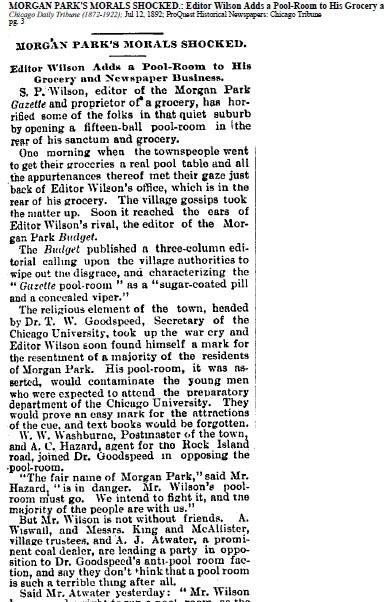
We’ve got trouble! Right here in Morgan Park! With a capital T and that rhymes with P and that stands for pool!
Where were Professor Harold Hill and Marion the Librarian when you needed them?
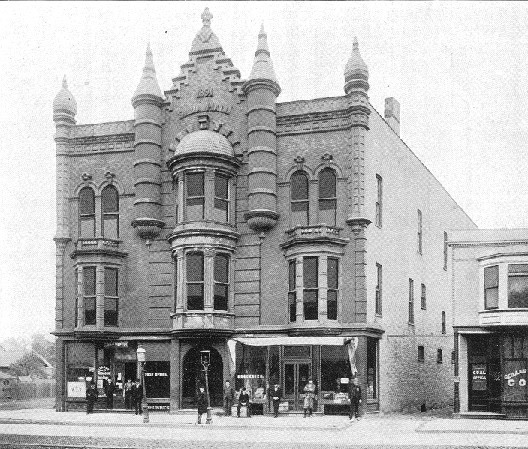
The attached newspaper article about a pool table in Morgan Park was published 127 years ago today – July 12, 1892. The incident occurred at Silva Hall (see photo, RHS collection), which was on Hale just north of 111th St. The first floor of the hall was for businesses, and where the grocery store was located. The second floor housed the Morgan Park branch of the Calumet Club, one of the oldest men’s clubs in the city. A theater was on the third floor. Silva Hall was built in 1891 and burned down in 1907.
Public pool halls were controversial. The common belief was that hanging around a pool hall tempted young men to worse evils like drinking alcohol. But while some people considered playing pool a vice, at the same time many of the prestigious men’s clubs had pool rooms. Chicago had rules for licensing pool tables, but they were not enforced with any regularity. One of the biggest producers of pool tables, Brunswick, was located in Chicago.
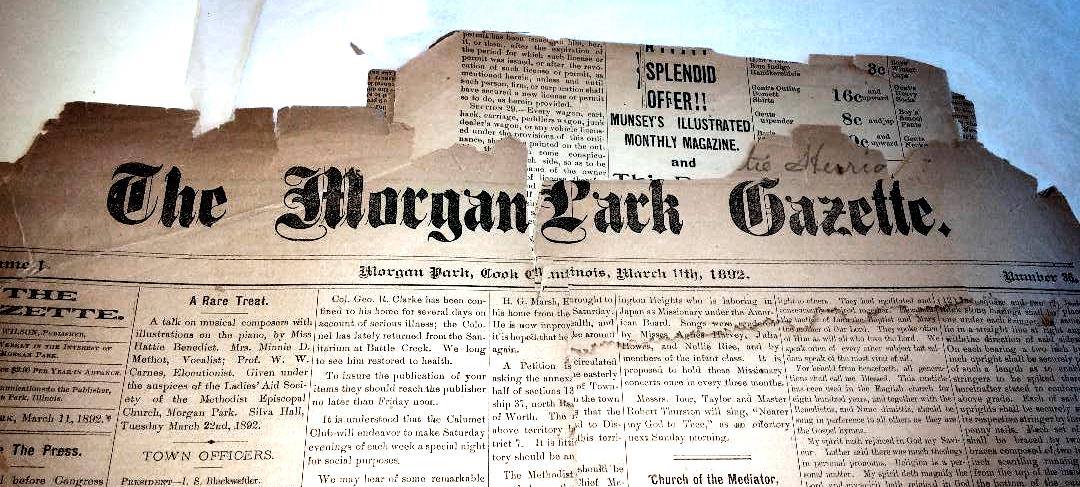
In Morgan Park, even though many of the citizens might have wanted the pool table banned, it was supported by men who were on the village council board and members of the Calumet Club. RHS has very fragile remnants of two issues of the Morgan Park Gazette (see photo by C. Flynn), put out by S. P. Wilson, who also ran the grocery store and was a fellow member of the Calumet Club.
Pool was not banned from Morgan Park. In 1894, the village council established ordinances including that a pool table operated for profit had to be licensed. The cost of the license was $5 per table. The new ordinances also came with the firm warning that “no place where any billiard or pool table is kept shall be allowed to become the resort of dissolute or disreputable persons, or be carried on in a disorderly or improper manner.”
The play “The Music Man” is currently being performed at the Goodman Theater. This is a case of art imitating life.
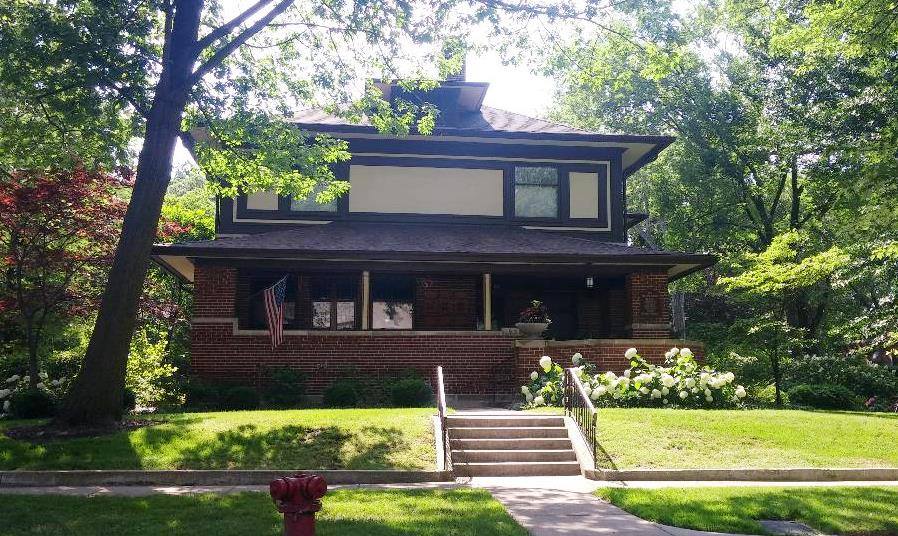
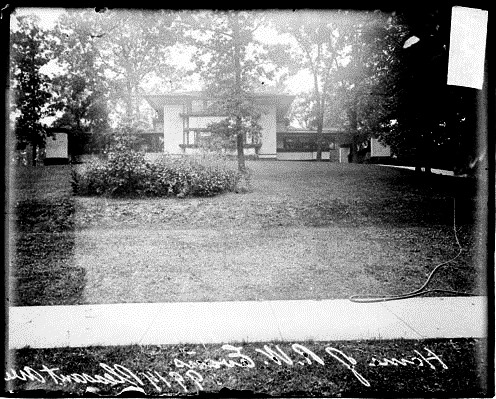
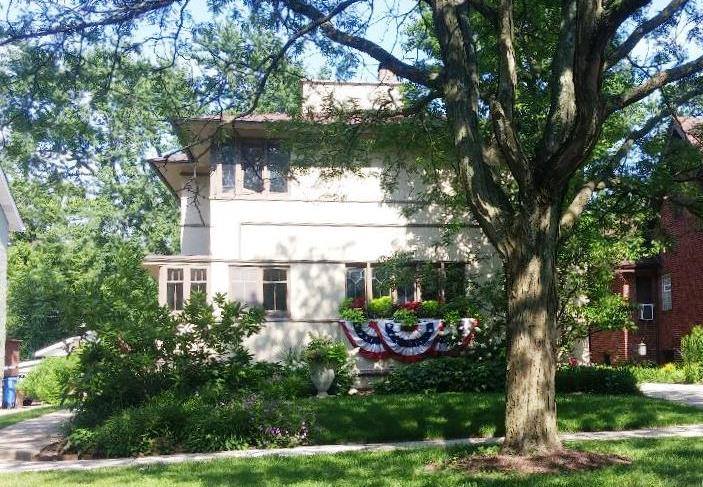
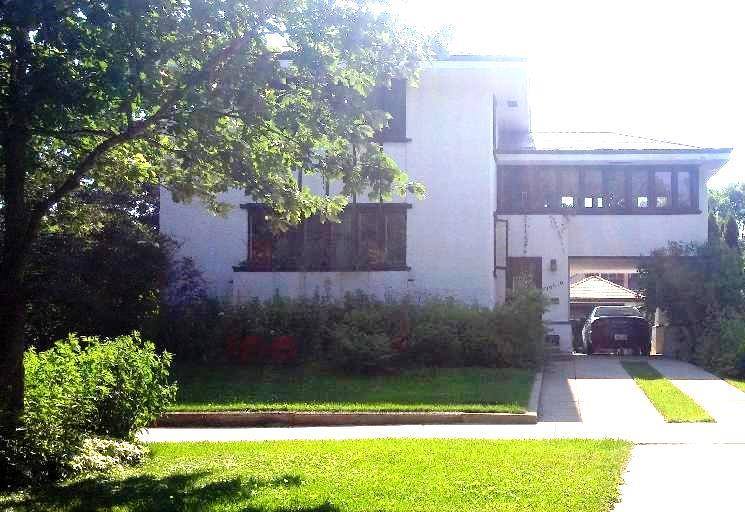
Just today, UNESCO, the United Nations Educational, Scientific and Cultural Organization, announced that it added eight of architect Frank Lloyd Wright's buildings to the UNESCO World Heritage List, elevating them to the same status as the Pyramids and the Statue of Liberty. Two of the buildings are right here in the Chicago area – the Robie House in Hyde Park, Chicago, and the Unity Temple in Oak Park.
The UNESCO inscription included: “These buildings reflect the ‘organic architecture’ developed by Wright, which includes an open plan, a blurring of the boundaries between exterior and interior and the unprecedented use of materials such as steel and concrete. Each of these buildings offers innovative solutions to the needs for housing, worship, work or leisure.”
Although his personal life and business behavior were controversial, Wright (1867 – 1959) was called the greatest American architect of all time by the American Institute of Architects in 1991.
The Ridge boasts four Frank Lloyd Wright residences. First is the William and Jesse Adams House at 9326 S. Pleasant Ave. Built in 1900, the style was not consistent with other houses Wright was designing at the time, leading some scholars to speculate that William Adams, who served as the contractor for some of Wright’s other houses, may have designed the house himself. Wright’s name is printed on one of the original drawings and at the very least, the house’s widely overhanging roofs suggest Wright’s influence.
In 1908, the Raymond W. Evans House was built at 9914 S. Longwood Drive. Wright designed this house in his “Prairie Style,” that is, to complement the native Midwestern landscape. The style is characterized by horizontal lines, low-pitched roofs, overhanging eaves, and rows of windows. The long, low lines of the Evans house blend in well with its setting on the hill. The house is based on plans that Wright called “Fireproof Houses for $5000” that used concrete and steel. The plans for the Evans House were expanded to include an extra wing for servants, an enclosed porch and a covered driveway. The house was originally covered with stucco; a later owner added the stone veneer.
Then there are the two American System-Built Houses, the H. Howard Hyde House at 10541 S. Hoyne, and the Guy C. Smith House at 10410 S. Hoyne. These were built from plans developed by Wright in 1916 for affordable middle-class housing using pre-cut lumber but built on-site by certified contractors. Originally, an entire sub-division of these homes was planned – it was to be called “Ridge Homes” – but World War I intervened, bringing a shortage of building materials.
Although listed in many sources, all of these houses are private residences and should be respected as such.
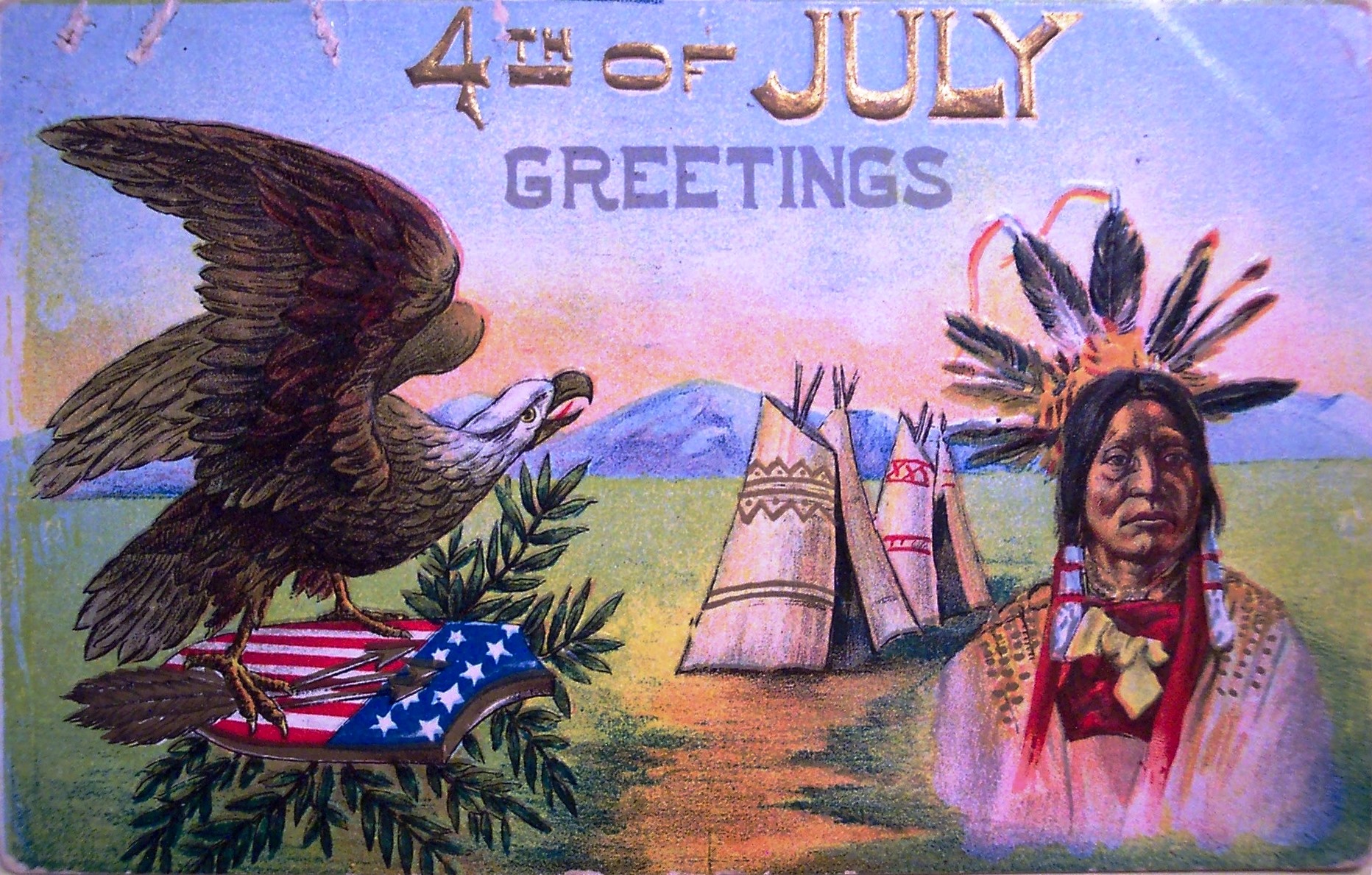
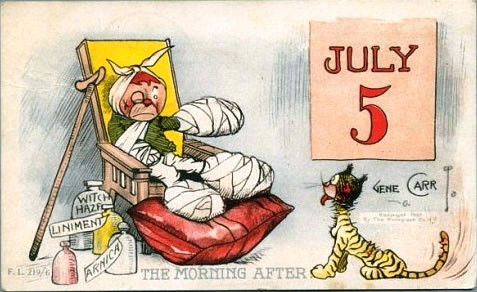
Vintage postcards for the 4th of July. These are a little different so they are of particular interest. The first one uses a depiction of a Native American to celebrate the holiday, which seems curious because Native American issues are rarely considered in discussing the English colonists' rebellion against the crown. The intent seems to be the preservation of the legacy of the original land, but we all know how that turned out for the Native Americans.
As far as the history of the Ridge goes, there was a strong historic presence of Native Americans in the area, especially along the Calumet River. Archaeological excavations are currently going on in local forest preserves. But the Treaty of Chicago in 1833 led to the withdrawal of the remaining Potowatomi to west of the Mississippi River.
The second postcard is actually for July 5, the day after the holiday. It shows a child and pet recovering from fire cracker injuries. While this might have had a humorous intent, it also serves as a warning to be very careful with home fireworks displays.