
Explore the RHS Facebook Archives, a rich repository of local history written by Carol Flynn. For two decades, Carol brought a deeply dedicated voice to public education at RHS. Her role as Facebook administrator through mid-2025 naturally extended her prolific research into meticulously detailed articles, most notably her multi-part historical series posts. Today, Carol continues her local history writing for The Beverly Review and other outlets.
All Posts
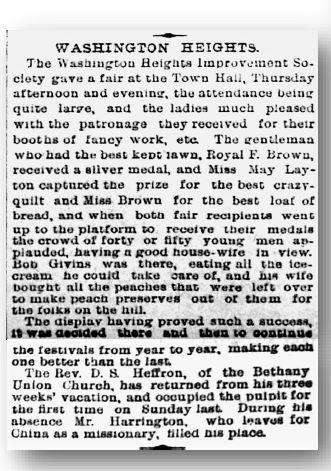
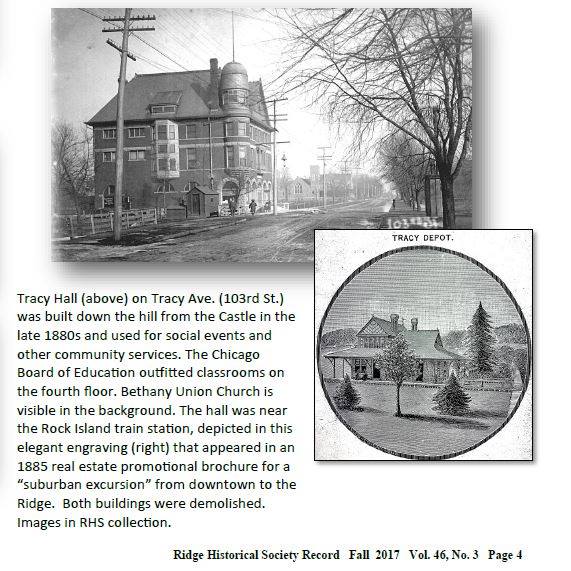
Here's a little article from The Inter Ocean from summer of 1886 giving news of a "fest" in Washington Heights, which included the area we know as Beverly now. The town hall referred to in the article is likely Tracy Hall. Bob Givins is, of course, the builder of the Castle at 103rd St. and Longwood Drive. The newspapers loved Bob Givins; he was a real Chicago personality back in his day.
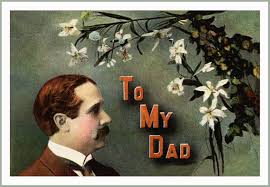
Father’s Day
Here is some trivia about Father's Day that I included in an article several years ago.
Father’s Day is an old concept. It has been celebrated on March 19, St. Joseph’s Day, in Europe since the Middle Ages.
In the U. S., the idea of a day to recognize fathers started to receive attention in the early 1900s. There were attempts made around the country to establish such a day, including one for Chicago proposed by Jane Addams of Hull House in 1911. The city turned her down.
In 1910, a woman in Spokane, WA , began promoting a day of recognition for all that fathers do. She and her siblings had been raised by their father after their mother died. She worked for this day on-and-off for decades. The idea was actually treated with ridicule by the press, law makers and the public. Mother’s Day had come under fire for evolving into a day of crass commercialism. The general belief was that this would be the same fate for Father’s Day. And there was validity to this concern – it was groups like the Associated Men's Wear Retailers that strongly promoted the day.
It took until 1966 for Father’s Day to be proclaimed a national day of recognition, by President Lyndon B. Johnson. It was finally signed into law in 1972. Through the years, other dates were proposed for the day, but the third Sunday in June stuck. By then that day had been promoted for decades by merchants pushing gift ideas. The number one gift on Father’s Day has always been – and curiously still continues to be – a necktie.
Studies and surveys have revealed what men really think of Father’s Day. A lot of men are actually uncomfortable with the day. They believe they are just doing what they should be doing – supporting and providing for their families – and there is no need to call special attention to this or for their children to give gifts in gratitude.
When dads are asked what they would like as a gift, the answer often is, "Nothing, save your money for school." Hence the fallback position to a necktie. But many men would rather see their children act responsibly and respectfully than give them gifts. It means more to many fathers to have their offspring volunteer to help with mowing the lawn than it does to receive those neckties.
However, there is one “gift” men report they would welcome. This is more personal time to pursue their own interests – an uninterrupted afternoon working on a craft project or reading a good history book or watching sports on T.V. The operative word here is “uninterrupted.”
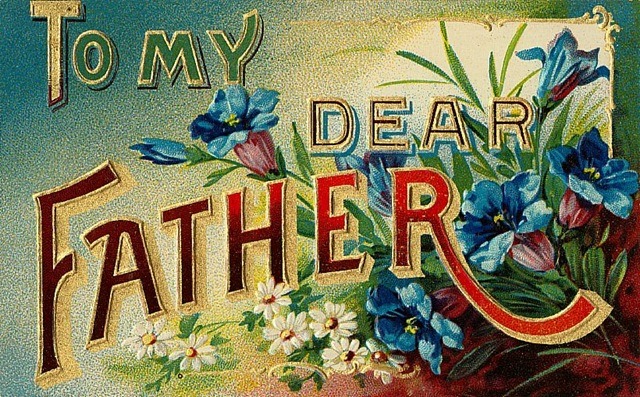
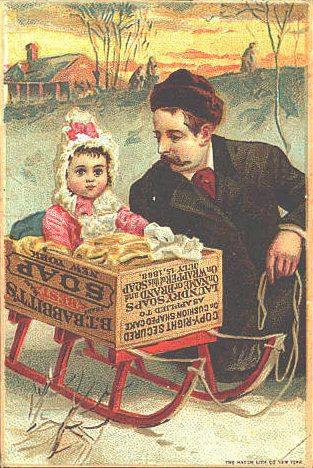
Here are a few vintage postcards celebrating Father’s Day. To anyone who has served or is serving in a fathering role, thank you.
– C. Flynn, RHS Communications
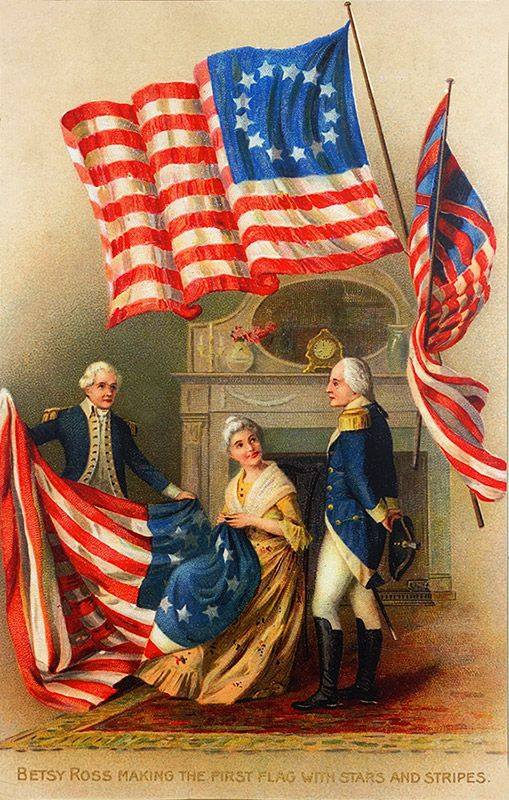
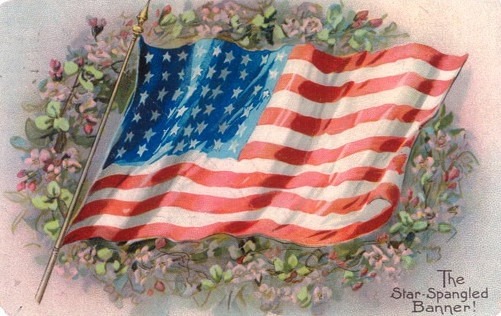
Today is Flag Day in the United States, commemorating the adoption of the U. S. flag on June 14, 1777. President Woodrow Wilson declared this day by proclamation in 1916, and in 1949 an Act of Congress created National Flag Day. Here are some vintage postcards honoring the flag.
Elizabeth Griscom Ross Ashburn Claypoole ("Betsy" to her friends) is credited with making the first American flag, supposedly advising George Washington as to the design. This story is not substantiated by any historical record but comes from the writings of her grandson 100 years after the fact. We do know for certain that Betsy Ross was in the upholstery business, and she did make flags for the Pennsylvania Navy for use on ships during the Revolutionary War. Benjamin Franklin oversaw the committee for this endeavor. Those flags incorporated red and white stripes and blue spaces.
Part 2: June is National Homeownership Month. (That's how they write it – all one word.) It was founded by the federal government and is led by the Department of Housing and Urban Development. The purpose is to raise awareness of the benefits of owning a home and to help Americans achieve this goal.
Owning one's own home has always been part of the "American Dream." It is an investment, not just financially, but also socially and psychologically/emotionally. Home ownership helps build and sustain communities. This has certainly been the case for Beverly and Morgan Park.
Some communities form due to an industrial site – the business came first and the homes popped up around it. Not so in Beverly and Morgan Park. For the most part, they were intentionally settled as scenic areas in which to build homes and churches and schools, to raise families, to build a community.
This year, the theme of National Homeownership Month is "Find Your Place." For those of you who own a home in Beverly, Morgan Park, Washington Heights and Mt. Greenwood, the Ridge communities represented by RHS, how did you "find your place" here? What does home ownership here mean to you?
We're looking for people to interview for an article on this topic this month. If you would like to share your story, please send a message to this RHS Facebook page. We look forward to hearing from you!
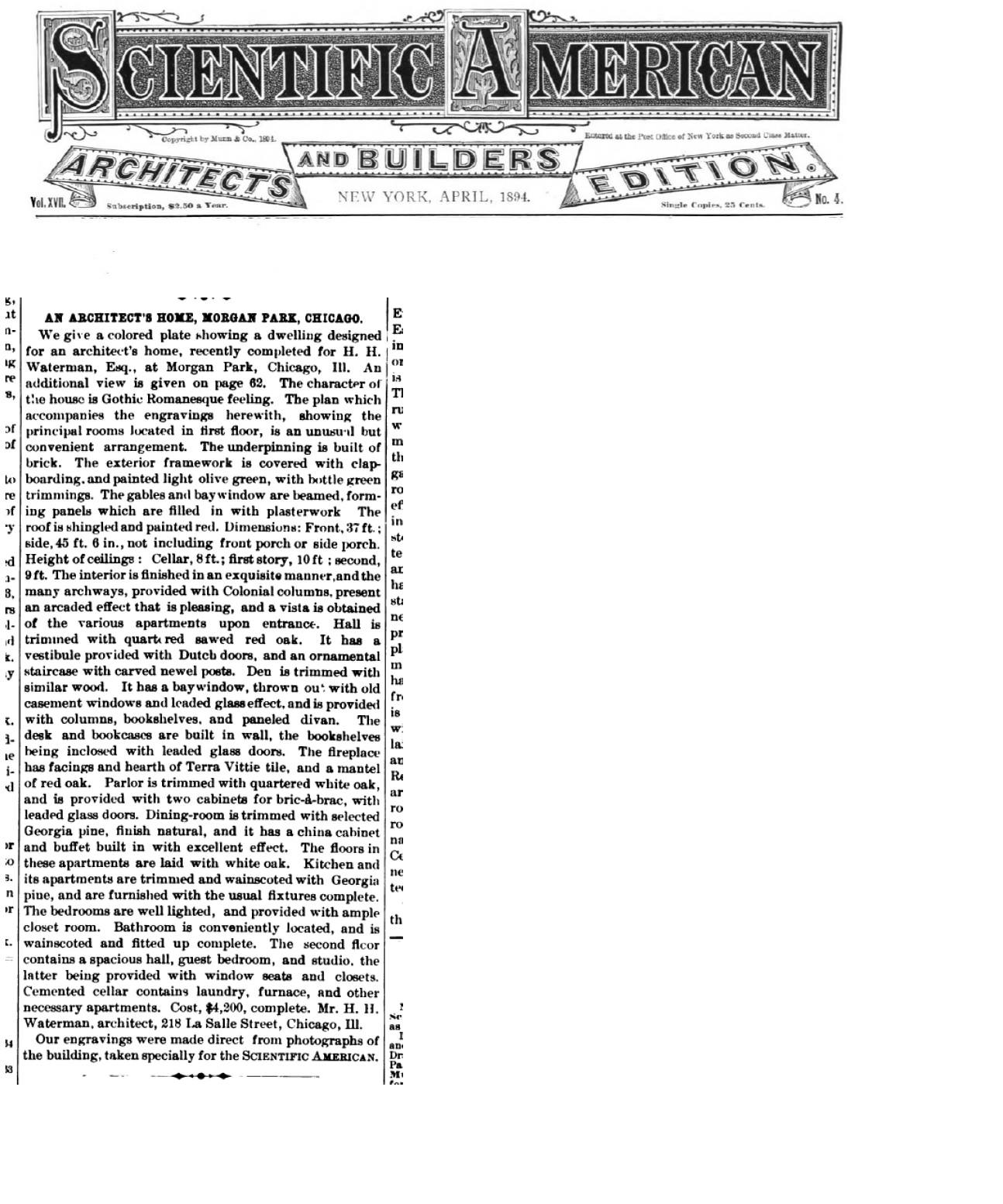
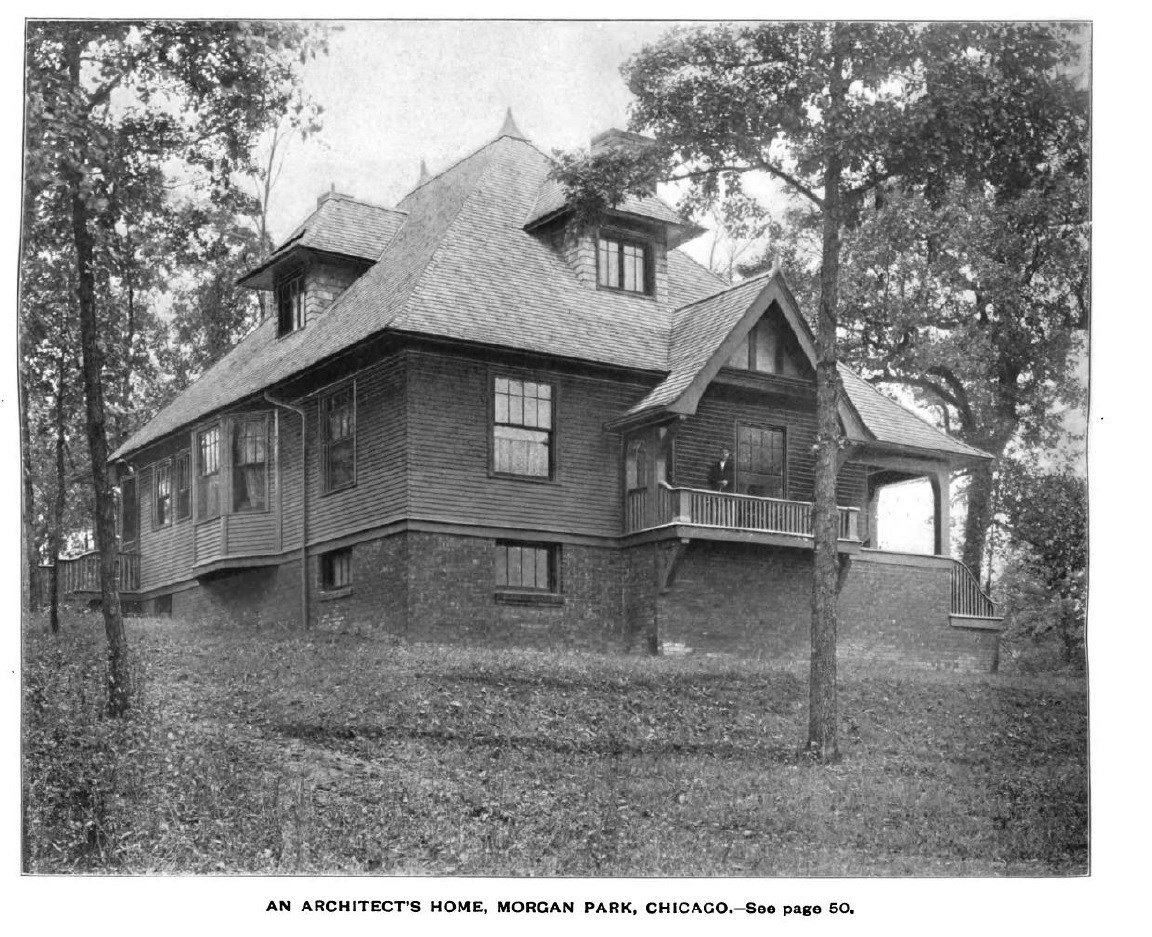
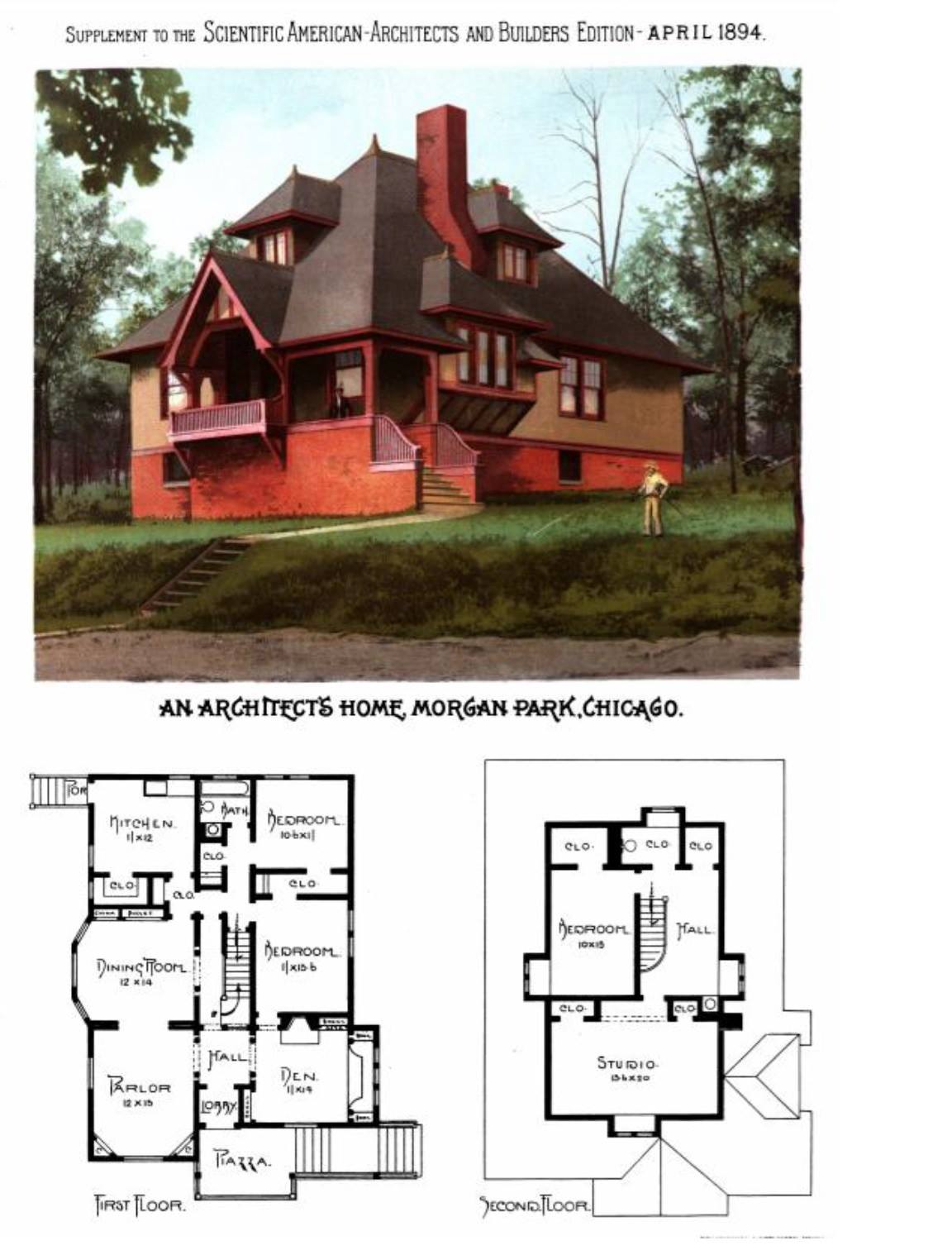
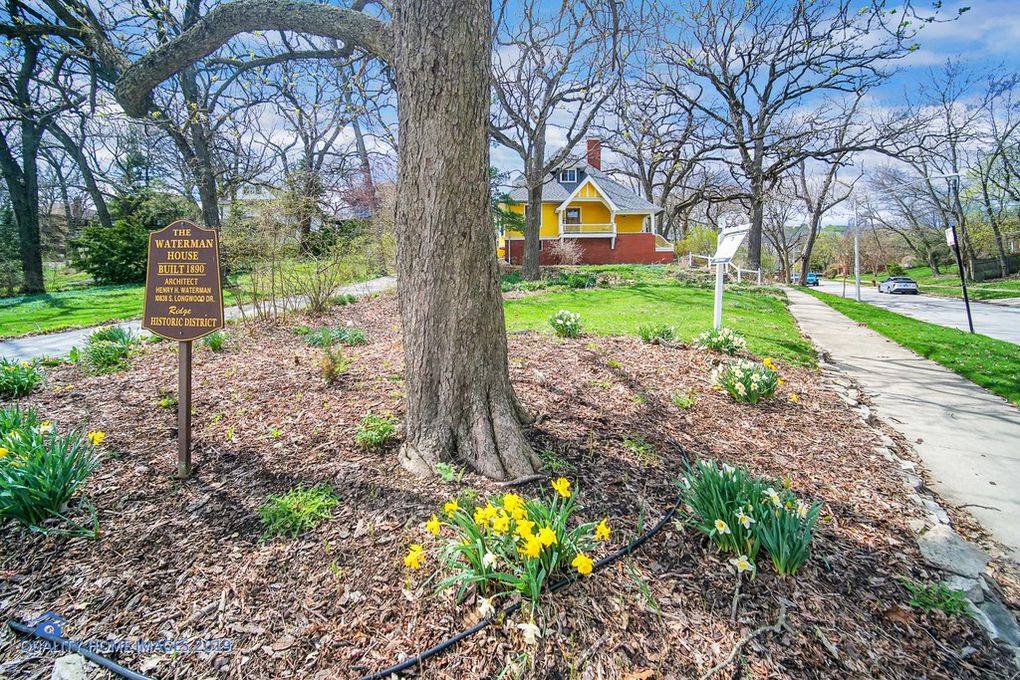
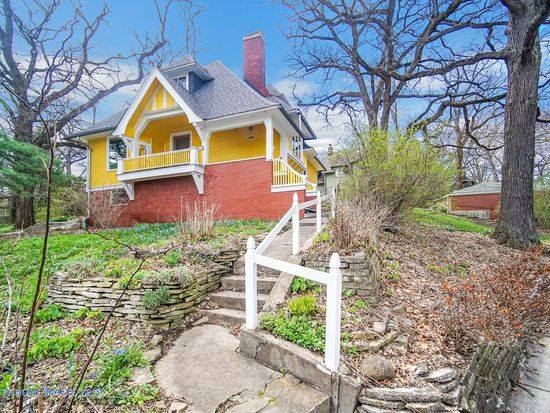
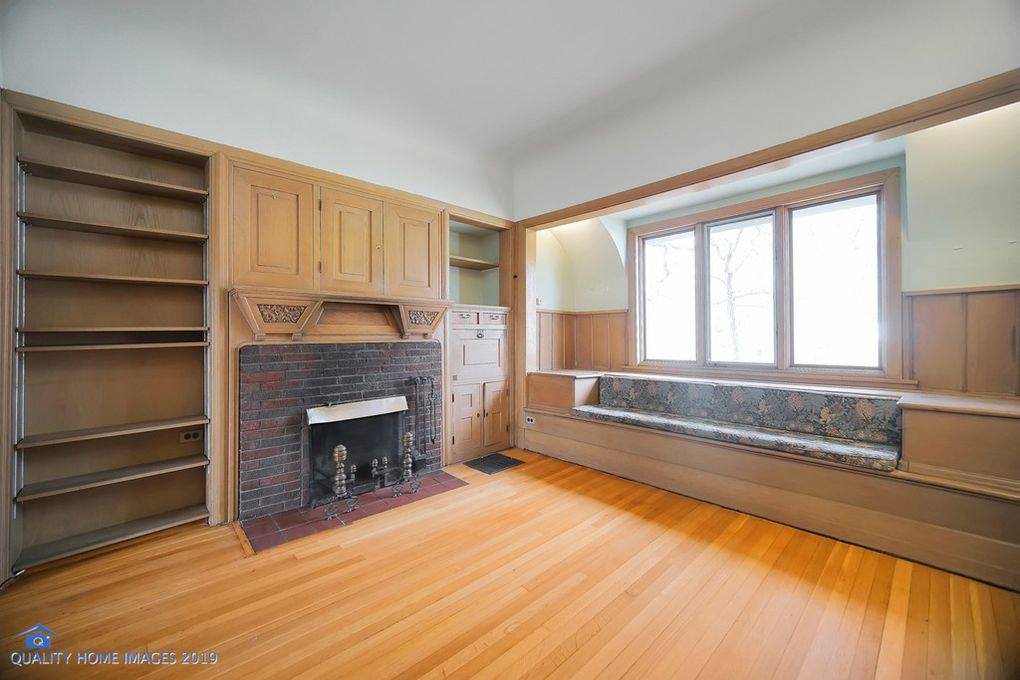
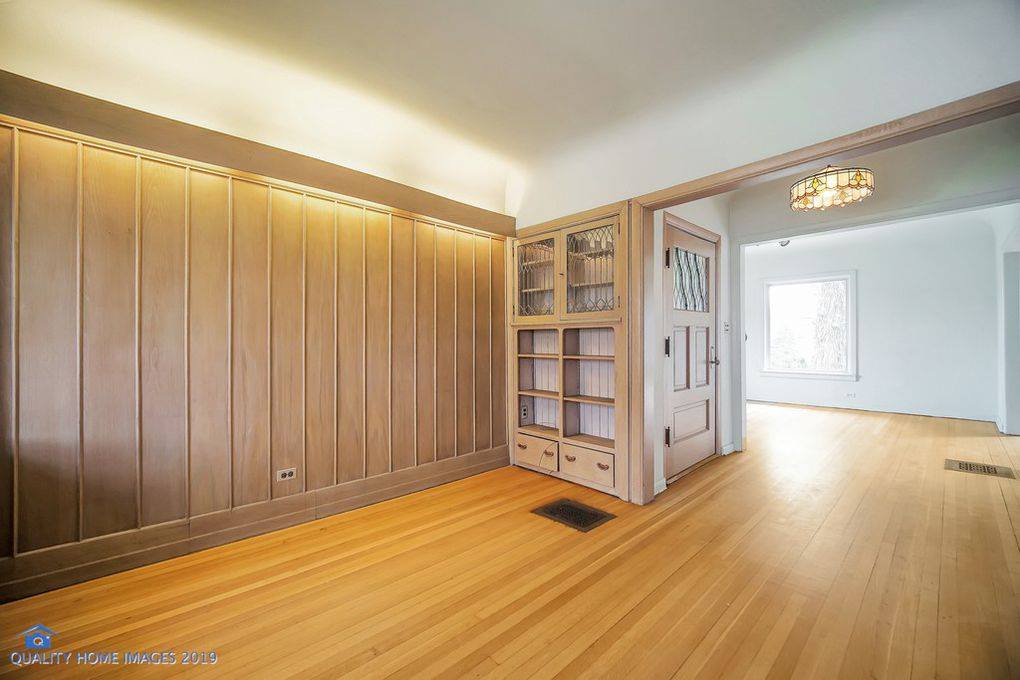
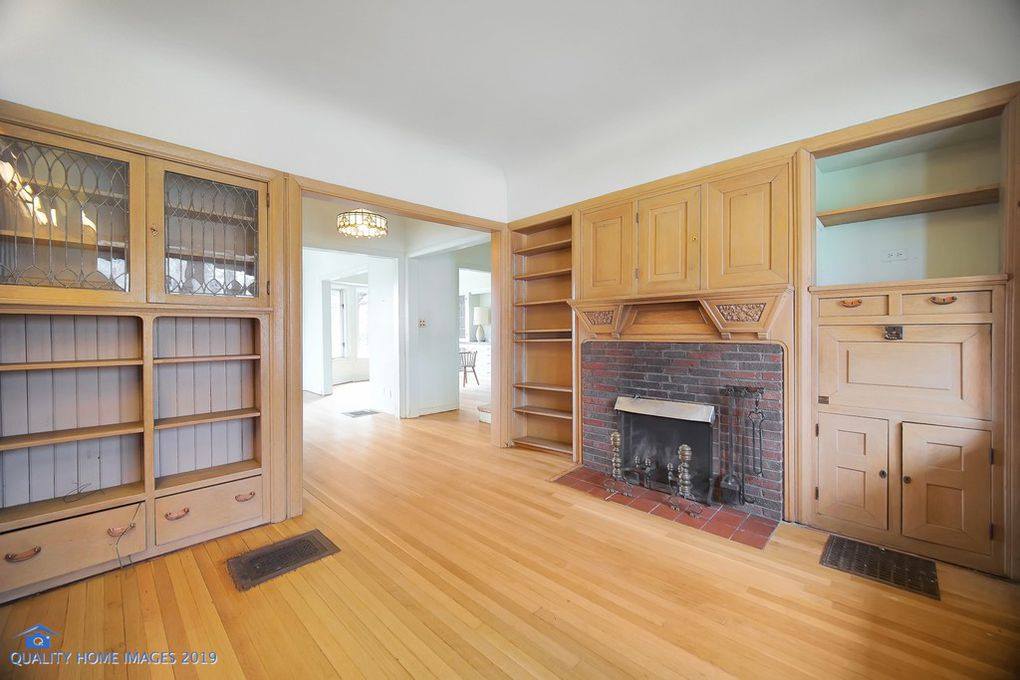
Part I: June is National Homeownership Month. (That's how they write it – all one word.) It was founded by the federal government and is led by the Department of Housing and Urban Development. The purpose is to raise awareness of the benefits of owning a home and to help Americans achieve this goal.
The Ridge communities are known for their number and variety of architecturally and historically significant homes. The Ridge Historic District, a national designation, is one of the largest urban historic districts in the country. Locally, architecture led to establishing the Longwood Drive Historic District and the Walter Burley Griffin Place Historic District. The neighborhood always had the best in buildings – even the train stations were designated the Beverly/Morgan Park Railroad Station Historic District.
Harry Hale (H. H.) Waterman (1869 – 1948) was a prolific architect on the Ridge. At least 35 local houses, churches and other buildings are credited to him. He and Frank Lloyd Wright were friends; in fact, the two of them would often put on boxing gloves and spar. But unlike his friend Wright, Waterman did not concentrate on just one style of architecture. He worked in many historical styles to build homes for his wealthy clients. In Morgan Park, he was affectionately known as the "Village Architect."
One of the most charming houses he designed was for himself and his first wife, Ida. This is the Harry Hale Waterman House at 10838 S. Longwood Drive, often referred to as the "Honeymoon Cottage." The house was built in 1893. Ida and H.H. were married in 1891, and they had one daughter, Waterman's only child, Louise. Ida died in 1896 at the age of 24. Waterman sold the cottage at that time.
The Waterman House is currently up for sale. Here are interesting pictures and documents for the house, starting with the historic to the present. The wonderful den in the house is shown in the last pictures.
This is just to let everyone know that the Beverly/Morgan Park/Washington Heights History Page has been discontinued because we decided it was redundant. We were really doing the same posts to each page. So if you joined, the name has disappeared from your list of groups. If you would like to share something history-wise with the community, please send the information to the RHS page admin and we will be happy to share. Thank you so much for all the support you are showing to this history page! We are hoping to reach 1000 followers by the end of the year. We have 815 so far – 185 to go!
"The right of citizens of the United States to vote shall not be denied or abridged by the United States or by any state on account of sex. Congress shall have power to enforce this article by appropriate legislation."
These two sentences brought to an end decades of demands and campaigning for the right for women to vote in all elections – including Presidential.
This is the Nineteenth Amendment to the U. S. Constitution, passed on June 4, 1919, one hundred years ago.
Illinois was the first state to ratify this amendment, on June 10, 1919. Ratification was declared on August 26, 1920, with 36 of the 48 states affirming by that time. (The last state to ratify the amendment was Mississippi – in 1984!)
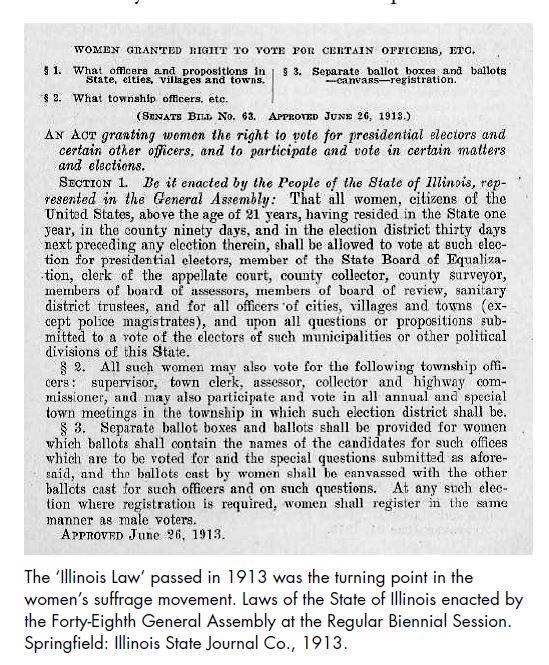
It is no surprise that Illinois was the first state to ratify the amendment – it was largely due to an Illinois law passed in 1913 that the final push at the federal level occurred. In fact, the federal outcome was so anticlimactic, it did not even receive much notice in the press. Illinois women had been voting for President for years.
In 1913, the Progressive Party held the balance of power in the Illinois State legislature. Women lawyers came up with a way to significantly increase the voting power of women.
The Electoral College was established by the Founding Fathers as a compromise on how to elect the President – by popular vote or by vote of Congress. Individuals known as Electors are chosen by each state, and it is actually these Electors who choose the President. The U. S, Constitution gives the authority to each state to decide how to choose the Electors.
A bill allowing women to vote for the Electors was introduced into the Illinois legislature. The opposition tried every conceivable parliamentary maneuver to keep the bill from going forward. But after receiving an overwhelming flood of letters, telegrams, visits, and telephone calls in support, the Speaker allowed the bill to go to vote.
Women "captains" went to the legislators' houses to round them up for the vote, and stood guard at the chamber doors to prevent them from leaving before the vote was cast.
The bill passed. Women in Illinois became the first women in the country to vote for President, through electing the state Electors. The new law also expanded voting rights at the municipal level.
Women on the Ridge were very active in the suffrage movement. Gertrude Blackwelder of Morgan Park served as the president of the Chicago Political Equality League for three years. Mrs. Blackwelder made history on Saturday, July 26, 1913, when she cast her ballot in Morgan Park’s special election on building a new high school. She was the first woman to vote in Cook County after the 1913 Illinois law passed.
Pic 1: The 1913 Illinois law.
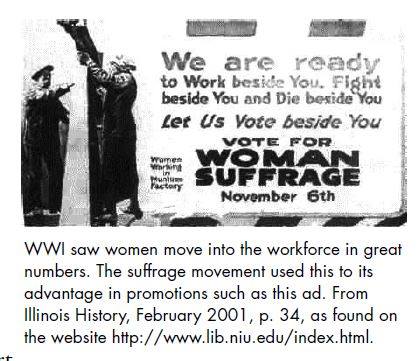
Pic 2: A WWI-era pro-suffrage ad.
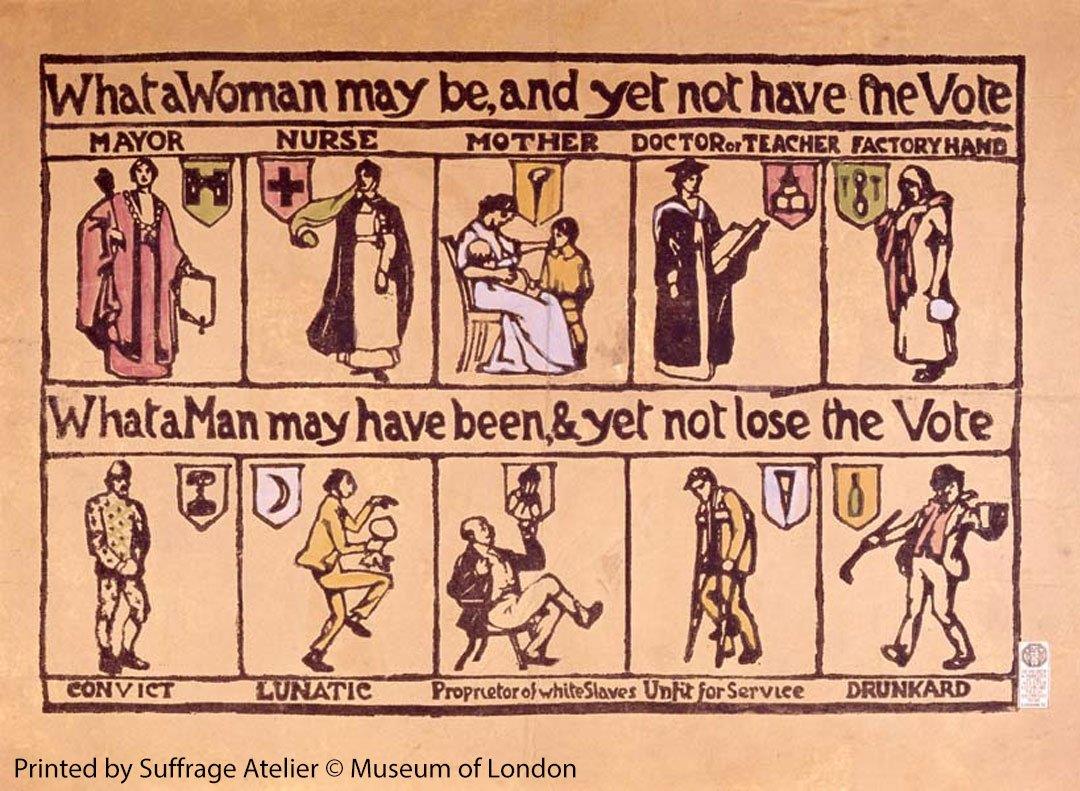
Pic 3: Pro-suffrage propaganda.
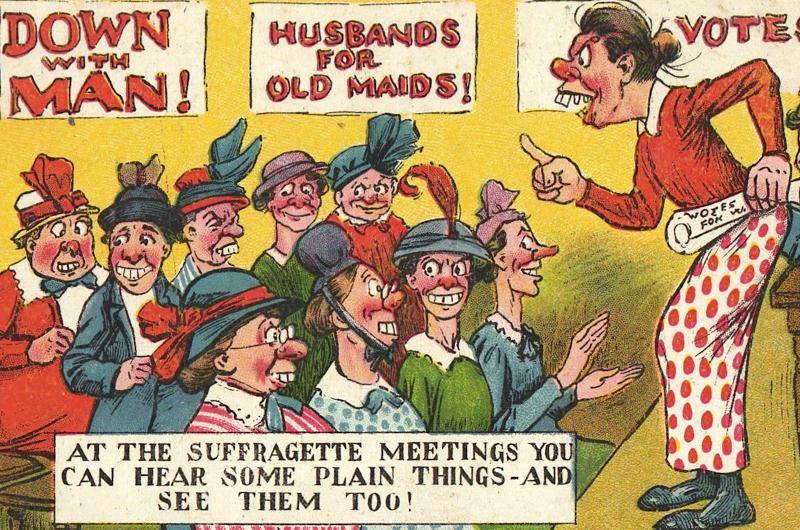
Pic 4: Anti-suffrage propaganda. Both sides could be brutal. .
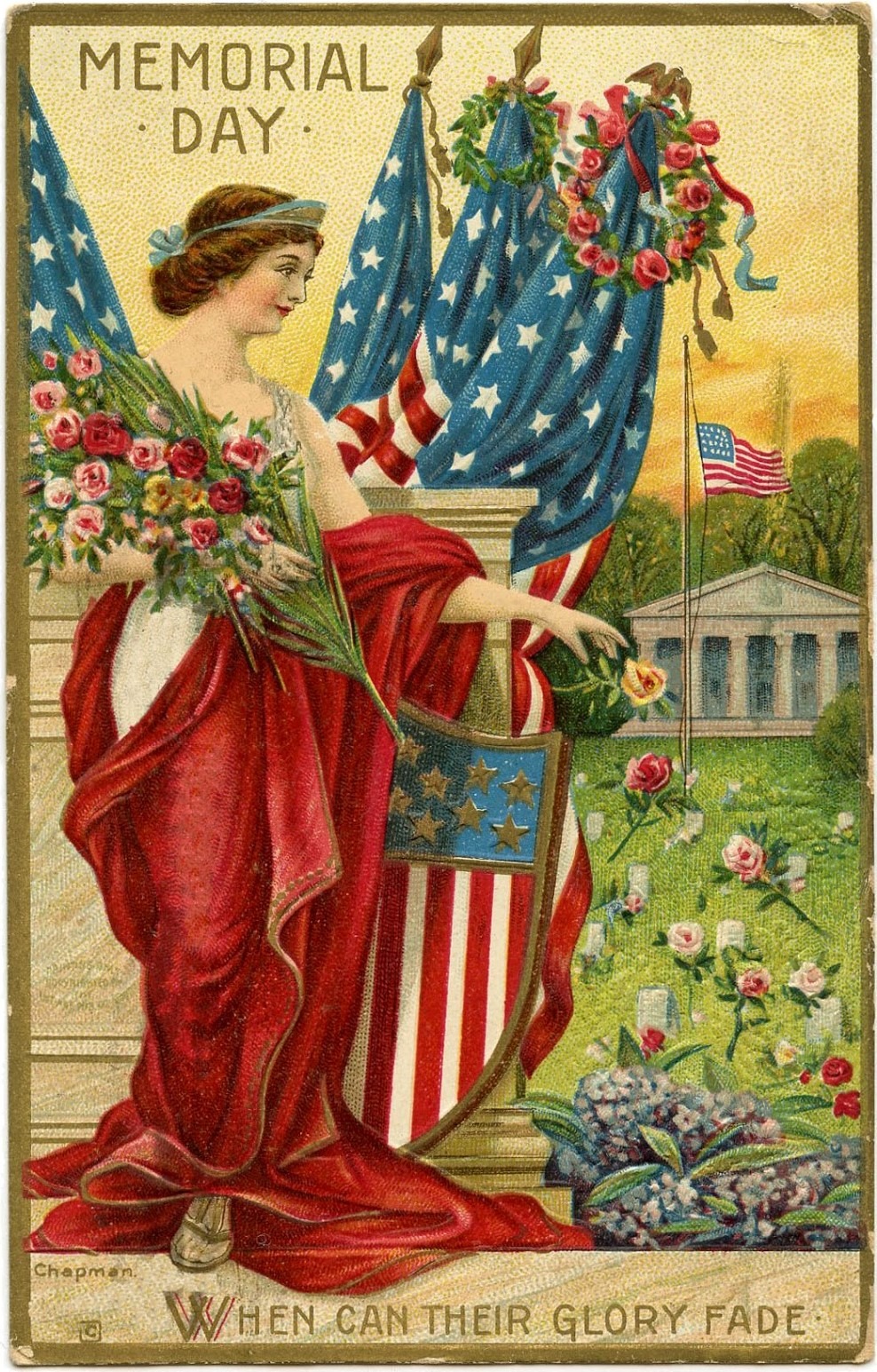
A vintage postcard for Memorial Day.
Memorial Day is one of America’s favorite federal holidays and it is also a very emotional one. It happily marks the start of the summer season, yet the somber purpose of the day is to remember all who have died while serving in the country’s armed forces. To date, close to 1.3 million Americans have died in service, with almost half the fatalities occurring during the Civil War.
The day was officially established in 1868 as Decoration Day, because decorating the graves of fallen soldiers with flowers was an ancient custom. The date was set as May 30, which had no particular significance; it reportedly was chosen to coincide with the blooming of flowers.
In the 1880s, it began to be known as Memorial Day. It was not until 1971 that the federal government implemented a national holiday on the last Monday in May, intentionally to give a three-day week-end at the beginning of summer.
The local Memorial Day Parade is a neighborhood tradition that dates back 90 years. It is one of the oldest Memorial Day events in Chicago. The parade was started by the Beverly Hills Post 407 of the American Legion, which was formed in 1919 for those who served in World War I.
Beginning in 1923, Post 407 paraded to local cemeteries on Memorial Day to decorate graves. Then in 1926, the Legion invited the community to participate. Some of the groups who marched that first year still participate – the Dewalt Mechlin Chapter of the Daughters of the American Revolution, the Reserved Officers Training Corps from Morgan Park High School, and local Boy Scouts and Girl Scouts troops.
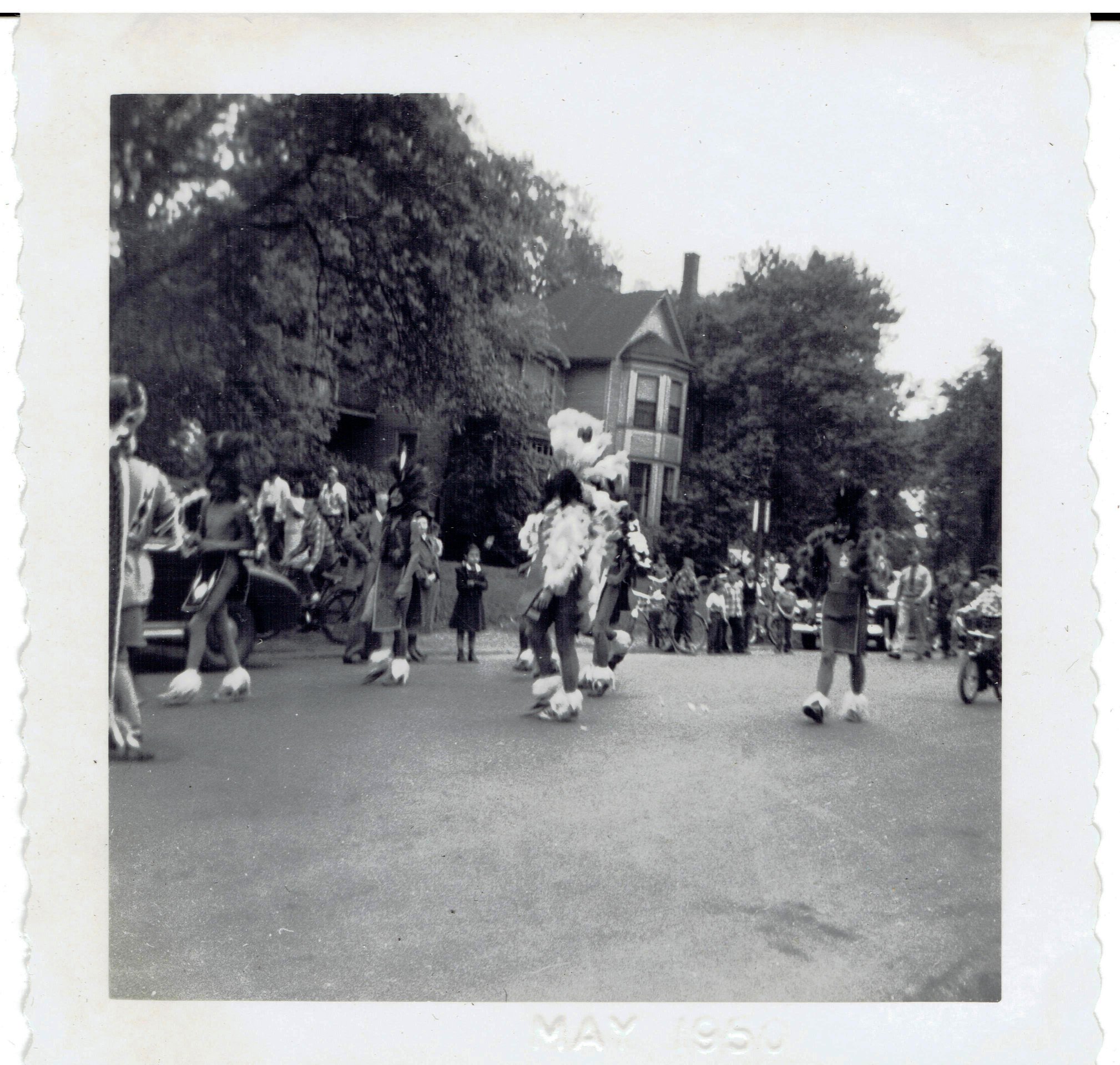
There is a new post in our other, interactive page – Beverly/Morgan Park/Washington Heights History. Check it out! Join that page! We are looking for information on this intriguing picture that was labeled "Real Indians" in a photo album from ca. 1948-50. They were marching in the Memorial Day Parade on Longwood Drive.
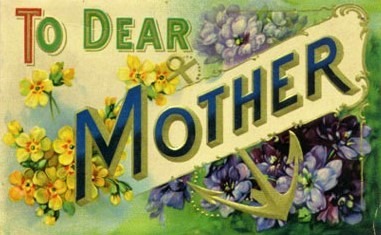
A vintage postcard for Mother's Day. The symbol of the anchor is particularly interesting here, not something you often find on a card for a mother. But it is so appropriate – the anchor is a symbol of strength, stability, safety, security. These are certainly the traits associated with motherhood.
Did you know Mother’s Day actually has its origins in the pacifist movement and concern for Veterans?
Mother’s Day was founded to honor peace activist Ann Jarvis, by her daughter Anna. Jarvis cared for wounded soldiers on both sides during the Civil War. She created Mother’s Day Work Clubs to address public health needs. Her daughter wanted to continue the work her mother started and to honor mothers for all they do.
This was 1908. The U.S. Congress rejected the proposal. They joked they would have to create a “Mother-in-Law’s Day” also. By 1911, all of the states had adopted the day, and in 1914, President Wilson proclaimed it a national holiday.
Anna Jarvis came to regret she ever came up with the idea when the holiday became so commercialized. Hallmark Cards began selling pre-made cards in the early 1920s, and this exploitation of the day for profit infuriated Jarvis. She wanted people to really think about their mothers, to honor their mothers with hand-written testimonials, not to resort to just buying gifts and pre-made cards. She wound up organizing boycotts of Mother’s Day, and was even arrested for disturbing the peace.
This “Mother’s Day” was not the first. Julia Ward Howe called for a “Mother’s Day for Peace” in 1872. Her intent was for mothers to protest against war.