
Explore the RHS Facebook Archives, a rich repository of local history written by Carol Flynn. For two decades, Carol brought a deeply dedicated voice to public education at RHS. Her role as Facebook administrator through mid-2025 naturally extended her prolific research into meticulously detailed articles, most notably her multi-part historical series posts. Today, Carol continues her local history writing for The Beverly Review and other outlets.
All Posts
The Ridge Historical Society
Wintertime on the Ridge 100 Years Ago
By Carol Flynn
Winter begins today, December 21st, the shortest day of the year. It’s the day that, due to the tilt of the Earth’s axis, the Blue Island Ridge is the farthest away from the sun during the Earth’s 365¼-day rotation around that celestial body. That distance from the planet’s source of heat and light produces our coldest and darkest season.
The weather is always a concern this time of year. One hundred years ago, on December 21st, it was considerably colder in Chicago than it is today. It was only 6°F during the day, up from -6°F overnight. The winds were moderate and there was no precipitation. Wind chill factor wasn’t reported yet.
Leading up to the Christmas holiday, special events occurred. Some of the churches, like the Morgan Park Congregational Church and Bethany Union Church, held holiday bazaars, the forerunner of today’s arts and crafts markets. Local organizations held celebrations; one example was the Longwood Manor Improvement Association’s masquerade party, and another was the Tracy Masonic Lodge’s Christmas party for children. The Chicago Bridge and Iron Works, a business located on 95th Street, held its annual party.
There were no computers and no cell phones, and television did not yet exist. Entertainment was mostly in-person – people gathered around the piano, played games, or attended concerts and plays. Music and singing were listened to either live on the radio, or through records on phonographs. The Morgan Park High School girls’ glee club was scheduled to sing live on WGN radio on December 23rd. A group from St. Paul’s Church sang live at Englewood Hospital.
There were movie theaters downtown and popping up in neighborhoods. On the south side, there were several along 63rd Street. The closest one to the Ridge was "Ascher's West Englewood" at 63rd Street and Ashland. These theaters showed silent films and live vaudeville shows. The more “proper” society had not yet decided if motion pictures were an acceptable form of entertainment. The Woodlawn Woman’s Club presented a motion picture machine to Oakhaven Old People’s Home as a Christmas present. Oakhaven, today’s Smith Village Senior Living community at 113th Place and Western Ave., opened in April.
The U.S. was in the midst of Prohibition. Alcohol could not be manufactured, sold, transported, or served anywhere in the country. Shutting down illegal operations, for gambling as well as alcohol, kept law enforcement officers busy. The week before, two local “notorious joints” had been closed, and the doors and windows “nailed up.” These were the Blue Goose on 119th Street and Marshfield Ave., and an unnamed gambling place on 119th and Vincennes. Ave.
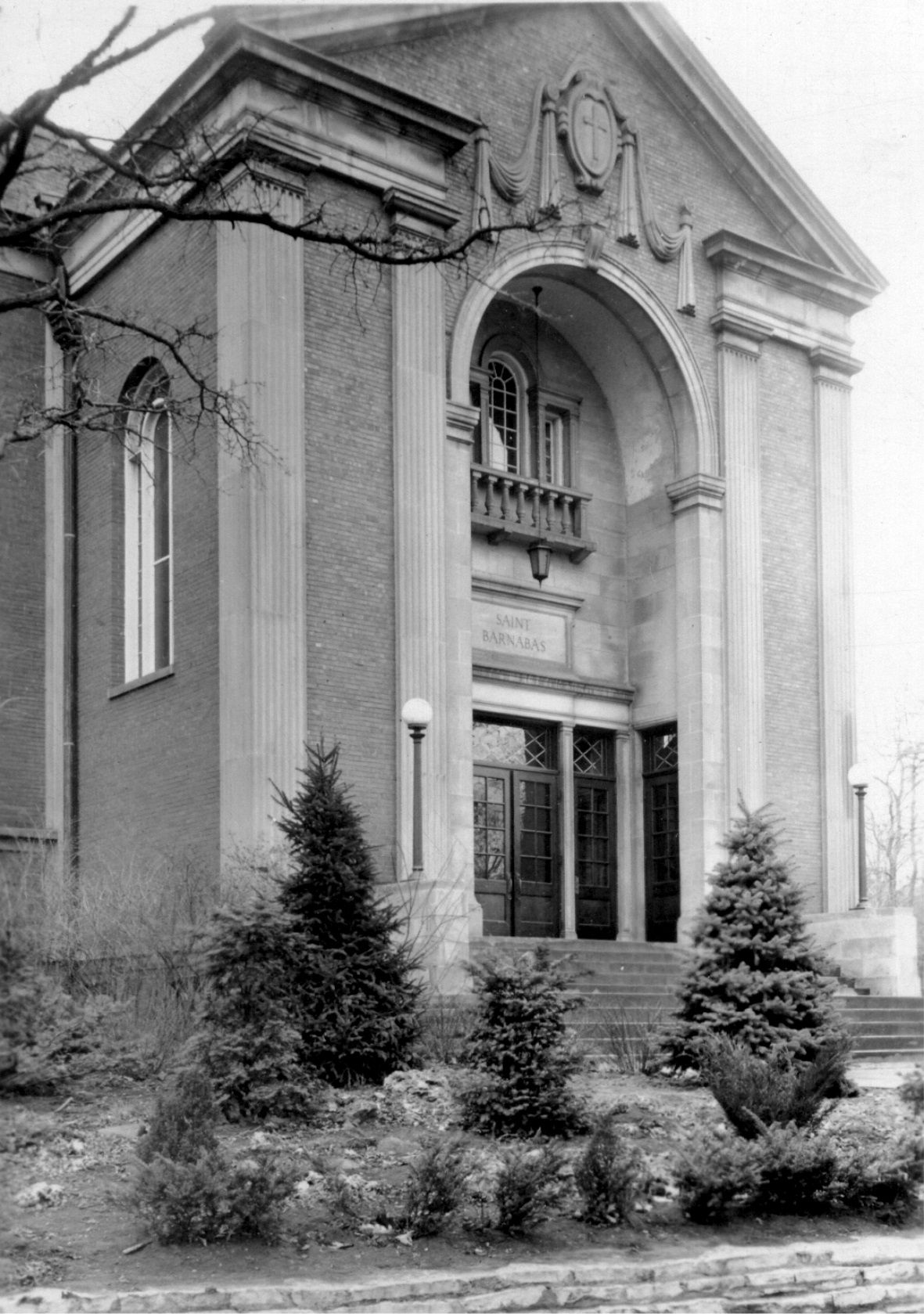
St. Barnabas Parish was newly established, and the church was under construction. The first Mass was planned for Christmas. Father T. J. Hurley, the pastor, had recently purchased the house at 9901 S. Longwood Drive to use as a convent for the Dominican sisters who would teach in the new school.
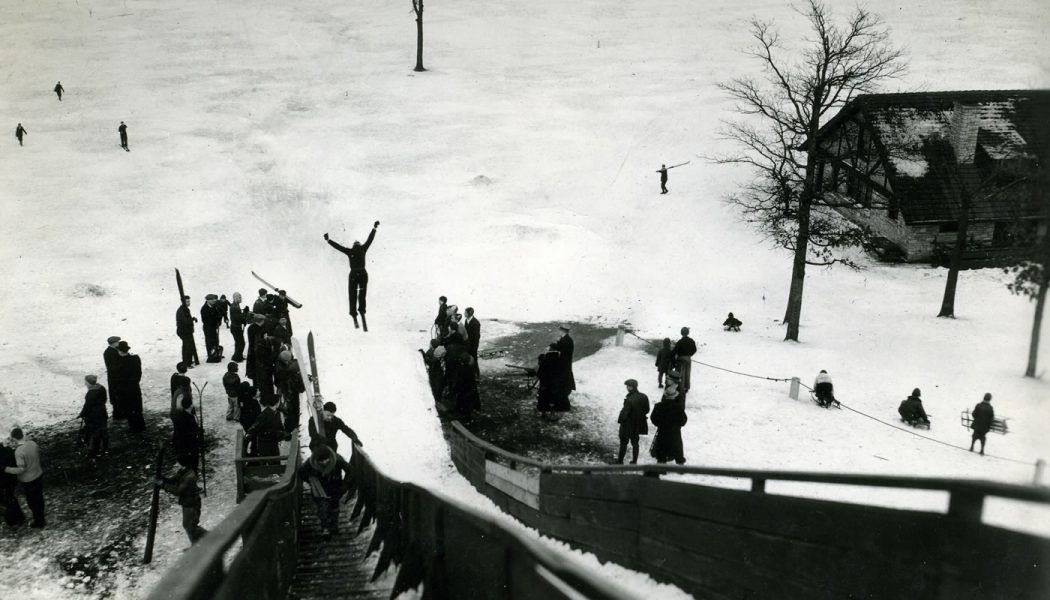
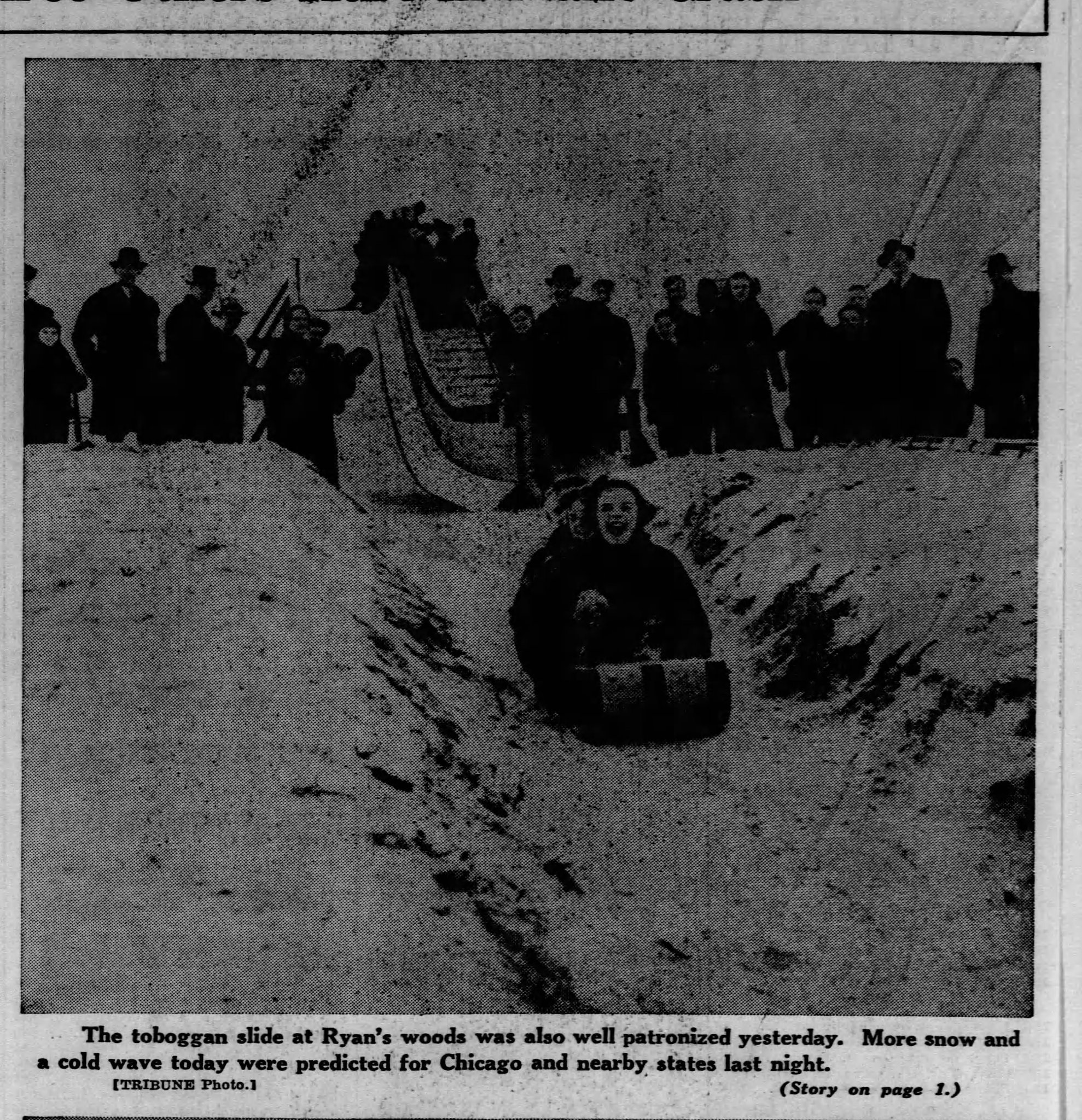
The city’s school children were on break for the holiday, and a popular spot for them to enjoy outdoor winter activities was the Beverly Forest Preserve at 87th Street and Western Avenue (since renamed the Dan Ryan Woods). The baseball diamonds had been turned into ice skating rinks by the Fire Department flooding them with hoses, and a new shelter was being constructed.
A toboggan slide was already in place on the hill, and a new 30-foot ski jump was being constructed north of that.
The Beverly Preserve was becoming the center for outdoor amateur sports for the outlying southern section of the city, and it was already one of the most popular spots in the city for summer picnics. There was a strong public and political push to extend the 87th St. streetcar line west from Cottage Grove to the Preserve so that people from the east side could more easily access the grounds. The Preserve could be reached already by trains coming from downtown.
Life on the Ridge went on as usual.
The Eisemann family at 94th and Winchester welcomed a new baby girl and the stork delivered a baby boy to the Compton family at 99th and Winchester. Katherine Maloney and Fred Campbell were planning their wedding at St. Margaret of Scotland Church. Frank Mock had bronchitis, but his neighbor Mrs. Bowen had recovered. Mr. and Mrs. Rupel from LaPorte, Indiana, were spending the winter with their daughter, Mrs. Gammell, on Walden Parkway. The Charles Hall family left for a 16-month trip to Europe on Thanksgiving Day and D. P. Crane would live in their house during their absence. The Gadsden family purchased a new Studebaker automobile.
Real estate agents promoted local home ownership. Richardson and Richardson, “two live wires” with a real estate, loan, and insurance business on 95th Street, wrote: “If you are considering building or buying a home, there are many beautiful places in Beverly Hills and Morgan Park where culture and refinement are everywhere in evidence. Beautiful well kept homes, broad, clean asphalt streets, trees, flowers, and shrubbery all combine to make this a place of beauty and desirable residence.”

Merry (Pink) Christmas!
The color pink is “in” right now for Christmas decorating, thanks in large part to the Barbie movie a few years ago.
One recent article described pink as "a very modern Christmas color that adds chicness, glamour, and even whimsy to the holiday décor."
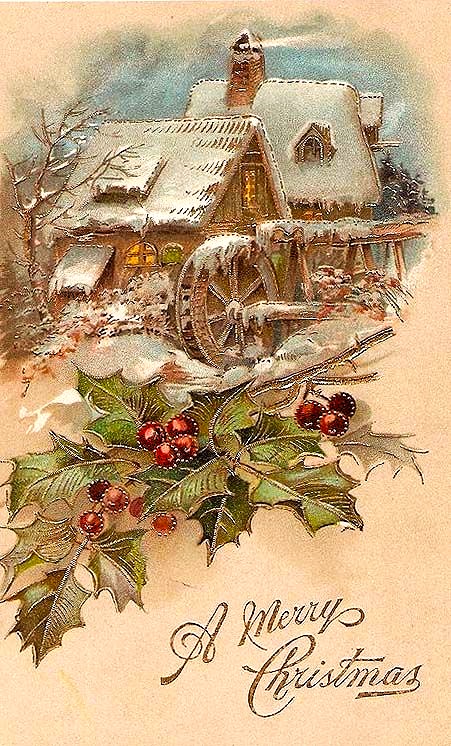
However, as this vintage postcard that dates back to the early 1900s shows, pink has been a “Christmas color” for well over 100 years. Pink glass ornaments were popular back then.
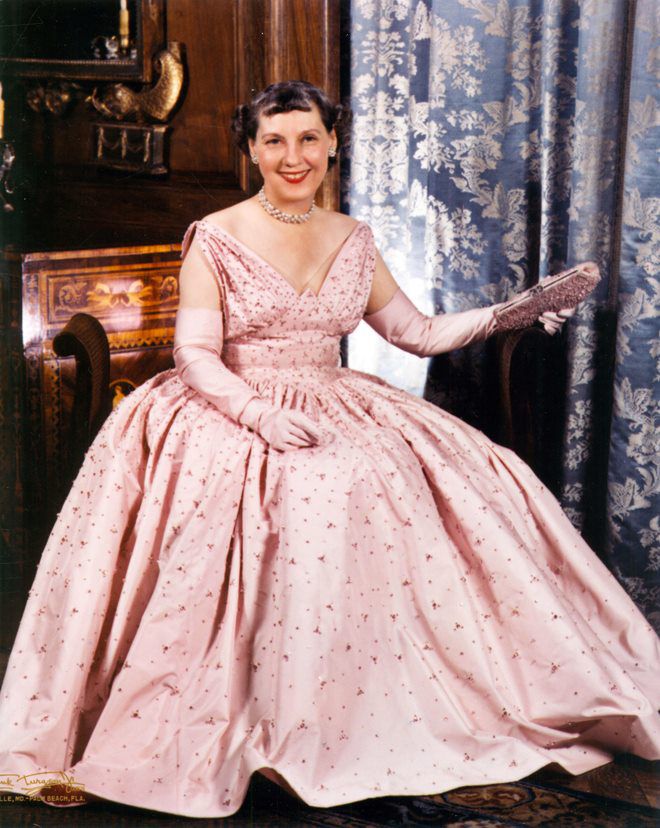
Pink was quite the rage for Christmas in the 1950s. First Lady Mamie Eisenhower loved pink and wore it frequently. She used the color for decorating the White House to the extent the presidential residence was referred to as the “pink palace.”
In the 1700s, as a variant of red, the color pink was considered an aggressive military color. But over time, pink came to be considered more a feminine color. Some people avoid the color for that reason, but others embrace it as a symbol of empowerment – for example, pink ribbons are the symbol for fighting breast cancer.
Although pink may not stay trendy forever as the primary color for the holidays, it will always be part of the Christmas color palette.
The Ridge Historical Society
New Year 1925
By Carol Flynn
Chicago, Chicago, that toddlin’ town.
Chicago, Chicago, I’ll show you around.
Bet your bottom dollar you’ll lose the blues in Chicago, Chicago, the town that Billy Sunday could not shut down.
On State Street, that great street, I just want to say
They do things they don’t do on Broadway. Say!
They have the time, the time of their life.
I saw a man who danced with his wife
In Chicago, Chicago, my home town.
This favorite, “Chicago (That Toddlin’ Town),” was written in 1922 by Fred Fisher. It appears to have been first recorded by the elusive Joseph Samuels and his jazz band in August of 1922.
The song became best known when recorded by Frank Sinatra in 1957, although many people have sung it through the years, from Judy Garland to James Brown to the band Green Day.
The “toddle” was a jazz dance step in the Roaring Twenties. It was popular with college students and “flappers,” those modern young women who disdained the old social conventions, and wore short (that is, knee length) skirts, bobbed their hair, drove automobiles, smoked cigarettes and drank alcohol in public, listened to jazz, and loved to dance.
Music and dancing were favorite social activities, from time immemorial, and this was certainly true for New Year’s events one hundred years ago.
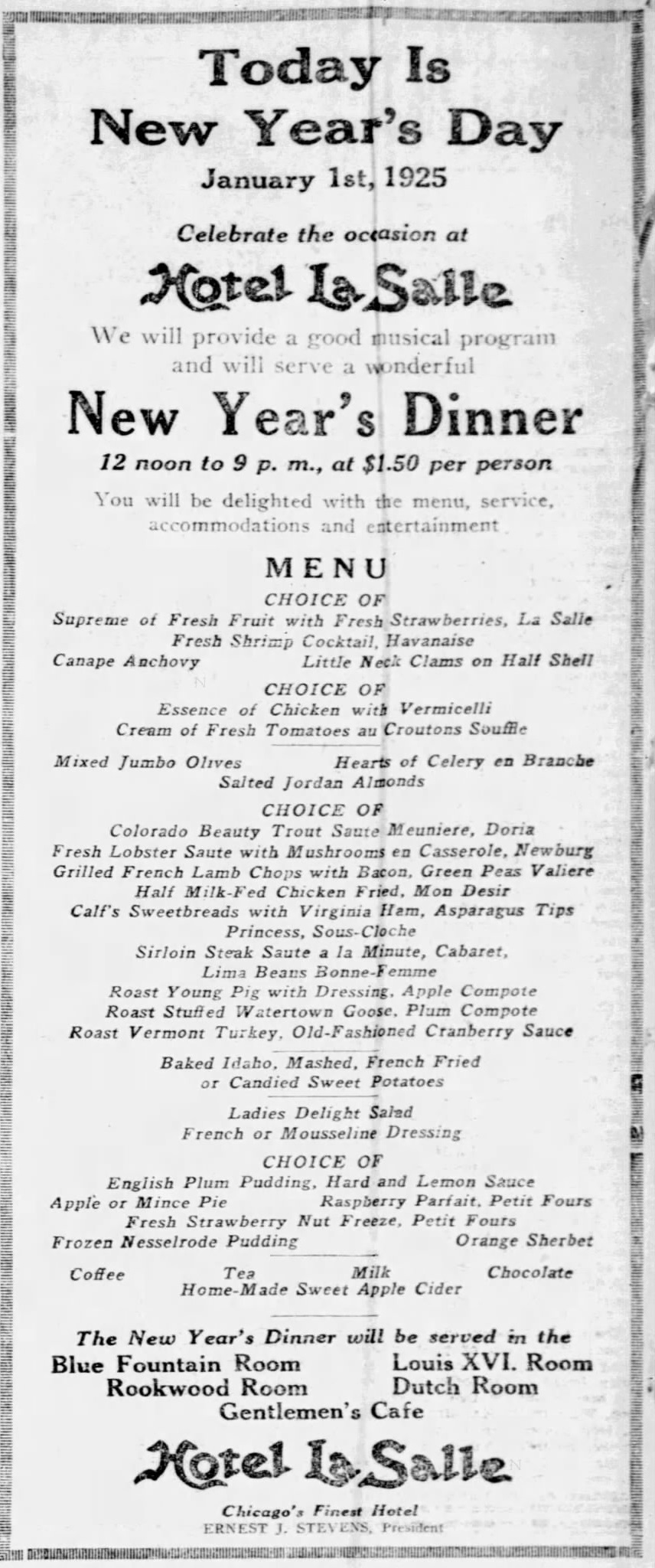
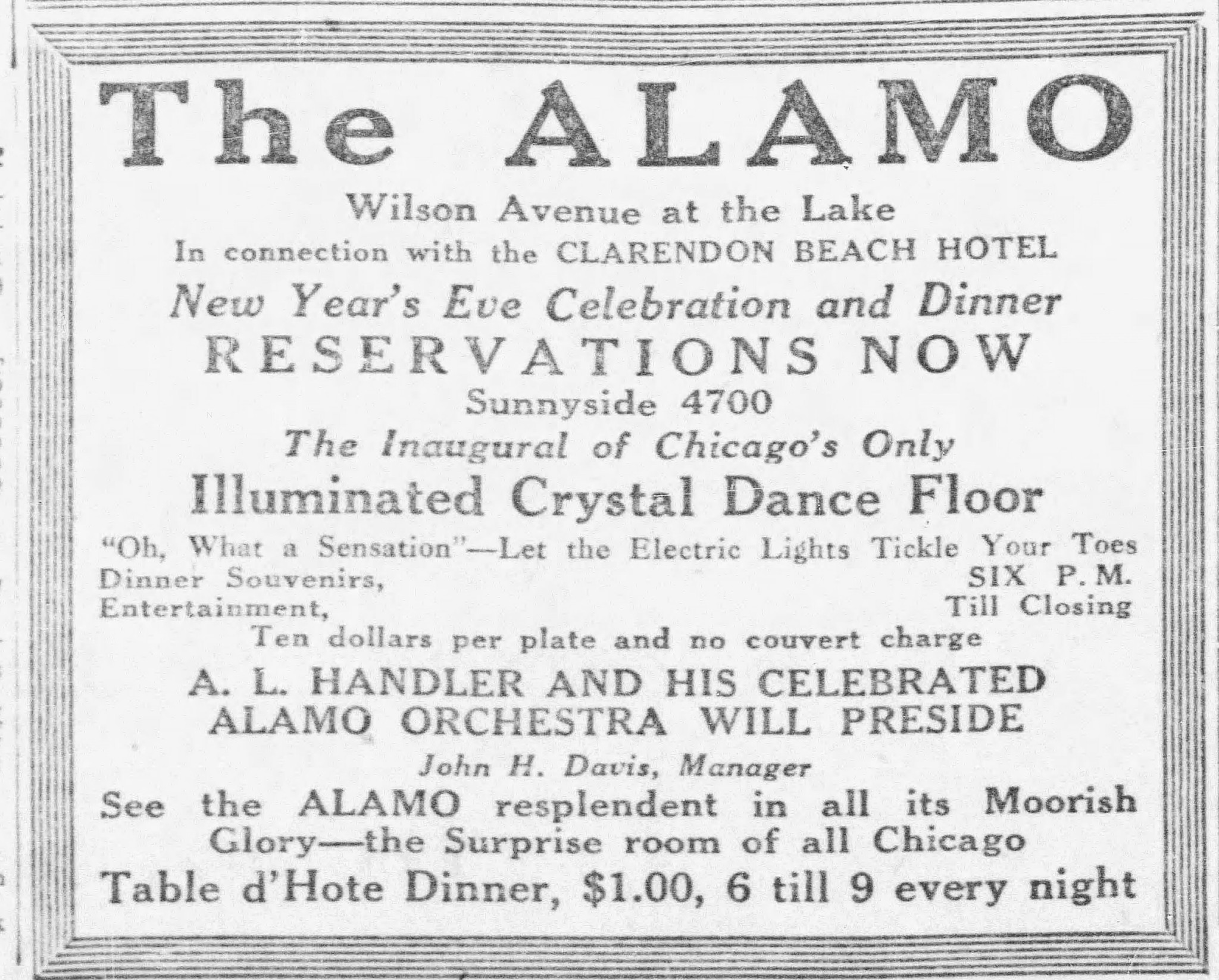
The Chicago hotels and restaurants were completely booked for both New Year’s Eve and New Year’s Day, and many private parties were held, also, at membership clubs and private houses. The parties were called “watch parties,” as in watching the old year exit out the door and the new one enter – at midnight, the doors were thrown open for this to happen.
The general format for a party was an extravagant dinner followed by a live orchestra and dancing. Some games in the evening were also often played – charades and guessing games were popular.
According to a Chicago Tribune newspaper article on December 31, 1924:
“Chicago tonight is going to don its dress suits, silver flasks, and tin horns and step out in search of A.D. 1925 in a spirit of peace and prosperity for the year to come.
“That is the official forecast, based on a canvass last night of hotels, cabarets, and roadhouses, police and federal officials – and bootleggers.”
Yes, bootleggers – Prohibition was in effect in 1924, which meant making, transporting, selling and serving (but not consuming) alcohol were all illegal. People regularly brought in their own alcohol to an event, hence the reference to the silver flasks.
The bootleggers reported that business was better than ever. Scotch was going for $7 per bottle; bourbon for $10; gin for $4. These prices were enough “to make one with a pre-Volstead memory shiver, but cheap enough in modern years.” Champagne, however, was very expensive – “about $1 per bubble.”
At the less well-heeled establishments, moonshine could be had for $1 per quart.
Chief of Police Collins said his men would enforce all liquor laws, but it was a “tough job.” He said they would “see there are no flagrant violations.” The Tribune noted that “handling a flask has never been considered flagrant.”
For New Year’s Eve, 1924, the big event for the social elite was a concert by the Yale Glee, Banjo, and Mandolin Club, in town from the east coast. This was preceded and followed by numerous private parties.
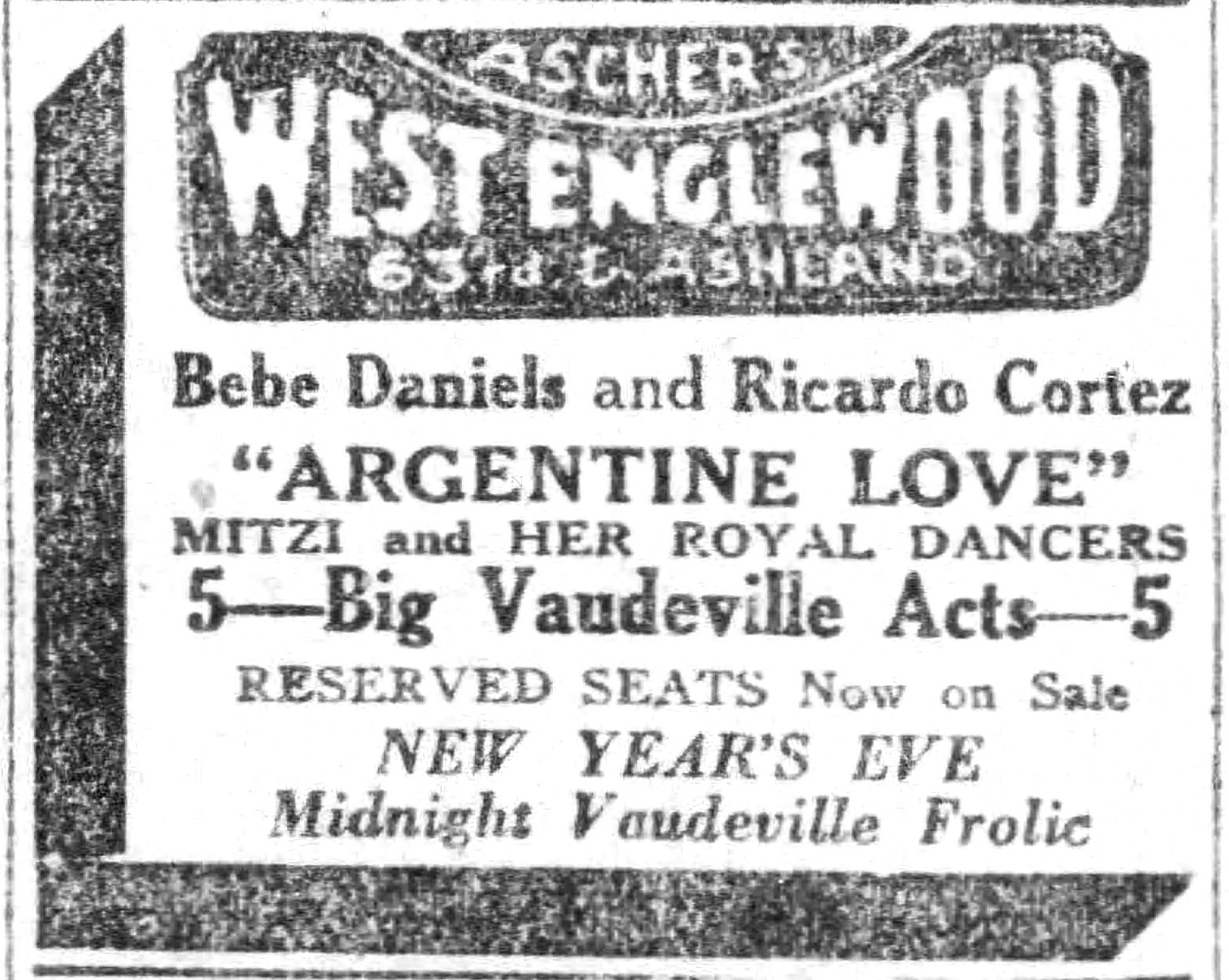
For the less high-brow, there were plenty of burlesque, vaudeville, musical comedy, and cabaret shows scheduled. Taxicabs, which usually made their last runs at midnight, were staying on the streets until 2 a.m.
The people who stayed home for the evening could still have music and dancing, via records played on the family’s gramophone or phonograph, if the family could afford such a machine.
For everyone, though, there was listening to the radio.
The radio stations covered live events, from political and other speeches to football games, and broadcast live orchestras and other entertainment, from the hotels or from the radio station’s studios. The radio stations usually signed off by 10 or 11 p.m.
On December 31, 1924, Chicago Tribune-owned WGN offered dinner music, and a few hours later dance music, from the bands at the Drake and Blackstone Hotels, but ended at 11 p.m.
Three other local stations planned New Year’s programs past midnight, one running until 6 a.m.
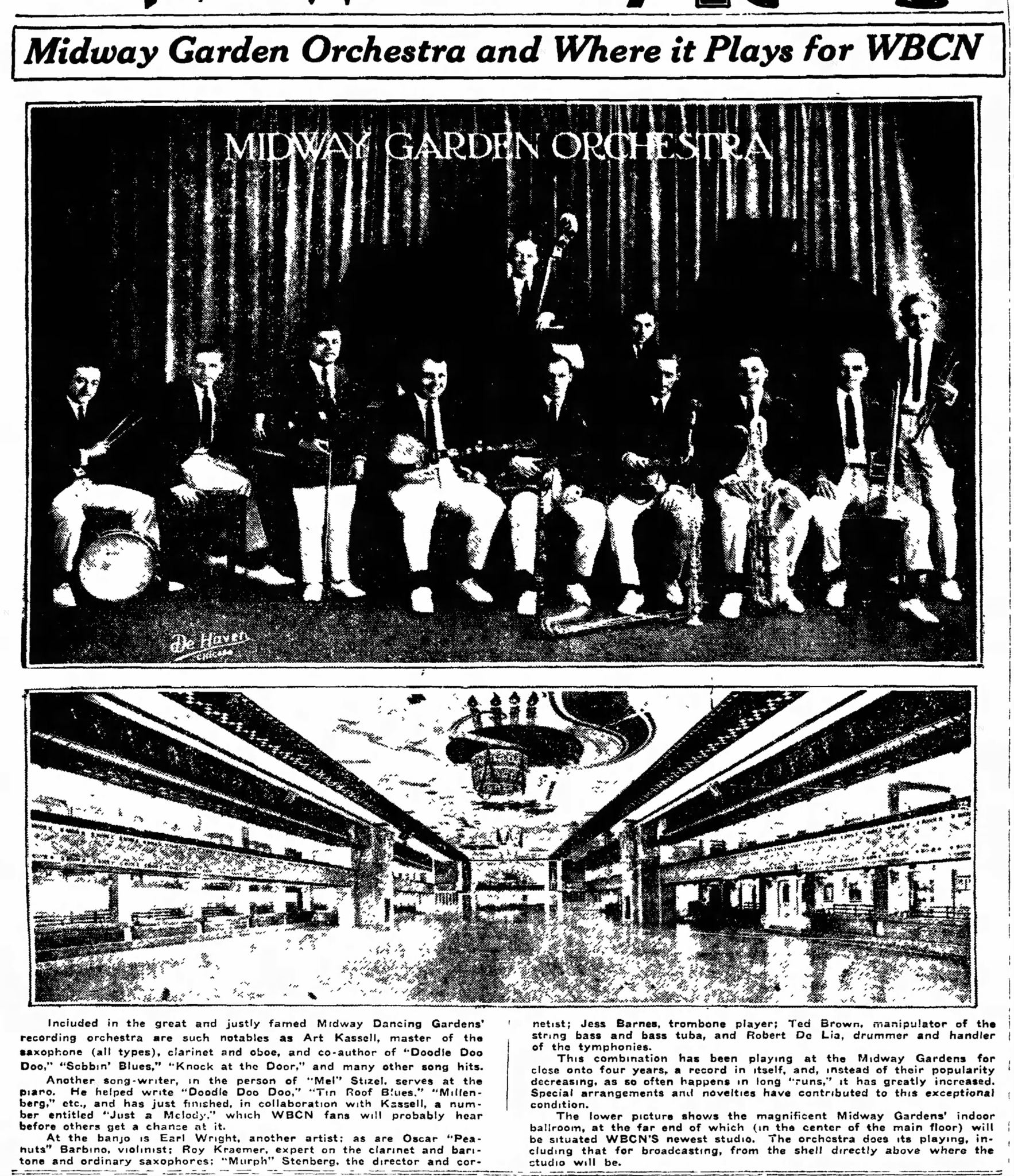
The biggest radio event, however, was taking place on WBCN, the station owned by the Southtown Economist newspaper. The station and the Midway Dancing Gardens had recently signed a deal that the Midway Gardens orchestra would be broadcast live on the radio station six days per week (closed on Mondays), and the inaugural event was scheduled to take place on New Year's Eve.
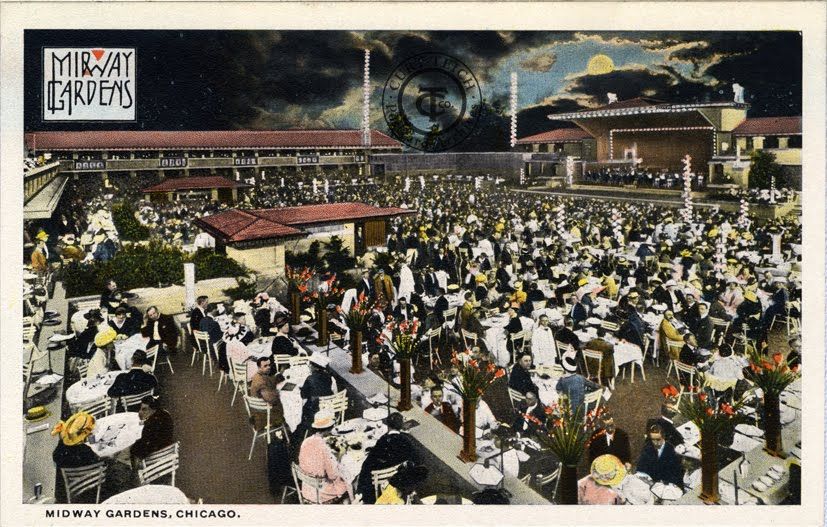
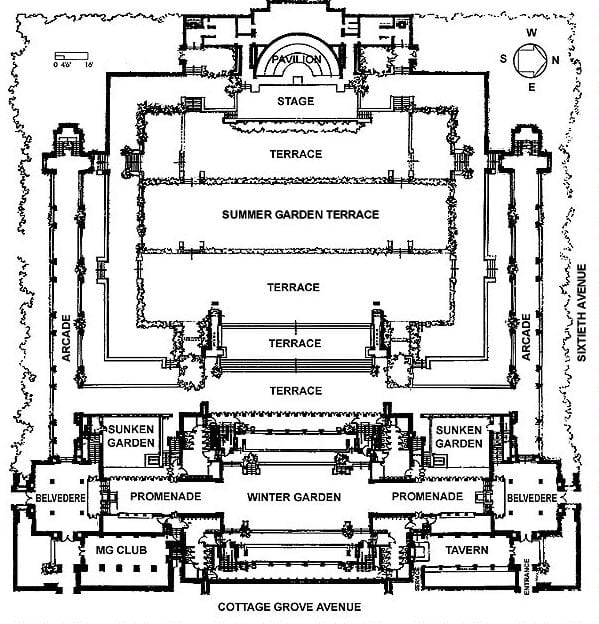
Midway Gardens was an entertainment complex at 60th Street and Cottage Grove Avenue, designed by architect Frank Lloyd Wright, that opened in 1914. It went through several owners before closing permanently and being demolished in 1929.
The facility offered outdoor dining and dancing in the summer and had a smaller indoor “winter garden.” It was considered to have “the largest toddle floor in the world.”
Other names it went by through the years were the Edelweiss Gardens and the Midway Dancing Gardens.
Although very popular with the public, Midway Gardens was never successful from a financial perspective.
In 1924, however, the Midway Dancing Gardens had a superb recording orchestra, and according to rival Tribune, “as a result WBCN listeners are to have dance music equal to any now being broadcast.”
The deal between WBCN and the Midway Dancing Gardens was considered “pioneering” and “highly distinctive” because it was the first time a public ballroom and a radio station had made an agreement on this scale.
On New Year’s Eve, from 10 p.m. to 2 a.m., dance numbers interspersed with specialty numbers were planned to be played continuously by the orchestra, which was in a shell above the dance floor. A microphone was installed suspended from the ceiling, wired into the transmitting equipment of the radio’s operations room at 730 West 65th Street.
This allowed the orchestra to “play for those actually present, and for radio-listeners at the same time.”
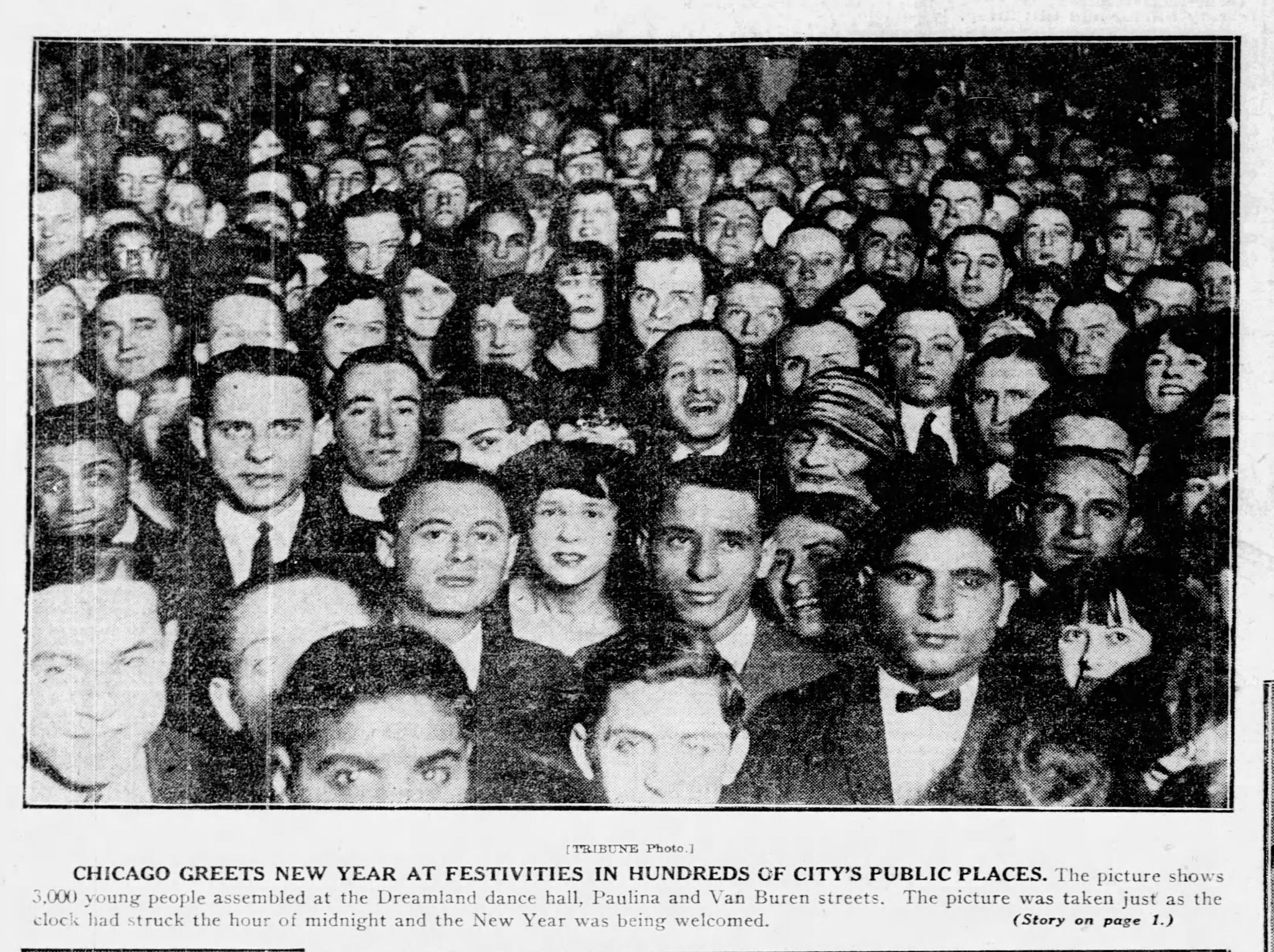
The event was very successful. On January 1, 1925, the Tribune reported that the Midway Dancing Gardens was so crowded in person there was scarcely room to dance.
The people listening from home might have had more space to push furniture out of the way to toddle.
All of the events held around the city did excellently – the hotels and restaurants reported the highest attendance ever. The going rate was $10 per person at the better places, and the Drake Hotel had 3,000 guests.
No attempt was made to conceal the liquor people brought with them – bottles were left in open display on tables and counters. The venues supplied drink set-ups for $1.00 apiece.
The police said the crowds exceeded anything they expected, yet the people were good-natured and there were few disorderly incidents.
The Tribune noted that at the Pershing Palace at 64th Street and Cottage Grove, one of the tables included Archie Benson, the Prohibition enforcement officer. Benson had announced that he would “keep an eye on enforcement measures in the loop,” but here he was among the revelers and their silver flasks.
No arrests were made there, or in the Loop, or at the Midway Dancing Gardens, for liquor.
That was Chicago in 1924-25.
The Ridge Historical Society
Chicago Weather History and the Current U.S. Conditions – Part 1: Fire
By Carol Flynn
Our concern lies with the sections of the country that are experiencing extreme weather conditions that are creating disastrous situations.
All eyes are turned towards the fires spreading through Los Angeles County in California. At the time of this post, at least four separate wildfires, burning on over 5,500 acres, have been identified, named the Palisades, Eaton, Hurst, and Woodley Fires. All are at 0% containment. Two fatalities have been reported, as well as a high number of significant injuries, and over 1,100 structures have been destroyed. Eighty thousand people are under mandatory evacuation orders. Hundreds of thousands of people are without power.
Neighboring Riverside County also has the Tyler Fire burning, reported at 50% containment.
The spread of the fires is a result of very strong Santa Ana winds, with isolated gusts up to 100 miles per hour; ongoing drought conditions; and very low humidity levels. The actual causes of the fires are under investigation.
Not to be tone deaf or insensitive, because the critical story here is the situation in California, but people interested in Chicago history can’t help but see the parallels between the Los Angeles situation and the Great Chicago Fire of 1871.
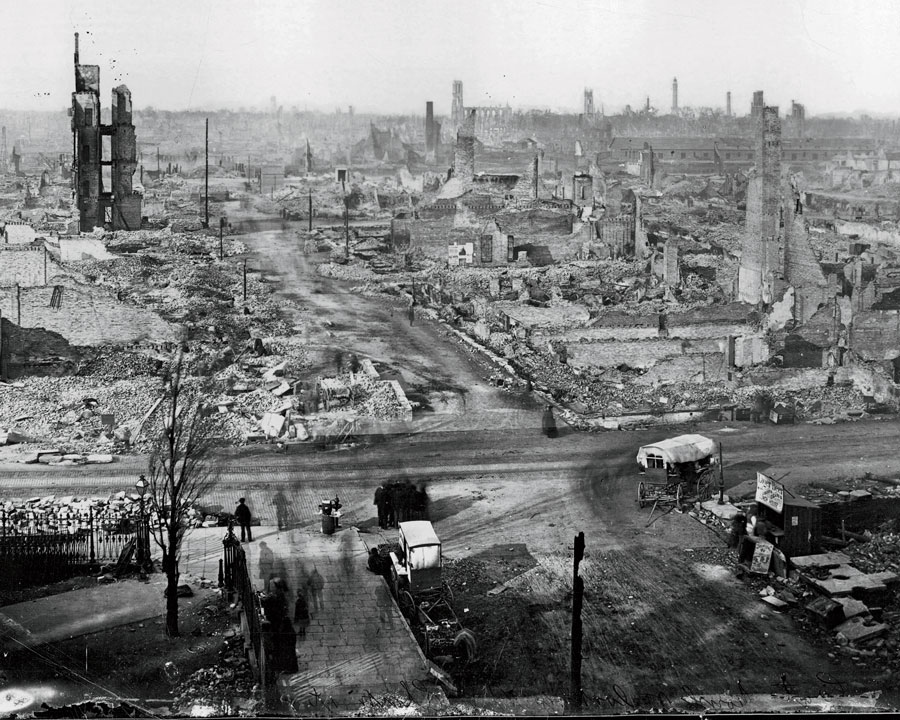
From October 8 to 10, 1871, fire raged through the City of Chicago, ultimately killing an estimated 300 people and leaving more than 100,000 people homeless. Over 17,000 structures in about a 3.3 square-mile area were destroyed.
The fire started around the barn and shed at the O’Leary residence on DeKoven Street. Although the fire was blamed in the media on a cow kicking over a lantern, in reality, the cause of the fire has never been determined.
Like Los Angeles, a long period of hot, dry, windy conditions led to the Chicago fire spreading rapidly.
In Chicago at the time, congested neighborhoods of wooden structures and wooden sidewalks provided plenty of fuel for the fire. The fire twice leapt the Chicago River, destroying the near southwest side, most of downtown, and the near north side. The building housing the city’s waterworks was consumed by flames, destroying the water mains, leaving fire fighters helpless.
The Chicago fire finally started to burn itself out after reaching more sparsely built areas, and then it began to rain late in the evening of October 9th.
People on the Blue Island Ridge, about twelve miles south of the downtown area, watched the Chicago fire light up the night sky. They were no strangers to fire.
One of the issues in Los Angeles is the dry vegetation due to the drought conditions. This is very much like the prairie fires that burned here in autumn-time in years past.
William W. Barnard shared this account in his document, “Tracy Fifty Years Ago,” written in 1894. The Barnards lived at 103rd Street and Longwood Drive, where today stands the CVS drug store.
“Prairie fires were very frequent and much dreaded. I feel that no account of the early days of Tracy would be complete without a prairie fire. In the afternoon of an autumn day of 1845 our family had their first experience with a prairie fire. Grandfather had died within the first few months of their residence here. The eldest son was sick in bed with the ague. Grandmother with her four younger sons and fourteen year old daughter went out to fight the flames. Aunt Mary, who was too small to help, remained at home carrying water to her brother and watching the fire. As she looked to the west and the south she heard the loud roaring and saw the flames running ten to twelve feet high where it reached the tall weeds and extending as far as she could see. Eagerly she watched the family who were fighting the flames. They had nothing with which to plow and they could only set back fires and whip it with wet bags and brush. They worked heroically but were continually obliged to retreat. Nearer and nearer the house it came, but at last when it came to the low grass only a few rods from the door the fighters conquered. It was the custom to plow around the houses and stacks for protection against these fires. Sometimes two circles were plowed and the grass in the space between them burned off, thus an effectual barrier was made. Dr. Eagan, one of the early doctors of Chicago, asked one of the farmers the best way to protect his hay stacks from fire and was told to plow around them and burn between. He followed out the instructions by plowing several times around the stack and then burning between the furroughs and the stack which resulted in his burning up his own hay.”
Unfortunately, natural disasters such as fires, and recovery from them, make up a substantial part of history, and we are bearing witness to this right now. As we continue to monitor the situation occurring in California, Chicagoans will prepare to join any and all efforts to help the people devastated by these wildfires.
Image: The aftermath of the Great Chicago Fire of 1871
The Ridge Historical Society
Houses Designed by Harry Hale Waterman and the People Who Called Them Home: Part 1 – Waterman Begins His Architecture Career
By Carol Flynn
This is a companion series to the current exhibit at the Ridge Historical Society (RHS): “Harry Hale Waterman, Architect: Unique in Any Style.”
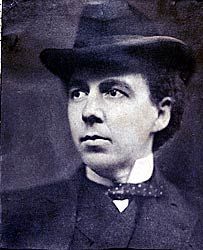
Harry Hale Waterman was the most prolific and versatile architect to work in Beverly and Morgan Park. At least 41 buildings in the community have been verified or ascribed to him.
Waterman’s contributions to the community were praised by architecture historian Harold T. Wolff, who served as past Registrar at RHS.
Wolff compiled files on many of the architects, including Waterman, who designed homes and other buildings in the Beverly/Morgan Park community. Wolff wrote that of all the architects, “none played a more significant role in establishing the character of these neighborhoods than Harry Hale Waterman.”
According to Wolff, it was Waterman who designed “imposing and distinguished houses for locations all over the Ridge,” and encouraged others “to spread the elegance [that was at first just] associated with Longwood Drive all over the landscape.”
Harry Hale Waterman was born on July 10, 1869, in Rutland, Dane County, Wisconsin, a small rural community. His father was John Adam Waterman, born in 1824, a farmer and cattle broker. His mother was Emily “Emma” Hale Waterman, born in 1838. John and Emma married in 1867 in Minnesota. Harry had one sibling, a sister, Jessie, born six years his junior.
The Waterman and Hale families were originally from the East coast, as were most of the families who moved west as the country expanded, buying land for farming and settling in the fertile Midwest.
Emma was John Waterman’s second wife. His first wife, Mary Kniffen, born in 1834, whom he married in 1855, and their daughter, Alice, died young. Alice died at four months of age in 1859, and Mary died in 1860. Interestingly, this foreshadowed a similar experience that Harry would have in his own life.
The family moved to Chicago when Harry was a young boy, where his father continued as a cattle broker. It’s safe to assume that the thriving stockyards operations making Chicago famous offered employment opportunities.
It is reported that Harry was educated in Chicago public schools, and he attended the Old University of Chicago Preparatory School.
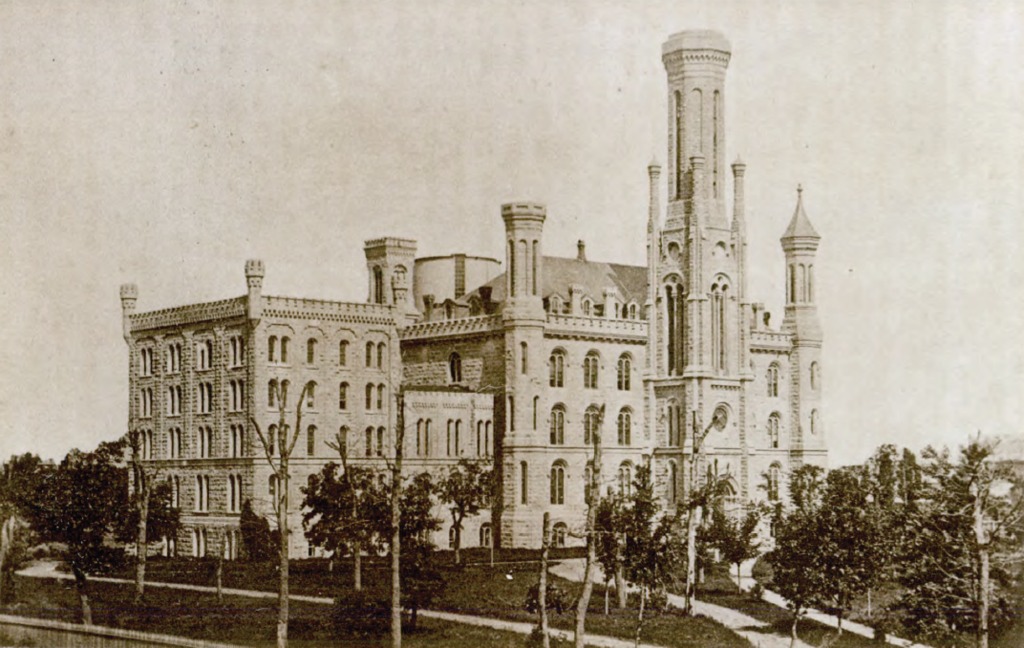
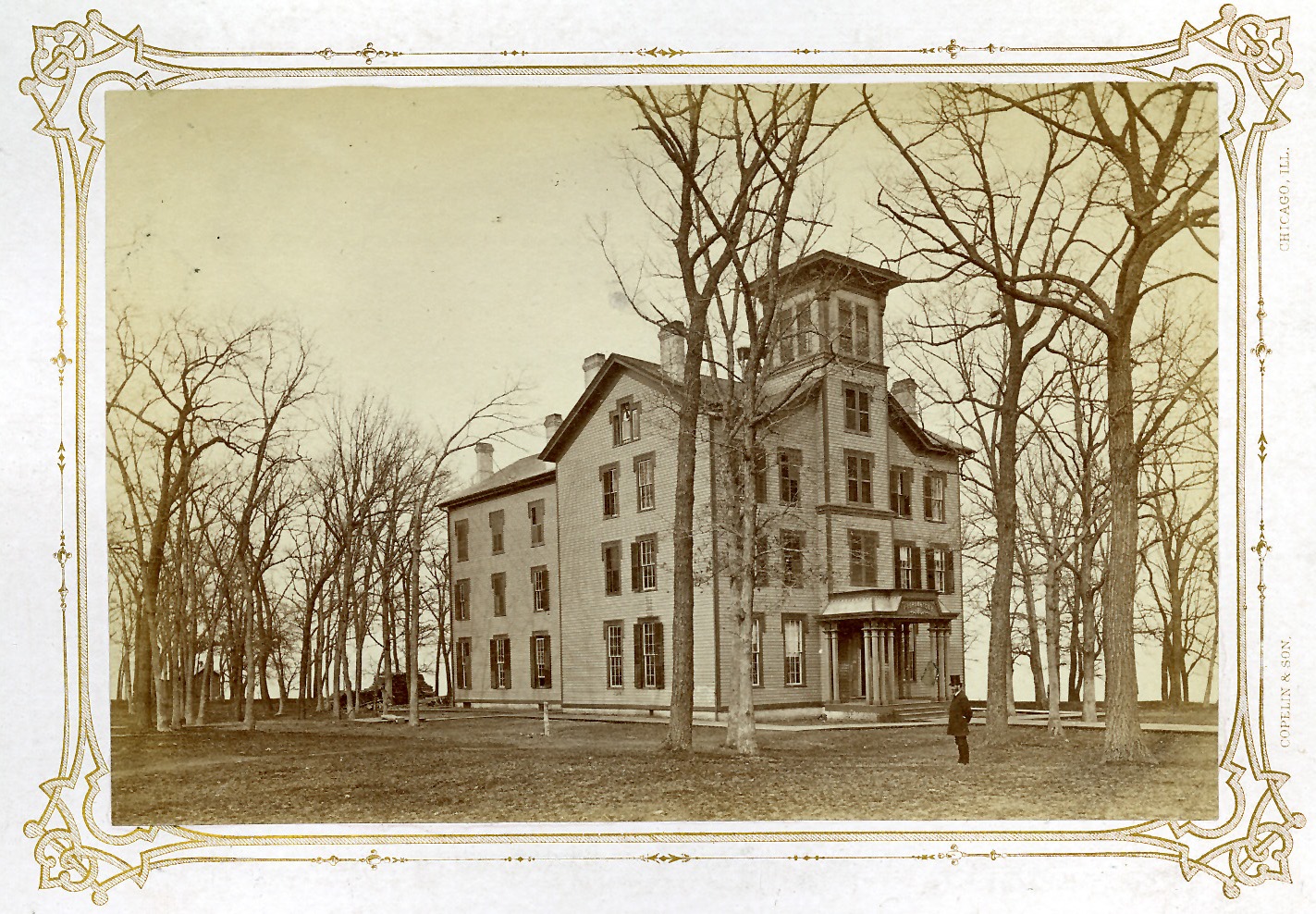
The Old UC was the original university, established in 1856 by Baptist church leaders on land donated by Senator Stephen A. Douglas at 35th Street and Cottage Grove Avenue. This school closed in 1886 for financial reasons and after fire damage, and was replaced with today’s University of Chicago, founded in 1890.
Preparatory schools were the forerunners of today’s high schools. Back then, there was a gap in public education institutions between grammar schools and colleges. For the wealthy, this gap was filled by expensive private secondary schools and private tutors, allowing those students to gain the knowledge to begin college-level courses.
To enable and encourage more young people to go to college, the universities started preparatory schools, which offered classes beyond the basic “three R’s,” geared toward helping students prepare for entry into one of the academic programs at the university. In Morgan Park, for example, the Mount Vernon Military Academy (now Morgan Park Academy) was started as a comprehensive military academy and preparatory school for the University of Chicago.
After the Old UC, Harry attended the Northwestern University Preparatory School through the 1887-88 academic year. He was listed as taking selective classes, which means he was not taking classes to qualify to enter a particular college. It does not appear that his formal education went farther than the NU Prep School, a common practice of the day. NU did not have a school of architecture at the time – few universities did.
Architecture was just developing into an academic specialty in the mid-to-late 1800s. Traditionally, designing buildings was considered part of the construction process, connected to such trades as carpentry and stonemasonry. These trades were learned through on-the-job training, apprenticeships, and many years of experience, observation, and networking.
From ancient Roman times on, it was recognized that mathematics, geometry, and engineering were the basics of architecture, along with a knowledge of building materials. Until the late 1800s, those were the types of classes/degree programs enrolled in by most people seeking architecture careers in the U.S. Those studies were followed by entry-level jobs, apprenticeships, and training in the offices of established architects.
In 1857, in the U.S., a group of architects founded the American Institute of Architects (AIA) to “elevate” the profession and to promote the qualifications of its members. The AIA developed policies on the training and credentialing of architects and set standards for ethical behavior and contracting services.
These were all guidelines, as the AIA was, and still is, a voluntary professional membership association, and not a credentialing or licensing body.
France had an architecture academy dating back to 1671 that became part of the famous École des Beaux-Arts in Paris. In the U.S., the AIA did not have the finances to start its own architecture school, but gave support to architecture programs being set up at reputable universities, such as the Massachusetts Institute of Technology (MIT) (1868) and the University of Illinois (1873).
In 1897, Illinois would become the first state to implement a law to license architects, which meant standards were set for the practice of architecture as a profession. Today, architects must be licensed to practice anywhere in the country.
This was the world of architecture when Harry Hale Waterman began his career.
In 1887, the Waterman family, including Harry and Jessie, were living at 3929 S. Vincennes Avenue when a young man named Frank Lloyd Wright, 19 years old, began boarding with them.
Wright had arrived in Chicago from Wisconsin, where he had been a student in civil engineering, to pursue a career in architecture, against his family’s wishes. However, his uncle, the Rev. Jenkin Lloyd-Jones, a Unitarian minister in Chicago, relented, and helped him find lodgings with congregants who lived nearby – the Waterman family. Wright and Harry became acquaintances.
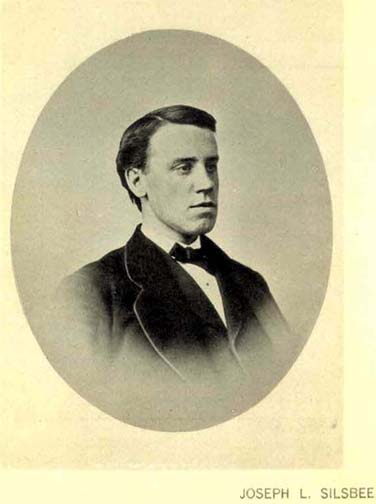
Wright had started as a “tracer,” or draftsman, in the architecture offices of Joseph Lyman Silsbee in January of 1887.
Silsbee, twenty years older than Wright and Harry, was a reputable architect with a practice in the state of New York as well as in Chicago. He had attended MIT, the first architecture school in the country. He was a founder of the Chicago and Illinois chapters of the AIA.
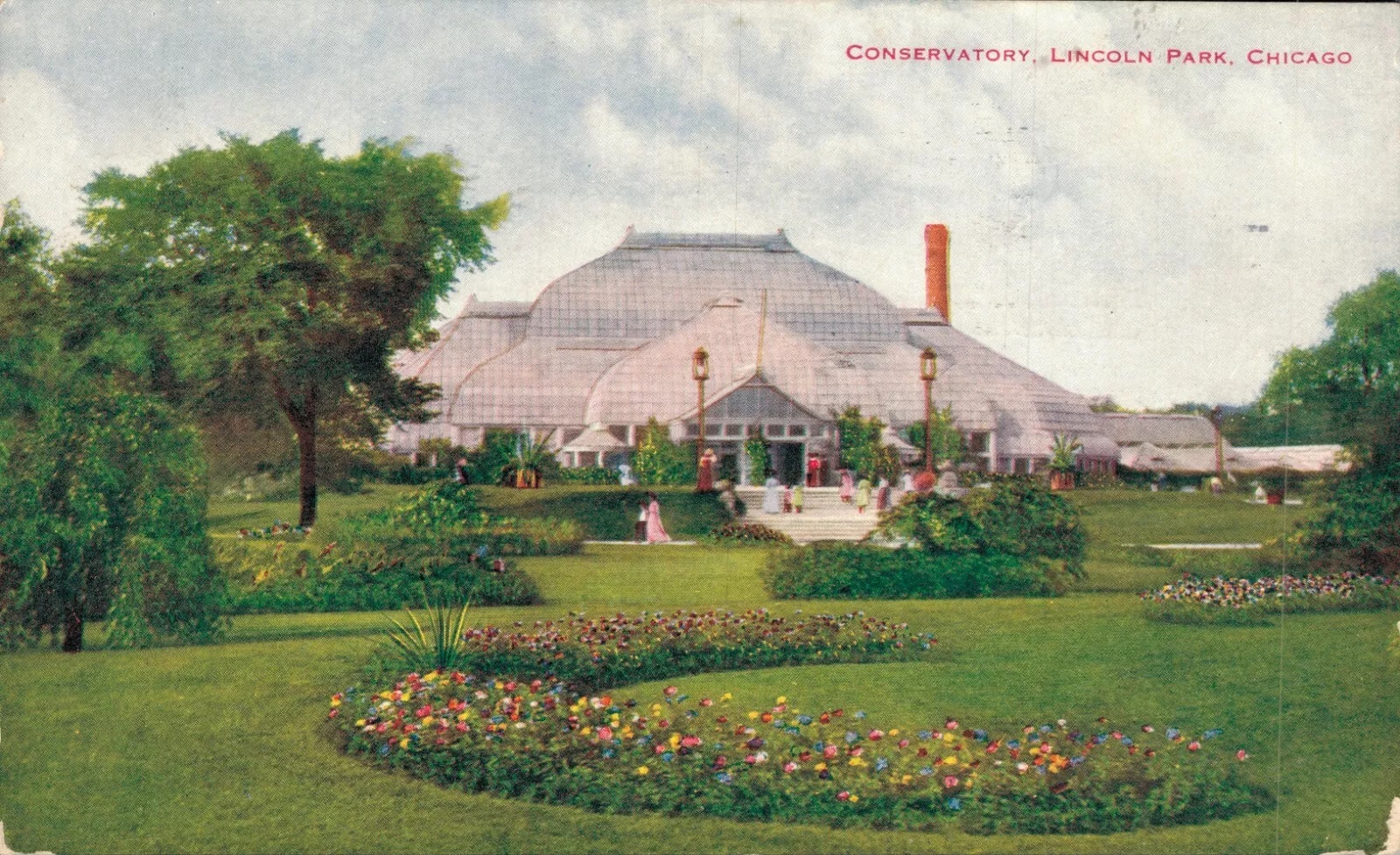
One example of Silsbee’s work in Chicago is the Lincoln Park Conservatory, built between 1890 and 1895, described as “a paradise under glass.”
Harry began employment in Silsbee’s office as a draftsman in 1888, working alongside of Wright. Other young trainees being mentored by Silsbee included George Maher and George Elmslie. Silsbee’s offices developed a reputation as a training ground for talented new architects.
Another young architect in this same orbit was Dwight Heald Perkins, who had worked at the stockyards before being accepted into the architecture program at MIT, and in 1889 began employment with architect Daniel Burnham. Among his many works, Perkins designed the Lion House and Café Brauer in Lincoln Park, as well as many schools in Chicago.
An early believer in “green spaces,” Perkins, along with landscape architect Jens Jensen, often led hiking expeditions to the Blue Island Ridge. He became known as the “Father of the Cook County Forest Preserves.”
These were the architects that were all part of Harry’s circle during his formative years.
1893 was a pivotal year for architecture in Chicago, thanks to the World’s Fair, known as the Columbian Exposition, or the White City. As one of his projects, Silsbee designed the Moving Sidewalk at the Fair, for which he won the Peabody Medal in 1895. Many of the young architects from Silsbee’s office contributed to the Fair.
More on Harry Hale Waterman’s early years with Silsbee and Wright and the 1893 Fair is covered in the RHS exhibit, which is open for free on Sundays and Tuesdays from 1:00 to 4:00 p.m. or by appointment. Additional information will be presented by RHS BOD member and Exhibit Curator Tim Blackburn in a repeat of last month’s program, “Waterman: From the White City to the Ridge,” scheduled tentatively for Friday, March 7. Watch this page for further details.
1893 was also the year that Waterman, at the age of 23, left employment with Silsbee and started his own practice. While the other architects like Wright and Maher established their own styles, which became major parts of the Chicago Prairie Style movement, Waterman worked in many different styles according to his clients’ expectations and other factors.
The next post will conclude Waterman’s bio, covering his three marriages and other interesting details of his personal life; then the series will look at families who used Waterman’s services to design their homes in Beverly and Morgan Park.
In Block Club Chicago this week. Unfortunately, there is some misinformation: Mount Olivet Cemetery is part of Chicago, it is Mount Greenwood Cemetery and Mount Hope Cemetery that are not part of the city, but are on unincorporated land in Cook County. I did clarify that for the reporter in our conversation. – Carol Flynn
The Ridge Historical Society
Houses Designed by Harry Hale Waterman and the People Who Called Them Home: Part 2 – Ida May Vierling Waterman
Carol Flynn
This is a companion series to the current exhibit at the Ridge Historical Society (RHS): “Harry Hale Waterman, Architect: Unique in Any Style.”
Waterman was just 23 years old when he started to design buildings in Beverly and Morgan Park in 1892. This was around the time he left the architecture firm of Silsbee and Kent, where he worked alongside Frank Lloyd Wright, and started his own practice. It was also the time of exciting architecture projects for the 1893 World’s fair, the Columbian Exposition, in Chicago.
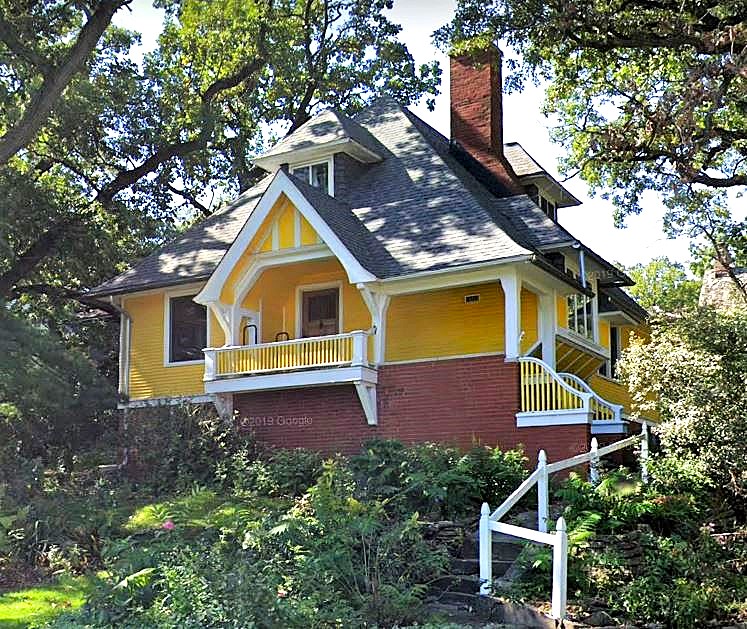
One of the first houses Waterman designed was a house for himself and his bride at 10838 S. Longwood Drive, built in 1892. The Harry Hale Waterman House, also known as the Honeymoon Cottage, is a favorite local landmark.
Waterman and Ida May Vierling married on October 27, 1891.
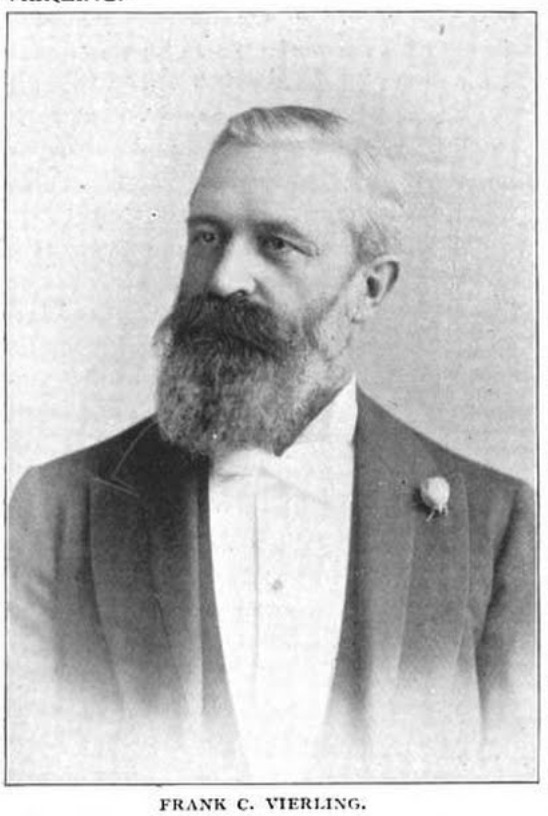
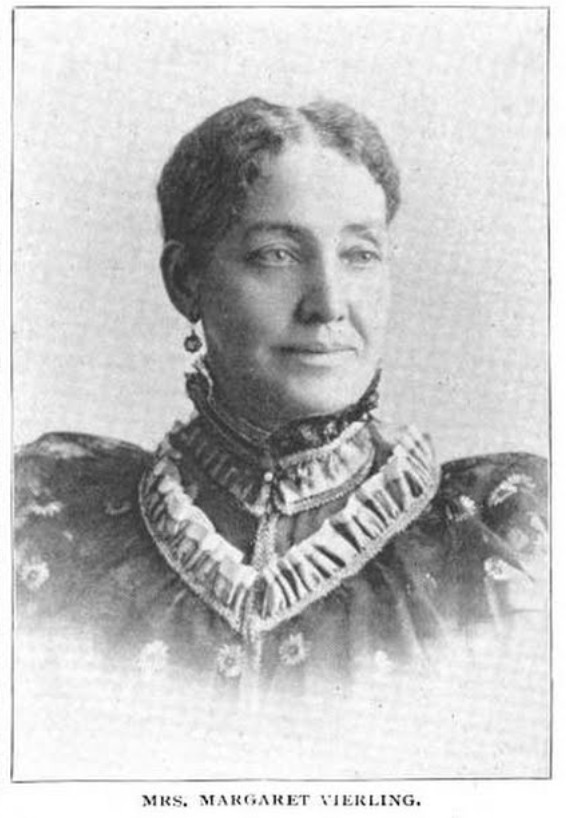
Ida was born in 1872. Her father was Frank Charles Vierling, and her mother was Margaret Chadwick Williams.
Frank Vierling was born in 1850 in Ohio. His parents came from France, and the family came to Chicago when Frank was five years old. On the 1860 U.S. Census, his father is listed as a cook and his mother as a washwoman, and a bio of Frank said the family worked at the Tremont House Hotel – including Frank as a cook at the age of 11.
During the U.S. Civil War, Frank served as a drummer boy for the 23rd Illinois infantry and enlisted as a soldier in 1865 at the age of 14. He was reported as the youngest soldier from Illinois. He only served three months, as the war ended that April, and he mustered out as a corporal.
Frank, his three brothers and his sister, were educated in the Chicago public schools. After the war, he attended business school, and in 1870, he began a career in real estate.
Frank and Margaret Chadwick Williams married in 1871 in Chicago. Margaret was born in England in 1845 and came to the U.S. in 1851. She had a daughter from a first marriage to Phillip Williams, Mary (Mamie), born in 1864 in Pennsylvania. Not much has been found on Margaret’s life before she married Frank. Frank took on the role of providing for his step-daughter Mary, who used the name Mary Vierling.
Frank and Margaret had two children of their own, Ida, and son Arthur Garfield Vierling, born in 1880.
Frank became very well-known in Chicago, recognized for his success in his real estate business dealings, his commitment to U. S. veterans’ organizations, and his involvement in city politics.
Frank was an active member of the Grand Army of the Republic (GAR) and other organizations and championed causes like retirement homes for veterans. His wife Margaret was active in the women’s auxiliaries of the organizations.
In 1889, Frank successfully ran for alderman and served in that role for several years. He was even encouraged to run for Mayor.
Frank’s brothers became very prominent in the iron and steel works manufacturing industry.
The Vierling family is a good example of how families became part of “high society” in developing Chicago. It wasn’t just family background or inherited wealth that made a family prominent, although those factors certainly didn’t hurt. Many people moved “west” to Chicago to seek out new opportunities, and hard work, business acumen, and recognizing and taking advantage of situations and opportunities led to advancements for those with the ambition and stamina to persevere.
Besides their business, veterans, and political activities, Frank’s and Margaret’s names were in the paper for events like the French Club of Chicago meeting at “the house of Mrs. Frank C. Vierling at 2347 S. Michigan Avenue,” and Frank travelling to Nebraska to go antelope hunting and returning “well supplied with prairie chickens and ducks.”
In 1886, their oldest daughter Mary was married at their house to Jesse Thomas Blake. Mary and Jesse eventually lived on the Ridge in a house Waterman designed for them at 2023 West 108th Place, and Jesse worked as an accountant at the Morgan Park Post Office, another building designed by Waterman. More on this will be in a later post.
Frequent litigation in court over business and personal matters went on in Chicago at that time. It appears that this basically was considered “business as usual.” Frank was a party in multiple lawsuits covered in the newspapers.
Frank was “on very bad terms” with at least one of his brothers, according to the Inter Ocean newspaper, which led him to sue his brothers for fraud and attempting to cheat him out of his share of a business he helped them finance. The judge found in Frank’s favor.
As an alderman, Frank was involved in decisions and dealings related to the planning of the 1893 World’s Fair, including choosing the location, and meeting with foreign businessmen from the iron and steel industry who were interested in participating in the fair. His membership in a Masonic organization led to him being appointed to an Entertainment Committee for the Fair to welcome Masonic visitors from around the world. [In his later years, as an ex-alderman, Frank was accused of embezzling funds from an estate he managed and stood trial. The jury found him not guilty.]
This was young Ida May Vierling’s world when she met Harry Hale Waterman.
Ida was a socialite, and her appearances at dances and parties were mentioned in the society pages of the newspapers. Her first year of “coming out” was 1888 when she turned 16. She attended the Leap Year party of the Indiana Club, accompanying her parents, uncles, and aunt. They were regulars there for the monthly dances throughout the year.
For Decoration Day (Memorial Day) that year, Ida and her father participated in the program for the Washington Camp of the Patriotic Order Sons of America.
That year she graduated from Moseley School, the public school at 24th Street and Michigan Avenue, where she won a Daily News Medal. These medals, paid for by the newspaper, were awarded to select students for essays on American patriotism. She also won a certificate of merit from her Plymouth Congregational Sunday School.
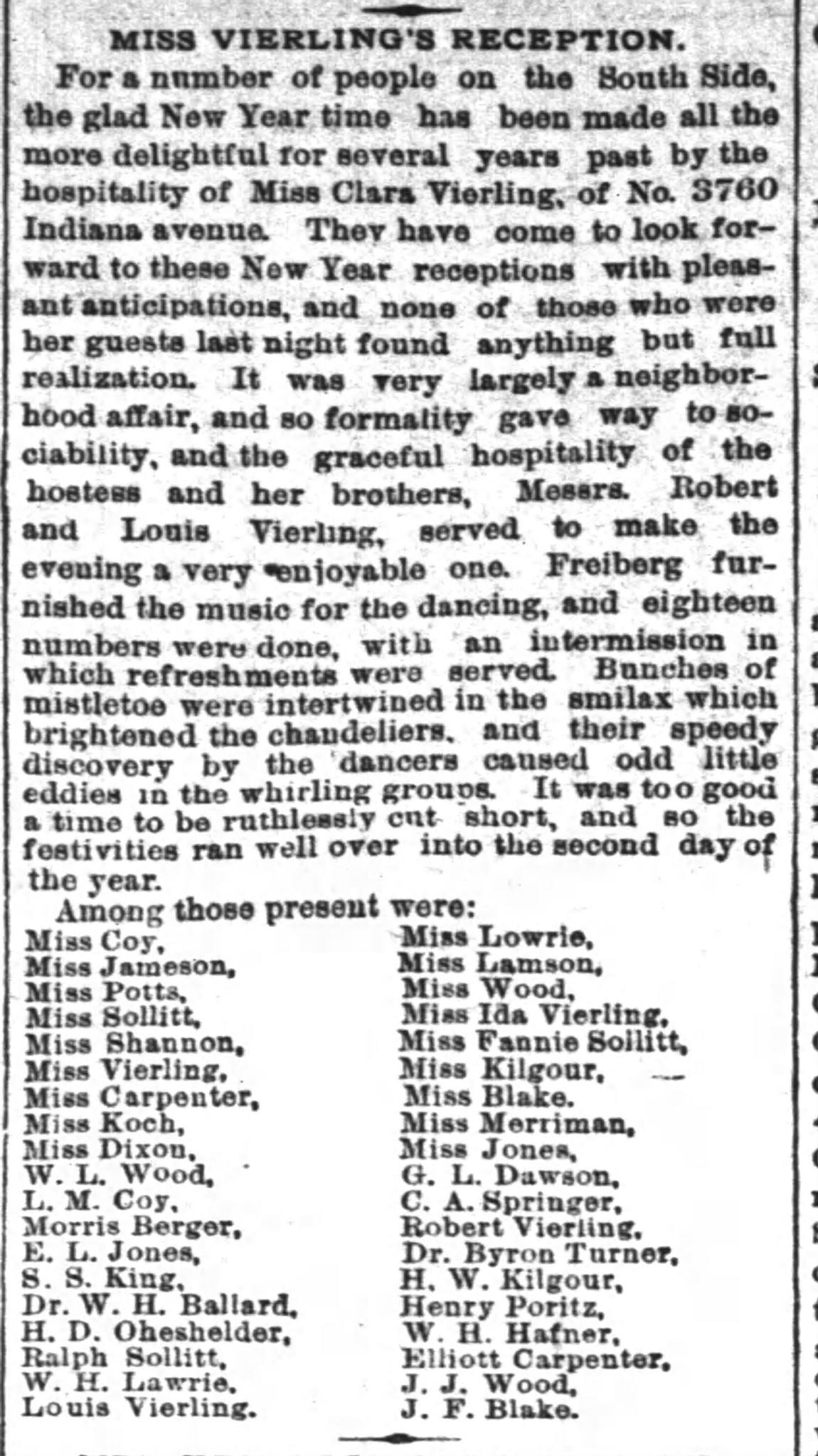
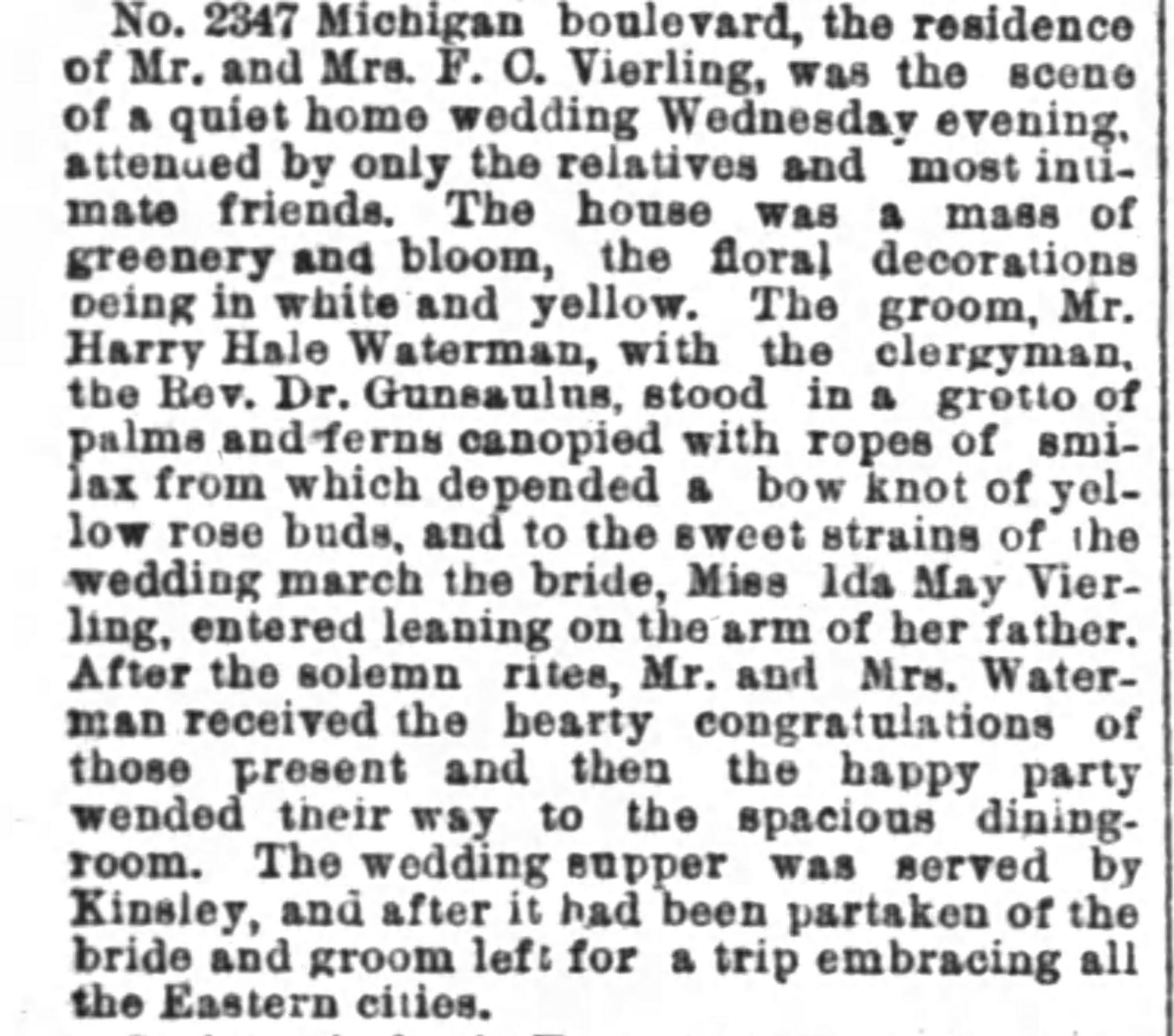
Ida’s aunt, her father’s sister, Miss Clara Vierling, was a star of the Chicago social scene and hosted famous New Year’s Eve parties. Ida was included in the party in 1888, as covered in the attached newspaper article.
In October of 1891, the wedding of Miss Ida Vierling and Mr. Harry Hale Waterman took place at her parents’ house, and was covered in newspaper articles.
The following year the young couple moved into their Honeymoon Cottage.
Ida gave birth to their daughter, Louise, on August 26, 1895.
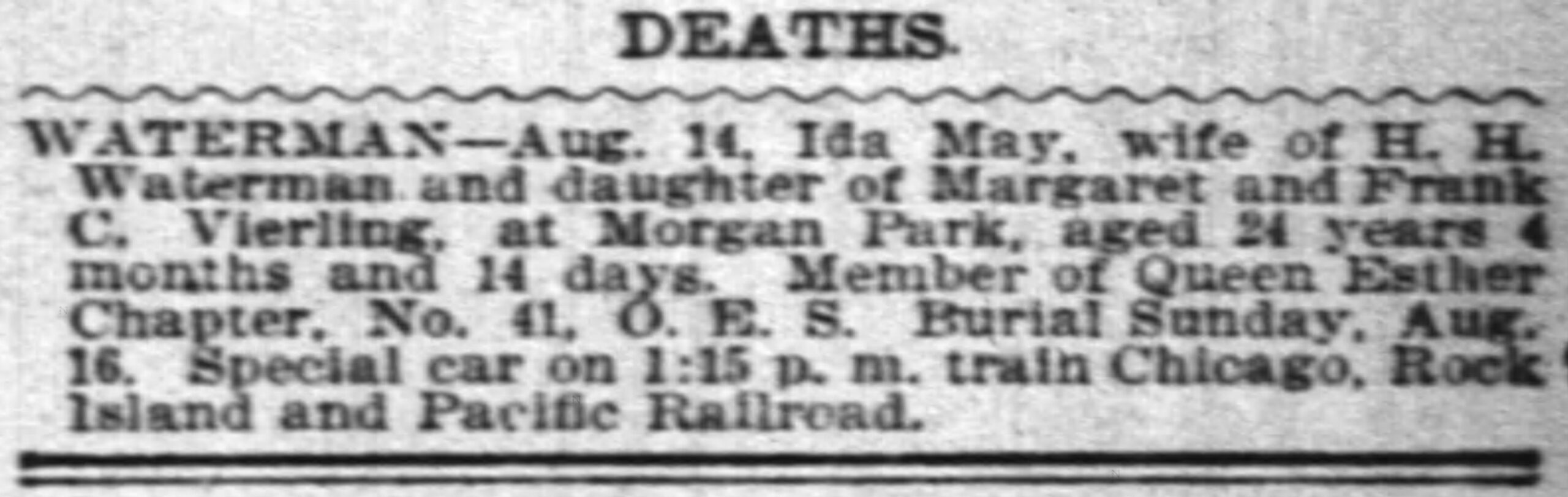
Tragically, Ida died the following year, on August 14, at the age of 24. The cause of death is not known. She was buried in Oak Woods Cemetery.
Waterman left Morgan Park, never to return there again to live, although he continued to design buildings there. He and his baby daughter Louise moved back in with his parents on the 3900 block of South Vincennes Avenue, where he lived the rest of his life.
Next post: Louise Waterman, and Harry Hale Waterman’s second and third marriages.
The RHS exhibit is open to the public for free on Sunday and Tuesday afternoons from 1 to 4 p.m. or by appointment. RHS is located at 10621 S. Seeley Avenue, Chicago.

The Ridge Historical Society
Happy Valentine’s Day – 100 Years Ago
By Carol Flynn
One hundred years ago, Valentine’s Day was emerging as the big holiday it would become during the following century.
The day had its origins as a religious feast day honoring any one of several Christian martyrs named Valentine in early Rome. The Catholic Church “demoted” the day in 1969, basically for not being specific on who exactly was being honored and if there really was a “Saint” Valentine at all. But traditional Catholics and Christians the world over still revere the day.
The day also became a symbol of the coming of spring. The St. Valentine from Slovenia is considered the patron saint of beekeepers.
There are many folk legends connected to Valentine’s Day.
One is that it is the day that birds propose to or marry each other. Another is that St. Valentine brings the keys to roots, and plants and flowers begin growing that day.
Sometime in the Middle Ages, the day started to be associated with romantic love and permanently affixed to the date of February 14. An earlier legend had Valentine cutting hearts from parchment to give to people to symbolize God’s love, and this is considered the possible origin of giving hearts on the day.
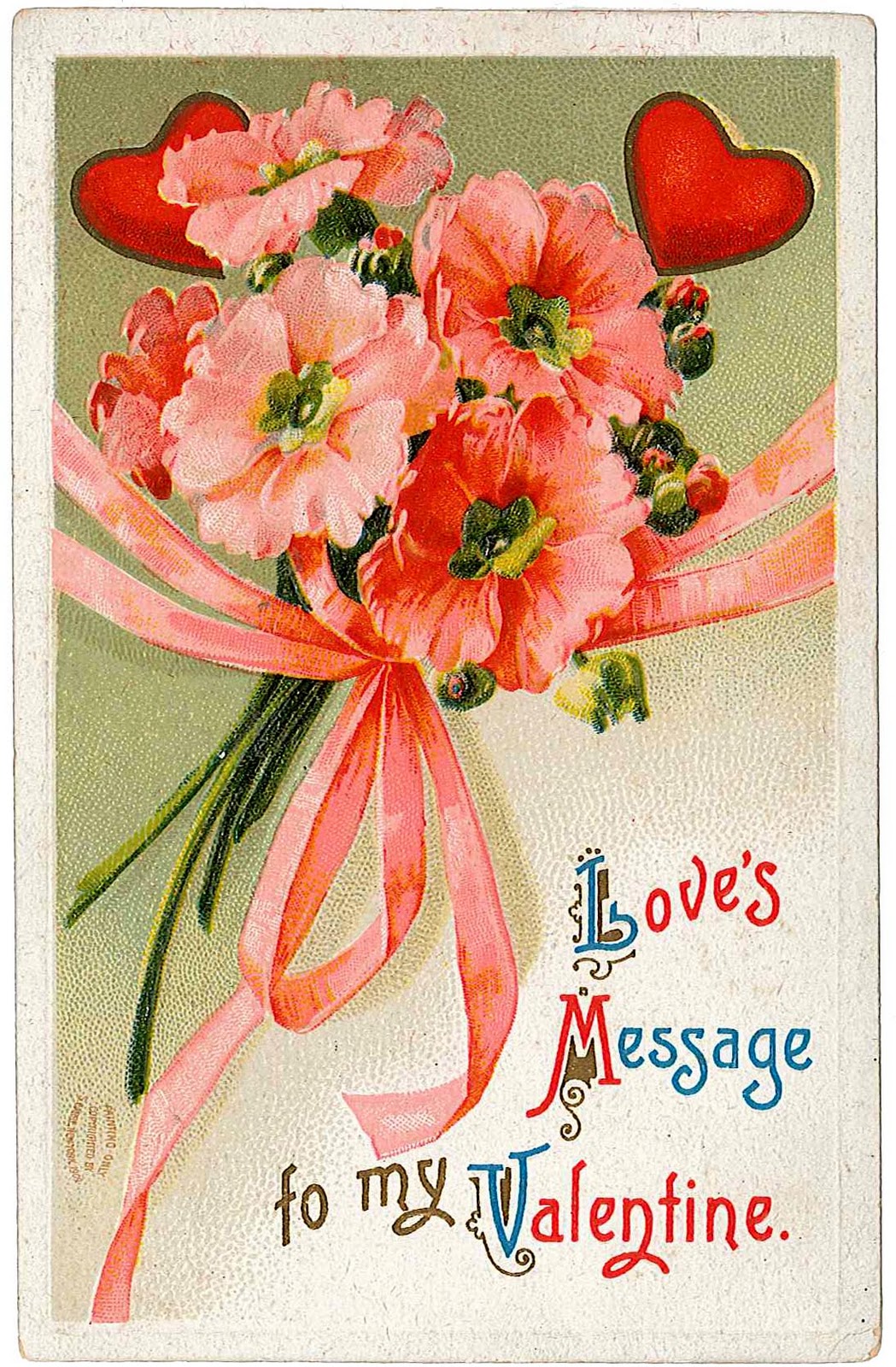
Valentine-themed poetry started being written in the Middle Ages. By the 1800s in England, sending verses of poetry and Valentines made of paper with real lace and ribbons was very popular. In 1868, the British company Cadbury created heart-shaped boxes of chocolates.
And then there were flowers. The red rose was long associated with Valentine and became associated with romantic love. But that was not the only flower considered appropriate to send that day.
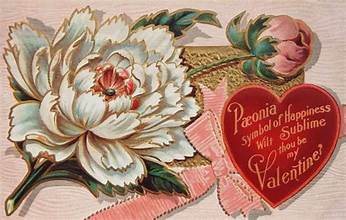
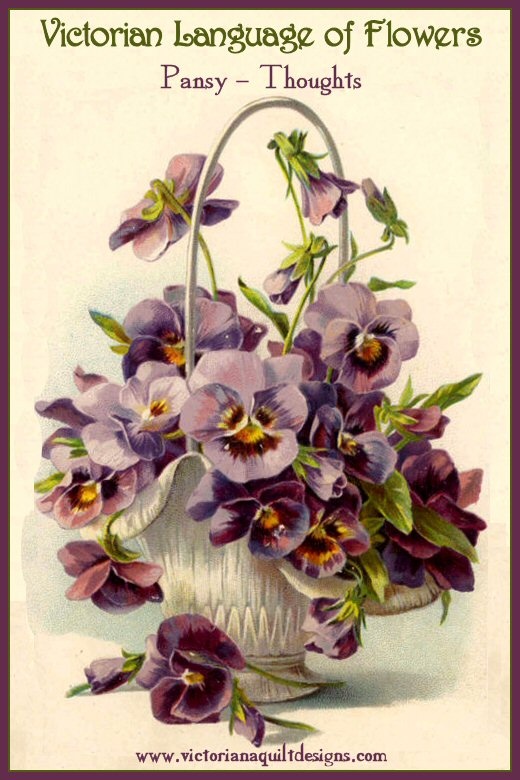
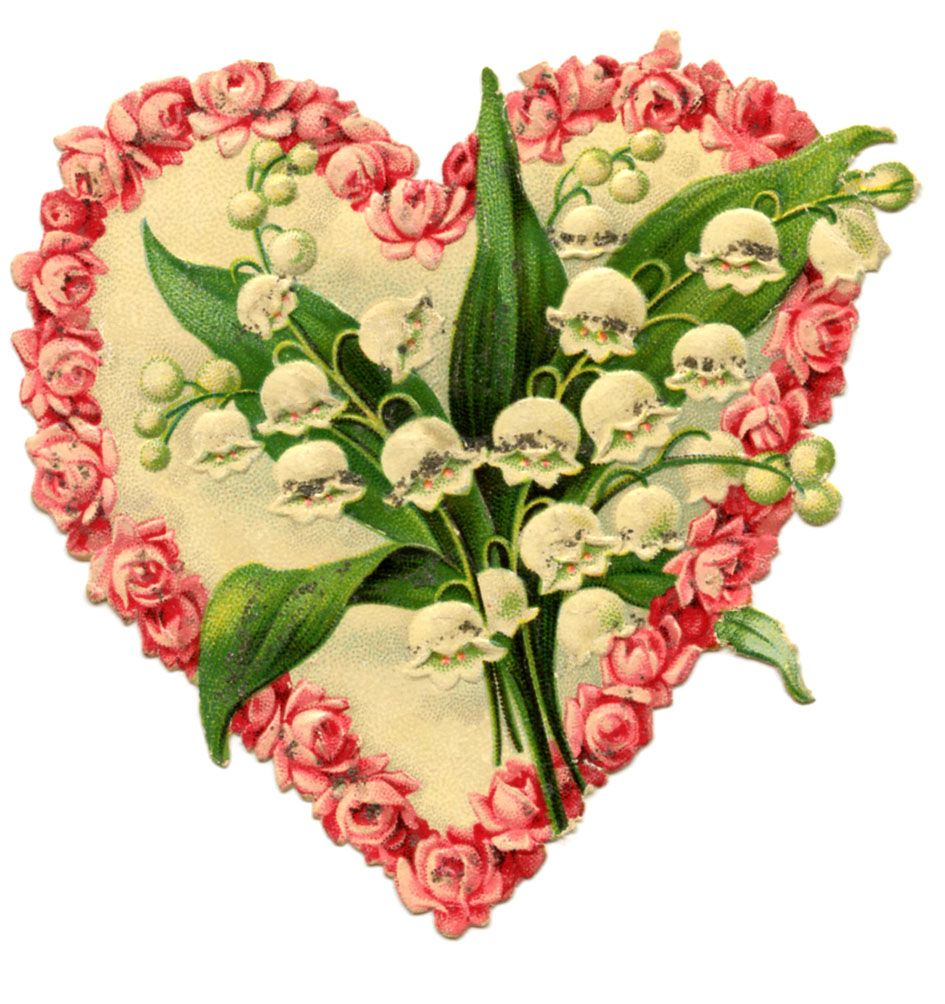
During Victorian times, the “language” of flowers, or floriography, was considered important – different flowers, blooms, and colors had different symbolic meanings. Some examples of other flowers presented on Valentine’s Day included the forget-me-not, with obvious meaning; peonies symbolizing happy marriages; carnations expressing gratitude: pansies representing loving thoughts; and lily of the valley indicating purity of heart.
These customs came to the United States in the 1800s with the English immigrants and eventually spread to the other immigrant groups.
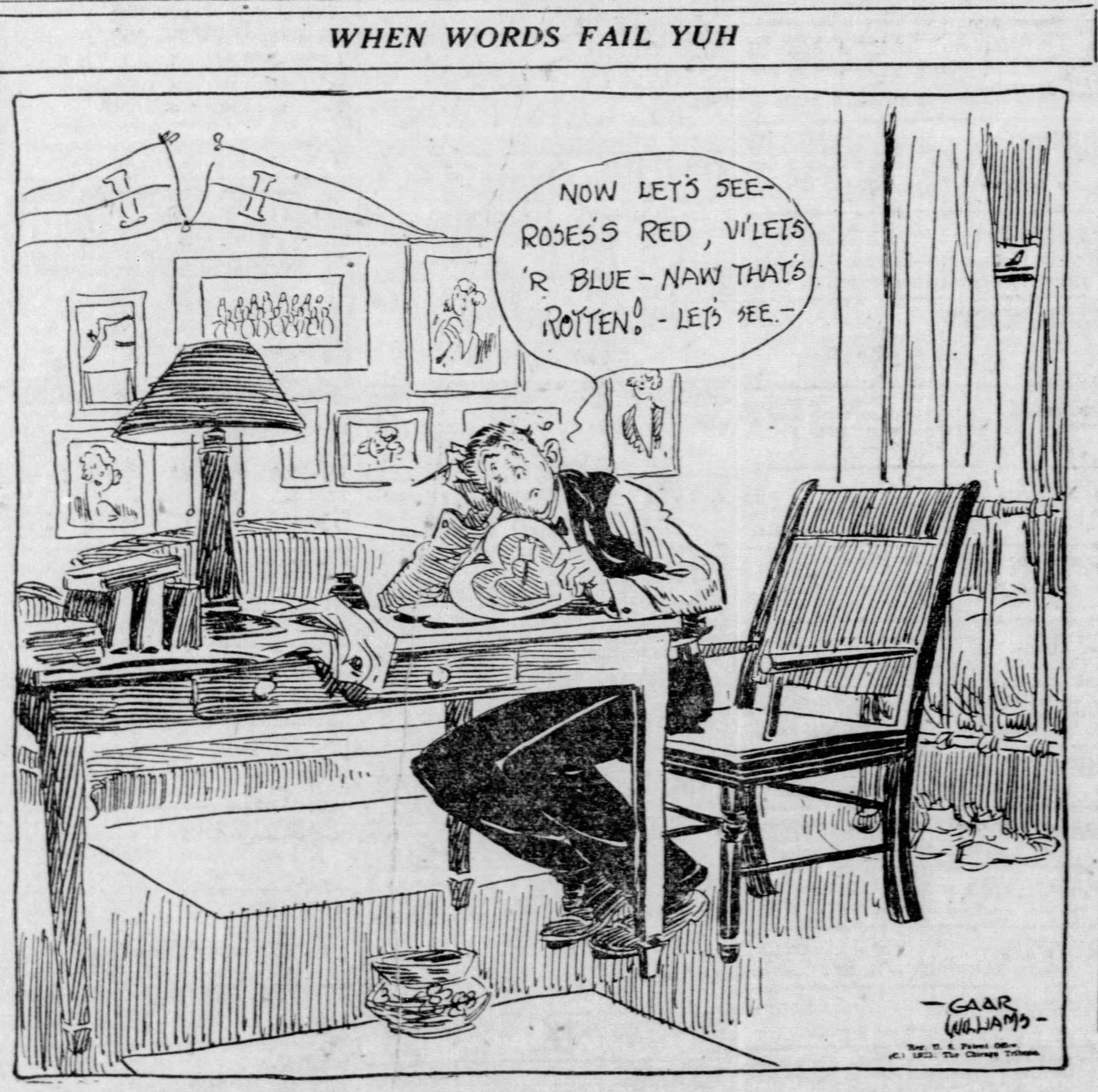
Valentine’s Day in Chicago on February 14, 1925, fell on a Saturday (noted by some as following Friday the 13th). The temperature was in the low 30’s, it was partly cloudy, not too windy, and there was no snow.
The celebrations were private events. Some of the women’s clubs held parties, one with a Valentine and Colonial costume theme. Individuals and couples hosted parties for their friends with games, cards, bunco, dancing, and refreshments. Several parties combined meals and bridge with a Valentine’s theme.
At one church, the Young People’s Bible class held a party. At another, the women in the English Ladies Aid held a church dinner, which was followed by a concert.
For children, the Hobby Club, a radio program they could belong to and receive a membership card, held a radio Valentine’s party, with stories and singing.
One youngster celebrated her 8th birthday with a Valentine’s Day party. A Valentine birthday surprise party was given for a woman by her sons, with dancing, games and singing; relatives came from out of town, turning the event into a family reunion.
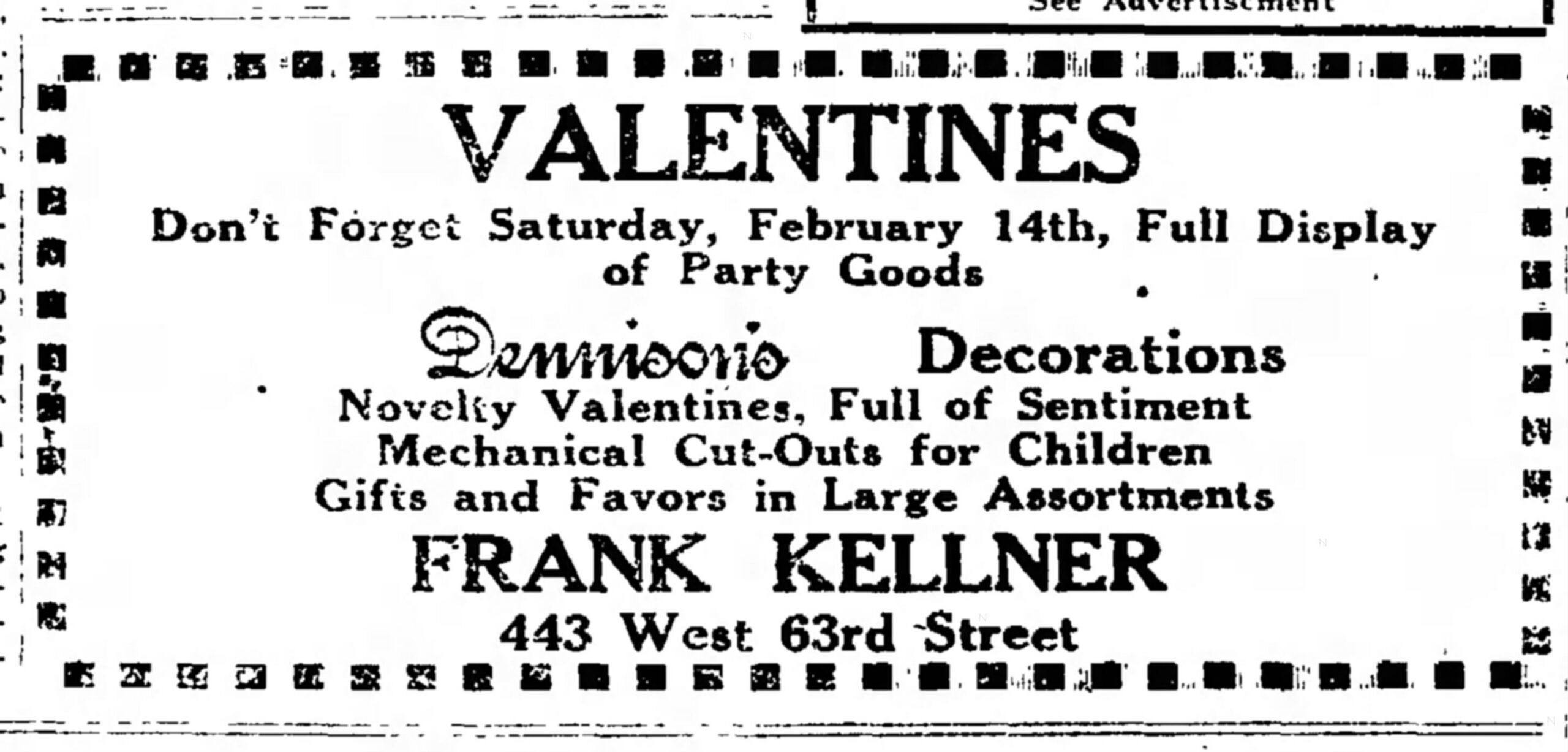
Most Valentines and decorations were still hand-made, although mass-produced cards were available, and decorations from Dennison’s were sold in some novelty shops and available by catalog.
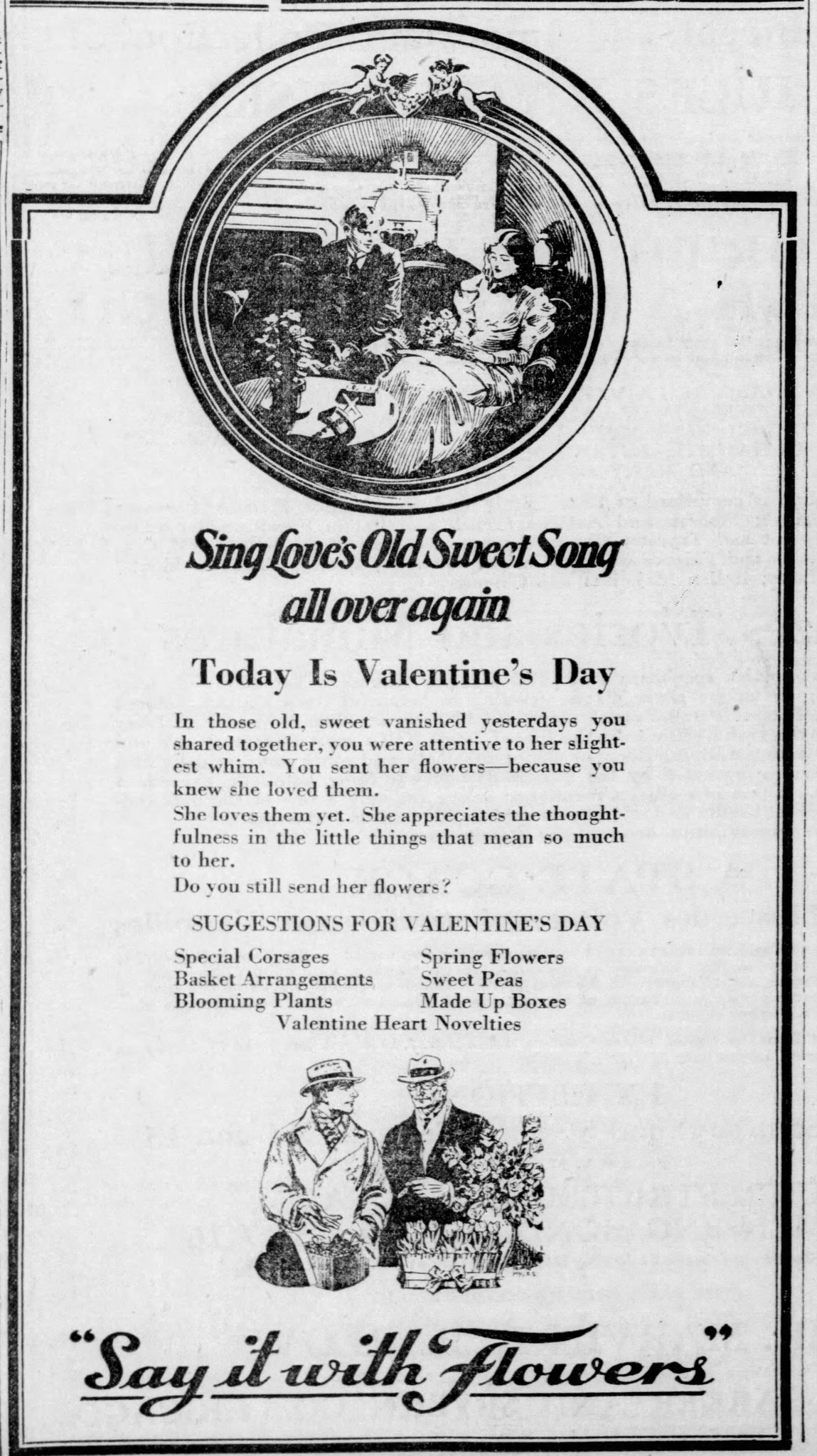
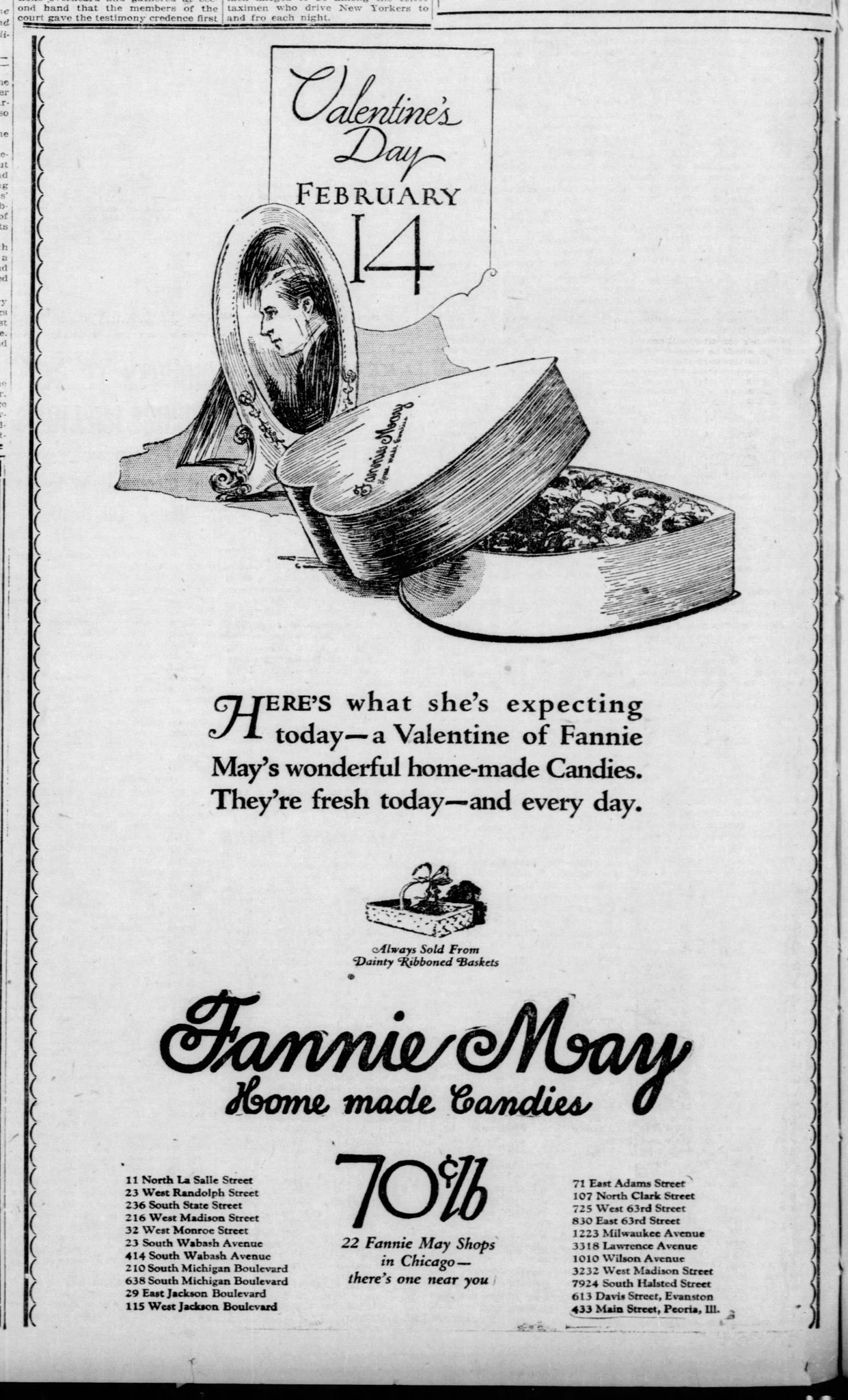
The newspapers included advertisements for flowers and candy.
In the past 100 years, Valentine’s Day has grown to a $20 billion annual business, although the popularity of the holiday has declined in recent years. It’s the number one day for flower sales in the U.S., followed by Mother’s Day. It ranks behind Halloween, Easter, and Christmas for candy sales.
And one more fact about 1925 Valentine’s Day: It was still the Prohibition Era, so no alcohol was legally produced or sold. That’s not to say the private parties were all dry; many people brought their own hip flasks to events. Illegal champagne cost a small fortune.
But Valentine’s Day is low on the list for alcohol consumption, far below days like New Year’s Eve and Super Bowl Sunday.
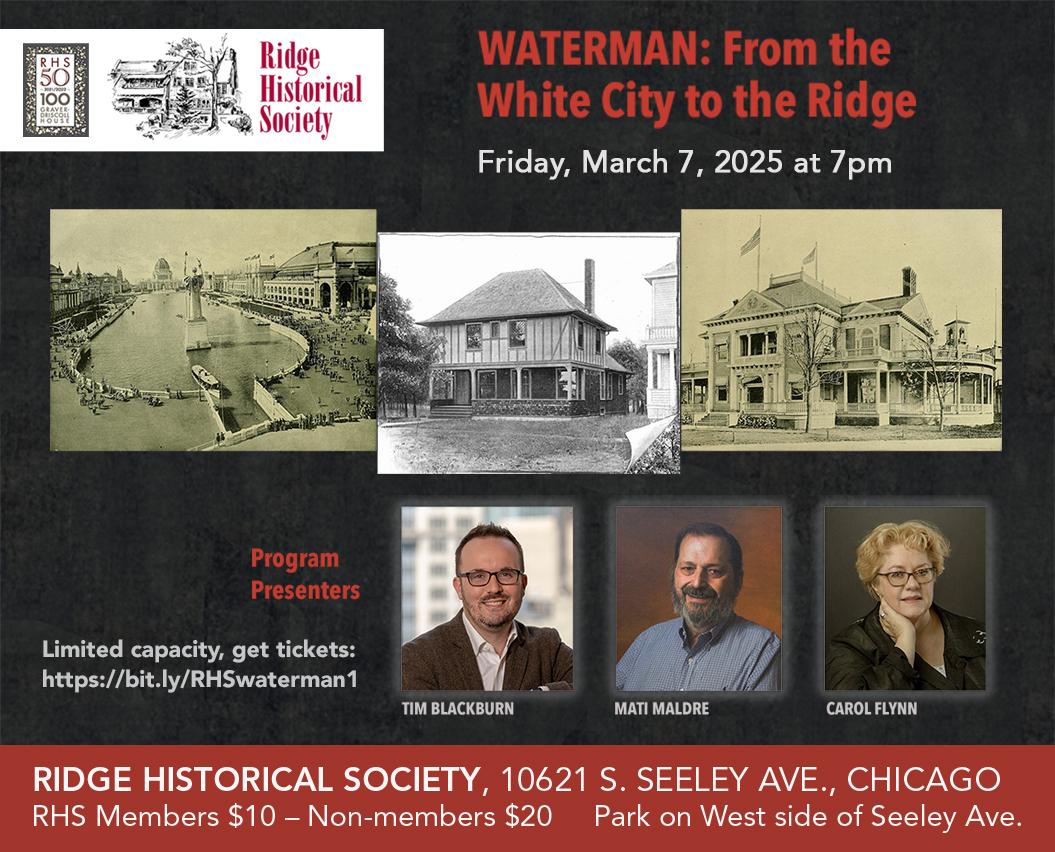
Waterman: From the White City to the Ridge
Friday, March 7, at 7:00 p.m.
Repeating our popular presentation:
Architect Harry Hale Waterman, who is the subject of our latest exhibit, was just 23 years old when he started to build some of his most memorable buildings on the Ridge. In the first part of this program, Exhibit Curator Tim Blackburn will focus on Waterman's influences of the Columbian Exposition and his first employer, Joseph Lyman Silsbee.
Mati Maldre will discuss his architectural photos of thirty Waterman buildings, which were mostly taken in the mid-1980s with a Deardorff 4×5/5×7 view camera.
RHS Facebook Page Author Carol Flynn will then share stories from the lives of Waterman's early clients on the Ridge who made interesting impressions on the community in their day. This has been continued as a series on Facebook to complement the RHS exhibit.
Attendees are encouraged to view the exhibit "Harry Hale Waterman: Unique in any Style" after the program. The exhibit is also open Tuesdays and Sundays from 1:00 – 4:00 p.m., or by appointment, through at least May 2024.
Members: $10 | Non-members: $20 | Students under 18: $5
Ridge Historical Society
10621 S. Seeley Ave., Chicago, IL 60643
Limited Capacity. Get tickets here: https://bit.ly/RHSwaterman1
RSVP: ridgehistory@hotmail.com 773.881.1675

The Ridge Historical Society
Houses Designed by Harry Hale Waterman and the People Who Called Them Home: Part 3 – Waterman’s Second and Third Marriages
By Carol Flynn
This is a companion series to the current exhibit at the Ridge Historical Society (RHS): “Harry Hale Waterman, Architect: Unique in Any Style.”
Harry Hale Waterman’s first wife, Ida May Vierling Waterman, died in 1896 at the age of 24, leaving Harry with a one-year-old daughter, Louise Hale Waterman. The family had been living at 10838 Longwood Drive in the “Honeymoon Cottage” that Harry designed, but now Harry and Louise moved back into Harry’s parents’ house at 3929 Vincennes Avenue. A complete look at Louise Waterman will be covered in the next post.
Six years later, in 1902, Harry, 33, married a second time to Carrie Frances Rowse.
According to records on Ancestry, Frances, as she appears to have been known at least in her later years, was born in 1877 in Ohio. On the 1880 U.S. Census, the family is listed as living in Ohio, and in 1900, she is listed as living in Chicago with her parents, Charles H. and Minnie E., and younger brother William M. at 630 46th Place. Her father’s employment is listed as a baking powder manufacturer. Employment for Frances is not listed.
It is likely that Harry and Frances lived with Harry’s family, which included his parents John and Emma, his sister Jessie, and his daughter Louise. This was not an uncommon situation back then, to have extended families living together.
Few details are really known about this second marriage. However, one encounter in 1906 that received media attention showed that there were issues.
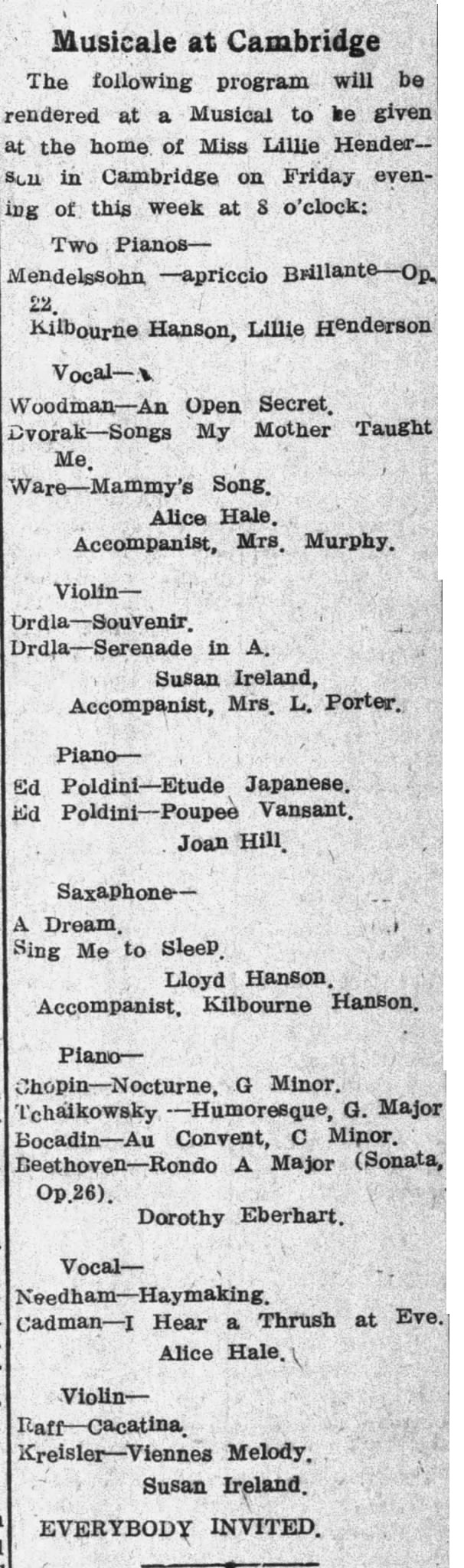
It was reported that Harry “borrowed” a horse and buggy without the owner’s permission to chase after Frances who had departed in another buggy. An article about the incident is attached to this post. The last paragraph refers to a meeting planned for Harry, his lawyer, and the man whose carriage Harry took, at which Harry was to explain his actions.
It would have been interesting to have been “a fly on the wall” for that conversation. Alas, we don’t know Harry’s reason for following his wife that day, but apparently the charges of theft were dropped.
However, Harry and Frances divorced in 1907 after five years of marriage.
The following U. S. Censuses list Frances living with her parents and working as an assistant to her father in his retail businesses. She did not remarry. In 1950, she was living by herself as Frances Waterman in an apartment in the grand brick courtyard building at 2330 N. Lincoln Park West.
According to her obituary, she moved to a retirement home in Bucyrus, Ohio, in 1956, where she was an active member of the Presbyterian Church. The Rowse family were an “old” family there going back to the founding of Bucyrus in 1822. In fact, there was another Carrie Frances Rowse who grew up there, which may be why Frances went by her middle name.
She died there at the age of 84 in 1961 and was buried in the cemetery where many of her relations were buried. Her gravestone reads Frances Rowse Waterman.
Interestingly, one of Harry’s Waterman cousins, Mary Ellen or “Nellie,” married a man named Herman Rouse. Whether this was coincidence, or the families were connected is not readily apparent. Herman’s family reportedly originated in New York and came to Wisconsin. The Rowse Family in Bucyrus originated in Pennsylvania and came to Ohio. But their connections could go back farther, of course, to Europe prior to emigration.
Harry remained single for the next two decades, but in 1921, in his early 50s, he married Alice Hale.
Alice was born in 1895 in Stoughton, Wisconsin, and was a good 25 years younger than Harry. She was a distant cousin on his mother’s side. Her father was Percy Isham Hale, the son of Harry Hale, and her mother was Harriet Grubb Hale.
Percy Hale graduated from Lombard College in Galesburg, Illinois, founded by the Universalist Church, then took over his father’s successful dry goods business. He was also known for being very active in the Universalist Church.
Stoughton, part of the Madison metropolitan area with 13,000 residents today, was small enough in 1900 that 5-year-old Alice’s bronchitis was reported in the newspaper, and large enough that this signified the family’s prominence in the community.
It appears that Alice was popular and accomplished. She was president of her high school senior class in 1913. She sold Christmas seals to raise money for charity. She participated in her church.
She attended and hosted parties. In 1911, she hosted a St. Patrick’s Day party as a birthday celebration for herself (March 18 birth date) and a friend with a birthday at the same time.
Her real claim to fame was as a talented vocalist (mezzo soprano), pianist – and whistler.
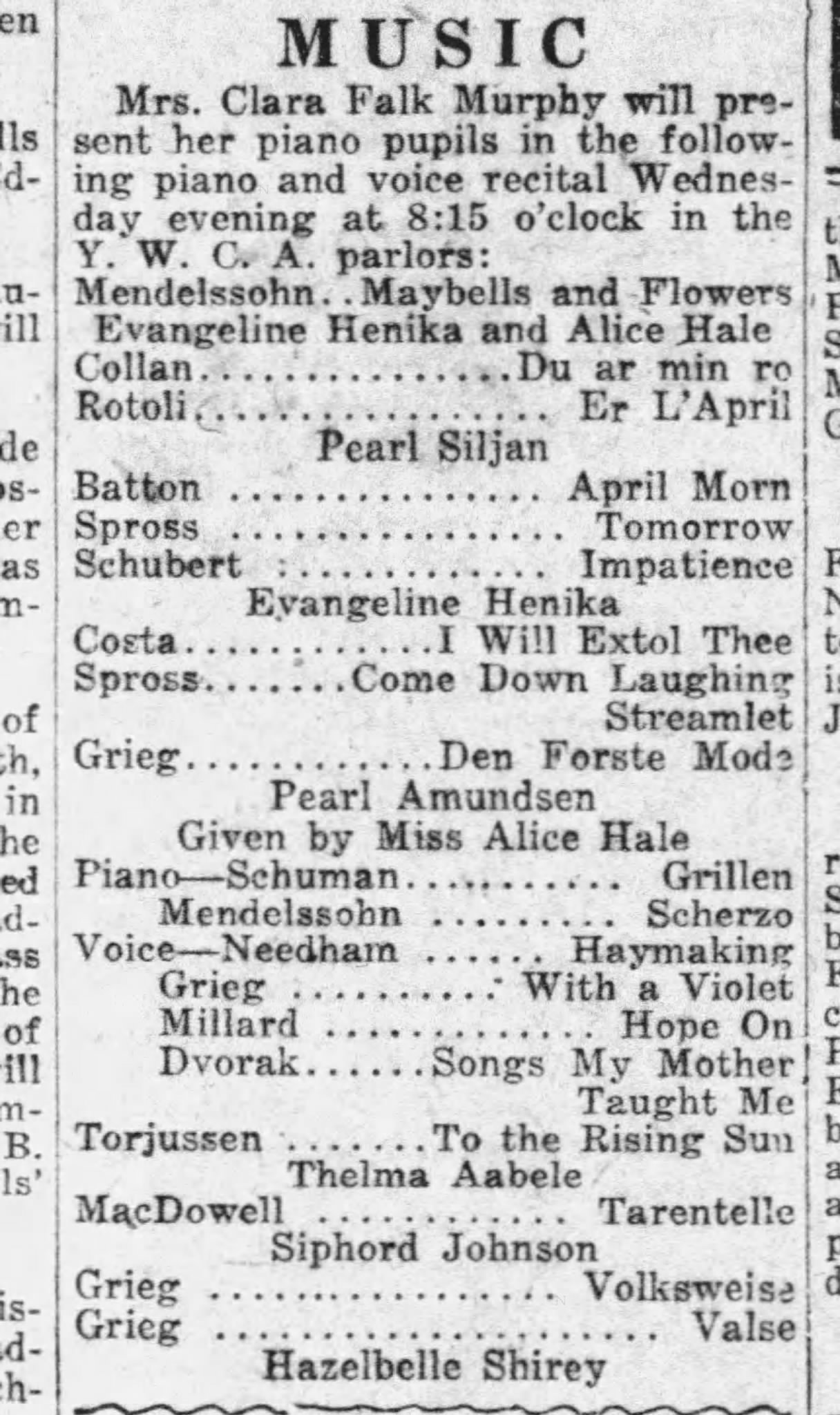
For many years, Alice was a student of Clara Falk Murphy, who was highly regarded for her own performance, composing, and teaching skills. Ms. Murphy arranged many concerts and recitals in Madison and the surrounding areas, and Alice was prominently featured. Alice was also a soloist for her church.
Alice was mentioned for her whistling skills, which not only entertained friends at parties but were performed on stage. In 1921, she performed “The Stars and Stripes Forever” at a theater.
Alice graduated from Lombard College, her father’s alma mater.
Her engagement to Harry Hale Waterman was announced in 1921. She was given at least three bridal showers by friends and organizations in which she was active. Gifts included a silver vase and a hand-painted fruit bowl.
One party was a handkerchief shower – women always carried a handkerchief back then, and there were special ones for special occasions. Another included an afternoon of the attendees’ hemming napkins for the bride.
Alice was a member of a bridge club and the night before her wedding, one of the women of the club held a party for her.
The wedding took place at her parents’ home in Stoughton in November. The newlyweds spent their first Christmas back there with her parents.
Harry and Alice made their home on Vincennes Avenue. By then, Harry had built several apartment buildings and was now a landlord.
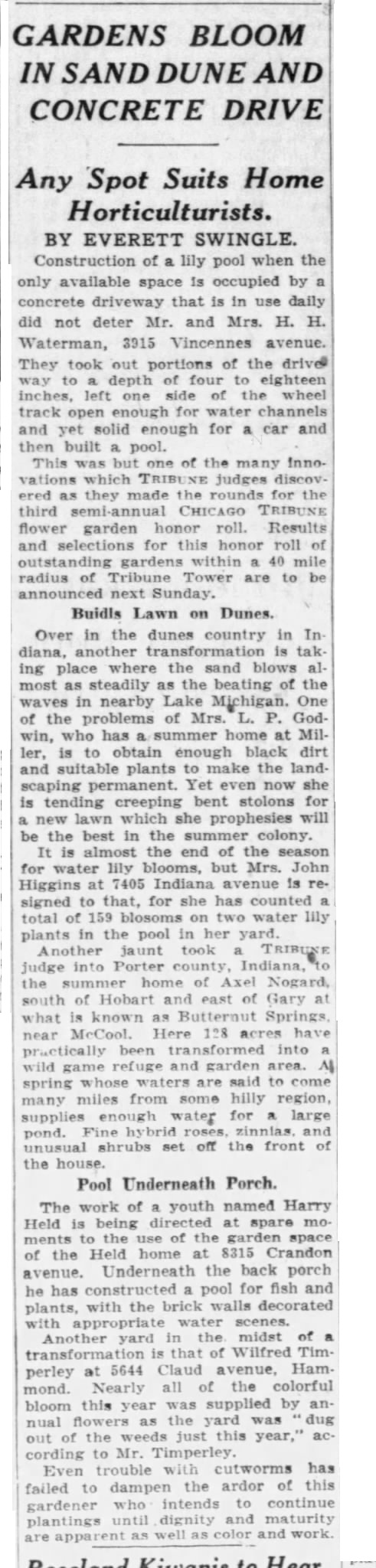
In 1931, they participated in a “flower garden honor roll” for the Chicago Tribune, which was looking for outstanding gardens within a 40-mile radius of the Tribune Tower. They won honorable mention for turning their driveway into a lily pool.
During the Great Depression in the 1930s, it appears Harry had to come out of retirement and return to active work. In 1937, the Executive Committee of the Chicago Chapter of the American Institute of Architects noted in its minutes that health issues prevented Harry from keeping up with his dues. Citing Harry’s high standing in the profession and advancing age, the committee voted to waive his dues and award him emeritus standing.
This past year, Harry’s great nephew, David Hale Hand, age 92, the adopted grandson of Harry’s sister, Jessie, shared some remembrances with RHS researchers of childhood visits with “Uncle Harry” and “Aunt Alice.”
Annually, when he was 2 to 6 years old, his family visited Chicago from California.
David wrote of these trips: “We stayed with Uncle Harry on Vincennes Avenue while in Chicago. At that time, this was a very fashionable neighborhood. Uncle Harry was an Architect and [he built] this block of Victorian style brownstones. He designed them, built them, owned them, and was the landlord. That provided his income for the rest of his life. He was a gruff type that always started his day with a raw egg and finished with a big cigar. His wife Alice was a dear. As little kids, he scared the hell out of us most of the time.”
Anecdotal stories from other sources also report that Harry liked to get together with William Gregson, one of his clients, and others, to smoke a friendly cigar.
Harry died in 1948, leaving Alice a widow at age 53. Alice married Dr. Chester William Darrow in 1961. He was a pioneering psychologist at the Institute of Juvenile Research and invented one of the first lie detector machines. Alice was a lecturer at the Museum of Science and Industry.
Dr. Darrow died in 1967, leaving adult daughters and grandchildren from a prior marriage, and Alice as his widow.
Alice died in 1975 at the age of 80. She was buried back home in Wisconsin.
The next post will look at Harry Hale Waterman’s only child, Louise Hale Waterman Hess.
The exhibit is open to the public for free on Sunday and Tuesday afternoons from 1:00 to 4:00 p.m. or by appointment. RHS is located at 10621 S. Seeley Avenue, Chicago