Explore the RHS Facebook Archives, a rich repository of local history written by Carol Flynn. For two decades, Carol brought a deeply dedicated voice to public education at RHS. Her role as Facebook administrator through mid-2025 naturally extended her prolific research into meticulously detailed articles, most notably her multi-part historical series posts. Today, Carol continues her local history writing for The Beverly Review and other outlets.
2024
The Ridge Historical Society
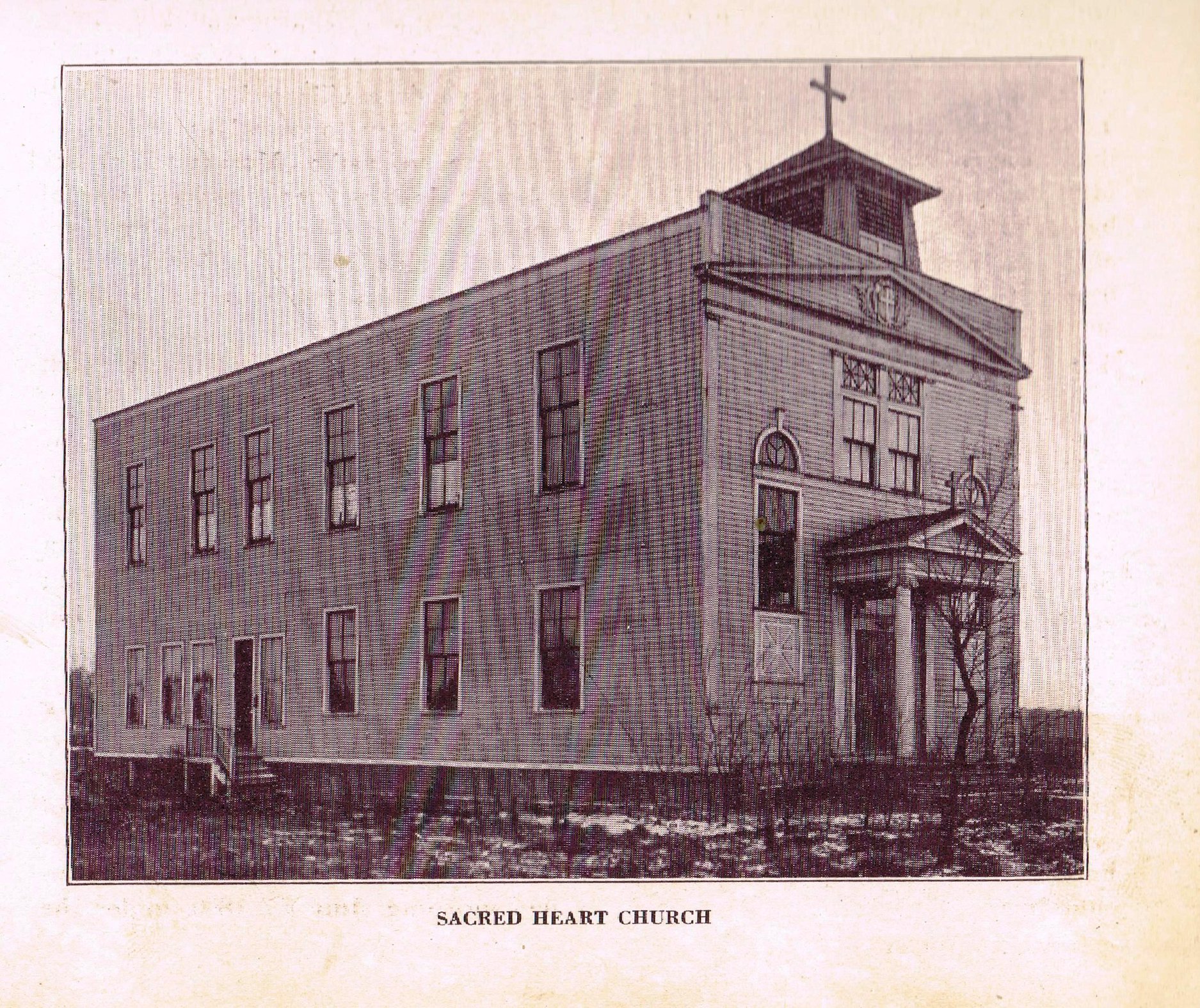
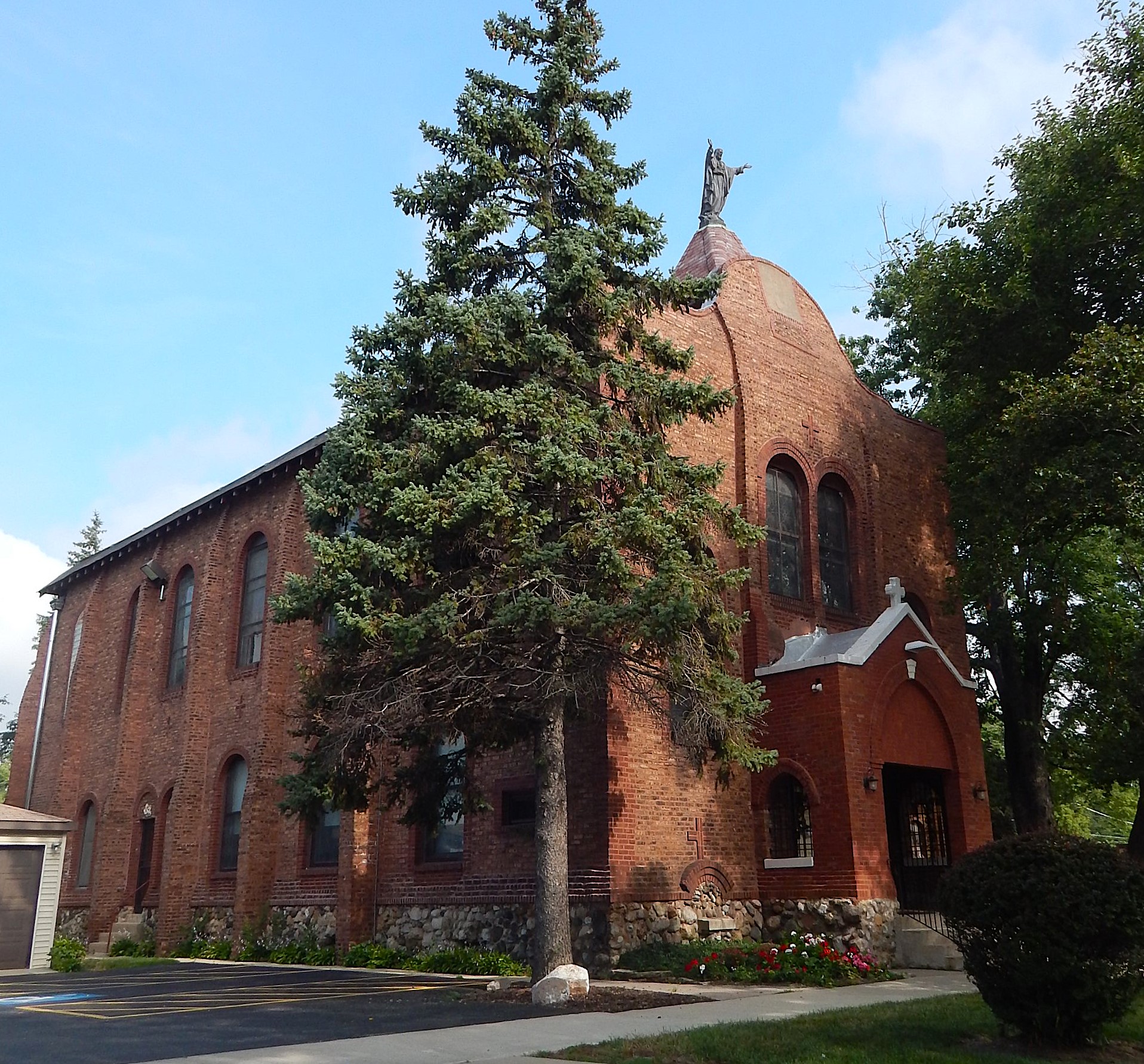
Sacred Heart Church
By Carol Flynn
Sacred Heart Church in Morgan Park was part of Open House Chicago (OHC) this past week-end, prompting questions about its history. The researchers/writers of RHS have published articles on the history of all the local places participating in OHC at one time or another, and are always willing to share that information.
Here is information on Sacred Heart Church, one of the true gems of the community.
The Blue Island Ridge has its own “French connection.” There was an early group of settlers here, and their legacy to the community is the historic and charming Sacred Heart Church at 11652 S. Church Street.
Rich clay deposits on and around the Blue Island Ridge led to brick-making becoming an important local industry in the early 1900s, and the workers established their homes in the area. Sacred Heart was originally founded in Alsip in 1892. After an unfortunate fire, the church moved to its current location to be closer to the Purington Brick Yards at 119th and Vincennes, where many of the French people worked.
The current church was built in 1904-5 originally as a wooden frame church, built on posts in a swamp. The church was established as a “national church” which meant it would serve a particular nationality, not a defined geographic area.
The story goes that the workers were allowed to take “seconds” of bricks from the brick yard, those bricks that were burnt in the ovens and therefore couldn’t be sold, over to the frame church one or two at a time. By 1922, when enough bricks had been saved, the present brick facade was added. The church as it stands now is actually the old frame church clad with this donated brick.
Father Raymond DeNorus, a missionary priest born in France, became pastor in 1912. From all accounts, he was a very charismatic man. He loved a good time, yet he was a man deeply devoted to his faith. He dispensed medicine, holy water and blessings from his side door.
Numerous miracle cures were reported to have taken place over the years. Crutches, canes and braces left abandoned at the church were hung on the side walls. Services at the church drew large crowds and it became a place for pilgrimages.
During this time the church became known as the Shrine of the Sacred Heart, a shrine being a special place of devotion that attracts travelers from afar.
Fr. DeNorus retired in 1935. With time, most of the French families moved on and were replaced by German and Irish workers.
In 1979, the Archdiocese of Chicago under John Cardinal Cody decided to close and demolish Sacred Heart, citing as its main reasons a shortage of priests and the expense of construction needed to correct building code violations.
Members of the congregation and the greater community rallied to restore and preserve the church. “Save Our Shrine” became the rallying cry.
The church was stripped of all its possessions. The congregation held Mass out in the parking lot. Sacred Heart Church was closed from 1979-1982. It likely would have been demolished, but then Cardinal Cody died.
The new Archbishop, Joseph Bernardin, agreed to review the matter. He reopened the church and celebrated Mass there in 1983. The church was reestablished as a "mission church" operating as part of the Holy Name of Mary Parish in Morgan Park.
The people of Sacred Heart have maintained their church for an additional 40 years. The church was visited by the late Francis Cardinal George, who was so taken with the church he said he could consider living there when he retired.
The devotion to the Sacred Heart of Jesus originated in France in the late 1600s when a nun, Saint Margaret Mary Alacoque, claimed that during a series of apparitions, Jesus promised certain blessings to those who practiced devotion to his Sacred Heart. The Vatican’s position is that the manifestation and promises are true. The name Sacred Heart was very fitting for a French mission church in Alsip/Morgan Park.
The Ridge Historical Society
October is National Pizza Month – Pizza on the Ridge
By Carol Flynn
People spend countless hours debating which restaurant serves the “best pizza” but it doesn't really matter. One person might like cracker-thin crust with pepperoni, someone else might like “Chicago-style” deep dish with spinach. They’re both correct, and neither is likely to change his or her mind. Pizza preferences, like any other food choice, are subjective and individual.
U.S. residents love pizza and helped take it from a traditional Italian dish to a worldwide favorite.
The annual calendar has at least 10 recognitions for pizza, starting in January with National Pizza Week and ending in November with National Pizza With the Works Except Anchovies Day. October is National Pizza Month, when people are encouraged to patronize local pizza places – as if extra encouragement is ever really needed.
Pizza has been popular in the U.S. since the late 1940s. Although there were a few pizza restaurants prior to that, it was soldiers returning from World War II service in Italy who brought back a newfound taste for the dish, causing it to go mainstream.
Newspaper articles helped Americans learn that the correct way to
pronounce the word was “pete-za.”
The concept of pizza, a flat bread with toppings, goes back to antiquity. Many cultures had some version of that. After tomatoes were introduced to Europe from South America in the 16th century, Naples and Sicily, then part of Spain but later within the boundaries of Italy, came up with the basic template for the “modern” version of “traditional” pizza: flat dough covered with tomatoes in some form and cheese.
Italian immigrants brought pizza with them to the U.S. starting around the late 1800s. They mostly settled in the large northern cities – New York, Boston, Chicago. Like many ethnic dishes, each family had its own favorite pizza recipe. It was quick to prepare, easy to serve, and inexpensive, which helped stretch dollars between paydays.
Pizzas first started showing up in taverns as free snacks, using the tavern owner’s personal recipe. The more pizza the patrons snacked on, the more beer and wine they ordered.
Pizza was also served at church events and festivals in Italian neighborhoods.
To make it authentic pizza, the dough had to be hand-made and stretched out by hand, and the pizza baked in a brick oven over a wood fire. Pizzas were as often made in rectangular form in sheet pans as they were made in the round form. The standard of a pizza as a "pie" came later.
Although its actual origins are obscure, the pizza Margherita from Naples, comprised of simple dough (flour, water, yeast, and salt) topped with extra virgin olive oil, crushed peeled tomatoes, mozzarella cheese, and fresh basil leaves, was one of the earliest “standard” pizzas. It was made in a round shape.
Pizza was mentioned in Boston in 1904, but the first pizza restaurant in the U.S. is considered to be Lombardi’s in New York City. The Lombardi family started with a grocery store in 1897 and sold “tomato pies,” an early name for pizzas, to factory workers at lunch time. In 1905, they opened a pizzeria restaurant.
In Chicago, historians recognize Tom Granato’s restaurant at 907 West Taylor Street near Halsted Street as the first pizza restaurant in the city. The Granato family, with roots in Naples, started with a bakery, then opened the restaurant in 1924.
In a newspaper article, Granato’s pizza was described as “a dough similar to that of an English muffin rolled out as a pie crust with fresh cut up Italian cheese, covered with little Italian pear tomatoes and sprinkled with olive oil” baked in a brick oven for a few minutes. It was served in a tin pie plate, cut into sections, and eaten with the fingers.
Granato’s was torn down in the early 1960s to make way for the new University of Illinois Chicago Circle campus.
Other places started offering pizza as a “specialty.” Tufano’s in Little Italy served it on Friday and Saturday nights. Uno’s opened up and created deep dish pizza which has become a Chicago trademark. The Malnati and Baracco families got involved early in the pizza business.
In the late 1940s, restaurants serving pizza started to proliferate.
Today’s Vito and Nick’s Pizza at 8433 S. Pulaski Road, which grew out of a tavern started in 1923, expanded its menu to include pizza in 1946. One of the oldest pizza places still in existence in the city, people from the Ridge likely visited there as they still do today.
Although it will never be known with any certainty when the first bite of pizza was enjoyed on the Ridge, pizza likely first showed up in the city of Blue Island, which had a large Italian community. By 1950, pizza was mentioned as being served in taverns, and at the annual festival and carnival at St. Donatus Church, where it was made by the women of the parish.
At the time, a store in Blue Island advertised the ingredients for making pizza at home – homemade sausage, scamorza and other cheese, and oregano.
At least two restaurants on Western Avenue in Blue Island advertised pizza by 1950–51. They were Nino’s Club Trieste at 13312, and the Pizzeria Palace at 12424. These restaurants served “American” dishes like ribs, steaks, and chicken along with Italian specialties.
In the 1950 – 70s, musical entertainment in restaurants in the Blue Island area was frequently provided by the Garetto Twins, Larry and Angelo, who had a music business. They eventually got involved with their own pizza establishment, Beggar’s Pizza, started in 1976. Still in operation with multiple outlets, this is the oldest pizza business in Blue Island.
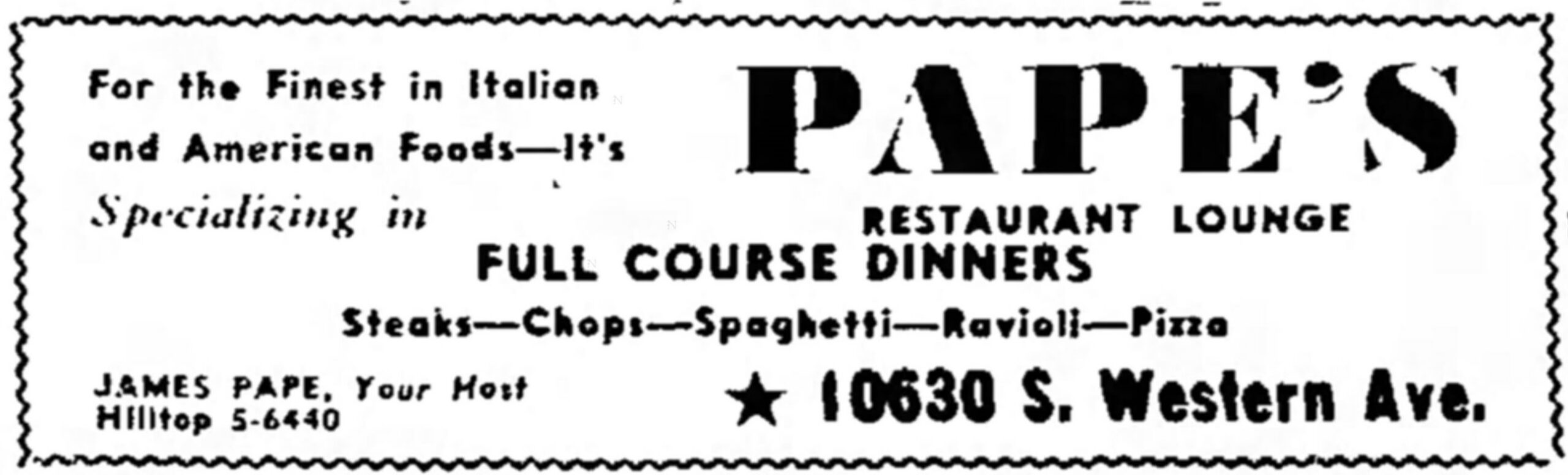
The first advertisement found for a restaurant serving pizza in Beverly was for Pape’s Restaurant and Lounge at 10630 S. Western Avenue in 1950. In a review, Pape’s was described as “a handsome restaurant and lounge where every attention goes into making your dining and wining visit a most enjoyable one.”
Owner James Pape featured “wonderful Italian food” including pizza pie, “along with plenty of American items.”
Around this same time, fresh and frozen pizzas were made available to the South Side at the popular food court in the lower level of Gately’s Peoples Store at 112th Street and Michigan Avenue.
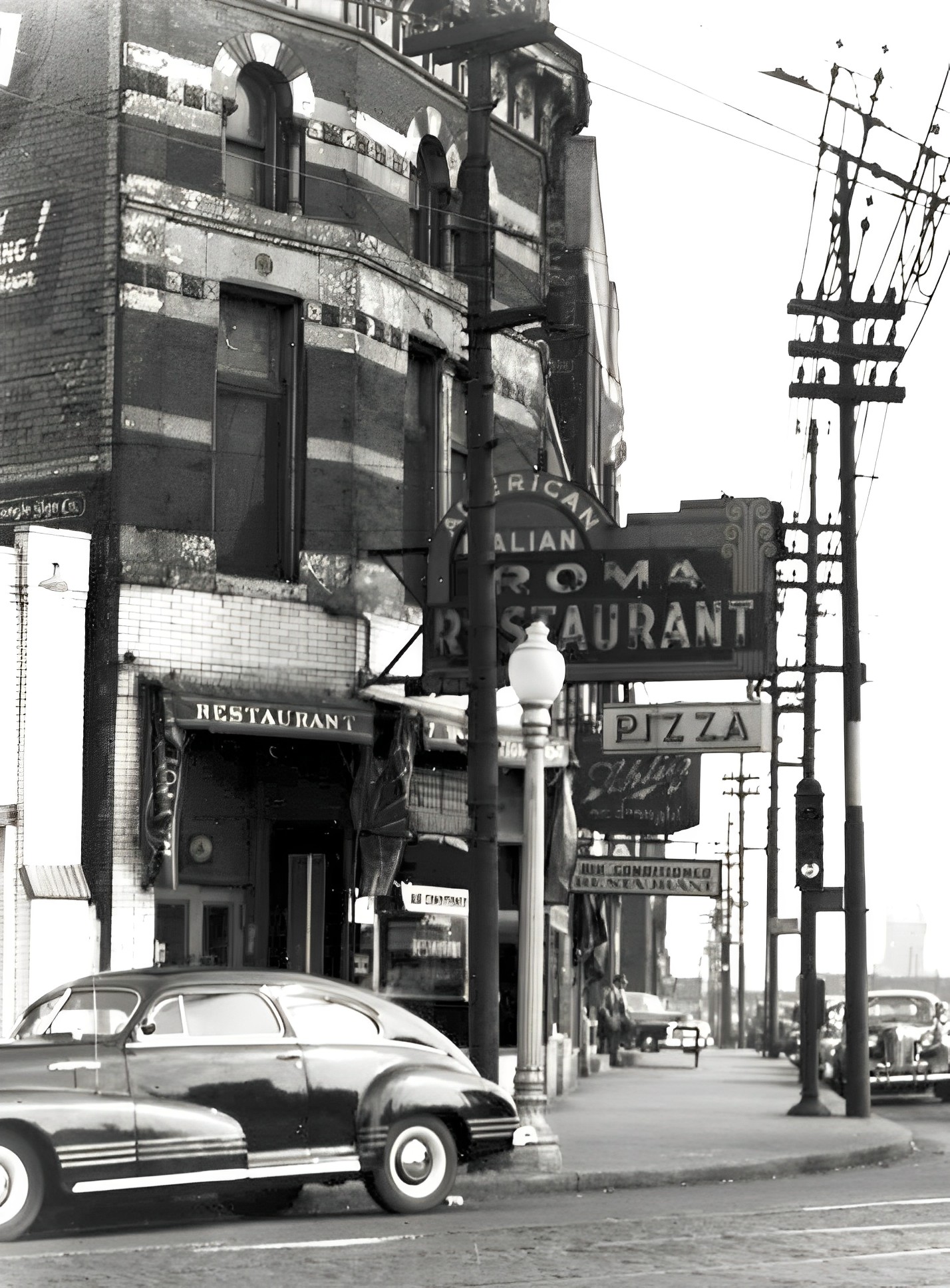
James Gately, head of the Irish family who owned the store and a resident of Beverly, apparently purchased the pizzas from Roma’s Banquet Hall, Restaurant and Tavern at 93rd Street, Commercial Avenue, and South Chicago Avenue.
By then, restaurants were not only delivering hot pizzas (for free), but they were also selling fresh unbaked pizzas and frozen pizzas. Frozen dinners were just being introduced to the post-war baby-boom families.
According to the Southeast Chicago Historical Society, the Roma’s location started as a restaurant in 1918. In 1948, the business was bought by the Lombardi family, and Roma’s began. A pizza oven was installed at that time. Roma’s is still open.
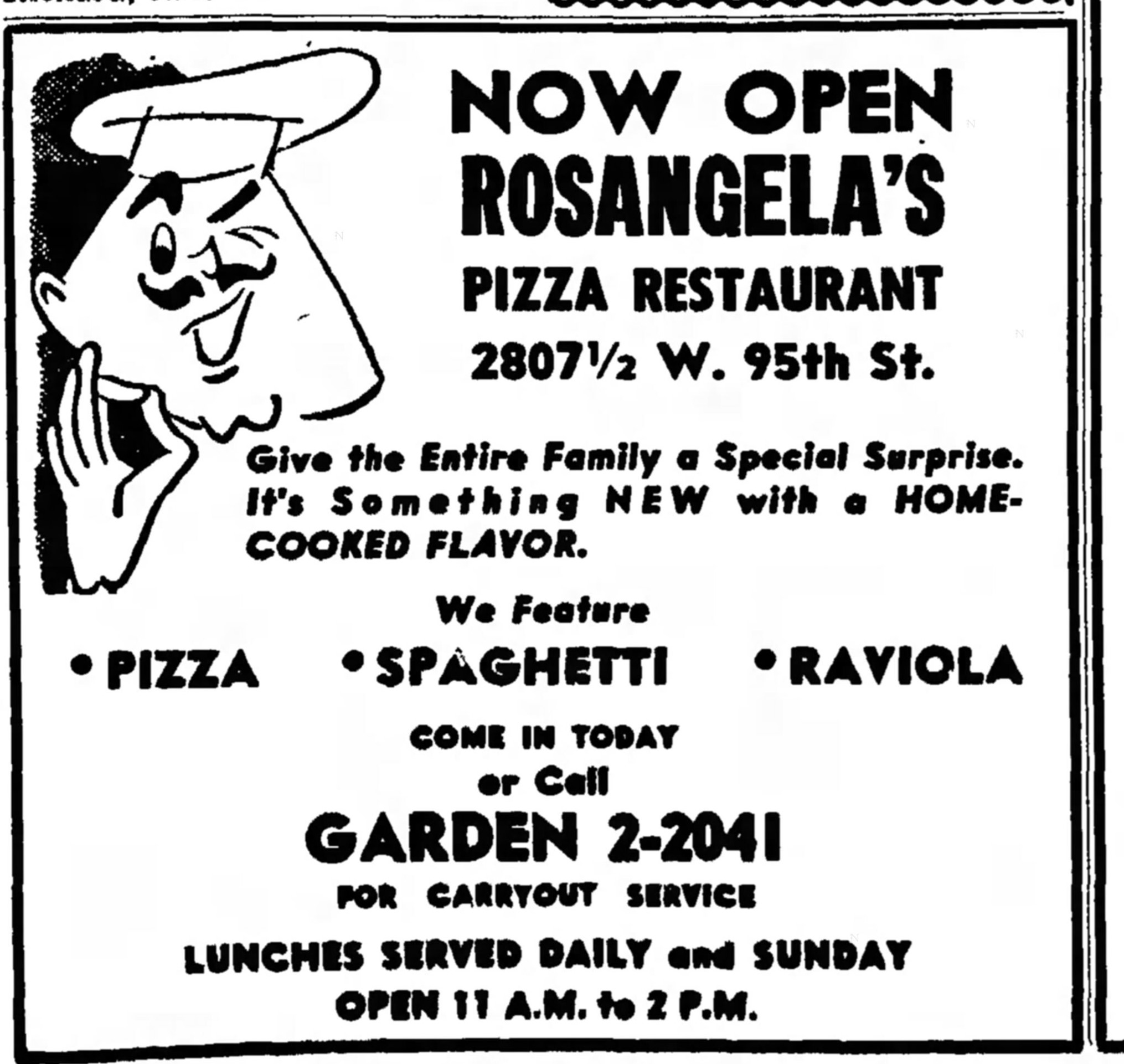
Rosangela’s Pizza on 95th Street in Evergreen Park started as a luncheon place that served pizza in 1954. Often described as an “old school pizzeria” the restaurant is still in operation today, now likely the oldest pizza place on the Ridge, celebrating 70 years in business.
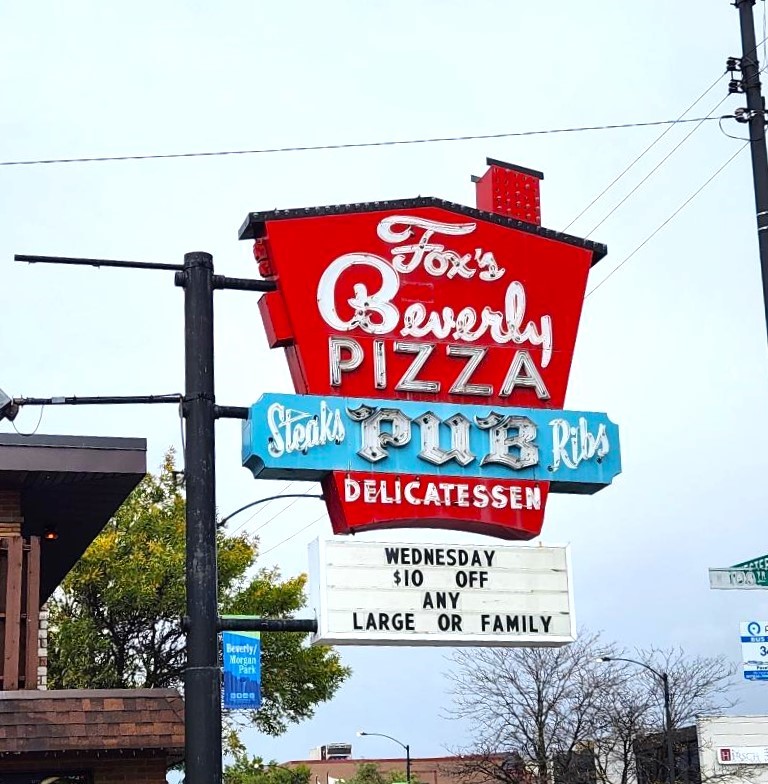
In 1964, Tom and Therese Fox took over a pizza carry-out business on 99th Street and Walden Parkway, and they renamed it the Beverly Pizza House. In 1967, they took over the building and deli business at 100th Street and Western Avenue from Mafalda Capone Maritote, Al Capone’s sister, and opened Fox’s Pub, an Irish pub serving pizzas as its specialty.
Now the oldest pizza place on the Ridge in Beverly/Morgan Park, Chicago, Fox’s Restaurant and Pub is run today by Tom Fox, Jr., and is celebrating its 60th anniversary this year.
To answer the question of who has the best pizza – well, it depends on what you have a taste for, as each pizza restaurant has its own way of doing things, growing out of the tradition of serving a family’s specialty.
For patrons who want to check out the pizza places near or on the Ridge that have stood the test of time, here is the summary:
Vito and Nick’s Pizza at 8433 S. Pulaski Road, although not on the Blue Island Ridge, started serving pizza in 1946 and is one of the oldest pizza places in the city of Chicago.
Rosangela’s Pizza at 2807 W. 95th Street in Evergreen Park, likely the oldest pizza place on the Ridge, started serving pizza for lunch in 1954.
Fox’s Restaurant and Pub, 9956 S. Western Avenue, started serving pizza at its first location on Walden Parkway in 1964, making it the likely the oldest pizza place on the Ridge in Beverly/Morgan Park, Chicago.
Beggar’s Pizza opened in 1976 at the corner of 127th Street and Western Avenue, and today with multiple outlets is likely the oldest pizza place still in operation in the city of Blue Island.
The Ridge Historical Society
Happy Halloween
By Carol Flynn
Halloween originated in Ireland and came to the U.S. with the Irish immigrants in the 1800s.
They believed that at this time of year, the veil between the spirit world and the physical world was the thinnest and human and non-human spirits could more easily cross over. They were fine with visits from their deceased loved ones; in fact, they even set places at the dinner table for them.
But the non-human spirits, the demons and the fairies, were another matter.
The traditions of wearing costumes and placing lit-from-within turnips in windows to drive away the evil spirits, and leaving out treats to keep the fairies from playing tricks, were customs that the Irish brought with them to the U.S.
Since that time, U.S. residents of all backgrounds have embraced the day with its traditions and turned it into a day of celebration. In Chicago, “autumn” is synonymous with “Halloween time.”
Creating “haunted houses” started to become popular in the U.S. in the 1930s. In more recent years, decorating houses for Halloween has become a huge part of the holiday. According to the National Retail Federation, it’s estimated that in 2023, people in the U.S. spent $3.9 billion on home decorations.
The Ridge area has many finely decorated houses for today, and one in Blue Island is proving to be popular, both because of the decorations and because of the house itself.
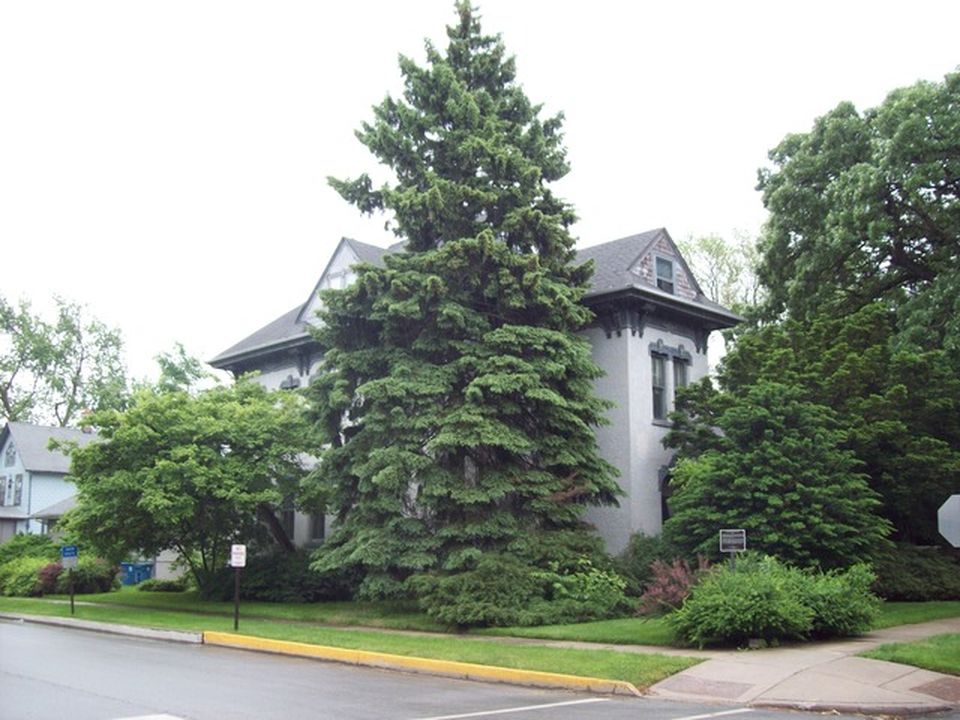
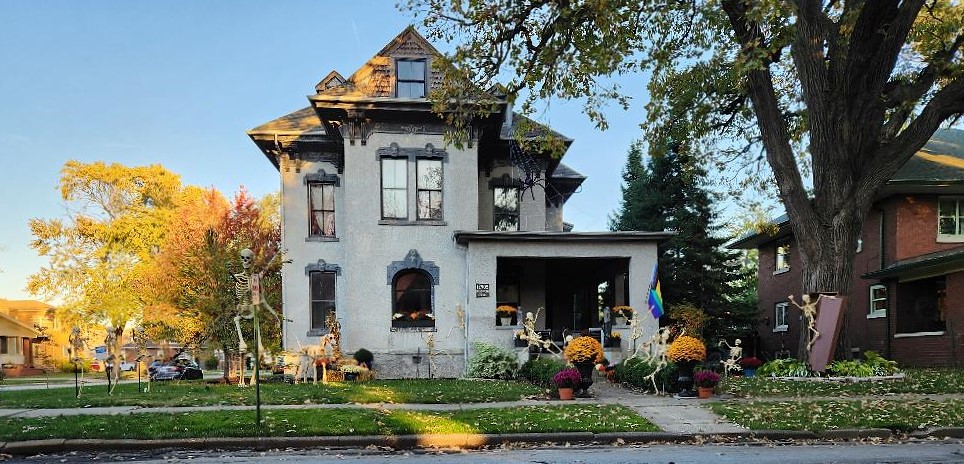
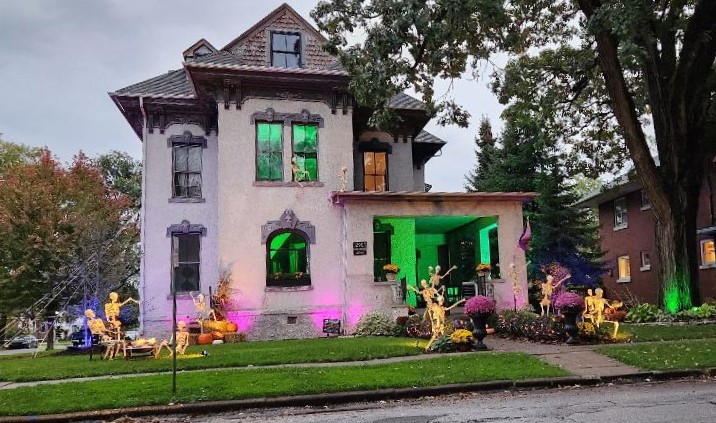
The Charles S. Young House at 12905 Greenwood Avenue, has a collection of skeletons at the front entrance and on the front lawn that has been added to each year, displayed in various poses – climbing out of a coffin, etc. Lit at night, it has the desired dramatic and spooky, yet fun, effect.
The house itself, of Italian Gothic Revival style with large, dramatic proportions, was built in 1886 for Young, part of a prominent family of real estate investors. The architect is not known.
Charles Young was the first president of the Blue Island Library Association, and his wife Jennie Alexander Young was a charter member of the Blue Island Woman’s Club.
The next tenant rented the house and ran a residential hotel for railroad employees there. The house was then purchased and lived in for many years by a member of the well-known Blue Island business family. The third owner was a Holocaust survivor who was known for helping people in need, including housing recovering substance abuse patients in the house.
Upon that owner’s death, the house became vacant and was on and off the market for years. It became derelict, overgrown with evergreen trees and other vegetation. Of course, it developed the reputation for being haunted.
When the current owners purchased the house in 2019, the realtor asked them if they realized they were buying a haunted house. They responded, enthusiastically, “Oh, yeah!”
They have spent the last five years lovingly restoring the house to its former glory, and they do admit that they have had a few unusual experiences in the house.
They took those as welcoming signs, and believe that any presence there is positive, not menacing.
Ridge Historical Society
Mount Olivet Cemetery
By Carol Flynn
Allhallowtide is a three-day Christian tradition (or a “triduum”) consisting of All Saints’ Eve (Halloween) on October 31st, All Saints’ Day (All Hallows) on November 1st, and All Souls’ Day on November 2nd. The word “hallow” means holy or saintly, and used as a noun, is synonymous with “saint.”
This is a time to remember and honor the dead, and countries and cultures have varied ways to do this.
Perhaps best known is “Day of the Dead” celebrated primarily in Mexico and by people of Mexican heritage. Cemetery visits/picnics, featuring the departed’s favorite foods, are one of the customs.
In Ireland, Catholic parishes declare “Cemetery Sundays,” when graves are cleaned up, decorated, and blessed.
In the U.S., the Catholic Church has declared the first Sunday in November as “Cemetery Sunday,” and encourages people of all backgrounds to visit the graves of their loved ones on that day. In Chicago, 18 Catholic cemeteries will hold a “Cemetery Sunday Rosary and Prayer Service” at 2:00 p.m. on November 3rd.
On the Ridge, Mount Olivet Cemetery on 111th Street will be one of the participating cemeteries. This post looks at this historic cemetery.
Mount Olivet Cemetery was founded in 1884. It was the first Catholic Cemetery on the south side of Chicago. Before this cemetery was established, the closest Catholic Cemetery was Calvary Cemetery in Evanston, established in 1859. Many early south side Catholic families have members buried in both Calvary and Mount Olivet.
According to an article in the Inter Ocean newspaper on July 29, 1885, more than 15,000 people came to the Ridge to attend the dedication of Mount Olivet Cemetery by Chicago Archbishop Patrick Feehan.
The paper stated of the new cemetery’s location: “A wide ridge runs gracefully through the land, and gently slopes on either side to prairie. It is naturally of very attractive appearance, and it has been improved by driveways. The property was formerly known as the Mt. Greenwood picnic grounds, and it was purchased for $44,000.”
The land had been purchased the previous October, and Horace William Shaver Cleveland, a famous landscape artist, was hired to lay out and “ornament” the grounds. Some of Cleveland’s other projects included an expansion of Graceland Cemetery on the north side, building the Chicago Park system after the Great Chicago Fire of 1871, and many fine private residences. He had personal and working relationships with people like Dwight Perkins, a relative through marriage, the architect who became the “father of the Forest Preserves of Cook County;” William Merchant Richardson French, the civil engineer and landscape artist who became the first executive director of the Art Institute of Chicago and later lived in Beverly; and Frederick Law Olmsted, “the father of landscape architecture.”
Mount Olivet Cemetery was one of the first cemeteries to become full, prompting the Archdiocese to buy additional land to the east of the original cemetery. This created the unique situation of the backyards of houses on Fairfield Avenue opening on to the cemetery grounds.
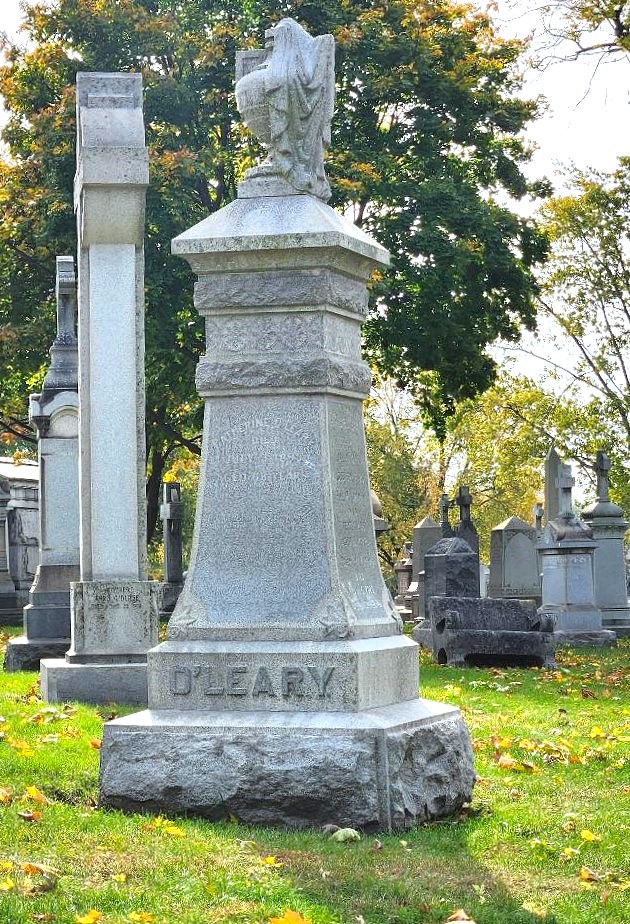
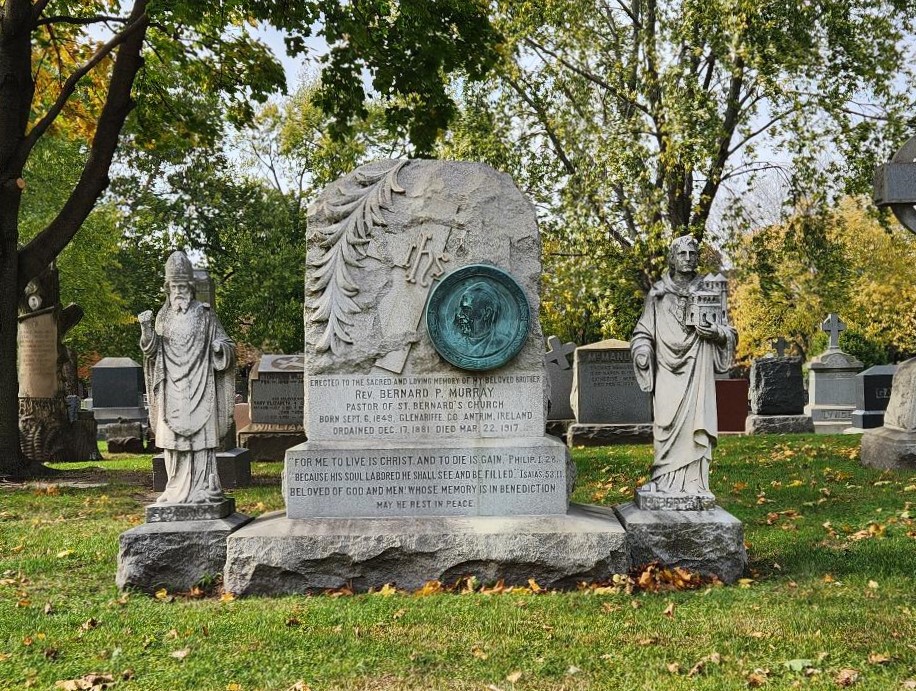
Some famous Chicagoans are buried in Mt. Olivet Cemetery, including Mrs. Catherine O’Leary, whose cow did not kick over a lantern to start the Chicago Fire, with her husband Patrick and son James (“Big Jim”), a famous gambler.
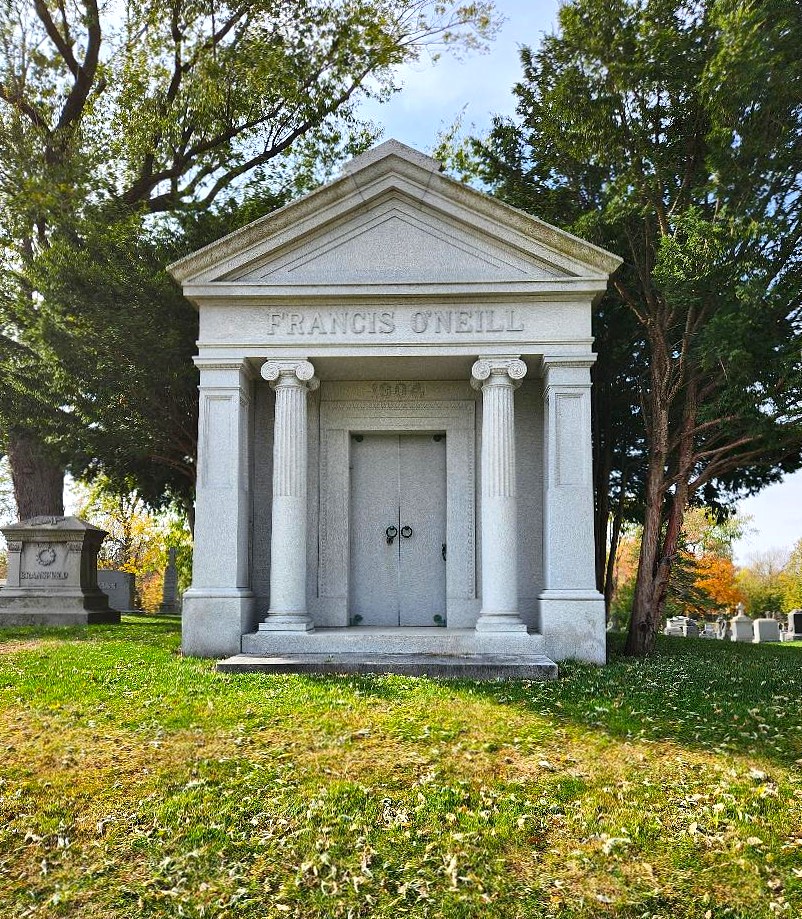
Chicago Police Chief Francis O’Neill, the “man who saved Irish music,” is also buried in Mt. Olivet Cemetery. Known for his absolute integrity and honesty, O'Neill and Big Jim O'Leary were antagonists during their years together in Chicago.
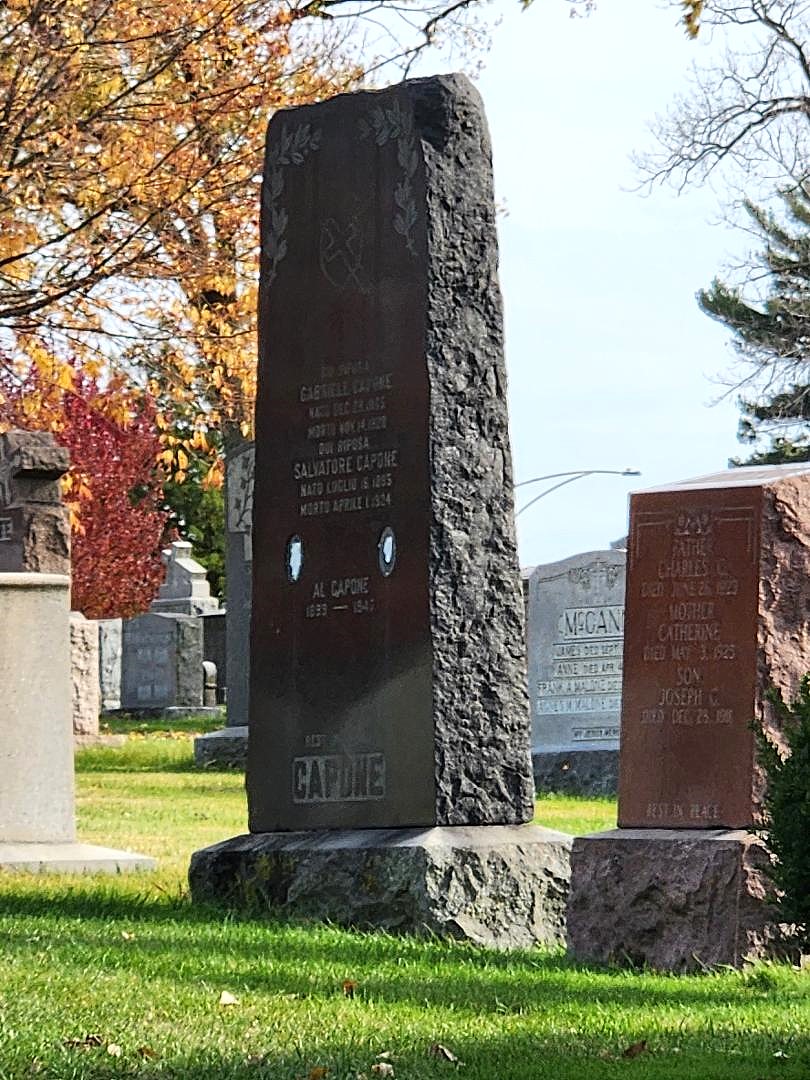
Mt. Olivet was the original burial site for Al Capone, until his remains, and those of his father and brother, were relocated to Mt. Carmel Cemetery in Hillside.
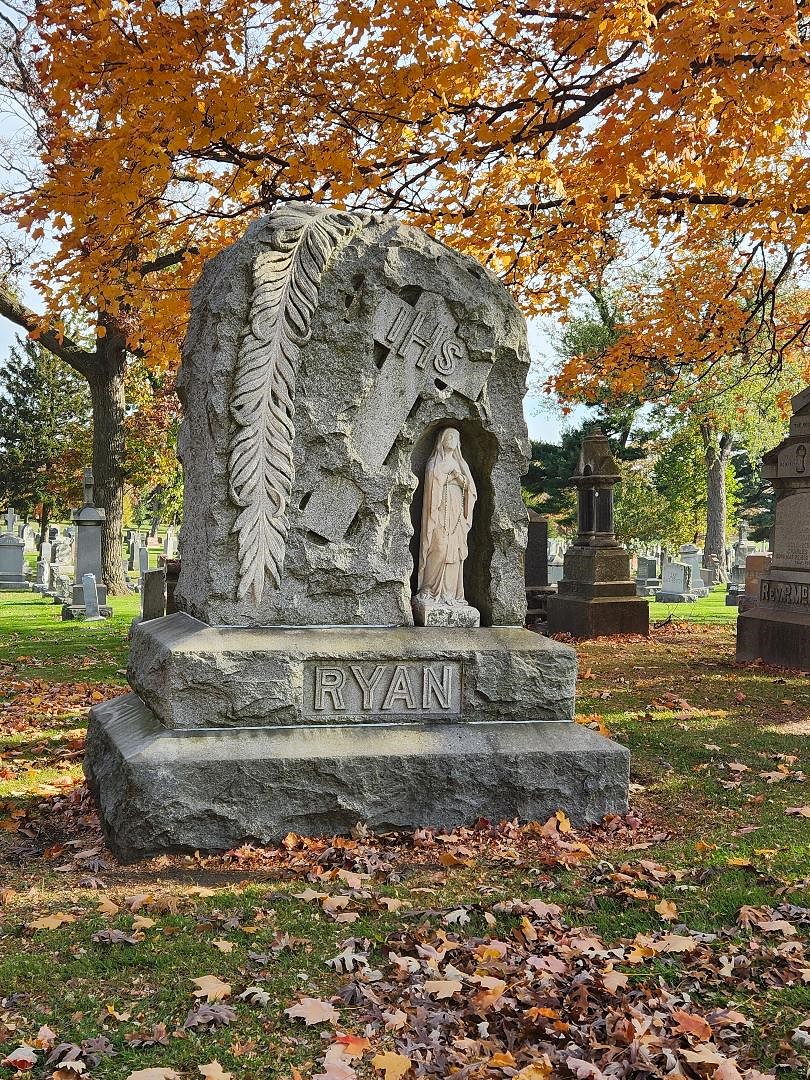
Other people known on the Ridge buried in Mount Olivet include Daniel Ryan, Sr., for whom the local forest preserve is named; the Ahern Family, including golf pro Anna May “Babe” Ahern, who, with her brothers, owned and operated the Evergreen Country Club; and James Gately, the founder and manager of Gately’s Peoples Store, who lived in Beverly.
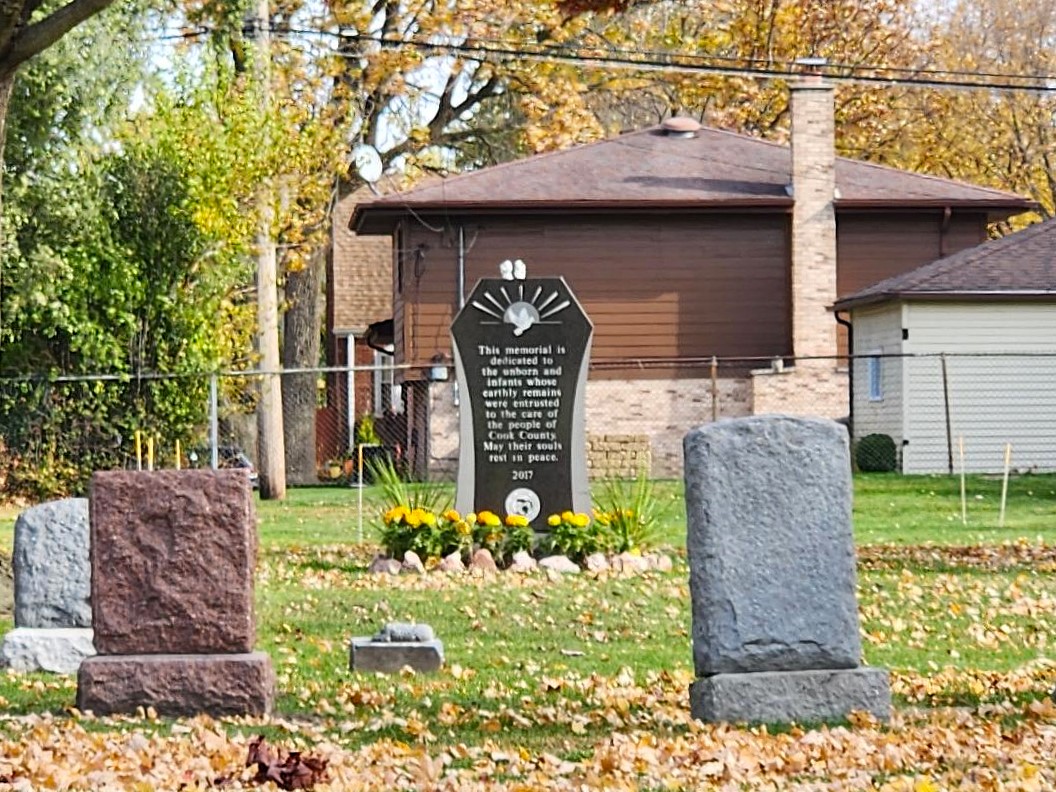
Mt. Olivet Cemetery is also the burial place for the unidentified and indigent dead of Cook County. Since 2012, when the Archdiocese started working with the county to provide these services, there have been 5,300 burials.
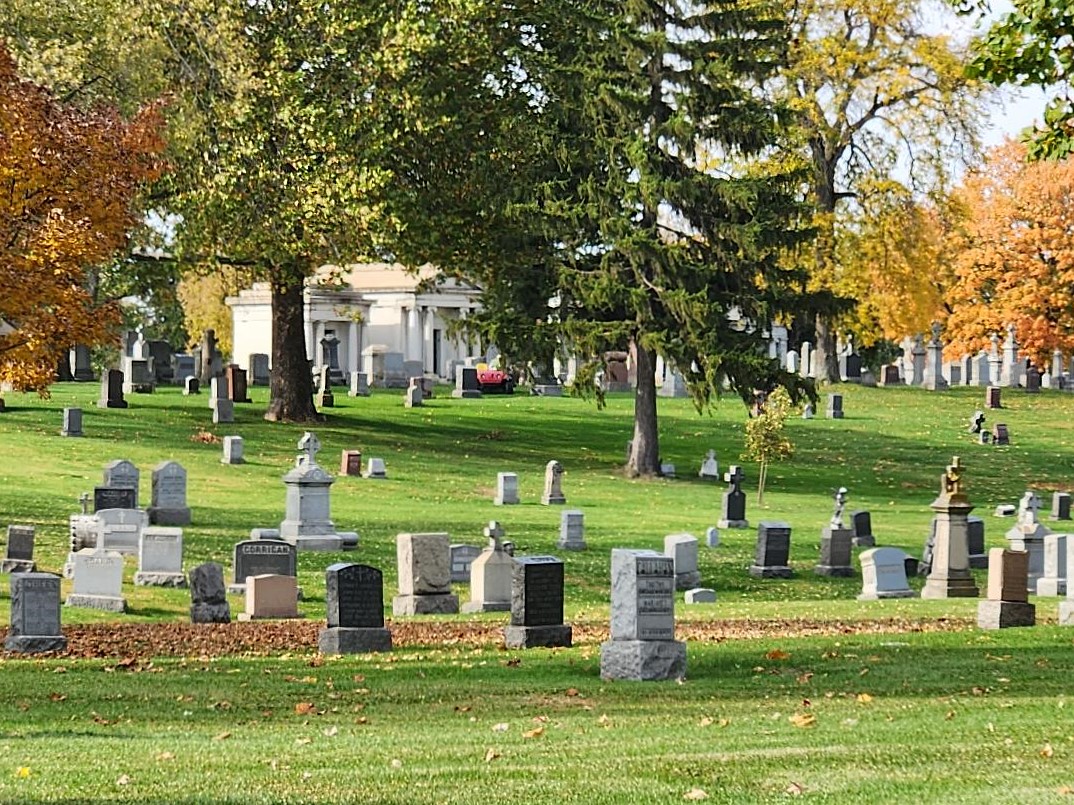
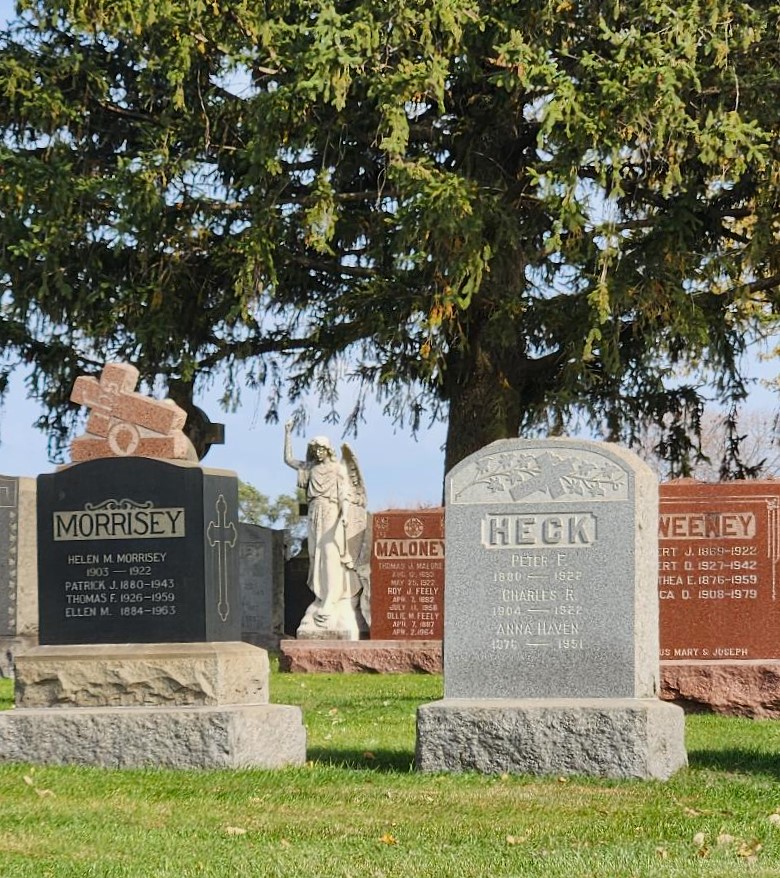
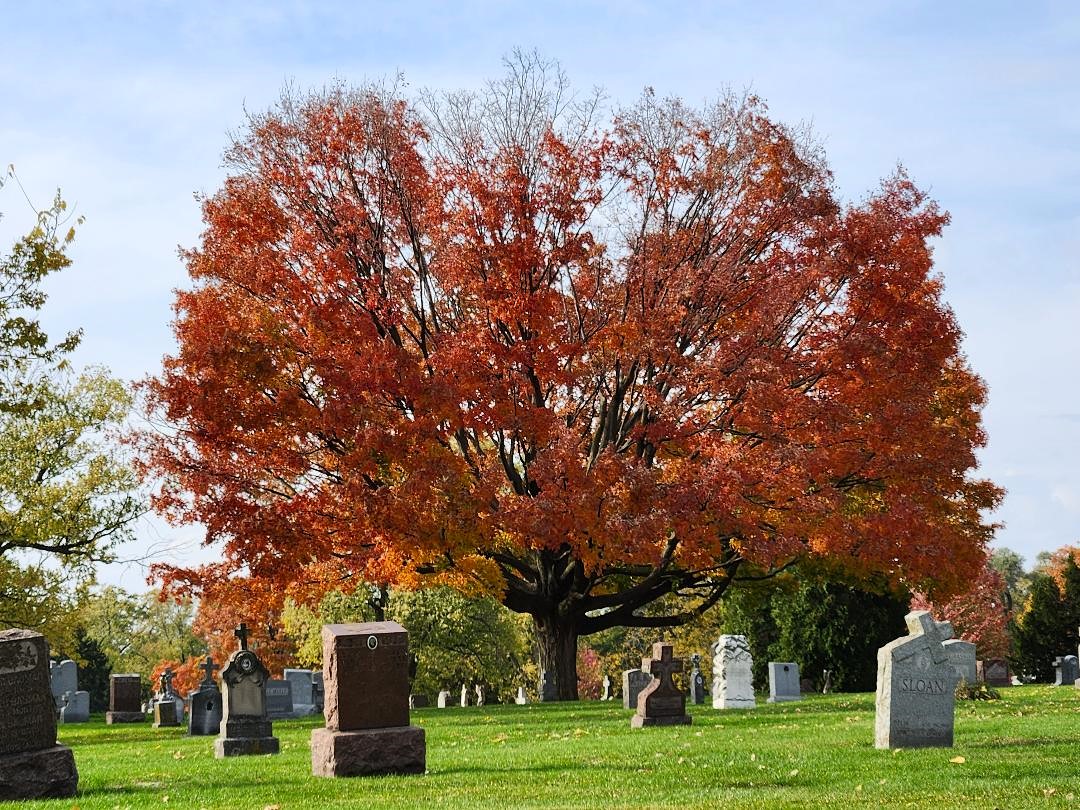
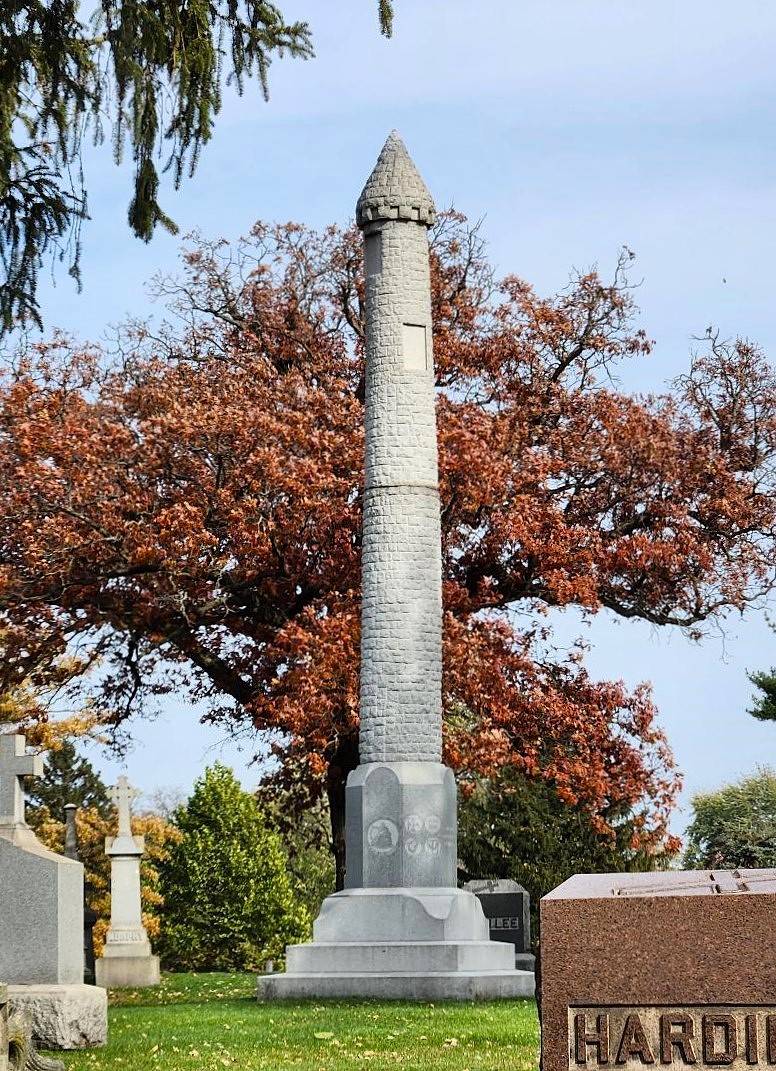
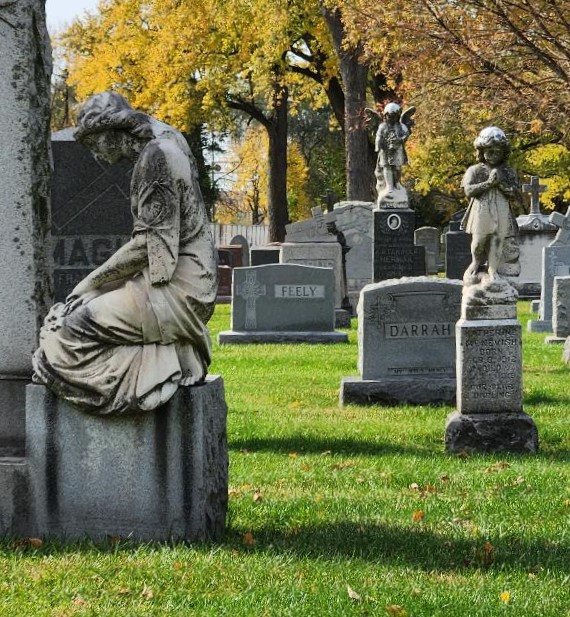
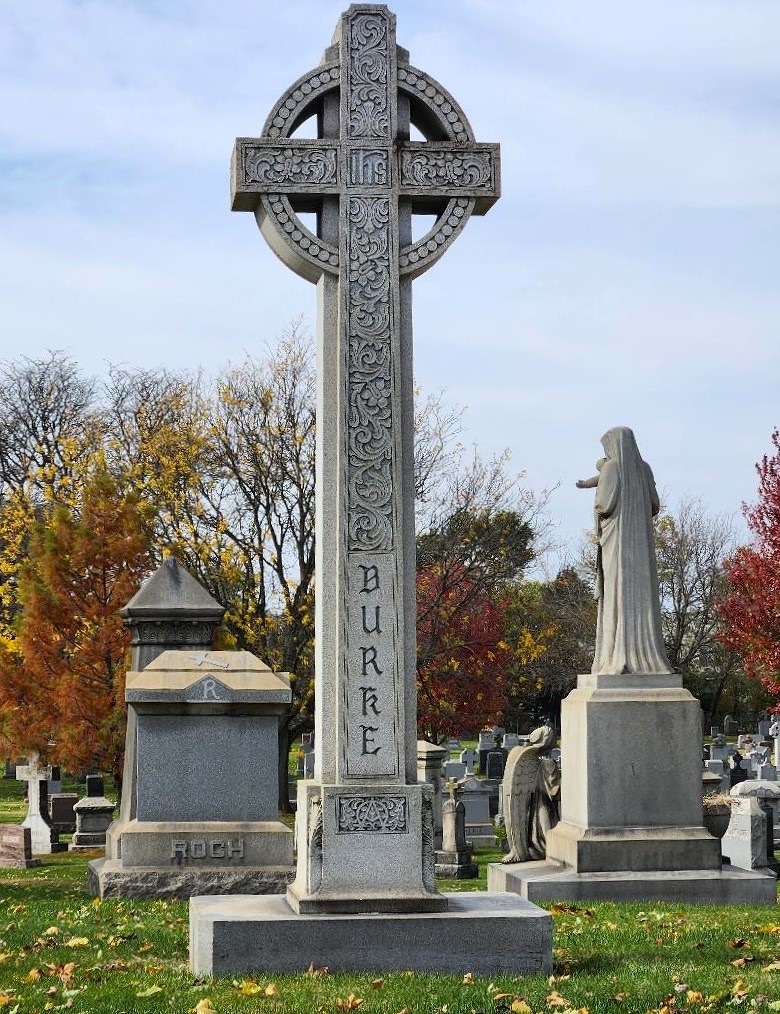
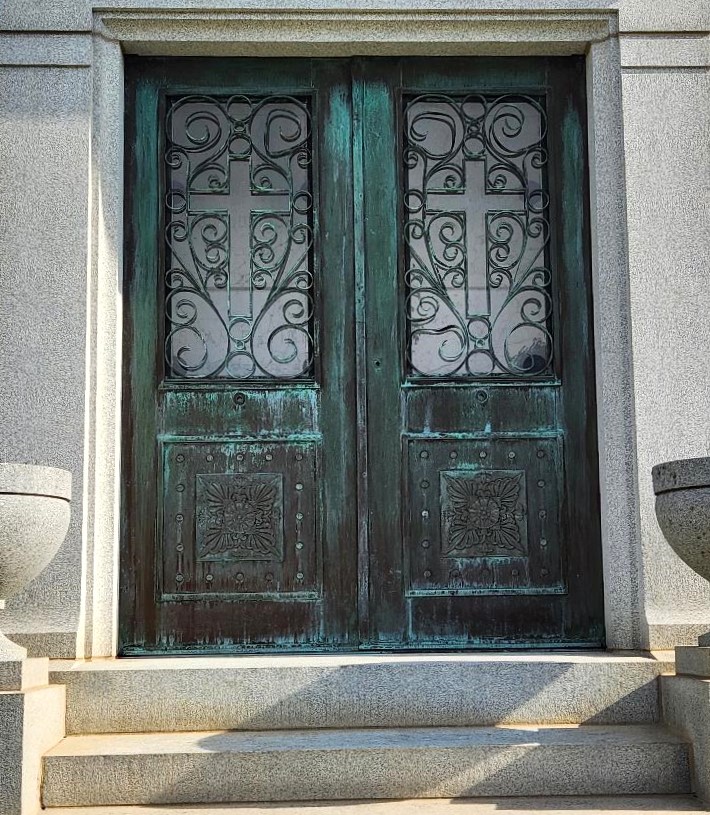
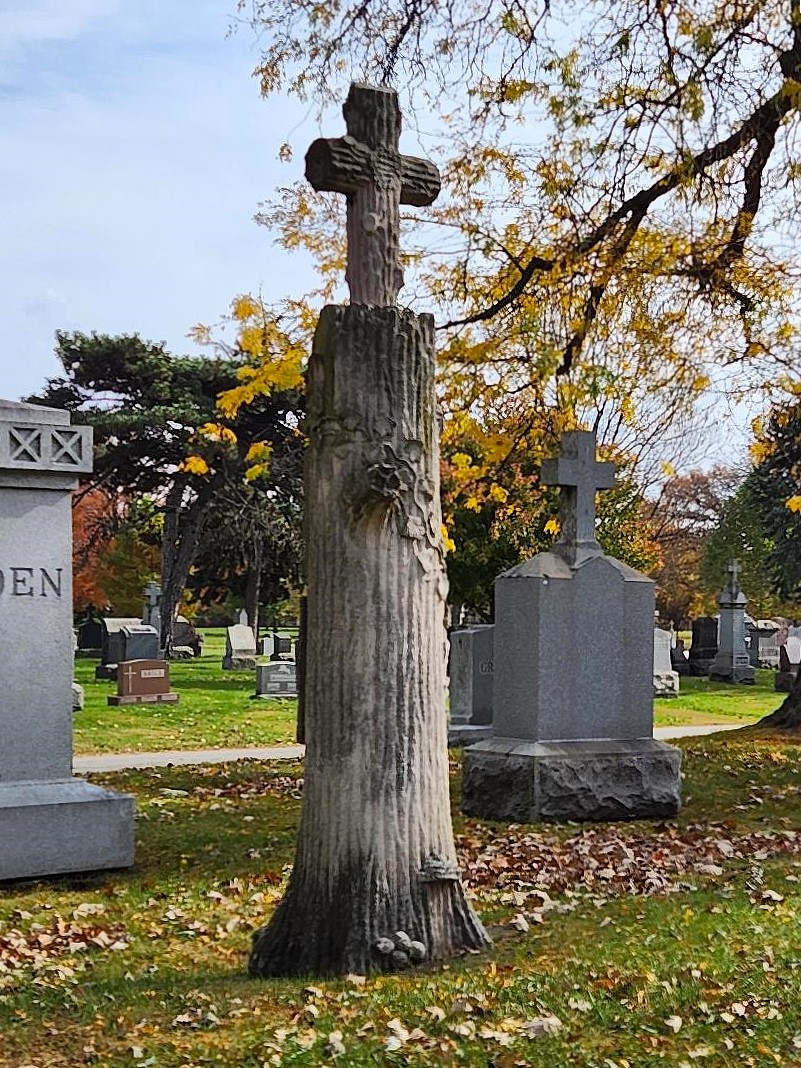
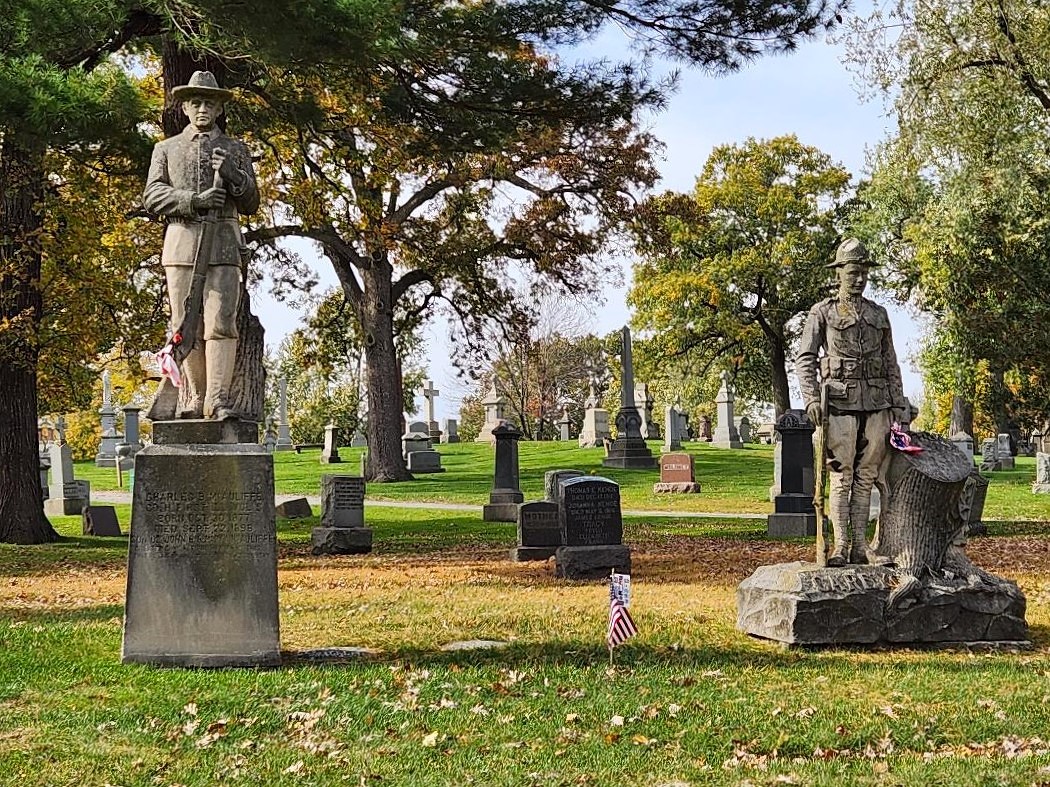
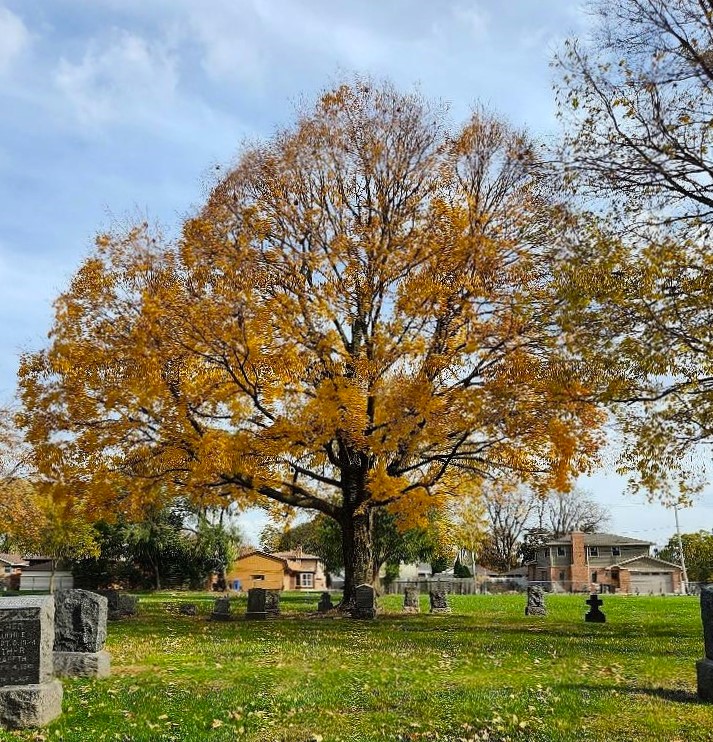
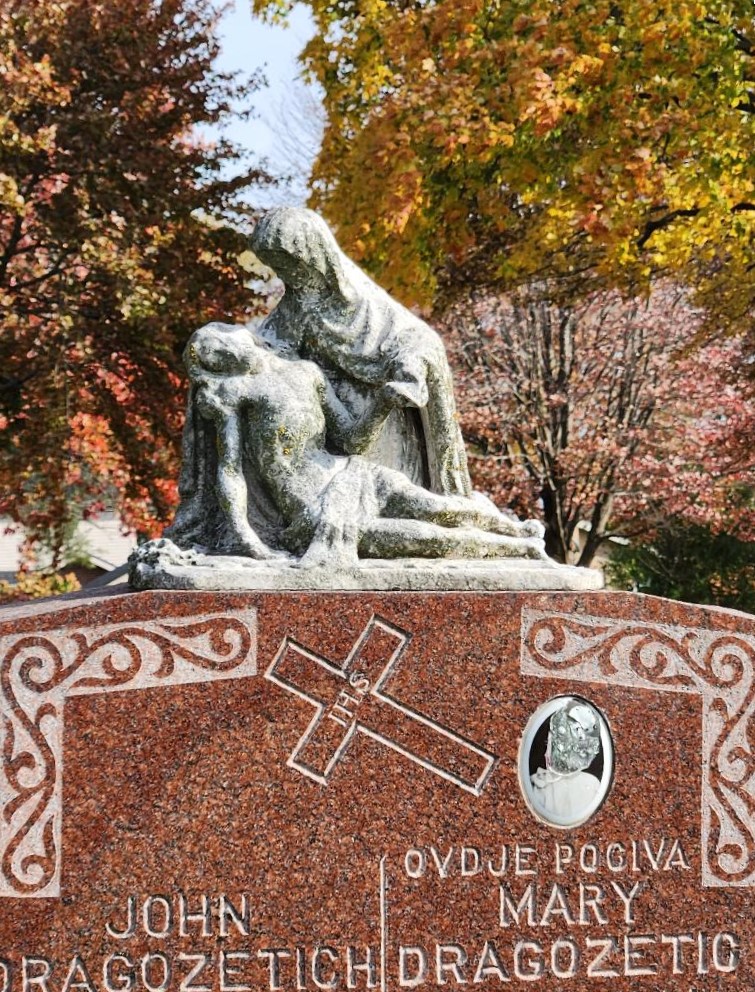
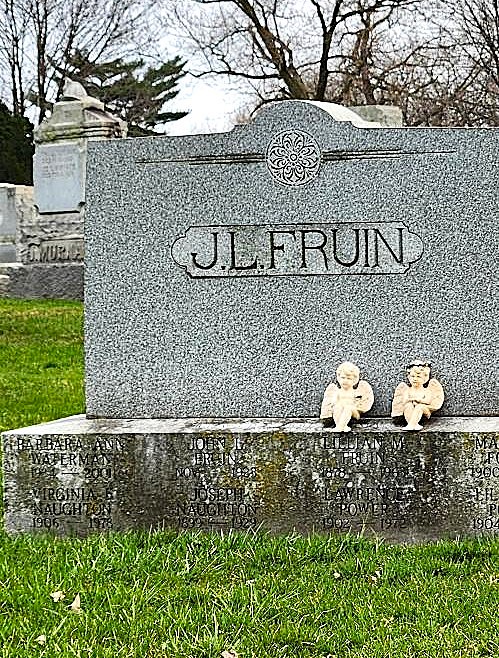
A picturesque cemetery with interesting funerary art, the following pictures were taken during a ride through Mount Olivet Cemetery on a recent autumn afternoon.
Photos by C. Flynn.
Another "seizing the educable moment" post.
The Southeast Chicago Historical Society, which many people from the Ridge follow, has this post today:
"I picked up a few photos this morning from an estate sale in Indiana. Does anyone know anything about crib fire victims from 1909?"
The answer to that is YES, RHS knows all about that incredibly horrible tragedy.
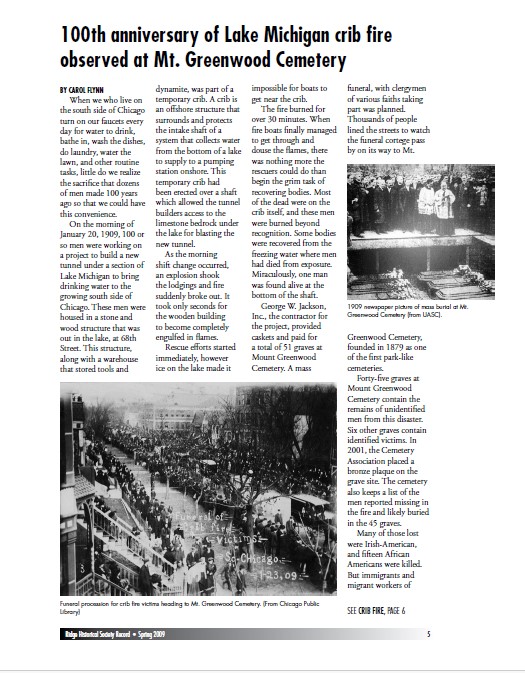
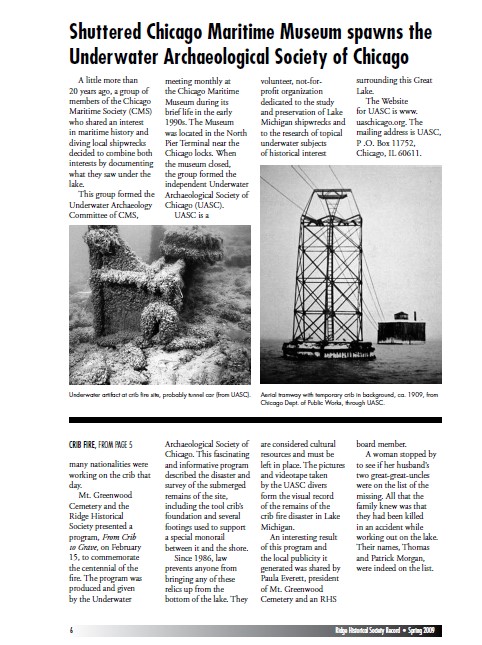
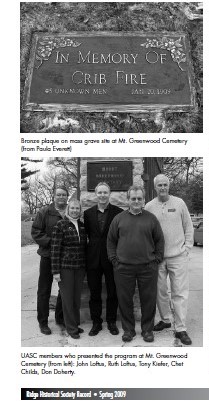
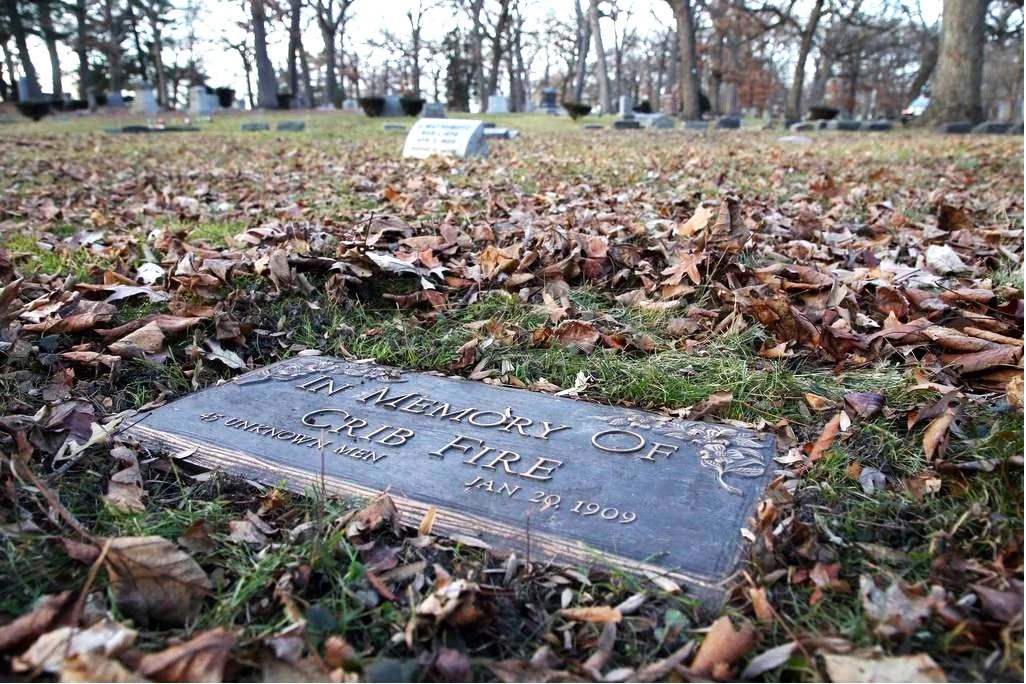
Here is the 2009 RHS newsletter article on that topic. The victims are buried in Mt. Greenwood Cemetery.
The Ridge Historical Society
Veterans Day
By Carol Flynn
Monday, November 11th, is Veterans Day in the United States. This is the day we recognize all who have honorably served in the United States Armed Forces.
This date marks the anniversary of the formal end of World War I, the 11th hour of the 11th day of the 11th month of 1918 when the Armistice with Germany went into effect. Originally called Armistice Day, it was renamed Veterans Day in 1954.
The families on the Ridge have always done their patriotic duty. Many proud military families have lived on the Ridge who had members in service dating back as far as the American Revolutionary War.
Last month, RHS premiered a new exhibit, “Harry Hale Waterman, Architect: Unique in Any Style,” which showcases the many buildings designed by Waterman in Beverly and Morgan Park, and some of the people who lived in them.
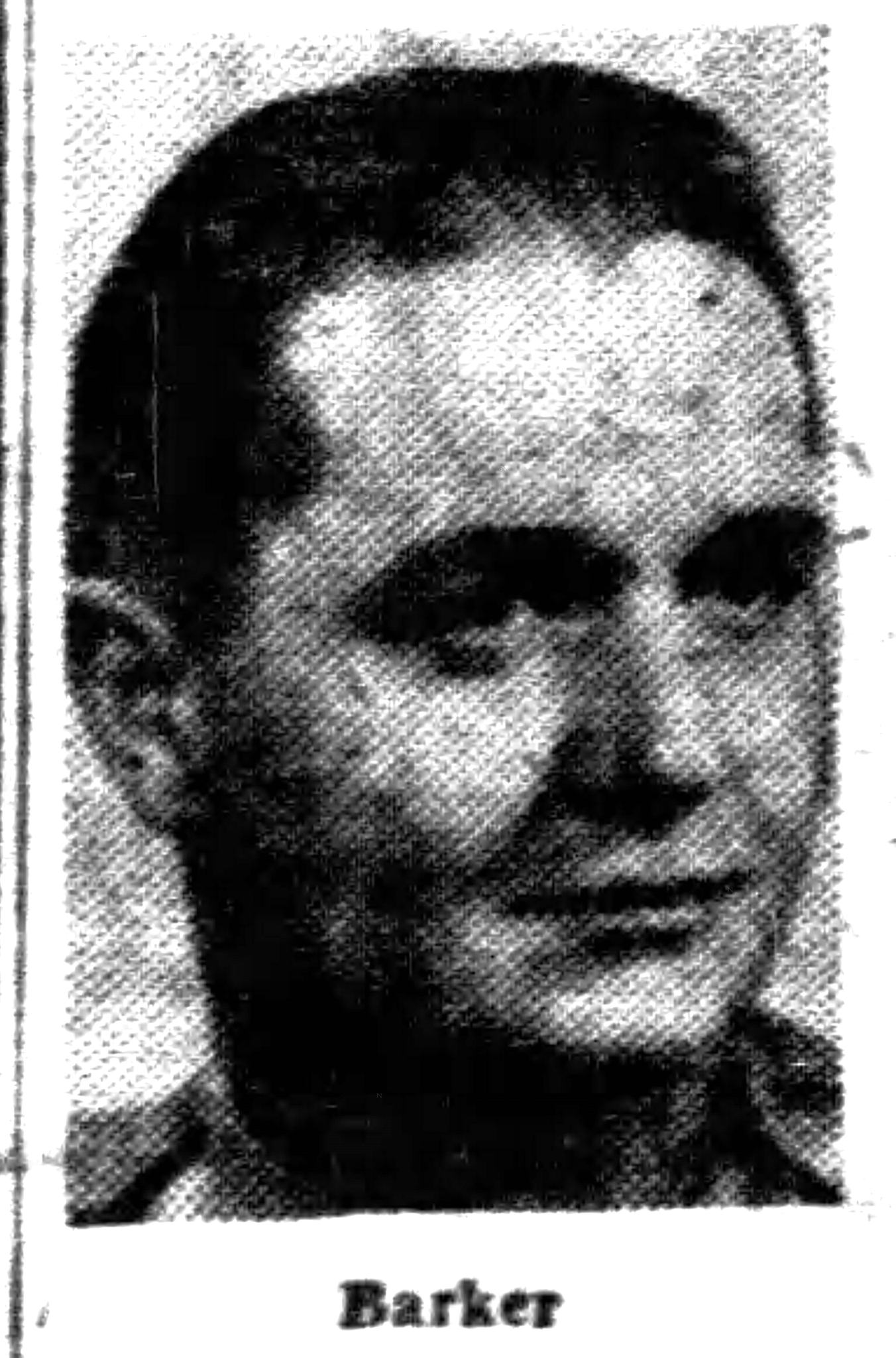
This post looks at the Lewis Barker family, one of the families who owned and lived in “a Waterman.” The family is also part of the military heritage of the community.
Lewis Barker was born in Chicago on November 12, 1898, to England J. and Matilda Barker. He was the sixth of seven children, the third son.
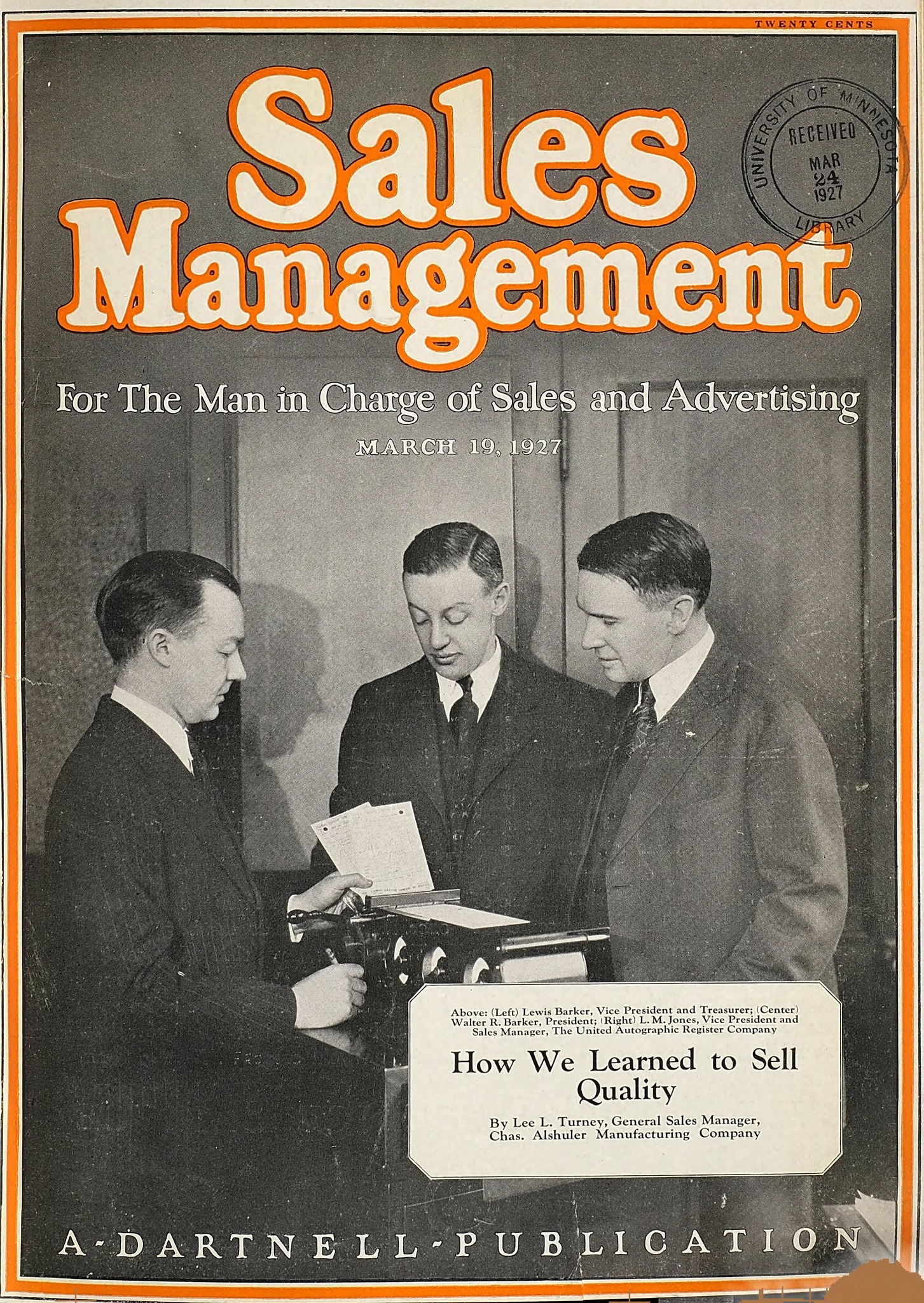
England and Matilda, both born in Canada, came to Chicago from New Jersey. England was a representative of the company started by the man wo invented the autographic register, an office machine that allowed sales receipts and orders to be written up in multiple copies, using carbon sheets in between continuous rolls of paper.
England started a new company, the United Autographic Register Co. (UARCO), in Chicago, in 1892. In 1899, the family moved to Morgan Park.
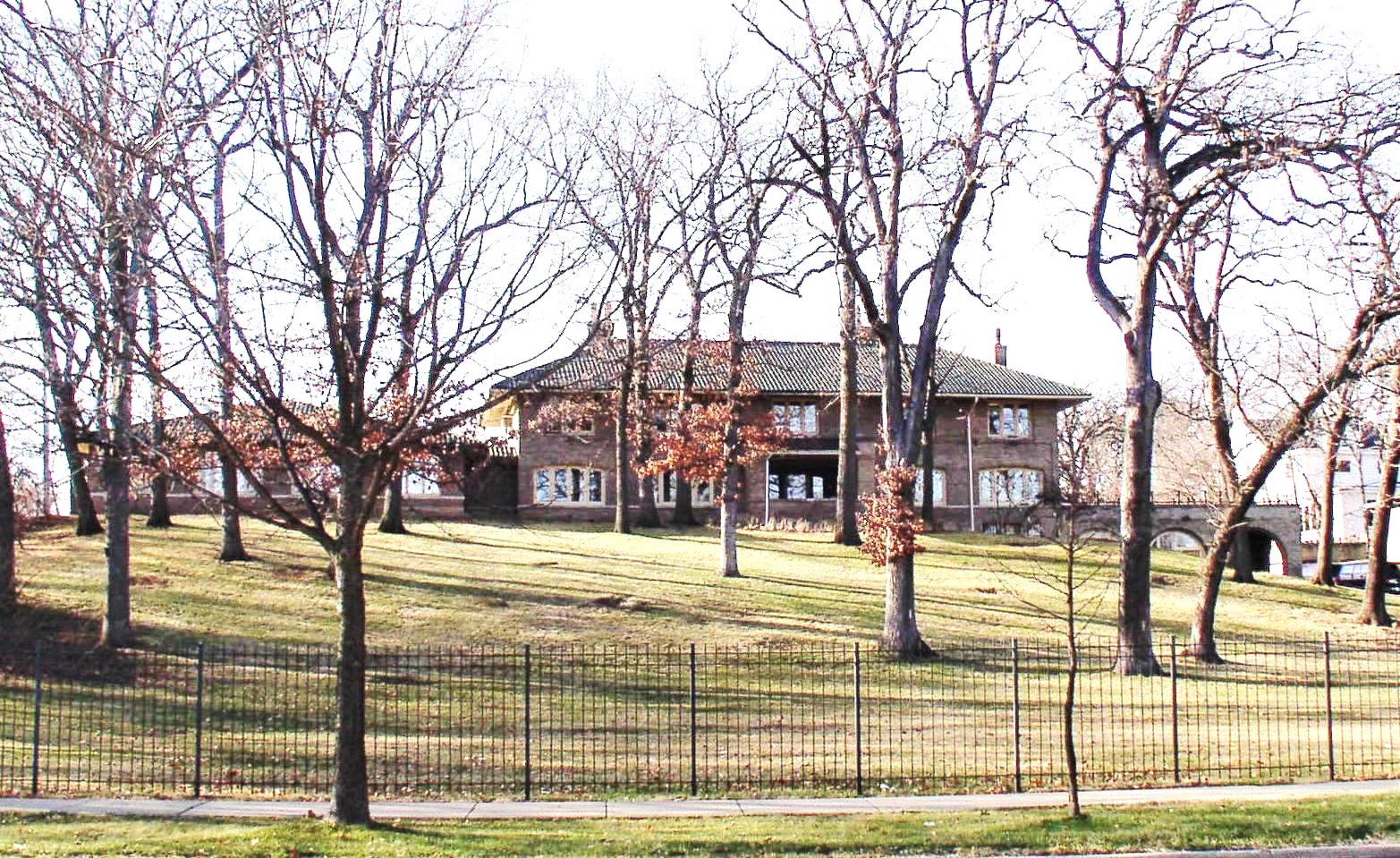
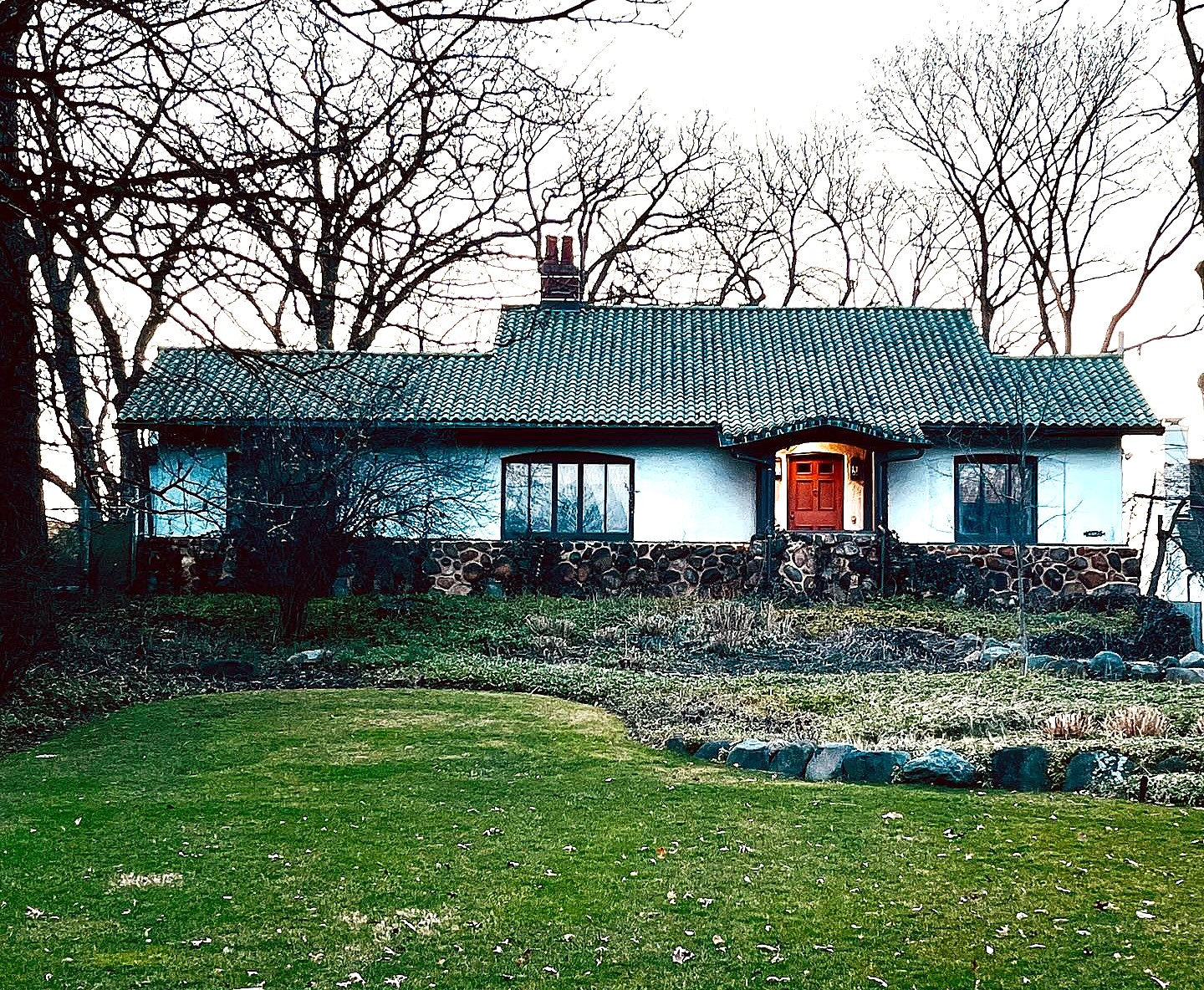
The Barkers first lived in a frame house on Western Avenue, then hired Waterman to design a brick house for them at 10650 Longwood Drive, which was built in 1911.
Lewis served in the U.S. Army in World War I, from October 21 to December 23, 1918. The war ended just a few weeks after Lewis enlisted, so his service was brief.
Lewis went into the UARCO business as did his older brother, Walter. When their father retired, Walter took over as president, and Lewis served as vice president and treasurer. A third brother, Harold, in between Walter and Lewis, unfortunately died in November 1917 at the age of 23 from a heart ailment.
In 1920, Lewis married Winifred Gregson, the daughter of William Gregson, a prominent Morgan Park businessman who also owned a Waterman-designed house at 2141 W. 116th Place, built in 1901-1902. Older brother Walter had married Winifred’s older sister Margaret in 1914.
The year they married, Lewis and Winifred purchased the Waterman-designed house at 10036 Longwood Drive that was built in 1915-16 for Olin W. Paque. The Barkers expanded the house and added a swimming pool, and they became known for their social events.
Lewis and Winifred had three children, and all connected with the military.
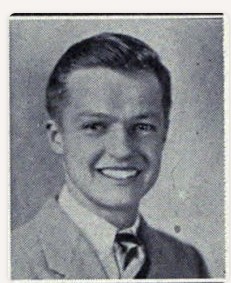
Oldest son Reid Stewart, born in 1924, attended the Harvard School in Hyde Park, then attended the University of Colorado, where he enrolled in the Reserve Officers Training Corps (ROTC). He enlisted in the Navy as an ensign and served for over four years. He married Nancy Carter, the daughter of a Lieutenant Colonel.
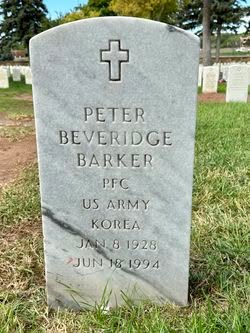
Second son Peter Beveridge, born in 1928, attended Morgan Park High School and was a college student in Denver when he was drafted into the Army in 1950. He served in the Korean conflict as a rifleman and received the Purple Heart for being wounded in the shoulder and arm by a grenade. Recovering from that, he was transferred to Japan, where he served until late 1952.
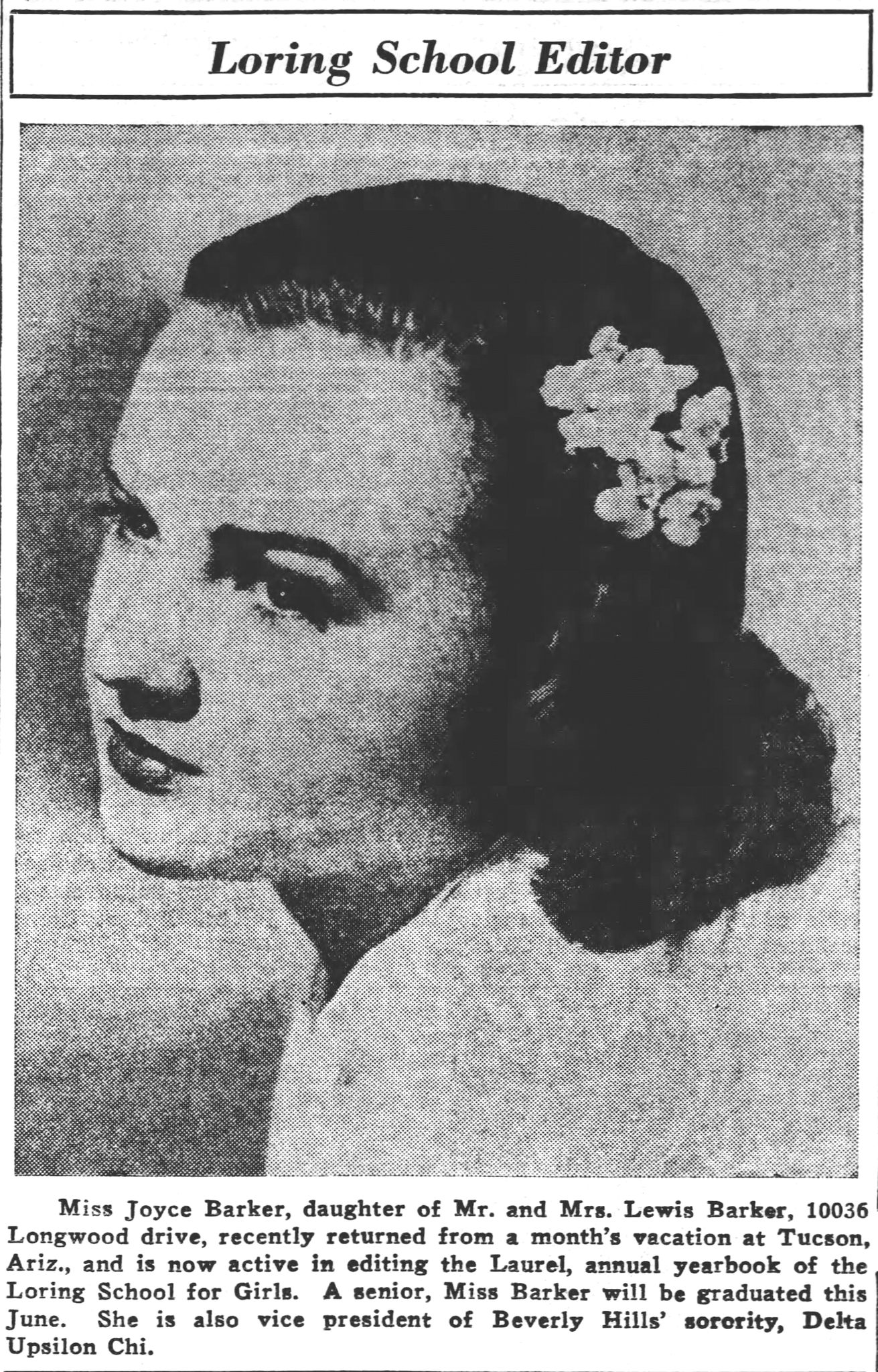
Daughter Eugenia Joyce, known as Joyce, was born in 1921 and was the oldest of the three children. Joyce's brothers, Reid and Peter, both had asthma and Chicago weather could be rough on them, so their mother would take them all by train to Tucson. Joyce attended high school in Tucson for one semester, where she met Arthur Houle, a football player.
Joyce married Lt. Arthur Houle, Jr., in 1941. He was stationed in Denver so they made their early home there after marriage.
The exhibit, “Harry Hale Waterman, Architect: Unique in Any Style,” is open to the public for viewing on Tuesday and Sunday afternoons from 1:00 p.m. to 4:00 p.m., or by appointment. Admission is free. RHS is located at 10621 S. Seeley Avenue, Chicago.
“Morgan Park Woman’s Club: 135 Years of Community Service.”
Women’s history is the community’s history. They are involved in every aspect of life where they live, often working behind the scenes.
It’s time their story was told.
This year marks the 135th anniversary of the Morgan Park Woman’s Club (MPWC).
A special event is planned for this weekend: “Morgan Park Woman’s Club: 135 Years of Community Service.” A reception and program will be held on Sunday, November 17, 2024, in the Smith Village community hall, 2320 W. 113th Place, from 2 to 4 p.m. Admission is free, there is parking, and the place is accessible.
MPWC has had a very important role in the community, impacting everything from the village’s annexation to the city of Chicago to its architecture to its schools to its parks.
A slide presentation connecting the Club’s history to that of the community will be shown by Carol Flynn, researcher/writer for the Ridge Historical Society.
There will be a display of items from the Club’s artifacts. Refreshments will be served.
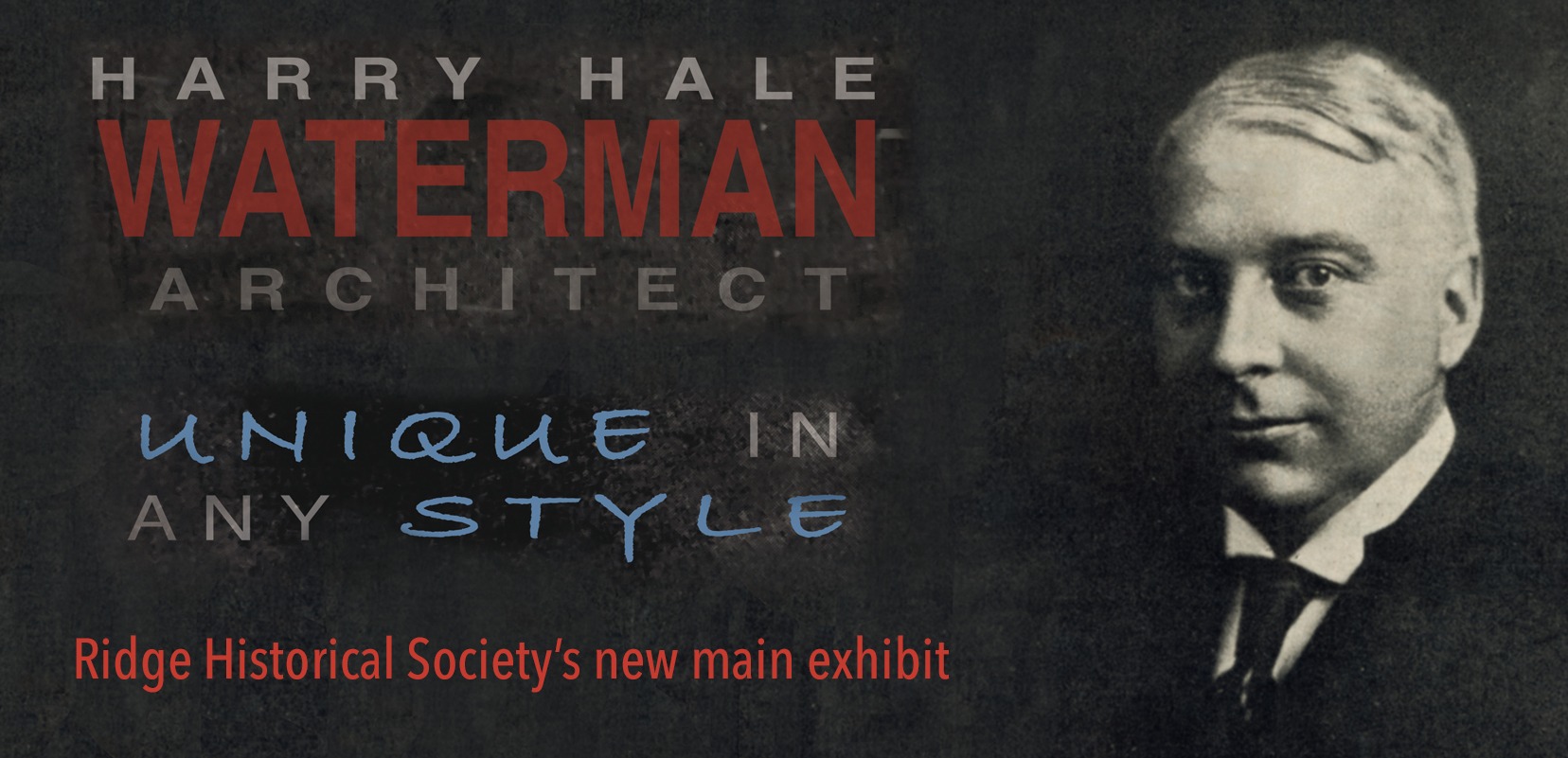
The new exhibit has opened at The Ridge Historical Society: "Harry Hale Waterman, Architect: Unique in Any Style."
The exhibit is open to the public for free on Tuesdays and Sundays from 1:00 p.m. to 4:00 p.m.
Waterman was born in Wisconsin in 1869, and came to Chicago as a young boy. He attended the Old University of Chicago and Northwestern University, and started his architecture career in the late 1880s. He worked in the architecture offices of Joseph Lyman Silsbee alongside his family friend Frank Lloyd Wright.
While Wright concentrated on developing his own style of architecture, Waterman worked in many different styles, putting his unique spin on each.
Waterman designed an estimated forty buildings in Beverly and Morgan Park, most of which are still standing today. Other buildings he designed in other Chicago neighborhoods have not fared as well.
This exhibit explores Waterman's work on the Ridge, and also takes a loot at some of his clients.
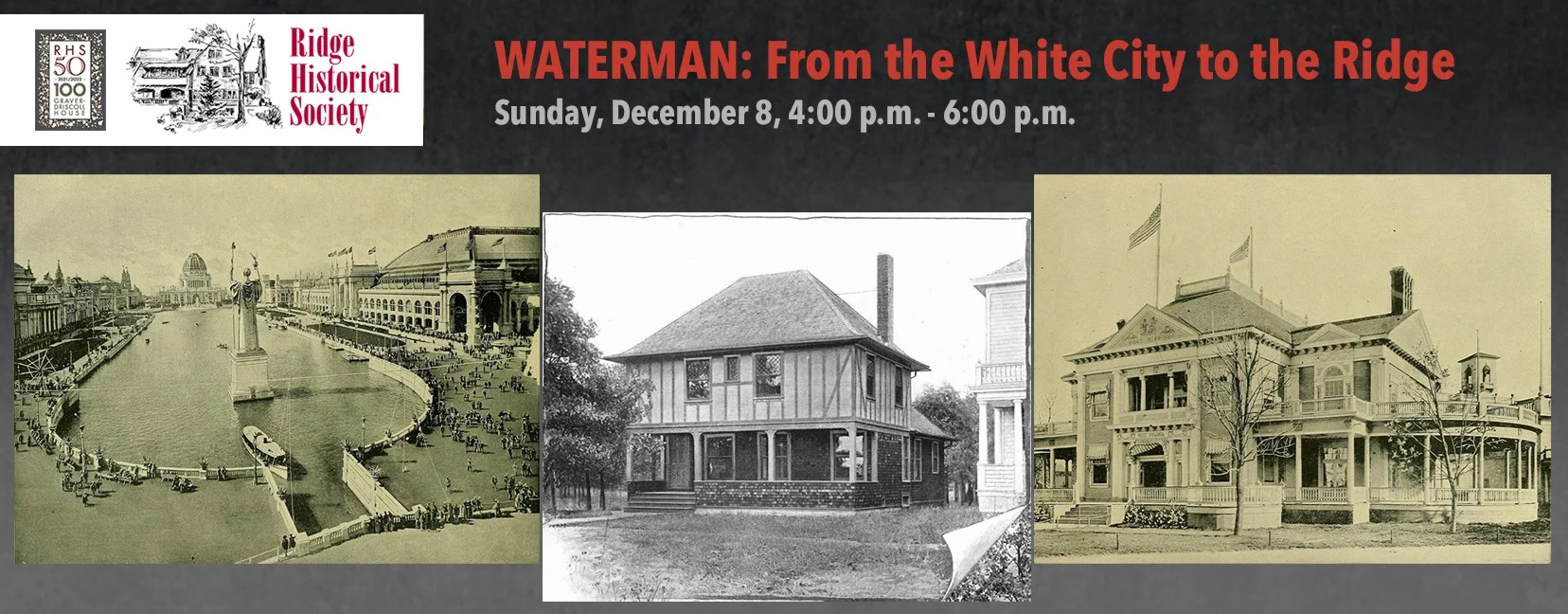
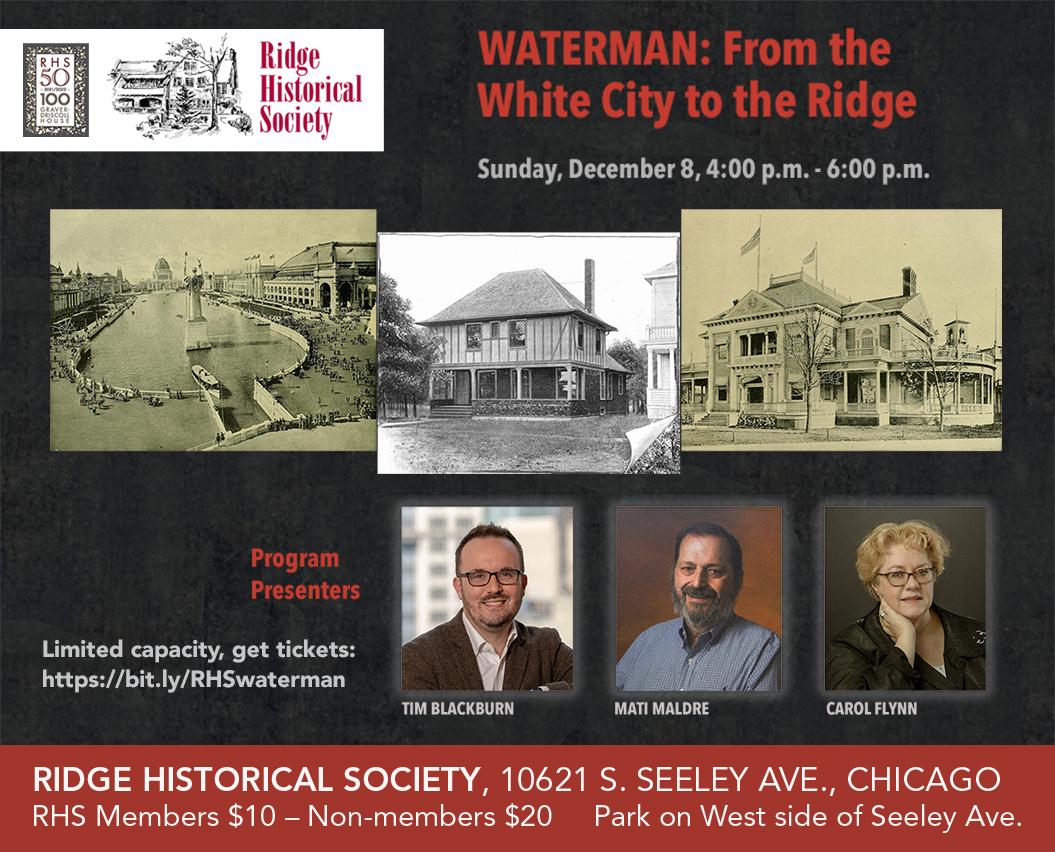
On Sunday, December 8, 2024, at 4 p.m., RHS will offer a program connected to the exhibit: "Waterman: From the White City to the Ridge."
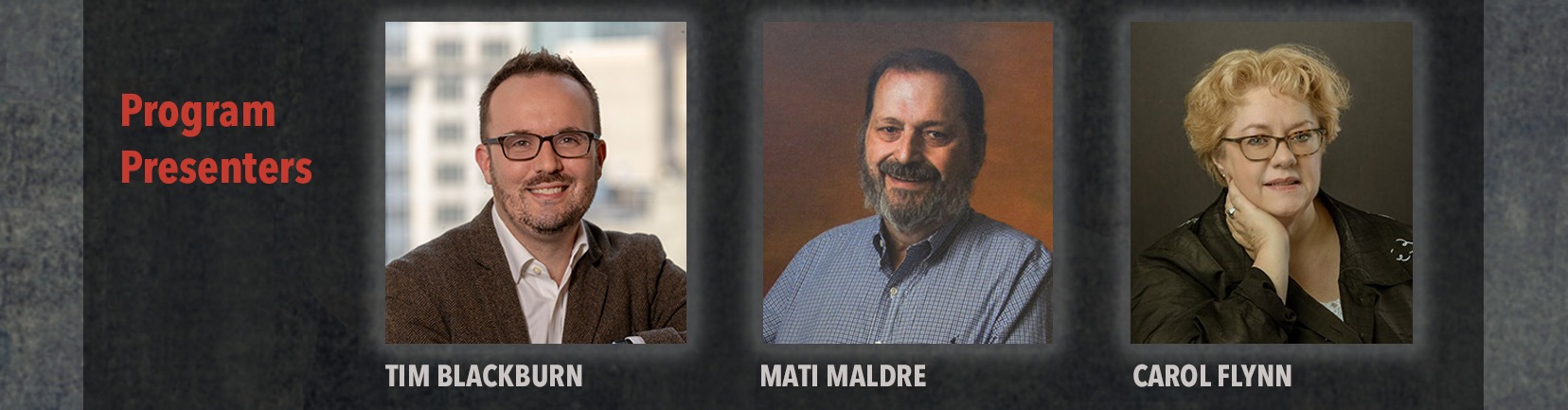
In the first part of this program, Exhibit Curator Tim Blackburn will focus on Waterman's influences on the Columbian Exposition and his first employer, Joseph Lyman Silsbee.
Mati Maldre will discuss his architectural photos of thirty Waterman buildings, which were mostly taken in the mid-1980s with a Deardorff 4×5/5×7 view camera.
RHS Facebook Page Author Carol Flynn will then share stories from the lives of Waterman's early clients on the Ridge who made interesting impressions on the community in their day. This will be continued as a series on Facebook to complement the RHS exhibit.
Stay tuned to this page for details on registering for the program.
RHS is located at 10621 S. Seeley Avenue, Chicago.
The Ridge Historical Society
Native American Heritage Month
By Carol Flynn
November is Native American Heritage Month, declared by President George H.W. Bush in 1990.
According to the government website for the day, the intent is “to provide a platform for Native people in the USA to share their culture, traditions, music, crafts, dance, and ways and concepts of life.”
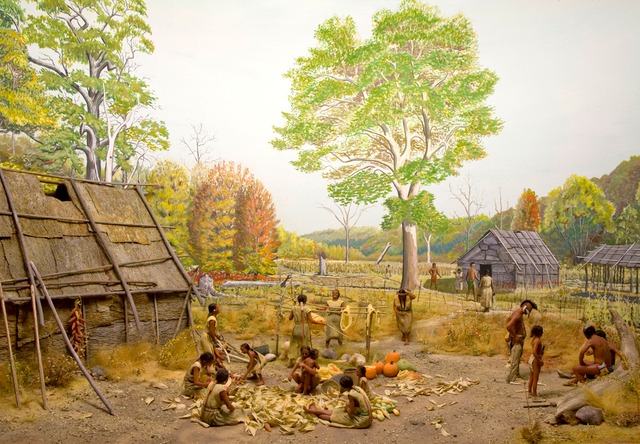
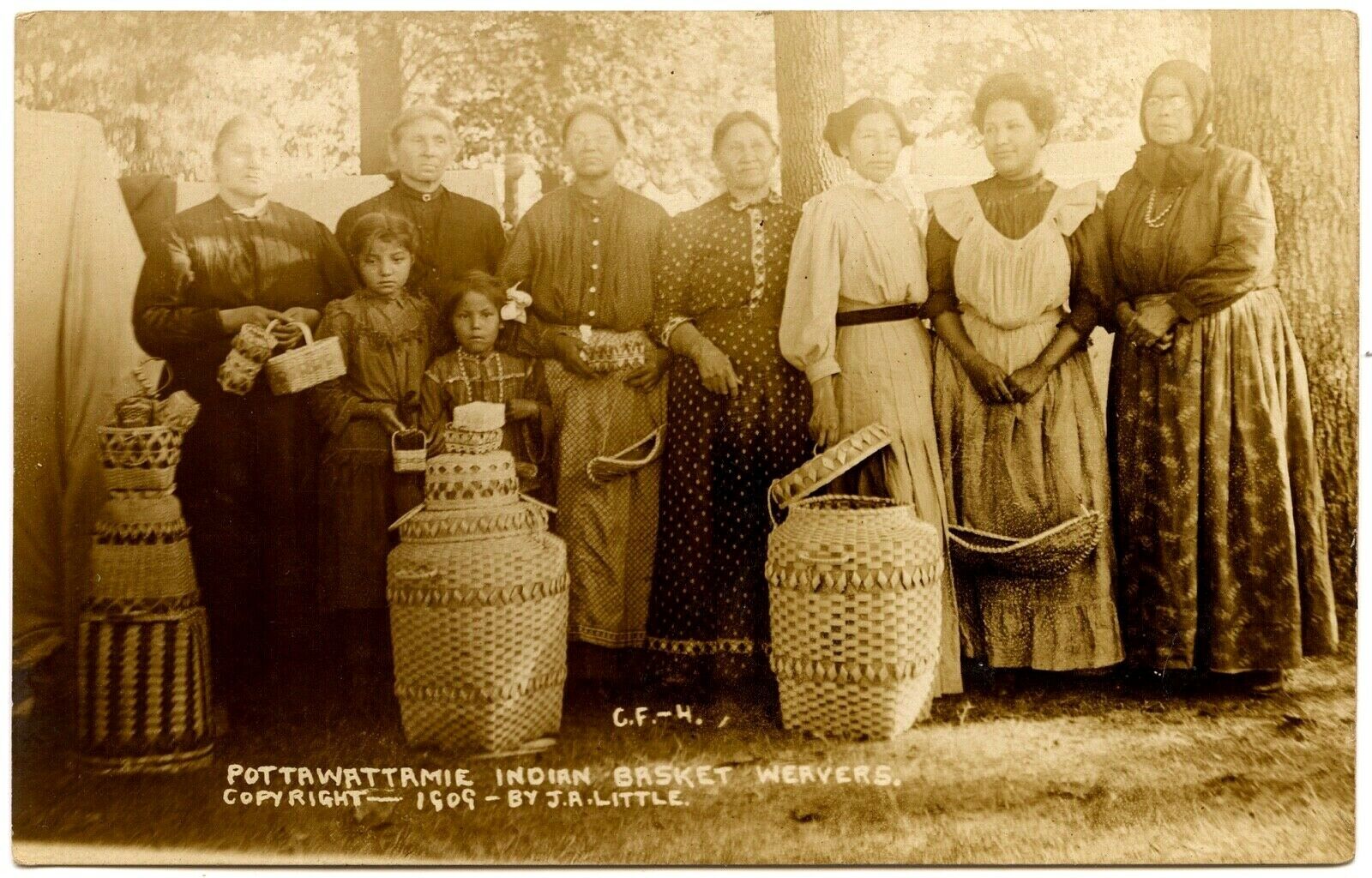
Native Americans once thrived in the Blue Island area. Research by the Illinois State Archeological Survey team, which operates out of the University of Illinois – Champaign/Urbana campus, has identified over 600 Native American sites in the surrounding forest preserves, some dating back thousands of years.
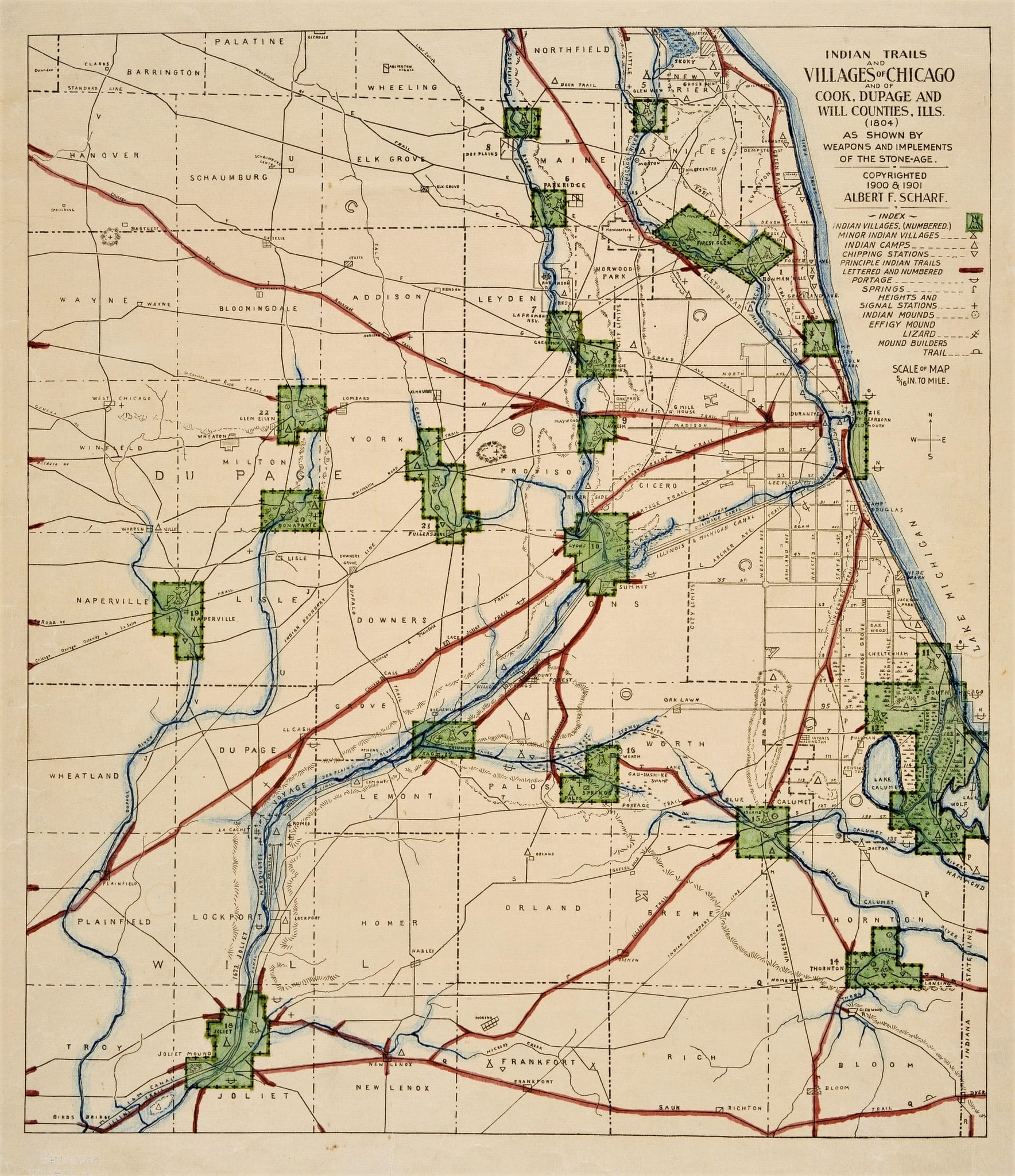
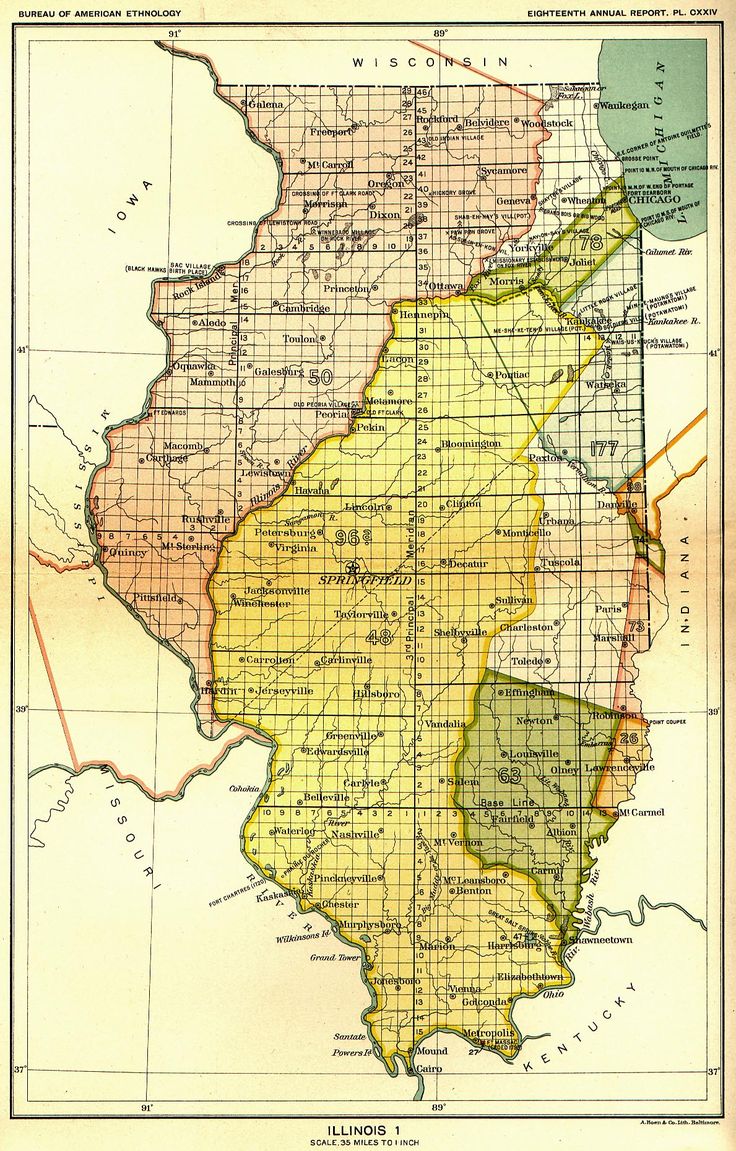
A map from the 1800s, referred to as the Scharf map, attached, shows villages, burial sites, signal stations, and other Native American locations from around 1804. There were locations along the Calumet River system, which connected to the Stony Creek, before the Cal-Sag Channel was built.
There was a village in the southern part of the city of Blue Island, around Vermont Street just east of Western Avenue, and burial grounds nearby. The northern tip of the Blue Island Ridge, located just north of 87th Street in Dan Ryan Woods, was the location of a “signal station,” which is not surprising, given its high elevation and clear view all the way to downtown Chicago.
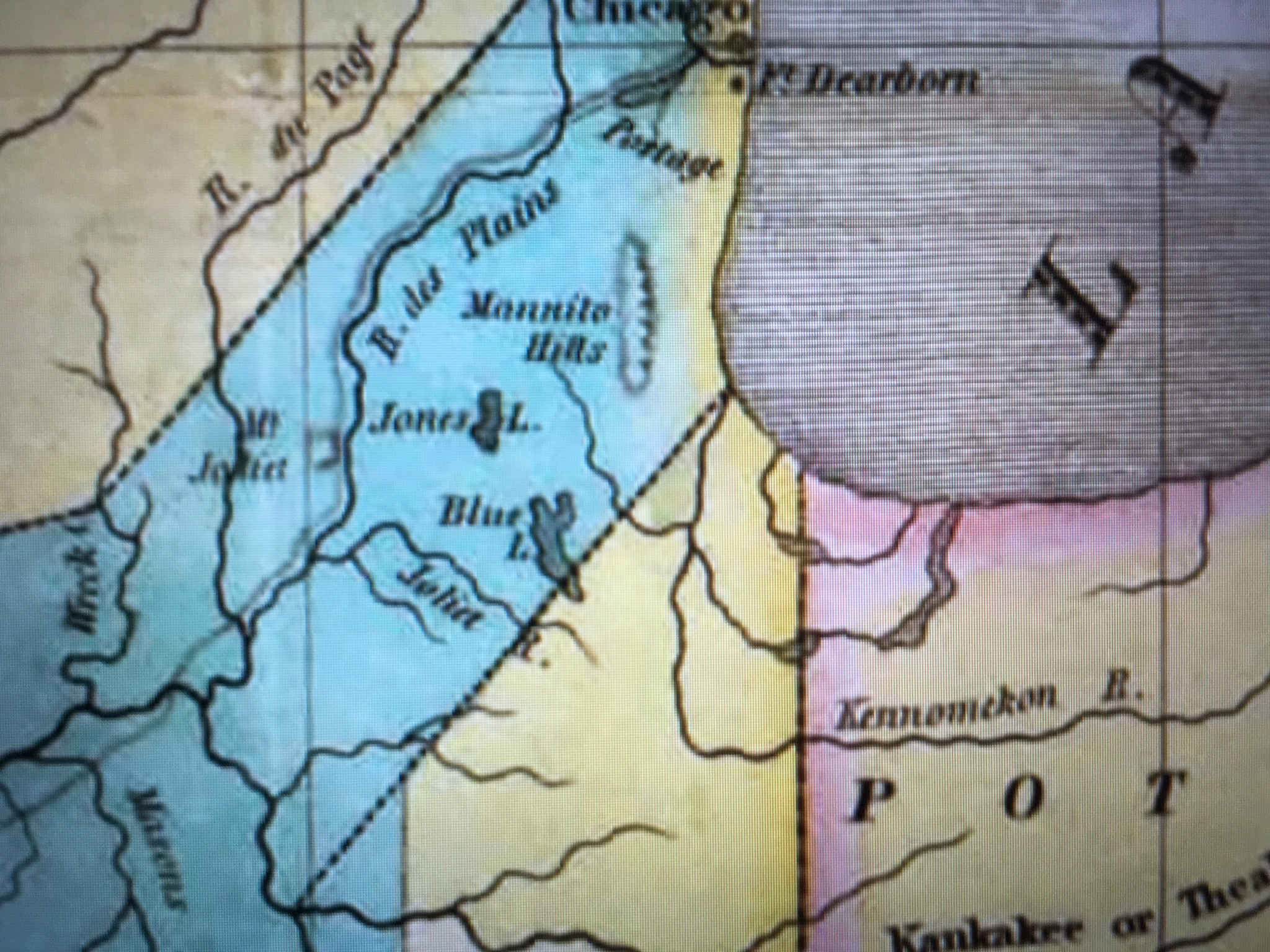
There were no villages on the Ridge, however, and this could be because the local Native Americans considered the location to have sacred significance. Another map identifies the Blue Island Ridge with the term “manitou” which indicated a spirit presence. Humans all have personal manitous, and they were also ascribed to significant natural places.
There was the Vincennes Trail, an early animal path that the Native Americans turned into a trail that was then used by fur traders and settlers. It originally cut across the top of the Ridge, but Thomas Morgan had it rerouted to below the Ridge on the east side so it would not cross his property, once the U.S. government sold off the land to settlers.
There was another Indian trail that ran along 103rd Street on an angle, from the southwest to the northeast.
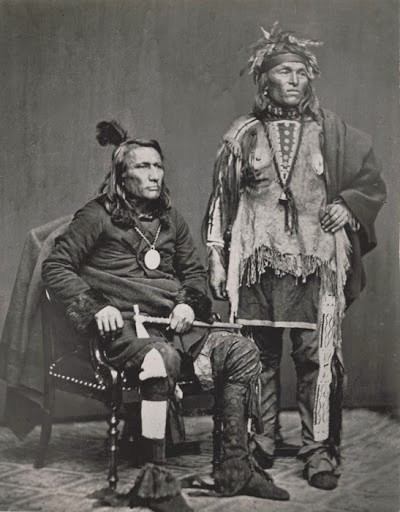
With the Treaty of Chicago in the 1830s, most of the Native Americans, by then primarily part of the Potawatomie nation, left Chicago.
However, they had left the Ridge area some years before that, after the War of 1812.
After U.S. military and settlers were killed, and Fort Dearborn was burned down, by Potawatomi warriors in the Battle of Fort Dearborn, the U.S. government became determined to remove Indians from the area to allow further settlement to go on unimpeded. “Chicago” was strategically located for transportation and trade, and the land surrounding it was rich for farmland.
Fort Dearborn was rebuilt in 1816, and a treaty with the Council of Three Fires (the Ojibwa, Odawa, and Potawatomi, although only the Potawatomi were living in the Chicago area) was signed. In this treaty, called the Treaty of St. Louis, the Indians gave up all claims to a 20-mile strip of land that included the Chicago Portage connecting Lake Michigan to the Illinois River. The Chicago Sanitary and Ship Canal is on this land now.
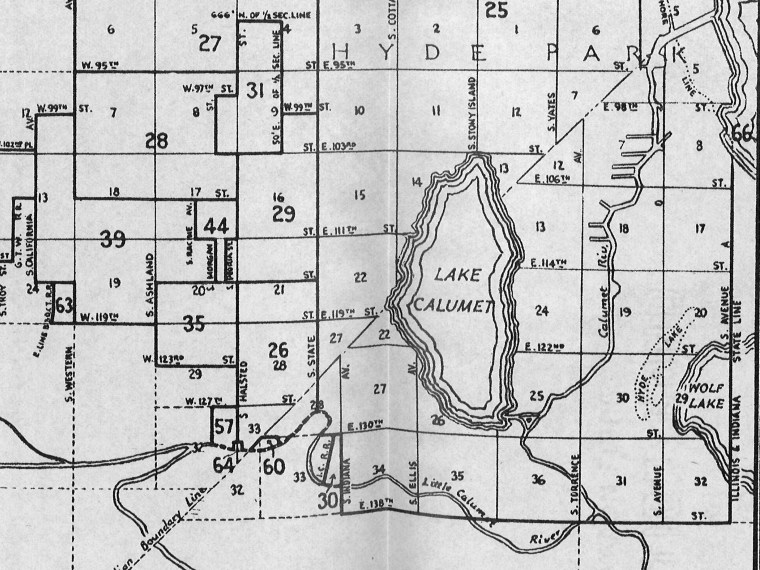
“Indian boundary lines” which started at the lake and ran southwest were established on either side of this strip of land (see attached map). The deal with the Indians was that white settlers were permitted to settle safely within the lines. The southern line ran just below the southern tip of the Blue Island Ridge, placing the lands of the Ridge communities, that is, today’s communities of Beverly Hills, Morgan Park, Washington Heights, and Mount Greenwood, and the City of Blue Island, within the settlers’ territory.
Although the “Illinois Territory” was first claimed for the developing U.S. during the Revolutionary War, this made it official that the Blue Island Ridge was under the control of the U.S. government, slated for settlement by U.S. citizens, and was no longer under the control of Native Americans.
Other treaties followed, in 1821, and following the Black Hawk War in 1832. With the 1833 Treaty of Chicago, the U.S. government took over total control of certain Native American lands west of Lake Michigan, including the Chicago area. The Potawatomi received promises of cash payments and tracts of land west of the Mississippi River.
In 1835, five hundred Potawatomi warriors gathered in full dress and danced the last recorded war dance in the Chicago area.
Most of the Indians left the area after that. Chicago was incorporated as a city in 1837. But for many decades, some Native Americans stayed in the area, and some continued to return to their summer ancestral grounds along the Calumet River.
Early white settlers found and recorded many Native American artifacts in the area. Postholes were reported to be found in the 1840s at what is now the east side of Hale Avenue, between 104th and 105th Streets, and stone tools were found in the area.
The Barnard family reportedly collected 36 flint arrowheads, two battle axes, a spearhead, and several pieces of ancient pottery. They reported finding “the remnants of pottery in a small mound surrounded by large cobble-stones and embraced within the roots of a small oak tree which sprang up from the mound.” The location or importance of this mound were not identified.
Today, there is almost no representation of Native Americans in the area. A reported 65,000 Native Americans representing 175 tribes live in the greater metropolitan area of Chicago. The majority lives on the North Side, and the U.S. Censuses report less than 1% of the population around the Ridge is Native American. Some people do come forward, though, and report mixed ancestry.
Waterman: From the White City to the Ridge
Sunday, December 8th at 4:00 p.m.
Architect Harry Hale Waterman, who is the subject of our latest exhibit, was just 23 years old when he started to build some of his most memorable buildings on the Ridge. In the first part of this program, Exhibit Curator Tim Blackburn will focus on Waterman's influences of the Columbian Exposition and his first employer, Joseph Lyman Silsbee.
Mati Maldre will discuss his architectural photos of thirty Waterman buildings, which were mostly taken in the mid-1980s with a Deardorff 4×5/5×7 view camera.
RHS Facebook Page Author Carol Flynn will then share stories from the lives of Waterman's early clients on the Ridge who made interesting impressions on the community in their day. This will be continued as a series on Facebook to complement the RHS exhibit.
Attendees are encouraged to view the exhibit "Harry Hale Waterman: Unique in any Style", which will be open from 1:00 – 4:00 p.m. before the program. The exhibit is also open Tuesdays and Sundays from 1:00 – 4:00 p.m., or by appointment, through at least spring 2024.
Ridge Historical Society
10621 S. Seeley Ave., Chicago, IL 60643
Limited Capacity. Get tickets here: https://bit.ly/RHSwaterman
Or RSVP by phone 773.881.1675