Explore the RHS Facebook Archives, a rich repository of local history written by Carol Flynn. For two decades, Carol brought a deeply dedicated voice to public education at RHS. Her role as Facebook administrator through mid-2025 naturally extended her prolific research into meticulously detailed articles, most notably her multi-part historical series posts. Today, Carol continues her local history writing for The Beverly Review and other outlets.
Local History
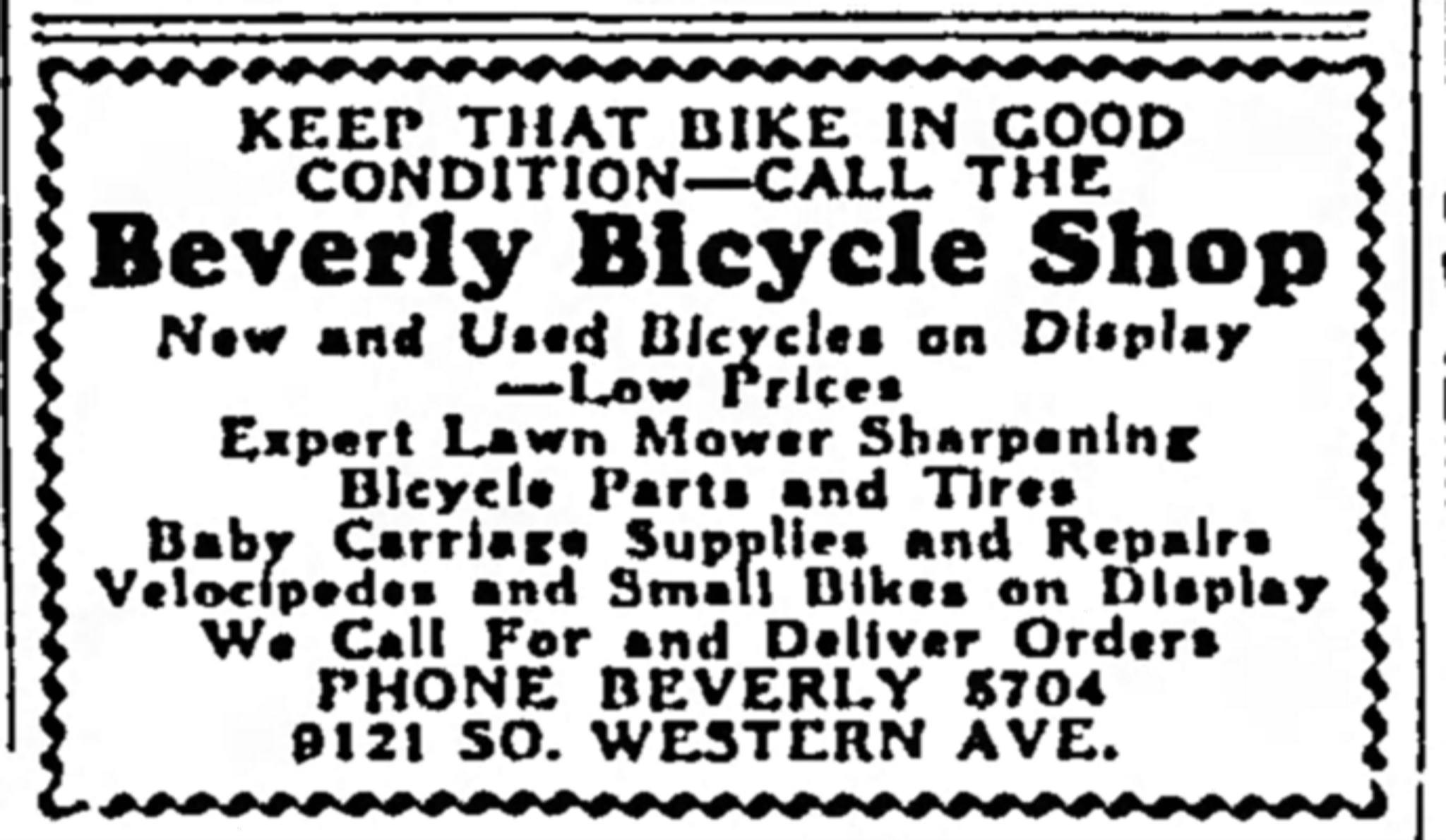
Beverly Bike and Ski Inc. at 9121 S. Western Avenue is a historic business in the community, with roots going back to the 1920s – actually, longer than the 100 years mentioned in this headline.
By 1920, James and Bessie Kosar and their family were already living at 9121 S. Western Ave. From directories and other sources from the time, it appears they ran a grocery there and started the bike shop, also, which was called the Beverly Bicycle Shop, but provided many services, as the attached ad shows.
At the time, Western Avenue was very rural, but it was a thoroughfare connecting the north side to the south side for many miles. There had been stopping places along the route for many years, as it was one of the routes used to reach the cemeteries (Mt. Greenwood, Mt. Hope, Mt. Olivet).
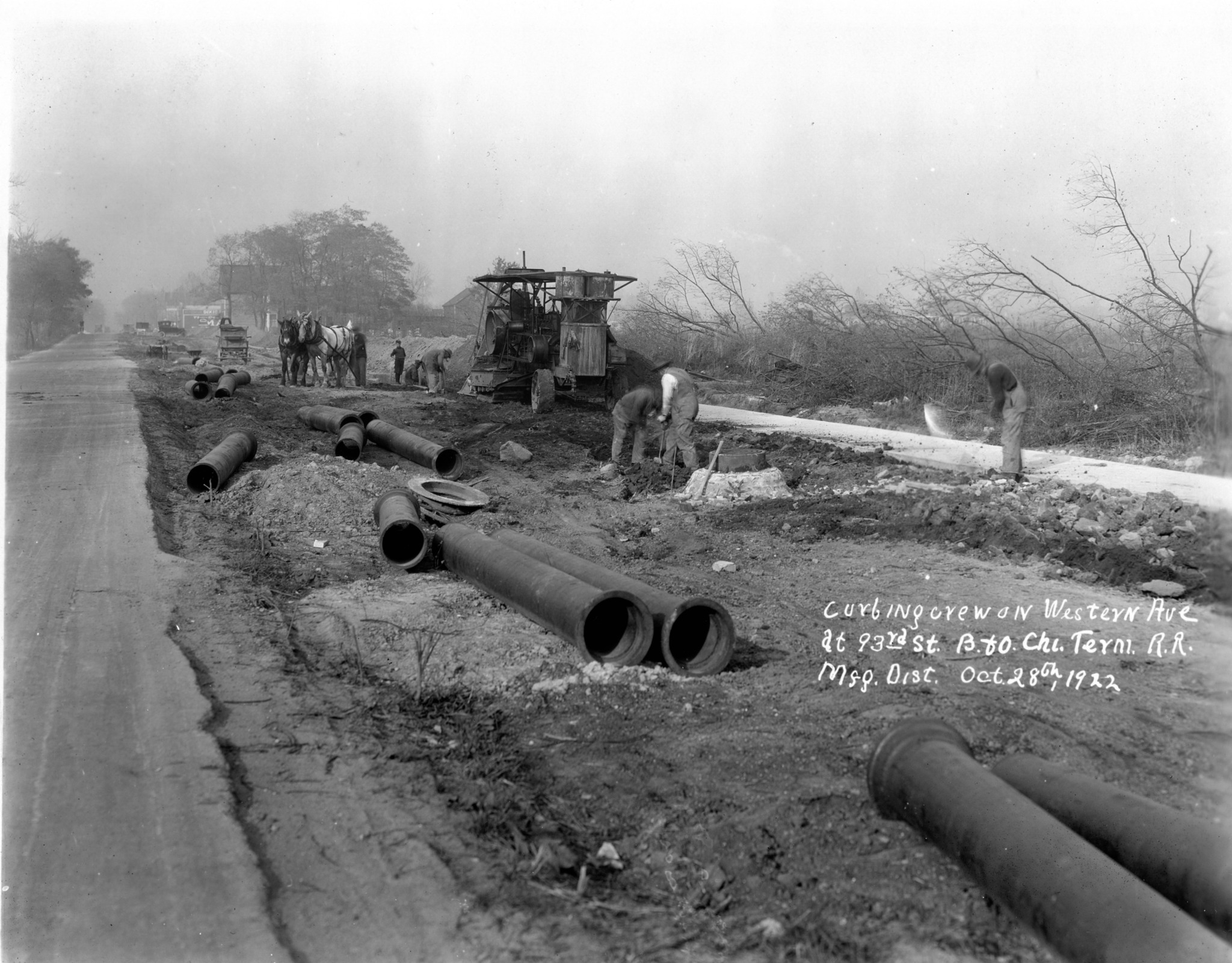
In 1922, Western Avenue through this area was graded, widened, and repaved, leading to the Western Avenue we know today.
The Ridge Historical Society has a photo of the paving work at 93rd Street and Western Avenue in 1922, showing the building that housed the Kosar family and their businesses in the background.
Eventually, the son James, born in 1914, ran the shop, likely starting in his teen-age years, around 1930. He was awarded a bronze star for his service in World War II. He ran the business for many years, and even stayed on for a while as a mechanic after he sold the shop to Bob Green in the 1970s.
The current owners, Paul and Kathleen Weise, bought the shop in 1996, and modernized it. They also involved the shop in community activities, from starting their own racing group to sponsoring the Beverly Cycling Classic.
Recently, the shop has been receiving a lot of media attention because Paul Weise has announced his retirement and has put the shop up for sale. Hopefully, he will find a buyer that will carry on the tradition of the store.
Read more about Beverly Bike and Ski in this month's BAPA Villager. https://bapa.org/beverly-bike-ski-nears-100-years-at-91st-and-western/
The Ridge Historical Society
More on Aerial Photography
By Carol Flynn
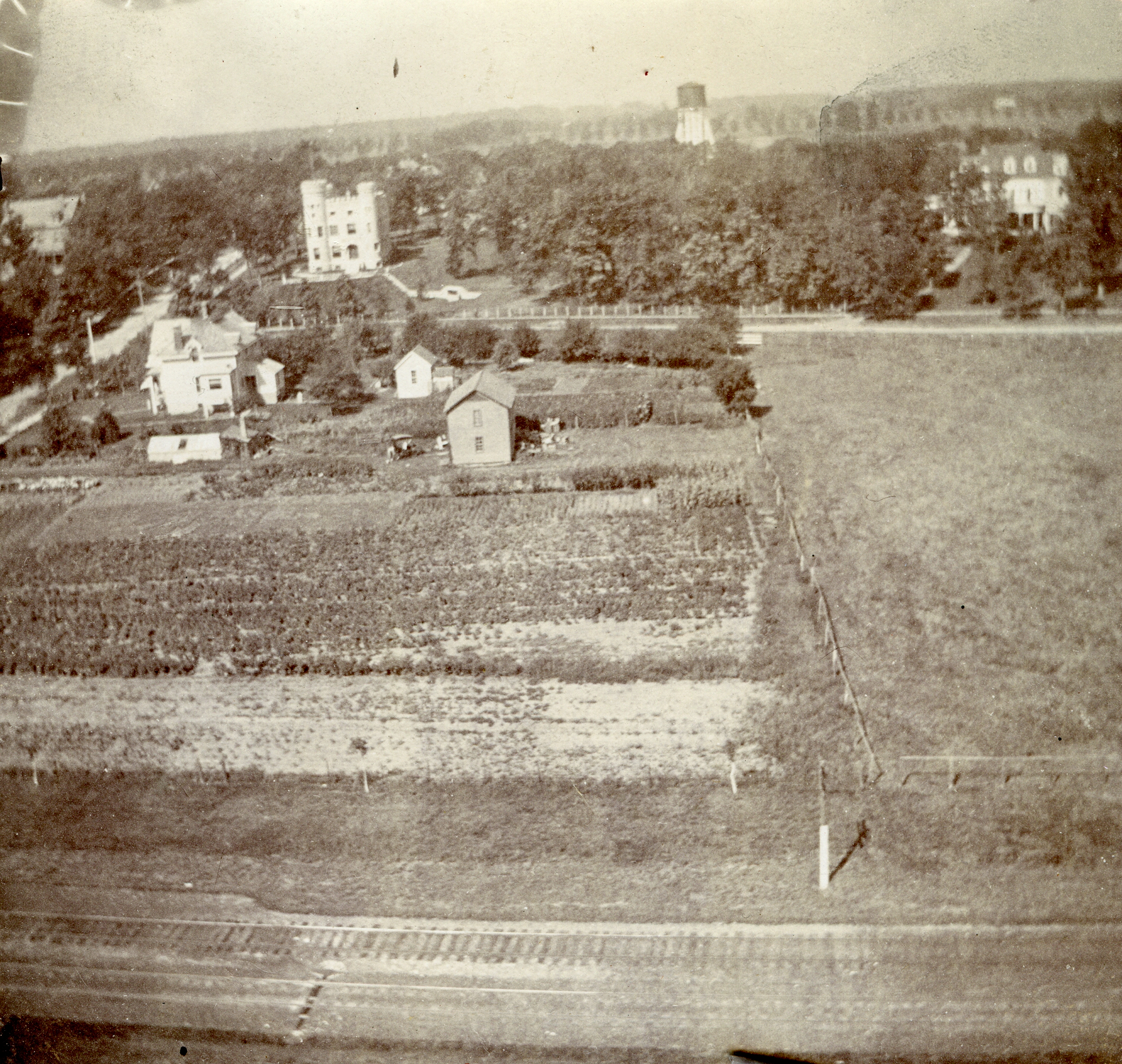
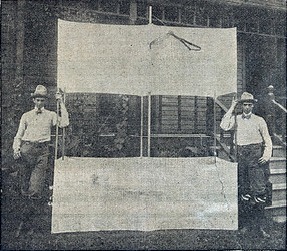
The current Ridge Historical Society (RHS) exhibit, “Louise Barwick’s Lost Ridge,” includes aerial photographs taken in 1899 by young men who attached a camera to a kite and sent it soaring over the community.
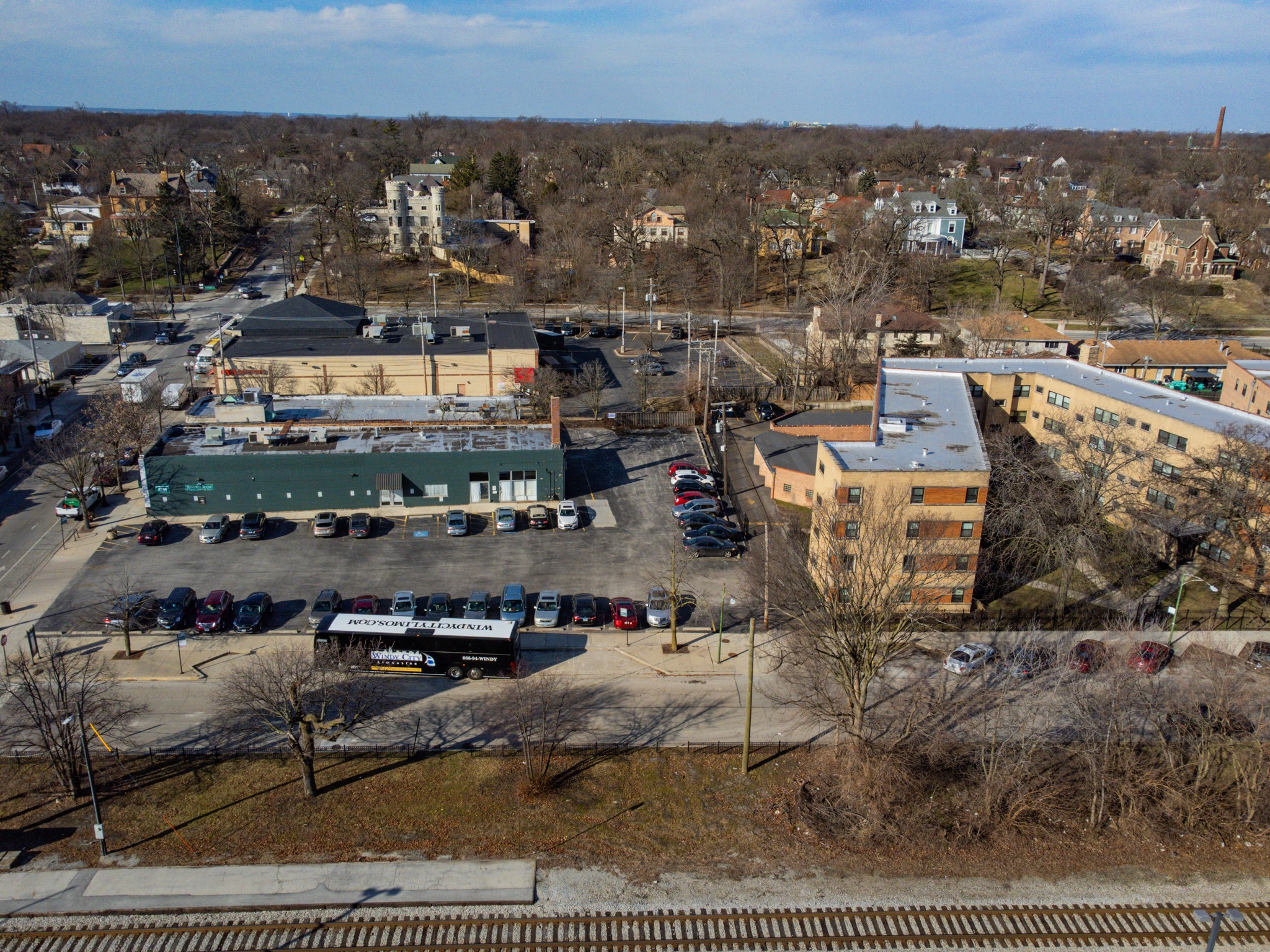
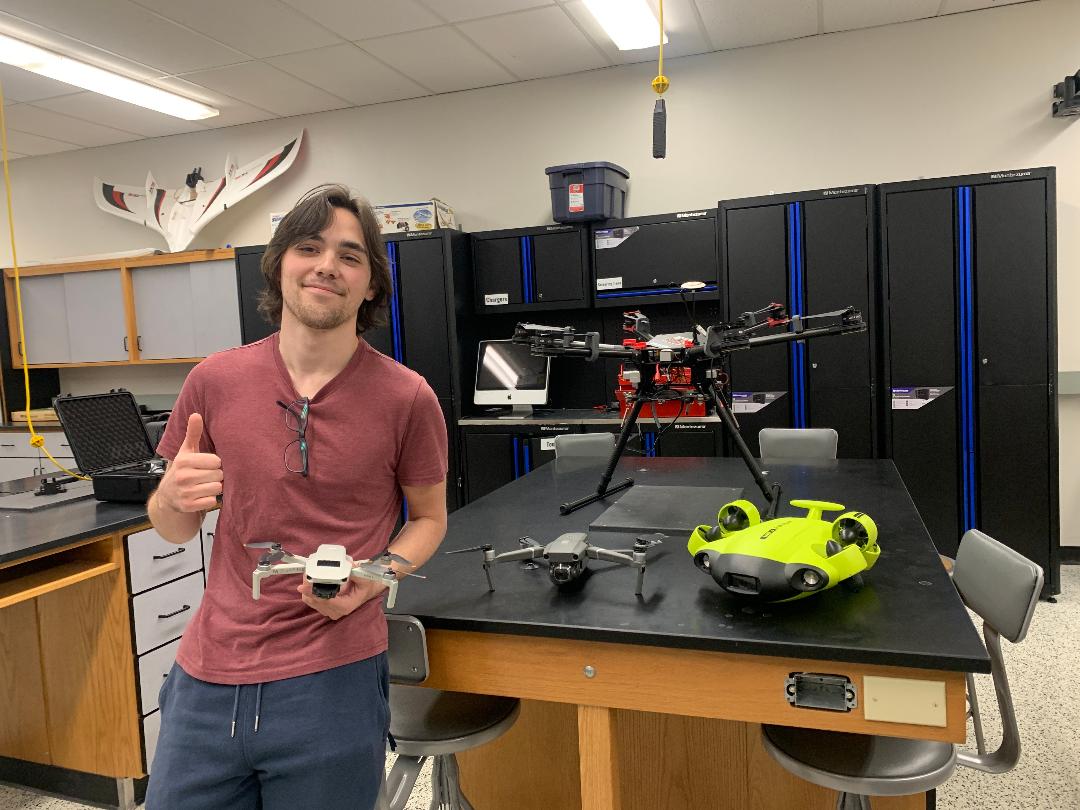
As covered in this article in the Beverly Review, in February, a college student from Morgan Park, Ben Johnson, took photos of those same views using drone technology:
https://www.beverlyreview.net/news/community_news/article_6454103a-0192-11ef-b6e6-53a4c44db920.html
Here we present the “then-and-now” photos of the area surrounding the corner of 103rd Street and Longwood Drive, as well as images of the photographers.
For more information on the topic, visit the RHS exhibit on Tuesday and Sunday afternoons from 1:00 to 4:00 p.m. RHS is located at 10621 S. Seeley Avenue.
The Ridge Historical Society
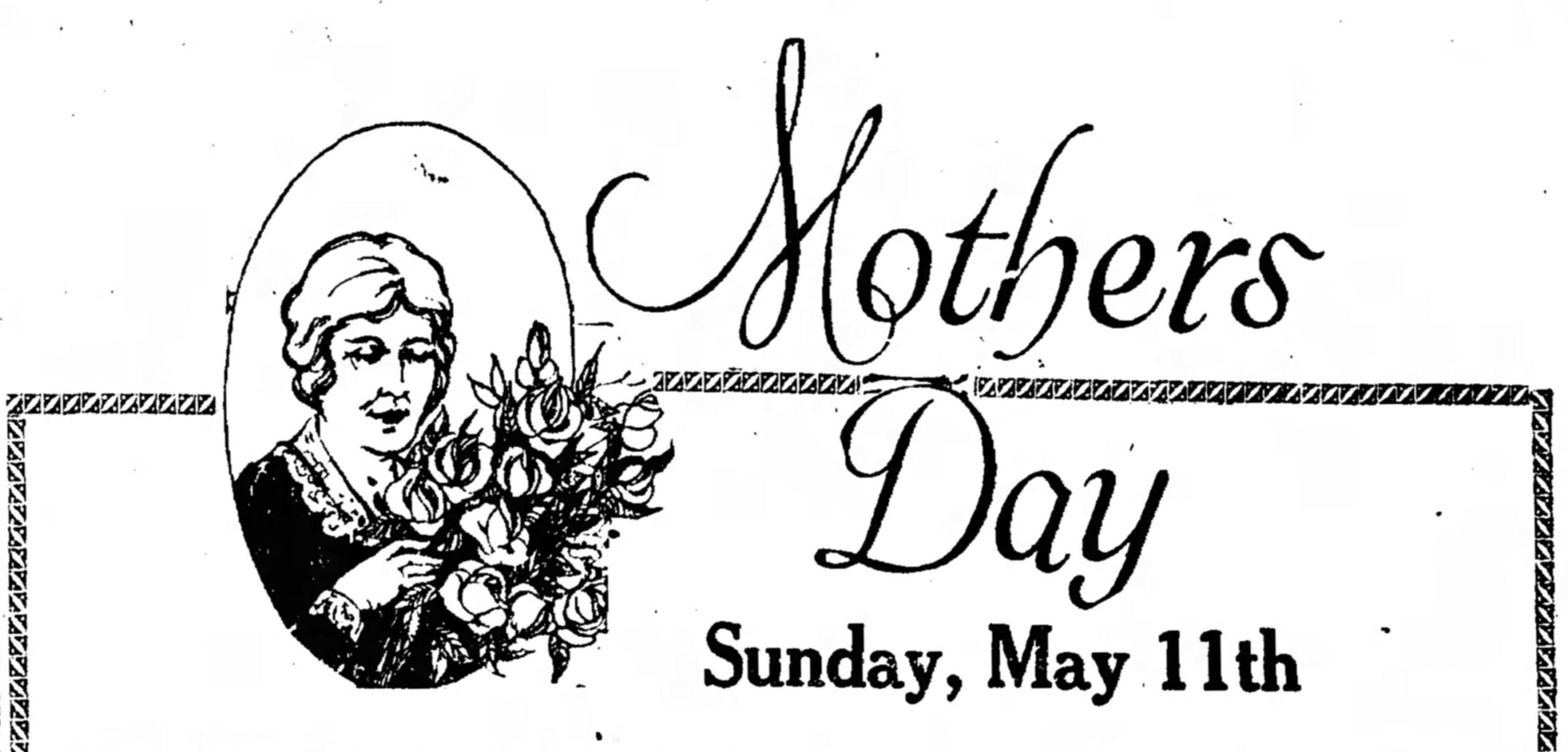
Mother’s Day One Hundred Years Ago
By Carol Flynn
The modern Mother’s Day in the U.S. grew out of the peace movement following the U.S. Civil War. Peace activists Ann Reeves Jarvis and Julia Ward Howe called for a “Mother’s Day for Peace” when mothers collectively would advocate that their children not be sacrificed as soldiers in wars.
When Ann Reeves Jarvis died in 1905, her daughter Anna Jarvis wanted to honor her and all mothers, and started a liturgical service in West Virginia. She proposed a national Mother’s Day, and President Woodrow Wilson declared the first officially recognized Mother’s Day in the U.S. in 1914.
Anna Jarvis always wanted the day to be one of prayer, thanks, honor, and personal reflection, and was opposed to the commercialism that crept into the holiday. She protested at a candy makers convention in 1923 and against the sale of carnations for Mother’s Day in 1925, where she was arrested for disturbing the peace.
At this time on the Ridge and nearby areas, the church influence was still very strong, but the commercialism that would come to own Mother’s Day was in evidence.
The Protestant community spent most of their Sundays in church back in those days, and in 1924, the local churches led the way in recognizing Mother’s Day. Everyone was encouraged to attend services “for mother’s sake.”
Church started with Sunday School and one topic that year was “What We Owe Our Mothers.”
The first service of the day offered sermons on topics like “Mother’s Unfeigned Faith” and “A Mother’s Heart.” Printed copies of the sermon “A Godly Mother” were distributed to the congregants at one church.
Choir programs included “Songs Mother Used to Sing.” Duets and solos included “My Mother’s Bible” and “Wear a Flower for Mother.”
Special christening services for children were held.
After Sunday dinner at home, people returned to church for evening services.
Evening services contained entertainment/educational programs as well as liturgical services. At one church, a large men’s chorus sang Mother’s Day songs, followed by a testimony meeting honoring mothers. Another church gave every mother who attended evening service a rose or a tribute booklet. A third church showed a stereopticon on “A Child and His Mother.”
Other social events also went on, usually on weekdays, not on Sunday, because Sunday was for church. Sororities and other groups gave annual Mother’s Day parties, luncheons, and teas that included music and drama programs. At one event. the local paper reported that “Miss Sadie Minrath danced the ‘frisco’ with Miss Anne Green at the piano.” The “frisco” was a popular contemporary dance, the first one set to jazz music.
At the same time, commercial gifts and services were beginning to take hold in the community, and advertisements were appearing in the newspapers.
Greenhouses and florist shops promoted blooming plants and flowers as good gifts for Mother’s Day. Novelty shops promoted commercially made cards, started by the Hallmark Company, and items like stationery. Candy stores promoted special boxes for the day.
Photography studios promoted their services for portraits. Dance studios promoted dancing lessons.
Frank’s Department Store at 63rd Street and Ashland, a popular shopping spot, used the day to advertise women’s shoes, handbags, gloves, and “dotted voile and tissue gingham dresses, trimmed with lace and organdies,” on sale for $2.98, down from $3.50.
As one advertiser put it, the question wasn’t whether or not to recognize your mother on this day, the question was how to do it.
Image from a flower ad, May, 1924.
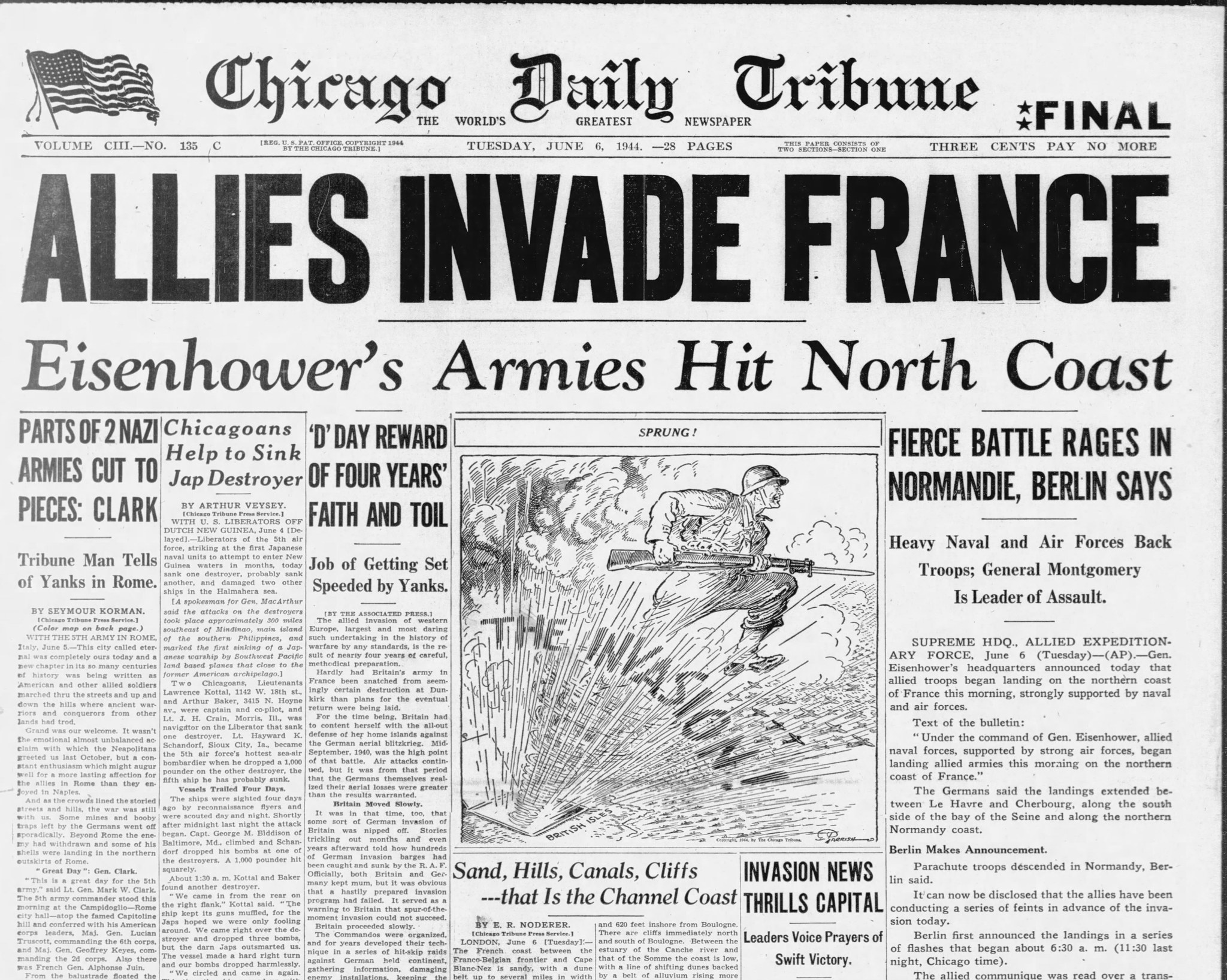
June 6, 1944, headlines in the Chicago Tribune. That summer, the news was dominated by the war in Europe. Many servicemen from Chicago and the Ridge fought bravely to stop the Nazis and fascist regimes from taking control. There are few World War II veterans still with us today.
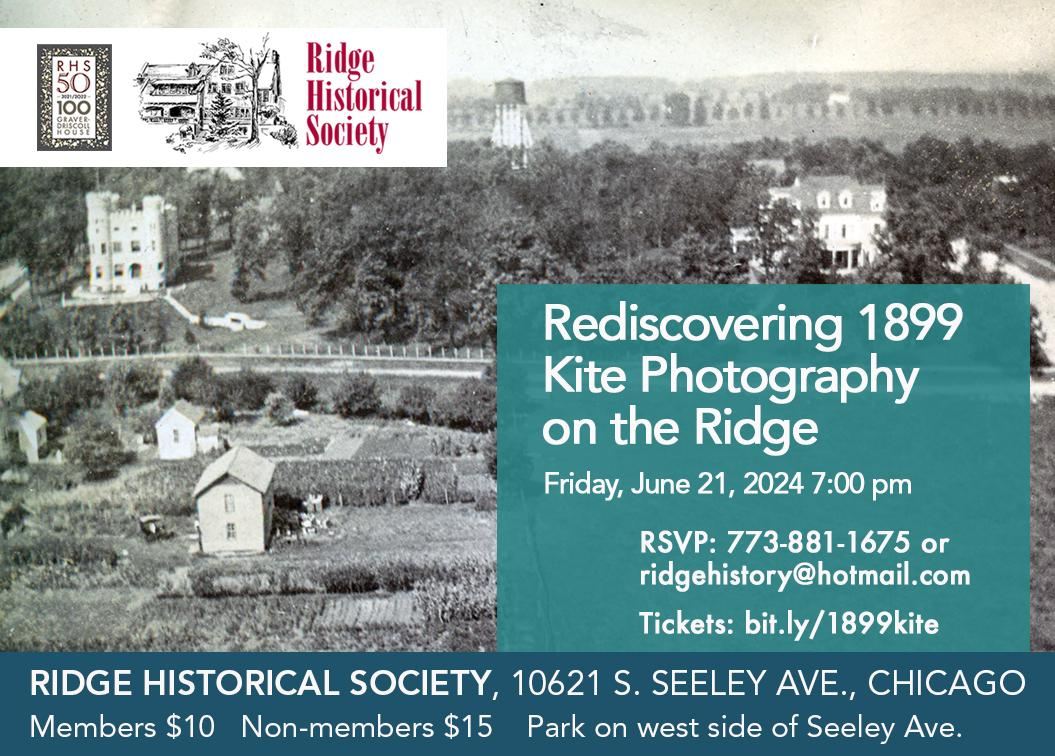
Ridge Historical Society recently discovered a stunning online collection of aerial kite photography that shows expansive views of portions of Beverly Hills, Washington Heights, and Morgan Park in 1899. After 125 years of development from a rural community to urban environment, the locations of most of the photos were unrecognizable.
In this program, RHS board member Tim Blackburn and Historian Linda Lamberty will present how they resolved the locations of the photos and discuss the community’s development that is visible in the aerial photos. Topics include the history of Bethany Union Church, evolution of Chicago Bridge & Iron Company, development of a farm into a small subdivision of Walter Burley Griffin homes, and how greenhouses dotted the local landscape. A future program will focus on recreating these aerial photos via drone photography.
Please note that the Graver-Driscoll House where RHS is located is not air conditioned or handicapped accessible. Parking is on the street on Seeley Avenue, then walk down the driveway to the entrance of the building.
10621 S. Seeley Avenue, Chicago. Friday, June 21, 7:00 p.m.
Members $10, non-members $15.
Limited Capacity. Please RSVP or buy tickets soon.
RSVP with the number attending at 773-881-1675 or ridgehistory@hotmai.com
Get tickets today at bit.ly/1899kite
Happy Fourth of July from the Ridge Historical Society
By Carol Flynn
The Ridge 100 Years Ago
As this year’s Fourth of July activities wrap up, let’s look back at the holiday 100 years ago. The Ridge communities were known for their festive celebrations.
On June 27, 1924, Sullivan’s Englewood Times, a south side Chicago newspaper, reported that “big doings” were being planned for the annual community Fourth of July event to be held in Ridge Park.
“The community has a reputation to provide a good time and it surely will be a successful day if balmy summer weather prevails,” stated the paper.
The Boy Scouts assisted the Beverly Hills Post of the American Legion in going house-to-house to help the event’s finance committee raise funds.
A busy day from 9:30 a.m. to 10 p.m. was planned. A “delightful time” was promised, with pink lemonade, dancing, a public speaker, athletic and swimming events, baseball, a band concert, and “booths galore.” Not to be forgotten was the “beautiful” fireworks display scheduled for the evening.
“The park is big and a spirit of welcoming” would be extended to everyone, promised the event planners.
The weather did cooperate that day. July 4th fell on a Friday in 1924. It was a clear day, but cool, in the low- to mid-sixty degrees. That proved to be fine with the community, and the event proved to be everything promised.
“The Ridge’s Community Fourth was one of the best ever. The whole town was there from Morgan Park to Beverly and 91st st., not counting the visitors from other places,” wrote the paper the following week, on July 11, 1924.
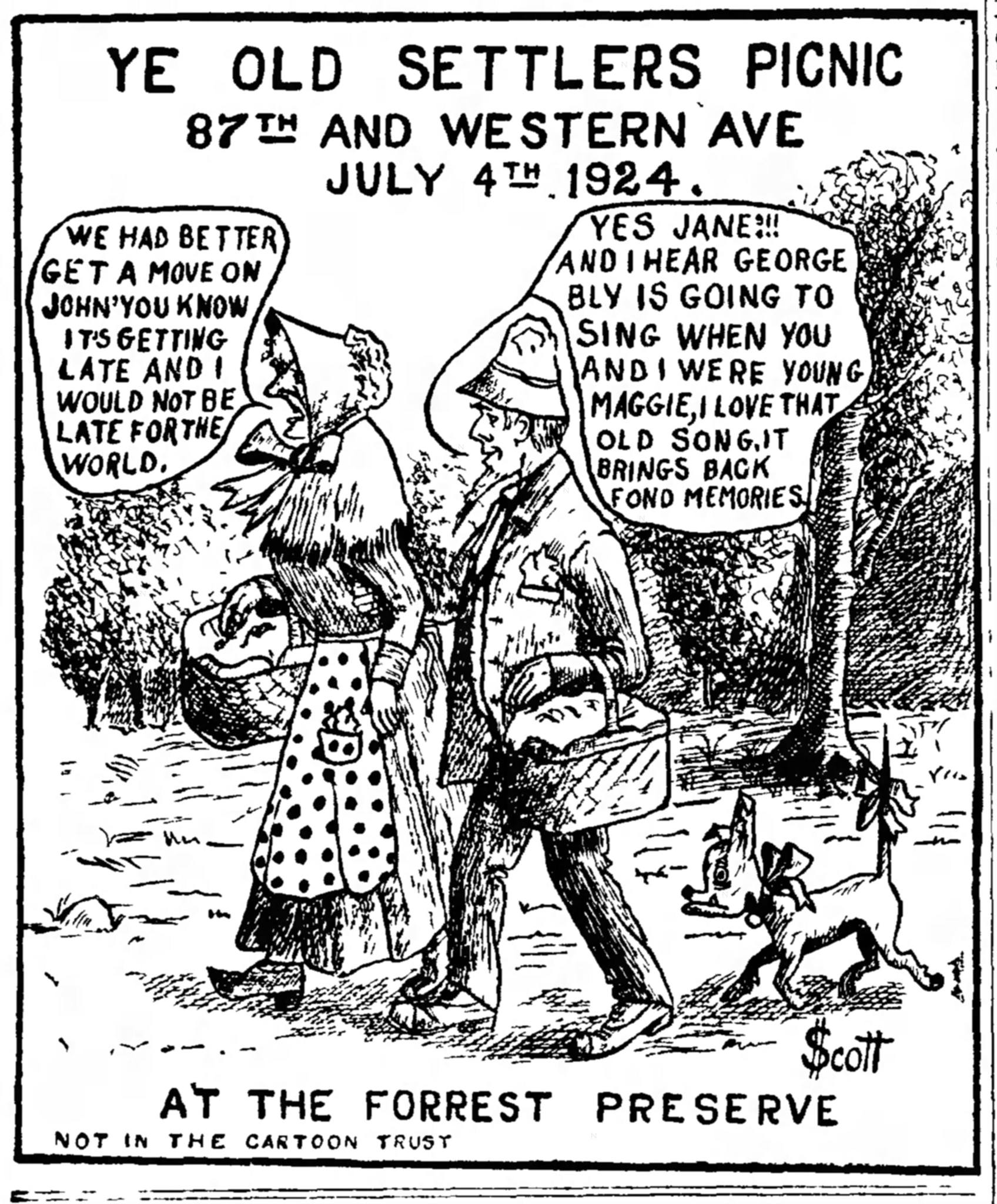
About a mile to the north, in the Beverly Woods (now Dan Ryan Woods) at 87th Street and Western Avenue, another group also held a big Fourth of July event in 1924.
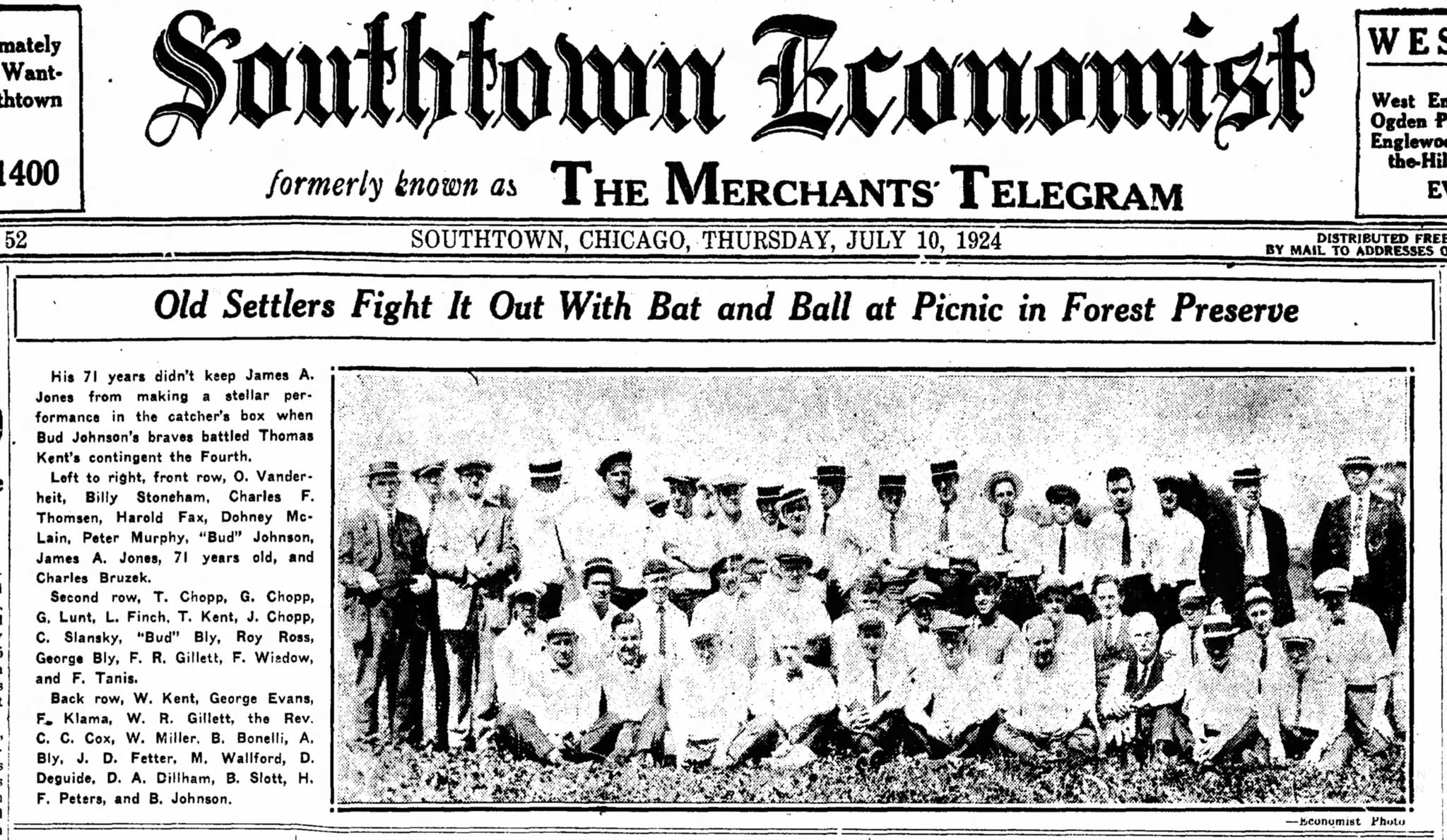
According to the Southtown Economist, another southside paper that had previously been known as The Merchants Telegram, the Englewood Old Settlers Association invited their community to join them for a day of picnicking, music, and games.
“Old settlers,” or “pioneer,” societies were once very popular. People who had lived in a community for a specified amount of time got together to share stories and memories. Today, in some ways, the “nostalgia” pages of Facebook fill some of this function, although there is no comparison to getting together in person for reminiscing.
A person had to have lived in Englewood for at least 20 years to qualify for membership in the Englewood Old Settlers Association. The membership of the club numbered 600 in 1924.
For the Fourth of July outing, the attendees gathered at 63rd Street and Ashland Avenue at 10:00 a.m. Transportation to the woods would be by automobile, something still new and exciting for many people. Anyone who needed a ride would be able to find one.
The newspaper reported, “In striking contrast to the days when lanterns furnished their only illumination to guide them to neighborhood gatherings, automobiles will carry the Old Settlers to their picnic.”
The cars were decorated with flags, and horns were provided to create noise for the procession.
The day was filled with activities. Charles S. Deneen, the past Governor of Illinois, gave a speech in the morning. (The next year Deneen would become the U.S. Senator from Illinois.)
A piano had been brought along, and next, the attendees, some in wheelchairs, sang patriotic and old time songs.
A five-inning baseball game was played by two teams of Old Settlers. The oldest player was 71 years old. The prize of a straw hat went to the first man to hit a home run, which happened in the third inning and was the only home run in the game.
Additional competitions went on, with prizes supplied by the local businessmen.
For men, there was horseshoe pitching. Women’s events included wood sawing and nail driving.
There were potato races and sack races, races for “fat men” and “fat ladies,” and for married men and married women. There were also races for boys and girls.
A prize was awarded for the best decorated auto.
Tables and chairs were brought over to the woods for people to set up their “basket” lunches and dinners. Ice cream, pop, and peanuts were sold.
Later in the day there was dancing.
About 2,000 people attended and the event was deemed a social and financial success.
The paper reported that moving pictures of various events would be taken. Those movies may still exist somewhere and would be wonderful to watch.
Because July fourth was on a Friday, many businesses also gave their employees Saturday off. It was the norm back then for people to work a half day on Saturday in addition to full days Monday through Friday. The average work week was 50 hours.
Ridge Historical Society
National Dog Day – August 26, 2024
By Carol Flynn
National Dog Day occurs annually on August 26 as a world-wide event to bring attention to all breeds of dogs and the importance of dogs in our lives.
Started 20 years ago by an animal welfare advocate, the day also calls attention to the many dogs that need to be rescued and adopted each year.
Of course, there are many stories related to dogs in the Ridge communities’ history. One favorite story, however, directly relates to rescue and adoption.
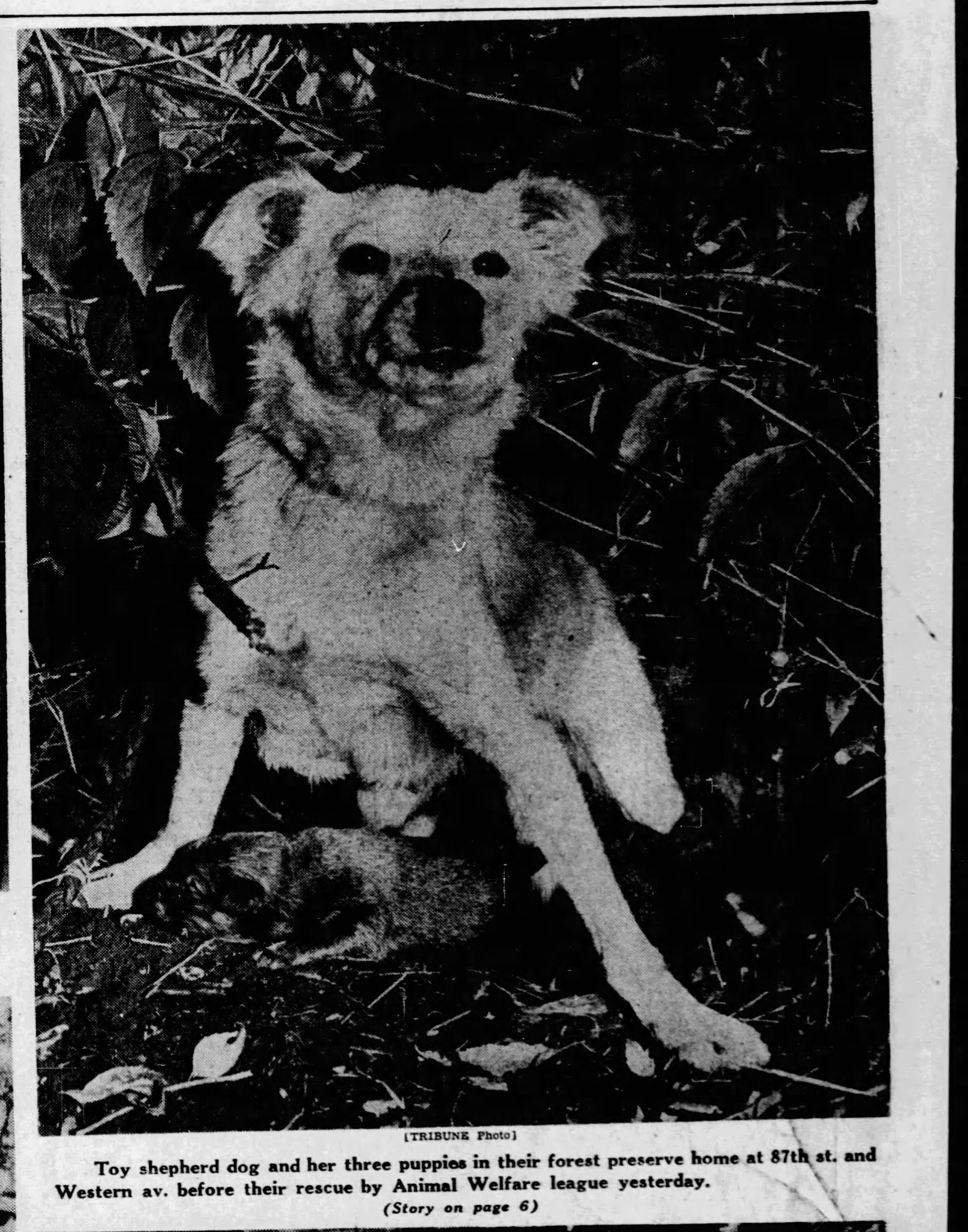
In the summer of 1945, a small dog described as a “brown toy shepherd” started to be noticed living in Dan Ryan Woods. It was assumed she had been dumped there because many people abandon animals of all kinds in the forest preserves. The animals rarely survive a Chicago winter.
The little dog was elusive with people. She would allow them to get just so close before she scampered away. She was often seen hunting for rabbits and warily searching picnic grounds for half-eaten sandwiches.
She began to be known as “the wild dog of Ryans Woods” but the children in the neighborhood called her Dollie, and eventually the adults started calling her that, also.
In October, as the weather cooled, the neighbors started leaving food out for Dollie at the edge of the woods. Mrs. Northrup, who lived at 8957 S. Oakley Ave., an active charity and “club” woman in the community, determined to capture Dollie and find her a good home.
That proved more difficult than expected. Talking softly to Dollie and offering tasty tidbits of food still brought Mrs. Northrup no closer than 10 to 15 feet from the dog.
Mrs. Northrup called in the Illinois Citizens’ Animal Welfare League, who sent experienced field agent Allen Glisch over to the woods.
While Mrs. Northrup distracted Dollie, Glisch managed to get a leash around the dog’s neck. Little Dollie, still shy, didn’t fight them; she wagged her tail when Mrs. Northrup and Glisch approached her and petted her.
When they started leading her out of the woods, however, Dollie hesitated to go. Instead, she led them to a nearby brush heap. There, in a leaf-lined den that she had dug, they found three puppies, about a week old whose eyes had not yet opened, fast asleep.
Dollie whined and danced around proudly as Glisch gathered the puppies in his arms, and she happily followed him as her puppies were carried over to Mrs. Northrup’s home.
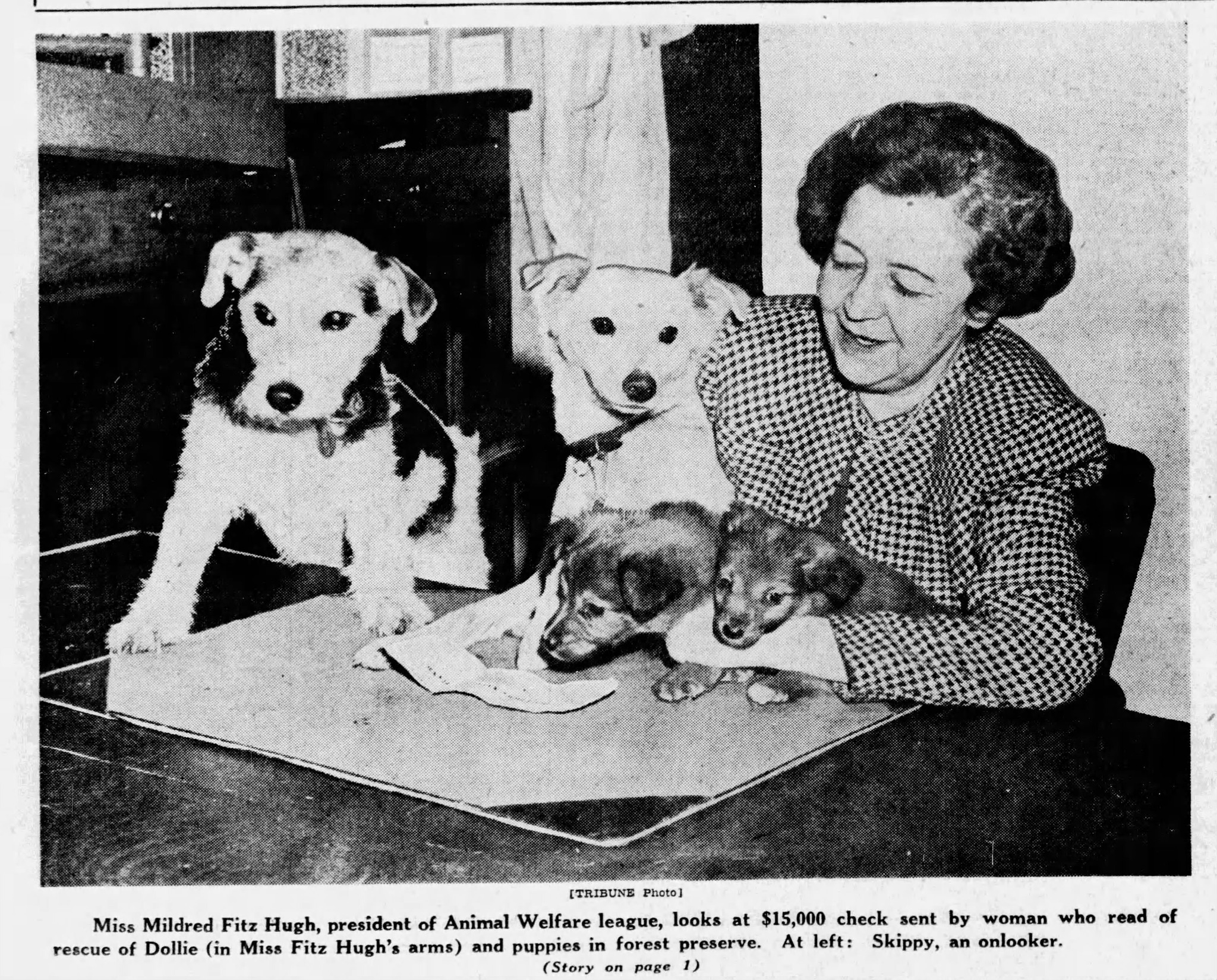
Dollie became a bit of a media sensation, attracting the attention of the Chicago Tribune. In California, Marguerite Doe Ravenscroft, a wealthy socialite and philanthropist who strongly supported humane efforts and was the honorary chairman of the local animal welfare league, saw the article, and in December, sent a check for $15,000 to the Illinois organization to help build a new shelter in Chicago.
Dollie, her puppies, Mildred Fitz Hugh, the founder and president of the Illinois chapter, and Skippy, a terrier mix who got in on the act, posed for a picture with the check that appeared in the Chicago Tribune.
Fitz Hugh, also a wealthy socialite and the grandniece of Mayor Carter Harrison, announced in February of 1946 that the money was used to purchase two buildings at 3138-3140 Walton Street, for a new shelter. There was already a shelter at 6224 S. Wabash Ave.
What became of Dollie and her puppies wasn’t reported in the newspaper, but given their star qualities, and their downright adorableness, it’s probably safe to assume that they found “forever” homes.
The Ridge Historical Society
Labor Day on the Ridge 100 Years Ago
By Carol Flynn
One hundred years ago, Labor Day occurred on Monday, September 1st.
It was a lovely day – in the mid-70s, partly cloudy, gentle shifting winds: a perfect day to wrap up the summer.
Throughout the Chicagoland area, the holiday was celebrated with activities. The mosquitos were particularly bad that year, especially in the forest preserves, but that did not stop thousands of people from going to the preserves for picnics and sporting events.
The Beverly Preserve at 87th Street and Western Avenue was one of the most popular of the forest preserves because it was the only one accessible by public transportation. Streetcars brought people as far as 87th Street and Ashland Ave., and they walked the rest of the way; or the Rock Island Railroad dropped them off at the 91st Street station, right outside of the forest preserve.
Around 1900, for about a decade, Morgan Park held large “Morgan Park Day” festivals on Labor Day.
In 1923 and 1924, a different kind of program went on, a “chautauqua.”
“Chautauqua” was an adult education and social movement of the late 1800s to the mid-1920s. The movement started in 1874 with an adult summer school for Sunday School teachers at an outside campsite on Chautauqua Lake in New York. That program started with Bible studies, but the idea spread to other schools and sites that started offering programs in many different topics.
Schools, and then communities and private organizers started offering chautauquas, as the programs became known, to the general public. The programs were usually a multi-day event, and featured a variety of speeches and educational talks, along with musical acts, dancers, art events, and other entertainment.
In Beverly/Morgan Park, the chautauqua that was offered from August 23 to September 3, 1924, was produced by the concert management firm of Stroup and Phillips, and was held on Hoyne Avenue from 110th to 111th Streets.
Roy Phillips, who lived in Morgan Park and had been the editor of the Weekly Review and Blue Island Sun Standard newspapers, had gone into the business with Harry Stroup in March of 1923. They represented a wide range of musical artists.
We don’t know the programs, speakers, or performers that Phillips presented that year, but one strong possibility was a performer introduced as the Indian princess “Watahwaso, a daughter of the Penobscot tribe of Indians,” that he featured at other programs.
Watahwaso appeared in costume and related “interesting Indian legends and sang beautiful songs of her own and other tribes.”
Another performer that Phillips promoted that year who likely performed in Morgan Park was James Goddard, a bass baritone of the Chicago Opera Company. He was described as “a great big he-man, strong as Hercules and handsome as Adonis,” with “a wonderful voice of great purity and strength.”
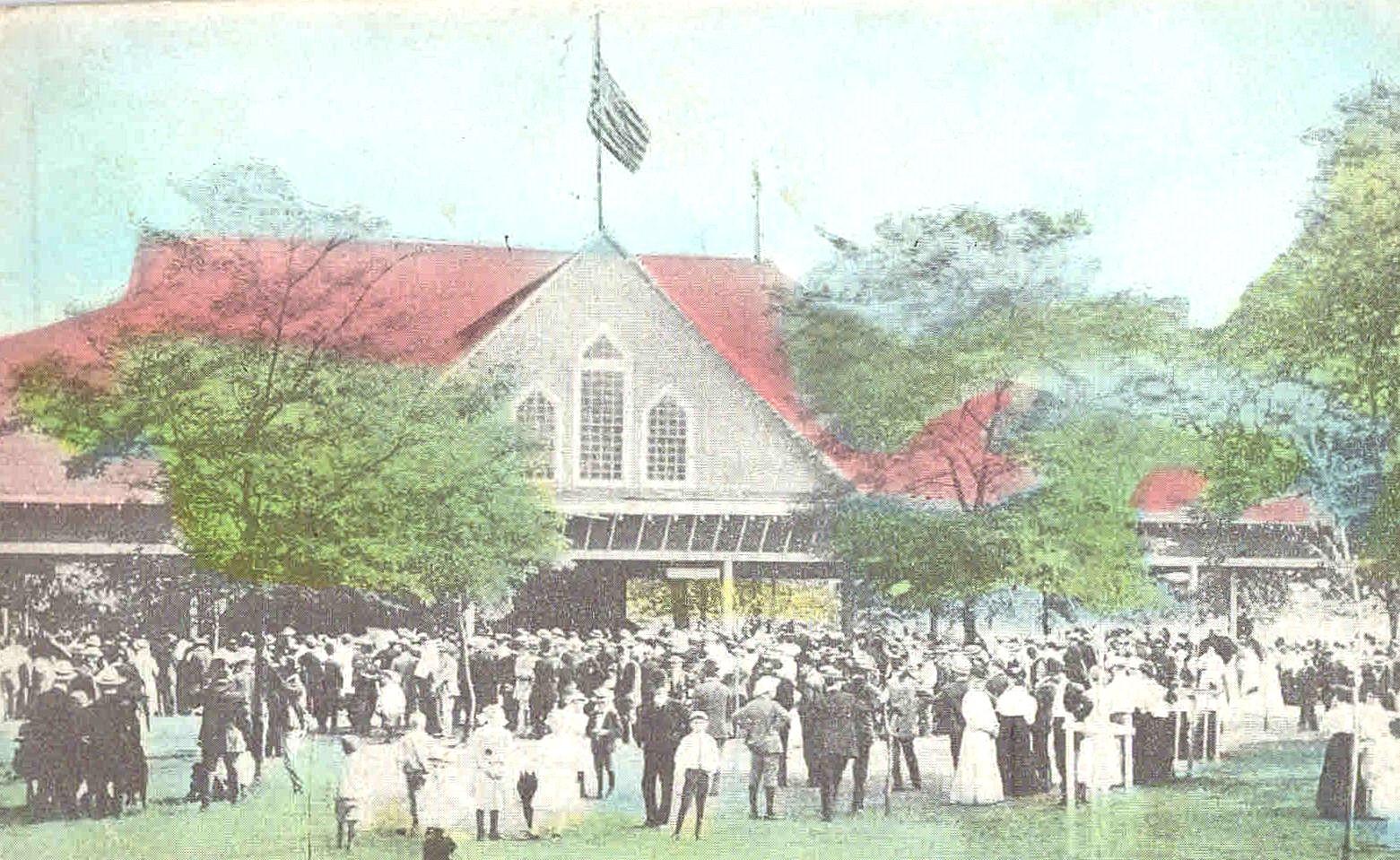
Chautauquas were very popular throughout the U.S. This image is from one held in Ohio.
The Ridge Historical Society
Living History: Brick Streets of Yesteryear
By Carol Flynn
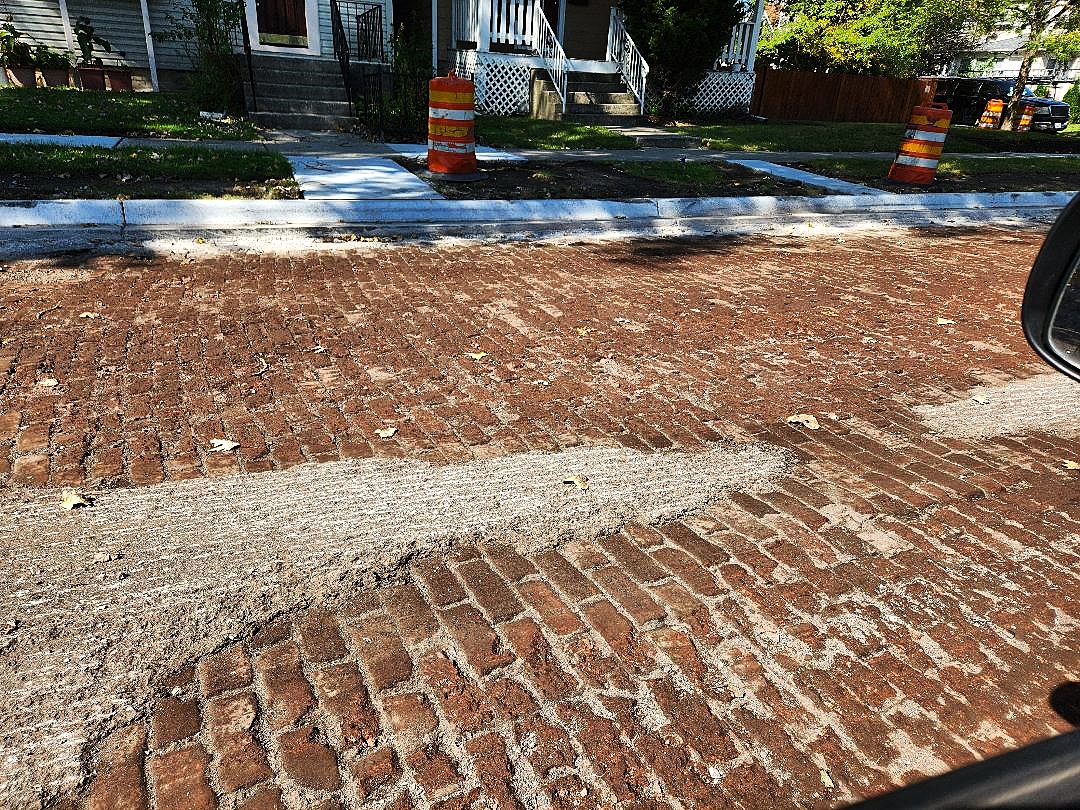
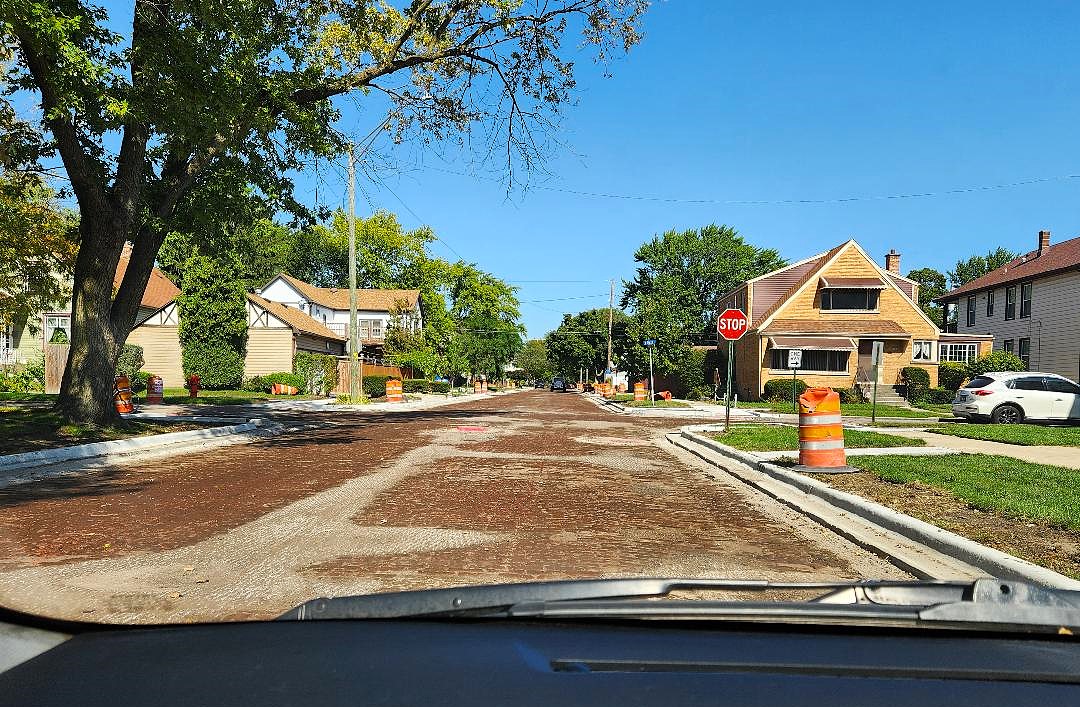
"Seizing the educable moment:" For a wonderful opportunity to see what the brick streets were like, back in the late 1800s – early 1900s, visit our neighbor to the south, the City of Blue Island.
Blue Island, in its continuing efforts for revitalization, which are proving to be very successful, is redoing streets, curbs, and sidewalks.
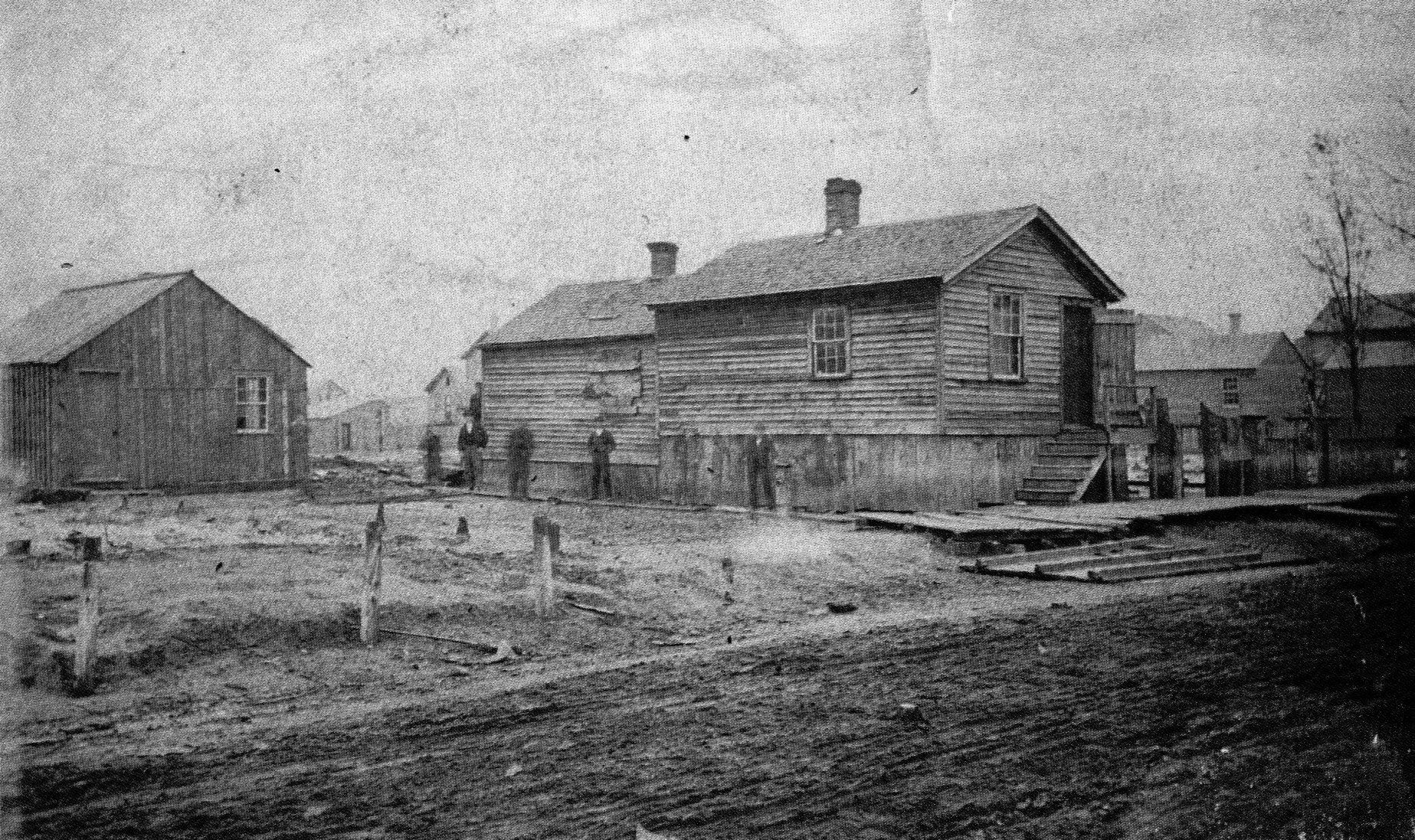
Right now, Greenwood Avenue, which is one block west of Western Avenue, between 123rd and 127th Streets, has been excavated down to the original brick street. Here are some views of the street.
In the next few days, the streets will be covered with concrete and blacktop, so if you want to see the old streets, do it now.
There are several isolated blocks of brick streets in Morgan Park, on 110th Place, but not a half mile stretch like this.
According to Preservation Chicago: "Originally, Chicago streets were packed dirt, which turned to thick mud when wet and were a constant source of frustration for
early Chicagoans. Dirt roads were initially paved with inexpensive wooden planks and later with wooden blocks; however, this
practice was largely phased out after the Chicago Fire of 1871. Between the 1880s and the 1910s, brick pavers were widely
used throughout Chicago’s highly traveled streets, as they were much stronger, highly durable, fire-proof, and remained functional when wet or snow-covered. These new brick paved streets proved up to the challenge of the wear and tear from steel
rimmed wagon wheels of pre-automobile street traffic.
Chicago’s street pavers were typically fired-clay bricks made from the tough clay abundant under the prairie grass."
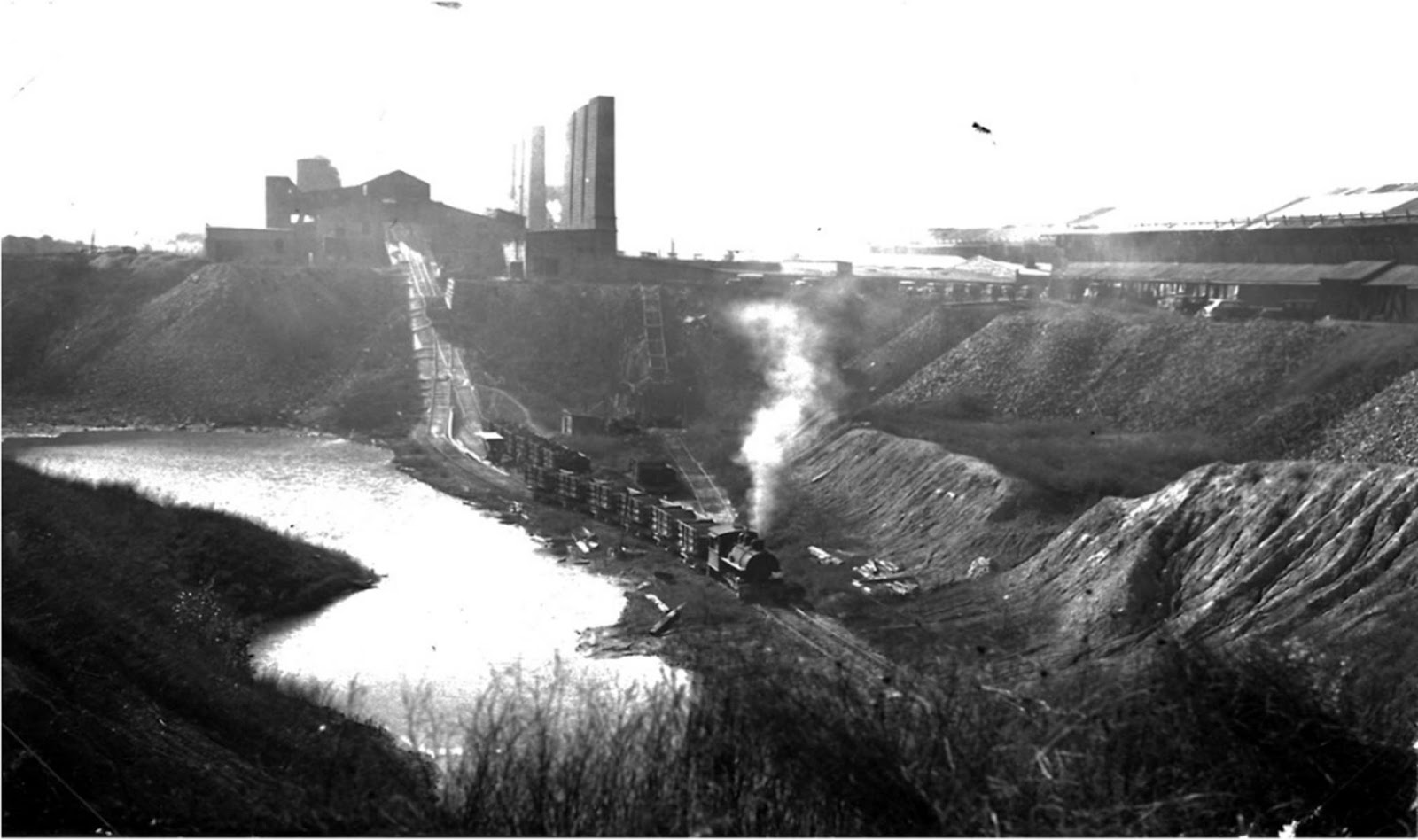
There were massive clay deposits around Blue Island, and brick making was an early industry here. From a history of Blue Island:
"After it was discovered in the early 1850s that rich deposits of clay surrounded the ridge, Blue Island became the center of a significant brick-making industry that lasted for over a century. In the early years, these efforts were small, with the bricks being made by hand and the turnout created mostly for local use, but by 1886 the Illinois Pressed Brick Company (organized in 1884) was employing about 80 men and using “steam power and the most approved machinery”, which allowed them to produce 50,000 bricks per day.] By 1900, the Clifton Brickyard alone—which had opened in 1883 under the name of Purington at the far northeast corner of the village was producing 150,000,000 bricks a year. In 1886, the Chicago architectural firm of Adler and Sullivan designed a large complex for the Wahl Brothers brickyard (the main building of which was 250 by 350 feet on the west side of the Grand Trunk tracks between 119th and 123rd streets. These buildings had been demolished by 1935, and all of Blue Island’s brickyards were re-purposed by the latter part of the mid-20th century. The larger ones for a while become landfills, and the Wahl Brothers location is now the site of the Meadows Golf Club."
There are still families in the area that worked at the brick yards. They are welcome to share their stories and pictures here.
The Ridge Historical Society
The Great Chicago Fire and the Ridge
By Carol Flynn
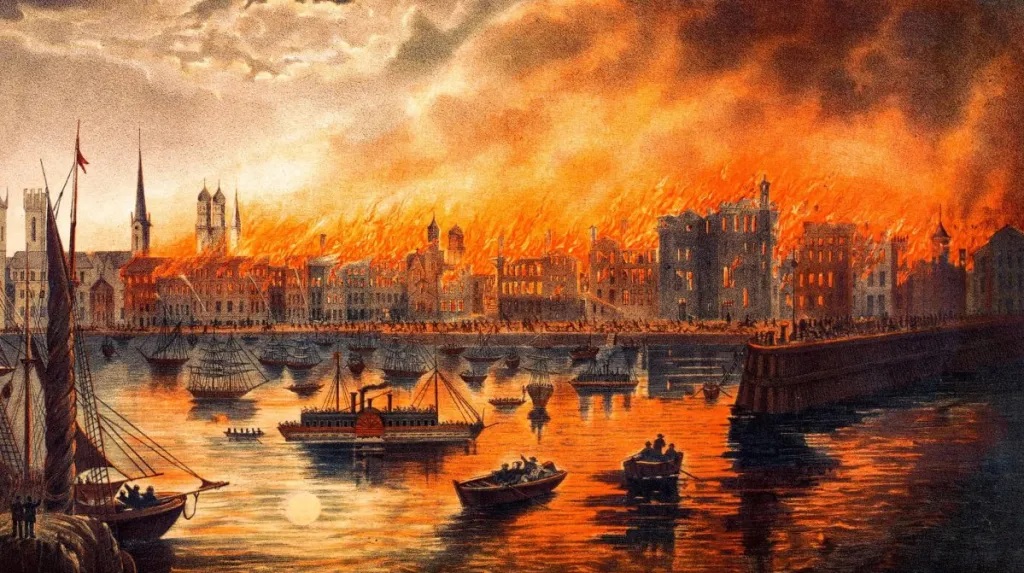
Today, October 8, is the anniversary of the beginning of the Great Chicago Fire in 1871. The fire burned until October 10 when rain finally squelched the flames.
The Great Chicago Fire had a profound effect on all the areas around the city, and the Blue Island Ridge was no exception.
In 1871, the Blue Island was still a distant suburb from the City of Chicago, and development was in the early stages.
A large part of the Morgan estate had been bought by a group of investors known as the Blue Island Land and Building Co. (BILBCo) in 1868 – 69. These men were also owners and investors in the railroads, and in 1870 had expanded the commuter railroad line west along today’s 99th Street, creating the Rock Island line, today’s Metra. This made the area much more accessible.
North of 107th Street was known as Washington Heights and plots of land were being sold. BILBCO was planning a new village south of that to be called Morgan Park.
On that October 8th night, the tip of the Ridge in today’s Dan Ryan Woods at 87th Street and Western Avenue offered a one-of-a-kind vantage point for the local residents to watch the vivid colors of the fire lighting up the northeast sky.
Jack Simmerling, the late artist who grew up on the Ridge, remembered his grandmother telling him how she watched the fire while sitting on the stoop of their family’s house on Vincennes Avenue.
Another story related to a man named Michael Smith, who came to Chicago after the U.S. Civil War and entered the hotel business, owning the National Hotel at Wells and Randolph. In 1869, he divested himself of those interests, purchased 40 acres of land just northwest of today’s 111th Street and Western Avenue, moved to the Ridge and started an orchard of apple and pear trees.
In 1871, Mr. Smith watched the sky over Chicago as all his former holdings went up in flames.
The biggest effect of the fire occurred after the fire, as people left their old neighborhoods and started to move to the suburbs. This led to a major building boom for idyllic places like the Blue Island Ridge.
The Barnard family first came to the Ridge in 1844. At the time of the fire, some of the family was living on Ontario Street, and were forced to flee, throwing their possessions out of windows and grabbing what they could as they ran down the street.
They escaped to the Ridge, and built a new home at the northeast corner of 103rd and Longwood, where the CVS is now, and the flower seed farm they started joined their other holdings in the area.
One unfortunate outcome of the fire was the destruction of loads of records and archives. The Morgan family lost all of their belongings stored in the city.
Right after the fire, pioneer families formed the Old Settlers’ Society, which started to recreate records of the past. People connected to the Ridge participated in this effort.
Out of the ashes of the Great Chicago Fire grew a new Chicago, one of “skyscrapers” and exciting new architecture. Many of the influential men from this period became connected to the Ridge.
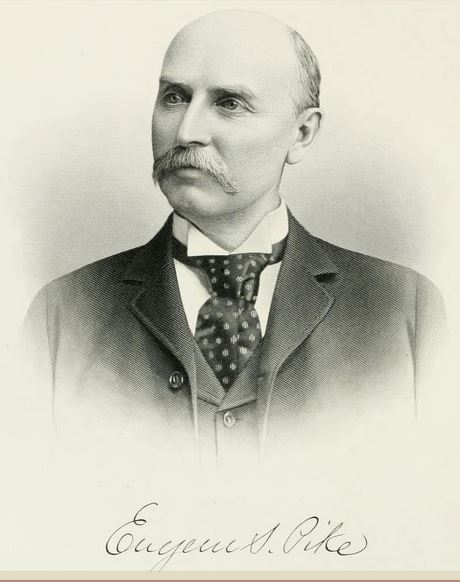
Just one example was Eugene S. Pike, the real estate developer who built major new buildings downtown. His primary residence was on Prairie Avenue, and he bought land in North Beverly for development. Some of the land he kept for himself, where he grew nursery plants for landscaping, and that land became part of the Forest Preserve District of Cook County.
The gardener’s cottage Pike had built there, designed by architect Harry Hale Waterman, is today’s Eugene S. Pike House, undergoing restoration into a community cultural center.
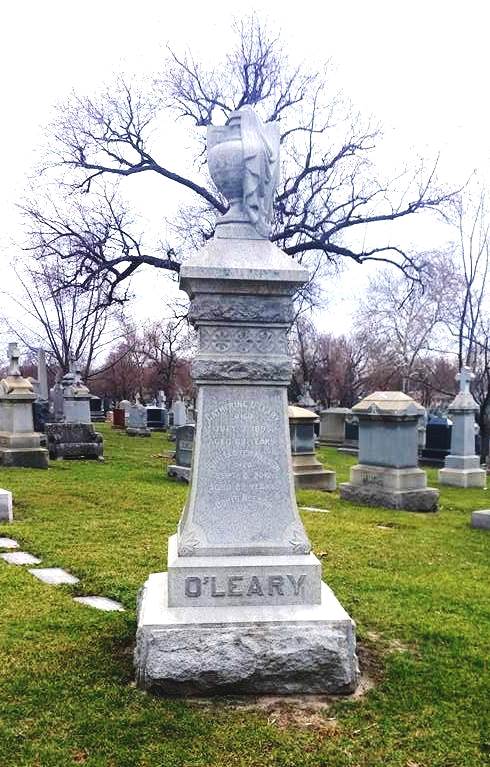
Of course, today, the most famous connection of the Ridge to the Great Chicago Fire is the gravesite of Mrs. Catherine O’Leary in Mount Olivet Cemetery on 111th Street.
Chicago folklore for years claimed that the fire originated from Mrs. O’Leary’s cow kicking over a lantern. Years later, newspaper reporters admitted they made that up.
Although the fire did start in the O’Leary barn, the cows were settled for the night and Mrs. O'Leary was in bed nursing an injured ankle at the time.
The exact cause of the fire was never determined. Theories included a stray spark from men smoking in the alley; the neighbors going into the barn with a lantern to get milk for “oyster stew,” an alcoholic punch they were making for a party; and even arson from a milk business competitor. Other theories included spontaneous combustion and a comet flying through the cosmos.
Big Jim O'Leary, the son, became a famous Chicago gambler. The people loved him – he was honest; he always paid off the bets people made at his (illegal) establishments. He was involved in gambling operations along 111th Street in the early days of Mt. Greenwood.
Big Jim was the nemesis of the famous Irish police chief, Francis O’Neill. Big Jim bought the grave sites in Mt Olivet and is buried there with his parents, right down the way from the mausoleum of Chief O’Neill.
Thanks to Linda Lamberty, past RHS Historian, for some of this information.